Tag: Aditya Birla Group

  • Jagdish Sheth, V Kumar & others at WeSchoolconf on consumer insights

    By A Correspondent


    The Principal L. N. Welingkar Institute of Management Development in Mumbai (better known as WeSchool) is organising a conference on Consumer Insights & Foresights in Changing Markets in association with the Academy of Indian Marketing (AIM) to be held on January 9 at its Mumbai campus.


    The conference will be divided into six tracks: CPG (Consumer Packaged Goods); BFSI (Banking, Financial Services and Insurance); Research and Analytics; Media and Entertainment; E-Commerce and Telecommunications.


    Some of the speakers include: Prakash Nedungadi, Head Consumer Insights & Brand Development, Aditya Birla Group, Rohan Mirchandani, Co-Founder& CEO, Drums Food International, Deepak Sood, CEO, Avantha Ergo Life Insurance, Devendra Chawla, Group President, Food, FMCG Group and Abhishant Pant, Founder of Cashless Journey.  The inaugural session will be co-chaired by Dr Jagdish Sheth, Emory University USA, Dr V Kumar, Georgia State University USA and Dr Uday Salunkhe, Group Director, WeSchool.  Details at: http://marcon2017.welingkar.org/.


  • Birla Sun Life Mutual Fund urges Indians to activate idle savings with ‘Active Account’

    By A Correspondent


    Birla Sun Life Asset Management Company Limited has launched its latest TV commercial, Active Account across national television. BSLMF Active Account is a Liquid Fund-based mobile application which could help investors earn from their surplus savings. Directed by Shimit Amin, the TVC is created by Taproot Dentsu.


    “Historically Indians have the mindset of keeping majority of their hard-earned money in low-yielding vehicles. Seldom do they realize that with taxes and inflation, their idle savings remain in a state of erosion. Our attempt is to awaken Indians to this realization, and provoke them to make the right saving choices. With Active Account, consumers can now use the power of technology to activate money with a single swipe,” said Ajay Kakar, Chief Marketing Officer – Financial Services, Aditya Birla Group.


    A. Balasubramanian, CEO, Birla Sun Life Asset Management Company Limited said, “BSLMF Active Account has been developed using customer-first design thinking. Conveniences such as ease of use, ease of login, ease of transaction, ease of access are structurally embedded into its architecture. This new offering from us is poised to change the way India saves, and I am confident that it will add immense value to savers and investors across the Indian diaspora.”


    Speaking about the campaign, Pallavi Chakravarti, Executive Creative Director, Taproot Dentsu said, “The bank account is India’s default parking lot, when it comes to money. But is this traditional saving habit optimal? While attempts have been made in the past to urge people to “make their money work harder”, the launch of the Active Account App is a game-changer. In this commercial, we’ve used India’s other favorite activity – protesting – in an interesting way, to drive home the message that the days of “lazy money” are numbered. Because the Active Account is not yet another app, it’s a revolutionary tool.”


    Directed by Shimit Amin, the Active Account campaign is created by Team Taproot Dentsu, led by Umesh Shrikhande, Agnello Dias, Santosh Padhi, Pallavi Chakravarti and Neeraj Kanitkar. Red Ice Films is the Production House, and Lisa D’Costa, Executive Producer. The digital elements are managed by Foxy Moron, Mumbai.

  • Edelman appoints Sachin Talwalkar as Regional Executive Creative Director

    By A Correspondent


    Edelman has announced the appointment of Sachin Talwalkar as Regional executive creative director, South Asia, Middle East & Africa (SAMEA), effective immediately. Based out of Mumbai, Talwalkar will report to Gavin Coombes, managing director of Edelman Digital APACMEA and Rakesh Thukral, managing director of Edelman India.


    “With the communications and marketing landscape changing dramatically over the last several years, we are firmly committed to expanding our creative offering, both in scope and in ambition,” said Robert Holdheim, chief executive officer of SAMEA, Edelman. “Sachin will oversee creative teams across SAMEA. With his tremendous global experience, we expect him to have an immediate impact on behalf of our clients across the region.”


    Edelman India has a large multi-disciplinary creative team that focuses on creative insight, planning and platforms to look at 360 degree integrated campaigns. The team includes strategic planners, ethnographers and researchers who deliver insights-based counsel. This is brought to life by content specialists, art directors, designers, illustrators and copywriters, delivering fresh thinking around big creative concepts and media-agnostic ideas that lead to business outcomes.


    Talwalkar has over 16 years of industry experience having worked across agencies and geographies, most recently at Commonwealth/McCann in Mumbai where he served as executive creative director (APAC) since May 2012. He began his career as art director in 2000 with BBDO Dusseldorf in Germany and has since worked with Saatchi & Saatchi (Milan), onesingleline.co.uk (his own agency in London) and Contract/JWT (New Delhi).


    Commenting on his appointment, Talwalkar said, “Today’s media landscape is evolving rapidly and, in the process, the roles played by PR and marketing firms have begun to blur. By collaborating across Edelman, the creative team can play a critical role in elevating the overall creative offerings and solutions for clients. I am excited about working with Edelman, which not only has a rich history but also a forward-looking vision for the business.”


    Talwalkar’s global client roster included Wrigley’s, Epson, Fa, Henkel (Germany), Procter & Gamble Oral Care (Italy) Fiat Automobiles (UK), among others. In India, he has worked with L’Oreal Paris, Dabur Shampoo & Glucose, Walt Disney, Times of India Publications, Aditya Birla Group, Ten Sports, Hindustan Lever Ltd among several others.


  • Sun shines on another refresh for ABG


    By Anuka Roy


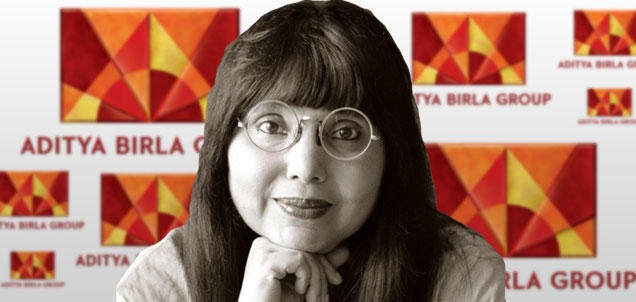
    Change is the only constant. And, when the change is synonymous to continued growth and evolving oneself to suit the change, it is a very good indicator. The same logic holds true for brands. When it set up two decades ago, the Aditya Birla Group retained Preeti Vyas, Chairwoman and Chief Creative Officer at Vyas Giannetti Creative (VGC), to build its identity and logo. Earlier this week, the group and VGC unveiled the third logo developed. Vyas speaks about the need for the current refresh, her relationship with the group and much more. Excerpts from the interview:


    Two decades, the third identity and a second refresh. Speaks a lot for your relationship with the Aditya Birla Group

    I feel very privileged personally and professionally to be have been associated from the birth of the brand. When Kumar Mangalam Birla took over after his father passed away, he asked us to create a logo for him. We were very much part of the original branding journey, the strategy, research etc. and we stayed true to the journey in the sense that the group crossed so many milestones. We have stayed with them through the corporate communication, worked on so many opportunities and down the line, five years ago, we even had a refresh. One of the reasons why we had a refresh is that the group itself had become a superbrand. From not existing, it went on to become one of the more important brands in the country. In fact, it was seen as one of the architects of a new India. The group came on its own when the economy opened up and India had a very international outlook. Indians were becoming very significant consumers, the businesses actually added on to their portfolio of commodities… with consumer-facing businesses, telecom and fashion etc. When all of this happened, there were so many opportunities for the group to actually make sure that whatever it did, it was very committed to their vision and to the way it had structured the policies…  so it became a group of significance. And, the relationship which we had with them prior to the birth of the brand was also interesting because Kumar Mangalam Birla had reached out to me years ago when I was Creative Director of Trikaya Grey and he wanted some work to be done for something the Group was sponsoring. At that time his father was also alive, I had the privilege of meeting his father. So, the relationship actually goes back more than 25 years. Since then as the group expanded in terms of these different businesses, we have worked very closely with him and Pragnya Ram, Group Executive President, Corporate Communications and CSR who mentors the entire process. So, I was always the fronting sort of person of Vyas Giannetti Creative and they stayed true to us as we continued to deliver work for them.


    Talk us through the three identities that you developed, and what they have meant for the Aditya Birla group at each stage that it was conducted.

    When I was asked to do their logo first time, he said, I want to call it Aditya Birla Group and I want to herd all the companies under the umbrella of Aditya Birla Group. So, we said, fair enough, if Aditya is the name of the Group we should look at the meaning of Aditya, which is sun. Therefore, that is the origin of the logo inspired by the sun. If you look at the first logo, it had two semi-circles, one was an internal play and then there is an external play which as a group there are so many things happening within the group and externally we send out messages and then that in turn comes back.

    Here, I would like to say Kumar was very interested in keeping the legacy, it is a new entity  but as such the name itself has a lot of legacy and he wanted a certain sense of richness and legacy which is why if you see the first logo, it also had a richness of colours. It was a solar colour but also had textures; it was in a sense carrying forward a classic brand in to the future. So, that was the approach to the logo itself.

    Then as the group gained equity through whatever it did and became a Group of great worth, internally, there was a lot of call for new entities, new businesses… Aditya Birla itself. Aditya Birla as a name became very popular. Various companies like Grasim and Hindalco, existed before the Aditya Birla Group… they were all listed companies. Aditya Birla Group was an endorser brand which is why we had a strapline. It gained so much equity that in the second version of the logo, Aditya Birla Group was no longer a strapline. It became a very assertive and emphatic presence. The logo itself went through a colour refresh and a three-dimension was added to it. That was in a sense, a gradual change, it was not a jump. But it certainly was a small change for a brand but a giant change for a corporate entity.

    When that happened, soon thereafter, as the group was getting older it was talking to a much younger audience – the millennials, people who are looking for something more global, something they could relate to in terms of their profile of exposure that they had and as a result the feedback that Kumar was getting, was that, perhaps the logo needed to go through a change. The core values remain the same, the core principle of the sun remains the same, but could we make it more dynamic, could we do so without divorcing a core graphic in terms of colours and so on, could we just give it much more energy, power and youthfulness? Then we embarked on a new journey and what we have now is definitely a departure from the old logo but it is not a complete and absolute 180-degree change either. We still have the sun; we have an added element of the ascension form. So, there is a sun and there are the rays, there is an ascension form which gives it much more power and energy. That is the journey.

    What is interesting is that how many agencies around the world actually have this privilege- having seen three changes and being the corporate agency of one brand for two decades. It is of course a landmark moment for us as a company and it is quite heartening to see the change, the group actually rises so much in stature as well.


    A brand refresh exercise doesn’t come cheap and while the Aditya Birla group is known for its emphasis on excellence, surely it’s cost-conscious like any traditional Indian empire. How much does a design refresh and a change of logo mean to an industrial group?

    It is not just a commodities industry group. First of all, when we did this branding, it was largely a B2B business. But at that point in time, the only other company which went in for a professional branding exercise was the Tatas. The Tatas and Aditya Birla Group actually did their branding at the same time. When you go through a branding process, it creates great amount of equity not just for consumer-facing businesses but for all stakeholders, starting from your internal stakeholders, potential employees –  you will only grow on the strength of good people that you hire, it also means that you may want to align and associate with good people. When you are growing you are constantly creating associations, alliances and acquisitions, you always want to be in the consideration set. So, you need to make those branding investments.

    It is a myth to say that just because you are a B2B business. you do not need branding. Everybody needs branding. Having said that, the group itself went from being practically and entirely a B2B business to largely – if you see their profile now – a much bigger FMCG business than all of the FMCG businesses put together. They are the largest fashion retail brand in the country, one of the largest (and growing) telecom networks, in terms of cement, again huge… it is the number one player in the country. Just look at the amount of the consumer-facing interfaces – financial services, insurance, mutual funds- all of these things are actually consumer-facing. So, the group itself has transitioned itself in to the consumer-facing businesses. It has a mixed portfolio. It needs to be understood that all businesses require branding and as they evolve, it is often matched with the strategic requirement. It never is an aesthetic requirement. There is a strategic need to create a brand, it always enhances and helps in growing the equity of a company, which means it helps in the business plans of a company. A branding strategy properly executed actually is a business ally which is why people who embrace design are in fact smart business people like an Apple brand where design became intrinsic to the product itself.


    It is said if ‘it isn’t broke, why fix it’. Was it really necessary for the refresh to happen at each stage?

    When you find that the feedback you are getting from stakeholders is that you are looking at a company which has a slightly younger profile, more dynamic and global, so, therefore, although the group itself is transitioning, the logo perhaps has to keep pace with that. So, we made it to get a much more dynamic, energetic and a youthful sort-of feel to complement where the group itself is moving to and where its aspirations were. The change that we made would probably last for another decade. By which time things will be clearer about what might be a refresh, will there be an alteration or change – a radical one or a minimal one, all of these things will happen can be reviewed possibly a decade from today.

    All brands definitely need a review every five to seven years. There was a time when we said every 10 years but now everything has become for a shorter span.


    But isn’t it better to stick to the same logo given that it shows a certain sense of continuity?

    We have a lot of things which continue – there is a sun element, the warm solar colours are very much part of that. So, we have that. We have obviously from level one and level two, we have moved away because beyond a point, the old logo did not travel any further. Just as a graphic exercise, it would not go any further. We just needed to move to the next level of change.


    The Aditya Birla Group has now got a diverse range of activities – from the core businesses it was in to telecom, retail and fashion. Hence the identity needs to appeal to a diverse set of people, including millennials who may not have much loyalty to age-old brands and corporates. How does the new identity that you have created help connect the Group connect to these diverse stratas?

    For example, a lot of people did not know that Idea Cellular belonged to Aditya Birla Group. Once you have a corporate brand, individually there are companies and the relationship with the company branding is called the brand architecture. That has been designed, for example, if you take a cement product which is out there, you will find that this logo has transitioned in to that. If you walk in to an Idea retail place, Aditya Birla Group logo will also be there as an endorser. Go to a Pantaloons store, it will be there as well. When consumers walk in, they see the brand from whom they want to transact at the same time they know it is being endorsed by a larger entity. So, it gives a lot of confidence to the individual brand. The individual companies and brands are building their own equity. Aditya Birla Group as a brand is an umbrella which actually endorses all the activities and becomes a symbiotic relationship. For example, the equity gain from cement translates to a fashion brand and vice versa. Also, it translates in to corporate brand equity at a higher level. If you have seen all the advertising we have done for the group, it never really talks about products they make, because the group companies will talk about them. It takes the stature of a statesman. In terms of communication, it always talks about how this is an Indian multinational and how it is across various geographies. It does not tell you that we are in telecom or we are in this or that. It does, but in a manner which is a much larger landscape. That is why through all kinds of research that the group has done, it is seen as one of the most trusted brands of India. So, all of the right recall parameters and all the right boxes have been ticked for them… The group has done a lot of great things and of course the branding has been there to partner the group where the brand name is concerned.


     

  • Now, get home loans based on your true worth

    By A Correspondent


    Aditya Birla Housing Finance Limited strives to convey a message of get the home you deserve through their latest campaign.The latest film – Home Loans, highlights that through www.trueworth.co.in, ABHFL intends to bring about a change and create a differentiated offering as they provide Home Loans by considering the true worth of a person and not restrict it to ones earning potential.

    This provides a platform for buyers to find out the right home loan for their needs, so that they can buy a house that they are worthy of.

    Ajay Kakar, Chief Marketing Officer – Financial Services, Aditya Birla Group, said, “Our research gave us the insight that a home loan customer in India rues the fact that he is not considered worthy of a home loan amount on the basis of what he is truly worthy of. While their current and past reality is considered, their future potential is not given any weightage. This not only led to the creation of our communications campaign, but first gave birth to Aditya Birla Housing Finance launching www.trueworth.co.in. A tool that helps you realise your true worth. And empowers us to give you a loan that does reflect your true worth.”

    Agnello Dias, Chief Creative Officer, Taproot Dentsu India, says, “This was a lovely insight that captured how our drive for success leads us to neglect some of the most important stages of our life. So caught up are we in our ambition that we tend to forget the reasons why we had that ambition in the first place. A warm, comfortable home for us and our loved ones, for instance. This is a simple, powerful film that captures exactly that.”


  • Trust before eyeballs


    Ajay Kakar, Chief Marketing Officer– Financial Services, Aditya Birla Group, feels there are two problems with the sector he works in. While the first is poor penetration and knowledge about various offerings, such as insurance or mutual funds, the bigger issue is that of building trust in your brand – and not necessarily through splashy advertising campaigns. If you have customers’ trust, you have them for life, Kakar tells Pradyuman Maheshwari


    So this is a season for financial services, for investments?

    The Aditya Birla financial group represents 10 lines of businesses across the financial services spectrum, and we intend to launch an eleventh, which is health insurance. While people view these as individual categories, ie, life insurance, mutual fund, banking, broking, wealth management and such, we see all of these as representing only one product category, which is money, and these are all shades of it. It’s like when Asian Paints advertises, you know they are advertising one product called paint, and they will have various shades of it.


    But money is possibly the toughest thing to part with.

    Yes, that’s why I started with that, and will then come to the individual categories. Interestingly, you will find certain common trends, whether it is a consumer site or industry site across all these verticals. First, imagine a category that is relevant to any and every person alive, and that is money. This needs no sell. Yet banking in India has got only 40 % penetration. I would have thought that everyone across the country, even in the smallest pockets, would have a bank account with, say, the State Bank of India. Yet that is not the case. Second, while all of us are busy selling our products and categories, very few of us are even thinking of selling solutions to either the customer’s felt or perceived needs. That’s why we advertise what we sell; we don’t advertise what customers buy. For example, nobody ‘buys’ a car loan. You want a car and the loan is a necessary evil. All of us are busy talking about what we have. We don’t try to understand the customer’s unique need.


    I believe the Indian financial services consumer is a financial simpleton, even though he may be globally aspiring, thanks to the media and the opening up of boundaries. And even the richest man may not have the time to manage his finances, let alone a common, office-going person. They want somebody to hold their hand and guide them to their dream destination. There is still a lack of connect between what the customer wants and what we offer, and that’s why [the financial services] penetration levels remain low. So we at the Aditya Birla Financial Group, decided to be different. The first thing we decided is that we must be an agent provocateur to help the Indian masses self-realise the importance of making money work in their lives. So that’s why we’re taking approach to customer with the entire spectrum called money and yes, we have products and solutions in every category. We are committed to being a broad-based as well as an integrated player.


    Your ‘Janoge tabhi toh Manoge’ campaign has been there for more than three seasons. Don’t you think people would tire of the same kind of message?

    Of course. But, first of all, ‘Janoge’ is a brand created for investor education and is directly related to Birla Sunlife mutual fund. Two, it’s a brand which tells me what’s in my best interest. We are wearing two hats — we are wearing the earning hat or the business hat, and we are also wearing the corporate social responsibility (CSR) hat. We want to tell you to buy our products and solutions but first tell you what is in your interest. Our commitment in ‘Janoge’ is investor power; making you learn how to fish, rather than handing you some fish. Second, we have found different facets in mutual funds in our three seasons. In our first season, we talked about how mutual funds need time though not a lot of money. Today, we are talking about a smarter way to benefit from the equity market. So we are changing our message with every season.


    When it comes to mutual funds, people look at NAVs, past performance, and which scheme will make them the most money. Given this, does advertising really work?

    We need our customers of Mass India to realise the cost of no action. Having taken a decision, you must act because not acting is going to make you miss the bus. You won’t get money sitting at home; you have to work at it. So be smart about it, take an informed decision. Brands capture the hearts of customers but the problem with our category is under-penetration. If we don’t understand why this is so, it will not work. The life insurance industry loses money if a customer leaves after two or three years. But If I’m in a hurry to make a sale, there is a chance the customer will, after two or three years, question his decision to have bought the insurance. So if you buy for the right reasons, you will stay for the right reasons.


    In the last few years we have seen a severe liquidity crunch and job losses. How much has that impacted the investment behaviour of people?

    Everyone needs money, and those who have it, need to know what to do with it. And this will always be the case, in both good times and bad. But a lot of financial services categories are fair-weather friends; they advertise when the market is good, and pull back when it is not. Imagine a doctor who will be ready to see you when you’re healthy, but is not available when you are ill. Customers want and need to see throughout the year. They need to know that what they are buying, is in their interest. If they trust you, they will stay with you for a lifetime


    There are a host of players in this business, and while some of them advertise, many others don’t. What are the most critical components to look at?

    Everyone has his own strategy. The Aditya Birla group is highly committed to building and nurturing brands because they believe brands abide for generations. They believe in investing across economic and sentimental cycles because they know that at the end of the day, the human being decides with his heart which brand to go with. There are three things you need to look at for this. First, are you fortunate enough to have and invest in a brand, to start with. Second is what you say, and third is how you say it. And I think we are blessed with all three. We don’t rest on past laurels but keep nurturing and investing in our brands. Advertising is not the end; striking a cord [with people] is. Our brand track shows that as against our investments — which are most conservative compared to our competition — our benefits have been the highest.


    What is your strategy towards promotions, in terms of percentage spends on ATL, BTL etc?

    A marketer spends where he can capture the most eyeballs, right? And that differs from category to category, and from brand to brand. In the financial services industry, you reach out to a relatively mature consumer, so you must target [people of a] certain age and above. To reach mass India, you must use mass media. About 70% of our marketing spends are on campaigns leaning towards mass media and television. Mostly television because we are not only selling categories, we are selling categories the emotional way. So print takes a back seat.


    How much of digital do you use?

    Last year, our life insurance campaign was a 3.5-minute film where we dared to tell a story, rather than have a regular ad. We dared to not plug our product or category, and we dared to invest heavily in digital, even though this reaches a far lower mass [of people]. This strategy paid off, and now three leading brands have followed us in quick succession with possibly the same strategy. It’s not the spends, but what you do with the spends. In financial services, the biggest award you can think of is the Midas Award of New York, where you only compete against the financial services ads of the world. We have won for five consecutive years. I believe that customers have given us the thumbs-up (if you look at our brand track scores) and I think the industry and our peers have given us a thumbs-up, going by our awards and recognition.


    How much of social media and content marketing do you use to influence the influencers?

    We have something called zipsip which is an instant and convenient way of investing in systematic plans of mutual funds. It’s in our portal. We have promoted it in a very big way and it has surpassed our marketing and business expectations. For that, we spent a lot because we knew it was a product for the digital-savvy audience in a digitally-savvy world. With our ‘Khud ko ker Buland’ campaign, we crossed one million views on YouTube within days. We were trending on Twitter on Day Two. Today, we have five million views by people who have chosen to view our film so the fact is we do work for our audiences, irrespective of where they are, and then we tailor [our campaigns accordingly]


    But YouTube hits and ‘likes’ are not verified, right?

    I would like to believe that in social media, you have to crank the engine and then see where you go. And the fact is, you can land up anywhere. For example when we had [cricketer] Yuvraj Singh talk about his illness on social media, I would like to believe that ours was the platform which was helping him spread the message.


  • Ajay Kakar on 10 reasons why the ‘new-look’ Cannes Lions was a success (despite it being a forgettable year for India)

    By Ajay Kakar


    As the week-long Cannes Lions festival came to an end, here are some observations on the Good, the Bad and the Ugly at this year’s edition of the festival of creativity.


    1. ‎There is a magic about the Cannes Lions festival that you cannot deny. With the Palais as its epicentre, the entire city comes alive with the over 12,000 delegates who make Cannes their home for the entire week. Every corner of the city seems to exude excitement and inspiration.


    2. The Festival keeps evolving, and this year was no different. New awards, new categories and an entirely new focus. The introduction of the Glass Lion (to promote gender equality) and Innovation categories brought in newer and richer learnings. This year, the festival‎ dedicated itself to Innovation and Data x Tech x Ideas. So you were surrounded by young people and simple, new and innovative ideas that went beyond mere advertising or communications, and into the realm of product development.


    3. More clients and more about clients. The Unilevers and P&Gs have historically been associated with, and committed to, the festival.‎ But this year, you saw and heard many more clients. On one side you had names like Airbnb, Spotify‎ and Snapchat, while at the other end were the likes of Mars, Nestle, Pepsico, Heineken and Mondelez. And a window to hear three leading CMOs, every day, in a freewheeling discussion.


    4. The opportunity to hear industry giants and thought leaders like James Murdoch, Al Gore‎, Sir Martin Sorrell and Unilever CMO Keith Weed. And wonder how they manage to stay with their purpose and messaging, despite attempts to distract or provoke them.


    5. Monica Lewinsky was clearly the star speaker of the week. Not for reasons one would expect, though. She did share her story, honestly and sincerely. But contextualised it with a passionate plea about the ills of online shaming and cyber-bullying that have become a fact of life in our social discourse.


    6. Amir Kassaei, Chief Creative Officer, DDB Worldwide‎ made a strong case for embracing all that was new. But more importantly, to remember what must never be forgotten – ie, the purpose of our being is to build brands and businesses.‎


    7. The realisation that ideas can come from anyone and anywhere. Ad agencies that won PR awards. Communications partners that drove product innovation. Big countries that won small, and small countries that won big. It was inspiring to see the work and wins from unexpected countries like Switzerland, Spain, Sweden, Ecuador, Belgium, Colombia, UAE, Tunisia, Czech Republic, Turkey and Poland. And Egypt won its first Titanium Lion, the most coveted among the coveted.


    8. The power of simple ideas. And their ability to create a powerful impact. It is well worth the effort to view some of the campaigns that lived this thought, whether it was the ‘Lucky Iron Fish’ project; the Volvo ‘Life paint’ idea; Procter and Gamble’s ‘Like a Girl’ campaign or Vodafone’s ‘Red Light Application/Between Us’ initiative. Also on the list were the ‘Unskippable’ message by an insurance company and the ‘SOS SMS’ by the Mexican Red Cross and the icebucket challenge initiated as a global campaign to create awareness about ALS. Not surprisingly, all these were winners of one or more Lions.


    9. A ‎key gratification for the marketing and communications industry at the Cannes Lions festival is the tally of Lions won by agencies, networks and countries. Countries like Brazil take pride in the tally of Lions won by them, irrespective of which agency wins it. Their national pride shows, with the announcement of every win.


    10. While the good news is that India won a Grand Prix in the Glass Lion category in its maiden year, we do not have much to celebrate or be proud of, so far. Our tally of wins this year is far below what is expected from a country that is proud of its talent and work. This year is not one that India will celebrate or care to remember. Our focus has always been on the obvious categories, like Direct, Media, Cyber, Mobile and PR. While it’s curtains down Cannes 2015, let’s set our eyes and hearts on the festival next year, and hope to win some pride for our work and our country.


    Ajay Kakar is CMO – Financial Services at the Aditya Birla Group


  • Ajay Kakar: 10 reasons Cannes is the place to be

    There are adfests and then there are adfests. But for everyone in the A&M ecosystem, undoubtedly the most prestigious event of the year are the Cannes Lions. Here are some compelling (and some fun) reasons for why you should be at this French Riviera town when the biggest awards ceremony kicks off this weekend.


    By Ajay Kakar


    1. Whether you represent an agency, media or client side of the Marketing Services fraternity, I believe that the Cannes Lions festival is a Mecca for you. It is the melting pot of learning and inspiration. Where else would you get to see, hear and experience the world’s most creative leaders, all under one roof, across all the disciplines of our ecosystem?


    2. The festival reflects and represents the ever-changing, ever-evolving times in which we live. It urges you, nudges you and provokes you to at least keep up with the times. And for the few who care or dare, it also inspires you to think ahead of the curve. A festival that, till yesterday, was synonymous with the world of creativity, merely in the context of advertising, today stands for creativity in the context of ideas, big ideas. This year, they have introduced the Innovation Lions, shifting the focus to creativity in innovative big ideas.


    3. People who have attended the festival over the years will vouch that this is where they saw and heard the future, first. Yesterday’s dreams, today’s reality. It is at the Cannes Lions that we first heard about what sounded like a make-believe world where — thanks to technology — man will no longer need a map to travel, a directory to search, an encyclopedia to learn and pen and paper to communicate. Today, these predictions have come true and taken for granted; a part of our routine life.


    4. Bill Clinton. Al Gore. Ben Affleck. Yoko Ono. Mark Zuckerberg. Sir Martin Sorrel. Freida Pinto. Maurice Levy — a motley of renowned achievers and renowned speakers from various walks of life. From across the world. All under one roof.


    5. Why attend? The numbers representing the converts and believers speak for themselves: Over 12,000 delegates, more than 4,000 companies from some 90-odd countries. Convinced yet?


    6. It’s not ‎just the agencies that attend. Adidas, Amazon, Audi, Bank of America, BMW, Citi, CNN, HSBC, Heineken, Ikea, ING, Kraft Foods, Levi’s, Nestle, Nike, P&G, Pepsico – the list goes on and on. These are just a few of the corporate giants whose CMOs and marketing teams attend the festival.


    7. Unilever and P&G‎. Coke and Pepsi. WPP and Publicis. Where else can you hear and learn from some of the biggest competitors/ business rivals across the world? Only at Cannes, of course.


    8. The most sought-after recognition in the world of marketing services is a Cannes Lion. But just winning is not enough to get you on the stage. Only work that earns a Silver or Gold-plus gets to take a bow on the stage. And attending the awards night is a treat. Every evening you can get a glimpse of the work that actually won a Gold, thanks to a two-minute clip for every win. Learnings from the best-of-the-best – work created over 12 months in more than 90 countries, all unfurling before your eyes.


    9. As a marketer, you get an opportunity to stand shoulder to shoulder with the people who created the magic. And thanks to the experience, whichever country, category or brand you represent, you go back humbled, realising that there is so much more that can and needs to be done.


    10. Whether you represent the agency, the media or the client; whether you are young or experienced, there is something for everyone. So much to choose from. Workshops, seminars, forums, masterclasses, displayed work and of course, networking opportunities, all happen simultaneously. You will always go back feeling unsatisfied‎. Wishing you had more time to imbibe things. And also hoping that you will have the opportunity to be back again, the following year.


    Ajay Kakar is CMO – Financial Services at the Aditya Birla Group


  • RIL’s Janhavi Gadkar row: Companies warn staff against code of conduct violations after office too!

    By Namrata Singh, Piyush Pandey & Reeba Zachariah


    If you are employed with a reputed organization, adhering to the company’s code of conduct now extends beyond work hours. Companies are becoming strict with any transgressions, even if it is committed in the personal space of an employee, and driving under the influence of alcohol is no exception to the rule.


    The Janhavi Gadkar drunk driving case has put the spotlight on whether the code of conduct extends beyond office hours. Most companies we contacted responded in the affirmative. In some companies like Vodafone, the code extends to their channel partners and associates as well. Companies have in the past parted ways with erring employees on this count.


    RIL, where Gadkar works as VP (legal), issued an advisory to its employees, reminding them about its policy on personal conduct and this includes “drunk“ driving and an employee’s behaviour in their personal capacity . “In official as well as personal capacity , employees at no times should indulge in any action behaviour that violates any law; or is indicative of personal indiscretion; or is socially unacceptable,“ the RIL note stated.


    Companies like Indiabulls Housing Finance and Vedanta have already issued advisories to employees on the perils of drunk driving. In Vodafone India’s health safety and wellness policy , five out of eight ‘absolute safety rules’ are on road safety . “Since 2012, we have parted ways with 30 employees and over 600 vendorsoff-rolls individuals for not following the policy . Of these, seven (four employees and three off-rolls) were drink-and-drive cases. Mostly drink-and-drive is beyond working hours,“ said a Vodafone spokesperson. Vodafone India has introduced the concept of a ‘safety passport’, a unique licence that certifies that its employees have cleared the screening processes and adhere to all safety standards and practices set out.<br />


    According to Santrupt Misra, director (HR), Aditya Birla Group, an organization has a right to take action if the behaviour of an employee vi olates its code of conduct.“Our general code of conduct governs many aspects of public behaviour that may have implication for the organization. Driving while drunk is against the law of the land and is covered by our code of conduct,“ said Misra.


    Defensive driving is one of the mandatory courses for employees at most companies like Hindustan Unilever and the Tata Group which extend beyond work hours. “Even if any of the group employees are caught flouting traffic rules, we make an effort to counsel such offenders while sending an informal message across the line that violations will not be accepted,“ a Tata Group executive said.


    A few have different rules.S Ramesh Shankar, executive VP (HR), Siemens, said, while the organization takes a lot of preventive steps including continual education, “we cannot take action on any misconduct by our employees beyond our work premises and after office hours when they are not on official duties“.


    RPG Enterprises highlights the importance of socially responsible behaviour. “In the era of social media, the employer brand is highly suscep tible to the reputation loss by an inadvertent act by any employee,“ said Harsh Goenka, chairman, RPG Enterprises.


    A lot of companies ensure that at events where alcohol is served, alternate arrangements are made for employees to reach home safely . Gadkar, who played a lead legal role in divestment of RIL’s stake from one of the US shale assets for $1 billion, was celebrating the success of the deal at a party , before the unfortunate accident. Being a criminal case, RIL would not initiate any action against Gadkar till pendency of investigations and judicial process, said sources.


    Source:The Economic Times

    Copyright © 2015, Bennett, Coleman & Co. Ltd. All Rights Reserved

    Licensed to republish


  • Allen Solly appoints Jack in the Box Worldwide as Digital AOR

    By A Correspondent


    Jack in the Box Worldwide, the digital agency brandof The 120 Media Collective, has bagged the digital duties for Allen Solly, making it the second mandate from the Aditya Birla Group after Louis Philippe.


    The mandate includes all digital duties including multi-platform content creation, content marketing, digital campaign creation, media planning and buying, social media, search engine optimization and analytics, search engine marketing, for Allen Solly and its associated sub-brands, Solly Jeans, Solly Sport and Allen Solly Junior.


    Commenting on this development, Sooraj Bhatt, Chief Executive Officer, Allen Solly, said, “Allen Solly’s excited to be partnering with Jack in the Box for our digital mandate after going through an ardent process of shortlisting the best agencies in the digital domain. We chose JITB for their superb editorial content creation abilities, creative supremacy and great credentials. We’re looking forward to doing some great work together and taking Allen Solly to greater heights”.


    Roopak Saluja, Founder & Chief Executive Officer, The 120 Media Collective, said, “There’s no greater validation of the value we add to a client’s business than to be awarded an additional mandate from the same company (we seem to be making a habit of it).  After three years of running all things digital for Louis Philippe, it’s a matter of great pride for Jack in the Box to be given responsibility for Allen Solly, thereby deepening our commitment to Madura Garments and the Aditya Birla Group.”


  • Phase 3 of Birla Sun Life Mutual Fund campaign takes off

    By A Correspondent


    Jaanoge Tabhi Toh Maanoge (JTTM) – the uniquely executed Investor Education Initiative from Birla Sun Life Asset Management Company Limited, a part of Aditya Birla Financial Services Group, and investment manager for Birla Sun Life Mutual Fund (BSLMF), entered Phase III with the launch of its third TV commercial which has broken across national television. Directed by Shimit Amin, the TVC is created by Taproot, Mumbai. The effort at this stage lies in showcasing the suitability of equity mutual funds as the asset class for wealth creation over the long term.


    Ajay Kakar

    Commenting on the choice of theme, Ajay Kakar, Chief Marketing Officer – Financial Services, Aditya Birla Group said, “As subject matter experts, we know the opportunity Indian equity mutual funds present to investors. The investor experience however seems to be marked either by their fear of volatility or expectation for short-term gain. Our objective this time around is to try point out how patience and long-term duration of investment can be key to fruitful returns in equity mutual funds.”


    Chief Executive Officer, A. Balasubramanian, Birla Sun Life Asset Management Company added, “It is the need of every citizen to plan his financial goals for a better tomorrow. Our endeavour is to make investors realize that equity mutual fund is an asset class that demands investment discipline and long-term commitment so that they may make the most of this asset class to achieve their long-term aspirations.”


    The objective of the latest campaign from Birla Sun Life Mutual Fund is to empower the viewers to self-realize the opportunity of investing in equity mutual funds. This has been brought about by addressing the investor’s anxiety over equity mutual funds by highlighting the fact that in the long run, equities have given better returns when given enough time.


    Speaking about the campaign Pallavi Chakravarti, Creative Director, Taproot India said, “The Jaanoge Toh Maanoge initiative has always drawn parallels between mutual funds and real life. This time we needed investors to understand the merits of staying invested in equity mutual funds for a long period of time, because good returns are not an overnight phenomenon; which led us to the all-too-real life analogy of anxious parents. The kinds we see all around us, who expect miraculous things from their kids in very little time. Hopefully the film will tell parents and investors alike, in a light-hearted yet insightful way, that good results take time.”


    The campaign stresses how investors need to be patient with equity mutual fund investments. The latest television commercial subtly mimics the unrealistic, short-term expectation of the investor by projecting a dedicated parent who expects a reputed Tuition Center to make his son a topper overnight. In doing so, the brand slips in the message how ‘Good Results Take Time’ by reiterating that spending time staying invested (letting your money grow over time) is much more important than timing the market (Entering and exiting the market to make a windfall)


  • Ajay Kakar is Head of Jury at APAC Effie Awards 2014

    By A Correspondent


    Ajay Kakar, Chief Marketing Officer – Financial Services, Aditya Birla Group and head of Effie India has been appointed as Head of Jury at the Asia Pacific Effie.


    The APAC Effie has announced the first two of the four heads of jury who will form the Judging Committee for its 2014 Awards. Mr Kakar and Ben Lightfoot, CEO, McCann Worldgroup Singapore are the two names announced.


    On his appointment as a Head of Jury, Mr Kakar said: “Having chaired the Effie India Awards for the last three years, I am indeed honored to now be invited as a Head of Jury for the APAC awards. In recent years, the need and demand for work that works in the market place, have given the Effie award a pride of place on the shelves of both agencies and marketers. As a Head of Jury I do look forward to the exciting opportunity to review the most insightful and impactful campaigns from across the region.”


    Said Mr Lightfood, who also helms the role of a committee member of the APAC Effie and is Chiarman of Effie Singapore: “We have seen so much great work come out of our region, both in terms of creativity as well as effectiveness. I am really excited to see how the strategies developed led to innovative integrated creative solutions. Strategies unique for Asia Pacific, that broke away from category norms and delivered exceptional results.”


    Commenting on the appointments, Connie Chan, 2014 Awards Chairman said: “We’re delighted to welcome the Heads of Jury on board the Judging Committee. The rich experience and expertise of these heads make up a powerful composition for the judging committee, with a good mix of industry leaders from different backgrounds across APAC. We look forward to the great dynamics arising from the interaction and tapping on their perspectives in the judging sessions.”


    Finalists will be announced in end of February 2014, with the Awards Gala set to take place in Singapore in April 2014. More info at www.apaceffie.com.