Tag: Aamir Khan

  • Shailesh Kapoor:Getting ready for Satyamev Jayate 2.0

    By Shailesh Kapoor


    Aamir Khan’s labour of love (but one that comes with a hefty paycheck too), Satyamev Jayate, makes a comeback this Sunday. In its first season in 2012, the show made a sizeable impact on the socio-political environment. In the process, it managed to become perhaps the only television property in the last twenty years whose success of not measured entirely or primarily through its viewership ratings.


    We are in the election year, and coming with short, monthly seasons of 4-5 episodes each, starting with one in March, seems to be a good move. In the last season of 14 episodes, there was a sense that the show had become a blind spot in its second leg. There’s only so much awakening and inspiration one can take at a time, after all.


    I have to admit I’m a tad disappointed with Sunday 11 AM continuing to be original slot for the show. While there may be a valid ‘feel’ argument, a property of this nature needs a wider available audience. 8 or 9 PM would achieve that better. Even at a feel level, noon will deliver a higher reach without compromising on the feel. I’m sure Aamir and Star Plus had their reasons.


    Satyamev Jayate continues its tradition of not using show footage in the launch campaign. This season’s campaign, built around ‘Jinhein Desh Ki Fikr Hai’, stands out for its exceptional clarity of message and its consistent tone across ads. Rarely do we see TV show launches executed as ‘ad campaigns’. In fact, even in channel parlance, they are called ‘launch promos’ and not ‘launch ads’. Just nomenclature, or a deep-seated issue?


    When I see a good campaign based on atypical viewer segmentation, my eyes light up. The researcher in me has been wondering: What percentage of our TV audiences are the ones who have a sense of ‘fikr’ about the ‘desh’? And how does one measure this accurately, without relying on claims? For example, do most viewers of Arnab’s show (in whose breaks the Satyamev Jayate campaign is running on very high visibility) care for the country? But we digress.


    Despite the good campaign, the show is set to have a modest start from a viewership perspective. There are bound to be format tweaks that create a sense of freshness and build on learnings of the first season. For example, there is a definite hint of higher viewer interaction this season in one of the ads.


    In the pre-satellite television and pre-measurement days, there was certain diversity in television content. TV ratings are needed for transaction. But the biggest collateral damage they have caused in India is homogenization of content.


    Thank you Star and Aamir Khan, then, for challenging that status quo in 2012, and now coming back with a new season well knowing that blockbuster ratings are out of reach here.


    TV Trails is a weekly column written by Shailesh Kapoor, founder and CEO of media insights firm Ormax Media. He spent nine years in the television industry before turning entrepreneur. The views expressed here are his own. He can be reached at his Twitter handle @shaileshkapoor


  • Debrief: Godrej: Good TV soap

    By Anil Thakraney


    The Godrej group has released a product range campaign on television, and just for that novelty, they should be patted on the back. Usually, range ads stick to the print medium, and they are almost always very boring. But Godrej’s TVCs are anything but boring because they feature Aamir Khan in drag, which means full-on masti.


    There is a series of ads conceptualised as a continuing soap opera. Khan is researching for a movie role, and he arrives at his pal’s house dressed as a woman. The pal is a little edgy because his missus assumes Khan to be a woman, and he’s worried about the two ‘bonding’. Anyway, fun interactions happen between the trio (just as in a TV serial), and each ‘episode’ deals with a particular Godrej product. Air conditioners, hot plates, mosquito repellents, etc.


    I must say this is a very refreshing advertising approach from a conservative group. Aamir in drag will get the junta interested. I also like the characterisation; the couple used is an up-market one (the kind you’ll meet at Cuffe Parade), and this gives the brand a premium image, even when they discuss mundane stuff like eradicating machchars. The dialogues are crafted well, they are a bit funny, and I won’t be surprised if some have been written (re-written) by Aamir bhai. 🙂


    So all very fine and dandy. And yet, I shall raise a red flag, the advertiser and the agency should keep a look-out for this as the series continues to play out. The product’s entry into the conversation is just a wee bit forced. I know this is a tricky one, which is why a lot of polishing needs to be done while writing these scripts, so that the brand merges seamlessly with the human interactions. Right now, the product arrives like a minor irritant. In addition, Aamir in drag would naturally vampire the proceedings, all eyes would be on him. All the more reason the product story must shine, or it risks getting lost.


    Rating: (On a scale of 1-5): 3. Brave effort, should give the brand a premium ticket.


    Anil Thakraney is a senior journalist and commentator. He is also Editor-at-Large, MxMIndia. The views of the writer are his own.


  • Master marketer AK is Godrej’s new mascot


    By Johnson Napier


    If you thought actor Hrithik Roshan was the only superstar or that current favourite Virat Kohli was the sportsperson of choice to drive growth for the products that they endorse under the Godrej portfolio, you may be mistaken. While their immense contribution in driving sales and popularity cannot be doubted, Godrej has turned to master-marketer Aamir Khan to clinch the deal for them.


    ‘A perfect opportunity to get width and scale for brand Godrej’
     

    The next few days will be aspirational for Shireesh Mukund Joshi, Head – Strategic Marketing, Godrej Group, as his organisation engages in an eight-part brand promotion exercise in the Indian marketplace. With Aamir Khan as its celeb-of-choice, the integrated campaign of ‘Ideas that makes life brighter‘ will focus on enhancing brand Godrej’s emotive appeal by showcasing the breadth of fresh ideas from within the group to its consumers.


    Excerpts from an interview with Mr Joshi on the occasion of the launch…


    In challenging times such as these, brands would usually go in for an all-out promotional exercise if they are engaging in repositioning or if they want to give falling numbers a fillip. What made you opt for an overall brand-Godrej promotional exercise at this juncture?

    It’s been some time since we last came out with a communication around all of our brands. If you observe, during this period we’ve achieved and done quite a lot in terms of new product launches, promotional campaigns etc. Also if you see each of the brands talk to a specific set of audiences but no one has managed to see all of them in a single piece of communication. This will be a perfect opportunity for us to get width and scale for brand Godrej. Since we have managed to accumulate a lot of products under our portfolio to showcase to the consumers, we felt the time was right to come up with a communication campaign of this scale.


    The emphasis for most brands in recent times has been around marketing and reaching out to the youth in a big way. How is the story same or different for brand Godrej?

    Where Godrej is concerned, it is a youth-also brand rather than just youth-only. We have products that are built for homes and diverse set of audiences. The products of today have to be designed keeping the various needs of the overall audiences in mind whether it is the youth or other audience categories. As the needs of consumers keep evolving so do our products that need to undergo a shift in terms of adjusting to the needs of the audiences.


    Why didn’t you stick with current favourite Virat Kohli or the dependable Hrithik Roshan to espouse the larger cause for brand Godrej? Why rope in a new celebrity?

    Both Virat Kohli and Hrithik Roshan have been used for pushing further the cause of Cinthol in the Indian marketplace. Where Aamir Khan is concerned, he will be seen endorsing brand Godrej in its entirety. So wherever there is a connect with brand Godrej we’ve set up a communication that will feature Aamir Khan as the ambassador. It is not about a particular product but is rather about endorsing common set of values across our entire product portfolio. Aamir, we thought, was the perfect fit to drive our objective in the current brand communication context.


    You’ve stuck with JWT to drive the creative thought process for this large exercise too…

    The entire communication has been handled effectively by JWT and we are happy with the way the range of commercials have been drafted for presentation in the coming few days.


    Were you looking at IPL as the platform to share the core brand objective exclusively with? Will you be pledging maximum revenues on IPL 6?

    I cannot reveal what the estimated spend is for the IPL this year but it will suffice to say that it is well balanced.


    What is the spike you’re expecting in volume sales or the bottomline revenue for the group from this activity?

    This is not a product or specific campaign launch. It’s a campaign that celebrates brand Godrej in India. Over a period of time as more people become aware of more products from Godrej then we will rise in consideration set. It’s a much more longer term infusion of values of the brand rather than concentrating in immediate spike in sales or revenue. We will be able to gauge the impact on sales and revenue only later.


    And it’s not just a division or two – the ace actor has been roped in by Godrej to endorse the overall group in India. The move follows the company’s strategy over the last five years, where the group has built on its promise towards a brighter living by creating a slew of innovative ideas. Continuing with its next phase of journey, the new integrated campaign - Ideas that make life brighter – will be focused on enhancing the brand’s emotive appeal by showcasing the breadth of fresh ideas from within the group to its consumers.


    While company spokespersons preferred to withhold information on the cost of getting Aamir to endorse for the group, the overall cost for the eight-part television promotional activity is being pegged in upwards of Rs 50 crore. Creative hotshop JWT has been the force behind the new commercials featuring Aamir Khan.


    The categories to be featured as part of the promotional activities include Appliances, Interiors, GCPL, GPL & Security Solutions.


    Tanya Dubash, Executive Director and Chief Brand Officer, Godrej Group, explained the AK rationale: “Over the last five years we have walked on the exciting journey of managing the Godrej brand as an invaluable strategic asset. This journey has been marked by the creation of a more contemporary entity that has created an even stronger connect with the 500 million Indians who use a Godrej product or service every day.”


    The new integrated campaign, ‘Ideas that make life brighter’, aims to communicate the ethos of brand Godrej to the consumers, she added. “It is our belief that this campaign will harness the strength of the masterbrand through leveraging the diverse innovations across the group and presenting them in a very engaging manner.”


    While such activities are a result of some repositioning exercise that brands use to boost falling sales numbers, for Godrej it is about showcasing all its products under the Godrej umbrella to enable it to attain width and scale. Shireesh Mukund Joshi, Head – Strategic Marketing, Godrej Group said, “It’s been some time since we last came out with a communication around all of our brands. If you observe, during the recent past we’ve achieved and done quite a lot in terms of new product launches, promotional campaigns etc. Also, each of the brands talk to a specific set of audiences but no one has managed to see all of them in a single piece of communication. This will be a perfect opportunity for us to get width and scale for brand Godrej.”


    Since the group has a lot of products under its portfolio to showcase to consumers, the time was right to come up with a communication campaign of this scale, Mr Joshi said. On the decision to get Aamir Khan over the other bunch of superstars including current ambassadors Hrithik Roshan or Virat Kohli, he said, “It is not about a particular product but is rather about endorsing a common set of values across our entire product portfolio. Aamir, we thought, was the perfect fit to drive our objective in the current brand communication context.”


    On the impact that such an activity will have on the overall revenue growth for the group, Mr Joshi said, “We have to realise that this is a campaign that celebrates brand Godrej in India. Over a period of time as more people become aware of more products from Godrej then we will rise in consideration set. It’s a longer-term infusion of values of the brand rather than focusing on immediate spike in sales or revenue. We will be able to gauge the impact on sales and revenue only later.”


    Given the timing of its launch, it is obvious that the group will look at the IPL as the platform to go big with their promotional activities. Without getting into specifics, Joshi said that it would suffice to state that the spend for the IPL has been “well-balanced”.


    For now, it is time for the action to move to the small screen as consumers will take a call on whether Aamir Khan does justice to the brand.


  • Satyamev Jayate nets Rs 22.33 cr as donations

    By A Correspondent


    Even as plans for Season 2 of Star Plus and Aamir Khan’s Satyamev Jayate, MxMIndia learns that an aggregate of a little over Rs 22.32 crore has been generated as donations towards the various charities and causes.


    According to the response received to the information sought by MxMIndia, the total donations generated by way of cheques, credit card and smses is Rs 111,627,102. This amount was matched by the Reliance Foundation and thereby the grand total is Rs 223,254,205.


    The last of 13 episodes of Seasons 1 was aired on July 29 with a bonus Independence Day special on August 15. The show opened up the Sunday morning band across general entertainment channels, and it is expected Season 2 will also air at the same timeband.


  • Reviewing the Reviews: Talaash

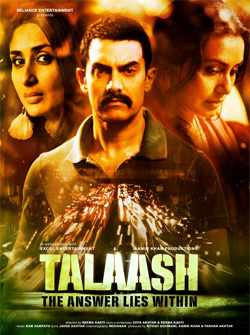
    Talaash

    Key Cast: Aamir Khan, Rani Mukherji, Kareena Kapoor

    Written By: Zoya Akhtar and Reema Kagti

    Directed By: Reema Kagti

    Produced By: Ritesh Sidhwani, Aamir Khan and Farhan Akhtar


    Some clever myth building and some delivery of promise has ensured that Aamir Khan is now a larger than life star who can never go wrong. That he agreed to star in and co-produce a film by Reema Kagti, relative newcomer was enough to build expectations sky high.


    Getting an average of three-star ratings, and as many raves as rants, the unanimous opinion was that the film built atmosphere well, but crashed in the second half. Almost everybody found the ending a cop-out. More disturbing, however, was the filmmaker’s, and by association Aamir Khan’s endorsement of what rationalists would call mumbo-jumbo.


    Shubhra Gupta of The Indian Express wrote, “In its better bits, Talaash lets us ignore its studiedness–the squalor of the red light area, the determined low-life lingo, the hard-worked cop-station back chat, the high-class homes of the rich and famous– and gives us a Hindi movie genuinely trying for a whodunit-cum-whydunnit. Talaash starts out as a smart, well-written noir-ish thriller, and then slips between the tracks. Pity about the second half.”


    Anupama Chopra of Hindustan Times felt cheated too. “To watch Talaash is to embark on a passionate love affair that ends in frustration because the object of your desire reveals itself to be shallow and depressingly ordinary. In short, a profound anti-climax.”


    Rajeev Masand of IBN Live wrote, “Director Reema Kagti employs a solid technical team to deliver a film that is rich in atmospherics and mood. KU Mohanan’s striking photography and Ram Sampat’s haunting score lend a distinct texture to this film, as do the real Mumbai locations the film is shot on. But Talaash doesn’t feel nearly as tense or urgent as it ought to, and its plot simply isn’t as deliciously complex as it could’ve been. As a result, it’s a very watchable film, but not an unforgettable one.”


    Karan Anshuman of Mumbai Mirror liked it but with some reservations. “The ‘suspense’ bits do have their shortcomings. The lack of multiple red herrings, little reward for long stretches and relatively slow pacing (the last two points are especially valid in the first half) might have you squirming. Over-explaining the big twist in the climax seems unnecessary too, especially when this is hardly what the film is about… So it doesn’t matter if you can guess what the end is going to be at interval point (like I did); if you’re going to watch Talaash solely to understand “what’s the suspense about” you’re going to be disappointed. Try and empathize, instead with the characters. Reward then, will look for and find you.”


    Saibal Chatterjee of NDTV was mostly appreciative. “By no means is Talaash the end of your search for the perfect whodunit. But there is so much going for this compelling, slow-burning, well-acted tale set in the dark, grimy underbelly of Mumbai that you can barely take your eye off the screen. As a suspense thriller with a paranormal edge, it certainly isn’t action-packed. Yet Talaash, which relies far more on the intricacies of psychological drama than on the disquieting impact of visceral shocks, is riveting all the way through to its surprising, if a tad dissonant, end.”


    Meena Iyer of The Times of India commented, “Talaash belongs to the genre of cinema noir of which there are few examples in recent times. This film is a good attempt at revisiting suspense flicks that were a huge craze in the 50-60s. To bring Gen-Now up to speed, back then movies like CID, Mera Saya, Woh Kaun Thi weaved magic on celluloid for patrons back then. But, make no mistake here. Though,Talaash has the mystique of the cinema Raj Khosla; it is modern in its approach and the setting is contemporary.”


    Raja Sen of rediff.com wrote that it was a Vikram Bhatt film better dressed. “It’s a somber, well-assembled film in contrast to the quick and flashy schlock that would have been doled out by the aforementioned merchants of middlebrow masala, and while the film’s craft — and the acting chops shared by its considerable cast — can’t at all be denied, it must also be said that perhaps the trashier approach may have worked better for this material. Or, at the very least, made for more fun.”


    Aniruddha Guha of DNA was cautious in his praise. “There are times when you feel Talaash might fall apart, but it thankfully comes together neatly in the last 30 minutes or so. As much as the story hinges on the final revelation – one that’s supposed to jolt you – the journey itself isn’t too bad either. It demands an investment of time and patience, surely, but the pay-off is rewarding. How much you like or dislike the film will largely depend on whether the final twist works for you. It did for me.”


    Baradwaj Rangan of the Hindu seemed a bit underwhelmed too, but not dismissive. “The talaash of the title, at first, suggests the search for answers. Why did the car end up in the water? Was it suicide? If not, who was behind the accident? In short, we seem to be in for a nail-biting police procedural based on a “high-profile case.” But gradually, that search takes a backseat to others – a father’s search for peace, a wife’s search for a husband who’s vanished into a void of self-flagellation, and a forgotten victim’s search for closure. Kagti brings this all together with a sure touch that her first film, the fitfully entertaining Honeymoon Travels Pvt. Ltd., never hinted at. Even if the resolution leaves you underwhelmed – and despite the artfully placed pointers to seediness, with ragpickers, porn DVDs displayed proudly in stores, derelicts and druggies, some may feel Talaash is just classily dressed up crap – the film is so beautifully made and so atmospheric that several scenes stick in mind.”


  • End of Season 1 of Satyamev Jayate: The good, the bad and the ugly truths of life

    By Meghna Sharma


    In the past 13 weeks, one show has done what no other show has been able to in a long time – get people face-to-face with the ugly truths of our society. Aamir Khan’s television debut, Satyamev Jayate, was the most-talked about show even months before it was aired. It was touted to revolutionize the Sunday morning slot on the Indian television.


    From the very first episode till its last episode on July 29, the show was able to create a lot of buzz. People shared their views on the social ills the show highlighted on social networking sites. The news channels and newspapers carried expert views and opinions on the show. It didn’t back down from highlighting the fact that a country of one billion lives like ostriches when it comes to taking action against such evils.


    However, inspite of all the hue and cry, one question still remains on everyone’s mind: was it really effective?


    MxMIndia spoke to industry experts, journalists and even activists after the show was aired on May 6 and almost all of them gave it thumbs up. Now that the show has ended, we got in touch with the same people to know their opinions…


    TRP: the only yardstick?

    Chandradeep Mitra

    For any channel and show, the TRPs it gets are the yardstick at which its popularity is measured on. Star India’s Satyamev Jayate which premiered across nine channels – Star Plus, Star Pravah, DD National, ETV, Star Utsav, Vijay, Star Jalsha, Star World & Asianet – got a rating of an average 4 TVR for the CS4+ in the Hindi speaking markets and an average of 4.9 TVR for the All 4+, according to the TAM viewership data. But, as the weeks rolled on, the ratings dipped.


    Many, however, feel that such shows cannot be measured by TRPs as they are much bigger than that. “For a show like this, ratings alone cannot be the yardstick. One must not forget that the it was a non-entertainment show and was aired on Sunday mornings.  For a slot and content like that, the show did very good,” said Chandradeep Mitra, managing partner, Anvention.


    Anil Sathiraju

    He added: “We must look at the social impact it created and I’m sure it will remain in people’s memories for a long time. Apart from the buzz created on social networking sites and getting eyeballs, I’m sure now companies will also increase their CSR activities as it highlighted the work done by a few.”


    Similarly, Anil Sathiraju, Head – south, Mudra Max Media, too feels that content and impact are more important than the ratings: “What the show has done to the morning slot is evident enough, that it made people sit up and take notice. And I’m sure now most channels, including Star, will want to revive the slot and come up with shows which will not make the slot redundant.”


    Sundeep Nagpal

    The show wasn’t developed and promoted for TRPs, said Sundeep Nagpal, founder director, Stratagem Media. “It was applicable for the masses and not many shows of such genre have been created. Hence, it would be wrong to judge it on the ratings…it’s much more than that. It bought out the issues which are prevalent but under the surface. For example how many of us in Mumbai knew about Khap panchayats? The show is a turning point in the Indian television history.”


    The much-hyped show even went on to charge an exorbitant amount for the 10-second advertisement slot which was sold at thrice the usual rates. “For an advertiser, the show was the best medium to reach its audiences. For the first time, a show was created, which in turn created two new stakes – timeslot and a new category of a show. So, many didn’t hesitate in paying that extra for the quality they were getting in return,” explained Llyod Mathias, director GreenBean Ventures and former CMO of Tata Teleservices and Motorola.


    Aamir Khan vs Content

    Anita Nayyar

    According to the media planner, Anita Nayyar, who is moving back to her former agency Havas from Bennett, Coleman & Company (BCCL) by August, initially the show got the hype only because it was anchored by the actor and the fact that the concept of the show was well hidden. However, for a show like Satyamev Jayate, it’s the content which plays a bigger role.


    “Satyamev Jayate is a socially relevant show and in the beginning, I think, it did mobilize people. However, in between it lost its public appeal. And I’m not surprised as such shows only appeal to a certain section of the society. Hence, it wasn’t even able to garner the TRPs it deserved,” said Ms Nayyar.


    She explained that though the show was anchored by a popular actor like Aamir Khan there was a gap between enlightenment and mobilization. “The show was supposed to mobilize people, but it was only able to highlight the evils which we all know exist. Nonetheless, it was a good show.”


    Voicing the same opinion, Sarla Bijapurkar, sociologist, believes that if one has to score Aamir Khan vis-a-vis the content of the show, Aamir would win. “Public memory is very short and everything will be lost if there is no follow-up. For instance, take the episode where diktats of Khap panchayats were highlighted. Has anything changed? No, we still have such bodies making people’s lives miserable. Sometimes, when one hears or reads about such instances, it makes you wonder if we, as a society, take two steps backward for every one step taken forward.”


    “For me, the show will only mean something if it is able to do a follow-up on the issues highlighted. Also, instead of raising a new issue every time, I think, they should have focused on fewer and discussed about different dimensions related to a particular issue. Maybe, then it would have been able to brought about a change,” said Ms Bijapurkar.


    Waiting for a change…

    Ranjona Banerji

    However, there are many who think that the show was a success and was able to do more than just generate public interest and will eventually lead to some change as evolutions don’t happen overnight.


    Ranjona Banerji, a senior journalist and contributing editor, MxMIndia, feels that the show did justice to the concept though there were a few dodges like the show being too emotional, sometimes. The first two episodes – female foeticide and child sexual abuse – were able to create a lot of public interest. “Apart from these two episodes, the episodes which moved me were the ones on disability and senior citizens. The show did the work of a journalist and was even able to answer a few questions. Hopefully, they’ll tweak the show a little bit and come up with a second season – better and stronger.”


  • Anil Thakraney: Satyamev Jayate: Handkerchief entertainment

    By Anil Thakraney


    Okay, the nation’s most expensive and the most-hyped TV show is drawing to a close. In a few weeks from now Satyamev Jayate will be history (there may or may not be a sequel). In fact, host Aamir Khan’s already moved on to what he does and what he knows best: Making movies. The hero’s strutting around in his ‘Dhoom 3’ look these days. It’s a good time to do an appraisal, and I have three large points to make.


    The ratings of SJ have been disappointing. It reported an okayish 4 when the show began, but in recent times the TVR points have dipped to about 3. And that is sad. This means India isn’t really euphoric over a TV show that discusses serious public issues. Dance reality shows enjoy better ratings. We can’t blame this on the channel or the producer. And this is also the reason I doubt they’ll put out another season.


    I also doubt if the show has made any impact on the nation. And I had expressed this concern when I first wrote about SJ. Because every Sunday, a new issue is being raked up, the one discussed a few weeks ago gets erased from the memory. In that sense, SJ has ended up becoming what I call ‘handkerchief entertainment’. Weep a bit and then discuss where to step out for lunch. This also tells me entertainment channels cannot change this nation. News channels can, but they have other problems which we’ll discuss another day.


    The onus then falls on the star host to keep the pressure going on the various issues he’s brought up. The only reason SJ even scores a TVR of 4 is Aamir Khan. Take him out of the equation and it will earn less than 0.5 points. It’s his charisma that drives the show. Which is why if Aamir doesn’t keep the fires burning, no one else will. But obviously the actor won’t and can’t do this. He has many other fishes to fry, and in any case his involvement in public causes in the past has been at a superficial level. So there’s no reason to believe it will be any different this time.


    Net net: An average performer. A nice Sunday tear jerker. Even voyeuristic to some extent. But all those of us who believed SJ will change India got a might egg on the face. Just as Aamir hummed ‘Meri jaan meri jaan Sunday ke ande’ in the show’s promos.


    * * *


    PS: Here’s a respected TV producer saying that advertising is killing the television medium. Of course he makes valid points. However it’s tough to visualize a situation where TV is freed of these irritating ads. Unless subscribers are ready to pay a lot of money to broadcast stations. That’s never gonna happen. Also, if there were no ad breaks, what happens to the loo breaks? 🙂


    Link: http://news.bbc.co.uk/2/hi/uk_news/scotland/8227864.stm


  • Aamir reaches out to BIG 92.7 listeners in 45 cities

    By A Correspondent


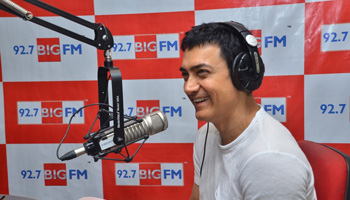
    92.7 BIG FM listeners had a special treat when Aamir Khan dropped by at the Mumbai station to interact with them on air.


    Engaging in conversations with listeners from across Tier II and III cities resulted in some interesting revelations, as they shared their feedback, the difference it has made to their lives and to the society at large and also proactive recommendations of subjects that could be taken up on the show. “People around watch the show and expect change from their society, change will happen only when one personally changes,” he said.


    Speaking on the occasion, Mr Khan said: “I am very happy to have got this opportunity on 92.7 BIG FM to connect with my audiences. With Satyamev Jayate, our endeavor has been to address key issues plaguing the nation, the show today has gone a long way in helping us get a first hand feedback about the show, how it has impacted us and how the show can play a catalyst in bringing about the much required change in our society.”


    Commenting on Mr Khan’s visit to the studio, a company spokesperson said: “We, at 92.7 BIG FM, were happy to have Aamir Khan choose our network to reach out to people across India, while offering our listeners the opportunity to speak with someone, who is working towards creating a positive change in society.”


  • Paritosh Joshi: Who will cast the first stone?

    By Paritosh Joshi


    You’ve got to give it to Aamir Khan. Any theme he raises through his cinema, and now his television show, instantly becomes the issue du jour. Dyslexia (Taare Zameen Par), rigid education practices (Three Idiots), anguish at the political establishment (Rang de basanti), morality of terrorism (Fanaa) and now in rapid fire succession the weekly episodes of Satyameva Jayate (everything from female foeticide to medical malpractice). If the worlds of the social media are anything to go by, people in the Media & Communications industry are particularly engaged in Aamir’s weekly broadsides. Minutes after the week’s episode goes on air at 11am on Sunday, Twitter is deluged with views and opinions agreeing, and less often disagreeing, with Mr. Khan.


    You would imagine, looking at the stridency of tone that characterizes a lot of the chatter, that we belong to an industry that has solid claim on the high moral ground. Does it?


    I became involved with the Advertising Standards Council of India (ASCI) about 6 years back. As a communication professional, I was conscious of the close and incessant scrutiny that our industry attracted and of the permanent Damocles’ Sword of statutory regulation that hung over it. The ASCI charter’s commitment to self-regulate resonated strongly with me and joining the Consumer Complaints Council, which gives force to the Self Regulatory Code of the ASCI, was a natural next step.


    If Awards Functions like the Abbys and Cannes are the Halls of Fame of the industry, CCC must qualify as its identification parade for the Rogues’ Gallery. Education institutions that claim their superiority, not based upon quality of education facilities they offer, but the acreage of their campus. Cooking oils that assure you of defence against cancer. Fairness potions promising enhanced employability. Malted beverages that deliver anything from height gain to better grades in the exams. A whole spectrum of beers and spirits veiled very thinly under guises of ‘Music CDs’, ‘Unique Events’, ‘Golf Equipment’ or ‘Soda’. Apparatuses that promise the benefits of a cardio workout by merely placing your feet in a harness and allowing them to shake about for a few minutes. Perfumes and deodorants that will instantly cause the user to become a sexual dynamo around whom people of the other gender experience spontaneous orgasms. Plastic beads and metal baubles that will ‘guard against the evil eye’, pacify irate planetary deities and result in a shower of wealth. Or in a particularly horrifying instance, a hospital that advertised radical hysterectomies as a permanent solution against pre-menstrual syndrome. We’ve seen them all.


    While some offenders are no-name businesses, the largest majority are big and prominent businesses that we all hold in high esteem. Indeed, we must look well beyond the brand owners to understand the circle of culpable accessories that enable the offending communication to reach the consumer. The creative work originates in an advertising agency. A marketing team approves it for release. A media agency sets up a media schedule. Multiple media outlets finally convey it to the consumer. In many cases, all the organisations that are involved through this value chain are members of the Advertising Standards Council by virtue of which they are presumably committed to the ASCI Code. While the complaint is made and upheld against the brand owner, the actual burden of guilt correctly lies with all the accessories that participated in the process.


    Interestingly, whenever the issue of legally dodgy, false, misleading or vulgar advertising crop in professional discourse, the ASCI is indicted forthwith, for its abject failure in bringing the perpetrators to book. Of recent days, the Ministry of Consumer Affairs has joined the chorus, promising a ‘National Consumer Protection Agency’ aka the other NCPA, to become the consumer’s paladin against advertising mischief. Apparently the phrase ‘Self-regulation’ is indecipherable to the average communication industry professional.


    Self-regulation begins by a body representing all stakeholders in a particular context agreeing to a code of ethical practice. This code is then widely shared with all stakeholders so that they may understand and assimilate its letter and spirit. Once this has been done, self-regulation transfers the burden of compliance upon the practitioner. The overseeing authority is not a policeman. It is a conscience keeper.


    This is an exhortation. A humble request. How clean is our own escutcheon before we pronounce moral judgment on all and sundry? Or as Aamir might say, “Apne ghirebaan mein jhaank kar dekha hai kabhi?”

    Paritosh Joshi was until recently CEO, Star CJ. He has been a marketer, a mediaperson and been a key officebearer on industry bodies. He can reached via his Twitter handle @paritoshZero

  • Advertisers crib as TRPs fall for Satyamev Jayate

    By Ratna Bhushan


    The truth isn’t quite triumphing – not at least in the way some advertisers on Aamir Khan’s hyped debut television reality show Satyamev Jayate thought it would. Television rating points (TRPs) have fallen short of expectations, say at least two marketing heads of associate sponsors, although publicly most advertisers are making the right noises. That, however, hasn’t stopped media buying firms, on behalf of advertisers, from pushing for result and performance-based ad rates on reality shows. They say that TRPs should decide the ad rates of reality shows instead of the channels charging advertisers fixed rates even before the show goes live.


    As per rating agency TAM’s data released by Star on June 13, Satyamev Jayate – which is being aired on Sunday mornings across nine channels of the Star Network (as well as on the state-owned Doordarshan) delivered a national TVR of 3.9. That’s lower than the ratings of blockbuster shows of the past like Kaun Banega Crorepati (Sony Entertainment) and Bigg Boss’ debut show (Colors).


    Navin Khemka, managing partner of media buying firm ZenithOptimedia, which represents consumer goods major Reckitt Benckiser, one of the associate sponsors of Satyamev Jayate said: “All the risk cannot be passed on to the advertiser. With high entry-level costs on reality shows, it is critical that channels take more accountability on the returns on investment.”


    Increasingly, agencies and clients will ask for certain minimum guarantees on programme performance and viewership, he added: “It has to be a win-win for both the brand and the show.”


    While Bharti Airtel coughed up a chunky Rs17-20 crore for the presenting sponsor slot, associate sponsors like Axis Bank, Reckitt Benckiser, Skoda, Coca-Cola and Johnson & Johnson paid Rs6-7 crore each for the 13-week show.


    Star has charged Rs8-10 lakh per 10 seconds for spot rates for Satyamev Jayate while spot rates for KBC were Rs 3.5-4 lakh per 10 seconds.


    According to the marketing head of an associate sponsor who did not wish to be quoted, returns on investment on the show could have been higher. “The way the show was sold to us, we expected higher ratings. It’s disappointing and we hope the ratings increase as the show progresses.”


    However, Bharat Bambawale, global brand director at Bharti Airtel, defended the investment: “To view the success of a show based only on television ratings would limit its overall value. The success of a show has to be looked at collectively and in a holistic way… the content of a show will impact ratings.” On whether broadcasters should rationalise ad rates on reality shows, Bambawale said: “It’s a matter of individual judgement for every sponsor.”


    Basabdutta Chowdhury, CEO of Platinum Media, a division of media buying firm Madison World, which buys media for Bharti Airtel, said: “Advertisers do want accountability and minimum guarantees factored in for reality shows in general, although Satyamev Jayate was not meant to be a mass ratings show.”


    On reality shows, deals are structured in a way that they cannot be re-negotiated through the entire program. This is unlike cricket where broadcasters keep at least some ad inventory – like the semi-finals and finals – open to negotiations based on the ratings.


    Ajit Varghese, MD, South Asia of Maxus, which is owned by the country’s largest media buying house Group M, said: “While there’s no standardised way of looking at a deal, we all are pushing for deals with a minimum guarantee. Of course, the arrangement should factor in an upside too, but overall ad deals should be linked to a programme’s performance.”


    Veteran ad man Santosh Desai is of the view that Satyamev Jayate needs to be evaluated not just by viewership but also for the impact it has. “It’s a difficult show to watch…. Some subjects don’t have a mass audience at all so to be watched week after week by masses will be a challenge.” KBC’s most recent season had opened to a rating of 5.24, and Bigg Boss Season 5 had opened to a TRP of 4.25. The Amitabh Bachchan-hosted KBC had managed ratings of over 4 all through its run.


    A Star India spokesperson says the show has delivered a reach of Rs40 crore over the first five episodes (including repeats). The launch episode delivered a TVR of 4.9 in Hindi-speaking markets and a 4.1 TVR all-India. Subsequently, all episodes have consistently delivered a 4+ rating in HSM and 3.5+ ratings at the all-India level.


    Kevin Vaz, Star India president, ad sales said: “Satyamev has ranked amongst the top few every week on an all-India level.”


    Source: The Economic Times

    Copyright © 2012, Bennett, Coleman & Co. Ltd. All Rights Reserved


  • India’s Most Influential


    If you’ve been in the Indian media and are active on social networks, you just can’t ignore Mahesh Murthy (~5500 Facebook followers, ~18500 Twitter followers, 11600+ Linked-in connections!). On Saturday, he tweeted about the new Influencers rankings that his company Pinstorm produces, and the last time he did that, we noticed it was pretty well-received. However, we thought it would be a good idea to wait a bit and let the system get more robust. So when chanced upon his tweet on the Influencers 2.0, we checked out the list and invited him to write this piece for MxMIndia readers. And slipped in a request to send it the next day. That would be an impossible suggestion for most people, but we knew that Mr Murthy can will deliver. The Pinstorm founder and Seedfund managing partner is online nearly 24×7. Plus he understands the needs of our site and the profile of our readers: he has had first-hand experience of working with brands – now at Pinstorm and earlier with Ogilvy, Grey etc in advertising. He headed Channel [V] for a bit in the mid-1990s and a slew of media/onlne properties his companies PassionFund and now Seedfund have backed, including afaqs.com. – Ed

     

    By Mahesh Murthy


    Imagine you were a brand that bought a spot on Satyamev Jayate, or on one of the many IPL matches that we just got done with. Depending on the deal you struck, your placement must have cost you between Rs 2 lakh and Rs 10 lakh for every 10 seconds of airtime. Not counting the Rs 1 crore or so it must have cost you to produce the ad and pay the agency.


    Now both these programs got TRPs of around 3. That means around 3 per cent of India’s 121 million cable and satellite homes had tuned in. That’s 3.6 million households.


    Now imagine you were interested in the youth audience – and let’s keep it broad – say anywhere between 14 and 30 years of age. That would be about 1 such person per household – or 3.6 million people. And now let’s imagine you were interested in SEC A/B and not so much in C/D/E. So you have to cut that 3.6 million youth down to around 1 million at the most, that is if you’re feeling generous


    So it cost you around 500,000 or more rupees to reach 10,00,000 upscale youth once, for 10 seconds. On the programmes with the greatest reach in India. Most other TV programmes will have a fraction of this reach – where you’d be lucky to get 100,000 upscale youth watching your ad.


    Youth online

    Now let’s turn our attention to an entirely different medium. Let’s say that for some reason, Farhan Akhtar mentions your brand on a tweet. Or on his Facebook fan page. Or on a blog. Guess what your direct reach would be? About 10,00,000 people – mostly all upscale youth. Now let’s say just 1 per cent  of those re-tweet it. That’s 10,000 people. And if each of those re-tweeters has an average of around 150 followers, it’s now gone out to another 15,00,000 people. Even adjusting for duplication, that’s a total reach of 20,00,000 or more people. That’s more youth than the biggest TV shows in India can get you to.


    Now imagine that all of it is for free. Or, at best, for a teeny-tiny budget.


    And now imagine other people also talk of you online.


    Shashi Tharoor, our parliamentarian from Kerala directly reaches 13,00,000 people. Amitabh Bachchan reaches twice as many. Keeping showbiz aside, Yuvraj and Dhoni both directly reach more than Shashi Tharoor does. And the Dalai Lama, from his remote outpost in Dharamsala, directly reaches out to an amazing 44,00,000 people. The Delhi and Mumbai editions of The Times of India together don’t do that.


    But it’s not all celebs. Kiran Bedi reaches 4 lakh people online – mostly SEC A/B folks. That’s more than any show on MTV can get you across to. My friends Mehul Patel and Vishal of Pentagram can each get you to over a lakh people apiece, directly. More than any English business programme can.


    A section of the Pinstorm India Influencers 2.0 rankings of resident Indians (Please click to be taken to the live page)

    Mankind is the medium

    In this digital world, people don’t necessarily get their news and information from websites or TV channels. They get it increasingly from other people. The new medium isn’t digital: it’s you and me – and the places we talk.


    Facebook has 50 million Indians on it. That’s more people than watch Star Plus in the country. And 7 million of those are on Tata Docomo’s Facebook page. Approximately 7 times the monthly reach of MTV’s TV channel. So who needs who – does Docomo need MTV? Or is it the other way round?


    Once a Shahrukh Khan needed Filmfare and its circulation of 25,000. Today @iamSRK has a circulation of 25 lakh and a reach of twice as many. One would imagine a single tweet from him could double Filmfare’s newsstand sales if he chose to be gracious.


    Potential influence, not just reach

    But the power of different people on social media isn’t just that of their Facebook fan base or Twitter followers. That would be as silly as saying Doordarshan has a reach of 135 million just because every set in India can receive it.


    Social influence is measured based on many factors. How often do you talk – is it the notoriously taciturn @Aamir_Khan who has tweeted all of 90 times in the last few years? Or is it the motormouth @Agnivo who has tweeted over 2 lakh times in the same period?


    How often are your tweets forwarded or re-tweeted? What is the reach of those re-tweets? How often do people act on your tweets by replying to you – and how often do you engage back in conversation?


    All of these are factors that go into measuring one’s potential to influence online.


    The Pinstorm India Influencer Rank

    At Pinstorm we track the online influence of almost 5,000 Indian people and brands every day.


    We first created this list of social media mavens -and we add to it every month. Then we use scores from three different international measurement services – Klout, PeerIndex and Kred which look at an entity’s strength on Twitter, Facebook, LinkedIn, Quora and blogs – and then apply our own algorithm to these scores to arrive at a consolidated score and rank.


    Our scores are graduated out of 100 – and you can see them live at Pinstorm.com/ii. As at the time of writing this – and things can change every single day, Aamir Khan leads the individual influencer rankings with an II score of over 80 out of a possible 100. The only other entity with a similar 80+ score is NDTV, who heads our influencer rankings on the organisational or brand side.


    As you can imagine, Bollywood and sports personalities dominate the individual rankings, with 15 of the Top 20 individual rankings. The five exceptions being Rajdeep Sardesai, Shashi Tharoor, The Dalai Lama, Kiran Bedi and ex-adman and now comic tweeter Ramesh Srivats.


    Surprisingly, media properties don’t quite dominate the brand influence rankings, with just 8 of the top 20 positions. But cricket leads with 10 of the top 20: with CricInfo, CricketNext, IPL and 7 IPL teams holding top ranks.


    The best-ranked consumer brand in online influence terms is Samsung, followed by IndiaGames, Ixigo, Vodafone, Flipkart, Airtel and HCL.


    A section of the Pinstorm India Influencers 2.0 rankings of Indian brands (Please click to be taken to the live page)

    The purpose of maintaining these lists wasn’t just so social celebs could boast of their rankings to each other.


    Truth is that the vast majority of the 5,000 people we track aren’t celebs in the traditional media world. Perhaps you’ve not heard much of Madhavan Narayanan, Malini Agarwal, A R Karthick, Jaydip Parikh, Rahul Banker, Kaveri Ahuja or Sundar Raman. These people (and, I must somewhat embarrassingly add, myself too) appear in the Top 75 influencer list for India. With online influence scores greater than that for Viveik Oberoi, Shabana Azmi or the online avatars of The Economic Times, MTV or Star Plus.


    In India’s online world where there are more people on the net than there are TV sets – and where more people already access the net from their mobile phones than do from their desktops and laptops – where would you put your marketing rupees?


    At Pinstorm we suggest to marketers that a well-thought-through group of online evangelists, people who are interested in your product category and have credibility – should be lovingly tended and cared for. New announcements and launches should be shown to them first – because if they like what they see, they might talk about it online.


    And that combination of reach and credibility could do you a lot more good at lot less than a Rs 1 crore TV commercial shown repeatedly for Rs 10 lakh every 10 seconds.


    The Pinstorm India Influencer List is live and visible online at http://www.pinstorm.com/ii  We maintain lists across brands, residents of India, Indian non-residents and politicians. Mahesh Murthy is the founder of Pinstorm, India’s leading digital-first brand management firm.

     

  • Planners happy with Satyamev’s 4.9 TVR

    By Meghna Sharma


    Star India’s much discussed show Satyamev Jayate which premiered across nine channels – Star Plus, Star Pravah, DD National, ETV, Star Utsav, Vijay, Star Jalsha, Star World & Asianet – on May 6 got a rating of an average 4 TVR for the CS4+ in the Hindi speaking markets and an average of 4.9 TVR for the All 4+, according to the TAM viewership data.


    The media planners are happy with the TVR of 4 and feel that it’s a good start for the show at the morning slot. “With Aamir Khan hosting the show and the whole secrecy about what the show is going to be, the show got its viewers. The slot worked too, as the repeat telecast has got a lower TVR than the morning slot. However, I was expected a rating of 5. In the metros the show has done extremely well but one cannot rule out DD’s reach too,” said Mona Jain, CEO, VivaKi Exchange.


    The show which marks the entry of Aamir Khan on the small screen does not fall into the typical ‘entertainment’ genre. The content is serious; however, it didn’t stop people from watching. The show reached 27 million people (All4+ category).


    “It’s a good TVR for a show at a Sunday morning time slot. But we’ll have to wait and watch if the show will be able to maintain it. However, without a doubt, one can agree with the fact that the time slot has worked for both the show as well as the channel,” said Jai Lala, Principal Partner – Exchange at MindShare.


    Agreeing with Mr Lala, Anil Sathiraju, Mudra Max Media, Head – South, explained that the 11am time slot on weekends is much better today: “The opening TVR for the show is 4, so it’s that context it might be around 3.2 or 3.4 in the coming weeks which will help the channel be on the top slot.”


    Sundeep Nagpal, director, Stratagem Media, predicted that the show might get a rating between 3.2 to 3.7 on Star Plus. According to TAM, it was able to get a rating of 3 on the channel: “It is unfortunate that the show got a rating of only 3. Social transformations cannot happen with a TVR of 3; it needs much more than that. It is a good property which advertisers should be happy to be associated with.”


    “For a show of such caliber and content, marketers should associate with it because it means quality viewership rather than the numbers,” said Mr Sathiraju.