Tag: Aamir Khan

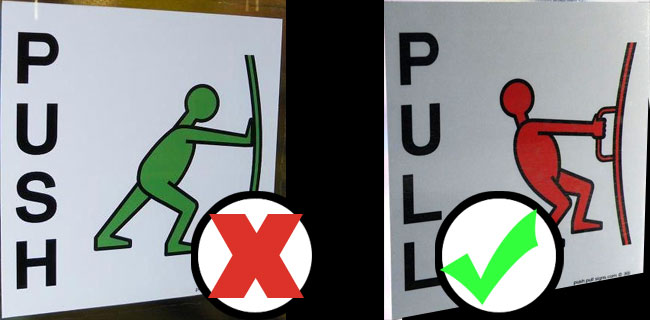
  • Pull, not Push: Film marketing is no longer the same


    By Shailesh Kapoor


    Shailesh KapoorA long weekend, like the one that spanned from Aug 11 to 15, is hot property for film producers. Big holidays boost box-office collections by upto 75-100%. In this regard, Aamir Khan’s Forrest Gump remake Laal Singh Chaddha got the perfect release date. It was also his first release in almost four years. But the audience just didn’t turn up. Khan, who was the first to breach the 100, 200 and 300 cr box-office levels, will have to settle for about Rs 60 crore this time.


    Not so long ago (through pre-pandemic years seem like a thing of the distant past), a saleable movie star was box-office insurance. You could make the worst film, but he would at least get bums on seats on the first weekend. Things have changed rapidly over the last two years. Laal Singh Chaddha, for example, could never recover from the tepid response to its trailer, and all the marketing that followed seemed like a futile catch-up. Khan has been a marketing trendsetter from the times of Ghajini. But he missed a trick this time, by not realising that the nature of marketing may have changed fundamentally.


    Films, like many other product categories, have extensively relied on push marketing for years. You essentially spend money to “buy” share of voice and mind, and build enough “buzz” to get people to watch the film when it releases. We have seen Shah Rukh Khan promote some of his weaker films with this intent, and with some very good results too.


    Push marketing worked well in simpler times, when media options were limited and more consolidated. In today’s digital-dominant ecosystem, you cannot push all the buttons at the same time. To begin with, it will be insanely expensive, given the growing fragmentation of media consumption over the last few years. And then, there are ‘media’ (like the SVOD apps) that are ad-free anyway. And then, there are other media, like social media, where marketing works best when it is organic and user-generated… when it is led by a consumer pull, than by a manufacturer’s push.


    This is a fundamental change, and one that many in the media or the marketing industry are currently not adapting very well to. How do you create consumer pull for a new product that has no prior brand or franchise value? So many things have to come together: The product has to service a real need, and come across as original in its intent. And the marketing must be imaginative and disruptive, to stand a chance of being embraced by the organic pop culture that accepts and cancels new things every day.


    In Tamil and Telugu cinema, the top stars still carry an aura that ensures a natural consumer pull by just their presence on the film’s poster or trailer. But we have seen many such films crumble from the second day onwards too. So even when an agent of pull is available, more works needs to be done.


    It’s not easy to create consumer pull. After all, if you could “create” something that’s meant to be “organic”, would it be “organic” anyway? And that’s where the conundrum that lures marketers towards the classical push marketing approach lies.


    But days of push marketing are numbered, at least for entertainment products. With the success of Pushpa to KGF to the Marvel films, and a dozen failures on the other side, the writing is on the wall. Can the film industry pull up its socks then, all pun intended?
     

  • Medicines: Quick delivery? Naah!


    By Vikas Mehta


    Vikas MehtaI have been constantly writing about this year’s IPL being unusual. In many ways. And now when we are reaching the business end of the league, it’s getting obvious that the three most unfancied teams are set to qualify for the playoffs. Paying an ode to the unusual season, this column is also going to be unusual. This time I am taking up one category campaign and talking about it extensively.

     

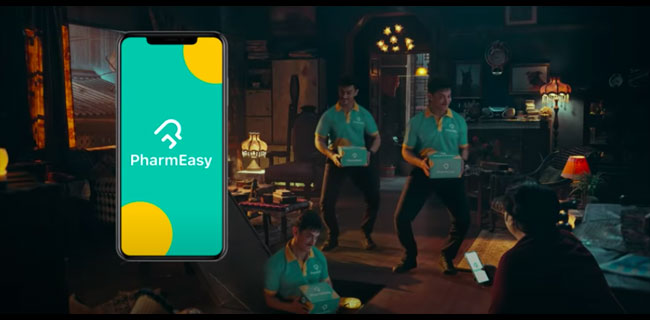
    In the midst of edutech, fintech, transport aggregators, there is also the medicine aggregators. And some brands like Pharmeasy and Pharmeasy have advertised heavily on IPL. Both have used celebrities. Both have done multiple ads. Both promise multiple benefits. And both, over-promise.


    When anyone needs a medicine, usually it’s because there is an urgent need. The delivery needs to be in minutes. But my experience with both the apps show that the usual delivery time is anything between one to four days. Maybe because I am in a small town therefore the medicine logistics is still to be sorted out. But isn’t that an irony. A small town should be able to deliver much faster. Netmeds, I have walked into Reliance Smart stores with prescription, which have a small Netmeds dedicated pharmacy area, and the standard answer is that they will check and call me back. And call back is after a few hours which confirms that the medicine will take another 12-24 hours. Both times that I tried Netmeds, by the time the call came, I had already bought the medicines from an offline pharmacy. And of course the app showed at least two to three days to deliver.


    Therefore, when I see the Kareena Kapoor ads which talk about quick delivery, the brand loses all credibility. Ditto with Pharmeasy as they clearly say same day delivery. Maybe they deliver cosmetics and other non-medicine products fast. But then are they just a Swiggy Instamart or Dunzo? They need to be Swiggy Instamart and Dunzo in medicines or else stop making these claims.


    The Kareena Kapoor train ads go on to show other benefits like quality or range. Again, I am not sure if one needs to highlight these benefits for medicines. The app claims to sell medicines against prescriptions. So, do we assume that quality of the prescribed medicines is a suspect? Range is more confusing. Yes, generic drugs can be available but how many of us actually know about it or are willing to even order a generic and ignore the doctor’s prescribed brand? I suspect they are pushing more of the cosmetics or supplements or tonics rather than the prescribed medicines.


    Pharmeasy with Aamir Khan on the other hand has chosen some relevant benefits. Ordering medical equipment like sugar meter or even organising for home medical tests. These definitely are relevant and benefits that matter to the category. And I quite liked the exaggeration execution of three Khans belabouring each point.


    Ultimately, both these brands cannot overcome the lure of discounts. Medicines, by Indian standards are definitely expensive. So double digit discounts work. And the lure of a minimum discount always is music to ears. Specially, when one is on long-term medication for ailments like diabetes, cholesterol, arthritis etc. These medicines are expensive, they are required on a regular basis and most importantly can be ordered in advance, keeping two-three days delivery time in mind. So discounts do play an important role in both the brand communication.


    As a marketer, I have always wondered at multi0benefit communication. Does it really help? Do the consumer remember all benefits? The classical theory says that let one benefit be emphasised so that it sticks. And can be owned. My thinking is that well executed multi benefits work if they are relevant. The target consumer picks out the benefit that he needs or that matters to him and that sticks. So, if we take Pharmeasy, someone who needs to buy a medical equipment or needs to do tests will remember the brand. But the irrelevancy of quality or range for medicines, makes me doubtful about Netmeds communication. And discount is almost like a must. It is a category given without which no brand will survive. In fact, discount is like a blind spot. Its presence is almost like a reassurance but its absence will be most glaring. As for speed of delivery, the brands need to either improve their delivery or not talk about it.


    Episodical ads, which seem to be like a continuing story narrative, always create interest. And using a celebrity to anchor it is a good idea if the celebrity becomes an integral part of the narrative. The Netmeds ads with Kareena Kapoor reprise her role in Jab We Met. So all the episodes have good empathy. Pharmeasy, on the other hand is not episodical but Aamir lends it a nice ethereal quality which again piques our interest.


    As I sign off this week’s column, I am aghast at seeing the new Budweiser ad. But in the spirit of being unusual, let me leave it at that. More about it, next week.


  • Aamir Khan stars for Vedantu TVC

    By Our Staff


    Vedantu, an online learning player, has launched a brand campaign to launch its Ai-Live augmented interactive technology, featuring actor Aamir Khan.


    Speaking about the campaign, Nikhil Rungta, Chief Growth Officer, Vedantu, said: “Vedantu has always been a student first and has created products that will help provide quality education and access to top teachers to every student across India. The objective of our latest campaign is to showcase how every child can now learn from the most inspiring Master Teachers and best-in-class live interactive features like real-time doubt solving, quizzes, leaderboards, and many more at an extremely affordable price point of just Rs 5000 per annum. We believe that this will be an important step towards bridging the learning gap and thereby creating impact
    at scale.”


  • Aamir is brand ambassador for PharmEasy

    By Our Staff


    PharmEasy, the online medical platform, has launched its latest campaign starring Aamir Khan as its brand ambassador. Aamir will be seen endorsing the PharmEasy brand via various mediums. The campaign, conceptualised by FCB India, will also be a part of the IPL campaign 2022.


    Talking about the collaboration Gaurav Verma, CMO at API Holdings, parent company of PharmEasy, said: “Collaborating with someone as versatile as Aamir Khan fills us with immense joy. We are absolutely thrilled to have him on board as the face of the brand PharmEasy. He truly knows how to engage with the audience. With this association, we aim to reach more people while making affordable healthcare accessible to everyone. We are looking forward to a great collaboration with him this year and widening our reach through offerings and such campaigns.”

  • Dhoni abandons his ‘Dream’?!


    By Vikas Mehta


    Vikas MehtaSo, it’s been a very usual and unusual IPL so far. Usual, because Mumbai Indians (MI) have lost the first two matches. But the MI captain Rohit Sharma felt it was business as usual in his post-match interview. Unusual, as Chennai Super Kings have also lost the first three matches on a trot, albeit after years. Unusual also for CSK as Dhoni, after relinquishing his captaincy seems to have taken it back and is also scoring runs as in his heydays.


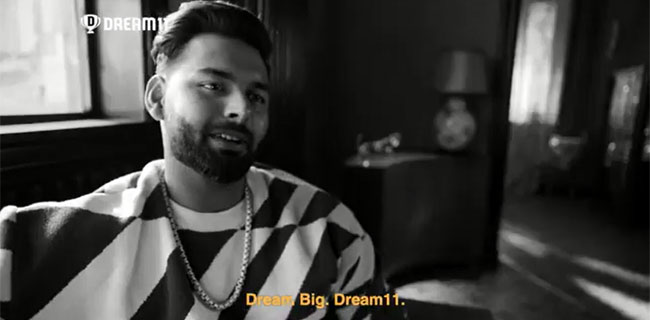
    And as usual, Dream 11 continues its dream run at IPL. The idea of “Dream Big” has seen many new frontiers. The series of various players like Shikhar Dhawan, Rishabh Pant, Rohit Sharma, Jasprit Bumrah and Hardik Patel reminiscing their struggles but not giving up on their big dream has two new creatives so far. One, with Pant and the other with Sharma. And this time, they pay tribute to some behind the scene people like the groundsman or even a stranger helping Pant at a gurudwara. The thought of one is never alone if one’s big dreams fits seamlessly into the Dream Big theme of Dream 11. Whew! Too many dreams here.


    https://youtu.be/3JazfubLOgI


    Dream big is also following a classical strategy of thematic and tactical ads. For the uninitiated, when advertising was the be-all and end-all of all communications, brand ads were created for brand equity, may be once a year, extolling the virtues of a brand and its personality. These were called thematic ads. Interspersed through the year were tactical ads which by nature would drive sales. These were by nature about inducements or sale pointers. Personally, I think this was more of a jargon-spitting marketer’s delight, as for the end-consumer. every communication is a message and she or he does not delve into it with a separate compartment of thematic and tactical in her or his mind. The ads with Dhawan, the Pandya brothers, Ashwin and even Pant in a metro asking people to try the Dream 11 seems to be in the genre of the tactical ads of yore.


    https://youtu.be/Dn7ixMGB_dM


    But one dream seems to be missing from Dream 11. Dhoni has disappeared from all communications and has now appeared for Winzo. Another gaming app. Winzo is not about a fantasy league. It’s about skill and social gaming and I presume it’s clear of any controversy related to “gambling” as Dream 11 is. Maybe that’s why Dhoni moved away from Dream 11. In the ad, Dhoni cheekily starts by saying that he is called gamechanger so he is changing his game from today. Very unusual but typically clever from Dhoni.


    Quite unusually, I am seeing Byju’s ads without Shah Rukh Khan. And these are good. Emphasising on understanding the concept rather than memorising for an exam. ‘Samjho seekho jeeto’ encapsulates the idea well. As a parent, these resonate with me more than the Shah Rukh ads which seemed more gimmicky. I also think Shah Rukh’s personality does not gel with that of Byju’s and made the brand more flippant.


    There has been a lot of buzz about the new Spotify ads. I like them because they amplify the generation gap between Gen Z and the millennials as also Gen X. While Gen X and the millennials are passionate about politics or shopping offline or any discussion and are more social, GenZ is more reclusive and more digitally social. So, Spotify is their ‘kavach’ or protective armour from these indulgences of the older generations. Unusual, yet simple.


    I also think that the Meesho ads capture a similar trait of Gen Z. The features of photo search or free delivery are neither new nor unique but they capture the essence of Gen Z. While millennials or Gen X prefer offline shopping and want to see all options, Gen Z is not only used to online but also wants trendy or happening products. So, these features serve them well.


    Does Aamir Khan have a triple role in his next film? The series of Netmed ads make me think so. Or, wait! Was it Pharmeasy? Or 1mg? At least Pankaj Tripathi was not about triple or double role. Not only are the names confusing but so are the generic benefits. From a consumer perspective, when I fall sick, I need medicines, fast. Not in a day or in a few hours, but in minutes. So, except for long-term medications like for diabetes or cholesterol, I am not sure how these medicine aggregators can help. What do the investors and these start-ups know that we don’t?


    And just when I was about to sign off, I saw two similar ads from PepsiCo company. For Pepsi and for Slice. It seems the company has taken competitive stance as a corporate paradigm. But then what’s the fun if unusual things don’t happen. More on the two ads next week.


    Vikas Mehta, a senior advertising professional, is now a strategy consultant and educator based in Dehradun. He has a considered, often contrarian view that we enjoy consuming (and contesting) on most things around him: cinema, cricket, advertising, politics and life in general. AdsOnIPL is a series of reviews of the ads aired around IPL programming. The column is in its second season. His views here are personal.


  • Snapdeal launches campaign with Mohit Raina

    By Our Staff


    Snapdeal, the e-commerce company, has launched a new campaign starring television (and web series actor) Mohit Raina as part of its ‘Toofani Sale’ consumer campaign in this festive period.


    Commenting on the campaign, Soumyadip Chatterjee, Brand Marketing Director, Snapdeal said: “We see the partnership with Mohit as a way to reach and build trust with the Indian heartland audiences, and deliver credibility of our efficacy and brand promise. He is a self-made movie star with humble beginnings and gets huge respect and love from Indian TV and movies viewers, due to his larger-than-life roles in shows like Mahadev and blockbuster films like Uri.”


    Snapdeal, it may be recalled, once had Aamir Khan endorsing its service, which was later snapped as the actor had got into a controversy.


  • Aamir Khan walks for Walkaroo fashion footwear

    By Our Staff


    Footwear brand Walkaroo  has launched an integrated marketing campaign, “Walk More. Restless”.  Conceptualised and executed by Havas Creative Group India, it will release six films, featuring  Aamir Khan in six different avatars in this campaign series.


    Commenting on the campaign, VKC Noushad, Managing Director, Walkaroo International Pvt Ltd, said: “We are excited to launch this fresh campaign with Aamir khan. The campaign marries the constantly changing shades of Aamir Khan with the trendy and wide variety offered by Walkaroo, which includes 1000+ designs across Gents, Ladies and Kids categories.”


    Added Bobby Pawar, Chairman & Chief Creative Officer, Havas Group India: “Today’s generation is always on their toes, forever moving, restless and edgy. For them, discontentment is the only form of contentment. We have conceptualised the films keeping in mind the young consumers, who are eager to try something new and are not afraid of experiments.”


  • Aamir Khan in new TVC for Ceat Tyres

    By Our Staff


    Ceat Tyres has launched another integrated marketing campaign featuring actor Aamir Khan to promote its premium SecuraDrive range of tyres.  The campaign will be a series of three advertisements with Aamir Khan playing different avatars in each version throughout the second leg of IPL across media platforms.


    Said Amit Tolani, Chief Marketing Officer, Ceat Tyres Ltd: “Safe and smart mobility has been Ceat’s primary goal. The new campaign with Aamir focuses on our vision of ‘Making Mobility Safer and Smarter Every day’. Our SecuraDrive Car and compact SUV tyres offer a safe ride through improved braking performance and ultimate riding comfort— the best friend for your car on any road. The campaign emphasises the significance of buying reputable and reliable tyres. Aamir embodies Ceat’s honesty, enthusiasm, perfection, and innovation and has been a great brand ambassador for us.”


  • Aamir Khan & Kiara Advani to be brand ambassador for AU Bank

    By Our Staff


    AU Small Finance Bank has unveiled a mega brand campaign, titled ‘Badlaav Humse Hai’. This is the first integrated marketing communication campaign from AU Bank since its inception.


    Commenting on the essence of the campaign and the timing, Sanjay Agarwal, MD & CEO, AU Small Finance Bank, said: “AU was founded two and a half decades ago for the purpose of taking formal financing to the unbanked and in the last four years as a bank we have successfully expanded both our range of services and our geographical reach. Our success is a result of our innovations across the banking spectrum. We take utmost pride in doing things ‘differently’ to the delight of our customers and with the launch of AU 0101, our digital bank, we will work towards ushering in Badlaav in banking.”


  • In a world full of influencers, are celeb-endorsements worth it?


    By Bhuvi Gupta


    Bhuvi GuptaIt was 2015, Diwali had just passed and Snapdeal was one of the three big e-commerce players in India with Bollywood icon Aamir Khan as its brand ambassador. A personal comment by Khan at the Ramnath Goenka Awards event launched the first boycott trend online for Khan-endorsed Snapdeal, whose Play Store ratings plummeted, orders got returned. Despite the official statement released disassociating itself from both the brand ambassador and his views, the damage had been done. Aamir Khan was soon fired from his role as brand ambassador.


    Khan has since learnt his lesson and kept his personal opinions to himself, a dictum closely followed by the other two Khans as well (controversy’s favourite child, Saif Ali Khan not included!). But it was definitely the first time I thought about the wastefulness of celebrity endorsements, a point of view that has only since strengthened.


    Why do brands turn to celebrities?


    The simplest reason for using celebrity endorsers is for the awareness they help generate.  For most mass market brands in crowded marketplaces and high advertising budgets, a celebrity endorser is an easy and sureshot way of getting recall. The Duff& Phelps Celebrity Brand Valuation report which came out last week, showcases the same – despite the decrease in advertising budgets, the brand valuation of the Top 20 celebrities has remained more or less consistent at USD 1 billion. To get the most bang for your buck, a brand is only limited to signing these top 20 celebrities who are neither cheap nor easily available.


    Going any farther down the totem pole, especially when budgets have to be devoted to ensure a purchase decision is made is just not worth it.


    Consumers are also well aware that celebrities do not have any brand loyalty and are not really endorsing the product. This is evident when celebs routinely jump to competitor brands and claim innocence when the brand is found not to meet safety standards.


    Circling back to my initial thought, in 2021, brands no longer need to be dependent on celebrities to drive awareness. A much better option is effective influencer marketing.


    Why Influencer Marketing?


    The biggest differential that influencer marketing has with respect to celebrity-focused advertising is that (the right) influencers are believable, trustworthy and authentic.  An influencer post will typically have much higher quality with longer captions and explanations, and engagement by them in the comments section.


    Hence, when an influencer creates content recommending a product it doesn’t feel like an advertisement but like a close friend sharing a secret about something he or she liked. Hence, a brand endorsement from them really means something and can drive sales conversions.


    Secondly, most influencers have a specific niche and loyal audiences.  Therefore, even though their audience is a lot narrower, it is more focused than a typical celebrity’s audience.


    Thirdly, the influencer marketing industry in India has matured. Influencers are no longer hired purely on the basis of their follower count but also include parameters like average engagement rates and their demographic profile. Hence choosing influencers whether to target a specific geography or a specific interest is easier.


    Fourthly, influencer marketing is accessible. Unlike celebrity endorsements which can only be afforded by brands with deep pockets, a successful influencer campaign can cost as low as a few lakh, if one chooses to use nano-influencers (follower counts of less than 20,000) in their campaign.


    Fifthly, with the influencer marketing industry maturing, Advertising Standards Council of India (ASCI), announced plans to roll out new norms for social media influencers to promote products on the Internet. (Link – https://www.news18.com/news/tech/guidelines-for-influencers-are-incoming-a-few-folks-and-brands-must-be-very-worried-2350469.html) While the guidelines are awaited, once in place, either celebrity endorsement campaigns will reduce drastically or become a lot more cost-effective.


    In conclusion, testimonials and endorsements have been a mainstay in marketing for many years. Influencers combine the best of the word-of-mouth recommendation with the reach of a celebrity to help brands cover the distance between awareness to action in the marketing life cycle. With the influencer industry maturing, brands must move budgets from celebrities to influencers to get the most bang for their buck.

  • Vedantu’s new ad stars Aamir Khan

    By A Correspondent


    Vedantu, India’s second most valued EdTech startup and a pioneer in the live online tutoring platform has named Bollywood actor, director and filmmaker Aamir Khan for its new ad campaign.


    With the tagline, “Samaj Aayega Maza Ayega, Maza Ayega Samajh Ayega” the six-film series conceptualised by The Script Room conveys the effortlessness of live online learning offered by Vedantu. The films are directed by Prasoon Pandey.


    Said Shivani Suri, Chief Marketing Officer, Vedantu: “We aim to establish Vedantu synonymous to LIVE learning and revolutionize the online education in India through holistic experiences that foster effective learning. Our campaign is focused on reaching out to parents to address their valid concerns with respect to online learning through a series of very relatable films, which will resonate with them. Aamir Khan as a brand ambassador perfectly embodies the role of an involved parent while bringing his own charm to the character. The tagline itself is well thought of articulation of our brand promise and the learning experience.”


    According to Rajesh Ramaswamy (Ramsam), Co-founder, The Script Room: “This was a great opportunity for us. This category is new and exciting. Almost every parent is coping and curious about this new way of education. It was important at this stage to highlight a lot of aspects on online education. So, we had to find an interesting way of using Aamir. Our idea was to convert all the fantastic features and benefits of Vedantu into interesting slice-of-life stories, rooted in some fundamental, easy-to-relate contexts. In fact, everyone including the Vedantu team, Prasoon and Aamir too were more like partners and collaborators on this project. We had a blast making this. It’s a joy to see Prasoon and Aamir together. So enthusiastic and full of ideas.”


  • Vivo urges mobile users to cherish relationships

    By A Correspondent


    In light of the changing human behavior due to excessive use of smartphones, vivo announced a campaign- #SwitchOff with their brand ambassador, Aamir Khan. The digital campaign aims to encourage smartphone users in India to switch off from their mobile devices and spend quality time with family and friends.


    Speaking on the need to #SwitchOff, Nipun Marya, Director Brand Strategy, Vivo India, said: “We as a brand believe that technology can immensely improve our consumer’s life, but like all things good, should be used cautiously. And as a smartphone player, it was essential we ask ourselves the fundamental questions, how much is too much? Thus we commissioned this campaign that urges users to temporarily switch off and give time to relationships.