Blog

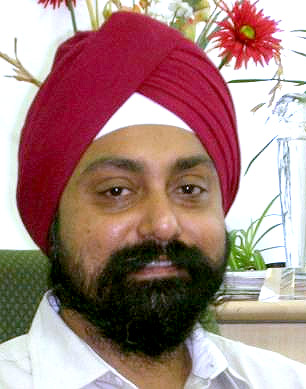
  • The Anchor: Ramanujam Sridhar on 7 ways brands can stay relevant to their consumers

    #1 Be a student of brand history
    Why is that some brands struggled to remain relevant to their consumers. Will studying their life cycle and history teach us something to avoid? Remember, wise people learn from the mistakes of others and don’t make new ones.

    #2 Study the consumer
    Preferences are changing and consumers are changing even more dramatically and brands sometimes get left by the wayside. Rasna which was the leading soft drink concentrate in the country lost share of mind and market share as the consumer moved to bottled drinks in the nineties from the concentrate that they were mixing at home. Soft drinks became fashionable and the trend took over the consumer.

    #3 Is your brand evolving with the times?
    Immortal brands like Coke, Pepsi and Nike have evolved with the times and newer generations of customers continue to find them cool. Others have become dated however. Be objective in evaluating your brand.

    #4 How innovative is your brand?
    Brands like Titan continue to be relevant to their consumer as they constantly keep the excitement flowing with new product launches. Titan edge the slimmest watch in the universe at that time created a ripple in the market and gave consumers like me a reason to upgrade their watches. The market leader has to expand the category and Titan has been doing this for years. Ask yourself an honest question. When was the last time you had an innovation in the brand?

    #5 Is your advertising the best in the category?
    A simple benchmark is to strive to ensure that your brand’s advertising is the best in its category. Not in terms of awards but in terms of consumer preference, liking and interest. Don’t look for industry approval, look for consumer endorsement.

    #6 Is your consumer getting older?
    Constantly track the sales data. Is your consumer getting older? Are younger people looking at hepper brands? If I were McDowells’ No. 1 whisky, I would be worried that younger tipplers are drinking more of Royal Stag. It is important to be relevant to youth especially in a country of young people like ours.

    #7 Relevant brands engage their customers
    Too often companies forget that the real magic is in the customer engagement not only high decibel advertising. Do consumers talk about their experience with your brand or are they complaining bitterly about something that your company did in some blog. Watch what is happening around you. You just might be surprised.

    Ramanujam Sridhar is CEO, brand-comm.

  • Yesterday’s story: Keerthivasan tunes out of Fever, Harshad Jain is new biz head

    By Ritu Midha

    S. KeerthivasanMr S Keerthivasan, CEO, HT Music and Entertainment Ltd, has decided to call it a day. Mr Keerthivasan, who is currently pursuing higher education at the Kelloggs Business School, plans to explore new opportunities once he completes his course.
    The responsibility of Business Head, Radio would be now handled by Mr Harshad Jain, who is expected to join the organisation shortly. He moves from Airtel DTH at Bharti Airtel Ltd. Prior to which he has also spent productive time at Pepsico and Worldspace India.
    Praising Mr Keerthivasan for his achievement at HT Media, an internal communique by Mr Rajiv Verma , CEO, HT Media, states, “Under his leadership and sharp focus, the radio business has done very well. In five short years,  Fever has become one of HT Media’s most successful businesses with annual revenues poised to cross the Rs 100 cr mark, exiting on a growth of almost 70% last year. “ He adds, “While he will certainly be missed, I am sure he will be very successful and be of great value to any team he joins. I wish him the best of luck in all of his future endeavours.

    Mr Keerthivasan joined HT Media in 2004. He has over 15 years of experience. In HT Media, he spanned various large leadership roles including Head – Business Excellence, where he was instrumental in creating a blueprint for future development of the division. Mr Keerthivasan has also been CFO of HTML. He has previously worked in companies like Whirlpool, Xerox and A F Ferguson and is a Chartered and Cost Accountant by qualification.

    Picture: From the HT Media website (http://www.htmedia.in)

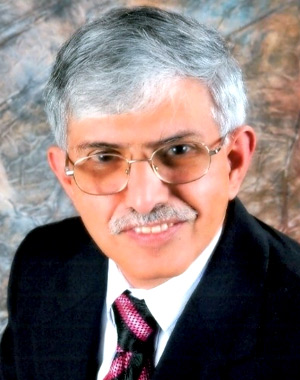
  • Media as an Ingredient

    By Premjeet Sodhi
    There was a time when the usage of media was optional. Media was an add-on which if a brand so desired or if needed would use to spur sales.
    When, I look at this from the cooking perspective (since, I love cooking a lot) I would say that media was used just as a garnish. Yes, it did make the dish seem more desirable and added some flavours but one could certainly do without it.
    Media was never appreciated. When the sales were healthy – there was no need for media and when the brand was in dire straits and there was strain on profitability – media was the first to be curtailed.
    But, those were the times of the seller; the consumer then was a deprived citizen and had no say or choice in what was being served to him. The seller prepared the product and used media just to ‘inform’ the consumer either of its existence, its merits or its price. Media was never embedded in the value creation that the product or service promised; it was so far only communicating the value. Hence, the use of media was need based.
    The world has changed. Consumer is King.
    It is not about the seller asking the consumer about what they want and then manufacturing the product or service accordingly. The matters have progressed far beyond that. The sellers are no longer in control. They have morphed from brand owners to brand custodians to just being brand moderators. Despite all the theory that existed – the brand in the yester years was still in the mind of the brand owner (with due feedback and research of the consumer). But, now the consumer is in control of the brand.
    Here, when I say consumer  it is again different from the consumer of yester years. Earlier you would imagine the consumer as an individual (or a number of individuals – not connected to one another) but today the the consumer is a group – a group of connected and communicating people. Earlier, the consumer was a multitude of individuals but now is a Collective.
    More and more products and services are being designed so that their consumption also happens or heightens when consumed as a Collective. And, these are not being designed by just the companies. The companies are a participant in this collective along with the consumers. Media runs as blood in the veins of this collective binding the consumers to each other and hence media is intrinsic to the construction of the brand.
    Media is no longer an add-on; no longer a garnish; no longer need-based.
    Media is critical and essential to the construction of the brand and the consumption of the brand.
    Media has become an ingredient for the brand.
    Brands that still treat media as an add-on have a lot of thinking to do. And, the day brands change this perspective – I am sure they will start looking differently at how they select and integrate media into their value promise. This will change the value they attribute to media in their P&L and will also impact the remuneration they pay for those who advise them on media.
    Media is no longer a garnish, but is a critical ingredient in the brand.
  • Chitralekha honours best of times

    By A Correspondent

    One of the most respected publications in the field of horology, Watch World, from the Chitralekha Group hosted the second edition of Watch World Awards on September 24, 2011. The jury comprised of several eminent and accomplished members from the watch making fraternities. Other jury members included connoisseurs of watches. The day was moderated by Mr Mitrajit Bhattacharya, President and Publisher, Chitralekha Group.

    When asked how this edition of the prestigious award ceremony is any different, Mr Bhattacharya said “We have not done anything differently this year and haven’t changed the format in any way – It is only a natural progression. It’s only that more brands have participated this year and we have more nominations.  Also, the overall presence of international brands has increased.”

    When asked what kind of a market Indian watches have, Mr Bhattacharya said, “I think the frequency of buying expensive watches in a certain target segment is really increasing. I will still like to add, that if you see the size of the market, it is perhaps not as big as what China (since we like to make China a benchmark). But perhaps, in the next five to seven years our market size will grow, perhaps even comparable to china.”

    The jury members for the awards included Mr Antoine Simonin, an extremely accomplished Swiss master watchmaker and author based in Neuchatel with over 50 years of watchmaking experience; Ms Chhaya Momaya, a leading image consultant; reputed journalist and a keen observer of the luxury space Mr Ayaz Memon and distinguished jewellery designer Ms Varuna D Jani, awarded leading watches across categories like ‘Watch of the Year’, ‘Complicated Watch of the Year’, ‘Sports Watch of the Year’, ‘Watch with Best Design’, ‘Concept Watch of the Year’ and more.

    Jury member, Antoine Simonin, on his second visit to India to judge the awards, commented, “I am honoured to be a part of the jury once again. There has been an exponential increase in the brands and quality of nominations this year. Seeing the response of global brands in the second year, Watch World Award has made a mark for itself in a very short span.”

    At the gala event were spotted industry heavyweights, corporates and bureaucrats like Stephen Forsey, the co-founder of Greubel Forsey watches; Romain Dezaux, Regional Brand Manager of Baume & Mercier,  Mukhtar Mohammed, Regional Market Director of Carl F Bucherer,  Ravinder Zutshi, Deputy MD, Samsung India, Anil Rajput, Senior VP, Corporate Affairs, ITC Limited, Amitabh Kant, CEO & MD – DMIC along with socialites of the city like Sanjeev Dalmia, Maharani Uma Gajapathi Raju, Ramola Bachchan, Sharik Currimbhoy, Raja Aditya Katoch, and other dignitaries.


    Awards


    The winners in the product categories were Zenith Christophe Colomb which won the award for ‘Watch of the Year’ and the ‘Complicated Watch of the Year’, making it the most successful watch of the evening. While the Tag Heuer Heuer Carrera Mikrograph 1/100th Second Chronograph won the ‘Sports Watch of the Year’ award, Corum Golden Bridge Automatic was adjudged the ‘Watch with Best Design’, Citizen Satellite Wave won the ‘Concept Watch of the Year’ award and Greubel Forsey Invention Piece 2 which was adjudged the ‘Limited Edition Watch of the Year’.


    Also presented were the ‘Jewellery Watch of the Year’ award which went to Harry Winston Rendez-Vous and the ‘Fashion Watch of the Year’ award which was won by Harry Winston Rosebud. While ‘The Watch with Most Innovative Material’ was awarded to Hublot “Cathedral” Minute Repeater Tourbillon & Column Wheel Chronograph, the ‘Watch with Highest Utility’ award was presented to Seiko Premier Kinetic Perpetual with Seiko Seiko 5 – 130th Year Collection bagging the ‘Value for Money Watch of the Year’ award.


    On the other hand, across the Marketing categories the ‘Best Campaign in Print’ award was picked up by Romain Jerome Moon Dust DNA whilst Titan Purple picked the award for ‘Best Campaign on Television’. While ‘The Best Out of Home Campaign’ did not have a clear winner, the Tag Heuer Connaught Place Boutique picked the ‘Best Boutique’ award and Breitling Air Show – Buochs 2010 and Parmigiani Montreux Jazz Festival 2010 were jointly adjudged the ‘Best Organised Event’.


    Watch World hosted MxMIndia.com at the venue of the awards do

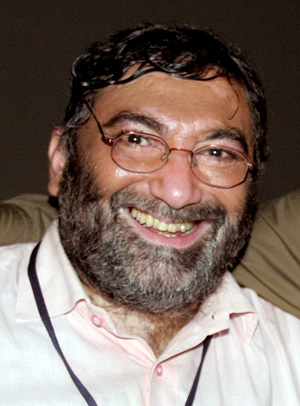
  • Malls are great for Digital: Ishan Raina

    Ishan Raina, CEO & MD, OOH Media India Pvt Ltd is an advertising veteran. An IIM Calcutta Alumni, Raina was one of the first industry experts to stress that it was important to engage consumer at various touch points.  The changing lifestyle today has proved his conviction true. In a conversation with Ritu Midha of MXM India, elaborates on the evolving OOH medium, advent of digital OOH and measurement. Excerpts:

    Q: How do you see Digital OOH growing in India vis-à-vis other media?

    The Out of home TV medium in India is about four years old and still in its growth phase. But the medium has grown a lot as compared to what it was four years ago. It was a conceptual selling at that point of time where the challenge was not only in growing the company but also growing the industry as a whole. Today people understand this medium and the future prospect of this medium. The change in the lifestyle trends of the consumers and media fragmentation has led to the growth of this industry. Time spent for consuming traditional mediums is also getting shorter. OOH TV being an SEC ‘A’ focused medium adds dynamism to the existing media plan of the clients for their brands.

    Today OOH industry commands 15-20 percent of the total advertising share.  Digital OOH TV has 15 percent of this share ie 1-2 percent of the overall advertising budget. The biggest challenge is to grow the size of the market which is still at a growth stage. We need to grow this to 4-5 percent in the next two years.

    Today we have over 300 clients from across categories from Automobiles, Finance, Telecom, Retail (Luxury, Apparels etc), Media, FMCG, Consumer Durables, Travel & Tourism, Education etc. using us for various reasons /campaigns. In brief, since the industry is still emerging and not yet mainstream media, there is immense scope for new clients, categories and growth. While starting new clients & categories has been difficult, repeat clients have been relatively easier, due to good formal (research) & informal (word of mouth) feedback.

    Q: In terms of new types of Digital OOH advertising, how does India compare with US, China and Europe?

    In India there is certainly a considerable change in the lifestyle of consumers today. People spend more and more time out of home whether it is in their offices, malls, multiplexes, restaurants, gymnasiums, bookstores etc. This change in the lifestyle trends of the consumers and media fragmentation has led to the growth of this industry. OOH television networks adds a great value as it follows these consumers wherever they are thus becoming the only medium present in a day of the life of a consumer.

    India is a growing market and thus provides tremendous opportunities to advertisers to reach out to their target group. This has also resulted in the development of various new media formats with digital OOH being one of them. In general, Digital OOH space is expected to see a tremendous growth in the future, given the expected infrastructural growth, increased amount of time spent outside home, and the general economy boom in the coming years.

    China is the largest market in the world for digital OOH TV, and our strategic partner Focus Media, is the global leader. In Europe as in the US this medium has become more of a point of sale medium and not a “day in the life of an SEC A consumer” as it is in emerging markets, such as India and China.


    Q: What part of media spends goes into Digital OOH?

    Digital OOH TV commands 1-2 percent of the overall 24,000 cr advertising industry. This will grow to 4-5 percent in the next 2 years. About 80 per cent of this would belong to 2-3 national players and we hope to continue being the revenue leaders of digital OOH TV industry. Digital OOH advertising is emerging as an integral part of the media mix for advertisers, and is being used by them for various companies and launches.

    Q: Is measurement still an issue with Digital OOH advertising and promotions? What kind of research is now being done to measure?

    In Digital OOH format, we understood the gap of measurement in traditional OOH and thus initiated OOH Metrics, which is today India’s first ever large scale digital Out-Of-Home TV research. Out-of-Home media conducted this research in association with Nielsen – world’s leading provider of marketing information and audience measurement.

    OOH Metrics is the only Metrics available in Outdoor Audio Visual space as of now conducted to understand the Demographic profile of the people and the audience behaviour. It is the study done across 8 cities, conducted by Neilsen, with a sample size of almost 15,000. OOH Media also does campaign research for the brand advertisers on OOH screens to quantify and qualify the viewership.

    We have done over 100 Campaign Evaluation Studies across categories like Auto, Telecom, Finance, FMCG, IT and many more to find the recall of ads through this medium. The results have been encouraging which have resulted in long term relations with clients.

    Q: If we look at geographical segmentation – do some parts of the country respond better to Digital OOH than others? Similarly would the trends vary in metros and non-metros?

    Digital OOH is value for money in metros but as you go down the chain that is tier 2 and tier 3 cities, it becomes an expensive option because of the availability of the regional formats. So Digital OOH is actually a medium for major 8 metros with good density & quality of audience or locations.  This will change over time.

    Q: To what extent has the advent of mall culture and modern retail helped the cause of Digital OOH. And how do you see it contributing five years from now?

    The OOH TV format has actually evolved tremendously in Offices / Commercial Bldgs and Tech Parks / Residential complexes, Gymnasiums as well as large format malls / multiplexes / Modern Trade. There is a constant evolution of infrastructure (malls and hypermarkets) which is bringing the radical change in lifestyle and spending patterns of consumers. These In-stores facilities offer a wonderful opportunity for Branding of various products at the “point of purchase”. Thus greater the increase in number of In-store networks more is the opportunity to utilize these networks as a medium of advertising and creating a top of mind recall. Digital OOH media is strategically present in In-store locations with more than 2000 screens in Malls, lifestyle stores, Supermarkets. Digital OOH adds a lot to the communication by being the only audio- visual medium and thus we can say the medium is increasingly becoming effective and is here to stay for a long time.

    Q: What as per you are emerging trends in Digital OOH advertising?

    Audience, not screens, is the Mantra:  The quality and quantity of audiences that the screens provide, is what is the ultimate driver for this medium and the differentiator between different brands in the medium.

    Localisation / Customisation of Messages: OOH Media has been the most flexible medium today and gives a chance to slice and dice the message of the campaign as per the kind of audience an advertiser would like to reach. The client can select the locations, cities, frequency and language as per their requirements. Flexicasting provides an advantage of getting as local as possible just like an outdoor but with the power and capability of Audio-Visual.

    Relevance is the new king: The role of content is thus becoming very important in this medium and OOH Media continuously experiments with content to make it more relevant for the audiences and thus attracting more eyeballs. Content Integration helps in creating a contextual connect for the brands. OOH Media customizes in-house content as per the client’s requirement and offering to make it contextual.

    Connect with consumer: The medium offers an advantage of Flexicreation i.e. creating customized ads and content according to the kind of audience the client wants to reach and also the kind of locations they want to advertise in. Flexicreation for the same medium is impossible in any other audio visual medium. The future will be and has to be the contextualization of the content and advertising messages.

    Q: How effective are touch screen kiosks and how best can they be utilized by the advertisers?

    It is still early  days – not currently scalable. Our model is ‘Push’ to the consumers, where as Kiosks rely on consumers to take some action.

    Q: A lot of money is being spent on airport advertising? Is it just the premium customer that lures the advertisers there – or is the recall value much higher of airport ads?

    Airports are a very effective locations –and of course brands advertise there to target a specific target group.

    Q: How powerful is OOH as part of experiential marketing?

    Its part of the experience currently, not really experiential marketing or interactive marketing. What OOH TV ensures is great recall across Sec ‘A’ and increasing also reach in select locations where due to media fragmentation and audience habits, OOH TV is actually the first time the audience is exposed to the advertising.
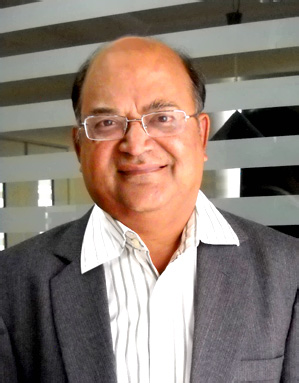
  • Ruby Bana joins Madison Media

    By Ritu Midha

    Ruby Bana has joined Madison Media Group as Chief, Strategy and Insights after a long and productive stint at Havas Media (where she was designated Chief Intelligence Officer for the APAC region).

    Monday September 26 was her first day in her new organisation, which she spent hobnobbing with the senior management at Madison’s Head Office in Mumbai. Says Bana, “I had a dream first day today… spent it interacting with the senior management at Madison. About 20 of us shared thoughts and ideas. I am really looking forward to days ahead.”

    While Madison has had centralized buying, it is for the first time that a cross-functional strategic planning role has been introduced.  And as per Bana, it indeed is a challenging assignment. She explains, “Madison is very solid, the challenge would be to add value to something so large. In Contract and MPG, I was a part of their evolution, as I was there from the very beginning. To make a difference in a very well established organisation would be something else.”

    Having said that, she has the conviction that her multi-country, multi-discipline experience would come in handy. She explains, “Strategy planning has always been my forte, and I have loads of cross country and cross discipline experience.  She adds, “Madison Canvas is much larger, the kind of clients Madison has – would lead to a much wider sharing and gaining of knowledge.”

    Bana believes that it is very important for a professional to be excited about what he or she does.  Says she, “I am, of course, excited to be a part of Madison.  However, it is not to say that I was not happy in my previous job. It was a great learning phase, and an exposure to multiple markets and global strategic minds.  I am always excited about what I do – if it does not excite me more than what else I could have been doing in that time, I would not do it.”

    While Bangalore would continue to be Bana’s base, she would be travelling to Mumbai and Delhi quite frequently – and contribute to ‘Madison’s solid specialised divisions’.

    She concludes, “I am like a sponge, always absorbing knowledge.  Time to use that knowledge across a very large canvas now.”

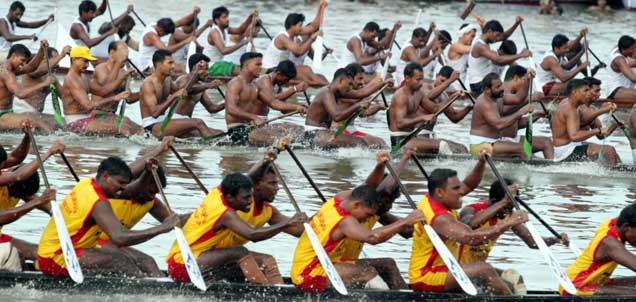
  • Can TOI win the Kerala race?


    By Tuhina Anand


    The Times of India has been giving the last-minute push to its entry into the Kerala market. Speculation was that the TOI would enter the market by early October – the launch date now seems to be October 24.  Mr Rahul Kansal, Chief Marketing Officer, Bennett Coleman & Company Ltd agreed that the TOI is looking to enter the market around this time but refused to name a date, saying that things do get delayed due to various reasons and hence he would prefer to refrain from specifics.


    The TOI in Kerala would have four main editions, he said, including Cochin, Trivandrum, Malabar and Cochin Upcountry, but in total the paper would be printed from 10 centres and would devote space to carry hyper local content.  So in that sense there will be 10 editions. However, Mr Kansal refused to divulge details about the number of print copies initially planned.


    He also said that TOI has entered into an alliance with the Mathrubhumi Group, which will aid TOI in providing logistics support. It is also possible, say sources, that there could be a combo offer available to Mathrubhumi readers.


    Mr Kansal said, “I think we are entering the Kerala market at an opportune time as it has a large literate population and English newspapers is largely a virgin market, with the presence of The Hindu as the dominant player.”


    The Kerala market is an interesting and unique market with literacy rate of close to 94 per cent and is dominated by Malayali dailies including Malayala Manorama, Mathrubhumi, Deshabhimani, Madhyamam, and Kerala Kumudam.  The English newspapers other than the Hindu include The New Indian Express and the recently-launched Deccan Chronicle. Advertisers include real estate players, but jewellery advertisers lead the pack.Players like Muthoot Finance and Manappuram Finance also have gone all out in the media lately with their gold loan schemes, and gained prominence.


    An observer of the market feels that there is a huge opportunity for an English newsppaper like the TOI in Kerala, especially with the young readers. The New Indian Express used to have a strong foothold which has declined over the years and The Hindu has following but is stronger near the Tamil Nadu border, hence there is a space for a strong English player. But it is also a tough market with the literacy rate being high, and readers well informed. So the strategy of entering the market with some sort of alliance with Mathrubhumi makes sense as by leveraging the strength of a vernacular paper, TOI could make impressive inroads. Also the challenge would be to tap the huge retail market like jewellery and textiles, where again it would help to have a regional partner. In terms of content too, the market thrives on regional content even more so than other parts of India, so even though TOI would have a strict template, its plan of having 10 centres of printing with four main editions, carrying localised content from other six markets, may prove to be smart strategy.


    Picture Credit : Fotocorp

  • J19 wins rights for Jet buses

    By Nibha

    J19 Max (Jash Media And Communication Pvt Ltd), an OOH agency, recently won the advertising rights for three years for the 96 on-ground Jet Airways air transfer buses that ply within 15 major airports in metro and micro-metro cities across India, from 2011 to 2014.

    In an exclusive chat with Nibha of MxM India, Mr Sunil Gohil, Director J19 Max, said, “We have recently won the advertising rights for a period of three years, and this includes both bus grab handles (which was earlier with Atin Promotions) and contravision running feet of right, left and rear panels inside the buses, which ply across all the 15 major airports, including Mumbai, Delhi, Bangalore, Hyderabad, Chennai and Goa.”

    Mr Gohil added, “The contravision will be executed for the first time inside the Jet Airways a/c Tarmac buses where a 6”-high tape will be offering a branding space at the right, left and rear inner panels inside the coaches. Apart from that each bus will continue to have 25-30 double side grab handles with a display size each of size 5”x3”. And, at most airports, the Jet Airways Terminals have no aerobridge facility, so all departing and arrival passengers pass through these coaches. Thus, we shall be catering to double-digit-lakh eyeballs per month.”

  • Sam Balsara’s big plans for ABC

    By A Correspondent

    The Audit Bureau of Circulation (ABC) Council of Management for 2011-12 has been announced, and as expected Chairman and Managing Director of Madison World, Mr Sam Balsara, who was the bureau’s deputy chairman in the previous year, has been entrusted with the chairman’s responsibility.

    In a brief conversation with MXM India on his key focus area as the Chairman of the Bureau, Mr Balsara elucidated, “I would have a two-pronged focus. One, to convince the media planners, who do not realize circulation data’s value, about its significance. The second focus area is to make the Audit Bureau of Circulation a more valued body in the eyes of the Government and a few others.”

    There have been a few instances where publications have exactly not been delighted about the ABC rules. Would Mr Balsara also look at softening the rules? He responds with a strong No, adding, “Any audit organisation needs to have strict rules. If the rules are not stringent, and do not need to be followed – it is better not to have them at all. In the five years or so, ABC audit has had no, or very minimal, intervention in the publishers’ marketing plans.”

    As for the readership survey and the ABC working more closely now, considering that there would be only one readership survey, Mr Balsara says, “That will happen automatically, considering that 10 members of RSCI would be from ABC.

    Mr T Venkattram Reddy of Deccan Chronicle Holdings Ltd has been elected as the Deputy Chairman of the Bureau for the year, while Mr Shashidhar Sinha, Universal McCann Erickson (India) Pvt Ltd has been elected as Honorary Secretary and Madhukar Kamath, Mudra Communications Pvt Ltd is Honorary Treasurer.

  • Freaking News by Ranjona Banerji: Where’s the fizz gone?

    Life is dull, I have to admit, when television is not having hysterics about some issue or the other. And this week has been particularly short on made-for-television news events. I know I’ve grumbled about the neglect of subjects like the civil war in Libya or the collapse of the world economy but even I know that we cannot whip ourselves into a jingoistic frenzy with such sparse material to work on. No anchors foaming at the mouth, no calls for answers and no heartfelt pleas for justice, mercy or anything at all, nothing in fact that makes television news compete with the top general entertainment channels.

    So yes, the collapse of the world’s economy did make it to Indian television at last but that’s only after the Sensex fell at the end of last week and investors lost a notional amount that ran into lakhs of crores. By now we are so used to inflation and rising interest rates that no one can drum up even one fleck of hysterical foam at the mouth.

    In fact, we seem to be so wrung out and tired by recent events that even some T20 cricket tournament has not filled us with our normal passionate exuberance. We did try to drum up some enthusiasm for that mysterious note that one finance minister wrote to another former finance minister, something to do with the 2G scam, but no one knows enough about it and the people who know aren’t telling.

    Then Headlines Today, which is trying to steal the top patriotic channel slot from Times Now, did get quite excited about the current fight between the US and Pakistan but even that didn’t go far. Shoaib Akhtar, the Pakistani cricketer, said something about Sachin Tendulkar in his new book (yes, apparently he can write). But for all the patriotic fervour which we could have shown, the only people who managed to make something of it were some political parties in Maharashtra.

    CNN IBN remained steadfast in its coverage of the earthquake in Sikkim and its aftermath while by Monday morning, the floods in Orissa and Bihar were all over television.

    Talking about Pakistan, the BBC has a fascinating Hard Talk with Imran Khan, asking some very tough questions as usual and allowing the guest to answer them.

    **

    The newspapers, obviously, were in the same boat. They also realised that the world economy was in trouble. They managed to explain something of it, throwing the collapse of Greece into the mix as well. The unfortunate plane crash in Nepal got the front pages. Patriotism is everywhere so the Hindustan Times headlined the number of Indians who had died. Lesser mortals of other nations not so fortunate to be Indian also died.

    The weekend saw some newspapers telling us that Paris Hilton, general celeb and heiress of the eponymous hotel chain, was in town. The opinion pages were still obsessed with Narendra Modi and his prime ministerial ambitions and whatever else. Am not sure that anyone else still cares, especially since we are currently in this non-news cycle.

    This morning The Times of India came to me bright yellow as if it had been dipped in haldi and this made reading it very difficult.


    **

    I can only hope that things pick up as the week moves on.

  • Slowdown? McCann, Dentsu are hiring like crazy

    By Ratna Bhushan & Neha Dewan


    After a lull of about two years, largescale hiring is back in advertising agencies such as McCann Erickson and Dentsu. McCann Erickson has recruited at least 50 people over the past two months, 30 of them at the senior level, to service new businesses like Aircel and General Motors , a person familiar with the matter said . Dentsu is in the process of recruiting 15 senior-level officials and more at the junior level as it revamps its business.


    McCann Worldgroup Executive Chairman Mr Prasoon Joshi said the size of his agency’s India operations has grown by about 40% and business from its Delhi branch alone has almost doubled this year . “The new talent we have brought in is completely growth driven ,” he said. In the past few months , McCann Erickson has bagged some big accounts such as telecom services provider Aircel , auto major General Motors and paints maker ICI Dulux.


    Dentsu India Group Executive Chairman Mr Rohit Ohri , who quit the country’s largest ad agency JWT this June to join Dentsu , said he will hire 15 people at the VP and higher levels across its nine offices in the country , besides hiring at junior levels. “We are looking at restructuring the agency and creating the Dentsu India group holding company ,” he said.


    All agencies including Dentsu Communications, Dentsu Creative Impact and Dentsu Marcom will report to this company. But he denied rumours of poaching people from JWT as had been the buzz earlier. McCann’s recent top-level hires include executive director Mr Alok Lall , planning head for Delhi Mr Jitendra Dabas , who moved from JWT , creative directors Mr Mayur Hola and Mr Anshumani Khanna, who came from Ogilvy and Mudra , respectively , and senior VP Mr Ashish Bahl. They will mostly service the big ticket accounts the agency has won in recent months.


    The Aircel account is estimated at Rs 200 crore while the GM account could be worth close to Rs 150 crore . This is the first time the US carmaker consolidated its brands Beat, Cruz, Optra, Spark and Captiva with a single agency. McCann won the deal after a four-month-long pitch .


    Other new businesses with McCann this year include ACC Cement, Britannia Dairy, History Channel, Parx from Raymonds, quick service restaurant chain Subway and mobile phone brand Lava. Globally , there is a freeze on recruitments across many leading agency groups such as WPP, Publicis and IPG.


    In 2009 , the world’s largest agency group network WPP, with agencies like JWT, Ogilvy & Mather, Young & Rubicam and Grey in its fold, had laid off 14,000 employees , and in fact that year the ad industry saw layoffs amounting to 200,000 jobs. WPP Group Chief Executive Sir Martin Sorrell had said in an email to employees that any job offers made but not accepted must be withdrawn immediately .


    But in India, agencies have been hiring on and off on account of new businesses. Ms Usha Hephzibah, promoter and owner of Head & Tail Hunters, a search firm specialising in recruitments for advertising and media , said : “Tremendous hiring is happening at all positions, from top to bottom, in the advertising industry.” Agencies such as Leo Burnett said they are doing limited hiring, depending on requirement . “There has been no large scale hiring; we haven’t done it in bursts,” Leo Burnett Executive Director Mr Samir Gangahar said. He said the agency hired 4-5 people in Delhi last month .


    Source:The Economic Times

    Copyright © 2011, Bennett, Coleman & Co. Ltd. All Rights Reserved

  • Anil Thakraney’s Debrief: Senseless fun

    Mineral water brand Bisleri has released a brand new commercial. ‘Stay Protected’ is the message. While the message sounds all serious and professional, the commercial is a riot.

    Two chaps emerge out of a painting and decide to go on a boat yatra. The treatment is part animation and part live action. On the high seas, they run into a she-monster and her baby. The baby tries to gobble down one of the dudes on the boat, but he gets stuck in the baby monster’s mouth. Mommy monster grabs the Bisleri bottle from the other chap’s hand, and uses the water to help her baby swallow down the ‘meal’. The she-monster, in a gesture of gratitude, not only returns the Bisleri bottle to the lone survivor, it also spares his life.

    Haha, it’s both funny and corny. Kids will like this cartoon story. And I appreciate the effort to inject some fun into what’s just a brand of water. However, here’s a red flag: Mineral water is a very, very low involvement product category, and consumers don’t really suss the brand name before purchase. So while it’s great to do a fun story, should the focus not be on communication that tells us what makes Bisleri special and different from other brands in the category? So that I have a clear reason for demanding Bisleri from the grocer, rather just any mineral water. How can I ‘stay protected’ through a fairy tale involving sea monsters??

    Bottom line: I am all for mad. But madness with method. Not plain mad.

    Rating: (On a scale of 1-5): 2 (For the cute animation.)  

    Anil Thakraney’s ad review column DeBrief will appear twice a week – Tuesdays and Thursdays.