Blog

  • Newspapers: Reinvent or Perish?


    By Tuhina Anand

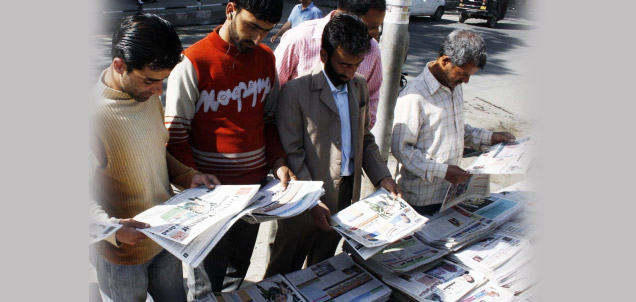
    The newspaper industry is undergoing transformation and the only way ahead is to look within and reinvent. While it may be too much to say that for the print industry the only option is to reinvent, else they will perish, but it won’t be far from the truth to say that if they don’t adapt to the changing times they will be groping in the dark and will only pave the way for their downfall. Early adoption and partnership with technology are a few ways by which the industry can look at transforming itself to cater to the Gen Y.

    Expressing his view, Mr I Venkat, Director, Eenadu, said, “Yes, we have to reinvent. I think the time has come when we no longer can continue in the traditional way. While the future of newspapers in India is still strong and will be for at least for 10-15 years and what happens henceforth I can’t really say. But in that time period, one should have reinvented and come up with multiple platform and strengthen them so that they become established models to generate revenue.”

    He maintains that printed word will remain sacrosanct though the content would undergo change to meet with the various platforms. In fact, Mr Venkat points that even now the way news is being consumed is changing where they have witnessed a significant rise in people coming to digital platform to access news.

    Shahrukh Hasan, Group Managing Director, Jang Group, Pakistan is of the opinion that the newspaper industry would not perish even if they don’t reinvent because there is lot of inherent growth still left in the print business. He said, “That said, I think reinvent I would, even if there are no threats as it is imperative for our continued growth. As it happens the print media is under lot of strain and we have seen globally it has been losing readership but in our part of the world the fundamentals that drive the business is strong, like literacy rates going up, growing middle class, migration from rural to urban areas, a very young population and the erosion of the joint family system. These are factors which impact growth and circulation. In fact they are all working in our favour.”

    “The important thing is that we have to realize that the business we are in is evolving and we have to adapt for that reason. We have to abandon tradition and adapt to reengineer to remain relevant. We are not competing with new media or television but we have to adapt in terms of how we process the news and understand what kind of news we have to provide to our readers in these changing scenario where different platforms with different speed of delivering news exist.”

    While Mr Hasan points that reinvention is not necessary but he will still go with it to be future ready. There is also another opinion which stresses that the newspaper business doesn’t need to be reinvented but it’s the newsroom that need to reinvent. Sanjay Gupta, Director, CEO and Editor, Jagran Prakashan Ltd, said, “Newspapers will remain. It will never die and it’s seen that in the most advanced economies where digital has taken over newspaper still exist. But it’s their relevance to the marketers that is changing.” Newspapers may not be relevant to the marketer as a touch point because of more varied and systematic approach that digital offers and for media companies to make journalism sustainable, Mr Gupta points that there is need to go into different revenue streams and digital comes into play in that aspect.

    So the interesting point that comes in this discussion is the decreasing relevancy of newspaper to a marketer hence bringing the digital platform to up the revenues. Also many media company pointed of unbundling of packages to advertisers that comprised a 360 degree approach.

    Reinvention in terms of digital may be the mantra for many to follow but for KN Tilak Kumar, Joint Managing Director and Editor Deccan Herald, the potential in print in its existing avatar is immense.  He said, “There is a lot of scope for print media especially rising population, growing literacy and urbanization signify that there is a lot of potential for print media to grow. We have been trying to reinvent in terms of content, design and layout. Digital is the future but it’s not a concern In India as we see it now.”

    Content is the key and even for Prabhat Khabar’s MD, KK Goenka. He reaches to his consumers in Bihar, Jharkhand and West Bengal and the paper has reached the status of the 7th largest read Hindi daily and this has happened primarily by the physical newspaper. Digital he says doesn’t play a role in the growth of his paper but yes content is the key. He says, “It’s the credibility and trust of people that we have built over the years that is responsible e for our success. It’s the issue that we have taken that is no less than a movement that has helped in building what Prabhat Khabar is today.”

  • Debrief: Berserk advertising

    By Anil Thakraney

    A very boring product offer: Use Birla Cement Wall Care Putty to prevent your walls from chipping and flaking. It’s the sort of brief that would put many creative directors to sleep. Given that, full credit to the ad agency for making such a comatose promise come alive.

    The commercial features a man combing his hair as he notices that his pet parrot has started ‘shedding dandruff’. Panicked, the chap informs everyone in the neighbourhood, and it quickly becomes a huge story. Naturally, television channels get into the act, and soon the whole of India is mystified by the parrot that sheds dandruff. Finally, the parrot spills the beans. The chipping walls in the house have flakes falling on its head, which results in the parrot having to constantly shake its head to dust them off. Like dandruff. The message: ‘Chahiye papdi se chhutti, lagao Birla White Wall Care putty’.

    [youtube width=”375″ height=”250″]http://www.youtube.com/watch?v=ElTzNnl2qXw&feature=related[/youtube]Good fun, I am all for the absolute madness in this commercial. A dull product like wall putty needs some serious clutter-breaking advertising in order to get noticed. And Birla Cement has achieved that. Also, the TVC nicely reflects the dumbing down of the television media, and that makes the ad even more entertaining. Wonder if editors of channels like India TV, Star News and Aaj Tak would cringe a bit when they broadcast this ad. They should.


    Rating: (On a scale of 1 to 5): 3.5 Good example of how to get excitement going on a boring product.

  • MxMIndia partners ‘Paid News’ event

    By A Correspondent

    MxMIndia has partnered the event ‘Paid News: Fooling People all the Time’ organised by Moneylife Foundation and Citizens Action Network with the support of industrialist Cyrus Guzder.

    To be held in Mumbai’s Madame Cama Hall (Opp Lion Gate, Kala Ghoda) on Friday, November 18, the evening will see the screening of the documentary ‘Brokering News’ followed by a panel discussion with senior journalists and the film-maker Umesh Aggarwal.

    About the film: The Delhi-based non-governmental, not-for-profit Public Service Broadcasting Trust (PSBT) recently released a documentary titled “Brokering News—the inside story of paid news”.

    The film by Umesh Aggarwal addresses a significant challenge facing Indian democracy today—which is the state of its media. The film looks at three aspects of paid news—how politicians are paying for positive coverage during elections, with the result that those who don’t pay are blanked out by the media; how the coverage and reviews of movies are orchestrated and paid for and of course, paid news about business and industry. It depicts in detail how journalists were forced to broker deals to offer editorial coverage to politicians.

    Details of the Event:

    Panelists: Umesh Aggarwal, Ayaz Memon, Paranjoy Guha Thakurta, Bhawana Somaaya, and Sucheta Dalal.

    Timings: 5.30-7.30pm (Registration and Tea starts at 5pm)

    Venue: Madame Cama Hall, KR Cama Hall Institute, Bombay Samachar Marg, Opp. Lion Gate, Kala Ghoda, Mumbai 400 023

    Admission: While admission is free, please register well in advance. Contact details: Call Judith/Seraphina on 022-24441058-60, or mail at mail@mlfoundation.in,or log on to www.mlfoundation.in

    While MxMIndia.com is Media Partner of the event, other media organisations (including trade media) are welcome to register and cover the event

  • Search on for Stock Market Hero

    By Akash Raha

    NDTV Profit and Hero MotoCorp Ltd. launched the contest ‘A Search for India’s Stock Market Hero’ beginning November 8, on NDTV Profit. This new and exciting contest will give an opportunity to every stock market enthusiast to win Rs. 50,000 every two hours and upto Rs. 2 lakhs everyday for the next three months.

    Speaking on the channel’s new offering, Vikram Chandra, Group CEO, NDTV, said “We have always believed in creating exciting formats to keep our viewers engaged. This is not just any regular stock market game. It’s a contest of both skill and knowledge. And it will help investors get a deeper understanding of financial markets”

    All the viewers have to do to win is answer two simple questions: “Which stock which will gain the most in the next two hours?” and another question related to the programme on-air.

    Anil Dua, Sr Vice President (Marketing & Sales), HeroMotoCorp Ltd., said ”The new ‘Hero’ has arisen and is all poised to carry forward its rich legacy, setting new benchmarks with record performance and cutting-edge products. It is this spirit of ‘Hum Mein Hai Hero’ which reflects in all our brand associations.”

  • KBC winner guest edits Prabhat Khabar for a day

    By A Correspondent

    From being a face in the billion-plus fellow Indians, Kaun Banega Crorepati Season 5 winner is a star. With reason. Hailing from a humble background, the man achieved what several others — with more privileged upbringing – could not. The Rs 5 crore jackpot.

    So, Sushil Kumar ‘Motihari ka Moti’ (pearl of Motihari) was Guest Editor of the Muzzafarpur edition of Prabhat Kabhar on Monday. Mr Kumar was in the office as early as 6am and went on occupying the Guest Ed’s chair till 7pm. He carefully went through the day’s news reports and also got a feel of the newspaper’s operations.

    When Mr Kumar charmed the newspaper’s staff,  that he had turned into a star was evident from the dignitaries who visited the newsroom for an audience. Also, around 14,000 phone calls were made to the allocated numbers, Mr K K Goenka, Managing Director of Neutral Publishing House (publishers of the Ranchi-based Prabhat Khabar) told MxMIndia.


    Picture: Prabhat Khabar staff photographer

  • Freaking News: One event, two interpretations

    By Ranjona Banerji


    One event, two interpretations: Monday morning’s Times of India and Hindustan Times had two completely different interpretations of LK Advani’s rath yatra’s entry into Gujarat. TOI found in an empty chair between Advani and Gujarat CM Narendra Modi a symbol of the growing distance between the two leaders and described their interaction as cold. Advani apparently added to the distance by praising Modi’s bete noire, Bihar CM Nitish Kumar. Hindustan Times however perhaps read nothing into empty chairs and said that Advani and Modi put up a united front to turn the heat against the Congress.

    Surprisingly, Headline Today, known for its slightly rightwing stance – No, Mr Katju, not all media outlets have identical reactions – also perceived a freeze in Advani-Modi relations.


    **


    Mamata Banerjee’s dramatic declaration – although her speech itself was very well-reasoned and delivered most matter-of-factly – of withdrawal of support to the UPA over the petrol price hike did not turn into a weekend drama. Mainly because the Congress barely responded and Banerjee herself said she would wait till the PM returned from his travels.

    It was interesting that Times Now broadcast her whole speech which was in Bengali and took a good few minutes to get translations up. Perhaps we need to have a more instant translation technique given the languages listed in the Constitution or at least faster paraphrasing abilities.


    **


    The death of composer and singer Bhupen Hazarika received both airtime and newsprint space and more importantly, honour and respect. Perhaps this means that we in the media are not as shallow as we ourselves feel or are made out to be – Mr Katju please note.

    **


    Our Sunday papers felt the need to reconnect us with the “other India’ and we had special reports on our labour policies and how unfair they are to labourers, the problems of contractual workers as well as focus on our perennial health problems. Not sure if this was proving a point to Mr Katju or in fact, it was the Katju effect at work.


    **


    Mumbai’s law and order problems were highlighted once again as the spotlight remained on the deaths of Keenan and Reuben in a Mumbai suburb in October. Most say this as an opportunity to focus on similar problems elsewhere in the country as well as on the treatment of women on our streets.


    **

    The Hindustan Times has been running a series of accusations and counterpoints between Goa theatre veteran Hartman de Souza and Tehelka editor Tarun Tejpal which has now spilled over into cyber space. Tehelka has been holding a “Think Fest” in Goa and de Souza and others have accused the journal of having double standards when it comes to the issue of exposing the mining lobby in Goa. It is a fascinating series of accusations, some petty and some serious. This is one more example of how the media is looking more at itself as a “story” as well as how the internet has changed the game when it comes to public interaction.

  • Epsilon aims to win customers over for good

    By A Correspondent

    Perhaps one of the most challenging tasks for marketers today, in a scenario where competition is burgeoning, is to convert existing customers into loyal customers. And of course, the bigger challenge is how to retain them for a long period, how to ensure they move hand-in-hand with the brand through its evolution phase in the marketplace. The challenge can be even more significant in categories such as telecom and financial services, where a huge number of players are eyeing to out-size each other in terms of new customer acquisitions.

    “The trick is to do effective loyalty programmes,” says Adrian Hoon, Vice President, Sales, APAC, Epsilon International. Epsilon is a multichannel marketing services company that specialises in Customer Experience marketing and Mr Hoon along with his key members of the team are in India to talk to marketers and the trade on the importance of loyalty marketing and the services they provide.

    The company, in association with LoyaltyOne, specialists in loyalty programmes, has released a detailed report that seeks to identify underlying differences in cultural approaches in six countries; three emerging economies – India, China and Brazil and three developed countries – United States, Canada and Australia. Mr Hoon says that the report has enough insights that talk about consumer behaviour in the six markets, and how brands, particularly in India and China can make best use of loyalty programmes to service consumers for many years. He further states that when companies know they need to practise loyalty marketing, they aren’t sure about how to do that on an ongoing basis.

    The scope of the research spreads across consumer attitudes, preferences, and behaviours.

    As far as India is concerned, the study says that more than 40 per cent of Indians are eager to join loyalty programmes.

    Key findings from India


    • Word of Mouth (WOM) is a big factor when it comes to purchase decisions. WOM conversations are rated at 7-8 on a 10 point scale in India, in terms of importance. And that’s a good 15 – 25 per cent higher than developed countries. This insight is of great significance for brands looking to create early adopters and loyal ambassadors.


    • Indian consumers are fairly optimistic about the country’s growth, with 34 per cent of Indians feeling strongly that the country’s economic prospects will improve over the next decade.
    • 42 percent of Indians belong to at least one reward programme, it is significantly lower than American counterparts, 74 per cent of whom are enrolled in such programmes.
    • 20 to 33 percent of Indian consumers are “extremely loyal” to their favorite brands across six major categories — clothing retailers, grocery retailers, financial services providers, dining, auto fuel and travel providers.
    • 56 percent of Indians believe that most businesses can be trusted. This is significantly higher than all other countries surveyed. A high number of Indians (56 percent) also seem to have inherent trust towards international brands over domestic brands.
    • Email and text messages rank No 1and No 2 respectively as the preferred means of receiving marketing messages among India’s middle class consumers, beating television and print advertising.


    The survey was carried out online with a sample size of 500 for the Indian market (A sample of 1200 d was taken for developed economies – US, Canada and Australia). Interviews were carried out across segments: SEC A, B and C.

  • Sony as GEC #1? I don’t speculate, says biz head Sneha Rajani

    The phase three to four weeks from now could be an interesting period for the GEC industry. Mainly because Sony, having tasted success with KBC and a couple of fiction shows (Bade Achhe Lagte Hain and Kuch Toh Log Kahenge), is all geared to topple Star from its No 1 position.  Colors is not too far behind; in fact both Sony and Colors have locked horns at the second position, on 236 GRPs. Colors’ Bigg Boss opened with 4.3 TVR and the general sense is that the show hasn’t delivered as per expectations, especially after a high-octane marketing activity.


     

    For Sony, it’s an opportunity to get to the top. The channel is launching two new shows – Dekha Ek Khwaab and Parvarish – in prime time, replacing KBC. It is clear that the channel is betting big on fiction again. Several attempts have been made in the past but none has worked out well until the channel’s recent hit – Bade Achhe Lagte Hain.


    If the two new fiction shows (Dekha Ek Khwaab starting November 21) succeed in its plan to become household names, we might see a new genre leader. The channel has tasted success in the ’90s, but that was some time ago. The focus for now is on the present and the leadership team is hoping to make the most of this opportunity.

    MxM India’s Rishi Vora speaks to Senior VP and Business Head Sneha Rajani on expectations from the new movements.


    Q: What are your expectations from the new show ‘Dekha Ek Khwaab’ on the ratings front?

    I never speculate.


    Q: At least tell us what you’re expecting from it on the launch day, or the first few weeks so to say…

    Obviously, since we’re launching the show, we expect the numbers to be good.


    Q: Do you expect it to match the kind of viewership KBC has produced, to keep that momentum going?

    Absolutely not! That is not our expectation. And it would be foolish to think that immediately at launch, it’ll deliver the kind of numbers KBC has. That would be a very false expectation to set.


    Q: Why would you say so?

    KBC is a popular show, it has been around for a while and it has created a special interest among the viewers across India. For our new fiction show, to expect it’ll deliver or match up to the popularity of KBC, would be asking for too much, honestly.


    Typically fiction takes time to settle down as against reality formats which have the ability to spike up the ratings of the channel at launch at the start.


    Q: Which means the GRPs is likely to see a dip in the coming few weeks?

    Yes, there will be a drop in GRPs post KBC. At least for some time till the fiction shows settle down.  But, that’s as per plan.


    Q: When do you see Sony becoming the No 1 channel in the GEC line-up?

    Like I said, I don’t like speculating. I don’t think we are going ahead with the strategy fixated with the idea of being No 1. We are going ahead with the plan to focus on fiction. Bade Achhe Lagte Hain and Kuch Toh Log Kahenge have delivered the goods, and I’m sure Dekha Ek Khwaab and Parvarish – our two upcoming shows will also do well in primetime.


    Q: What is the split ratio you like to maintain between reality and fiction?

    Fiction 80. Reality 20.


    Q: You’re No 1 in the prime-time band. And all it takes to be No 1 overall is just one good show, because as far as your current standing goes, you’re just 30-35 GRPs behind Star.

    Yes, the gap is not very big. And it is our endeavour to get there.


    Q: Three months is a decent time to get there.

    I will not speculate on three months or six months. As long as we get there, I will be happy.

  • INMA conference starts, packed house!


    By Akash Raha


    The International Newsmedia Marketing Association, better known as INMA,  kicked off its annual South Asia conference in Bengaluru today to a full house. The two-day event is taking place at ITC Gardenia under the theme ‘Roots and Wings: Strengthening Our Core Business and Exploring New Opportunities.’ MxM India spoke to Earl J Wilkinson, Executive Director and CEO, INMA to know about his expectations from the conference. Around 220 delegates from India, Pakistan, Bangladesh and Uganda amongst others are in attendance.


    Mr Wilkinson said, “What I’m looking for from the Bengaluru INMA South Asia Conference is, where are the new pockets of growth in the region? Have newspapers hit a peak with readership? What are the value drivers in advertising for newspapers as competition intensifies? Where does the creativity reside among South Asian newspapers? To what degree are global trends in digital media being adopted by South Asian newspapers? Where does the Indian newspaper story fit in the broader global context of transformation and culture change?”


    This INMA conference will also focus on the unique opportunities ahead for South Asian newspapers in which they seek profitability and would also like to adapt and create more revenue streams in the digital domain. The INMA conference will host top newspapers publishers and marketers in India, Pakistan, Bangladesh and Sri Lanka, and give them the opportunity to share learnings with each other. The sessions are expected to take delegates through a world of ideas and innovations which will give them insights into ways to grow newspaper advertising, circulation and brand across titles and across consumer platforms.


    Mr Wilkinson further added “It’s a very high-level, relevant programme for South Asian newspaper executives. I don’t just want to hear from the speakers. I want to hear from the delegates. Are they curious and pushing for answers and ideas?”


    Mr Tariq Ansari, INMA South Asia president and Managing Director, Mid-Day Multimedia welcomed the delegates and Mr I Venkat, Director, Eenadu, who is also the conference moderator, gave his opening remarks, charting the changes that have been seen in the newspaper publishing scene.


    Image courtesy INMA.org

  • Anil Thakraney’s Hard Knocks: The impotent social media

    By Anil Thakraney


    The social media has become the brand new joint to bond and vent pent-up anger. Even as you read this, tens of hundreds of causes are being launched by eager Facebookers, with many followers diligently signing up. From issues of animal rights to environment protection to fund raising for the needy to just about anything that can change the world. And when problems happen in the metro towns, it’s time to scream, collect fellow networkers and put pressure on governance. This too keeps happening every month. The two recent causes that come to my mind immediately are one, the ‘Meter Jam’ campaign launched with a lot of fanfare to teach the cheating auto rickshaw buggers a lesson. And two, demand for justice for the dead Keenan and Reuben, the young men who died fighting off drunken taporis.


    Now while I am happy folks have found a new place to express rage (far easier to click buttons from inside an air conditioned room than trudge to the Gateway of India and light candles), I wonder if the social media has the power to make real impact. The ‘Meter Jam’ effort flopped miserably after a lot of noise. And am afraid the ‘Justice for Keenan and Reuben’ campaign will meet the same fate. Sure, anger has spilled on to the mass media, and the Maharashtra CM has been forced to make a statement, but all will be forgotten soon. Perhaps some of the culprits will get a jail term very soon, but sexual harassment of women and crime on the streets will simply go on. And the rick guys will continue to cheat us, of course. Quite obviously what is required is a massive overhaul in our legal and policing machinery if we want to see real change, and that can’t happen by cribbing and carping on Twitter and Face Book.


    But, no matter. Let the causes be launched, let the anger roll. At least people feel a little lighter in the head after clicking the ‘Like’ button. It de-stresses the mind. However, I’d imagine Yoga is a better bet. It’s soul satisfying, and if you indulge in some of Baba Ramdev’s techniques, you could lose some weight too.


    PS: Watch this ad for a vacuum cleaner. A superb example of how to use horror in advertising. It’s one genre that’s rarely used inIndia.

    [youtube width=”300″ height=”200″]http://www.youtube.com/watch?v=aGb8pMIeY6w&feature=player_embedded[/youtube]

  • Huge demand for Indian content in US: Chris Brown, NAB Show prez

    Chris Brown, President, The NAB Show, talks to MxM India’s Rishi Vora on how he’s looking at India to participate in a big way in the global event starting April 14 – 19, 2012 in Las Vegas, Nevada USA.  Edited excerpts:

    Q: It’s been 90-odd years since The NAB Show was first introduced. How has the event evolved over the years?

    The NAB Show started as a television-radio event in the US at a time when media—primarily radio and television—were just about introduced. The focus was on technology, very basic in nature. The industry was evolving and you basically had small station operators. Over time, technology became more sophisticated, the internet started to become a potent medium, software started to play a major role. Then came high-definition TV which is a big plus for the industry.  Our audience became much more diverse; they began to expand into whole world of production and that tied us with the film community—the Hollywood and the Bollywood community. We then got into the enterprise community, covering segments such as retail and healthcare, companies that want to build content for entertainment or communication purposes.

    So effectively what we are doing is bringing buyers and sellers onto a common platform to meet business needs, to enable buying, selling and distribution of great content around the world. We get participation from more 150 countries. We are the world’s largest media and entertainment event. Our audience demographic is very wide, it covers television in all forms – cable, satellite, internet, mobile and cinema—and it’s a big reason why we’ve come to India.

    Q: Does the majority of the participation come from the US?

    Thirty percent of the total participation is global, and that’s a very high percentage. More than 2,500 people come from different countries.

    Q: What are your expectations from the 2012 event as far as the number of delegates are concerned?

    We expect to have 95,000 participants out of which 25,000 to 28,000 will be global participation.

    Q: How many do you think will participate from India?

    About 750 to 1,000.

    Q: What are your plans for the 2012 event that is schedule to take place in April?

    There will be focus on things like connected TV, and we’ll have new things like an Apps pavilion and a Cloud Computing pavilion. We are also bringing focus on Online Video.

    Q: Are you talking to YouTube too?

    YouTube is a company that has been on the show in the past, not in a big way but we’re trying to get them back. They have not committed yet but we hope they do.  But yes, there is no doubt we’re putting heavy focus on content platforms like these and that’s why we’re here to talk to companies and try and get them to the event, meet other companies from around the world, and explore business opportunities.

    Q: What’s the USP of NAB as a global event?

    We’re very strong on the digital media side, helping folks on the buying and selling space connect to each other. So YouTube and some major players in India and US, we try and get them together. The other part is just the straight connection of international content where it makes sense around the world. And in the US, we think, there is a huge demand for Indian content.

    Q: What’s in it for Indian participants?

    It depends on what kind of a company they are and what their focus is. If they are coming from more of a technology side, I think what they would want to do is come and understand trends—where is technology heading and how is that going to drive the business going forward. The other thing on the technology side they can do is, develop partnerships with companies that can help leapfrog their business to greater levels. If they are in the content business, they would want to build international alliances, partnerships and JVs etc.

    Q: How was the response from India last year?

    We had about 600 delegates from India.

    Q: Why is it that a delegate has to pay a separate fee for the conference and a separate fee to participate in the show?

    The conference is a different offering, and hence we charge a fee for that. We get the best speakers across the globe to share their knowledge and experiences, so there is huge value on that. However, it is not a huge revenue generator for us by any means. This year your focus is more on India, China, US and the UK. What are the parameters that determine the focus countries?

    For the last four-five years, China has really been on that list with India. So we look at economic stability, how much growth, whether there has been transition to HD TV etc. Brazil is generally the top country in terms of participation with close to 2000 participants every year. India is very much the focus country now. We are spending more time in India than in China. That’s primarily because our focus is on content. India is today producing top quality content that needs to go global, whereas China is a hardware driven market.

    Also, what we bring to the table for our participants in India is the scale. We are the largest media and entertainment event in the world. It’s a showcase of the world’s latest technologies.

    Q:  What companies in India are you initiating talks with?

    We are speaking to Balaji, Shemaroo, Idreamz, UTV, Reliance, Hungama, Big Synergy, Tata etc. The idea is to get a cross section of companies, across television, digital and films.

    Q: How big a challenge is it to market this event globally?

    It’s tough! We do a lot of work through the US Department of Commerce, so that connects us with embassy contacts around the world and that helps us reach local companies in different markets. We also work with trade associations in different countries, publications etc.

    Q: Should we expect many Indian participate as speakers in the event? Have you already got some names on board?

    We’re trying to get them but none have confirmed yet. We are hoping to get some really good speakers from India. We have extended our invitations to companies like Reliance and UTV.


  • Neha is Gitanjali’s ‘Diva’

    By A Correspondent

    The integrated branded diamond jewellery manufacturer Gitanjali Group has launched GDivas, a fashion forward brand offering a collection of jewellery studded with diamonds, pearls and coloured stones. These lightweight jewellery pieces are intended to offer a perfect ‘everyday’ complement that defines a fresh, youthful and chic look with a blend of fusion and western designs.

    With the ‘G’ in the brand name standing for Gitanjali, ‘Divas’ is more to do with the attitude of the confident and stylish women of today who is a diva in her own right. Thus, the brand ambassador was chosen to be Neha Dhupia, who is known for her versatility, modern urban chic personality and self-confidence – values that embody the young working women of today.

    Commenting on her association with Gdivas, Neha Dhupia said, “It’s wonderful to be associated with a fashion forward brand like Gdivas, offering young professional women like me jewellery which we can flaunt for every occasion, an extensive yet affordable collection to choose from, which adds flair to any outfit and all occasions, truly making one feel like a diva.”

    Talking about the inception of the new brand and the campaign, Shardah Uniyal, GM Marketing – Gitanjali Group said, “Gdivas, the latest offing from the Gitanjali Group aims to bejewel a young woman with adulation everyday for every occasion. The collection boasts of lightweight trendy and chic pieces that complete every ensemble no matter what the occasion. Neha Dhupia truly personifies the young free spirited, social and independent woman who is a diva in her own right, thus being an apt choice as a brand ambassador for Gdivas.”