Blog

  • Anil Thakraney: Treating the fan like shit

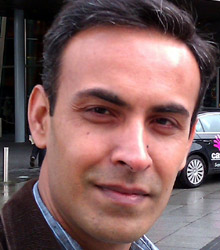
    By Anil Thakraney


    Everyone’s talking about Rahul Dravid’s speech at the Bradman Oration. It is sharp and insightful. And it proves that the man is not just a great batsman, he’s got a thinking brain when it comes to the sport. Jammy makes many pertinent points about the dangers to cricket, but one that caught my attention was on disrespecting the fan. Quite coincidentally, I had alluded to this in an earlier post.


    Dravid warns that not thinking about the fan is one of the reasons for the fast-diminishing crowds at Indian stadia. And how this portends very badly for the future of the game. He is right, of course, and I believe it’s TV that is busy slaying the goose that lays the golden eggs. Because the BCCI earns almost all its revenues from television rights, they have paid scant attention to the stadia. The last time I made the mistake of going for a one-day match, it turned out to be such an awful experience, I swore never go back, even if someone paid me a whole lot of money to do so. Stinking, dirty toilets. Crowd mismanagement. Shortage of drinking water. Very uncomfortable seats. It was like the organizers were saying to me: “Who asked you to come here, you idiot? Go home and watch.”


    Dravid categorically states that it is no fun for the players either. That it is depressing playing in front of empty stadia. Really hope the BCCI is listening to him and takes urgent measures to sort this out. If they won’t take the rest of us seriously, surely they must pay close attention to what the experienced cricketer has to say. He can’t be wrong.


    [youtube width=”400″ height=”200″]http://www.youtube.com/watch?v=qr4bK63WxXY[/youtube]Here’s the link to Dravid’s speech if you haven’t watched it yet. In addition to his views, the suits must pay attention to his style. Dravid makes very serious points, but he doesn’t bore the audience. Something to learn from here for those who speak at seminars. Boring speakers who never fail to put us to sleep. (One of the main reasons I politely decline invitations to seminars.)


    ***


    PS: Completely wacko ad from BurgerKing,Russia. It’s over-the-top and bizarre, perhaps an indication of the desperation caused by their declining market share. But you have to say one thing: At least they’ve made the burger the hero!


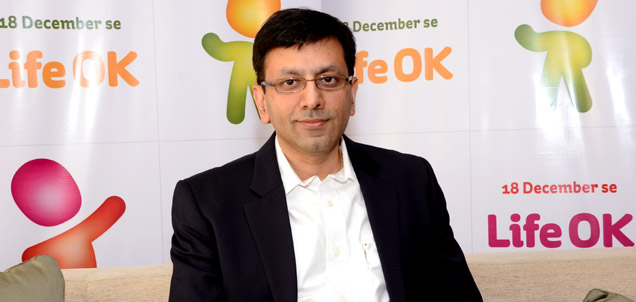
  • Life Ok will compete with Star Plus: Sanjay Gupta


    By Rishi Vora


    The new gleam in the sky from broadcast major Star India promises a unique viewing experience, differentiated content and a philosophy which it will thrive on. The idea is to have a challenger brand, one that’ll challenge even Star Plus – the No 1 channel in the GEC line-up today.


    Life Ok – the new avatar for Star One – was launched on December 18, 2011. The channel will target to first get to the 60-70 GRP mark, and from there its first big milestone – to be a significant player by winning the No 4 position and beating one of the four big players.


    How well it suits the Indian viewers is something to look out for. Meanwhile a quick glimpse of what the management is thinking. MxMIndia’s Rishi Vora speaks to Chief Operating Officer Sanjay Gupta on his expectations, and much more. Excerpts:


    Q: Why the decision to shut down Star One and launch Life Ok?

    Star One as a channel has been there for several years. But it delivered a very average sort of performance. It catered to a niche audience and never quite made an impact. In GRP terms, it clocked about 30-40 GRPs. So there was a need to ask tough questions. We thought there was an opportunity in the GEC landscape to come up with a channel that is unique and differentiated, going by the viewer and the way he consumes content. So we decided to rebrand Star One to Life Ok.


    Q: It is said that Star One was not given the required strategic push to compete with Star Plus and other GECs.

    Every business can reach its potential. The business idea, in the case of Star One, was to be a niche channel. So in thought terms, I don’t think we were very sharp. We did not have a content offering that was differentiated enough to create a long-lasting impact on consumers’ minds.


    Q: So was Star One treated like a second channel? Was it a conscious call that it should not compete with Star Plus?

    The question that we asked ourselves was: Should we continue to have a channel which is a second channel or should we really continue to have a channel which fights? Which may be second, third or fourth, but that’s not very important. We thought we should have a channel that’ll compete with every channel – be it Zee, Colors, Sony or even Star Plus. The whole idea of changing the name to Life Ok was to liberate the channel so that it could cater to consumers as a brand and as a content destination. So that it could be different and unique and in the process have a more meaningful presence than Star One.


    Q: So Life Ok is not going to be the second Hindi GEC channel of the Star Network?

    It is in the Hindi GEC, one more offering from Star India. Star Plus is our first offering. The reason why we have changed Star One to Life Ok is because this channel has come up basis our understanding of viewers and we believe there is a gap. The name carries a philosophy. Unlike Star Plus for example, where we connected Star and Plus-and it became Star Plus, Life Ok is a name with a purpose.


    Q: Was there any research done on the name? What was the thought process behind naming it Life Ok?

    The idea was to have a name which captures the philosophy of the channel. A lot of research and consumer work has gone into deciding the name.


    Q: Can you elaborate on the philosophy?

    Let me explain. We’re entering a very, very tough competitive market – the Hindi GEC market. So why will this work? In my view, this is likely to work is because this channel comes with a very unique promise which consumers and viewers will see every day. Stories and characters of this channel will come on every day – not for five days but for all seven days in a week. As a viewer you want to seek whatever you like – it can be music, films, radio, newspapers, and also in my mind the characters of the shows you watch on daily basis. So content will be offered to consumers seven days a week.


    Also, stories on other GECs are not pacy enough, in terms of the speed. So what we’re doing on this channel is, we will tell three stories in an hour unlike the norm which is two stories every hour. We will tell a story in 20 minutes, so when viewers come to our channel, they will find the stories very pacy.


    Q: What is the thought process behind the two-minute break?

    The two-minute break is again a viewer experience. I don’t want a big break. As a viewer that will put me off. A lot of people get distracted with a long break and end up not watching your show. So with three stories in an hour and the two-minute breaks, we’re telling the viewers that they don’t need to go anywhere. They know it’s coming back in two minutes, so they are more likely to be on your channel if the commercial breaks are not very long.


    Q: But that means there will be an impact on the bottomline.

    In the short run, yes. But in the long run, it brings you more eyeballs. Once we have a set of viewers, we can then make up…


    Q: What is the programming strategy for the weekends?

    Fiction shows, non-fiction shows, we will use Sach Ka Saamna every day including the weekends. We will also have movies on weekends, in the afternoons. Afternoon time is very important-the whole family gets together and watches TV. So yes, we will have a variety of content running on the weekends.


    Q: We’ve seen some failures in the broadcast industry – 9x and Real being prime examples. So what are the things that you need to be extra careful about?

    Doing a new channel is a very costly exercise. Therefore, there will be a huge amount of risk that you always run, whether you refresh a channel or you create a new channel. In either of the cases, it is important to have a differentiated offering. If the viewer is getting the same thing on many other channels, why is he going to watch yours? The idea for this channel, therefore, is to keep the viewer at the centre and offer him something unique. So if you’re able to stick to that – not only in the philosophy and the thinking, but also on the content you offer every day, then it gives you more chances of being successful.


    Q: True, but second GECs which have launched in the past haven’t done well. SAB, you may say, is an exception.

    Yes, Sony is a good example where it has two channels – Sony and SAB. And they’re working well, so if there is an appropriate positioning, relevant content, it would work. I think the learning which I mentioned earlier, if we have a unique proposition, keeping the consumer at the centre and differentiated content, it should work. And Sony and SAB is a good example in my mind to quote. Hopefully, Star One can learn from that and create a more meaningful positioning.


    Q: Are you going to roll out shows which cater specifically to the youth, the single largest segment of India? Something like Bigg Boss which does well in that department?

    We’re very focused on youth because we believe that is an important target audience. So if you look at the non-fiction we are beginning with – Sach Ka Saamna with Rajeev Khandelwal, where the big issue which we are tackling is corruption. Now, that is something which is at the top of every young person’s mind in the country. From the content, which you will see in the next few days, in terms of the message it delivers, it is not about saying let’s point fingers at others. It is about saying, ‘If somebody has to clean up the system, he or she has to start with us.’ That’s the message. And it is very much focused on the youth of India. Another show – Devon Ke Dev… Mahadev – we’re talking about one of the biggest gods of the country for whom most youngsters, especially women, fast for Mahadev in their early teens and before marriage. So that is a very unique thing we have on the channel and that’s the beginning of FPC every day. The rest of the content is dealing with absolutely the key issues which youth will emphasise on in a really big way.


    Q: But mythologies haven’t done very well for other channels. Colors and Imagine have tried it and haven’t produced fantastic results.

    I think Colors did fairly well on Jai Shri Krishna – the mythology serial they had. So if positioned well, it can work. We believe there is a market for mythology in a big way. It will have a different kind of emotion being catered to consumers.


    Q: Did you consider doing a big-ticket show like KBC, Bigg Boss, bringing a popular celebrity hosting the show?

    I think we have been very careful in the kind of emotions we want to deliver. And we wanted to be true to the philosophy of the channel that we’ve created. So we’ve stepped away from bringing a big celebrity. If somebody comes, he or she should be able to respect the values of the brand. And it is about cherishing what you have as a philosophy ‘Jo Apne Pass Hai Woh Khas Hai‘ and that’s why all the content pieces are on the lines of that philosophy. In fact everything we’re doing is true to that. And that’s the reason we’ve stayed away from having a big celebrity on the channel.


    Q: So going forward if there is a need to have a Amitabh Bachchan or a Shahrukh Khan, would you go for it?

    At this point in time I would say if it fits in nicely with the philosophy of the channel, then we will definitely consider it.


    Q: Why Madhuri Dixit as the Sutradhar?

    There is a lot of learning that’ll come out from the shows we’re putting up on the channel. What we wanted to do by bringing Madhuri was: as we show the content, everybody takes away their own understanding. What she does on the channel is, she poses questions, brings in her understanding and her life reality, and really puts a lens in front of viewers to evaluate and see the content well. And therefore, it really raises the question – are we really cherishing what we have or not? Or are we worrying only about possibly the dreams of future alone? And, in her life she’s done the same. She has been one of the big superstars and has taken a break – been a family person. So she has balanced her life very well. So the persona fits in well with the channel’s philosophy. And she hopefully will be able to raise the questions in everybody’s mind and help viewers view the content through a new lens.


    Q: But what is the fan following of Madhuri Dixit today? Do you think there are enough fans, because quite clearly, her days are gone.

    Firstly, all big stars have a really valuable equity in consumers’ minds. But the important thing is how this fits in with the channel’s philosophy. And in my mind, it fits in very, very well.


    Q: How has the response been from the trade?

    Mixed response, I would say. People are surprised that the brand name doesn’t carry Star in the name – that’s been one of the questions from a trade point of view. And they’re wondering why. And also the other trade response is that we have a good variety of content. So they feel that the content looks very powerful and hopefully, the next few months will tell us how the business goes.


    Q: What will be the channel’s reach on Day One?

    Star One today reaches out to around 40-45 per cent of people every week. Those are the people who come every week to view Star One. Hopefully those people would definitely come to see the channel and basis the marketing campaigns, other sets of viewers will get curious about the channel and they’d come and like to watch it. So anywhere between 40-45 per cent definitely should come and maybe some more would like to come and check out the channel. And finally the content strength will determine how many people will become regular watchers.


    Q: Do you expect to be the No 4 channel, beating Zee, say in a month’s time after launch?

    Star One is at around 40 GRPs right now. And if we grow significantly, that’s the first good number to look at, because this journey is a long journey. We are not starting it to really take a big leap in week 1or week 4. If you’re able to grow from where we are significantly, that’ll be the first milestone. And as I said earlier, it competes with every channel in the GEC space. If the content is powerful, it’ll grow – but the first initial aim would be to get to a 60 or 70 GRP mark. That will be an important milestone for us.


    Q: How long will the aggressive marketing campaign continue?

    We started this campaign around a week ago. We started it on December 12, it continues in full intensity now and it will continue for another few weeks. So it will be a four-week campaign which will run supporting the channel launch.

  • Rahul Thappa, Bharat Bhushan quit Mail Today

    By Akash Raha


    Rahul Thappa, COO of Mail Today has quit the group. Mr Thappa had joined Mail Today in May 2011, taking over from the then-COO Suresh Balakrishnan. Rahul Thappa is serving his last week at Mail Today after which he will move to his new organization, which he refused to name at the moment. When asked by MxM India, he confirmed that he has quit.


    He said “I’m thankful to the board of Mail Today Newspapers Pvt Ltd for having given me the opportunity to head the operations of the publication as its COO. It was a pleasure working with the entire MT team and the operational learning from having managed a daily newspaper has added immensely to my repertoire of skills. I am confident that the newspaper will grow into a force to reckon with in the years ahead. My new assignment is in conformance with my long-term career objectives. I shall be able to speak about my assignment in the weeks to follow.”


    Mr Thappa earlier worked as the Managing Director at Mindshare Malaysia. He also held a key position at the India Today Group, where he reported to Mr Ashish Bagga, CEO, India Today Group.


    Bharat Bhushan, Editor, Mail Today has also quit the organization. Mr Bhushan, too, confirmed this development, but refused to make any further comments. Mr Bhushan was a part of Mail Today’s launch team and was earlier the Editor of Telegraph – Delhi edition.


    Mail Today, the compact daily in Delhi, is a joint venture of India Today Group and Associated Newspapers (ANL), publisher of Daily Mail, UK.

  • Anchor: 6 wishes for Santa for the media biz

    By A N Chorrea


    1. Blow away Slowdown blues

    Will Santa please bring in some cheer to the world struck by slowdown. Don’t get fooled by the launch of the new channels and publications and all the executive movements in media and markeing. It appears the slowdown is for real. And we want Santa to blow it away.


    2. May we have a Clean election

    There’s going to be plenty of political action in the coming months, and we want Santa to ensure the media doesn’t play favourites by way of paid news.


    3. Need differentiated content on entertainment television

    A new GEC was launched yesterday. With content that was differentiated. Quite like the way Colors was when it was launched. But look at many of the GECs around. Switch channels on any evening, and you’ll find similar content across. Santaji, please help on this score.


    4. And Clean news too?

    News ought to be clean and not without any biases, but many of our news channels tend to exaggerate and sensationalise news. And if they are partisan, then don’t say it upfront. Santa, we don’t want the government to regulate content, but can you please give the erring channels a piece of your mind?


    5. A hands-off government please?!

    Dear Santa, please give a chillpill to Madame Ambika Soni. She (and her ministry and its various constituents) have been flexing their muscles way too much off late. She wants to regulate everything: our advertisements, the content on entertainment and news television, the way the business is conducted. Etc etc.


    6. Better talent needed

    Where is the talent in our industry? Are arms of the media attracting best talent to be able to match up with the talent amongst marketers? Dear Santa, this is tough for you to achieve, but if we are able to create that awakening in the way the media business is run, we could achieve results. The competition in the business has led to very reduced margins and as a result the business can’t really afford top quality talent.


    Do you have any more wishes for Santa? Mail them at editor@mxmindia.com with the subject ‘Dear Santa’ and we’ll feature them on MxMIndia


  • Digital is the future, not competition to radio

    By Robin Thomas


    While digital was and probably is still seen as a threat to the growth of print and television, for radio, on the other hand, the digital medium is said to be a complement and not competition.


    Some examples of digital successfully complementing radio to provide good content are Radio Mirchi’s VAS application – ‘Mirchi Mobile’, which allows mobile users to listen to any Radio Mirchi station from any city by just dialling a particular number across any telecom operator. Radio City’s music portal, PlanetRadiocity, in addition to its extensive music content, offers web radio, said to be India’s first and only multi-genre, live and interactive ‘Web Radio’ station that plays a variety of content 24×7. Radio Netherlands Worldwide (RNW), the Dutch international public broadcaster recently launched a website on sex education. Radio Maska is another internet radio portal available inIndia.


    Rachna Kanwar

    The one common factor among FM radio stations is that they want to stay connected with their listeners even when they are not tuned in. Hence most of them are finding new and innovative ways to engage their listeners online.


    Radio jockeys are going online by putting up blogs, videos and audio clips of their programmes on their FM station websites. Almost all FM stations today have made their presence felt on social networking sites like Facebook and Twitter.


    MxMIndia spoke to couple of FM stations to find out the significance of digital media to FM radio today.


    Rachna Kanwar, Vice President and Business Head, Digital Media and New Business, Radio City feels that digital medium has helped them connect with their audiences not only in India but even those settled abroad. “With the astounding rate at which the medium is growing, it is obvious that nobody can ignore digital media today.RadioCityhas used the medium effectively to reach out to our listeners. Digital media has also enhanced our engagement with listeners and has helped us in promoting our offerings to a larger audience base,” she said.


    Rahul Balyan
    Amitabh Srivastava

    In order to engage the listeners and ensure that they tune in to the radio station, the traditional FM stations will have to continue re-inventing themselves a lot more around what the listeners want and how they want, especially since the choice for a listener will be infinite on digital platforms.


    Rahul Balyan, Senior Vice President and Head of Digital Initiatives, Radio Mirchi said, “We have realised that at least 20 per cent of Radio Mirchi listeners are online, and have a lot to say; the digital platforms allow us to connect them on a one-on-one basis. We have got a tremendous response on Facebook, Youtube, Mobile VAS and our website. All of it is driven by the equity that Radio Mirchi has created with the listeners.”


    Convergence of traditional broadcasting platforms with digital platforms is perhaps inevitable as digital media has become significant, not only for radio but for all media.


    Amitabh Srivastava, Country Manager – South Asia, Radio Netherlands Worldwide pointed out: “Digital is the future and not competition to radio and I see a lot of potential for internet or digital radio inIndia.Mobilehas also become very important today as most people listen to radio on their mobile phones and as technology will progress and internet usage grows inIndia, internet radio will also see growth.”

  • Case Study: Being Human, Being Digital

    Aim/Measurable Objectives

    Being Human wants to position itself as a lifestyle brand that aids the twin causes of healthcare and education for the underprivileged. The need of the hour was to create customer engagement through a large synergistic online and offline community. To be able to do this, it was imperative to build a communication strategy making this relevant to the youth of India.


    Strategic Insights

    Being Human Foundation is a charity trust started by popular Bollywood actor Salman Khan.


    The star has maintained a very low profile about the foundation. In order to increase the reach and corpus of the Foundation, Khan has undertaken initiatives such as Being Human art and Being Human merchandise. According to Google trends, Khan was the most searched Indian male celebrity in 2010. Moreover, the brand ‘Salman Khan’ connects well with the Indian Youth, kids and masses as a whole. To connect with its digitally enabled audience, Being Human required a strong social media presence. Energising communities was the need of the day.


    The key deliverables in order to achieve this scale were: To be able to touch the lives of more people, that can make a difference, to take an iconic brand and make it into a cause, a movement. To be able to mobilise the youth, give them something to believe in, and energise them to contribute their time, money, attitude to touch another less privileged lives. To ensure that ‘original being human products’ are available on the digital space to be able to reach a much wider audience across the globe


    Strategy and Execution

    The key marketing objective was to create a digital footprint for Being Human, which would allow Being Human supporters from across the globe to engage with the brand.


    The first order of business was to create the official social media presence.  There were a plethora of ‘unofficial’ Being Human pages across the social media networks, and it was important to first establish credibility and transparency, and secondly clearly differentiate this from a Bollywood gossip and fan page. Customer Centria created Being Human Facebook and Twitter pages. While Facebook, remains the key engagement channel used to launch new initiatives, campaigns, Twitter drives conversations, builds awareness and engages influencers.


    The next milestone was to create the website, beinghumanonline.com. The site tells stories of the lives that it touches, and encourages all its supporters to live and spread the message.  The very essence of the content is user generated and thus by its very nature viral.


    In order to make the brand accessible to more and more people, Being Human tied up with BookMyShow.com to enable national and international delivery of Being Human merchandise like t-shirts, bracelets, watches etc., to carter to huge the demand


    Successful Campaigns that were run:

    During a special screening of Khan’s recent movie ‘Ready’ for underprivileged children of Being Human, high level of engagement and buzz was generated through a live tweet via #beinghumanlive. This hash tag was trending on twitter for the entire day in both Mumbai and Delhi.


    To create awareness about the pirated Being Human merchandise available across the country, Being Human literally took to the streets and showcased on its social media channels – the sellers it interrogated and put the wearers of the pirated merchandise on the spot.


    An interactive Facebook application called the ‘Anti Piracy Squad’  was conceptualised where 10 different levels of squads represent how many users of the app, have ‘recruited to the cause’


    A YouTube video channel named Being Human Live was created where video bytes of Khan and his fans against tee piracy were populated. Being Human Fans also voiced their anger against tee piracy through video testimonials. Educational content (updates and videos) were created to build awareness about the FB application.


    Results

    Current size of community on Facebook: a whopping 7,59,896 likes. On Facebook page with a weekly network reach over 57 lakhs.  About 80% of these Facebook fans are in the age group of 18 to 34 years, which clearly defines the kind of connect that it had with the TG. On an average over 50,000 people participate daily on the page and Being Human’s reach has been made global with people from 20 countries across the globe participating on the Facebook page. There are more than 8,000 followers on Twitter.


    On an average 21,500 users are active monthly on Being Human’s engaging ‘Anti Tshirt Piracy Campaign’ app on its Facebook page. About 80 per cent of these app users are in the age group of 18 to 34 years.

  • dummy post

    December 16th is Johann Wilhelm Ritter’s birthday. Ritter was a German scientist who invented one of the first dry pile galvanic batteries.

    • Early batteries used electrodes dipped in an acid solution where the energy is produced through oxidation reactions. A dry pile uses just enough moisture to function and did not have the dangers of spilling acid solutions.
    • Ritter’s pile used alternating pieces of silver and zinc foil separated by pieces of paper.Ritter was also responsible for the discovery of the ultraviolet region of the electromagnetic spectrum. While investigating the discoloration of silver salt crystals exposed to sunlight, he discovered there was a part of sunlight beyond the violet range responsible for the discoloration.
    • He initially called this part of the light spectrum ‘de-oxidizing rays’ because of their chemical reactivity.
  • Turning 50 and other problems!

    By Ranjona Banerji


    I was quite happy to discover that this is my 50th update for Freaking News and am unhappy to find that I was so wrong yesterday. By the evening, it seemed that TV had decided that the shenanigans of Team Anna required as much exposure as possible and that being sensible was just a whole lot of horse feathers, while being unreasonable was so much more fun. So there were members of the core committee of the anti-corruption movement doing their normal threatening and grandstanding all over TV and this morning had an unpleasant photograph of Anna Hazare and Kiran Bedi ominously wagging their fingers at us. Bedi on Times Now was as annoying as she can be, insisting that the Cabinet and Parliament must go no further than the Jan Lokpal Bill.


    But it was later that matters got really appalling on Times Now as Mumbai-based film-maker and activist Ashok Pandit (I did not recognise him because his grey hair has turned black) accused another guest of being a terrorist because she looks like one (a Muslim, she was, of course – Hamida Naeem, a lecturer at Kashmir University). What was even worse was that although Arnab Goswami said “no personal remarks”, he did not stop Pandit and neither did the other guests, Madhu Kishwar and retired general, Shankar Prasad. The issue was the death of a young shopkeeper in Kashmir who was beaten to death because he refused to shut shop. The people who killed him are called “stone-pelters”, a special breed of humans who exist only on TV land. TV wanted to know why the Armed Forces were blamed for all kinds of things but “stone-pelters” are not condemned with the same outrage by hardline separatist groups in Kashmir. The many specious conclusions in this argument need another whole article to deal with them.


    So I was wrong again because I really believed that the deaths of 145 people from drinking adulterated illegal alcohol in West Bengal needed more prominence.


    **


    The end of the American occupation of Iraq got plenty of play on international channels but only minimal on Indian TV, not unnaturally. The newspapers as usual filled in the gaps.


    **


    The Hindu has an interesting editorial on how the BJP loved Union home minister P Chidambaram when he was tough on Naxals and Maoists but are currently gunning for him because he targeting Hindutva-inspired terror groups. Who knows, this may well be true.


    **


    After the Parliamentary debate on black money, newspapers could have given us more figures on the parallel economy in India, its size and reach. The problem is not just about money stashed abroad: it is as much about the money within India which never enters the system and so bypasses not just tax but also quality control and standards laws.


    **


    Incidentally, just for the information of our ultra-jingoistic TV-wallahs, the battle against the Armed Forces Special Protection Act is not limited to Kashmir – the act is also why Irom Sharmila has been on a hunger strike for over 10 years in Manipur. Do we as journalists have the mandate to take sides without adequate information?

  • Channel [V] No.1 for 6 weeks

    By A Correspondent


    Channel [V], the youth entertainment channel from the Star Network, has maintained its leadership in the youth entertainment genre for six consecutive weeks.


    With an alltime high of 37 GRPs for week 50, Channel [V] has left its nearest competitors far behind. The channel has grown by almost 15 percent since the previous week to consolidate its No.1 status, while MTV & Bindass are 25 percent behind in GRPs.


    Prem Kamath, Executive VP and GM, Channel [V], said, “Our performance over the last quarter clearly shows the depth of our understanding of this genre and our audience. All our properties, whether on-air or otherwise, are planned keeping in mind our researched understanding of youth.”


    With a healthy reach of 33 percent and a time spent of 34 minutes being almost 50 percent higher than MTV, the genre is overwhelmed with shows from [V]. The ratings reveal that 17 out of the Top 20 shows are from Channel [V].


    The youth & music genre has garnered a market share of 7.6 percent with 251 GRPs (up from 248 GRPs last week). Total TV was at 3308 GRPs (0.5% growth from 3291 GRPs last week). Channel [V] is leading in the CS4+, CS 15-34 or CS 10-14 groups.


    *Source: TAM Wk50, HSM CS 15-24 ABC, HSM Markets, Weekly GRPs

  • Anil Thakraney: Cut the Anna crusade

    By Anil Thakraney


    It is fashionable to credit the social media for Team Anna’s stupendous run. They have managed to hilao the government big-time, and it is often said their oxygen is the support provided by tweeters and facebookers. I totally disagree.


    The real fuel for Anna’s campaign comes from the television media. It is they who, in their childlike enthusiasm, have converted the saint from Ralegaon Siddhi into a god-like cult figure. And quite frankly, I am not surprised. It’s our TV media’s belief that any story that generates ratings must be given liberal play, even if it demolishes every tenet of good journalism. From no angle can you justify the role played by the assorted news channels as crusaders and poster boys for Team Anna. When the social media does that, it becomes understandable. Because the virtual world consists of individuals fed up of corruption… dudes who don’t really comprehend the complexities of the Lokpal bill, and are basically venting steam. That’s fine. But for professional journalists to become recruitment agents for Anna is simply an appalling situation.


    Anyway, what’s done is done. Team Anna is threatening Hunger Strike Part 2, this time from the ‘salubrious’ Mumbai. At least this time around the news channels must respect the principles of journalism and desist from going over-the-top on the coverage. Because it’s very clear by now that, drunk on the TV media’s fan-like support, members of the team have become arrogant and Dubya-like in their attitude. The ‘my way or the highway’ deal. How healthy is that approach for democracy, we all know quite well.


    Bottom-line: Let Team Anna fight its own battles. Report the story, like any other story, and no more. There are other interesting ways to get good ratings. Try village horror stories. At least they don’t threaten Indian democracy.


    ***


    PS: Wieden + Kennedy’s London office has found a charming way to wish you this season. The agency has set up a window outside their office, from where passers-by can take part in the celebrations. Lovely idea.


    Link: http://achoirofyou.com/

  • Movies Now: One year old, strikes gold

    By Rishi Vora


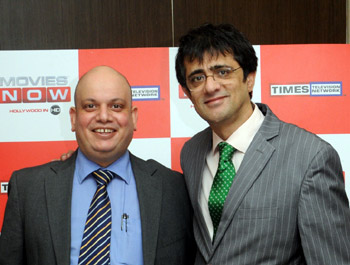
    Movies Now has completed a year. And the story of the channel’s progress since day one of launch is an exciting one, especially for the officials who’ve been running the show. Numbers of the past 51 weeks across eight metros indicate that Movies Now has garnered a market-share of 30 per cent and has increased the category viewership by 50 per cent (from 50 GRPs to 75).


    The reach too, increased from 46 million viewers to 56 million. And the average time spent has shot up from 42 minutes to 55 minutes. (Source: TAM, CS 15-34, AB, All 8 Metros, week 52’10 – week 50’11).


    The channel launched with a bang and shook up the otherwise dormant category, dominated primarily by Star Movies, and of course other players like HBO and Sony Pix, which had spent reasonable amount of time in the market.


    HBO has been in the market for more than a decade. Experts believe that with the right kind of content, marketing and distribution push, Movies Now wiped out every bit of complacency that had set in among existing channels. Now, as even other players would agree in the category, the market has become more competitive, and a lot of action can be expected in the genre.


    The strategy was to first set foot in the six metros and from there look at expanding their reach further. In fact, in its first month, the channel did not have a single DTH company on board. Currently present in eight metros, Movies Now will now look at getting to the 1 million+ market. With digitisation of TV, quite naturally the channel will look to move from analog to digital.


    Currently the channel reaches out to 100 million households and the plan is to get to the 140 million mark by end of next year.

    Ajay Trigunayat, Channel Head informed MxM India that the plan was pretty much to aim at the top. “We were clear right from the beginning that we wanted to bring a stellar brand to the viewers. We’ve challenged the status quo and reshaped the marketplace. 89 per cent of our viewership is library-led, and unlike other players, we cater to all eight metros. In the past one year, we have increased the category reach by 22 per cent and time-spent per viewer by 33 per cent.”


    He added, “In 2011, we are the most searched English Movie channel on Google India, we have about 5 lakh Facebook fans.”

    For Sunil Lulla, Managing Director and Chief Executive Officer, Times Television Network, Movies Now is a super-smash-hit story of the year 2011.On what it means to the Times Broadcast Network, he said: “As a network we cater to the Urban Affluent audience. All our channels – Times Now, ET NOW, Zoom and Movies Now have been doing very well in their respective genres. These channels, put together, provide great value to advertisers; it generates a fantastic synergy.”


    On what he expects from Movies Now in the future, he said that the channel’s primary focus will be to achieve consistent growth and in the process widen the gap from its nearest competitor.

  • Palasa obtains the creative mandates for Housefull and Rawwar

    By Shubhangi Mehta


    Palasa is on a roll, having bagged two businesses back to back, one for a low-cost furniture brand called Housefull and the other for a young fashion brand to be launched in February, named Rawwar. Palasa is a creative workshop formed by Sandeep Bomble, better known as ‘Bomble’ in the advertising circuit.


    The account size for both the businesses is estimated around Rs 20 crore. Palasa won the Housefull account by just recommending a communication strategy and a defined path to make Housefull a reliable furniture brand in the industry. For Rawwar the communication strategy gives a lift to the catalogue advertisement. They are also designing the T-shirts and the exclusive retail outlets for the brand.


    On the win, Sandeep Bomble, Director, Palasa, said, “Palasa as a creative place is different from other advertising agencies as we do not have any ATL and BTL barrier. No job is small or big; a visiting card or packaging or even merchandizing is as important as a television commercial. Both require idea and thinking. For Houseful we’ll be doing creatives across mediums from ATL to BTL.


    The approximate media spent is about Rs 12 to 15 crore. Housefull are on an expansion spree and plan to open maximum number of stores across India in the year 2012. “We saw this as a great opportunity to make Housefull ‘the’ household furniture Brand of India,” he added.


    The second account Rawwar, a young fashion brand to be launched in February, was recommended by Palasa. Mr Bomble explains their communication strategy, “To survive in this ever-evolving fad, being raw isn’t good enough. To overcome, situation demands a reverse in trend or to announce a fashion war. The idea is in the name itself the mirror reflection of RAW is WAR. And with Rawwar, it’s a Win-Win situation.”


    Mr Bomble had spent nine years at Ogilvy from where he moved to JWT and stayed for three and half years. The mix of creative sparks in Ogilvy and strategic strengths from JWT initiated Palasa’s birth. Palasa believes that as long as the clients are happy they do not need to come out and create any buzz.