Blog

  • Brands get a designer touch


    By Tuhina Anand


    Wendell Rodricks for Polo, Malini Ramani for Bata, Tarun Tahiliani for Timex… Some of the top Indian fashion designers have moved from their familiar territory of creating haute couture to creating new lines for popular brands.


    Wendell Rodricks has designed four new flavours called the Polo Fashion Flavours for Nestle’s Polo and has even given a funky new look to the staid-looking green and blue packaging of the mint.


    Malini Ramani, who is known for her bohemian style, has associated with Bata to come out with a new collection of footwear called Malini Ramani for Bata.


    Tarun Tahiliani has designed a special collection for Timex to help the brand break away from the sporty image it is associated with.


    Giving his views on this trend, Harish Bijoor, brand expert and CEO of Harish Bijoor Consults Inc. said: “I would call it bringing bizarre into branding. Fashion designers have no connect with the (product) category and it’s a stretch to think of them designing footwear or a designer mint. This is done to just get eyeballs and media share, and not necessarily about gaining market share.”


    For brands, it may be an effort to garner eyeballs, especially now, when they jostle with numerous others to grab the consumers’ attention.


    For Bata the association came at a time when they were looking at opportunities at designer footwear market inIndia. This, in fact, is the first time that Bata India has roped in a designer to design a special collection for them.


    On the reason behind associating with a fashion designer, Rajeev Gopalakrishnan, Group Managing Director, Bata India Limited, said: “The designer market is unique and full of innovations and Bata, as a brand, believes in constant innovations to bring forth the best for their customers. Therefore, we decided to rope in Malini Ramani, who is one of the most coveted designers in the country.”


    The footwear major has had a positive feedback of its association with Malini Ramani and hopes to further strengthen this association and even look for similar opportunities with other designers in future.


    Mr Gopalakrishnan added: “With the increasing demand for footwear in the Indian market, it is essential for any brand to introduce various designs and variety often. BataIndiaoffers various footwear ranges in every category. We bring out new designs for our customers as per the global trends and standards every month. The entire collection is changed every quarter to cater to the changing needs of Indian consumer.”


    Besides the Malini Ramani collection, BataIndiahas genuine leather casual collection for men under Bata and North Star Collection for the young customers. For customers with an active lifestyle, Bata launched a new collection under the Weinbrenner brand with personalized branding. It has Marie Claire collection for women, Power brand for the sports enthusiasts and variety of designs in attractive colours for children under Bubblegummers and Baby Bubbles, besides school shoes for children.


    For Timex the association with Tarun Tahiliani was to give break to the stereotype image that the brand has been associated with. VD Wadhwa, MD & CEO of Timex Group India, said: “Timex has been perceived as a sporty and outdoorsy brand since its inception and we want to move beyond that image. To strengthen our connect with the women costumers; we associated with ace designer Tarun Tahiliani. The aim of this association was to establish credibility amongst the women customers at comparatively higher price points and cash in on the wedding and festive season.”


    Mr Wadhwa stated that the response has been tremendous as far the collection is concerned. In fact, many costumers have come back asking for more options in this line. Though Timex doesn’t have any plans to add to this collection with other designers.


    “Marketers are increasingly leaning on homegrown designers for business associations to launch signature or limited edition lines. All this is done to attract the young and ambitious Indian consumers who would happily pay a premium price to stand out in the crowd. Indian designers are the best bet, since each one of them has a specific style and can fuse Indian and international designs brilliantly to develop an aspirational product,” said Mr Wadhwa.


    Fashion designer Manish Malhotra has also been featured in La Opala Diva ads and there is a possibility that he may design for the crockery brand, though the plan has not been finalized yet.


    One may even recall that few years ago, Sabyasachi had designed Bombay Dyeing’s new bed and bath range. It is clear that the marketers have started tapping the designers to give a fresh appeal to their products.


    It could be to create an aspirational value or tap consumers that have remained away from the brands and lure them in. In a cluttered market, this may be the way to at least garner eyeballs and somewhere succeed in getting an increase in sales too.


    Polo image: Nestle.in, other images: courtesy company spokespersons
  • Network18 and TV18 announce Rights Issues

    By A Correspondent


    Network 18 Media & Investments Limited, at the board meeting held on Tuesday, approved a Rights Issue of Equity Shares to raise an amount up to Rs 2,700 crore at a price to be determined by the Board in compliance with regulatory requirements, but not exceeding Rs 60 per equity share.


    TV18 Broadcast Limited has approved a Rights Issue of Equity Shares to raise an amount up to Rs 2,700 crore at a price to be determined by the Board in compliance with regulatory requirements, but not exceeding Rs 40 per equity share.


    Network18, being the promoter and holder of majority equity in TV18, would be subscribing to about Rs 1,400 crore in the TV18  rights issue – therefore, once this subscription amount is netted out, the Net Aggregate Rights Issue of both Network18 and TV18 will result in a fund raising of about Rs 4,000 crores.


    The contribution of the current Promoter Entities of Network18 in this Net Aggregate Rights Issue of both Network18 and TV18 will be about Rs 1,700 crores.


    TV18 will utilise the Rights Issue proceeds to repay the existing debt, fund the acquisition of ETV channels and fund working capital needs. Network18 will utilise the Rights Issue proceeds to repay the existing debt and subscribe to the Rights Issue of TV18.


    The promoters of Network18 will be subscribing to their entitlement in full. They also reserve the right to subscribe to any unsubscribed public portion of the Rights Issues.


    Raghav Bahl, the founder and promoter of Network18 and TV18, has informed that promoter companies have entered into an arrangement with Independent Media Trust, a trust set up for the benefit of Reliance Industries Limited, to secure the funding required for this purpose. Further, Mr Bahl will continue to retain the management and 51 per cent control over Network18 and 51 per cent control over TV18 through Network18.


    Both the Companies will be filing the Draft Letters of Offer for their respective Rights Issues shortly.


    Mr Bahl said: “This is a truly seminal moment in the 18-year-old history of Network18/TV18. By inducting such a significant amount of equity, our balance sheets will become among the strongest in the industry. Also, by acquiring this strategic control over several ETV channels, TV18 will have a bouquet of leading television channels. Riding on the imminent digital wave, I am convinced that this acquisition is a significant move which will catapult TV18 into the forefront of India’s broadcasting industry. The proposed preferred access arrangement with Infotel Broadband will ensure that our content & services will be available on India’s premier technology distribution platform. On a debt free basis, both Network18 and TV18 hope to strengthen their position in various media segments like news & entertainment broadcasting, consumer internet, digital & print publications, filmed entertainment, home-shopping, e-commerce and other emerging businesses.”


    The Board of Directors of TV18 Broadcast Limited (TV18) during its meeting also approved the acquisition of 100 per cent interest in Hindi news channels, namely ETV Uttar Pradesh, ETV Madhya Pradesh, ETV Rajasthan and ETV Bihar and ETV Urdu channel (ETV News Channels); 50 per cent interest in ETV Marathi, ETV Kannada, ETV Bangla, ETV Gujarati and ETV Oriya (ETV non Telugu GEC Channels); and 24.5 per cent interest in ETV Telugu and ETV Telugu News (ETV Telugu Channels).


    TV18 will have the Board and management control of ETV news channels and ETV non-Telugu GEC Channels. The Board has approved an outlay of up to Rs 2,100 crores for this acquisition. Legally binding agreements will be executed for this purpose. TV18 has an option to buy the balance 50 per cent interest in ETV non-Telugu GEC channels and an additional 24.5 per cent in ETV Telugu channels.

    Ernst & Young Pvt Ltd acted as advisors for financial and tax due diligence and valuation of the assets. The legal due diligence was carried out by Khaitan & Co.


    ETV is among the Top 5 most popularly viewed networks in the country. It was one of the first entrants in the regional markets and the channels have a considerable viewership base. One of the key strengths of ETV channels is their ability to attract and retain loyal viewers.


    On a combined basis, TV18 will be offering a unique mix of national and regional channels, catering to diverse genres like Hindi and regional entertainment, general news in English, Hindi and regional languages; business news in Hindi, English and regional languages; music, kids, devotional and infotainment channels.

    Including the soon-to-be-launched services/variants, this combined bouquet of over 25 channels will be the most powerful and potentially profitable TV operation in the country, especially since India’s television industry is on the verge of a digital revolution.


    As a part of the deal for acquisition of ETV Channels, Network18 and TV18 have also entered into a Memorandum of Understanding with Infotel Broadband Services Limited, a subsidiary of Reliance Industries Limited, under which the companies and their associates will have the right to distribute the content of all the media and web properties of Network18; and programming and digital content of all the broadcasting channels (including the ETV channels being acquired by the company) through 4G Broadband Network of Infotel, which shall have preferential access to this content on a first right basis as a most preferred customer.


    Infotel Broadband Services Limited is setting up a pan-India world class broadband wireless network, using state of the art technology. As per Images Year Book, more than 70 per cent of India’s population is below 35 years, and 50 per cent of the population is below 25 years of age. This young educated population will be keen to access quality content through wireless devices, thereby ensuring a rapid growth in subscribers similar to the growth of tele-density in India during the last ten years.


    The key advantage for millions of viewers will be the ability to enjoy an uninterrupted, high quality, 24-hour viewership, even while they are on the move. This tie-up with Infotel will enable Network18 and TV18 to build on their first-mover advantage for the distribution of their content through the latest broadband technology.


  • Gouri Dange: Head Honcho’s Day Out

    By Gouri Dange


    I don’t tear up (fancy word for cry foolishly) watching anything on TV or in the movies usually. Close friends sit around pulling on their box of tissues even while watching TV ads, for godsake, and I usually smirk and talk loftily and alliteratively about manipulation of the mind by the media and other such airy stuff.


    Weepy Indian soaps, saas-bahu dramas in Hindi and Marathi, I catch only by accident when my finger touches the wrong buttons on the remote; and when I then see a screen-wide shot of large reddened cow-eyes, mascara fake lashes shimmering with tears, I only guffaw and cringe.


    But here I am, sniffling after every episode of Undercover Boss. Why, oh why? People around me ask. But they’re quite touched too, I can see.


    First a little about the format: in each episode (on BBC Entertainment) the CEO or owner of a big corporation goes on to his shopfloor or into the field, incognito as an entry-level employee, spending one week doing the rounds with ‘lower rung’ staff. He changes his appearance, and since the corporations are huge (45,000 employees, etc) and have far-flung operations, none of the staff that he interacts with are likely to recognize him.


    The explanation given for the accompanying camera is that a film is being made on entry-level workers. The boss works in various areas of the company operations, at different locations. This way, he gets to interact closely with the lower and middle order in his corporation.


    Invariably, his 7-day outing is an eye-opener for him, one day at a time. The episode is dotted with poignant as well as really funny interactions, as he gets to see and work the system himself. He himself is often bad at doing what they do, invariably needs help, and is sometimes declared unemployable by the supervisor he may be working with!


    He meets employees who soldier on in spite of serious health or personal issues, he sees some of the absurd outcomes of his own policies, made far away in corporate settings. He is, to use a cliché, humbled by his own people as he goes along with them on their daily rounds.


    At the end of his week undercover, the head honcho returns to his corporate HQ, and calls a handful of the employees who he feels are doing a particularly good job under trying circumstances. He first reveals his true identity to them, much to their shock and amusement, as they recall how frank and ‘themselves’ they have been around him, when they thought he was just a newbie. He also calls in a few link-men in the chain, who need to change something in order for some policies or attitudes or daily circumstances to change for the better.

    The hard-working, cheerful, resourceful employees are then rewarded with promotions, or bonuses, while some employees are given training or better working conditions. Sometimes, the boss will step right out of the groove and help with a personal problem, or even better, turn the person’s coping skills into something of use to the company itself.


    For instance, one employee who undergoes dialysis every week, and yet works hard and happily, is also given time off to volunteer at a hospital which is something he wants to do – here he becomes a shining example of the benefits of positivity and good work.

    A simple ‘go-cart’ may be given to some employee who legs it from one building to the other far too many times a day in a large factory compound. More budget allocations are made, as the Boss learns experientially, that his operations just cannot always be about maximizing profits and minimizing down time. When he communicates this to his Board, you can see some faces thaw, some faces tighten; it is very interesting to see those reactions too.


    Undercover Boss UK episodes are restrained, and I hoped that the US ones would not be simplistic and manipulative; luckily they are not. Now you’re free to call me a Hopeless Romantic, but what slays me each time is the profoundly shaken look on the Boss’s face, many times during his undercover week. The other thing that has me reaching for someone’s tissue box (I don’t own one, perhaps I need to, now) is the changing look on an employee’s face – from guarded, restrained listening, to a shy child-like slow flush or grin. This changed expression comes up when he/she realizes that someone has watched them closely as they do sometimes mind-numbing jobs (either monotonous, or plain icky, including non-flushing toilets), appreciated their work, and is following up with not just a perfunctory pat-on-the-back, but with change and rewards. There are also often frank and forthright apologies from the Boss for being blind to many things in his own company and his people.


    When everyone in an interaction becomes a little more human, I tend to come undone. Of course, the program has QUITE a few ad breaks, and that becomes the Brechtian device that alienates you nicely, so that you never get too caught up and carried away, fortunately or unfortunately.

  • Jaldi 5 with Archana Vohra: itimes is philosophically different

    01. How will the property be marketed?

    We are excited about the launch and right now want to learn how our users are interacting with the new product. Once we get a better understanding we will think about how to grow the audience base.


    02. FB Groups/Yahoo Groups also offers same proposition. How do you plan to make it tick?

    The new Itimes.com is philosophically different from Facebook groups and Yahoo groups.


    03. Is it invitation-only?

    Itimes.com is a open interest network where anyone can create and share interests. It’s not invite or friends led hence relationships are based purely on content.


    04. How scalable is the property?

    From a business model perspective, the focus is engagement and not monetization currently. On the application side, we are scalable to manage large volumes of data and interactions.


    05. What are the challenges that this proposition might face in India?

    Right now we’re trying to build something that gives users a new way to engage with things they care about. So our real challenge is to see if we can develop an experience that makes that happen.


    As told to Ananya Saha


  • No discretionary quotas for journalists please

    By Ranjona Banerji


    The story of the day, on Tuesday, January 3, as far as the media is concerned is the front page expose by The Indian Express, headlined: “Meant for ‘distressed’, Orissa plot quota goes to babus, judges, journalists”. The strap below reads: “Row leads to CM scrapping discretionary land or house allotments last month”.


    The upshot is that a system of patronage was established in 1985 by the JB Patnaik government to allot houses or land for “the dependent of a person who has made a supreme sacrifice for the nation, but has not been properly rehabilitated so far; member of a family who has been a victim of unforeseen circumstances (terrorist attack, earthquake, flood etc); physically handicapped person…” The categories go on to include police, military, paramilitary and government employees permanently disabled on duty, the families of those who lost their lives in abnormal circumstances as well as eminent professionals, sportspeople, artists, literary figures and women of “high achievement in distress’ and individual cases of extreme hardship.


    After this, the beneficiaries appear to have been ministers, bureaucrats, judges and journalists. A scandal where a minister okayed the allotment of two houses to the family of another led Naveen Patnaik to abolish this discretionary quota.


    The story, does not tell us how many distressed, disabled people in extreme hardship actually got any land or houses, but it does list the journalists who benefited.

    http://www.indianexpress.com/news/meant-for-distressed-orissa-plot-quota-goes-to-babus-judges-journalists/895060/


    This raises a very serious question for journalists everywhere, many of whom have profited under similar schemes elsewhere in the country. The Express story, while naming benefiting politicians and so on has broken the covenant of silence on journalistic transgressions by printing the names of the lucky journalists and the minister under whose discretion they got so lucky. The names belong to several media houses and some are familiar.


    One journalist has defended his allotment, pointing out that when he got his plot in 1997, the scheme was legal. He also said that other journalists had lied that they had no other properties – a requirement of this lucky dip system.


    The question here is of something else. To what extent can journalists be objective in their reporting/covering/editing/commenting on government affairs if they benefit from government schemes and awards? Does acceptance of such largesse come under the tag of corruption or just luck? Is objecting to such acceptance an expression of self-righteousness or sour grapes?


    The profession of journalism has been under the scanner recently for a number of not very salubrious reasons. This is one more criticism which ought to stick. Paid news campaigns as orchestrated by media houses is totally reprehensible. But so is the custom of individual journalists accepting what cannot be called gifts but will have to be seen as bribes which compromise not only their integrity but that of all their fellows.


    The Indian Express has done the profession a great service by printing the names of journalists who are beneficiaries. If we are to fight both media corruption and paid news, then the only way is for us to become each other’s watchdogs. We cannot be sanctimonious about everyone else but ignore our own transgressions.


    The way The Hindu exposed the Hindustan Times on its story on infant gender changes in Indore or The Guardian has been relentlessly attacking News of the World and others on phone-hacking, is it time for Indian journalists to stop applying the discretionary quota to each other?

  • The Anchor:6 ways ad agencies can attract top talent

    By Partha Sinha


    By abolishing the term ‘agency’ : Nobody, absolutely nobody from Harvard or Rhode Island School of Design would like to join an ‘agency’. Anything, even if it is as vague as a brand house or a communication company, sounds more respectable than an ‘agency’.


    By not behaving like an ‘agency’: The term ‘agency’ was born because advertising companies represented the media owners as their agency. Today the creative agencies don’t do that, but they represent another lot – the film producers. Today ad agencies are the agents for filmmakers. More time and energy goes into pushing a producer to the client than anything else. Again, no talent wants to come in to help producers buy very expensive cars and apartments.


    By changing the agency business model : By behaving like true middlemen, agencies never kept any IP with them. So today, the agency valuation is a joke. Again great talent will never join an industry whose current and future valuation is worthless. The advertising industry should be ‘valued’ for the assets they create, and that calls for IP-based remuneration.


    By getting rid of agency fears : Today, the confidence level of agencies has hit rock bottom. Fear is the primary driving force for the functioning of an agency. Agencies are afraid of not only the clients but of film producers, hoarding contractors, research agencies and all other sundry people. No young talent would work in an atmosphere like this. Agencies can become a bit more confident by shifting the conversation from ‘I think’ to ‘I know’. Young talent would love a place that’s more confident of its creations and not just based on hunch and judgment but based on knowledge.


    By restructuring the agency organisation : There are people in agencies whose primary job is to second-guess the client . They are clients’ agents inside the organisation (and they can come from any discipline, even creative). No self-respecting talent wants to work for a client, he/she wants to work with a client. Agencies need to rethink their organisation and put emphasis on creation rather than managing expectations. This will increase the inflow of talent.


    By discarding some of the agency presentations : There are many occasions where the senior agency types cut a sorry figure in front of a young audience with their sepia-tinted presentations and dead thinking. Even some of the advertising and brand talks that happen on TV shows can scare young talent off. For their own good, ad agencies need to change their thought pieces and representatives. Otherwise young talent will soon start referring to advertising in the past tense.


    I know that all 6 of these are virtually impossible to achieve. But then, who said attracting great talent was easy?

    Partha Sinha is the Managing Partner at BBH India.


  • Debrief: Google Chrome: Real marries virtual

    By Anil Thakraney


    Excellent advert from Google Chrome. Taking their global idea forward, which is ‘The web is what you make of it’, they have Indianized the concept quite wonderfully. It’s about explaining to a layman how easy it is to expand your business by creating your own website.


    The TVC features an artist from Tanjore (Tamil Nadu). His miniature paintings aren’t selling much, and the man looks pretty disillusioned. He then creates a website for his work, and soon his fame spreads far and wide and he turns into a flourishing entrepreneur.


    But the magic lies in the execution of the commercial, it’s a combination of the real and the virtual, and it’s difficult to describe it. Watch the TVC.


    [youtube width=”400″ height=”200″]http://www.youtube.com/watch?v=8ZYIBQqRodA[/youtube]

    Now here’s a commercial where everything comes right. The idea, the direction, the editing, the setting, the casting, the music score… all come together literally like a work of art, and effortlessly communicate that Google Chrome can make you prosper in your line of activity. It’s actually a very basic thought, but the fabulous execution takes it to another level.


    Also, it must be said, this is a risky storyboard. Things could easily have gone horribly wrong with a mediocre treatment. Full marks to Google Chrome and their ad agency for taking that risk. It’s paid off.


    Rating: (On a scale of 1 to 5): 4. Art and science come together seamlessly to create magic.


  • Resolutions for 2012: I shall, I intend, I will…

    The new year means making new resolutions, and our industry is no different. MxMIndia spoke to the leading lights of the industry to find out about their resolutions for 2012.


    Tarun Rai, CEO, Worldwide Media


    The last few years have been very exciting for me and for Worldwide Media. The pace has been frenetic. The aim is to keep up the momentum. Keep up the excitement for everyone at Worldwide Media. We’ll need to be nimble and flexible since 2012 will bring some surprises. But we want to stay the course. Continue to produce great content for our readers and deliver value to advertisers. And provide opportunities to our employees. In my role as the AIM President, I want to raise the profile of our industry and get the attention it deserves from advertisers. Lots to do and we are raring to go.


    Mahesh Peri, Publisher, Outlook Group

    In this year I will really like to see digital media grow. I will like to embrace digital media and make it count on all the parameters. Not only do I want my own organization to do well in it, but the media industry on the whole.


    Sandeep Khosla, CEO, Infomedia18

    My professional goal is to take some of the publications we have to a number one brand. When I talk about brands I don’t just mean our publication business, but other media too where we are present – this includes doing well on the internet, ipad and blackberry apps. Also, this year we will also look forward to launching a couple of new magazines especially in the lifestyle segment. As far as personal goals are concerned, I will look forward to divesting more time and energy on philanthropic work, something that I have already been focusing on off late.


    Rahul Kansal, Chief Marketing Officer, Times of India Group

    My resolutions of late has been not to make any resolutions. But currently in my personal life I wasn’t to develop some more hobbies in a more passionate way. I have already embarked on trying to learn some music and I am taking it very seriously. There are too many professional goals and objectives to name. However, it is basically to ensure that Times of India and all our other brands remain buzzing, not only as newspapers but on all media generally.


    Harish Bijoor, Brand Expert and CEO of Harish Bijoor Consults Inc.

    My New Year resolution is not to make one this year. I have realized that when I make a resolution, something or the other bites into it and I am not able to keep my commitment hence breaking my resolution.


    Agnello Dias, Chairman and Co-founder, TapRoot India

    My resolution is to work towards making creativity work in other forms than just the way we have known advertising till now. It would be to look at creating other forms of creativity that can work as product valuation for the client and also create unique property for advertising agency which can be valued in the financial terms. Just to explain something like Kolaveri Di which could have been created by an agency.


    Dhunji S Wadia, President, Everest Brand Solutions

    Pitch Less – Win More: Use agency resources for existing clients who are paying for your services. Pitch only when the client is serious and not just interested in an agency fashion parade.


    Bottom-line and Not Mere Headlines: When acquiring new business, I would urge agency managers to look for bottom-line growth instead of just adding to the top-line (and creating headline news).


    Bring Sexy Back: Make the advertising business fun and attractive for all – people within the agency, clients and aspirants


    Spread The Good Word: Go to the right forums, seminars, institutes and keep waving the Industry flag high. There’s lots of good in the industry – it just needs the right evangelists.


    Mahesh Chauhan, Salt Brand Solutions

    2011 and Salt began my journey towards my dreams. 2012 will be all about continuation. So no doing the ‘new’, but doing a lot more of what we already do at Salt. And that really is about keeping things simple. Good company: There is a huge opportunity in the tough business environment of 2012. Clients today seek partnerships that deliver real value. We have traveled some distance in 2011. We must continue to become their preferred choice. Good work: Continue to focus on work. Continue to build on the enjoyment at work. Argue, fight, laugh, cry, shout, abuse, embrace: all for the simple cause of great work. Good looks: Continue to build on the capabilities at Salt. Continue to hire diverse and outrageous talent that makes us nervous. Foster them so that they create great work. All at Salt will look good! Continue to enjoy everyday. Continue to be simple. Continue to be true to Salt!


    Piyush Sharma, CEO, Media Transasia India

    On the first hand we will like to consolidate our existing businesses across the brands that we have launched over the last couple of years, while at the same time we will keep our eyes open to any new opportunity that might present itself in new spaces…just like we have done in the past. Here, I am talking about new product launches in magazine space in the Indian market.


    Manajit Ghoshal, CEO and MD, Mid Day Infomedia

    Very clearly, our goal and aim is to make Mid Day the number one and best local newspaper in Mumbai for young professionals. We have recently showed the best IRS figures in the recent IRS report and we will march towards our goal in 2012.


  • ‘Silent Anthem’ is among 2011’s top 10 most-watched YouTube videos in India

    By A Correspondent


    With an Indian viewership of 1,150,509 and around 1,300 people’s comments, “The Silent National Anthem” video has made it to India’s top 10 most-watched YouTube videos of 2011.


    The official Google India Blog recently carried out an analysis to check ‘What were we watching the most in 2011?’ The research spooled back through videos and channels that absorbed collective global attention this year and compiled the list capturing the global view counts of popular videos uploaded throughout 2011.


    The research revealed that in India, the top 10 most-watched YouTube videos of 2011 were:


    1. Don 2 – Official Teaser
    2. RA.One – Teaser Trailer
    3. Agneepath Trailer – Official
    4. Singham – Trailer Full HD
    5. Star Light Star Bright – Mother Goose Club Nursery Rhymes
    6. MissionImpossible 4 – Ghost Protocol – Official Trailer
    7. The 7 Trumpets of Revelation | The Day Trumpet 1 Hits Earth
    8. iPhone 5 Concept Features
    9. Bodyguard – Official Trailer HD
    10. The Silent Indian National Anthem


    While more than 50 per cent of the list comprises trailers of Bollywood movies (the industry is known for high decibel media spends), The Silent National Anthem acquired an audience largely on account of its brilliant emotional connect.


    The premise ‘Patriotism knows no language’ was brought to life through hundreds of special kids with hearing/speech impairments singing the National Anthem in sign language for India’s 61st Republic day.


    BIG Cinemas, in association with the Mudra Group, released the video across its cinemas on 26 January, 2011.

  • IPL sponsorship assessment in new TAM volumes

    By A Correspondent


    TAM Sports, a specialized division of TAM Media Research, which has done extensive work in the field of sports measurement and valuation in the past few years and specializes in measuring the sports sponsorship Return on Investment (ROI), announced the launch of special features on IPL 3 and IPL 4.


    TAM Sports has done an extensive assessment on IPL 3 & 4, focusing on the dynamics of TV audience and sponsorships. This series of TAM Sports publishing aims at benefiting sports associations, broadcasters, advertisers and sports marketing consultancies and help them understand the complexity involved in expecting ROI. TAM Sports started this initiative with IPL Season 1 and has also released a book on IPL Season 2.


    TAM Sports’ IPL 3 & 4 books will include an in-depth study on the event’s viewership dynamics, commercial and non-commercial advertising (product placement) that brings out the nuances with respect to visibility of brands and branding units along with a comparison across seasons.


    It will have a detailed study on consumer impressions, brand placement, on-screen and instadia advertising along with a special section on franchisee advertising done during IPL seasons 3 and 4. One part of this offering will also include an analysis on PR exposure received by the franchisees and various brands associated with IPL.


    Talking about the IPL 3 & 4 feature, LV Krishnan, CEO, TAM Media Research said: “Based on the overwhelming response to our earlier book series on IPL 1 & 2, we are glad to release the combined book volumes of IPL 3 & 4. These two volume will also highlight the insights on sports sponsorship ROI on various platforms – instadia, on-player and on-screen, along with throwing light on the tournament viewing analysis like audience profile, how various markets have responded to the event, impact of IPL on other genres with a special new section on franchisee advertising and print in-content placement. While TAM Sports has alays had a big focus on cricket due to its large audience and advertising base, we will also continue to provide more such insights in other sports like F1, tennis and football as well serve the respective industry for its business requirements.”


    Some observations from the TAM Sports IPL study are:

    • IPL seasons have been successful in reaching maximum audiences year after year. IPL Season 3 reached 41 + million audiences whereas IPL 4 reached 46+ million viewers.
    • IPL 3 & 4 garnered maximum contribution from CS 35 + age group whereas IPL Season 4 has seen increase in kids viewing.
    • In comparison with IPL 3, IPL 4 witnessed 33 per cent growth in overall advertising while commercial, on-screen and instadia advertising witnessed a growth of 21 per cent, 50 per cent and 33 per cent respectively.
    • Commercial advertising during IPL Season 4 increased by 21 per cent as compared to IPL Season 3.
    • IPL 4 saw utilization of 60+ instadia platforms.
    • On player advertising has witnessed 37 per cent growth.
    • 57 brands got exposure through 16 accessories platforms and contributed 2 per cent share of the total ‘instadia’ advertising.

    TAM is a joint venture between AC Nielsen Research Services (Nielson Company) & Kantar Market Research. Besides measuring TV Viewership, TAM also monitors advertising expenditure of television, print and radio through its division AdExIndia.


    Since 2004, it extended its presence in the PR measurement & analysis space for Corporate/Marketing Clients by setting up a separate division, Eikona PR Measurement.


    In 2007, the joint venture introduced RAM (Radio Audio Measurement) service to track radio listenership for the Indian Radio Broadcast Industry.


    In year 2009, TAM launched a division, called TAM Sports that specializes in monitoring Sports Sponsorship ROI.


  • Done deal? Mukesh Ambani to enable Raghav Bahl to pick up ETV. RIL likely to invest Rs 1.5k cr for 30% & 4G rights

    By R Sriram


    Reliance Industries is embarking on a major diversification into the media and entertainment sector with the Mukesh Ambani firm agreeing to fund a transaction that will result in a sizeable stake for itself in a company controlling two of the industry’s largest businesses, the Network18 Group and the Eenadu Group of channels run by the Hyderabad-based Ramoji Rao.


    People close to the transaction, which has a number of stages, told ET that an RIL subsidiary will help the promoter group of Network18 fund the rights issues of its two listed entities, Network18 Media and Investments, which runs the portal moneycontrol.com, and TV18 Broadcast Ltd, which operates a number of business and general news channels, notably CNBC TV18 and CNN-IBN.


    ET was not able to independently verify the amount to be invested by RIL, but people with direct knowledge of the transaction estimated it to be more than Rs 1,500 crore. The money from RIL will help Mr Raghav Bahl, the promoter of the TV18 Group, subscribe to the rights issues of both the listed companies, Network18 and TV18. The full amount expected to be raised through the rights issues is estimated at over Rs 3,500 crore.


    The boards of TV18 Broadcast and Network18 Media will meet on Tuesday to discuss plans for a rights issue. Mr Raghav Bahl did not respond to an email questionnaire; a Reliance group spokesperson also remained silent, while Mr B Sai Kumar, the CEO of Network18, declined comment.


    Times NOW and ET NOW, owned by Bennett, Coleman & Co. Ltd, the publisher of The Economic Times, compete with some of the television channels owned by Mr Bahl. The strategic investment by RIL will be used by the Network18 Group to retire debt and eventually buy out RIL’s stake in Eenadu, the pan-India vernacular language channels owned by Mr Ramoji Rao.


    RIL sources said they had invested Rs 2,600 crore in the Eenadu Group through a subsidiary giving it ownership of all businesses apart from its Telugu channel, in which it owns 49 per cent. The transaction, once complete, will result in RIL recovering most of its investments in Eenadu. Messages and an email sent after business hours to the office of Mr CH Kiron, the managing director of Ushodaya Enterprises, the holding company of the Eenadu Group, did not elicit any response.


    By its own admission before the Andhra Pradesh High Court, Reliance Industries has said it has invested Rs 2,600 crore in entities of Mr Nimesh Kampani-led JM Financial Group, which in turn had invested in Ushodaya Enterprises. The AP High Court is hearing a petition alleging the investment was a payoff to Mr N Chandrababu Naidu, the former chief minister of Andhra Pradesh, an allegation RIL has denied in its affidavit. RIL’s deal with Mr Bahl, likely to be announced on Tuesday, is expected to create a powerful national news and entertainment company spanning several regional languages as well as English and Hindi.


    RIL to get Exclusive Rights to Content


    RIL, people close to the transaction said, is expected to hold an economic interest equivalent to a 30 per cent stake in the promoter group of companies, with the original promoter Mr Bahl owning 51 per cent and all voting rights.


    Further, RIL will have exclusive rights to content from 30 channels and web properties of the two media houses, which will lend a competitive edge to its broadband services to be rolled out later this year.


    RIL is laying the groundwork for national 4G broadband services expected to be launched sometime this year. Content for broadband services is generally outsourced, but RIL will have an advantage over others with this transaction which will give its subscribers a wide variety of channels ranging from general entertainment to news and movies.


    Earlier on Monday, Mr Sai Kumar, in a letter to all employees of TV18, hinted at a solution to the group’s debt problems. “Let me also take this opportunity to tell you that we are very close to addressing our debt levels and related issues which have been reported by various media in the last few weeks. We will learn the details from Raghav pretty soon,” said Mr Sai Kumar, who took over as CEO after the sudden resignation recently of long-time CEO Mr Haresh Chawla.


    The money is likely to be invested directly in companies controlled by Mr Raghav Bahl, such as RB Holding Pvt Ltd and RB Investments Pvt Ltd. These companies own 30.34 per cent stake in Network18 Media while Mr Bahl holds 9.03 per cent in his name. Network18, in turn, is the main shareholder in TV18 Broadcast with a 49.98 per cent stake. The two companies have suffered heavily in the downturn triggered by the financial crisis of 2008-09. While revenue growth has been strong, profits have plummeted and borrowings have soared.


    At the end of March 2011, Network18 had debt of Rs 1,777.89 crore. Its profit for that year fell 87.27 per cent. TV18’s debt stood at Rs 550.54 crore while profit fell 17.40 per cent. The markets have punished the two companies. Network18′ s market cap is down 171.57 per cent since January 5, 2009 while TV18’s has fallen 560.23 per cent in the same period. Mr Bahl’s companies also have a distribution joint venture with the Chennai-based Sun Group, called Sun18. It is not known if Sun’s channels, among the strongest in the south, are a part of this arrangement. American giant Viacom too has a joint venture with Mr Bahl for producing movies.


    Source:The Economic Times

    Copyright © 2012, Bennett, Coleman & Co. Ltd. All Rights Reserved

  • Zee zeal comes to the fore


    By Rishi Vora


    The year 2012 promises to be a memorable one for Zee TV, with a celebration to mark the channel’s completing 20 years of being in the broadcast business.


    Besides completing 20 years of being in the broadcast business, the channel is expecting to climb the GRP ladder and look to attain leadership position. The road has been patchy at times, competition has stifled its growth and the channel has not quite delivered as per expectations. But, in all certainty, one can say that Zee is one channel which has stuck with the idea of being a family entertainment channel, one that does not believe in spending millions on celebrities, and one that is known to be profitable in the business.


    The company is planning to celebrate its 20 years with a campaign that’ll communicate the brand’s philosophy. Though finer details of the campaign are not known, it is learnt that the channel is looking to work more towards the channel brand Zee besides regular marketing campaigns to promote fiction and non-fiction shows.


    Akash Chawla

    Marketing Head of the group’s national channels, Akash Chawla admits that Zee has in the past few months taken a beating as far as ratings are concerned. But, at the same time he is of the opinion that 2012 is the year where they will look to change their ranking, where the idea is to be the No 1 player in the next 12 months.


    “We will go step-by-step in achieving that goal,” he said. He also mentioned that the first goal will be to reach the No 2 position in the next four months.


    Content will play a major role and as a part of the strategy, Zee will look to bring international formats, something which they haven’t tried their hands at in the past. While that is true, the channel will continue to launch home-grown formats too. Recently, the channel launched a couple of fiction shows and is looking to promote them on the back of reality show – Dance India Dance 3 (DID 3), a reality dance format show which Zee is betting big on.


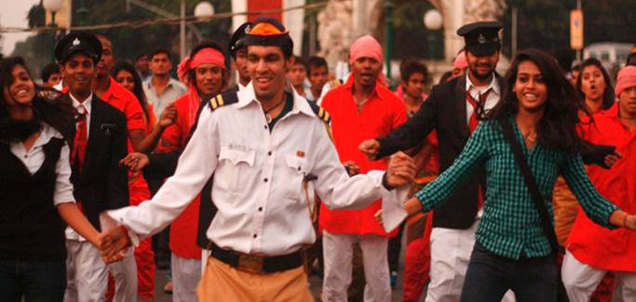
    A lot of work has gone in the new media initiatives, promoting DID 3. The channel recently organised a flash mob with the idea to promote the concept of ‘dance’ among viewers (see photograph). Besides that, contests on Facebook, hoarding, press, TV spots supporting the mega campaign. “The idea is to have a dialogue with the viewers. Even in the case of our press ads, we have tried to make a dialogue with our viewers, explained Chawla. “He further added, “We also did a flash mob because we thought it was a great idea. We were launching the show at a peak of a season where people tend to move out a lot. Also we did this when it was a holiday season, so footfalls in public places are likely to be more. If at the end of the day, I can make people dance along with Dance India Dance, the message is there, the engagement is there. The recall value increases.”


    Zee Cine Awards will happen in Macau on January 21 and be aired on the network on February 5. The show is promoted across all countries where Zee operates; however, marketing activities are being carried out country wise, where there will be different ideas, contests and marketing plans for different countries. Ditto with sponsorships, where each country will have a different presenting sponsor. For India, the channel has got on board Pan Bahar as the presenting sponsor.


    The campaign will cut across outdoor, print, radio, on-air promotions and interactive contests. It will also widely explore the digital space including social media, mobile-based apps and forge strategic tie-ups in every region to ensure a 360* connect with Indian as well as international audiences. This coming together of Zee’s global marketing teams will see more than 30,000 promos running across its global network in 168 countries.


    The story doesn’t end here for both Chawla and Zee Group for that matter. From a network point of view, there is a renewed thrust on Zee Classic. One of the three channels that were launched to be on the digital platforms initially. Zee Premier and Zee Action being the remaining two. Having defined a niche for Zee Classic and the fact that the channel has already about 500-odd movies to engage the audience with, the task at hand for Chawla and team is to market the channel more aggressively to that specific niche. The channel launched a new show called Classic Legends, presented by Javed Akhtar.


    Digitisation will help boost channel’s profits. It also opens up a whole new channel for marketing. Dish TV being a sister company, and reported to be the largest among DTH players, Chawla says it makes more sense to leverage that platform and generate as much traction from there in promoting the channels shows, particularly reality shows – DID 3 in this case.


    So a lot happening. DID 3, Zee Cine Awards, the new media thrust, the plan to be No 2 in four months and No 1 in a year’s time. The task is mammoth as Sony and Colors too are eyeing the No 1 spot. So these are testing times for Zee. Will the pressure of expectations defeat the channel’s ambitious moves? Or will it come out victorious?