Blog

  • PRCI inducts NS Rajan in the Hall of Fame

    By A Correspondent


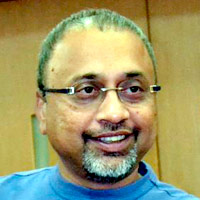
    NS Rajan, the public relations evangelist inIndia, has been inducted in the Hall of Fame by PRCI at the recently concluded Global PR Conclave 2012.


    Every year the Public Relations Council of India (PRCI) looks at eminent professionals from the public relations discipline inIndiaand selects the chosen ones for inclusion in the Hall of Fame.


    NSR, as he is fondly called, has been nurturing and re-defining the public relations industry inIndiawith his strong belief in consulting and advisory approach at a time when the industry didn’t have these words in its dictionary. Grit, passion and innovation are the three cornerstones of NSR’s illustrious career spanning over two decades.


    “I dedicate this recognition to each of my colleagues, past and present, who have contributed to make what Ketchum Sampark is today,” said NSR, Managing Director – Ketchum Sampark.


    A postgraduate in Business Management, NSR is widely credited for bringing in ethics, moral values and a sense of pride to the public relations industry inIndia. NSR started his career with the Associated Cement Companies (ACC), followed by Essar Group where he headed its Corporate Communications Team. He successfully guided all communications related to Essar Group’s metamorphosis into one ofIndia’s largest industrial houses with interests in steel, oil, shipping and telecom – including helping the group raise several billion dollars from the capital markets.


    Under his stewardship Sampark, started in 1994, has developed and executed distinctive, high-impact global communications campaigns for several global and Indian brands like DSP Merrill Lynch, ICICI Prudential, Fitch Ratings, ICICI Venture, Bajaj Auto, Tech Mahindra, Hutch Vodafone, ABB, Exide, Lafarge and others.


    H K Dua, Member of Parliament and former Editor-in-Chief of Times of India, K Subramanyam, Director General of Police,Maharashtra, Dr. N. Prabhu Dev, Vice-Chancellor of Karnataka University, and CV Prasad, CEO, Gradatim, Chennai, M B Jayaram, Executive Director KPCL and Chairman Emeritus PRCI and Mr. ND Rajpal, President, PRCI graced the occasion.


    In 2011, Ketchum Inc. a leading global communications firm acquired a majority stake in Sampark PR Pvt. Ltd. after a four long year preferred partner relationship. The joint alliance Ketchum Sampark Pvt. Ltd., part of the Omnicom Group significantly expands Ketchum’s presence inSouth Asia, complementing Ketchum’s strong network in the Asia-Pacific region.


    Public Relations Council ofIndia(PRCI) is a national body of Public Relations, Corporate Communications, Advertising and Media Practitioners, Event Managers and also academicians. Established in 2004 PRCI strives to enrich the professional development of media practitioners and provides networking opportunities to further the course of the profession.


  • Ranjona Banerji: Sena on shaky ground, polls to decide all

    By Ranjona Banerji


    Mumbai has elections on February 16 to select its municipal corporators. Since the Brihanmumbai Municipal Corporation has a bigger budget than some state governments, this is an important election. It is also a political test for the incumbent Shiv Sena-Bharatiya Janata Party and a signal for the Congress-Nationalist Congress Party alliance – which is in power in the state – about the roadblocks ahead for the next general election.


    Not surprisingly, election coverage has dominated Mumbai’s newspapers. Most seem to think that the ground is shaky for the Shiv Sena. This is, in a sense, a last bastion for the Sena – it has ruled the BMC for almost two decades. But everyday, newspapers are full of the shortcomings of the corporation and the corruption involved in most deals. Mumbai’s roads and water supply get the most attention and none of it positive.


    The general sense you get from newspapers is that this time there will be a challenge to Bal Thackeray from not just the Congress-NCP but also of course from his nephew Raj Thackeray and his breakaway party, the Maharashtra Navnirman Sena. Uddhav Thackeray – the son and the main bone of contention – does not have the requisite firepower, seems to be the overwhelming feeling. There is also a discussion on whether both the Senas will cancel each other out.


    The Times of India and The Indian Express both carry interviews with chief minister Prithviraj Chavan, who says he pushed for an alliance with the NCP this time – to avoid fracturing the vote as happened when both parties went alone in 2007.


    * * *


    All newspapers have also focused on the low voter turnout in Mumbai and have exhorted citizens to come out and vote. You could pick up any newspaper to find out all about the candidates from their bank balances to their educational qualifications. The new seat reservations have created some turmoil in parties, all of which have been faithfully recorded.


    * * *


    Interestingly, the high number of dry days – three have been decided by the Election Commission – has been cause for consternation in print. The bar and restaurant association has put in a plea reported in Wednesday’s papers to allow the sale of alcohol in the evenings of the dry days, after voting is over on Thursday. The right to drink is well-felt by most journalists, so it is easy to see why this forced abstinence should get prominence.


    * * *


    It is these little titbits which make newspaper reading so pleasant a pastime. The oddities of life rarely find room in the high-pitched breaking news landscape of TV land.


  • Anupriya Acharya to head Unilever biz @ Mindshare

    Anupriya Acharya
    Ravi Rao

    By A Correspondent


    After the elevation of Mr Ravi Rao to lead Mindshare India, the media agency has appointed Ms Anupriya Acharya Leader – Team Unilever:South Asia, a position held by Mr Rao until he took over the agency’s reins (from Mr Gowthaman Ragothaman). She takes charge today.

    Ms Acharya has relocated from Singapore where she was CEO, Aegis Media.Her responsibility at Mindshare requires her to oversee business in India, Pakistan, Bangladesh and Sri Lanka.


    Announcing the appointment, Ravi Rao, Leader, South Asia, Mindshare, said: “Anupriya moves into this role fromSingapore where she was CEO, Aegis Media Singapore and is credited with doubling the operation in just over two years. Prior to Aegis Media, she was President TME (The Media Edge) from 2005-2008. She is also no newbie at Group M. She set up mConsult under Vikram Sakhuja in 2004 and has been an integral part of Fulcrum from 2000-2003. So we welcome her back. ”


    Commenting on her new role in Mindshare, Ms Acharya said: “I am most excited about this role. I have always had very fond memories of Fulcrum. Aegis Media Singapore position helped me gain an international and regional perspective and honed my intercultural management skills, while TME taught me handling extremely diverse set of clients and their different requirements. CP, Parle AOR, Indian Oil, Viacom 18’s Colors and Citibank were some of the key clients then. Now I was looking to get back to scale and lo! this assignment was so timely and perfect.”


    “I look forward to working closely with Ravi, Roy Sudipto, who heads the team Unilever for APAC and David Pullan, Global Head of Team Unilever at Mindshare London, and to drive the aggressive Unilever agenda forward acrossSouth Asia. The scale is truly exciting and humbling at the same time. I am raring to go!,” she added.


    Ms Acharya has also worked at McCann Erickson and Ogilvy in her earlier years. A Post Graduate in Analytical Chemistry from IIT-Roorkee, she has over 16 years of experience in Communication solutions. Her interests are adventure sports, photography and travelling for leisure.


  • MSL Group on overdrive with social media


    By Rishi Vora


    MSL Group, the Publicis Groupe’s flagship speciality communications and engagement network, is upbeat about its foray into the growing world of social media. Afer it acquired communications major Hanmer & Partners and later PR and social media firms 20:20 Media and 20:20 Social respecitively, it has now clubbed the social media practices of Hanmer and 20:20 Social under the umbrella of MSL Group India Social.


    The group has adopted a unique approach towards tapping the social space for clients in India and abroad – it has created three key capabilities: Plan, Build and Engage. Of the two, Plan and Build are the revenue-drivers, wherein a lot of work goes into providing insights, strategy planning and developing web, mobile and social applications; creating content, communities and conversations.


    The company recently launched its proprietary tool – The People’s Lab, a global crowdsourcing platform and approach designed to help businesses embrace innovations. It is a platform which works across multiple application areas; provides end-to-end support, including custom design and content creation.


    In 2010, Dell India used an early version of People’s Lab platform to create the Dell Go Green challenge for design students and others to share ideas on how to redesign, reuse and recycle gadgets to make them go green. The idea to create Dell Go Green challenge came from the fact that the client owned a recycling programme, besides having conducted several other CSR programmes.


    A mini site was created using the People’s Lab and the result was quite pleasing: About 650 ideas got shared, 25,000 members on Facebook and 8,000 votes.


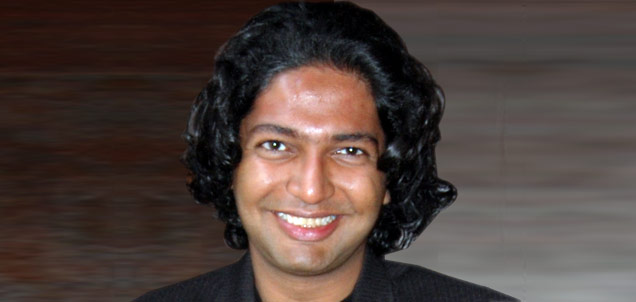
    As is known, Gaurav Mishra launched 20:20 Social and now heads the group’s social media business in India. He is Asia Director – Social Media, MSL Group. Mr Mishra told MxMIndia that the company now plans to launch many more tools that will offer clients comprehensive social media solutions. “Our core differentiation in the social media space is in offering tools; we are in the business to create platforms which bring people together and programmes which energise people. We want to create more tools, more frameworks, so that we can go to clients and offer them solutions that’ll contribute in solving much bigger problems.”


    Parveez Modak

    People’s Lab was created in India, led by Parveez Modak and is now sold to clients in Singapore and Italy. “We’re discussing with clients in US, Poland, Taiwan, and in India,” informed Mr Mishra.


    He added: “Once we have developed enough tools and capabilities in India, we will look to educate whole of our network and make efforts to spread awareness to our group companies in different parts of the world.”


    MSL Group India Social is now working towards creating a corporate citizenship offering globally. As Mr Mishra explained, it is a network of 150 senior members of the group spread across regions – board members, global board members, regional presidents and others. The idea is to bring forward a thought leadership team that can provide insights, views and opinions on various topics ranging from “How clients are looking at Change Management Differently” to Employee Engagement, Corporate Citizenship, Innovation, business opportunities and so on.


    How will the Social space evolve in India? Where is it headed? What kind of solutions are clients seeking from specialists? According to Mr Mishra, the market for social media services will pick up dramatically now, and clients will be on the lookout for companies that possess the talent to develop in-house capabilities, and solve greater and much complex marketing solutions within the social space.


    Globally, MSL Group has about 200 professionals dedicated to social media; about 60 of them in Asia and, for now, 30 in India. Mr Modak, who other than social media also leads the integration function at Hanmer and Mr Narendra Nag at 20-20 Social constitute Mr Mishra’s core team for MSL Group India Social.

    “Revenue-wise, India is still fairly small, China is becoming increasingly big in terms of size of the market, but there is ample opportunity in India,” concluded Mr Mishra.

  • Bharat Matrimony to create the world’s largest wedding photo album

    By A Correspondent


    Kick-starting a two month long run-up to Matrimony Day (April 14), BharatMatrimony.com has set the ball rolling on February 14th in an attempt to create two world records – attempt a Guinness World Record in putting together the world’s largest wedding photo album; set a world record with 1 million wedding pictures online at www.millionweddingpics.com to create the largest collection of wedding pictures online.


    During the event, the celebrity couple Kapil & Romi Dev uploaded the first wedding pictures onto the website to officially launch www.millionweddingpics.com.


    The website opens up an opportunity for all married couples to participate in this momentous occasion and create history. They can also drop into any of the over 150 BharatMatrimony retail outlets spread across the country to participate in this record attempt.


    Spread over a period of two months, the grand finale of this attempt to create a Guinness World Record with the world’s largest wedding album will be unveiled on April 14, which is celebrated as Matrimony Day across the globe. The final lap of events will begin on March 1 to mark Matrimony Day celebrations.

  • NewsX launches The Insiders with Kalyani Shankar

    By A Correspondent


    NewsX has launched a brand new series – The Insiders with Kalyani Shankar to boost its programming lineup. The Insiders is a series that provides viewers with an Insider’s perspective on events and people who have shaped the discourse and direction ofIndia.


    Hosted by ace political commentator, Kalyani Shankar, this series will provide groundbreaking insight into certain events of the past that shapedIndiaand changed the course of our collective histories. The ‘Insiders’ featured in this series have held key positions of power and been involved in policy and decision making processes.


    The events and people they talk about during the show are not ordinary either. From Pokhran-II to the 1971 Bangladesh War; from Kargil and the IC-814 hijack to the inception of insurgency in Kashmir; from the road to economic recovery in 1991 to when democracies collided with Mrs. Gandhi taking on the might of Nixon and theUSA, the show throws light on all these incidents that shaped our nation’s history.


    Commenting on the launch, Jehangir S Pocha, Co-Promoter, NewsX said: “The Insiders re-examines key events that shaped modernIndiathrough Kalyani Shankar’s free-wheeling and frank interviews with the key players involved in those events. The show brings new light to these stories and gives the nation a greater understanding of the issues and decisions behind the events that shook the nation.”


    Host of the series, Kalyani Shankar, is a political commentator based inNew Delhi. During her career spanning over three decades, she was theWashingtoncorrespondent and later the political editor of the Hindustan Times. She was a Nuffield Press Fellow atWolfsonCollege,Cambridge. Presently she is a syndicated columnist writing for Hindi and English newspapers, apart from doing a weekly current affairs programme on All India Radio. She has also authored Gods of Power and two other books.


    Following are synopsis of some of the episodes that have been featured on the show:


    1971:India’s finest hour

    In 1971, there was a brutal crackdown in, what was then,East Pakistanagainst the Bengali population. Thousands of Bengali students and intellectuals were systematically murdered in cold blood by the Pakistani Army. Millions of refugees floodedIndia’s borders and the then-Prime Minister, Mrs. Indira Gandhi knew that she had to act and she did – ordering the army into action on India’s eastern borders. This campaign, once launched was swift and effective. The war ended in just 13 days, after the Indian troops closed in onDhaka. It was here that the instrument of surrender was signed and Gen. Niazi and his troops laid down their arms in what is regarded as history’s first ever public surrender of such magnitude. The episode features the story of how the 1971 Bangladesh War was won from the insider.


    Under attack

    In 1999,Indiacame under attack. In May, a mix of Mujahideen and Pakistani army regulars took over strategic positions in our side of the LOC in Kashmir in an attempt to block the only road to Leh fromSrinagarat the time. On Christmas Eve, an Indian Airlines plane (IC-814) was hijacked by armed Pakistani terrorists who forced it to make its way toKandaharinAfghanistan. Both situations were extremely tense and captured the imagination of the whole nation and world. The Vajpayee-led Cabinet Committee on Security (CCS) had to make some tough decisions. Also, it let go of three terrorists who were in jail in J&K against the wishes of the then-CM, Farooq Abdullah. This episode features interviews with Brajesh Mishra (Former National Security Advisor to the PM), Yashwant Sinha (Former Finance Minister) and  Farooq Abdullah (Former CM of J&K).


    Road to reforms

    In 1991, when the Chandrashekhar government took over,Indiawas perched on the edge of an economic crisis. As Finance Minister at the time, Yashwant Sinha was the man entrusted to pull us out of the crisis and keep our economy afloat. As Foreign Secretary at the time, Muchkund Dubey was involved in this effort. Hear the story of howIndiawas saved from going under and how the road to economic reforms was built, from insiders Yashwant Sinha (Former Finance Minister) and Muchkund Dubey (Former Foreign Secretary).


    Democracies collide

    Indo-US relations were at their all time low when Richard Nixon was the president of theUS. He had nothing but contempt for Indira Gandhi and she was no big fan of his either. Their battle of wits is legendary and evenIndia’s staunchest critics begrudgingly agree that Mrs. Gandhi outfoxed Nixon during the 1971 Bangladesh War. She not only built up public support forIndiaagainstPakistanbut also inked the Indo-Russia Friendship Treaty, which guaranteedIndiaa key ally in the Russians. Insiders MK Rasgotra, thenIndia’s Deputy Chief ofMissionin Washington and later Foreign Secretary and Natwar Singh, former Minister of External Affairs, and someone who worked closely with Mrs. Gandhi provide the flavour of those times in this episode.


    Kashmir: Insurgency’s inception

    On July 2, 1984, Governor of Jammu & Kashmir, Jagmohan dismissed the then-Chief Minister, Farooq Abdullah. Many see this as the turning point in allowing militancy to rule the roost in the valley. Hear from both these insiders into the circumstances surrounding this action, and why peace has eluded theKashmirvalley ever since.Sparkswill fly in this episode as both Jagmohan and Farooq Abdullah take each other head on – and spin the story of the inception of insurgency in Jammu & Kashmir.


    ‘The Insiders with Kalyani Shankar’ will be telecast every Saturday at 2.30pm and Sunday at 6.30pm on NewsX!


  • Raj Kundra & Sanjay Dutt partner with YouTube for Super Fight League

    By A Correspondent


    This summer India will witness a sport it has never been acquainted with. Raj Kundra and Sanjay Dutt, through their company Super Fight Promotions Pvt. Ltd., have launched India’s first professionally organized Mixed Martial Arts (MMA) fighting league, Super Fight League (SFL). Super Fight League has tied up with YouTube to live stream the event on a dedicated SFL channel on YouTube at www.youtube.com/SFL.


    The SFL-Google partnership will add a new dimension to MMA event providing on-demand access to millions of MMA enthusiasts across the globe. Now fans from Mumbai to Melbourne will be able to join the action from all the fight night events of SFL and share their experiences on YouTube.


    The fans can also enjoy special content like fighters’ interviews, fight night highlights, knockout of the night, submission of the night, Bollywood acts, performances by international performers and much more at their convenience.


    Under the terms of the tie-up, Google will have exclusive online and mobile rights for SFL content for three years, and, both, Google and SFL will jointly share revenues from sponsorships and advertising on www.youtube.com/SFL.


    Raj Kundra, Founder Chairman, Super Fight League said: “This unique initiative by SFL to partner YouTube will give the league a global reach on a single platform. This will allow MMA fans anywhere in the world to view the action on-demand as per their convenience, thus making the SFL channel on YouTube the biggest virtual MMA arena in the world. Since we are offering this as a free service initially our events will have greater viewership than other MMA events. This strategic tie-up will give SFL the opportunity to give MMA fans worldwide the best fight night events with some of the industry’s best MMA Fighters.”


    Sanjay Dutt, Co-founder, Super Fight League said: “Martial Arts was invented inAsiaand MMA in the west, now with our partnership with YouTube we will show the world some of the best Indian MMA fighters. With this initiative, fans will be able to have interactions with fighters and celebrities on our YouTube channel. SFL & YouTube will provide a comprehensive site to catch up on all the action any time of the day. SFL will go live from March 11.”


    “We are thrilled to have the SFL as our global partner and bring this exciting Mixed Martial Arts sports content for the YouTube community around the world. The SFL format is super exciting and we’re working with SFL team to provide a unique experience to build greater awareness for the sport,” said Gautam Anand, Director, Content Partnership, Asia Pacific.


    “At YouTube we’re committed to bring all the exciting content for our users and this association will help us to build on that promise. Sports and entertainment are a big focus area for us and we’re working with companies to take their content to a global audience and also provide a great opportunity for advertisers to interact with a large number of viewers through interactive video formats,” he added.


  • Venke Sharma moves to Leo Burnett Indonesia

    By Amit Bapna


    Venke Sharma, formerly with Leo Burnett India, has been announced as the executive director, head of digital, technical advisor for the agency’s Indonesia office. In this role he would be reporting to Thomas Sutton, country advisor, Leo Burnett Indonesia.


    Sharing the details of the new role with ET exclusively, Sharma said: “In this role, my chief mandate would be to ensure that Leo Burnett Indonesia meets overall growth targets as well as be responsible for formulating digital strategy for clients, ensuring digital revenue growth for the agency and building a talent base as well as work processes to ensure seamless integration with the agency.”


    When asked about what excited him to take this on new role, he attributed it to the fact that Indonesia is emerging as a growth leader in Asia – it is the 3rd most populous Facebook nation, with almost all Facebook users using it from mobile. Indonesians are heavy Twitter users too. 95 per cent use local language (Bahasa) for social media/web usage.


    And in this backdrop, he added: “Brands are looking for direction from agencies to help engage this vast audience. I am looking forward to this opportunity to help brands realise the potential of the medium.” Sharma was earlier instrumental in setting up Tribal DDB in India, post which he was heading Leo Burnett’s marketing services arm, Arc Worldwide in India till recently.


    Source:The Economic Times

    Copyright © 2012, Bennett, Coleman & Co. Ltd. All Rights Reserved


  • A request from MxMIndia: Please go out and Vote!

    By Pradyuman Maheshwari


    It’s voting day for the Brihanmumbai Municipal Corporation elections.  Thursday, February 16.


    It’s not a huge public holiday as it is on polling day for the Lok Sabha or Assembly, but there are some offices who have given a chhutti or offered concessions to employees in terms of timings.


    Here’s what we have done @ MxMIndia. Being a news company, we can’t be shut, but we have allowed the team in Mumbai and around to come in late or leave early to vote. As an incentive, those who do go out and vote and can prove it by showing the indelible ink mark, will have an extra day added to their balance of earned leaves.


    Being a small team, it’s more easily done. But if you can, please do incentivise or put an element of fun. Go, effect a tie-up with the neighbourhood nightspot for a glass of draught when it’s not a dry day.


    Do whatever, but vote one must. We keep cribbing about how Bombay’s dying. That Delhi’s infrastructure is so much better. That the Metro services would’ve taken half the time to happen had it been the national capital. That no one really cares an eff about the Metro’s development. Ditto with Pune, whose infra will collapse if allowed to grow indiscriminately. And I am sure that’s the case with other urban centres too.


    Participating in the polling process is a good way to help make our respective cities and towns better places to live in. And that’s reason #1 to 100… to infinity for voting. There’s no right to recall elected candidates, but the fact that there have been people in other parts of the world (and even here in India) taking on the rulers via mass protests and social media has shown us that there is a way out of the mess.


    Enough gyaan. Please do go out and cast your vote. I am going to, for sure.


  • Korean durable brands outwit Indian giants

    By Rajiv Banerjee & Ravi Balakrishnan


    There’s frenetic activity inside the corporate office of a leading consumer durable brand. As the financial year hurtles to an end, the head of marketing is racing against time, tying up operational plans for the 12 months of the new fiscal. This involves meetings with the board and also key dealers to keep the network abreast of the gameplan.


    The excitement among the marketing team at the consumer durable maker is palpable, and not just because of the strategy being crafted. 2012-13 may well be the year in which, after a long time, Indian consumer electronics and white goods makers stand more than just a fighting chance of taking on their more successful Korean rivals.


    “When the Korean brands were behaving like Indian companies, they were doing very well. The minute control moved out of this country to Korea, it’s all changing,” says the marketing head, who wishes to remain anonymous.


    This change in the Rs35,000 crore durables and electronics segment in India – where possibly after more than a decade, the incumbents (the Koreans) seem vulnerable – is not lost on rival brands. Specifically, the indigenous brands like Onida, Godrej, Voltas and Videocon, which once ruled the roost but were thrown off the perch as Korean brands LG and Samsung caught the Indian consumer’s imagination and her share of wallet.


    Today, according to market estimates, Samsung and LG together have a dominant combined share of 34 per cent in ACs, 45 per cent in refrigerators and an equal combined share in washing machines (semi-automatic category). But in the ACs, from the period January-December 2011, Samsung’s market share fell from 19 per cent to 11 per cent.


    Similarly, LG slid from 28 per cent to 23 per cent, but Voltas jumped from 12 per cent to around 17 per cent in the same time frame. In the CTVs segment, Videocon is running almost neck to neck with leader of the pack LG with Samsung in the third position. And the year ahead may well be comeback time for the domestic camp.


    Sure, the growth rate for the industry dipped to 8-9 per cent against the projected 14-15 per cent in 2011. But that’s not fazing the Indian warhorses, a few of whom are blueprinting big-bang entries into new categories. Godrej Appliances, which has a presence across categories like refrigerators, washing machines, air conditioners and microwave ovens, is running pilot projects in small geographies in the area of consumer electronics, according to Kamal Nandi, VP, sales & marketing, Godrej Appliances. Those in the industry aware of the developments indicate that Godrej is giving colour televisions a serious thought although Nandi refuses to elaborate on the nature of the pilot project.


    Similarly Voltas, say rivals who are aware of the matter, is readying for a more aggressive play in air conditioners (ACs) to close the gap with LG; this after overtaking rivals like Samsung and Carrier. “In the last 3 to 4 years, one can see the comeback of Indian brands both at the shelf level, as well as in the minds of the consumer. Brands like Videocon and Godrej have gone through major identity revamps. Accurate positioning or not, but it has certainly brought back the buzz for them in the home appliances domain,” says Deba Ghoshal, head of marketing at Voltas.


    In many ways, the Indian brands today are doing what the Korean brands did when they entered India way back in late 90s. The Koreans mapped the strength and weaknesses of each Indian player across categories and then went about eating into the share of established brands like BPL and Onida in colour TVs, and Godrej and Videocon in appliances. Sensing that they were no match for the product strength of the Korean brands, the Indians manufacturers changed their strategy.


    “They tactically withdrew from categories where they thought that they will not be able to match the product strengths of their Korean counterparts. However, they did not let go of their core competencies. Instead of spreading themselves too thin, they maintained focus on their main categories,” says a senior marketing professional from one of the Indian consumer durable brands.


    A brand like Onida resorted to re-branding in an attempt to project a more youthful image, and in the process moving away from its iconic ‘Devil’ (Neighbours’ envy, Owners’ pride) advertising.


    “I wouldn’t say the campaigns from the last couple of years were path-breaking but we want to be a little unconventional to appeal to young nesters, which is our defined target group,” says Anand Ramadurai, head of marketing at Onida.


    Over the years, to withstand the Korean onslaught, brands like Onida decided to focus on regions and consolidate the space there. “In markets like Mumbai, we are relatively weak since the cost of doing business is very high. But the south is a strong market across categories, as is Gujarat, and the north is strong in air conditioners,” explained Mr Ramadurai.


    Other marketers chose their areas of comfort and protected that turf. For instance, Videocon maintained a strong presence in consumer electronics – its market share according to estimates in CTVs stands at 26 per cent. Godrej focused sharply on the direct cool refrigerator category (overall in refrigerators, Godrej stands at 15 per cent). And Voltas consolidated its presence in ACs with a market share of around 17 per cent at the end of 2011. “In many sub-categories, Indian brands have successfully protected their turf, and lead the market,” observed Mr Ghoshal of Voltas.


    At the same time the focus of the Korean brands is getting diffused somewhat as they get more serious about mobiles and tech products. For Indian manufacturers, it’s an opportunity to go in for the kill. Sure enough, Onida, Videocon and Voltas are pushing further into home appliances and ACs.


    Apart from stable pricing and better dealer margins, where Indian brands are trying to emulate the Koreans is faster go-to-market. Implementation, the players realise, is the key to instilling confidence in the trade that the companies mean business.


    “We are trying to break into the MBOs (multi-brand outlet) in Mumbai as well and are present in Vijay Sales and Reliance Digital where we were not there at all a month or two ago,” said Mr Ramadurai. “The recent campaign from us has certainly brought in the numbers, both from brand volumes as well as from a market share perspective,” added Mr Ghoshal.


    However, there are challenges ahead for Indian players. Nabankur Gupta, founder of Nobby Brand Architects who has worked with Videocon and Philips in the past, says Indian business houses, by typically chasing volumes, run the risk of entering the zone of commoditisation. They neglect the fact that many of the lower-volume, higher-end products add value – not just to the bottom line – but to the brand’s image.


    The Koreans and Japanese brands, says Mr Gupta, still rule in the premium, innovation- led space across categories. His take on the Indian brands is as follows: Videocon has regained number one position as a consumer durables group but not as a brand. Onida has totally lost out on appliances.


    “They are concentrating on TV and have held their own in terms of volumes but there’s very little innovation. It’s an also-ran brand. They still go on basis of old loyalties and pricing and a lot of dealer push,” reckons Mr Gupta. Mr Ramadurai of Onida counters that Onida is definitely not a price warrior. “What we do is launch products that are innovative in some manner. Being an Indian company, our insights are seen to be better.”


    Another area of concern for the Indian brands, market observers feel, is the lack of investment in technology; where Koreans and the Japanese brands have proved to be miles ahead.


    “In the conventional products like CRT TVs, Indian brands may stake a claim with an advantage on cost. But MNC brands have been able to invest in technology across smart TVs, LEDs, home theatres and mobile. Without investment in tech and manufacturing, Indian brands cannot dominate the market,” said Vijay Narayanan, head of marketing at Havells and formerly with Korean brand, LG.


    Finally, if Indian brands are to make their very own great leap forward, brandbuilding has to become a year-long pan-India affair rather than sporadic bursts around the festive season. According to Mr Ramadurai, Indian companies that are listed on the stock exchange cannot splurge on communications as they are accountable to shareholders. The cost of high spends that don’t quite show up on the bottom line and on margins can wreak havoc on the stock price.


    “Most multinationals in durables are not listed here and so can afford to make losses and make it up someplace else. Haier was extremely aggressive year before last and Toshiba was a year ago. They come and go in cycles but we can’t do that,” shrugs Mr Ramadurai.


    One option is a greater reliance on the more cost-effective digital media. It’s an area that Onida confesses to just starting to get its feet wet. It’s currently evaluating options of e-tailing and harnessing its presence on social media.


    Rebranding, pushing the trade and distribution may allow the Indian players to narrow the gap with rival Koreans. But there’s one camp that is slowly but surely making its presence felt as well – the Japanese. Even if Indian brands are successful in dethroning the Korean brands, rest assured the Japanese will be snapping at their heels.


    Source:The Economic Times

    Copyright © 2012, Bennett, Coleman & Co. Ltd. All Rights Reserved


  • Chinese Madhouse looks to wow India


    By Johnson Napier


    Countless comparisons could be drawn on how two of the biggest and most admired economies are driving brands from all across the world to be a part of a growth story that is unparelled. Or how the APAC region is all about just these two economies today, putting the other developed nations in the region in a state of oblivion. Having wowed the world with growth stories that defy market odds, China and India today command attention from business stalwarts and entrepreneurs like no other, especially entrepreneurs from emerging mediums like Digital and Mobile that are shaping the way the world goes about doing its business. But despite the huge buzz around these two economies, there is very little that transpires when it comes to the two economies trying to venture into each other’s territory to gain mileage and expand base – especially in the digital space.


    But all that could change with the advent of the largest mobile solutions and advertising network firm from China- Madhouse. Launched in 2006, the company enjoys the reputation of being tagged as the most intellectual and largest mobile ad solutions company in China. In India, Madhouse will work towards providing brands, advertising and media agencies and marketers with a host of comprehensive mobile marketing solutions. It has already tied up with a host of strategic partners including WPP, Vivaki, Omnicom, Aegis and so on from the media agency side of the business and would work towards providing them holistic mobile marketing and advertising network solutions.


    The Madhouse India team would be headed by Vinod Thadani, who until now was handling mobile responsibilities for Group M India andSouth Asia. Given that the two countries share market complexities that are similar in nature and have a population base that is very high, it seemed like a natural extension for Madhouse to step in to India, making it the first such venture into foreign territory in APAC.


    Throwing light on how the APAC market compares to the other regions and reacting on his choice of targeting India as the hub for launching the venture, Joshua Maa, Founder & CEO, Madhouse Inc. said: “Today APAC occupies ad spends growth to the tune of 32 per cent, making it the largest in the world. These are led by the economies of China , India and Indonesia that are the key drivers of this growth in APAC. To gain success in a market like India requires the ability to manage complexity, and this is an area where we excel.”


    Hoping to leverage the opportunity of using mobile as a mass media device, Maa went on to elaborate the business module by stating: “If you compare the mobile markets of India and China, they are almost identical. While China has a mobile user base of 960 million, India’s number stands at 894 million. But where mobile internet users are concerned, China has 356 million users while India’s number stands at 150 million. Therefore, we foresee a huge growth in India and decided to make this our first market to launch in APAC.”


    In India, the agency’s focus would be centred around disciplines of mobile ad serving, mobile ad network and mobile marketing solutions. Having wowed clients in China like HP, KFC, Unilever, Intel, Coke, and others, Maa hopes to emulate a similar example here by getting important brands to align with the network: “Being the only full-service provider in the market and having a skilled and experienced team in place, we hope to attract a lot of clients in the days to come.”


    Emphasising on the partnership, Vinod Thadani, COO, Madhouse said: “Madhouse will offer mobile marketing solutions created and carried out for advertisers by a team of experienced media professionals that understand this medium. On a technical level, mobile advertising can now achieve accurate intelligent targeting and provide real-time reporting – a very convincing proposition for advertisers.” According to Thadani, the need of the hour is to unlock the potential of the mobile medium and they are therefore determined to grow the Indian Digital Media market from Rs125 crores to Rs1,000 crores in the next 3 years. “The need of the hour is to understand the medium thoroughly and this would be possible by partnering with the right partners and going back with the right solutions to clients.”


    Perhaps the best reason for elation among mobile clients in India was provided by Ranjan Kapur, Country Manager, WPP, who began by discussing how India, as an advertising market, was highly undervalued. “Despite India boasting such a good growth in economy, the advertising spends in China stand at US $55 billion while for India it is at US $6 billion, this shows that we are still an under-advertised and under-branded market.” Citing the reason for China leapfrogging ahead of India, Kapur said that the single biggest factor for India’s dismal record in getting more ad spends was because it jumped on to the services bandwagon and chose to ignore the manufacturing sector. “While the Services sector contributes about 55 per cent to the GDP growth, it is still very shy on spending on marketing and promotional activities. And this is an area where Manufacturing excels. But all that is changing and the Services industry is opening up and spending more.”


    On the ad spends growth in India, Kapur said that while there is a 15-20 per cent growth, it is digital that is intriguing the advertisers the most. “Digital ad spends recorded a growth of 30 per cent.Mobile, specifically, is a Rs125 crore industry today and given that there are 300 million internet users predicted by 2015, mobile advertising is expected to account for about one-fourth of conventional traditional advertising. So it can be said that a revolution in digital in India is beginning to happen now.” This growth will be boosted further by the Government’s efforts to spread mobile and internet usage in rural areas for which it has promised 2,50,000 nodes for broadband in the next four years. “So mobile marketing in the rural areas will be a mass phenomenon, once this plan gains momentum.”


    Another interesting addition to the venture would be Rovio Entertainment that is more popular for its Angry Birds concept around the world. “Madhouse is a valuable partner for us in China , and we are excited about the opportunity to extend our collaboration to India as well,” said Bijay Gurung, Key Account Director, Rovio Entertainment Ltd. “With India being the second largest Facebook market, it opens the door for us to entertain even more fans as we are aiming for one billion downloads by the end of the year.” The current number stands at 700 million. Apart from that, Rovio would also focus on pushing itself as a publishing firm, a large-scale animations firm and further look to enhance its merchandise business.


    In an era where it is becoming difficult to lead lives without smartphones, iPads and other such mobile gizmos and with a lot left to be accomplished in the Data, Voice and Text domain and lack of established tools and systems that makes it difficult to answer the question of how this medium can be leveraged by advertisers to reach out to their consumers, probably an established Chinese mobile dragon could well show Indian mobile companies the way this medium could be harnessed to its full potential.


  • Prabhat Khabar launches rural tabloid Panchayatnama

    By A Correspondent


    Mahatma Gandhi once said: “the soul ofIndialives in its villages”. In fact, he termed them ‘small republics’ and advocated for ‘a village-based political formation’ and the creation of Gram Swaraj. But in time, the essence of villages was lost in rapid urbanization.


    Where once almost 70 per cent of population resided in villages which also were our biggest contributor in terms of agriculture and agro-based products, now seems to have gone far away somewhere.


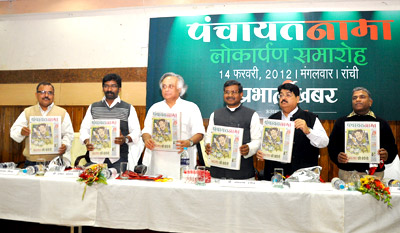
    In fact, now a day, even media, for commercial reasons or otherwise, don’t portray the real picture of villages. To bring development and growth to villages of Jharkhand, the leading Hindi daily Prabhat Khabar has launched its fortnightly tabloid ‘Panchayatnama’.


    The newspapers was inaugurated by Union Rural Development, Shri Jairam Ramesh in the presence of Shri Primal Nathwani , MP Rajya Sabha , Shri Hemant Soren, Dy. CM, Jharkhand and Ex-Chief Minister Shri Babulal Marandi at ATI Ranchi.


    The tabloid will cover and feature Panchayat-oriented news, information and issues such as empowerment to Panchayat people, monitoring and analyzing their development work, information about and reviewal of  government schemes for Panchayat, incorporation of better people in Panchayat for the post of Mukhiya and other Panchayat seats.


    The 40 pages colour tabloid with cover price of Rs12 is first of its kind in Jharkhand and will be available in all the 4423 Panchayats in 24 districts.


    The tabloid has promised to deliver news with credibility and already 15,000 copies have been booked. It’s a step to revive the identity of ruralIndiaand initiate development programs.


    The newspaper targets rural readers like farmers, NGOs, Panchayat members, Gram Sabha, government departments in rural areas and Zilla Parishad.