Blog

  • Wooing vibrant India’s Wonder Woman


    By Ritu Midha


    Indian women can by no stretch of the imagination be defined as a homogeneous market – it is heterogeneous. And the distinction cannot be made merely on the basis of their socio-economic status or the town class they belong to.


    TNS – GEMS February 2012 issue has a very interesting observation about a BoP (Bottom of Pyramid) 19-year-old girl, who saves from her small lunch allowance so that she can buy a tube of Neutrogena moisturiser. Surprised? The Indian woman consumer indeed is changing behaviourally, and the marketers are trying their best to understand her.


    Affirming the new shift being observed, Praveen Malhotra, EVP – Sales & Revenue, Reliance Broadcast Network Limited states, “There is a paradigm over here – women are making decisions and yet they are being dismissed. The evolution is significant not just because women are waking up to discover their identities, it is also because of the way the social order is changing in our country – the place of women is enlarging in our families. However it’s a dichotomous situation; it is happening and yet women are trapped in difficult life situations of being dominated.”


    Truly, the Indian woman has evolved, and the traditional boundaries are breaking – she is taking charge of family shopping and expenditure across the board. However the pace of change is much faster in India A than India B.


    Segmenting women by town class

    Even today, the pace of life is quite different in a metro like Delhi and a smaller city like Agra. Does this mean that consumers in Delhi and Agra are very different as far as consumer patterns are concerned?


    Punitha Arumugam, Group CEO, Madison Media disagrees. She says, “More than segmenting women basis geography, it is important to segment them by mindset or aspiration or representative clusters. For example, a homemaker in a small town in Karnataka and a homemaker in Mahim – Mumbai may be very similar. However, despite being based in Mumbai as a geographical unit, a homemaker in Nariman Point may be vastly different from the said homemaker in Mahim. This dilution of geographies and convergence of aspirations across borders has, to a large extent, been driven by mediums like television and mobiles.”


    Women in smaller towns aspire to be like their metro counterparts – however, the traditions are still stronger in smaller towns, and the lifestyles differ as metros have more working women than smaller towns. Divya Gupta, CEO, Dentsu Media elaborates, “A distinction born out of the fact that a typical metro woman is more likely to work out of home, leading to greater confidence, empowerment and equality coupled with greater time pressures! These factors have a direct influence on her purchase decisions and behaviour. However, the aspiration to succeed is universal. And media is a great equaliser; today product and brand awareness is ubiquitous across towns big and small. The needs and style might vary.”


    It is, nevertheless, important to understand, how different actually is the middle India woman (marketers’ new muse) from the metro woman.


    Women in middle India

    While the traditional role of male has not really changed much, that of the woman has seen a change of several generations in one decade – very similar to India’s economic growth story.


    Anita Kotwani, Principal Partner – Client Leadership, Mindshare defines the middle India woman succinctly stating, “She is the loving wife, the doting mother, if working she balances her home and personal life. She is committed to the institution of marriage and family. She is conscious of the changing environment, is aware of brands and is social online and off-line as well. She realises the importance that technology is playing today and wants to ensure that her kids today are internet savvy and ready for the future.”


    Very similar to the metro woman in many aspects, yet very different in many others. Anita Nayyar, CEO – India & South Asia, Havas Media, makes an attempt to demystify her. Says she, “Yes, the psychographics of a metro woman and a middle India woman are different. You will observe a lot of differences emerging, interestingly portrayed in the GEC channel soaps. Metro woman is modern and forward-looking, while middle India woman is not so modern but is becoming forward-looking.”


    As for what lies beneath the change, and how it has impacted the women in middle India, Shubha George, Chief Operating Officer, South Asia, MEC reflects, “The woman living in middle India is certainly more evolved today as she has more access to information. They have greater access to telecommunication, retail, media including the Internet and this has begun to narrow the gap with metropolitan India, even if it is early stages yet. Apart from the more obvious consumption pattern changes, this information explosion has intrinsically made middle India women aspire for more – especially when it comes to their children and what opportunities they make available for their children.”


    Marketing to women in middle India

    Middle India woman, then has different sensitivities, though she might be very similar to metro women on several fronts. Do the marketers need a different marketing strategy to reach them or don’t they? States Anita Kotwani, “One does need to have differentiated marketing strategy for women in middle India. They are different in their values – what makes them tick might vary from the metro women. Their realities may be different however, their aspirations and expectations might be similar.”


    So while the marketing strategy may need an element of differentiation, does the communication strategy too need to be different? Ambika Srivastava, Chairperson, ZenithOptimedia India and Chairperson, VivaKi Exchange believes that it would be foolhardy to formulate a rule here and apply it across brands and product categories. She says, “It depends on the positioning of the brand, and Insights the communication is based on. If the communication is about the universal truth – or a specific emotional need like safety, love, and need to nurture – it might work across the board.” However, she cautions, “Context may need to change, dependent on what the product or brand is. You have to be extremely relevant.”


    A brand’s need to reach out to middle India women might vary in intensity based on the product category it belongs to. While an upmarket automobile brand might be happy targeting the metro women, in case of a new detergent variant, it might not be the case. Says Basabdutta Chaudhary, CEO, Platinum Media, “Especially for FMCG, we by and large target the middle India woman. Especially in television, GECs, celebrities, Bollywood are the major contributors to overall media spends.”


    Sudha Natrajan, CEO, Lintas Media, believes that television, by far, is the best medium to reach the middle Indian woman. However, she makes an interesting and accurate observation about men being involved in the purchase decisions as well. She avers, “Out of home entertainment avenues being restricted, they can be reached almost completely through television. Also, where the evening primetime is concerned, soaps have dual viewership of the husband as well as the wife. It is important to reach the man of the house too, as he definitely has a say, or even ends up purchasing items of daily or frequent consumption in the house.”


    Having said that, while the woman might not be the real buyer, she does influence the purchase decisions and is the most important influencer. Marketers would thus ignore her in their marketing plans at their own peril.


    As per a study, about 85 per cent of the purchase decisions are taken by women in the United States of America. Our experts, however, are unanimous that the percentage of women taking purchase decisions in India is much lower. However, the numbers sure are increasing and across the categories. States Arumugam, “The era of looking at women as decision makers only for low-cost FMCG products is long over. Marketers across categories, be it finance, automobiles, telecom, durables etc have been targeting women as key influencers, if not the actual decision-maker on their brand, for quite some time.”


    In semi-urban and rural areas the story is a wee bit different – as the male is still the actual buyer of products in most categories. Affirms Sudha Natrajan, “Percentage of women taking purchase decisions is definitely lower in India. In semi-urban and rural areas, even FMCGs and groceries are bought by the man of the house. But having said that there has definitely been a rise in the power and control that the woman – who used to be the housewife – is now having, as she is evolving into being a homemaker.”


    Increase in the average income of working woman is indeed an important factor. In addition to it, there are several other socio-cultural factors that come into play, as explained by Nandini Dias, COO, Lodestar Universal. “With the change in household patterns, the decision making process is changing too. Now we have far more nuclear families with no senior citizens; smaller family sizes – DINKs and single child trend. Also, what is observed os that women are staying away from home for education and career and there has also been an increase in the divorce rate and number of singles over the years. With smaller size families, the decision process is also becoming more inclusive. Hence the traditional demarcation or the edges are no longer sharp.”


    What does this augur for marketers? Do they need to opt for gender specific marketing and advertising, or does it not really matter?


    Gender-specific advertising

    One can continue to put forward assumptions or theories on gender specific advertising but there will always be varied outcomes that will evolve. Divya Radhakrishnan, MD, Helios Media, for one stresses on the need for gender specific marketing, “Men are from Mars and women are from Venus. The comprehension, rationalisation and attention getting capabilities for women are very different from men. Across age groups, there is a stark differentiation in behaviour and therefore it is critical to have gender specific marketing strategies. The differentiation begins right from Pink vs Blue to Barbie vs. Nerf guns.”


    And she has an emphatic endorser in Madhuri Sapru, W-I-C, Encyclomedia Networks. States Sapru, “There are numerous products being used by women that need to have a women centric marketing strategy. Whether it should be women sales ladies handling footwear sales to women (I have never seen a female shoe saleswoman) – do men even know what women are looking for in footwear other than to say the size is right, or even more strangely “aap pehen ke chaloge toh loose ho jayega, phir fit theek rahega!” – or even a script for a telemarketer: they seem to have standard scripts which always address a customer as “sir” – whatever happened to the purchasing power of women?”


    Divya Gupta meanwhile opines that gender specific marketing strategy is a given for product categories specifically meant for ‘her’ – like makeup or skincare products, however, her involvement in purchase decisions now goes much beyond that. She elaborates, “Responsibilities and role-play between genders overlap; increasingly so today. Gender specific marketing and strategy is restricted today to only those categories meant exclusively for either gender. Our society is changing, more so in the metros/ larger towns, where increasing number of women work out of home. Given multiple responsibilities, pressure and paucity of time, decision-making, be it purchase decisions or related to the children’s education is now mutual and shared.”


    The belief is that it needs to be a strategy of inclusion rather than exclusion of either gender for most product categories – and it holds true especially in the case of metros and larger towns. States Nandini Dias, “We have moved away from demographic targeting to segmentation and relevance. In smaller towns there will be certain instruments within the finance category, or computer peripherals or cements etc where the focus on women will be almost negligible. But in larger towns, right from durables to finance to education…women are expected to participate and hence are addressed.”


    Internet on their radar

    Since the last year-and-a-half, brands targeting women have acknowledged the power of the internet. From Whisper sanitary napkins and Johnson’s baby care to high-profile fashion designers, internet is becoming an unavoidable tool to each and every marketer today.


    There is a dogged optimism that in the times to come, Internet consumption by Indian women would increase manifold, and there indeed is a need for marketers to gear up. Anamika Mehta opines, “The ratio of women:men users in 2001 was 10:90. From there on, today the ratio has risen to 35:65. Even in terms of time spent on internet, an average female user spends more time and consumes more pages than the male counterparts. With higher penetration of home PCs, their numbers are set to increase.”


    Women are indeed the growth drivers of internet usage today. Though the user base is small at the moment, the percentage growth is quite substantial. States Shubha George, “The YoY growth among women is over 30 per cent whereas it is just 3 per cent among men. Working and non-working women between age group 15-34 years across metros and tier 2 cities are the primary reason for increase in internet consumption in India. Of course, students constitute a critical chunk as well.”


    However, the efficiency of the internet in reaching a wide target female group is still questionable. Asserts Sudha Natarajan, “The penetration of the digital medium amongst women users still stands at about 30 per cent, that too in urban India. There are other mediums that give better ROI. This medium only reaches about 2-3 per cent of the total female Indian population as of now.”


    Women and brands

    Coming to the most important questions of them all, what the brands need to do for women to purchase their brands or influence their husband to do so? Explains Alpana Parida, President, DY Works, Mumbai “The first thing to keep in mind is to stop talking down to them. Brands see women as caricatures of themselves as the woman who waits for her husband’s smile or for children to say she is the best. No doubt these are important payoffs in a woman’s life – but brands tend to make simplistic associations. To truly earn their loyalty and advocacy – brands need to understand the women more deeply. Understand their layered dreams and unfulfilled desires, help her achieve than become her savior. For instance, Maggi allows her to add her own creativity and thus, nutrition to the basic noodles rather than wait for the beaming smiles of her kids.”


    Adds Madhuri Sapru, “Other than for women’s personal products, marketers have barely started “marketing” (and I don’t mean just a media plan skewed towards day time audiences) to women. We do not have any media isolation opportunities created as yet, and hence it is difficult for marketers to communicate to them in isolation.”


    Brands indeed acknowledge the value of engaging female consumers – increase in their purchasing and decision-making powers has not gone unnoticed. Last five years have seen a huge increase in product categories and brands (beyond FMCG) specifically targeting women – including computers, mobile phones and financial products.


    INDEX
    Success mantras from media captains
    All work and some play
    Riding the creative crest
    Holding up the managerial sky
    Celebrating the difference
    Managing Middle India’s Golden Lady
    Wooing vibrant India’s Wonder Woman
    Rural women – how strong is their ‘spending say’?
    Is the serial woman tellying it like it is?


  • MPG India appoints Ruma Sengupta as Director of Strategy

    By A Correspondent


    MPG India, the flagship brand of Havas Media, has announced the appointment of Ruma Sengupta as Director of Strategy.

    Based out of Mumbai, Ms Sengupta will work closely with MPG’s four key offices in Mumbai, Delhi, Bangalore and Chennai, to take charge of the agency’s strategic offering and product development in keeping with the vision of Leading New Thinking. She will also take custodianship of Havas Media’s proprietary tools and processes.


    Ms Sengupta will report to Anita Nayyar, CEO of Havas Media South Asia and also work closely with the regional strategy team based out Singapore.

    Ms Sengupta joins the agency with 15 years of experience and expertise across marketing, branding, sales, strategy, MR and analytics. She was most recently the Director of Business Insight for Synovate, where she was responsible for key international clients across FMCG categories. Prior to this, she has worked as Business Head for IMRB International. Her diverse experience also includes working in senior marketing roles at Adlabs Films Limited owned by Reliance ADAG and United Spirits Limited at UB Group.


    Ms Sengupta’s longest stint has been with Ranbaxy Global Consumer Healthcare where she launched OTC & DTC business and managed it successfully through marketing and sales-distribution.

    Commenting on the appointment, Ms Nayyar said: “Havas Media is well-known for the high quality of its strategic product and tools and Ruma has the right credentials and attitude to take control of our strategic offering. Her flair is evident from her extraordinary background having worked with top research agencies like Synovate and IMRB. Her previous experience in spearheading marketing and innovation capabilities with brands is a plus.”


    MPG anchors Havas Media, the world’s fastest growing global media network and recipient of the network Service Award at the 2010 Valencia Festival of Media. MPG provides media planning & buying, strategic consulting, branded entertainment and interactive marketing services for a range of clients in every region of the world. With offices in 109 countries, MPG consists of over 3,500 media professionals working across a broad variety of disciplines and categories.


    Havas Media, the global media network of Havas, is one of the world’s fastest growing media groups having grown from 10 markets in 1999 to 122 markets in 2012. Havas Media services its clients through a portfolio of specialist global networks and agencies. The group is organised to maximise local market dynamics whilst leveraging the extensive global insight and strategic support under its Meaningful Brands framework and analysis.


    The companies within Havas Media include: MPG (Havas Media’s global media communications network), Arena Media (Havas Media’s tailor-made communications network), Havas Digital (Havas Media’s global interactive network) and Havas Sports & Entertainment (Havas Media’s global sports and entertainment communication network).


  • Hiring expected to pick up in the coming quarter

    By A Correspondent


    Indian employers are treading on a cautious yet optimistic trail and maintaining staff levels across major industries. Employers have definitely become selective and are conscious about the need for ‘right’ hiring at this juncture. The good news is that this period of uncertainty is better than 2008, since there are no large layoffs or hefty cost cuts and people are not losing jobs.


    The inaugural issue of the TimesJobs RecruiteX Quarterly Report throws light on this trend providing expert opinions and data-backed insights into the demand for skills and talent and the supply of human resources & capital.


    The report is segregated into three sections: top ten industries, locations and experience ranges. For the industrial section, the report provides the views of market experts alongside the research analysis thereby providing a balanced and comprehensive view of the recruitment market. Similarly, for locations and experience levels, the findings are confirmed with the interviews of senior executives from major HR consultancies and companies.


    Industrial Hiring Patterns-


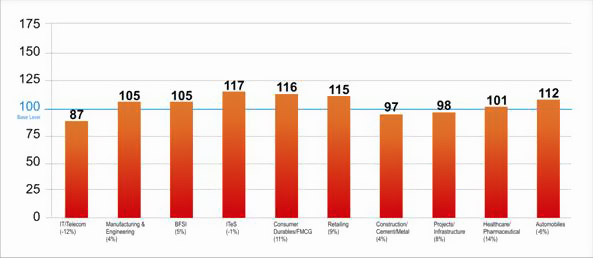
    The TimesJobs’ RecruiteX reports that all major industries clocked stable hiring patterns during the October-December 2011 quarter. According to the quarterly analysis of the RecruiteX, only three industries, BPO/ITeS, Consumer Durable/FMCG and Retail, out of the top ten industries, reported double-digit growth over the base level recorded in December 2010. Demand in support functions such as HR and Accounting & Finance has overshadowed core functions across top ten industries.


    This in-depth journal of statistics, information and analyses on employers (demand) and jobseekers (supply) and will serve as a reliable reference guide to present and future developments in recruitment.


    Geographic Hiring Patterns –


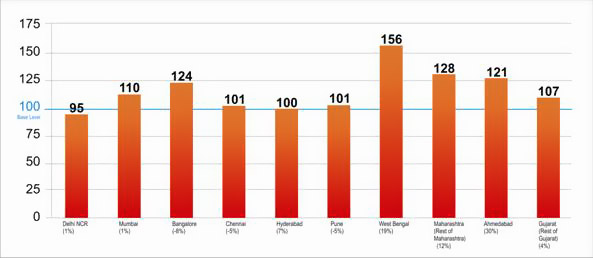
    As per TimesJobs’ RecruiteX, both, Delhi NCR and Mumbai have performed poorly on the demand index. Market experts opine that the hiring activity was negative in metros due to the poor macro-environment and negligible business investments.


    Among the other geographies that the TimesJobs RecruiteX covers, Pune witnessed decent growth in demand during the October-December 2011 quarter. Bangalore reported an increase in hiring activity and was the top performer during the same period.


    Work Ex Related Hiring Patterns –


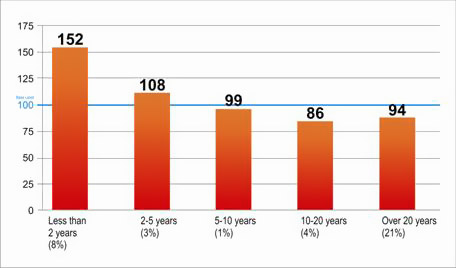
    Hiring activity for fresher/junior level and executive level positions witnessed a substantial fillip while recruitments in the middle-management level were sluggish. In comparison, recruitment for top management positions was healthier.


    Demand for candidates with less than 2 years of experience was robust across industries and locations. The Demand Index for this segment registered an 18-point growth in December 2011 compared to July 2011.


    This TimesJobs RecruiteX Report reinforces the portal’s efforts in becoming a strong medium to pull Indian employment market closer to the line of reality and presents a balanced outlook on the positions & perspectives of employers and job-seekers in Indian employment scenario.


    Other Key Findings:


    • Hiring expected to start picking up during the transition period of January to March 2012
    • Consumer Durables/ FMCG, Automobile, Energy and Infrastructure sector could be major employment drivers in the coming months
    • Demand in support functions such as HR and Accounting & Finance has overshadowed core functions across top ten industries
    • Engineering is the only major profession to maintain consistent growth pattern during the quarter in allied industries, locations and experience levels
    • Amongst top locations, only Bangalore and West Bengal have been able to maintain healthy supply of talent
    • Demand for senior experienced professionals will grow in Education, Healthcare/ Pharmaceutical domain


    RecruiteX Methodology


    To minimise the scope of inaccuracy, the TimesJobs RecruiteX analysis is based on demand and supply data integrated with numbers collected by our offline teams and then segregated according to top industry verticals, experience ranges and locations. Demand for talent is computed by factoring activities of recruiters on TimesJobs.com. Supply of talent is calculated by the activities of the jobseekers on the portal. The base value of RecruiteX has been kept as 100 for the month of December 2010. All RecruiteX values for subsequent months represent the trend of RecruiteX viz-a-viz December 2010.


  • Conde Nast India launches Architectural Digest

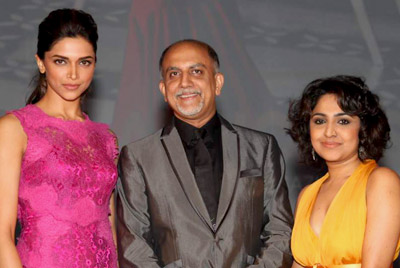
    Deepika Padukone with Alex Kuruvilla (MD Conde Nast India) & Manju Sara Rajan, Editor of Architectural Digest India

    By A Correspondent


    Publishing group Conde Nast India launched their fourth magazine title, the Indian edition of AD Architectural Digest, following the success of premium luxury magazines Vogue, GQ and Conde Nast Traveller. Architectural Digest in India will position itself as the most trusted authority on design, architecture and living.


    AD India is the ninth edition of the magazine, after the United States, Italy, Germany, France, Mexico, Russia, Spain and China. It is targeted towards the affluent Indian population in the age group of 25 to 50 years who aspire for fashionable living spaces. The magazine aims to capture the attention of new home owners and renovators, architects and designers as well as design enthusiasts.


    Speaking on the launch of Architectural Digest in India, Alex Kuruvilla, Managing Director of Conde Nast India said: “Having established leadership in the luxury lifestyle magazine space with Vogue, GQ and Conde Nast Traveller, we are happy to extend our portfolio and bring Architectural Digest in India, recognized as the world’s design bible – the most trusted authority on design, architecture and living to Indian homes.”


    The bi-monthly magazine will be priced at Rs150. AD’s editorial content is broadly divided into four key parts, including AD Discover with a focus on news, trends and lifestyle; AD Perspective bringing to light the people who matter; AD Spaces featuring the most beautiful homes and the AD Inside section sharing advice and tips on the must-have products. Key target markets for the magazine include metros like Mumbai, New Delhi and Bangalore.


    Manju Sara Rajan, editor of Architectural Digest India shared: “The editorial content of this bi-monthly magazine will contain photo spreads of the best homes in the world, feature stories on the latest trends and people in design plus advice on practical solutions for home improvement. AD will become an essential resource for refined home-owners planning luxurious spaces.”


    “By showcasing the best of contemporary Indian design and key international trends, AD will help readers visualise, plan, adapt and innovate homes to reflect the personalities of the people who live in them,” she added.


    The launch event of AD was held in Delhi on March 9 at the Aman in association with India Design Forum (IDF) and supported by Absolut elyx and Maserati.


    Architectural Digest, an interior design magazine published by Conde Nast was founded in 1920. The magazine is aimed at an affluent and style-conscious readership. AD is positioned as the most trusted authority on design, architecture and living. The Indian edition of AD Architectural Digest will present the very best of international and Indian architecture and design.


    Conde Nast, a division of Advance Publications, sets the benchmark for magazine publishing excellence. Conde Nast currently operates in 24 countries, publishing 126 magazines, and with 98 innovative websites from Conde Nast Digital.  Recent print launches include GQ inBrazil, Wired in the UK and Italy, Vogue in Turkey, and Conde Nast Traveller in India . Conde Nast India is a 100 per cent owned subsidiary of Conde Nast International.


  • Mirchi Kaan Awards to celebrate best in radio advertising

    By A Correspondent


    Introduced in 2004, the Mirchi Kaan Awards acknowledges and honours the contribution of individuals and organizations that have led the way in creating clutter breaking radio advertising. The awards have been instituted to encourage continued creative focus on radio advertising and are now synonymous with excellence in creativity in radio.


    While every year, the journey to the awards ceremony is a fun-filled, vibrant process keeping in mind the personality of Radio Mirchi, this year the focus is centred solely on the quality of work. Which is why, this year’s edition will see world renowned radio guru, Tony Hertz, conducting a workshop on the art and craft of radio advertising. Mr Hertz’s passion for radio has seen his career, which spans over 40 years and across six continents, as creative director at multiple agencies and the boss of two radio specialist outfits.


    With his experience, he has served twice on the Cannes Lions Radio Jury, on the 2011 D&AD Radio panel and as president of the Clio Awards Radio Jury. Apart from 22 Clios, multiple Gold and Silver ILR Awards, London International Awards and The New York Festivals Awards, Tony is also the only person to have won both D&AD Black and Yellow Radio Pencils.


    The country’s most prestigious radio awards, Mirchi Kaan will work towards raising professionalism and talent among writers. And their new mantra is to listen, learn and shine.


    The last date to send entries to Kaan Awards is March 18.


    Entertainment Network India Limited (ENIL),India’s leading private FM radio broadcaster, popularly known as Radio Mirchi, operates across 32 cities in the country. Launched in 2001, Radio Mirchi has the highest listenership across the country and a track record of developing innovative content, thus expanding and retaining its audiences and advertisers through the years. Radio Mirchi has delighted listeners and the industry with its exciting properties like the Purani Jeans Film Festival and the Mirchi Music Awards.


    Radio Mirchi’s continuous innovations across different platforms like Visual Radio or Mirchi Mobile have been instrumental in gaining leadership in the private FM Radio industry. Radio Mirchi makes its international foray with the launch of the brand in the UAE. From February 1, Radio Mirchi will be heard inDubai,Abu Dhabiand Al Ain and will the first Indian radio brand to go international.


  • The Anchor: 6 reasons why brands can’t ignore digital

    By Vineet Gupta


    #1 Digital is no more youth-centric or an urban phenomenon. It cuts across various age groups and touches a cross-section of society. For a brand it becomes imperative to be present in a medium that cut across geographies and age groups.


    #2 Digital is not an advertising medium but a medium of engagement. If earlier, it was brands that were sending out information to the consumers, now it’s a reversal of that game. Consumers seek information and are proactively engaging with brands on the digital platform, thus giving brands immense opportunity to engage with their consumers in a much more meaningful way.


    #3 Today, it is about mobility and being connected on the move. The consumer is engaging on a real-time basis with brands while being on the move. Access is via multiple screens and it doesn’t really matter where and how the consumer is connecting – but it’s important that he or she wants to be connected at all times with the brand.


    #4 The early adopters of the digital medium were brands that were looking for lead generation. Now many brands have gone beyond that and built an entire eco-system around the digital platform, including building communities or developing e-commerce platforms. This is the way forward for brands.


    #5 The future belongs to brands that have understood this medium and are using it not just for a brand building exercise. One has to realize that digital plays an important role in the purchase decision. Therefore there is a need to understand that it is much more than a marketing medium and all aspects like information, consumer feedback, sales and distribution should be built on this medium.


    #6 Lastly, digital is an important medium in the purchase funnel. Whether it is seeking information, desire to purchase or the action of purchasing, all can be done on this medium. Brands have to look at digital beyond just advertising.


    Vineet Gupta is the Managing Partner of 22feet.


  • Amul ads on Rahul Dravid + Essay by R Sridhar

    By Ramanujam Sridhar


    David Ogilvy the advertising legend wanted that rare breed for his advertising agency “gentlemen with brains”. The greatest gentleman that ever trod the cricket field – Rahul Dravid called it quits from all forms of cricket at a farewell press conference at Bangalore on Friday. Even as encomiums pour in from all and sundry from different parts of the world, I thought I would write a few words about Dravid the cricketer and the person. His deeds on the cricket field have been well recorded. The nickname “the wall” was earned after years of playing some of the finest bowlers in the world in every cricketing country in the world and even as Indians earned the justifiable nickname of “lions at home and lambs abroad” Rahul Dravid stood head and shoulders above his more celebrated and written about colleagues – as he simply batted better abroad. More than his batting was his selfless attitude of team first, something that individual record obsessed Indians never fully understood. When he first declared the Indian innings with a desire to win a cricket match when Sachin was short of his century (though he was truly dawdling at the crease), Dravid copped a lot of criticism. But he soldiered on – always taken for granted, never truly appreciated to the extent that he should have been.


    For team balance he opened the batting though he was arguably India’s greatest number three ever. He kept wickets so that the team could accommodate another batsman. He shuffled himself in the batting order when he was captain when quicker runs were required. He never “whined to the press” when the BCCI dumped him from the captaincy. He was upset when he was recalled to the one day side a few years after being dropped and was constrained to announce his retirement. A lesser mortal might have felt used by Indian cricket and justifiably so. But the great gentleman and the wonderful cricketer he was, he took everything on his chin.

     

    A master who is still a student of the game

    Rahul Dravid is a great role model for young cricketers. He usually was the first person to enter the nets and the last to leave it. In today’s world of cricketers who think they are God the moment they get an IPL contract, he has been a model of modesty despite his phenomenal achievements. Success rested lightly on his broad shoulders and his sense of humor enabled him to keep things in perspective. When Shane Warne announced to the world that he had discovered a chink in his armour, Rahul just smiled and said “Warney is upto his usual tricks”. The next day he smashed him all over the park in his own quietly efficient way. He did a few endorsements too because any brand which was honest, reliable and something that would not let you down fitted the man to a “t”. He was a keen student of the game and would constantly be found with a book in his arm, something that is rare in a world which appreciates physical prowess more than the mental one.


    The words of the Walter Scott poem “unwept, unhonoured and unsung” come to mind as a possible epitaph to Rahul Dravid. While that has been the truth so far, I think history will recognize the value of the man and the cricketer. I will miss him on the field and hope to meet him more often now that he will not be living off suitcases and be in Bengaluru, the city that both of us belong to.


    Ramanujam Sridhar is the CEO of brand-comm and a Director of Custommerce, an organization committed to promoting customer service in the country.


    Read his blog at http://www.ramanujamsridhar.com for more articles, polls and to sign up for our mailing list.


    You can remain in touch with him on Facebook: facebook.com/RamanujamSridhar & Twitter: twitter.com/RamanujamSri


    LinkedIn: http://linkd.in/SridharRamanujam


  • Celebrating Rahul Dravid via his TVCs


    By Johnson Napier


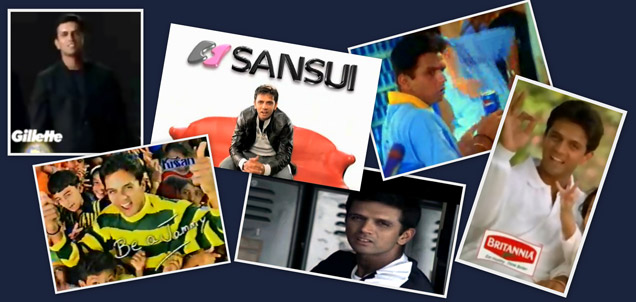
    He may have bid adieu to all forms of international cricket but it is impossible to erase the indelible impression that “Jammy” has left on the minds and hearts of his many followers and well-wishers. Having delivered with the bat consistently on the field for team India, Rahul Dravid also managed to contribute in pushing the awareness and popularity of brands that nominated him as their ambassador. Not that his brand endorsement journey will take a downturn now that he has called it a day – in fact advertisers may well flock to him even more as The Wall never crumbles even under dire circumstances – but India’s most dependable cricketer does demand a befitting advertorial tribute as we survey his endorsement journey that has spanned over 15 years. (pls also check: essay by R Sridhar + the Amul ads on Rahul Dravid)


    We dig up noteworthy endorsement commercials that see Rahul “The Wall” Dravid doing what he does best: assuring the authenticity, trust and longevity of the brand – attributes that best define the indomitable cricketer who has championed his country to umpteen unassailable victories.


    Kissan Jam

    Perhaps the only commercial that attempted to bring out the funny side to an otherwise very serious persona. It was from here that Dravid was to be famously nicknamed “Jammy” by his peers and fans alike.

    [youtube width=”400″ height=”200″]http://www.youtube.com/watch?v=J-dhgXJlCaY[/youtube]
    Nippo Batteries

    Another attempt at getting Dravid to do what he doesn’t wish to – wooing the gals into posing willingly as he shoots away with his camera. Don’t miss the attention that he draws from his female legion as he advocates the USP of the battery in question.

    [youtube width=”400″ height=”200″]http://www.youtube.com/watch?v=m6yKsFewK-E[/youtube]
    Pepsi with Shahrukh Khan and Team India

    This ad may all but belong to Sachin Tendulkar and King Khan, but Dravid’s presence made for quintessential viewing as he donned Team India’s favourite blue jersey.

    [youtube width=”400″ height=”200″]http://www.youtube.com/watch?v=wGsOgjAQuY8[/youtube]
    Britannia

    Trust ‘The Wall’ to play family guru and guide as he endorses the benefits of this product for FMCG major Britannia.

    [youtube width=”400″ height=”200″]http://www.youtube.com/watch?v=S3zS0WJub6M[/youtube]
    Britannia Milk

    Forget children, even teens and adults would have relished taking a sip of this brand of milk that Dravid so cooingly advocates – simple yet effective, character traits that define Mr Dependable to a tee.

    [youtube width=”400″ height=”200″]http://www.youtube.com/watch?v=0FD5viMQTxI[/youtube]
    Hutch

    even this telephone network operator couldn’t resist the rustic charm of The Wall as they used him as bait to woo the viewers to watch him play at the biggest tournament surrounding cricket – World Cup. But wait, how come the geek in the frame doesn’t recognise one of cricket’s most popular faces on planet earth? Wasn’t he off to watch a cricket match after all?

    [youtube width=”400″ height=”200″]http://www.youtube.com/watch?v=JXjcR26roFo[/youtube]
    Anchor electrical

    Another classic gem that shows The Wall playing motivator and mentor with elan. While his juniors are busy putting his plan into action, don’t miss the smiles that the team manages to bring on the faces of the children that are fraught with fear.

    [youtube width=”400″ height=”200″]http://www.youtube.com/watch?v=cRwIqudwOJU[/youtube]
    Max New York Life

    A bevy of aunties are seen making a headrush towards Mr Popular even as he struggles to hide his identity. No age is too less or more for his legion of fans – as is the case out here where he is hounded by 30-plus housewives.

    [youtube width=”400″ height=”200″]http://www.youtube.com/watch?v=NS6JO2z-aUQ[/youtube]
    Gillette Turbo

    Imagine being paired alongside a world sporting greats. Only a Dravid would’ve brought conviction to the role that needed him to match up to icons such as Tiger Woods and Roger Federer. Indeed, world’s envy, India’s pride!

    [youtube width=”400″ height=”200″]http://www.youtube.com/watch?v=hnmiEld-cFU[/youtube]
    Sansui

    Character traits are being compared between Mr Dependable and electronics brand Sansui. Turned out to be a perfect matchmaking exercise for the brand as they looked up to Dravid to give out the message of being a brand that is as worthy and reliable as the cricketer.

    [youtube width=”400″ height=”200″]http://www.youtube.com/watch?v=O6pfGwYbgNo[/youtube]
    Castrol

    Another instance that saw the man delivering the message with just a few words.

    [youtube width=”400″ height=”200″]http://www.youtube.com/watch?v=ughlUi8xvSs[/youtube]
    Bank of Baroda

    This was a phase when Bank of Baroda had announced a nationwide makeover and enhancement of services – who else to belt out superlatives than Mr Dependable himself? Notice the family man in him take precedence over the meek endorser.

    [youtube width=”400″ height=”200″]http://www.youtube.com/watch?v=wTaAQ3XA2mo[/youtube]
    Reebok

    This association dates back to more than 14 years but do not miss his passion and dedication towards the game – and also the brand objective, as he convinces us why his commitment is still as unmatched and endearing as his peers’.

    [youtube width=”400″ height=”200″]http://www.youtube.com/watch?v=V6yI3-8jVX8[/youtube]
    HDFC Life

    Putting team ahead of oneself – as was the prerequisite of the insurance player in the frame. One of the last endorsements involving Dravid and probably the one that will go on for a long time as he is committed to still play for the IPL. One can never tire of seeing the man deliver his rustic punches – a rare phenomenon in advertising today.

    [youtube width=”400″ height=”200″]http://www.youtube.com/watch?v=jgGFoMsg_zc[/youtube]


  • Manisha Tripathi to head SMG’s LiquidThread in India

    By A Correspondent


    LiquidThread announced on Monday that Manisha Tripathi has been appointed as National Director and will report to CVL Srinivas, Managing Director, LiquidThread, Asia-Pacific and Malli CR, CEO SMG India. She takes charge on March 12 and will be based out of the Gurgaon office.


    LiquidThread is Starcom MediaVest Group’s all screen content practice. In line with the network’s digital, open source approach, LiquidThread has increased the scale and innovation of SMG’s content creation, moving beyond branded entertainment to create communities, conversations and advocates for brand properties.


    Ms Tripathi has more than 15 years experience in roles spanning content creation, strategy and business development. She began her career with TV18 where she produced, directed and scripted stories for shows such as India Business Report and Amul India Show. She was part of the core programming team at Star Plus between 2000-2004 and worked on several successful shows including Khullja Sim Sim, Kya Masti Kya Dhoom, Kisme Kitna Hai Dum, Sonpari, Kyunki Saas Bhi and others.


    Ms Tripathi was closely associated with the strategy, planning and content development at TataSKy during its launch phase. In her stint with BigFM, she was station director, Goa where she developed, launched and ran the first privately owned FM station of Goa. She later became station director Delhi.


    Most recently, Ms Tripathi was associated with Alva Brothers Entertainment, first as President, Miditech, producing shows for a range of channels and later with Real Lifestyle Broadcasting Pvt Ltd.


    Confirming the appointment, CVL Srinivas said: “Manisha has been at the cutting edge of content creation and brings the right blend of creativity and business focus. Her coming on board will help us accelerate the growth of our branded content business”.


    Commenting on her move to LiquidThread, Ms Tripathi said: “I’m delighted to join LiquidThread and excited about creating brand inspired content that reaches out, connects, engages and interacts with consumers across different screens, generating valuable experiences.”


    Ms Tripathi is a post graduate in Social Communications in Media from Sophia, Shree BK Somani Memorial Polytechnic College, Mumbai.


  • Life beyond cricket: 5 new leagues in 1.5yrs

    By Bhanu Pande


    If Pepsi’s latest commercial, ‘change the game’, prods people to switch from cricket to football, it hints at a fundamental shift in the way the cola major plans to use sports as a brand-building platform. It feeds off – and feeds into – a fundamental change happening in the Indian sporting landscape.


    Inspired by the success of the Indian Premier League (IPL) in cricket, almost every sport with some following in India is launching a city-based, professional league. Five new professional leagues have been announced in the last 18 months and, word is, two others are being revived. “The Indian sports consumer is looking for entertainment, diversion, passion and emotion,” said Shailendra Singh, joint managing director, Percept India, which is behind the Indian Boxing League (IBL). “League sport will ensure that.”


    But for leagues to become a permanent fixture, something only the IPL has managed so far, paramount is drawing sponsors and advertisers. If the initial response is any indication, sponsors of many hues are warming to them. Hero Motocorp is making big investments in hockey, the Mahindra Group in basketball, and the ongoing World Series Hockey (WSH) has Bridgestone and Vodafone among its sponsors.


    “Those chasing cricket will have to move to a life beyond it,” said Sanjay Sharma, head of JK Motorsport. “The canvas has to enlarge for brand marketers as cricket won’t continue to enjoy the status it does.” Besides cricket fatigue and the gathering momentum of other sports, there are three reasons why marketers and sponsors are gravitating towards these new leagues.


    Low-risk investment

    The new leagues offer a low-cost proposition. Unlike cricket, they don’t have to put a lot at stake. CVL Srinivas, chairman of Starcom MediaVest India, a global communication & media services group, said while sports is a good medium for brands to connect to the youth, the most popular of them, cricket, poses an entry barrier for many advertisers. “Many advertisers today see cricket as overpriced,” he said. “Emerging new leagues could give them an opportunity to enter sports in some way at a much lower cost.”


    Four years ago, when Bridgestone considered IPL as a medium for brand communication, it was put off by the price tags for premium rights. For example, DLF pays 40 crore per year to be the title sponsor of IPL. So, Bridgestone made a modest entry into cricket as a co-sponsor of IPL team Mumbai Indians. The decision to become the title sponsor for the ongoing World Series Hockey (WSH) came easy.


    The investment was low: Bridgestone is paying 2 crore per year in a three-year deal. And it gives the tyre company an opportunity to target North India, a market where hockey is popular and where Bridgestone was weak. “South India has always been our strong market and our association with Mumbai Indians is good enough to deliver there,” explained Vaibhav Saraf, GM (sales & marketing), Bridgestone India.


    Similarly, a 10-second spot on IPL cost 4-5 lakh, but just one-tenth on WSH. “Returns in non-cricket sports would be much lower,” Mr Srinivas qualified. Even then, the cost value equation works just fine for Bridgestone. “Even if our return on investment (RoI) from WSH is 10 crore worth of media mileage, we are happy,” said Mr Saraf.


    Besides Bridgestone, the other principal sponsors of WSH are Vodafone and Imperial Blue (Pernod Ricard India). “We evaluate all sponsorship proposals on a cost per reach and level of consumer engagement possible,” said Anuradha Aggarwal, senior vice-president-consumer insights & communications, Vodafone. “The WSH was efficient on both.” The early days of WSH have seen modest to half-filled stadiums.


    “Hockey is still not a proven sport, we are building it,” said Yannick Colaco, chief operating officer of Nimbus Sports, the promoter of WSH. “Some leagues in the past haven’t delivered, which is likely to make sponsors and advertiser sceptical for any new league.” Mr Colaco claimed the league has booked 15 brands on-air in the first week.


    He expects this number to increase to 40-50 by the time the tournament ends on April 2, yielding 50-60 crore from sponsorship and advertising revenues. “WSH is not here to topple cricket, but we hope to make it a strong number two property before we enter the second season,” he said, adding that marketers will have to have “realistic expectations” during early days and come in with a “long-term vision.”


    Proof of Concept

    One factor that gives the new leagues a greater chance is how they are structured. They follow the IPL model, which is city-based and essentially pays for itself by riding on a big TV rights sale. “IPL has proven that city loyalties exist, which has prepared the ground for other professional sporting leagues to take off,” said Darshan M, CEO of Machdar Motorsports, promoters of i1Super Car Race Series.


    In Premier League Soccer, Uro Infra Realty, a Kolkata-based real estate company, was the highest bidder for a franchise – 25 crore for Team Barasat over 10 years, or a franchisee fee of 2.5 crore per year. Each team can spend up to Rs 12.5 crore on players, which means Barasat (Uno Infra) will spend a total of 15 crore a year.


    Now, 50 per cent of the central revenues – essentially, the sale of TV rights and central sponsorships – would be equally divided among the six franchisees. In return, each team gets 2.5 crore as match rights fee for its five home matches. Then, each team can have eight sponsors, apart from ticketing and hospitality rights in home matches. “Considering the league will be broadcast in 50 countries other than India, it won’t be a problem for franchisees to recover their investment,” predicted Bhaswar Goswami, executive director, CMG, the promoter of PLS.


    The new leagues have learnt from the failure of the past. For example, the Indian Cricket League (ICL), promoted by Zee, died because it did not have a buy in from the Indian board that runs cricket in India and so could not draw the best of the current players. The new leagues are either taking the boards of their respective sports along (soccer, boxing and basketball) or are working towards it (hockey).


    Another learning is spreading it out. Premier Hockey League (PHL) – India’s first sporting league event launched in 2005 and WSH’s predecessor – was discontinued in 2008. “Any successful league the world over has had two fundamental elements: multiple ownership and multiple match locations,” said Mr Colaco of Nimbus. “PHL ignored both.” PHL teams were all owned by ESPN and all matches were held in Chandigarh. By comparison, WSH has eight franchisee teams playing in eight cities.


    When Fragmentation Works

    Sports promoters and marketers say sports like soccer and wrestling have a significant regional following, and brands can tap that. “For instance, a brand that wants to target audience in soccer-crazy West Bengal may want to ride the PLS,” said Indranil Das Blah, chief operating officer, Kwan Entertainment & Sport Solutions.


    Mr Aggarwal of Vodafone sees a fragmented market as more of an opportunity rather than a threat. “Marketing investments are fixed and need to deliver maximum RoI,” she said. “If local fragmentation delivers a higher RoI, marketers like us will not have any problem going regional.”


    Similarly, Mr Colaco points to how motor sports can target auto brands, be it cars, tyres, lubes or accessories. However, eventually, feels Mr Srinivas, leagues will have to make a national impact. “To sustain, they’ll have to become pan-India properties,” he said.


    Source: The Economic Times

    Copyright © 2012, Bennett, Coleman & Co. Ltd. All Rights Reserved


  • Noosemaker: The fable of Rahul Gandhi & the other chap

    By Ranjona Banerji


    Pity poor Rahul Gandhi. There he was riding around Uttar Pradesh on his white charger, eating with a Dalit family here, saving a Dalit village there, quite the prince of India, promising deliverance from the evil dragon. In the strange twists that best illustrate fairy tales, the dragon was a damsel – but contrarily, a damsel who was causing distress.


    The media sometimes liked the young prince and sometimes it didn’t. The opposition all hated the young prince. And the Congress Party tried every sycophantic trick to woo the young prince. The prince himself was so involved in saving the state from the damsel that he paid no attention. The queen and the princess were clear that the prince was only interested in helping and wanted nothing for himself. The biggest advantage that the prince had was that he was better looking than most of his courtiers or indeed than the upstart wannabe princelings, who belonged to other, lesser parties.


    Little did the prince know that the damsel would be vanquished not by him but by another putative heir – one who blindsided him with a cycle which was obviously more effective than his horse as a dragon-slaying device. Suddenly everyone counted. The prince of India travelled so many thousand km and delivered so many speeches. But his quiet rival did more of everything. Had the prince failed? Was he a hoax? Had he missed the woods for the trees? Did he have any dragon-slaying and state-saving abilities at all? Would he ever become king emperor?


    After all, the other chap has been made chief minister of Uttar Pradesh by his grateful father and the sulking dragon has retreated behind a statue.


    In India, it must be noted that while sons may replace fathers and daughters may take over from mothers, there is only one dynasty. So the prince of India did what he did best. He dimpled his apology to the people of India and his mother, the queen, said they would live to fight another day.


    Awwww, said the people, that’s so noble and sweet.


    Damn said the white horse, no rest for me.


  • Over 100,000 throng AlphaOne for grand celebrations

    By A Correspondent


    The AlphaOne team recently celebrated its second anniversary on March 5. Dr. Prodipta Sen, Executive Director, Marketing, Corporate Affairs & Retail, Alpha G:Corp, along with Navjot Singh Sidhu, MP, Tarun Chugh, Mandip Singh Manna,Punjabpoliticians, Dalbir Pannu, JV Partner, and Alpha team members cut the cake for the anniversary celebrations.


    Dr Sen addressed the media with the promise of adding further value to Amritsar. “AlphaOne substantially elevates the customer expectation and experience by constantly providing a truly cosmopolitan experience to Amritsaris, customized especially for them.”


    As a gesture of gratitude toAmritsarand Amritsaris, Dr Sen announced the launch of their landmark initiative, ‘Be the Change Club’. “This unique club is the next level of our initiative, ‘Amritsar Sparkling’. It will integrate AlphaOne’s CSR initiatives in the city.


    ‘Be the Change Club’ would consists of registered volunteers who would benefit from various learning programs, self-governance, personal development, health education programs, sports activities as well as career orientation counselling and seminars. The club will help members to contribute to the betterment of the city with initiatives based on that. The team believes in the progressive values of Learn, Earn and Return. Dr Sen said that they are seeking active participation from principals of colleges and institutions in supporting this cause by encouraging their students to join this collective initiative.”


    The logo of ‘Be the Change Club’, was unveiled by the AlphaOne Management at the bash. The unique club would engage in city welfare activities like green campaign, cleanliness drives, boosting civic amenities, among others.


    AlphaOne, since its launch in March 2010, has been adding value to the lives of families and youngsters ofAmritsarby creating opportunities for wholesome participation for all.


    The crowd witnessed and thoroughly enjoyed the first-ever Flash Mob inAmritsarat the Central Atrium of AlphaOne to mark the unveiling of ‘Be the Change Club’.


    The day started on a reverent note with Shri Sukhmani Sahib Path followed by Lamp lighting in the Central Atrium. The Alpha Team, for the first time, gave awards to recognize excellence to the retailers at AlphaOne in several notable categories, namely, Best Store Employee Award, Best Store Team – Anchor, Vanilla, Food Court, Entertainment and Special Dining, Best Store Manager – Anchor, Vanilla, Food Court, Entertainment and Special Dining Best Marketing Efforts – Vanilla, Best Store – Anchor (Consumer’s and Jury’s Choice), Best Store – Vanilla (Consumer’s and Jury’s Choice) and Best Store – Food Court (Jury Choice).


    An inspiring Sufi (Fusion) rock band performance by Satvik group was the climax to the day’s celebrations.


    AlphaOne offers the best of national, international and regional brands while also retaining the best of the vibrant Amritsari spirit. It caters to the city ofAmritsar, and as a corporate citizen involves itself with initiatives that qualitatively and quantitatively contribute to the betterment of societal welfare in the realms of health, positive public awareness, entertainment, community participation, cultural and spiritual well-being.