Blog

  • Maruti Suzuki will not shut down car production at Gurgaon

    By A Correspondent


    During a media interaction, Maruti Suzuki’s top management had announced plans to set up a diesel engine manufacturing plant in Gurgaon. Some sections of the media had taken this to mean that Maruti Suzuki would shut down production of cars in the Gurgaon plant and shift car-making to Gujarat. The company has clarified that there is no plan to stop production of cars in the Gurgaon plant, and car-making operations at the Gurgaon plant will continue.


    A statement from Maruti Suzuki said, “The company will reduce the number of cars produced at the Gurgaon plant and make available space for expanding the engine manufacturing capacity, including a new diesel engine plant. The company will continue to increase production at Manesar, where a third plant with an annual capacity of 2.50 lakh units is coming up. Once the capacity in Manesar is fully utilized, the company plans to set up a new facility in Gujarat. Together, the facilities at all three locations – Gurgaon, Manesar and Gujarat – will be used by the company to manufacture vehicles to meet market demand.”


  • Debrief: IPL: Chalta hai

    By Anil Thakraney


    Television is abuzz with the oncoming IPL 5 nautanki. And there are a zillion commercials on the air. Before I discuss the ads, can’t help but state that I detest this tournament. I always have and I always will. IPL adds little value to Indian cricket, but deducts a lot. Having got that off my chest, let’s get to the task at hand.


    The idea this time is pretty obvious: IPL brings the entire family together. There is no fresh consumer insight out here, the world and its father already knows that apart from the men in the house, aunties, bhabhies, toddlers and Moti, the dog, also like to watch this tamasha. With no sensational insight, it’s then left to the execution to hold the fort.


    [youtube width=”400″ height=”200″]http://www.youtube.com/watch?v=UXQsIgN_530[/youtube]

    I watched a few films, and must say that in general, the creative fails to shine. There is a little humour, a little emotion, a little slice of life, but on the whole the campaign stays in the average zone. Having said that, one particular commercial did appeal to me, and I found it quite funny. And so that’s the commercial I am linking out here. Also, because I am in a good mood today, I shall rate the entire campaign based on this one ad. It’s about two gents having to bond when they have absolutely nothing in common with each other, and are on a totally different trip. Good one. Haven’t we all been stuck in such situations? Yep, in such a scenario, despite all its shortcomings, indeed the IPL becomes god-sent!


    Rating: (On a scale of 1 to 5): 3. Humour not exploited enough.


  • Kannadada Kotyadhipathi betters KBC in first week

    By Tuhina Anand


    If one were to go by the first week numbers of Kannadada Kotyadhipathi or KBC in Kannada which debut on Suvarna Channel then surely the show has made an impression. Launched on March 12, the show has opened with a TVR of 7.32 (Source – TAM, CS 4+ Years) in the Karnataka Market. The average TVR for the show in its first week is 7.66 (Wk 11) which is better than the latest version of Kaun Banega Crorepati which opened at 5.24 TVR in top 3 metros (Mumbai, Delhi and Kolkata) and 4.5 TVR (Source :TAM) in its first week in the HSM market. The show Kannadada Kotyadhipathi in its initial week also became the No.1 show in Karnataka.


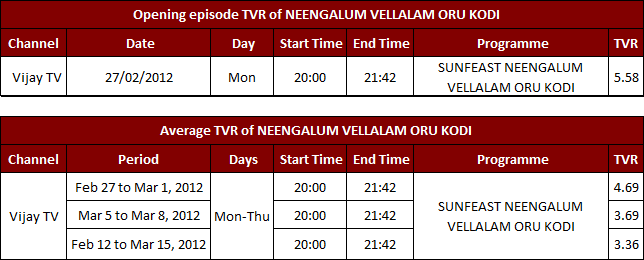
    In fact its counterpart, Neengalum Vellalam Oru Kodi which made its debut on Star Vijay managed a TVR of 5.58 on its opening day and since then has been on a decline with average TVR from Feb 27 to March 1 being 4.69, 3.69 (March 5-8) and 3.36 (Feb 12-March 15).


    Puneeth Rajkumar who comes from the first family of Kannada cinema is hosting Kannadada Kotyadhipathi whereas Suriya is hosting Neengalum Vellalam Oru Kodi.


    Anup Chandrasekharan, Business Head Suvarna Channel commented, “We are very happy with the initial response of Kannadada Kotyadhipathi, we have got a lot of positive feedback about the show from our viewers. This show is also made us the leader in week day prime time. We hope we are able to sustain the initial ratings.”


    On its comparison with Hindi KBC he added, “It is not correct to compare the two shows in terms of ratings as they belong to different markets, KBC is analyzed in the Hindi Speaking Markets (HSM) & Kotyadhipathi is analyzed in the Karnataka Market.”


    In the past, KBC was aired in Bhojpuri on Mahuaa TV as Ke Bani Crorepati with Shatrughan Sinha as its host and in Bengali as Ke Hobey Banglar Kotipoti hosted by Sourav Ganguly on Mahuaa Bangla. Both the shows did not garner much in terms of numbers. Bangla KBC averaged TVR of 2.29 (period June 6 to August 12, 2011), the Bhojpuri version saw an average TVR of just 0.45 (period June 6 to August 12, 2011). (Data source TAM).


    So it remains to be seen if KBC in Kannada will do the magic and retain its high ratings in the weeks to come.


    Source: TAM Peoplemeter System
    TG: CS 4+ yrs
    Market: Karnataka
    Period: Wk 11: Mar 11 to 17, 2012


    Source: TAM Peoplemeter System
    TG: CS 4+ yrs
    Market: Tamil Nadu
    Period: Wk 9 to 11: Feb 26 to Mar 17, 2012


  • [PR Channel] Sports PR: A new wave of specialization

    By Neha Mathur Rastogi


    For long I have had a strong belief that specialization is the only way to create true value in the often undervalued world of Public Relations in India.


    There are agencies which have gone down this route in more sound sectors like IT, Financial and even Pharmaceutical PR. But few have treaded the path of Sports. Sports PR is a qualified specialization by the virtue of the nature of work involved. You need to be spontaneous, think and write on your toes and work with a very passionate set of media, sportsmen and women as well as the all-important cog in the wheel – the corporate sponsors. Each dimension presents you with a unique challenge.


    It is common knowledge now that in the past few years, India has slowly become a global hub for sports, moving beyond conventional cricket to the recent Commonwealth Games, Hockey World Cup, F1 and several golf events being held here of international repute.


    Each of these initiatives has been made possible due to a surge in corporate support to sports. No longer is corporate sponsorship in India considered as a mere philanthropic exercise. There is a direct linkage of these associations with the brand communications strategy and how it can be best leveraged.


    The advent of such high involvement of corporates with sports has given an impetus to a latent demand in the PR industry for a specialised approach to sports. It is also great for the sporting talent in the country who also benefit from professional help in communicating more effectively with the media. We have in the past and present worked with the likes of Narain Karthikeyan and Ronjan Sodhi who are extremely talented sportsmen but needed the right kind of media exposure to be able to generate the deserved awareness about their sport and performance.


    The key in sports PR is to strike the right balance between meeting media’s expectations of receiving quality material on the sport and sportspersons, and to ensure the corporate involvement is sustained since media presence is pretty much the key measure of success.


    Sports PR is also extremely challenging since we need to always ensure the media exposure of a sportsman or woman is beneficial to them and does not in fact interfere with performance and practice.


    Having worked with media across sectors; I have also noticed a unique quality in sports media. They are all extremely passionate about the sport they cover. It is quite common for many of them to have a real background of playing the particular sport they are covering. This makes our job even tougher, since we need to understand the technicalities of each sport we represent before presenting it further to the media.


    Initially this proved to be a challenge for a person like me who has not physically played any sport at all! But the key was to learn from observation and a lot from the media and their style of writing itself. The adrenaline one feels while playing any sport pretty much rubs off on the PR around it as well.


    We need to write content in real time as the result of a day’s event is announced. There is always a Plan A, B and C basis the results and performances of the day and then it needs to be implemented from the word go.


    Our experience with reputed global organisations like Laureus and FIH has given us a taste of how international organisations have been setting standards in how one should optimise performance in sports PR. Working with Laureus in particular has been a great learning experience where a large part of their campaign revolves around generating media votes for the coveted Laureus World Sports Awards. Here the traditional PR assignment (though the word ‘traditional’ does not exist in the world of Sports PR) assumes the role of being similar to a political campaign where we meet media across different regions and sports and bring them on board to vote for their favourite sports personalities across the globe. The entire exercise culminates at the grand Laureus World Sports Awards ceremony where we accompany a group of select Indian journalists to be part of the most prestigious sports awards in the world. In the past, Laureus had a peripheral presence in India. But since the last few years they have upped their stake in the country and the exercise conducted by us is a big part of it.


    One may question a specialisation in sports PR on grounds of sustainability and it being a more project or event driven model. There is some truth in this, where my company has also borne the challenge of seasonality in the world of sports. It takes a lot to convince any sports property or association of the benefits of long term and sustained communication instead of a burst purely around the culmination event.


    Some brands, however, have discovered the benefits of this including the Women’s Golf Association of India, who have one key event at the end of the year but have decided to invest in PR for the association and Indian women golfers across the year which then builds up towards the Women’s Open. The media by then has enough exposure and interest in an otherwise niche area of reportage.


    The other way we have sustained our presence in the area is via strategic partnership with reputed sports agencies and associations which work with several events and sports personalities across the year.


    To conclude, sports PR is fast emerging as a beneficial specialisation for us to have honed over the past few critical years of the growth of the sports industry. There is tremendous potential and power in what PR can truly do to add value to sports in India. Beyond commercial success, the credibility attached to a job well done in sports PR is what keeps us going.


    Neha Mathur Rastogi is Founder & CEO of WordsWork.


  • The New Boss Gets Set


    By Kala Vijayraghavan & Lijee Philip


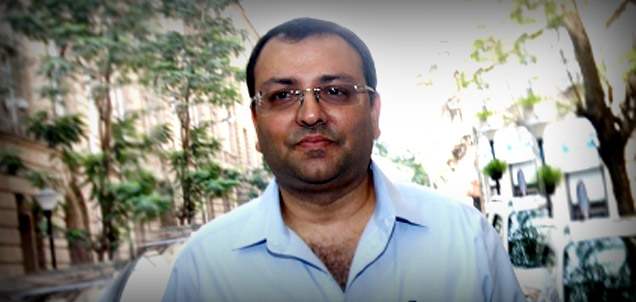
    In the second week of March, Cyrus Mistry, Ratan Tata, Ralph Speth and a few members of the senior management of Tata Motors dropped by at the factories of Jaguar Land Rover (JLR) in the West Midlands in the United Kingdom.


    The visit of the chairman-designate and the current chairman of the $83-billion Tata Group along with the CEO of JLR coincided with the Geneva Auto Show at which Mistry and Tata had unveiled a concept compact car called Megapixel.


    With sales at JLR up 35-40% in the past couple of months and with the success of the XF and XJ range, Messrs Mistry, Tata and the top brass discussed a plan to launch more products in the sporty space, said a person familiar with the matter.


    He added that Cyrus felt the Jaguar brand needed to re-associate itself with the image of speed and performance, something it seemed to be moving away from. Also discussed were plans for common engine development between Tata Motors and JLR, sharing of technology and also of human resources. It’s been a busy four months for 43-year-old Mr Mistry since he was appointed deputy chairman of Tata Sons, the promoter of all key Tata companies.


    The visit to JLR was just one of the many trips to group company offices and manufacturing plants. At the time of his appointment, the group, which has over 100 companies, had issued a statement saying Mr Mistry “will work with Ratan N Tata over the next year and take over from him when Tata retires in December 2012”.


    Mr Mistry has been doing exactly that, with his agenda including meetings with key ministers and top officials of states in which the Tatas do business.


    Unassuming Attitude Wins over Bombay House

    Mr Mistry has also been meeting the top brass – as well as employees – of virtually every company in the group, including global operations. One of the few allowances Mr Mistry makes for himself whenever he is in town is an occasional brunch out – not at a fancy restaurant at the group’s famed luxury hotel Taj but at a quaint Parsi eatery at Colaba in South Mumbai called Paradise.


    “He tries to visit the place once a week to eat his favourite chutney sandwich and, occasionally, dhansak (a Parsi meat and curry speciality),” said a person familiar with Mr Mistry’s schedule. It’s this unassuming attitude that has helped Mr Mistry win over most of the senior executives within Bombay House, the headquarters of the Tata Group.


    “His induction into the group has been quite painless,” said the head of a Tata consumer products company. Mr Mistry met CEOs who made presentations to him on what their company stands for, says the head of one Tata company on the condition of anonymity. He adds that Mr Mistry has an eye for detail.


    “The best part about him is that he is extremely approachable; and he has brought in the much-need freshness of youth and, at the same time, a composed and mature way of learning and questioning,” points out another CEO of a Tata Group company.


    Messrs Mistry and Tata were unavailable for comment, and a spokesperson for the group did not respond to an email. Mr Mistry is understood to have held review meetings with the heads of small, relatively less successful companies within the group such as Nelco, Tata Bearings, Telcon and Tata Ceramics.


    The options for such entities are either to exit (particularly if they are non-scalable) or merge them into other group companies, said a person with direct knowledge of the matter. “At the end of the day, the Tata Group will have fewer companies than it does now,” added this person.


    Such restructuring measures won’t happen immediately. There are unlikely to be any big bang changes once Mr Mistry formally takes over in December 2012, top officials said. But the direction has been set – Messrs Mistry and Tata are finalising a plan for consolidation of various businesses with the focus on profitability and scalability.


    “He is unlikely to rock the boat before getting the steering in his hands. But it would be wrong to assume there will be no changes. The organisation leadership needs changes and Mr Mistry is well aware of that. But it would be more evolutionary than revolutionary,” said a top group official.


    Another senior group official said Mr Mistry has discussed the possibility of adopting a model that was practised by Mr Ratan Tata’s predecessor, the late Mr JRD Tata, in which some companies had their own chairmen. Mr Ratan Tata is currently the chairman of all flagship companies.


    During JRD’s regime – and for a few years thereafter – Mr Russi Mody was chairman & managing director of Tata Steel, Mr Darbari Seth of Tata Chemicals and Mr Ajit Kerkar of Indian Hotels.


    While such a move has its risks – creation of power centres being the main one – group insiders say Mr Mistry is of the view that professionals with talent and potential should be offered a comprehensive career plan within organisations; and such a plan should also provide an opportunity for an MD to reach the post of chairman.


    Mr Mistry is also spending time on succession planning. He is in favour of encouraging cross-fertilisation of group talent before hiring from outside for top positions. “Cyrus will not be a carbon copy of Ratan Tata. He has to take the business to the next inflection point.


    Several of the governance codes formed in a sheltered economy within the group need to be updated,” says Mr Unni Krishnan, managing director, Brand Finance India. “He will also have to bring in coherence in terms of handling businesses that are run outside India and which are growing fast,” he adds.


    Agrees a senior group official: “The challenges faced by Ratan Tata were different and the times were different. Cyrus inherits a largely global group and, with it, a different set of challenges, especially of managing a disparate organisation in a volatile business environment.”


    One critical element of Mr Mistry’s induction – which Tata is particularly keen on and personally involved in – is connecting with bureaucrats and ministry officials at every possible level. The focus is to expand Mr Mistry’s horizons beyond business, said a senior group official.


    And if Mr Tata is making a special effort on this front, it may be because a chink in the group’s armoury has been in managing relationships with political leaders, said a person familiar with the matter. During the past four months, Mr Mistry has met the likes of Gujarat Chief Minister Mr Narendra Modi, Jharkhand CM mr Arjun Munda, Commerce & Industry Minister Mr Anand Sharma and Prime Minister Dr Manmohan Singh (as part of an industry delegation).


    Mr Mistry has also been given the mandate to reinforce the Tata culture – one that is steeped in doing good – within group companies. A couple of weeks ago, the deputy chairman was by Mr Tata’s side when he inaugurated Harvard Business School’s first classroom in the country at one of the properties of group company Indian Hotels.


    Two years ago, the chairman had granted $50 million to Harvard. “It would seem natural for Tata to want to make this sort of commitment of personal time (for the classroom) during Mistry’s induction,” says Mr Rohit Bansal, CEO and co-founder, Hammurabi & Solomon Consulting, who was present when the classroom was inaugurated.


    Source:The Economic Times

    Copyright © 2012, Bennett, Coleman & Co. Ltd. All Rights Reserved


    Photograph: Fotocorp

     

  • [MJR] In which Justice Katju tells it like it is. Again

    By Ranjona Banerji


    Press Council of Indian chairman Markandey Katju has been one of the most vocal holders of this post, losing no opportunity to stand up for the media when required and to castigate it at other times. The trivialization of news remains a key issue with him and he has questioned once again whether our obsession with Sachin Tendulkar’s 100th century was justified. Interestingly, Tendulkar himself questioned it, pointing out that in the four matches when he got his 99th 100, no one mentioned it at all!


    Katju, speaking at the convocation ceremony of the Bharatiya Vidya Bhavan in New Delhi (“over the weekend” says The Hindu in Monday’s paper) however saved his best for last, taking on Anna Hazare and his methods. While making it clear that corruption is a mega issue and that is why Hazare’s movement gained so much support, he questioned Hazare’s methods. “What is the rationale of the thinking of Anna Hazare? With due respect, I could not find any scientific ideas. These shoutings will not do anything.”


    Katju is a man who calls a spade a spade. Much as he rubbed most of the media the wrong way, there is perhaps some merit in taking some of his criticisms seriously. Is Aishwarya Rai’s pregnancy really front page news? Did the world end with Rahul Dravid’s retirement from cricket? There’s no point getting defensive here and saying, “The media has every right to choose its own stories”. Quite right it does. But does that mean that the media never makes mistakes? Or indeed, can one deny the dumbing down of the media in terms of choice of stories and understanding of news?


    **


    Talking about getting defensive, the editor in chief of this site Pradyuman Maheshwari faced some defensive posturing on the media’s role in the Norway-Bhattacharya child custody case on NDTV “over the weekend”. The anchor Sunetra Chaudhury, journalist Rashmi Saxena and former diplomat MK Bhadhrakumar staunchly held that the media had done no wrong. It was only when Maheshwari pointed out that no fact-checking had been done by the media and that the other side of the story was not presented – “a basic trait in journalism” – that the bluster of the others died down a bit and it was accepted that the media could have done more.


    Arrogance is all very well, but stupidity is just that.


    **


    This lack of perspective in the television media, especially when it comes to the armed forces, is equally appalling. It has the narrow-focused ability to only see every problem from the side of the armed forces. Yet surely we have seen, more so in recent times, highly ranked officers involved in the most reprehensible acts of corruption. In the current allegations made by chief of army staff VK Singh that he was offered a bribe by a former Lt-general, surely it would be better to get a few more facts on the case before having hissy fits in favour of every soldier ever accused of anything at prime time? At the very least it would be interesting to see if TV can seriously question what seems to be an obsession with attention as far as VK Singh is concerned. Also, at the risk of facing a firing squad at dawn, I would suggest that the media would be better served if it stopped treating the armed forces like a collection of overly-principled martyrs eschewing payment for their cause and just treat them with customary scepticism.


    **


    In an aside, how about TV channels hire some people with better spelling skills for their written portions? All morning on Monday I read about a “defemation vase” filed by Arun Jaitley against somebody. Of course, there are no bigger teasers than those little ticker tape thingies that run across the screen which promise so much and deliver so little.


    Twitter: @ranjona


  • Continuing the WorldSpace legacy @ Timbre

    By A Correspondent


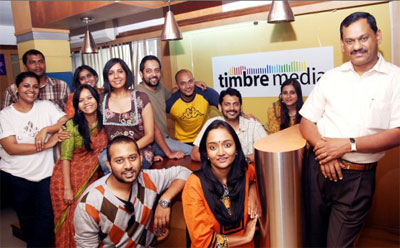
    The year 2012 has already begun with a series of announcements of radio on the web and other digital platforms. PlanetRadiocity.com for instance has launched a new genre – IndiPop Radio on their Web Radio station in March, 2012, and a Bengaluru based internet radio company- Venturenet Partners will be launching a premium model internet audio service- Radiowalla in April 2012. Formed in 2010 by former employees of WorldSpace India, Timbre Media is also slated to announce its internet radio station – Timbre Radio. All these players not only aim to provide innovative but, differentiated content and world class radio programming to their listeners, all through the power of audio.


    Besides the internet, Timbre Media plans to exploit the potential of the audio medium across digital platforms including mobile and DTH Television. On the mobile front, the Bengaluru based Timbre Media has already aligned with Vodafone India to offer listeners multiple music genre radio stations across the country. Listeners will have to pay Rs. 30 per month for 300 minutes of free usage. However this mobile radio service is not available in Andra Pradesh, Gujarat, Himachal Pradesh and Kolkata. Saregama India Pvt Ltd. which has acquired 10 per cent stake in Timbre Media provides the company (Timbre Media) with access to their music database.


    Timbre Media offers customised radio content for multiple broadcast platforms. It has four studios in Bengaluru and two studios in Mumbai among other studios in different parts of the country. In conversation with MxMIndia, M Sebastian, Co- founder and CEO, Timbre Media spoke about business model of Timbre Media, his break-even plan, the trends to watch out for, on traditional FM radio and much more.


    Q: Can you share with us how Timbre Media was formed? And what was the thought process behind the launch?

    Timbre Media was formed in 2010 by the erstwhile employees of WorldSpace India, to continue the legacy of world class radio programming that we provided through WorldSpace to our listeners.


    Q: What is the team size? Timbre Media is currently headquartered in Bangalore… Will you be setting up offices in other parts of the country too? When?

    We are a team of around 80 people, spread across different Indian cities.


    Q: Timbre Media specializes in programming radio contents for corporate entities, FM stations etc… Can you throw some light on the USP of Timbre Media? Also are you in talks with any FM station for radio content?

    Timbre Media has the unique advantage of a talent pool that introduced subscription based radio service in India and popularized the concept of genre based radio programming in our country. Our content is different, rich and compelling. We have learnt a lot about the expectations and aspirations of our target customers in the last 10 years of our association with WorldSpace Satellite Radio and its elite customers who valued quality and variety.

    We are in discussions with potential customers in every vertical that we are operating in.


    Q: What is the business model of Timbre Media? Is it advertising-led or a subscription model?

    Our business model is based on our philosophy that is to provide customized content that is different, rich and compelling and monetize the same in the best possible manner. It could be advertisement- or subscription-based depending on the vertical and the ecosystem we are operating in.


    Q: How many channels are in the offing? Which genres will you be offering? Will news also be part of it?

    We can’t say at this moment how many and what types of channels we will be offering. As I said, it is a function of the vertical and the prevailing ecosystem. We are focusing on providing customized content solutions to various customers and it could vary from one to the other. We are not averse to a particular type of programming or platform.


    Q: When are these channels scheduled to launch? Will it be only through mobile or will one be able to access them on the internet and DTH as well?

    We are not averse to any programming or platform. We are interested in utilizing our experience and expertise to meet the aspirations of the end user by using every available opportunity and monetizing the same to ensure the growth of Timbre Media.


    Q: Whom do you consider as competition?

    As such I do not think there is anyone who has the same experience and expertise that we have, and provide the same products and services that we offer.


    Q: How has 2012 welcomed Timbre Media? What are your growth plans?

    We have made considerable progress in the last two years. Thank God and the committed and passionate team that Timbre have, we have done extremely well compared to most of the start-up enterprises. We want to be a unique media enterprise that touches every customer who values quality audio content through all possible platforms and devices in the next 5 years.


    Q: Any specific trends you see in the Indian radio industry, particularly in the internet and mobile space?

    Radio industry is growing, and listeners are appreciating quality content for which they are willing to pay. The technology and platforms are enhancing the ecosystem every day and enabling the consumer to get what he wants, in the way he wants at the time he wants.


    Q: Also, should traditional radio begin to worry with your entry?

    There is sufficient space for everyone to co-exist and grow. Rather than worrying, we need to identify areas of partnerships that lead to mutual benefit and faster growth and work towards realizing the full potential of the audio medium.


  • Riding the creative crest

    By A Correspondent


    An advertisement’s KPI is to lure people, not only to watch the ad, but also to buy the brand advertised. One-third of the battle is won if audiences do not move away from a channel when a specific ad comes up, or in case of newspaper, it does not become a blind spot – the ad is appreciated and enjoyed. However, an advertisement’s role is fulfilled in completion only if the marketing objective of the ad is achieved – which in most cases is sampling the product. From there on other Ps of Marketing take over.


    Today, it is not only FMCGs that target the woman, but also the traditional male dominated categories. This coming of age of Indian woman is reflected in the advertisements as well – she has changed, and in style.


    – The home-maker in Cadbury Dairy Milk commercial is vocal about her husband not expressing his love to her

    – Moov ad is about a playful encounter between husband and wife — she no longer is in pain doing household chores

    – ICICI Lombard commercial is about a young girl’s aspirations – and not about future security

    – Gadget Guru commercial, in fact, has a young lady checking out the zoom feature of a camera that she plans to buy online!


    Madhu Noorani, Executive Creative Director, Lowe India aptly reflects, “Yes, she has changed dramatically. She is bolder, more independent thinking and has ambitions for herself, while earlier her ambitions were for her husband or kids. Now, she also knows the power she has.”


    One cannot help but zero in on Lalitaji as the predecessor of woman seen in today’s ads. Perhaps she was the first real person in advertising – with a lot of common sense. States Simmi Sabhaney, President, Ogilvy & Mather, Bangalore, “Lalitaji came at a time when the primary role of the housewife was defined as catering to the varying needs of her family. Family came first and the housewife relentlessly steered her way through the day to day pressures that were inflicted upon her. Brands targeted towards her were pitched as an aid for her to undertake her tasks efficiently. They helped her excel in her role at the home front.”


    She adds, “Lalitaji was a bold attempt for those times. She was shown stripped off her softness, in an aggressive avatar. She questioned in an era, when questioning sat squarely in men’s territory. But women have come a long way. Today’s woman in advertising is shown as confident, well informed, liberal, indulgent, playful and experimentative.”


    Women, no longer, are only seen in the ads of categories traditionally targeted at her, or as the carrot in the male focused categories. ‘Use this product – I come free with it’ is passé. Women are more than mothers, and objects of desire, and it comes across in the ads of today. Noorani comments, “While today’s woman in ads may be all these things, she is interested in carving a niche for herself, and she, also very important for advertisers, believes she has the right to indulge herself”.


    She is still the caring wife and doting mother – however, the brand’s role has changed from easing her burden to delighting her and in helping her delight her family. Sabhaney expresses, “The new age woman is indulgent when it comes to her kids to the point of advocating that ‘playing with dirt is good for your kids’. She is playful at the table and is constantly exploring newer options to delight them. She is rightfully the ‘cheerleader’ for her family.”


    But naturally, it is the younger woman, brought up in the age of information, who is leading the change in the Indian society, and advertisements, to a large extent, are reflecting that – the new ‘ad’ woman has evolved too. States Sabhaney, “While her fundamental values may not have changed, the expressions of these values certainly have. Shades of playful manipulation and free-spiritedness are being associated with younger women. They are willing to explore and take on life as it comes.” She adds, “The concept of ‘equality’ has truly come of age. The younger woman is seen questioning gender biases. Pre-marital sex is now not uncommon and there are brands helping them deal with an eventuality, just in case”.


    While the change in the ‘ad’ woman is a reflection of changes in the society, she is also leading the change in smaller cities and towns. Media explosion has made the woman living in smaller towns come face to face with the new woman – and with it sets in the aspiration to be like her – at least to the extent she can, without turning her world upside down.


    INDEX
    Success mantras from media captains
    All work and some play
    Riding the creative crest
    Holding up the managerial sky
    Celebrating the difference
    Managing Middle India’s Golden Lady
    Wooing vibrant India’s Wonder Woman
    Rural women – how strong is their ‘spending say’?
    Is the serial woman tellying it like it is?


  • E Raghavan, Editor, Vijaya Karnataka and Vijaya Next is no more

    By A Correspondent


    E Raghavan, the Editor of Vijaya Karnataka, the Kannada daily from TOI and the weekly Vijaya Next passed away on March 24 of cardiac arrest at the age of 61. He had also been the Editor of The Times of India Bangalore and The Editor of The Economic Times, Southern Editions.


    Mr Raghavan had been a TOI veteran and been with the company for long holding various positions both at TOI and The Economic Times. He had started his career with The Indian Express later to move to TOI. He had also been an Editorial Consultant to DNA Bangalore.


  • Reviewing the Reviews: Agent Vinod

    Agent Vinod

    Key Cast: Saif Ali Khan, Kareena Kapoor, Ravi Kishan, Adil Hussain, Ram Kapoor and Prem Chopra, Special Appearance – Gulshan Grover

    Directed By: Sriram Raghavan

    Produced By: Saif Ali Khan & Dinesh Vijan


    Of late, it has been seen that more often than not critics are united in their praise or pan of a film. It used to be rare to get such a consensus but Agent Vinod has done it again. Except for one 4 star and one 4, the highest rating the film has received is 2.5.


    Opinion of reviewers as well as the public match in that the film’s plot does not match its high production values. Sriram Raghavan had acquired a kind of following after Ek Haseena Thi and Johnny Gaddar, which is why expectations from the film were high. The jokes are already out, a few of them calling it ‘Travel Agent Vinod’ taking potshots at the fact that it was shot on several foreign locations.


    Hindustan Times’s Anupama Chopra gave it 2.5 stars and wrote, “Agent Vinod is also attempting to be too many things – a slick thriller to match Hollywood but also a cheeky homage to cheesy Bollywood movies. So the film has gloss and fast-paced action but the villains are a throwback to the 1980s – after all, how seriously can you take Gulshan Grover in a white suit or Prem Chopra with a ponytail or Shahbaz Khan with one glass eye? The result is that Agent Vinod never becomes more than the sum of its parts and even though it picks up speed in the second half, it leaves you both exhausted and unsatisfied. But I enjoyed the character of Agent Vinod. If he does get a sequel, I hope he has a better narrative to romp in.”


    Akanksha Naval Shetye’s DNA review, one of the few 3 stars goes, “On the downside, what doesn’t work is the weak plot and it is that weak chink in the armour that fails to hold all the strong elements together that could make it a riveting watch. The script should’ve been crisper, to do justice to its ambitious, high production value. With predictable twists and forced uncomplicated sub-plots and not so required elements and characters, you know it’s time to send logic out early on and you see yourself lose interest at some points. The stereotypical characters fail to make it interesting too.”


    Raja Sen writing in rediff.com was left cold too and went with 2.5. “The essential problem lies in the characterisation of Saif Ali Khan’s titular protagonist, an unconvincing secret agent suffering from mood swings, saucy and wink-filled in one shot, dour and stony in the next. He’s both nonsense and no-nonsense, a flawless leading man morally incapable of doing wrong and sartorially incapable of a hair out of place. So cool for school is he, for example, that even when drugged and being slapped around with his head shoved in a pool, his white shirt stays firmly tucked into his trousers. So much of the film is sadly compromised by making the leads look good – but perhaps that’s the price we pay for actor-producers.”


    Writing in Mid-day, Shaheen Parkar sticks with 2.5 too. “Though there is an earnest attempt to make a thriller considering that the director (Sriram Raghavan) is known for this genre of films -Ek Hasina Thi and Johnny Gaddar — this time the makers have tried to make a masala thriller stirring in too many ingredients making it difficult to digest. Its long running time (over two and a half hours) proves tedious for the viewer. Instead of incorporating item numbers, there should have been more focus only on the agent’s mission. Also, the plot criss-crosses from Afghanistan to Morocco to Russia and even Somalia, but just everyone either knows Hindi or understands it. If only the locals in the various destinations of Agent Vinod spoke in the local languages (with subtitles) would have lend more credence to the plot. The Agent’s every move is explained leaving little suspense for the viewer, as by then you know the end.”


    Sonia Chopra of sify.com also gave it 2.5. “A story traversing multiple locations can be fun, if it can avoid getting convoluted. But this film overstays its invite. All spy thrillers find their inspiration in the James Bond series. Most recent Bond films have had less plot; more style. But they get away with it, because the brand is so established. But an Agent Vinod is a rookie in that respect and needs solid support.”


    Rajeev Masand of ibnlive, who is usually kind, gave Agent Vinod 2 stars. “For a large portion of Agent Vinod, you don’t know where things are going… and then it all stretches on so needlessly that you stop caring. Given that this is a film that sees itself as a desi-style Bond, it has glaring loopholes that are embarrassing. Like a tacky scene in which Vinod spots a familiar scorpion tattoo on a doctor’s wrist that helps him deduce that he’s actually an assassin. Or the ridiculous pre-climax portion in which a grievously injured character is gasping out a password to our hero, as he frantically tries to disarm a bomb while flying a helicopter.”


    Shubhra Gupta of the Indian Express also went with 2, writing, “There’s nothing to warn us that we are in for strictly bits-and-pieces of fun. But that is the film’s trajectory, split between speeding and slowing down to re-create familiar scenes. This results in a repetitive loop : fast-paced Bond-style bang-bangs interspersed with two good-looking spies criss-crossing each other, as corpses pile up. It doesn’t help that the plot is overly busy, scurrying from one point to another, and going on and on, much after the story is over. Even the camp is not high enough, and some of the humour is clunky.”


    Mumbai Mirror’s Karan Anshuman matched the majority with a 2.5. “In between the mayhem you’ve bomb-carrying helicopters, the Trans-Siberian Express, Russian mafia, Indian industrialists, Afghan warlords, gay flight pursers, Moroccan camels, Pakistani generals … and one man to sort it all out. Agent Vinod is the kind of film with a lot of breadth, but very little depth. The sentimental bits especially, islands on their own, just don’t cut it.”


    The Times of India, always rates a film higher than the rest and very rarely goes below 3 stars, which is hardly a compliment to a film. Madhureeta Mukherjee writes, “Director Sriram Raghavan, who’s made fine mind-twisters (Ek Haseena Thi, Johnny Gaddaar), attempts a spy-thriller this time. His obsession for retro reflects here again, whether it’s casting Prem Chopra and Gulshan Grover, references to classics, or infusing soundtracks from the bygone era. Aaah! Nostalgia! Agent Vinod is slick and visually stylized, but loses steam at times. The movie is a tad long and often creatively compromised – for style over substance. With well-designed stunts and car chases, there are very few high points or shock value. One being the background score (Daniel B George) that changes beautifully with the locations. Otherwise, Agent Vinod is cool. But not steamy enough to win a license to thrill.”


    Bollywoodhungama.com’s high 4-star rating by Taran Adarsh goes with the comment, “A hi-octane espionage thriller with a heart. It is not just brawny and dynamic, but witty and crazy too. Ultra slick and stylish, this desi Bond movie adheres to the formula and succeeds in meeting the humungous expectations.”


    The lowest 1-star rating is by yahoo’s Kunal Guha, who quips, “The best way to defuse a bum is through butt crunches. Unless one is referring to the Hinglisized word for a bomb. And the much-awaited dhamaka that this thriller hoped to detonate at the box office might just be defused once you read this review. Despite miraculous leaps in production values, spy thrillers in Bollywood end up looking like Chinese equivalents of western products. And here, the characters are even stereotyped to the extent of detectives wearing trench coats and moles being obvious, shifty-eyed and literally uncomfortable in their own skin. So let’s just say foreign locales, weapons to annihilate the world, designer suits and not-so-excruciating interrogations don’t cumulatively justify Agent Vinod as a thrilling movie-watching experience.”


  • The Anchor: 5 reasons why this is the most important week in the year

    By A N Chorrea


    1. Heck, we are on March 26. Last few days to shore up revenues and this is decidedly the last week of the financial year for a good part of Indian companies. So for that one last time, go for it!


    2. It’s the last few days to make those tax-saving investments. If you don’t make them now, you could have to pay more tax for the year and, of course, save less.


    3. April will see appraised salaries, if not higher. It’s also the time of the year which sees a maximum number of people quitting, given not-very-nice pay hikes. So time to get those resumes cleaned up and get the LinkedIn profiles in order.


    4. For adland, April is Goafest month. Time to rejoice, win awards and along the way, gain some gyaan.


    5. Jan 1 is when most people do it, but this is yet another opportunity to make new year resolutions. Get teams energised for the next fiscal. Achieve higher targets.


    Enjoy.


    A N Chorrea is a seasoned mediawatcher writing under a pseudonym.


  • Ad Strat: Whisper of possibility

    KV Sridhar, NCD, Leo Burnett


    1. Name of the Campaign/Ad:

    “Whisper Hai, Possible Hai”


    2. The Brief:

    Whisper was seeking to drive a stronger emotional connect with their consumers.


    3. Research insight:

    Whisper is irreplaceable to an entire generation of girls, and has enabled them to be unstoppable in their day to day lives.


    [youtube width=”400″ height=”200″]http://www.youtube.com/watch?v=l7daDKeG-tM[/youtube]

    4. The thought process behind the creative:

    While period communication has its own language (typically problem – solution), we were trying to show how the period experience differs for Whisper users who live confident and active lives. Therefore it seemed appropriate to find charming everyday moments and juxtaposing them… sometimes with humour (comparing window-shopping to shortlisting prospective grooms)… and sometimes with the “can do” spirit of today’s youth. We also wanted to leverage a brand ambassador who had risen to success with hard work and perseverance, and so chose Saina the badminton superstar who, like a crore of Indian girls, also counts on Whisper on the days that count.


    5. Media vehicles chosen:

    Television


    6. Key issues kept in mind while executing the ad:

    Keep it real, relatable and humble. Make it reflect the inner voice of the Whisper girl.


    7. Does the treatment do justice to the brief?:

    We used the narrative format of vignettes to connect with the girl across the country… North/South/East and West. As well as stayed true to the language we hear the Indian girl speak.


    8. What is the differentiating factor about the ad:

    The brand has a long-standing heritage in this country… A heritage of understanding and connecting with the Indian girl for the last 23 years. As well as a heritage of superior protection, which in its current avatar translated as 1 second absorbency.


    9. Market and client feedback:

    The client was very happy with the campaign, which qualified strongly, resulting in compelling in-market results and one of the highest historical value share reads on the brand.