Blog

  • Digital is the way to go, but…


    By Robin Thomas


    Consumers in India are evolving rapidly from print and radio to television and now digital. Just when you thought that digital was all about display advertising, bulk SMS, search, email advertising and online classifieds, in came the social media, video advertising, smart phones, tablets, apps, mobile advertising and so on.


    According to industry estimates there are 120 million internet users in India today, of which almost 30 per cent are from small towns. While India’s broadband internet penetration is still low, it is believed that the next phase of growth in internet will come from mobile users which are estimated to be over 800 million.


    As more and more youngsters gain access to various digital platforms, there is a greater need for marketers to not only engage the young consumers, but they must also be able to give them a unique experience across the digital platforms. The IAMAI (Internet And Mobile Association of India), which held its 8th Marketing Conclave, 2012 – ‘Digital Marketing 3.0’ on April 13 in Mumbai, extensively discussed the role of social media, video advertising and mobile advertising in the near future.


    Using Social Media:

    Today most companies have multiple social networking sites – Facebook, Twiter, LinkedIn and others. There are separate teams handling social media marketing for the company, but, are brands listening to their consumers? Do they interact and respond to queries and complaints? Do marketers understand the social media and know how to monetize it? Or are brands simply satisfied with the number of ‘Likes’ and views they generate on their social networking sites?


    Karthik Nagarajan, National Director, Social and Insights, Group M was of the view that unless one is not ready and mature enough as an organisation for the medium, the organization must stay away from social media.


    According to Usha Sangwan, Executive Director, LIC India, what brands lack today is the courage to be transparent, they don’t respond to negative feedback and fail to turn the customer as an advocate of their product. “Brands must not see social media as a mere marketing tool and limit to generating numbers alone, but social media must be used mainly for connecting with the TG and co-creating the product. Brands must try and understand their TG and become a part of their customer’s day to day life.”


    Virginia Sharma, Chief Marketing Officer, IBM India hit the nail on the head by stating that brands must have the ability to admit their mistake and apologise to the customer. She admitted that while there is a certain amount of fear among brands to apologise for a mistake committed because it may lead to negative public opinion, but felt it is always better to apologise and rectify the mistake which could lead customers to becoming an advocate of the brand.


    Vinay Bhatia, Customer Care Associate and Vice President Marketing and Loyalty, Shoppers Stop added that it a company’s reputation is harmed only when it fails to act responsibly to a complaint made, and not when it apologises for a mistake and tries to rectify it. “The problem with the companies today is that they make policies as if the consumer is a criminal. Accepting a feedback and acting upon it will not harm the brand but, if one chooses to remain silent about a complaint, that’s the worst one can do to his brand.”


    Leveraging Mobile Advertising:

    Besides the social media, mobile advertising is another challenge faced by marketers who have more or less failed to leverage the small screen. Sadly, mobile advertising is largely limited to only SMSes. Marketers are said to often mistake mobile as an extension of broadband internet and as a result they fail to give their consumers a unique experience on mobile.


    Speaking from a marketer’s point of view, Ajay Kakar, CMO, Financial Services, Aditya Birla Group stated that although the potential for mobile advertising is high, there is still a section of people who have not seen the mobile as an opportunity. He added that mobile industry must follow the ‘Jo dikhta hain, wahi bikhta hain’ policy and evangalise the benefits of mobile advertising. “Content is very important, don’t tells me about your brand, but tell me what’s in it for me? Give me the case study of successful mobile advertising. What I want to know is how much money mobile advertising is making for my brand and for my business? What you must do is to stop saying ‘buy me, buy me’ but, instead tell me ‘why me, why me’?”


    With the introduction of 3G and now 4G services, mobile internet is expected to be faster and with high quality content, better mobile applications, much better video and much more. In addition to these, smart phones and tablets are also said to play important roles in the growth of mobile internet in India.


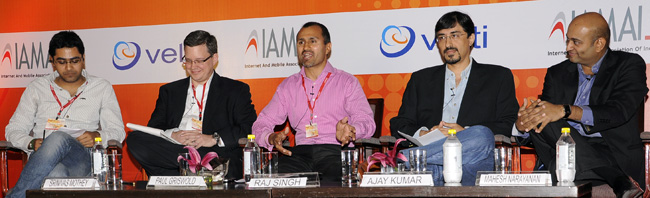
    Mahesh Narayanan, Country Head-Mobile, GoogleIndiasaid that there is not only lack of understanding about mobile advertising, but also lack of discussion about mobile as a medium in board room meetings. “The consumer shift is already happening from traditional media to mobile; however, great amount of content for mobile is yet to be created. People are looking for your brand on their mobile phones but, ironically brands are absent on mobile.”


    While mobile subscribers will continue to grow and more people will access internet through their mobile phones, the challenge lies in monetizing the medium and to find newer ways to reach out to consumers besides SMS advertising.


    Paul Griswold, Director Product Management, Mobile Marketing, Velti was of the view that mobile is not treated as an integrated part of marketing strategy, but is seen as an extension to online. “There has been a failure to take the advantage of the one on one interactivity mobile offers and just sending SMS is definitely not the way.”


    The participants outlined not only the problems but also possible solutions. According to Srinivas Mothey, Head Mobile Marketing and Advertising, One97, the first step is to educate advertisers and agencies about the benefits of mobile advertising. Although every advertiser may have a different view about the medium, nevertheless they need to be encouraged to invest in mobile. “We are also encouraging advertisers to create mobile assets and not just mobile apps. We are beginning to see the positive results but, in order to see more results, it may take some more, but the first step needs to be taken.”


    Video Marketing:

    Video advertising/ marketing is not a new phenomenon for marketers. Traditionally, marketers are said to be comfortable with video and we have been seeing that on television, and will probably see the same, and in a much bigger way, online and on mobile in the near future.


    According to Debadutta Upadhyaya, Vice President, Vdopia Media, there has been over 50 per cent growth in video consumption in the last one year alone, the fourth largest globally. “Unlike other countries,Indiahas made the leap from web to email to social media and now video. There is still a long way to go on the creative aspect because the primary advertising medium of a creative agency has always been television, so creativity in video advertising is bound to take some time.”


    As India’s broadband penetration and mobile internet accessibility increases, it would be just a matter of time when video marketing would explode inIndia. Besides online, with 3G and 4G services, video consumption on mobile should be an altogether different experience for users and marketers.


    But Shubhranshu Singh, Marketing Director-IndiaandSouth Asia, Visa cautioned: “There is a difference between video on web and video on mobile, and the difference between the two is galloping ahead in terms of content. Perhaps the youngest audience in our country today will watch television online for the first time which could be an opportunity or a threat if we are not ready for it.”


    Digital marketing in itself has become 360 degree for marketers. It has gone beyond display and banner advertising, to becoming more interactive and innovative to reach out to consumers. Digital marketing, as the industry players pointed out, is in a transition phase from web, to email and now brands are trying to reach out to their customers through social media, mobile and video.


    Marketers must stop considering mobile internet as an extension to online and, therefore, give mobile users unique experience of mobile advertising. Social media must not be seen as a mere marketing but, a medium to interact with their consumers, know their behavior and be a part of their day to day life.


    Brands must be receptive to both positive and negative feedback of customers, admit to their mistakes, apologise to the customer and rectify the fault. Digital marketing will undoubtedly grow but, marketers must first be evangalised not only about the benefits of the medium but, also ways and means to leverage it.

    Imaging: Rafiq
     

  • Young changemakers talk about Change

    By Insiyah Rangwala


    The Young Changemakers Conclave (YCC) 2012 was held on April 14 at the US Consulate, Mumbai. Organized by Samyak Chakrabarty, Managing Director, Youth Media Group and team for the United Nations Information Centre forIndia and Bhutan (UNIC), in collaboration with the US Consulate General, and presented by UTV Bindaas, the Conclave which is in its second year, was being hosted in Mumbai for the first time. The key focus point of the Conclave was ‘Role of Youth: Transforming Dialogue To Action’.


    The Conclave was attended by 200 young individuals between the ages of 18 to 35 who were selected from diverse backgrounds of the 5000 who applied, to attend this near-day-long event to discuss, deliberate and confer on a wide array of topics while engaging with current day leaders and started off with an address by Mr Peter Haas, US Consul General, who talked about how change wasn’t meant to be easy.


    Thereafter a diverse and interesting list of dignitaries addressed the gathering:

    > Mr Suhel Sheth, Managing Partner, Counselage who talked about change being internal and about understanding yourself and changing yourself before the world.

    > Mr Arnab Goswami, Editor-in-chief, Times Now, spoke about how the fear of exposure is what leads to making people want to control the media and how that is a change that should be stopped

    > Mr Agnello Dias, Founder, Taproot spoke about creativity in finance and business.


    Other speakers included Mr Sanjay Nirupam and Mr Anurag Singh Thakur, both Members of Parliament who spoke about the importance of educating the youth about politics, and a mix of celebrities from the arts and cinema, sports, advocacy and hospitality. Masaba Gupta, Leander Paes, Rahul Akerkar, Rajeev Samant, Laxmi Narayan Tripathi, Asin Thottumkal, and Awista Ayub, Director, South Asia Program for Seeds of Peace, all of who spoke about their respective journeys to make a change in their own way. Musicians like Vishal Dadlani spoke about using music as an instrument for social change and how it is easier to sneak in a message through music. The event ended with a vote of thanks by Mr Keith Alphonso, Business Head, UTV Bindaas.


    Keith Alphonso, Business Head – UTV Bindass, talks to MxMIndia about what he defines as a changemaker, the channel’s new look and plans for Bindass

    The word change maker is used a lot nowadays. What do you, and the company, think is a change maker?

    Well, Bindass has always been about change. If you look at the brand, it has changed. This country is on the threshold of an immense amount of change across a variety of levels. I really think that for young people, success is a religion and achievers are their gods. Those who have taken the plunge beyond what society told them, they are the heroes for the kids today. Their achievement is what has identified them as a hero.


    Who do you believe are the three top Indian changemakers?

    A: I think it would be a gross injustice to name just three. The only thing that comes to my mind isIndiaitself, and the fact that there is a majority of young people today who are heroes. These are the kids who are going to drive the change, so there maybe 3,000 heroes in small towns who actually go out and do something to make a significant difference to the big guys you see on stage. I think it is the spirit of change that exists among the kids today that will be the changemaker.


    Bindass has changed their logo, so any comments about the new look.

    This is the third change we are going through because the audience changes at a supersonic level, there is no such thing as a steady state, especially when dealing with young people. The new look is about the change, so the new tag line- Restless – is about change. It’s about the fact that there is so much opportunity out there, that if you get up and do it now you will succeed and that is the message we want to take across.


    Future plans for Bindass…

    To start with the idea behind the new logo is that we celebrate the fact that ‘If you rest less rather than sitting ideal you will be successful and you will achieve’. We want to empower that transformation. We have several platforms through which we want to do it – we have two blockbuster shows coming up: Live Out Loud and Fearless. The brand is all about helping you change, helping you make that move to the better life. On ground we have got a whole string of activities- there is Campus, we’ve got something called the Bindass Buddies, a contact program which helps people get admission to college because that’s a huge problem for a lot of people. We’ve got a 5 city music tour that we are doing. So, the idea is not to do a couple of shows and just be happy. We are looking at the Young India and where we can make a difference.


  • Anil Thakraney: Lack of imagination

    By Anil Thakraney


    Even a kid will tell you that there are just toooo many TV channels inIndia. Both, entertainment and news. And even as talks of a shake-out have been doing the rounds for years, more channels are waiting to start operations! Like everything else inIndia, it’s a mad house out there.


    Quite obviously, there can be place for only so many brands. The advertising pie is limited, and it cannot be shared by so many hungry mouths. And in the Indian context, a vast majority of a channel’s revenues come from advertising and not through subscriptions. In such a scenario, Imagine’s closure does not surprise me at all… in fact, I wonder what took them so long.


    As for the many other struggling channels, they are fortunate to be run by very deep pocketed suits. But those deep pockets, like Turner’s, will dry up at some point. It’s a matter of time.


    Imagine came on to the scene in 2008, when the Hindi GECs market was already divided between Star, Zee and Sony. Each had already established itself, and all three channels enjoyed viewer loyalty. To break into this extremely capital intensive and crowded house, Imagine’s only chance was to unleash kickass, totally offbeat programming. ‘Shock and awe’ ought to have been the mantra. 2008 was also the time when the nation had begun showing early signs of tiring of Ekta’s traditional saas bahu sagas, and there was a huge opportunity for Imagine to be the game changer that the market wanted.


    Alas, it was not to be. Imagine’s fictional shows were completely me-too, and most of their reality stuff was a huge disaster. ‘Swayamwar’ was perhaps the only ‘hatke’ programme, but in the GECs biz model, reality shows and movies are, at best, jam servings, laid out to entice viewers to the bread and butter fiction shows. And if the latter is a thakela and done-to-death fare, the channel is sunk. Which is exactly what happened with Imagine.


    Make no mistake about this: Imagine’s problem wasn’t funds or staying power or distribution or even talent. It was very simply this: Lack of imagination.


    * * *


    PS: This is a memo Shri David Ogilvy sent out to his employees way back in 1982.


    On how to write. It’s fantastic. You will notice that his suggestions, in this day and age of micro blogging and short attention spans, are more valid than ever before.


    Link: http://www.listsofnote.com/2012/02/how-to-write.html


  • The Anchor: Rahul Kishore on 5 reasons why Facebook is such a stressbuster at work

    By Rahul Kishore


    Having joined Facebook four years back, and being active on it I can honestly say that not only is it a great stress buster at work…but helps me stay focused all day. The reasons are many…


    1. It cuts out other forms of relief which are detrimental to one’s health

    Smoking for example and endless cups of coffee or both. I don’t need to walk out to the terrace in dusty Gurgaon to look around while taking puffs out of a cigarette. Nor do I need caffeine to get me through. I don’t smoke though…


    2. It helps me stay in touch with my friends and some important associates

    Feel the need for a chat? Just log in…of the 15 odd friends logged in, you will definitely find a reason to chat with atleast two, if not three…this chat could at best be five minutes. Sometimes with more than one person…Lightens the mood and energizes one to get back to work with gusto.


    3. Helps me stay young

    While reading others’ status updates you are able to relate a lot more to the younger lot. Comment on something, and they fire back almost instantaneously. The repartee has to be swift and sharp. I win on most occasions…in fact all! 🙂


    4. Good for a laugh

    Laughter is the best stress buster of all. I see the photos and the updates and sometimes laugh uproariously. Women in catfights, people having babies just to get Facebook likes, reporting gynae visits, discussing exes…such fun! The things people do for Facebook!


    5. Great way to stalk your exes

    Others’ exes too…see how they shaped up 20 years later…how fat, how bald, how old they look. What are their kids like? Where do they party and holiday? Are you better off without them?


    Rahul Kishore is Senior Vice President, Mogae Media


  • So why did Turner stop Imagine(ing)?


    By Team MxMIndia


    Just when the Hindi general entertainment space was getting interesting with the top 3-4 players all coming within sneezing distance of each other in the numbers game, the industry was jolted by news of the closure of Imagine, which given its pedigree, was launched with much fanfare not many moons ago. From shock to sadness and even rage (at least on the social media) admirers and naysayers were seen on an overdrive trying to piece the chain of events that had led to the downfall of the channel that was seeing red for some time now.


    This was in stark contrast to the kind of emotions that were flying thick and fast exactly a year ago, when Turner General Entertainment was merged into its parent company Turner Broadcasting System Asia Pacific, Inc. The emotions then were almost similar to what the channel heads were going through when they flagged off the channel more than four years ago, making it one of the most loud and admirable launches of the time. While anticipation and expectations were riding high on the faces of each and every member of the team at launch, the same was the scenario during the merger exercise last year as the company was probably taking a last shot in reviving the fortunes of the network to see themselves battle against the competent lot at the top. But all that was not to be as tribes from the world of media and outside woke up to the news of the channel shutting down yesterday.


    Siddharth Jain

    Replying to questions put forth by MxM India (read interview),  Siddharth Jain, Managing Director- South Asia, Turner International India Private Limited put it out right and straight as he said: “This is a carefully considered business decision based on performance of the channel. We invested substantially and put all possible resources behind Imagine TV throughout. As in any other business, the investments were directly linked to reaching a certain performance benchmark. However, in the two years Imagine did not grow or perform as per expectations and as a result, Turner made the carefully-considered decision to cease operations of the channel.”


    Mr Jain is probably being modest in quoting that the channel did not perform as per expectations in the past two years, but the writing was on the wall in the first three months of 2011 itself, when the channel failed to get the viewers and advertisers excited with its most expensive property that cost the company in excess of Rs50 crore to produce. ‘Zor ka Jhatka’, hosted by Shah Rukh Khan, failed to get the desired ratings and didn’t do much to push the channel in the top league as was expected. In fact, in an interaction with the media before the show went live, an exuberant Sameer Nair had vouched that the show along with a few others would catapult Imagine among the top 3 in the Hindi GEC space. Wishful as he was, that was not to be. Its failure forced the thinktank at Turner to come up with steps to plug the loopholes, even if it meant changing its course altogether.


    Sameer Nair

    Thus in April 2011, Turner announced the merger of Turner General Entertainment into its parent company Turner Broadcasting System Asia Pacific, Inc. This was followed by the formation of a special committee comprising various Turner officials such as Monica Tata and others along with officials from Turner General Entertainment Network including Sameer Nair and Harsh Rohatgi with the intention of charting out a long-term course for the channel. This move was even vindicated by Steve Marcopoto, President, Turner Broadcasting System Asia Pacific (TBSAP), who went on to explain the need for such a proposal, which was to assess its performance and chart a long-term course for Imagine. But just when the merger was announced, Sameer Nair did the unthinkable by announcing his decision to exit the company.


    In an interaction with MxMIndia Editor-at-Large Anil Thakraney, Sameer Nair was quite upfront about the reason for his decision to move on: “I was used to operating independently. After Turner took over, one had to integrate into the Turner system. And this made me just a department head. And so I left.”


    Expressing concern towards the chain of events that led to the closure of the channel he said, “I am quite shocked and disappointed to hear that they’ve decided to shut the channel down. They (Turner) seemed to be quite gung ho about Imagine, and I thought they were going full steam ahead. There is a lot of investment and a number of jobs at stake.”


    Mr Nair’s exit from Imagine was followed by a few other key exits and the network’s failure to find a suitable replacement. Even attempts to vow the audiences by launching a slew of reality and mythological shows didn’t do much for the channel as it still figured in the #6/7 slot amongst its peers in the space.


    In fact, even as recently as 2-3 months ago, the channel was going all out with its promotional activities as it announced the launch of new shows. But that too has been brought to a halt as Mr Jain explained: “We cease all business operations of Imagine TV. The closure is a complicated process as we are ensuring fulfillment of all our business commitments to advertisers, distributors, production houses and other partners.”


    The news came as a rude shock to producers, some of whom were in the midst of production schedule (see story: Rude Shock for Producers & Performers). Rajan Shahi who had launched ‘Jamuna Paar’ on Imagine just a little over a month ago, refused to comment on it saying “it would be too premature”. Other producers like Siddharth Tewary, the Sagars who had ‘Chandragupta Maurya’ and ‘Dwarkadheesh’ aired during primetime were incommunicado as they grappled with the sudden turn of events.


    JD Majethia

    JD Majethia who had launched two shows, ‘Jassuben Jayantilal Ki Joint Family’ and ‘Ek Packet Umeed’ four years ago said: “It’s sad and shocking. It was a channel which with the entry of Vikas Behl at the helm of things looked poised for bigger things, a turnaround but that was not to be. It’s a huge setback for producers and for those who work on a per day basis. A daily show means a minimum of 100 people associated with it in various capacities and with Imagine closing down, it spells doom for them. All that talent and labour goes down the drain. It’s a loss of about Rs200 crores worth of yearly business for Imagine and the industry on the whole.”


    Veteran producer Dheeraj Kumar of Creative Eye Productions said: “It was an overnight decision but it could have been done a bit smoothly. I am hopeful that Turner with its huge umbrella of channels would give us a chance of providing content to them. I am optimistic.”


    Programming propaganda

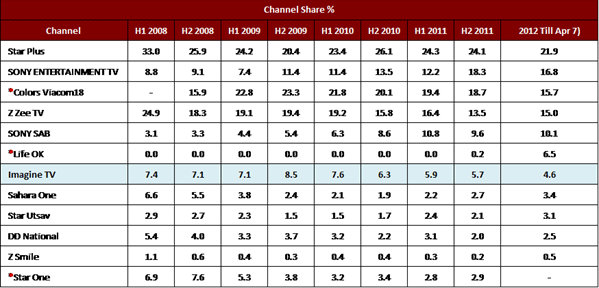
    Ever the one to influence viewers and attract the attention of the advertisers too, content was one of the biggest setbacks for the channel, going by the buzz emanating from experts. While the start for the Imagine was glorious, as it did manage to attract sizeable channel share (see chart below) and even break into the 150+ GRP mark at some point, it was an experience that was shortlived. The maximum channel share that the channel attained was 8.5 in H2 2009.


    Source: TAM Media Research / TG: CS 4+ yrs / Market: HSM / Period: H1 (Jan-Jun) & H2 (Jul-Dec) 2008, 2009, 2010, 2011 till April 7, 2012


    Mohit Joshi
    Divya Radhakrishnan
    Karthik Lakshminarayan
    Pankaj Krishna

    Explaining the implications, Mohit Joshi, Managing Director, MPG said, “The General Entertainment domain is very competitive and each channel is constantly improving content and production. The viewer has many options today and hence has become more ruthless with the channel choice. In spite of a great start, Imagine lost it mid-way. In an attempt to gain viewership and numbers, it resorted to telecasting shows like Rakhi Ka Swayamvar, Rakhi Ka Insaaf and so on. Though these shows could have given a short-term boost in numbers, in the long run, viewers didn’t find the content appealing enough. Also these shows dented the channel image by giving it a ‘sleazy’ tag – which is not acceptable in the GEC domain.”


    Divya Radhakrishnan, Founder, Helios Media, said, “GEC is a highly competitive segment and the cost of running a GEC is very high. Imagine had reached a level of stagnation especially in the last six months, however shutting down was not expected.”


    Karthik Lakshminarayan, COO, Crest, said: “Imagine had the brand heritage of NDTV and Turner. I think it was sheer bad luck that they eluded that one show which could give them success like Kyunki did for Star, Saat Phere did for Zee, Ballika Vadhu for Colors and Bade Acche Lagte Hain is doing now for Sony. For a GEC to break even it takes 4-5 years so one needs to stay invested for a long period to see the returns, hence the move is a surprise.” In fact, he has a surprising statement to make: “Their overnight decision has caught us unawares and our media plan needs a quick revision. We had spots to go on air on the channel as we talk. I think now those spots are up for grabs and may the best player win.”


    Blame customer pull, not distribution!

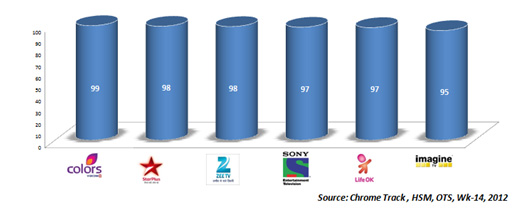
    There are primarily two ways of impacting Channel Trials – namely Consumer Pull led by content affinity, and Broadcaster Push led by Distribution initiatives, explains Mr Pankaj Krishna, Founder and Managing Director, Chrome Data Analytics & Media (see Analysis: How Imagine lost due to consumer pull, not distribution. “Going by Chrome OTS numbers (Opportunity To See – percentage of households that have access to a channel) – Imagine TV has clearly been in the league of the top GECs with an OTS of 95% across HSM.”


    According to Mr Krishna, “consumer pull clubbed with Strategic Distribution Planning has a huge impact on the overall performance of a channel”. “Over the years, Imagine lost out on factors contributing to the former.”


    Staff shocked

    It was Terrible Thursday for the staff at Imagine. They had no clue of the closure, even as they had faced yet another week of dismal ratings from TAM. Said Jain on the fate of the staff: “Turner will retain some employees for a transition period and some others are being offered permanent roles within other Turner channels to fill current vacancies. For the other Imagine employees getting impacted, Turner has set up an HR outplacement service which will provide advice on how to write a better CV, interviewing techniques and other job hunting skills. We will also introduce the employees to recruitment consultants, HR professionals from other media organizations and facilitate their new job search. Our focus is to ensure the closure is executed in a fair and appropriate manner for all of them and in full compliance with all legal requirements, employment terms and company policies. We will use our best endeavours to make this as smooth a transition as possible for them.”


    There has been much dismay in the brodcast fraternity too. Colors CEO Raj Nayak in fact made a clarion call to the industry via Twitter: “To all my friends in the TV business. Let’s try & accommodate our friends from Imagine wherever we have vacancies in our system.”


    Way ahead

    The move does spell a warning for other broadcast majors to sit up and take notice. Let’s not forget examples of a few channels that had to shut shop midway including Star One, Zee Next, 9x and Real for lack of vision and programming blunder.


    Ashish Pherwani

    As Ashish Pherwani of E&Y writes in his analysis for MxMIndia (when is it right for a channel to pull the plug): “Over the last decade or so, most unsuccessful channels which have tried ‘overhauls’ and ‘makeovers’ that have failed to achieve their objectives within six to eight months, have eventually shut down their operations.” According to him, for a channel to succeed, “the only asset it has is viewership. Channels which operate without a robust management team, a unique market position, and a defined target audience, won’t be able to garner sustained and loyal viewership. If channel management is able to make these three aspects fit seamlessly together, chances are the channel will succeed as a business, else, it would make business sense to pull the plug!”


    Turner may probably pay heed to Pherwani’s suggestions if it ever were to take another swipe at launching a Hindi general enterainment cahnnel  channel. Going by its past track record where it teamed up with Alva Brothers to launch Real and proceeded by acquiring Imagine from NDTV, chances are that the network may already be on the prowl hunting for its next prospect. Until then, the network seems content to bask in the laurels of its sister channels that have been showing good growth in the genres they operate in.


    Written by Johnson Napier with inputs from Anil Thakraney, Ashish Pherwani, Pankaj Krishna, Kshama Rao, Tuhina Anand and Robin Thomas


  • Analysis: Pankaj Krishna on how Imagine lost due to consumer pull, not distribution

    By Pankaj Krishna


    There are primarily two ways of impacting Channel Trials – namely Consumer Pull led by content affinity, and Broadcaster Push led by Distribution initiatives.


    Going by Chrome OTS numbers (Opportunity To See – percentage of households that have access to a channel) – Imagine TV has clearly been in the league of the top GECs with an OTS of 95% across HSM.


    Further, as per Chrome DPi – The General Entertainment Channel ATC (Availability To Trials Conversion) stands at 60%, while imagine stood far behind at 40% (along with Sahara One…) – clearly indicating Brand Affinity concerns.


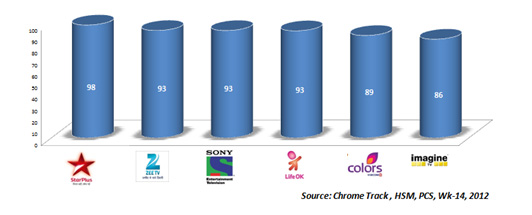
    The quality of distribution indicates similar trends – Despite being a 65 GRP channel – the overall PCS of Imagine (availability across the Top 3 Distribution Slots) stood at 86%, not radically behind Star Plus @ 98% and Zee, Sony, Life OK and Colors @ 90%.. Mostly channels with weekly GRPs scores ranging from 200 – 300!


    Consumer pull clubbed with Strategic Distribution Planning has a huge impact on the overall performance of a Channel – over the years Imagine lost out on factors contributing to the former.


    Pankaj Krishna has 12 years’ experience in the media space and brings with him a rare combination of knowledge and skills that span across brand management, advertising sales, distribution, media buying, research, events and on-air presentation and strategy. He is entrepreneurial spirit, Founder and Business head of Chrome Data Analytics & Media. With an unprecedented industry acceptance, Chrome is the largest and only Distribution Audit specialist in India. www.chromedm.com

  • 6 Days to Go-Goafest: I would like to see less of scam, says Subhash Kamath

    By Subhash Kamath


    There is the advertising awards night and then there is Goafest, difference being that the latter is a three-day affair and is a festival of advertising. The Festival sees more than two thousand people from the fraternity congregate at one place to celebrate Indian Advertising. Its three day outing of learning, networking, meeting, fun and party.


    What I would like to see at Goafest? Well, less of scam for sure. Over the years, I have become disillusioned with the amount of scam one sees at awards and this is the case not just peculiar to Indian advertising but across the globe. What used to be an exception has become a rule now. It is like creating a parallel culture comprising real work v/s work created just for awards.


    I don’t really know what the solution is for this but the number of scams surely brings down the credibility of any awards.


    Another thing that I would like to at the Goafest would be speakers from outside our industry. I know that the biggest challenge at the Fest is to get an impressive line of speakers. If you get a big name, then it ensures a full house but lesser known speakers warrant an empty hall. I say, why not get Nandan Nilekani who is a great speaker and people would love listening to him, MS Dhoni could talk on how to motivate a team or Aamir Khan on creating different identity. They would surely be worth listening to. The whole idea should be to make Goafest bigger, popular and global.


    Goafest is a good break from day to day drudgery. I would like to see cultural activities go hand in hand with the learning. It would be great if one sees parallel activities like a music fest, or a stage for impromptu standup comedy or street theater. At ASCI, I had initiated to engage people in installation art or mobile film making, like these there are several creative options one could explore. There is a lot of talent in our industry and giving a platform to showcase these at Goafest would add a new element to Goafest.


    There should be an amalgamation of learning, fun and work shop at the Fest and let people choose what they would like to go for.


    Bottom line being that lets take Goafest beyond the place to network, meet people, listen to speakers and just enjoy being there. Let’s do all the things mentioned above but let’s also strive to add more to the Fest and truly strive to make it a Festival that’s helps in bringing the passion back to advertising.


    Subhash Kamath is the Managing Partner at BBH India


    Photograph: LinkedIn profile

    Click here to view all Goafest 2012 stories


  • [MJR] Katju rides to the rescue of the press!

    By Ranjona Banerji


    Thursday/Friday was one of those rare news cycles where TV and print appeared to agree with each other – at least when it came to the Supreme Court’s upholding the Right to Education Act and the reservation of 25 per cent of seats for the economically backward in non-government schools.


    Arnab Goswami of Times Now right off the bat said any opposition was elitist and demonstrated the deep rich-poor chasm in this country. This line is in keeping with his “simple living high thinking” mantra unveiled a few days ago in a debate about teenage violence. Other channels also presented the same line of thinking. This made life a little uncomfortable for those outraged that rich kiddies now had to sit next to the children of their domestics – although no one said that quite so openly, of course.


    Even as opponents of the idea went on about increase in fees and so on, no one quite bought it.


    Friday morning’s newspapers followed the same lines – with particularly vociferous arguments in favour of the RTE plan and with some tough words for those against it. For a middle class readership, it is class prejudices which are first priority and the media has certainly picked up on that without pandering to it.


    As the judgment sinks in, it can only be hoped that newspapers (TV cannot do it) delve deeper into the implementation of the act and keep track of what is actually going on. Sticky points include minority institutions and boarding schools which are currently exempt from this provision, what happens to a child after Class VIII and improvement of facilities in government schools.


    * * *


    Press Council chairman Markandey Katju has jumped on to his white horse and charged to the rescue of the freedom of the press. The Press Council is going to the Supreme Court to challenge the Allahabad High Court’s decision to stop the media from reporting on troop movement. The media, so upset has it been with the temerity of the Indian Express to carry the controversial story about fears of an army coup in some government circles, has remained largely silent on the court decision.


    This is an interesting maturity test for the media. Its compulsions to tailor material to reader demands and provide infotainment aside, there is also a larger role regarding the safeguarding of democracy and being a general watchdog. Patriotism in the media context does not mean bowing before every institution – it means quite the opposite.


    I cannot say this better than Katju himself: “…the Indian Army is not a colonial army, but the army of the Indian people who pay taxes for the entire Indian defence budget. Hence the people of India have a right to know about army affairs, except where that may compromise national security.”


    As Katju points out, the media has this freedom under Article 19 (1) (a) of the Constitution.


    Hear hear!


    * * *


    The media’s role in the Aarushi Talwar murder investigation remains questionable. It has swung from one extreme to another, drawing its own conclusions, dramatising the life and death of the young girl and encouraging the investigators’ own bizarre behaviour as a result.


    Right now, some in the media seem to have decided that the parents of the girl are innocent and being unduly targeted. Open magazine has carried a long article by historian Patrick French claiming this (he is a patient of the dentist couple).


    Unfortunately for everyone concerned, the courts will base their judgment on evidence collected and presented.


  • 3rd edition of Indigo n Blues Festival promises treat for music-lovers

    By A Correspondent


    Indigo Live on Thursday announced the launch of its third edition of Indigo n Blues Festival, one of the most anticipated international jazz and blues festival in the country. The festival will be held on the May 18 and 19 at theEdenGarden, Palace Grounds Bangalore.


    Spokesperson of Indigo Live announced that the festival will be headlined by Bobby Whitlock, who is perhaps better known for being a member of the band Derek & the Dominos, recording and co-producing one of Rock and Rolls, most important records in history “Layla and Other Assorted Love Songs”.


    He remains the only true writing partner of Eric Clapton, writing memorable songs such as ‘Tell the Truth’, ‘Keep on Growing’, ‘I Looked Away’, ‘Why Does Love Got To Be So Sad’, ‘Any day’ and ‘Roll It Over’.


    Bobby Whitlock will present this show with his band Bobby Whitlock & CoCo Carmel.


    The other headlining artist at the festival will be theTexasblues rock guitar legend Van Wilks who has had the honour of playing duets with greats like Willie Nelson, Eric Johnson and Billy Gibbons of ZZ Top.


    Trigam Mukherjee, A&R Associate of Indigo Live said: “ Both Bobby Whitlock and Van Wilks are legends that Bangalore will experience for the first time ever and will sure create ripples in the growth of the genre in India. Both Bobby and Van are excited at the opportunity to perform in a country which is experiencing a surge, especially in the international live music industry. They will present a genre of blues rock, not many in the country would have experienced live.”


    The festival will also see many Indian blues and jazz superstars performing alongside them. Blackstratblues, The Saturday Night Blues Band, Overdrive Trio, Adil and Vasundhara, Groove#3 from Chennai andBangalore’s very own Chronic Blues Circus.


    The festival promises to be a carnival set at the sereneEdenGardens. The celebration of the finest Jazz n Blues India can experience will be complimented by some sumptuous soul food which will be presented at the venue.


    In the past Indigo Blues have features artists like Café Du Sport, Adrian D’souza and Carl Peters, Konarak Reddy, Bob Bonastre, Kaya Quartet, Junckt, Agog from Amsterdam, Alain Brunet trio, Marilena Paradisi from Italy, Wanayran Angerer from Bahamas, Cyril Barbessol from France, Margie Perez from New Orleans, Barbara Jungfer and Holger Jetter from Germany, Matt Littlewood band from UK, Masala Dosa from France.


    This year, however, the focus shifts completely towardsAustin,Texas, the mecca of southern blues. The past two years have seen tremendous response from audience from not onlyBangalore, but also adjoining states in the southern region.


  • IPL 2012 first week online viewership registers a 56% increase

    By A Correspondent


    Solidifying last year’s stupendous growth during Indian Premier League (IPL), Times Internet Limited (TIL), in partnership with YouTube, is on an upward curve, yet again. In the first week of the tournament, including the opening ceremony, the IPL website has already recorded 13.7 million views, as against 8.8 million views last year. This represents a 56 per cent growth over last year.


    New DelhiandBangalorelead the viewership with 14 per cent each, with Mumbai coming in a close second at 13 percent. This leap reflects the growing trend of watching IPL matches online. This year, the IPL website offers a virtual battleground for fans to fight it out, which got 1.5 million engagements in the first week itself.


    The matches registered the maximum online views on 10th April for the matches between Royal Challengers Bangalore and Kolkata Knight Riders, and between Delhi Daredevils and Chennai Super Kings. The day saw a total of 2.15 million views on the site, which included 0.7 million unique visitors.


    Almost 0.6 million viewers have enjoyed the match action on their mobiles over the last seven days on Apalya mobile TV platform across Airtel, Idea and Vodafone. This is double the traffic registered last year.


    Rishi Khiani, CEO, Times Internet Ltd said: “Last year, we delivered a superior viewing experience and garnered significant audiences. This year, our emphasis is on higher interactivity and our strong social focus has paid off right at the start, becoming a sign of things to come over the season.”


    Praveen Sharma, Head of Media Sales GoogleIndiasaid: “We’re really excited to see the continuous growth in online viewer ship of IPL. This is the third year of our association with live streaming of IPL and the viewership numbers clearly indicate the distributed media consumption pattern of the Indian consumers.”


  • Fever is Official Radio Partner of Delhi & Mumbai IPL teams

    By A Correspondent


    The teams have changed, the stakes have changed, but Delhi Daredevils’ and Mumbai Indians’ official radio partner in this IPL season has not changed, it is Fever 104 FM yet again. Through changing times and constant churn in the world of IPL, the partnership between GMR Sports and Fever 104 FM has stayed unmoved and ‘not out’!


    Fever 104 FM, country’s most sports friendly radio station proudly supports Delhi Daredevils for the fifth consecutive year and Mumbai Indians for the third year in a row.

    For this special association, Fever 104 FM has planned an on-air festival of cricket with some innovative programming to help bring the heroes closer to their fans in both the cities. From giving away match tickets every 104th minute, meet and greet with the players to original IPL merchandise, Fever 104 FM promises to give its listeners experiences that money can’t buy.


    While Mumbai campaign talks about ‘RJ Sidhu aur Mumbaikars Honge Ek’ where the evening show RJ will bring together the city to cheer for their home team; the Delhi station is running a campaign of ‘Daredevils Ke Damaad’, where the on-air contest winner gets an exceptional treatment during the match. Another unique campaign by the Delhi station is the ‘Junior Daredevils’ which involves an on-air battles of parents and the winner’s child gets selected to walk with the players till the field.


    Fever 104 FM believes the game to be a perfect fit with its brand positioning and beliefs inDelhiand Mumbai. Cricket is a religion across the country and there can be no better opportunity than IPL to leverage this advantage. The radio station has always presented the game in a very distinct manner and intends to take the cricket madness further and amplifying the same on radio with a strong local connect.


    Mr. Harshad Jain, Business Head- Radio and Entertainment, Fever 104 FM, said: “It is an honour for us to partner with two of the best IPL teams – Delhi Daredevil and Mumbai Indians. The format of the game is very entertaining and highly active. Our programming initiatives, too, are equally fun and exciting. We aim to provide a platform for our listeners that will help them engage with the IPL team members in an enjoyable manner”.


  • India Inc prepares for earnings season, expectations muted: CNBC-TV18

    By A Correspondent


    It has been a tough 12 months for India Inc. and expectations are subdued from the Q4 results. Political uncertainties continue to plague the markets, revenue and margin are under pressure and the rupee is on tenterhooks. Investors and analysts are not expecting any positive surprises this time around. A disappointing Q4 may lead to a loss in confidence and money moving out of the markets. Questions are already being asked if Indian growth story is losing its sheen and investors are hoping that there is no further negative news.


    As the earnings season looks set to provide the barometer for the market sentiment of the nation’s economy, CNBC-TV18 presents ‘Boardroom’, the premier show which provides comprehensive earnings analysis of the India Inc. at the end of this financial year.


    The earnings season will start with earnings estimates, analyst views and brokers polls. The day of the results will feature management interviews and stock update of some ofIndia’s largest companies. This will be followed by analysis on Boardroom with the company board, top management, CEOs, noted analysts and fund managers.


    CNBC-TV18’s editorial team will go behind the numbers and aim to bring the definitive insights that help to make the best investing decisions. Join the team led by Udayan Mukherjee & Mitali Mukherjee as they discuss the annual number and how this may set the tone for the next move in the markets.


    The show kicks off with the Infosys earnings numbers on April 13, and will continue to track the market defining companies through the earnings season.


    CNBC-TV 18, an English business news channel, has been an integral part of the Indian economic story, spearheading and mirroring these enterprising times. The channel’s coverage extends from corporate news, financial markets coverage, expert perspective on investing and management to industry verticals and beyond.


    The Network18 Group is a media and entertainment company with interests in television, internet, filmed entertainment, e-commerce, magazines, mobile content and allied businesses.