Blog

  • Need to monetize radio-social media connect (+Vdo)

    By Robin Thomas (Videos: Insiyah Rangwala)


    Social media has, more or less, become a necessity for every organization today because the consumers are out there and no brand can afford to not be interacting with them. Moreover, social media can also help  brands know their consumers’ thoughts, behaviour, likes and dislikes. It also allows brands to have a two-way communication with their consumers, and thus provides high level of interaction and engagement. And it is not just brands but other media like radio stations which are coming out with innovative ways to connect with their listeners through social media.


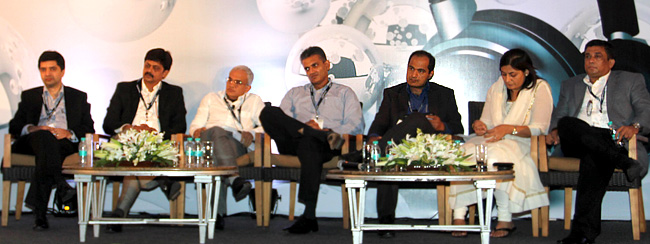
    At the sidelines of the India Radio Forum (IRF) 2012 industry veterans from the advertising fraternity discussed the importance of social media for radio.


    Mr Premjeet Sodhi, COO, Lintas Media Group said: “Social media is certainly important for not only the radio industry today, but also for every other medium. In the long run we will see more integration taking place between social media and radio.”


    Mr Raj Nayak, CEO, Colors- Viacom 18 explained: “Social media is growing by the day. Today almost 65 per cent of the people in India are below the age of 35 and 50 per cent are below 25 years of age. I believe this is the fastest growing medium, therefore, it is a very important medium and those that have not got onto social media, must get on before it is too late.”


    Mr Suman Srivastava, Founder and Innovation Artist, Marketing Unplugged said: “Social media is important for radio at two levels. One is to connect with the listeners and therefore, get much larger engagement which might even result in an increase in the reach. On the other hand, it is a fantastic medium for radio channels to build their own brands as well as the brands of their advertisers. In the future, I believe, we will see a lot more advertisers using radio and social media together along with, perhaps, ground activations to create events which could have a multiplier effect for those advertisers.”


    Speaking on the need for radio to partner with clients, Mr Vinay Bhatia, Customer Care Associate and Senior VP- Marketing, Shoppers Stop said: “The real big partnership for radio and their clients is in the digital space. Digital and radio have to come together and ally in such a way that they deliver joint value to the client, and I don’t think any of this is happening today. Radio is an out of home medium and we are increasingly seeing out of home consumption for digital. I think these two medium can go very well together and brands like ours which have large Facebook pages need content, we need engagement and I think radio channels that provide us that.”


    Mr Harshad Jain, Business Head – Radio and Entertainment, HT Media said: “Radio is a medium which is free of cost, it is the cheapest form of entertainment in the country, and if there are issues that can be interlinked with social media, it could call for a good integration. Having said that, it is still early days because radio as a medium still has to catch up big time before it starts integrating with social media.”


    While there are calls for integration between radio and social media, the radio industry must also find ways to monetize the radio-social media connect. Mr Sodhi pointed out that while social media can make radio activations richer, it is vital for radio stations to find newer ways to monetize this activation.


    Agreeing with Mr Sodhi, Mr Raj Nayak said that no business will work if there is no monetization. He added: “One of the biggest disservice broadcasters have done is that they have not woken up to the digital media.”


    So while radio and social media will see more integration in the long run, there is also another school of thought that believes that radio is still at a nascent stage and has a long way to go before it can get into integration with social media. However, monetization is the key for survival of any business and radio stations must find ways to monetize its social media activations.


     

  • Takeaways from IRF 2012 (+Vdo)

    By A Correspondent


    The seventh edition of Indian Radio Forum (IRF) discussed quite a lot of issues on the strength and opportunities of radio, the road ahead for the medium, especially with FM Phase III expansion, how to maximize radio’s assets and how to gain share of market spend; the use of social media and monetizing it and much more. MxMIndia spoke to couple of industry veterans on their takeaways from the IRF 2012.


    Mr Premjeet Sodhi, COO, Lintas Media Group:

    One major takeaway with which I am going back is that while there are issues on how radio is performing commercially, there are certainly people who are passionate about the medium, and therefore, there are a lot of possibilities on how to do well on radio.


    The second major takeaway is the use of social media and radio, we had never thought of a subject as such. Radio has a lot of potential to work along with social media and be commercially successful as well.


    Third, I don’t think we are doing enough for radio, overall as an industry. There is, however, a lot of scope for improvement in this area.


    Mr B Surender, Senior Vice President, and National Sales Head, Red FM:

    I think the RAB (Radio Advertising Bureau) style of evangalising the medium is needed because UK’s RAB is so active in not only the developed markets like the UK, but it is also quite active in developing markets like South Africa.


    InIndia, probably, this kind of promotional activity is required for radio as a medium, because in India FM radio started very late and it did not get enough time before social media and the online or digital media arrived. Therefore, I believe there is a different need for a RAB kind of body which promotes radio.


    Mr Vinay Bhatia, Customer Care Associate and Senior Vice President – Marketing, Shoppers Stop:

    I think each industry within radio should develop its own tools, and this is really important in judging the input-output in efficacy because I am not chasing radio just for reach, OTS or number of impressions. Radio, as a channel, is a response medium and so it must deliver much beyond intermediary variables, it must deliver final business variables and I think radio can do that. However, it depends on how well a radio channel partners with a client, wherein the client is also willing to share some amount of data and information and a radio channel is also willing to partner it and jointly experimenting which works for all of us.


  • Balki & Shekhar Kapur to present ‘Global India’ at Cannes Lions 2012

    By A Correspondent


    R Balki

    The annual Cannes Lions Festival of Creativity kicks off on June 17. Every year a select number of world class advertising networks are invited to speak to the assembled delegates, who converge onCannesfrom all over the world. Some 10,000 delegates, from the agency and client world, attend the festival each year.


    This year, Lowe Lintas, will take to the stage to present ‘Global India’ – the first time the Cannes Lions Festival has featured a seminar dedicated to Indian creativity and its influence globally.


    Shehkar Kapur

    Chairman and Chief Creative Officer of Lowe LintasIndia, R Balki, will be joined on stage by special guest, Oscar nominated Director, Actor, Producer and new media entrepreneur, Shehkar Kapur. Wired magazine Editor, David Rowan, will interview Mr Balki and Mr Kapur on stage, while the seminar will be introduced by Michael Roth, Chairman and CEO of Lowe and Partners parent company, IPG.


    Michael Wall, Global CEO of Lowe and Partners said: “At Lowe and Partners, we pride ourselves on our strong capability in emerging markets. We have great, talented leaders like Balki, who manages to successfully meet the challenges presented by globalization ofIndia, while preserving the local culture. We can look forward to a thought provoking seminar from Balki and Shekhar at Cannes Lions, the first time the festival has dedicated a session toIndia.”


    Wall added: “This seminar isn’t just for the Indian Cannes delegates to attend,India’s future will play a large role in our industry’s future and should be of interest to all delegates.”


    Mr Balki and Mr Kapur will share their thoughts on a variety of topics, including the creative heritage ofIndia, the future ofIndiaon a world stage, Indian advertising,Indiain the digital age and the film and entertainment industry, and discuss their views on the impact of the nation around the world.


    Mr Balki commented: “We are very excited to bringIndiato Cannes Lions for the first time and to have Shekhar join us. He has been, of course, a leading Indian creative force, with a world profile, for some years now and is set to inspire the gathered creatives from all over the world, who attend the event. Cannes Lions is really the only truly global festival that celebrates our industry and looks to its future andIndiais at the forefront of that future. We plan to bring all the diversity, colour, creativity and passion that is modernIndia, on stage with us.”


    Mr Kapur added: “I am happy for the opportunity to be on the same platform with creative leaders like Balki and Lowe and Partners and look forward to a great, in depth discussion. Social Media is a new force that is asking us to redefine Advertising’s role in society – we have great challenges, but huge opportunities available to us too, by working within communities”.


  • Radio broadcasters thumbs up to Copyright Bill

    By A Correspondent


    The Copyright Amendment Act which was passed recently in Lok Sabha has come as a huge relief, not only for the artists, musicians and content creators, but also for the Indian radio fraternity.


    This bill will allow the Copyright Board to decide the royalty rates for the broadcasters, which until now was decided by the PPL (Phonographic Performance Ltd.). PPL is the copyright society with respect to sound recordings. While the bill is clearly beneficial for the rightful owners of the copyright, how much profitable will it be for the radio broadcasters, will be known only once the copyright board decides on the rates that the broadcasters may have to pay for the copyright owners.


    The Copyright Amendment Act 2012 allows artists, song writers and performers to claim the royalties for content creation. While the bill has also made it mandatory for both radio and television broadcasters pay royalty to the copyright owners each time their content is broadcasted, what it also ensures is that unlike before, the amended Copyright Act will allow broadcasters to pay music royalties on a pro-rata basis. As a result, it will help broadcasters generate more revenues.


    What they say:

    Speaking to MxMIndia, Ms Anurradha Prasad, Chairperson cum Managing Director, B.A.G Network and president of Association of Radio Operators for India (AROI) said: “We welcome the Copyright Amendment Act because it will bring a sea change in the industry. The radio industry has been bleeding because of the huge royalties it has to pay for the music. Therefore, it is a great step forward, and I believe it is a win-win situation for the entire chain because it will bring in more transparency and, as a result, more revenues will be generated.”


    Mr Vipul Pradhan, CEO of PPL said that while he welcomed the amendment that the royalties be given to the rightful owners of the content, what he is not pleased with is the statutory licensing for users as it would take away the monetizing rights of the music companies, nevertheless, PPL will abide by the law. “We welcome the Copyright Amendment Act and we will follow the new law. We welcome the first part of the amendment which allows the rightful owners of content to get their royalties. However, it is the second part of the amendment – the statutory licensing for the users is something that we are not happy about.”


    “The statutory licenses for the users are basically the people who are using our content as business activity which is where I think the statutory license of content for radio or television is something that is not desirable. We will see how the statutory licenses for users will impact the music companies in the long run. So, while we welcome the move to allow artists and content creators to claim their royalties for their work, it is the statutory licensing for users that concerns us because it will take away the monetization rights of the music companies, which in the long run could affect the creation of these rights,” he added.


    Rabe T Iyer, Business Head, Big FM explained: “It is a constructive and beneficial step in truly recognizing the real owners of music and not just the labels who pitch and buy them. It is also a fair distribution of rights which will lead to increasing talent pool, greater accountability of quality and continued effort to innovate. I believe it will provide greater flexibility for radio stations to play music recomposed or readjusted by creators of songs and it will allow more artists, song writers to get their dues.”


    Mr Amitabh Srivastava, Country Manager, Radio Netherlands noted that this move is very much in sync with industry requirements as it would resolve most of the royalty issues faced by the radio industry. Mr Srivastava also said that unlikeIndia, the international model of intellectual property rights is quite rigid as it ensures that the owners of the copyright get their due shares, and that with the passage of this legislation we can expect international standards in copyrights as well. “This bill is more beneficial for content owners than the radio broadcasters. This bill will bring legitimacy in the royalty issues and it will promote more self generating content which is not happening right now. So, it is a welcoming change because when copyright is legitimized, even the broadcasters will be allowed to create their own content which we do not see taking place as of now.”


    Shreyams Kumar, Director Mathrubhumi said: “We don’t mind paying money to the artists, but paying money to the music companies which does not reach the rightful owners is what we don’t approve. Thus the Copyright Amendment Act is a welcome move as it will lead to more transparency in the music and broadcast industry. This amended act will definitely be a cost saver for the radio industry and it will certainly help the radio industry in the long run.”


    Ms Monica Nayyar Patnaik, Joint Managing Director at Eastern Media Ltd and Mr Naval Toshniwal, CEO Tomato FM and Vice President, Pudhari Publications were of the view that this bill is a step in the right direction which will benefit the radio industry and act as a cost saver for the industry.


  • The Anchor: 5 trends to watch out for in e-com in India

    By Suvir Khullar


    1. Multiple channels in e-retailing

    A variety of SCM models are being created and new methods are evolving daily to procure/deliver products from varied brands/manufacturers. This helps offer a variety of brand and product options to customers with minimal investment in inventory and increase customer stickiness.


    2. Customer Service like never before

    With the increasing options available online and the easy way to find them, the internet makes customer fickle. This results in websites offering increasing levels of customer service to ensure that their customer is happy – from 100 per cent satisfaction guaranteed to Cash on Delivery to 5 minute deadlines to respond to customer queries and complaints.


    3. Promotion through Social media

    Social Media is gathering force and becoming an important tool for promotion. It reels in the customer with events and stories relevant to the product/ service being offered while informing his friends and colleagues his interests thus enticing them to view the same. Social Media is also giving the customer free rein to comment about his experience and keeping the website on its toes to offer the best service model.


    4. Brand Awareness

    The e-commerce platform is increasing the awareness of a brand among a large range of customers. Earlier for a brand to gain awareness, it was necessary for them to open an outlet in all major relevant locations. Now the brand outlet can be in a Tier 2 city and service its online customers across the country by showcasing its products online. This will also result in limited mindshare of brand names, as more and more take up space in the customers mind. Unknown brands during the pre e-commerce time will become household names now.


    5. Brand Loyalty to Website Loyalty

    The loyalty a customer had to his favorite brand has diluted with the advent to tempting deals and offers available across competitive brands. Now depending on the offers and services offered by an e-commerce site, the customers’ loyalty will be held by the site instead of the brand. The product that site offers will become the customers brand basket to choose from.


    Suvir Khullar is Founder & Director, Gifting Ideas Pvt. Ltd.


  • 63% Indian pros maintain a to-do list: LinkedIn

    By A Correspondent


    LinkedIn, the professional network with over 14 million members in India , released data about professionals and their daily to-do lists. The study examined how professionals in different industries tackle tasks planned for a given workday; the differences between men and women’s to-do list habits; and global insights on where professionals keep to-do lists and what gets in the way of completing them.


    LinkedIn surveyed more than 6,500 professionals globally and over 400 in India . The study revealed that among the countries in which the survey was conducted, India ranked sixth in maintaining to-do lists. Out of the India n professionals that were surveyed, 63 per cent reported that they frequently keep a to-do list. This matches the global average, as 63 per cent of all survey respondents reported that they frequently keep a to-do list. Globally, seventy-one per cent of women say they frequently keep to-do lists. Only 60 per cent of men say they frequently keep to-do lists.


    In India , 45 per cent of respondents said that they jot down their to-do lists by hand, while 48 per cent said they create them electronically. Globally however 50 per cent of those who jot down to-do lists do so by hand, while 45 per cent create them electronically. The remaining five per cent reported storing their lists in alternative places, like “In my mind only,” “Piles of files,” or other locations like whiteboards or chalkboards.


    The study showed that the likelihood that a professional will complete their to-do list varied by industry. Globally, professionals in agriculture claim to be the most productive, with 83 per cent of agriculture professionals stating they regularly fulfill most or all of their planned tasks. Professionals in the legal industry had the lowest completion rate on their daily plans, with 66 per cent of respondents accomplishing most or all tasks.


    Art industry professionals (40 per cent) agreed the most with this statement, “I tend to be distracted easily.” Agriculture industry professionals agreed the least with that statement; only 18 per cent of professionals in the agriculture industry are easily distracted.


    When it comes to checking the boxes on their to-do lists, only 11 per cent of professionals globally reported accomplishing all of the tasks they plan to do in a given workday. Survey respondents pointed to unplanned tasks (such as unscheduled phone calls, emails and meetings) as primary cause for not completing all items on their to-do lists. In India , 45 per cent of professionals reported splitting their workday equally between planned and unplanned tasks. At 38 per cent, India had the fourth-highest percentage of survey respondents who spent most of their day on planned tasks.


    “As professionals, we constantly attempt to plan our day at work in the most effective manner. While surprise phone calls, meetings and other unplanned tasks usually make it difficult to adhere to a to-do list, professionals can rely on the intelligence gathered on LinkedIn to work smarter,” said Hari V. Krishnan, Country Manager, LinkedIn India . “Individuals from every industry can benefit from LinkedIn’s simplified solutions to achieve work-goals while being time-efficient. Even while on the move, professionals can use LinkedIn’s mobile applications to strike off tasks from their to-do-lists.”


    Follow these “to-dos” to save time in your workday and cross more tasks off the list:


    1. Make meetings more efficient

    Check out meeting participants’ LinkedIn Profiles ahead of time to get a sense for what they bring to the table. Past experience and specific skills of your meeting cohorts could come in handy to creatively solve a problem — thereby keeping your meeting time to a minimum.


    2. Crowd source your challenge

    Use LinkedIn Answers and LinkedIn Groups to tap into the wisdom of your LinkedIn network or the rest of the 161 million LinkedIn members. By posing questions and starting discussions you’ll be able to assemble solutions in record time.


    3. Get up to speed in an instant

    Rather than visiting various news sources each morning, get your daily news fix in one place via LinkedIn Today. Customize LinkedIn Today so you get news that’s relevant to you and your clients. Access LinkedIn Today from your desk, iPad or phone by downloading LinkedIn Mobile.


  • TAM data Top 10 programmes on HGEC – Wk 20 ’12


    Source: TAM Media Research
    TG: CS 4+ yrs
    Market: Hindi Speaking Market
    Period: Wk 20: May 13 to May 19, 2012


    About TAM Media Research

    TAM is a joint venture between Nielsen Company & Kantar Media Research. Besides measuring TV Viewership, TAM also monitors Advertising Expenditure of Television, Print & Radio through its division AdEx India. Since 2004, it extended its presence in the PR Measurement & Analysis space for Corporate/Marketing Clients by setting up a separate division Eikona PR Measurement.


    In 2007, the joint venture introduced RAM (Radio Audio Measurement) service to track Radio Listenership for the Indian Radio Broadcast Industry. In year 2009, TAM launched a division, called TAM Sports that specializes in monitoring Sports Sponsorship ROI.


    TAM Media Research’s objective is to fuel media insights that will drive the growth of the Indian Media Industry.


  • TAM Data (GRPs Channel shares of HGECs)- Wk 20 ’12


    Source: TAM Media Research
    TG: CS 4+ yrs
    Market: HSM
    Period: Wk 19: May 6 to May 12, 2012
    Period: Wk 20: May 13 to May 19, 2012


    About TAM Media Research

    TAM is a joint venture between Nielsen Company & Kantar Media Research. Besides measuring TV Viewership, TAM also monitors Advertising Expenditure of Television, Print & Radio through its division AdEx India. Since 2004, it extended its presence in the PR Measurement & Analysis space for Corporate/Marketing Clients by setting up a separate division Eikona PR Measurement.


    In 2007, the joint venture introduced RAM (Radio Audio Measurement) service to track Radio Listenership for the Indian Radio Broadcast Industry. In year 2009, TAM launched a division, called TAM Sports that specializes in monitoring Sports Sponsorship ROI.


    TAM Media Research’s objective is to fuel media insights that will drive the growth of the Indian Media Industry.


  • Ten years on, is radio still an insignificant medium for advertisers? (Text & Video)


    By Robin Thomas (Videos by Insiyah Rangwala)


    Radio is said to be a medium that has been re-born. With the FM Phase III rollout anticipated this year, radio is expected to penetrate further into the country, as a result not only will there be an increase in revenues but, also the fact that newer revenue streams will open up. Multiple frequencies, allowing news and current affairs, sports broadcasting will also bring more innovations in radio, new genre radio stations and great amount of differentiation in content.


     

    Radio’s share of media spends, according to industry estimates, is expected to rise from 4 per cent to 5 per cent in two years. Among categories that advertise on Radio, Real Estate, Telecom, Retail, Education and TV channels are the ones advertise the most.


    What radio players say?

    Harshad Jain
    Joy Chakraborthy
    Joy Chakraborthy
    Apurva Purohit
    B Surender

    So, does radio still need to be evangalised? Is radio still insignificant to for advertisers? The India Radio Forum (IRF) 2012 discussed these issues. According to Mr Harshad Jain, Business Head – Radio and Entertainment, HT Media: “From a client standpoint, radio is still an insignificant medium. It all boils down to value addition of the medium – how can radio, as a medium, ensure value addition to its advertisers? The entire orientation has to be more than just vanilla FTCs. Radio is still an under-penetrated medium and has still a long way to go.”


    Mr Joy Chakraborthy, CEO, TV Today Network (which includes Oye! FM) pointed out that the Indian radio industry needs to stand united, not only on issues related to government regulations, but also for business related issues. “There needs to be some amount of unity among the radio fraternity. For the industry to survive we must stand together, not just for regulatory issues but even for businesses. Today radio is the most underpriced medium and unity within the industry will help us drive our sales.”


    Ms Apurva Purohit. CEO, Radio City was of the view that radio is still at an infancy stage and like any other medium, it will also take some time to evolve. She was quick to point out that television took many years to be what it is today. “Today the ad pie of radio is 4 per cent, the geographical coverage of radio is merely 30 per cent but, with Phase III the geographical coverage will see tremendous increase. Every year the number of advertisers on radio has only been growing, what we need to do now is to encourage these advertisers to spend more on radio and reach out to newer advertisers.”


    Mr B Surender, Senior Vice President and National Sales Head, Red FM said: “In the last two years radio saw tremendous growth. With the launch of Phase III also expected soon, the future of radio is certainly bright. Even radio stations outside metros saw tremendous growth, innovations in smaller towns and cities were high and in the next two years radio’s advertising pie is expected to reach 6 to 7 per cent.”


    The client perspective:

    Few years ago, radio was seen as a supplementary medium for advertisers wherein they would spend only the left over media spends on radio. This is said to be changing, slowly and steadily as advertisers are beginning to take radio seriously. There has also been an increase in the number of on-ground activations which has more or less become complementary for radio stations as a value addition to their clients. However, digital media, which was at one point in time an even smaller medium than radio is today, said to have become an even larger and a more powerful medium than radio and a possible reason could be because Internet, unlike radio, is a highly measureable medium.


    Giving a critical view on radio as an effective local medium, Mr Vinay Bhatia, Customer Care Associate and Senior Vice President Marketing and Loyalty said that radio has a very low share of mind and share of value medium to advertisers today. Digital on the other hand, which started off from 2 per cent of advertising share has a much higher share of mind and share of value. “To maximize assets, radio has to deliver business. Radio needs to world closely with clients, it can also look at which area of a city or town works better for clients. It can also partner with retailers to play radio in stores while customers are shopping. Radio is a response medium, therefore it allows a lot of engagement and interaction with listeners. However, there needs to be more innovations for advertisers on radio because clients love innovation and as a result innovation will bring more money for the radio station.”


    Arpita Menon, Head-Media Planning & Buying, Star India Pvt Ltd
    Premjeet Sodhi, COO, Lintas Media Group
    Harshad Jain, Business Head- Radio & Entertainment, HT Media

    Mr Shubhranshu Singh, Marketing Director-India and South Asia, Visa explained: “As far as Visa is concerned, radio has delivered us handsome returns. Radio, I believe, is economical and one can expect higher returns, it is certainly a cost effective medium. However, radio must come to clients as an industry and not as one single radio channel – it should be bolder in its approach towards clients and thus stay on top of mind of clients.”


    Mr Kartik Sharma, Managing Partner, Maxus had a slightly different take on the medium. He was of the view that radio is the oldest form of social media platform, it allows great amount of interactivity and engagement with the listeners. “Radio is in the business of producing great contents and so are the brands, I believe that both radio and digital can depend on each other. Radio is in the business of providing great content, the power of radio is sound and creativity therefore the mindset to learn this medium is very different.”


    Ms Shubha George, COO, MEC noted that in order to maximize radio’s asset and gain share of market spends, it needs to market itself more. She stated that radio today is sold and not marketed, what it needs is more marketing. She also pointed out that the industry must find ways to monetize every single phone calls and SMSes it receives and market them extensively.


    The Indian radio industry still needs a lot of evangelizing or marketing of the medium. Radio needs more nurturing, it needs to probably find newer ways of achieving better ROIs and thus increase greater share of media spends. More innovations in radio will also bring in more money and help it stay on top of advertisers’ minds. Radio needs to partner their clients and find newer ways to generate better ROIs for their clients. Radio needs to vigorously market itself to the advertisers and explain the power of the medium so that it becomes a primary medium for marketers.


    Image: Clipart, Imaging: Rafiq


  • Mirchi maxes IRF awards, Red FM is best station

    By A Correspondent


    The much awaited Excellence in Radio Awards (ERA) was held in Mumbai on May 22. Although the turnout at the IRF (India Radio Forum) 2012 was dismal, the awards concluded with fanfare. A total of 40 awards were given out this year and three new categories were introduced – Best Radio Programme (Marathi); RJ of the Year (Marathi); and Best Radio Promo – Inhouse (Marathi).  The award winning radio stations at ERA this year include – Radio Mirchi, Red FM, Big FM, Radio City, Radio Mango, Club FM, MY FM, Suryan FM and Fever FM.


    Digital Radio Broadcasting Ltd or Red FM won 7 Awards including the awards for the ‘Best Radio Station’ and ‘Best Breakfast Programme/ Show (Hindi)’ to name a few. Suryan FM won one Award for ‘Best Radio Promo (In house) Tamil’.


    Reliance Broadcast Network Limited or Big FM also won 7 awards, including the award for the ‘Best Programme Broadcast after 11am (Hindi)’ and ‘Best Programme Broadcast After 11am (Tamil)’. Big Magic Pvt Limited won an award for ‘Best Use of Music / Song / Jingle by an Advertiser in a Radio Spot’.


    Radio Mirchi won a total of 12 awards, making it the most awarded radio station at the Excellence in Radio Awards 2012.


    Speaking to MxMIndia, Mr GG Jayanta, National Marketing Head, Radio Mirchi said: “Winning 12 awards is in itself a matter of pride, innovation always wins and good work will always be recognized. These awards will most certainly encourage us to deliver better work as it is a great motivational tool for us.”


    Mr Rajat Uppal, General Manager- Marketing stated: “We saw good participation from the industry, we are glad to have won the Best Radio Station, The RJ of the Year, the Best Breakfast show and others. It shows the kind of work we do is high on quality and high on innovation as well. We won the awards that matter the most to us and our aim will be to continue delivering quality work for listeners and advertisers.”


    Music Broadcast Pvt Ltd or Radio City won a total of 3 Awards, Radio Mango also won 3 awards, Club FM won 2 awards, Fever FM and MY FM won one award each.


    Mr Praveen Scheruchari, Senior Creative Manager, Radio Mango said: “For a regional station like us, winning these awards and that too at a national level is a huge achievement as well as a great opportunity for us. These awards will encourage us to deliver better work for our clients and listeners.”


    The awards for the ‘Most Effective Use of Radio in an Activation Campaign’ and ‘Most Outstanding Use of Radio in An Ad Campaign’ were the winners from ‘The Radio Pitch Challenge’.


  • Mediaah!: Will cross-media restrictions force Star, Zee & Sun to exit distribution?

    By Pradyuman Maheshwari


    There is no official word on it on the ministry website, but some journalists in Delhi were told about how the I&B secretary Uday Varma has written to newly appointed TRAI chairman Rahul Khullar to look into issues of cross-media ownership.


    “Major players are looking for expanding their business interests in various segments of print and broadcasting sectors. In this scenario, issue of media ownership and the need for cross media restrictions assumes great significance,” Varma wrote in his letter to Khullar, according to a Press Trust of India (PTI) report on EconomicTimes.com


    Adds the report: “Sources said that the I&B Ministry has asked TRAI to look into both horizontal and vertical aspects of cross media ownership, and then give its recommendations. In his letter, Varma has written that at present companies have control and ownership across Print, TV and Radio leading to horizontal integration. While at present there is no restriction for a company to have ownership across Radio, TV and Print mediums, but apprehension have been expressed in the past that control of media organisations in a few hands may prevent plurality of news and views, official sources said.”


    According to the PTI report, in his letter, Varma is also have said to noted that there were other implications related to cross-media ownership which included ensuring quality services at reasonable prices. The I&B secretary is reported to have further asked TRAI to look into the issue of vertical cross-ownership where companies owning TV channels were venturing into various distribution platforms like Cable TV distribution, Direct to Home (DTH) and Internet Protocol Television (IPTV).


    Hmmm. So this is why the headline: will cross-media restrictions force Star, Zee & Sun to exit distribution?


    Now before going any further, and for the benefit of those not in the know, let’s understand what vertical and horizontal cross-ownership means.


    Vertical would mean a media company that has ownership of, say, a TV channel also controlling a distribution (cable/direct-to-home/satellite/etc) company. And horizontal  cross-onwership would be a company that has interests in various media vehicles – newspaper, radio, TV, digital and even telecom!


    Way back in 2009, TRAI had issued some recommendations which I had commented on. My belief then and now is that the government and TRAI seem to be ducking the more sensitive issue of horizontal integration – namely, a media company with interests in print, radio, television etc. The TRAI believed that there was no threat due to horizontal ownership, but vertical integration – for television was a problem. So, while it was okay for a newspaper or a magazine to have its own distribution facility, that’s not the case for television. But of course the circumstances for print and television are different. In the 2009 recommendations, TRAI felt that there should be a 20 per cent cap on ownership and existing players would get three years to restructure.


    It’s been over three years already, and I guess that’s what has got the government moving its feet again.


    Mediaah! view: I don’t really think there’s any need for the government to intervene as regulatory and legal actions are already in place. And competitive pressures of course. For instance, a DTH operator cannot blank out a rival network’s channels.


    Mind you, the problem is graver with horizontal ownership. The PR executive of a radio station complained to me how she couldn’t ever get publicity in some key markets because rival stations were owned by newspapers. Thus even a minor activation gets a photograph and a report in the paper while that of a rival does not. Competition writes about you only if there’s something negative, she complained.


    Similarly television marketers crib how channels owned by newspaper companies have it easy with advertising and editorial space. Thankfully, media buyers are discerning and don’t get taken in by claims – correct or otherwise.


    The 2009 recommendations had also seen TRAI saying that limits on licences by a single entity were “adequate” and there is no restriction on control of ownership across telecom and media. Note this was to be reviewed after two years (that is, 2011), though the real changes in dynamics have happened since January 2012 given Reliance Industries and the Aditya Birla group getting involved, albeit indirectly.


    My sense is that given recent developments, the TRAI will also look at the issues of mergers, acquisitions and alliances in a bigger way. What the government/TRAI needs to also do is ways to determine and factor in ‘benaami’ ownership. For instance, even if as a broadcaster I may not own over 20 per cent of another ‘vertical’ media entity, what prevents a family member/friend to do it?


    It’s not an easy policy to work on, but am sure like various other complex issues it has tackled over the years, TRAI will come up with recommendations for this too.


    Buzz me if you have a story to tell. Confidentiality assured. There are various ways you can reach me:

    pradyumanm[at]mxmindia.com, BBM 23050B5D, Gtalk pradyumanm@gmail.com, Twitter @pmahesh and of course the mobile: 98338 76278.


    Disclaimer: Although he is CEO and Editor-in-Chief of this site, Pradyuman Maheshwari’s views in Mediaah! are not necessarily those of the rest of the team and MxMIndia.com.


  • Hippo’s ‘Indian Food League’ for cricket fans

    By A Correspondent


    The ‘Indian Food League’ is an online activity in which Hippo asks T-20 fans to support their regional teams by supporting their regional dishes. The campaign is conceptualised and implemented by Creativeland Asia.


    The campaign is a crowd-sourced activity that caters to the cricket fan’s love for snacking and eating, while they watch their teams fight it out. The IFL ultimately hopes to tap into every Indian’s latent desire to voice their humorous opinions. Talking cricket online has become engrained in every cricket lover’s match-day rituals. And by bringing food to this already heated and opinionated mix, Hippo has hit on a very successful recipe.


    Commenting on this engaging activity, Nadia Chauhan, Joint Managing Director and CMO Parle Agro said: “With so many people conversing on social sites, Hippo has created the Indian Food League as a medium to interact with and engage its consumers on the social media platform during the cricket season. Today, social media is one of the most influential and emerging channels of communication. Hippo’s previous campaign on Twitter to track inventory was a huge success. This further encouraged Parle Agro to engage interactively with its consumers on the same platform,” she added.


    Commenting on the campaign, Anu Joseph, Executive Creative Director, Creativeland Asia, said, “Hippo is constantly looking for opportunities to talk about food. He, in fact, looks at the world only in terms of hunger and food. So, a ‘Mumbai Vs Bangalore’ match for Hippo is a match between Pav Bhaji and Masala Dosa. So, whoever wins, at the end of the day, hunger loses.”


    The IFL comprises nine regional teams symbolized by the region’s most popular dishes, with Chennai being represented by ‘Idli Sambhar’, Mumbai by ‘Pav Bhaji’ and Delhi by ‘Papdi Chaat’. Other dishes include ‘Kanda Poha’, ‘Aloo Paratha’, ‘Daal Baati’, ‘Masala Dosa’, ‘Roshogolla’, ‘Dum Biryani’, representing the regions Pune, Punjab, Rajasthan, Bangalore, Kolkata and Hyderab adrespectively.


    The home of the activity is www.hippofighthunger.com/ifl, a microsite where Hippo puts up a ‘Today’s Special’ poster daily, giving his unique and quirky take on the day’s food match-up.


    Over the last 40 days, the activity has received a tremendous response. Hippo has chosen a winner for every match and most winners have been already sent their Hippo Bean Bags.


    This is not the first time Hippo and Creativeland are conducting a crowd-sourced campaign on social media. Last year’s inventory tracking campaign, Plan-T has already set a high benchmark for the brand. In fact, the launch of the activity became a trending topic on Twitter and other social networks, nationwide.