Blog

  • Decision on digitization deferred to June 15

    By A Correspondent


    In a closed door meeting between the Information and Broadcasting Ministry officials and industry stakeholders, I&B Minister Ms Ambika Soni is learnt to have given a patient hearing to the various concerns raised.


    With just 23 days to go from the notified sunset date of June 30 for Phase I of digitization of cable television, the industry stakeholders confessed to their lack of preparedness and shared individual concerns in great detail with the officials.


    MxMIndia has learned that the government made it clear that the purpose of the meeting was to take stock of the situation and not for an adjournment or a postponement. The government it seems wanted to hear the people who actually have to implement DAS.


    Sources tell MxMIndia that the Local Cable operators (LCOs) and the Multi System Operators (MSOs) complained about the lack of set-top boxes (STBs) and also informed the government officials that as of today only 20 percent installations (of STBs) have been completed. The LCOs also expressed disconcert with the prescribed revenue share and requested the government to revisit the matter. Broadcasters once again raised their concern over carriage fee. MxMIndia is told that all parties stated their respective concerns with none of them contradicting each other.


    While Ministry officials heard all the concerns voiced by industry representatives, there were no formal announcements made by the government on the timelines for digitization.


    The Ministry handed out forms to all parties present asking them to duly fill them out with details of the level of preparedness, issues and the time needed to achieve the task at hand. These will be studied by the Ministry and in the next task force meeting scheduled for June 15, there will be a comprehensive discussion on the timeline for Phase I.


    Sources tell MxMIndia that the industry was present in full attendance with all sections represented adequately. From the I & B Ministry, apart from the Minister, also present were, Uday Kumar Varma, Secretary, Rajiv Takru, Addl Secy and Supriya Sahu, Joint Secy (Broadband & Policy). Representing Telecom Regulatory Authority of India (TRAI) was Parameswaran N, Principal Advisor (Consumer Affairs/International relations/Broadcasting & Cable Services).


  • Ranjona Banerji: Why I criticise Times Now most

    Ranjona Banerji

    By Ranjona Banerji


    Is the cacophony of television news adding anything substantial to the dissemination of news, views and information? In fact I should make that “substantive” since this seems to be the new fashionable word. I repeatedly hear people saying it on TV and since there is no editing provision for live TV debates, mistakes are exaggerated and emphasised. A man who was introduced as a Supreme Court lawyer (I cannot remember his name but he also hates the BCCI, if that’s a clue) said this repeatedly and I would have liked to have been a fly on the wall if he had ever appeared before Markandey Katju. Sadly, the print media is also unable to see the difference between “substantial” and “substantive” even as it continues to mis-spell “minuscule” as “miniscule”, probably because it doesn’t register on spell check in Microsoft Word. The dictionary has not been spotted in newspaper offices for over a decade now and sits high on the endangered species list. And of course the difference (or as they say on TV “differential”) between “less” and “lesser” is a lost cause as far as the print media is concerned.


    This segue from irrelevant debates to bad spelling is now over. This week, Times Now spent half an hour discussing a proposal by Air India to give special favours to MPs. The problem was that no one except the anchor, editor-in-chief Arnab Goswami, knew anything about the plan. So the discussion – if it can be called that – never went anywhere.


    There are events which are offensive and annoying. But not all of them have enough substance – substantial or substantive – to merit a debate. A little discretion is advised if you do not want to drive viewers away.


    **


    I have to admit that I watch more Times Now at primetime than any other English TV news channel . And that is why I criticise it the most. But even in all the seemingly manufactured outrage, it appeared that Times Now had a finger on the pulse of its viewers. Now I wonder – drama for the sake of drama gets boring after a while, even in a country which thinks that Rowdy Rathore is a good film.


    CNN-IBN is dull, NDTV I have ambivalent feelings towards and I stopped watching Barkha Dutt after her reaction to the Radia tapes, Headlines Today remains a channel for babies and NewsX appears to have not paid its carriage fees to over half the country’s operators. The best programmes on CNN-IBN are probably Cyrus Broacha’s The Week That Wasn’t and Karan Thapar’s Devil’s Advocate and Last Word.


    **


    The problem for TV of course is that issues like the economy, drought, government inaction, female foeticide – which newspapers have focused on today – have no visual or dramatic traction. Indian TV news does not seem to have as yet worked out how to develop a story. If everything has to be breaking news, then at best you have raw data which can move in any direction and at worst, you have nothing.


    The Indonesian connection to Madhu Koda is a case in point. For such a story to have maximum impact, it would have made better sense for Times Now to construct a story and then air it. By just running with what they had, they only confused and bored people.


    This lack of direction and journalistic skill is why they keep running to people for reactions, whether it is a tree that has fallen or a road accident. Or indeed, a proposal by Air India to treat MPs like kings.


    Ranjona Banerji is a senior journalist and commentator. She is also Contributing Editor, MxMIndia. The views expressed here are her own.


  • Viewers’ thumbs up to ABP News: MxMIndia – Ormax Media survey of News TV viewers

    By A Correspondent


    It’s been a week since Hindi, Bengali and Marathi news channels, Star News, Star Ananda and Star Majha were rechristened ABP News, ABP Ananda and ABP Majha respectively. MxM India commissioned Ormax Media, leading consumer insights and consulting firm, to conduct a survey on news television viewers to elicit their response to the rechristening.


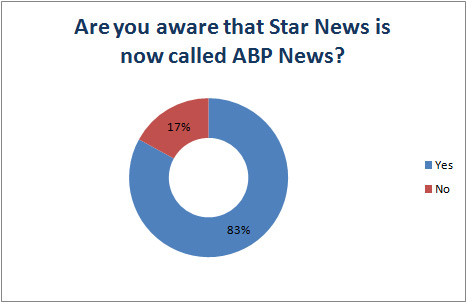
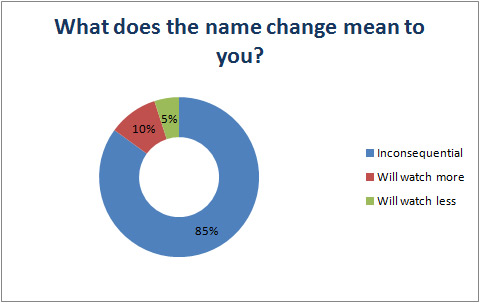
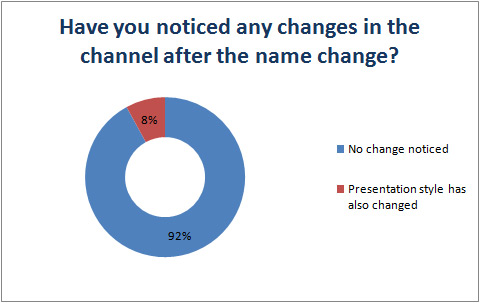
    And the findings are overwhelmingly in favour of ABP News: that people are aware of the change, 85 percent feel that the name change is inconsequential and 10 percent even find the new channel better than before! And most importantly viewers seem to be echoing the Star News line with 92 percent of those survey saying other than the name, nothing had changed in the channel.


    Clearly, the findings of the survey conducted by Ormax Media indicate that viewers in the chosen target group have adopted considerably well to the rebranding of Star News as ABP News. Commenting on the results, Shailesh Kapoor, CEO, Ormax Media said, “The high awareness for the brand name change is a significant achievement for ABP. They have managed to make a smooth transition. The results tell us that the consumers have taken the name change in their stride comfortably.”


    In an interview with MxM India when the name change was announced, MCCS CEO Mr Ashok Venkatramani had remarked that out of the three 24-hour channels set to be rebranded, the Marathi and Bengali channels, Majha and Ananda as suffixes are unique and have grown in popularity and acceptance but the same is not true for the Hindi channel where the suffix is ‘News’ which is a generic term.


    Ormax Media conducted the survey on a target audience of males in the age group, 24-44 years in SEC ABC, who are regular Hindi news viewers. With a sample size of 200 respondents, the survey was conducted in 14 markets: Mumbai, Delhi, Pune, Kolhapur, Ahmedabad, Jamnagar, Indore, Gwalior, Ludhiana, Jalandhar, Lucknow, Kanpur, Bareilly and Allahabad.


    The findings of the survey, categorized under ‘awareness’, ‘impact of name change’ and ‘any other changes’, are as below:


    AWARENESS

    As far as awareness of the change in name is concerned, of the 200 respondents, 83 percent viewers were aware that Star News had become ABP News


    IMPACT OF NAME CHANGE

    • When asked what the name change from Star to ABP means to them, for 85 percent of the respondents, the name change was inconsequential to their watching the channel
    • 10 percent of the respondents claimed that they will watch the channel more after the name change stating better logo and better presentation as primary reasons for the preference.

    Some responses from these 10 percent viewers are:

    • “Naya look achcha laga channel ka”
    • “Pehle se zyaada fresh lag raha hai”
    • “Mujhe channel ka naya logo bahut pasand aaya”
    • “Presentation ka tareeka kuchch alag sa laga mujhe achcha laga”
    • “Display achcha ho gaya hai”


    And just 5 percent of the respondents said that they will watch the channel less after the name change citing lack of credibility due to absence of the Star brand name as the main reason.


    Some responses from this group of 5 percent viewers are listed below:

    • “Star News bada naam hai, ABP kabhi suna nahin”
    • “Pehle ka naam achha lagta tha, abhi ka naam ajeeb sa hai”
    • “ABP mein woh attraction nahin hai jo Star mein tha”
    • “Jab Star News tha toh wahan news sabse pehle aati thi, ab pata nahin kya hoga”
    • “Pehle Star company ka channel tha, abhi lagta hai kisi politician ne le liya hai”


    ANY OTHER CHANGES?

    • When asked if the viewers had noticed any other change in the channel apart from the change in name, 92 percent of the respondents said that nothing else had changed in the channel besides the name.
    • Only 8 percent of the respondents believed that apart from the channel name, brand logo and presentation style had also changed.


  • Paritosh Joshi: Does readership have a future?

    By Paritosh Joshi


    A few months back, I had the opportunity of hearing Mr N Ram of The Hindu speaking at an industry conference on the future of newspaper readership. His erudition and scholarship are legendary, his command of the language second to none and his rich baritone makes the experience an auditory delight. However, the central conceit of that day’s oration was anything but pleasant. In no uncertain terms, Mr Ram spelt out the impending annihilation of the print medium, not in the West, about which we have all heard, but right here in India. Interestingly enough, in the months that have passed since, I don’t seem to remember seeing a single repudiation of this bleak forecast.


    Right then, two words. Theodore Levitt.


    Let me cast my mind back a bit over the going-on-50 years I have spent on this planet. It is conventional wisdom, and an oft-repeated criticism of the younger generation, that nobody reads anything anymore. The comparison, always, is to the literate past when “everyone” read. Let me be clear. This whole notion is a great big ballyhoo. Reading, back in those days, necessarily meant one of the following, extremely short, list: (1) books (2) periodicals, including newspapers and (3) personal writings such as school work and letters: written or received. Reading and writing were not pervasive activities. Yes there were obsessive readers; I was one; but they represented a minority- a persecuted minority I might add being seen as bookworm wimps- compared to the red-blooded lads who spent every spare moment mercilessly kicking a ball, and as frequently each other, on the nearest available dusty lot. Kids did not wake up only to check overnight Facebook, Twitter and BBM messages and posts on their mobile devices. They did not surf for lyrics of the latest song by Lamb of God or August burns red. They did not go to bed after writing their blogspot or tumblr post for the evening.


    Messenger apps, social media, classwork, homework, leisure, amusement, resentment, sorrow, anger- there isn’t a personal emotion, engagement or venue where a 21st century denizen is able to function without reading or writing something. The Web does not talk to its users; I mean it can and does, but it is primarily enabled for people who can write and read. This must be understood: Web users better be literate at least in terms of basic reading and writing before they can get any substantial value out of it. Here’s an assertion. More people do more reading and writing (nearly incessantly in fact) in 2012, as compared to any previous period of known human history.


    Brings us to the daily or periodical print publication.


    Who needs newspapers and magazines any more? We have the social media to tell us exactly what is happening anywhere on the planet in real time, right? We heard about the Anna Hazare arrest and detention at Tihar, fire in the Bangalore skyscraper, the Fukushima Tsunami, the Black Wednesday market collapse; heck, <name random news event here>, long before even the TV news broadcasters had cottoned on to it. Yes, but that was the first, mostly unverified and unverifiable heads-up on the story vis-à-vis the detail and insight that we now have.


    Where did the insight come from? We waited until a few hours later when our trustworthy daily or periodical carried a fact-checked and properly edited version of the story.


    Mr Murdoch Senior, not the gentleman at the heart of all manner of brouhaha, the other one, says it simply and well. Good news must be paid for because it costs a whole lot to produce. You cannot crowd-source the truly significant story. Nor can you crowd-source incisive editorial commentary. And it does not matter how or where a consumer will choose to consume it. Mr Murdoch has backed word by action, putting first the Wall Street Journal, then the Times of London and then a whole sheaf of other Newscorp publications behind pay-walls. More and more people are paying. What is more, even publications that were the most vocal critics of the move: New York Times comes to mind, have themselves succumbed to the same gambit. Of course, the pay wall is by no means the only way to make online content pay for itself but it becomes a great example of how indispensable quality journalism is to Joe Public, even if it cost a few coins.


    The newspaper is not about paper; it is about news. The first is the physicality of a product. The second is the consumer benefit. It is fair to say that paper will continue to disappear from the newspaper. But news quite definitely will not.


    Theodore Levitt called the confusion MARKETING MYOPIA.


    Paritosh Joshi was until recently CEO, Star CJ. He has been a marketer, a mediaperson and a key officebearer on industry bodies. He can reached via the comments board below or his Twitter handle @paritoshZero.


  • Clients applaud Vizeum as it celebrates third anniv

    From the MxM Infodesk


    Media agency Vizeum celebrates its third anniversary and the agency is celebrating the event along with parents Aegis Media India which acknowledges the agency’s positive contribution to the kitty.


    “Clients just seem to love them,” said Ashish Bhasin, Chairman India and CEO South East Asia, Aegis Media. “I congratulate Yesu (S Yesudas) on the extraordinary leadership provided by him.  I also congratulate each member of the Vizeum team on the wise career choice made by them.”


    Explaining further on the mandate for Vizeum India, said S Yesudas, Managing Director “We do not have any dreams to be the largest or among the largest media specialists in terms of financial size.  But we really want to be known as a credible consultant who builds bridges of relevance with its clients”


    But finally it’s the clients word that is the final call on how a service provider like a media agency is doing. Here are views from three of these:

    Shivnath Thukral, Group President – Corporate Branding and Strategic Initiatives, Essar Group:  “Vizeum rides the highs and lows of my organization, understanding the circumstances under which we operate.  It is achieved through a complete understanding externally and internally. They think the way we think.  They enmesh themselves in the work we do. They help meet our aspirations”


    Vivek Krishnani, Head of Marketing, Distribution and Syndication, Fox Star Studios India: “Vizeum came to us with an approach to help make a difference to our business and they did just that!! In an industry where logic of share of voice  can be to outshout by increasing media spend and thereby being susceptible to wastage – With Vizeum’s help we have been able to optimize our spends and get more for less !! I admire their persuasiveness and the desire to do more which reinforces their partnership spirit and drive to achieve excellence!!”


    Aditya Swamy, EVP & Business Head, MTV India:  “Vizeum is an agency that focuses on finding a non traditional approach to a brief. Eager to show maximum bang for the buck, their recommendations are truly customized to meet the challenge at hand. Strategic partnerships, clutter breaking innovations and leveraging relationships have been some of their key strengths. I congratulate Yesu and his team  for completing 3 action packed years in India and look forward to working together in the future too”


    Rajesh Mani, GM- Marketing & Retail TI Cycles and BSA Motors  (Murugappa Group): “The decision to move to Vizeum was much deliberated upon at our end after they made their pitch which impressed us.  It is a two year old relationship now and the comfort with them has only grown.  Their team as well as the top leadership stay involved in our business as our own team gives us great comfort. We wish them the very best ”


  • The Anchor: 7 reasons why we should have a 24-hour classical music channel

    By Jaahnavi Paal


    Being a TV buff I have watched everything from soaps, news, sports, wild life, marine life, reality shows, travel, food, music on TV …but my thirst for classical music still remains unquenched. Though there are so many music channels there is no single classical music channel (CMC). Doordarshan occasionally airs classical music concerts but there are no other channels that do even that. Considering that the country has so many classical music lovers it’s about time we had a dedicated classical music channel on Indian television.


    1. In the late ’80s and early ’90s, there was huge audience base for music channels and one saw so many music channels spring up on TV. But nobody thought that there was a need for a channel dedicated to classical music. TV ‘businessmen’ felt that it was not a viable proposition. Since the audiences would be small in number compared to those interested in other forms of music they believed it would be difficult to make it a commercial success. But I beg to differ. Having seen various classical music festivals packed to full houses and the number of audiences that throng music concerts growing by the day it is difficult to believe that a classical music channel (CMC) will not do well. And mind you most of them do buy tickets to watch these concerts.


    2. Classical music is part of India’s rich tradition and culture. Unfortunately not much is done to promote this on a mass platform like TV. Time and again music maestros have lamented this fact and appealed publicly for the need of a CMC. In 2010, Ustad Amjad Ali Khan pleaded that he would like to see a 24-hour classical music television channel that would play classical music as well as documentary films on creative people. Unfortunately, things remain unchanged.


    3. Indian classical music should become part of daily life because it is proved to be a great therapy besides meditation and relaxation. If we can channelize this through a popular medium like a TV channel, more people will understand and enjoy classical music and reap its benefits as well.


    4. In today’s times where commercialization is the only answer I see no wrong if classical music too was turned into a business venture and marketed on television. If a music reality show on a GEC attracts lakhs of talented people I have no doubt in my mind that a similar show on a CMC would also get the required numbers. Reality shows have been promoting classical music and musicians. Audiences are understanding sur and taal and ragas too. If this is not a positive sign of initiating our young audiences to our rich heritage and culture then so much more can be achieved on a channel that would be dedicated to classical music alone.


    5. When Grammy award winner Pt Vishwamohan Bhatt moaned the fact that there were over 500 TV channels across the country and dozens of music channels but not one channel dedicated to classical music his pain was evident. There have been various other musicians who too have felt the same. In fact Pr Rajan and Sajan Mishra have gone a step further in voicing their agony. They have said that there are channels on animals but not one on classical music!


    6. If the government does not have the will nor the capital to do this on their own I am sure there are many corporate giants and industrialists who can make a business out of this venture. Indian Classical music has crossed Indian shores and is recognized and appreciated across the globe. Sadly in our own country we do not have a platform to initiate it to our youth. A dedicated music channel for this rich form of music would not just help musicians and artistes but also offer unseen opportunities to many looking at making a career of it. When one sees lakhs throng venues of reality shows in order to participate in them how many of them even know that the base for all music is classical music?


    7. Young people are increasingly drawn to sports because it is competitive. The government has to bring that spirit into classical music. We build grand stadiums, but we do not have a concert hall of the calibre of London’s Royal Albert Hall or Sydney’s Opera House. And it is the same with a CMC. A channel like this would encourage youngsters to take up classical music and even attract them to it. And for those cynics who often say that classical music is dying I beg to differ. Classical music is far from being a dying art. It was never meant to be entertainment for the masses anyway. I end with a note of optimism in my heart….hope someone soon invites us for a launch of such a channel.


    Jaahnavi Paal is a columnist and TV analyst


  • Utterly Butterly Everlasticious!


    By Tuhina Anand


    Sylvester da Cunha

    You just cannot ignore the impish Amul girl with her chubby cheeks and red-polka dot dress. Don’t go by her diminutive form as the li’l one has a take on everything that is going around her. Being created in 1966, the Amul girl is still going strong after more than four decades. It is the perfect example for all those following advertising how a simple idea and even simpler words can catch the fancy of a nation. Not to forget that the Amul ads are not a critique of a nation but also a masterpiece in advertising for people across the globe to study and understand.


    It all started in 1966 when Sylvester da Cunha was entrusted with the responsibility of working on Amul and they came up with the Amul girl which actually was in answer to the rival brand’s mascot. When it started, Amul hoardings which grace the skyline of many cities today were intelligent play of words that got the people intrigued and wait for the next hoardings. However, slowly these ads changed and morphed into being mouthpiece of a nation and bringing a take on happenings not just in India but across.


    When asked if he ever expected that what he was creating in 1966 would become an advertising icon and continue for so long, Mr da Cunha says: “I think in 1966, we knew that we had created something special in both the Amul girl as well as the tag line, Utterly Butterly Delicious – but a good creative product requires inspired clients to believe in it – Dr Kurien believed in this campaign in 1966, and Mr RS Sodhi believes in this campaign in 2012. That’s why this campaign has lasted as long as 47 years!”


    So what is it that when in today’s advertising people are always bringing in new faces even if the message remains the same but the Amul girl never seems dated.”I think the Amul Girl, has never seemed dated, because we invest time and creativity in her,” reasons Mr da Cunha. “Plus we can see what a universally loved cartoon character she is. We strive every single day, to keep her young and relevant.”


    Rahul da Cunha

    Rahul da Cunha, the Managing Director and Creative Head, daCunha Communications who has taken over from his father Sylvester and has been working on Amul advertising for a while added, “No, I don’t think the Amul girl will be dated as long as we keep her contemporary and keep the topics covered relevant. One thing I’ve learnt, you are only as good as your last creative.”


    The launch of Amul’s India


    The Amul ads are no less than a study on modern day India thus DY Works and Harper Collins along with daCunha Communications has come out with the Amul book titled Amul’s India which is an anthology of Amul advertising plus eminent people giving their take of the advertising.


    Says Rahul da Cunha on the reason behind coming up with the book, “As an agency we’ve been wanting to bring out book tracking this amazing campaign, its history, controversies, anecdotes  and the rest associated with the book. Attempts with several publishers failed and then DY Works and Harper Collins came along, and the fit seemed right.”


    The book took about a year to take shape and be published. The objective is to track the amazing history of the Amul outdoor campaign from its inception to its present avatar thereby tracking the history of India


    Alpana Parida, President, DY Works commenting on the design aspects that were kept in mind while working on this book, said, “The book had to be accessible to a large number of readers and thus we had to keep it a paperback. But we were clear that we needed a unique design element that would hold the diverse essays from different personalities on various topics together. The polka dots were a clear winner as a continuity device - as they are unique to the Amul girl. You do not see another brand in India using these red dots. The design had to do justice to the hoardings and not over power them. Eventually, we believe the design has enhanced the content of the book greatly.”


    She added that for her the chasing up all the celebrity contributors was the toughest part. She said, “There were many who refused as there was no remuneration for the writers. There were many who were so difficult to get hold of. We would have loved to get Aamir Khan, SRK, Ratan Tata and Rahul Gandhi - but our attempts to reach them were unsuccessful. To our utter delight, Amitabh Bachchan was the easiest to get hold of - and he agreed to contribute to the book immediately. Rajdeep Sardesai wrote a beautiful piece with a personal memory about an obituary to his dad. Harsha Bhogle was all over the map and it was hard to pin him down - but he graciously obliged somewhere between London and Australia. And there were many days spent with Santosh Desai to shape the definitive content for the essay that would be central to the book. Without doubt - the book had more moving parts than pages! We pulled it off eventually.”


    The book will be officially launched on June 11 in Mumbai and June 13 in Delhi.

    While Amul advertising is being continued for decades has there been a change in the way the advertising is being done today? Mr Sylvester da Cunha points out that there are two main differences that he can clearly see. One is that the hoardings are being created at a much faster pace. In the ’70s there was one hoarding every month or so and now they are done almost daily for some city or the other. Another is that as we live in rougher, edgier, more controversial times, the hoardings and the messages too are reflecting these times.


    Adds Mr Rahul da Cunha, “I think two things have changed one definitely is our speed of response to an event has become faster. And the tone of our hoardings has become edgier. We are not scared to take on an issue however controversial. We are careful however not to be malicious.”


    On the periodicity, he says, “Actually it’s not every week, it’s now almost every two days. So much is now happening in our crazy country – be it politics, sport, Bollywood, popular culture and we’d like to comment on all of it. So one new hoarding leaves the agency almost every day.”


    Recalling one of the recent incident that happened, Mr Sylvester da Cunha says, “The funniest incident was in 2009, when we ran a hoarding criticising Satyam for the terrible scam it had wreaked on the Indian public, to the tune of Rs 7000 crore. We said ‘Satyam Sharam Scandalam’ and we got a letter from the Satyam board, telling us how ‘wounded’ they were, and if we didn’t withdraw the hoarding, they would advise all Satyam employees to stop using Amul products! We were at a loss of words.”


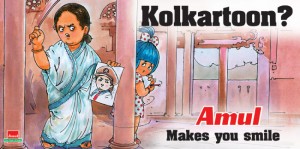
    Mr Rahul da Cunha picks up his three favorite Amul ads which include ‘Victoria Termianted” when VT got renamed, the obituary we did recently for cartoonist Mario Miranda and the one done recently on Mamata Banerjee’s response to the controversial cartoon ‘KOLKARTOON!”


    Giving her take on Amul ads, Priti Nair of Curry-Nation, says, “I feel they take a nice lopsided view of the mess we face day in and day out. They at least put a smile on hopeless situations because quite frankly there is nothing you can do but feel angry and frustrated by the stupidity you fall prey to. Their potshots at least lighten you up most times.”


    “Also as advertisers we know if Amul picks on a topic it is the hot topic or for instance if they pick on your ad you feel quite happy. I know we felt damn good when they did a spoof on Balbir Pasha and Manjula. That’s the power of the communication medium they have chosen and stuck to for years,” adds Ms Nair.


    Says Anil Nair, CEO and Managing Partner, Law & Kenneth India, “Amul is the only brand which has truly done what many brands have preached about, ‘connecting with consumers life beyond making transactions’. Advertising is applied anthropology and hence (should) reflect the society as it evolves. Amul hoardings have done that for years, consistently. Amul hoardings bring huge credibility and pride to an otherwise frowned upon industry. Am a fan… No, am an eternal fan.”


    Prathap Suthan, Founding Member of Bang in the Middle, believes Amul manages to always come up with a perspective that brightens up the subject. “There is an innocence that is welcome no matter the event or subject. A spot of optimism that works like charm, and often disarms the audience,” Mr Suthan says. “With its almost topical and quick changes, it adds to the daily relevance that butter is all about. So much so, like the butter it sells, its advertising has grown to become almost a habit for India.”

    Well said.


  • Mediaah: Should Ambika Soni delay digitization?

    By Pradyuman Maheshwari


    Yes, she must. There’s no point making a charade of it when the on-ground reality is not what it should be with just 23 days left for the scheduled compulsory switch to digitally transmitted television in the four metros of Chennai, Kolkata, Mumbai and New Delhi.  Over the last five months, MxMIndia has been speaking to various stakeholders on digitization. In fact right from the day our countdown started when there were 100 days to go for the June 30 Sunset Date, key stakeholders have been telling us that the deadline is unachievable.


    The government has itself to blame. The digitization deadline has been known for a while, and one would’ve expected it to have moved faster if it was serious about the Sunset Date. The tariff order came in rather late, and one would’ve expected the babus to have worked backwards and establish a foolproof schedule.


    Now, we have a situation that’s going to embarrass all.


    A senior industry professional told me that after the June 1 taskforce meeting it was clear that deadline will be pushed by at least two months, if not three. Some influential cable professionals have been rooting for six months, but I think three months is fair, with a diktat that within six months, it ought to be total.


    I also believe that there ought to be a significant incentive for early birds. Those who’ve switched subscribed and those who will in by September 30. The government must cut its levies and ask for these to be passed on to subscribers. Something like: buy a set-top box and get free connectivity for six months! Ensure this offer is only for the first three months, and after that it should be withdrawn. Also, subscribers should be allowed to pay in instalments.


    Today, Anil Thakraney’s maid asked him for a thousand-buck loan. I am sure I am going to be asked for the same soon. It’s critical that the lowest common denominator in our country – and there is a sizeable population that can’t make ends meet – is finding it tough to embrace digitization. There’s of course the argument that no one likes to pay for software in India, but there is no denying that the move will impact the household budgets of crores of Indians.


    So what’s the solution. Extend the deadline, yes, but just by two or three months. Offer an incentive for this period, and then bring back the taxes. Let this be the first deadline and have a final one of six months and ensure that all comply post that. A ‘Good Night’ date after the ‘Sunset’.


    Buzz me if you have a story to tell. Confidentiality assured. There are various ways you can reach me:

    pradyumanm[at]mxmindia.com, BBM 23050B5D, Gtalk pradyumanm@gmail.com, Twitter @pmahesh and of course the mobile: 98338 76278.


    Disclaimer: Although he is CEO and Editor-in-Chief of this site, Pradyuman Maheshwari’s views in Mediaah! are not necessarily those of the rest of the team and MxMIndia.com.


  • Anil Thakraney: Dude, who moved my analogue?

    By Anil Thakraney


    Today morning my maid asked for a loan of a thousand bucks. And when I gently enquired about the reason behind the urgent need, she very sadly replied: “Sir, set-top box lene ka hai. Nahin toh TV band ho jaayega.”


    Yes, she’s alarmed. Because the threatening ads keep pouring in. And as the D-Day gets closer, their frequency has shot up. We in Delhi, Mumbai, Kolkata and Chennai are warned that if we don’t go digital by the end of this month, there will be a black out on the idiot box. And as you can imagine, there’s a mad scramble for the set=top boxes. Given the wayIndiaoperates, there will be mayhem in the last week of June, because most of us do things at the last moment, that’s our culture. And I shan’t be surprised if cable operators start hawking the boxes in black. That too is our culture.


    Here’s the link to the detailed story on this subject done by mxmindia, which indicates the threat may be pushed by a few months:

    http://www.mxmindia.com/2012/06/ready-steady-go-or-delay


    On the face of it, the government is desperate for a switch from analogue to digital for technical and aesthetic reasons. And because the very sensitive government of ours (ROTFL!) wants us to enjoy better picture quality. (To be honest, it’s best to watch most of our heavyweight netas via inferior quality transmission.) And all this even as a vast majority of the people in this nation is quite cool with the analogue signal. Not just that. The poor are struggling to pay for the set-top boxes. And the elderly citizens are worried about having to learn new tricks in their sunset years.


    Now, I don’t quite understand the technological reasons behind digitization becoming mandatory. What I do want to know is this: Why can’t the citizens of this free country be given the option? So that people desirous of better picture quality can switch to the digital mode. And those who are happy with analogue, can stay with it. As far as rate structures goes, surely the concerned ministry and TRAI can work out rate cards in consultation with the various cable operators.


    Here’s my own feeling: I suspect digitization is being made compulsory because the set top-box makers are about to run into some serious dosh. How all that moolah will be divided, I leave for you to imagine.


    PS: A fantastic way to demonstrate the might of the aam junta. Created by TBWA Paris for Amnesty International, the film highlights how signature campaigns work effectively in fighting crimes committed by those in positions of power. Hard hitting!


    Anil Thakraney is a senior journalist, commentator and adman. He is also Editor-at-Large, MxMIndia. The views expressed here are his own.


  • Mixed response to Newscorp’s total control of ESS

    By A Correspondent


    The News Corporation and ESPN announcement that the latter would buy ESPN’s 50 per cent equity interest in ESPN STAR Sports (ESS) has been welcomed by the industry.  The transaction will allow News Corporation units to own and operate all of the ESS businesses while providing ESPN more independence and flexibility in future support of The Walt Disney Company’s overall efforts in Asia.


    There has been a mixed response to the development. For one, they say it’s an internal matter between the two shareholders and will not impact the bidding or media selling process. ESPN and Star Sports (and the other channels) were being sold as one unit, said one observer. Yes, even though it was a 50:50 jv, the feeling was that it was a little more aligned to Disney than Star, remarked a senior official in a rival network.


    Talking about the development, Hemant Kenkre, cricket analyst and a senior communications professional said: “I’m excited about the news as everyone knows that the News Corporation is an innovative organization. For instance, when they bought KBC to India, it changed the whole Indian GEC scenario. Even now they are one of the first organizations to launch fully HD channels. When one thinks of cable TV, News Corporation is the real king in India. Thus, one can say that they think differently so the sporting world too should get ready for a dhamaka. I’m sure even cricket fans will be happy with it because it will bring other sports on the forefront too.”


    Commenting on the news, Mahesh Ranka, founder & CEO, Indus Sports and Sponsorship said: “This only means that the war between sports channels in India will intensify. ESPN will now be able to launch new channels and I’m sure they will as they are a major player globally. It will also mean that now a broadcaster might have to dig deeper into his pocket as it might push broadcasting rights in the near future. Having said that, it is good news because it signifies the growth of sport broadcast industry in the country.”


    MxMIndia was unable to ascertain whether the terms of ESPN’s exit from ESPN Star Sports stipulates a cool-off period whereby ESPN will not be able to operate any similar channels in the region for a certain period. For instance, when Star pulled out its brand from the MCCS news channels, it was clear that it would not be able to launch Star News for the next 18 months after serving the notice (said to have been in January 2012).


    With inputs by Meghna Sharma


  • ‘I Love Style’ powered by Karmik on BIG CBS Love

    By A Correspondent


    After the success of India’s Glam Diva, BIG CBS Love has launched its second home grown property, ‘I Love Style’, powered by Karmik. BIG CBS Love, the joint venture channel between Reliance Broadcast Network and CBS Studios International, is known for its international content. The channel has recently begun to create content locally and ‘I Love Style’ powered by Karmik, will be the ultimate destination for to all that one would desire to know on style and fashion.


    Karmik, the latest name to accessible designer-wear fashion, is the most appropriate partner for the show, and together, the brands promise to offer a show that depicts style and panache.


    At a press conference, held in C’est La Vie Lounge, Mumbai, Neeta Lulla, one of Bollywood’s most celebrated designers, along with Genelia Deshmukh, shared insights of some of her famous bridal outfits, the intricacy that goes in to dressing up a bride, what fashion really means and why she loves style.


    I Love Style will take all the style and fashion-conscious women through an intimate expedition of the latest in style, fashion, grooming and more.


    As the show progresses, it will feature biggest names in fashion from the Karmik stable like Rohit Bal, Anamika Khanna, JJ, Valaya, Rocky S, Abraham & Thakore, Gaurav Gupta, Ranna Gill, Shantanu and Nikhil, Rina Dhaka, Kavita Bhartia and more…


    The show is hosted by the model and anchor, Karishma Naina Sharma and is backed by veteran fashion guru, the founder editor of Harper’s Bazaar India, Sujata Assomull as the style expert on the show.


    The show will also go on-ground with audience connect properties like ‘I Love Style Bazaars’ – where designers with quirky styles will be invited to showcase their collection; and ‘I Love Style Parties’.


    Ensuring connect on social media, BIG CBS Love and Karmik will also launch a hunt for their stylish ‘Karmik Diva’.


    Commenting on the show, Mr. Vishal Rally, Business Head, BIG CBS Networks said: “The property is unique and first of its kind in India, tailored keeping in mind the specific preferences of our audiences. We are confident that we have the right concept to ensure the show delivers everything that the audiences desire to know on Style. We are happy to partner with Karmik and see excellent synergies coming into play which will benefit both consumers and marketers alike.”


    Mr. Pradeep Hirani, founder of Karmik said: “What would have better than to partner with and BIG CBS Love to make a stylish show - ‘I Love Style’. I am sure that people will love the show.”


  • Ready, Steady, Go? Or Delay?


    By Shruti Pushkarna


    With less than a month to go for the sunset date of June 30 for Phase I of digitization of cable television in India, MxM India gets you a status report from the ground in all the four metros, Delhi, Mumbai, Kolkata and Chennai.


    As per the directive issued by the government of India and the Telecom Regulatory Authority of India (TRAI), Delhi, Mumbai, Kolkata and Chennai are to be completely digitized by June 30. Starting July 1, all analogue signals will be switched off. But is the industry geared up to meet this deadline? And moreover, are the consumers aware of this change that will bring about a significant change in their television viewing. While all industry stakeholders seem to be in favour of digitization, they all have their share of concerns. Some believe that an extension of the deadline will be a welcome gesture by the government while some feel that any extension at this point will only slow down the process further. The industry, some believe, is lacking a sense of urgency to embrace this change and roll out the new technology.


    MxMIndia learns that I&B Minister Ambika Soni has called for a meeting of all stakeholders tomorrow, Friday, June 8 at 3 pm at the Vigyan Bhavan. A final decision will be taken post this meeting. An earlier meeting with I&B ministry officials held on June 1 generated mixed take-outs. While one participant at the meeting told this writer that there was no indicator that there will be a postponement of the Sunset Date, another industry captain told MxMIndia that there were fair signs that the D-Day will be pushed by at least two months, if not six.


    Meanwhile, MxMIndia gets you varied views from stakeholders as well as media experts on the status of digitization for Phase I.


    Cable operators unprepared to meet the deadline, blame lack of set top boxes and consumer awareness

    Mumbai: Arvind Prabhoo, Owner, Orbit Television Network: The deadline cannot be met because most of the MSOs have run out of boxes. The LCO has to place an order after which it takes about a week or so for the MSOs to bring in the boxes. The other problem is, since it was May, approximately 30 percent of the people were on vacation, so they have not really spoken to a LCO on the requirement of STBs. Also, despite all the ads running on digitization, people are still quite wary of STBs and the technology, especially the older generation. Explaining it to the elderly is becoming a major problem for installation of the set top box because at such a place one has to spend almost one hour explaining the need and benefits of this technology. So in a day if you get five homes like these, your day is gone. Thirdly, at this time in Mumbai, most cable operators are busy taking care of the monsoon issues and this exercise goes on for about a month or so. Moreover, the task has not been tackled with any kind of seriousness so far. Then there have been ads by DTH players saying that cable will cease to exist post July 1 which has become a deterrent. It takes some time for the LCO to convince the consumer that cable will not switch off, it’s only the analog transmission that will be blacked out. There is no clarity if digitization is going to increase the cost of channel viewing or it’s going to decrease it or if it’s going to have any effect at all. In Mumbai, I don’t think more than 35 percent of the required STBs have been seeded. If the extension comes, again there will be complacency amongst the operators but at the same time, if it starts raining tomorrow in Mumbai, the efficiency to work, transportation etc, will all go haywire. Only 5 percent installations took place in the entire month of May as people were travelling and before that there were exams, so not many installations happened. If the government decides to postpone the date, it will be a welcome gesture but if on June 30 the analogue signals black out, there will be total chaos.


    New Delhi: Nagraj, Cable Operator, Old Seemapuri: Only 10 percent boxes have been seeded as of now.  Customers are not ready to take the set top boxes, they are not ready to pay. On the other hand, distributors are putting so much pressure to purchase boxes from them saying that if we don’t purchase the boxes now, they will increase the prices later. Government hasn’t issued a single declaration notifying the exact price of the box. And then there’s the issue of Rs. 45 share, how can we survive in that? I don’t know what has prompted the government to lower the rates of cable to this level. Videocon d2h came out with an ad recently saying that cable will cease to exist after June 30, so switch to d2h. Why isn’t the government reacting against such advertisements, this just means that they are teaming up with Dish players. Misleading ads are adding to the confusion and the customers have not been made aware of the issue well enough, they think that if they have to switch to digital they can just buy Dish. I fear that we will have to surrender and leave this profession after July 1. We have been trying to approach the Minister of I&B but she is avoiding us and not giving us a time to meet.


    Chennai: M R Srinivasan, General Secretary, Chennai Metro Cable TV Operators Association: It’s not possible to meet the notified deadline of June 30. As far as Chennai is concerned, we have a 3 million subscriber base for digitization and of the 3 million so far only 2 lakh boxes have been seeded and the rest of 2.8 million is left. There are two MSOs available in Chennai and none of them have ordered for the new boxes till date. As far as I know, both MSOs have only 15000 boxes and the requirement is for 2.8 million. Moreover, the Tamil Nadu government has written a letter to the I&B ministry for an extension of the sunset date. We require an extension of at least six months.


    Kolkata: Swapan Chowdhury, General Secretary, Cable & Broadband Operators’ Welfare Association: Nobody is going to meet the mandated date. If it still happens on the set date then the channel/platform will be different, it will be the DTH players who will be given a chance to do business.   As far as seeking an extension goes, it’s not the cable operators but the MSOs who should seek for an extension because they are not able to supply the set top boxes. There is no physical stock of STBs. There are about 40 lakh STBs required in the Kolkata Municipal area and the existing MSOs have supplied only 4.5 to 5 lakh boxes. At the maximum they would have 50,000 to 1 lakh more boxes, which means with less than one month left, the remaining number will face a black out if digitization is implemented by July 1. The government was supposed to conduct four open house discussions for each metro but Kolkata has not been taken into account. Only recently, last week I&B Secretary Mr Uday Varma visited Kolkata and conducted a meeting in the Writers’ Building. After the meeting we have come to know from the daily news that he has agreed to talk to the MSOs and the LCOs for implementation of DAS. Right now only 15 to 20 percent boxes have been seeded and if digitization is implemented on July 1, then a minimum of 50 to 60 percent of the market will black out.


    Mixed response from the Multi System Operators (MSOs), admit to shortage of boxes

    Jagjit Singh Kohli, CEO, Digicable: No we are not ready, we are expecting an extension of the date. The main issue is that there are not enough set top boxes available to meet the demand. We are asking for an extension and most likely it will happen.


    M G Azhar, COO, DEN Networks: We are ready to roll, we already have the boxes in. If you talk of the larger MSOs, they have got all the boxes ready and the DTH players also have the boxes ready. So in terms of preparedness, we are ready. Only if the government steps in and changes the dates, otherwise I see nothing holding it back. Resistance is coming in because LCO thinks that once these boxes are put, he will lose control but that’s not the case. We look at them as partners and we want to take them along. We are ready to meet the deadline.


    Ravi Gupta, Independent MSO, Delhi (Delhi Distribution Company): No, we are not ready to meet the deadline of June 30. It is almost impossible to install digital cable system in such short time as given by the government. Even if we manage to collect funds and purchase the material, it is not possible to install it in the given period of time. Secondly, no company in the world can provide you with set top boxes in less than six months’ time. Thirdly, government announced the terms and conditions of licensing on May 28 and we submitted our license applications by June 1 and till date nobody has been issued a DAS license. How can we operate without a licence? The government has taken no expert view on this matter before formulating the policy. After July 1, the people will sit without television.


    Dish TV ready for digitization, no shortage of STBs

    Salil Kapoor, COO, Dish TV: The entertainment arena of television viewing will witness a paradigm shift after digitization is implemented in four metros. As we are Asia’s largest DTH players we have around 12.5 million subscribers in India. We welcome the noble move of digitization by the government. This is a humongous task in terms of implementation and we are ready to take first move of Phase-I in four metros. Though DTH industry is already burdened by multiple taxation but for us we are not short of STBs and we are ready to roll on. There is a buzz that the Sunset Date will be extended but till the government is not issuing or confirming we cannot comment on this.


    Broadcasters prepared to meet the deadline but not sure if the rest of the industry is ready

    Rahul Sood, Head- Network Distribution & Affiliate Sales, NDTV: From a broadcaster’s perspective we are definitely ready but the question is while we are ready, is the cable fraternity, especially the LCOs and distributors, ready to go out and make that extra effort to install boxes? The DTH companies are ready, the broadcasters are ready, it is just the local cable operators and the distributors who might not be ready. While the MSOs are also ready, the resistance is coming in from LCOs and distributors. So those are the two key people who’ve got to make sure that this happens. We are not expecting any magic in 30 days to happen, that all analogue will convert to digital. But the process will start from July 1 and I think once the analogue signals are off then the process will gather a lot more momentum. So there has to be that impetus which will come from the ground. Consumers will start asking for the box and the cable operator or the DTH provider will not have a choice but to give it because if he doesn’t give it, somebody else will. But let’s be clear that it will not be a switch over from 0 to 100 in one day, it will happen over a period of time and the process will gather momentum starting July 1.


    In India, till the time you don’t switch off someone’s water or electricity meter nobody goes and pays the bill. So that’s the reality of the Indian psyche that we only wait for everything to explode and then we wake up.  So everything in India is last-minute! I can assure you that if government delays this and gives an extension of deadline, we will be having the same discussion six months later as well. If the cable guys don’t do it then the DTH guys will take over, not that the consumer will be blacked out.


    Media planners based in the the four metros feel the industry is not prepared to meet the deadline

    Nandini Dias, COO, Lodestar UM, Mumbai: Moving to 100% digital is a significant change. If July 1 is the deadline by now at least 90% digitization should have been in place across the four metros. My understanding is that it is far from it. In addition the industry bodies of the affected industries have not put out any guideline on the next steps. By now ISA, AAAI, IBF all should have put out some guidelines, implications etc. for clients and agencies to follow. For example, viewership and ratings maybe significantly affected. So as per the usual behaviour pattern the deadline is likely to just get shifted.


    Mohit Joshi, MD, MPG, Delhi: We are not ready to meet the deadline for the digitalization. I read somewhere that over 19 million set-top boxes are to be shipped to India during 2012 in order to fulfill the ambitious programme to digitize the country’s cable network according to ABI Research predictions. I’m not sure whether we have the infrastructure / back-end for the same. Moreover, there is not much of general information among the viewers and finally there seems to be no urgency in the system. Even the media is downplaying this whole issue.


    Raj Datta, Senior General Manager, TME, Kolkata: I don’t know about other metros but keeping Kolkata in mind, I don’t think we are ready to meet the deadline. The main reason behind it is the fact that a lot of low-income households have cable connections and it would be a tedious task to replace that with setup boxes. The main problematic area is the Sec D and E unlike Sec A and B where it won’t be difficult to replace setup boxes with analog system. The demand is much higher than the supply and manufacturers are running against time to fill that gap.


    Sriram Sharma, Vice President, SMG India- Southern Operations, Chennai: See it’s a directive saying they will have to complete it before June 30 in Chennai, so I guess it will be done. Most of them have already geared up for it, there are two networks in Tamil Nadu, Arasu Cable and SCV. About 80 to 85 percent of the total TV homes are cable and satellite homes and they are handled by them. If these two are taken care of then 85 percent of it will almost be completed. So I am sure they are geared up for doing it and I have also seen these two networks distributing set top boxes free of cost to begin with and then amortising the cost over the next four or five months. So they give you an STB and instead of charging Rs 120 or 150 a month, they’ll charge you Rs. 180. So that Rs. 50 a month will be amortised over 6 to 8 months. So it should happen as it will benefit the industry as a whole.


    An independent commentator on how the deadline is quite a challenge given the state of preparedness

    Dinyar Contractor, Editor and Executive Publisher, Satellite and Cable TV Magazine: Nearly 67 percent of the homes in Mumbai still don’t have digital boxes, so it’s pretty much an impossible task that this 67 percent will go digital in the remaining days. In Chennai, Arasu Cable has confirmed that they don’t have set-top boxes. Incidentally, there is a lead time just for a component of a set-top box in the world market today of four months. That means if you order your box today and the manufacturer orders the component, it will be four months before the manufacturer gets the component. What that means is that the box will not be manufactured and it will definitely not reach you before five months. TRAI has declared that every digital headend must deliver 500 channels but a major portion of the boxes already deployed are incapable of doing 500 channels.


    With inputs from Meghna Sharma


    Imaging: Rafiq