
Blog

  • Facebook tests tech to link pages of under-13s with parents’ accounts

    If Facebook wants to open its doors to kids under 13 – as well as acknowledge the millions that are already there – it’s going to need to tread cautiously.


    The social network is testing technologies that would link children’s pages to those of their parents and enable parents to approve friend requests and access to applications, according to a report in the Wall Street Journal.


    These mechanisms wouldn’t be introducing young children to Facebook for the first time, but rather would give them a way to be there officially.


    While the fact that young children are using Facebook is about as secret as the gambling at Rick’s in “Casablanca,” the notion of shepherding more kids onto the platform is bound to be controversial for reasons ranging from cyber-bullying to the unseemliness of potentially feeding their data into the engine that drives Facebook’s advertising business.


    The report has already triggered a reaction from regulatory powers, with US Reps Ed Markey and Joe Barton, co-chairmen of the Bipartisan Congressional Privacy Caucus, writing to Facebook CEO Mark Zuckerberg: “While Facebook provides important communication and entertainment opportunities, we strongly believe that children and their personal information should not be viewed as a source of revenue.”


    There’s evidence to suggest that millions of parents would welcome the opportunity to give their children access to Facebook, with a Microsoft Research-backed study showing that 36 per cent of parents surveyed had knowledge of their children joining Facebook before they turned 13. But even though millions of children are already illicitly using the platform, Facebook could be more exposed legally if it opts to bring them out into the open, since the current setup allows for the company to maintain that the site is not designed for children under 13, according to Linda Goldstein, chair of the advertising, marketing and media division at law firm Manatt, Phelps & Phillips.


    “I think they’re going to be buying a lot of additional regulatory headaches,” Ms Goldstein said. “The value of the data and the ability to eventually capture this data at such an early age is interesting, but they’re going to have to weigh that against consumer perceptions.” In order to move forward with any plan to open up the platform to children under 13, Facebook will need to comply with the Children’s Online Privacy Protection Act, which states that sites collecting data from children under 13 must obtain parental consent.


    Source: The Economic Times
    Copyright © 2012, Bennett, Coleman & Co. Ltd. All Rights Reserved


  • Here for the long haul: Anthony Good

    Anthony Good
    Deepak Khanulkar

    If an agency has been around for almost a quarter of a century in India- and more than 40 years in existence globally – there must be something valuable about its offerings that may be setting it apart from its peers in the business. True to its objective, Good Relations India has been one such agency that has been the bedrock for clients who continue to flock to its doorstep for seeking solutions, however small or complex they may be.


    As part of its continuing efforts to provide the best solutions to its clients, Good Relations has announced the rollout of its CSR initiative – CSR Advisory and CSR Audit, with which it hopes to redefine the way clients approach the function. With Anthony Good, Founder & Chairman, Good Relations and Deepak Kanulkar, CEO, India leading the drive, the company has an imperative plan up its sleeve as they take to the new terrain in India .


    In conversation with Johnson Napier of MxM India, Anthony Good and Deepak Kanulkar delve deep into the need for such a service in India, analyse how the CSR marketplace is currently placed in India and predict what’s in store for the agency in time to come. Excerpts:


    The Good Relations Group boasts a legacy whose origins sprang at a time when the PR industry itself was in its infancy. What was the thought process you went through to come up with an agency that was much ahead of its time?

    Anthony: We were one of the first public independent agencies to start here in India in 1988. Before that the agency took wings in the UK even before you were born. Our claim to fame was for two things: one was that we were the first to float in the London Stock Exchange, making us the only PR company at that time to do so. The reason we got there was because we were pioneers in extending the bricks of the PR service from pure Press Relations. I myself was a journalist and started at the lowest level but it’s funny what you learn as a beginner and when it stands you in good stead. I then spent time doing PR for an airline group and that responsibility led on to a marketing role. When I left to start a PR agency, I realised at that stage that PR even then was moving away from press relations to a broader range of responsibilities. In fact, when we floated Good Relations in the UK we had seven operating subsidiaries. We were also the first agency to own a design firm and have an advertising arm – though not in the conventional sense. Unlike the way things were structured in those days, where many ad agencies owned PR subsidiaries our ad agency was designed to carry forward programmes which were PR programmed.


    Having planted the seeds of ingenuity across several domains, how did your tryst with CSR come about? Also, when did India figure in the scheme of things for the Good Relations group?

    Anthony: One of the domains that has always been high on our radar is the area of social responsibility. Let me illustrate with an example. You may have social issues relating to, for example, water pollution. Now you may need to use advertising as a tool to tell people what you are doing so that they get the message from more than one source. That led us to believe that the future of PR was combining a number of specialist areas so that for any given set of requirements of the clients you could bring together the specialists in those areas. But one may wonder why we didn’t do that when we came to India ? The answer to that I’d say is: India wasn’t ready for it at that point in time. It wasn’t even that way when I originally started Good Relations. We didn’t have seven specialist units then. PR wasn’t ready, even we launched on the London Stock Exchange, but when we floated we had a range of offerings, which meant we could feel like specialists in each of those areas. Now you may say: aren’t these things that companies can do for themselves?


    Exactly. And, also you do have companies that have an in-house CSR facility…

    Anthony: In fact there is a tendency with bigger companies to only do these sort of things (CSR) in-house. Even in a country like Britain, which is in no way near as hierarchal like India, and I say this with a bit of experience – this is my 371st visit to India – and I have learnt that Britain may be hierarchal, but India is the expert at that. If you are not at a decision-making level in an Indian company, you are unlikely to be able to convince the senior management that what you are saying is right. I think it is a dangerous thing to keep all these responsibilities in-house. If you are talking about basic press relations, a large retail store for example, will need to have in-house people who will know the ins and outs of merchandise, stores and management, but when it comes to rather broader issues not only do you need a greater breadth of experience but also you need the ability to say: Mr client, you are wrong!


    When you come to Corporate Social Responsibility, often you will find companies who think that they know what they have to do and what not to do and actually reminding companies of their responsibilities in this area of the importance of developing a reputation into the community relaying a very important message that if you are not at a decision-making level then it may be just as difficult. What we are doing here is very much to duplicate what we did in Britain but also having regard to the particular need of this environment. One must realise that doing the right thing lasts a very long time but doing the wrong thing lasts even longer, maybe forever.


    How would you differentiate CSR from Crisis Management, which is another important function that’s receiving due attention by most agencies?

    Anthony: The two, in a sense, go hand in hand. Being responsible and making companies aware of their need to be seen as part of the community in which they operate, establishing what the needs of the community are and being seen as a source of solutions looking at what they should be doing and what they should not be doing. I remember what someone told me during one of my trips to this country: nothing ever moves upwards in an Indian company. The best advice that one can give to companies looking to come to India is that bit of advice. We know of companies who have tried meeting company ‘x’ for years but nothing comes out of it as things only move downwards. That’s why I feel it is important to have a consultancy relationship, because the top people do listen to consultants. There is a need for specialised professional advice but they are unlikely to think that it will come from within their own business.


    Do you provide consultancy services to any other units of Good Relations across the world?

    Anthony: You must know that Good Relations Group Plc, which we floated in the UK, was acquired by the Lowe Group which was also acquired by the Interpublic Group. And, you may know that there are two big communication companies in the US namely, Omnicom and Interpublic. The Good Relations agency was bought out by one of my friends and refloated as Chime Communications. So I am no longer part of that group, however, we had started GR in India when it was independent. My personal involvement as of now is only with Good Relations in India .


    As you make a dash for floating CSR into India, what has been the attempt in finding out what is it that is desired from this unit in India?

    Deepak: I have been on the client side of the business before I joined Good Relations in 2007 and what I have seen is that whenever it comes to CSR – especially at the ground level – clients start doing CSR initiatives as per the specifications provided by the local panchayats without even due diligence as to what is required in that particular area. This, I feel, is a huge gap. In the sense that the money is being spent but whether it is rightly spent is the question to be asked. In most cases, this used to be the actual ground situation where the money is spent because the sarpanch is saying so. What we plan to do is something different.


    What is the difference you seek to bring with your offering?

    Deepak: We would be offering two services: CSR Advisory and CSR Audit. Where CSR Advisory is concerned, when a company has to set up office in a certain location apart from other branches of engineering, what is also important is social engineering. Where is the location, what is the demographics, breakup of population and so on, it is important to have adequate knowledge of the entire social scenario. There is that gap which I have always seen. I’ve seen it rampantly. I have travelled a lot; I have travelled in interior places and I have seen ground realities. I have travelled to the village where UID card was launched…and I have seen people and I have seen the requirement, there is always a gap between what the company does – although they are spending on CSR -but whether it is effectively benefitting the community and the company nobody knows. So, I think our product which we are offering will bridge this gap. Each rupee has to be spent prudently and each rupee spent has to achieve its objective.


    What about CSR Audit?

    Deepak: The other product is CSR Audit. Now, normally companies do CSR directly or indirectly through the NGOs. The person who is sitting in the HQs is not getting a real picture of what is happening at the ground level. The NGOs are reporting that everything is happening properly; occasionally they send photographs of the activation programmes. But I think that like we have financial audits, there should be an audit from a third-party, not really the CSR company representative or the NGO local catalyst. It has to be done by independent body or agency which will actually go and see what is being implemented and report it back to the management. Normally, it doesn’t get reported in the right frame or the right percentage to the management. I used to work with a couple of MNCs and one thing I have realized is that whenever there used to be someone visiting from, say, Singapore or Hong Kong, it always reminded me of my school inspection days. On that school inspection day, you’ll have everything neat and tidy. Everything will be organised and in place. During inspections, things are taken care of, which isn’t the case otherwise.


    What is the connect you are trying to draw with CSR?

    Deepak: With the above example, the bosses here are showing the super bosses from the APAC region only what they want to see. And if the company is going to have a certain strategy on the basis of what is shown to them then that strategy is definitely going to fail. Because you are not giving them the right picture or a full picture, or maybe both. So, I think for sustainable organizations, we have to look in the mirror and assess ourselves and project the right picture. For a management, be it any strategy, a right picture has to be given. And our products, both the services that we are offering, are actually kind of an outreach program which will give the right picture. And if CSR is about helping the communities around, we have to make sure that it is ‘actually’ helping the companies around. I remember some time back Rahul Gandhi had mentioned that out of Rs100 that is spent on social initiatives, only Rs5 reaches the poor while Rs95 is getting evaporated.


    I think same could or would be happening in the corporate funding front for social products. And this needs to be arrested especially because CSR Bill has taken shape now; companies having a certain slab of turnover and profitability have to spend 2 per cent of that on CSR. I think this is a very big and good move and which is why we are getting into this. It’s because CSR is going to be something which is not a feel-good kind of a thing but something which deals with corporate sustainability. It will be an integral operations issue, it will be related to the DNA of the organization and not something that I am doing because I am liking it or not liking it. This is very important and this is why we are coming up with the two offerings.


    When do the two units flag off?

    Deepak: Right now, as we speak. And the reason we are doing so is because we want this to reach out to the corporate audiences. And of course, this will be available at a cost because this is not a CSR that we are doing. We are doing it as a service which will be chargeable. But there is a proper framework that has been put in place. It is not that services are being launched for the sake of launching. They are being launched after understanding all that I discussed with you and also there is a framework of not only system in process but also of right people. So we have people who are part of NGOs, we have people from the public life – MPs and MLAs who have done a lot of good work at the ground level , we have people from academics who are into CSR… So it’s not something we say that we know everything about it. No. We have taken partners in progress who are experts in the domain of social responsibility. This is broadly what it is.


    Any other USP to expect from your CSR venture?

    Deepak: In terms of specifics, each CSR mandate is going to be unique and the biggest thing which is going to happen is that in each CSR, it will be mandatory for each team to go on a ground visit. We are not going to teach or preach CSR by sitting in AC offices. We are going to roll our sleeves and go and hit the ground and do an audit. And when we are doing a third party audit, we are going to do it independently, so that we get an honest feedback from the beneficiaries. We are not going to go as a part of an NGO or a company because the opinions can be twisted. We are going to go there as independent people and get the real picture.


    Not many PR agencies have a CSR Audit unit which in a sense makes you different from the lot…

    Deepak: People have CSR advisory but I don’t think they have Audit. For this, I have worked on grass root level. And CSR is not something which you can start or launch by sitting here in Mumbai. You have to have the experience of working in the interiors. I have travelled to tribal habitats where a concrete road ends 6kms away from the village. I don’t need packaged water but can have water from the railway station because my system has become immune. So, it’s about your ability to reach out to the grassroots and how many companies will be in the capacity to have this? None. We have in-house team members who have travelled inside-out across many states of India . You need that passion.


    It’s a product that we are offering but one needs to have that passion to have that sympathy and empathy to drive this as a product. We are not developing this as a profit making machine; it is because we feel that if India has to grow, Bharat has to grow. And if Bharat has to grow, we all need to take an inclusive approach. India cannot grow at the cost of Bharat. We are there as messengers of finding the truth at the grass level and getting it on discussion platforms. Until and unless we honestly get it out from Bharat, it will be difficult of India to manage Bharat and Bharat to be part of India . Although, we are a one country but there is a Bharat and an India . And through this product we are attempting to see that Bharat benefits from the money India makes from India and Bharat.


    So for 2012, CSR is going to be a big thing for GRI.

    Deepak: It is a good thing and we are looking at it in a way that a rupee saved is a rupee earned. So it is all about sustainability and it is all about going and ensuring that the rupee spent is spent on right cost.


    How would you rate the growth of your agency in India thus far?

    Deepak: This is my fifth year at GRI. I have seen the slowdown of 2008 and at that point I was very new in the company and I was promoted to head the company. We are in the business of relationships, although everyone wants to make money at the end of the day.

    We did not lose a single client at that particular time which means we have a valuable service to offer. I still remember that there were some clients who were offered same services by competition at 35per cent of our fee. I got a call from a CEO of a company to know how the other company was offering same service at that fee. So I went and met him and quite a few others and told them how they are offering you can ask them, but why and what I am offering is because we are very prudent in terms of taking business. As a company policy we are not into rat race.


    What is it you desire to see becoming of Good Relations in time to come?

    Anthony: We are not in this business for the short term; we are here for the long haul. We have been around for almost 25 years so we must be doing something right. Our effort is to see that the relationship we share is a win-win for both the client and for ourselves. What we intend to do is have an annual fee review which is based on work done on our side and value delivered to our clients. And with inflation making a comeback here, we hope to have an inflation-proof fee which will see us giving the best value to our clients even in dire times. In every business there are two sets of people: those who are there for making a quick buck and those who are there for the long ride. And I can claim that we are very much here for the long run.
     

  • Vizeum bags media duties of Bloomberg UTV

    By A Correspondent


    Aegis Media’s Vizeum India announced their appointment as media AoR for Bloomberg UTV. As Bloomberg UTV prepares itself for an aggressive growth strategy, Vizeum is roped in as the Media AoR and will play a vital role in the channel’s future growth plans.


    Confirming the same, Sriram Kilambi, President, Bloomberg UTV said: “We were on the lookout for a passionate, result-oriented partner who would think like us and find value for us. Vizeum came to us with strong references and once we met, we knew they had what we were looking for. We are looking forward to working together.”


    Commenting on the win,S Yesudas, Managing Director – Indian Subcontinent, Vizeum said: “We had a dream of attracting clients and talent to Vizeum automatically in our 4th year of operation, rather than us having to go out, based on what we do. As we are embarking on the 4th year, I am delighted with the progress we are making. I take this opportunity to welcome Bloomberg UTV into the Vizeum family. We are thankful to Sriram and his team for considering us worthy. This business will be handled out of our Mumbai office.”


    Vizeum successfully operates in 55 countries with a philosophy of in-depth understanding of the co existence of lives, brands and media in the actual world.


  • Havas picks majority stake in Mediaxis MPG

    By A Correspondent


    Havas Media, the world’s fastest growing media group has announced its majority stake in Zurich based media group, Mediaxis MPG. The move follows a relationship fostered by the group’s MPG brand over the past nine years and places Havas Media as one of the top ranking media operations in the Swiss market. Mediaxis MPG will remain as the group’s main operational brand.


    “The Swiss market is a key market for Havas Media and I am delighted that following a prosperous 9-year relationship, the management team have decided to further commit to the group and officially join our other 122 markets worldwide,” said Alfonso Rodes, CEO Havas Media.


    Mediaxis MPG, a leading qualitative media agency within the Swiss market, has a roster of clients including Reckitt Benckiser, Danone, Lindt, Barclays and Hermes who will continue to benefit from Havas Media’s respected tools, methodologies and thought leadership programmes. The founder, Peter Hofstetter will remain as Chairman, and member of the Executive Committee. The management of the company will remain on-board as key elements on the new long-term joint expansion plan.


    “We have all prospered as a result of our partnership and joining the Havas Media team is a natural step in further strengthening the group’s operations in the Swiss market. The existing management team have committed to driving this group forward and look forward to continuing to benefit from Havas Media’s tools and wider thought leadership activity such as its Meaningful Brands framework,” said Peter Hofstetter, Chairman of Mediaxis MPG.


    The majority stake is in effect from June 12.


  • The Anchor: Anil Garg on 10 reasons why specialty channels are the need of the hour

    By Anil Garg


    The television landscape in India has seen a paradigm shift in the last few years.  From a plethora of channels offering General Entertainment, News including Business & Market News, Music, Movies, Kids, Sports and so on, one is seeing the emergence of newer specialized genres such as Infotainment, Food, “Classroom” Education, Science and Technology, Specialty Sports (e.g. Golf), Home Shopping and Travel.  There are dozens of reasons for this (be it advances in technologies, affordability, availability, changing lifestyles and such) here are TEN reasons why specialty content will not only survive but thrive in the coming years:


    1. Consumer Awareness and Demand

    India, like most other countries, is fast realising that audiences are increasingly discerning especially with multiple TV households in Tier I, II and even III cities across all SEC groups.  Look at how Discovery has diversified from a single channel to Discovery Science and Discovery Turbo; or for that matter NatGeo. Infotainment content is entertaining and educative. Today people increasingly want to learn and know more about the world they live in. For instance, one would never stop a child watching a clip on the “Blue pottery of Jaipur” as opposed to watching cartoons on a kid’s channel.


    2. The Nature of Specialized Content

    Specialised content such as a cookery show or a travel show does not need to be in a 30 minute format, so typical of traditional television. Specialised content can be “snacky”; a five minute show on the “Fishing Nets of Kerala” or “48 hours in Cairo” can ignite the angst and aspiration in the mind of viewers who have or would love to experience this. Such content can be informative, educative and yet entertaining. Also such content appeals across all age groups four-adult. Plus, it is non-controversial as in there is no rape or murder or such.


    3. Passion

    People who want specialized content are passionate about it. So are the viewers! Take for instance Food or Travel. Specialised content has to be produced by people serious about the domain. As more and more people choose to work in their field of interest, so will they choose to talk about it in more and more creative ways. Likewise, an ever increasing consumer base aware about the affordable availability of such content will tune into what they are passionate about.


    4. Forever Content

    Most specialized content is forever in that it does not age. A show on the Taj Mahal or the Pushkar Mela is timeless. Unlike most soaps, reality shows or sporting events, most infotainment content is ageless and can be watched again and again for generations. We still love to watch a clip on what Mumbai looked like in the 50’s even though it is black and white; this will be the case even fifty years hence!


    5. Technology including New Media

    Affordable technology makes it possible to offer thousands of channels to viewers.  Technology trends, be it the downward cost of increasingly powerful Cameras, inexpensive video editing Software, dramatically reducing Storage cost, affordable and increased Bandwidth, ever increasing Connectivity, Interactive and Mobile devices and increasing use of innovative Applications – all this makes it possible for a specialized channels to stream to their audiences, anytime, everywhere. As rich content moves from Beta tapes to digital video formats, from huge physical libraries to compact server scale storage in a box, growing a business around this new realisation that the concept of space has changed will help new age entrepreneurs build organisations and brand architectures with specialized content.


    6. Portable Content

    The very nature of specialised content is interesting. There is a growing need and demand for on the move infotainment and on demand infotainment (e.g. what to see and do inSingapore), as opposed to a two-three hour movie. As consumer attention spans get shorter, information they seek has to be at their finger tips “here and now”.  Thanks to technology, this is made possible. Specialised content is easy to port for on-demand viewing.


    7. Going Digital – Growth of Television and the Net

    As India moves to digitization with the possibility of a 500-1000 channels though fibre and cable to the home, multiple TV households, increased Internet bandwidth and technologies such as 3 and 4G for the masses, affordable yet powerful handheld devices, access to specialized content will be easier and affordable for consumers.  Also for aggregators and distributors of such content, it will be imperative to reach out to every single viewer with a rich and varied offering.


    8. Education

    As the Indian population comes to grips with evolving technologies, the nature of content, applications and their usage will explode. From ten years ago when not many people used an ATM machine or a cell phone, the scenario is changing rapidly and dramatically. As people learn how to use a phone for purposes other than talking, to using the net for purposes other than checking emails or making a railway booking, we will see people searching for informative content and entertainment.


    9. Targeted appeal

    For advertisers, sponsors and the like, specialized channels offer a focused, targeted audience. Also, technology is fast reducing the costs for reaching out to the customer and getting a better handle of behavioural and psychometric testing – e.g. social media and viral.


    10. Business Sense

    Businesses understand the reasons above.  Channels like a GEC, Movies, or Sports are very expensive to setup and operate; in India we have seen many such channels go down.  For the cost of a single show on a channel in these traditional genres, it is possible to setup and operate a specialized channel and also to make it profitable. Ten years ago not many people thought that a channel like Discovery made any business sense! Also, specialized infotainment channels have multiple revenue streams; the touch-points for consumers sourcing information of interest are multiple.  The same content can be sampled on TV, researched in print and enabled/fulfilled via the web as an example – all thanks to technology.


    In a nutshell, emerging technologies are playing a big role in bringing about this shift from traditional TV (latent viewing) to active TV (active viewing).  For instance in a specialized genre such as Travel, television can provide excellent programming backed up by a supporting interactive mechanism either through a website or an interactive mobile gadget which can create lead generation for travel booking, with applications that can provide ‘here and now’ information while at home or office or on the go. This increases the opportunity base and revenue potential for all possible trade partners – traditional travel operators, tourism boards, hotels and airlines, fleet operators and more – with the help of emerging new media technologies which help link up all possible interactions.


    As all trends point to specialized content, such content will become the trend!


    Anil Garg is Chairman & Managing Director, Explore Travel Channel


  • Anil Thakraney: Film critics cannot be trusted

    By Anil Thakraney


    I was once having a conversation with Mrs Jaya Bachchan on film criticism. And she made a valid point, and this is also the reason I have steered clear of taking up film review assignments: It is important for columnists who review cinema to take part in a film appreciation course. So that even if they aren’t completely familiar with the job of making movies, at least their basics on script writing, editing, background score, art direction, production, etc, are in place. And they are able to dole out insightful observations to their readers. Very true. And since I haven’t done such a course, I am reluctant to review cinema. Don’t think I am qualified enough.


    And that new flick called ‘Shanghai’ is the last time I shall go by the critics’ verdict. Although wary of these guys, I did get carried away into believing this must be outstanding cinema. After all, almost every single desi reviewer was wildly gushing over it. Frankly, I couldn’t sit through the film. It was boring, wannabe, pretentious and very laboured. And even the story offered nothing new; every kid knows this nation is very corrupted. Self indulgent cinema at its worse, where the director gets carried away with his/her own sensibility, and forgets that movies are meant to engage and entertain the junta above all else. And no, in case you are wondering, I am not a fan of ‘Rowdy Rathore’ or ‘Dabanng’ sort of trashy cinema. In fact, I avoid Salman Khan and Akshay Kumar films like the swine flu. So this isn’t about my lack of ability to enjoy ‘refined’ cinema. I may not be an expert but I can tell fraudish work quite easily.


    So then what’s going on? What’s gone wrong with the critics? There have always been hushed allegations of sycophancy and corruption in this trade, but I will choose to discount that. Instead, I would urge editors and programming heads to do what Mrs Bachchan suggests. Enroll your film reviewers for a good, reputed film appreciation course. You will see the results immediately. And pretentious films like ‘Shanghai’ will end up with a completely different review.


    * * *


    PS: My time is now. Another wonderful ad from Nike. This one is set inside a barber shop, and it’s interactive too. What I like most about Nike’s advertising is the jehadi zeal with which they stick to the established brand personality. The Nike attitude is always a constant.


  • Troll travails thanks to Twitter

    Ranjona Banerji

    By Ranjona Banerji


    Warren Buffett’s research has shown that while people may no longer read mainline newspapers, they are still loyal to their local community papers. Or at least that’s why Hathaway has invested in any number of community papers in the US but will not put money into the mainstream media. The same research also shows that people who do not buy mainline papers will read them online but not if they have to pay.


    This is a lesson about the internet that the traditional media in the west especially has yet to understand. In India, newspapers are free online but even they have irksome proceedings – like having to register to read the e-paper format like The Hindu. Others like Mail Today only have an e-paper format and no website which is also annoying.


    The freedom of the internet is what makes it appealing – even if no more than 200 people gathered to protest internet curbs – and this includes freedom from opening the wallet.


    The Huffington Post and Daily Beast both every effectively use social media like twitter and Facebook to push their stories – the Indian media is not quite so effective. Although Firstpost (web) and Mid-Day (paper) are not too bad and Firstpost also has the advantage of a fan base which retweets.


    The Times, London is a downer because it requires a one pound payment to open any story and the question is not of the amount so much as the procedure. This also stops The Times from reaching a wider audience as its stories cannot get picked up websites which collate news of a certain kind or allow readers to pass interesting articles along.


    * * *


    Until someone invents something better, Twitter remains the best disseminator of news as it happens. There are disadvantages, as passionately delineated by Namita Bhandare in the Hindustan Times (http://www.hindustantimes.com/technology/SocialMedia-Updates/Running-away-from-the-trolls/SP-Article1-868619.aspx). Bhandare’s problem is mainly to do with the viciousness of internet trolls and she has clearly suffered. But of course it could be argued that the only reason that these “trolls” are so annoying/frightening is because of the enormous access that the internet provides. These “trolls” exist in real life also but we may not meet them that often. The internet cannot invent new ways of human behaviour.


    This response to Bhandare’s article by someone who calls himself a “troll” (aah, irony thou are not dead in India yet) is also illuminating  http://chamchaa.wordpress.com/2012/06/10/an-open-letter-to-namita-bhandare/.


    * * *


    From my personal experience as a columnist for many years I can safely say that people will insult you if they want via any medium of communication open to them. Twitter is just one more. I for one have got death threats, legal notices envelopes filled with talcum powder pretending to be anthrax and plenty of questions raised about the sexual habits of my ancestors and in the old days, all these came via the post office. So what, say I?


    Years of reading letters to the editor (in practically every publication I have been part of) has at least made me realise that people are dying to be heard and deeply resentful when their voices are blocked – or when they perceive it as such. Twitter gives them such a wonderful platform to vent and get rid off their frustrations. Worse than any “troll” remains the famous Mumbai postcard writer with the initials ‘MSK’ whose imagination and capacity for personal insults was prodigious. I believe he is no more and his loss is deeply felt. These are the people who make becoming a journalist worthwhile.


    Yes, there are offensive people on Twitter but one can either not encourage them or just shut them off!


  • TDSAT reprieve for broadcasters, stays TRAI’s ad duration rule

    By Shruti Pushkarna


    The Telecom Disputes Settlement and Appellate Tribunal (TDSAT) has stayed the Telecom Regulatory Authority of India’s (TRAI) notification to limit the duration of ads to 12 minutes per hour. The case will come up for hearing next on July 17.


    The TDSAT stay comes is a relief to broadcasters who slammed the TRAI’s move to limit the duration of ads on their networks. Uday Shankar, President of Indian Broadcasting Foundation (IBF) and CEO of Star India has confirmed the development to MxMIndia.


    In an earlier statement, Mr Shankar had said, “TRAI has no jurisdiction in the subject. Advertising is governed by the Cable and Satellite Act and the appropriate authority is with the ministry of information and broadcasting. The regulator is overstepping its brief.”


    Speaking to MxMIndia after the stay order by TDSAT, Mr Sunil Lulla, Vice-President, IBF and Managing Director & CEO of Times Television Network said, “Since the stay is only for a month, there’s another hearing coming up. It’s not appropriate for us to comment when it’s work in progress. As for our stand on the ad cap issued by TRAI, our stand is well known and it won’t change.” Mr Lulla, who is also on the Board of Directors of the News Broadcasters Association, had criticized the TRAI’s decision on limiting the duration of ads, in the past. He said, “This move is completely ridiculous. Self-regulation is the best regulation.”


    Broadcasters believe that low revenues from subscription leave them no option but to rely heavily on revenues from advertising. However, there is a large section of media professionals and consumer organizations which which believes that broadcasters have misused the leeway given to them so far, and the number of ads screened at peak hours mars the viewer experience.


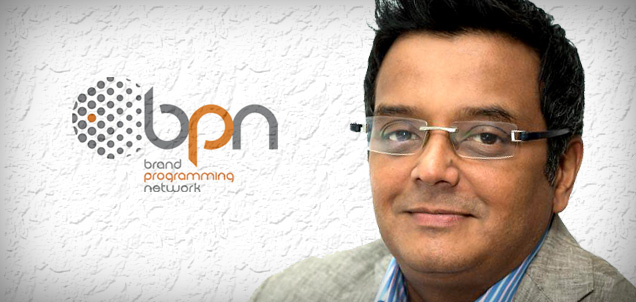
  • Making brand the hero with BPN


    Just when you thought that the media agency space is getting crowded in India comes the news of another agency setting up shop in India. Brand Connections that was present in 12 countries across the globe excluding India and the United States, will now be rechristened Brand Programming Network. In effect this will be the official launch of BPN in India. And simultaneous with the rest of the world. This will make the agency the third such offering from IPG Mediabrands in India. It already has two in the form of (Lodestar) UM and (Lintas) Initiative. BPN will work under the LMG umbrella.


    Says Lynn de Souza, Chairman and CEO of Lintas Media Group in a communique, “For media agencies thus far, the starting point has always been the advertiser. Consolidation, portfolio management, aggregation etc. are all client focused and to some extent consumer data driven. BPN will focus on the brand. The time has come to turn back several chapters and make the brand the hero of all communication effort, and BPN has developed processes to do just that.”


    BPN will take on the service mandate of clients like Jyothy-Henkel, Bajaj Auto, Samsonite, and several other clients of LMG to start up with a billing volume of over Rs. 1000 crores, in Mumbai, Delhi, Hyderabad, Kolkatta and Cochin.


    In India the agency will be led by Suresh Balakrishna, who has assumed charge as CEO of the agency. While BPN will be essentially a media agency, it will play the game differently by focusing on the brand. “Everything that we are recommending is going to be from a brand strategy direction,” assures Mr Balakrishna, as he gave MxMIndia a quick peek of what to expect from the agency in India, hours before it was unveiled.


    In conversation with Pradyuman Maheshwari and Johnson Napier, Mr Balakrishnan delves on how BPN will be different from the others, on the increased emphasis that will be laid on social media and digital and the new initiatives to look forward to from BPN in the coming few months. Excerpts:


    Is Brand Programming Network old wine in a new bottle?

    No, it is not. The usual answer that comes up about a third agency is that it is created due to a conflict of clients, allowing you to take on more of the similar clients. But with BPN, it is a thought-out strategic decision. If you look at India, there is no immediate conflict business (from network agencies) that is being parked in BPN. If you look at Mediabrands, for the last 10 years it has had a network called Brand Connections in other countries. But as markets have developed, especially a market like India, we find that there are enough businesses out here to have a third agency with a different character, a different way of thinking…and of course help handle conflict in the long run. So it’s not a knee-jerk old wine in a new bottle reaction from our end.


    The reason we ask you this question is that you have reallocated some of your existing businesses here. Does this also mean that Initiative and BPN could be in conflict with each other?

    It could be. In our system we can compete for businesses for the same pitch and may the best team win. Therefore we have a Lodestar UM, an Initiative and a BPN; we have three networks here in India and all three can compete for a business if necessary.  We do believe there is enough business out there and why leave some money on the table…


    What is it about BPN that differentiates it from others?

    A few things actually. Firstly, we are turning the clock back as an agency. We are going back a little in time and therefore the name Brand Programming Network. The whole idea is to focus on the brand. Earlier, media used to be in one house there used to be much more brand focus, even the media guys owned the brand. But over a period of time, media has become more professional, accountable, larger, etc but somewhere in the process we believe that brand connect has got lost. Therefore, BPN would be an agency that would focus on the brand; everything that we are recommending is going to be from a brand strategy direction. To give an example, in the last four months we have won over four-five businesses and in almost all the business pitches the client fed back to us saying is this a creative agency presentation or a media agency presentation? So you can imagine the extent to which we are spending time to analyse the brand, looking at brand strategy, looking at TG, etc. We are focusing on that aspect of the business and of course at the end of the day media is just a delivery vehicle.


    In fact Mr Shashi Sinha even hinted in an interview with us that we need to return to the full-service agency model. Are you in agreement with that statement?

    Half-way house, I would say. We are calling ourselves a full-service media agency in the sense that the touchpoints today have become all-pervading. For example, the touchpoint would be you ride on content. But who creates that content? You have an instance where the customer himself creates content in digital and then you have specialists who create content. So content itself has no owners and therefore reaching out to the customer has become that much more complex and you can only do it of you have the fabric of the brand and what it wants to convey.


    But the same thing could even be said by the creative agency bosses like, say, R Balki of Lowe, etc who feel that creative is alright but we also need to add some media to it. They could also be thinking on those lines…

    So what if they think the same, but I think at the end of the day to deliver media, you need a certain size… in fact many media heads today are CFOs; they are not media people. They have a commercial bent of mind and manage money.


    So are you saying that a media agency can be a full-service agency but a creative agency cannot be a full-service agency…?

    In today’s context yes, I believe you can say that.


    Sorry to be asking you this for for the third time in different ways, but getting back to BPN, in a sense it will be a brand agency…

    Yes, and across the world in the 13 other countries that we are present in apart from India, we have a lot of retail businesses and that is another area of growth that BPN is seeing. That seems to be the character of the agency globally – handling a lot of retail clients on a local basis.


    Will you only handle products and not brands in other sectors?

     There will be no category and geographical limitation. What the agency will bring to the table is brand perspective. In many cases, we have seen that clients do not want a brand perspective from a media agency. They get enough of it from a creative agency and want only the media bit from us. So I may not be the right pick. But being part of an agency like LMG I may bring along a necessary clout; I am big enough to matter and small enough to care. But that is not going to be my reason to be.


    In fact for BPN, one of the things being discussed is India as the analytics hub for BPN worldwide.


    Is it likely to happen soon?

    Yes, it is going to happen very soon.


    Wouldn’t analytics have done better as a separate unit like what the other networks offer?

    Maybe if it did well it could become a separate agency but to begin with it will be a part of the service that we are offering.


    Somewhere in your press release you have emphasised on laying adequate stress on social media. Is BPN going to be basically a digital or social media agency?

    No. But globally, and in India, I believe that digital and social media has much more mindspace than wallet space. So it really has a long way to go. Having said that, digital is growing very rapidly globally. One of the things that you will hear from us is a tie-up of sorts with a large platform about which you will hear soon.


    Will social media be the mainstay for BPN…?

    Not in India but worldwide, yes.


    So here you will be doing the traditional stuff plus digital and social…

    Absolutely.


    Could you delve a bit on the team that will drive the function for you in India?

    We have Premjeet Sodhi as the COO, Patrick Gomes would be the head in Mumbai, Mahesh Motwani would be head of Kolkata, Vidya Nanda Kumar will be head of Kochi…we have identified a head for Delhi and Hyderabad that we will announce very soon. We have a staff strength of about 70 and about 40 clients till now.


    Going forward, will BPN and Initiative be sitting together and pitching for a business?

    All the existing businesses in Delhi, Bangalore etc will belong to Initiative while Mumbai, Kolkata, Kochi etc will belong to BPN. We will be having separate offices which ever cities both of us are present.


    Any other plans on the anvil for BPN?

    Yes, we would be having a training and consultancy cell for media houses. The other thing will be branded content….


    Paid news?

    No (laughs). AFPs, in-film branding etc.


    You have always been a print man, do you still have a soft corner for the medium compared to television which is more popular of the two?

    Brands of course want television but I think print also works. Ours is the only country where print is still growing.


    But TV is growing a bit faster.

    Yes.


    What will the the revenue mix of BPN look like in future… if it’s 99 traditional and 1 digital?

    Going by your 99-1 yardstick, it will be 80 per cent traditional and 20 per cent from other mediums. Possibly even 75-25.


    If BPN has business worth Rs 1000 crore, how much will Initiative be?

    It would be the same. LMG as a group is Rs 2000 crore.  All the businesses in Delhi and Bengaluru belong to Initiative while Mumbai, Kolkata, Kochi are now part of BPN.


    In Indian corporates, there is a tendency to guard one’s fiefdom. Did Initiative feel bad you took away some of its businesses?

    They haven’t expressed anything as yet.


  • Debrief: Skoda Laura RS: Totally off the mark

    By Anil Thakraney


    I am assuming RS is a new upgrade of Laura, and that the car packs in some new features. What those features are I have no idea after watching the commercial because the ad goes on a bizarre tangent.


    In the TVC, a sexy woman pulls some silly stunts with her Laura outside what looks like a night club. She then wears the ‘scent’ of the burnt rubber, and has all the men swooning. That’s pretty much all that happens.


    Now, to be fair to the makers of Skoda Laura RS, they have at least stayed away from the thakela shots of macho men speeding the machine. That they have used a woman as the motorist is quite a brave move because ladies at the wheel don’t really inspire much confidence (militant feminists to please excuse). Or at least that’s the popular perception inIndia. But what they have done with this idea sends the brain for a toss.


    Many problems out here. The expensive luxury car Skoda Laura RS is most likely to be bought by rich Indian men. Would the sight of a woman fooling around with the car appeal to them? I doubt it. In fact, I was left with the impression this is a woman’s-only car, ergo, not for me. Next: Smell of burnt rubber. I don’t know if that’s a turn on for men in the upper income bracket, but a burning tyre puts negative imagery in my head. It subliminally tells me this is a fragile car. Add to that a woman driving it, and it confirms that Skoda Laura RS isn’t my scene. And lastly, the script is loose, it leaves you with a feeling of incompleteness. Maybe a little story was called for out here.


    Nopes, this won’t work at all. Back to the drawing board, I say.


    Rating: (On a scale of 1 to 5): 1. Tries to be different but loses focus.


  • 94.3 MY FM elevates Rahul Namjoshi as National Corporate Sales Head

    By A Correspondent


    94.3 MY FM has elevated Rahul Namjoshi as National Corporate Sales Head. Mr Namjoshi, who has been associated with MY FM since 2007 as the Regional Head for Gujarat, moved to take the role of Business Head for North, East and South zones last financial year where he has played a critical role in transforming the Delhi region within a short span of time.


    In his new role as National Corporate Sales Head, all non-station market sales teams including Mumbai, South,Delhiand government will report to him with immediate effect while he will continue reporting to the CEO, Harrish M Bhatia.


    Commenting on the development Mr Bhatia said: “MY FM has created a culture that acknowledges exceptional performers. We are pleased to promote Rahul as the National Corporate Sales Head for 94.3 MY FM. We are sure that with his knowledge of Radio and the brand, Rahul will take MY FM to newer heights, making a positive contribution to the top line of the company.”


    Continuing with the restructuring exercise, Harold Paul and Ambika Singh have been elevated to the Station Head level at MY FM’s key station – Ahmedabad. They will look after Corporate Sales and Retail Sales respectively.


    Before joining 94.3 MY FM, Mr Namjoshi was leading Reliance Industries Ltd – Textile division as Deputy General Manager.


  • Conde Nast Traveller India announces Readers’ Travel Awards 2012

    By A Correspondent


    Conde Nast Traveller is inviting its readers to vote for their most memorable and treasured travel experiences by participating in the annual Conde Nast Traveller Readers’ Travel Awards 2012, recognized internationally as a benchmark for excellence in the travel and tourism industry.


    Readers can vote for their favourite holiday destinations and travel experiences by filling in the Readers’ Travel Awards questionnaire available in the Conde Nast Traveller June-July 2012 issue or by logging onto www.cntraveller.in. The award winning destinations, hotels, airlines amongst other categories will be announced at an awards ceremony later in the year.


    Since their introduction in India last year, Conde Nast Traveller Readers’ Travel Awards have been recognized as the most prestigious travel awards in India.


    Divia Thani Daswani, Editor, Conde Nast Traveller India said: “We were overwhelmed by the response the awards received in their first edition in India. The Conde Nast Traveller Readers’ Travel Awards are widely acknowledged as the most prestigious awards in the travel industry, because they are voted for by our discerning readers, who understand, appreciate and ultimately consume luxury travel products and services. We look forward to an even greater response this year, given the increased circulation and reach of the magazine, and the growing appetite for luxury travel.”


    Conde Nast Traveller India readers have the opportunity to vote across 22 categories for their favourite destinations, hotels, airlines, spas, airports and more.


    Talking about the success of Conde Nast Traveller Readers’ Travel Awards in India, Shri Subodh Kant Sahay, Honourable Minister of Tourism, Government of India said: “Now is the time to properly market India’s tourist destinations and achieve our vision to double the number of tourists to India. Conde Nast Traveller has contributed extensively to the Indian tourism industry since its arrival in India and we believe that the magazine will offer a significant boost to our initiatives thanks to its circulation and credentials – which are tremendous, no doubt.”