Blog

  • Milestone stirs up Nestle’s Junior Daheez launch

    By A Correspondent


    The Nestle team decided to launch Junior Daheez inDelhiusing an extensive out of home (OOH) campaign with more than 50 + sites in the city. The creative of the campaign, developed by Publicis Capital, showcase an image of Toy Train carrying two cups of Junior Dahi.


    As a part of the campaign, the cups innovatively rotate on the train which helps in catching more eyeballs. The OOH campaign is executed by Milestone Brandcom and is spread across various outdoor formats to optimize impact. The outdoor formats include billboards, unipoles, bus queue shelters, strategically located at major arterials roads ofDelhi.


    Ravi Rockey Ambrose, Sr. Vice President, Milestone Brandcom said: “We are thrilled to work on the brand. The brief from the Nestle team was to deliver the most impactful plan for launch of Junior Dahi and I am thrilled that the team has ensured the same.”


    The on-going campaign kicked off on May 18 and continued till the first week of June.

  • Grey wins Network18’s creative biz

    By A Correspondent


    Grey has won the creative mandate for the entire Network18 Group; a media and entertainment company with interests in television, internet, films, e-commerce, magazines, mobile content and allied businesses.


    The agency’s Mumbai branch will handle this account. The win is the result of a multi-agency pitch that saw the participation of several prominent agencies.


    The campaign will be primarily television-based and is expected to go on air in August.


  • Disney India eyes in-home segment

    By A Correspondent


    Disney Consumer Products (India) announced its association with Sunteck Realty Ltd, a Mumbai based real estate company to launch Disney-inspired homes in Mumbai. This will be DisneyIndia’s first foray to bring Disney-inspired interiors and exteriors in the Indian real estate market for Indian kids and families at the proposed property in Goregaon by Sunteck Realty.


    “We are pleased to be working with Sunteck to offer Indian families an opportunity to bring a piece of Disney magic into their homes. Disney’s beloved characters and stories have inspired multiple generations of fans,” said Roshini Bakshi, managing director, Consumer Products, Retail and Publishing, Disney UTV. “Our Disney Home products span across total home solutions  and we look forward to bringing more Disney inspired home environments and décor to kids and families inIndia.”


    “Our association with Disney in Mumbai helps us differentiate our offering from the other players in the market and breaks through the clutter to offer families their dream home. We are excited to be the first ones to bring Disney inspired homes toIndia,” said Kamal Khetan, Chairman & Managing Director of Sunteck Realty. “This association with Walt Disney reiterates our commitment to deliver niche living spaces to discerning customers.”


    Disney fans can choose from their favourite Disney stories or its beloved characters and own family spaces that are colourful, timeless and inspiring. Disney inspired homes will have Disney branded furnishing, home décor products, colour palettes, bedding products, bath fittings and more to bring alive the Disney experience for the family.


  • Mediaah! Why Ambika Soni is to blame for the delay in digitization

    By Pradyuman Maheshwari


    I have been a huge fan of the current information and broadcasting minister Ambika Soni. After the likes of Priyaranjan Dasmunshi and Anand Sharma, Madame Soni’s tenure came as a breath of fresh air. And a much-needed one, because she didn’t make life miserable for the broadcasters like her predecessors did (and I am told wanted her to).


    The I&B minister’s job is a thankless one. Several hundred Parliamentarians and politicians, consumer groups, corporates, lobbies and alert citizens writing to her with comments and requests, and most of which cannot be ignored.  If Colors didn’t face any problems with Balika Vadhu or Star Plus didn’t have to pull out Sach Ka Saamna, it’s thanks to the minister warding off various pressures.


    I think just keeping all these complainants at bay and letting the various players do their job is an achievement. She has also gently ensured that news and non-news broadcasters adopt a stringent (and effective) self-regulatory mechanism.


    So what’s the problem? Well, part of it is thanks to successive I&B secretaries having short tenures. Uday Kumar Varma, the incumbent, also has a two-year stint prior to retirement or an extension. Mr Varma has the advantage of having worked with MIB in the past at senior positions so he didn’t spend a few months understanding the nuances of the job as a few of his predecessors may have had to.


    Over the last few months, several industry captains and observers have told me that the ministry is inefficient which I have vociferously countered by saying Ms Soni’s achievements need to be counted by her proactive opposition to regressive forces. At least one CEO even told that me that I was too pro-MIB. Perhaps, but that’s because she’s not regressive.


    However, the fact is that the ministry lacks the initiative to deliver on bold measures. Nothing happened with Doordarshan even as much was promised when it celebrated its golden jubilee in 2009. The radio sector is still floundering: there is still no news on radio even as television stations even in the most sensitive of zones in the country are allowed to air news. The minister wasn’t able to stand up to her colleague in the food and consumer affairs department on ad regulation and more recently it’s made a mess of the entire digitization process.


    The Minister and her secretariat were aware of the requirements of the process, so even before accepting the TRAI regulations, they ought to have looked at whether the Sunset Date of June 30 was achievable. It wasn’t as most stakeholders told us.


    Even now, as a few of the people familiar with the situation on the ground have told me that October 31 is going to be a tough ask.


    It’s critical that the government monitors the execution carefully and ensures that there is no room for any further delays. Care must also be taken to ensure that the respective state governments and municipal corporations are taken into confidence… especially in Chennai and Kolkata.


    As to those who raise the bogey that digitization puts television out of the reach of the lowest common denominator, the answer is that they can always access terrestrial transmission. Quality software must be paid for.


    Meanwhile, all is not lost for the Honourable Minister. She must get aggressive on digitization and various other pending issues in her ministry. Or let history remember her as one more ineffective I&B ministers that India has had.


    Buzz me if you have a story to tell. Confidentiality assured. There are various ways you can reach me:

    pradyumanm[at]mxmindia.com, Gtalk pradyumanm@gmail.com, Twitter @pmahesh and of course the mobile: 98338 76278.  The views expressed here are my own.


  • Life OK and SAB: The see-saw continues…

    By Meghna Sharma


    In India there is no dearth of television channels. The competition is only growing and the race to lead in the TRP race is heating up. In the past few weeks, the two channels which seen an increase in their TRPs are Life OK and SAB TV which have been fighting for the fifth spot in the TRPs race.


    Life OK, the newest entrance in the GEC genre from the Star India stable, was launched in December last year. The network renamed and re-launched their youth-oriented channel Star One with new tagline ‘cherishing what you have’.


    On the contrary, SAB TV has been around for over a decade now but has gone through various transformations. In March 2005, SAB TV was acquired by Sony Entertainment Television and was transformed into a youth-centric channel. In June 2008, the channel announced that it would return to its roots by being repositioned as a comedy-centric channel.


    So what does the race for TRPs mean for the two channels and do they pose a threat to other GECs? MxMIndia spoke to a few media planners to see what is the future of the GECs and what shape will this ‘war’ take.


    According to the latest TAM data, in week 24, SAB TV has toppled Life OK and regained No 5 position. Whereas, last week (week 23), Life OK was the fifth most watched GEC.


    Sundeep Nagpal

    Sundeep Nagpal, founder director, Stratagem Media feels that these are momentary fluctuations and cannot be contributed to anything per se. “These channels have a small base; therefore, even a single factor can affect the ratings of the show – positively or negatively – depending on how it did on a particular week. Hence, I don’t think we should be alarmed by such fluctuations. And they won’t be able to impact the top 4 slots.”


    The two channels have positioned themselves differently, too. SAB TV is a comedy-centric channel which portrays itself has a family channel, whereas Life OK has shows full of melodrama like other GECs.


    Janardhan Pandey, associate vice-president, DDB Mudra Max feels that the two cannot impact each other drastically. “SAB has its own set of audience which won’t get influenced by other GECs and vice-versa. They will continue to do well in their own categories; the fluctuation between the two is possible but they don’t have the same hold as other GECs do. They still have a long way to go.”


    Jai Lala

    On the other hand, Priti Murthy, national director – Insights, Maxus, feels that though these channels might be still small fish, they cannot be ignored entirely. “Like these two channels, even number two and three slots have been fluctuating for a while now. So, slot five and six can create an impact too. One cannot rule out the possibility of them gaining to higher positions in the future if they come up with new and better content.”


    On the channels growth, Mindshare’s principal partner, Jai Lala feels that the two channels have grown since Imagine TV, a Turner International India Pvt Ltd entity, was shut down earlier this year. “The shutdown of Imagine TV has benefited these two who are now turning out to be competitors. However, they still have a small base compared to others and unless and until they cross the 200+ threshold, I don’t think that they can or will affect the channels like Star or Zee or Sony which have been ruling the top slots in the TRP race for a long period of time.”


    Uday Mohan

    “While these channels are doing well they have a long way to go in terms of reaching the numbers of the mainline GECs. They still don’t have the kind of appointment viewing that the mainline GECs generate….they might eat into the shares of other frequency channels but will not threaten GECs, at least not immediately,” added Uday Mohan, executive director – North, MPG.


    Most experts believe that there is nothing to be alarmed about the two channels see-sawing. What they do feel is that both the incumbent SAB and challenger Life OK will have to work harder if they want to reach the top slots.


  • Ranjona Banerji: What the Whacky-dooky?!

    Ranjona Banerji

    By Ranjona Banerji


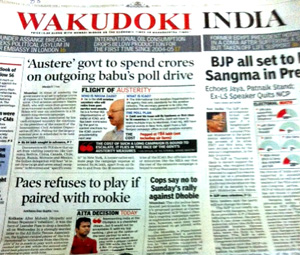
    I understand that advertising is vital to the well-being of a newspaper but just who invented these idiotic “half-jackets” which either split the front page of a newspaper or cover it with some meaningful and wholesome message about a bank or a soft drink?


    What I mean is, does one blame an advertising agency or the ad sales department of a newspaper?


    My problem however is not to do with the advertising message itself – although I was hard-pressed to understand today’s Wakudoki message on The Times of India masthead. Why this car company had to say Wakudoki to us, I don’t know. What Wakudoki is I don’t know. In some places Wakudoki was one word and in other places Wako-doki was hyphenated. Actually this made me happy in a schadenfruede kind of way – copy checkers in ad agencies are of the same calibre as sub-editors in newspapers.


    My primary objection is that they don’t allow you to fold the newspaper properly. This is particularly annoying as you reach the last pages of the paper as the half-jacket page with not enough hold flies off or falls off or slips out. This makes me want to shout something far more robust and potent that “Wakudoki” or even “Waku-doki”. Hyphen or not, the words I’m thinking of do not start with a ‘w’.


    Halfway through reading about Leander Paes’s current tantrum to compete with Mahesh Bhupathi’s original tantrum, I suddenly find the names have changed to Drogba and Rooney. These names are as mysterious to me as “Wakudoki” (and “Waku-doki”) and as I wonder if my coffee has some magic mushrooms in it, I realise that the last page of the newspaper has slipped off.


    I realise that The Times of India is not the only guilty newspaper here. Everyone does it. It’s just that I was whacked in the face today by this vastly annoying invention. It even beats the detergent bubbles and spouting soft drinks I had to deal with as a young sub-editor.


    In my view, I would rather the newspaper just sold its front page, self-respect and identity in one go rather than in half-measures. That way you can just turn the page, know that it will fold obediently and carry on with the latest Purno, Pranab, Nitish, Narendra fight.


    Instead of wanting to start the day by whacking whoever comes close because the newspaper begins with some cheapie corporate who only wants to pay for half a sheet of paper.


  • Colors jumps to No 2, thanks to JDJ

    By A Correspondent


    Reality shows are the flavour of the season; and the latest entry to the bandwagon is Colors’ Jhalak Dikhla Ja.  The celebrity dance show in its fifth season premiered on July 16 on Colors and thanks to the show, the channel saw its highest growth this week. Colors has jumped to No. 2 again.


    According to the latest data for week 24, Star Plus is on number 1 position with 268 GRPs this week (last week 269). Zee TV has slipped to No. 3 with 212 GRPs (last week 203). Sony Entertainment Television went below the 200 mark, at No. 4, the channel has recorded 187 GRPs (last week 201).


    DID Little Masters on Zee has been doing well for the channel, but saw a drop in TVR ratings (2.8)  as Jhalak Dikhla Ja  got a 3.13 TVR. Both are dance shows, but whereas one deals with children, the other has celebrities like Madhuri Dixit and Karan Johar to its credit.


    So what worked for the show as well as the channel? Dinesh Rathore, vice president, India- West, MediaVest Worldwide, feels that though celebrities do arouse curiosity and makes them switch to a particular channel, there is no dearth of celebrities on television today as most reality shows feature them. “I think the show has done well on its opening weekend because of the initial curiosity. It would be difficult to say if it will continue to do so for the channel. We’ll just have to wait and watch.”


    Monaz Todywalla, general manager, Madison Media, said: “From the content point of view, the show is well packaged and promoted. Hence, it was bound to get such ratings on the opening weekend. However, the channel cannot rest on the shows shoulders alone. If it wants to remain on the slot or even reach the numero uno position, it will have to do a lot more, especially content wise.”


    Meanwhile, Zee TV’s DID Li’L Masters which earned a launch rating of 5.8 is adding a Bollywood flavour to its show on the coming Sunday with a tribute to the iconic dancing stars of Indian cinema.


    Surely what we have seen is a mere ‘jhalak’ of the two warring dance shows.


  • 9XM celebrates World Music Day with 9XM Wall of Music

    By A Correspondent


    9XM is celebrating the World Music Day on June 21 with a unique on-ground innovation. The channel is creatingIndia’s very first digital music wall called the ‘9XM Wall of Music’ offering free downloads of the latest Bollywood songs. The 9XM Wall of Music will be installed at the Chatrapati Shivaji Terminus in Mumbai and DAME Shivaji Stadium inDelhi.


    Based on the augmented reality technology, the 9XM Wall of Music will enable multiple songs downloads from the latest Bollywood movies. People can download songs by scanning the Bollywood movie posters placed on this wall, with their smart phone devices. People who do not own a smart phone can also download songs from the 9XM Wall of Music by sending a SMS to 54646 to get the song link on their phones for further download.


    Speaking on this initiative, Amar Tidke, Sr. VP & Content Head, 9X Media Group said: “June 21 is celebrated as the World Music Day across the world. This designated day of free music will be celebrated by 9XM by providing unlimited free downloads of the latest Bollywood hit songs. We are confident that this unique offering will make the World Music Day extremely memorable for Bollywood music fans.”


    The World Music Day originated inFranceand is celebrated annually on June 21. It is a day when the world celebrates the magical gift of music. Anyone can make music on World Music Day, in some cases in any location, provided one rule is followed: The music must be free.


    The 9XM Wall of Music will be promoted with a 360 degree plan across on air, print and digital platforms.

  • Debrief: Hyundai i10: Same old, same old

    By Anil Thakraney


    In my books, the worst celebrity choice in Indian advertising has to be Shah Rukh Khan endorsing the poor man’s Santro. It’s a cruel joke, really. The multi-billionaire hero would want to be caught dead inside such a ‘down-market’ vehicle.


    Well, Hyundai has cast him again, this time for their i10 car, which is one level above Santro. But is still an aam aadmi ki gaadi. I often wonder what SRK does with such a car, assuming one ‘sample’ is sent to him gratis. I suppose he gifts it off to one of his security guards. Anyway, let’s get to the task at hand: The commercial has a strange idea – something called ‘the helping hand’. And this mystery hand blesses the i10 owner with good things in life. Like a hot babe, great weather, etc. But frankly, all I recall is shots of SRK primping and preening throughout the ad. The same old Bollywood expressions of his that the junta is tiring of.


    Nope, this isn’t working at all. Not only is SRK over-used and over-abused in media and advertising, by no stretch of imagination can I visualize a brand match out here. Therefore, he neither brings in freshness nor salience. The i10, if they must used celebs, would be far better served with fresh new faces from the showbiz. In addition, there’s no story, no narrative in the TVC. Same old boring lifestyle shots that most car ads use.


    [youtube width=”400″ height=”225″]http://www.youtube.com/watch?v=J9q_6214N_8[/youtube]

    It’s a flop show. The people who need a helping hand out here are the brand manager and his/her ad agency.


    Rating: (On a scale of 1 to 5): 1. Poor casting. Weak creative.


  • 1 Gold, 1 Silver & 5 Bronzes on Day 4


    By Delshad Irani


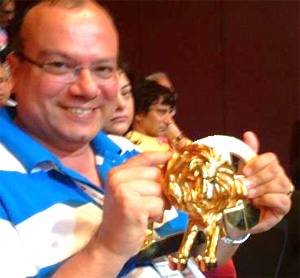
    DDB Mudra Chief Operations Officer Pratap Bose put up this picture with the Design Gold on his Facebook page

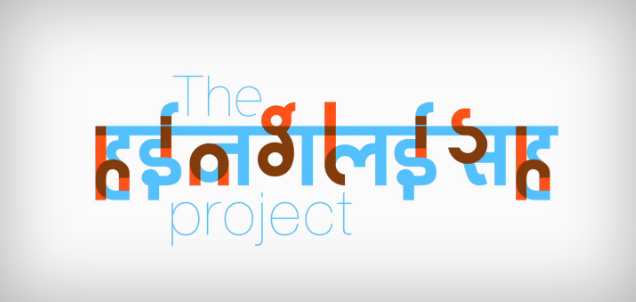
    Cannes on Day 4 won more gold for India, taking its tally to two. ‘The Hinglish Project’ from DDB Mudra Group took home a gold Lion in design.


    The design entry is part of the ministry of tourism’s Incredible India campaign. Abhijit Bansod, jury member and principal designer and creative head, Studio ABD, said this is perhaps a new beginning for hybrid typographic design work that combines cultures.


    “It really stood out amongst the typographic work we saw during the judging process,” he adds. India had a total of eight entries on the shortlist with three originating in DDB Mudra Group, including a campaign for Volkswagen India.


    ‘The Hinglish Project’ has been awarded a bronze Lion, too. A total of four categories were judged on the day. Press, a traditional favourite with Indian entrants, kept India’s ad engine chugging along. There is one silver Lion in Press for Leo Burnett’s work for Bajaj Electricals.


    Ogilvy took home two bronze Lions in the same category for its work for Perfetti Van Melle and Mattel Toys’ Hot Wheels brand. And, BBDO India has one bronze Lion, courtesy its work for White Collar Creatives.


    The Grand Prix winner in Press is United Colors of Benetton’s Unhate campaign that cooked up a storm in many places around the world and got it the much-coveted top prize at the Cannes Lions.


    In radio there’s a lone win, another bronze Lion for India as well as Leo Burnett. Titled ‘Punishment’, the work interestingly was written entirely in Hindi. The work for Mumbai-based book store Strand Book Stall is in the form of a conversation between Mahatma Gandhi and a little boy.


    According to Rob McLellan, executive creative director, Network BBDO South Africa, and Radio Lions’ jury president: “It is a heart-warming piece of work. India is very similar to South Africa in many ways. Radio is still the most popular medium and sometimes the only way to reach people. I think the piece is a worthy winner.”


    This brings us to Cyber category, a disappointment of digital proportions. Out of the 27 entrants, not one made the shortlist. About India’s non-existent presence in this category Anita Varma, jury member and director of Digital Driftwood, said it’s a shame because we are great storytellers but falter on how best to use the technology at our disposal.


    Source: The Economic Times

    Copyright © 2012, Bennett, Coleman & Co. Ltd. All Rights Reserved


  • Can we achieve the October 31 deadline?


    By Shruti Pushkarna


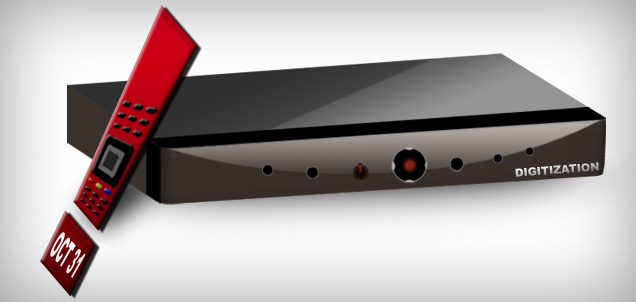
    Under mounting pressure from various stakeholders, the government announced an extension of four months for the first phase of digitization of cable television. Digital Addressable System (DAS) will now be effective from November 1 in the four metros, Delhi, Chennai, Kolkata and Mumbai.


    A press release issued by the I&B Ministry read: “The Cable Television Networks (Regulation) Amendment Act, 2011 has made it mandatory for switchover of the existing analogue Cable TV networks to Digital Addressable System (DAS) by December 2014, in a phased manner. In respect of four metros of Delhi, Mumbai, Kolkata and Chennai, the digital switchover is mandated to be completed by 30th June 2012.”


    But towards the end in the press note, the ministry acknowledged that keeping ground realities in mind, the MIB is compelled to set a new deadline. The statement reads, “…keeping in view public interest and after intensive and extensive consultations, as well as written commitments from all the stakeholders, for fully implementing the regulations of TRAI, the Ministry of Information & Broadcasting has decided to modify the 30th June deadline for a complete switch over to 31st October 2012 for all four Metro Cities i.e Delhi, Mumbai, Chennai and Kolkata. All the TRAI regulations for DAS will come into effect from 1st November, 2012.”


    The extension was announced notwithstanding the pending matters before the Delhi and Bombay High Courts and the TDSAT. The Bombay High Court will hear the petition on June 21 and the Delhi High Court will hear the matter on June 25, which is also the date when TDSAT will hear a similar matter filed by LCOs and IndusInd Media & Communications Ltd.


    Soon after the announcement of the new sunset date, MxMIndia spoke to various stakeholders to get their reactions on the new timeline and to find out if October 31 is an achievable deadline. While some welcomed the government’s decision for postponement to November 1, others felt that the extension issued by the ministry is not enough for the humongous task at hand.


    MSOs welcome the govt’s decision, though some still unsure of achieving the deadline

    Ashok Mansukhani

    Ashok Mansukhani, Director, IndusInd Media & Communications Ltd said: “I think it’s a sensible development and it will help in smooth transition to digitization. The new date is completely achievable, it was fully discussed in the taskforce. I don’t know about Tamil Nadu since the government there is supposed to install the set top boxes but for the other three metros, certainly it will happen. It’s a welcome step and it was fully discussed in the taskforce and it’s a natural result of the taskforce deliberation.”


    JS Kohli, CEO, Digicable said: “We are happy with the postponement. Although it’s not a six month extension but yes we can deliver on the new date. We are satisfied with the extension.”

     

    JS Kohli

    Ravi Gupta, Independent MSO, Delhi said: “The new sunset date is good although it is two months less than what we were expecting. They should have given a six months extension, I still don’t think we can achieve the task by November 1. A lot of digital headends are under installation and integration is what takes time. I don’t think anyone from the ministry has done a detailed study of this process. No senior official from the ministry or from the TRAI has visited a digital headend. A minimum of six months extension should have come.”


    LCOs happy with the extension but feel four months not enough

    MR Srinivasan, General Secretary, Chennai Metro Cable TV Operators Association said: “It is good in a way because we are not yet ready because in Chennai only 2 lakh boxes are available. But now atleast we have some breathing time. Moreover, the government of Tamil Nadu is planning to start some MSO operation in Chennai, so it’s some relief and we have some time to plan ahead and be ready before the sunset date. Actually we expected an extension upto December but atleast we have got a slight relief, something is better than nothing.”


    Sanjay McGee, Local Cable Operator, East Delhi said: “Although it’s a good decision, in the last meeting between LCOs and I&B Ministry, Rajiv Takru agreed that four months extension was not enough. At first the ministry refused any extension, but when we urged on atleast three months extension, Rajiv Takru stated that if there has to be an extension then take atleast six months. But they have taken a middle path and decided on four months. They shouldn’t have announced the extension at this point, they should have waited till June 29. Now the consumer will not take the deadline seriously and the pace will slow down. If we keep working at the same pace as of today, then we might be able to achieve the new deadline.”


    Swapan Chowdhury, General Secretary, Cable & Broadband Operators’ Welfare Association, Kolkata said: “I am not satisfied because four months will not cover up the whole situation. Government might have given an extension but they have not considered any facts and figures. I say that because 70 per cent in Kolkata still don’t have set top boxes (STBs), so four months are not enough for deployment of such a huge number of STBs. It will not even happen on November 1. Maybe another 20 or 30 per cent seeding will be done up till the new date but what about the remaining numbers. In the June 8 meeting with the I&B Minister it was categorically mentioned that none of the government appointed nodal officers have checked the actual seeding position or the status of ordered material. Unless and until the government studies the ground situation deeply it will again fall back. The actual facts are different from what’s being presented on paper. They should have given an extension upto atleast Jan 1.”


    Broadcasters disappointed with the postponement, suggest on strict penalties for those who don’t adhere to the timelines

    Sunil Lulla

    Sunil Lulla, Managing Director & CEO, Times Television Network said: “It’s a complete disappointment. What is the guarantee that the new date will be held, when there is a date set by law, why should the date be changed? A lot of time, money and effort has gone by broadcasters in promoting and communicating the date and making sure consumers went along. The industry and the consumer suffers because there are some parts of the entire constituent which may not have adhered to these deadlines, may not have implemented the seeding of the boxes. This was announced on the net through a press release, the government hasn’t really notified us. I think it would have made sense for them to invite all stakeholders and agree on a new date if there was to be one and to a process by which these date wont slip.”

     

    Rahul Sood

    Rahul Sood, Head- Network Distribution & Affiliate Sales, NDTV said: “Basically LCOs were pushing for a Jan 1 timeline and broadcasters were saying that if you have to give an extension, it should be only for three months. So I guess they have taken a middle path by extending it upto October 31. The TRAI guidelines which came out on April 30 were such that within six months there has to be implementation of the same. I think that’s the loophole that MSOs and LCOs were quoting and asking for a minimum six months extension. So keeping all that in mind, I think ministry has taken this step. But if as an industry we have this discussion again on October 20, then it’s a real shame. There should be no excuses now, timelines have been extended, now there has to be a joint willingness to from all stakeholders to make sure this happens. While they have issued this date change, I think with that strict penalties and penalization code should be put in place as well for those who don’t adhere to the new timelines.”


    An independent commentator says new sunset date ill-conceived

    Dinyar Contractor

    Dinyar Contractor, Editor and Executive Publisher, Satellite and Cable TV Magazine said: “This is not going to work, this date is ill-conceived. There is no way that set top boxes can be procured and deployed in that timeframe even if the order is released today. As I’ve mentioned earlier, delivery time on set top boxes alone is around four months so this extension makes no sense except postponing one more extension. Any date prior to end of December is not realistic and is not going to resolve the problems or the issue, which is obtaining and deploying set top boxes. So I feel that the extension is inappropriate.”

     

  • Paritosh Joshi: Unbundling the Living Room

    By Paritosh Joshi


    An erstwhile colleague was talking about the proliferation of the second television set. In her assessment, as many as 10% of all C&S homes now have more than one TV. Listen close. 10% of ~100 million homes. That’s 10 million multi-TV homes in the country. From 1 TV for every 5 viewers, the equation has changed sharply, for these 10 million homes to 1 TV for every 2.5 viewers. Evidently there will be consequences. (And as you shall soon see, it is even better (or worse) than that).


    Whether you look at Hindi, English or any of the languages in which TV is offered in India, there is a common architecture that defines the structure of the market. Three pillars hold it up: big and hefty General Entertainment, massive Sports (shared across language barriers by offerings only in two languages) and wildly proliferating News with lots of fragile strands. Since Sports really has no local identity, focused as it is on the national obsession with Cricket, and News offers no heft, the defining feature of TV in every language is GEC. Dig a little deeper and the content logic of the GEC genre starts to become evident.


    GECs got blueprinted by the late 1990s. Indeed, you could argue that the basic template was in place even long before that, in the form of Doordarshan. Homes had one TV. Most people in the family, barring the housewife, would be away from the home for educational or employment reasons for several hours a day. The family would only start to congregate in the Living Room from about 6 p.m. as the members returned from wherever the day’s chores had taken them. By 8ish, there was a full house and smart programmers would be offering up delights that everyone would lap up without discomfort or embarrassment. The stereotypical picture of the Great Indian Family sharing and bonding before the Great Indian Entertainment TV Channel would now be complete. It was almost hard to discern where the khandan on TV ended and the parivaar in the Living Room began.


    Anyone who lived through the late 90s and early years of this millennium will recall vividly, as the stentorian authority of Amitabh Bachchan delivering his signature ‘Namaskar! Aadab! Sat Sri Akal’ echoed through domestic hallways in over a half of our country, he would have everyone jostling to find their favourite spot before the TV dabba. Once said spot was secured, it would be squatted on until the day’s K serials and such wrapped up.


    While all Hindi channels picked up the simple formula of family values and ‘rona dhona’ very quickly- thereby making them all look like reduced sized copies of the industry’s 500 pound gorilla, the regional players weren’t far behind. The model was perfected in Hindi and swiftly exported to markets in all regional languages.


    In the meanwhile, India was getting more prosperous as the economy saw half a decade of near double-digit economic expansion. At the same time, the telecommunications revolution was well and truly upon us. Call rates for mobile telephony fell in a frenzied race to the bottom. Handsets started developing capabilities far beyond the basic voice and text and shedding the boring monochrome screen for a jazzed up colour display. More onboard memory with scope of incrementing it further by more and more capacious SD cards, faster processors and rendering engines that took blur and dullness out of the mobile desktop screen enabled altogether new consumption possibilities on the tiny (but also growing fast) cellphone screens. Other screens were entering the repertoire. A second TV was seen as a mark of upward mobility. Desktop computers were becoming indispensable particularly in middle class homes with school- or college-going youngsters.


    Sources of AV content were growing far beyond C&S TV with young, urban consumers discovering the forbidden joys of ‘torrents’ that had reawakened, in a new morph, the only recently exorcised Napster. And there were so many alternatives on where the content, thus secured, could be consumed. The second TV would often come attached to a DVD player, or even a gaming console both of which did a commendable job of playing content. Even the little mobile device in the pocketwas rapidly becoming powerful enough to store and play not just songs and clips, but long form entertainment sourced from friend and stranger.


    The tyranny of the compulsory assembly before the glowing siren in the Living Room was being challenged by sundry interlopers big and small that were leading an uprising of person specific content.


    Oblivious to these tectonic changes in the landscape, programmers and channel heads, with their heads still stuck firmly up their <scatology deleted> outmoded notions of the ‘One big, happy family’ continued to design and programme General Entertainment. “Hey, you can have a car of any colour you want”, they incanted, “so long as it is black”. But who was listening? The young ‘uns had already found shiny, sleek, colourful new rides that they could scoot away in.


    p.s. for Programmers and Channel Heads: You may not have noticed it yet, honey, but someone just unbundled the Living Room.


    Paritosh Joshi was until recently CEO, Star CJ. He has been a marketer, a mediaperson and a key officebearer on industry bodies. He can reached via the comments board below or his Twitter handle @paritoshZero.