Blog

  • India wins 4 gold and 3 silvers at Appies 2012

    By A Correspondent


    India has done extremely well at the recently concluded Appies, winning four gold medals out of 10, 3 silver out of 5 and 2 Best Presenter Awards – Dhiren Amin, Group Planning Director, McCann Worldgroup India and Yousuf Rangoonwala, Brand Partner (Planning), BBH India Pvt Ltd win the Best Presenter Awards. (The complete list of winners is given at the end)


    APPIES 2012 announced the 10 Gold Medals and 5 Silver Medals winners as the two-day festival of the best marketing ideas in Asia-Pacific concluded in Singapore. The judges and assessors’ panel comprising top marketers in the region selected the winners from 100 shortlisted entries showcasing 48 global brands submitted this year. APPIES 2012 also handed out 5 Best Presenter Awards for the most compelling presentations and coherence of content.


    Leanne Cutts, VP, Marketing for Kraft Foods Asia who presided as the Chief Judge at the APPIES said: “We were delighted by the representation of the different agencies from different places at the APPIES this year. The campaigns made us laugh and made us cry… We had a lot of fun. However, the ideas that really impressed us were those that spoke to both the head and the heart.”


    “APPIES 2012 has been an extremely pleasant experience due to the diversity of thinking, of ideas and the ways they are brought to life. For me, the APPIES is all about connections – not only to the campaigns that speak to you but also meeting up with peers from across the region. I loved seeing all the liquid and linked ideas that were presented over the two days and it was eye-opening to see how multiple platforms were used effectively,” said Jaideep Kibe, Coca-Cola Sparkling Category Director, The Cola-Cola Export Corporation, Philippines, who also won the the Gold Medal for the OFW Project Campaign and the Best Presenter Award.


    Organised by the Institute of Advertising Singapore (IAS), APPIES 2012 is supported by SingTel, MEC, Asia Pacific Breweries (APB) and Singapore Press Holdings (SPH). Top regional marketers attended the two-day event which also featured special keynote sessions, panel discussions and exclusive talks.


    The list of gold medal winners are:

    1. Campaign: Pass it on

    Category: Pro-Bono/Government/Cultural

    Advertiser: Sri Lanka Eye Donation Society

    Country: Sri Lanka

    Agency: Leo Burnett Solutions Inc., Sri Lanka


    2. Campaign: Saffola Oats, ‘Do More with Oats’

    Category: Food & Beverage

    Advertiser: Marico India

    Country: India

    Agency: McCann Worldgroup, India


    3. Campaign: Student Suicide Prevention Drive

    Category: Pro-Bono/Government/Cultural

    Advertiser: Maitri Foundation, Mumbai,

    Country: India

    Agency: McCann Worldgroup, India


    4. Campaign: The Web Is What You Make Of It

    Category: Consumer Services

    Advertiser: Google

    Country: Singapore

    Agency: BBH Asia Pacific, Singapore


    5. Campaign: Curious Holiday Inn-cidents

    Category: Consumer Services

    Advertiser: IHG (Holiday Inn)

    Country: China

    Agency: Ogilvy & Mather Shanghai, China


    6. Campaign: Idea 3G

    Category: Consumer Services

    Advertiser: Idea Telecom

    Country: India

    Agency: Lowe Lintas & Partners, India


    7. Campaign: Ong & Raj

    Category: Pro-Bono/Government/Cultural

    Advertiser: Health Promotion Board

    Country: Singapore

    Agency: DDB Worldgroup, Singapore


    8. Campaign: The OFW Project

    Category: Food & Beverage

    Advertiser: The Coca-Cola Export Corporation

    Country: Philippines

    Agency: The Coca-Cola Export Corporation


    9. Campaign: Shave Sutra – Or, How To Turn A Mundane Solitary Chore Into Pleasurable Duet

    Category: Non-Food FMCG

    Advertiser: P&G India

    Country: India

    Agency: BBDO India


    10. Campaign: The Royal Project

    Category: Consumer Services

    Advertiser: Sizzler (Minor Food Group)

    Country: Thailand

    Agency: Y&R Thailand


    The 5 Silver Medals went to the following campaigns:

    1. Campaign: Parachute Ajurvedic – Recommended by Sufferers

    Advertiser: Marico India

    Country: India

    Agency: BBH India


    2. Campaign: Tiger Blue Xmas

    Category: Food & Beverage

    Advertiser: Vietnam Brewery Limited

    Country: Vietnam

    Agency: Leo Burnett Vietnam


    3. Campaign:  Tide Collars

    Category: Non-Food FMCG

    Advertiser: P&G International Operations Pte. Ltd., Singapore

    Country: India

    Agency: Leo Burnett, Mumbai, India


    4. Campaign: New House? Or New Furniture?

    Category: Consumer Services

    Advertiser: DFI Home Furnishings Taiwan Limited

    Country: Taipei

    Agency: Ogilvy & Mather Advertising, Taipei, Taiwan


    5. Campaign: Meetha at home!

    Category: Food & Beverage

    Advertiser: Cadbury India

    Country: India

    Agency: Presenter: Ogilvy & Mather, India


    The 5 presenters clinching the Best Presenter Awards were:

    1. Kittipong Veerataecha: Chief Strategy & Innovation Officer, Y&R Thailand

    2. Jaideep Kibe: Coca-Cola Sparkling Category Director, The Coca-Cola Export Corporation, Philippines

    3. Luke Nathans: Regional Development Director, APAC, iris Worldwide, Singapore

    4. Dhiren Amin: Group Planning Director, McCann Worldgroup India

    5. Yousuf Rangoonwala: Brand Partner (Planning), BBH India Pvt Ltd

     

  • AdStrat: Parle’s Wafers ‘Khaaneka aapka kya hai funda?’

    Rahul Jauhari, NCD, Everest Brand Solutions & Pramod Sharma, Creative Director, Everest Brand Solutions


    Rahul Jauhari

    Name of the Campaign: Parle’s Wafers ‘Khaaneka aapka kya hai funda?’


    Brief: Create clutter-breaking communication for the brand targeting the youth.


    Creative Thought Process:

    The idea was to carry forward Parle’s Wafers ‘Match jitaaneka aapka kya hai funda?’ campaign to moments beyond cricket. We decided to create more moments and give the younger audience more reasons to consume Parle’s Wafers.


    Media vehicles chosen: Television, Outdoor, Print, Social media


    [youtube width=”400″ height=”225″]http://www.youtube.com/watch?v=rMzCmynCXnQ[/youtube]
    [youtube width=”400″ height=”225″]http://www.youtube.com/watch?v=e2juospDlyo[/youtube]

    Key issues kept in mind while executing the ad:

    The communication was kept short, humorous and on topics relating to youngsters. Youngsters spend half their lives on stuff like FB. And of course, teen romance is a sweet spot that is immensely exploitable. Hence the use in the films. We believe these will connect well with the audience.


    Does the treatment do justice to the brief?

    Yes, the treatment, as mentioned above, is pretty much in the youth space.


    What according to you is the differentiating factor about the ad?

    Youth is all about fundas. This campaign speaks exactly this language – and allows youngsters to create their own fundas with Parle’s Wafers. Youth connect to new things in life. Talk in their language and they’ll surely accept you. We’ve cracked new Fundas of life for them. Fundas they can use in their daily life. The creative relates to them and will surely work the brand.


    Market/client feedback – The initial feedback on the campaign is very positive, and the audiences are very kicked up about it


    Pramod Sharma, Creative Director, Everest Brand Solutions:

    Youth connect to new things in life. Talk in their language and they’ll surely accept you.

    We’ve cracked new Fundas of life for them. Fundas they can use in their daily life.

    The creative relates to them and will surely work the brand.


    Credits:

    Client: Parle Products Pvt Ltd –

    Mr. B. Krishna. Rao – Group Product Manager

    Ms. Asha Mathew – Brand Manager

    Agency: Everest Brand Solutions, Mumbai

    Creative Team: Pramod Sharma, Samir Chonkar and Rahul Jauhari

    Account Servicing: Siddhi Shah andRavi Walia

    Film Director: Ram

    Production House: Nirvana Films

    DOP: Mohanan


    Compiled by Shubhangi Mehta


  • Now. get your Metro shoes home delivered

    By Tuhina Anand


    Metro Shoes has come up with a unique initiative to give an enhanced experience to its customers – that of getting their shoes delivered to their doorsteps. The service, in a nutshell, is that if the customer does not get his/her size and if it’s available in any other store across India, then Metro will procure it and send it to the customer’s home with no delivery charge for a hassle-free shopping experience.


    Talking about the initiative, Lavina Rodrigues Pinto, Marketing Manager, Metro Shoes, said: “At Metro Shoes, we believe in making a customer, and not a sale. The idea of initiating this unique service was to enhance the ‘customer delight’ by giving him/her what they needed without them having to worry about logistical and delivery hassles.”


    Ms Pinto added: “Being in the business of selling shoes for more than eight decades, we have fine-tuned and learnt from our customers; hence the service was started to provide them the much needed comfortable experience. With the growing number of brands in the market and lesser time spent by customers on singular labels, we have tried to think one step ahead in terms of loyalty marketing and creating patrons.”


    On their expansion plans, Ms Pinto shared that Metro Shoes aims to be Rs1,000 crore company by 2015. There is also plan to open 43 new outlets in 2012-13 with an investment of Rs44 crores. The expansion is also aimed at Tier II markets which have great potential. Currently Metro Shoes covers 20 states inIndiaand are also the largest fashion footwear brand in the country. The plan is also to add more standalone accessories stores and value format stores like MSL (More shoes for Less) in the coming years.


    The company also launched their e-commerce portal eight years back. Ms Pinto said: “The response has been very encouraging and we are seeing a growing category of shoppers inIndiawho prefer the click to walk.”


    She added: “At Metro Shoes, we have a philosophy of combining traditional ethos with contemporary means. To enhance customer experience, we have a well integrated loyalty programme. We also have a growing market of NRIs and wedding shoppers for whom we customize shoes and match the trousseau or attire. Another interesting feature is our product mix – we customize our mix regionally. For example, stores in Kerala have more flats where asChandigarhsees more of heels’ sales.Bangalorehas more colours, whereas Kolkata prefers earthy tones! With the launch of our e-commerce portal, it has helped us break geographic barriers and we have seen a healthy growth in this arena too.”


  • Happy, a ‘hot’ choice for two brands

    By A Correspondent


    Happy recently bagged the Maiya’s foods account. Maiya’s, based inBangalore, is a processed foods initiative owned Sadananda Maiya – the powerhouse behind the now Norwegian-owned MTR Enterprise. Mr Maiya’s reputation in the Indian food sector and his knowledge of food sciences precedes him.


    Taking forth the founder’s passion for preserving traditional Indian recipes and the need to make them available to suit today’s living conditions, Maiya’s plans to launch ready-to-eat and ready-to-cook packaged foods spanning a variety of 100 snacks and dishes in the country.


    “While we are about preserving traditional foods, we are also about innovation in the way we make sure that it stays in all its purity after being packaged. In that way, we are a cross between the past and the future. We chose Happy because we wanted a young agency would could understand and communicate the same,” said Mr Maiya.


    “It’s great to be working with Mr Maiya again. Some of us at Happy have had the opportunity to work with him in our previous jobs. He is a very inspiring person and an unconventional thinker himself. It’s an honour to be chosen to launch his own personal brand,” said Kartik Iyer, CEO, Happy.


    “I am a self-confessed foodie. And it’s our first food category account at Happy. Time to get the right kind to juices flowing,” quipped Praveen Das, Chief Creative Officer, Happy.


    Happy has also been chosen as the creative partner for the lingerie brand, Amante. The MAS Holdings Group based in Sri Lanka, which is among the preferred manufacturers for the best lingerie brands in the world, owns the Amante brand.


    Amante  has been in India for the last 4 years and has steadily seen growth since their entry into the Indian market.


    “Happy Creative Services have been appointed as our advertising agency because we believe they have the ability to inject unshakable awareness and loyalty for Amante into the Indian fine lingerie consumer’s mind, benefitting both,” said John Chiramel, CEO, Amante.


    “We were awarded the Amante business on the basis of our experience in the fashion-apparel space, our flair for media-agnostic innovative thinking and our expertise in building brands ground-up. That’s what makes this win extra special for us,” said Siddhartha Roy, COO of Happy.


    Both businesses were won without a formal pitch process.


  • BM study finds almost two-thirds of world leaders are on Twitter

    By A Correspondent


    Burson-Marsteller, the global public relations and communications firm, released “Twiplomacy” – the first-ever global study of world leaders on Twitter. The study shows that almost two-thirds of world leaders have a Twitter account. However, whilst the social network offers direct interaction between users, almost half of world leaders don’t follow any of their peers.


    “Twiplomacy” is the first research of its kind, aimed at identifying to what extent world leaders use Twitter. Burson-Marsteller analyzed 264 government accounts in 125 countries.


    Data used was taken in July 2012 from the accounts of 264 heads of state and government and their institutions in 125 countries world-wide looking at over 30 variables using Twitonomy. Burson-Marsteller used Doesfollow to analyze Twitter relations between world leaders and MyFirstTweet to identify the first tweet of each world leader.


    The findings indicate that over a quarter (76) of all world leaders and governments are following Barack Obama. However @BarackObama mutually follows only Norway’s Jens Stoltenberg and Russia’s Dmitry Medvedev but hasn’t established mutual Twitter relations with other world leaders. European Union president Herman van Rompuy (@euHvR) is the best connected world leader, mutually following 11 other peers. Australian prime minister @JuliaGillard is the second best connected leader.


    Russian President Putin, Rwandan President Kagame, Singapore Prime Minister Lee, Dutch Prime Minister Rutte and 35 other accounts do not follow any other Twitter user; effectively cutting themselves out of the conversation.


    On the other hand Ugandan Prime Minister Mbabazi and Rwandan President Kagame are the most conversational world leaders on Twitter with 96 per cent and 93 per cent of their tweets being @replies.


    “This study illustrates how Twitter is closing the communication gap between us and our world leaders. On the one hand, it allows heads of state and government to broadcast their daily activities and government news to an ever growing audience. On the other hand it allows citizens direct access to their leaders. Consequently, it is now, more than ever, critical for these leaders to get it right on the social network”, said Jeremy Galbraith, CEO of Burson-Marsteller Europe, Middle East and Africa.


    The study found that politicians often discover Twitter during election campaigns but once elected, these accounts tend to go silent, such as the accounts of Brazilian president Dilma Rousseff @DilmaBR and French president Francois Hollande @FHollande who have abandoned their followers since taking office. There are 120 personal accounts, however only 30 world leaders tweet personally and then only occasionally.


    “16 of the G20 leaders have are actively using Twitter for public diplomacy, but it is sad to see that the heads of state and government in China, Saudi Arabia, Indonesia and Italy still do not have joined the Twitterverse”, said Matthias Lufkens, Burson-Marsteller’s Digital Practice Leader in Europe, Middle East and Africa.


    Twitter is also used by small nations to put them on the world map and tweet eye-to-eye with their peers. The president of the Dominican Republic unilaterally follows 71 other world leaders. The president of Portugaland the prime minister of Trinidad and Tobagoboth unilaterally follow over 50 other peers in the hope that they will return the favour and the young Republic of South Sudan hopes to gain international Twitter recognition by following 16 peers.


    Twitter is most popular in North and South America with 80 per cent of governments active. Barack Obama is the most followed world leader with 17,115,077 followers, globally in 5th place just behind Britney Spears. Venezuelan president Hugo Chavez is in second place with 3,152,608 followers, followed by the White House, Queen Rania of Jordan and10 Downing Street, all having over two million followers.


    Other key findings include

    • Out of the 264 accounts of heads of state and government, 90 have never ever sent a retweet and 99 have never sent @reply
    • US President Barack Obama was the first world leader to sign up to Twitter on March 5, 2007 followed the same month by @EPN, the account now used by Mexico’s president-elect Enrique Pena Nieto.
    • Most popular tweet: “Same-sex couples should be able to get married.” – President Obama”, retweeted 62,047 times on May 9, 2012
    • World leaders tweet in 43 different languages. English is used by 34 per cent followed by Spanish (15 per cent). However Spanish and Latin American leaders tweet three times as much as their English counterparts
  • AFAA’s programme to turn young talent into achievers

    By A Correspondent


    The Asian Federation of Advertising Associations (AFAA) is launching its first-ever Fast Track Professional Excellence Programme, which aims to re-orient young professionals build on their basic skills in marketing and advertising.


    The Advertising Council of India (ACI), whose members include Indian Society of Advertisers (ISA), Advertising Club Bombay, Advertising Agencies Association of India (AAAI), Indian Broadcasters Foundation (IBF), India Chapter of the International Advertising Association (IAA) and Standing Committee on Advertising (STACA), will be sponsoring four young professionals on an all-expenses-paid trip to Malaysia where the inaugural programme will take place between September 3 and 7, 2012.


    Janet Lee, a veteran in the advertising and professional training industries, will conduct the intensive five-day residential programme.


    “This holistic training programme is aimed at identifying young talent and converting them into potential leaders. I believe they would emerge from this program far more productive and happier. They will receive a truly international experience with exposure to industry leaders.” explained AFAA Chairman Pradeep Guha.


    To participate, young professionals (below 35 years of age) with a valid passport, and at least five years’ experience need to send a brief note, not more than 75 words on what they feel is wrong with their industry and more important what they could do to solve it, along with particulars of themselves to acifastrack@gmail.com.


    Short-listed candidates would be interviewed by an ACI panel and four professional will be chosen.


  • Reviewing the Reviews: Super un-cool sex gags in KSKHH

    Kya Super Kool Hain Hum

    Directed by Sachin Yardi

    Produced by Ekta Kapoor, Shobha Kapoor

    Story by Sachin Yardi

    Starring: Tusshar Kapoor, Ritesh Deshmukh, Neha Sharma, Sarah Jane Dias, Anupam Kher


    This is not the kind of film that critics would recommend anyway, but most of them have said that Sachin Yardi’s smutfest’s content is not what they mind so much as the bad quality of the sex gags.


    Kya Super Kool Hain Hum is a sequel to the Kya Kool Hain Hum, which had reportedly done well enough for producer Ektaa Kaoor to attempt a sequel.


    Most critics went for 1 or 2 stars if they were feeling generous, except, of course, TOI’s standard 3 and Taran Adarsh’s 3.5.


    Wrote Raja Sen of rediff.com: “There’s nothing wrong with bawdy sex comedies. The burlesque entertainer has been a part of storytelling from its very origins, from sultans being soothed by tellers of tall tales to cavemen sniggering at sideward-8s on their stick figures. It’s a grand, colourful, enjoyable tradition, and making something you can nudge, nudge, wink, wink at is as fine an ambition as any. Except – and herein lies the lack of rub – there’s really no point to a sexless sex comedy.”


    Aniruddha Guha of DNA commented: “Director Sachin Yardi’s KSKHH revels in its ability to present one stereotype after another in a long orgy of sex jokes, private parts’ references and general stupidity. It’s funny initially, and you feel like you may be in for a laugh riot. But KSKHH is like a party that starts to get boring in the first hour, one you keep looking for ways to get out of. And if you do stay till the end, a headache-inducing hangover is a certainty.”


    Saibal Chatterjee of NDTV grit his teeth and wrote: “Some films are aimed at the eye, some at the head, and still others at the heart. It takes an outrageous degree of audacity to fix the focus of an entire two-hour-plus movie a few inches above the solar plexus, or thereabouts. But for all its unabashed flirtation with tawdry humour, Kyaa Super Kool Hain Hum is about as scintillating as the drone of a dying bumble-bee. A bunch of bawdy blokes who have clearly taken leave of their brains and turned into sex-obsessed ‘loin’ kings run amok with a license to spill in this defiantly tasteless caper movie. Even the dogs aren’t spared.”


    Rajeev Masand rightly called it a cringe worthy: “If I had a penny for every time I laughed during ‘Kyaa Super Kool Hain Hum’, I’d be able to afford an Asprin, I so badly needed at the end of this roughly two-and-a-half-hour cringe-fest. The problem with this film isn’t that it’s so unapologetically vulgar, but that it’s just not very funny. And that’s a shame, because leading men Tusshar Kapoor and Ritesh Deshmukh have a winning chemistry and sharp comic timing…now if only they were required to do a little more than stripping down to their boxers and repeatedly making crude gay jokes.”


    Anupama Chopra slammed the lack of a plot: “I enjoy vulgarity, cheap lines and jokes with double meanings as much as the next person, but really, is this the best we can do? Writer-director Sachin Yardi is too lazy to create a plot, so the film is just a series of gags that allow him to bung in as many puerile sexual innuendos as possible. Kyaa Super Kool Hain Hum becomes a drag within the first twenty minutes and then continues for another two hours or so. Before you are done, you will have to suffer Chunky Pandey in a hideous wig, playing a fake godman named Baba 3G, and Tusshar Kapoor in drag wearing eyeliner, lipstick and a gown with a plunging neckline. Yes, that’s seriously scary. Only the brave need venture in.”


    Madhureeta Mukherjee of the TOI quipped: “Director, Sachin Yardi’s film will appeal to an audience who trips over ‘hard-core’ sex comedies. There are scenes that ‘vibrate’ with humour, and squeeze ample laughs (some forced), but it’s mostly a bleak story-line with random scenes which are padded with pun-fulls of adult humour, sexual innuendo, and expletive one-liners. For a sex-comedy, the film is a tad long (size really matters, can’t help it!) and songs like ‘Dil Garden Garden Ho Gaya’ slow the pace. If you were sex (comedy) starved after Kyaa Kool Hai Hum, this sequel force-feeds you a double dose. This one’s for teens who get a ‘boner’ out of bad jokes, but it may get a rise out of some adults too. Watch at your own ‘risque’.”


    Taran Adarsh raved: “On the whole, Kyaa Super Kool Hain Hum is sure to get the affirmation nod by its target audience – the youth. Despite the sexual tone, adult jokes, impish humor, the movie, at no juncture, gets offensive, distasteful or objectionable. In fact, it’s one big joyride from commencement to conclusion. This one is for the masses, for youngsters, for those who loved part one and enjoyed its crazy hilarity. Kyaa Super Kool Hain Hum offers entertainment, entertainment and only entertainment in large doses!”


    Sudhish Kamath of The Hindu nailed it, “The problem is of excess and repetition.  What’s the point of making a sequel if the idea is just to put the same jokes back in? Poppat is back with his tooths (suits). If the first one was let down by its length and lack of plot, here it’s just the lack of plot. The only movement or the ups and downs here are in the innuendo and physical comedy involving a pug who lives a Vicky Donor life. The pug performs every time its owner (Riteish) turns on the music. If you find that funny, go for it.”


  • Anil Thakraney: Cool Britannia!

    By Anil Thakraney


    To be honest, I couldn’t bring myself to keep awake all night to watch the London Olympics opener. One, because I really am not a huge fan of the games. Stuff like long jump, high jump, pole vault, rowing, archery, and so on bores me enormously. Second, I was simply being my lazy old self. But the opening ceremony I did want to view, especially after all the orgasming on Twitter. And the internet videos came to my rescue as usual.


    Yes, the opening ceremony was spectacular. I don’t know what Beijing had done, and knowing the way the Chinese operate, it must have been all about tech prowess. The Brit event was more about drama and emotion. Which is why asking Danny Boyle to put the opening ceremony together was a smart idea. He used the opportunity to do what he does best: tell stories. The show took us through the passage of time. The industrial revolution, James Bond, Paul McCartney, Rowan Atkinson, and a whole lot of other symbols that have defined Britain over the centuries. Plus the stunning fireworks and the dazzling lights.


    Thehigh point, of course, was the Queen being parachuted into the park. I thought this was a master stroke, and only Boyle could have pulled it off. The stunt wasn’t just totally unexpected, it told you two things: One, that Britain is changing, that while they value their history and culture, they also understand the word ‘cool’. And in that one single act, they brought the old and the new Britain together. Clever thinking. Only a movie director or an advertising creative director could have come up with this audacious idea.


    All in all, a super show.Britain should be proud of itself. This is going to be a tough act to follow. I have just one regret: Millions and millions of pounds were blown away in one single evening. And to think it’s the Games that really matter at the Olympics. Imagine the things that could have been done with all that dosh. An entire underground train network in Mumbai. Thousands and thousands of flyovers. Anyway, let’s not go down that road, there’s no end to my carping.


    Let’s just hope, after all this mega shor sharaba, our folks return with at least one medal.


    * * *


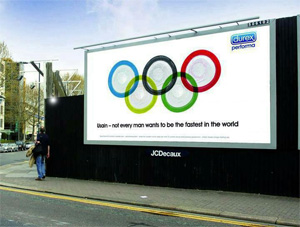
    PS: Surely the best London Olympics ad. From Durex. Perfect. This is what is called seamlessly attaching your brand to a global event. With no chance of needless ‘spill over’. 🙂


  • The Anchor: 8 reasons why professional networking sites are important

    By Yogesh Bansal


    In today’s competitive scenario “Who you know” is as important as “What you know”. Meeting people and making positive connections can benefit you in different phases of your professional life, as you climb up the ladder. Networking and meeting people in different areas of expertise can help you when you need information on something or may even land you into job in the future.


    Professional networking sites enable you to:

    1) Control your online identity


    2) Educate yourself about the current market scenario which is of utmost importance, besides your qualification


    3) Gather a good understanding about the market as it is important to inculcate or polish the skills required


    4)  It lets you collect information about your prospective employers and build the right industry contacts


    5) It helps you understand the practical aspects of a profession and prepare your behaviour and mind for the forthcoming challenges


    6) Let’s you have an opportunity to interact with the professionals in the market


    7) Encourages you to broaden your horizons, think beyond your limits and explore more career opportunities to understand where your skills could be best utilized


    8)  Increases your online visibility and makes you easily searchable.


    Yogesh Bansal is Founder and CEO, ApnaCircle.com


  • Fourtifying media & brands with research


    By Meghna Sharma


    In today’s world where there are plenty of brands for consumers to choose from, an in-depth knowledge about the target audience is as much as a necessity as breathing for any brand to become successful. Research now plays an increasingly important role in a brand’s lifeline.


    Entertainment industry today is growing at a fast pace and with number of options available to the TG, the brands need to know what will make the TG choose them over others.


    Ormax Media, a media & entertainment research and consulting firm, entered the industry four years ago (July 28, 2008) with a motto of helping brands understand and retain not only their target groups, but also help them grow in their respective fields.


    Clients Speak
    Raj Nayak, CEO, Colors

    Raj Nayak

    Ormax Media has opted for a very focused media research approach, which was a definite need gap for the industry, especially TV. Ormax has managed to capitalise on this opportunity with their innovative and robust tools specifically designed to cater to these needs. At Colors we have always had a research-oriented approach towards content development. In that context, we have been working with Ormax Media since the very beginning (interestingly both Colors and Ormax Media came into existence around the same time!).


    It has been a fruitful association so far, and I would believe this to be true for both the parties. While working on some really interesting projects together, there has been a lot of learning that has enabled us to know our viewers even better. An effective promo creative measurement tool, which builds in the crazy timelines of the creative getting ready and it hitting on-air, is something which I feel is still a need gap at this point of time. Keeping in line with their record for building research tools which have catered to the needs of the industry, this is one area where we see tremendous potential for Ormax.

    ____________________________________


    Chandramohan Puppala, business head, Saam TV

    Earlier, most of the companies used to rely on gut feelings or follow TAM to get an idea about what their audience wants. However, one couldn’t predict the change in trends or know their TG’s mindsets. It was a big challenge for channels, especially regional channels, to know their viewers. It was an even bigger challenge for regional channels, where Hindi was also the majority language. For instance, in Maharashtra, Hindi is also spoken by people. Also, in smaller markets, no matter how the sampling is done, choices differ from region to region. Hence, when research entered the entertainment industry, it helped channels to have a direct connect with the audience and guided them on how they can change their course to gain the most.


    Ormax Media adapts very quickly to what the clients’ want and provide a customized research which enhances their role among their TG.

    ____________________________________


    Ashit Kukian, COO and president, Radio City

    Ashit Kukian

    For any industry today, research is an important element. However, it is important for an organization to be very clear about what they want as an end result. The brief we gave to Ormax and their own learnings have made it a win-win situation for both. The inputs we get from research are visible in the results. So, as the industry gets more mature, there is going to be a robust growth in the field of research as well.

    ____________________________________


    Jai Lala, principal partner, Mindshare

    Jai Lala

    Since there is no syndicated data available, there can be a lot of fangs to it, especially in the television industry. Take sports broadcasting for instance, there are a lot of ground partners, so it is a complicated process. Hence, research helps us to understand the market and how to maximize from an event. Last year, for IPL we had done a joint research with Ormax Media and it was quite fruitful for us.

    ____________________________________


    Atul Phadnis, founder and CEO, What’s On India

    Atul Phadnis

    Ormax Media is spearheaded by people like Shailesh Kapoor who have practical knowledge about channels. So, it gives the organization an uncanny ability to know what the key questions are which need to be answered. This helps them to not only know what a channel wants, but also how the research must be conducted. Also, the organization offers customized and structural services which have helped the industry grow.


    As the firm celebrates its four years of existence, MxMIndia spoke to the founders to get an insight on how research has evolved over the years and how the journey has been for Ormax Media so far…


    Vispy Doctor

    “Till a few years ago, the phrase ‘consumer knowledge’, which is our prime derivable, wasn’t a common phenomenon. When we went to media clients in the entertainment space, for many of them research was a new thought.  So, we had to explain how it could help them create better products which will help them grow,” recalled Vispy Doctor, founder and managing director, Ormax Media.


    Over four years, Ormax Media has worked with 76 leading media and entertainment brands as business partners. In the first year, it focused on television, and GECs in particular. In the second year, the focus was expanded to other television genres as well as radio. In the third year, Bollywood became the priority. And now, at the end of the fourth year, the organization is set to offer unique and relevant offerings.


    Shailesh Kapoor

    Elaborating on Ormax’s four years, Shailesh Kapoor, CEO said: “The first four years of Ormax Media have been very eventful and successful. We have received great support from the media & entertainment industry, especially in our endeavour to create unique research products and approach entertainment research in ways that are unconventional and challenging, but also result oriented.”


    Growth matters

    The entertainment industry has its pros and cons and one of the biggest ‘cons’ of the industry is that it comes with a fairly low success rate – as low as 15 per cent. Therefore, the organization hopes to help the industry increase its success rate, even if by a small percentage.


    “Since we have been able to explain it to our clients, they have appreciated and accepted the concept of research. Hence, our growth has been fairly steep, and I can say that we are growing at a fairly high rate of 75-80 per cent, as we add more and more partners in our kitty,” said Mr Doctor.


    According to Mr Kapoor, the television industry has its cyclical changes, but is in a fairly stable state, vis-a-vis what it would have been 5-6 years ago. However, he does add that the definition of “stable” in television is very different from that in packaged goods and other sectors.


    As for the film industry, it is in an evolution stage, much like what the TV industry was in the late 90s and early 2000s. And one can see exciting times ahead for Bollywood, especially in research, where it has seen growing acceptance year-on-year.


    As far as Radio is concerned, it hinges a lot on the Phase 3 licenses. “Media & entertainment is a growing business, and research will continue to become more and more important as the market matures. We are all set for the challenges ahead,” Mr Kapoor added.


    Procedure: Easy or difficult?

    The organization offers a number of research products for various sectors of the entertainment industry. The list includes broadcast television networks, radio networks, film studios, newspapers, media agencies, DTH service providers, digital entertainment companies and production houses.


    So, when asked how difficult or easy the research procedure is for each variant, Mr Kapoor explained: “The larger GECs are the easier ones, as they are far more professional and they understand the value of research. Whereas in the more touchy-feely areas like films and creative companies, it becomes a little difficult as it is more about sentiments. However, it is difficult to rate them as it might be easier to work for a GEC, it might be more interesting for a film.”


    He added: “As a good service company, it becomes our job to orient ourselves to the client’s needs, but without compromising on the research rigor and correctness. That’s the balance that may be easy or tough. But it’s a part of our job.”


    A correct sample size plays is essential for any research to become successful and come out with results which will benefit the researcher. So how does the organization choose its sample?


    “For every client, the TG might different so we have to be careful about what attributes are they looking for in a sample size. For example, for a serial, it might be cultural overtones. So, how that serial is perceived in a city like Mumbai will be very different from how it is perceived in a small town like Indore. And if we are able to find this difference and collate preferences, it will help the channels,” explained Mr Doctor.


    Expansion plans

    The organization’s focus is to consolidate through new clients and repeat business. It now has 21 products for various sectors and plans to entirely focus on these products and getting them to become bigger and better in their own right. Also, it plans to target media agencies and advertisers through products like Celebritix, which was launched on July 25.


    “I’m often told that whichever channel you go to, Ormax gets mentioned in conversations consistently. We have a young team which made this happen. Four years ago, I would have bargained for much lesser. But again, this is only the start, and we know that we can achieve a lot more than what we have so far…” said Mr Kapoor.


  • Two announcements on Week #2: Get MxM news via BBM/WhatsApp + MxM Mondays

    It’s the second edition of our Friday announcements, and we have not one, but two announcements for you. So does it mean that we’ll have three next Friday, and four the following week, and five thereafter? Well, you know that the last thing you should expect at MxM is predictability. So as you await the unexpected next Friday, here’s more on what our headlines say for this week:

     

    1. Starting August 1, MxMIndia news will also be ‘broadcast’ via the Blackberry Messenger and popular WhatsApp. This is just the beginning… in the months to come, we’ll add more devices (Samsung ChatOn etc). Advertiser messages will be transmitted too, albeit in a stripped down way. Await our mailers starting Monday with the PIN and Mobile number that you should enter to start getting these missives via BBM or WhatsApp.

    2. Remember MxMIndia is a lot, lot more than just account and people movements. We’re about views and analyses and often these may seem uncomfortable for a section of our readers and advertisers. But, wtf, we’re like this only. So, starting Monday, July 30, we bring you MxM Mondays. Every Monday, our team will curate a discussion on critical issues that impact Indian media and marketing. Virtual seminars across every vertical. What’s more, we’ll also invite one or more of our ‘permanent’ columnists/bloggers to comment along side. We will announce the following week’s theme the previous Monday to invite responses from readers.


    So, await the first of our MxM Mondays on Monday, July 30. And the theme is:  Ownership of the news media. Should there be a restriction on who should be allowed to own news media?


  • Ranjona Banerji: Why I love Arnab Goswami. Really!

    By Ranjona Banerji


    Kudos must be given to Times Now for its drive to expose the little acts of callousness in India. These are problems which are so commonplace that they are overlooked, not just by the media but by the general public as well, perhaps even by NGOs. The death of a five-day-old baby girl in a Jalandhar hospital because her parents could not pay Rs 200 for a life-support system made it to Arnab Goswami’s News Hour. Just as a reference point, the story is on page 11 of the Mumbai edition of The Times of India – and made it there only because of television.


    Goswami dignified the death of the girl by cross-examining the doctors – and rejecting all their excuses. He and his guests discussed the callousness of the system, a Supreme Court ruling that bans taking money for life-support from poor people and asked whether the baby would have been treated differently if it was a boy.


    Goswami is right when he says that it is these little problems which have to be solved if our society is to be sensitised.


    TV continued with its campaign against crimes against women as all channels highlighted the plight of a woman in Kolkata who struggled to file a rape complaint even though she was bleeding profusely and a girl in Bangalore thrown off a train by molesters.


    **


    Even TV has realised that the Anna Hazare movement has run out of steam and merrily had discussions on it. I would venture to offer “Team Anna” some advice: if it took up the issues of the “little people” it might find greater resonance than its current policy of going after big sharks. In our everyday lives, it is the callous hospital staff, the indifferent police constable who hurt as the most. Let Team Anna follow the path that Goswami has forged for them.


    Sudden thought: Can you imagine what would happen if Arnab Goswami and Aamir Khan joined forces? Wow!


    **


    Of course, one’s love for television cannot go too far. The discussions on the Assam problem have been largely unsatisfying except perhaps for Karan Thapar’s Last Word on CNNIBN, if only because his guests did not have hysterics and screaming fits. It makes a life a little easier if you can understand what everyone is saying. The Jerry Springer version of TV gets tedious after some time.


    **


    The completely pointless discussions on Narendra Modi’s “hang me if I’m guilty” interview to Urdu weekly Nai Duniya were the other ear-sore. Modi, who likes to be in the news, manages to provoke some TV air time and create the same amount of sound and fury. The same guests every time on every channel on opposite ends of the political drama saying the same things as last time have become a yawn. The highlight on Thursday was apparently Teesta Setalwad walking out of the discussion on Times Now and walking back. This is hearsay evidence because I never saw it but was informed by people who did and by Twitter.


    **


    Chaos in the social media universe on Thursday incidentally as GTalk and then Twitter collapsed. How on earth did we manage before Twitter everyone asked when it came back. Indeed.


    **


    The “Greatest Show on Earth” begins. More on that next week. Happy viewing.