Category: XTREME FOCUS

  • Bindass goes Rest Less, for good

    By A correspondent


    It’s perhaps a brand that’s far ahead of its time and is known for taking generational leaps to adapt to new market dynamics. It was thus natural on its part to undergo a makeover exercise once again what with the youth of today having undergone a radical transformation in their habits.


    Being the third such makeover for the company, youth brand Bindass has announced yet another repositioning exercise that’ll see them don a new garb in everything that they do. Effective April 16, Bindass will present itself in a new and refined avatar to the world with a focus that’ll be even more skewed towards the youth of today. The new change would read: Bindass – Rest Less.


    Elaborating on the proposed switchover, Keith Alphonso, Business Head, Bindass said: “April 16 is the switch-on date where you’ll see Bindass in a new packaging, new promos, new music, new logos & graphics, new shows and every other touchpoint as well.”


    Delving into the specifics of the makeover exercise, Mr Alphonso said that the entire exercise kicked off in October 2011 where a few important points were taken up for analysis. “The first was we took a long hard look at our business and committed to our stated business intent that we wanted to broadbase Bindass into a youth brand and not just exist as a television channel. The idea was to get Bindass to a position where it was relevant to young people and fulfil a very visible need-gap. We thus went back to the market and for three months did a fair amount of research with Ormax and MarketGate and we zeroed in on a position which we are going to craft Bindass as a brand to occupy.”


    Explaining the positioning that the brand sought to occupy, Mr Alphonso said: “The position is something that celebrates success and was based on two trends that we observed over a period of time. One trend was the super-confidence that the Indian youth of today boast about where they see opportunity in everything that they do. But if you scratch a little below the surface, you will notice a certain amount of fragility as well. That’s because of the kind of competition that has been created in the marketplace. As we put it, it’s called ‘fragile invincibility’ – as confident and invincible as they seem they are also plagued with problems and they look for a brand as a touchstone. So what we are doing now is to craft Bindass as the brand that gets you there. The brand that holds your hand on that journey and not to be confused with a career and competition brand, so to speak. That’s because for the young person, success has many connotations. This was the value proposition that we latched on to.”


    Having shortlisted on the value proposition, the next move was to get help on the communications front and search for options on how to sell the concept to the desirable TG. That’s where they approached Taproot co-founder Agnello Dias, who has been associated with the brand in its previous makeover exercise as well. Mr Alphonso affirmed: “We got Agnello Dias of Taproot onboard who suggested the tagline Bindass -Rest Less. The idea was that it celebrates constant perpetual energy of the youth of today. So the brand value is about celebrating the people who rest less and succeed. As for the communication, it will happen across multiple mediums, including mass media, print, and so on, but importantly, however we are perceived we will ensure that the spirit of Bindass – Rest less will be embedded there.”


    Mr Agnello Dias, Chairman and Co-founder, Taproot India, added: “A key trait that marks youth behaviour today is a sense of constant motion; everyone is either going somewhere or doing something all the time. This non-stop motion, well-channelized is the new objective ideal. Settling down is fast going down the priority list. The bubbling undercurrents of discovery, exploration, invention, challenge, action seem to top that list. The new brand campaign for Bindass captures precisely this, that the youth today are ‘Rest Less’ and actually rest even lesser. We had earlier worked on Bindass’ immensely successful ‘What I am’ campaign as well which really caught on with the youth and this time around with Rest Less we hope to continue connecting with them yet again.”


    On how these changes would be reflected on the channel and other properties,  Mr Alphonso stated: “We will be launching two new shows – Live out Loud and Fear Less – in April and July, which will reflect the new change that we are talking about. LOL will let individuals say the one thing they always wanted to say with 250 people from Bindass supporting them in their stance. Fear Less is a gang of friends coming together to help one of their own overcome a debilitating fear. With these shows and more we are moving to a stage where we want to aid in transformation.”


    In fact that’s not all, as part of its efforts to be seen as an integrated brand Bindass would be tapping the medium of YouTube in a big way. “We would be launching a new channel on YouTube where we will be releasing short-form programmes only for that space. That medium has its own unique consumption patterns and parameters. We will be creating exclusive content for users on YouTube and not rehash content from somewhere else. Even our Facebook page will go under a radical new layout where you’ll have newsletters giving you information on movie deals, contests, tickets for matches, and so on. The idea is everything that we do is going to be about helping young kids get to their goal faster,” assured Mr Alphonso.


    When asked on the need for undertaking continuous makeover exercises, Alphonso reverted: “It has been a deliberate move to undergo repositioning again. When we launched in 2007 we were about Bindass – TV, Web,Mobile- that was a time when other channels were yet to discover multiple content. From there to 2010, we came out with a very attitude-based positioning which was Bindass – What I Am. There was a prevalent thought among young people at that point in time that they just wanted to be themselves. We reflected this non-judgmental spirit of theirs by saying it is an attitude. That was successful for us because it pushed us into a branded play. As of today, because we wanted to broad base our brand, because we wanted to be seen as more than a television channel, to become a new touchstone so that new business opportunities can be explored – for that to happen, brand Bindass had to have a call to action. And, therefore, the new positioning of Rest Less.”


    While the first two repositioning exercises did wonders for Bindass in terms of acceptability and attracting GRPs, the idea going forward would be to move beyond being just a channel and move into a space where it could become a huge brand by itself. Affirmed Mr Alphonso: “Probably in a year or two, I could launch Bindass range of jeans and get into doing other such activities; that is what our focus would be going forward. At the end of 18-odd months, you will see the emergence of umbrella youth brand Bindass that will also have a television channel, an events division, branded services, digital, and so on.”
     

  • I am shocked and disappointed: Sameer Nair

    By Anil Thakraney


    Sameer Nair, whose baby Imagine channel was, is quite surprised by its sudden demise. Mr Nair founded Imagine in 2007 in partnership with NDTV, and ran it for four years. He quit last year after Turner bought the channel from NDTV.


    Speaking to MxMIndia, he said: “I am quite shocked and disappointed to hear that they’ve decided to shut the channel down. They (Turner) seemed to be quite gung ho about Imagine, and I thought they were going full steam ahead. There is a lot of investment and a number of jobs at stake.”


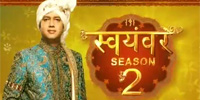
    When asked what in his view may have gone wrong with Imagine, Mr Nair said GECs is a very difficult segment and it needs deep pockets and a determination to go the long haul. And that he thought Turner had the muscle power to go the distance. Talking about his own stint at the channel, he said: “We had some successes and some failures. It was a tough market, we faced economic difficulties. And GECs is a tough space to be in, it’s a very competitive category. We were the first to re-create the Ramayana and we launched ‘Rakhi Ka Swayamwar’, a show like that had never been done before. I think we did some good work.”


    And what were the reasons behind his own departure from the channel? Mr Nair’s response is pretty frank. “I was used to operating independently. After Turner took over, one had to integrate into the Turner system. And this made me just a department head. And so I left.”


    Mr Nair says he’s currently working on some exciting projects but will reveal details once it all falls into place.


  • Analysis: Ashish Pherwani on when it’s right for a channel to pull the plug

    By Ashish Pherwani


    Rule of three

    The media business is largely governed by the ‘rule of three’ i.e. companies which are the top three or four players in a genre, or geography, tend to be profitable, while the rest tend to make losses in the long run.


    Accordingly, when a TV channel is unable to make it to the top of its segment for a long period of time, chances are it would have been hemorrhaging money for its owners, and that situation cannot last indefinitely.  Eventually, investors will pull the plug.


    Expensive programs as drivers

    TV channels which garner a majority of their viewership from reality TV shows and expensive films, and not from lower cost fiction programs, are also susceptible to being shut down in the medium to long term.


    Most large channels do not recover their direct variable reality content production and distribution costs through advertisements alone, but use such expensive programs as drivers to build channel loyalty and viewership for lower-cost fiction programs.  If this strategy does not work, and fiction shows continue to under-perform on a TV channel, the chances of broadcasters continuing the channel are remote even in the medium term.


    ‘Overhauls’ and ‘Makeovers’

    Over the last decade or so, most unsuccessful channels which have tried ‘overhauls’ and ‘makeovers’ that have failed to achieve their objectives within six to eight months, have eventually shut down their operations.  There are a few exceptions where channels are politically motivated, treated as marketing tools for large business houses, or those who believe they could build channel valuations for a profitable exit, but such companies are few and far between, and the recession of 2009 and the slowdown in 2011-12 have weeded out most of these.


    Foreign investors prefer less risky ventures

    In the case of foreign broadcasters enteringIndia, those with deep pockets and who believe in theIndiastory, which I certainly believe in, too, tend to stay invested inIndia.  But some foreign broadcasters prefer a less risky approach than creation of high-cost content.


    They prefer to exploit their existing global content library inIndia. Accordingly, more cautious and risk-averse foreign investors wouldn’t continue to fund under-performing TV channels indefinitely, and would rather take the less risky route.


    Viewership, the only asset

    To conclude, the only asset a channel has is viewership.  Channels which operate without a robust management team, a unique market position, and a defined target audience, won’t be able to garner sustained and loyal viewership.


    If channel management is able to make these three aspects fit seamlessly together, chances are the channel will succeed as a business, else, it would make business sense to pull the plug!


    Ashish Pherwani is Associate Director, Advisory Services, Ernst & Young Private Limited


  • Mediaah! What did Turner imagine a GEC wud do?

    By Pradyuman Maheshwari


    I am as shocked and upset as Sameer Nair about Turner’s closure. Very few in the organisation of the move until Thursday mid-morning when the staff was called for a meeting to be informed of the closure.


    Remember, it’s a ceasing of business operations and not a suspension. There could of course be a revival at some day in future, but as of now the chances of that are 0%. Turner isn’t suggesting anything. In fact the staff has either been served notice or accommodated elsewhere in the system – either permanently or temporarily.


    But the moot question is: why did Imagine fail? Why did it not garner enough ratings? And was it wise for Turner to buy the channel from NDTV?


    In an interview to MxMIndia, managing director for South Asia Siddharth Jain says it was a carefully considered decision to acquire Imagine. If the window it gave the channel to success was so short, guess it was an unwise move. Remember in Sameer Nair, Turner had possibly one of the best brains in Indian broadcast.


    And as the former Star India CEO rightly maintained, it needed just one great programme for the channel to come alive. Sadly, that never happened. Zor Ka Jhatka with Shah Rukh Khan was a huge flop draining Turner upwards of Rs 50 crore. The Turner bosses weren’t willing to wait for Sameer Nair to make yet another big attempt to win the ratings game. His wings were clipped and that in many ways was the beginning of the end. In May 2011, Sameer quit and wasn’t replaced.


    Mind you, this has been Turner’s second attempt at running a general entertainment channel. While some of its other channels are doing well, Real – a product of its jv with Alva Brothers – was a disaster. Imagine, under NDTV, was promising and that’s essentially because of Sameer Nair and team. Agreed even SAB outpaced it in channel shares, but that’s essentially because of an improper strategy. But SAB’s story is special. In fact had it not been the endless reruns of CID, SAB would’ve been ahead of Sony too!


    If this was the decision that they were going to take (and Imagine was indeed going nowhere in terms of ratings), my belief is that the team at Turner did a disservice to its stakeholders. They should’ve pulled the plug the moment Sameer quit last year.


    The move has folks in tellyland worried. If a foreign network (hence assumed with deep pockets), like Turner can turn off the tap for them, so can anyone else, they say. Turner has assured the trade that its interests will be taken care of and the signals aren’t off yet, but it does impact many lives. As it does for the employees of Imagine.


    We’re sure they’ll get placed soon. But this jhatka was I think a bit too zor ka.


    Buzz me if you have a story to tell. Confidentiality assured. There are various ways you can reach me:

    pradyumanm[at]mxmindia.com, BBM 23050B5D, Gtalk pradyumanm@gmail.com, Twitter @pmahesh and of course the mobile: 98338 76278.


    Disclaimer: Although he is CEO and Editor-in-Chief of this site, Pradyuman Maheshwari’s views in Mediaah! are not necessarily those of the rest of the team and MxMIndia.com. And decidedly not those of the sales team 🙂


  • This is a carefully considered business decision: Siddharth Jain

    It wasn’t an easy day at office for Siddharth Jain, Managing Director- South Asia at Turner International India Private Limited. Mr Jain, who had assumed his current role in November last year, took time off to respond to MxMIndia’s questions in an emailed interaction.

     

    What exactly happened… there were promos running for forthcoming shows and then this announcement of pulling down curtains?

    This is a carefully considered business decision based on performance of the channel. We invested substantially and put all possible resources behind Imagine TV throughout. As in any other business, the investments were directly linked to reaching a certain performance benchmark. However, in the two years, Imagine did not grow or perform as per expectations and as a result, Turner made the carefully-considered decision to cease operations of the channel.


    Did you consider selling the channel (a la 9X)?

    We worked incredibly hard to exhaust all options to avoid cessation of business operations.


    This is the second GEC from the Turner stable that has failed. But your other channels are doing well, with Pogo hitting an all-time high recently. Will Turner try its hand at another GEC or is it quits for now?

    Absolutely. Turner remains fully committed to future investments and long-term participation in India. Having been pioneers in the Indian M&E space in international news and kids’ entertainment, Turner currently operates some of the strongest media brands in India. POGO is indeed doing very well, being the Number one channel in the kids’ TV genre for the last six months (as per TAM). Turner will continue to be leaders in the media and entertainment industry and to explore expansion opportunities in this key priority market for Turner.


    What happens to the team and staff of Imagine? Anyone being retained or moved to other businesses?

    Turner will retain some employees for a transition period and some others are being offered permanent roles within other Turner channels to fill current vacancies.


    For the other Imagine employees getting impacted, Turner has set up an HR outplacement service which will provide advice on how to write a better CV, interviewing techniques and other job hunting skills. We will also introduce the employees to recruitment consultants, HR professionals from other media organizations and facilitate their new job search. Our focus is to ensure the closure is executed in a fair and appropriate manner for all of them and in full compliance with all legal requirements, employment terms and company policies. We will use our best endeavours to make this as smooth a transition as possible for them.


    The integration exercise that Turner carried out in May 2011 didn’t seem go down well with a few key personnel exiting the company eventually. In hindsight, was that what triggered the channel’s downfall?

    The two are not related in any way. Integration really helped in getting better operational efficiencies between Imagine and our other networks. While exits happened in the last one year, if you look across the industry it is in the normal course of any GEC. There is not one person or one department that was responsible but a number of factors that led to the channel not delivering consistent ratings that were required to sustain the business and continued investment.


    Why wasn’t there a suitable replacement to Sameer Nair post his exit?

    We are not in a position to comment on Mr Nair.


    Are there any plans for your library of programming? And what happens to the programmes signed up?

    As of today, we cease all business operations of Imagine TV. The closure is a complicated process as we are ensuring fulfillment of all our business commitments to advertisers, distributors, production houses and other partners.


    As you look back, do you think it was an unwise decision to buy Imagine from NDTV? And would it have been better for you to have launched an all-new channel so that it doesn’t come with the baggage of an unsuccessful channel?

    The acquisition of Imagine was a wholly appropriate, strategic and extensively-considered decision.


  • Sad! Turner shuts Imagine TV

    Turner Broadcasting System Asia Pacific, Inc. (Turner) today announced the decision to cease business operations of its Hindi general entertainment channel ‘Imagine TV’, together with its international feed ‘Imagine Dil Se’.

     

    A communique from Turner Network signed by Siddharth Jain, Managing Director, South Asia, said Imagine TV has “not performed and grown as per expectations”. “While some programmes delivered satisfactory ratings, overall the channel was unable to achieve the ratings consistency needed to sustain the business and support continued investment. As a result, Turner made the carefully considered decision to cease operations of the channel.”


    “We are grateful to the Imagine team, which includes some of the most talented and creative people in the Indian media industry. We will use our best endeavors to make this as smooth a transition as possible for them, ” he continues.


    ” The company remains committed to future investments and long-term participation in India. As one of the largest global media companies operating in India, Turner has enjoyed a successful track record in delivering high-quality, compelling and entertaining content to our local audiences over the course of three decades. We currently operate some of the strongest media brands in India, including HBO, CNN, Cartoon Network, POGO, WB, TCM and Boomerang. We will continue to be leaders in the media and entertainment industry and to explore expansion opportunities in this important market.


    *Please stand by for more *


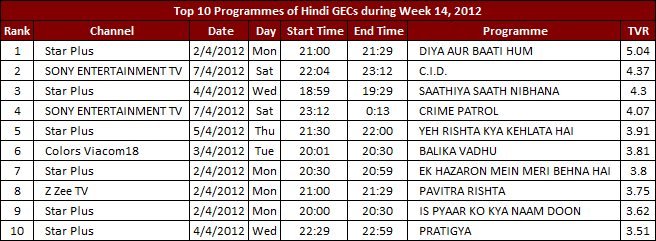
  • TAM data Top 10 programmes on HGEC – Wk 14 ’12


    Source: TAM Peoplemeter System
    TG: CS 4+ yrs
    Market: Hindi Speaking Market
    Period: Wk 14: Apr 1 to Apr 7, 2012


    About TAM Media Research

    TAM is a joint venture between Nielsen Company & Kantar Media Research. Besides measuring TV Viewership, TAM also monitors Advertising Expenditure of Television, Print & Radio through its division AdEx India. Since 2004, it extended its presence in the PR Measurement & Analysis space for Corporate/Marketing Clients by setting up a separate division Eikona PR Measurement.


    In 2007, the joint venture introduced RAM (Radio Audio Measurement) service to track Radio Listenership for the Indian Radio Broadcast Industry. In year 2009, TAM launched a division, called TAM Sports that specializes in monitoring Sports Sponsorship ROI.


    TAM Media Research’s objective is to fuel media insights that will drive the growth of the Indian Media Industry.

  • Anchor: 5 ways how Imagine could’ve survived

    By AN Chorrea


    It was indeed shocking to see Turner cease all operations of Imagine TV with effect from yesterday. My considered view is that Turner Broadcast could’ve managed to see Imagine survive the Great GEC Race and also thrive by any of these five programming tweaks.


    1. Rakhee round the clock

    Rakhee Sawant may have got into the limelight thanks to Bigg Boss on another GEC, but it’s all the crazy things that she did on Imagine that caught the world’s imagination. And made her a household name. So, wouldn’t it have been a great idea to have Rakhee and Rakhee along all 24 hours?!


    2. Reality round the clock

    Imagine isn’t the only channel which is into reality shows… almost every channel is. But remember they started out with one, albeit for just a week. Methinks heavy doses of Rakhee Sawant, Rahul Mahajan and all other types of international and desi formats would’ve got it all the ratings!


    3. Maximum Mythology

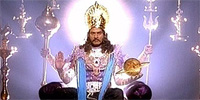
    All channels have mythologicals, but given its superior rendering of Ramayan and later Dwarkadheesh Bhagwan Shri Krishna and more recently Mahima Shani Dev Ki makes one wonder that if Imagine aired only mythologicals round the clock – with lavish sets, et al – wouldn’t it have worked in its favour?


    4. Supernatural mumbo-jumbo

    I am sure you’ve seen Raaz Pichle Janam Ka, the primetime show that’s a reality show showing the practising of past-life regression. The programme is quite engaging leading us to suggest that the channel should’ve gone in for all the supernatural, astrological and other bizarre stuff for at least 18 hours a day. And for the other six hours: more supernatural stuff. Possibly TV shopping for gizmos that can help you cross all barriers in life.


    5. Get the original Jhatka from Pogo

    For a man who stole everyone’s hearts in Fauji, Shah Rukh Khan has had a  easonably awful track record on telly ever since he became a superstar. KBC with him as anchor was no great shakes and Paanchvi Paas on Star Plus and Zor Ka Jhatka on Imagine were disastrous. It would’ve perhaps been nicer if Imagine could’ve got Pogo to part with its version of Takeshi’s Castle. While the show’s fun, it’s Javed Jaffrey’s commentary that does the trick and one can keep watching it endlessly. As the show’s name suggested SRK’s Jhatka deserved a kick at all the right and wrong places. Zor ka!


    AN Chorrea is a seasoned industry-watcher who writes under a pseudonym


  • So why did Turner stop Imagine(ing)?


    By Team MxMIndia


    Just when the Hindi general entertainment space was getting interesting with the top 3-4 players all coming within sneezing distance of each other in the numbers game, the industry was jolted by news of the closure of Imagine, which given its pedigree, was launched with much fanfare not many moons ago. From shock to sadness and even rage (at least on the social media) admirers and naysayers were seen on an overdrive trying to piece the chain of events that had led to the downfall of the channel that was seeing red for some time now.


    This was in stark contrast to the kind of emotions that were flying thick and fast exactly a year ago, when Turner General Entertainment was merged into its parent company Turner Broadcasting System Asia Pacific, Inc. The emotions then were almost similar to what the channel heads were going through when they flagged off the channel more than four years ago, making it one of the most loud and admirable launches of the time. While anticipation and expectations were riding high on the faces of each and every member of the team at launch, the same was the scenario during the merger exercise last year as the company was probably taking a last shot in reviving the fortunes of the network to see themselves battle against the competent lot at the top. But all that was not to be as tribes from the world of media and outside woke up to the news of the channel shutting down yesterday.


    Siddharth Jain

    Replying to questions put forth by MxM India (read interview),  Siddharth Jain, Managing Director- South Asia, Turner International India Private Limited put it out right and straight as he said: “This is a carefully considered business decision based on performance of the channel. We invested substantially and put all possible resources behind Imagine TV throughout. As in any other business, the investments were directly linked to reaching a certain performance benchmark. However, in the two years Imagine did not grow or perform as per expectations and as a result, Turner made the carefully-considered decision to cease operations of the channel.”


    Mr Jain is probably being modest in quoting that the channel did not perform as per expectations in the past two years, but the writing was on the wall in the first three months of 2011 itself, when the channel failed to get the viewers and advertisers excited with its most expensive property that cost the company in excess of Rs50 crore to produce. ‘Zor ka Jhatka’, hosted by Shah Rukh Khan, failed to get the desired ratings and didn’t do much to push the channel in the top league as was expected. In fact, in an interaction with the media before the show went live, an exuberant Sameer Nair had vouched that the show along with a few others would catapult Imagine among the top 3 in the Hindi GEC space. Wishful as he was, that was not to be. Its failure forced the thinktank at Turner to come up with steps to plug the loopholes, even if it meant changing its course altogether.


    Sameer Nair

    Thus in April 2011, Turner announced the merger of Turner General Entertainment into its parent company Turner Broadcasting System Asia Pacific, Inc. This was followed by the formation of a special committee comprising various Turner officials such as Monica Tata and others along with officials from Turner General Entertainment Network including Sameer Nair and Harsh Rohatgi with the intention of charting out a long-term course for the channel. This move was even vindicated by Steve Marcopoto, President, Turner Broadcasting System Asia Pacific (TBSAP), who went on to explain the need for such a proposal, which was to assess its performance and chart a long-term course for Imagine. But just when the merger was announced, Sameer Nair did the unthinkable by announcing his decision to exit the company.


    In an interaction with MxMIndia Editor-at-Large Anil Thakraney, Sameer Nair was quite upfront about the reason for his decision to move on: “I was used to operating independently. After Turner took over, one had to integrate into the Turner system. And this made me just a department head. And so I left.”


    Expressing concern towards the chain of events that led to the closure of the channel he said, “I am quite shocked and disappointed to hear that they’ve decided to shut the channel down. They (Turner) seemed to be quite gung ho about Imagine, and I thought they were going full steam ahead. There is a lot of investment and a number of jobs at stake.”


    Mr Nair’s exit from Imagine was followed by a few other key exits and the network’s failure to find a suitable replacement. Even attempts to vow the audiences by launching a slew of reality and mythological shows didn’t do much for the channel as it still figured in the #6/7 slot amongst its peers in the space.


    In fact, even as recently as 2-3 months ago, the channel was going all out with its promotional activities as it announced the launch of new shows. But that too has been brought to a halt as Mr Jain explained: “We cease all business operations of Imagine TV. The closure is a complicated process as we are ensuring fulfillment of all our business commitments to advertisers, distributors, production houses and other partners.”


    The news came as a rude shock to producers, some of whom were in the midst of production schedule (see story: Rude Shock for Producers & Performers). Rajan Shahi who had launched ‘Jamuna Paar’ on Imagine just a little over a month ago, refused to comment on it saying “it would be too premature”. Other producers like Siddharth Tewary, the Sagars who had ‘Chandragupta Maurya’ and ‘Dwarkadheesh’ aired during primetime were incommunicado as they grappled with the sudden turn of events.


    JD Majethia

    JD Majethia who had launched two shows, ‘Jassuben Jayantilal Ki Joint Family’ and ‘Ek Packet Umeed’ four years ago said: “It’s sad and shocking. It was a channel which with the entry of Vikas Behl at the helm of things looked poised for bigger things, a turnaround but that was not to be. It’s a huge setback for producers and for those who work on a per day basis. A daily show means a minimum of 100 people associated with it in various capacities and with Imagine closing down, it spells doom for them. All that talent and labour goes down the drain. It’s a loss of about Rs200 crores worth of yearly business for Imagine and the industry on the whole.”


    Veteran producer Dheeraj Kumar of Creative Eye Productions said: “It was an overnight decision but it could have been done a bit smoothly. I am hopeful that Turner with its huge umbrella of channels would give us a chance of providing content to them. I am optimistic.”


    Programming propaganda

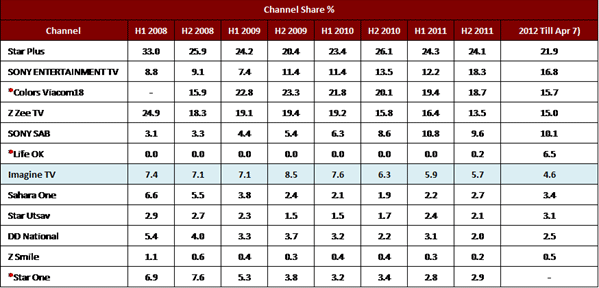
    Ever the one to influence viewers and attract the attention of the advertisers too, content was one of the biggest setbacks for the channel, going by the buzz emanating from experts. While the start for the Imagine was glorious, as it did manage to attract sizeable channel share (see chart below) and even break into the 150+ GRP mark at some point, it was an experience that was shortlived. The maximum channel share that the channel attained was 8.5 in H2 2009.


    Source: TAM Media Research / TG: CS 4+ yrs / Market: HSM / Period: H1 (Jan-Jun) & H2 (Jul-Dec) 2008, 2009, 2010, 2011 till April 7, 2012


    Mohit Joshi
    Divya Radhakrishnan
    Karthik Lakshminarayan
    Pankaj Krishna

    Explaining the implications, Mohit Joshi, Managing Director, MPG said, “The General Entertainment domain is very competitive and each channel is constantly improving content and production. The viewer has many options today and hence has become more ruthless with the channel choice. In spite of a great start, Imagine lost it mid-way. In an attempt to gain viewership and numbers, it resorted to telecasting shows like Rakhi Ka Swayamvar, Rakhi Ka Insaaf and so on. Though these shows could have given a short-term boost in numbers, in the long run, viewers didn’t find the content appealing enough. Also these shows dented the channel image by giving it a ‘sleazy’ tag – which is not acceptable in the GEC domain.”


    Divya Radhakrishnan, Founder, Helios Media, said, “GEC is a highly competitive segment and the cost of running a GEC is very high. Imagine had reached a level of stagnation especially in the last six months, however shutting down was not expected.”


    Karthik Lakshminarayan, COO, Crest, said: “Imagine had the brand heritage of NDTV and Turner. I think it was sheer bad luck that they eluded that one show which could give them success like Kyunki did for Star, Saat Phere did for Zee, Ballika Vadhu for Colors and Bade Acche Lagte Hain is doing now for Sony. For a GEC to break even it takes 4-5 years so one needs to stay invested for a long period to see the returns, hence the move is a surprise.” In fact, he has a surprising statement to make: “Their overnight decision has caught us unawares and our media plan needs a quick revision. We had spots to go on air on the channel as we talk. I think now those spots are up for grabs and may the best player win.”


    Blame customer pull, not distribution!

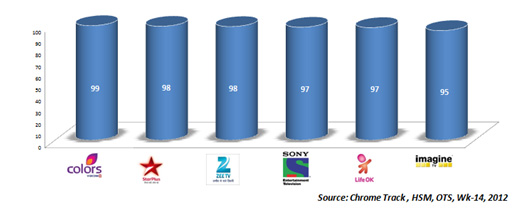
    There are primarily two ways of impacting Channel Trials – namely Consumer Pull led by content affinity, and Broadcaster Push led by Distribution initiatives, explains Mr Pankaj Krishna, Founder and Managing Director, Chrome Data Analytics & Media (see Analysis: How Imagine lost due to consumer pull, not distribution. “Going by Chrome OTS numbers (Opportunity To See – percentage of households that have access to a channel) – Imagine TV has clearly been in the league of the top GECs with an OTS of 95% across HSM.”


    According to Mr Krishna, “consumer pull clubbed with Strategic Distribution Planning has a huge impact on the overall performance of a channel”. “Over the years, Imagine lost out on factors contributing to the former.”


    Staff shocked

    It was Terrible Thursday for the staff at Imagine. They had no clue of the closure, even as they had faced yet another week of dismal ratings from TAM. Said Jain on the fate of the staff: “Turner will retain some employees for a transition period and some others are being offered permanent roles within other Turner channels to fill current vacancies. For the other Imagine employees getting impacted, Turner has set up an HR outplacement service which will provide advice on how to write a better CV, interviewing techniques and other job hunting skills. We will also introduce the employees to recruitment consultants, HR professionals from other media organizations and facilitate their new job search. Our focus is to ensure the closure is executed in a fair and appropriate manner for all of them and in full compliance with all legal requirements, employment terms and company policies. We will use our best endeavours to make this as smooth a transition as possible for them.”


    There has been much dismay in the brodcast fraternity too. Colors CEO Raj Nayak in fact made a clarion call to the industry via Twitter: “To all my friends in the TV business. Let’s try & accommodate our friends from Imagine wherever we have vacancies in our system.”


    Way ahead

    The move does spell a warning for other broadcast majors to sit up and take notice. Let’s not forget examples of a few channels that had to shut shop midway including Star One, Zee Next, 9x and Real for lack of vision and programming blunder.


    Ashish Pherwani

    As Ashish Pherwani of E&Y writes in his analysis for MxMIndia (when is it right for a channel to pull the plug): “Over the last decade or so, most unsuccessful channels which have tried ‘overhauls’ and ‘makeovers’ that have failed to achieve their objectives within six to eight months, have eventually shut down their operations.” According to him, for a channel to succeed, “the only asset it has is viewership. Channels which operate without a robust management team, a unique market position, and a defined target audience, won’t be able to garner sustained and loyal viewership. If channel management is able to make these three aspects fit seamlessly together, chances are the channel will succeed as a business, else, it would make business sense to pull the plug!”


    Turner may probably pay heed to Pherwani’s suggestions if it ever were to take another swipe at launching a Hindi general enterainment cahnnel  channel. Going by its past track record where it teamed up with Alva Brothers to launch Real and proceeded by acquiring Imagine from NDTV, chances are that the network may already be on the prowl hunting for its next prospect. Until then, the network seems content to bask in the laurels of its sister channels that have been showing good growth in the genres they operate in.


    Written by Johnson Napier with inputs from Anil Thakraney, Ashish Pherwani, Pankaj Krishna, Kshama Rao, Tuhina Anand and Robin Thomas


  • Analysis: Pankaj Krishna on how Imagine lost due to consumer pull, not distribution

    By Pankaj Krishna


    There are primarily two ways of impacting Channel Trials – namely Consumer Pull led by content affinity, and Broadcaster Push led by Distribution initiatives.


    Going by Chrome OTS numbers (Opportunity To See – percentage of households that have access to a channel) – Imagine TV has clearly been in the league of the top GECs with an OTS of 95% across HSM.


    Further, as per Chrome DPi – The General Entertainment Channel ATC (Availability To Trials Conversion) stands at 60%, while imagine stood far behind at 40% (along with Sahara One…) – clearly indicating Brand Affinity concerns.


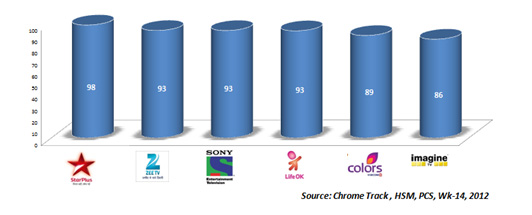
    The quality of distribution indicates similar trends – Despite being a 65 GRP channel – the overall PCS of Imagine (availability across the Top 3 Distribution Slots) stood at 86%, not radically behind Star Plus @ 98% and Zee, Sony, Life OK and Colors @ 90%.. Mostly channels with weekly GRPs scores ranging from 200 – 300!


    Consumer pull clubbed with Strategic Distribution Planning has a huge impact on the overall performance of a Channel – over the years Imagine lost out on factors contributing to the former.


    Pankaj Krishna has 12 years’ experience in the media space and brings with him a rare combination of knowledge and skills that span across brand management, advertising sales, distribution, media buying, research, events and on-air presentation and strategy. He is entrepreneurial spirit, Founder and Business head of Chrome Data Analytics & Media. With an unprecedented industry acceptance, Chrome is the largest and only Distribution Audit specialist in India. www.chromedm.com

  • Rude shock for producers and performers

    By Kshama Rao


    Producers woke up to a rude shock on Thursday  to the news of Imagine shutting shop. If IPL wasn’t enough, then the closing down of a TV channel meant further doom for the producers.


    JD Majethia

    Turner Broadcasting System Asia Pacific Inc. (Turner) dashed off a letter that to the producers and the media about Imagine being wound up with immediate effect, so much so that shootings had to be abruptly cancelled on Thursday as the TV giant didn’t want the channel to spend on even one day of shooting!


    While the industry is still reeling from the news, the worst affected are the producers whose shows were running on the channel. Rajan Shahi, who had launched Jamuna Paar on Imagine just a little over a month ago, refused to comment: “It would be too premature”. Other producers like Siddharth Tewary, the Sagars who had Chandragupta Maurya and Dwarkadheesh running on primetime were incommunicado as they grappled with the sudden turn of events.


    JD Majethia had launched two shows, Jassuben Jayantilal Ki Joint Family and Ek Packet Umeed four years ago (on January 21, 2008) when former Star TV honcho Sameer Nair had spearheaded NDTV Imagine amidst much fanfare. He said: “It’s sad and shocking. It was a channel, which with the entry of Vivek Behl at the helm of things, looked poised for bigger things, a turnaround but that was not to be. It’s a huge setback for producers and for those who work on a per day basis. A daily show means a minimum of 100 people associated with it in various capacities and with Imagine closing down, it spells doom for them. All that talent and labour goes down the drain. It’s a loss of about Rs200 crore worth of yearly business for Imagine and the industry on the whole.”


    Mr Majethia said that it was the channel’s “unclear philosophy” that did it in. When they started out, the mantra they had adopted was positive, light hearted, happy programming but then Colors launched with its emphasis on “high drama” and Imagine started floundering. The channel lost its focus, couldn’t make shows that could connect with the masses and hence lost the plot. “But as I said, things had begun to look up with the entry of Vivek,” he added.


    Another producer, on the condition of anonymity, who had worked for Imagine said it was the haphazard way of doing things and not following a clear brief that cut the Imagine story short.


    Veteran producer Dheeraj Kumar of Creative Eye Productions however played down the whole thing. His show Sawaare Sabke Sapne Preeto which was launched a year back was going strong and he said: “Just like how you get surprises in life, this too was a surprise for us. I wouldn’t call it a shock. I guess these things happen. You think, Turner wouldn’t have thought before taking this decision. Yes, it was overnight and could have done a bit smoothly with advance intimation but it’s alright, I have no complaints as we have had a good creative collaboration with them. Personally, I am not worried about my workers because we are a big production company and they would be absorbed in some or the other project. I am hopeful that Turner with its huge umbrella of channels would give us a chance of providing content to them. I am optimistic.”


    Aasiya Qazi, an actress who made a debut with Ekta Kapoor’s Bandini which ran for over a year and followed it with Deeya and Tony Singh’s Dharam Patni that was pulled off air in January is “shocked”. “It was the channel that gave me a chance to start in this industry. It gave me two shows, so yes, I am definitely shocked. I don’t know what happened and whoever I have spoken to are equally clueless. I didn’t even know why Dharam Patni was pulled off air abruptly a couple of months back. I feel sad for the artistes and the crew of the new shows like Jamuna Paar that had gone on air a couple of months ago. It’s demoralising for them,” she says.


    Vishal Karwal, who plays the title role of Dwarkadheesh in the Sagars’ ambitious mythological on Lord Krishna, is both “happy and sad. I was happy because I wanted to come back to Mumbai. I have been shooting inBarodafor the show from Mondays to Fridays and it had begun to get to me. I was in talks with the producers to let me go to Mumbai. I am sad for the workers whose bread and butter depend on these daily shows. They don’t earn more than Rs10-15,000 a month where as for actors like us, we can still survive.”


    He terms the sudden development as “unprofessional and devoid of professional ethics. The channel hasn’t been doing well for a while now and even the new channel Life OK overtook it in the numbers game.”


    Sources in the industry said the producers whose shows were largely affected won’t comment on this considering their dues are yet to be cleared. Worst hit are the Sagars whose two shows, both mythologicals and lavish productions, Dwarkadheesh and Chandragupta Maurya and others like Shahi who had barely launched a new show with a massive set.


    A source said: “One wrong word in the media and they run the risk of not getting their dues. They have already been hit badly so any press statement could jeopardise their equation with the channel.”


    So it’s wait and watch for now.


    Kshama Rao is a senior journalist tracking the television trade for over 15 years.

  • Anil Thakraney: Lack of imagination

    By Anil Thakraney


    Even a kid will tell you that there are just toooo many TV channels inIndia. Both, entertainment and news. And even as talks of a shake-out have been doing the rounds for years, more channels are waiting to start operations! Like everything else inIndia, it’s a mad house out there.


    Quite obviously, there can be place for only so many brands. The advertising pie is limited, and it cannot be shared by so many hungry mouths. And in the Indian context, a vast majority of a channel’s revenues come from advertising and not through subscriptions. In such a scenario, Imagine’s closure does not surprise me at all… in fact, I wonder what took them so long.


    As for the many other struggling channels, they are fortunate to be run by very deep pocketed suits. But those deep pockets, like Turner’s, will dry up at some point. It’s a matter of time.


    Imagine came on to the scene in 2008, when the Hindi GECs market was already divided between Star, Zee and Sony. Each had already established itself, and all three channels enjoyed viewer loyalty. To break into this extremely capital intensive and crowded house, Imagine’s only chance was to unleash kickass, totally offbeat programming. ‘Shock and awe’ ought to have been the mantra. 2008 was also the time when the nation had begun showing early signs of tiring of Ekta’s traditional saas bahu sagas, and there was a huge opportunity for Imagine to be the game changer that the market wanted.


    Alas, it was not to be. Imagine’s fictional shows were completely me-too, and most of their reality stuff was a huge disaster. ‘Swayamwar’ was perhaps the only ‘hatke’ programme, but in the GECs biz model, reality shows and movies are, at best, jam servings, laid out to entice viewers to the bread and butter fiction shows. And if the latter is a thakela and done-to-death fare, the channel is sunk. Which is exactly what happened with Imagine.


    Make no mistake about this: Imagine’s problem wasn’t funds or staying power or distribution or even talent. It was very simply this: Lack of imagination.


    * * *


    PS: This is a memo Shri David Ogilvy sent out to his employees way back in 1982.


    On how to write. It’s fantastic. You will notice that his suggestions, in this day and age of micro blogging and short attention spans, are more valid than ever before.


    Link: http://www.listsofnote.com/2012/02/how-to-write.html