
Category: THE ANCHOR

  • Which magazine’s review of ‘Satanic Verses’ lit the fire, according to Salman Rushdie… 12 Politically Incorrect Questions in the MxMIndia LookBack Quiz 2012

    Okay, if the announcement on Friday made you think we’ll have some explosive questions for you, you are in for some disappointment. However, this is a quiz with questions you’ll not find being raised elsewhere.


    1. Name the journalist whose exposes got former President Pratibha Patil to give up claims on land reportedly reserved for Defence Personnel in Khadi Cantonment near Pune?

    2. Which RediffusionY&R ad starring Sachin Tendulkar saw the BCCI asking the advertiser to pull it off?

    3. In September this year, this officebearer of a regulatory body expressed regret over a statement of last year rubbishing media people. Kaun?

    4. In what seemed to be an endorsement of the Jindal Steel and Power’s charges against the Zee News and Zee Business editors, this association of TV news editors chose to sack one of the editors from the primary membership of the body and as its treasurer. Name the body.

    5. What was the name of the apparel shop in Ahmedabad that opened in 2012 and drew international outrage?

    6. Which pre-release review of the book ‘Satanic Verses’ bearing the headline ‘AN UNEQUIVOCAL ATTACK ON RELIGIOUS FUNDAMENTALISM’ is said to have sparked off protests and the eventual fatwa on writer Salman Rushdie? Or, as he writes in his memoirs ‘Joseph Anton’, the match that lit the fire?

    7. Some months ago, Indian Express editor-in-chief Shekhar Gupta wrote about how a publication he worked for was referred to as ‘Islam Today’ and ‘Pakistan Today’ by its detractors? Which publication?

    8. What section of the Information Technology Act got a Pondicherry businessman arrested for reportedly posting messages termed offensive by Minister P Chidambaram’s son Karti?

    9. Which senior journalist was refused a visa to Pakistan to travel with the delegation accompanying then foreign affairs minister SM Krishna?

    10. His anti-government cartoons led to his arrest and protests against freedom of expression even as not many cartoonists thought his lines were in good taste. Remember his name?

    11. Which South India-based newspaper group has been in the news over the termination of its IPL cricket team and a variety of other financial issues?

    12. And by far the biggest news of the Indian M&E sector was TAM and its principals – Nielsen and Kantar – being taken to court. This one’s a sitter: Name the widely own media biggie representing one of the defendants who got into warring NDTV through a series of interviews and company statements?


    Answers:

    1. Vinita Deshmukh. She wrote on Moneylife.in.

    2. The ad promoting the Sahara Q Shop

    3. Who else but Markandey Katju, Press Council of India chairman who said in an interview with Karan Thapar on CNN-IBN that he had a “poor opinion about most media people”.

    4. The Broadcast Editor’s Association (BEA)

    5. Hitler (with the Swastika!)

    6. An India Today review of the book ‘Satanic Verses’

    7. India Today’s Gujarati edition (Shekhar Gupta’s article: http://www.indianexpress.com/news/conspiracy-of-the-lazy-faithful/1047245/0)

    8. Section 66-A

    9. Praveen Swami, Resident Editor, The Hindu

    10. Aseem Trivedi

    11. The Hyderabad-based Deccan Chronicle

    12. Sir Martin Sorrell, CEO of WPP. Kantar Media is a part of WPP.

     

  • The Anchor: 6 reasons why Arnab Goswami should be given the Bharat Ratna

    By A N Chorrea


    1. He generates extreme emotions in his viewers: the man whom many love to hate and even more hate to love.

    2. He has a single-minded devotion to rid India of all its malaises

    3. His brand of journalism rubbishes all that one was taught in media school that as a journalist one ought to be neutral. Takes a position as a journalist like few others

    4. The more he damns his guests, the more they love him

    5. You can read him from his body language. He lets his body do his talking

    6. He shows his human side when he meets someone powerful: last year when he interviewed Raj Thackeray, he was soft and gentlemanly and let him off easily.


    A N Chorrea is a senior industryperson writing under a pseudonym


  • The Anchor: 6 reasons brands should not ignore cinema advertising

    By Girish Gupte


    #1 When brands advertise in cinema, they get to target a niche audience compared to other traditional media. Niche audience, here, implies people who have purchasing power. Out of a 100 crore population, 40 percent normally spend on weekends in multiplexes and single-screens.


    #2 Fair amount of ROI for brands who have advertised in cinema. The cost of a cinema ad and TV ad is almost the same. When you calculate, per-viewer cost in cinema will be slightly higher than that of TV but it is still worth it since your revenue and ROI stood up 2.5-3X.


    #3 ‘Jo dikhta hai woh bikta hai’ (what is seen, is sold). If you want people to at least go and have a look at your brand and when you are not targeting every Tom, Dick and Harry, cinema advertising is a platform that the client should be using. Simply because you are targeting a different set of consumers.


    #4 People who are brand-conscious prefer knowing about a brand through screen. ITC, which has lots of brands, prefers cinema advertising, and off-screen branding, to reach out to a wider range of people. In case of Blackberry, people know of the brand but how many are ready to spend on it; and how many are aware of the Blackberry stores in their city? They only way these brands can make themselves visible on cinema screens.


    #5 Cinema advertising is focused. Audiences cannot change channels or turn it off.


    Girish Gupte is General Manager at Nest Media


  • The Anchor: 4 reasons why the ‘MxMIndia’ Anchor is taking a Break…

    1. All good things need to take a break. So, while the Anchor will exist, the content format will change


    2. It’s not easy getting people to write the Anchor. Yes, it does require chasing several times.


    3. A N Chorrea, our anytime anchor-writer, is on a holiday. So what if he has ‘anchor’ in his name… even he needs a break!


    4. Starting tomorrow: Get set for the ‘One Big Ideas’ from industry captains… culled from the MxMIndia Annual 2012!


  • Anchor | One Big Idea by Arvind Sharma: Turning a story into two-way communication

    By Arvind Sharma, Chairman & CEO, Indian Subcontinent, Leo Burnett India

     

    Television dominance led to the creation of the term ‘brand story’ because that is what TV does best – tell stories. A story by its nature is a one-way communication. There is one story-teller and many listeners.


    Now technology-led changes are leading us into a world of two-way communication. How these will shape brands’ new approach to communications is the most interesting question. Some of us believe that brand communications will continue to be about brand stories with consumers as storytellers and multiple endings.


    I believe that just like the TV-dominant era required a new way of thinking about brand communications/brand stories, a new way of thinking about brands is needed today. A way of thinking that will drive synergies through TV and print, social media, smartphones, mall activations, PR and branded content. In my view this new way of thinking will be ‘participation platforms’. The most important task for any brand will be to define its human purpose; design ‘participation platforms’ relevant to the purpose, and invite consumers to get involved and populate the brand with their thoughts, actions and emotions. Brands that get consumers to participate in their brand world through their participation platforms using multiple converging channels will enjoy an edge. By tapping into people’s energy to do and to be heard, participation-platform driven brands will have lower marketing costs and stronger consumer affinity.


    At Leo Burnett, the participation platform approach shaped our thinking on Coke Studio. Coke Studio provided a wonderful platform for people to share, celebrate and spread happiness. And it is driving brand results. More campaigns based on this approach are on the way.


  • Anchor | One Big Idea by Punit Goenka: Narrowcasting is the way forward

    By Punit Goenka, MD & CEO, Zee Entertainment Enterprises Ltd


    The immense paradigm shift observed in the entertainment consumption patterns indicates the evolution of a fresh ecosystem. Screens are getting smaller and the entertainment is getting more and more customized. The content also on the other hand, needs a fresh perspective, when it comes to this new ecosystem which is in its nascent stage. Avenues for premium and niche content have widened, and the audience is now in a more acceptable phase than ever before.


    Although broadcasting has its own strong pillars, “Narrow-Casting” is something which I believe has the potential of turning into a “Big Idea” with the scope of altering the broadcasting industry. Certainly, at this stage there are immense constraints involved in terms of internet connectivity, bandwidth charges, cost of devices, etc, but the key is that the future is definitely digital and there are two ways to it. Narrowcasting would bring in more choices for the viewers, with the influx of new channels and new content patterns.


    With the onset of digitization, influx of advanced connectivity viz 4g/LTE, and launches of newer product categories viz tablets, etc, the entertainment industry is poised at a wonderful juncture, where the question is not just “How to Entertain the Viewer”, but “How and Where to Entertain the Viewer”.


  • Anchor | One Big Idea by Sanjay Trehan: Seamless convergence key to success

    By Sanjay Trehan, Head, MSN India


    Few would disagree with Mahatma Gandhi’s observation that the soul of India lives in its villages. It therefore stands to reason that any digital revolution in the country must transcend the metros and reach its heartland. To be really meaningful, the ‘One Big Idea’ that could potentially change the face of the digital industry in India must reach people with the kind of content that makes a difference to their lives (Hyperlocal), in a language that they understand (Vernacular) and on a device that is personal as well as ubiquitous (Mobile). But is that enough?


    To be really powerful in today’s digital ecosystem, an idea must also co-opt the community into the creative process (Social). It does not take a lot of crystal gazing to arrive at this conclusion. Here are some data points for you to consider. India’s mobile phone subscriber base now exceeds 900 million, and according to a 2011 JuxtConsult study, two-third of all mobile users in India are educated completely in ‘vernacular’ languages. The number of active Facebook users in India has grown to 65 million, an eight-fold jump in just two years. Apparently 30 per cent of these users are mobile-only! Any Big Idea born from the union of these titanic trends is bound to gain countrywide traction. So, in the new paradigm, the magic mantra of SoLoMo needs to be complemented with La as in languages to ride the crest of an empowering Internet revolution in India. Seamless convergence along with device and platform agnosticism will be the key to success.


    All it needs is a spark to set this heady mix alight. And if any of the MxM readers think they have it in them, I will be more than happy to engage with them.


  • Anchor | One Big Idea by Sam Balsara: Do TV a favour by adding another medium

    By Sam Balsara, Chairman & Managing Director, Madison World

     

    From an advertiser’s perspective, the one idea that I would like to propose to advertisers who use TV heavily is to supplement their ad spends in TV, with some spends in at least one other medium – either print, radio, outdoor or digital – if not a couple.


    There is considerable merit in balancing quantitative data on reach, frequency, GRPs and CPRP with qualitative aspects on how the human mind responds to a stimulus, and our experience shows that in a majority of the cases where advertising copy quality is average, multimedia campaigns deliver far better on sales and brand KPIs than single media campaigns. In fact, brands will do the TV industry a huge favour by allocating 10-15% of their budgets to at least one other medium, because diverting a small portion to another medium in fact enhances the productivity of TV spends and results in higher budget for the medium for subsequent years.


    Also, from a broadcaster’s perspective, media owners – especially from print and TV – to have a sustainable growth oriented revenue model, must have two streams of revenue:


    i. From the reader or viewer and,

    ii. Another from the advertiser.


    Given the digitization initiative undertaken by the government, hopefully this aspect will be taken care of in the years to come.


  • Anchor | One Big Idea by Jaideep Shergill: Using content for marketing

    By Jaideep Shergill, CEO, MSL India


    As the nature of marketing communication shifts decisively from hardsell to engagement, content marketing is becoming a powerful tool for brands to build relationships with customers. Many brands are investing in brand publishing, engaging agencies or building content teams of their own.


    Marketers are also using content instead of television/print/online ads to sell products. While it may not have a direct-line relationship with the achievement of sales goals, it’s the key to capturing attention. Most marketers understand this and are transforming their marketing campaigns accordingly. Brand publishing, have no doubt, is exploding.


    Chris Weinfeld, of BlueGrass Interactive, has been quoted as saying: “Companies are now caring about putting out content that people want to read… Instead of just investing in their blog and blogging strategies, they’re investing in content people will want to share. Even if it’s not directly related to selling something, it’s still branding.” BlueGrass is an interactive solutions firm based in the US.


    Hence, it’s clear that companies are using content for a variety of functions – from brand awareness to generating leads and increasing brand loyalty.


    To achieve all of this, you must tell a good brand story. It’s the differentiator in the competition for customers’ eyes and ears.


    Take the ‘Kony 2012’ campaign. It was the compelling story told by the non-profit Invisible Children about the atrocities committed by Ugandan warlord Joseph Kony that got people involved. Millions of dollars were donated to the campaign to bring him to trial and the world became aware of the internal strife in Uganda.


    Here are three things to remember when rolling out a content strategy:


    • Give up control, create a connection: The audience is your consumer and your advocate; let it drive your content. Design content for your audience, allow it to be shared and let it lead to a conversation based on mutual interests.
    • Identify the target: Any marketing exercise requires a well-defined audience; so does a content campaign. You can use demographics (income, age, geography) as well as behaviour (goals, purchase patterns). Usually, for new brands, it’s about building the audience, while for established brands it is about keeping an existing one engaged.
    • Adapt the message: In any conversation, listening is the key. A smart marketer will always note what consumers want and evolve the conversation accordingly.


    As you read this, it’s likely that your competitors are investing in content marketing. It’s time for you to do so too.


  • Anchor | One Big Idea by Vikram Sakhuja: Pressure on GECs as digitization enables greater consumer choice

    By Vikram Sakhuja, Global CEO, Maxus


    My big idea for Hindi GEC TV media to leapfrog is to go FTA (free to air).


    I am more optimistic than ever before that digitization will be a reality. And that will mean, by definition, reduced individual channel reach because of the consumer opt-in that is required. We will find that consumers will pay, even premiums, for exclusive content, be it movies, live sport, hot events or speciality genre content.


    But I believe that general entertainment will have more success if they play the undifferentiated reach game and keep advertising as their sole revenue model.


  • Anchor | One Big Idea by Rahul Kansal: Multi-dimensional appeal a must for print

    By Rahul Kansal, Executive President, Bennett, Coleman and Co Ltd
     

    Newspapers should be able to engage readers in a variety of ways and should stimulate all the senses of their consumers. What I mean is that print has been largely restricted to having a one-dimensional appeal where one plays only with visual elements. But what really is stopping us from taking advantage of the technological advances and say, adding an audio element to the medium?


    Or we can even look at stimulating a sense of smell in the print medium. I am not saying that such experiments are not happening but they are few and far between and the need is to increase the frequency of such innovations that will help develop better engagement with our readers.


  • Anchor | One Big Idea by Raj Nayak: A Sunset Date to regulate ad inventory?

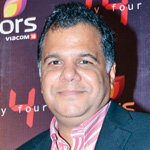
    By Raj Nayak, CEO, Colors


    Rather than big idea, I would want to term them as big challenges. The satellite industry has been around for two decades now and I am happy to have been a part of this journey for so long. But I have also been able to witness a lot of developments in the industry during these years. From a few channels earlier, we now have over 500+ channels. In the process, a lot of growth has happened by default than by design. It has been a case of trial-and-error as there was no history to lean back on. Almost everybody has tried new things which have mushroomed and grown over the years. The ride has been both good and bad. Good because the industry has grown real fast, thereby providing employment to thousands of people etc.


    On the other hand, we were also the most unregulated industry and that led to fast growth. This wouldn’t have been the case if we had been regulated because entrepreneurship would have been killed. Also, it has left a lot of broadcasters bleeding. Today, only a few players are making money while the rest are incurring losses. Hopefully, digitization will change all that as it is a step in the right direction.


    But there is no magic wand; it will happen over a course of time. So the real challenges for the broadcasting industry are: firstly, how do you reinvent yourself? For example, there is a herd mentality in programming. How you break that monopoly is a challenge. On the programming front, I foresee two big challenges. One is spiralling cost because the cost of artistes is going up and very few people are investing in new talent. On the movie acquisition front, the costs have multiplied multi-fold. So somewhere, the industry needs to come together in terms of finding synergies in certain areas where you can control costs. For example, movie acquisitions. Today, all top four GECs are party to driving the prices up. So we need to work together to find a solution that benefits all.


    As for advertising sales, while we keep talking that the universe has grown 4-5 times in the last few years the yield hasn’t gone up – ad spot rates haven’t gone up. That’s a big challenge that needs to be addressed. And I do not foresee this issue being addressed unless the supply-demand issue is addressed. I may sound politically incorrect out here but the fact is that we need to regulate the total inventory on a television channel. One reason for this was because there was a huge carriage fee with advertising rates not going up… the only way they were going to grow was by increasing ad inventory. If it is done in a planned and phased manner, it will be very good for the industry in the long run. The industry needs to set itself a Sunset Date so as to bring down the inventory that’s there on television. So instead of 20 minutes, a 10+2 minutes may be a good benchmark. As, unless the supply-demand rates change, the ad rates cannot go up. This is a big challenge but one that is doable.


    I feel a part of the issue will get addressed with digitization and with revenue stream from distribution; it will ease the pressure a bit on the advertising front. Once the balance sheet starts looking better there will be a little more investment that will go into content.


    Another thing is content differentiation. What happens is when you are successful your appetite for taking risks becomes less. In India, in the fiction shows, the seasons are canned to a large extent which is a big challenge on the team that is involved. At Colors, we are trying to set a new model where we will be launching Season 2 of Na Bole Tum… which will run till a stipulated timeframe only. If it is successful we won’t extend the days but will announce a new Season 3 later. We are hoping this will be a game-changer for us in the future. A similar approach is being given to our other show 24, where we will be doing only Season 1 for now. We may do other seasons based on its success. If we are able to bring some kind of standard practice in the system then we may see things changing as we move ahead.


    A lot of other avenues that were not available earlier like content on mobile etc will start opening up in a big way with 4G. Broadcasters will increasingly be looking up to digital to bring in more viewers and also revenue for the network.