Category: THE ANCHOR

  • The Anchor: Faisal Farooqui on 5 changes he would like to see in digital media

    By Faisal Farooqui


    1. Government adopting Digital:

    There is a lot that the government can do by adopting the digital media. We look forward to significant changes in the government where the entire delivery of the government public interface services should be digital. I would like the government to understand that digital media is not just about having a website but it is really about reaching out to your citizens on a larger scale.


    2. More schools adopting Digital:

    All schools inIndiastarting with government schools must adopt digital as part of their curriculum and treat it as a separate medium. All the schools in this country should realize that digital is not a separate medium, but a medium which can be integrated with their teaching and curriculum, and they should make this change.


    3. Cutting down on the middle men:

    I would like advertisers and publishers to reach out directly to each other. There are a lot of middle men involved in the whole process of buying and selling of ads in the digital space. If the digital industry, both on the advertiser and publisher front, has to make progress then we need a lot of direct interaction between buyer and sellers. This will help ad buyers reach out to inventory sellers directly. Therefore, we need to cut down on some of the layers in between.


    4. Cell phone operators adopting digital:

    Cell phone operators inIndiahave not adopted digital completely. They have to realize that digital doesn’t just mean subscribing to SMS jokes. Most of their websites are not optimized. Hence, a great push can be given if the mobile operators can go digital. Cell phone companies must therefore make a lot of their services digital. So if they can change their digital strategies and adopt digital in a bigger way, I think that will be a big boost.


    5. Digital industry must think beyond the websites:

    Digital industry has to think that digital is beyond the website. You have to build social integration and a lot of these digital companies inIndiahave not embraced social media. Hence digital I believe has to become social.


    Faisal Farooqui is the Founder – CEO, Mouthshut.com


  • The Anchor: Ritu Kapur on 5 ways factual entertainment channels can score over GECs

    By Ritu Kapur


    In a cluttered TV environment with increasing content sameness and fatigue, factual entertainment channels are a refreshing “window to the world”, with unpredictable, spectacular, high end productions.  But with the number of infotainment channels on the rise, it’s important, we feel, to re-look at factual entertainment as an alternative experience to general entertainment.


    Production Style

    Factual channels need to change the production style to make the content more entertaining, interactive and accessible. History TV 18 has broken the documentary “all-knowing voice of God” format with shows like Pawn Stars, Ice Road Truckers and a competition show like Top Shot. Where the content is not shying away from information, but presenting it in viewer friendly, character-driven reality format.


    Characters

    Television across the world is driven by iconic characters. For the longest time animals took centre-stage. There is already a move towards characters becoming the defining face of channels like Bear Grylls on Discovery. But it’s important for these characters to evolve further and break away from repetitive formats.


    Unlike other channels, factual channels need to create identifiable characters out of everyday people, doing extraordinary things.  And it’s not enough to just build these characters but to use them creatively to convey information to the viewers.


    Drama

    Why should drama only be the forte of a GEC? Factual entertainment channels should take the lead in creating high quality drama that is not there just for drama sake but to bring alive themes from history, science and survival. History TV18 is taking its first step towards that with an Emmy award winning drama series called The Kennedys. The series is very well-researched, hasHollywoodgreats like Katie Holmes and is a big budget production.


    A 360 degree view of India

    High end productions onIndiahave always had the western perspective. It’s important now for Indian channels to assert and present the realIndia, breaking all clichés. These should be done with global syndication in mind so that this perspective is accessible internationally.


    Making International Content Accessible

    Dubbing in regional languages has been the primary means of reaching out to larger viewership inIndia. It’s important now to review the kind of experience this dubbing provides for its viewers. Languaging that creates a context for the aspirational regional Indian viewer is important. It is also important to go beyond dubbing to also use short formats, promo styling and other creative TV devices to make international content relevant and “belong” to the Indian viewer.


    Ritu Kapur is the Programming head at A+E Network, TV18


  • The Anchor: 5 reasons language music channels are the way to go

    By Sandeep Bansal


    1. Regional music channels are registering increased viewership. The regional music channels have provided a good television platform for local music which was earlier not there.


    2. There is a steady revenue growth @15 per cent for the regional television channels.


    3. More focused targeting for advertisers and hence less wastage. Many big marketers are looking at a more focused communication for their consumers across markets and this can very well be addressed by the regional music television channels.


    4. Capitalization costs are lower compared to national music channels as one does not invest in national deals for distribution, content, and so on. The lower capitalization costs bring down the turnaround period for the regional music channel.


    5. Since regional music is not mainstream, the music content is available at a much reasonable rate compared to Bollywood music content. Also the regional content is created with smaller budgets making it cheaper for the broadcaster to source the same.


    Sandeep Bansal is Managing Director 9X Tashan


  • The Anchor: 5 ways you can never get into a jam in the digital world

    By Saurabh Parmar


    1. Be a good listener:

    Digital is a two way communication medium, so before you start talking, start listening to what your customers are talking.


    2. Now understand:

    Get market research experts and your brand custodians to work on all this data and channel the insights to both your online and offline marketing.


    3. Get together:

    Don’t treat digital in a silo, integrate your touch points both in offline to digital banner campaigns, website, mobile, social media with each other. Integration is not just about giving links but really ‘getting together’ mediums to create a cohesive campaign.


    4. Be useful, fun or informative:

    It’s a crowded world out there with millions of brands and products talking. To connect with your customer make sure your message is either useful (What he is looking for), fun (what he will enjoy reading or sharing) or informative (makes him aware and interested)…just a higher media spend does not guarantee you more customers.


    5. Be real, say sorry:

    We all fu ** up, it’s better to admit it and rectify it rather than your customers creating a petition about you or criticizing you on blogs. Even in the virtual world genuineness is appreciated, especially if the response is prompt and correction faster.


    And the sureshot way…hire a better agency: Well the shortest and the easiest way of course is to hire a better agency


    Saurabh Parmar is Founder & CEO, Brandlogist


  • The Anchor: 5 ways an agency can retain talent

    By Ajit Menon


    Retaining talent is tough, but important, be it any industry. It’s acutely important for an agency because the only asset that agencies have are its ‘people’ and if good talent cannot be retained, especially in an agency, then the agency is at risk of loosing clients as well.


    So if you are a creative agency, the first step to retain talent is to:-


    1. Go pitch and win

    No NBD (new business development) No Stay. It’s but obvious that if you are not a winning agency, there is no life in the agency and employees will leave.


    2. Get the Gods home

    If you win great accounts, you get to do great work and get noticed. Great work attracts great talent and keeps them alive because agency employees get the adrenalin rush only when they get a chance to do brilliant creative work.


    3. Solution Givers

    If employees are trained to be solution givers rather than just be delivery boys, employees feel that their professional life is getting enriched and they want to stay. The entire training and development calendar should reflect only one thing, “Groom the employee for the future”. This gives the employee the feeling that this agency is developing his/her career.


    4. Einstein route

    Embrace experimentation in the agency. If you have a culture where you encourage people to experiment with new ideas, newer forms of communication and expression, out of the box thinking, the young minds find themselves comfortable in the environment and stay back, even if the lure of money is there.


    5. Money where your mouth is

    Pay peanuts and you surely will get monkeys which is yet another sure short way of loosing people and clients. Pay the people what they deserve. This is an industry where you don’t concentrate on cost control to meet margins (unless there is a global economy melt down and it’s affecting the country) but pitch to win creative accounts to meet margins. The more you win, the more you get to do good work which then leads to better revenues, so better infrastructure, great culture and of course better pay and handsome career progression. All this leads to employees being happy, and trust me no one wants to leave ‘happy’.


    Ajit Menon is executive director at DDB Mudra


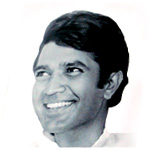
  • The Anchor: Subhash Kamath on his favourite Rajesh Khanna songs

    By Subhash Kamath


    I do have a list of my favourite Rajesh Khanna songs. I love them as these songs are incredibly well written along with absolutely brilliant lyrics and compositions. These songs also bring out the emotion of the situation in the film so evocatively.


    Here goes my list:


    Chingari Koi bhadke from Amar Prem
    [youtube width=”500″ height=”250″]http://www.youtube.com/watch?v=kpM0jPd6-7w[/youtube]
    Kuch to log kahenge again from Amar Prem
    [youtube width=”500″ height=”250″]http://www.youtube.com/watch?v=95UdAo4JdJI[/youtube]
    Nadia se daria from the movie Namak Haraam
    [youtube width=”500″ height=”250″]http://www.youtube.com/watch?v=w7Vl6pNCE8U[/youtube]
    Zindagi kaisi hai paheli from the movie Anand
    [youtube width=”500″ height=”250″]http://www.youtube.com/watch?v=3vgDb4TQneA[/youtube]
    Mainetere liye hi saat rang ke sapne again from the movie Anand
    [youtube width=”500″ height=”250″]http://www.youtube.com/watch?v=SC8DuvNCjbY[/youtube]
    Yeh Shaam mastani from the movie Kati Patang
    [youtube width=”500″ height=”250″]http://www.youtube.com/watch?v=_sZg4EUB3IM[/youtube]


    As for the dialogue, the favourite will always remain the one from Anand… Babumoshai, Zindagi ek rang manch hai aur hum sab is rang manch ki kathputliyan hain…. The role played by Rajesh Khanna was really powerful, one of a dying man who had the ability to still laugh and make others laugh. I remember a scene in the movie where he makes light of his illness and Amitabh Bachchan in total frustration says, “Agar main kahoon ki tumhein lymphosarcoma of the intestine hua hai toh?” and Rajesh Khanna just smiled and says, “waah waah, baabumoshai, bimaari ho to aisi.” I think it was incredible how he delivered his dialogues and performed his role in the movie Anand.


    Subhash Kamath is the Managing Partner at BBH India. He is also passionate about music and is part of a music band called Wanted Yesterday.


  • The Anchor: 5 reasons why online demand services are the next big thing

    By Shreyash Sigtia


    1. Paradox of Choice

    Earlier audiences had very limited choice with only Doordarshan and DD Metro as channels for entertainment. Cut to a couple of decades back where audiences were spoilt for choice with nearly 500 channels to select from. But all this time viewers did not have much choice in terms of content/data selection; they never really had complete control on the viewership. So now, with the advent of online demand services, this situation has improved considerably. Customers now have the freedom of paying for the content of their choice and watch it at their own preferred time slot


    2. Choice of Devices

    As a country, we have moved from joint families to nuclear families to finally being cellular families, our lives revolve around smart gadgets from morning to evening. Along with internet on PC, people today also have a choice to stream these videos on their smart phones and tablets. With the current boom in the smart phones and tablets market due to competitive price offering supported by 3G and 4G high speed internet browsing, the consumer can easily view the videos on multiple connected devices.


    3. Convenience of time and place

    With the kind of hectic lifestyle one has today, taking out time to visit a theatre for every movie has become a little cumbersome and difficult. With everyone being on-the-go 24/7, 365 days a year, on demand services give people the luxury to watch their favourite movies/new release at their preferred time and place.


    4. Beyond the metros

    Indiais diverse and wide-spread. There are several small budget and/orHollywoodmovies that get released only in the top metros. Consumers residing in tier 2 and 3 cities earlier had no access to such films But with the availability of on demand services, even a consumer  living in tier 2 or 3 towns and cities can enjoy such releases, be it Hindi, English or any other language at the click of the mouse.


    5. Easy Payment Options

    There has been an increase in the online payment options for consumers. It is no more limited to cash or credit cards. Services like ITZ Cash and Suvidha Pin allow the user to do payment online. An individual doesn’t have to move from places to places for paying the bills.


    Shreyash Sigtia is the Business Head at BIG Flicks Pvt. Ltd.


  • The Anchor: 5 reasons when you know you can become an entrepreneur

    By Kavita Jain


    When you are driven by passion:

    If you are driven by your passion, entrepreneurship is the way to go because there are slim chances you would enjoy working with someone else coz people are not likely to share same vision/passion and it’s the best learning opportunity you can create for yourself.


    When you have the courage to take risks:

    “The word ‘entrepreneur’ actually is actually scary for many because it takes guts, self-belief (and a little bit of stupidity) to go out there on your own… If you want the freedom to do things your way and not having to listen to dictates of others entrepreneurship is the thing for you. Being happy in life is most important. So what if you can’t earn much money as an entrepreneur. As long as you’re happy doing it, I think that’s the best goddamn reason you can ever think of.


    When circumstances lead you:

    Sometimes you don’t really have a choice but a do or die situation, and in most cases answer is “do” and do it really well.  Sometime your situations lead you towards entrepreneurship, for e.g. economy down turn. Some friends lost their well paying jobs couple of years back thanks to down fall of economy and the situation forced them to be on their own and they are doing very well today and are happy to be an entrepreneur.


    When you are ready to work round the clock:

    ‘Flexibility of time and ability to do more in little time and a time of your choice as you are not bound to a 9 to 5 routine.


    When you are ready to take challenges head on:

    As an entrepreneur, you are in control of your life (being at two places at the same time.  You enjoy working with and learning from the best people you decide to work with. Being an entrepreneur is a tough and a challenging task, sometimes scary too, especially when you are trying to balance it with your personal life but at the end of it if you play it right and manage to balance it right it gives you a high like nothing else could do.


    Kavita Jain is Founder, Schwelle Media


  • The Anchor: Ajay Chandwani on 5 reasons why youngsters/MBAs should join advertising

    By Ajay Chandwani


    1. Brand Management

    For those who have studied MBA, marketing management is just one part of the spectrum, but one should realize that in advertising you also get to do brand management. This is a dynamic field to be a part with immense opportunity.


    2. Variety

    In advertising, you are not restricted to one industry, but you get to work on various categories. So if one time it is about selling a washing powder, next time it could be about selling biscuits and then about selling cars. One has to think different thus not getting stuck in stereotypes.


    3. You do it for a living

    Advertising promotes lateral thinking. It’s not that you can’t do out-of-box thinking in marketing, but in advertising that’s how you are making a living. You get to interact with creative minds and you need to be an ideas person to survive and succeed.


    4. Never a predictable moment

    You could get to work on a new product, marketing plans keep changing, new brands gets launched, so in short, there is no boredom. There is so much going around in advertising business that it promises to be one roller-coaster ride.


    5. Today advertising is at the helm of a marketing function

    The former has taken a 360 degree avatar which included advertising, PR, digital, BTL and the works. There is a desirable exposure to brands. Hence it provides a wider canvas to work on and promises to be an integral part of marketing.


    Ajay Chandwani is Director at Percept Ltd


  • The Anchor: 6 ways to create pathbreaking & sustainable communication for a brand

    By N Chandramouli


    Everyone loves to win, though only a few have what it takes to prepare for the win. Sustainable Communication is that organizational winning strategy.


    1. Future relevant communication

    In my several thousand interactions with CEOs and top management, one significant conclusion with regard to communication has dawned – successful organizations always have top-driven communication.


    Though everyone understands the importance of communication, most top management are unwilling to get involved enough to deep-impact it. Most only want to see results without wanting to participate in its creation.


    Communication is treated as an essential, but ‘extraneous’ service to the organization. Therefore, while the result is important, how it is achieved, is not. The communication function most often reports into marketing, and due to this, the entire organization’s communication remains partial to marketing communication.


    Sustainable Communication is that which impacts the future of the organization, and without the direct involvement and guidance of the top management, the organization’s future cannot be impacted. Organizations where the top management does not give communication the maximum attention remain myopic without much control over their own destiny. It also silently encourages the ‘dynamite fishermen’ to play havoc, severely damaging the communication environment of the organization.


    For an organization that wants to remain relevant in the future, the person piloting it has to be fully committed to Sustainable Communication giving it requisite time, energy and direction.


    2. Communication Philosophy

    All systems run on some principle and only when articulated explicitly do they become ‘believable’- a prerequisite for adherence. Its expression is the first step for Sustainable Communication to take root, and this creates adherence at the deepest level in the organization.


    The Communication Philosophy of an organization is an analysis of the organization’s reason for existence, its values, nature and its reality. It asks three fundamental questions, the answers to which define a Brand’s topography for Sustainable Communication.


    Q. Why do we communicate?

    Neophytes usually get drawn to answering this in terms of the business goals of the company, but this question must not be taken too literally. It is necessary for the answers to be unshackled from the business goals, and therein lies its difficulty. The Communication Philosophy seeks out the intrinsic nature of the organization’s communication, and this answer helps understand the organization’s true objectives in relation to its ecosystem.

    Q. How will we communicate?

    The answer to this question gives guidelines for communication to the organization. It also elaborates the tone and tenor of communication, and most importantly, the Brand’s not-to-do list.  This usually sets the foundation for all to adhere to.

    Q. What do we want to communicate about us?

    The answer to this reveals the ideally desired perception. Since the seed of communication lies in its action, it is necessary that this ideal seeps into every action the organization takes. While articulating its response, one must consider the different states of the entity; current, future and the approach to overcome this aspirational gap. The danger with ideal perceptions is that they tend to fly, and therefore, its articulation should be grounded in reality.


    3. Discovering Communication pathways

    Every organization has natural communication trails within them. They use these pathways predisposed to communication because of interdependencies within the sub-group. Use of these interdependencies provides natural energies for supporting the Sustainable Communication structure. Often hidden beneath the surface, unexposed to the organization, these trails need to be discovered with focus. Once found and worked on (no different from real pathways), these pathways will automatically draw more communication traffic through them.


    To discover these trails, a deeper understanding of each sub-group’s aspirations, interests, preferences and culture is necessary. These communication trails are also useful in two-way communication and have the scope to become robust feedback systems.


    4. Integrated approach

    An integrated approach looks at the organization’s communication philosophy from various dimensions. Some are listed below, but this is a dynamic list and must be added to by the communicator – the more that get included in this list, the more sustainable an organization’s communication will be. The communication should be integrated from the dimensions of:


    1. Culture – The organization’s communication must be integrated with the culture of its people and of the society that it exists in.

    2. Vision – All communication of the organization must emanate from a common, expressed vision.

    3. Time – The organization’s communication must be relevant to the past and the future of the entity while remaining aligned to its present.

    4. Environment – The communication must be in harmony with the environment the brand engages with, eliminating any damage to it.

    5. Audiences – It must be integrated with the needs of all the primary audiences of the organization; clients, employees, shareholders among others.

    6. Audience Degrees – It must be integrated with the primary, secondary and tertiary audiences and must be relevant to all three.

    7. Knowledge – Sustainable Communication must have an integrated approach to creation, storing and dissemination of knowledge.

    8. Lifecycle – It must have a regenerative approach such that the birth to demise message lifecycle is considered.

    9. Function Collective – Each function of a business must reinforce the collective, and the collective must reinforce each function’s communication.


    5. Multi-polarity

    Multi-polarity tends to maximize communication efficiencies and as it looks at several polarities achieved through each message. For an organization to have Sustainable Communication, while the main focus could be one or a few, the multi-polarity maximizes value by deriving more from the same message. The more polarities that get included in the message, the more sustainable it is. These polarities are:

    1. Multi objective – Each communication must impact multiple objectives in positive ways.

    2. Multi sensory – Such that it integrates experiences of as many senses as possible – cognitive, tactile, auditory, visual.

    3. Multi-audience - The same communication should reach several audiences.

    4. Multi noded – There must be several crossover nodes of several communication pathways to facilitate interaction at the nodes.

    5. Multi functional – It should take into consideration the needs of all the functions (like finance, human resources, marketing and others) around the communication.

    6. Issue Chain

    An Issue Chain is the identification of the natural issues of any system that gives it the propensity to communicate. These depend on its contributors – sector, audiences, technology and others that are issues that drive communication energy. To better this Sustainable Communication method, it is necessary to identify the various issues in the sub-systems and then build communications around these. Such communication sustains itself through the energy that others put into it as it is of their interest.


    N Chandramouliis Author of upcoming book Decoding Communication and CEO Comniscient Group


  • The Anchor: 5 reasons why Digitization may not happen even by Oct 31

    By Pradyuman Maheshwari


    It was unfortunate to see broadcasters forced to change their business projections and content strategies when digitization was less than a month away from the scheduled dates in June. And, now, the information one seems to be getting from the ground in the four metros is that the October 31 deadline also may not be met with.


    1. Momentum is lost: TAM CEO LV Krishnan said this in an interview to me last week. The urgency to go in for set-top boxes and the momentum that existed in April and May has been lost.

    2. The masses will wait and watch. Making it mandatory for cable operators and MSOs responsible for giving info is of no use. It’s the public – you and me – who have to be motivated enough to buy the box and go digital.  Don’t be surprised if the conversions fail  to pick up till the last week…

    3. Analogue will not vanish in the lower strata: TAM may not measure these homes in the four metros, but that’s not really a concern for lakhs of families who can’t afford a set-top box and the revised tariff.And just as it’s impossible to control petty crime, I don’t think the government will be able to nab the pirates in the metros.

    4. Old set-tops offer < 500 channels: Remember, the true pleasures of digitization will be felt only when you can watch those obscure television channels… Jewelry Television, may be. Or Create, a channel that shows D-I-Y and assorted instructional programming. Regrettably, many of those who embraced digital early own set-top boxes that may not be able to accommodate 500 without a tweak

    5. MIB must lead from the front: Any significant process for change must be led from the front and with the minister, her deputies and the secretariat on the ground. Are they doing it? No visible signs yet.


  • The Anchor: 6 things to watch out for in the 2012 London Games

    By Ranjona Banerji


    I hope everyone interested in having a good laugh has been watching Twenty Twelve on BBC Entertainment, a comedy series which follows “the deliverance committee” involved in making sure the 2012 London Games run smoothly. Everything from bureaucracy to PR to political correctness to politics to jargon to celebrity are satirised brilliantly and it all seems so real.


    However, it is also possible that you interested in the Games themselves. In which case, here’s what to watch out for.


    1. The Opening ceremony on Friday, that is 1am (Saturday morning technically) for India on ESPN, Star Sports. Directed by Danny Boyle, (yes, he of the Jai Ho and slums are fun fame) it is expected to be a massive extravaganza. He has to compete with the glorious, breathtaking performance put up by the Chinese in Beijing in 2008. I don’t actually quite remember it actually, but it was spectacular. Lots of firework dragons. Or was that the first Lord of the Rings movie? Whatever.


    2. The Indian medal chase. This is supposed to be our best chance “ever” (please substitute your own version of an American teenager’s twang here) of winning lots of medals. Boxing, tennis (oh, wait, in India sometimes there’re both the same thing), hockey, badminton, wrestling, shooting… In fact, anything except running and jumping which, of course, are what the Olympics started with in ancient Greece. No one expects us to run and jump, least of all, us.


    3. Badminton starts on Saturday (go Saina Nehwal!), which is why badminton players may not be at the Danny Boyle show. Actually, so does boxing, athletics, handball, judo, tennis, volleyball, weightlifting and just about everything else. Football has already started. So maybe no one will be at that opening ceremony, so it’ll be all sparse and minimalist and New Age.


    4. London, the best city in the world. Apart of course from New York, Paris, Shanghai, Hong Kong, Dubai, Delhi, well of course, of course, that’s a joke! If you can’t be there, you can watch it, especially that giant red squirly whirly steel thingie made by that famous Indian artist chappie Anish Kapoor (Indian! We are the greatest!). So wish you were at the West End, Covent Garden, Piccadilly,Oxford Street,Kensington Gardens, Buckingham Palace, Tate Modern, instead of wherever you are.


    5. Wimbledon! This one is for me. The Championships are over, but tennis is going back to the green (or re-greened) grass. Twice in one year is remarkable and unique. (I wrote Wimbledon! But I meant Roger Federer! Of course.)


    6. There’s a special Olympic sport that has been included just for India. It’s called: Where’s That Kalmadi? You can seek him here, seek him there as the former head honcho of sporty stuff and hmm, other stuff, Suresh Kalmadi, weaves and dodges his way around the Games, avoiding the media, the athletes, the police…