
Category: TAM

  • BARC-TAM: We told you so! MxM broke the story…

    By Our Research Editor


    Okay, guys. Time to blow our own trumpets. But we see so much of it on television and print that we couldn’t help doing it. After all, when we wrote, no one else wrote about it, and when Kantar CEO Eric Salama slammed our report, we heard there some even grinning with fiendish delight. Whatever.


    So here are links to the two reports. Read them again. We may not have the maximum page views amongst media sites, but we have the pages that matter. And doubtlessly viewers like yourselves who matter most.


    Enjoy.


    This is our first story: http://www.mxmindia.com/2015/03/exclusive-barc-in-talks-to-buy-tam/


    And our second report where we spoke of how Salama rubbished our report: http://www.mxmindia.com/2015/03/eric-salama-slams-mxm-report-says-no-selling-tam-to-barc-mxmindia-stands-by-story/


  • BARC-TAM: Did the industry kill TAM?

    By Our Research Editor


    Let’s be clear on this. The only people responsible for TAM getting out of the television audience measurement business are the people who set up the body to do the job.


    There were complaints of pilferage, corruption and incorrect data and analyses. Some of these complaints continue to come in for BARC data also, but since here the BARC stakeholders are all of those who could be complaining, we have murmurs and not shouting.


    So TAM was made to exit, be it the politics of the industry or simply apathy.


    While it was set up by a joint industry body, how much did they monitor and guide TAM?


    Was there enough clarity, the way it is today?


    Did the politics between the stakeholders see TAM in?


    But, then, also did Nielsen and Kantar also not be progressive enough and make attempts to streamline operations and make it future-ready? Couldn’t the boxes have been manufactured locally?  Did Nielsen and Kantar use TAM to shore up their own global bottomline?


    Many of these questions will stay unanswered and/or brushed under the carpet.


  • BARC-TAM deal: Win-win for all


    By A Correspondent


    The evening was organised to celebrate GroupM’s continuing dominance in the country, but there were just two things that were being discussed in not-very-hushed tones at a cocktails hosted by Mark Patterson, APAC CEO of the media services giant.


    The first was the INX Media founder Indrani Mukerjea with whom many of adland’s swish set had a muah-muah relationship, and the second was of course something that’s virtually as big a story as a Coca-Cola buying over Thums Up in the 1990s. That BARC has got TAM out of the audience measurement business in India in the form that it has been doing. And not just TAM, but even if it’s co-owners the WPP-owned Kantar Media and Nielsen.


    For BARC, it’s a huge win.

    1. It ramps up current meter strength of 22,000 to 34,000

    2. It kills a huge competitor in TAM

    3. Subscribers – channels and media agencies – will now not be able to compare the two systems, as TAM will cease to exist in the audience measurement space

    4. Having been around for a while, the TAM system is a well-oiled machinery

    5. It’s a no cash deal. Earlier, it was rumoured that TAM wanted Rs 70-odd crore for selling out completely. Now, it emerges that BARC is not paying any dosh upfront. But it needs to share 49 per cent of the spoils on the sourcing of the raw data, which may get diluted as BARC’s boxes increase if Nielsen-Kantar don’t invest more monies


    For TAM, it’s not a bad deal

    1. It’s an honourable exit

    2. Agreed it’s not going to make money upfront, but the 49 per cent (as against Rs 70crore upfront) isn’t a bad sum. The 49 per cent may get diluted to 25-odd per cent if its joint owners don’t put in any more money to grow the number of meters to 50,000


    What’s not been spoken about

    1. The announcement is following the signing of the term sheet. It’s going to take a minimum of three to four months for things to really happen. Until then it’s business as usual

    2. There are some 900-950 people in the PeopleMeter business. While a lot of them will be absorbed in some way by the new company, there may be some who will not be


    And the million dollar question

    What happens to LV Krishnan?


    The new truncated TAM Media is too small an operation for someone like LV Krishnan to run.  For, even though he’s young too be called that, but he’s surely the Father of TV Audience Measurement in India though of course some folks like Praveen Tripathi etc were around in the early days (and is now associated with BARC). From what we heard earlier, LV will help in the transition and get absorbed in the Kantar-WPP fold. Or he may well be hired by a broadcaster to help interpret numbers. Or he may set up his own consultancy.


    What we do know about LV is that he is not just a fighter, he’s got the endurance. From a record 56 push-ups at MCA Club in Bandra, to loooooong meetings with stakeholders, you’ve got to acknowledge that he is – as of today – the best in the business. He can tire you down, but he seldom gets tired of work.


    Back to the GroupM party, it’s ironical that the discussion and the clinking of glasses to celebrate the announcement happened for an organisation which reportedly batted much for TAM in the BARC boardrooms in the early days. Interestingly though it’s after sibling GroupM unsubscribed from TAM that people said BARC has arrived.


    PS: MxMIndia has been at the forefront of the coverage on the measurement business. Some of the best interviews given by all stakeholders have been published by us at MxMIndia, including the tearjerker of an interview of LV Krishnan that appeared a day before BARC ratings were launched. We will continue in our coverage. Accurate and fair. Keep the faith!


  • India-SL Test series helps Sony Six: TAM data

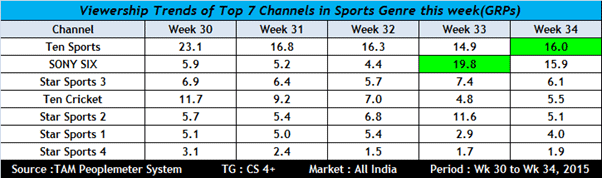
    Cricket rules, you can ask any Kabaddi captain this, and he or she would rue that despite all of the promotional efforts, cricket scores the highest. Thus, Sony Six has put up a noteworthy performance thanks to the airing of the India-Sri Lanka Test series, as per an analysis of TAM Media’s analytical arm – the S Group


    As is evident in the above table, Sony Six saw a sharp rise in its viewership in Week 33 leading the channel to gain the leadership position in the genre. The major reason for the leadership was airing of the India-Sri Lanka Test from  August 12 to 15. Week 34 saw the channel drop to a close second position in the sports genre as data for only three days of the second Test was available.


    The viewership from match airing alone contributes to more than 60% of the viewing on the channel with a GRP of 12 and 10 in Week 33 and Week 34, respectively.


    Overall the match was able to reach out to 8.05% & 6.98% of audience in Week 33 and Week 34, respectively.


  • Sheena Bora case becomes the top story on Hindi and English news: TAM analysis

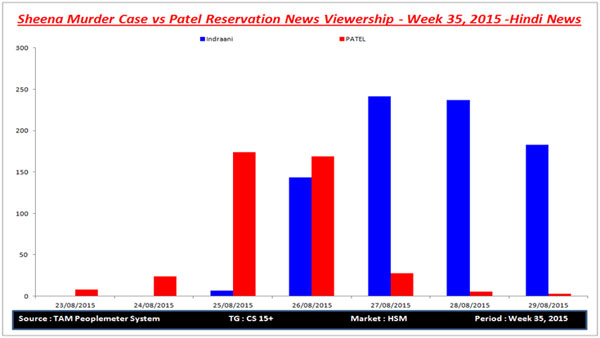
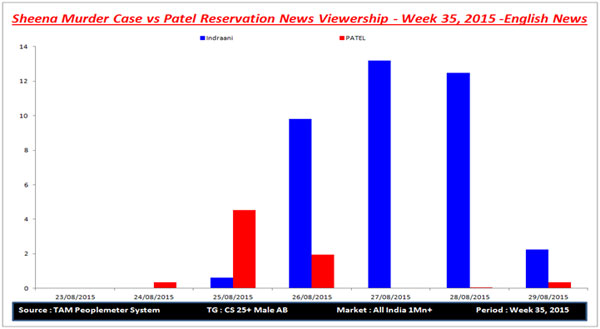
    The Top stories for Week 35, 2015 saw a High Profile Sheena Bora alleged murder case with former media owner Indrani  Mukerjea as one of the accused, along with the news based on demand of reservation by the Patel community in Gujarat. The Sheena Bora case was given a high priority in terms of coverage (26% of overall content), whereas the Patel reservation case received 6% share in coverage. This was determined by analysis done by the S-Group of TAM Media Research.


    • The PATEL Reservation was the prime focus in the beginning of Week 35, 2015. But, as soon as the Sheena Bora case saw the light of the day, news channels started covering it more heavily.


    • In Week 35, Hindi News Genre witnessed highest biewership on 25th and  26 August, where Patel Reservation case reached its peak and the Sheena Bora case news had just broken.
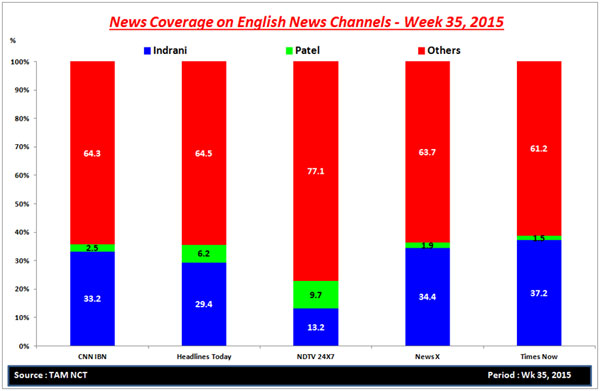
    • The Sheena Bora case was dedicated 30% duration and hence benefitted as it received 38% of all the viewership on English news channels, whereas on Hindi news channels, it was given 22% coverage and it received only 20% of all the viewership.
    • Sheena Bora case received a reach of 28%, whereas Patel reservation case received 24% sampling levels on the Hindi News Channels. (Hindi News – TG : CS 15+ ; Market : HSM)


    • News X and Times Now covered the Sheena Bora case most heavily. NDTV 24×7 on the other hand dedicated the least time to both the top stories with 23% duration as compared to the genre average of 34%, which slipped to 5th position in this week (from 3rd position in the last week)
    • Within the English news genre, Times Now gained maximum viewership on the coverage of the Sheena Bora News owing to the leading News Anchor – Arnab Goswami who contributed to 49% of the Viewership with reference to other Anchors on Times Now.


    Considering the high interest levels shown by news channels in the Sheena Bora case it would be interesting to see if their focus remains unchanged in the coming week.


  • Panel-based measurement is better: LV Krishnan


    Last week, the Kantar Media-Nielsen jv TAM Media and Kantar-owned IMRB announced the TeleWeb ratings for an integrated study of viewership on television screens and the internet – desktop/laptops as well as on devices. We caught up TAM CEO LV Krishnan to understand the finer details of the offering…


    You had spoken about the multiscreen measurement earlier. But do you think it could’ve come in a year or two earlier?

    Well, it required a lot of work to put it together because one is a non-linear medium and the is a linear one. To bring together both into the same database and be able to tell an advertiser that using a combined medium maybe better than using one medium etc requires work. We did a lot of groundwork. If only publishing numbers in terms of saying which sites were getting hits and which sites were getting what kind of profile of audiences. it could’ve been easy. It could’ve happened much before than now. Probably about 4-5 months back. But to integrate both, this is the earliest we could’ve got to.


    Given that there is an MoU with BARC on meters the merger move is work in progress, what happens after the merger happens?

    We’ll see it at that time.


    BARC is also doing something similar, it is also looking at multiple screen measurement.

    From our perspective we are looking at the present moment of time. We’ve done almost a year-and-a-half of work into this exercise. Obviously, since we are still running the television panel, the idea was to launch it and help the industry use it. What will happen a couple of months down the road is something we haven’t thought about at all. From our perspective, the work on TAM BARC integration is going well at a high speed level. That’ll continue.


    Since IMRB’s digital measurement exercise has been on for some five years now, couldn’t this have happened earlier?

    Two important things. Before we launched something like the integrated data we also needed to ensure the fact that the two panels are stable. TV was completely stable. The online one was a new one launched around 2011-2012. So it took time for that panel to settle down and get used on a regular basis because at that time if you look at it the advertising online was hardly around 2-3% of the advertising that was going over there. So, even if we had launched at that particular moment of time, the integrated quotient, the usage could’ve been very low. The demands coming in from the advertisers that we need do it the integrated way. Only in the last one year, in the beginning of 2014, when we were interacting with advertisers that there was a huge push going towards digital. Probably also because of the fact that most of the advertisers were MNCs were also being pushed by the global directors saying that let’s get starting investing on digital because globally digital was picking up strongly.


    What we previewed at the press conference last week was about English channels and the Hindi news channels. But I’m sure the difference is significant with English GECs.

    English GECs are basically international sites. So, we need to see what you want to track within that and how much of it is with the Indian audience largely. So, probably with time we’ll look at English entertainment also as a next step.


    Do you see a lot of viewing happening online in the case of all GECs?

    There is dailymotion.com, Hotstar, Sonyliv, Ditto, all of them are coming in the Top 50 sites. Platforms like Hotstar are among the Top 5.


    Now a channel like Colors has ‘Comedy Nights With Kapil’ which is among the most watched as per your numbers, but a channel like Colors which targets urban audiences is not in top channels list in tele-web, vis-à-vis Zee which is on the list?

    That’s because of Ditto TV. Ditto is the push for Zee. It has certainly got some audience in the metro markets. Colors is yet to have a platform that could be visible and for which audiences are walking in.


    So, will you say OTT is playing a big role?

    Yeah, certainly.


    What is the kind of response that you’ve seen from the advertising community, from the advertising agencies and media agencies?

    We don’t know yet the response because we just launched today but we’ve been working with the advertisers on this for almost a year now. We connected with them and we realised what they are looking for. So, therefore from that perspective this is exactly matching up to what their expectation was from a feasibility perspective of trying to alleviate a campaign on a multimedia level.


    There is no joint industry body to contend with the way you work. There is no industry association as such…

    No, there is no industry association involved in this. We are on our own and like any other research we are marketing it on our own for users to take their independent decisions whether they want to buy it or not or use it or not.


    There have been views on the entire element of panels. In the case of television, the cost of set-top boxes ensured that the sample size of panel homes couldn’t grow. But no such thing exists for the internet, so why only 6-8000 sample size? Do you think it can be browser-driven so that anyone can download and install?

    There are two different kinds of measurements that happen across all media. One is measurement based on universe and second one is measurement based on panels and specific sub-groups of profiles. The problem comes in when the universe study is when you don’t know who the individual is, who is responding to a particular viewing. So, most of the dynamics related to the universe measurement is already available with the publishers themselves like a Google or a Facebook knows about their customers largely and to that extent Facebook I could say knows it even better because age and gender is something they capture apart from the geographic location which is universally available to them. So, therefore, from a universe perspective, limitation is a fact that while you’ve a larger base you don’t know who that base is, who that individual is in terms of profile. So when you are targeting it, you are targeting more based on the behaviour pattern of the respondent rather than on the basis of demographics. In a panel0based exercise you are able to measure demographics as well as in terms of behaviour patterns together. So you know individually what the profile of the guy is, what profile of home he comes from, what are the numbers in the home, what are the platforms they have in the home that can be access point or a competitive perspective, a competitive touchpoint. So, all this kind of information is available on a panel-based exercise. Therefore, we are able to integrate between two mediums very effectively in this kind of a panel-based exercise. In a universe level it’ll be very difficult to integrate two measurement systems. So, largely speaking, for an understanding of a consumer behaviour and trying to monitor it on the basis of his behaviour, a panel makes sense actually. But in the longer run, we could actually do it the way it happens in television where the set top box data and the panel data work together. To therefore use a panel data is to optimize the set top box data. Similarly here too the panel-based data can be worked on to the universe data. You could mine better data at smaller discreet levels. These things will happen in future.


    How much of the TAM sample are you looking here?

    Six metros put together will be about 10,000 individuals actually, which is close to 2500 paneled homes.


    On a lighter note, had the news on NDTV scoring so high on TeleWeb come in earlier, things would’ve been much nicer for TAM?

    No, we take it as it comes. For us the most important thing is to indicate what is happening in the behaviour front. Business decisions are taken by users.
     

  • Now get TAM AdEx updates via MxM


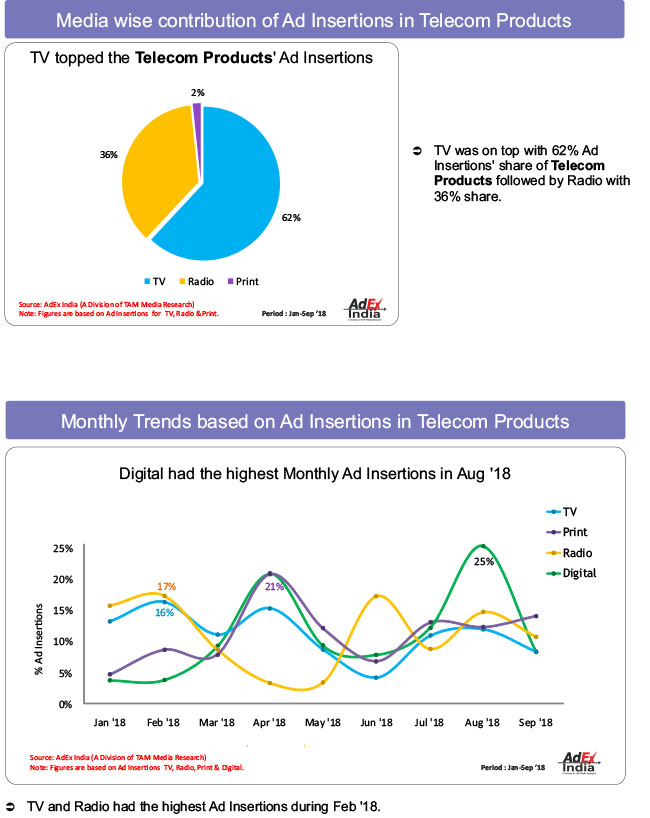
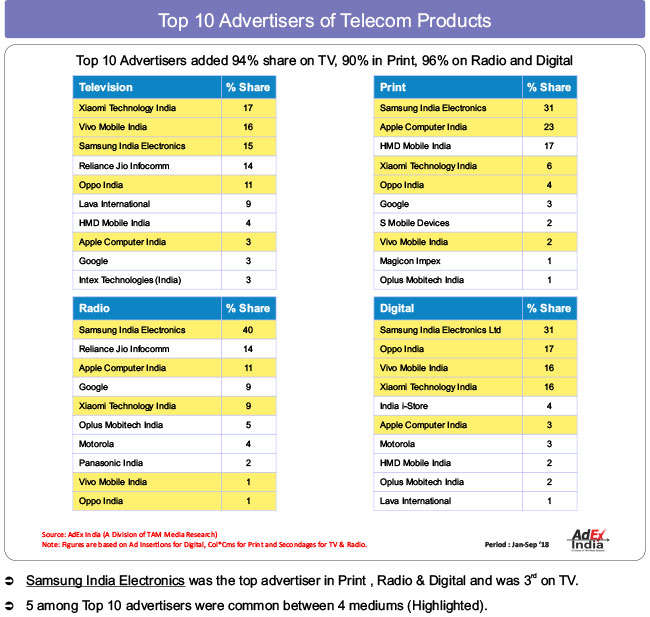
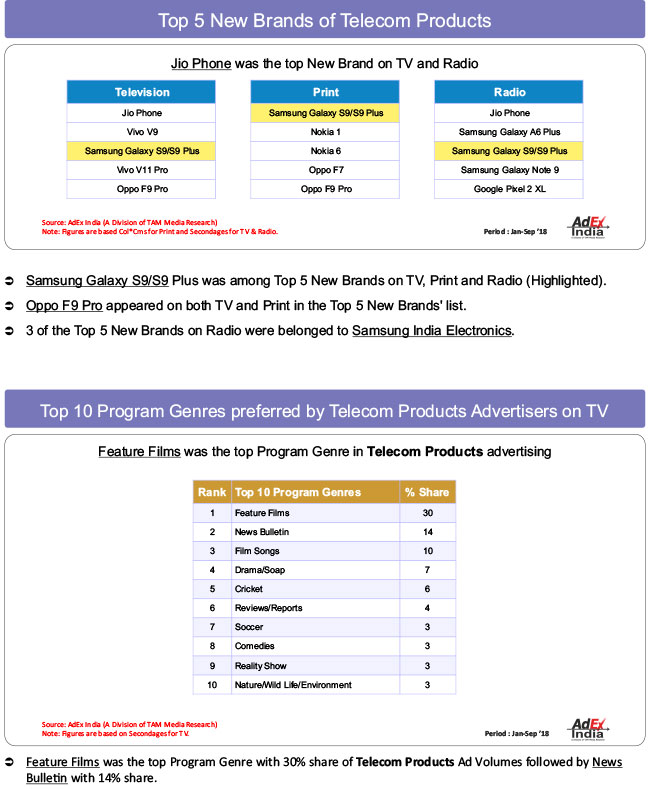
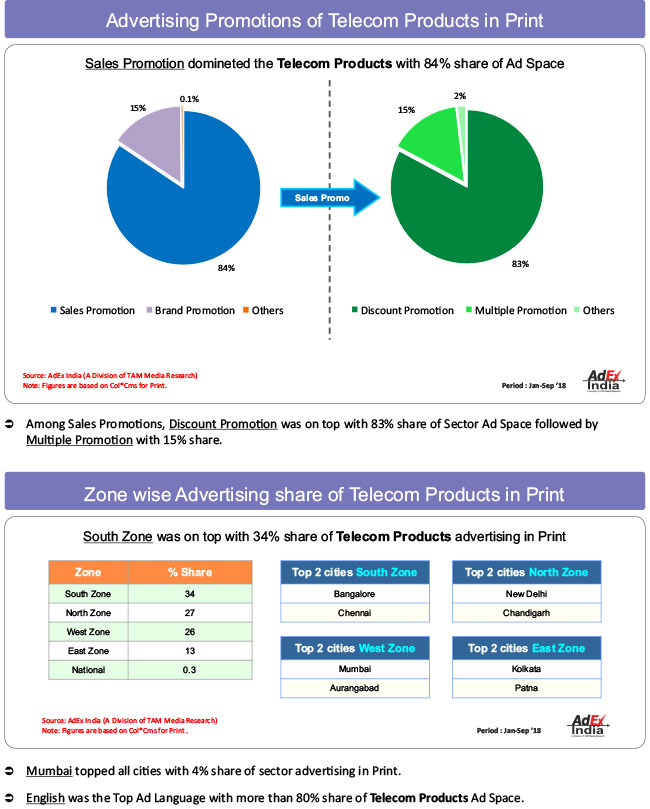
    In a special arrangement with MxMIndia, the platform trusted by discerning advertising, media and marketing professionals, ​TAM AdEx, a division of TAM India, will provide weekly scans of spends across television, print and radio.


    How do you get it? Simple. Simply ensure you subscribe to the MxMIndia newsletter.


    In addition, we will also provide a monthly overview of the spends, like we are doing today. The first of these newsletters will be sent out tomorrow and thereafter every Monday morning.


    Read on and Enrich yourself.


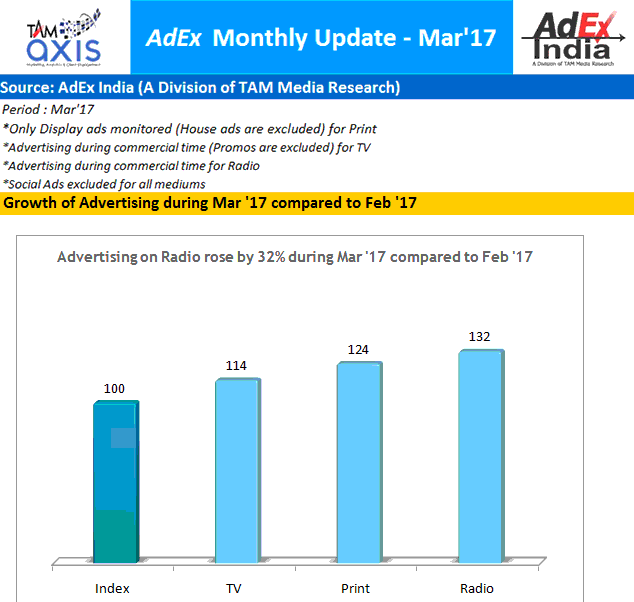
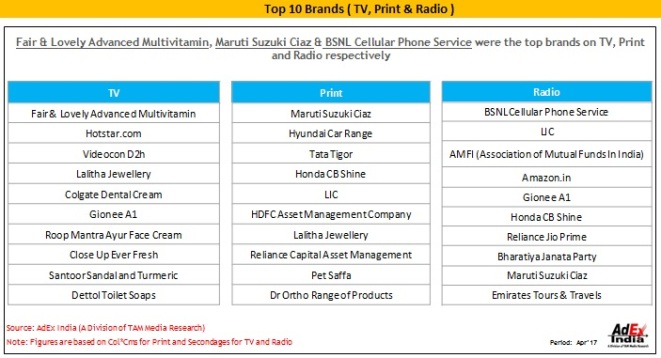
    AdEx Monthly Update – Mar’17

  • Advertising on TV, Print & Radio fell in Apr 2017 (over March ’17): TAM AdEx

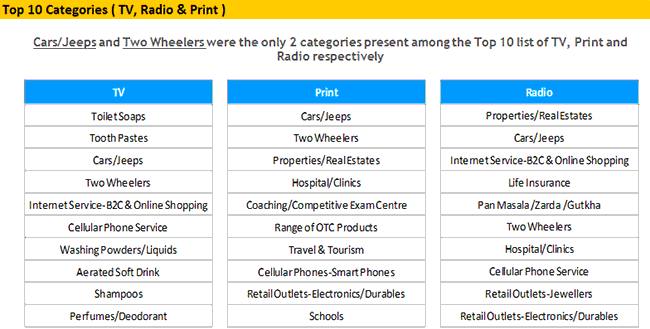
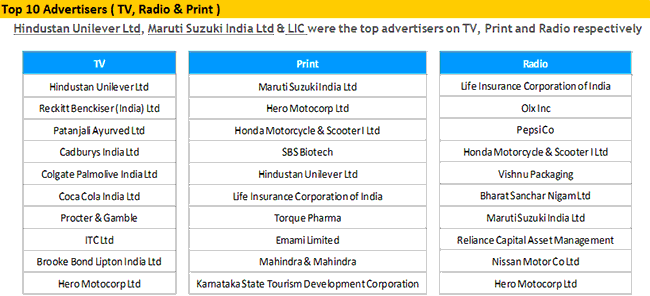
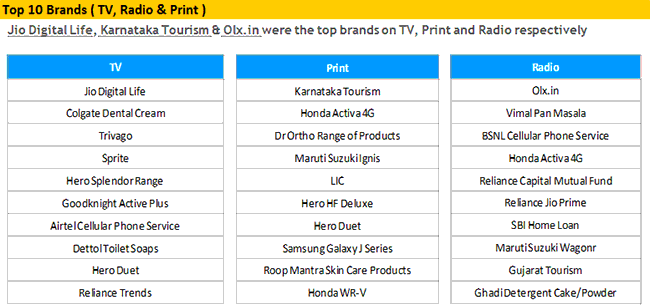
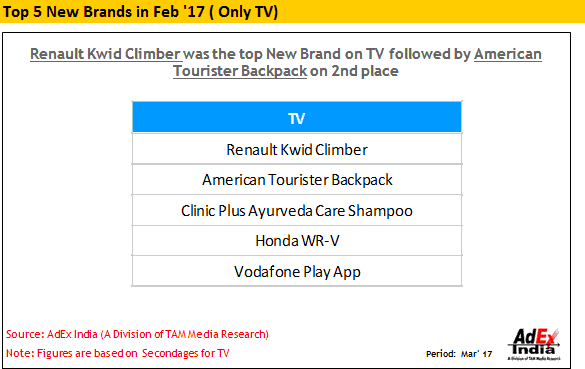
    In a special arrangement with MxMIndia, the platform trusted by discerning advertising, media and marketing professionals, ​TAM AdEx, a division of TAM India, provides weekly and monthly scans of spends across television, print and radio.
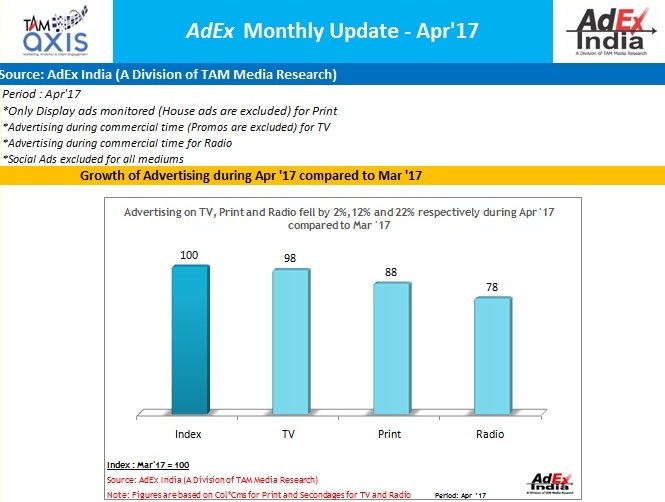
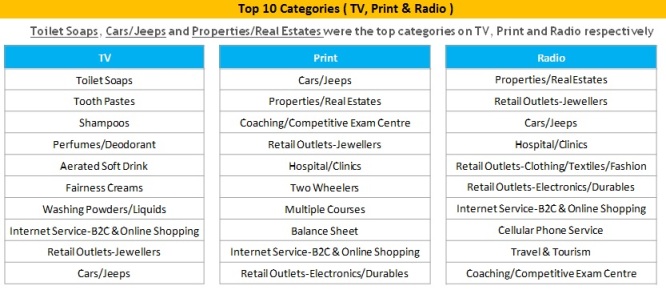
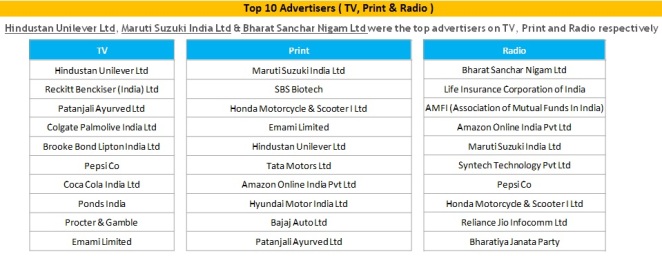
     

    We provided one in April (for March 2017), and here’s the report for April 2017.


    Read on and Enrich yourself.


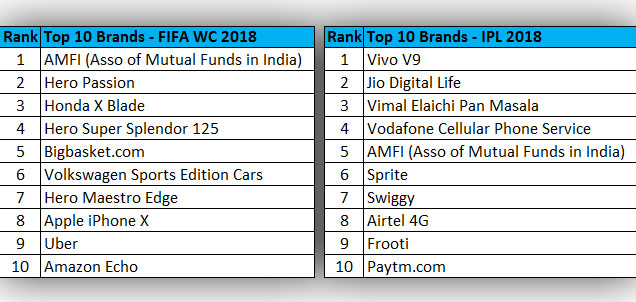
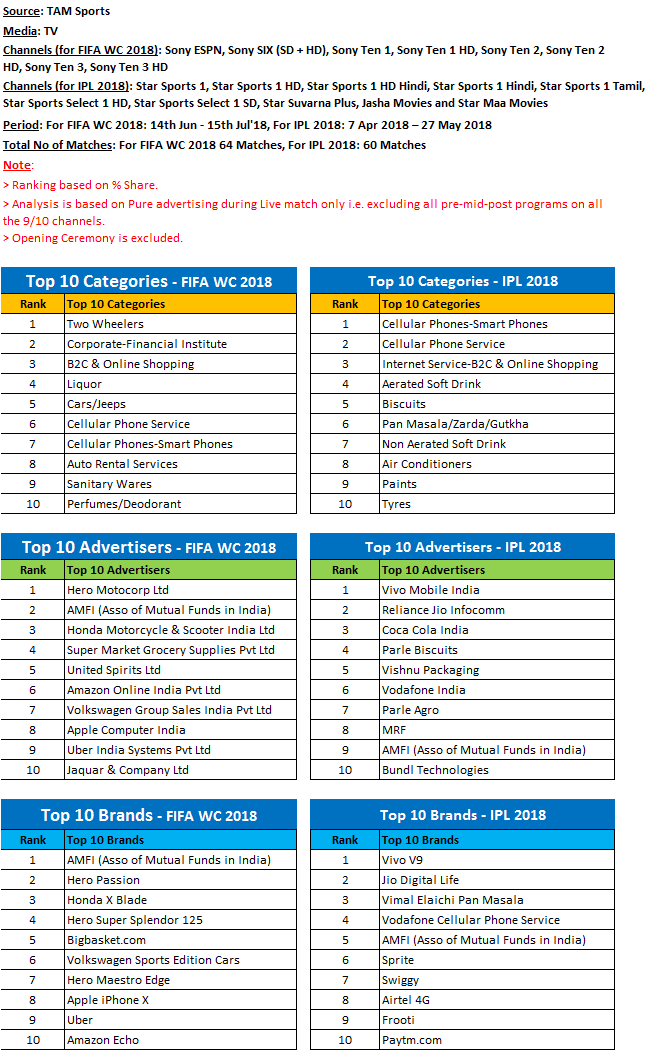
  • Advertisers on FIFA World Cup 2018 & IPL 2018

    TAM Sports, a jv of Kantar Media and Nielsen, tracks leading sporting events. In the set of tables below, we have a list of the leading categories, advertisers and brands across the television coverage of the 2018 editions of FIFA World Cup and the Indian Premier League (IPL).
  • Gung-ho TV Advertising Trends


    By Indrani Sen


    Indrani Sen

    The recent TAM Axis report on TV advertising trends in India in 2018 published in ET Brand Equity (https://brandequity.economictimes.indiatimes.com/slide-shows/tv-advertising-at-a-glance-tam-report/68096082) on February 22, 2019 shows that contrary to the popular belief TV advertising revenue did not suffer in 2017 after introduction of GST. Demonetisation in 2016 was a big blow which crippled the growth rate, but the advertising revenue was back on its growth track in 2017 which accelerated in 2018.

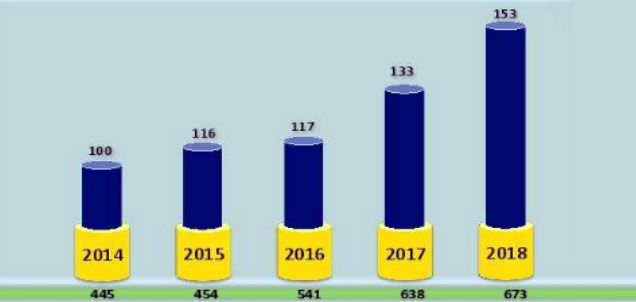
    Indexed growth rate of TV ad revenue 2014-2018: Source TAM Axis (AdEx India)

    N.B. The number of channels covered by AdEx is shown under each year in the green line.

    The above table shows that from 2014 to 2015 the index rose by 16 points and after adding only 1 point in 2016, it jumped by another 16 points in 2017 followed by 20 points in 2018. Over the last five years, from 2014 to 2018 there has been an overall growth of 53% in TV advertising revenue.

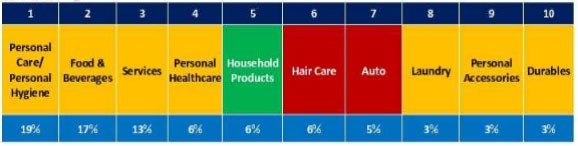
    Top 10 sectors in TV advertising in 2018: Source TAM Axis (AdEx India)

    The Top 10 sectors and the Top 5 sectors respectively account for 81% and 61% of total TV advertising revenue in 2018. While the Top 2 sectors retained their positions, household products rose from rank 7 to rank 5 with 43% growth in TV advertising in 2018 over 2017. Hair Care and Auto ranked lower in 2018 as compared to 2017 while Laundry, Personal Accessories and Durables held on to their ranks.

    It is interesting to note that of the Top 10 categories, 3 (Toilet Soap, Tooth Paste & Perfume /Deodorant) belong to Personal Care/ Personal Hygiene sector; 2 (Washing Powder/ Liquids & Toilet/ Floor Cleaner) belong to Household Product sector; 2 (Milk Beverages & Chocolates) belong to Food & Beverage sector; 2 (Two Wheeler and Cars/ Jeeps) belong to Auto sector and 1 (Shampoo) belongs to Hair Care sector. Though Services and Personal Healthcare hold the 3rd and 4th ranks among the top 10 sectors, no category from the two sectors feature in the list of top 10 categories which collectively account for more than 25% of the total TV advertising revenue.

    Top Ten advertisers accounted for 30% while top 50 advertisers accounted for 56% of the total TV advertising revenue in 2918. Hindustan Unilever topped the list with 10% share, followed by Reckitt Benckiser (India) and ITC who rose from 8th rank in 2017 to 3rd rank in 2018. Wipro and Amazon Online were new entrants among top 10 advertisers in 2018.

    The 2017-18 Annual Report of the Telecom Regulatory Authority of India (TRAI), published last week, indicates that the subscription revenues accounted for 59.5% of the overall TV industry revenue as it rose from Rs 38,7007 crore in 2016-17 to Rs 39,3007 crore in 2017-18. The report quoted the FICCI-EY Report 2018 which indicated that TV advertising revenues rose from Rs 20,1007 crore in 2016-17 to Rs 26,7007 crore in 2017-18, at a much higher rate of 32.8 per cent than reflected in the analysis of TAM Adex data for 2018, albeit referring to a different time period.

    Regardless of different reports based on different time periods, it is a reality that with close to 200 million TV households and 836 million TV viewers In India (Source: BARC Establishment Survey 2018), the Indian advertisers will continue to invest in TV medium for reaching out to the masses. The detailed analysis of TV AdEx data of 2018 by TAM Axis seems to indicate that Indian TV advertising revenue is all set for a roller coaster ride in 2019.