Category: SPECIALS

  • @FF12 Takeaways: Digitization rules the roost @FICCI Frames 2012

    [youtube width=”400″ height=”200″]http://www.youtube.com/watch?v=VjZnsO1Wtb0[/youtube]

    Text and Video by Shruti Pushkarna


    FICCI Frames 2012 concluded on March 16 in Mumbai. MxM India spoke to some delegates at the event to find out what were their respective takeaways from the three-day convention.


    Nachiket Pantvaidya, Executive Vice President & General Manager, Star Pravah

    Well I think FICCI Frames has always been a good meeting point to exchange new ideas but in India this FICCI Frames is very important because we are at a juncture where most creative fields are exploding at exponential rates and I think we are at a stage where we are going to grow at an unreal pace both in terms of numbers and qualitative content. And it’s very important that all of us come together to surf over the waves of growth. So it’s been a very enriching experience.


    Naresh Chahal, Director-Finance, Indian Broadcasting Foundation

    I am coming since last ten years, there have been useful discussions on various issues, I like FICCI because of the fruitful discussions on various aspects.


    Leela Samson, Chairman, CBFC

    I come to these sessions to bring some sign of relief for the industry in terms of certification, the manner of certification. The speed of certification, these are things that film producers and directors are really worried about. So we are trying very hard in CBFC to make that as easy as possible, as agony free as possible but we expect the industry also to follow some norms in terms of the time that it would take to do that. So it’s a win situation for everybody if we can work together.


    Raman Kalra, Director & Partner, Industry Leader- Media & Entertainment, IBM Global Business Services India

    This is perhaps the best forum that can happen on media. FICCI has been doing a terrific job year after year and the best part this year is that for the first time Frames is completely away from movies and the focus is on digitization, essentially TV industry completely swept it away. A lot of positivity, people have stopped asking basic questions like, ‘will digitization happen’, the questions are more like. ‘will it happen on time’. So I think that shift itself is a lot of positivity, people have accepted the fact that it’s going to happen now. And the discussions are more on how to monetize it better, so I am quite happy.


    Gary Mittlestaedt, Policy Manager, Content & Media, Intel Corp

    It’s been very encouraging and informative session. An incredible place to come for networking, to explore business opportunities. The sessions have been very insightful, the quality of the engagement are better than years past, so it’s been very good.


    Ashok Mansukhani, Director, IndusInd Media & Communications Ltd

    I think it’s one of the most productive that we’ve had in the last decade. I think this time there’s been a lot of serious discussion, it’s been a good platform for various service providers to come together, a good platform for audience to participate with service providers and understand their viewpoint and I think this time FICCI Frames has been very focused.


    Ravi Mansukhani, Managing Director, IndusInd Media & Communications Ltd

    Being an MSO, a wonderful surprise to see a few sessions on digitization and on cable. FICCI is more about content but content has got a prominent role to play with digitization coming in, so it was very pleasant surprise to see people taking digitalization so seriously.


    Achyut Vaze, Dean, FLAME School of Communication. Veteran theatre & TV professional

    There was a full session on shortage of skills in media but what was not discussed at all was the need for education in basic arts related to media, starting from theatre, inclusive of filmmaking, going up to all the related areas. We require a combined area which can look into this so that we can have good media people, not just in films but also in print, TV, print and new media. I have been coming every year…I am finding it a little monotonous now. There have been a lot of issues which have been discussed over the last three days about the digital future, about how that can affect society at large, so that’s quite a significant aspect that has been discussed here.

     

  • Akanksha Jain: Partner, Business Planning at Mindshare

    With over 10 years of professional experience, Akanksha’s mantra is “to be true to everything I do and to myself – by ensuring that I have given nothing short of my 100%.”

     

    “What drives me is the selfish desire to make a mark; essentially leave everything better than I found it,” she says.


    As for choosing her career, Akanksha said, “I wanted to be in the ‘Communications’ industry long before I even understood what it entailed and that’s what led me to MICA. While I did dabble with Account Management for about a year at the start of my career, I felt that the well-honed left part of my brain wasn’t getting enough exercise! I was attracted to media and joined what was then a 3-member team (Pepsi @ Mindshare) to try my hand at it. That I am still here is thanks to the constant excitement and challenges that have engaged both parts of my brainJ.”


  • Sonali Malviya: Client Leader, Mindshare

    With a professional career spanning 15 years, Sonali began her journey with Grey 15 years ago as a Media Planner. From there, she moved on to HTA before she got married and had to leave the country for the next 12 years.


    She worked in Dubai and Australia with ZO, OMD and even did a three year stint in consumer research. Having had enough of the outside world, Sonali came back to Mindshare and closer to her home. Since then, she has been working as Client Leader with Mindshare Gurgaon.


    Sharing an anecdote from the past, Sonali says: “I remember when I was doing my PG, and showed inclination towards Client Servicing, one of my mentors wryly commented: “here goes another one, she’d rather chase artworks and function as an exalted courier and not use her brains towards making a difference”. It almost felt wrong not to do something about such a strong statement… Well, here I am today and you don’t see me complaining…so I guess something I must have done something right many years ago…

  • Holding up the managerial sky


    They have proved themselves in business and are shining stars who’ve gone on to redefine the word ‘impossible’. While we bring you India’s Power Women Marketers, we admit this is not an exhaustive list. We’ve also not included those who have climbed the ladder and now lead larger teams.


    INDEX
    Success mantras from media captains
    All work and some play
    Riding the creative crest
    Holding up the managerial sky
    Celebrating the difference
    Managing Middle India’s Golden Lady
    Wooing vibrant India’s Wonder Woman
    Rural women – how strong is their ‘spending say’?
    Is the serial woman tellying it like it is?


  • In this business, you have to leave your ego and gender outside: Nandini Dias

    Nandini Dias, COO, Lodestar Universal, is one of most applauded professionals in the media industry. A firm believer in work-life balance, she manages her responsibilities at work with much aplomb.


    An excellent leader, in this conversation with Ritu Midha, Nandini talks about the KPI of a successful leader, need of policies to enable women to hold their own and the women consumer at large.


    You’ve come a long way in this industry today. What would you attribute your success and stature in the industry to?

    I guess sincerity is the key. Respect the brief, acknowledge the practicalities and give it your all. If you can start all this afresh again and again on assignment after assignment, things usually turn out well. I am not a master at it but I try. Always!


    Is being a woman helped or hindered you in your career in anyway?

    In this business one is supposed to leave one’s ego and gender outside the room. It really doesn’t make a difference what gender you are, at least in my experience.


    [youtube width=”400″ height=”225″]http://www.youtube.com/watch?v=-1ZbtHm62XM[/youtube]

    While most sectors are seeing women rising to the top now, it is different with Media where there have been women achievers since the time of Roda Mehta etc. What are your views on the same?

    Well, media planning and buying is a relatively new field without too much history. So I guess given an equal opportunity, equal number of women are seen in the top rung.


    Would you say that Indian businesses are now unbiased, and that women get equal opportunities as men?

    The mindsets have certainly opened up. Indian businesses have started understanding that if 50% of the workforce is cut off from any form of opportunity they are limiting their own talent pool and consequently their options by half. But to enable women to continue to stay in their career, a lot of infrastructure needs to be put in place, at least in India. There are periods in their life when women usually get off. Like childbirth, husbands transfer etc. We need to relook at our policies and enable women to continue during/post these times.


    Moving to women in general, do you agree that the women consumer segment is increasing in power and importance?

    There used to be very well defined male bastions and female bastions for most product categories. Technology, cars, finance etc were supposedly open only to men and FMCG products like shampoos, creams, edible oils etc to women. But now with more and more women joining the work force the behavioral pattern inside the household has changed and the division of house chores between the couple has become more ambiguous. As a result the decision making process has altered breaking the bastions. So both the male and female consumers have increased in power and importance on the non-traditional bastions.


    Does word of mouth play a more important role as far as women consumers are concerned?

    Today social networking is an important medium. In fact advertisers invest money in using groups and friends to spread the word. Bloggers are paid to create conversations. So word of mouth has become an organized medium. Word of mouth in marketing is relevant and used by both genders. If money is being invested to buy a product everyone should do due diligence check out opinions of people who are current users.


    Do you believe that a woman’s role as a home-maker is evolving to that of a home owner – more so in case of upmarket metro women?

    In my books, home-maker is part home owner irrespective of what the legal document says. It is important for everyone to understand that the role of all in a household has evolved.


    Is the upmarket metro woman growing at a pace faster than men today?

    Women in India have just started seeing economic independence. They have had to struggle to break traditional mindsets and become economically independent. As a result the mindset of working women is that they have to remain focused and have to succeed. It is going to be very important that we should be able to balance the work-family-life equation well. And to me success will be best defined if we manage the three without strain.


    Lastly, an unrelated question – how would you define a Diva?

    A woman who works towards a goal she sets for herself and accomplishes it.


  • It is your competencies that either make you successful or not: Anupriya Acharya

    Anupriya Acharya, Leader, Client Leadership, South Asia at Mindshare Fulcrum brings to table freshness of thought and keen consumer insights. She joined Mindshare Fulcrum as the Head of Affairs in February this year.  She moves in from Singapore, where she was CEO, Aegis Media.

     

    It is a homecoming of sorts for Acharya as she was a part of Mindshare team for almost five years in the past as well – 2000 to 2004.


    In this brief conversation with Ritu Midha, Anupriya Acharya speaks about her interesting journey in the world of media, marketing to different target groups and more.


    [youtube width=”400″ height=”225″]http://www.youtube.com/watch?v=GGFzF3-F7G0[/youtube]

    Let’s begin with your stint in media so far…how has the journey been?

    For me, the journey has been very interesting. When I started out, I didn’t have a destination in mind. I am an explorer by nature, and so even on my work, I moved from position to position…different functions…different places…different cities. I have always enjoyed what I do. There is always a sense of freshness in my engagement with my work, and that’s what I particularly enjoy. So for me the journey continues to be interesting.


    Has being a woman ever been a barrier, or advantageous for that matter?

    As boring as it sounds, neither has it been a barrier, nor has it been of any help. It is basically your competencies, which either make you successful or not. It has nothing to do with, at least in our profession, being a woman or a man.


    When I was a child, all the children in my neighborhood were boys, and hence, I usually used to be only girl in that group. In college, again, I went to Roorkee University, which was primarily an engineering college and, I think 90% plus of the crowd were men. I have always been comfortable in such situations. And now I find that, especially in senior positions, there are more men than women. It is important for you to be comfortable with that, which is not that tough for me. But it is equally important, I think, that men should be comfortable with you as well. That is something that helps for sure.


    The media industry has always seen women at their working best right from the days of Roda Mehta etc. But that is not the case with most other sectors that are just witnessing the rise of women in the managerial ranks. What would you attribute this behavior to?

    Skill sets and competence required is not specific to men or women – which is why opportunities are equal for both guys and girls. But it does help that women like Roda Mehta did exceedingly well so early on. It has definitely led to there being no mindset as to women not doing well, or that they would be experimenting so to say. In some other sectors which are largely male dominated, and there are hardly any women, it might get tough initially for the first round of women.


    Talking of women in general, do you think they make different purchase decisions than men?

    Women in general are far more multi-dimensional and multi sensorial. They have a higher EQ, and they are more receptive to learning and observing. They are shrewder. So they should be making different decisions as compared to men.


    How much does your market strategy depend on the gender you are targeting?

    If you are talking about consumer insights and advertising, it is more a function of whether you are relevant to your times or not. Whether you are talking to a kid, a guy or a woman, it is important that you are depicting the current era and not talking the cliched language of years gone by. While there are differences in men and women, even in the way they consume media – they are not so dramatically different.


    More of a challenge is picking up the right insight that would strike the right chord for most of the women you are talking to.


    Do you think woman’s role as a home maker is now changing to that of a home owner?

    Yes, of course – as the whole economy grows, and the women become more economically independent.  Whether or not they become independent homeowners is not that big an issue as having a huge say in what property to buy, where to buy so on and so forth. There is more input given by women even in joint properties.


    The world is changing and recognizing that there are more and more women buyers out there.


    How has the upmarket metro woman changed if we compare her to a generation back?

    She is more individualistic – has more clarity of thought, much more confident – is happier talking her mind, does not have to think too much of the repercussions. That is because there is a more acceptable society to such viewpoints and such mind states. It is all changed for the better.


    And finally, how would you define a Diva?

    I think somebody who can catch your imagination without trying too hard. And, is comfortable in her own skin.


  • Nithya Ravi: Group Manager, DDB Mudra

    (Experience: 4 years)

    Born a Tamil Brahmin, Nithya grew up largely in New Delhi, though she moved around a fair bit in her early years owing chiefly to her dad’s job at a bank. The multiple cultures she was exposed to fostered her curiosity in understanding people and cultures. While still in school, she discovered an interest in media and went on to do her BA (Hons) Journalism from Lady Shri Ram College for Women in Delhi. While at college, she was exposed to the various facets of the media industry and not just journalism. “In those three years, I was able to explore both the content creation and business sides of the media and entertainment industry in India and decided to do my MBA in Communications management from MICA. After graduating from MICA in 2008, I moved to Mumbai and joined Mudra Communications, and am now part of the DDB Mudramax media team,” avers Nithya Ravi.


    While doing her MBA in communications management at MICA, Nithya was drawn more towards media than advertising. The whole process of planning based on knowledge and data was what excited her. In fact, analytics and strategy continue to be her key area of interest and the part of work that she enjoys the most. Working on a couple of industry projects in her second year and her internship at JWT only strengthened her decision. Having joined DDB Mudramax straight out of MICA, the last four years have been interesting and a wonderful learning experience for Nithya.


    “Having worked in the industry for four years, I find that my early familiarity with different parts of the country continues to play a key role as we strive to find more creative and localised media solutions for clients and also continues to define my personality and my interests and hobbies,” she says.


  • We are a silent partner in DNA: Girish Agarwal (on Video)

    The Dainik Bhaskar Group has been making rapid strides in publishing and its expansion into hitherto uncharted territories like Maharashtra have led to questions on where the group will head next. Girish Agarwal, director of the group, spoke to MxMIndia’s Shruti Pushkarna in an exclusive interview on the sidelines of Ficci-Frames 2012.
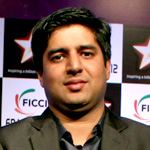
     

    Dainik Bhaskar was among the first to innovate in order to get more readership. What are the new frontiers… where are you headed next?

    We operate already in some 14 states in India. We have recently launched a Marathi newspaper, so we have some time to spend in Maharashtra as well as Jharkhand. At the same time, the states which we are already present in, like Rajasthan, Gujarat and Punjab, we need to work a lot there also to grow, because those states have a huge potential for us to grow. A large part of the growth we’ve been seeing in last 10 years, is coming from our existing states, so we need to work hard there.


    [youtube width=”400″ height=”250″]http://www.youtube.com/watch?v=UN43L63SCoU[/youtube]

    Technology and internet hasn’t really taken off as well as it was expected to have taken off. What are your views on the same?

    Internet penetration in India is roughly around 7 to 8 per cent, so with this kind of penetration, I don’t think we need to fear anything that they would take away from us. But at the same time we need to prepare for the future. For example, our website in Hindi today is the largest website in Hindi news as well as the Gujarati one, so we are preparing ourselves for the future. But at the moment, is the business shifting from the print platform to the internet? No.


    How do the readership wars affect newspapers?

    I think it is pretty good because anything that’s good for the market is good for the organization too. For the readership war, you actually go out and try to take more readers, for that you need to ensure that you are still relevant to the reader, because if you are not relevant, the reader won’t buy you at all.


    There is talk about Dainik Bhaskar opting out of DNA, how true is that?

    Yes, it is true that DNA is currently managed by our partner, Zee Group, which has the majority in DNA. We are a silent partner.


  • @FF12: Digitisation will allow broadcaster to make money off ground: Tarun Katial

    Video and Text by Shruti Pushkarna


    Tarun Katial, the CEO of the Reliance Broadcast Network Ltd, spoke to MxM about how the businesses will have to rework their monetising strategies in the wake of digitisation


    On reworking the business model for digital era

    [youtube width=”400″ height=”250″]http://www.youtube.com/watch?v=r_uR54g7cbI[/youtube]

    For television, it will be a combination of content as well as marketing. The old model which was a combination of carriage and product, as it stands today won’t work. The business plan which currently has a very high rate of carriage will obviously see the content taking precedence.


    On Digitization bringing in transparency

    By transparency, I mean, it will allow the broadcaster to know the number of households it’s getting into, getting paid for and which value tier plan it is present on. It’s not like analog, where you give Rs150 and you have 500 channels available. The broadcaster will be allowed revenue share, he will be allowed to make money off the ground.


  • @FF12: Integrated media best way fwd: Vikram Sakhuja

    Video and Text by Shruti Pushkarna


    On the fundamental powers of digital:

    In digital there are few things that are exciting. One is that digital has the potential to burst from a sampling kind of mindset into a census kind of a mindset. By that I mean that a lot of measurement we do in marketing today is very sample based and digital, whether it is through set-top boxes, or through online behaviour, it is possible now to get the data at a granular level. So that leads to targeting a million, one at a time kind of thing, which is exciting. The other inherent power of digital is interactivity. The third area is the ability to link multiple devices. Last is the real time query, whether it’s query or the consumption of content. Linked to that is the entire thing about being mobile. So these four or five inherent powers of digital are game changers for marketers.


    How to engage in an increasingly digital world?

    [youtube width=”400″ height=”250″]http://www.youtube.com/watch?v=sIj_VeYzlPo[/youtube]

    The engagement part comes from the kind of content you put up and the entire viral or social nature which comes up. The framework we talk about is paid, owned and earned media. An example of paid media is when Mindshare got Dhanush to sing an anthem for Sachin Tendulkar, post Kolaveri Di. Within four days we got ten million views, and the anthem, in turn, got a viral life of its own. So I think the way in which you can use content is how it becomes engaging.


    What is the way forward?

    I think integrated media is the best way forward. Today when people think of multimedia planning, they do a separate TV plan, print plan, radio plan, internet plan and so on. I believe that if you actually look at media agnostically and at common metrics of each cost per thousand impressions, these are the ways in which you can construct a media agnostic plan. What it does is, it suddenly gets more money into digital, and when more money can come into digital, that’s when focus is going to come in.


  • @FF12: No alternative to the cloud: Manish Agarwal

    By Rishi Vora


    Manish Agarwal, COO, Reliance Entertainment (Digital) spoke to MxM India on the sidelines of a session called “Digital Entertainment with Connected Devices and Cloud Based Services”, in which the panel consisted of Umang Bedi of Adobe Systems, Richard Craig McFeely of Tata Communications, Sameer Pitawala of UTV Interactive, Manish Agarwal, and Ravindra Velhal of Intel.


    Takeaway points from the session

    Cloud technology is all about providing an experience to the consumer. That’s one thing. The second thing is, there is no alternative for any service providers to not to go to the cloud. There is no choice to anyone; everybody has to go to the cloud. The question is the benefit of the cloud and the extent of monetization that can happen on the cloud will be limited to the extent of infrastructure investments. So, the key message is that the cloud is a reality – everybody has to work around it, be it the producer or a retailer like Big Flix or a content aggregator…


    The question is when can you really monetize and how can you provide the best consumer experience.


    [youtube width=”400″ height=”250″]http://www.youtube.com/watch?v=sSJUNAh1X8E[/youtube]

    Video By Shruti Pushkarna

    How does Reliance use cloud technology for the services it offers?

    If you look at Big Flix, all the content user information is on the cloud. And we’re already kind of using that piece. That is the only way we can provide a seamless experience across devices – across desktop, laptop, smartphones, in your office, your home. All this is not possible without the cloud. So we’re using it extensively for Big Flix. We also use the same technology when we publish mobile games, so if you want to play a game, you can play on any platform using the cloud service.


    What it means to the consumer

    For the consumer it is very simple. Keeping aside the technical mumbo-jumbo, I can watch a video whenever I want on whichever device I want from the point I left – I can restart. So it gives me a complete seamless video-watching experience across devices and locations.


  • @FF12: Discovery to launch kiddie channel in India

    Video and Text By Shruti Pushkarna


    President & CEO of Discovery Networks International, Mark Hollinger announced the launch of its new network for children in India, ‘Discovery Kids’. The announcement came on the sidelines of FICCI Frames 2012 that is being held in Mumbai from March 14 to 16.


    The channel will be available in three languages. Mr Hollinger said, “We shall be launching a new network in India – Discovery Kids. It will be launched in early April and the network will initially be available in three languages – Hindi, English and Tamil.” The company plans to roll out the channel in Philippines and Indonesia later this year.


    Mr Hollinger said, “Discovery Kids will offer children a fun and entertaining way to satisfy their natural curiosity with stimulating and imaginative programming.” He added, “India is definitely poised for growth in this market. 30% of the population in this country is below the age of 14. In light of the massive digitization drive in India, we believe viewers will express their demand for such distinct television networks. I cannot think of any other country more poised for the launch of such a remarkable network.”


    [youtube width=”400″ height=”250″]http://www.youtube.com/watch?v=gzeqO3KTTww[/youtube]

    The company also expects a significant boost to its subscription revenues from satellite television digitization in India and expects the country to be its biggest satellite television market in the next few years, said Mark Hollinger.


    Speaking about the digitalization drive in India and the country’s subsequent growth potential Mr Hollinger said, “The fact that India is moving towards 100 percent digitalization presents an overwhelming opportunity for all of us. Digitalization of broadcast will make bandwidth usage more efficient, leading to a wider choice for the viewers and newer opportunities for media companies. Digitization means viewers will be more discerning and I predict that the programming with the best storytelling, compelling characters and stunning visuals will win out.”


    Talking about the share of revenue from India, Mr Hollinger said, “International markets account for one-third of our operating profit, of which India contributes a significant part. We don’t break it down on a regional level. India is one of the top five growth markets on a worldwide basis.”


    He also said that going forward the company is looking to enter retail, merchandising and licensing space.