Category: SPECIALS

  • Kyoorius launches Melt, 2-day ad, media & marketing festival

    By A Correspondent


    Transmedia Fine Papers-promoted Kyoorius has launched Melt 2015, a festival of creativity for the advertising, media, digital and marketing industry in partnership with Zee Entertainment, media services conglomerate GroupM and London-based creativity body D&AD.


    The festival will take place on May 21 and 22 in Mumbai at the National Sports Club of India (NSCI) and neighbouring Nehru Centre, culminating in the Kyoorius Advertising and Digital Awards night on May 22 at the NSCI. “We expect over 5000 people over the two days which will be packed with seminars, exhibitions and workshops,” said Rajesh Kejriwal, Founder and CEO of Kyoorius who has curated the event, adding that the intent is to build the event around four pillars: Learning, Networking, Showcase and Celebration. “Our objective is to see everyone carry a key takeaway from each of these buckets,” said Kejriwal. The Kyoorius Awards will continue to have Colors as the presenting sponsor.


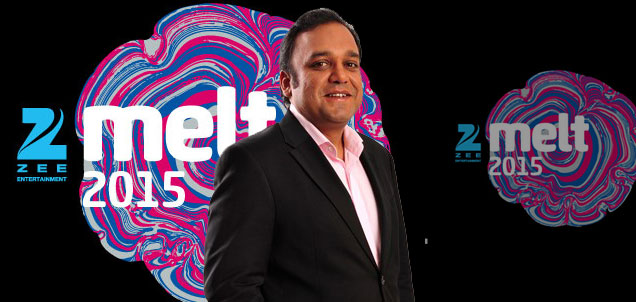
    Punit Goenka

    Said Punit Goenka, MD & CEO of Zee Entertainment Enterprises Limited (ZEEL): “Zee is proud to partner with Kyoorius at Melt 2015, which promises to be India’s largest celebration of creativity. Zee Melt offers us a platform to curate and present thoughts and lessons that all of us in the business need to know.“ Zee is also hosting the third edition of its Mindspace series at Melt with leading marketing heads from global and Indian corporations in attendance. “We are also looking at crowdsourcing content ideas, where we will give people the opportunity to put forth their ideas which Zee will then evaluate,” Goenka said.


    Added Tim Lindsay, CEO of D&AD in a statement: “Engaging the wider marketing communications industry in a conversation about excellence – in insight, creativity and execution – can only have positive economic, cultural and social outcomes. This is at the heart of what D&AD and Kyoorius are about.” Like last year, the judging process of the event will continue to be powered by D&AD.


    CVL Srinivas

    Talking of GroupM’s association with the event, CVL Srinivas, CEO, GroupM South Asia said that while there is a lot of talk about digital media, technology and data, “ultimately, ours is an ‘ideas’ business. We continue to support many initiatives that act as a rich learning ground for the industry. We will be partnering with Kyoorius and Zee to help curate the event and organise some interesting sessions around creativity in the digital era.” GroupM in partnership with HT Media Group and Kyoorius will conduct a print advertising contest, where entries will be invited from not only the creative community in advertising, but from young professionals who have a great print idea to share on the given brief.


    While attempts are made to not compare Melt with Goafest officially, the three-day festival held in April in Goa by the Advertising Agencies Association of India and the Advertising Club, industry persons are looking forward to both events. Srinivas believes it’s incorrect to compare the two and said GroupM is actively associated with both events as also with many such initiatives. Said Goenka: “We are confident of what Melt is going to deliver for the industry, and that’s why Zee has chosen to partner it.” And Goafest? “We’ve been associated with it in the past, and will continue our association with it,” Goenka clarified.


    Elaborating on the way he has built the festival, Kejriwal said Melt has no sponsors. “We only have partners. So, Zee is a principal partner, GroupM and D&AD are strategic partners, then there are other partners who are bringing in content in some way or the other.” The IP of each of the events at the fest will be owned by the partners, he added.


    Partners include Zee, GroupM, D&AD, Hindustan Times, Happy Finish, afaqs, Pepperfry, Future Laboratory, Hyper Island, The Partners, BrandMusiq, One Eyeland, Maxus, Youtube, Google, BARC and many more in the pipeline. Details on Melt can be accessed at readytomelt.com.


  • No gyaan, only learning


    This interview was conducted around Melt 2015 was announced in April this year, but the views Punit Goenka, MD and CEO, Zee Entertainment Enterprises Limited are still valid and relevant given Melt (or Zee Melt 2015, to be precise) starts today (May 21) and Zee Mindspace, the conference for CMOs, happens tomorrow. We asked Mr Goenka on why he associated himself with Kyoorius, will it impact his linkages with Goafest, on how speakers have been chosen for the event and finally with Rajesh Kejriwal, founder and CEO of Kyoorius.


    This is fourth edition of Zee Mindspace. What have been the learnings so far and what made you switch to a much larger scale?

    In this fast changing world, our own teams feel that the learning for the changing world is not happening at the pace that it needs to happen. We have got that feedback from our Mindspace series that we’ve been running so far. And when Rajesh [Kejriwal] approached me for Melt, I was of the opinion that we need to scale up Mindspace to a bigger level and why not put it as part of the industry initiative, which means it will be created for the industry by the industry. Normally, we do a half- day session, but this time we are extending it to the full day. Instead of just two speakers, we’re targeting many more to come in and speak up on different aspects of marketing and challenges and their learnings from other markets and bring it on the platform for the CMO world at large.


    There are quite a few events such as these which keep happening and apart from the likes of

    Goafest you have CII which does a marketing summit and there is AIMA etc. So how is it different from the others that you’re looking at?

    So, first and foremost the clear differentiation that attracted me to this was that I’m not just a sponsor here, I’m actually curating the content along with the Kyoorius team with learnings from my own professional space and what industry professionals are facing whether it be in the media or advertising or content world. So when people leave the venue, they should leave with the feeling that they have learnt something new which will help them in their day-to-day running of their professional life. And it should be clearly beneficial for to them, rather than it being a marketing conference where I talk about how great Zee is and what great thing Zee has done in the past. I want to actually make it a learning experience not just for my own team but for the industry at large.


    What made you choose on Kyoorius?

    I’m very happy to be partnered with Kyoorius because I have seen their benchmark in events that they have created and I don’t want to partner anything less than that. I want only improvement in that if at all, and I said yes to the partnership because I know Rajesh will deliver great standard of quality and best practices. And of course, why would I not want to associate my brand with something at that pinnacle of creation and implementation?


    You aren’t associated with the Awards though

    No, the Awards are not part of Melt. That’s an independent activity. It’s the culmination of Melt. So, by that definition we are not associated with the Awards as a partner or anything. But of course, I would love to be there and see who wins this year.


    With Goafest being an industry event and all creative and media agencies backing it, are you worried of a negative impact your association with Kyoorius can have on business?

    I’m not comparing Goafest with Melt. I know what Melt is all about and I know what it’s going to deliver for the industry, and that’s why I have chosen to partner here. I’ve been associated with Goafest in the past and will continue my association with them. Frankly the difference is that in the case of Melt, I’m working on creating the content for this festival. Whereas in Goafest, I’m not involved at. So I would not want to consider what’s good in Goafest and what’s not good in Goafest? Would those agencies look at Zee in a negative manner because I’ve associated with Melt, well, that’s their business, I can’t tell them what they should do and they should not do. We do so many events and that does not mean we make enemies with competing events.


    (Rajesh Kejriwal who was alo present while the interview was on steps in: Just to clarify this case, Melt has no sponsors. Melt has only partners. So, Zee is a principal partner, GroupM is a strategic partner, D&AD is a strategic partner, then there are other partners who are bringing in content in some way or the other. Everybody is a partner at Melt… there are no sponsors.)


    You’ve been associated with Kyoorius Designyatra for a while and I find it interesting that that you are actually not part of the event at all in the form of making a speech, presenting awards etc. We’ve also heard stories that Rajesh Kejriwal has told a sponsor that a certain logo doesn’t look very good in the creative, etc etc. Would you say he’s a tough guy to be associated with as an event curator?


    Yeah, he can be a pain, but nothing that can’t be fixed over a drink (laughs). There is no problem that you can’t fix over a drink, so let me just keep it at that.


    Zee has been associated with several industry events over the years. Is working with him different various others with whom you have dealt with in the past?


    As I said, normally people just put an event together and ask you for money and for a sponsorship logo on top of it. Beyond that, there is no value addition that one gets. Here, I’m being part of the team working on what should the event be all about. Rajesh came with certain ideas, my team then looked at the kind of speakers they should invite. What they should talk about. And we are actually considering all that before we take a speaker onboard, because I don’t want people to come and give us gyaan as to how good they are and how they have done great stuff, and what their great companies do. At the end, it has to be learning for the people who attend it, that here is the problem, and here are potential solutions, now debate.


  • DDB Mudra, Ogilvy win the Big Elephants @ Kyoorius


    By A Correspondent


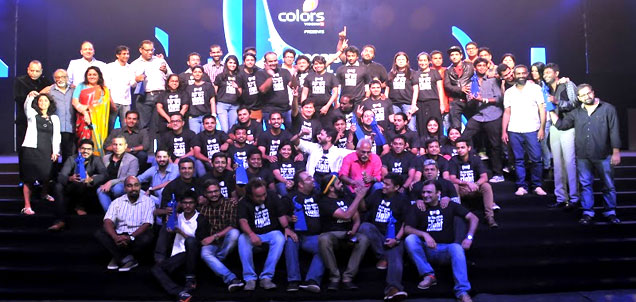
    In the news for the right reasons, screamed the T-shirts worn by the large contingent from DDB Mudra as they ran up to collect the only Black Elephant for Zydus Wellness Ltd’s Nutralite The Black Elephant is the highest award presented by Kyoorius and is the equivalent of the Grand Prix at the Goafest Abby.


    Kyoorius, in association with D&AD, the London-based body of creative, design and advertising communities, held an awards event to announce the winners of the second edition of the Kyoorius Advertising & Digital Awards at Dome, at the NSCI stadium in Mumbai. Over 1,800 advertising and marketing professionals from across India and abroad attended the event held on Friday evening.


    WINNERSPEAK:
     

    Piyush Pandey

    Executive Chairman and Creative Director, Ogilvy India

    I am so happy that we won 15 awards because the young people at Ogilvy are taking the tradition forward and making us look good, making me look good, and the brand Ogilvy look better, and they are making their clients look better. It feels good. I didn’t see much of mainline work today and I would like to see more of it next year. There is a lot of work that we as industry practitioners appreciate, but I would like to see more work that consumers appreciated and was good enough for the jury to appreciate as well. I miss some of that work. I think the jury was fantastic. I know many people on the jury; it was a wonderful jury. But I think the Indian jury should be more balanced, to get the sensibilities a little better. They are much better than I’ve ever seen, but we could get even better in the future.


    Madhukar Kamath

    Group CEO and MD, DDB Mudra group

    Good work rises to the top, appreciation is wonderful, the team is happy. Full credit to Sonal and his team for all the work they’ve been doing over the last few years. It is a vindication of the belief — work in silence and let success be your noise. It was good to see the quality of work right across different categories and feel happier that some of your work has risen to the top. It was a good body of work.


    (Talking about the jury )Every awards show has its own flavour. Globally, that’s also been the scenario. This is the type of jury that a Kyoorius puts together, which is good. I’ve always thought that as long as there is peer group appreciation, it is good.


    In India brands have been built over centuries. That does not mean that we’re not doing great work. I’ve never believed that India has been inferior. Here, you do work for India. Right from the beginning, we’ve built great brands here. Indian advertising has always been culturally contextual and it has been wonderful in terms of building brands for the country, because that is what advertising is all about, in terms of content that builds brands and connects to consumers.


    Rana Barua

    CEO, Contract Advertising

    The fact that Kyoorius has kept only one colour elephant is a good and interesting format for now. We’ll have to see in the long run how we can sustain something like this. We at Contract won a lot of awards. The quality of work is good, and clients are pushing us to do better, so that’s the big challenge. The jury is very prestigious, very eclectic, interesting. Only that sometimes you wonder whether they get the whole thing, because there is a lot of international jury judging Indian work. With a lot of Indian friends in the jury, I’m sure they understand what is happening. Maybe we need more Indian presence on the jury, because a lot of unique work happens within our country, because our country is a lot more unique than others. I think India is pretty sorted in the way we work, because it appeals to Indians. India itself is a nation of many countries put together. If our campaigns work for such a massive country, they will work anywhere in the world as well.

    (interviews by Dyanne Coelho)


    The next level of awards – the Blue Elephant — was presented for Creative (36 winners, 38 if you consider that two of them were shared by two agencies) and Digital Advertising (12 winners). Ogilvy bagged 13 Blue Elephants in Creative and two in Digital. Two of the Ogilvy creative awards were awarded jointly.


    From Times Square-inspired sets, to sound and motion graphics, the entire visual experience for the night was created by Dutch and Malaysian specialists. Hosts Suresh Venkat and Mandira Bedi regaled the crowd with witty banter in the 75-odd minute awards presentation.


    A total of 1,419 entries (up almost 40% from the previous year) were submitted across advertising and digital categories. Ogilvy, DDB Mudra, Contract Advertising, Ideas@Work, Scarecrow Communications, Soho Square, BBH, BBDO India, Dentsu Webchutney, Madison, Madison BMB, ITSA Brand Innovations, Experience Commerce, Rediffusion Y&R, BBH, Famous Innovations, Havas Worldwide, Fanatics Viscomm, Grey, Linen Lintas, PHD India, Sapient, Web Maffia, River Advertising, Creativeland Asia, Blink Digital, Whyness Worldwide, and TBWA were some of the agencies who were awarded the ‘Baby Elephant’ trophy as ‘In Book’ winners.


    Of the 163 In Book winners, also nominees for Blue Elephants, the advertising and digital juries awarded 36 Blue Elephants in Advertising and 12 Blue Elephants in Digital categories.


    In the advertising categories, the 36 Blue Elephant winners included campaigns by Contract Advertising, Ideas@Work, Creativeland Asia, Ogilvy, Early Man Film, DDB Mudra, BBDO, Fanatics, Grey, TBWA and Linen Lintas.


    In digital categories, 12 Blue Elephant winners included work by PHD India, Pigeon & Co., Quasar, Quidich, Dentsu Webchutney, Experience Commerce, Leaf Design, Madison Media, Sapient and Ogilvy.


    DDB Mudra was awarded the lone Black Elephant this year for the direct marketing campaign, Health Cha Shree Ganesh. The campaign for Nutralite, gave the Ganesh idol a healthy makeover – with a physically fit idol and equally fit priest, accompanied by sugarfree modaks and offerings at a pandal in Mumbai. Devotees could participate in Zumba workouts while waiting in line and ‘donate’ calories while working out on a treadmill.


    Said Aneil ‘Andee’ Deepak, Executive Director, DDB Mudra Group and Head of Ideas, DDB MudraMax and who now heads the agency’s experiential business after MudraMax President Mandeep Malhotra move on: “The standard of work that has come in this year has really improved and so have the judging standards. The judging is so top notch that winning here means everything. This is the best award show in India. We feel fantastic. I think the move of keeping only the Blue Elephant award, taking away division between categories of winning is a good move. It makes the hungrier survive. If you are hungry for that one black elephant, you better beat everyone else. It’s a great motivation to win the black elephant.”


    Rajesh Kejriwal, Founder-CEO of Kyoorius, said on the awards: “We are overwhelmed by the response. Our association with D&AD guarantees a transparent and neutral platform, with the jury representing the best of international and local talent.”


    When asked about the trends this year, he said: “We saw a lot of work around gender equality and women’s rights, reflecting the national sentiment on these issues. Plus, of course, in a World Cup year, loads of cricket.”


    Tim Lindsay, CEO of D&AD who is associated with Kyoorius for a second consecutive year (or a third, if you include the Design Awards that he is associated with for three years), said: “The Kyoorius Awards continue to grow in size and stature, and are an important indicator of the world-class standards of the Indian creative scene. But the real heroes are the creatives themselves, who are producing ever more engaging, emotional and beautifully-crafted work  D&AD are proud to partner.”  At the international D&AD awards, which were incidentally also held last week, Indian agencies won some ‘Pencils’, as the Metals?? medals?? are called there.


    Alongside the Elephant winners, all nominations will be featured in the Kyoorius Advertising Awards Annual and the Kyoorius Digital Awards Annual – distributed to over 5,000 corporates and creatives across India.


    The awards night marked the end of a two-day festival of creativity in advertising, media and marketing developed by Kyoorius in partnership with Zee, marketing services giant GroupM and D&AD.


  • #ZeeMelt15: Future-gazing, unlimited!

    By Dyanne Coelho


    Creativity had an unbridled run at Zee Melt 2015. The two-day festival of creativity brought stalwarts from the fields of advertising, media and marketing — both from across India and the world — together on one platform to share thoughts, insights and plans for the future. A host of seminars, conferences, workshops and exhibitions were put together for some 1,300-odd participants and visitors. The event was organised by Kyoorius, a not-for-profit company, in partnership with Zee Entertainment, GroupM and D&AD.


    A conference, held on Day One, saw speakers from all over the world like Chris Sanderson of Future Laboratory, Daniele Fiandaca of Creative Social, Christian Behrendt of Razorfish, Bo Hellberg of Brave and HeyHuman, and many others, drawing attention to the significance of innovation, creativity, uncluttering advertising and zooming out from the ‘billboard trend’. Fiandaca, for instance, pointed out the wonders that erupt when varied talent. even from the finance HR and other teams are included in the creative process. “When margins are being pulled, innovation is the only way forward,” he said.


    “What would you do if you could do magic?” Andy Jaspers of Maxus asked at a seminar he shared with his colleague, Unny Radhakrishnan, head of digital for South Asia. Think big, imagine the impossible, and then make it possible he pointed out. “The best people are not the ones with the most knowledge, but the ones who can solve the problem,” Jaspers added. Both speakers stressed the importance of merging creativity with the use of technology. They have to go hand-in-hand, they said. “While a picture says a thousand words, a prototype is worth a thousand meetings,” Jaspers joked.


    The consumer of the future was much talked about in the seminar entitled ‘Kinetic Future Citizens’. Consumers’ needs, wants, interests and overall behaviour was discussed in depth by an array of speakers, including Sid Talwar of Lightbox, Simon Gosling of Happy Finish, Satya Raghavan of Youtube and others.


    Delegates at the festival thronged in large numbers to the activities at GroupM’s showcase space. The Loop Room and the Purple Box, which explained innovative ways to understand consumer behaviour and patterns, was a crowded space. Participants were taken through the various technologies that the company works with, including Moribus, the Behavioral Economics Lab by Maxus, global work by Mediacom and MECFresh by MEC Global. Happy Finish’s showcase displayed the latest in augmented and virtual reality. A particular favorite among visitors was the Smash it!, a cricket virtual reality experience.


    The IAA Debate on the issue of whether the mobile is likely to become the primary screen for news and entertainment in the next three to four years, brought Day One to a close on a dramatic note as speakers Vikram Sakhuja and Raghav Bahl sparred with Arnab Goswami and Rajiv Lochan on whether mobile phone usage is increasingly on the rise in India. Goswami and Lochan were of the view that a period of three to four years is the equivalent of a split-second for this to be a reality, as mobile internet in India – especially the 3G network — is still a luxury enjoyed by a few since fast downloads and buffering videos are difficult.


    The Zee Mindspace conference was the highlight of Day Two. Adam Ostrow of Mashable set the ball rolling with an informative take on digital culture. Other speakers included Joshua Black of GroupM, Parminder Singh of Twitter, Sir Martin Sorrell of WPP plc, among others.


    The Indian media is constantly evolving to keep up with changing times. While technology is transforming the way content is being delivered to the audience, measurement systems seem to be lagging. The Think BARC India seminar brought together Jose Manuel Olivera of MarkData, Bruno Chetaille of Mediametrie, Erica Boyd of Nielsen Asia Pacific and William McKenna of William McKenna & Associates to talk about life beyond the traditional measurement methods.


    The art of great storytelling through advertising and film was delved into in the seminar entitled Making the Cut – Ad Learnings, with speakers that included award-winning filmmakers Vinil Mathew of Breathless Films, Ayappa KM of Early Man Film and Vishwesh Krishnamoorthy or Corcoise Films. “Don’t tell a director how to do his job, just like you don’t tell a plumber how to fix a tap,” Krishnamoorthy explained, while talking about how agencies are sometimes put under great pressure by clients. The trio, in an interactive session, discussed the technicalities of writing, shooting, editing and budgeting as well, in order to create an ad that will engage the end-consumer and also keep the client happy.


    Girish Raj of OML took participants behind the scenes of the making of the NH7 Weekender year after year in the session. The ‘Behind the Seen’ seminar concentrated on digital entertainment and experiential marketing. Other speakers included Rajesh Thomas and Vidya Sharma of RocketscienceLab, Shubhradeep Guha of SapientNitro and Saket Saurabh and Ankit Vengurlekar of #fame.


    The two-day event concluded with the much-awaited Kyoorius Digital and Advertising Awards night where 48 (+2) Blue Elephants and one Black Elephant were given out.


  • #ZeeMelt15: Multiple screens, many needs

    By Labonita Ghosh


    Digital is mainstream

    Adam Ostrow, Chief Strategy Officer, Mashable

    “In 2015, digital culture is the mainstream culture,” says Ostrow. Statistics show that the size of the online market has quadrupled in the last couple of years, he points out. Among other curious findings is the fact that about 38 per cent of two-year-olds now use mobile devices. However, while ad revenues for TV and broadcast are rapidly shrinking, as per research by Google, about 56 per cent of digital ads are never seen. Ostrow points out a few key trends in the media and advertising space. Social media has become primarily a mobile activity, he says. People are turning to social platforms for news and entertainment. “To succeed in 2015, you have to be relevant in your feed, you have to be able to draw attention in seconds,” he says. Nowadays, on a social media page, posts from advertisers and any corporate house are competing with posts from friends and family. You have to find a way to stand out of the crowd, he says emphatically, adding: “In a world where everyone is a content creator, data provides your competitive edge.”


    Content no longer king 

    Joshua Black, CEO, GroupM

    “If you believe that content is king, you’re probably still stuck in the 80s,” says Black. “Content is not king. The days of capturing a mass audience through television are over. If you’re not in the right place, distributing your content to audiences where they are, when they want it and how they want it, you’ve failed.” Today, the consumer is in control; people no longer have to sit before their TV waiting for their favourite show. “People are also always on the go,” says Black. “They don’t live in their houses any more. They live in offices, in coffee shops or even outdoors.” So content has to reach them wherever they are. Consumers want content in a specific way too. Studies in the US have shown that large numbers of people report binge-viewing their favourite TV shows, sometimes for six or eight hours straight. Clearly, consumers want control over this sort of consumption. “Producing great content is not a strategy,” says Black. “It’s only a part of the strategy.” The bigger, more critical part is delivering it, in a custom-made manner.


    Too many screens

    Tom Goodwin, SVP Strategy and Innovation, Havas Media

    There was a time when the TV was the most important screen in people’s lives. Then came the laptop. Now there are tablets, mobile phones and digital watches. A host of screens are competing for our attention. So what is a marketer to do? The answer, says Goodwin, is not to make ads smaller; but to “reimagine advertising for the future not by the size of the screen, but by the richness of data all around us.” Indeed, marketers will also have to keep some other things in mind. While the phone has become a gateway to everything, it will continue to become a thinner, more personal web experience. Moreover, the debate is no longer about digital versus traditional marketing; it’s just the modern world one has to cater to. Similarly, it’s no longer TV versus video; it’s just about video being viewed on multiple and different screens. “A whole generation of people will grow up with no concept of what it is to go offline,” says Goodwin.


    TV is a second screen

    Huib van Bockel, Marketing and (Social) Media Expert, The Social Brand

    Just as there is a whole generation that might never know what it’s like to be offline, there is likely to be a whole generation that will never know what a TV commercial is. Huib van Bockel has actually glimpsed such a future. On a recent vacation, van Bockel sat his kids in front of a TV to keep them occupied. After some time, his six-year-old daughter came rushing to him to say the ‘film’ they were watching was bad one because it had a man who was only talking about toothpaste. van Bockel explains that children today (his included) are so used to TiVo, provisions like TVadblocker or ad-less channels like Netflix that a whole generation might grow up never seeing a TV commercial. And that will pose a new challenge to traditional marketing. “Online has already or will soon pass TV,” says van Bockel. “Unlike an earlier time, the television is now your second screen. Your mobile phone is your first. There is no longer an ‘audience’ waiting for your message.” Consumers will decide, with just one swipe of their mobile screen, if they like or dislike a product. So brands have literally one second to grab their attention.


    It’s all about the moments

    Parminder Singh, Managing Director for SEA, India & MENA, Twitter

    Singh feels the important thing that marketers need to worry about today are the changing rules of customer engagement. After all, the mobile phone is less of a voice device today and more of both a content provider and a content creator (even when you take a selfie and upload it, it counts as content). According to Singh, in 2015, there are eight million connected devices. By 2020, this figure is estimated to grow to 50 billion. “We are in an age of digital Darwinism,” says Singh. “Only those who are adaptable to change, will survive.” Singh does provide solutions, too. He says there are at least two ways to improve engagement. First, to find the relevant moments, and then to create great content around those moments. “Brands don’t just have target markets any more, they have target moments,” he says. As a Twitter study shows, people tweet a lot during the Oscars or the World Cup, but they also tweet about special “moments” during their day, like the sunrise or a special meal.


    Mobile is the future

    Tomi Ahonen, Author and consultant

    The average smartphone owner looks at his or her phone at least 221 times a day, says Ahonen. He should know; among other things this long-time observer of the mobile industry has written 12 books on the subject exploring practically every aspect. “The mobile industry is worth 1.6 trillion dollars [as of 2014],” says Ahonen. “It is as big as the FM radio, internet, personal computers, and television and landline business combined. And its only 35 years’ old. While all of the other media continue growing, mobile is the future.” Indeed, there will be a ‘grand convergence’ of other industries with mobile, says Ahonen. “We all know that media is merging with the internet, which in turn is merging with advertising, which is then merging with mobile,” he says. “In all, some 17 industries will eventually land in the mobile space.” That is, they will find ways to do business on the mobile platform. “And the golden age of the mobile is only now starting,” says Ahonen. So what should marketers do? Jump on the mobile bandwagon, of course, with creativity and imagination. “But don’t spam and don’t spy,” says Ahonen. “Opt in to serve your customers better.”


    Navigate well through fragmentation

    Martin Sorrell, CEO, WPP Plc

    Sir Martin has no doubt that mobile phones and mobile content will become increasingly more important. At the same time, so will data (“Big Data is just a sexy term that trips lightly off the tongue”). So what can agencies do to keep pace? “We’re doing a lot to stimulate creativity and programming to various kinds, including lot of native advertising and sponsored content for mobile,” says Sorrell of WPP’s initiatives. But this will only get more challenging, he cautions. Digital today comprises about 10 per cent of the market. But as it grows, the market will get more fragmented. The role agencies will then have to play is to integrate the various kinds of media and lead their clients safely through the fragmentation jungle in a safe and coordinated way. Shouldn’t be too difficult for Indian agencies, however. Sir Martin believes India has the best talent in the world in the A&M sector, and that this will always be the case.


    Need ‘wide’ data, not Big

    Jason Harrison, Worldwide CEO, Gain Theory

    In this session about what keeps marketers up at night, Harrison said he found a few common ‘pain points’ in this group. They often find themselves swamped by data, which can be confounding; They work in a field which is replete with jargon and terminology, whereas it needs to be less so and more simplified; They often have to deal with inconsistent answers that they receive to questions and findings, and – the worst one – everything is about speed. That is, everyone feels the need to get faster and smarter insights. The last point, in particular, can be most challenging, says Harrison. “The reality of data is that it has created expectations among marketers that we should all be able to make decisions more quickly and effectively to grow our brand,” says Harrison. The fact, however, is that Big Data – that magical thing that everyone is talking about – is a misnomer, according to Harrison. “What we need to solve a problem is ‘wide’ data,” adds Harrison.


    Humanise the data

    Pele Cortizo-Burgess, Chief Media Strategist, MEC

    Cortizo-Burgess is a man with a mission. He wants to change what he believes is a globally-prevalent idea, that when it comes to various aspects of marketing, media people are always given the last 10 minutes of a meeting. In other words, the least important place in the discussion. “Media is treated as a backroom practice,” says Cortizo-Burgess. “[Brands feel] we need to create the idea first, and then we will invite the media people to come and take it forward.” Whereas the media function is extremely important because “the role of the media is to insert the brand and its products into the moments when people really need an ally,” says Cortizo-Burgess. But to be effective, the media team must be able to humanise data points; they must create insights that can ‘incite’ a change in thought or behaviour and keep connecting and reconnecting the dots till they have a better understanding of the market. “Don’t ask what’s the digital strategy,” says Cortizo-Burgess, in a refreshing change from the current preoccupation of marketers to create content for smaller and more multiple screens. “It’s all about storytelling.”


    (with inputs from Dyanne Coelho)


  • BTL Baatein: Interview with Kamal Basu of Volkswagen in new weekly series powered by VISCOMM

    Kamal Basu

    Head of Marketing & PR – Volkswagen Passenger Cars

    Volkswagen Group Sales India Pvt Limited


    A seasoned marketing professional with over 25 years of experience in advertising and marketing, Kamal Basu was appointed as Head, Marketing and PR at Volkswagen from January 1, 2015. Prior to this, he has worked with Skoda Auto India as Marketing Head and has contributed to Skoda’s performance in India over the last three years. He has spent close to two decades working with leading advertising agencies like Rediffusion Y&R, Ogilvy and with Saatchi & Saatchi as CEO.


    In his current role as the Head, Marketing & PR at Volkswagen Passenger Cars India, Mr. Basu plays a key role in developing the strengths of the Volkswagen brand in India. Mr. Basu has done his marketing management from Jamnalal Bajaj Institute of Management Studies, Mumbai, and is passionate about cricket, movies and travelling.


    How important is BTL to your overall marketing plan?

    It is a very critical element for us and I’m assuming it is the same for most auto companies. It’s the first method of introduction when the customer reaches out to the auto dealership. However, we need to reach out to consumer needs and wants and small BTL activities also include reaching out to consumers rather than wait for them to come to our showrooms.


    Can you give a broad idea of your spends pie of ATL v/s BTL?

    In other industries, BTL is in the range of 12-15% of ATL budget, but in the automotive space, it is almost 1:1.


    Apart from the routine display and engagement activities, in what way do you innovate with below-the-line advertising and promotion?

    We have something called open floats campaign, where we put the car on a flatbed in the back of the van and we take it physically to markets where we are not present. We do these displays within a distance of 40-50 kms from our showrooms, because when people from these small towns purchase our products and if they need servicing, they are not ready to travel much. We also do a lot of associations with events happening at a local level. Almost 80% of the money is spent through print work for dealership advertising.


    In terms of generating results, esp from consumers and in B2B, do you find BTL a more sureshot avenue than ATL?

    BTL campaigns are always result-oriented. They have a clear mandate. Corporate brand campaigns have multiple tasks like driving imagery, brand awareness, etc. BTL would form a subset of the ATL objectives.


    While sales and salience are good indicators of its success, what are the attributes you look at to measure the success of a BTL campaign?

    For BTL campaigns, enquiries generated are the attributes. This campaign is evaluated with the overall leads and enquires we’ve got on a day-to-day basis. Test drives will definitely help in branding as well. One thing that differentiates BTL between the automotible and FMCG space is that in the automotive space, almost 85% of the BTL money is spent in the organised sector. This is generally used to communicate offers. When I say that I spend 1:1 on ATL and BTL, this also takes into account advertisements in supplements of newspapers, etc.. Communication of offers is also considered to be BTL.


    There are many organizations who often do new launches almost entirely on BTL aided with an outdoor and/or digital blitz? Your view on this. Given rising media costs, do you see BTL managing on its own, without ATL?

    I don’t see BTL managing without ATL. During a launch of a new product or service, the primary task is mass awareness of the new product. This is not possible only through BTL. During a launch I like to keep everything close to my control. It is what we call Corporate ATL Activities. If today one looks at advertising on TV, in print media or even in a magazine, I don’t think anyone can look at only BTL. The market is getting ferocious.


  • BTL Baatein with Sanjay Tripathy of HDFC Life

    Sanjay Tripathy

    Senior EVP, Marketing, Product, Digital and E-commerce, HDFC Life on the role of below-the-line advertising and promotions in a marketing plan


    Award-winning marketer, Sanjay Tripathy is Senior Executive Vice President, Head Marketing, Product, Digital and E-commerce at HDFC Life. A graduate in management from IRMA, Gujarat preceded by an engineering degree, Mr Tripathy has worked with GCMMF, Fritto-Lay, Mattel and Reliance Infocomm before joining HDFC Life in December 2004. In this interview with MxMIndia, Sanjay Tripathy speaks about how key are below-the-line promotional activity to a marketing plan…


    How important is BTL activity to your overall marketing plan? And overall in the financial services sector?

    BTL activities form an important part of our overall marketing plan. In context of the financial services industry, product understanding and trust are teething customer issues. BTL marketing becomes important because it provides the human interaction, which effectively solves problems related to understanding and trust. It also provides the desired experience to the customer which can affect the purchase decision process.


    Can you give a broad idea of your spends pie of ATL v/s BTL?

    Depending on the objectives of the campaign, we allocate budgets for ATL and BTL activities. More important than the budget allocation, is to make sure that the ATL and BTL activities being executed are complementary and provide the complete brand experience, which we intend to provide to the customer. We don’t work on pre-decided spend patterns, rather adapting to the communication and engagement objectives of the campaign.


    Can you also specify the range of activities that you undertake as part of the below-the-line advertising and promotion?

    – They would be of two kinds:

    i. Strategic:

    a. Experiential modules at relevant sites (work site, malls etc.), to let them experience the campaign/product proposition. e.g “Director Of Happiness” for Smart Woman campaign and work site campaign for QROPS prospects

    b. Contact programmes such as Spell Bee which we have done in the past, which help us engage with the right audience in the relevant life space


    ii. Tactical:

    Lead Generation modules run at channel partner locations, work sites etc. for product awareness and desired customer action, especially during the tax investment season


    Do you prefer to do this through BTL agencies directly or via your existing creative/media agency?
    – Different campaigns demand different skillsets. For campaigns which require smaller scale and faster turnaround, smaller agencies are our pick as they are more agile and can turn around work much faster. Whereas, for campaigns of a larger scale and higher complexity, larger agencies tend to do well. So, we use a mix of both, depending on our requirements.


    In terms of generating results esp from consumers and in B2B, do you find BTL a more sureshot avenue than ATL?

    BTL has its advantages, as it provides opportunities for:

    i. Direct interaction with customers

    ii. Immediate Query resolution and closure

    So we use BTL activities as a part of the mix, where it fulfills our business objectives. ATL obviously has its part to play.


    While sales and salience are good indicators of its success, what are the attributes you look at to measure the success of a BTL campaign?

    With the increased social media usage, brands have the opportunity to amplify consumer experiences beyond the select few who are physically a part of it. Hence, another way of using great activation ideas is to put them up as a part of consumable content on social media. How well it does on social media, in terms of reach and engagement, is also a metric we use to look at the success of the initiative. In the past, we have done this with our Smart Woman’s “Director of Happiness” campaign and “HDFC Life Spell Bee” with great results.


    There are many organisations that often do new launches almost entirely on BTL aided with an outdoor and/or digital blitz? Your view on this. Given rising media costs, do you see BTL managing on its own, without ATL?

    For a brand to scale up and reach out to people on a national level, ATL will remain important, as BTL can only reach out to a select few. And we are still some way off from seeing the kind of internet penetration that makes Digital interchangeable with ATL.


    Hence, we look at creating and executing a strategy which optimises the strengths of each media rather than replace something completely.


  • BTL Baatein:Sumeet Narang,Bajaj Auto Powered by VISCOMM

    For a product like a motorcycle, it’s got to be more than just advertising above-the-line that can do full justice to a brand. But sometimes it’s also a combination of BTL or on-the-ground activity with ATL or digital specifically, as Bajaj Auto did recently. And, as Sumeet Narang, Senior Vice-President (Marketing – Motorycles) at Bajaj Auto says what drives customers a lot more to showrooms is the above-the-line investments.


    We’ve seen the webisodes for Discover and this is possibly the first time a product in this sector has embraced the digital medium in a big way. Huge step forward?

    The bigger move is not the screen through which we’re broadcasting but the content. Whether it’s cinema, TV, mobile or laptop; whether it’s through the internet or a place where you buy a ticket, it’s just a medium.


    The spends on this campaign are probably as much as for a TVC, but the reach is not as much. Do you think it’s effective enough, in terms of RoI?

    First, if you don’t lean forward and experiment, you’ll always stay in the safe zone. We clearly explored the upside and downsides [before embarking on the campaign]. The ZingZong ride campaign was launched on Feb 8, but before that, we conducted a 13-city survey on relationships and how people about them and about marriage and such. And we saw we were on the right track with our findings. Another thing that came out strongly in the survey was that people found a long drive on a bike to be the most romantic way of spending time together, and they rated it higher than a candlelit dinner, a movie together or just hanging out at home. This was a corroboration of our findings, and the way we’re building this brand. We decided that we needed to take this campaign into people’s lives. If this brand stands for re-igniting romance, what’s the biggest symbol of that? The heart, of course, and that’s how ZingZong was launched – strategically -on World Marriage Day. It was launched with press articles, TV ads over three days and advertorials across all leading print papers. We also invited couples to drive around the country and bring the ZingZong back in their lives. That announcement is, in itself, an endorsement by the brand of what it believes in. It was a pretty high-reach campaign when we launched it. We used mass media. I think if you mix media, you can get a good balance of reach as well as engagement.


    It’s still early days but how has the campaign worked for you? It really seems to have struck a chord…

    Considering we got upwards of 8,000 entries from couples wanting to take part and willing to share their stories.


    In terms of sales?

    It’s a brand activity. It’s difficult to isolate aspects and say I see a blip here or there. It’s a part of the whole process we’re rolling out in, in terms of repositioning Discover as a brand. I don’t think I can isolate any one activity. It’s still early days.


    Apart from digital and television, has the ad been on other media as well?

    TV and print are the dominant media. We’ve also used digital. There’s an interesting on-ground property that we’ve built where a couple can visit a showroom and get a 60- second film made of themselves. It’s called a ZingZong World Tour. We’ve had to be careful with digital, though. This isn’t like a youth brand; . In a certain way, there is a bit of a convergence on the way the role digital’s got to play in the life of Discover. It’s a more mass brand and for that way, everybody is wanting Digital to evolve as a medium. From being a youth brand consumed more out of desktops and laptops and high-end smartphones, we all know there ae actually 250 million internet users, dish has also to got a lot more mass and wider. It’s a challenge for the brand and as much for the digital industry.


    The spends are huge for digital and you’re happy to experiment.

    We’re pretty mindful of what we spend across media. So we feel a small proportion of our spends could be put into something experimental. It may or may not work, but it definitely leaves us a lot wiser.


    In terms of your sales, this is the beginning of the festive season, the key season…

    This is a big season for us in the north, particularly during what we call the wedding season. So you do see an increase when the festive season comes on, starting with Navratras, that’s the next big season. The webisodes and all will not necessarily culminate in that. They’re not being timed toward the October festival season per se, but I would say it comes in now. We launched a new campaign in January. So, across what is quarter four for us, we’re focused on our above-the-line campaign and some time in February, we launched ZingZong Ride.


    How much of your spends are either above the line or below?

    It’s a much smaller amount that goes below the line where it varies from industry to industry. We have dedicated dealers with showrooms, but that’s part of our infrastructure. Whereas for an FMCG, every poster put up at a retail shop would constitute a below-the-line investment. For us, that’s really the infrastructure. It’s a difficult thing to compare. Below the line plays a role. The infrastructure is there and it’s already gone in the infrastructure and continues to do so. We find what drives customers a lot more to showrooms is the above-the-line investments.


    And there’s still some time before you get into some e-commerce sales, which hasn’t really entered the automobile sector in a big way….

    In case of two wheelers, I don’t think you can do away with the kind of experience and assistance and expert advice that a customer requires at a point of sale, which is [acquired from] the dealership. It’s not like browsing through features online and then ordering the bike online too. I can’t say how things will be in future. Currently, we’re very focused on our current methods.


    And one last question: What are the challenges that lie ahead for you in terms of marketing, advertising and promotion of motorcycles?

    At the industry level, we’ve been seeing a slowdown in the last six months. So one big challenge is going to be to accelerate the re-purchase cycle at an industry level. Our commuter segment, where Discover is operating, has lost some market share. We have to get that back. Our third challenge has to do with new launches. I think we need to consolidate them in the market. We’re talking about quite a few of them, like Platina or CT100. We have to continue building the credibility of these brands and make them look very different and exciting. Similarly, with the new Pulsar that we’ve launched, the advertising and marketing challenge is going to be to up the brand imagery and sheen. These are top-of-the-line bikes and our challenge would be to come up with marketing which complements them.


    And one last question: What are the challenges that lie ahead for you in terms of marketing, advertising and promotion of motorcycles?

  • BTL Baatein: Sagar Boke, Bunge India. Powered by VISCOMM

    As Head of Marketing at Bunge India Pvt Ltd Sagar Boke brings to the table a vast experience of over a decade in the field of brands and marketing. He was Category Head for Skin and Fragrance at Cavin Kare. Prior to this he was the Deputy General Manager, Marketing, Hair Colours, Godrej Consumer Products Ltd. He was instrumental in building brands such as Godrej No 1 soap, Godrej Nupur annd Fairever Fairness Cream. Mr Boke speaks with Dyanne Coelho on how BTL is a key part of his overall marketing activity.

     

    We’ve heard about your activation in Lucknow and Varanasi. For a product like Dalda, how important is BTL activity to your overall marketing plan?

    I would say very important, because whenever you are competing in the commodity category, it is important for a brand to create an emotional connect. One of the ways to really do that is through BTL activation, which amplifies the brand idea. Now the brand Dalda is focused on a mother’s trust. The tagline of the brand was ‘Trusted by Mothers who Care’ and the current tagline that we have is‘Dabba Khali, Pet Full’ to imply that every time the kid comes home, the dabba is khali and the stomach is full. The idea was to look at areas that create an emotional connect with the mother. This activity was one where we achieved that objective.
    And for other products like Gagan?

    For all our brands I would say that BTL activation plays an important role. In ATL, we talk about the brand value and brand proposition, whereas in BTL we bring the brand proposition alive to the consumer. The amount of consumer connect we receive through BTL is unparalleled.
    Dalda has always been very active on the mass media… how are those spends doing?

    I’m not in a position to share exact numbers, but I can definitely say that we are one of the most active brands on the media and possibly one of the highest spending brands on media in the edible oil category. With respect to our spends, I can say that it is 70 percent on television and print, 20 percent on activation and 10 percent on digital. Also, when talking about digital, I think mobile as a platform holds a very high potential. We launched an initiative called Dial D, wherein a consumer could give a missed call on a number and they would instantly get a call back. Once they got the call back, they could submit a recipe to enter the contest. We also shared recipes with the callers. They could stand to win prizes if their recipe won.

    Can you give us a broad idea of your spends pie of ATL v/s BTL?

    It would be 70 percent ATL and 30 percent BTL.
    What is the range of activities that you undertake as part of the below-the-line advertising and promotion?

    Our aim of BTL is to bring the brand proposition alive. So for these, we look for high conglomeration points and various occasions. Last year, we had an activity at the Rath Yatra, where about 10 lakh pilgrims had gathered. The campaign took place at Puri, Odisha, during the Jagannath Rath Yatra.  We collaborated with renowned sand sculptor Sudarsan Pattnaik who created a life-sized sand art sculpture of Lord Jagannath on the beach in Puri.Similarly, during Durga Puja last year, we had a Dhunuch iinstallation, an offering made to the goddess. This was created using 5000 Dalda bottles at Singhi Park in Kolkata. Like these, many of our activities have caught the attention of the consumers. Last year, during Mother’s Day, we had created a special mobile application wherein the consumer could record a message for their mother and the message would be delivered to their mother through us. So in this way we look at occasions and ideas which are clutter breaking to really create awareness about the brand.


    Do you prefer to retain BTL agencies directly or initiate them via your existing creative/media agency?

    We have a number of BTL agencies who work for us, so mostly we do it through a BTL agency, since their expertise is in that.

    In terms of generating results especially from consumers and in B2B, do you find BTL a more sure shot avenue than ATL?

    I would say so, because in BTL you are pretty much focused in terms of the target audience one is looking at. And also it is a very measureable method. Far more measureable in terms of the results one would get.

    While sales and salience are good indicators of its success, what are the attributes you look at to measure the success of a BTL campaign?

    One of the other parameters we look at is brand health. Another is spontaneous awareness of the brand. We also look at the consideration of the consumer to buy the brand. Because if both brand health and brand awareness are high, then the inclination of the consumer to buy the product is also stronger.Consideration is important. Would they consider buying my brand? In terms of creating brand awareness, ATL is more effective, but what BTL strongly does is it creates an emotional connect. It is not only sufficient to have an awareness of the brand, it is also important that consumers consider consuming the brand. BTL really works to create an engagement and a connect for the brand.

    There are many organisations that often do new launches almost entirely on BTL aided with an outdoor and/or digital blitz? Your view on this. Given rising media costs, do you see BTL managing on its own, without ATL?

    I wouldn’t say that. In very niche categories it is possible for BTL to manage without ATL. For example, if it is for a premium product, or a customised offering where you only want to target a small audience, then it would work. At the end, the objective of ATL is to reach a larger consumer base. In BTL, your consumer target base is smaller and it should do the job. However, if you are targeting a large mass audience, then it is difficult with BTL alone. In order to create awareness for a larger number of people, BTL is more expensive; however the quality of engagement via BTL is also far superior.


  • BTL Baatein: Pravin Kulkarnii, Parle Products. Powered by VISCOMM

    With over 15 years of experience in the domain of sales and marketing management across various leading companies such as Blow Plast, Pidilite and Parle, Pravin Kulkarnii joined Parle Products in 1994 and is currently General Manager, Marketing. He is based out of Mumbai and is responsible for corporate strategy, business profitability, product portfolio management, strategic brand management, advertising and promotion for all Parle brands in the country. Mr. Kulkarnii is a graduate in Engineering from VJTI, Mumbai and a postgraduate in management from the University of Pune. Mr Kulkarnii speaks with Dyanne Coelho on how ATL and BTL have complementary and not competing roles.

     

    How critical is the role that Below-the-Line advertising and promotions plays in the FMCG space?    

    The main role of BTL is to give the experience of the brand to consumers, to have an interaction and experience with the brand , positioning  of the brand, etc. This is done so that the positioning of the brand gets completely fixed in their minds. ATL generally creates awareness and an image, but positioning and communicating the experience of the brand comes only through BTL activities.


    Are there any specific products in Parle for which BTL is used in particular?

    Almost all brands have some kind of BTL activity, mall activations and all. We even have rural activations. Almost 70 to 80 percent of the brands have some amount of BTL activity.


    How important is BTL activity to your overall marketing plan at Parle?

    It is very important. Almost 15 to 20 percent of our marketing budget goes into BTL.


    Can you give a broad idea of your spends pie of ATL v/s BTL?


    Like I mentioned earlier, we spend between 15 to 20 percent of our budget on BTL activations.


    Can you also specify the range of activities that you undertake as part of the below-the-line advertising and promotion? 


    We do a lot of activities, like sampling of our products, merchandising activities, schoolroom promotions about different brands, brands especially that are targeting kids. We also do rural promotional activities, which means that we go to villages and spread activities about the brand and also do distribution. We also take part in a lot of melas, at movie theatres, exhibitions and other activities.


    Do you prefer to do this through BTL agencies directly or via your existing creative/media agency? 

    No we do it via specialised BTL agencies that have the infrastructure in various cities. That way it is also much cheaper, because regular agencies charge too much for such activations.


    In terms of generating results especially from consumers, do you find BTL a more sureshot avenue than ATL? 

    There is a completely different role for ATL and BTL. They don’t clash with each other. ATL helps create awareness and brand image. BTL complements it by creating an experience for the brand. Both have complementary roles rather than competing roles. Neither is complete without the other. ATL doesn’t give the brand experience to the consumers, at the same time, doing just BTL is going to be a very limited activity. How many BTL activities can you have? You want to create mass awareness, and for that you need ATL.


    While sales and salience are good indicators of its success, what are the attributes you look at to measure the success of a BTL campaign? 

    In a BTL campaign, it is not always sales, but many times we check to see the awareness of the brand before and after. Similarly, we track what the brand image was before the activity and after. Whether the positioning of the brand is more clear is also what we look at. We also look to see what is the overall experience of the brand, whether it was positive or satisfactory or not achieved results. So these are the factors we track before and after the activation.


    There are many organisations that often do new launches almost entirely on BTL aided with an outdoor and/or digital blitz? Your view on this. Given rising media costs, do you see BTL managing on its own, without ATL?


    Both are complementary. None can exist without the other. A lot of experience also happens at the shop level, during the actual sale. Even if we create awareness, the consumer may not remember it at the top of his/her mind all the time. So if the consumer has a good experience at the shop level, the likelihood of purchasing the brand increases.


    You’ll have done some BTL activities recently in non-metro cities…

    Yes we have done it across the country. We go to over 500 population villages. We do similar activities there as well. But we have noticed that we get a far better response in the smaller towns than in cities. There people are more excited about such activities. In bigger towns the psychology is that they have seen everything. So they don’t get excited anymore. That is not the case in small towns.


  • BTL Baatein: Sachin Dingankar, Zydus Wellness Ltd. Powered by VISCOMM

    A postgraduate from the Indian Institute of Management Bangalore, Sachin Dingankar took on charge as Head of Marketing at Zydus Wellness in March this year. Zydus has a strong portfolio in the FMCG space with brands such as Sugar Free, Everyuth, Nutralite and Actilife.

     

    Of his 18-odd years of work experience, Mr Dingankar has worked with well-known FMCG majors like Johnson & Johnson (J&J), Godfrey Phillips (GPI) and  Henkel managing brands like Four Square, Red & White, Cavanders, Stayfree & Schwarzkopf Professional. A diverse set indeed. Recently, at the Kyoorius Advertising Awards, a Zydus campaign crafted by DDB Mudra bagged the lone Black Elephant awarded. Mr Dingankar takes questions from Dyanne Coelho on his company’s BTL philosophy and how it is gaining ground vis-a-vis ATL.


    How important is Below-The-Line marketing in the wellness space?

    Experiential marketing has become an important part of driving brands/ products in the wellness space. This has become all the more important because new products are being developed with specialised ingredients and benefits that needs to be communicated to the consumers


    Are there any specific products or services for which BTL is used in particular at Zydus?

    We use BTL for engaging with consumers for all three franchises – Nutralite, Everyuth and Sugar Free


    How important is BTL activity to your overall marketing plan?

    As mentioned, BTL has become an integral part of our marketing plans


    Can you give a broad idea of your spends pie of ATL v/s BTL?

    The spend ratios are similar to the industry.


    Can you also specify the range of activities that you undertake as part of the below-the-line advertising and promotion? 

    We do a range of activities for Nutralite like festival activity, sampling in different touchpoints like modern trade, general trade, corporate and society etc.


    Do you prefer to do this through BTL agencies directly or via your existing creative/media agency? 

    We work with both options. DDB Mudra has been partnering with us on Nutralite for both creative work and on activations as well.


    In terms of generating results especially from consumers, do you find BTL a more sureshot avenue than ATL? 

    Both have their reasons for being an important part of marketing plan.


    While sales and salience are good indicators of its success, what are the attributes you look at to measure the success of a BTL campaign?

    Various measures are used to evaluate success of BTL campaigns. Some of the measures are increasing relevance, image parameters etc


    There are many organisations that often do new launches almost entirely on BTL aided with an outdoor and/or digital blitz? Your view on this. Given rising media costs, do you see BTL managing on its own, without ATL?

    In India, a number of brands are building business by using BTL. It has become a relevant lever to build brand without using ATL significantly.


    In the creation of the Nutralite’s ‘Health Cha Shree Ganesh with DDB Mudra, did you’ll worry about hurting religious sentiments? 

    We were very conscious of not hurting any sentiments. Full attention was paid to the activity to ensure that this issue was addressed appropriately


    The ad won the only Black Elephant at the Kyoorius Advertising Awards last month. What was the overall response you got to the campaign?

    It is a very prestigious award and we are very happy to win it. The response has been overwhelming.


  • BTL Baatein: Swati Rathi, Godrej Appliances

    A postgraduate in marketing from the Xavier Institute of Management, Swati Rathi has been with Godrej Appliances for over nine years after a stint at IMRB and Polaris Software. Given the wide range of products that Godrej Appliance has, Ms Rathi’s experience ranges from driving a 1000+ team of frontline customer advisors to directing the ATL and BTL of Godrej Appliance products. Ms Rathi takes questions from Dyanne Coelho on how vital BTL is to her company’s over marketing plan and the attributes she looks at to measure the success of a BTL campaign philosophy


    Swati Rathi, Senior General Manager and Marketing Head, Godrej Appliances

    1. How important is BTL activity to your overall marketing plan?

    BTL communication is extremely critical to the success of any marketing plan. It not only helps in building awareness, creating interest and driving imagery for the brand but also helps in providing a deeper level of understanding to the consumers by giving them information and by connecting with them more closely. It is a down-to-earth, hands-on approach that is more direct and helps the brand in establishing a relationship with the consumers. For a consumer durables brand, product understanding and demonstration plays a very important role and purchase decisions continue to get influenced at the shop floor and therefore, BTL communication plays an even more crucial role for brands like us.

    At Godrej Appliances, BTL activations play a crucial role in the overall marketing plan. Through our BTL activations, we try to ensure that there is consistent brand presence in the market and a high visibility at the shop floor. We do nearly 1000 BTL activations throughout the year ranging from participating in premium exhibitions such as IITF to improving shop floor visibility through clutter-breaking visual merchandising concepts.  All our activities are targeted at driving brand imagery and conversion at the shop floor level by letting the consumers experience the products and offerings up close.


    Can you give a broad idea of your spends pie of ATL v/s BTL?

    Approximately 25-30 % of our marketing spends are on targeted BTL activations.


    Can you also specify the range of activities that you undertake as part of the below-the-line advertising and promotion?
    At Godrej Appliances we undertake a wide variety of activities as a part of our BTL communication. These include:


    :: Shop level product launches and retail promotions> demonstration focused activations at shops or in mobile canters around the city
    > cookery classes for Microwave Oven promotion
    > product stacking/usage demonstrations for refrigerators etc.

    :: Festival specific activation

    > tactical offer centric promotions at or around the shop floor through inserts and visual merchandising

    :: Exhibitions of different scales

    :: Van branding and activations
    :: Office/ Mall/RWA activations
    :: Clutter-breaking visual merchandising led promotions
    :: SMS and email campaigns


    Do you prefer to do this through BTL agencies directly or via your existing creative/media agency?

    While we work with our creative agencies for creative development, the execution is taken care of by our BTL agencies.


    In terms of generating results esp from consumers and in B2B, do you find BTL a more sureshot avenue than ATL?

    For improving marketing effectiveness, we typically combine ATL and BTL techniques in a single, integrated campaign for communicating consistent messages across all media.

    BTL activations work as reinforcement and are more driven to effect conversions. BTL is very successful in upcountry locations and the results are also easily measurable.


    While sales and salience are good indicators of its success, what are the attributes you look at to measure the success of a BTL campaign?

    The number of leads generated, footfall and sales are important parameters that are measured to assess the success of BTL campaigns. What is also positively impacted through a well executed BTL campaign is the confidence of trade partners, motivation of the sales force and reassurance to consumers, feedback from trade partners etc.


    There are many organizations who often do new launches almost entirely on BTL aided with an outdoor and/or digital blitz? Your view on this. Given rising media costs, do you see BTL managing on its own, without ATL?

    Both ATL and BTL have their own defined role to play and the media mix depends on the objective of the campaign and nature of the product being launched. Further, with consumers’ media habits getting more and more fragmented, it is important to have a sharply targeted mix with the role of each media vehicle being defined very carefully.