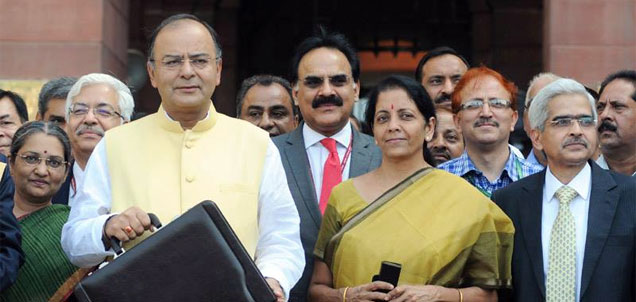
While making his maiden Budget Speech in Parliament today, the Union Finance Minister Arun Jaitley said that India has a strong urge to grow and free itself from the curse of poverty. The people are in no mood to suffer unemployment, inadequate basic amenities, lack of infrastructure and apathetic governance. The Indian economy will have to maneuver its way through a sluggish global recovery, he added.
The Finance Minister Mr Jaitley said that the Government intends to usher in a policy regime that would bring the desired growth, lower inflation, sustained level of external sector balance and prudent policy stance. The Finance Minister pointed out that the present economic situation presents a challenge of slow growth in manufacturing, in infrastructure and also the need to introduce fiscal prudence. The tax to GDP ratio must be improved and non-tax revenues increased. He has set a target of fiscal deficit of 3.6 per cent for 2015-16 and 3 per cent for 2016-17.
 Mr Jaitley said that the Government will constitute an Expenditure Management Commission to look into every aspect of expenditure reform. The Government also intends to overhaul the subsidy regime while providing full protection to the marginalized. The Finance Minister said that the Government would like to introduce Goods and Services Tax (GST) to streamline the tax administration, avoid harassment of business and ensure higher revenue collection. The Government is committed to provide stable and predictable taxation regime that will be investor friendly and spur growth.
Mr Jaitley said that the Indian Government will promote FDI selectively in sectors. FDI in Defence and Insurance sector is being raised to 49 per cent with full Indian management and control. FDI is also being encouraged in the development of ‘Smart Cities’.
To infuse Rs. 2,40,000 crore in the Indian Banking system, citizens of India will be allowed direct share holding in these banks. The Government will also provide tax incentives for Real Estate Investment Trusts. A similar incentive will also be announced for Infrastructure Investment Trusts.
A national multi-skill programme called Skill India is proposed to be launched. This will provide training in traditional professions like welding and carpentry etc. A sum of Rupees 1,000 crore will be provided to Pradhan Mantri Krishi Sinchayee Yojana to provide assured irrigation in rain fed areas.
Central Government will also focus on Swatchh Bharat Abhiyan, under which, total sanitation will be provided to every household by the year 2019 to mark 150th year of the Birth anniversary of Mahatma Gandhi.
Shyama Prasad Mukherji Urban Mission will be launched in rural areas on the lines of Gujarat. This will include economic activities and skill development in the PPP mode. To further improve rural life, the Government will launch the Deen Dayal Upadhyay Gram Jyoti Yojana to augment power supply at a cost of Rs. 500 crore.
To improve the life of the marginalized and handicapped, the Government will provide Rs. 50,548 crore under SC Plan and Rs. 32,387 crore under TSP. Besides, the Centre will extend the scheme for Assistance to Disabled Persons for purchase/fitting of Aids and Appliances (ADIP) to include contemporary aids and assistive devices. The Government will also establish 15 new Braille Presses.
In its concern for women, the Government will pilot test a scheme on ‘Safety for Women on Public Transport’ at a cost of Rs. 50 crore. Additionally, Rs. 150 crore will be spent by Ministry of Home to increase safety of women in large cities. It will also set up Crisis Management Centre in all districts of NCT of Delhi. The Government will also launch the Beti Bachao, Beti Padhao Yojana for which a sum of Rs. 100 crore will be set aside.
In the area of rural development, the Government will provide a sum of Rs. 14, 389 crore to the Pradhan Mantri Gram Sadak Yojana to improve rural connectivity. The MGNERGA will focus on productivity and asset creation, primarily in fields related to agriculture. TheGovernment also proposes to start up Village Entrepreneurship Programme for encouraging rural youth to take up local entrepreneurship programs for which an initial sum of Rs. 100 crore is to be provided. The Government also proposes to start a new programme called ‘Neeranchal’with an initial outlay of Rs. 2,142 crore to further boost watershed development.
The Government has also earmarked Rs. 3,600 crore under National Rural Drinking WaterProgramme for providing safe drinking water to approximately 20,000 habitations. In an attempt to provide Health for All, the Government will introduce two key initiatives i.e. the Free Drug Service and Free Diagnosis Service which would be taken up on priority. The Government is to set up two National Institutes for Ageing in New Delhi and Chennai. It is alsoplanned to set up AIIMS like institutes in Andhra Pradesh, West Bengal, Maharashtra and Uttar Pradesh.
To fill the gap in elementary education an amount of Rs. 28,635 crore is being funded for Sarva Shiksha Abhiyan and Rs. 4,966 crore for Rashtriya Madhyamik Shiksha Abhiyan. A School Assessment Programme is being initiated at a cost of Rs. 30 crore. Additionally, thePandit Madam Mohan Malviya New Teachers Training Programme is being launched for aninitial sum of Rs. 500 crore.
In the field of higher education, the Government proposes to set up Jai Prakash Narayan National Centre for Excellence in Humanities in Madhya Pradesh. Also, five more IITs in Jammu, Chhatisgarh, Goa, Andhra Pradesh and Kerala will be set up, besides, five IIMs in Himachal Pradesh, Punjab, Bihar, Odisha and Maharashtra.
To bridge the digital divide, a pan India programme –’Digital India’, that will provide broadband connectivity and other IT facilities at village level, is proposed to be launched. ANational Rural Internet and Technology Mission for services in villages and schools, training in IT skills and E-Kranti for government service delivery and governance scheme is also proposed at a cost of Rs. 500 crore.
For urban dwellers, under the Pooled Municipal Debt Obligation Facility, the Government will focus on infrastructure, public transport, solid waste disposal, sewerage treatment and drinking water. A sum of Rs. 100 crore will be allocated for metro projects in Lucknow and Ahmedabad. A Mission on Low Cost Affordable Housing which will be anchored in the National Housing Bank will be allocated a sum of Rs. 4000 crore this year. An Upgradation of Traditional Skills in Arts, Resources and Goods programme would be launched for enhancing skills and training in ancestral arts for development of minorities.
To give a boost to agriculture, two institutions on the pattern of Indian Agricultural Research Institute, Pusa, will be established in Assam and Jharkhand. Agricultural Universities are proposed to be set up in Andhra Pradesh and Rajasthan, besides two horticulture universities in Telangana and Haryana. To prevent soil deterioration, 100 mobile soil testing laboratories will be set up. The Government intends to finance 5 lakh joint farming groups of “Bhoomi Heen Kisan” through NABARD.
The Government has set a target of Rs. 8 lakh crore for agriculture credit during 2014-15. The Centre will continue the Interest Subvention Scheme and raise corpus of Rural Infrastructure Development Fund to Rs. 25,000 crores. The Warehouse Infrastructure Fund will get Rs. 5,000 crore this year. The Government also proposes to set up Long Term Rural Credit Fund in NABARD for the purpose of providing refinance support to Cooperative Banks and Regional Rural Banks with an initial corpus of Rs. 5,000 crore.
Towards food security, the Government has committed itself to restructuring FCI, reducing transportation and distribution losses and efficacy of PDS. Wheat and rice will beprovided at reasonable prices to weaker sections. Kisan TV dedicated to interests of agriculture and allied sector will be launched in the current financial year at a sum of Rs. 100 crore. To give necessary impetus to the manufacturing sector, the eBiz platform aims to create a business and investor friendly ecosystem in India by making all business and investment related clearances and compliances available on a 24×7 single portal. A National Industrial Corridor Authority, with its headquarters in Pune, is being set up to coordinate the development of the industrial corridors.
An Export Promotion Mission will be set up to bring all stakeholders under one umbrella. The Government is also committed to revive the Special Economic Zones and make them effective.
The Apprenticeship Act will be suitably amended to make it more responsive to industry and youth. With a need to examine the financial architecture of SMEs, it is proposed to appoint a Committee of Finance Ministry, MSME and RBI to give concrete suggestions. It is proposed to set up a Trade Facilitation Centre and a Crafts Museum with an outlay of Rs. 50 crore to promote handloom products. To preserve and revive handloom and handicrafts, a Hastkala Academy is proposed to be created.
‘3P India’, an Institution to provide support to mainstreaming PPPs will be set up to give necessary thrust to infrastructure. Also, 16 new port projects are proposed to be awarded this year with a focus on port connectivity for which Rs.11, 635 crore has been allocated. To promote inland waterways, ‘Jal Marg Vikas’ a project on river Ganga, between Allahabad and Haldia, will be developed.
Airports Authority of India will support Airport modernization projects in Tier I and Tier II cities. To further improve connectivity, the Government will provide Rs. 37,880 crores for road construction by National Highways Authority of India. 8,500 KMs of roads will be added in this Financial Year.
To promote clean and efficient thermal power, Rs. 100 crores will initially be provided for a new Scheme – ‘Ultra-Modern Super Critical Coal Based Thermal Power Technology’. It is hopeful that the existing impasse in the coal and mining sectors will be resolved. To facilitate this, changes in the MMDR Act, 1957 would be introduced.
The Finance Minister stressed that new and renewable energy deserves a very high priority. A scheme will be launched to drive agricultural pump sets and water pumping stations with solar energy for which Rs. 400 crore will be provided.
The Finance Minister has reiterated the Government’s commitment to enact the Indian Financial Code for better governance and accountability, in close consultation with all stakeholders. While the impact of these measures will be realized in the medium term, he has proposed in the budget some measures such as liberalizing the ADR/GDR regime for depository receipts and extending 5% withholding tax to bonds issued by Indian Corporates abroad.
The budget proposes adoption of the new Indian Accounting Standards (IndAs) by the Indian companies from the financial year 2015-16 voluntarily and from the financial year 2016- 17 on a mandatory basis.
To provide all households in the country with banking services, a time bound programme would be launched as ‘Financial Inclusion Mission’ on 15 August this year. A special small savings instrument to cater to the requirements of educating and marriage of the girl child will be introduced. A National Savings Certificate with insurance cover will also be launched to provide additional benefits for the small saver. In the PPF Scheme, annual ceiling will be enhanced to Rs. 1.5 lakh p.a. from Rs. 1 lakh at present.
KYC norms will be made uniform and KYC records made usable across the entire financial sector. A single operating demat account will be introduced, which will allow transactions of all financial assets.
Defence gets Rs. 2,29,000 crore. Rs. 1,000 crore have been allocated for implementing One Rank One Pension policy. Capital outlay for defence has been raised by Rs. 5,000 crore over the amout provided in the interim budget. This includes Rs. 1,000 crore for the accelerating the development of the Railway system in the border areas. Rs. 100 crore have been provided for setting up a Technology Development Fund to provide resources to public and private sector companies to support research and development of defence systems. The Finance Minister has also announced setting up a War Memorial, a War Museum and a National Police Memorial.
For modernization of state police forces, Rs. 3,000 crore has been allocated. The new initiatives announced in the budget for promoting culture and tourism include creation of five tourist circuits around specific themes, a National Mission on Pilgrimage Rejuvenation and Spiritual Augmentation Drive (PRASAD) and a National Heritage City Development and Augmentation Yojana (HRIDAY). HRIDAY will be launched in Mathura, Amritsar, Gaya, Kanchipuram, Vellankani and Ajmer this year. Sarnath-Gaya-Varanasi Buddhist circuit would be developed with world class tourist amenities to attract tourists from all over the world.
An Integrated Ganga Conservation Mission called “Namami Gange” is proposed to be set up with an outlay of Rs. 2,037 crore for this year. A NRI fund for Ganga will be set up which will finance special projects. Rs. 100 crore have also been set aside for Ghat development and beautification of river front at Kedarnath, Haridwar, Kanpur, Varanasi, Allahabad, Patna and Delhi. Rs. 100 crore have also been provided for preparation of detailed project reports of interlinking of rivers.
National level sports academies for major games will be set up in different parts of the country. Academies and training facilities will also be set up for some other sports. A Sports University will be set up in Manipur, sports stadiums in Jammu and Kashmir will be upgraded, and an annual event will be started to promote traditional sports in the Himalaya Region.
The Budget has special provisions for displaced Kashmiri migrants, conservation of Himalayas, the North-eastern region, NCT Delhi, A&N Island, Telangana and Andhra Pradesh. Out of the total budgeted expenditure, Rs. 98,030 crore will go towards women welfare and Rs. 81,075 crore to child welfare. Provisions for the North-East come to Rs. 53,706 crore. The total expenditure is estimated as Rs. 17,94,892 crore. Centre’s share of taxes will be Rs. 9.77,258 crore, non-tax revenues will be Rs. 2,12,505 crore and capital receipts other than borrowings will be Rs. 73,952 crore. As per budget estimates, fiscal deficit will be 4.1% of GDP and revenue deficit will be 2.9 percent of GDP.
TAX PROPOSALS
The Finance Minister has retained the targets of tax collection at the level of the interim budget presented in February. Taxation proposals have been made with a view to introduce measures to revive the economy, promote investment in manufacturing sector and rationalize tax provisions so as to reduce litigation as well as to address the problem of inverted duty structure in certain areas. In addition, some relief is proposed to individual taxpayers and to certain sectors of the economy.
There is no change in income tax rates, surcharge and educational cess. To provide relief to small and marginal tax payers, personal income tax exemption limit is being raised from Rs. 2 lakh to Rs. 2.5 lakh. For senior citizens, the exemption limit will be Rs. 3 lakh. Further, the investment limit under Section 80C of the Income-tax Act is being raised from Rs. 1 lakh to Rs. 1.5 lakh. Deduction limit for interest on housing loan (for self-occupied house property) goes up from Rs. 1.5 lakh to Rs. 2 lakh.
Free baggage allowance is proposed to be increased to Rs. 45000; it is Rs. 35000 at present.
To incentivise small entrepreneurs in the manufacturing sector, it is proposed to provide investment allowance at the rate of 15 percent to a manufacturing company that invests more than Rs. 25 crore in any year in new plant and machinery. This benefit will be available for three years i.e. for investments upto 31.03.2017. The scheme announced last year, to provide investment allowance to manufacturing companies investing more than Rs. 100 crore in plant and machinery will continue till March, 2015.
Investment linked deduction is being extended to two new sectors, namely, slurry pipelines for the transportation of iron ore, and semi-conductor wafer fabrication manufacturing units. Ten-year tax holiday is being proposed to the undertakings which begin generation, distribution and transmission of power by 31.03.2017. This long-term measure will help the investors to plan their investments better.
On Direct Tax Code (DTC), the Government will consider the comments received from takeholders. It will review the DTC in its present shape and take a view in the whole matter.
With a view to transition towards Goods and Services Tax (GST) changes in service tax have been kept at the minimum. The focus is on widening the tax base and enhancing compliance. It is proposed to prune the negative list and exemptions. Services by air-conditioned contract carriages and technical testing of newly developed drugs on human participants are being brought under service tax. Services provided by the Employees’ State Insurance Corporation for the period prior to 1st July 2012 will now be exempt from service tax. Service tax on loading, unloading, storage, warehousing and transportation of cotton, whether ginned or baled, will also be exempt from service tax.
The Budget has a number of proposals for tax facilitation and dispute resolution. For income tax facilitation, 60 new Aykar Seva Kendras will be opened in 2014-15. Indirect tax facilitation measures include opening 24×7 customs clearance facility in 13 more airports in respect of all export goods and in 14 more sea ports in respect of specified import and export goods. It is also proposed to implement an ‘Indian Customs Single Window Project’ to facilitate trade.
The scheme of Advance Ruling in Indirect Taxes is being extended to cover resident private limited companies and the scope of Settlement Commission is being enlarged to facilitate quick dispute resolution. Amendments are proposed in the Customs and Central Excise Acts with a view to freeing Appellate Authorities for fast disposal of appeals. In order to reduce litigation on transfer pricing issues, a number of changes are proposed in Transfer Pricing Regulations.
To remove uncertainty in taxation of Foreign Portfolio Investors (FPIs) and to encourage their fund managers to shift to India, the Budget proposes to provide that income arising to them from transaction in securities will be treated as capital gains.
In order to augment low cost foreign borrowings by Indian companies, the eligible date of borrowing is being extended up to 30/06/2017 for availing concessional tax rate on interest payments.
Tax rates have been rationalized where needed, and made favourable to certain sectors to boost their growth. Basic customs duty is being reduced on fatty acids, oils, glycerine, petrochemicals, certain wind energy equipment etc. Cathode ray TVs, LCD and LED TV panels of below-19 inches and certain inputs used in solar power equipment are being fully exempted from basic customs duty.
The Budget proposes rationalization of duties relating to different types of coal, scrap and diamond items.
Excise duty is proposed to be reduced on specified food processing and packaging machinery, footwear of retail price up to Rs. 1000 per pair and sports gloves. A number of items in use in renewable energy industry are proposed to be exempted from excise duty. Duty on a number of electronics items is being rationalized or reduced.
The Finance Minister has proposed to mobilize resources by increasing excise duty on cigarettes, pan masala, gutka, chewing tobacco and aerated waters containing added sugar. Clean energy cess will now be levied at higher rates on coal, peat and lignite. Import of smart card will now attract higher CVD. Imported flat-rolled stainless steel products will attract a higher basic customs duty.
The direct tax proposals will result in net revenue loss of Rs. 22,200 crore and indirect tax proposals, revenue yield of Rs. 7,525 crore.
 By Ravi Rao
 If Information Technology was the hero of the 1990s and early 2000s, the Media and Entertainment (M&E) Industry has the potential of emerging as the next big growth driver of the Indian economy.
  In the absence of a formal social security framework there is a need to provide tax incentives for growth of disciplined savings behaviour. I believe Life Insurance plays a critical role in using small savings for capital formation.
  Rationalization
 With strong fundamentals, the Indian economy has tremendous growth potential. The new government has shown intent in the right direction and the Union Budget must turn them into actions to make a difference. Read more…
 After the new government has taken charge there is a huge expectation on the economic development of the country. The government has also made the right noises on various subjects signalling an intent to progress and accelerate the economy. Read more…
 I expect the first Budget from the new government to have significant policy changes for both the short- and long-term. While the list of expectations is large I expect improvements in five areas from this Budget in the short-term. Read more…
 A] Income Tax:
 My expectations from the new Budget:
 This Budget marks the first litmus test propelling the development agenda; the past years have witnessed an economic downturn and a downturn of domestic growth. The Budget should address the issues curtailing investment sentiment and bring renewed optimism for sustained economic growth. Read more…
 To me, it will be a development-focused Budget which means it will be a mixed bag Budget. The government will have to take tough measures. Read more…
 By Amar Babu

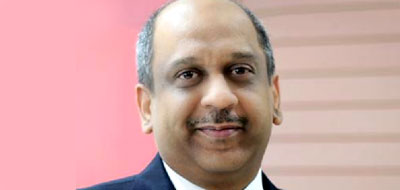 By Roopam Asthana
 I do not think that the service tax implication will have an adverse impact on digital advertising budgets. Investments in digital advertising were not spurred by the lack of service tax, but rather by brand marketers recognizing the reach and impact online and digital media can potentially deliver. We expect that today’s digital savvy marketers will continue investing in the medium.
 With not much for the media and entertainment industry in the budget, there would be anticipation of a further announcement in line with the policy initiatives, especially for the radio sector. On the television front, the ruling on custom duties for LCD and LED televisions being completely scraped to nil, as compared to the earlier 10% will result in a significant boost in the consumption of the television sets. The decision would have an impact on converting single TV households to double TV households, resulting in an increase in the number of TV viewers, which is good for the industry.”
 We welcome the decision of Uniform GST and tax measures that will play a crucial role to make e-commerce a success story in India. The move will certainly simplify the tax structure and make India one single common market by rationalizing the supply chain and thereby, offering better value. Also, the importance given to rural infrastructure will ease pressure and allow faster movement of goods. We hope to see a continued growth in both e-commerce and m-commerce with the government looking at launching broadband connectivity across the country.
 With India poised to become the second largest broadband market by 2016, the investment of Rs 100 crores on virtual classrooms and budget allocation to increase the internet connectivity across villages will surely open up more avenues for different age groups to use the internet. In addition, the drop in prices of personal computers will increase access and exposure at the grassroot level. This would also increase opportunities for start-up companies like worldoo.com to build upon creating better infrastructure necessary to provide top quality experiences for children on the internet. Parents and educators will therefore be encouraged to take more initiative in communicating with children about responsible internet usage.
 Whilst it is very encouraging to see the government giving more attention to the internet and support of animation and gaming, I view the initial allocations as a small step in the right direction. China has a near $ 1 trillion internet economy, India will transition from 2G to 4G and add another 400 million mobile internet users over the next three years, we need an unprecedented push toward digital for a significantly higher consumer adoption as it will spark productivity across sectors. The aspect of bringing back online advertising into the service tax ambit, whilst it is still a fledgling segment, is therefore almost a conflicting action and not a welcome move.
 The increase in investment limits in FDI ( foreign direct investment ) announced in the 2014 budget will favourably impact the economy. Significant encouragement has been provided to domestic manufacturing that will likely enhance both local production and employment, especially in the sectors of retail and e-commerce. Measures on tax reforms like advance rulings, tax settlement mechanisms and APA (advance pricing agreements ) etc. will contribute to improving investors’ confidence and removing uncertainty regarding taxation. The introduction of inter-quartile range in transfer pricing as well as the set up of a committee to evaluate retrospective taxation are positive steps. Outlays for improving infrastructure in ports, roads, airports, Smart Cities as well as education related initiatives and the funding model resonate well with the country’s growth plans.
 The Budget is prudent and cautious even while it aims to address key sectoral concerns and brings in vital initiatives to spur growth especially in critical sectors like manufacturing, healthcare, education, skill development and infrastructure as well as assuring a stable tax and regulatory regime that is expected to incentivize investments. The budget also has significant focus in rolling out measures for rural development. From a consumer sentiment standpoint, the Budget brings some relief around IT exemptions and is expected to accelerate savings that may fuel economic growth and consumer spending. Further impetus to innovation, entrepreneurship and focused development of industrial corridors will drive domestic employment generation and economic upliftment. Fostering growth and reducing fiscal deficit have been the cornerstone for this year’s Budget.
 We believe that the Union Budget for 2014-15 is a step in the right direction for micro, small and medium enterprises (MSMEs) across the country. From the Rs. 200cr provision to set up a Technology Centre Network for MSMEs to the impetus for budding entrepreneurs and widening broadband penetration, these moves are set to give the MSME sector more government support than they have ever had before. These developments will benefit web services companies like BigRock as more and more entrepreneurs harness the power of the internet to expand their business.
 I am pleased to see the government’s focus on employability and skills development. Educating and vocational training for the youth to help their employability is crucial to harness the resource pool and will encourage their participation in the country’s growth. The introduction of the Young Leaders Programme and the proposed national skill programme – ‘Skill India’, are important steps to empower today’s youth with skills, improve employability and create jobs. This will indeed provide a boost to the retail and service sector which is so heavily dependent on people.  The hike in exemption limits will provide respite to consumers and in turn, boost their spending power. This is encouraging for the sector as it will help increase consumption and demand. I also welcome the government’s move to introduce Goods and Services Tax (GST) later this year.â€
 The proposal to grow community radio is an excellent initiative to enable social good, particularly for niche and specific sections of society.  The amount can be used for set-up of the stations and their on-going operations, and this will help bridge the gap between the number of licenses issued and the far fewer number of community radio stations that have become operational.  Since community radio will be airing news in some form or the other, monitoring the content of these stations will be important.”
 The Budget looks hopeful but also taxing, with the government investing in start-up funds (with Rs.10,000 crore set aside for VC funding), and investing in a centralized payment model for ease of use and elimination of third parties. With mobile phones becoming cheaper, the smartphone usage shall witness an increase as well. Though, with service tax being added to the Online & Mobile Ads, Digital/ Web/ Social Media Agencies will surely face a negative impact.â€
 The new government’s maiden Budget proposes to levy service tax for online and mobile advertising which we believe will adversely affect the industry’s growth. It reflects differentiated treatment as traditional print media remains unaffected with respect to the tax purview but new digital media that is actually driving innovation will have to unfortunately bear the brunt. Currently, India’s exponential mobile penetration and app consumption patterns are driving the growth of the mobile advertising industry and this development could hamper innovation efforts of the entire ecosystem comprising of mobile development start-ups, advertisers and publishers. While the Budget is in favour of small scale set-ups and entrepreneurs, the provision for taxation is contrary in nature for budding developers and publishers.
 “It’s a growth-oriented and sensitive budget. It is a statement of intent that has realistically touched upon many important sectors and segments.The thrust on infrastructure and agriculture and manufacturing and rationalization of duties on input costs is welcome. From focus on rural electrification , Defence   or aspects like Swachh Bharat ,protection of women, Beti bacaho Beti Padaho or allocations for the sports university and the artisans and the simple measures like Braille on the notes for the visually impaired reflect that the Govt has economic and social vision and credible intention even at a micro level. Of course there will always be more to ask for in terms of corporate or personal income tax and requirements for our specific industries but we need to see whether holistically the economy is being put on track and we moving responsibly and progressively in the direction of economic revival”
 It’s a positive budget which will stimulate investment and growth. The government has done a good balancing job. It’s a great start.
 Overall, the budget seems to be good but there are a couple of areas of concern as well. The positive side is that there’s emphasis on digital connectivity going much deeper down in the village. This is good for the industry. There’s emphasis on TV channels for rural areas like the North East. Also, the sector of community radio has been developed.
 The budget is looking to infuse new blood into the economy and create new demands. This is a good thing for the media & advertising sector as we are a demand generating sector. Specific initiatives are made for infrastructure, inflation is being tried to control so on and so forth to create demand. But for me there are two specific things which I would have expected from the budget: