Category: PR

  • The Anchor: 5 reasons PR is better than advertising

    By Dipankar Zalpuri


    Let me start by quoting George Bernard Shaw who once said, “The problem with communication is the illusion that it has been accomplished.” That makes it even more important to understand why and how PR/Media Relations is better than Advertising:


    #1 Fish Tank Syndrome. When creating a PR pitch, a professional (internal or external to organization) will always do a dip-stick study and gain valuable feedback from prodding the press members. Also, as the story development goes along, media adds value to the brand proposition, if communication is clear and crisp. Advertising usually restricts to highlighting the important aspects of the product/service and thus sounds very promotional. A creative agency and the client usually generate these ideas thus leading to a closed fish tank syndrome


    #2 PR is increasingly being seen as being more empathetic to customer need. Consumers know when they’re reading an advertisement they’re trying to be sold a product/service. Consumers/Customers are wise. When someone reads a third-party article written about a product or views coverage of an event on TV, they’re seeing something a client didn’t pay for with ad rupees and thus view it differently than they do paid advertising.


    #3 It’s all about the money, honey. Considering the ever looming fear of economic recession, one of the most important points obviously is the cost involved. Where an effective multi-media advertising campaign will cost millions of rupees, PR is a much wiser and in-expensive option.


    #4 Longevity & Shelf Life. So if you are paying so much for space, you can run your ads over and over for only as long as your budget allows and in places which fall in your overall budget. Whereas with one press release you can target all publications through PR & Media relations


    #5 Advertising helps to maintain a brand, not build it. It helps in the long run. Last but not the least, good PR is a carefully planned, sustained effort to establish your company identity, maintain credibility and promote communications between your company and its public. The public can be cynical. They have lots of advertising messages directed to them on a daily basis. But, when people read media articles, hear or see something about your company in the press, it results in much better credibility and thus is much better for the long run!


    Dipankar Zalpuri is Director, YouMe&We Media Services Pvt Ltd


  • Diamonds are wherever…

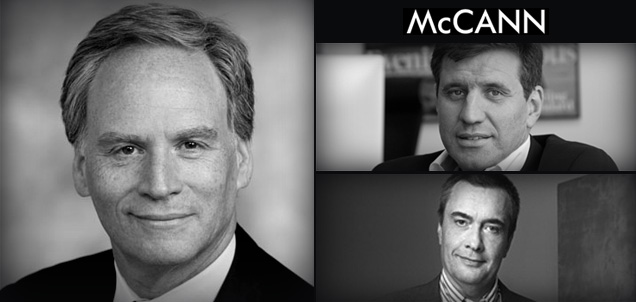
    Left: Harris Diamond, Right top: Gustavo Martinez, Right bottom: Luca Lindner


    By A Correspondent


    Imagine the head of a large Indian PR agency being appointed CEO of his network’s well-known creative agency? You can’t dream of such an eventuality in India, but not so in the United States of America, where public relations hasn’t hit the bottom of the pyramid as it has here in India.


    On Tuesday, November 13, the Interpublic Group announced a series of top management changes at McCann Worldgroup:  Harris Diamond was moved from being Chairman and CEO of IPG’s Constituency Management Group (CMG, which includes Weber Shandwick) to a similar role at McCann Worldgroup, replacing Nick Brien. A new, three-person office of the Chairman has been created which will have Mr Diamond along with Luca Lindner and Gustavo Martinez who have assigned bigger roles with geographic and operational responsibilities.


    McCann Erickson is the dominant unit of McCann Worldgroup which also includes UM, Weber Shandwick, Momentum, MRM, Craft Worldwide, McCann Health and Future Brand.


    Prasoon Joshi

    What does this mean for India? Not much. Except that until Tuesday, Prasoon Joshi as head of McCann in South Asia reported directly to CEO Nick Brien will now relate with Mr Martinez who takes charge of Asia-Pacific in addition to Europe. Mr Diamond told a Campaign Asia journalist that he had been in touch with Mr Joshi.


    Part of the reason why the office of the Chairman has been created is reportedly Mr Diamond’s background of being a Public Relations maven. Widely regarded as among the top 10 PR practitioners in the world, Mr Diamond role at CMG and Weber Shandwick specificially has received several accolades.


    His appointment to McCann is significant as he’s possibly the first true blue Public Relations professional taking charge of a large, global creative advertising company.  For IPG, industry observers say, it’s all about managing a communications firm, keeping costs under control, maintaining  a disciplined organization and most importantly: get in sync with the customer’s future strategy.


    Reasoned a former colleague David Brain: “In the era of enfranchised consumer and stakeholder and when everyone now ‘gets’ the need to engage and change strategy based on the long term needs of stakeholders and consumers, it is PR thinking not advertising thinking that is best placed to succeed.  Note, I’m labeling advertising thinking as the problem, not necessarily advertising agencies.”


    Mr Diamonds work appears cut out. Along with Messrs Lindner and Martinez plus Linus Karlsoon and Daryl Lee, global creative and strategy officers respectively who will take charge of the day-to-day operations of the agency, he needs to first ensure that people do not use ‘ailing’ as a descriptor for McCann Erickson.


    PR Week magazine reports on how in the 11 years that Mr Diamond led Weber Shandwick, he created a “powerhouse that had other shops looking over their shoulders”. The magazine’s website notes: “Contemporaries in the industry said he was a visionary who led his firm to be one of the most successful in the country.”


    Mr Diamond has the reputation of being cost-conscious and Mr Brain has this view: “My top tip for anyone at McCann who will be meeting Harris in the next few days and weeks is make sure you know how to forecast your revenues; make sure you know your cost base; make sure you are intimately connected with your clients and their needs and make sure you do quality work, because he can sniff BS a mile away!”


    Will Harris Diamond shine where Nick Brien didn’t. After all, Mr Brien too came with the reputation of being a successful Universal McCann captain and very customer-focussed. Guess time will tell.


    There are many people watching.  The success of this appointment could well see winds of change blowing across adland and the entire world of marketing communications.


    And to the world of PR professionals in India: fingers crossed. It could well be your time soon!


  • PR folk get set for PRAXIS 2012-11-23


    By Johnson Napier


    The hotel was buzzing the evening before with activity thanks to a film shoot. Tamil superstar Karthi moves in and out of his DTH-fitted vanity van (ah, well, a bus), as the core team of PRAXIS 2012 ensures that all’s well with the organising the event (*See Disclosure).


    The scenic and pleasant climes of Pondicherry, er, Puducherry that buzzes with tourism activity at this part of the year is expected to see action in a different avatar over the next couple of days. And it isn’t action in the form of adventure games or a beach sport that the place prides itself upon but rather something that has a serious if not exactly academic connotation to it. Le Pondy in the former French colony will play host to over 250 communication professionals from India (and one from Nepal) who will throng the venue for a unique and first-of-its-kind experience that’ll be high on business knowhow.


    This is just the beginning: Amith Prabhu, co-chair
    He landed from Chicago just a few days back, and has been connected ever since, trying to ensure the event happens without any booboos. Well, he was doing that even when he was in the US, taking full advantage of the time zone difference and not impact his day-job at Edelman. 

    MxMIndia posed a few questions to Amith Prabhu, co-chair of the PRAXIS 2012 and also founding trustee of the PROMISE Foundation, under the aegis of which the conference is being organised.


    It’s the Big Day today…  do you see the event setting new benchmarks?

    This is definitely historical for the Indian PR fraternity. It has evolved more as a movement of bringing several minds together than just another conference. We have had to reject over 35 late-comers in the last two weeks, both because we had planned for 200 and the numbers exceeded and also to help create a culture of planning in advance and not support the concept of ‘last-minute’ registrations. Delegates will get to visit a beautiful Indian town which has rich history and is a centre for spirituality and learning. They will get to listen to and interact to over 40 leaders – all under one roof and in a power packed 24 hours. There will be a concert at the inaugural gala which adds to the excitement.Thus is the first event of its kind completely organized in spare time by full-time professionals who have day jobs


    Tell us of some speakers that you are proud to invite at PRaxis and whom you feel should be the ones to watch out for at the event?

    We are proud of the fact that over 12 CEOs of Indian PR firms could commit to travel all the way for this cause. Deirdre Breakenridge who has authored several PR bestsellers is also visiting India for the first time and exclusively for PRAXIS. Prof Dr JV Vilanilam will inaugurate and deliver an address that is solid and insightful. A few of India’s leading corporate communications managers will also share their insights at various panels. The Emerging Leaders panel certainly will be a highlight.


    Does the demographic split of delegates who have registered thus far suggest any trends?

    There is a healthy mix of youngsters and seniors and an almost equal number of men and women. There are delegates from all the three major metros and one from Nepal too. It is clear that the community has been eagerly waiting for an event of this nature and a lot of young people have made the investment of money to be part of this event. India is waking up and smelling the coffee and that is a big deal.


    You mentioned about your core-team organising this in their spare time. Any special efforts to differentiate PRaxis from other similar events?

    To start with this event was born out of an online conversation and inspired by certain situations. No part of the event was outsourced to an event management firm to ensure costs were low and the benefit could be passed on to delegates. The event was only marketed on Twitter and Facebook with event ambassadors playing a huge role in building momentum.We did not add the awards element to keep politics at bay.


    What do you intend PRaxis to throw up at the end of its 2-day showing?

    We are hoping this summit is the beginning of an annual feature and will also give birth to many more smaller day-long summits in the metros that are targeted at those who cannot afford a destination event. We are sure PR professionals will look at their profession in a new light. Most importantly we are confident the summit will lead to a structured organisation of members who meet frequently to mentor and to be mentored. This profession can only regain its sheen which a few events in the last few years have attempted to destroy.


    Most suggestions or workable solutions that get discussed during such events are left ignored or are not converted to action soon enough. What does PRaxis intend to do in this direction?

    The main purpose of this event was to bring the fraternity together which has been achieved with over 80 organisations being represented by 255 delegates. The road ahead is very clear and is two pronged – to do one large annual summit and a few mini-summits annually & to offer a forum that is largely online and connects offline to help professionals learn from each other aspects that can only be handed down through experience.


    What do you expect the youth to take away from this event – something that will make them return again next year to learn more?

    We are hoping the younger delegates will get to interact and listen to senior professionals whom they idolise. Most importantly, here is an event that they can call their own which is truly secular and democratic in every sense. It is not an extended offsite of one PR firm to which everyone’s invited. It is not backed by any single body that makes it polarised. Most of all it is truly an event by and for professionals completely organised by volunteers who in have full-time jobs. We are sure some of the terms that are abused and wrongly used like ‘agency’ and ‘industry’ will be used less and less.


    PRAXIS 2012, the flagship event of the PRomise Foundation for Public Relations, a non-profit created to enhance the reputation of the PR profession, is scheduled to take place today and tomorrow (November 23 and 24, 2012). The organisers have invited over 35 speakers who would discussing and deliberating and help steer the industry forward.


    The summit will be inaugurated by academic and writer Prof J Vilanilam and followed by an interaction to be moderated by APCO India’s Managing Director Sukanti Ghosh. This will be followed by a keynote address by Deirdre Breakenridge, author of several PR books, speaker and professional communicator, who will talk on the theme “Our Time Is Now” and cover impact of traditional and digital forms of earned communication in her address. Following next would be a panel discussion on Storytelling and Creativity. The Storytelling panel moderated by writer and editor Amrita Salian will have two best-selling novelists Anita Nair and Ashwin Sanghi share tips and tricks on storytelling in the world of fiction that PR professionals can learn from and apply to real life in real time.


    The day will proceed with a panel discussion on creativity to be moderated by managing editor of The Holmes Report Arun Sudhaman who will be joined by Founder and Principal of Genesis Burson-Marsteller Prema Sagar, Edelman India’s Managing Director Robert Holdheim, Head of Corporate Communications at Airtel – Deepa Dey and Shweta Shukla, Head of Corporate Communications at Procter & Gamble and Prasanth Chalpalli of creative shop Jack in the Box, the man who led the team that promoted last year’s sensation Kolaveri Di.


    The second day would begin with a ‘by invitation’ only breakfast session where N Madhavan, associate editor with Hindustan Times will lead a conversation with the keynote speaker, Deidre Breakenridge on all things communications and digital. The summit will then kick off with two panel discussions that will focus on key challenges that communications and PR professionals are facing increasingly – Measurement and Ethics. The first panel on Measurement will be moderated by Aseem Sood, Director at AMEC and CEO of Impact Research and Measurement. The other panellists include Meenu Handa, Director of Corporate communications at Microsoft India, Shravani Dang – Head of Corporate communications at Avantha Group, Paresh Chaudhry – CEO of Madison Public Relations, Jaideep Shergill -CEO of MSL India and Sunayna Malik – Managing Director of Text 100 India.


    The next panel on Ethics would be moderated by Nitin Mantri, CEO of Avian Media and will have Ravi Kiran – Founder of Venture Nursery, Ophira Bhatia – Director of Corporate Affairs at Cadbury India, Valerie Pinto – CEO of Perfect Relations and Yusuf Hatia, Managing Director of Fleishman Hillard India as panellists. The session that follows is a roundtable created to discuss issues concerning young professionals and will be moderated by Summit Co-Chair and Chairperson of PRCAI South, Shane Jacob. This panel has two young entrepreneurs Poonam Ganguly of Media Moments and Neha Rastogi of WordsWork, two young chief communications officers – Shwetank Jain of Future Group and Vikram Kharvi of Tata Housing and one more young professional who will be chosen from a blogging contest.


    On high pitch

    The 2-day event has received a tremendous response from the industry be it through mere participation or even sponsorship. Sharing his view on the participation and interest being evinced by his firm, Sukanti Ghosh, MD India, APCO Worldwide, who would also be moderating the morning session on day 1 said: “APCO has its management team attending the Summit, as we have a management meeting planned on the sidelines of the event. We are delighted to be an official partner of the event. I, personally, am happy to be one of the Praxis mentors as well.”


    Elaborating on his expectations from the 2-day event, Ghosh added saying, “The Indian communications industry has for long needed an objective industry platform that brings together diverse industry voices. Praxis promises to provide just that. I congratulate the organizing committee for conceptualising and bringing to fruition an industry initiative of this nature.”


    Presenting his viewpoint, Nitin Mantri, CEO of Avian Media said: “It’s a one-of-a-kind and much-needed event for the PR industry. In our industry, most of our time goes in celebrating events that belong to our clients but this is an opportunity for our members to do so. It’s a step in the right direction and it is good to know that a lot of agency bodies are supporting the initiative.”


    When asked about his expectations from the conference, Mr Mantri said he expects the level of interaction to be very high. “The quality of discussions, networking with prominent people etc would all be exciting stuff to do at the event. I think the delegates should look forward to and imbibe as much knowledge as they can from the various seminars and keynote addresses. As for me, I am going to be part of a panel discussion and I also am on the Board of Praxis as well.”


    Excited about being a part of the initiative, Jaideep Shergill, CEO, MSL India who will be seen with a large pool of members from his firm, said: “I see the event as one of the big things to happen for our industry. It’s high time we had an independent event for the industry. In fact the event has drawn in a huge response from all quarters, a fact that can be confirmed from the high number of delegates and speakers who would be attending it. Also noteworthy is the fact that this event is not being held in a major metro city which takes the focus away from the Summit as people get busy in meetings and other personal appointments. With Pondicherry as a venue, one can look forward to having a suitable captive audience that’ll attend the sessions. I would say that Praxis will open an opportunity for new ways of doing business for the PR industry.”


    The summit sponsors are – Platinum Partner: Edelman India; Gold Partner: Genesis Burson Marsteller and The Content Company; Silver Partners: Impact Research and Measurement, APCO Worldwide, SIMC Pune, Adfactors Group. Other event partners include Avian Media, Sage India, SABMiller India, Sula Wines, Avignyata, Centronics Support, Aircel, Shady Ideas and Westland Books. MxM India is the online media partner while The Holmes Report is the international media partner. PR Moment.In, PR Buddy.Org and Global alliance are strategic partners.


    * Disclosure: MxMIndia is a Media Partner of PRAXIS 2012


  • MxM Mondays: Is India ready for cross-pollination between varying media functions?


    By Ananya Saha


    Harris Diamond, a true-blue PR professional, has taken charge of McCann Erickson – a creative advertising network. We spoke to a cross-section of professionals who have been through this transition and have helped facilitate it, to ask: “Is India ready for cross-pollination between various media functions?”


    Ajay Kakar, Chief Marketing Officer, Aditya Birla Group – Financial Services

    Let me just pull back in history, and say that cross-pollination has been a way of life for many years. I say so as a person who has been through this journey himself. In 1991, I joined O&M. I had first started in Direct Marketing and was then into advertising. When I left in 2003, I was an Executive Director of financial advertising corporate relations at O&M. In 1991, there was a shift from direct marketing to advertising and in 2003, a shift again from advertising plus public relations and I was a Country Head for that. If you look back in time, there have been opportunities for people to cross-pollinate at middle-and-senior-levels.


    What you are today seeing is happening at the senior-most level, which is a great endorsement of a need for a brand perspective rather than a mere advertising or public relations or digital or direct marketing perspective. In normal talking, we equate brand to advertising and advertising to brand. If you ask a marketer, advertising is one cog in the wheel. In the communication mix, you have to take a holistic perspective. And to take a holistic perspective, it is ideal if you have a holistic experience. Otherwise, typically, if you have an advertising mindset, it will never be able to think out of the ’30-sec’ mould. I think it is very important to have and support cross-pollination and I think this is a great move.


    Secondly, advertising has always been the sexier, the more glamorous, and more attractive profession to be in. As I said, very often advertising is synonymous to its brands. But having been there, public relations is far higher in the strategic evolution order. If you are an advertising person, you get to engage with the brand manager or on a good day, with the marketing head who only talk to you about the brand. But if you are in PR, you have the power to partner CEOs and boardroom. And therefore, get a perspective on not only the brand but also on the business. And therefore, I feel that that recognition of strategic contribution that an agency can play a role in the brand or company.


    It has happened for decades, but rarely and not regularly. If you ask me top-of-mind, I cannot think of a second name. Anyone else who might have cross-pollinated like I did, I cannot think of a name instantly.


    As far as challenge is concerned, there is a perception barrier at both ends. An employee thinks that advertising is front-end, advertising is sexy, advertising is glamorous, and as perception other functions are not considered sexy or appealing – it is seen as not a move forward in one’s professional career. On the other hand, from the company’s perspective, you need a manager for business but you also need a leader. There is two-way of thinking. One perception is if I have managed one function with people, I can manage advertising, I can manage PR, I can manage direct marketing. The people have to know the discipline, and I do not necessarily have to know the discipline.


    People who have shifted from advertising in O&M to direct marketing included Prita Singh and Harish Vasudevan. They did not know direct marketing but their perception was “we do not need to know and we have to manage people, clients, business, and we have to manage people who know direct marketing”. On the other hand, there is a perception by the company that you have to be a leader and not only a manager. As a leader you have to talk to the client in the language he has come to me. If he comes to me to talk about PR and I talk to him about commercials, he is not going to be very excited with me. And therefore, why cross-pollinate.


    From an employee’s perspective, most people think it is not a move up in life and is not glamorous and for a company, moving people is seen as leader or not a leader. There is perceptional barrier to such moves.


    A person who actually cross-pollinates, benefits as they take the holistic picture of a brand and business. And therefore, agencies should encourage it at mid-levels so that by the time a person becomes senior, he has already had a 360-degree perspective.


    O&M used to have a mantra called 360-degree brand perception. Now that normally happens with an agency that has disciplines beyond advertising. O&M has many disciplines. They used to think that instead of going to clients as an individual discipline, why don’t they combine and approach a brand rather than just advertising or PR or direct marketing. They wanted to create a cadre of Brand Team Leaders (BTL concept). The leader was supposed to be discipline-neutral and he would lead a team of people who were specialists. That did not too well because of this hierarchical brahminical order, they filled up the roles with advertising people. They could not thus get out the best benefits out of other disciplines.


    A true brand leader is a member who has actually experienced, learnt and benefited from all disciplines. And therefore, if it happens at middle level, by the time he reaches senior level he can command leadership and lead the thinking. According to me, BTL concept could have worked very well and much better if it was a person who had experience of two-three disciplines and was then made a BTL.


    Cross-pollination is very good for businesses and brands if initiated at a relatively middle level so that real benefit comes at the senior level.


    Abha Kapoor, Executive Director, K&J Search Consultants

    K&J is known to place seniormost professionals from outside the media industry in a media company. Forget the cross-pollination among media affiliates, we have placed FMCG and Telecom person in to media: from heading radio stations, broadcast channels and entire media conglomerate. A recent example being Amit Jain from Coke who went on to head MTV, Sudhanshu Vats from Unilever who went on to become Group CEO of ss-Viacom 18. We believe in and encourage cross-pollination because talent gets jaded and you need fresh thought, fresh blood. Anybody who has that experience at scale and understanding of business as a whole and has maturity and leadership skills, can transition into a new industry.


    Forget the cross-pollination within media or media vertical, we believe that someone who ideally has the intelligence and education can easily transition into a senior management role from an unrelated industry. We are very happy when we see this cross-pollination because a completely different perspective comes into play. People who have come into media have handled people at much larger scale.


    The intrinsic challenge is to understand the business and the sector for a person who comes into media from having good experience in handling another industry or some other media vertical. This is an obvious challenge given that they have not been exposed to a different industry earlier. Somebody from FMCG would have come from a structured set-up, and would have worked with certain processes and systems while some of our media verticals might be chaotic. Someone who is structured in their thinking might not be able to transition so easily, whereas someone more dynamic can learn and run with the ball in a couple of months. They need to understand the dynamics of media. Creative people are obviously a bit different to handle, which is not so difficult when one has the capability and track record of running a successful business and has the capability to learn and bring a new perspective to a new challenge.


    Anita Nayyar, CEO, Havas Media India & South Asia

    Typically at the CXO level, roles are industry agnostic. There are the challenges of industry norms, processes, core domain knowledge, nuances and network but a whole supporting team exists and CXO’s are trained to manage and navigate these.


    On the positive side, cross-pollination can bring innovative business ideas. This is also not the first instance in Indian industry which does see its benefits but it is far from becoming a policy anytime soon, a trend yes. A lot here will depend on the mind-set, culture, objective and present need of a company. Also an existing group with multi-dimensional media arms will be more ready to work the shift as in this case as the candidate is experienced in the group’s culture and business ecosystem.


    Here Harris Diamond is not from the industry yet he is of it; understands business needs across industry, knows how to bring in the revenue and handle a group of agencies. He will bring in alternate views, positively contribute and revel in the creativity. Clearly McCann believed he would provide the edge.


    Vikram Chhachhi, Executive Vice President at DHR International

    Yes, it has been happening in India. I do not know of the names offhand. The cross-pollination is actually health for not only media, but for any kind of industry. It brings in new ideas, thoughts and concepts. It brings in fresh insights or styles with how people see, do or approach things. The entire media and consumer space is seeing a lot of conversion that is happening. And it will continue to happen for a long time to come.


    The challenges are based on how people accept or reject change and how people re-align themselves. The challenges are all around the acceptance of people to the changes happening around the marketplace: are they active, reactive, and responsive to these.


  • Jaldi 5 with Amith Prabhu: PRAXIS brought together seniors & juniors in the PR and corp comm community

    He’s made the fullest use of the time zone difference between the United States and India. So when he’s not on his desk at his day job at PR major Edelman in Chicago, he was busy coordinating PR conference PRAXIS 2012 and dreaming up what else the Promise Foundation should do. MxM India caught up with PRAXIS co-chair Amith Prabhu a day before he was heading back to the US and asked him a few leading questions.


    01.   As you look back, and given the standards that you had set for yourself, how would you rate PRAXIS 2012? And vis-a-vis other PR conferences that happen through the year?

    We, the organising committee of 12 at-larges and specifically Shane Jacob and I as summit co-chairs are very pleased with the way PRAXIS 2012  turned out to be. It surpassed all our expectations. When we had conceptualised the event we had thought of a small compact conference but over the months it grew to become bigger than we had imagined. And the final outcome was there for all to see. As many as 260 delegates including 35 top-class speakers and a full-house despite an experimental schedule. Everyone in the audience and backstage took ownership and that was evident even when there were glitches and all were supportive.


    It would not be fair to compare with other PR conferences because our intentions were unique – bringing together the seniors and the youngsters of the core Indian PR consulting and corporate communications community. We achieved this with aplomb and the fact that we are proud of is punctuality throughout the two days.


    02.   While there was representation from most firms, and most CEOs were also present, the big guns from a few agencies were conspicuous by their absence: Dilip Cherian of Perfect Relations, N S Rajan of Ketchum Sampark, Weber Shandwick’s Shiv Reddy/Atul Ahluwalia, Ameer Ismail of LinOpnion. Any reasons for their absence?

    We had invited 30 PR firms of all sizes when we set out on this mission and we had an instant response from over 25 of these wherein 15 had confirmed their presence right at the start. Around 9-10 had expressed their support but had scheduling conflicts. Of the four firms mentioned above we tried hard to connect with them but were not successful. Mr Cherian had responded favourably but was unable to make it. The CEO of his firm was a panelist but had to drop out at the last moment due to a personal emergency. We are confident that we will be able to have all of them not just attend but also be on panels at the next edition.


    What would you tell them given that they didn’t turn up?

    I would tell them that we missed their presence and their insights and they cannot afford to miss a humble attempt put together completely by volunteers next year around. It is also possible that several people were apprehensive of a brand new event by a group of youngsters and would consider being part of it in the future. We are a completely independent not-for-profit venture and our focus is to collect people and give them a forum to learn and share.


    03.   It was in effect just a one-day event, though spread over two days. Given that people are spending a fair bit of time and money to get here, do you think there’s need to pack in more?

    We packed in as much as 24 hours could permit… 6 panels, 3 networking sessions, 2 keynotes and 1 concert was quite a bit. We planned the timings around flights to and from Chennai so those who wanted to spend just one night could make it. But we have feedback that people are open to an additional day and we will consider that when we plan the second edition.


    04.   Chennai agencies and corporate communications professionals didn’t appear to be exploiting the opportunity?

    The summit was promoted and marketed completely on social networks. It is possible that several firms in Chennai were either not aware of the intensity of this endeavour or chose to wait and watch. Honestly, there is nothing to exploit other than being there and having a good time. Hopefully, in the future there will be greater participation from professionals in the vicinity.


    05.   Was Pondicherry a good venue? Isn’t there too much of anxiety of storms?

    The idea is to offer delegates a destination that is unique and has tourist appeal. Our gut feel told us that Pondicherry would have a uniqueness that very few venues could offer. The concern was not so much about storms but about distance from the Chennai airport which was well taken by most despite the long drive, thanks to the decent roads.


    Where will it be next year? Dates finalized? Venue?

    The idea is to take the summit across zones and keep it moving. We have begun in the South. We intend planning the second one in the North or the West. We will decide dates and venue based on feedback received from the delegates which we are evaluating. We hope to announce the same soon on MxMIndia. All that we can say is that it will certainly be bigger and better.


  • A weekend of PR & Conversations

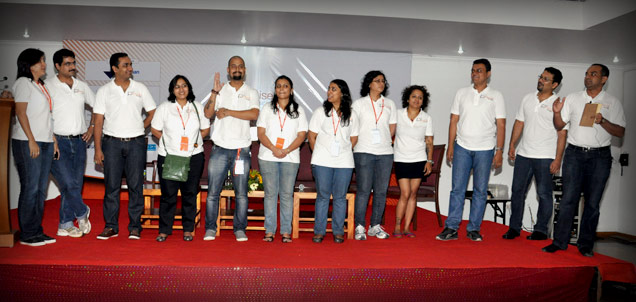
    The core organising committee and volunteers of PRAXIS 2012


    By Vrinda Jhawar, Richa Gaikwad, Barkha Kaul and Priyanka Agarwal

    Students of Symbiosis Institute of Media and Communication


    PRAXIS 2012, the inaugural public relations and corporate communications summit organised by the Promise Foundation, took place last week (November 23-24) in Pondicherry. The summit saw senior, mid-level and junior members from the public relations and corporate communications community in attendance.*


    The summit began with an address by Robert Holdheim, Managing Director, Edelman India who asked the audience to, “Lead a change, take risks and push the boundaries”. He said that the PR industry lacked quantity and training of professionals rather than the quality of talent of the professionals. He concluded by saying, “Stop thinking about just a piece of a pie, but look at the large picture as a whole.”


    Following his speech was a special address by J.V.Vil’anilam, former vice-chancellor of the University of Kerala and author of Public Relations in India, who asked, “Why is our activity not getting the importance that it deserves?” He said that in India corporate leaders do not consider PR as a management function and in order to put public relations on a big pedestal, higher attention on social responsibility has to be given.


    He also highlighted that PR had the power to raise the spirit of living by making people aware of what is happening around them. It is important for nation-building and development of a company. The only way that PR can be given its due importance is by reorienting it with a social purpose. Later, Sukanti Ghosh, Managing Director- India at APCO Worldwide


    The next session was addressed by Deirdre Breakenridge, author of ‘PR 2.0’, ‘Putting the Public back into Public Relations’ etc. She enlightened the audiences with eight useful new social media tools for the PR professionals. “PR has expanded”, she said, adding, “the PR professional has to become a hybrid professional who embraces social and traditional media.” She talked about tools and techniques like Snapshot, Ripples amongst others that are increasingly being used in the digital space. “A PR Professional has to be a Master of metrics, both quantitative and qualitative,” she said as she interacted with the audiences, revealing interesting insights of how one has to be a pre-crisis doctor and be ready with a communication response charts at any given time. The session concluded with a Q&A session moderated by journalist and author Anant Rangaswami


    The third session was a Special Session on ‘Storytelling’ by bestselling novelists Anita Nair and Ashwin Sanghi which was moderated by Amrita Ganguly-Salian. The session discussed the link between storytelling and Public Relations.


    Anita Nair is best known for her books like The Better Man and Ladies Coupe. Ashwin Sanghi has written novels like The Rozabal Line, the award winning Chanakya’s Chant and TheKrishnaKey. Anita Nair’s style of writing is fictional and descriptive in nature whereas Ashwin Sanghi’s writing is thriller fiction. Hence, the two styles of storytelling portrayed different insights for the discussion.


    This discussion started with how to keep the momentum of writing going. Ms Nair said: “While writing there is no brief, there is always an idea that stays there, germinates, takes shape and then demands to be the written.” Said Mr Sanghi: “If your story is strong enough, it propels you to finish the story. Keeping a ‘Black Book’ of good ideas helps you to structure your story in the desired direction.”


    To keep the creative flow while writing, Mr Nair said that one must possess an inbuilt discipline. “Reading another piece of good writing can be used as inspiration and as a trigger for your thought process,” she suggested, adding, “You must know your story and character well enough and then your story will flow. Try to create a plot within a plotting your piece” to structure a press release for its optimum and effective impact


    According to Mr Sanghi, a good piece of writing “must contain a great opening, a great middle and a great end.” He continued to say that you must use your words wisely, keep taking feedback at different stages and that it’s important to think how the reader thinks. While Ms Nair said that the character is what stays with the reader, Mr Sanghi said that the plot sticks with the reader. In terms of media, while writing you must think about your client and media houses as your audience, trying to position yourself as the end user will help you in delivering the piece right.


    The last session of the day was, on creativity in PR and why “The whole business of creation… cannot be explained by science”, with experts such as Prema Sagar from Genesis Burson-Marsteller, Robert Holdheim from Edelman Public Relations, Shwetha Shukla from P&G, Deepa Dey from Airtel with Arun Sudhaman from The Holmes Report as the moderator of the discussion.


    Mr Sudhaman started off the discussion by providing statistics stating that creativity in Public Relations in India is average and lower than ordinary. “It lacks creative objectives, knowledge of creative tools and creative direction,” he said. Mr Holdheim opined, “There is a high potential, possibility to create creative strategies but it lacks opportunities.” He said that communication is separate from marketing but integrating marketing and corporate communication can help creativity.


    Ms Sagar said that “conviction is important for creativity”.  Said Ms Dey, “There are ideas but it lacks execution and hence the creativity in PR is blamed.”  Ms Shukla of P&G stated, “It is important to ground the ideas in the customer expectations and from there growing that idea.” She also spoke about the DISS model followed in P&G used in evaluating ideas that measures if the idea is Insightful, Disruptive, Sharable and whether it is Sustainable. She believes that taking risks in creativity generates fantastic results.


    The first day culminated on a musical note with a live performance by Swarathma.


    The second day of the Conference began with a panel discussion on, “The Barcelona Principles and their impact on evaluating campaigns” with Meenu Handa, Microsoft; Sunayna Malik, Text 100; Jaideep Shergill, MSL India; Paresh Chaudhry, Madison Public Relations with Aseem Sood of Impact Research & Measurement as moderator.


    The discussion revolved around what is the best way to measure a PR Campaign. The panelists debated about the validity of Barcelona Principles in the Indian context. One of the panelists believed that all PR firms should have people from proper research background to deal with the measurement problem. The third panel discussion was about the scope for ethics in a cut-throat world. The panel members who shared their insights on the topic included: Sabiana Anandaraj, Aircel; Yusuf Hatia, Fleishman Hillard; Senjam Rajsekhar,Vedanta; Dhrubajyoti Gayan, Candour and Garima Varma, GE. Nitin Mantri of Avian Media was moderator.


    Ms Anandaraj spoke about how PR professionals should define their work territory. She said, “There is a need that PR professionals educate their clients about what is possible for them and what is not.” She also emphasized on the fact that the management and leadership goals should be well-defined in an organization. Talking on the same lines, Ms Varma said, “Ethics make things simpler; there should always be a match between personal value system and the value system followed by a company.” When questioned, “With so many anti-corruption movements coming up and government trying to over-regulate things, is over-regulation a solution or self-regulation would help?” She replied, “Beyond a point government cannot help and therefore, first comes the self code of conduct and then the rest follows,” as co-panelists concurred.


    The next session was in the form of an Emerging Leaders Roundtable led by PRAXIS 2012 co-chair Shane Jacob wherein the panel of young leaders on the power of Youth in enhancing the profession included Vikram Kharvi; Swetank Jain; Future Group; Tarunjeet Ratan, Amrita Pai and Tarun Nagrani from Edelman. Mr Kharvi showed his concern about the recognition being one of the main problems in the PR industry. He said that it is very important to have role models in any profession because they act as brand ambassadors. He added, “Not having role models is also a reason for low recognition of the industry as a whole.” He also spoke about the need of grooming the new entrants in the field and opined that PR professionals should help colleges in designing a curriculum, which is industry-relevant.


    Speaking on the topic Age v/s Ability, Mr Jain said, “Youngsters should be empowered to take decisions”. He then narrated his personal experience on how he lost on an opportunity because of being too young to be chosen for a profile in a company where everybody was way older to him.


    The next speaker was Ms Ratan, who said: “PR professionals have to respect their profession first, youth will follow.” Talking about professionalism in PR, she said that there is a need to create, maintain and sustain a PR program for the PR industry.


    Ms Pai had a view that both agency and corporate have to work with clients, agency works with different companies as clients and corporate work with different departments who are like clients. Answering some of the questions during the discussion she also brought in light the changing needs of youth who are entering this field. She said that youth is performance- driven; things should be made more interesting and relevant for them.


    Lastly, Mr Nagrani said, “Professionals should give youth different challenges to handle and to think differently.”He agreed with Mr Kharvi on certain points and spoke about the need of superstars in PR and how can that be done. He cited the example of facemash and facebook to explain how PR has to come up with socially relevant campaigns or else it will be side- tracked. He showed his concern about the controversy term which has stuck to PR.


    Post Lunch, it started off with a presentation on content creation by Aruna, The Content Company. She highlighted the fact that people have a limited mindset about the meaning of content. She believes that you should always challenge your thinking, content gives voice to the brand and makes it talk.


    The last panel discussion for the day and the conference was on the topic, “Our Time Is Now: Evolution of Public Relations inIndiato carve a niche of its own”. The eminent participants were- Madan Bahal, Adfactors; Chandan Chatterjee, SIMC; Madhuri Sen, Waggener Edstrom and Radhika Shapoorjee, IPAN H&K Strategies with Pradyuman Maheshwari, MxMIndia as moderator.


    Mr Bahal started off the discussion with his points supporting the topic that our time is now. He said that so many PR professionals participating in PRAXIS 2012 is a proof of the changing times in itself. He added saying that the changing educational scenario is again a positive sign for the industry. The Demand for accountability, which can be seen in the form of campaigns run by Anna Hazare and Kejriwal are surely going to bring about a revolution. Also, he emphasized on the fact that demand was never a problem; the main problem is supply so it is up to us. Lastly, Mr Bahl said that the problems internal to the PR industry should be solved.


    Quoting some of the great visionaries like Edward De Bono and Rabindranath Tagore, Ms Shapoorjee said, “In the 21st century, leaders are the people who are going to construct.”


    She brought out great insights based on Rabindranath Tagore’s poem, where in belief; knowledge; vision and purpose, thought and action; are the main pillars of growth. According to her, corporate governance, managing risks and CSR are the three main drivers for tomorrow’s reputation. She also talked about the importance of co-creation and collaboration.


    Sharing her industry experience, Ms Sen said that PR is about earned influence Vs buying control. Lastly, Professor Chatterjee who was representing the academician’s fraternity emphasized on the need of partnering with the PR professionals which would benefit both the parties. He said that on one hand , this would help in nurturing the growing talent in the industry and on the other PR industry will get better skilled people.


    *Disclosure: MxMIndia was media partner of PRAXIS 2012


    Photographs courtesy PRAXIS 2012 organisers

     

  • Hockey India wins for Meridian, OgilvyOne

    By A Correspondent


    Meridian Communication Mumbai has added the Hockey India League to its existing client portfolio, following a multi-agency pitch in Delhi a couple of months ago.


    Samrat Bedi, Head of Office, Meridian Communication, said, “Giving hockey its rightful place in India is something that we all talk about. The League is a superb opportunity for us to be a part of the team that will re-position the game in a manner that appeals to newer and larger audiences.”


    Hockey India Secretary-General and Hockey India League Chairman Dr. Narinder Batra said, “Meridian & Ogilvy One’s passion came through during the pitch. The league is going to showcase the world’s best talent and boundless energy. Meridian and Ogilvy One brought such energy to the table and we are happy to choose it as our communication partner.”


    Kunal Jeswani, President, OgilvyOne Worldwide, India said, “It is very exciting to have the opportunity to launch the Hockey India League and rekindle the country’s passion for the sport. It is a great challenge and we look forward to it.”


    Shashank Lanjekar, VP Planning, Meridian Communication, said, “Sport in India is uni-dimensional and that’s just so unfortunate. It’s easy to blame and complain about the lack of other sports facilities but it’s not easy to initiate a change. And that’s exactly what Hockey India has done. A spark that we hope slowly takes the shape of a flame and soon rages into a forest fire like the IPL. We hope to make this ambition our communication effort as well.”


  • The Anchor: 5 ways PR agencies can employ social media for clients

    By Navneet Anand


    Technology has continuously added to the comforts of the communicators. Migrating from old-style bulky phones to fax and then to emails and finally to the two-way social media tools, as professionals we have watched with glee the many comforts that technology has bestowed upon us with the passage of time. Technology has made us more efficient and this is especially true of those who in the business of communications.


    Public Relations agencies today can use social media for a variety of purposes – ranging from simple dissemination of information, to crisis mitigation, stakeholders engagements and creating platform for dialogues and so on.


    I list below five not-so-talked about ways in which PR can deploy social media tools for their clients.


    Go Beneath the Dust Cover: Often advertising, and even regular PR activities, capture and depict only some aspect of an organiation – akin to the dust cover of a book. So you tend to highlight the mission and the vision, or a new product, a new initiative, the financial results and so on as per the needs of communication, which is defined by the top management of an organisation. The consumer or stakeholder gets to see very small part of the corporate personality – You can surely make a first impression from the cover of a book, but to know the real worth you have to get onto the pages inside. Social media tools like Facebook, Twitter and Blogs can help us get inside the book – meaning they can help disseminate many aspects of organisations which conventional communication may not capture.


    Converse Closely:  Social media tools have opened numerous windows for conversations. They have expanded the scope of communication – not too long ago organisations had to depend on tools like surveys to gauge the mood of their consumers / stakeholders. Some such tools, while still in use, have their limitations especially in understanding the softer side of human personality – their predilections, association, anguish and anxieties. For those who are willing to get close and personal with their consumers and stakeholders, social media surely provides a way out and this is a great opportunity for PR agencies.


    Advocacy – Find a Voice, Create a Noise: Social media is very effective, if used judiciously, for articulating serious issues and generating dialogues around it. Our client ABLE – AG or Association of Biotech Led Enterprises-Agriculture Group, which is an industry body representing agri biotech seed companies including giants like Bayer, Syngenta, DuPont and Monsanto, is grappling with a misinformation campaign unleashed by those opposed to GM crops in the country. Fact is the myths being perpetuated around safety of GM crops is nothing more than a bunch of distortions and lies. Along with our regular advocacy campaigns including reaching out to policy-makers, we work closely on Blog and Twitter to dismiss fallacious claims and submit science and evidence-based facts in public domain. We collate large number of academic papers and write-ups in media and put these on a blog and share with journalists, scientists, academic and policy makers.


    Be a Resource Hub: Social media is also a great tool to enable journalists and other stakeholders understand the many issues that your client may want them to know, understand and follow. As part of our advocacy campaign we have created a page on the Facebook and an account on YouTube where we capture / upload the many updates, beneficiaries’ testimonials and global studies on the same. We also use social media for facilitating updates on issues which are of constant interests to journalists.


    Read Faces on Facebook, Map Journalists: Often social media can serve as critical tools to map journalists and gauge their preferences and orientation. Many clients today have specific needs in terms of media visibility – which may require a non-conventional approach to media engagements. Non-conventional means looking beyond only the beat reporters for a particular sector.


    Navneet Anand is Secretary of Delhi Chapter of Public Relations Society of India (PRSI) and  founder of GreyMatters Communications & Advisory.


  • The Anchor: Anisha Motwani on 5 Reasons why corporates should not ignore PR

    By Anisha Motwani


    1. It’s the age of transparency – In the age of Wikileaks, everyone needs Public Relations (PR). The world is almost like a glass now – transparent. There may be true and untrue stories always doing rounds about your business in a bigger scale or a smaller scale. PR is that tool that helps bringing out the accurate story proactively and steer clear of controversy.


    2. Crisis Management – Today, the media is all-pervasive and still remains the primary influencer of public opinion. So an ultra-quick reponse with finely-tuned messaging is a must.


    3. Creating correct visibility – It’s the PR job to know how to connect when and where. It is obvious that we all want to feature in mainstream media but that may not happen and be relevant all the time. The job of a PR team is to understand how to play the cards correctly and deal with it in the most efficient way possible. This means knowing all facets of any story being told, keeping up with the changing face of media and creating client interface through the right channels. May be those channels are local newspapers or even a blog.


    4. Increase loyalty – It is easier than ever to access information. We always have to keep pace with it. If I don’t provide information first, someone else will. Customers expect companies to act with integrity and the best way to control what is shared is by sharing it yourself. We can get increased customer loyalty by shaping third-party influence which often leads to greater trust with customers.


    5. Stand Out – It is impossible for businesses to connect with everyone. PR helps in getting the company increased followings, entice buyers to switch to your brand or become a loyal customer, or to simply share what you have to say. It is a great outlet as PR creates the opportunity and create that outlet for businesses to talk and stand out of the crowd.


    Anisha Motwani is Director & Chief Marketing Officer, Max Life Insurance


  • The Anchor: 5 challenges that PR in India still grapples with

    By Vivek Rana


    PR is coming into its own in India, with more and more companies recognizing that strategic communication can help build brand equity and support a company’s marketing goals more effectively than other disciplines. As the industry evolves, and principles of human behavioral change become core to spirit of communication, there are a number of dilemmas its members have to ponder over, to move the needle forward. Here are a few of these challenges:


    #1 Identifying the target market: When they are up against the wire, many PR professionals reach for a generic set of tactics that ignore target market demographics or preferences. Since success depends on correctly defining the audience, practitioners must have a firm handle on this aspect before they roll out a PR campaign or initiative. Studying customer profiles, consumption patterns, market research reports or other relevant data will help in this direction. Relevancy of stakeholders is key to a successful program.


    #2 Looking beyond print: The Indian PR industry continues to be fixated with print coverage with results often measured in column centimeters or some variant of this. In today’s world, people get their news from many different sources, spanning traditional and new media. So, PR professionals must encourage both themselves and their clients to invest to measurements tools that look at direct impact on behavior. After all Public Relations is not just media relations. This approach will also help identify the most relevant channels that resonate best with the target audience.


    #3 Do not compromise on creativity for ‘paid editorial’: We have heard enough on the debate around paid editorial v. earned editorial. While this trend becomes an increasingly mainstream practice, the concerning factor is that many PR professionals are willing to compromise on being creative, on walking that extra mile, because yes its easy to pay and get written about! And when you have a willing client, voila! To be sustainable and maintain credibility innovation and good ideas will continue to hold you valuable and in business.


    #4 Ethics and Integrity: The challenge today is not that we do not communicate enough; we just do not communicate in a manner that displays integrity and ethics. Everyone seems to be in the race to “kill stories”, influence the media through relationships and not by providing accurate, unambiguous messages.  Often I meet candidates at an interview to gloat about how they are skilled to “STOP PRESS” and I start wondering what drug is he on! Respect the intelligence of the media, and partner with them to ensure they have access to clear and genuine information.


    #5 A need to raise the bar: Mediocrity can crop up in many forms in the PR industry’s output: a poorly written press release, an uninspired campaign, a campaign strategy that is not based on research, a lack of attention to detail… the list goes on. On the flip side, when substandard quality is accepted and condoned by clients, it gives PR professionals little reason to up their game.


    The good news is that these are problems that are now acknowledged by many in the industry.


    Let’s not remain armchair reformists. Let’s lead the change.


    Vivek Rana is Principal at The PRactice


  • Edelman India forays into experiential marketing

    By A Correspondent


    Edelman India has announced the complete acquisition of Cream Events Pvt Ltd to strengthen the firm’s experiential marketing capabilities. The addition enables Edelman to offer seamless integration across multiple channels for marketing and communications programmes. As part of the Daniel J. Edelman India group of companies, Cream Events will continue to trade and operate as an independent brand and separate legal entity.



    Robert Holdheim

    The acquisition represents a further step by Edelman to bring its ‘Public Engagement’ communications model to the Indian market. Robert Holdheim, Managing Director, Edelman India, said, “Our partnership with Cream Events not only enables us to add experiential marketing to the mix, we believe it will boost the overall level of creativity of our programmes. Over the past three years, we have been busy building our capabilities in terms of both substance and infrastructure to execute against our broader, strategic communications model. In addition to enhancing our core strategic media relations capabilities, we have focused investment in value-added service areas such as public affairs, branding and digital communications.”


    “Having it all in one basket ensures consistency of message and allows our clients to minimize their interface with multiple agencies” added Mr Holdheim.


    Harshad Chavan, Managing Director, Cream Events, added, “We have established Cream as the preferred agency for the lifestyle sector by delivering brand experiences for more than 250 brands to date. It is the right time for us to diversify and expand our capabilities with creativity as the center of our success. We are confident of partnering with Edelman for the spectacular work and creative thinking displayed by the firm as well as a strong network of global best practices that enables us to leverage synergies.”


  • @India, living in China: Burson-Marsteller finds out

    By A Correspondent


    When everything else, or so it seems, is “Made in China”, why should India’s Twitter handle not originate from there? The fact that it has not happened by design is – or should be – a source of embarrassment for the Incredible India peddlers, for this is a strange fact unearthed by Burson-Marsteller – that the @India account is owned by an Indian person living in Guangzhou, China.


    The public relations and communications firm has released the second part of its “Twiplomacy” study (http://twiplomacy.com), looking specifically at country branding on Twitter. The study shows that only 9 governments out of 193 UN member states own their country name Twitter handle.


    In the case of @India, the account owner shares pictures from his daily life and has made it clear that his Twitter handle is not for sale. With respect to other social media channels, India is one of just 19 YouTube channels owned by the tourism office.


    The accounts of @GreatBritain, @Israel, and @Sweden are the most significant examples of country promotion on Twitter. @GreatBritain is part of the ‘Britain is Great’ campaign launched in March 2012 to highlight everything that is great about the United Kingdom.


    @Israel is the country’s official Twitter channel, maintained by the Foreign Ministry’s Digital Diplomacy Team. The account is one of the most followed country accounts with more than 66,000 followers and serves as the focal point for Israel’s government Twitter activity.


    The Twitter accounts of @AntiguaBarbuda, @Barbados, @Lithuania, the @Maldives, @SouthAfrica, and @Spain are run by their respective official tourism organisations to promote tourism in each country.


    However, three out of five country accounts are either protected, dormant, inactive, or suspended and almost half of the 71 remaining active accounts are tweeting an automated news feed broadcasting news about the country.


    “Looking at the findings it becomes clear that few governments and tourism organisations have understood the power of country branding and marketing on Twitter,” said Matthias Lüfkens, head of the Burson-Marsteller EMEA Digital Practice. “There is a huge opportunity for countries to use Twitter as part of their communications to engage with a large and growing audience.”


    Data used was taken in November 2012 looking at the Twiter handles of the 193 UN member countries. Burson-Marsteller used Twitonomy (http://twitonomy.com) to analyze tweeting patterns and the Twitter history of each account.


    To access the complete analysis of these findings, visit: http://twiplomacy.com/country-promotion.