Category: PR

  • [PR] There’s nothing wrong in lobbying: Sharif Rangnekar

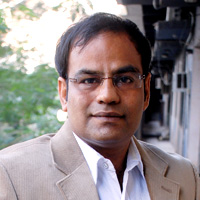
    Serving his second term as the President of PRCAI (Public Relations Consultants Association of India), Sharif Rangnekar, CEO & Director of Integral PR has over 20 years of experience in the fields of journalism, communication and publishing, having worked with organizations such as Penguin Books India, The Economic Times and The Pioneer. He attributes his knowledge and information gathering instincts to the experience he acquired working under senior journalists in the news business.


    In conversation with MxM India’s Shruti Pushkarna, Mr Rangnekar talks about his transition from a journalist to a communications professional, his views on lobbying and crisis management, on the negativity attached to public affairs, on the need for a united PR body and much more. Talking about social media, he felt that social media is just beginning to impact the PR business and there is a lot of unnecessary hype that is created around it. Excerpts:


    Q: Tell us a bit about your journey and work as the Director of Integral PR?

    A: The journey has been a little like the market, it’s had its ups and downs. One thing about PR is that if you stay connected with what’s happening around you, you constantly feel that you are learning something new. There’s always a newness attached to everything you do on a day to day basis because you are always dealing with the publics, you are always dealing with influencers such as the media, and the government.


    Q: Elaborate for us on the 360-degree approach of Integral PR and Focal Point Management.

    A: I think a lot of businesses we are seeing and a lot of change we are seeing is extremely new to India. What you are seeing today may already be old in the next two days, given the speed of technology and the impatience levels of a very young country. So in a scenario like that, your constant engagement with the different touch points that influence your business, makes focal point management – where we put the client in the centre and we look at all the constituencies around him that influence what he does, how he does it and how does he reach out to them ­- extremely important. So it’s a synchronized 360 degree approach where you are looking at government, communities, consumer groups, other pressure groups, chambers of commerce and the media. And we look at our communication outreach along all those parameters.


    Q: You have done extensive work in the area of public affairs management. How difficult you think it is for a communication professional to work in that area, given the systems in the country?

    A: I think there is a lot negativity attached to public affairs because people assume that public affairs is only government affairs but there is another element attached, which is advocacy. There is the other part of it where you are debating and discussing policy, you are discussing issues that are new to a nation. I don’t think public affairs is as difficult or as tedious as it is made out to be. I think there is a government out there, and there have been governments in the past who want to bring a certain amount of change, and in any democratic set-up there has to be a debate and there has to be a hearing of all the relevant voices. So in that sense, governments have made these efforts, things take longer than people would want them to but then that’s the nature of our democracy. I think problem arises when there isn’t transparency attached to the mandate that you are carrying out or if the benefits of a policy are limited to a very small group.


    Q: You started out as a journalist and moved into public relations later. How has the transition been for you?

    A: I have been pretty lucky in terms of the transition. I was part of a news and research firm when I moved out of mainstream journalism. My instinct for journalism hasn’t really changed, in the sense that my instinct for news and information hasn’t changed. I think that has helped me because I didn’t immediately take the first plunge into mainstream operational public relations but I had a period in between where I was consulting with Integral PR, so I got a better understanding of what a PR world does. And the training I had in journalism under some very senior journalists has helped me understand the importance of information and knowledge, which has become key to a lot of advice and counsel that one gives to a client.


    Q: Do you think PR can be more than mere press relations?

    A: It already is, and I think this impression of it being mere press relations comes from the press who only sees the PR agencies dishing out press releases or having press conferences or setting up one on one interviews. It’s the limited view that the media has of PR because that’s all they get to see, the rest of it is quite confidential. There is so much work that takes place in a PR agency, planning a brand, planning an advocacy drive, developing campaigns, doing marketing communications; there is so much of work that goes on behind the scenes including crisis communication. There is a lot more happening out there and I think if people need to know more about it, then the PR industry needs to talk a little bit more about it.


    Q: How critical do you think is crisis management to the communications business?

    A: I think it’s extremely critical. There are two parts of the business, one is building reputation and image, the other is protecting it. Crisis management is about protecting the image, it’s about protecting a business, its people, its operations, its investment. Crisis management is an extremely important part and, more so today, because there is a greater awareness level amongst the people, there are a lot of new issues out there. In a scenario like that, there is a lot of education that needs to take place.

    There are people being deprived of land, or people being moved out from places, there are people who are suddenly realizing that certain corporations may not be giving them what they are looking for, so they are taking to the streets and protesting, or going online and starting campaigns. So there are just so many situations that we are currently dealing with, and a lot of them are crisis related because it’s new to a business, it’s new to the external audience, it’s new to even the internal audience of an organization sometimes.

    So crisis management has become extremely important and if you are not aware, you don’t have that kind of experience, it’s going to be very difficult to give that kind of counsel or manage the situations for a client today.


    Q: How do you think social media is impacting the functioning of PR?

    A: I think social media is starting to impact and it’s not that it’s universally being adopted by the corporate world. I think what we need to understand is that social media at times is being drawn out of proportion in terms of its importance, because there is always an American influence there. That influence is coming from a society which is extremely wired up, a society which doesn’t engage that much with people. But we are dealing with India where there is so much of diversity, people behave differently, you still have very powerful mediums of communication which reach out to people whether it’s newspapers, or TV and more importantly, people still go out, people meet and people talk.

    So the need for the digital space is quite different and unique. Having said that, I think knowing what is happening out there, keeping your eyes on it is extremely important because still a large number of people are getting out there.


    Q: Coming back to Integral PR, what are the key areas of growth set for 2012?

    A: We are looking at advocacy, the digital space and definitely looking at the 360 degree approach, because we feel that there are more and more companies entering the Indian market or are going deep into the hinterland who will face different types of consumer groups, different types of consumption patterns, political environment, so a 360 approach is going to be extremely important for them when they want to do business in markets which they are pretty unfamiliar with.


    Q: What do you think of lobbying? Do you think past controversy has tainted the image of PR as an industry?

    A: There isn’t anything wrong in lobbying. It is used in a very negative sense and that might be because of the history that lobbying has had. Lobbying is influencing policy, today the media does it when they have debates, when they have knowledge platforms, when there are seminars and conferences held by chambers of commerce, that’s all forms of lobbying. Today a lot of corporate advertising that takes place is also part of lobbying.

    So I think there has to be a difference that people need to know and understand between fixing and influencing or creating a voice so that someone else can be heard on a policy. As far as the recent controversy is concerned, that did taint the image of the industry but I think the good thing of a lot of these kind of things that take place where the media is been bringing out issues about corruption and other related matters, is that it helps clean up the system.


    Q: What are your views on PR associations? Do you think a central body is critical in terms of representing the industry as a whole?

    A: It’s extremely important because the industry has to get together and address issues that the industry faces as a whole. This is not about business, it’s about industry at large. I think the association also needs to play a role in educating people, it has to play a role in giving a certain semblance of a structure to the industry, it has to play a role in benchmarking, so in that sense the association has to be there, to take these things out to the public, and also to reach out to the government because government is an active user of PR.


    Q: Advertising has a strong central body so it seems more united in that sense. But with PR where there are 3 to 4 bodies, it is not as united in that sense…what’s your view on that?

    A: I think there is only one PR industry association, it’s the PRCAI. You have another society which has to do with individuals working in the corporate sector, that’s more corporate communications, corporate affairs people, that’s very different from the consultancy business. So in that sense you do have two well-known bodies in this space. It does at times send out mixed messages but I think that’s why it’s important for the two to get together to not necessarily play as one but to have at least singular objectives out there. But I don’t think it’s creating a problem for the industry, just that at times people do get mixed up about who’s doing what but I don’t think that’s coming in the way of our objectives.


    Q: What are the critical areas that need attention in the PR industry today?

    A: I think benchmarking of standards of service, issues of integrity and most importantly it’s talent and the knowledge levels, I think those are two or three very key areas that most of our members are facing.


    Q: Where do you think ‘Brand India’ stands in today’s global scheme of things?

    A: Brand India is overstated. India growth story is not the China story where the government has taken the central role to bring change. Here change has come on through individual enterprises largely. So it’s not always been about public policy, and India the brand has suffered a bit over the last one year and half, assuming that there is a brand out there. There is this feeling that things don’t really move, there is a certain sense that you need a lot of patience and with other economies also crumbling at this point of time, people don’t necessarily have the same kind of patience, don’t have the same kind of funds, so in that sense the brand has suffered. But a fortunate thing that India has always had on its side is the fact that it’s a democracy, and that ultimately depending on how long you are willing to wait, things fall into place. People are beginning to understand that for a democracy like India which is extremely diverse, it requires that much more time for certain things to happen. So people are getting to know that and now they are making more informed decisions, more informed choices about doing business out here. So it’s a mixed situation right now, definitely the brand has taken a bit of a jolt in the last year and a half but that’s also because there have been no significant policy decisions for a long period of time.


    Q: Your word of advice for future PR managers…

    A: I think, just be informed. You have to love the joy of obtaining knowledge, being in the know and you have to be like a really good journalist. You need to have your information, you need to have more sources than one and you should have the ability to comprehend and express and you need to know tactfully how to manage people and work with people. Those are key to becoming a good PR executive, and more importantly, a good PR advisor.


  • Prema Sagar to speak at 20th PR World Congress

    By A Correspondent


    Genesis Burson-Marsteller announced on Tuesday that Prema Sagar, Founder and Principal, will be participating in the 20th Public Relations World Congress (PRWC) to be held Grand Hyatt,Dubaion March 13-15.


    Ms Sagar will join a venerated list of speakers including the pioneer of public relations and founding Chairman of Burson-Marsteller, Harold Burson. In a survey conducted by PRWeek, the industry’s foremost periodical, Burson was described as “the century’s most influential PR figure.” Burson, who brings over 65 years of industry leadership, is a singular figure in the world of public relations, having won numerous industry honours, supporting an array of organisations and charities, and serving as a mentor to countless communications professionals.


    “I look forward to participating in this wonderful event that draws on the knowledge and experience of so many respected thought leaders from around the world. It’s an opportunity to share and gain perspective on the latest trends and best practices from the best in the field,” said Ms Sagar.


    Ms Sagar will be joining an expert panel of public relations professionals scheduled to speak on Wednesday, March 14. The theme of the panel is Public Relations in an age of Dialogue: Opportunities and Challenges. Also invited to speak are Lord Tim Bell, Chairman, Chime Communications; Dr. Herbert Heitmann, Executive Vice President, External Communications, Royal Dutch Shell plc; Khalid Al-Maeena, Editor at Large Arab News and former head of Saudi Public Relations Company and Richard Linning, IPRA President 2011.


    Over 500 professionals from over 35 different countries are expected to attend this year’s event. Sunil John, Chairman of the PRWC Organising Committee and Chief Executive Officer of ASDA’A Burson-Marsteller expressed his excitement about the upcoming event. “We are thrilled Prema is able to join what is shaping up to be an incredibly strong lineup. I look forward to welcoming industry colleagues to this part of the world where together we can assess and discuss the myriad challenges our industry is facing, not only here in the Middle East, but around the globe,” he said.


    Genesis Burson-Marsteller isSouth Asia’s leading integrated communications firm specialising in public relations, public affairs and digital marketing services. The firm has seven offices and a domestic affiliate network that reaches over 100 cities across the country. Genesis Burson-Marsteller is known for its evidence-based strategy, strategic counseling, innovative execution and strong focus on measurement of results.


  • [PR] Our goal is to achieve standards: N Ramamoorthi

    By Johnson Napier


    While PR agencies are gradually waking up to the phenomenon of social media, there are a few like Ogilvy PR who have been steering the initiative at their workplace for quite some time now. Not surprising that the agency has recorded superior growth through its social media offering last year – a space that’s said to be growing the fastest in the industry today.


    As the agency seeks to deliver unmatched solutions and leapfrog ahead of its peers, it aims to achieve the objective by hiring talent that is ahead of the curve and by paying adequate emphasis on training. In conversation with MxM India, Mr N Ramamoorthi, President & Country Head, Ogilvy Public Relations Worldwide discloses his plans for the agency and what would be the possible growth drivers for the PR industry in 2012. Excerpts:


    How has Ogilvy PR delivered on the growth front in 2011? And, how would you rate your start in 2012?

    I joined Ogilvy PR during the second half of last year. My sense is that growth has been good at Ogilvy PR, particularly due to our growth in the social media space. I am sure everyone knows that that’s the part which is growing the fastest in the industry today. It’s an exciting time to be in the PR business, because digital is driving it to be more and more result-oriented.


    We have had a better-than-expected start in 2012. In Mumbai, we participated in two pitches – both global brands – and won both the pitches. Interestingly, we won both because we showed a good sense of how companies need to engage with their public in a changing environment. We are on our way to creating a new PR approach, and these two pitches confirmed that we are on the right track. Now it’s about our ability to execute and deliver on this approach.


    How would you assess your client roster across the several domains that you offer your services in?

    Our client roster today is a mix – spanning Digital, Corporate, Consumer and Technology clients. We have been able to gather genuine strength in some areas – especially in Consumer PR and in Social media, particularly in the B2B space. And that is an ongoing priority for us – to establish strengths in a few areas that make sense and make a real difference to clients’ businesses. For example, we do work with IBM and we win a lot of IBM’s global Best Practice awards as a team on Social media.


    How would you rate Ogilvy PR on the parameter of client retention?

    Pretty good. Our emphasis is on longer relationships – I feel that for any agency, you need to work with a client for some time; get to be a part of their business and understand their opportunities and issues better. That is when we can become true partners with a stake in client businesses and start making real contributions. This is what we tell clients.


    How do you review your practices each year so as to stay ahead of the curve on a consistent basis?

    One of our advantages here is the fact that in addition to being a part of Ogilvy’s massive reputation in India, we are also part of a regional PR powerhouse. Ogilvy PR is the No. 1 PR agency in the Asia Pacific region – and that brings with it a huge benchmarking and training advantage. You have regional leadership looking critically at your performance in each practice and evaluating whether it fits the standard of the No. 1 PR agency in Asia Pacific. These appraisals are very honest, because nobody likes a regional reputation to be let down. We are excellent in some areas and good in others.  In a couple of areas we would rather keep low till we acquire the skills.


    Staying ahead of the curve basically depends on two things – One, keep an eye out and hire talent that is ahead of the curve – you will hopefully see a lot of action from us in this area. And two, training. Since early last year, Doug Buemi, Senior Regional Executive Advisor/Asia Pacific, has been spending a tremendous amount of time in India on training. And we’ve begun to see it paying off – at the first stage, with the kind of highly improved scores we are getting in our annual employee surveys.


    We are today very serious about our PR business and about bringing it up to speed with our regional reputation.


    A lot of agencies are waking up to the concept of crisis management in India. What is the emphasis you lay on the practice of crisis PR?

    A few years ago, we planned and executed an award-winning Crisis management program for an India client. The case is now part of Ogilvy PR’s global crisis management showcase. So we have the credentials there. But we feel what’s happening today is on reactive crisis management than on proactive crisis preparation. Everything has evolved – from the way a crisis strikes to how it spreads and the media it adopts. And a reactive approach just won’t work – look at what is happening all round us, sometimes for some really well known corporate.


    Our emphasis is on proactive crisis preparation. We have a global module called Brand Shield with which we successfully engage clients and improve preparedness on responding to a potential crisis.


    What is the shift you observe in the way PR as an industry functions today to what it did, say, about a decade ago?

    The industry is evolving in terms of greater professionalization, which is a very good thing. Personally, the one thing I would wish is for the industry’s work and its value to be more noticeable and acknowledged. I read comments from quite a few PR agency heads – that the industry has significant challenges in terms of attracting talent and its ability to command fees commensurate with its contribution. Getting your value to be noticed is the best way to overcome such challenges.


    Where do you see Ogilvy PR placed in the PR pecking order amongst its contemporaries?

    There have been some surveys as well as media articles that have named us within the Top 10 in India in ranking terms. Which is good, but what really motivates is an internal ranking. Our goal is across practices, to achieve the standards set – by Ogilvy in India and by Ogilvy PR in the APAC region. We’ve begun that journey, started to see some results, and that’s the goal that is going to keep us awake at night.


    How do you think social media has impacted PR and its functioning?

    Firstly, it has brought in a new skill and specialization into an industry that is less departmentalized than others. So there is some freshness there. Secondly you have new things, new ideas to share with clients, so scope for growth at this stage is undoubted. Thirdly, it is performance-oriented and can help build long-term advocate-communities which are a big plus to how the industry shows its results. I feel the change is for the better, and not merely in business terms. Culturally this will definitely help the PR industry evolve into the same league as the other, more glamorous communication disciplines.


    Including talent, what are some of the big challenges facing the PR industry in India?

    I’ve spoken about it before in terms of what I read – talent and the average size of client retainers. These challenges can’t be overcome with a logical approach; they need to be overcome by making the industry, the personalities and their work more noticeable. Willing talent and fees will follow.


    What are your views on international agencies venturing into India? What is the future you foresee for the PR and communications space in India?

    I guess everyone is welcome! There is no doubt that PR is evolved in more developed markets; so if some of those practices can be brought into the country to everyone’s benefit, why not?


  • [PR] Crisis makes the adrenalin flow: Prema Sagar

    Video and Text By Shruti Pushkarna


    She launched her firm, Genesis in November 1992 with just one client and one colleague, and today it has grown into one of India’s most trusted communications firms in the country. In 2005, Genesis merged with Burson-Marsteller, the gold standard in public relations, to become Genesis Burson-Marsteller. Prema Sagar, Principal and Founder of Genesis Burson-Marsteller spoke to MxM India about the growth of Genesis, issues that the industry faces today and where India stands in the international PR domain today. She also feels that all PR is now actually ‘digital PR’ and integrated communication is the way forward.


    Prior to setting up Genesis PR, Prema was the Editor-Publisher of Genesis – The City Guide, a travel magazine, and co-founder of Genesis Printers. An alumna of the Frank Jefkins Institute, UK, Prema has played a leadership role in the industry as the Founding President of the Public Relations Consultants Association of India, Council Member for India of the International Public Relations Association and member of the global Board of Management of the International Communication Consultancies Organization.


    Part 1:
    [youtube width=”400″ height=”200″]http://www.youtube.com/watch?v=yIhL1PNatp0[/youtube]
    Part 2:
    [youtube width=”400″ height=”200″]http://www.youtube.com/watch?v=wy7bzvz87LI[/youtube]

    Q: Tell us a little bit about the growth story of Genesis, especially post the BM partnership.

    Genesis started in November 1992 and many years later there was an inquiry from Burson Marsteller about partnering with them. I always admired Burson Marsteller and particularly Harold Burson, so when they called us we got into an affiliation. And it was for several years that we were affiliated with them and then finally came the big question about whether they could acquire a percentage of Genesis. I was very clear about one thing, that if we have to do a sellout of the company, it had to be either 100 percent or 0. I don’t like joint ventures because there is confusion about who runs the company and who makes the decisions, and so that happened seven years ago when they took the acquisition route with Genesis. Since the last two years we are 100 percent Burson Marsteller.


    Q: Did you ever think that Genesis could lose its identity given BM’s larger than life presence?

    Not so far.


    Q: Genesis started 2012 on a high note; what are the key focus areas set for the year going forward?

    Going forward is really about specialization which is something I started a year ago. Deep specialization, whether it’s corporate responsibility, whether it’s consumer marketing, whether it’s telecom and technology, whether it’s corporate and financial, and the new area is going to be healthcare. The fact is that people want expertise, general advice doesn’t work across different businesses. And instead of having one leader in this organization, in these last two years we have created 20. The idea is to create 40 in this year. So it is about creating far more leaders who have not only the expertise and depth but they have the leadership skills and you give them the space to grow.


    Q: Given the growing clout of digital media, how does Genesis plan to integrate digital media into its campaigns? Do you think integrated communications is the way forward?

    Everybody around the world is struggling with it. It’s very clear that you cannot do PR without digital, so it is really ‘Digital PR’. So when you look at any campaign, for example in the West, 50 percent is digital part and 50 percent is the traditional media. If we look at it here in India, everyday it’s growing. It started with consumer technology where it was a definitive requirement in the campaign plan. So it’s just rolled into the PR campaign just like how from print, television became popular and now digital is popular. I think there is a lot of focus required in digital in India. There are not enough experts, there are a lot of people running all over the place but if you want to see the impact of what digital is doing, there is a journey to be made.


    Q: How critical do you think it is to have a strong central body to represent and voice the needs of the PR industry as a whole?

    I set up Public Relations Consultants Association in India (PRCAI). I think there is a leadership need where we need to get people from Asia Pacific, not necessarily from the globe but have far more interaction of what’s happening in different markets. A lot more needs to happen on a thought leadership status, that is a long journey that needs to be done. I think a lot of it is very tactical right now and I think the body needs to take it to the next level.


    Q: What’s your view on international agencies entering the Indian market increasingly?

    They are already here, they are all here, in whatever form or fashion and a lot of them are even very small. One of the international competitors who asked me that what my advice to them was when I was at the World Economic Forum last year, I said to them take one, build it brick by brick. Don’t try and do everything in one go and hire people and run after clients, you have to show value, it’s a service and that is still my advice.


    Q: Where do you think the Indian PR industry stands today in the international arena?

    It’s very interesting that yesterday we met a very big multinational company, and they rung me up this morning and said that we are confused because everyone who has presented, has presented fabulous stuff and we didn’t know that the PR industry in India was so advanced. I was worried in one way thinking that I was way ahead but on the other hand, I was very proud that somebody had to say that about India.


    Q: How big a challenge is attracting talent into the business?

    Talent is moving too fast particularly in the middle level. I think a lot of people come here to learn and when they reach the middle level, a lot of the corporates pick up the middle level people and without further training, they are corporate communications heads. It doesn’t matter because at the end of the day it is happening to every industry in India and it’s the same story internationally. So we have our own GBM School and we keep training and looking at developing future leaders. I don’t think we should worry, I think we should invest in people, in team bonding, in leadership skills, those areas definitely need us to make that investment in them.


    Q: What are the other challenges that face the industry today?

    I think it’s all going well, I won’t worry too much. We just need to stick to ‘ethical’ influencing because influencing is part of life. We all influence each other in one way or the other and I think doing it the ethical route is what we need to stick to. We are at the threshold of announcing Public Affairs Forum of India. I think this association should make that difference now in India for the future about ethical influencing. So those are the challenges, and I think that’s always the challenge in any service business, to stay the course in terms of ethical influencing.


    Q: BM is primarily known for its crisis management and political lobbying. How critical do you think is crisis PR? Also, what are your views on lobbying?

    We love the issues in crisis because it takes us away from the day to day campaign planning and execution, issues in crisis makes the adrenal flow. And we really do feel that we made a difference and that’s the challenge, whether we helped in a positive way or not. On lobbying, it’s a part of life. As CEOs say it’s not just a lobbyist, the CEO is also lobbying. Within politics there is lobbying, within the corporate world there is lobbying. Everybody is lobbying for something or the other and I think we need to confront that. It’s a part of life, it’s nothing sleazy, it’s just a word from the dictionary, it’s interpretation of how you are doing lobbying.


    Q: There are some who believe that the PR industry itself needs a bit of PR, given all the bad publicity it’s received: Niira Radia, the Times of India management saying Medianet is a result of PR folks bribing journalists etc.?

    These things happen in the service industry particularly. On Niira, who knows what was right or wrong, how much is the truth, what is not the truth, all of those things are going to never be known. But having said that it is good that all of this is coming out because I think India is in that gold rush stage and the fact that journalists are bringing these things out in the open, is really a good thing. If it didn’t happen, we would have gone the wrong way, and civil society is putting the pressure and it will change, change for the better.


    Q: Is measurement a good thing to talk about, but difficult to implement?

    Not at all, because if you meet Aseem Sood of Impact who does the measurement and research analysis, there is a way in which it can be measured. And that too a third party has to do the measurement, you can’t measure yourself. There are agreed parameters with the client, and we have something called the Service Quality Index which is put out to the clients. What they have to do is, to assess the team for the results that they deliver. And this measurement and analysis provides absolute results, so you can see whether you have achieved what you set out to achieve. You have to set a measurable goal, only then can you evaluate whether you met that goal or you didn’t meet that goal.


    Q: What’s your view on PR awards? Did Genesis participate in them?

    We try and participate, we have not been very active on that front but going forward, we are definitely going to participate more. I think it’s a good thing to have. I need to just see on what basis do the juries evaluate, is it just a discussion or the parameters are very stringent. It would be good to tie up with some of the international awards, and to learn from what they are doing and how they are doing it. I was on the jury of PRWeek Awards and I know the stringency with which they select the winners. I do believe that even they are not perfect but we certainly have a journey to make and we should develop much more stringent parameters.


  • [PR Channel] Sports PR: A new wave of specialization

    By Neha Mathur Rastogi


    For long I have had a strong belief that specialization is the only way to create true value in the often undervalued world of Public Relations in India.


    There are agencies which have gone down this route in more sound sectors like IT, Financial and even Pharmaceutical PR. But few have treaded the path of Sports. Sports PR is a qualified specialization by the virtue of the nature of work involved. You need to be spontaneous, think and write on your toes and work with a very passionate set of media, sportsmen and women as well as the all-important cog in the wheel – the corporate sponsors. Each dimension presents you with a unique challenge.


    It is common knowledge now that in the past few years, India has slowly become a global hub for sports, moving beyond conventional cricket to the recent Commonwealth Games, Hockey World Cup, F1 and several golf events being held here of international repute.


    Each of these initiatives has been made possible due to a surge in corporate support to sports. No longer is corporate sponsorship in India considered as a mere philanthropic exercise. There is a direct linkage of these associations with the brand communications strategy and how it can be best leveraged.


    The advent of such high involvement of corporates with sports has given an impetus to a latent demand in the PR industry for a specialised approach to sports. It is also great for the sporting talent in the country who also benefit from professional help in communicating more effectively with the media. We have in the past and present worked with the likes of Narain Karthikeyan and Ronjan Sodhi who are extremely talented sportsmen but needed the right kind of media exposure to be able to generate the deserved awareness about their sport and performance.


    The key in sports PR is to strike the right balance between meeting media’s expectations of receiving quality material on the sport and sportspersons, and to ensure the corporate involvement is sustained since media presence is pretty much the key measure of success.


    Sports PR is also extremely challenging since we need to always ensure the media exposure of a sportsman or woman is beneficial to them and does not in fact interfere with performance and practice.


    Having worked with media across sectors; I have also noticed a unique quality in sports media. They are all extremely passionate about the sport they cover. It is quite common for many of them to have a real background of playing the particular sport they are covering. This makes our job even tougher, since we need to understand the technicalities of each sport we represent before presenting it further to the media.


    Initially this proved to be a challenge for a person like me who has not physically played any sport at all! But the key was to learn from observation and a lot from the media and their style of writing itself. The adrenaline one feels while playing any sport pretty much rubs off on the PR around it as well.


    We need to write content in real time as the result of a day’s event is announced. There is always a Plan A, B and C basis the results and performances of the day and then it needs to be implemented from the word go.


    Our experience with reputed global organisations like Laureus and FIH has given us a taste of how international organisations have been setting standards in how one should optimise performance in sports PR. Working with Laureus in particular has been a great learning experience where a large part of their campaign revolves around generating media votes for the coveted Laureus World Sports Awards. Here the traditional PR assignment (though the word ‘traditional’ does not exist in the world of Sports PR) assumes the role of being similar to a political campaign where we meet media across different regions and sports and bring them on board to vote for their favourite sports personalities across the globe. The entire exercise culminates at the grand Laureus World Sports Awards ceremony where we accompany a group of select Indian journalists to be part of the most prestigious sports awards in the world. In the past, Laureus had a peripheral presence in India. But since the last few years they have upped their stake in the country and the exercise conducted by us is a big part of it.


    One may question a specialisation in sports PR on grounds of sustainability and it being a more project or event driven model. There is some truth in this, where my company has also borne the challenge of seasonality in the world of sports. It takes a lot to convince any sports property or association of the benefits of long term and sustained communication instead of a burst purely around the culmination event.


    Some brands, however, have discovered the benefits of this including the Women’s Golf Association of India, who have one key event at the end of the year but have decided to invest in PR for the association and Indian women golfers across the year which then builds up towards the Women’s Open. The media by then has enough exposure and interest in an otherwise niche area of reportage.


    The other way we have sustained our presence in the area is via strategic partnership with reputed sports agencies and associations which work with several events and sports personalities across the year.


    To conclude, sports PR is fast emerging as a beneficial specialisation for us to have honed over the past few critical years of the growth of the sports industry. There is tremendous potential and power in what PR can truly do to add value to sports in India. Beyond commercial success, the credibility attached to a job well done in sports PR is what keeps us going.


    Neha Mathur Rastogi is Founder & CEO of WordsWork.


  • Corporate Voice|Weber Shandwick wins highest number of accolades at e4m PR awards

    By A Correspondent


    Corporate Voice | Weber Shandwick (CVWS), India’s most awarded PR consultancy, took home more awards than any other consultancy or corporation at the exchange4media group’s Indian PR and Corporate Communications Awards again this year.


    The awards, organised by exchange4media, are the most extensive awards to recognise the contribution and success of the PR industry inIndia. CVWS shared recognition with clients for the following campaigns:


    • Hero MotoCorp Launch – Hum Main Hai Hero, Best Use of Public Relations by Private Sector Entity (Agency)
    • Gillette ShaveIndiaMovement, Best Continuous PR Campaign
    • Honda Brio Launch ‘Made forIndia,’ Best Use of Media/Marketing/Consumer Data for PR Planning/Strategy


    Additionally, Atul Ahluwalia, president, CVWS was named PR Professional of the Year (Agency). Tim Sutton, chairman, Weber Shandwick, Asia Pacific, delivered the keynote address to a large audience representing leading corporates and public relations consultancies in India.


    Speaking on the occasion, Shiv Reddy, CEO, CVWS, said: “Another year of recognition and accolades from our peers and clients in the industry leaves us proud, humbled and determined to innovate and succeed. We are grateful to the jury, our clients and the CVWS team.”


    Atul Ahluwalia, president, CVWS, added: “For seven consecutive years now, CVWS has established itself as the most awarded consultancy of the country. This continued success is wholly attributed to our ability to consistently re-invent and innovate as well as to the long-standing relationships with our clients.”


    Corporate Voice | Weber Shandwick (CVWS) is a  joint venture company owned by Weber Shandwick, a unit of The Interpublic Group of Companies, headquartered in New York, USA, and MAA Group Holdings headquartered in Bangalore, India. Incepted in 1992, the firm has grown to become one of the largest and the most awarded consultancies in the country. CVWS is a founder member of the Public Relations Consultants Association of India (PRCAI).


  • [PR] We’re still a bunch of pimps: Vinod Nair, Clea

    There was a time when a client didn’t have to think twice when it came to selecting an agency of choice to handle their PR account as there was only a single name that was a dominant force then – Clea PR. That was about two decades ago. But much has changed since then and the PR industry has undergone a tectonic shift that has given rise to newer and challenging agencies offering a range of solutions. But even now Clea doesn’t hesitate to go on record saying that most of the CEOs of today have been former trainees of Clea. Such has been the inspiration that it has cast on the sector over a period of time.

     

    But times have changed and after a brilliant run the agency has pulled back and is going slow with its run in India. But the differentiation still exists, as Vinod Nair, Chairman & Managing Director of the agency assures MxM India. In conversation with Johnson Napier of MxM India, Mr Nair opens up on the agency’s past, on the state of the industry today, on the issue of talent, on his new venture and forecasts his mantra for the future. Excerpts:


    Q: Clea has had a spectacular past so to speak, but how would you sum up the agency’s standing in the marketplace today?

    Clea PR started as a division of Clea Advertising and Marketing. Over a period of time we built it into one of the largest PR agencies in the space. In those days, even though there were many other PR agencies much older than us we were the ones that were responsible for bringing in a “planned approach” to the business. Also, we were the ones that started the concept of Brand PR in this country. We were handling some of the biggest brands at that time and slowly as the company grew bigger, I bought over the company from the promoters and moved out from the fold. We are into our 17th year right now. In due course of time, after having attained size and numbers I guess I lost interest and the business became a bit boring for me. So we decided to pull back and thereby cutback on our size and clients as a result of that.


    Q: What were the factors the led you to pull back and move away from the authoritarian grip that you once commanded in the space?

    I don’t think that PR has progressed the way I would have liked it to progress. As a tool being used by a marketer or as a corporate strategist, we are still media release peddlers. I call ourselves a bunch of “pimps” who are still calling up editors and pushing for a press release or some interview to be featured. Also the fact is that Clea was also the place that every single person who is heading a PR agency today has been a former trainee. What was happening was that the knowledge that one had, which was the USP of a planned approach of how to do brand PR etc – once these guys started going out they started doing it on their own accord. What I observe from the client’s end is that when it comes to paying a PR agency everybody starts shitting bricks. I stopped working for a paltry Rs 50-60,000 a month almost a decade ago and today, you still have big agencies who continue to charge that rate. Also, what has been happening is that anybody who realizes that he is good in this space, they venture out and start their own business. So one witnessed a sudden burgeoning of 1-man, 2-man PR agencies in a short period of time. At last count, there are more than 2000 PR agencies existing in India today. This sudden mushrooming of agencies has led to undercutting of rates between agencies.


    Q: While such is the commotion that exists in the marketplace, what is the equation that Clea shares with its clients?

    With Clea, you’ll see that the average age of my client is minimum eight years. Some have been around for even a longer time. So we have clients to whom we have been delivering quality services day in and out. Therefore we have never felt the need to go out and compromise retainer fees with clients etc. In fact I must be one of the few agencies that actually reject business. Also, we were amongst the first that actually started telling clients to pay us for taking part in a pitch and also insisted on asking for a retainer budget that matched our expectations. What was happening is that despite all the efforts that were being put in all it boiled down to was what was the rate that was going to be charged. That was one of the reasons that I cut down on chasing clients aggressively.


    Today the effort that we are putting in is by providing value-added services to our clients. Today we handle over 100 brands and for most of them we are part of the marketing planning team. So before a marketing plan is in place and a company finalises it, we are consulted for it. There are many other innovations that we do too, but that doesn’t mean that we ignore traditional media; we also do that and it will continue to remain integral in our plans.


    Q: As an agency, how are you scattered throughout important markets across India and which are the disciplines that are in hot pursuit by you?

    Our key branches are spread across six cities and for the rest we use stringer networks. The other advantage that we have is that we have 30-odd branches around the country where we have our own people. So they are involved in a more personal way than most other agencies do. Today, 90 per cent of our clients are brands. One of the trends that has caught the fancy of clients is e-tailing. We’ve bagged four new e-tailing clients recently and I think that is going to be the game-changer as far as PR is concerned. While there are many clients who already offer this service, the difference can come in the marketing and positioning strategy.


    Q: While e-tailing is a burgeoning trend what do you gather from the impact that digital is casting on the medium of PR?

    Around five years back when digital hadn’t become as big, I had started Clea Digital that was based out of the US. We were able to offer our clients facebook and twitter strategies even before it was known here. But I think that digital is a big bubble. Let me tell you why. If you see today, there are two professionals with whom you can never argue: doctor and lawyer. That is because you are scared of them. And when you are afraid of something you are willing to pay anything. And so, social media is just a hype today. Nobody understands the medium; suddenly a viral becomes a hit and everybody wants to imitate that instantly – that is not possible. I genuinely believe that the medium is just hype and I do not think it is delivering the kind of value that it should. Today I could easily get about 10 clients who could pay me loads of money to do nothing except set up a fan page, do some mobile blogging, do tweets, some youtube and that’s it. That’s not what it is really about; it’s got to do more about analytics etc.


    Q: Tell us a bit about your new venture Talentube?

    Talentube.com is going to be India’s largest community of talent. So whether you are a singer or an actor or a dancer or a lyricist etc you become a part of the community. On the other end, I have tied up with some of the biggest directors in Bollywood like Sudhir Mishra, Mahesh Manjrekar etc and then we will produce movies. We will be employing talent only from this community. We’ve already got $12 million funding for the first two years. The project will be officially flagged off in the first or second week of April.


    Q: What according to you is the solution for the rising attrition rate that currently confronts the medium of PR?

    Talent is one area that I consider Clea to be heads and shoulders above everybody else simply because we have never poached anybody from any other PR agency ever. Whereas every single employee from Clea has been poached by other agencies. Therefore I keep making this statement that 9 out of 10 CEOs of PR agencies today have been trainees from Clea PR and almost all of them have come from non-communication backgrounds. Clea has seen attrition that you cannot even imagine. That’s because the training programme by Clea is considered the best in the industry. Since our inception, more than 3000 people have gone through then annals of Clea and most of them are leaders in the industry today. So Clea has always seen attrition and today if I require say 10 people I hire 25 people because I know half of them will quit because they won’t be able to handle pressure and some even may be useless. So I know that by the time the churn happens, I am still left with around 8-10 and these will be effective for me. At Clea, there has never been a botheration at the top level; they have been with me for a very long time. It is only at the mid and entry level that we face attrition issues.


    Q: To what do you attribute the highly disorganised state of the industry?

    I keep saying that if you pay peanuts you will get monkeys and the other thing is that the client deserves what they are asking for. But if you decide to go to a one-man army because they are charging some 10 per cent lesser than the others then why do you expect to get miracles from them. It is actually the fault of the bigger agencies because they haven’t been able to address this issue. In fact every industry across the world goes through a consolidation phase but PR industry has never seen that happen. I’ve never seen bigger agencies buy out smaller agencies like the other sectors. When it comes to selling they quote over-the-moon rates; each one of us is aggressive, over-confident, self-assured and egoistic people.


    Q: What is the growth that you are looking at as you move forward?

    My growth every year is only going to be between 18-20 percent. I want to beat inflation. That’s been my growth for the past seven years. At the earlier stages we were growing over 100 percent and above but after I pulled back every year it’s going to be nothing more than 18-20 percent.


  • Rohit Samarth joins DDB MudraMax as Senior VP, Terra

    By A Correspondent


    Rohit Samarth has joined DDB MudraMax as Senior Vice President. He will head the operations of Terra, its rural marketing agency.


    Mr Samarth comes from Percept Out of Home, where he was the business head of its rural vertical responsible for all its communication and marketing strategies. With more than 25 years of experience in the industry, Mr Samarth has had the opportunity to work with some of the largest and the most recognized brands in the country.


    He started his career with Nestle India, and later worked with various other companies like Media Workshop India, Amar Ujala Prakashan, India Infrastructure Publishing, UCP Integrated Marketing Solutions, and Federation of Indian Chambers of Commerce and Industry (FICCI) and Linterland.


    Commenting on this new appointment, Mandeep Malhotra, President, DDB MudraMax said, “I am excited for the positive change brought into the BOP offerings at DDB MudraMax. Apart from great knowledge and experience, Rohit brings with him passion and energy to take the existing momentum of the team and the work to a whole new level.”


    Commenting on joining DDB MudraMax, Mr Samarth said: “I have some very exciting plans in mind and the focus this year will be to make DDB MudraMax a serious contender for the top spot in the BoP space. Development of strong teams in all disciplines is another of my initial focus areas. I have no doubt that Terra will grow to be one of the most preferred and specialized rural communication solutions provider within the next two years.”


    The DDB Mudra Group, a part of the Omnicom Group, is India’s largest integrated marketing communications and services network. The group comprises eight agencies – DDB Mudra, DDB MudraMax, Mudra, DDB Health &Lifestyle, RAPP, Tribal DDB, Water and Maatra.


    The DDB Mudra Group utilizes its deep understanding of Indian consumers, brands and media and a customized and collaborative approach to deliver inventive business solutions that help clients build valuable and enduring brands in India.


    DDB Mudra Group operates out of its offices in 15 leading cities and is represented in more than twenty other locations, giving it a comprehensive presence across the length and breadth of the country. It has more than 1,100 employees and a reach across 1,75,000 villages, 4000 towns, 3500 schools and nearly 7 million students.

    In 2011, DDB Mudra Group was India’s most awarded agency network at Cannes, Spikes and Abbys among others.


  • WordsWork bags PR mandate for PHD Chamber of Commerce & Industry

    By A Correspondent


    WordsWork Communications Consulting has won the public relations mandate for PHD Chamber of Commerce & Industry, a proactive and dynamic multi-state apex organisation working at the grass-root level and with strong national and international linkages. This was the result of a competitive pitch to manage the communications activities of the the PHDCCI across the 12 states that they represent since 1905.


    The Chamber acts as a catalyst in the promotion of industry, trade and entrepreneurship. PHD Chamber, through its research-based policy advocacy role, positively impacts the economic growth and development of the nation.


    Speaking on the partnership, Neha Mathur Rastogi, CEO & Founder, WordsWork, said: “We always choose to associate with clients that are regarded as the trendsetter in their respective field and this association with PHD Chamber of Commerce & Industry gives us immense pride. Our core value is to run intelligent campaigns that deliver value for our clients. The PHDCCI is a prestigious account for us and we are looking forward to deliver a valuable campaign for them.”


    Established in 2009, WordsWork is a young, dynamic and entrepreneurial communications advisory firm.  The organisation’s client list is spread across industries, be it sports to lifestyle to corporate. These include names like Thomson Reuters, The Netherlands Embassy, Monnet Ispat & Energy Ltd, IWC Schaffhausen, Laureus Sports for Good Foundation, German National Tourist Office, Interarch, Hero Women’s Indian Golf Open, Narain Karthikeyan (F1 Racer), and Yo!Chinaamong others.


  • [PR] We challenge to innovate & thereby set trends: Khalid Jamal

    It ain’t a small agency but its ’boutique’ way of doing PR, where it goes beyond the obvious towards building, managing, reinforcing and protecting reputation is what endears the agency to its clients and goes a long way in laying solid foundation for a long-term partnership. Much of the agency’s good showing could be attributed its leader Khalid Jamal.

     

    Mr Khalid Jamal possesses close to two decades’ experience in Reputation Management having handled over 300 key clients drawn from across all sectors. He has also been awarded numerous awards by IMM and PRSI for innovative work done by him.


    In an interaction with MxMIndia’s Johnson Napier, Mr Khalid delves on Orion’s journey in the country thus far, on the two units that have been delivering top-notch growth for the agency and also scrutinises the current state of the PR industry inIndia. Excerpts:


    How has Orion PR delivered on the growth front in 2011-12?

    The year 2011-12 has been excellent for Orion PR as we doubled the growth digit compared to previous year. Two verticals which contributed to this growth are: Crisis Management/Issue Advocacy Practice and Social Media/Digital.


    How would you assess your client roster across the several domains that your offer your services in?

    We work with a number of clients from established Indian corporates to MNCs. However, the new users of PR (the growing mid-level companies and large SMEs) are going to drive PR more significantly than the good-old PR users, and hence, would be our focus for growth.


    How would you rate your agency on the parameter of client retention?

    Performance-delivery on each account at Orion PR is well-above average in the industry. However, one has to be guarded against the general tendency to compare ‘PR account retention’ with that of ‘advertising account retention’; the two are different disciplines; hence the parameters to be applied have to be different, contextually. I would imagine that this aspect should be compared with that of Management Consultancy firms, where the periodicity of the accounts are determined by the scope of the assignment and the clients’ needs.


    How do you review your practices each year so as to stay ahead of the curve on a consistent basis?

    You have to feel the pulse of the clients’ businesses and its operating environment and challenge yourselves to innovate and align with clients’ interests. If this is followed in spirit, there is all the reason why you will be on cutting-edge. At Orion PR, we constantly challenge ourselves to follow this operating philosophy: challenge to innovate and thereby set trends.


    What is the shift you observe in the way PR as an industry functions today to what it did, say, about a decade ago?

    Absolutely nothing. It is what it used to be. However, you will see a change effecting over the next few years as the old give way to the new in mind and material; as the old-gen of PR moves over and the new gen takes over. The good news is that PR has started attracting some real good and fresh talent, and not the second shifties as it used to happen till recently. This is a significant development in the Indian PR industry and I hope it continues for good.


    Where do you see Orion PR placed in the PR pecking order amongst its contemporaries?

    I do not believe there is such a thing as pecking order in PR. Unfortunately, it’s an industry which is famed and defamed by a few big mouths who bask in their own wishful thinking and ‘number crunching’. That’s fine if they get their share of five by one cc quote with a mug shot. It’s nothing beyond that. Any service which is driven by the practioners’ expertise can’t be, and shouldn’t be, compartmentalised into the so-called numbers and pecking game. By the way, the whole process of defining a pecking order of the Indian PR firms suffers from the lack of credibility and a credible process. So lesser said the better.


    As for Orion PR, we are distinguished by our rich experience and expertise which attracts our clients, especially for high-end strategic PR campaigns, which remain our focus area, and not the vanilla services.


    How do you think social media has impacted PR and its functioning?

    Orion PR has a dedicated social media division called Orion Digital which has done some path-breaking work. We do not pay lip-service to digital, but rather produce integrated campaigns which make measurable contributions to clients’ communications initiatives.


    We have invested significantly in social media and digital for over the last three years which has begun paying dividends only now.


    However, if you talk of overall PR industry scenario, Social Media hasn’t impacted PR as much as it should have. Clients still have to make a choice between the digital wings of ad agencies and PR agencies; and this is where the dichotomy lies. PR agencies have a lot of catching up to do in this domain to be able to compete with the digital outfits of ad agencies. However, with the growing online activism, PR agencies will be advantageously placed to handle social media/digital.


    Including talent, what are some of the big challenges facing the PR industry in India?

    I don’t think ‘talent crunch’ is a big challenge today. With the infusion of fresh talent into PR and with a little reorientation of the pool, this problem, by and large, could be resolved. The real problem of ‘talent’ is at the senior level like any other industry, and there is no quick-fix solution for this. As the industry matures, this issue too will be naturally addressed.


    The other problems facing the PR industry are:

    1. Lack of understanding of its functioning by majority of clients

    2. ‘Cottage industry’ type of internal functioning, and haphazard growth

    3. Lack of consistency and respectability

    4. Lack of organised industry forum

    5. Ethics


    What are your views on international agencies venturing into India?

    It’s good as long as it adds value in terms of learning and development. Else, it’s just another dot on the map of their reach.


    What is the future you foresee for the PR and communications space in India?

    PR inIndiawill see exponential growth in strategic services for which very few agencies are prepared or are ready in terms of expertise. The vanilla PR services will see a solid decline, and I fear, would continue to be the cause as to why PR is yet to get its due recognition. I hope we will be the profession who didn’t miss the bus!


  • Burson-Marsteller releases list of the most influential political voices

    By A Correspondent


    Burson-Marsteller, a leading global public relations and communications firm, on Monday released a list of the top 10 most influential political voices on Twitter inIndia. This list was developed as part of a global research study- G20 Influencers – that named the 200 most influential political voices on Twitter across the G-20 nations.


    G20 influencers is a study conducted by Burson-Marsteller, a leading global public relations agency working with Klout, the social media analytics company. The study aims to identify the ten most politically influential people on Twitter in each country of the G20. The study measures influence by using a tweeter’s Klout Score. Burson-Marsteller created a list of over 900 politically influential people on Twitter across 26 countries. This included politicians, journalists, bloggers, public affairs specialists, NGOs, and industry and trade associations. The data used for the study was taken in March 2012 based on activity over a 90-day period.


    The list of the top 10 political tweeters was determined using data from Klout (klout.com), the standard for influence. Klout analyzes engagement across social networks and creates a Klout score, based on this data to help users understand and unlock their influence.


    Burson-Marsteller’s global public affairs and digital consultants drew up a list of close to 1000 people on Twitter who are politically influential in the G-20 nations. Klout then assessed and scored them against its influence metric, set on a scale from 1-100, measuring influence based upon a user’s ability to drive action.


    The ten most influential Twitter accounts inIndiaare (alphabetically):


    1. Kiran Bedi – @thekiranbedi

    2. Anand Mahindra – @anandmahindra

    3. Narendra Modi – @narendramodi

    4. Derek O’Brien – @quizderek

    5. Vir Sanghvi – @virsanghvi

    6. Jonathan Shainin – @jonathanshainin

    7. Digvijaya Singh – @digvijaya_28

    8. Dr. Subramanian Swamy – @Swamy39

    9. Sushma Swaraj – @SushmaSwarajBJP

    10. Shashi Tharoor – @ShashiTharoor


    “The G20 study is representative of how social media is an increasingly trusted and utilised platform for shaping public opinion here inIndiaand around the world,” said Rahul Sharma, president of Genesis Burson-Marsteller’s public affairs practice. “Citizens are not just seeking new information, but looking for a forum through which their voices can also be heard. Twitter is definitely becoming a preferred medium for delivery and discussion of new ideas, policies and whatever else that is the shaping the political and social landscape.”


    The study found that the top political tweeters inIndiaare politicians, journalists, bloggers and campaign advisors. The study found that over a 90-day span these influencers: received an average of 28,110 re-tweets; received an average of 24,600 mentions and had an average of 337,964 Twitter followers.


    The other countries covered in this study include Argentina, Australia, Brazil, Canada, China, France, Germany, India, Indonesia, Italy, Japan, Mexico, Russia, Saudi Arabia, South Africa, South Korea, Turkey, United Kingdom, United States and the European Union (including Latvia, Netherlands, Poland, Portugal, Spain and Sweden).


    Burson-Marsteller, established in 1953, is a leading global public relations and communications firm. It provides clients with strategic thinking and program execution across a full range of public relations, public affairs, reputation and crisis management, advertising and web-related strategies. The firm’s seamless worldwide network consists of 69 offices and 80 affiliate offices, together operating in 107 countries across six continents.


  • Emerging markets offer potential that we digital natives thrive on: Amanda Richman

    It has been a dream run for Starcom MediaVest Group that bagged a series of client wins in 2011-12 and saw it post commendable growth numbers for the network. Of the many divisions under the network, probably the unit that surprised one and all with its performance was its digital arm – SMG Digital that managed to deliver 200 per cent growth in 2011. according to amanda Richman, President – Digital, MediaVest Worldwide & Digital Lead for Emerging Markets, Starcom MediaVest Group, that’s an impressive milestone, and a testament to the digital talent and the focus of the new leadership team at SMG.


    On a short Indian sojourn, Ms Richman took some time out of her busy schedule to reply to MxMIndia’s Johnson Napier’s questions about the strides made by the digital agency in India and around the globe. While India continues to deliver spectacular growth, Ms Richman asserts that the next phase of digital growth will come from Greater China,Russia, as well as the Middle East and Central Europe.


    It’s the size and scale of the BRIC markets that offers unprecedented growth opportunities for SMG, as well as its clients, she affirms. Ms Richman also delves on how social media will change the advertising ecosystem going forward and what is SMG Digital’s plans for India.


    as you continue to deliver above-par growth in the realm of digital, could you elaborate on a few eminent strides that MediaVest has managed to gain under your leadership over 2011-12?

    Our focus on designing and delivering human experiences as an agency puts digital at the core of what we do, and demands that we build that skill set across the organization.

    From developing connection strategies based on digital behaviours, to integrated video buying approaches, to building capabilities in social, mobile, content and analytics, digital growth has been a singular focus of the entire agency, and that drives momentum.


    How would you sum up the growth put up by the digital division here in India?

    SMG Digital delivered 200 per cent digital growth in 2011 – that’s an impressive milestone, and a testament to the digital talent and the focus of the new leadership team.


    How do the other asia Pacific countries stack up against India vis-a-vis harnessing the digital tide?

    Each market has its own success stories, driven by our client’s objectives and digital appetite. What’s unique aboutIndiais the focus on cost and scale – the constraints of investment can lead creative innovation in how we build and scale ideas more efficiently.  There’s also an inherent creativity in this market linked to such a strong appreciation for technology. This networked mindset inIndiacan see new possibilities in both, the art and the science of digital.


    How would you describe the agency’s growth in your global markets, including the US, Europe and elsewhere?

    Digital growth continues to be strong in our core markets, driven by our integrated approach. When you start with human insights at the core, and build out experiences based on creating value, it naturally leads to opportunities with social, content and mobility, and we’re seeing tremendous growth in these three areas. However, it’s a more measured growth in theUSandWestern Europe, whereas the emerging markets offer that unbridled enthusiasm and potential that we digital natives thrive on.


    Despite the current digital boom being witnessed in India, the country is still in its infancy, gripping with the sudden demand for the medium. What are the pros and perils of being a young, yet highly sought-after, market?

    Hyper-growth, and the resulting chaos, creates a climate of intense creativity – and we’re clearly in that phase of opportunity inIndia. However, there’s a risk that this energy is expended on chasing apps and shiny objects, rather than building a digital foundation. It’s important during this early stage that we balance the passion for innovation with the need to execute the ‘brilliant basics’, train our talent to have a digital mindset over skillset, and find solutions that will grow our clients business – not simply check the box on doing digital.


    Will social media emerge out of the shadows of the web and take on a singular role of being a popular medium for advertisers?

    Social media is more than an ad opportunity – social is human behaviour that will increasingly power the web. Paid advertising is one part of the experience, but the real value is in understanding the human interactions and conversations, so that marketers can learn and engage in ways that provides real value in their consumers’ lives. That’s the real opportunity with social.


    Of the three screens, television, web and mobile, which would be the most definitive in terms of ROI and reach for clients?

    We approach the ROI challenge uniquely for each client, based on their objectives and audience goals.  While television is still a great reach driver with strong ROI, online has proven to deliver better ROI for several clients and targets, and mobile is quickly gaining ground as both a reach, engagement and acquisition tool vehicle.


    Despite the huge buzz, spends on digital are still abysmally low, atleast here in India. What do you advocate the industry needs to do to attract more revenues?

    In theUnited States, we faced the same level of resistance in the early 2000s, as marketers questioned the value of digital relative to traditional, proven media.  The shift to Internet being the #2 media came thru a series of wake-up calls:

    • For performance marketers, search and performance display was proven to be high-performers, resulting in ‘digital first’ planning, and quickly setting the pace for double-digit investment.
    • as time spent online exceeded time spent on most other media, brand marketers realized they needed to follow the consumer across all digital touchpoints.
    • as brand marketers began to engage with real dollars, they quickly realized how digital not only offered unique targeting opportunities, but also could complement v/s compete with their traditional media investments, serving as an activator towards the sale. The era of integrated planning took hold.
    • The advent of video, social and gaming demonstrated an unprecedented level of engagement that couldn’t be delivered elsewhere, leading to greater investment in creating digital content.
    • as mobile and smartphones usage increased, it was clear that digital was an always on, always connected medium that warranted deeper investment and experience design across all three screens.


    Which are the new and emerging markets being tapped by your agency for the future?

    Our emerging focus spansIndia, Greater China,Russia, as well as the Middle East andCentral Europe.  Clearly the size and scale of the BRIC markets offer unprecedented growth opportunities for SMG as well as our clients.


    As you move forward, is there a vision that you’d want the agency to abide by as it prepares to take on the future?

    Our dream is to grow our clients’ business by transforming behaviour through uplifting, meaningful human experiences. That vision transcends digital and market boundaries, and enables a level of creativity and commitment that motivates our entire organization.