Though not much has changed in terms of the ground level conditions that were actually meant to catalyse the growth and prosperity of our Indian PR and Corporate Communication Industry, I think the story lies in the fact that despite no change at the ground level, our PR Agency and Corporate Communications army has still managed to pull off a wonderful turnaround and facelift for the Industry.
If you look back, both the Corporate Communications professionals as well as the PR Agency service providers have achieved various small and big milestones that have helped move the needle!
Below is a list of 10 Key Achievements of our Industry:
1. Better placed in establishing Accountability & ROI: For a function that has always struggled to establish REAL value, it has proactively come a long way in establishing its effectiveness through right measurement, research and higher dependency on data. What started as a function that was all about news management, volumes of news garnered, equivalent advertising value and negative news nipped, today, given its aura, this function literally starts and ends each day with Scientific Measurement and Research data.
2. Attracting larger budgets: The above point is encouraging internal customers to invest more on this function.
3. Expectation beyond Media Relations and News Management: Slowly, but steadily, the PR & Corporate Communications function has been able to establish that their skill sets is actually into Brand Management and not just News Management.
4. Managed a seat at Strategic/Board Meetings: Given all this, the PR & Corporate Communications professional has carved a well-deserved seat for itself in Strategic or Boardroom discussions.
5. Well acknowledged Employer Category on Job Portals: There was a time when not all job portals will separately acknowledge and highlight PR & Corporate Communications as a potential employer category. Today, it is right there!
6. Participation in Plenty of Global and GloCAL Gratification platforms: Our Industry needs gratification. Today, there are plenty. Not only are Global Awards or Forums reaching out to our market, but also, there are interesting local Awards and Forums that are popping up.
7. A challenging contender of Social Media management: Our Industry has done an excellent job in capturing the title of being the key custodian of Social/Online Media management. Kudos to the PR Agency and their Client Contacts for doing a fantastic proactive job!
8. A wonderful samaritan during crisis: As a country or market that is abuzz with Crisis, management of Brand Crisis comes as second nature for our Indian PR and Corporate Communications professionals. Cost wise, effectiveness wise, understanding of stakeholder management, all these benefits come easy within our Industry!
9. Key Tool for Reputation Management: CEO and CXOs have realized the potential of Brand Reputation and what it can do with their own career graph! No wonder, their dependency on PR & Corporate Communications to manage Brand Reputation is acute!
10. Better Supply of Talent: On the supply side, educational institutes and academia are warming up to the idea of opening up institutes or adding special course curriculums that will ensure a supply of well-trained freshers ready to join the Industry!
PRAXIS, the annual conference of Public Relations and Corporate Communications professionals in the country, is holding its sixth edition starting today. What started as an experiment by a keen PR agency professional and likeminded friends with the blessings of biggies in the business, is today being billed as the biggest PR and corp comm convention in the world.
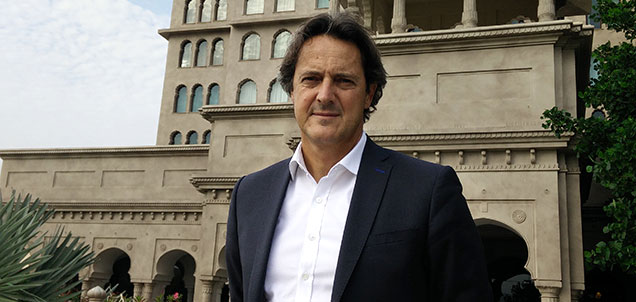
In between running around ensuring all the arrangements are done with the finesse of an international event, founder and curator Amith Prabhu took time to ask the questions.
It took some convincing to get Prabhu to speak since he prefers to stay in the background, and have some young professionals take the lead in fronting the effort.
A disclosure before you read this. MxMIndia has been an early and active supporter of Praxis from even before it was launched. In fact we like to believe (perhaps incorrectly) that it was an article on MxMIndia by Prabhu post a dismal showing by Indian PR agencies at Cannes that led to the birth of the idea. This year too our support stays. However, this support will not influence our coverage on the event, if any.
So we are on the sixth edition of Praxis. As we get set for Praxis 2017 to take off in Jaipur, your sentiments having scripted the journey?
I am in disbelief that we have come this far. What was planned as a one-off as grown on to become an annual signature event in the calendar of the discerning Indian professional. The support from the fraternity is what makes it what it is. I feel humbled to have been the catalyst of this movement.
Everything as per plan?
So far so good. This is bigger in every sense. 12 international speakers. 606 delegates. 350 hotel rooms. 36 commercial and brand partners. It could not have been better than this. The theme Beauty of Communications – Integration of Content, Community and creativity will come alive.
So what according to you makes Praxis, the world’s largest PR congregation? Surely the PR fraternity elsewhere in the world is larger…
I have been to some of the biggest PR summits in the most evolved markets including those in New York, Chicago and Miami. They have about 300 people who come for a day or two, stay on their own. Here, we offer the entire package in an offsite location where every delegate comes from outside the host city. More than 50% stay in the same hotel. The summit includes two dinners, a live concert – it is an entire package at a price that is a fraction of what global conferences are priced which include just two lunches.
The highlights this year?
Everything hovers around six for the sixth edition. 6 keynotes, 6 panels, 6 special sessions. We have managed to bring 6 Global leaders of which four are CEOs of some of the largest PR firms. We will also bring out the list of the Top 100 important professionals ranked by the editorial team of Reputation Today – a magazine that was born out of Praxis. The Raghu Dixit Concert will be a major draw. All in all, it will be a memorable experience created by a three member team supported by a dozen volunteers.
A word to those who’ve missed out this year… why they shouldn’t have missed?
Every leading PR firm in the Top 30 will be there. We do not repeat speakers so some who have spoken in the past do not choose to come because they feel they know it all and we respect that. A few who won’t be here and had registered are cancelling plans due to personal reasons. Those who missed out have forfeited a great opportunity of learning and meeting 600+ professionals under one roof over two days.
And PRAXIS 2018… where will it be?
As per our policy of rotating the venue to different zones without repeating the city, we are likely to take it to Hyderabad. We are tentatively aiming for September 28 and 29 in 2018. We have already opened registrations at bit.ly/PRAXIS2018 at a 70% offer for this week.
Image taken from a Facebook post by On Purpose Consulting
By Rahul Chandawarkar
When Guillaume Herbette, Global CEO, MSLGroup spoke passionately about how augmented intelligence, virtual reality and artificial intelligence were slated to become part and parcel of the public relations world in the not-too-distant future, he sure had several practitioners in the audience chewing their finger nails in anxiety at Praxis 2017, the premier national PR conference in India held in Jaipur on September 15 and 16.
A sentiment which was clearly visible when Herbette’s post-talk interviewer asked him nervously: “If what you say is true, what will happen to all of us?!†The unruffled Herbette simply said: “We need to relearn and accept this reality. Artificial Intelligence is the next big revolution waiting to happen. We better get ready for it now. â€
Key Takeaways:
1) Artificial Intelligence is the next technological revolution. The Indian PR industry must embrace it.
2) Video experts, computer engineers and social scientists will be part of future PR teams.
3) Trust, faith and integrity must remain the cornerstone of every PR firm.
4) There was no single brand in the world which enjoyed complete trust.
5) PR managers needed to possess the combined abilities of lobbying, media relations and storytelling.
Not just Herbette, but many of the international speakers who spoke at the event this year touched upon the topic of artificial intelligence and the advent of high-end technology in the world of public relations. To a large extent, Praxis 6 will be remembered for throwing the spotlight on emerging technologies like AI in a very big way.
Herbette in his interesting presentation termed the digital revolution as the first technological revolution and explained how digital influencers had replaced traditional mainstream journalists as third party endorsers. He also shared a statistic on how people are spending as much as 45 minutes every day on the internet. “The capabilities and importance of these digital influencers in communications and marketing is exploding,†Herbette said.
Speaking about artificial intelligence (AI), Herbette explained how PR companies would need to embrace this technology very soon. “AI best combines the best of science of technology with storytelling. It will change the way we work,†Herbette said. According to him, the AI business is expected to grow by 300 per cent worldwide in 2017-18 and create business worth $ 1.2 trillion in the coming year. “Most of this business will go to companies who use AI, Big Data and the Internet extensively,†Herbette said.
Earlier in the day, Jose Manuel Guardado, chairman, Global Alliance speaking on the topic of ‘Challenges to the PR Profession’ also touched upon the topic of artificial intelligence and virtual reality. “The rise of automated communication and sharing experiences with the use of virtual reality is fast gaining ground,†Jose said. According to Jose, PR managers today would need to improve their technological, strategic planning, written communication and social media skills rapidly to stay in the game.
The technological thread was also visible in Ketchum Global CEO, Rob Flaherty’s talk on ‘What it takes to be a fearless and fast communicator’ on Day One. Highlighting the importance of social media and how it had become a game changer, Flaherty said: “Today, our friends send us news on social media faster than the television. We do not have to find the news. News is finding us.†Driving home his point further, Rob shared a statistic which stated that 60 per cent of all Facebook stories in India in 2017 were in Hindi and not English.
According to the Ketchum boss, PR managers will need to embrace high-end technology. “We would need to hire video experts, computer engineers and social scientists on our teams,†Flaherty said.
Abhijit Bhaduri, the author of ‘Digital Tsunami’, who spoke on Day One also spoke on how present-day jobs were being shaped by technology and human longevity. According to the digital guru, retaining one’s job in a fast changing technological world was becoming a challenge. “Professionals, including PR practitioners would need to develop skill sets on their own. An ‘open talent economy’ is emerging and professionals would need to be ready to freelance with three different clients every day,†Bhaduri said. Bhaduri also pointed out that new jobs like drone engineers and robotics analysts would be created to meet demand.
However, it was not all tech-talk at Praxis 2017. The spotlight was also turned on virtues like trust, faith and integrity which were also highlighted in depth by global PR CEOs like John Saunders and Fred Cook. Saunders, Global CEO, Fleishman-Hillard in his ‘Staying true to the calling of communications’ topic shared the story of how he had to move the courts to clear his own name and integrity in his client, singer Van Morrison’s infamous ‘love-child’ case of 2009.
Saunders stressed the need for PR companies to be brutally honest and truthful. In his post-talk interview with Ipshita Sen of Adfactors PR, Saunders said, “PR companies need to know when to draw the line. It is imperative that we say, ‘we cannot do this!’ when we feel that our ethics and integrity are being compromised.†Saunders said.
Similarly Fred Cook, Global CEO, Golin shared findings of Golin’s extensive survey on the ‘trust deficit’ prevalent for various brand categories across 13 markets, 13,000 people and four continents. The survey was not encouraging. There was no single brand in the world which enjoyed complete trust, he said.
However, according to Cook, Indians were more loyal to their brands than the western counterparts. “According to our detailed survey, the State Bank of India among banks and the Honda car among automobiles were the favourite brands for Indians in the two categories,†Cook said.
Besides the five keynote addresses, there were six power panel discussions at Praxis this year. Discussing the topic of hiring, senior corporate communication managers spelt out the various challenges facing them in picking the right candidate. Sonia Huria of Viacom 18 said that potential PR managers needed to possess the combined abilities of lobbying, media relations and storytelling, while Nitin Thakur of Max India said that he preferred to pick sharp talent from B-schools provided they had a positive attitude and an aptitude to learn. While Shaily Vaswani of VFS Global felt that the PR industry needed good storytellers.
Similarly, in the panel discussions on taking healthcare closer to patients, Aparna Thomas of Sanofi pointed out there were an estimated 65 million people in India who are afflicted with diabetes and only fifty per cent of them knew about their ailment. According to Thomas it was important to use celebrities to endorse and popularise their products.
Creativity was another focus area which was very well represented at the conference this year. On the first evening, the vivacious Romanian, Gabriela Lungu, founder, WINGS Creative Leadership Lab explained the urgent need for creating a culture of creativity within every PR organisation.
According to Lungu, it was important to make creativity a business priority. “Setting clear and specific creative objectives is as important as setting up financial goals and any other business goal,†the acclaimed creative guru said.
This creative thread was under the spotlight on the concluding evening too, when Margaret Key of Burson Marsteller and Darren Burns of Weber Shandwick shared some excellent creative campaigns conceived and executed in Asia.
The Samsung film involving a mother and her autistic son, who refused to make eye contact, until he was taught to shoot profile photos using the mobile phone was particularly touching.
On Day One, in the first of the power panels, founder-CEOs of independent agencies Quik Relations (PK Khurana), PRHub (Xavier Prabhu), Media Mantra (Pooja Pathak) and Commune (Ruby Sinha) spoke about the value add they are able to bring to the profession despite their respective size of operations.
The two-day conference ended with the Fulcrum awards with metals presented to individuals and agencies.
Rahul Chandawarkar is a former editor who chucked the daily grind for an all-new life as a columnist, communications consultant and sportsman based in Colva in South Goa. Chandawarkar covered Praxis 2017 proceedings for MxMIndia
Guillaume Herbette, Global CEO, MSLGroup is responsible for overseeing all MSLGROUP entities worldwide.  When he took charge of MSL in August 2015, he brought with him over 25 years of varied experience to the role, including at FleishmanHillard as Global Vice Chairman of Operations, a US-based role that he took up in 2010.  Prior to that, Herbette served as chief operating officer for the firm’s US Eastern and Western regions and Canada regions, having initially joined FleishmanHillard in 1998 and working within the senior echelons of the company’s EMEA operations. Guillaume began his career at PwC, working for the professional services firm in both Paris and New York.
At Praxis2017 held in Jaipur last week, Herbette had everyone in a thrall as he passionately spoke about the emerging technological frontier, Artificial Intelligence (AI) and its tools, augmented intelligence, augmented reality and virtual reality. Herbette is convinced that AI will herald the next big technological revolution and feels that PR companies must learn it and use it in their communication. While an opportunity of an exclusive interview gave an opportunity to talk about how and what MSL is doing in India, but getting a global PR biggie to talk on a key tech trend was even bigger. In this chat on the sidelines of Praxis 2017, Guillaume Herbert speaks with Rahul Chandawarkar on AI, the theme of his keynote and how it’s the next technological revolution…
We seem to be at the doorstep of the AI revolution. How should we be getting ready for it?Â
Frankly, we do not have a choice. AI will impact PR consultancies, FMCG companies and branding companies in a big way. All these companies need to create AI-enabling platforms within their organisations quickly.
How can AI be combined with traditional storytelling?
It will offer several new ways to create content and new ways to communicate our stories. It will accelerate the manner in which we tell our stories. Tools like augmented reality and virtual reality will amplify the emotional resonance in a client’s story substantially. AI is the next big technological revolution.
And how is it being used currently to enhance the emotional resonance in storytelling?
Visa International ran an augmented reality-virtual reality campaign in Poland recently which saw a zoo-like situation being created inside a shopping mall frequented by children and their parents. Children suddenly could see lions, elephants and polar bears walking around them. Visa enhanced its brand image because it could create excellent emotional resonance among the children and their parents. The event went viral on social media and gave Visa tremendous visibility.
How do you foresee India adapting to AI?
India is a land of many brands. Homegrown and multinational. The average Indian is getting more educated, technologically savvy and affluent. India will adapt to AI very quickly.
India has a strong IT industry. Logically, the Indian PR industry must lean on its IT counterparts to better understand and use AI, right?
Absolutely right. Let me give you an example. Publicis.Sapient, one of our group companies through its Indian arm, Sapient Razorfish India has 7,000 technologists working on the artificial intelligence (AI) platform Marcel. Our parent company, Publicis Groupe, plans to use Marcel to communicate and collaborate across its global network of agencies within one year’s time.
India has access to a highly technical workforce. The AI revolution will take place very quickly and rapidly in India.
Will future PR teams have engineers and IT folk in their ranks?
PR companies will surely need data scientists and IT engineers in their teams. These individuals will be necessary to leverage the benefits of technologies like AI
Are you planning to train on AI at a personal level?
Yes, I am very interested in this topic and have a fair understanding of AI already. Companies like IBM run short courses on AI. I intend taking one of these courses to better understand the technology.
Will you get your senior management team to follow suit?
Yes, absolutely. I will be pushing my senior management teams across our network to follow suit and retrain themselves with AI.
Social media is god’s gift to the corp comm function: Rob Flaherty
Rob Flaherty is Chairman and Chief Executive Officer of Ketchum, one of the world’s top communications firms, with offices and affiliates in 130 markets in more than 70 countries. Flaherty was named Global PR Leader of the Year in 2016 by the International Communications Consultancy Organization (ICCO). Flaherty leads Ketchum’s 19-member Global Leadership Council to guide the strategy, client service and performance of the agency. Ketchum was named Agency of the Year in 2012 by PR WEEK and is a finalist for 2017 Global Agency of the Year.
Since joining Ketchum in 1989, Flaherty has been involved in all aspects of the firm’s business, including having successfully led its largest office, one of its global practices and several of its largest client engagements. As a client counsellor, Rob specializes in corporate positioning and issues management. He has helped companies prepare for and respond to challenging situations ranging from product liability and airline accidents to data breaches and antitrust litigation. He also has played a lead role in growing the firm’s client base. Flaherty became President of the agency in 2008, CEO in 2012 and today is one of the industry’s most sought-after client counsellors.
In an exclusive interview with MxMIndia on the sidelines of Praxis 2017, Flaherty tells Rahul Chandawarkar on how social media has changed the communication paradigm completely.
How has social media impacted the functioning of PR companies worldwide?
Social media is god’s gift to the corporate communication function. It has quickly expanded the methods of communication and simultaneously created challenges for our clients to break through. It has changed our linear way of functioning.
PR companies have to relook at their talent pools. For a long time, we have had journalists in our team guide our communication strategies with traditional mediums like newspapers and print media. Today, social media is reaching out to consumers directly. We now need PR people who can employ more creativity, analytical skills and also understand the different fragmented channels. PR companies have a training challenge on their hands.
And how would you say has Ketchum Sampark accepted this challenge in India?
KetchumSampark has accepted this challenge positively. Sampark has always been a strong, entrepreneurial company. They have huge respect for journalists, mass media and emerging trends.
Does crisis management still remain the main strength of top-line PR companies?
My entire career has revolved around crisis management. I have spent 30 years doing just this. Crisis management has aspects of speed, severity and risk in a very short period of time. However, longer term marketing communication challenges are equally interesting and intellectually challenging. PR firms around the world tend to super specialise in either corporate communications or marketing communications. I am proud that Ketchum is a combination of both.
In a social media scenario, PR firms have several specialists working on an account. How does one convert all this energy into one unified strategy?
Flaherty: This is an on-going challenge. It is not easy. There is constant tension when specialists work in silos. Everybody gets possessive about their own ideas. We almost become like a team of rivals fighting on our own turf.
However, there are lessons to learn from film companies like Pixar and leading advertising agencies who seem to have devised methods to channelise the collective creative energies of their teams. We need to learn from them.
Creative teams in advertising even fight about their creative ideas with their own clients. We need to reach that level of maturity.
Brands worldwide are losing their trust quotient: Fred Cook
Fred Cook is Chairman of Golin, one of the world’s largest public relations firms, with 50 offices around the globe. For the last thirty years, he has been providing marketing advice and crisis counsel to blue-chip companies like Nintendo, McDonald’s and Toyota. He has also worked personally with Jeff Bezos, Herb Kelleher and Steve Jobs.Â
Under his leadership, Golin has been voted agency of the year more than a dozen times and Cook has been named one of the most powerful people in PR. Four years ago, he replaced Golin’s traditional hierarchical structure with a radical new model called g4, where communities of specialists deliver insights, ideas, engagement and integration to their clients.
In an exclusive interview with MxMIndia on the sidelines of PRAXIS 2017 in Jaipur, Cook tells Rahul Chandawarkar why brands worldwide are losing their trust quotient.
Why do you think brands worldwide are losing their trust quotient? What has gone wrong?
People worldwide have become sceptical about brands. This is because brands have acted in self-interest.
Social media has made everything so transparent. People have become more aware and brands are open to more scrutiny nowadays. It is a fact that brands have been behaving badly with the environment and with their customers.
Take the example of United Airlines in the US recently. When they took a customer off the plane, it created outrage on social media. Something like this would have probably gone unnoticed 20 years ago.
You used the term: ‘Talkability Trumps Trust’ in your presentation. Would you like to explain this please?
Basically, there is a lot of information out there. In a social media driven environment, brands are keen to achieve high levels of buzz. They want people to share news and they want everybody to talk about their brands. However, though brands might achieve talkability, they could lose out on trust.
Real news versus paid news. Why are the lines getting so blurred?
Lack of advertising revenues has prompted many media brands to introduce paid advertorials. You therefore have branded content. You can buy your way into any media outlet because of this media business model. Today, there is very little difference between advertising and public relations. Over a period of time, consumers will not be able to make out the difference between the two and the lines will disappear completely.
It is clear that you were inspired by your mentor, the Late Ed Golin. What has been your biggest learning from him?
Ed and I were a lot like each other. We were both from the mid-west USA. IÂ grew up in Indiana and he in Chicago. Ed had many great qualities. But humility was his greatest virtue. It made him stand out. He helped start McDonalds. He had a million achievements and a million awards, but this never affected his judgement. There is a singular lack of humility in society today. We are not kind to each other anymore. Everybody has become so competitive. Everybody is out to outdo the other. Ed was a good guy. We need more good people, both men and women in our industry.
What is the way forward for PR professionals?
Very simply, we need to become more courageous. We need more balls. We are in a very competitive environment. We have talented and creative people in every agency. Our people have the ability to lead and we need to seize the moment. There are great opportunities for the PR industry, but we need to make it happen. It is not going to happen automatically.
While this has been on for quite some time, what got me to rethink was when I came across this getting publicised at one of India’s largest annual gathering of communications professionals a few weeks back.
It has been a while that some of India’s largest media owners launched a “pay for news†service – both for general and business news. Against payment, a company (or its agency) is assured of getting its news published on the online platforms of the newspapers.
Shocking? No! Not this bit, at least. To me, it is a very unfortunate but natural progression of media owners and media (advertising) agencies gradually closing in to devour the earned media space! It is a corroboration of India Inc’s ignorance or inability to understand how journalism, public relations and its stakeholders – CorpComm and PR Agency – should ideally function and add value to Corporate Brand Reputation.
What makes it disturbing for me starts with the basic point that no one is vehemently opposing it! Having an official paid mechanism to get news published will mark the beginning of a speedy death. Of whom? Not only the public relations industry but also journalism per se. What we are not realising is that if we allow paid dynamics to settle in, the advertising agency will have a much deeper and effective influence on the client and the media owner as compared to the PR counterpart. It will be nailing the coffin, faster and with assured results!
The concept of brand building, relaying out informed opinion about a brand and hailing journalism as the watchdog of our socio-economic fabric will start crumbling. A professional combo of PR industry and journalists which stood for creating and sustaining news andviews, will lose its existence completely.
I have detailed how the points below disturb me:
1. Our Industry continues to get dictated by the Paid Industry: Stopping just short of the word audacity, I feel sad to say that it is our industry’s conduct that has empowered the media owners andpaid agencies to even dare to think of coming up with the proposal of paying for news publishing. We could have avoided this situation. The paid industry, comprising media owners (for want of higher revenues) and agencies (for revenues and destroying the earned space), for years now, have been trying to stub our industry’s growth. We are not realising that the day this new paid principle gets set as a norm, the Big Brothers from the advertising world will bury our industry through sheer monetary muscle power and mutual camaraderie.
2. Our Industry is not Opposing this Move: So far, I have not come across a single PR organisation, a corporate or the industry body oppose this move! What gives me confidence to say this is that I am quite sure that atleast 50% (if not more) of any total news/views/editorial published by a newspaper, TV channel or online portal daily is courtesy a CorpComm or PR Agency source. Which means that the day these two sources jointly put their foot down, media houses will be devoid of content and will be forced to rethink of this move. It is time that our industry officially files its displeasure. (Mind you, the standalone agencies will be better placed to take this forward. A great way of separating the grain from the chaff!) On the whole, I was expecting the PR body to take this up and oppose this upfront publicly. It is a matter of survival of our industry. Alas!
3. Industry Events are open to accepting them as sponsors: I feel industry events are great opportunities of showcasing our vision and work ethics. While on one hand, external parties, with vested interests, outside our industry have gone all the way of malign our Industry under aspersions of work ethics and transparency, wonder why we are rolling out red carpet to those very detractors. Also, given that most of these industry events are backed or supported by industry body/ies, under vision and ethics, wonder why we don’t lay down clear rules of approaching for and processing sponsorship requests.
Already, there are many affected areas that our industry is grappling with to ensure sustained growth. Not opposing, if not publicly welcoming, is a sureshot formula for speedier and certain death of our industry.
Samco Securities has assigned Archer Frères Communications, a full-service public relations (PR) and communications firm, to provide it with professional direction for image building, plan media relations and manage content across corporate communications and brand PR. Archer Frères will work closely with new-age strategic advisor- Pitchfork Partners Strategic Consulting.
Jimeet Modi
Commenting on this association, Jimeet Modi, CEO, Samco Securities, said: “It gives us immense pleasure to welcome Archer Frères onboard as our public relations and communications advisor. We need a partner who understands our aggressive growth plans and enables us to achieve them through a breakthrough communication plan that challenges norms. We are certain that Archer Frères along with their astute proficiency and insightful guidance will be particularly helpful for us to amplify our overarching key messaging and support our ambitious growth map.â€
Jaideep Shergill
Expressing his delight about this win, Jaideep Shergill, co-founder, Archer Frères Communications said: “Our team at Archer Frères, are excited about this association with Samco Securities. The stock market can be a very intimidating experience and as a result Indians are forced to rely to brokers who often charge a premium. With the entry of Samco Securities, trading and investing in stock markets, has not only become a simpler process but also an affordable one. Our goal as consultants will be towards strengthening the PR and communication for the brand by highlighting this distinguished offering that Samco Securities provides its consumers. We together look forward towards to drive the brands communication agenda with enthusiasm and zeal.â€
‘PR needs PR’ is one success mantra that I have been etching on the industry walls since Day One.The latest addition to my list ismy blind belief that the Client-PR Agency relationship should be long-lasting! Clients switching agencies every three-odd years will not help. To ensure real quality growth, the client-agency relationship needs to go way beyond the three-year average. I understand that certain divorces are beyond the control of CorpComm and Agency. However, majority ofcases are where agencies have had to part ways despite neutral data showing that they have done a bloody good job!
Why have agencies parted ways or have been asked to leave?
Some quick possible reasons?
No clarity on WHY does the Client need PR (Agency): The eternal black hole continues. Why do we need PR? Or a CorpComm? Or a PR Agency for that matter is addressed very shallowly and tactically. Not strategically. For many on the Client side, PR or Agency still continues to be a function about getting CXOs profiled, manage negative news, issue a line of press releases or manage events. When the expectation setting is so shallow, mood swings on the Client side is bound to destroy Agency value and longevity.
PR Agencies do not support their case with REAL DATA: When the base is shallow, PR Agencies start digging their grave by hiring tactical or jugaad executives for servicing the client. This team has no inkling of what will exactly impress CorpComm and his or her internal customers. Furthermore, the agency servicing desk has zilch understanding of the kind of data to maintain or showcase at the time of appraisal. The cancerous AVE/EAV, count of articles, thickness of clippings dossier, etc. are archaic numbers that the agency would throw at the Client…only to dig deeper into the grave!
CorpCommdoesnot understand data: It is sad but true! While not many but a good chunk of CorpComm professionals have no understanding of RESEARCH, DATA, MEASUREMENT, and so on. Their responsibility revolves around pushing out press releases, chasing papers for publishing those, applying jugaad to manage a negative news, create newsletters, manage events…add on a few here and there…pretty much like the PRO of yester years. However, the core urgency of CorpComm himself being able to do “PR for PR†within his internal customers through scientific data and measurement can do better! No wonder, Agencies will be perceived as jugaadvendors whose costs can be negotiated in exchange of dhaniya, mirchi, and what not.
Internal customers of CorpComm have not been educated through data: Pretty much connected with why we need PR and the Agency, many a times, CXOs and other internal customers have no clue on the exact value that PR Agencies bring to the table. No wonder, procurement/commercial teams are directed to take charge of fee negotiations.
Agencies wanting a specific threshold of retainer fee: The surprise element is that nowadays, agencies are working a business model where they are avoiding client fees below a specific threshold. As a result, they are the ones who are sending the divorce notice to clients.
Like I mentioned earlier, there can be many other reasons to the Client-Agency divorce. However, the above are very commonly heard. While it is sad but this hints at a huge opportunity for agencies to start using REAL DATA.
In my next article, we will focus on what an Agency can do to make a comeback and salvage the divorce.
Strategy, Restructuring, Innovation, Re-invention, Growth, Value Adds, and many such other words have been used when discussing about the required change within the PR agency world. All these descriptives are agreed and valid propositions. However, one basic baby step that should kickstart this process and catapult this industry miles ahead is by coming for client meetings on time! While clients may have their own reason/s and principles of starting the meeting on time or not, however, I see no reason why PR agency personnel should walk in late! It is sub-standard.
To me this small action continues to re-iterate the external world’s perception about us.
May I also add that rarely have I come across clients who have clearly conveyed their unhappiness about this indiscipline. In fact, on the contrary, I have seen clients welcoming their agency personnel irrespective of the time the latter tread in on the red carpet.
A confession, however. I have come across PR agency teams who have been very punctual not only in terms of their reporting time at meetings but also the quality of contributions in the meetings. However, such groups have been rare!
I am sure that for some of you readers, this is really no big deal! The fact that we are discussing this by itself could be a point of ridicule. However, for me, coming to client meetings on time indicates the following:
You value client’s time
Your day is planned with clear end of the day objective
You are serious to add REAL VALUE in client’s business
You are well prepared for the meeting
You are keen to get back to Planning, Action &Implementation
You have a relatively better Work-Personal Life balance
Quite strange but true. More often than not, whenever I see PR agency teams walking in late, I am pretty sure of the quality and outcome the meeting is going to fetch. As usual, precious minutes are lost, exact meeting agenda is nowhere to be seen and very importantly, for those, who have bothered to come on time, it is a sheer disappointment, if not irritation.
Earlier, I have spoken about mergers or shakeups in the PR agency world…quite imminent. Here, may I also add that most of them will die a natural death if those worthy agencies were to simply gear up on client meeting punctuality.
While sectors like FMCG, Telecom, Automobile, BFSI, etc are high on the use of communications tools and media investments, seldom do we realisethat the one sector that is actually doing true justice to brand communications through proper sustenance is the broadcast houses. Launches, beyond a point, are easy. It is an arduous effort to sustain and that is where Communication expertise comes to play!
Broadcast houses, TV channels in particular, are doing an amazing job of brand sustenance, even after a very effective launch.
Well, let’s say this – TV channels need audience (target consumers) to keep consuming their programme offerings every day. Unlike say a phone sim connection or a toothpaste, where the point of decision is one time and product, after purchase, lasts for a long duration of time, in case of TV channels, influencing the audience to stay on with a channel has to be an everyday affair.
How are TV channels managing this:
1. Mandate or KRAs Are Clear: KRAs set by the management are clear. Communications will not just be about Launch Communications. The bread and butter comes through sustenance. Audiences have to be attracted and maintained through the entire episode of the programme – does not matter whether it is IPL, Bigg Boss, a Movie, a Fiction or a Non-Fiction series. Which is why communications departments of TV channels, with their agencies, work literally towards daily planning.
2. Large Team: No doubt! Such large, regular and serious mandate calls for a large team. Typically, the CommunicationsTeam within a TV channel is much larger as compared to their counterparts in other sectors.
3. True Deployment of IMC: Brand Building is about Touchpoints across the Paid, Earned and Owned route. TV Channels use this wonderfully even during sustenance! Advertising, Promos, News, Social Media Conversations, On-ground activations, Viral, name it and they are using it!
4. Interplay of Earned and Paid: For Marcomm,this is one sector that optimizes and times its exposures beautifully. Whether PR should lead followed by Promos and Ads or should Promos take up the communications first and then PR or both should go hand in hand becomes a great learning point from this sector.
By and large, communications machinery outside the broadcast sector is not attuned to the idea that there is a world after launch. No wonder then, they gasp to achieve Share of Voice when they donot have a launch to manage. The fact that they can create product brand stories for sustenance often gets missed.Indeed broadcast communications offers huge learnings!
Mumbai-based Raka Reputation Management Services has announced that it has done the advertising and PR for for 50 Initial Public Offerings (IPOs) in the first nine months of financial year 2017-18. The current financial year so far has seen nearly 150 companies tapping the capital market with their IPOs, notes a communique, adding: “In the last decade or so, no advertising agency has managed communications for more IPOsâ€. Raka Advertising merged its operations with Prana PR in April this year, and has senior marketing services professional Sushil Bahal as its Managing Director.
Said Bahal: “It has been a great year for us. We expect to do even better in the near future as we are having a robust pipeline of mandates in hand. Our endeavour has always been to provide best service based on innovations and knowledge. We believe that the future holds good for us as we treat each mandate in an unique fashion because each mandate has an unique story to tell. Investors will patronize only those mandates well who they can relate to. Such complexities will help us more as we first understand each Offer and then position it accordingly.â€
I am passionate about our industry. I believe in its capability and its inherent strengths. More so, having seen the advertising Industry very closely, my belief and eagerness for our industry to get accepted as the Communications Emperor has led me to often critique its shortcomings. However, if I were to sum up 2017, I can comfortably say that the needle has started moving!
Below are some quick indicators of 2017 that makes me believe that very soon, the Paid Industry will have a tough time!
From an Overall Industry Point of View:
1. Talent:Â Endeavours are being made to create GOOD institutes that specifically cater to the needs of the Industry. While niche Institutes are cropping up, existing and established institutes are also trying to revamp their course curriculum and faculty.
2. Recognition outside the Industry: Still rare but our Industry’s acknowledgement at Cannes continues to be steady.
3. Recognition outside India: That India can lead and hoist its flag applies to our Swadesi Industry as well. Not just through campaign awards but even some of our Industry Captains got acknowledgedas Thought Leaders globally.
4. Global PR Forums Show Interest in India: This year, quite a few Global Forums like IABC, Page Society, CIPR, etc. have officially shown interest in creating ain India.
5. Growth Story: Despite a lull market, tightfisted spends and minimal agency fee hikes, this year, as per the PRCAI report, our Industry seems to have gathered a size of Rs. 1315 crore – a jump of 18% over last year!Digital and Social Media services were the star performers.
6. PR needs PR through Measurement: Industry has realised the role of Measurement and how it can showcase the value PR brings for the Brand Custodians. The discussions on this topic caught pace this year. Not just that, the small but effective role of neutral third party measurement partner fortifying the Client-PR Agency bond has been welcomed.
From a Client’s Point of View:
1. PR Monitoring Vs Measurement: Many Corporates and Agencies have started realising the difference between PR Monitoring and Measurement. Earlier, they would only feel the need for the former. This year, the preference has tilted towards maintaining Measurement and Analytics as well.
2. Shunning of Ad Value Equivalent: Many corporates this year gave up the use of Advertising Value Equivalent (AVE). Instead, they have resorted to showcasing their earned media efforts through exposure, engagement and conversion route.
3. Nonperformance led to change of Agency:Â 2017 showed many instances where Clients moved on from non-delivering agencies based on performance numbers and report cards.
4. Brand Exposure more through PR than Advertising: Given that our Industry is Product Launch dependent to maintain Client brand visibility, almost to the extent of 85%, we saw many sectors where Corporates used more of PR Exposures as compared to Advertising!Â
5. CorpComm working closer with Company Management: Saw two interesting developments this year. CorpComm desk being aligned to deliver results for both Business As Usual and Business Not As Usual. The concept of Media “Planning†created a space for itself. Second, some designation nomenclatures changing from the conventional Head of Corporate Communications to Head of Brand Communications. Indicates a positive shift!
From a PR Agency’s Point of View:
1. Boutique Agencies started getting noticed:Â Going by the various award platforms our industry enjoys, it seems that small agencies have started getting recognized as effective communicators and innovative brand builders.
2. More PR Agency Professionals Reporting for Meetings on Time: Yes, to me, this a great indicator. PR Agency teams have reported for client meetings pretty much on time! While the back benchers continue with their sub-standard approach, there have been quite a few front benchers who have positively moved this simple but effective hygiene average!
3. Willingness to create space for external measurement partners: Till recently, it was not normal for a PR Agency to proactively get an external measurement service provider to work for their client. This year, quite a few cases have come up where it was the Agency team which actually took the lead. 2017 showed good display of confidence, transparency and a tilt towards data and analytics!
4. Moving towards a One-Stop Solutions Desk: It is a no-brainer that if one were to offer all the value added services from a single desk, for a client, it really does matter whether an agency began as an advertising or public relations agency. This year, PR Agencies took quite a few initiatives towards hiring specialist in the forms of Digital Marketing Experts, Social Media Experts, Creative Experts, Event Management experts, etc.
5. Impetus on Training: This year, we saw agencies going all out to raise the confidence bar and diversity of their talent pool. Rigorous Training and Evaluation mechanisms have been rolled out by Agencies towards their employees – let us call them our Industry’s future Brand Ambassadors.
6. Sustenance of Lower Rung Employees becoming stable: As an outcome of the previous point,Agencies are required to spend relatively lesser time towards filling up vacancies due to rolling attrition.
The 2017 has started the ground work towards an explosive 2018! Good times to come for sure in the New Year!
 By Siddhartha Mukherjee
 So we are on the sixth edition of Praxis. As we get set for Praxis 2017 to take off in Jaipur, your sentiments having scripted the journey?