Category: PR

  • Siddhartha Mukherjee: Media Relations ≠ Public Relations, is a subset!

    By Siddhartha Mukherjee


    The latest report on India’s Public Relations industry did not leave me with any reaction. Except the feel-good growth rate that it claimed, rest stood out like echoes from the past…yawn!


    However, what caught my attention and amused me was the chart that claimed that “Public” Relations was the largest grosser of revenues for the Indian “Public” Relations Industry. Second, this was amongst other services, some overlapping, like Digital, Public Affairs, Financial Communication, Crisis Management, Content Creations, CSR etc.


    To me, this kind of sums up our fixation with and our diehard habit of equating Public Relations with Media Relations anytime and every time. No wonder, this still remains to be the core bread earning source of our Indian PR Industry. Even if it be PR for PR’s sake, while the PR industry captains keep quoting their intentions to touch the moon and the star, we still seem to be sleep walking on the path of Media Relations…and only that.


    Public Relations is a huge ocean of different streams of strategic and tactical specialisations with required skill sets. Media Relations is one part thereof. I hope this incident was a typo error and not a term that was used consciously.


    If it was a typo, let us give the design team of that report a pat on their backs for an overall good job done and move on! However, if we consciously claim to equate Media Relations with Public Relations, am sure such charts and numbers will keep cropping up in future reports as well.


  • Siddhartha Mukherjee: Fortify PR Agency-Stringer relationship framework

    By Siddhartha Mukherjee


    With economics and brand communications shifting to smaller cities and towns, agencies are now all the more dependent on grassroot machinery that many refer to as stringers. Almost every industry vertical is moving its focus towards building brand saliency in these markets. Hence, choice and performance evaluation of stringers will need a fresh look.


    Stringers have been the backbone of the PR Agency industry. Especially for B2C category, client satisfaction is subject to make or break depending on how robust the stringer delivery mechanism is.


    Let’s take a look at the current versus preferred dynamics:

    a. KRAs of Stingers

    Current: KRA revolves around services like Event (Press Conference) management, managing editorial coverage through press release dissemination and/or organizing interviews across publications, compilation of news coverage and reporting it back to the agency/ client office, etc. More so, in many cases, stringers work for multi-agencies. Hence, there could be a dearth of exclusivity, ownership and efforts taken towards understanding of the client’s project, value adding back to agency or the client brand.

    Desired: Moving away from shared stringer services to exclusive arrangements will not be expensive in the long run. Their ownership towards overall project management will increase and therefore efficiency. Client satisfaction and loyalty will get fortified. They can operate more like a permanent but outsourced dedicated PR Agency.


    b. KPIs of Stringers

    Current: Basic retainer and/or variable component basis count of clips generated by the stringer is what gets accrued for this local outsourced service provider.  While the retainer bit seems to be a clean area, occasional shades of grey start emerging when it comes to the variable component. We have seen both Forced as well as Unconscious misreporting of clip count and compilations getting sent to the PR Agency or the client directly. On reconciliation, not only have we not found the news clip on the actual newspaper broadsheet, but we have also come across cases where news clips are getting reported for dates when the publication was not even printed due to national holiday or some other reason!

    Desired:  First and foremost, the agency will need to review and lay down clear SOPs which will guide day-on-day operations of the stringer. Currently, there are none. In fact, in many cases, the agency itself avoids SOPs to be able to partner the stringer on misrepresentation. Secondly, the agency should get the coverage grid reconciled or certified through a third party measurement and audit agency. Third, KPIs should get measured not through the count of clips but through a matrix of quantity and quality. Contrary to many agencies’ belief, the reality is that both the stringer and the agency will stand to gain.


    While the stringers are the backbone to the efficient working of the Industry, their KRAs and KPIs are also a reflection of how our own thinking and vision for the industry really is. Stringers cannot be used as a  makeshift and tactical third party who can be used on a contractual basis. This gives birth to plenty of scope for unprofessionalism and dark corners. It is time we leverage our existing stringer base to synergize them with the future objectives of the industry.


  • The Practice bags Siemens Limited’s PR mandate

    By A Correspondent


    Siemens Limited has awarded its public relations mandate in India to The Practice, following a multi-agency pitch. The Practice will be in charge of positioning the brand as a leading technology powerhouse and India’s partner in transformation with its strong offerings in the areas of electrification, automation, digitalisation, smart cities and mobility.


    The win will further strengthen The Practice’s experience in the technology and infrastructure space. “The transition into a dynamic environment requires companies to safeguard their interests, keeping in mind 21st century market realities. Siemens is an iconic global brand and has played a key role in building infrastructure in India for over a century. We are excited about this opportunity to partner with them and to strengthen their legacy,” said Luna Biswas, Vice President and Head of Mumbai Operations at The Practice.


  • Siddhartha Mukherjee: Multiple Agencies! Why?

    By Siddhartha Mukherjee


    One Client, Multiple Agencies! Apart from agencies benefitting, I really do not see how a client stands to gain in the long run by spreading bits of the integrated communication mandate across multiples. Neutrally speaking, it may show poorly on the client.


    During the last couple of weeks, corporate egos have given all of us – news readers and agencies – enough to consume and maximise on! Even otherwise, corporates have not only changed their agencies and but have also added more service providers rather than focusing on just one!


    What beats me is that why would the client need to do so?:

    1. Defies Commitment towards Holistic Corporate Brand Reputation: While it has become a (corporate) style statement nowadays to talk on reputation, however, KPIs such as using the services of multiple agencies so wonderfully contradicts this and defies all the claims by the corporate client. The basic or elementary principle on which reputation is planked on is cohesion or call it unison. So how on earth would the brand’s internal communication custodians manage saliency and cohesion across so many agencies. It smacks lack of understanding and seriousness, most importantly.


    2. Pull-Push of Individual Corridors: Often, preferences rule the selection and the presence of multiples. Look at the corridors involved – central Corporate Communications Head, corporate communications of individual businesses (in case of multiple business Organization), Brand Heads, Marketing Heads, CEO, etc. Given that each desk has a measure of influence, the corporate brand gets impacted negatively in the long run because of personal agenda. Ideally, the CEO and Central or Group Communications should have the final say in the appointment of a central agency. This will ensure that every single desk and function works in unison towards a Common Minimum Programme for the brand and therefore the expectations from the central Agency.


    3. Agencies’ Inability to Pitch Holistically and Project Convincingly:  Sadly, new business pitches by agencies needs a thorough health check-up. Rarely  have I come across corporates genuinely praising their experience of an agency Pitch. Does not matter if it is an Indian or multinational agency – finally the net average hovers around the same range. Various dynamics have baffled corporates, many of those have even pushed them to border close to irritation: a) Presentation Content far away from what the Prospective Client wants to know b) Presenter paints it poorly c) Only talk of Credentials d) Only talk of Media Relations prowess and how it can influence control on journalists e) Not projecting as a standalone one-shop that will take care of various nuances of Corporate Brand Reputation f) Not backing the talk with facts, figures, numbers etc.


    This has led to various corridors within a client organisation not realising the value of a single or central agency. Too many agencies will eventually spoil the corporate broth!


    On the agencies’ front, a shake-up is imminent. This in turn will reduce the corporates options to choose from many agencies so that they can break and spread their mandate across. However, the serious bit is for the corporates to think! Time to introspect the way they are going about building brands within the Make In India economy. CEO, CMO, Brand Heads and Communications Heads are going their individual ways and appointing agencies to satisfy their myopic needs. Sad! In this way, a sound Corporate Brand Reputation will never be achieved.


    However, one must keep in mind that learnings come under the disguise of crisis…but, by then, hope it is not too late!


  • Siddhartha Mukherjee: Media Perception Study is a Potential Goldmine…

    By Siddhartha Mukherjee


    Media Perception Study, conducted by our Industry for Clients, is a small but great indicator of how far away our Industry is from the genuine desire for neutral data, research and that too, a scientific one!


    Media or Journalist perception studies are conducted once or twice a year by the Agency for Clients. This dipstick survey is conducted to capture the imagery/perception of their Client brand amongst the Journalist fraternity. From a marketing and brand building domain point of view, this is a very crucial Primary level data of a stakeholder.


    This can reap win-win benefits for both the Client Brand and the Journalist, provided it is done well and neutrally. The reality, however, is quite stark!


    1. More often than not, the very purpose of implementing such studies is lost in translation. Agencies do it as a formality, more to customize a rosy picture for the clients

    2. There is no Ownership and Accountability neither by the Agency nor the Client.

    3. The sampling of journalists itself is a total give away of the intent of this study

    4. The questionnaire smacks of any understanding of research, objective of the study and all this, more than the agency, shows very poorly on the Client-CorpComm desk

    5. The outputs of the study are barely reviewed or analyzed as a crucial secondary data

    The question is that why this state of affairs? Well, the answer goes back to the same, boring, repetitive yet real cause of our Industry. We are still operating in a silo and without realization that this Media Dipstick data is actually a potential goldmine. It can be game and image changer for the Industry!


    Talk to Corporates/Clients about this initiative and almost every single one ridicules it! They have lost faith and do not see any value coming out of outputs from the PR Industry so far.


    What can be done:

    1. Internal (CEO/Marketing Heads) should make this mandatory for the CorpComm desk as they will understand and value this data set.

    2. Central Research desk within Client Organizations should get involved and work towards the sampling and questionnaire design with the Head of Communications. This will also allow the eventual fusion of some part of this data with the Secondary research.

    3. A neutral, third party, not in any way associated with the PR Agency & the Client, should be appointed for execution of this survey. (The PR Agency should formalize third party service provider’s introduction amongst respondent journalists)

    4. Data should be collated and submitted to the Client. Tabulation of and inference from the data too should happen under Client’s supervision.

    5. The inference should be fed as takeaways for Communications Planning, Media Relations skill evaluation and PR Agency KRAs/KPIs.


    Media Perception Study, as a concept, has been a wonderfully scientific thought towards brand reputation building and stakeholder management. It dates back to ever since our Industry started. However, with time, the vision and mission behind this initiative has got destroyed, or likely, been destroyed.


    Our industry can establish its keenness or eagerness to change for the better by demonstrating an overhaul of this study into a potential Goldmine.


  • Global Communication conclave to focus on disruption

    By A Correspondent


    With focus on disruption, Public Relations Council of India (PRCI) will hold its 11th Global Communication Conclave on March 3, 4 and 5, 2017 at Bengaluru. PRCI expects over 500 delegates from across these fields to participate in the interactive conclave.


    Said M B Jayaram, Chairman Emeritus and Chief Mentor of PRCI: “Be it the media, communication, Politics, Economy, Science, Religion, Education, Energy, Health, relationships and even the way we think –disruption seems to be impacting our lives at every step. We hope the deliberations at the Conclave will lead to exchange of thoughts and clearing the air around disruption.”


    “The theme is planned with a question mark – Disruption? – to make the communication professionals think, ask themselves and, probably, come to a conclusion in this Manthan or the churning of thoughts,” said B N Kumar, PRCI National Executive president.


    “Yes, the three-day deliberations will see communication, media and tech professionals, corporate honchos and government officials and policy makers interacting and ideating on a wide gamut of aspects related to disruption,” explained PRCI Governing Council Chairman R T Kumar.


    “PRCI has successfully organised its previous Global Communication Conclaves at Kolkata, New Delhi, Mumbai, Bengaluru, Hyderabad and Chandigarh. Headquartered at Bengaluru, PRCI has its chapters pan-India. We began to spread its foot print globally by opening its first international chapter in UAE and several other global centres are in the pipeline,” he added.


  • Integral PR to be rechristened Integral

    By A Correspondent


    Emphasising its expansive range of services, Integral PR Services Pvt Ltd will now be known as Integral- a multi-industry, integrated communications advisory firm.  With the depth of services, experience and capability, the firm wishes to reflect what it does – provide solutions, strategies and counsel that is not just executed by its team across five cities but also drives value for a client.


    The consultancy has also turned 20 as of January 21, 2017. Having started its journey two decades ago out of a single office in Delhi, the firm has grown into an award-winning consultancy in the past few years, with offices in Mumbai, Bengaluru, Hyderabad and Kolkata. “Our journey of two decades has seen us expand our services, playing a greater role for businesses in India. As public affairs, advocacy and digital continue to grow for us, our depth of experience, we felt, is now underlined by how we engage with multi-constituencies. Hence, we wish to be known as an ‘Integrated Communications Advisory’,” said Sujay Mehdudia, CEO, Integral.


  • Ferrari India appoints Crosshairs Communication for PR


    PR and social media firm Crosshairs Communication has bagged the PR assignment for Ferrari India. The Italian luxury sports car maker sealed the deal with Crosshairs Communication after evaluating several pitches from other reputed agencies.


    On bagging this account, StutiJalanSureka, Founder, Crosshairs Communication said: “Our PR expertise spans across diverse industries and are proud to serve a broad range of esteemed companies and brands in each of these sectors. The team is very excited to take charge of this iconic brand and help Ferrari tap the maximum potential in the marketplace. We hope to be a part of the brand’s exponential growth story.”


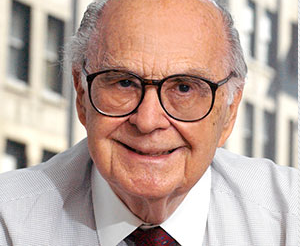
  • Prema Sagar on Harold Burson@96: Harold has been and is our Idol

    Harold Burson. Picture courtesy www.burson-marsteller.com


    Special to MxMIndia: Prema Sagar, Founder of Genesis Burson-Marsteller and Vice Chair, Burson Marsteller Asia Pacific writes on Harold Burson, Founding Chairman of Burson-Marsteller, as he turns 96 today (Feb 16)


    By Prema Sagar

    People variously describe him as the godfather of public relations, the grandmaster of PR, “the century’s most influential PR figure”, “an industry icon”, and so on. He is all that, of course. But for me, even if you forget about all the professional achievements, Harold is an inspiring man with boundless energy—a personal idol. Every time I feel tired or overwhelmed by everything around me, I just have to remind myself that here is a 96-year-young man who goes to work every day. Clients still turn to Harold for counsel even in the age of dizzying changes in communication. Who is an active member of the community, chairing various social development bodies and initiatives? Who remembers every person he comes across and doesn’t hesitate to learn from anyone?

    I first met Harold way back in the first couple of years of the new millennium. He was already past the usual ‘retirement age’. We were in talks with Burson-Marsteller over an issue that a joint venture between an Indian and an American firm had. We were managing the Indian firm, while Burson-Marsteller was managing the American firm. As we worked together, we realised that nine of our clients were part of their Top 20 list of clients! I also realised that our way of working, and most importantly, our work ethos, were very similar.

    It all stemmed from Harold’s own work ethic. That’s when I knew that we wanted to partner with them for longer than just the immediate issue. I went to the US and met Harold for the first time. He just said one thing: “We need to do business together to be partners, not just have a partnership.” His clarity of thought, passion for what he does, and exuberant warmth had me in his thrall in no time. Bill Rylance, former CEO, Burson-Marsteller Asia Pacific charmed us in partnering with an exclusive affiliation and over time realised that the partnership was working well. And then we decided to go ahead with being part of Burson-Marsteller.

    Every year since then, I meet Harold as often as I can. I see the energy in him only increase further. I spent many hours with him recently in New York and I continue to feel blessed with his simple yet impactful thoughts.  His ability to cut through the clutter and arrive at the heart of the matter quickly—and politely—is something I admire a lot. And that sharpness has not dimmed a bit over the years.


    Prema Sagar


    One of the leading lights of the Indian public relations and communications industry, Prema Sagar is Vice Chair, Burson Marsteller Asia Pacific & Founder, Genesis Burson Marsteller


    Also watch: Prema Sagar on ‘When Genesis PR met Burson-Marsteller’


  • Siddhartha Mukherjee: Rare but True – PR Led Marcomm

    By Siddhartha Mukherjee


    Not sure if Indian or even Global PR Award Juries have come across such case studies. Conventionally, in Marcomm PR, typical approaches we see are advertising campaign starts and then PR follows or advertising and PR communication walk hand in hand.

    Very few Marcomm plans have demonstrated that a brand launchor even sustenance for that matter, can actually start with PR. Not only that, it then even sets a base for the Advertising campaign to subsequently follow through and fortify the brand’s recall &disposition scores.

    One such interesting case study is that of Godrej’s Good Knight brand. Not only that, it has also shown decent totality comprising research (and listening), scientifically arriving at the big idea, setting a measurable plan, creating buzz across print, TV and online mediums and finally measuring the business impact of the entire initiative. It’s great to note that the campaign kickstarted with a PR blitz followed by an effective ad campaign. Research-based PR was the key for this success.

    Good Knight’s two separate communication campaigns – Subah Bolo Good Knight and BaharBolo Good Knight (for launch of GK Fabric Roll-On)are strong testimonies to what New Age PR can be but also that it can plank the subsequent advertising push.


    Here are some key pointers why award juries in India and globally should take note of this campaign:

    1. Letting PR open the IMC innings: Godrej’s marketing management, in this case, must have developed impressive faith on this tool called Public Relations for letting its PR Machinery lead the IMC mantle. Not an easy task for the PR Machinery to achieve this feat.

    2. Healthy use of Listening: PR, in general, is not synonymous with the use of research, especially listening. In this case, however, understanding the data and extracting the communication peg that will not only be used for PR launch but also subsequent Advertising blitzkrieg is not a very common feature one gets to see within our Industry. Case in point is the “Bahar Bolo Good Knight” campaign where based on insights the campaign was sustained for a longer time with many more contextual campaigns (e.g. “#Childrensplayday, #Gifttheoutdoors) launched basis the listening and insighting process.

    3. Before execution, setting clear measurable PR Communication Objectives: Seldom does one get to see that the PR Machinery is clearly laying down what it wishes or targets to achieve. In this case, the Godrej team clearly defined the blocks of Input (Ideation & Planning), Output (Quantity & Quality of News Exposure expected to be achieved) and finally, Outcome (the value – not advertising value, mind you) it intends to bring to the brand and business).

    4. Executing a PR Plan spanning Print, TV, Online/Digital: In true sense, it was an IMC initiative. The launch and sustenance of the brand spanned across both conventional and the digital platform. More interestingly, Digital PR played a wonderful media partner for brand sustenance as well.

    5. Clearly measuring what was targeted Vs what was achieved: After the campaign was over, the Godrej team very diligently worked towards a report card compilation exercise across – Input, Output and Outcome. An examination of what they had set to target vs what they had actually achieved is itself a very meritorious task. This very effort shows intent, transparency and very importantly, defines the winning streak in a case study presentation.

    6. Finally, handing over the relay baton to advertising machinery: With brand campaigns getting launched and sustained through PR, it was now time for the Godrej’s paid initiative to take over the baton and continue with the relay race. Few weeks after the PR buzz, Advertising initiatives were launched using the messaging and the brand recall base PR had already established.


    It is time that award juries up the bar of entries and judgment parameters. Godrej’s case study is an indicator that if one wants, one can raise the bar. I am aware that such rarities are across other sectors too. TV Broadcast, as an example. It is time that more such New Age PR case studies come out of the closet.

    My years of appeal to the Industry that “PR needs PR” gets only bolder with such case studies as talk points. PR Award programmes can go a long way in establishing PR within the minds of the CXOs. For this, the role of PR has to be looked at in totality and not the conventional count of clips, advertising value and the moronic,self gratifying yard sticks used by the case study presenters these days.


    Siddhartha Mukherjee is a senior PR industry professional and currently Senior Vice President, Eikona – Earned Media Planning, Audit and Advisory. The views expressed here are his own.

     

  • Mattel appoints Weber Shandwick India as its PR agency

    By A Correspondent


    Mattel Toys, the wholly-owned subsidiary of American multinational Mattel Inc, has awarded its integrated communications business to Weber Shandwick following a competitive multi-agency pitch. The appointment will see Weber Shandwick roll out integrated communications solutions for the entire portfolio of brands encompassing corporate reputation management, media relations, creatives, social and digital marketing communications.


    Commenting on the appointment, Lokesh Kataria, Head – Marketing, Mattel Toys (India) Pvt. Ltd. said “India is a growing market for Mattel and our consumers & shoppers both are unique here compared to any other market around the globe. With changing media consumption habits and evolving consumer trends, we were on lookout for a partner who can work with us for effective, engaging and immersive communication to Indian audience, especially millennial moms. Weber’s strategy to address this growing audience stood out amongst the other agencies that participated in the pitch process. We are excited to build campaigns with Weber Shandwick that are driven by advocacy, brand communications and conversation management through creative content. We look forward to working with Weber Shandwickto drive and expand our presence and own the thought leadership position in India.”


    Commenting on the association, Valerie Pinto, CEO, Weber Shandwick India, said: “We are honoured and delighted that Mattel Toys has chosen us as partners to further their business objectives. Our content first approach with the integration of digital has paid off big dividends and has been appreciated by our clients. This partnership is testament to the strength of our network and integrated media capabilities, and we are confident that we will drive the desired impact and outcomes for Mattel Toys.”


  • Siddhartha Mukherjee: TV broadcasters must start taking Thought Leadership seriously!

    By Siddhartha Mukherjee


    It is good to see that TV Channel houses have started to rise above the rat race of TRPs.


    It is wise of them to have realized that beyond the toil of keeping the Advertisers happy and Viewers informed about their upcoming programme offerings, there is a huge world called Organisational Management. More so, in today’s Reputation Economy, Management is all about creating and maintaining a Halo Effect or Thought Leadership that will seamlessly transcend the TV Channel’s brand values across every single Organisational stakeholder – Viewers, Advertisers, Distributors, Content providers, Government, Society at large, et al. Very importantly, in this, PR Machinery has a bigger role to play!


    For decades now, Corporate Thought Leadership has typically been the forte of industry verticals outside the Media and Entertainment (M&E) sector. The M&E sector was caught up in the effort to put some method to this sector’s unstructured madness. After years of erratic expansion and lack of formal blue prints, now, finally, indications have started pointing towards consolidation within the TV Broadcast Industry. Creating Thought Leadership is one such strong indicator!


    It is not that TV Channel houses have not attempted creation or change of Thought Leadership earlier. They have!However, my personal view is that they have been myopic and the communication effortswere half hearted.


    Interestingly, given that this time, one of the biggest broadcast networks has roped in the “perfectionist” celebrity, we are only hoping that this time, it works well.


    The question however is, what are the key things that the TV Broadcast houses can consider:

    1. Thought Leadership is a Corporate Brand Reputation Project:

    Yes, this is a serious business. Creating or resigning Brand Reputation is about erasing old brand promises and imprinting new ones. It is not easy. Stakeholder management specialists have to be roped in and made to work towards a specific set of Communication and Business Objectives.


    2. Thought Leadership doesnot work under time limits…effort should be perpetual:

    For the halo to stay in the minds of the stakeholders, it has to be a perpetual effort. Doesnot matter which month of the year or what business scenario we are in! Which means that for Business Planning within boardrooms, this is one key reference point. A kneejerk spurt of Ads, TV Promotional and PR campaign may definitely create gratification within the TV Channel Management but it sure calls for lack of actual term results and assured wastage of money.


    3. Is not about innovative Taglines but about creating Touchpoints:

    Huge efforts and monies are spent on coming up with one catchy Tagline that tries to explain the brand’s new thought! However, if it fails to capture the minds of all stakeholders right from the time he or she wakes up till the time the person goes to sleep, the taglines remains to be an ornament in the locker! The Communication machinery should be able to translate the meaning of the Tagline into media exposures (news, promotions, videos and ads) and actual experiences.


    4. Not just about CXOs:

    One of the biggest mistakes Thought Leadership and Corporate Reputation efforts make is that they limit the planning and execution to the CXOs. That should definitely be avoided. On the contrary, involving the internal ecosystem, the employees, the biggest and readily available viral tool for a brand should be made to be involved in the Thought Leadership creation and sustenance process.


    5. Corporate Communication and Public Relations Jugalbandi:

    To manage such a large matrix of External and Internal Stakeholders, it should not be about carpet bombing the market with One pager ads, Promos and Viral Videos. It is about phase wise, block by block but cohesive management of perceptions across stakeholders. The Corporate Communications team through Public Relations approach is best placed to manage this! Incase the Paid(Advertising or Promotional) tools are to be brought in, the Corporate Communications team should be empowered to take a call on that.

    The TV Broadcast industry’s seriousness towards Thought Leadership actually indicates what Corporate Brand Reputation should actually mean to Organisational Management in any industry vertical or sector. Till few years back, one would never imagine that TV Broadcast, of all the other sectors in flux, would be one of the torchbearers of this initiative. It is a sign of Corporatisationand Consolidation. More so, it is a sign that Corporate Communications and PR Industry associated with this Industry will think beyond MarComm!