Category: BY INVITATION

  • Amith Prabhu: PR frat needs a Goafest-like event

    By Amith Prabhu


    Goafest has become the annual jamboree for the advertising folks in India. And nothing wrong with that if it serves the purpose of those organizing and those attending. It is an expensive programme, especially for younger people. The cost to attend Goafest for a person varies from as low as Rs12,000 (if a person under 30 from Mumbai travels by road or rail and lives in very simple accommodation for 2 nights) to Rs40,000 (if a person over 30 from Delhi flies low-cost and lives in decent three-star accommodation).


    The point is that in all this effort and investment or spending (depends who pays the bill) very little is achieved for the industry in terms of learning. Most high profile speakers either use the opportunity to make a sales pitch or are not effective enough to make an impact (I have been to two events and seen for myself).


    The few who are impactful and are not making a sales pitch have few takers because they are either not well known, haven’t got the right publicity in advance and therefore those who should be listening to them are either on the beach or in their luxury rooms or sightseeing.


    The real achievement is for those who want a break and get it (most often fully or partially company sponsored), great work done in the year gone by gets rewarded (sometimes with controversy), people seeking a job change get to meet their potential employers and those who want to catch up in a non-work environment with former colleagues and buddies get to do that.


    Some PR professionals attend because they are involved in some way with the organizing and some others are connected with the ad agency that has a big role to play.


    But most inspiring of all the achievements is that all the big boys and girls in creative and media agencies who fight it out like bitter rivals in new business pitches and industry awards between May and March come together in April to celebrate the profession. And this to me is remarkable. No doubt there are a handful of boycotts that happen each year, but those are bound to happen and frenemies come and go.


    Cannes, around which part of Goafest is modelled, embraced PR a couple of years ago by including a separate category for PR and having a full-fledged PR jury. I’m not saying Goafest should do that. I’m here to seed the idea of a gathering of PR professionals from around the country. Head honchos of PR firms can collectively do a lot for the industry and the young and mid-level professionals. The three things they should do at break neck speed is put together a forum for PR professionals modelled on PRSA, create an industry award that is transparent, world-class and the gold standard for younger professionals to gain inspiration from and plan a gathering of PR professionals over a weekend to learn from each other. Networking is no longer a major need in the age of Facebook, Twitter and frequent after hours parties in the metros.


    There are several forums that function formally and informally in the PR space. But none that brings together corporate communication executives and public relations professionals, at all levels and of all ages, under one umbrella. It is time for a body that works closely and learns from PRSA. There is so much it does through several chapters for the betterment of the practitioner. With almost 15 of the Top 20 global PR firms present in India there is scope to even be handheld by one of the well-established forums.


    Thereafter, this organization should establish a PR award that enables entries to compete in the global arena. There is a major vacuum that needs to be filled and no one can help us on this but ourselves.


    Finally, the PR fraternity of India needs an annual event where PR professionals get together, listen to experts fromIndiaand around the world and celebrate the profession keeping aside differences for 48 hours at least, if not more. Maybe this could be called PondyPoweR and be held at Pondicherry on the east coast ofIndia. Symbolically, a quaint town with a rich heritage, near the beach for those who want to mix learning with fun.


    Hope this happens sooner than later, so public relations people can ponder on how to do some Public Relations for themselves, their firms and most importantly for the profession.


    Amith Prabhu is a public relations professional who spent a large part of his career in India and is now based in Chicago working for a PR major. Views are personal and do not reflect that of the writer’s employer. 


  • Guest Article: Adventures in an accelerated world

    By Shaleen Sharma


    “The tragedy of the modern spirit consists in that it has solved the enigma of the universe only to replace it with the enigma of itself”. – Alexander Koyre, Newtonian Studies


    In a recent piece in Newsweek, Lawrence Summers points to an interesting analogy. During the Industrial Revolution, the average living standards of a European rose by 50 percent in his lifetime (40 years was the average then).


    In Asia, particularly China, as per Summers the average person’s standard of living has risen by 10,000 percent in his lifetime. They say that China is the “shop floor of the world” with a manufacturing base of close to 40 percent. In fact, in the Industrial heartland of China, there are places that have witnessed the same level of urbanization, social transformation and industrialization that Europe witnessed in two centuries.


    Ray Kurzweil wrote in 1999, in the Age of Spiritual Machines how technological evolution will outpace and impact biological evolution. The thrust in his argument was more on artificial intelligence and technological leaps and how these would go on to spawn a technological singularity. Kurzweil posits that we are living in an accelerated continuum where the rate of change is galloping.


    I believe the time has come for us to gain some depth and perspective on this. We need to understand and appreciate how human civilization is accelerating with all the wheels interconnected – Technology, Markets and of course Culture.


    When Michael Lewis says that “Everything is co-related” in The Big Short: Inside the Doomsday Machine, it drives the point perfectly. And precisely so because the world is accelerating across all the dimensions of our lives, especially so in areas that were hitherto static or slow moving.


    According to reports, boys and girls are maturing faster not just in terms of cognitive development but also in terms of their physiological markers (like the beginning of menstrual cycles and onset of puberty, etc).


    The internet is abuzz with a report titled The Rise of Post-Familialism: Humanity’s Future?” written by Joel Kotkin, Anuradha Shroff, Ali Modarres and Wendell Cox.


    Consider this, even a young country like Singapore is witnessing stunningly quick demographic and cultural shifts. Like most Asian societies, family used to be the basic unit. As we move towards 2013, the rate of marriage has plummeted. The country has some of the lowest fertility rates in the world.


    In SEC A families all around the world, people are postponing marriages and having children. The irony is that there are more number of dogs than children in such families.


    The practice of marketing and product planning has hardly been unaffected.


    I was reminiscing with one of the product managers on how those days of product design when everything was thought upon for days on end before even the first prototype was built are well over.


    Nowadays, the time-to-market counts as a competitive advantage in itself. In Chess, there is a particular style-of-play, what they refer to as “move first think later”. Modern marketers seem to have given it a new spin – “First do, then learn”.


    Consider a company that has used “acceleration” to its advantage – Apple, a company that was just 90 days away from Chapter 11, has become one of the most valued stocks in the last two years.


    They understood the direction and momentum of personal technology better than most. For all practical purposes, they are a phone company now with the i-phone contributing close to 50% of their revenues and are trying to do a similar thing with their tablets now.


    Nokia, on the other hand is becoming a case study. Nokia had such a head start in their business controlling more than 50 percent of the market in their business.


    A couple of strategic missteps and the situation got compounded with the fierce rate of change in their category. According to the latest results in the growing Smartphone segment (read the future of mobility) Nokia has sunk from third place to the seventh, in just one quarter.


    Where are the trend-casters and crystal-ball gazers going wrong? May be, they are watching trends closely enough but not in the way those trends interact with each other. Or maybe we just need to watch how technology, societies and cultures interact to spin new directions, new dimensions.


    Shaleen Sharma is Partner, National Planning & Strategic Initiatives, RK Swamy Hansa Group, New Delhi


  • [PR CHANNEL] Public Relations needs measurement for its Advertising & PR!

    By Siddhartha Mukherjee


    Hollywood legend Gregory Peck’s reply – “I don’t know anything about Public Relations” – to a PR job proposition from a friend in a company where he was working in the Hollywood flick, The Man in the Gray Flannel Suit, sums up the state of Public Relations. His reply, despite the fact that it dates back to the post World War II era in the 1950s, still echoes the current state of this credible marketing tool called Public Relations, atleast in India.


    Before we get into the scope and type of measurement for a client’s Public Relations initiatives, there are a couple of points, I thought, we can throw light on:


    The central question is – Why does a Corporate/Brand do PR? It is a simple question, but the answer may not be so simple!


    Let us see if this question can be answered by deconstructing some possible thoughts or responses:


    a) We (the Corporate/Brand) do PR because it makes us feel/look good infront of family and friends

    For some this could well be a preposterous presumption. However, the fact is this is the belief for most of us – some may acknowledge…some won’t.


    Majority of the Corporates end up creating CorpComm/PR machineries to serve individual agendas, and not one single Corporate and Brand marketing agenda. Time is spent and efforts are made to expose “faces” of the organization rather than the Corporate itself, what it stands for and its product offerings. PR still continues to be used more as a personal and personnel gratification tool rather than a brand building tool. Many will not acknowledge this. Those who do are far more credible and only adding to their organization’s equity.


    b) Monthly PR scores Ranking

    Some slightly better off organizations have taken it one notch up. Given the fact that the actual purpose of PR/Corp Comm is still ill defined, self gratifying efforts to prove successful creation of decibels levels are quite high in usage. The mandate therefore given to the PR Machinery is – “My company should be No. 1 in the media visibility rank”. No wonder then, the Corp Comm machinery and its PR Agency runs helter-skelter after every possible journalist in every possible newspaper and TV news channel to get some ink or soundbyte in next morning edition. The ballgame ends up being all about the “CHASE”(journalist/publication). Get me some coverage somewhere…anywhere…with any mention of my company becomes the dictate. The thickness of the clippings dossier becomes an emblem of the PR machinery’s achievements.


    The only problem is that it can be easily proven that just because the Company scores rank 1 in media visibility does not mean they have actually done or achieved great PR! Same way, just because an organization has ranked no. 3 does not mean they have achieved bad PR!


    We are obsessed with ranking. PR Industry just re-iterates the same principles.


    c) To justify Ad budgets and EAV (Equivalent Advertising Value) targets:

    This is an extension of the above point. The norm of marketing team (marcomm to be specific) setting targets for PR/Corp Comm team is still a sacred ritual. Targets of Rs 5 crores, 20 crores, 50 crores are a set norm of advertising equivalent editorial value to be achieved by the Corp Comm/PR team at the end of the year. In fact, this has three interesting outcomes: a) The Corp Comm/PR team starts going through tremendous palpitations. Which in turn puts the entire Corp Comm Machinery (including PR Agency) in a tizzy. B) The corporates’ winning/dinning/gifting and media round bills go up because we somehow want to get any coverage somewhere B) Corp Communications starts losing focus on what it is ideally there to achieve.


    At the end of the year, the marketing team rejoices on the achievement of the EAV scores encoring “a great job done”. They possibly will also look at Share of Expenditure (SOE) Vs Share of EAVs Vs Share of Voice/Space. However, whether the annual PR efforts have borne fruit or not, who know! Is someone interested to know?


    The other aspect of this advertising correlation becomes all the more interesting when Corporates look at editorial space as money game – that can be “bought”…courtesy their media buying “power” houses. Some do this with a generalised belief that editorial space across print, TV and online is rigged, no longer a purist zone and should/could be bought therefore. Some believe that this is the best way to control what they want to get and not get written.


    d) To keep negative stories at bay

    Our country is all about negation and rejection! Critics, crisis, negatives, these are aspects that dawn on us almost everyday, starting from our breakfast table. Corporates increasingly becoming within the common man’s radar find them mentioned in most “negatives”. PR/Corp Comm machinery therefore is expected to play a role in pre-empting these negative mentions in the next day morning news reports. Worse case, if pre-empting efforts fail, they start rolling out damage control exercise. Actually, where Corporates passionately believe in this principle of getting easy ink in next day’s paper, and more importantly, pre-empt negative stories, often ex-journalists find a prominent place in the CorpComm/PR chair of the organization.


    e) To achieve a set business objective

    This is where we normally get stuck. How many times have we asked a simple question – why am issuing this press release? Why am I proactively approaching a publication and to give an interview to a journalist? Can the answers to “why” be broken down into specific Quantitative and Qualitative target outputs?


    The reality is that this seldom happens. Those Corporates/Brands who have started with this are already enjoying the benefits of this Samaritan tool. For their customers or consumers out in households, communications is much more smooth, homogenous and credible. For those who have not, probably best is to leave them to market forces. One day, they will realize it is too late.


    Way Forward:

    Our good old Public Relations industry started and has been thriving on Jugaad. This silent army of PR professionals, certainly for the last two decades, has been quietly helping organizations and brands get marketing “exposure” in the news space across Newspapers, Magazines, TV Channels and Websites. Their Jugaad as relationship managers with journalists has actually helped many Corporate Entities enter India, settle well, understand the market and more importantly trigger the interplay of Demand and Supply.


    However, in the last seven odd years especially, this ART of Jugaad has been complemented with a crying need of SCIENCE both in strategic & tactical planning and implementation of Public Relations. CEOs, Directors, Marketing Heads, CFOs, HR Heads, now that all are getting hooked and booked under “ROIs and Accountability”, they are finding it both important as well as challenging to incorporate the tool of PR into their Corporate DNA.


    Here is where PR Agencies have initiated and paved the way. Starting with transforming themselves into Consultancies, their thoughts and initiatives have changed the matrix of this tool called Public Relations. The tool, which was largely confined to the PRO/Corporate Communication desk of their Client Office is actually today showing its influence and usefulness to the internal clients of this same desk – Marketing, Financial as well as HR corridors…not to leave alone the CEOs office. Public Relations can be created, nurtured and propelled only with the vision and proactive initiatives of its Agencies.


    Measurement of PR can go a long way in establishing purpose and focus to a brand PR efforts. PR Agencies therefore will play a big role in introducing measurement into the DNA of PR and Corporate Communications industry.


    Let us not forget that Measurement or Data can do actual PR for PR! The Client, its agency and the industry stands to benefit from it. What the benefits could be, who all stand to gain and how…next time!


    Siddhartha Mukherjee is senior VP, Communications and Business Head, Eikona PR Measurement

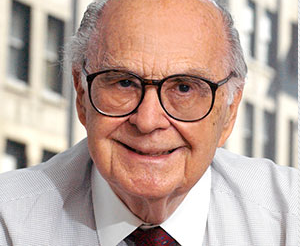
  • Prema Sagar on Harold Burson@96: Harold has been and is our Idol

    Harold Burson. Picture courtesy www.burson-marsteller.com


    Special to MxMIndia: Prema Sagar, Founder of Genesis Burson-Marsteller and Vice Chair, Burson Marsteller Asia Pacific writes on Harold Burson, Founding Chairman of Burson-Marsteller, as he turns 96 today (Feb 16)


    By Prema Sagar

    People variously describe him as the godfather of public relations, the grandmaster of PR, “the century’s most influential PR figure”, “an industry icon”, and so on. He is all that, of course. But for me, even if you forget about all the professional achievements, Harold is an inspiring man with boundless energy—a personal idol. Every time I feel tired or overwhelmed by everything around me, I just have to remind myself that here is a 96-year-young man who goes to work every day. Clients still turn to Harold for counsel even in the age of dizzying changes in communication. Who is an active member of the community, chairing various social development bodies and initiatives? Who remembers every person he comes across and doesn’t hesitate to learn from anyone?

    I first met Harold way back in the first couple of years of the new millennium. He was already past the usual ‘retirement age’. We were in talks with Burson-Marsteller over an issue that a joint venture between an Indian and an American firm had. We were managing the Indian firm, while Burson-Marsteller was managing the American firm. As we worked together, we realised that nine of our clients were part of their Top 20 list of clients! I also realised that our way of working, and most importantly, our work ethos, were very similar.

    It all stemmed from Harold’s own work ethic. That’s when I knew that we wanted to partner with them for longer than just the immediate issue. I went to the US and met Harold for the first time. He just said one thing: “We need to do business together to be partners, not just have a partnership.” His clarity of thought, passion for what he does, and exuberant warmth had me in his thrall in no time. Bill Rylance, former CEO, Burson-Marsteller Asia Pacific charmed us in partnering with an exclusive affiliation and over time realised that the partnership was working well. And then we decided to go ahead with being part of Burson-Marsteller.

    Every year since then, I meet Harold as often as I can. I see the energy in him only increase further. I spent many hours with him recently in New York and I continue to feel blessed with his simple yet impactful thoughts.  His ability to cut through the clutter and arrive at the heart of the matter quickly—and politely—is something I admire a lot. And that sharpness has not dimmed a bit over the years.


    Prema Sagar


    One of the leading lights of the Indian public relations and communications industry, Prema Sagar is Vice Chair, Burson Marsteller Asia Pacific & Founder, Genesis Burson Marsteller


    Also watch: Prema Sagar on ‘When Genesis PR met Burson-Marsteller’


  • By Invitation | Priyanka Mehra: The New normal – The rise and rise of humane professionalism?

    By Priyanka Mehra


    One of the lessons I have taken out of this ongoing pandemic is heightened sensitivity; in spite of being a fan of the written word, I now pick up the phone and speak to a colleague as opposed to sending out an email, the difference in the outcome is significant.

    If you dwell on it you will concur that our audio sensory powers have now heightened to pick up human emotions, we are now much quicker in picking up  nuances of change in voice, whether it is just a slight  drop or that note of excitement on a new project, much faster than we would have in, what is commonly now referred to as old normal or the world as we knew it earlier.

    The question to, ‘’how are you?” now receives a more sincere and honest response, as opposed to an automated perfunctory one.  I would like to believe we have become more sensitised as a collective.

    Yet just a few months ago, most of us envisaged ‘work from home’ would last a month, a couple of months at best and here we are completing sixth months of work from home or the more befitting moniker of ‘work without borders.’

    According to a recent Adobe consumer survey conducted in the APAC region, employment, personal health, job vulnerability, and the economy are the four greatest concerns/ impacts of COVID 19.  67 percent of respondents expressed concern where health and wellbeing were ranked at 73 percent, job vulnerability 40 percent, and the concerns of the economy were pegged at 36 percent.

    Given this backdrop, amid and despite looming uncertainties on various fronts, we seem to be hardwired as humans to be resilient to keep going and adapt, while the overall sentiment entails looking for ways to manage costs, increase effectiveness, and explore innovative ways for reaching audiences for our clients as agency partners, and plan for the future, we have adapted to pitches in ‘zoom times’ without a batting of an eyelid, working from multiple locations and time zones come with the territory.

    While discipline, and a routine have been my strongest allies in WFH, I found it easier to get into this a schedule, (having worked out of home and wherever else you would be as a journalist/ editor as long as you had wifi) than a few of my colleagues and friends who took a few weeks to adjust.

    Humane Professionalism- There is a rise and rise of a phenomenon I like to call “Humane Professionalism” and no this did not happen overnight but months of ‘work without borders, has cajoled the humane- element out of all of us.

    Yes, we  did over – communicate in the first couple of weeks, to compensate for not actually meeting, and then slowly and steadily settled into a routine. A core leadership WhatsApp group was formed which quickly became a mainstay, real time communication then became our best friend.

    The past few months soon became a journey we took together, which showed us the real people behind the roles and designations, the quirks the habits and how individuals functioned under pressure became apparent, would we get to know each other in a way we all have – or would we really care and help each other adapt to the challenges thrown at us before March 2020? Possibly not.

    Our teams also equipped themselves with new skillsets, not even considered earlier thanks to apps like Canva, and photoshop.

    Whilst the role of communications could never be undermined, the pandemic accentuated this further. The American Institute for Public Relations (IPR) in association with communications firm Peppercomm,  conducted a research study in March as Covid was making its presence felt in no uncertain terms, this study covered 300 communications executives and senior leaders to gain a better understanding of how prepared businesses were for Co and how they are handling the impacts.

    The findings revealed that business leaders are leaning into their communication function as an essential resource to help them deal with Covid-19. More than three-quarters (81%) of respondents said the communication function is “important” or “very important” to their company’s Covid-19 response.

    Sensitised and timely communication for me have been the key takeaways during the past few months. Let’s take the analogy of brands, we all did use a plethora of brands in the pre- pandemic era, the lockdown suddenly made us realise, which brands actually added meaning to our lives, besides serving our functional and utility based needs, brands that stood for a strong purpose became more meaningful to us and consequently built more affinity. Similarly, communication that was sensitised, timely and meaningful and consequently added value to our lives is the one we choose to engage with.

    Which were our most important takeaways and consequent approach while formulating content/ communication for clients as well as internal and external stakeholders.

    Whether it was internal communications to ensure each colleague across agencies and levels felt and functioned in a safe environment. Externally too you could feel journalists/ editors/ publication owners reeling under their own pressure.  Over a period, of functioning in an environment such as this you start picking up things said and unsaid from interactions.

    Reconnecting – For me, this has been a time of frank conversations and transparency which works wonders in a situation that draws you together as a collective of professionals going through an unprecedented pandemic together each playing their part.


    Priyanka Mehra is Director, Marketing and Communications, Havas Group India and a former Editor of Exchange4media