Category: BY INVITATION

  • Remembering Mario Miranda/Dev Nadkarni

    By Dev Nadkarni


    Mario Miranda never really liked to talk about himself or his work. But once during an assignment, when I pressed him on how he went about his meticulously detailed illustrations, he told me in his usual shy manner that he began at one corner of the blank sheet and put his scratchy ink pen nib down only when he had fully filled up the whole sheet.


    The maestro put his nib down one final time yesterday, having finished with the extraordinary canvas of his life. And what an incredibly rich and unforgettable picture he has drawn for all of us in his seven decade long career. His drawings, with their filigree-like detail, are an endless source of joy: you find something new in every illustration no matter how many times you’ve seen it before. That indeed was his genius.


    I knew Mario as a fan, friend, colleague and client – as fan for a lifetime, the rest for more than two decades. My first ever introduction to Goa was through one of his illustrated books, “Goa With Love – by Mario”, a copy of which we still have in our collection nearly half a century later.


    “Goa With Love” is Mario’s finest tribute to his most beloved Goa – it is completely illustrated, no copy except for an odd caption or two. It captures every aspect of Goa – the scenery, the people, the social mores, the cultural diversity, the oddly spelt Hindu names in Portuguese-influenced English, everything except perhaps the smell of feni.


    I have lost count of how many times I must have pored over that book throughout my life. I remember spending hours on each page when I was a child growing up in Panaji – which back then was Panjim. I can still find things to laugh about in the drawings.
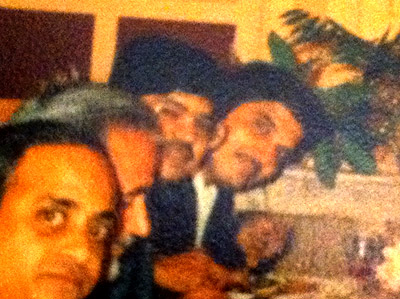
     

    Dev Nadkarni (third from left) with Mario Miranda

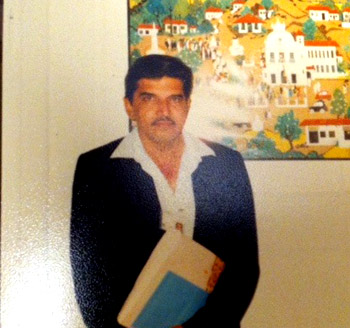
    I first shook hands with Mario when I was perhaps all of five in my father’s office in Panaji’s iconic Secretariat Building – my father, Mohan Nadkarni, was the newly formed union territory’s first information officer and was in charge of publicity, publications and PR. “This uncle here drew Goa With Love – his name is Mario,” I remember my father saying. I was excited because I had shaken hands with the man whose book I was so very fond of.


    In later years, I often ran into him in the Times of India building in Mumbai on my errands delivering my father’s music reviews and columns to the newsroom on the third floor (no emails and faxes then). I’d reintroduced myself as his fan from Goa and chatted on some occasions about some of his illustrations from “Goa With Love” and his other work, which appeared regularly in the Khushwant Singh-edited Illustrated Weekly and the Evening News of India.


    Our next significant encounter was at my first real job – as an assistant editor of the popular children’s fortnightly Tinkle at the India Book House. He was illustrating a children’s book, which my colleague Nira Benegal (noted film director Shyam Benegal’s wife) was editing. We settled down for a long chat and at the end of it, he handed two rather tired looking diaries to Nira.


    I noticed Nira put away the diaries carefully in her bottom drawer. After a few days, knowing my respect for Mario and his work and my own ambitions to launch my cartoon strip, she let me have a peek at those diaries. I was amazed as I leafed through them.


    They were diaries from Mario’s childhood. Most of us who kept diaries did so in long hand. Mario simply drew. On one of the pages the only words were something like: “walking back from the market I saw” and there was this amazingly stylised picture of a cow. He must have been 10 or 11 when he drew it – perhaps even younger.


    The picture was greatly detailed. There were the blades of grass, the pebbles, the vegetable vendor, other trappings of the marketplace, a carrera (those small rickety buses – now extinct – with about eight seats that packed in 24 people), the fisherwoman, everything on that A8 sized diary page. It left me dumbfounded. Nira let me borrow the diaries for the weekend and boy, what a weekend that was.


    The Benegals and Mirandas were close friends. Shyam’s Trikaal – based on Goa’s liberation – was shot for the most part in Mario’s splendid colonial Loutolim residence, which is where he breathed his last.


    Mario’s recognition as an illustrator par excellence grew and he was invited for assignments and exhibitions across the globe. The world’s major cities invited him to draw their monuments and main squares. The volume of his published work grew and he was soon awarded both the Padma Shri and the Padma Bhushan, besides many other awards.


    Then Karnataka chief minister Devraj Urs commissioned Dom Moraes and Mario to do a book on the state – and that’s another book in our collection signed by both Dom and Mario.


    By 1987, I had a couple of weekly cartoon strips going. One appeared in the Sunday edition of the Indian Express and the other in the Sunday editions of the Economic Times between 1984 and 1990. The latter, called Doldrumms Ltd, based around office and business situations, was definitely inspired by Mario’s Miss Nimbupani and her cartoon colleagues.


    In the middle of that year, Mario and I were part of a delegation of Indian cartoonists who visited Europe as part of the Festival of India. Our works were exhibited for a week in Sierre in Switzerland. It was there that despite our great differences in age and stature, he took me on as a friend.


    During those long wine filled nights, I got to see his melancholic side, which I had not seen before. On one such evening, I remember, as we were sitting on the deserted platform of the Sierre railway station after a couple of bottles of fine French Beaujolais, he told me the real reason why he left the Times of India – but not before extracting a promise that I’ll keep it only to myself.


    Weeks later we reconnected in downtown London and spent a busy morning drinking some more – this time beer. Celebrated modern dancer Astad Deboo joined us for a while.


    As editor of a publication for India’s first major amusement park Esselworld, I had the pleasure of commissioning some work from Mario. But what I’ll remember most is a one of a kind interview I did with him: we did a four-page cartoon strip interview. He drew the replies to my questions – how cool is that. He later told me how much he had enjoyed doing that.


    Though I visited his home in Colaba, Mumbai, several times, I never really got to know his wife Habiba or his sons. At one time, I remember he had pet turtles clambering up and down the living room. Mario’s close friend and one of India’s finest humorists, Busybee (Behram Contractor), modeled two of the characters of his “Round and About” column – Darryl and Derrick, the two sons of the fabulously rich ‘my friend who lives on the 21st floor’ – on Mario’s two boys.


    There will not be another cartoonist, illustrator or human being like Mario de Brito Miranda. His celebrity came in spite of his self-effacing and humble personality. He will be greatly missed by millions of his fans.


    One of the final pages of “Goa With Love” has an illustration of a Goan funeral. As well as a few weeping relatives around an elderly man’s bier there is also a lot of beer and feni flowing around. The young people are eyeing one another through their tears. There is one young lady by the man’s feet, a tear flying away from her thick eyelashes, as her gaze meets a young man’s standing by the head of the departed gent. Her expression is an inexplicable mix of grief and expectation – there is a definite air of getting on with life once the grieving is over.


    That’s perhaps the best way to lay the great soul to rest – celebrate his life more than grieve his passing.


    RIP Mario Miranda.
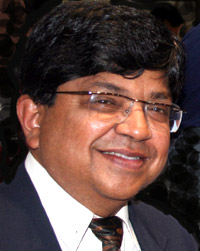

    Dev Nadkarni, cartoonist, teacher and editor, drew India’s first cartoon strip – Fekuchand Garibdas – for the Indian Express’s Sunday edition. Around a decade back, Dev shifted base to New Zealand where he edits a newspaper for the Indian diaspora, works closely with the government and international development agencies on a range of initiatives. He is also a columnist with several publications. Email: dev.nadkarni@gmail.com


    Photographs courtesy Dev Nadkarni

  • [PR CHANNEL] PR’s Media Fixation

    By Sudarshan.S


    Welcome to the world of “PR” or public relations, for being in the industry, we do not know what we are into, till you have a client, for the client defines what you will do.


    Public Relations (PR) is something that the clients are clear about, but not the agencies themselves. Clients want Media Publicity – what is perceived as last mile connectivity, or the job of generating coverage/leads with media, and organize Press Meets.


    PR Agencies do this diligently and all claim “we do it differently” (including us), and approach the same media that comprises about a dozen English dailies, half a dozen English Business Dailies, ditto for the channels, websites, the leading vernaculars, and then all and sundry who are a part of the mass mailing list.


    The approach may differ slightly on the basis of the clientele that one handles, depending on Music & Entertainment, Investor Relations, Finance, Lifestyle, Technology, Luxury, Marketing, Commodities, and so on.


    There are full-service PR Agencies that have offices across the metro cities and maybe some other key cities depending on client profile. There is a set of second rung agencies who are region / city specific, and operate through associates, and there are boutiques.


    The key measurement factor becomes the number of cities that one can operate out of, and the amount of coverage (clippings/mentions) that can be generated, and hence the weight of the “Media Coverage Docket” is the ultimate measure of success. Quantity tends to take preference over quality, though the awareness of the former is surely increasing by leaps and bounds.


    For the sake of an intellectual debate, I would like to negate everything that is stated above and say that PR is much broader than this, for a PR practitioner is not just a communications man, but a ‘societal technician’, who knows that effective PR is based on reality-not on images, whether true or false. Deeds and action that serve the public interest are the basis of sound PR, thus establishing a meeting point, to the highest degree of adjustment, between an organisation and the publics upon which it depends.


    Professional PR practice depends on the application of the social sciences (psychology, sociology, social psychology, public opinion, communications study and semantics) to the problem at hand. The PR professional plays an important role in preparing the various segments of the society for coming developments-in order to prevent ‘future shock’.


    What one generates as the last mile coverage is the resultant of some PR advice that covers adjustment to the public, information to the public, and persuasion to the public to accept a service or product in the form of editorial coverage or other innovative methodologies.


    So PR as a profession is an occupation for which the necessary preliminary training is purely intellectual in character, involving knowledge in general and learning in particular, as distinguished from mere skill. Secondly, it is an occupation where one has to learn to wear others shoes and think for them, be it a client, media, or any constituent public.


    Public Relations has expanded to include Events, Experiential Marketing, Integrated Marketing Communications, Brand Programmes, Social Media and so on. Thanks to the Internet and technology, the ambit has surely gone wider than just the Media coverage, for the term Media itself has exploded beyond defined boundaries.


    Sudarshan S teaches public relations at various business and media schools. He also head the Mumbai-based Prognosys Marcom Services

  • [PR Channel | By Invitation] CSR: More than PR, pursuing competitive advantage in the long run

    By Kavita Lakhani


    Governments can’t do enough – they need business to step in. Business can’t step in unless stakeholders see value. As tolerance for corporate malfeasance has dropped, expectations of good corporate behaviour have risen. There has been an increasingly louder voice from the public urging corporations and businesses to fulfill social responsibilities while making legitimate profit.


    As a result, authenticity and transparency have become vital for all companies. Adding a social dimension to the value proposition offers a new frontier in competitive positioning. If, corporations were to analyze their prospects for social responsibility using the same frameworks that guide their core business choices, they would discover that Corporate Social Responsibility (CSR) can be much more than a cost, a constraint, or a charitable deed – it can be a source of opportunity, innovation, and competitive advantage.


    Do the Right Thing

    One of the best ways to win hearts and minds is to do good. However CSR is about more than philanthropy – albeit that’s an important element. CSR is about being a responsible business. It’s about issues like good corporate governance, marketplace transparency, respect for staff, community involvement and reducing environmental impact. Corporates the world over have begun to take their corporate social responsibilities seriously. 64% of the Fortune 500 companies publish CSR reports as part of their annual reports, and 52% publish separate CSR reports. Many companies now include social and environmental commitments in their core mission statements. A growing number are also adopting ‘triple bottom line reporting’ in which social and environmental results are measured and reported next to financial results.


    In India, the Tatas and the Birlas have had a long and distinguished tradition in the area of CSR. As across the world, in India too, the culture of CSR is spreading for various reasons but probably not at the desired rapidity.

     

    Not just acceptable but desirable?

    In a survey conducted by Lowe Lintas (in association with MSN India and Cross Tab) earlier this year, an overwhelming 93% of respondents say businesses should bear responsibility towards society when making legitimate profit and 69% of respondents are ready to exert their influence through consumption habits and to pick products that are made by companies with agreeable CSR initiatives. Interestingly 56% respondents say that supporting brands that undertake socially responsible activities is as good as doing socially responsible activities themselves!


    Choosing which social issues to address

    Gandhiji said, “We must become the change we want to see in the world.” No business can solve all of society’s problems or bear the cost of doing so. Instead, each company must select issues that intersect with its particular business. Other social agendas are best left to those companies in other industries, NGOs, or government institutions that are better positioned to address them.

    There is nothing authentic about merely writing a cheque. The essential test that should guide CSR is not whether a cause is worthy but whether it presents an opportunity to create shared value – that is, a meaningful benefit for society that is also valuable to the business. Supporting a dance company may be a generic social issue for a utility like Tata Power but an important part of the competitive context f or a corporation like American Express, which depends on the high end entertainment, hospitality, and tourism cluster.

    While some may baulk at the idea of deriving commercial benefit out of a social responsibility exercise, the advantage is that when there is a business benefit to be gained through the exercise, the chances of the program continuing and getting larger increase. It’s understandable that the greater the business/image benefit to the brand, the greater the brand’s willingness to continue and even upscale the exercise.


    Don’t be shy. Share It!

    Our economy is increasingly characterized by easier access to information and speedier communication. And like never before, the general public is better informed and able to shape the success of multinational companies. Every day the world’s political and business leaders perform in front of voters, employees, shareholders and the general public. Every word is weighed, every deed dissected – in print, on air, online and in person. Public relations firms create campaigns that go beyond mere product and brand promotion to emphasize transparency, authenticity, good work, and ethical behaviour.

    We advise clients that the speed with which information is disseminated via the Internet can quickly influence a company’s reputation. And a company’s reputation is largely determined by its communication. It has been shown that it is in a company’s best interest to provide substantive information about its responsible initiatives while demonstrating efforts to address vulnerabilities and challenges. We help companies craft the message and carefully consider its tone, because this can considerably impact how the firm is perceived by its stakeholders.


    Indeed companies, in my view, should be up front about their commitment to CSR, about how they are measuring their efforts and how they are tracking against their commitments. Of course, there are risks. We live in a far more transparent world where companies need to be wary of sacrificing goodwill for short term publicity. But doing well by doing good, is not only accepted as good business practice, it’s becoming an imperative. That’s nothing to be embarrassed about.


    In summation, when looked at strategically, corporate social responsibility can become a source of tremendous social progress, as the business applies its considerable resources, expertise, and insights to activities that benefit society. Peter Drucker said it best. All successful businesses serve social goals. Profit is just an internal metric of how successfully you serve those social goals.


    Kavita Lakhani is President, LinOpinion Public Relations & Co-Chair, India, IPG Women’s Leadership Network

  • [PR Channel] What journalists want: The 10 commandments for PR folks

    By Ashraf Engineer


    Whom do journalists love to hate? Public relations (PR) professionals probably wouldn’t top the list, but they’d come pretty close. The irony, of course, is that the journalist-PR executive relationship is deeply symbiotic – one can hardly do without the other.


    But before I say anything else, you should know that I empathize. I know journalists can’t wait to get you off their back – unless they need you. In which case, you need to respond, like, yesterday.


    How many times have you thought after an I-need-a-response-now ultimatum, ‘What do journalists really want?’


    Here are a few commandments. Live by these and, who knows, the rocky relationship might just get smoother.


    Thou shall be clear and concise

    Most journalists work to a deadline and don’t have the time for rambling, rah-rah press releases. Say what you have to without taking up too many words. You’re working to a deadline too, so this should work to your advantage. A well-written yet short press release has far more value than a tsunami of words that has at the core just one paragraph of usable information.


    Thou shall not promise what you can’t deliver

    Years ago, when I worked for one of Mumbai’s leading newspapers, Nobel-winning mathematician John Nash visited the city. The PR agency managing the visit promised us an exclusive interview, with other newspapers getting access to Nash only the next day. Turned out the agency promised every newspaper the same thing. Imagine our shock when we saw Nash’s interviews everywhere. My newspaper stopped dealing with the agency altogether. The CEO had to come over and apologize, but things were never the same again – we kept the agency at arm’s length and treated every communication from it with suspicion.


    Thou shall not peddle rubbish masquerading as news

    Journalists have had it with ‘news’ that isn’t really, well, news. And surveys that are little more than a few colleagues being asked their opinion. Good journalists are discerning; they won’t let something like that get through. The bad journalists, you should have no use for – they won’t last and will never be in a position to help you or your clients.


    Thou shall respect deadlines

    This might seem obvious, but you’d be surprised how often it is ignored. Nothing gets a journalist’s goat more than information/reactions not arriving on time. Your tardiness could slam the door shut on potential coverage. It could also destroy the goodwill that you and your firm might have with the newspaper concerned. Why risk it? Get it right.


    Thou shall make clients, facts available

    Journalists want people featured in the press release to be available, and also the facts and figures. There’s no point in pushing a story if its basic building blocks are out of reach. So, if your client has a new CEO, it’s not enough to just say it. The CEO must be on hand to articulate his vision and his plan. Unless you do that, a journalist would see no value attached to the story. Journalists aren’t carrier pigeons – they aren’t satisfied with only the information you give them. They may see a storyline you don’t, and would need support accordingly.


    Another sticking point is case studies. Wherever relevant, make sure you have good ones. Journalists love them because they make the story come alive. Make sure they support the larger story, make sure they’re well written.


    Thou shall know your target newspaper

    When I was working for a lifestyle newspaper, I was often flooded with press releases that weren’t relevant to me – from a new type of spark plug to a stent that made heart surgery cheaper.

    What were those PR executives thinking? We covered society events, fashion, cinema and television. Spark plugs? Really?

    Don’t carpet-bomb the media with releases. That’ll only result in a lot of dead trees and no stories to show for it. Read newspapers, know what they cover. Most good newspapers don’t simply run a press release; they use it to spark off an idea.


    Thou shall stay away from jargon

    Using jargon only creates an illusion that you know more than you actually do. And, like an illusion, it’ll shatter at the first challenge. Besides, it turns journalists off.

    So, the next time you’re tempted to say ‘ponzi scheme’, just say ‘a fraudulent investment operation that pays returns to investors not from any actual profit, but from money paid by subsequent investors’.


    Thou shall address releases to the right people

    Have an UPDATED list of journalists and the newspapers they’re working for. My last job involved handling news specials for a leading daily. Yet, I was bombarded with companies’ financial results. On the irritation scale, it ranked only below being addressed as ‘Mrs Ashraf Engineer’ (and that happened too!).

    A newspaper I worked for even received releases for a journalist who had passed away!

    Send your releases to the right people, make sure you address them properly and – for God’s sake – make sure they’re alive. Otherwise, guess where they end up. It’s no wonder they say ‘delete’ is the journalist’s favourite key.


    Thou shall be well informed

    I’ve lost count of the number of times the PR professional at the other end of the line didn’t have even basic information about his/her client – size, location, turnover, etc. Apart from seriously harming your own and your agency’s reputation, it creates a poor impression about your client.

    Wait, weren’t you hired to do the exact opposite?


    Thou shall know this – a newspaper is not just a print product any more

    Every newspaper now has a website. The traditional press release format was developed over 100 years ago for print journalists. But they’ve changed. Most people get their news from the web first. This has sent tremors through newsrooms and altered them forever. In the process, the PR professional’s job has been altered too.

    Help the journalists do their jobs by providing graphics – and, where required, multimedia – that are relevant and on time.

    It doesn’t end there. Journalists might require quotes from experts and client executives. Your story may never see the light of day unless you travel this extra mile. So, help journalists help you.


    Ashraf Engineer is Head – Content at Hanmer MSL. After a 16-year career in journalism, he now heads the high-value content operation of the agency. He can be contacted at ashraf.engineer@hanmermsl.com.

  • The power of Public Relations: Ajay Kakar

    By Ajay Kakar


    As a marketer, we have many communication tools to capitalise on for the advantage of our brands and our business. To me, these ‘weapons’ (advertising, direct marketing, public relations et al) are very akin to a Swiss army knife; you can use any or all of these weapons, depending on the task at hand.


    But in my many years at the agency end, with stints in direct marketing, advertising and public relations, and now as a client, I have found “PR” to be the least understood, appreciated and under-leveraged communication weapon – by both the marketing and (believe it or not) agency fraternities in India. And most surprisingly, the PR fraternity too.


    As a long standing convert and staunch believer in this discipline, let me share with you my 20-year-old association with the PR discipline and the reasons why I believe that it is arguably the most powerful communications arrow in a marketer’s quiver. Also the reasons why I believe that the discipline has yet not got its full dues.


    So here’s the story of my tryst with public relations, or, if I may so say, the story of public relations in India, over the last two decades.


    PR, in fact, changed my life!


    PR is actually the exotic siren who first tempted me to leave my career in accounting and audit, to venture into the (for me) unfamiliar and untrodden path of communications.


    In 1991, I came across an interview in the Business India, with a person called Steve Lyons (I still remember the name!), who was then the head of a company called ‘Ogilvy PR’ in Singapore.  Believe it or not, until then I had never even thought of the advertising world, or even heard of “Ogilvy”.


    The article impressed me so much that I immediately searched out the agency’s address and cold-called the then-MD of Ogilvy and Mather, India, Mr. Mani Aiyer, hoping for a break in his PR unit.


    Hearing my motivation for joining PR, he tried to temper my new found passion, but having gauged me as a person who was not going to be swayed easily, he had me meet the head of Ogilvy PR in India. And that meeting shattered all my dreams and illusions.


    In 1991, PR, in India was nothing more than “Press Relations” – getting media coverage…lots of it…at any cost.


    Dejected, I decided not to pursue this temptress. And when I went back to Mr. Aiyer to thank him for his time, he actually offered me a job in advertising. Needless to say, he made a passionate pitch that swept me off my feet. And on May 2, 2001, I became an employee of Ogilvy & Mather (though not Ogilvy Public Relations).


    But fate was not going to let me off the hook, so easily.


    In 2003 I was invited to take on an additional mandate at Ogilvy, as the country head of Ogilvy Public Relations, in India. Before the end of 2004, I was the president of the industry body, Public Relations Consultants Association of India. And in 2005 I had switched over to the other side, the client side, where I became an active user of PR.


    And today, as 2011 comes to an end and 2012 draws near…


    Two decades have passed, but ‘PR’ remains mere press relations – in the minds of the practitioners – be they the PR professionals, or their user base.  Of course there may be a few exceptions. But these are far and apart. “PR = press relations” is all that we care to believe. Unless….

    In moments of need, even atheists are tempted to remember God. …. “Forgive me father, for I have sinned”. And when brands have ‘sinned’ or find themselves in a tight spot, they have reached out for public relations and found this discipline to be a saviour.


    As an example, just remember the days when colas were synonymous with pesticide and you will know what I am referring to.


    But back to any ordinary day….

    At Ogilvy, I recollect instances when I presented a Rs5 crore estimate to a client for an advertising campaign (do remember that in the mid-90s this was a princely sum) and got an instant sign off. And then when I wore my PR hat and asked for a Rs5,000 pm hike in fee from the same client (do remember that even in the mid-90s, this was a meagre sum), the client would wear a thinking hat, but refuse to lift his pen to sign on the dotted line…and finally it used to boil down to… “But you guys make so much from us on advertising. So why do you need to be paid, for PR!”


    These instances would leave indelible marks of pain on my professional pride. But looking back at all such instances, I realised that I had to ‘forgive them, for they knew not what they did’. Because they knew not what PR is and what role PR can play in their lives and the lives of their brands.


    So it was the number of clips that we were measured by. Else, the column centimetres of editorial coverage. Or the rupee value of the editorial coverage. Or the coverage we got (or did not) for the client’s son’s sports day. Media coverage. Media coverage. Media coverage.


    This was and still is a malaise that ails the PR industry inIndia. And some parts of the world.


    What is PR? What are the key deliverables one should expect? How should the impact of PR be measured? How would you like to substantiate your proposed fee or fee hike?

    Ask 5 practitioners this question and in all probability you will get atleast 6 (different) responses. So as a client, how do I value or respect a ‘good thing’ when I don’t even know what it is! Or how to measure it!


    This has been a burning need for the industry to rally around and define and ‘standardise’ expectations, industry-wide definitions and measures. But two decades later, the questions remain the same. And there is yet no answer. No understanding. No empathy.


    So while the PR industry keeps asking “why are we paid peanuts”, the user industry keeps answering “because we (think we) are getting monkeys”. This never ending coffee-toffee debate needs a closure. Soon. And I do appeal to the industry to claim their rightful place under the sun. At the earliest. By first addressing the basics. The questions that we cannot wish away. And then, of course, delivering on them.


    Until then, it is to our collective disadvantage that PR is considered a mere commodity. And we are seen as under cutting each other to win mandates. These mandates are soon lost, when the client is not in a position to evaluate or measure our success. Or the lack of it.


    The client base of the public relations industry is increasing by the day (there will never ever be a shortage of clients). But the number of satisfied clients? The number of clients making use of, and benefiting from PR in all its glory? Who is counting!  And therefore it hurts the believers, when India wins a PR Lion at Cannes. Because it has been won by an ad agency! Not a PR agency.


    So is there mere gloom and doom in the PR industry? Not at all!


    There are various case studies where PR has hit the bull’s eye and demonstrated it’s true potential and power. Let’s visit some of these and take inspiration from them.


    Today’s exceptions, tomorrow’s rule…

    It would be right to cite a few examples here that could redefine the way PR is perceived.

    We all know of John Travolta as an actor, singer, dancer but do you know that he is also a licensed pilot? So when Qantas, the airline from ‘down under’Australia, wanted to reach out to as a relevant airline for European markets, they actually got John Travolta to fly their planes to these destinations. The kind of coverage that this exercise got in local as well as world media was mind-boggling. So Qantas used this “a facet of John that you did not know”, to express “a facet of Qantas that you did not know”.


    Cadbury’s was hit by a crisis – the worm infestation case – that nearly threatened the very existence of the brand in India, as mothers questioned their generations of trust in Cadbury’s chocolates. At Ogilvy PR I had the opportunity to partner this iconic brand and their leadership team on the exercise that is now a case study for Cadbury’s, worlwide.

    Customers. Channel. Influencers. Regulators. Government. Employees…all these key stakeholders had to be reached out to, repeatedly and regularly. And the media was only one of the bridges to reach out to them. It was “public” relations at play. And not mere ‘press’ relations.

    Today Cadburys keeps scaling greater highs. It not only won back the trust of a nation. But also its loyal customer base and their sales graph. And this incident appears to be a distant dream. But in those days, every day appeared to be like a never ending nightmare.

    As an agency and team, we had the opportunity to get into the hearts and minds of the senior management team on an ‘online real time’ basis. Every day. For weeks.


    Gillette is another company that has realised and capitalised on the power of PR, year after year. You will remember their W.A.L.S (Women Against Lazy Stubble) campaign. And now the Shavesutra campaign.  Their movement has resulted in 12.2 million Indians casting their vote for a clean shave. It also led to rise in sales and popularity of the product and also bagged numerous awards…their sales going up by 500 per cent, market share up by 400 per cent, an entry in the Guinness book of records…and over $ 2.5 million worth of free media coverage.


    The Body Shop is another classic example of a brand that has enjoyed the favours of PR. No advertising. And still, it’s a global brand with very strong bondings with its consumers, as an eco friendly company.


    Or, the mother of all “PR” campaigns… Mahatma Gandhi’s freedom struggle. He influenced an entire nation to realise the power of self rule… and got ‘results’ in the form of India’s Independence.


    So, while PR is about press relations, it is also about influencing the influencer. It’s about creating credibility and about credible ways of influencing people to act. It is not only about journalists but about customers, employees, shareholders, channel partners and other key stakeholder’s perceptions management. It is a weapon that can do wonders in not only the brand’s good times, but more so in the bad times too. It can give business solutions and tangible results.


    So if you ask me, PR is about ‘Public’ and not ‘Press’ relations. It is about ideas that influence and engage my ‘public’ and something that has a multiplier effect. The credible way. And my belief is that if you capture the right essence of PR, you will not need to chase the media. The media will come chasing you.


    From a client’s perspective, if my PR agency helps me achieve my KRAs in a simpler, cheaper and faster way, then why will I not chase you? If as clients, we earn a fixed and variable salary, then why shouldn’t my PR agency also be assessed and remunerated that way? And that the variable component should be based on tangible results.  My belief is that this is one industry where the potential of an agency’s variable earnings outstripping the fixed component is very high.


    If PR can demonstrate how it can help me increase my profits, customer base and revenues, in short help me achieve  my KRAs, then forget peanuts, I weigh them in “gold”.


    Towards this destination, two points to ponder:

    • We need talent that can deliver on this potential. Talent that can claim to be a “strategic counsel”. Talent that only handles the number of clients it can give the requisite attention to.  Today, when it comes to advertising, we can even put faces to the next generation of the industry.
    • There is so much (though still inadequate) talent. But when it comes to the PR industry? I am sure that we have many unsung heroes – be they agencies, professionals or success stories. Can the PR industry do its own PR, so that we all have role models that inspire us and we aspire to emulate?


    Ajay Kakar is CMO – Financial Services, Aditya Birla Group


  • [PR Channel] The digital revolution: Opportunities for PR

    By Luna Biswas


    It would be incorrect to say that traditional media is losing its sheen from the perspective of news vis-a-vis the digital media. While the latter is gaining ground, it is imperative to understand how the internet can be effectively used to position communication from PR perspective. In today’s day and age, web provides the platform to create and publicise content without waiting for a newspaper to print the same. Every individual has the power to write/upload about anything, be it good, bad or ugly without being vetted.


    The problem that comes to the fore is the legitimacy. While online versions of newspapers and portals have the credibility factor, it is the individual who can – through blogs and social media – impact a brand, for that individual has a captive audience who trusts him more than they trust a news item. and this is where the difference between traditional and online media is for the PR community. a potent tool that has to be integrated and monitored for reaching out to the key target audience.


    Where, then, is the solution? For PR agencies it is impossible to overlook the digital world. Every available tool counts to create an effective public relations campaign. The paradigm shift, or at least partial shift, has to be from depending on social networking sites and moving towards creating online mastheads for clients. Social media or social networking sites have to be used as tools and not the end means to reach out to the target audience. The problem with social media is that it doesn’t engage customers with brands after a point in time but actually takes users from brands.


    Integrated communication agencies need to advise clients, and create for them a strong masthead by sourcing their audience from the social media spaces. Unless a digital campaign encompasses the “own” space for audience to engage with a company/brand, the campaign will not be successful. a platform has to be created where the audience can engage with the brands in terms of proactive interaction.


    Dell and apple are two great examples that have created platforms to communicate with customers and vice versa. What they have ensured is that the audience uses “that own” space to interact, vent their ire and communicate requirements. From a digital campaign perspective, it is something that needs to be deeply looked into. The mechanism used by these companies has resulted in keeping the audience on one platform, without them using another platform to complain or run down the brand.


    a successful online PR campaign has to be evolved keeping in mind how best the consumer can be attracted and kept within the precincts of the brand for which the communication has been devised.


    For this to take place, communication agencies need to make two elementary changes in their outlook towards the digital space. First, they need to recognise the need to build unique spaces because they are the mastheads of the digital world, not simply search tags or social media ‘like’. For each brand and company, the agency has to build different grand strategy of owning the constituents and making their masthead the most powerful gathering point for the brand.


    The planning of these spaces has to be unique for each brand, and based upon content power that drives conversations around the brand. Like advertising, which has learnt that the most effective way to build memorable brands is by creating cultural connects, the chore for integrated communication managers will be to create new spaces where the audience is offered the entire gamut of experience that he would experience from a newspaper. The current approach of engagement with social media is dangerously short-sighted because the brand is engaging in a conversation with the audience.


    Luna Biswas is Vice President, Member-Leadership Team, Hanmer MSL Communications Pvt. Limited. a part of the MSLGROUP


  • Rahat Beri: New realities of public relations in India

    By Rahat Beri


    The Indian PR industry, though fragmented, is gradually growing and transforming. In India, the industry size is merely Rs 150-200 crore .What the Indian PR industry needs now is to move the communications business into the next stage of evolution, and that can only happen with awareness of the depth and scope of PR.


    In the last decade the market has evolved and also the coporate’s need for image building and leveraging strategy. Technology has started to transform the way public relations works today. Social media is redefining the PR tools, giving this huge opportunity to professionals to truly interact not just with press but public at large. In the Indian corporate sector, PR is well understood and accepted. More companies are investing in PR as social media is in sync with any communication in India and globally as well.


    With the emergence of blogs, user-generated content and other social media tools, there is a lot of debate about the digital space being the final frontier for brand communication. The face of PR is, of course, in digital. But, let us not forget that we are in a country which is still only beginning to explore the variedness and pluralism of traditional media. In fact India will be a great case study for blossoming PR since clients are amazingly enthusiastic about experimenting with new forms of communication, at the same time blending with traditional and alternative methods of communication.


    The new realities

    In addition to the modern organizational culture in India, it is evident that corporates understand the importance of managing both corporate reputation and brand image. Also increasingly stakeholders are more aware, educated and sophisticated about the choices they make. Social media specifically has enhanced the role of a PR agency. In a fast-evolving market-place, 2010 saw the continued expansion of digital and social media with companies and government agencies adopting new channels to communicate and engage with consumers, key influencers and all brand stakeholders.


    PR is becoming broader and strategic. PR professionals will need to develop a new hybrid set of marketing and communication skills, which will include the factors of management consulting, business intelligence, advocacy, reputation management, direct marketing and Internet strategy.


    PR is moving beyond media relations to digital communications, continuous flow of information, advocacy and image management. Digital will probably be the single biggest change in the business as it is new, innovative and dynamic, and gives quick results. Digital communication will ultimately change everything about business.


    PR industry is increasingly embracing new technologies, emerging trends, and the IT industry in a way that fosters honest communication and true relationship-building for both its clients and itself.


    PR is becoming more integral to the overall marketing communication of the company. It is getting integrated within the cultural profile of an organization, within the values embedded in the organization; and it is one of the strongest ways to ensure commitment and loyalty for the organization from various brand stakeholders.


    The rise of various forms of media has not only made the PR department more important in the overall marketing plans of a company but has also expanded the key responsibility areas for a PR agency.


    Given, PR companies gear up to undertake this new route to do business effectively. It is no surprise that public relations firms in India will be thriving provided they meet the following industry challenges.


    Challenges for the PR industry

    The high-growth PR industry is unfortunately caught in the classical trap of oversupply of clients and a shortage of good talent. One of the biggest challenges being faced is the lack of talent entering the industry – both in quality and the quantity.


    The PR business will need to develop a more consultative, brand custodian and strategic approach to meet the increasingly sophisticated challenges faced by its clients.


    PR professionals will need to unite around a measurement standard that emphasizes business results rather than media results.


    The state of PR pedagogy in India is yet to attain rigour and is theoretical. The industry needs to move cohesively towards a curriculum and talent that will be able to meet their needs.


    The PR industry will need to fend off competition from other disciplines that believe they have the skills to help companies communicate and engage with their stakeholders.

    The industry will need to recruit and retain top talent, persuading people that public relations is a worthwhile and rewarding career, a perception problem of the PR industry.

    If the Indian PR industry can meet these challenges, the potential for growth over the next decade is nothing but spectacular. There is immense opportunity to make PR a more important part of the communications arsenal using digital tools.


    Rahat Beri is COO – Percept Profile.


  • [PR Channel] Flashmobs & guerrilla PR in the digital world

    By Pranav Kumar


    Flashmobs in India are a rare thing – but when they do happen with the right construct, the impact is well, viral. I’m talking about the now legendary ‘Mumbai flashmob’ where two hundred amateur dancers took crowds at Mumbai’s bustling Chhatrapati Shivaji Terminus railway station by surprise in late November 2011 by breaking into a stunning dance performance to a popular title track from the Bollywood blockbuster Rang De Basanti. The ensuing video assumed viral dimensions, trending across the Twitter-verse and attracting over 2 million views on YouTube.


    Flashmobs don’t happen every day in India. The closest we get (sort of) are politically-inspired rallies and other forms of activism that keep the nation tethered to its television sets (such as Anna Hazare’s Gandhian-esque style of revolt against graft and poor governance in India). Though the two don’t really compare in either purpose, ideology or scale, both do evoke public response and represent the widespread generational change currently sweeping India. All of this stems from a need to be heard, a need to make a change based on newfound confidence in a growing India. And none of this would happen if the country’s mainstream (read ‘traditional’) and fast-growing social media dynamics weren’t as conducive with mass penetration and growing adoption.


    In connecting the dots with these sweeping phenomena, we as public relations and digital communications practitioners can seek inspiration, think above and be even more creative in what we do.


    The Rang De Basanti gig in Mumbai is emblematic of the continuing spurt in social media (no surprises here). India’s over 100 million internet users now represent a sizeable audience and, according to consulting firm McKinsey & Co, will triple in size to 350 million by 2015. Smartphone adoption growth is pegged at 15 percent YoY and the mobile device is simply a huge enabler of internet access as opposed to current PC penetration (roughly 8 percent of population). On last count, India had close to 800 million mobile subscribers.


    Mumbai’s flashmob makes another point – the growing popularity of online video consumption. According to the Asian Digital Marketing Association, half of India’s internet users now watch videos online. In a country where traditional media continues to rocket its way up unlike most markets (2011 growth was at 18 percent for newspapers), social media is certainly not outpacing it but assuming increasing importance. Integrated campaigns are therefore essential from any marketer’s perspective and as we at Bite look at it, it’s all about helping companies join valuable and relevant conversations – whether in a blog, on Twitter or via a newspaper interview.


    Coming back to flashmobs, they too can serve as effective platforms to generate a terrific amount of buzz when done right. However, it’s one thing to organize a flashmob for fun, or indeed for a cause. But doing it for marketing reasons is another thing entirely and is much more risky. Innovative brands and organizations around the world have used flashmobs every now and then to their advantage resorting to such ‘guerilla’ tactics to either generate fanfare or indeed to steal attention from a competitor.


    Doubt if we’ll see a flashmob culture in India as yet but at least Mumbai’s Shonan Kothari, the brains behind the Rang De Basanti one, has shown just how effective a carefully orchestrated flashmob can be.


    In the end, the message is clear for today’s increasingly busy communicators: in a hyper-connected and integrated world, it’s all about telling your stories in the most compelling and creative manner. It’s about having a point of view that’ll eventually triumph and transcend through today’s cluttered environment to be heard.


    Pranav Kumar is Managing Director – India at Bite Communications, a part of the Next Fifteen Communications Group plc.


  • [PR Channel] Young PR professionals need a reality check

    By Sayantan Sinha


    When the editor (no I am not talking about Mr. Mehta’s pet) called me to write this piece, I wondered “who’s going to read?”


    We, the breed of superior intellect and pray do not believe that, like to imagine (which is true) that we are the most well-read lot with deep understanding and knowledge on everything from needle to submarine. So my PR brethren, let us get out of our cocoon and do a little reality check.


    The stalwarts of the PR industry are people with huge repertoire of knowledge. Hence they are where they are today. The likes of Prema Sagar, Dilip Cherian, Madan Bahal, Supriyo Gupta, N S Rajan, Sunil Gautam, Roger Periera et al are known for their indelible track record.


    The intellectual growth of PR professionals has been inverse to that of India’s economic growth rate, particularly so in the past few years. While figure, physique and sensational sense of dressing have incorporated the oomph factor, lack of intelligence pervades the industry. Unfortunately, the finest of the gyms or the salons cannot add that aspect to personality. Add to that sheer indolence and Herculean attitude.


    Most of the younger lot, particularly in Delhi, have a lot of both. So much so, they successfully make new editors (refer to Person X as editor of one biz paper when s/he is in fact RE of another pink daily) , create awesome profiles (no link between the journalist, his area of expertise and publication) and above all confidently attribute journalists to publications which they left eons back.


    Why is this happening? I totally agree with my peers about the inflated egos of the younger generation. But we cannot absolve ourselves from the fact that we have not instilled the sense of responsibility in the new lot. Every agency has well-defined (and that has to be another critique) systems and processes. However, despite insisting on regular media rounds, you would hardly find youngsters rushing from one building to another on India’s Fleet Street.


    Of course, if there is a press conference, you will find a few hovering around. Penetration of internet and mobile have done all of us good, but our younger friends need to realise that relationships cannot be built only over emails and telephone /mobile or for that matter BBM.


    It is true that even five years back, it was far easier to meet a journalist. We could amble on the ET floor or chat with multiple journalists in Hindustan Times, but today that is not possible. But it is imperative to meet journalists so that there is connect between the face and the email id.


    It is a different issue that it is far easier to grab an appointment with the President than send a youngster out for media round. One is accosted with barrage of questions like “Why do I need to meet him / her? I get my work done”; “They must be busy”; “They do not come out to meet” and the best “What do I talk to them about?”!!!


    In the good old days, when people used to go for “shikaar” (hunting), they used to study the prey and its surrounding. Transform that to our profession. Even if there is no story to pitch for, go ahead and meet a journalist of the beat you cater to. Read his articles, talk to him about his stories, create a rapport and nurture it. A personal touch can go a long way. Don’t forget the brilliant line of Airtle’s campaign “BAAT KARNE SE HI BAAT BANTI HAI,” though the approach of today’s PR professional is as horrific as Airtel’s connectivity.


    And by the way, media rounds in Delhi can be great fun, if one is a foodie. From the crisp samosas of INS building canteen to dosas and vadas near Jantar Mantar, from bread pakora outside PTI building to finest fresh juices at Bahadur Shah Zafar Marg, the choice is huge. And make friends in Times Building, at-least to visit their swanky canteen.


    The other grey area is the fabled media list. More often than not, the most “updated” media list is the dated one. In Google age, youngsters seem to have forgotten the art of copy & paste! Otherwise how would one explain about a CoB who passed away some years ago still holding that position?


    More often than not, senior journalists complain about young PR professionals calling them and asking what do they write on! This brings me back to the first paragraph of this article. The stalwarts of the industry and anyone in the industry worth his salt, reads. Unless one reads, it is rather difficult to survive in the industry. Every byline has a name and in today’s day and age, most of the newspapers have compartmentalised content according to the beat. It is not rocket science. Even a child reading a newspaper regularly will be able to say what a particular journalist writes on.


    The angst in media against PR professionals is not unwarranted. We have provided them with enough ammunition to allot PR professionals as courier guys, adding no value. Unless one proves his mettle in this value chain, the individual must leave the profession. PR is serious business and we hope to have able people in the industry to take it forward. This is not written to demean anyone but to look within ourselves to find the answer.


    Sayantan Sinha is Founder & Managing Partner, Out-There PR & Communications


  • [PR Channel] ‘Industry resilient in times of turmoil’

    By Nitin Mantri


    A new year heralds a new beginning. Year 2012, however, began on a note similar to last year’s, with news of a world economy in crisis continuing to grab front-page headlines. As the world kept an anxious eye on Europe, where talks to avert a debt default by Greece are under way, the rupee recovered its lost ground, touching a two-and-half month high of Rs 49.65 against the dollar. However, a CII survey has shown that Indian corporates are not very upbeat about the economy and their own businesses.


    So what does a tottering economy mean for the public relations industry? Nothing damaging, thankfully. There used to be a time, about 10 years ago, when PR budgets topped the list of cutback targets whenever the financial markets dragged down the economy. Not anymore. The industry has proved to be a valuable partner to companies in good times and more so in bad times by internalising all critical issues affecting clients. PR advice has become especially valuable during difficult times, primarily due to the advent of social media and a changing communication milieu. PR also delivers more cost-effective results when compared with advertising and marketing. Companies have realized that investing in PR campaigns and sending out the right messages is critical for business recovery after an economic downturn. In fact, experience shows companies that desist from PR engagements fare the worst.


    Year 2012 will provide plenty of growth opportunities to PR professionals who spot the key trends and react early. While global trends remain relevant for us, in the Indian context the stress will be on a few areas. With businesses slowing down, client retention will be the natural focus. PR professionals will have to walk that extra mile to be a valuable partner to our clients. This means more value-driven PR campaigns that give a demonstrable return for the clients’ money. This is also the time to leverage research capabilities and provide real-time information and analysis on different industries and competition to clients. But it all has to be done ethically. With Public Affairs capabilities being offered by agencies, it has to be done in an honest manner.


    The controversy last year has also turned the spotlight on media accountability. The industry has nursed a secret hope that the Indian media will become more accountable and with the recent controversies, it may just become a reality. But blind worship of the media should stop. The focus should be on what value we can give (to the media and client) and not what we get. Accountability-based influence should be the new harbinger of change and we should be the face of that change. This will also be the year when regional media will continue to grow. Since mainstream English publications have limited reach (read urban population), clients will shifted their focus on regional newspapers and channels, which hold the key to the semi-urban and rural markets.


    Social media will of course continue to grow, but there will be blurring of lines between paid and unpaid. The important thing is to be present in all streams-paid, earned, shared and owned-so the message is heard. Content will continue to be king, but the industry needs to think of ways to use the content strategically in both traditional and digital media. Since consumers are spoiled for choice, the key differentiator would be good content that breaks through the information overload and relays the clients’ brand messages. 2012 will also be the year of knowledge curation. All of us will have to play the role of curator at some point or the other and lead our clients to the content that they really value.


    There is, however, one thing that remains unchanged in this business of people – connections. PR is creating and enhancing connections with various stakeholders. In this era of social media it is even more critical as opportunities to interact are many. We have to look for peers, journalists, organisations and allies who with time have vanished from our list and make 2012 the year to re-connect.


    The past decade has shown the results of effective PR planning and it looks like we will get another opportunity to confirm the PR industry’s resiliency in these troubled times.


    Nitin Mantri is the CEO of Avian Media.


  • [PR Channel] Indian PR industry – gearing up to absorb new opportunities

    By Valerie Pinto


    The PR industry in India has seen steady growth ever since it carved out its own niche after coming out of the shadow of advertising or its later avatar – MarComm. In today’s knowledge economy, PR has evolved in all its elements and has effectively redefined its role in communications to touch upon newer areas of specialization. Apparently, the scope and dimension of PR today is restructured across a more comprehensive consulting sphere than a mere platform for specific, one-off media deliverables.


    Build durable partnerships that reflect a consulting approach

    Today, PR in India is ideally positioned to scale up to the next level and redefine its domain. In a high growth economy of the size of India with myriad issues and events, the opportunities for PR surely weigh more than the threats. PR needs a more comprehensive approach that looks beyond short, cyclic deliverables and include durable partnerships that reflect a consulting approach.


    PR will attract bigger budgets as advertising outlays shrink

    With advertising budgets hitting the ceiling and the emphasis more on ‘bang for the buck’ rather than creative hype, PR is set to attract bigger budgets based on longer term strategies and deliverables. The need to define the boundaries of hype-centred mega budget advertising in the knowledge economy grew in relation to the high precision deliverables of PR.


    Hiring practices in the PR industry must reflect present-day realities

    The PR industry faces real scarcity of appropriate talent as hiring policy and practices have remained rather antiquated. Industry thought leaders must step in to correct the imbalance and offer guidance in defining the parameters through interactive platforms like conferences, seminars and workshops.


    New minds must enter the consulting space within PR

    A consulting approach essentially points to a partnership with emphasis on strategic longer term deliverables. This requires fresh thinking and a broader perspective of what comprises the redefined domain for PR in a fast growing economy.


    Adopt a business consulting model to excel and expand current services

    The existing range of services, that the bulk of the PR industry offers, must increase manifold in order to adopt a business consulting approach which is based on the principles of a win-win partnership. Rather than one-off solutions, PR firms should offer a range of services covering not just “prevention” over “cure” for crisis situations but also image management and pre-emptive communication to achieve strategic goals.


    Focus on both industry experience and management excellence

    The PR industry’s expansion into a larger domain will be essentially driven by a talented pool of professionals with high levels of industry experience and management excellence. It is absolutely important that the larger horizon is more than sufficiently inculcated into the new crop of PR professionals for them to gauge the challenge ahead.


    Showing the way

    The PR industry in India needs to redefine its vision, and actively engage clients to forge win-win partnerships covering not just deliverables but also long-term strategy. Such partnerships require engagement at different levels with the client and their market apart from achieving operational equilibrium wherein they consult the PR agency in all matters regarding communication strategy.


    The Indian PR industry is on the cusp of exponential growth as the mood in the economy shifts toward more transparent growth and what has often been described as a “level playing field”. In a better regulated environment, it is PR that promises to balance the delivery of communication in the fast evolving environment. The Indian PR industry is fundamentally strong and should fulfil its potential by making the most of this opportunity.


    Valerie Pinto is CEO – Perfect Relations.


  • [PR Channel] Sports PR: A new wave of specialization

    By Neha Mathur Rastogi


    For long I have had a strong belief that specialization is the only way to create true value in the often undervalued world of Public Relations in India.


    There are agencies which have gone down this route in more sound sectors like IT, Financial and even Pharmaceutical PR. But few have treaded the path of Sports. Sports PR is a qualified specialization by the virtue of the nature of work involved. You need to be spontaneous, think and write on your toes and work with a very passionate set of media, sportsmen and women as well as the all-important cog in the wheel – the corporate sponsors. Each dimension presents you with a unique challenge.


    It is common knowledge now that in the past few years, India has slowly become a global hub for sports, moving beyond conventional cricket to the recent Commonwealth Games, Hockey World Cup, F1 and several golf events being held here of international repute.


    Each of these initiatives has been made possible due to a surge in corporate support to sports. No longer is corporate sponsorship in India considered as a mere philanthropic exercise. There is a direct linkage of these associations with the brand communications strategy and how it can be best leveraged.


    The advent of such high involvement of corporates with sports has given an impetus to a latent demand in the PR industry for a specialised approach to sports. It is also great for the sporting talent in the country who also benefit from professional help in communicating more effectively with the media. We have in the past and present worked with the likes of Narain Karthikeyan and Ronjan Sodhi who are extremely talented sportsmen but needed the right kind of media exposure to be able to generate the deserved awareness about their sport and performance.


    The key in sports PR is to strike the right balance between meeting media’s expectations of receiving quality material on the sport and sportspersons, and to ensure the corporate involvement is sustained since media presence is pretty much the key measure of success.


    Sports PR is also extremely challenging since we need to always ensure the media exposure of a sportsman or woman is beneficial to them and does not in fact interfere with performance and practice.


    Having worked with media across sectors; I have also noticed a unique quality in sports media. They are all extremely passionate about the sport they cover. It is quite common for many of them to have a real background of playing the particular sport they are covering. This makes our job even tougher, since we need to understand the technicalities of each sport we represent before presenting it further to the media.


    Initially this proved to be a challenge for a person like me who has not physically played any sport at all! But the key was to learn from observation and a lot from the media and their style of writing itself. The adrenaline one feels while playing any sport pretty much rubs off on the PR around it as well.


    We need to write content in real time as the result of a day’s event is announced. There is always a Plan A, B and C basis the results and performances of the day and then it needs to be implemented from the word go.


    Our experience with reputed global organisations like Laureus and FIH has given us a taste of how international organisations have been setting standards in how one should optimise performance in sports PR. Working with Laureus in particular has been a great learning experience where a large part of their campaign revolves around generating media votes for the coveted Laureus World Sports Awards. Here the traditional PR assignment (though the word ‘traditional’ does not exist in the world of Sports PR) assumes the role of being similar to a political campaign where we meet media across different regions and sports and bring them on board to vote for their favourite sports personalities across the globe. The entire exercise culminates at the grand Laureus World Sports Awards ceremony where we accompany a group of select Indian journalists to be part of the most prestigious sports awards in the world. In the past, Laureus had a peripheral presence in India. But since the last few years they have upped their stake in the country and the exercise conducted by us is a big part of it.


    One may question a specialisation in sports PR on grounds of sustainability and it being a more project or event driven model. There is some truth in this, where my company has also borne the challenge of seasonality in the world of sports. It takes a lot to convince any sports property or association of the benefits of long term and sustained communication instead of a burst purely around the culmination event.


    Some brands, however, have discovered the benefits of this including the Women’s Golf Association of India, who have one key event at the end of the year but have decided to invest in PR for the association and Indian women golfers across the year which then builds up towards the Women’s Open. The media by then has enough exposure and interest in an otherwise niche area of reportage.


    The other way we have sustained our presence in the area is via strategic partnership with reputed sports agencies and associations which work with several events and sports personalities across the year.


    To conclude, sports PR is fast emerging as a beneficial specialisation for us to have honed over the past few critical years of the growth of the sports industry. There is tremendous potential and power in what PR can truly do to add value to sports in India. Beyond commercial success, the credibility attached to a job well done in sports PR is what keeps us going.


    Neha Mathur Rastogi is Founder & CEO of WordsWork.