Category: NEWS

  • Pulp Strategy wins Digital Media mandate for Lavazza

    By A Correspondent


    Pulp Strategy Communications has won the mandate for the Digital Media and Activation for Italian coffee major Lavazza after a multi-agency pitch.


    Barista Lavazza had called for a pitch a few weeks back and several agencies took part in the process. Pulp Strategy’sDelhioffice will handle the account. The agency’s mandate includes overseeing the brand’s digital and social media strategy, media buying, and planning across all digital and interactive channels. In addition to this, strategic planning for activation at retail is also a part of their area of responsibility (AOR).


    Barista Lavazza traces its roots back to the old coffee houses inItaly– the hotbeds of poetry, love, music, writing, revolution and of course, fine coffee. Offering alternative options and pleasures of coffee to millions, the chain is also revolutionizing the coffee drinking experience in most Indian cities.


    Barista Lavazza has managed to capture the loyalties of many, elevating the experience of coffee to a lifestyle. Its leadership position can be attributed to a remarkable expertise in specialty coffee coupled with a sound technical competence, an ever-evolving delightful retail experience.


    Ambika Sharma, Managing Director & CEO Pulp Strategy Communications said: “Being chosen as the Digital AOR by LavazzaIndiais a matter of honour and pride for us at Pulp Strategy. LavazzaIndiahas big plans towards quality and leadership position in the café business inIndiaand we are excited to partner them in fulfilling that goal. Our biggest strength is a talented team and a holistic integrated approach, which understands the sensibilities of the brand as well as the nuances of retail and social media”


  • Flipkart launches Flyte for music

    By A Correspondent


    Flipkart.com has launched Flyte, its digital music store which marks the e-commerce player’s foray into the emerging digital content market. This store will allow users to download music in the form of individual songs or entire albums from a collection that is backed by leading Indian and international music companies.


    Flyte promises the Indian consumers:

    • Country’s most comprehensive online music collection of over a million tracks from 150,000 unique albums.


    • Mp3-format music downloads that can be played back on any digital media device (mobile phones, PCs, tablets, car stereos and others).


    • CD-quality music (320 kbps) available for 99 per cent of the music catalog – a first inIndia.


    • “DRM-free” music which means that users can freely transfer their music from one device to another very easily


    • Downloading the same file 3 more times after the initial download – at no extra cost, to make it even more convenient for users to sync their entire Flyte music library across their multiple digital devices


    • Single songs prices starting at Rs6 and albums start at as little as Rs25.


    • All standard payment options such as credit / debit card, internet banking, gift vouchers and the Flipkart Wallet will be available for purchases made on Flyte.


    Speaking about the launch of Flyte, co-founder and CEO, Flipkart, Sachin Bansal said: “We had maintained that making digital content available was one of our focus areas and this launch marks our first step in that direction. An online music store made sense, given the wide appeal this category enjoys in the country. Needless to say, all the features that delight Flipkart customers – selection, convenience and customer service will also be intrinsic to Flyte.”


    Sameer Nigam, VP, Digital at Flipkart added: “With Flyte, consumers inIndiawill now be able to download a wide range of music legally, and at an extremely reasonable price. We hope that such a move will help curb piracy and go a long way in supporting original music and its creators. With music available across 55 languages and 700 genres and sub-genres – this is a service that should appeal to all age groups and music lovers”.


    Till date there have been few, if any, platforms available in the country for legal music downloads and this has contributed to rampant piracy. With Flyte, legal music will become available and affordable to everyone inIndiawith Internet access – at the click of a button.


    Flipkart.com,India’s largest e-commerce player for physical goods, started with books in 2007 and entered the consumer electronics category with the launch of mobiles in Sep 2010. Since then it has grown rapidly with the introduction of innovative features like COD, 30 day replacement guarantee and its own delivery network. Today the portfolio ranges across 11 categories. The site ranks among top 30 in the country (as per Alexa rankings) and gets 12 million+ visits every month.


  • Two months to telecast for Aamir Khan show?

    By A Correspondent


    With the news out that shooting is soon to begin on Aamir Khan’s talk show, the name of which has not yet been disclosed, it is learnt that the Star TV network is likely to begin telecast of the episodes from early May 2012. An accidental fire on the earlier set led to the venue of the show being shifted to Yash Raj Films’ YRF Studios in Andheri, where preparations for the shoot are in full swing.


    A source from the channel said that Mr Khan’s charismatic personality is the key pivot for the show, which deals with real-life situations that Indians from all strata of society face. Asked whether it would be an Oprah-style show, the source said that in this case the subject is more important, but in addition, Mr Khan has been chosen as the host because of his personal commitment to social causes.


    Also read:

    Aamir-Star reveal mega-show plans

    http://www.mxmindia.com/2011/10/aamir-khan-uday-shankar-star-plus-reality-aamir-khan-productions/


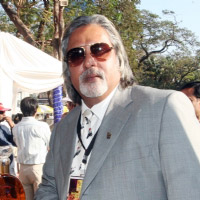
  • [MJR] Noosemakers: The life and letters of Dr Vijay Mallya

    By Ranjona Banerji


    “The Indian media and the ‘paid’ media that even the Prime Minister referred to are unscrupulous and they will do whatever it takes, part fact or fiction, true or untrue to achieve their sensationalist objectives.”


    These lines are from the opening paragraphs of Vijay Mallya’s letter to the employees of Kingfisher Airlines, promising them that he is making arrangements to pay their salaries. He also says that he intends to pay his taxes.


    It is heartening, however, to note that the media, paid and not paid (unpaid would refer to a Kingfisher staffer) have not been responsible for denying Kingfisher employees their salaries. Or indeed, that it is because of the media that Kingfisher could not pay so many taxes.


    The media has, therefore, just “sensationalised” the whole issue of Kingfisher’s troubles, we are to glean from Mallya’s letter and concentrated on one airline when the whole aviation sector is in trouble. (Again, thankfully, the media is not responsible here for the woes of civil aviation (at least I think not), just for talking about it.


    Except, he points out, the one airline which is not in trouble but even that could be true or untrue according to Mallya. I am not sure the media had any role to play here… does the media have the power to make just one airline in a sick industry successful?Indiawants to know.


    I don’t want to point fingers at anyone here, but I think Mallya should also blame passengers, especially his “guests” who paid but were then un-boarded and un-flown. These guests kept blabbing to the media about how they had been inconvenienced by Kingfisher Airlines. I think Mallya should have blamed them too.


    And all the pilots who upped and left to work for that one airline “that defies the odds and claims to be profitable, however unlikely that may be”. I’m guessing that they were paid rather than unpaid by that other airline with its bizarre claims.


    Many years ago, a person kept calling newspapers (there was not much TV those days, it was that long ago) and claimed to be Vijay Mallya’s PR person. She would talk about his latest horse or yacht or holiday destination. We could never determine if she was paid or unpaid, part fact or fiction, true or untrue. Somehow I feel that Mallya needs someone like her all over again. Might be better if he pays her this time and I know Niira Radia’s out of a job but maybe not her…?


    Here’s the text of the letter:

    http://www.ndtv.com/article/business/vijay-mallya-writes-to-kingfisher-employees-read-letter-180222


    Photograph: Fotocorp

  • Introducing the MxM Journalism Review

    So what’s a media, marketing and advertising website doing with a Journalism Review? Isn’t journalism at the bottom of the value chain for some or just one of those things that don’t quite matter? ‘Cos who will advertise on a website/microsite that’s only got journos hooked?


    Monsanto, perhaps, given that it was the benefactor for a major award recently. Or the Jaypee group or various others wanting to curry favour with news media professionals.


    There’s a reason why the MxM Journalism Review (MJR, for short) has happened. For one, we have received an astounding response to our journalism section. And two, as a media and marketing site, we can’t not track what’s happening in this part of the media. While the pressure of running the rest of the operations has taken a toll over my doing Mediaah! regularly, senior journalist, until last year senior editor at DNA and former colleague Ranjona Banerji’s ‘Freaking News’ has been attracting many hits. Plus Gouri Dange’s column ‘Naming no Names’, Deepa Gahlot’s review of reviews, Newswatch by well-known journos, Anil Thakraney’s frequent ‘hard knocks’ on news and of course our regular fare of stories.


    The objective of MJR is not to take journalists to the cleaners. Yes, it’s a ‘review’ but we aren’t watchdogs who like to bark at everyone. It’s more of a celebration of the profession, and in the process reporting on all the good and bad things in there. We don’t think there’s anything wrong with innovative advertising in print. So a coffee-flavoured newspaper is fine and if a newspaper wants to have a full page ad on Page 1 on a big news day, then we guess its folks know how it impacts the brand. We’ll have our commentators do the talking, but we surely don’t believe most publishers are evil.


    Yes, we have a very strong view on paid content. Our standpoint on the issue was evident when we were perhaps the only publication which said RJ mentions constituted an incorrect practice… quite the same when a newspaper asks a restaurant to pay for publishing a picture of its opening. We don’t think it’s right. We stand for integrity in the profession and are worried as media companies compromise on ethics when they get into allied activities like events – conferences, awards, et al.


    We think journalists who accept bribes are as corrupt as those indicted in the various scams. We believe journos who pass off readymade stories handed to them by PR agencies as their own are corrupt even if they may be senior editors at respected print media. We think award organisers who give out awards without a legit process and/or juries deciding on them must be damned.


    We also want private FM radio to air news. We think news journalism – especially local and cultural – will get a huge boost with FM radio. When Markandey Katju went on a rampage against journalists, we were upset because some of it was indeed true, except of course he had no business to do so as Press Council chief.


    The MxM Journalism Review isn’t just about news journalism. We are as interested in documenting how the Maxim editor is doing as is the editor of Hindustan Times. We will write about how Sun News is doing as much as, say, YouTube-based film news offering Lehren.


    A lot of it is tough doing, but we hope to achieve the impossible thanks to a network of well-wishers across the country. In the process, we may experiment. Our columns and features may upset Editors, CMOs and CEOs. While some may threaten to pull their advertising, a few may choose to invest their faith in us.

    MxMIndia’s MJR will strive to bring you unbiased news and views on Indian journalism. So help us God.


    -Pradyuman Maheshwari

    Editor-in-Chief and CEO, MxMIndia

    Email: pradyumanm@mxmindia.com,
    BBM: 23050B5D, Twitter: @pmahesh
    Gtalk: pradyumanm[at]gmail.com

    PS: Taaliyaan!

  • Nokia unveils phone with 41 MP camera!


    By A Correspondent


    This wasn’t going to be our Big Story today. Given the launch of our smashing new journalism channel, a story on the state of scribeland was more appropriate. But, we were woken up to the amazing sounds of surprise, shock and awe on social networks. Good ol’ boy Nokia is keen on a fight to the Finnish. Pardon the pun, but let’s get on with it.


    At the Mobile World Congress in Barcelona, Spain, Nokia unveiled what’s possibly the mother-of-all-camera phones. The Pureview with a 41MP sensor.


    The Nokia 808 PureView is the first smartphone to feature Nokia PureView imaging technologies, bringing together high resolution sensors, Carl Zeiss optics and Nokia developed algorithms, which will support new high-end imaging experiences for future Nokia products. It runs on the Belle operating system and is likely to available from May 2012… just a few more months. It is rumoured to be priced at $600.


    “Nokia PureView imaging technology sets a new industry standard by whatever measure you use,” said Jo Harlow, executive vice president of Nokia Smart Devices. “People will inevitably focus on the 41 megapixel sensor, but the real quantum leap is how the pixels are used to deliver breath-taking image quality at any resolution and the freedom it provides to choose the story you want to tell.”


    The PureView should be a delight even for professional photographers. It features a large, high-resolution 41 megapixel sensor with superior Carl Zeiss optics and an innovative pixel oversampling technology. At standard resolutions (2/3, 5 and 8 megapixels), this means the ability to zoom without loss of clarity and capture seven pixels of information, condensing into one pixel for the sharpest images imaginable. At high-resolution (38 megapixel max) it means the ability to capture an image, then zoom, reframe, crop and resize afterwards to expose previously unseen levels of details. With great low-light performance and the ability to save in compact file sizes for sharing via email, MMS, and on social networks, the PureView makes it possible for anyone to take cool, pro-like images in any conditions.


    Comments Devindra Hardawar on venturebeat.com: “Nokia is well aware that such large resolution pictures will be difficult to share, so the phone will oversample pictures to a size roughly around a 5 megapixel picture. That means better picture quality without scary file sizes. And if you do dare to take a picture at the full resolution (which is actually 38 MP), you’ll be able to zoom into the picture after the fact without losing much detail.


    In addition to superior still imaging technology, the PureView also includes full HD 1080p video recording and playback with 4X lossless zoom and the world’s first use of Nokia Rich Recording. Rich Recording enables audio recording at CD-like levels of quality, previously only possible with external microphones. This is a boon for online journalism as short, clear clips can be captured clearly on the device.


    The phone features exclusive Dolby Headphone technology, transforming stereo content into a personal surround sound experience over any headphones and Dolby Digital Plus for 5.1 channel surround sound playback. In fact, the unveiling at the Mobile World Congress yesterday happened at the Nokia and the Dolby stalls.


    Check out the Pureview preview at http://www.nokia.com/in-en/products/pureview/


  • The Anchor: 5 drivers in B2B marketing

    By Chaitanya Prakash


    #1 Your channel partner has the key.

    In a B2B scenario, your channel partners are often closer to your customers. Realising their importance, ensuring the right framework to support them, enabling and engaging them with your brand is critical. While channel development is a function by itself, marketing pitches in with co-branding, co-promotion and joint marketing initiatives. Engaging them through special portals, forums, meets and networks forms the foundation for a long term relationship, besides helping tremendously in understanding customers. Remember, your Channel partners are your brand ambassadors, and hence engaging them requires a long term view (read investment).


    #2 Building your intellectual capital.

    Steer your PR for more intellectual-driven engagement, showcasing the knowledge and management depth of your company. Clients are often a lot more influenced and assured if their B2B seller knows the business. Participating in seminars, presenting white papers and getting invited for guest columns are only a few ways to start this long journey.


    #3 Content. Content. Content.

    B2B marketing is far more content-driven, be it presenting through your product or service brochure, case studies, video or advocacy. Focus on the content and evaluate its worth frequently. While the medium today has expanded several fold, and ‘creative’ is important, your key theme (read message) is critical.


    #4 Take things personally.

    Vijay Mallya makes a bold statement to his guests aboard Kingfisher flights, that ‘he is taking things personally’. In good times, it cut the ice among his guests (today, of course, it may be a different story). In B2B marketing, be committed to take things personally, when it comes to your customers. Engaging your customers beyond the ordinary, with a personal touch, triggers several ripple effects – word of mouth, repeat orders, endorsements and advocacy, to name a few.


    #5 Resist the ‘visibility’ syndrome.

    Visibility may not be as critical as the right associations. Resist the temptation of investing in a highly ‘visible’ campaign. Instead, think the right visibility campaign, where your brand gets to be seen in the right light, at the right places, with the right associations. It’s long-term, but it’s rock-solid.


    Chaitanya Prakash is the Head of Strategic Marketing & Communication for Weir Businesses in India.

  • Shouvik Sarkar appointed ECD, Dentsu Marcom Mumbai

    By A Correspondent


    Continuing with the series of senior-level appointments, the Dentsu India Group has announced the appointment of Shouvik Sarkar as Executive Creative Director, Dentsu Marcom, Mumbai. He will lead all creative deliveries at the agency’s Mumbai operations.


    Mr Sarkar started his career as a Copywriter at Equus Red Cell in Mumbai where he worked on the India launch of AXN, the Kolkata launch of Shopper’s Stop and Development Credit Bank, Mumbai. Next as Senior Copywriter, Ambience Publicis, he worked on HDFC Mutual Funds, Water Kingdom, Yellow Pages, Westside and Hit. He led the Mumbai campaign for Water Kingdom (city-wide) and the national launch of Yellow Pages, his efforts winning 8 individual silvers and The ‘Ad Agency of the Year’ in the ‘Outdoor’ category at the Advertising Agencies Association of India (AAAI) Awards, 2004.


    Mr Sarkar joined O&M as Creative Supervisor where he was an integral part of the team that won the SBI account. He handled SBI and spearheaded the creative output for Hutch, 3G (Hutchison Whampoa). He also worked on the ‘Surprisingly SBI’ campaign, a rebranding exercise for the State Bank of India, in 2005, possibly the largest communications makeover for a PSU at that time. At O&M, his work won two silver Abbys (‘Integrated Campaign’ and ‘Financial Products’ categories), two Effies (‘Big Idea’ Award and ‘Financial Products’ categories) and the ‘Yahoo Big Idea Chair’ Award.


    Moving to Dubai in 2007, Mr Sarkar joined DDB, Dubai as Creative Controller. His work helped DDB win The BBC Arabic News Channel and Dell Inspiron accounts. In addition to developing the 360 launch campaign for BBC Arabic News, Mr Sarkar also managed the Parachute Coconut Hair Oil account. On his return to India, Mr Sarkar joined Contract Advertising as Senior Creative Group Head. While managing brands like DNA, Shoppers Stop, Asian Paints, Cadbury and Ask Me B2B, he studied retail consumer behavior, SME advertisers’ mindsets while creating copy to redefine brand perceptions and driving retail sales. Next, he moved to Telibrahma Convergent Communications as Associate Vice-President.


    Welcoming Mr Sarkar to Dentsu, Hiroshi Omata, Chief Operating Officer, Dentsu Marcom said, “Shouvik brings a very unique blend of multi-functional expertise to our business. His background of consistently developing effective recognized creative work, combined with his knowledge of digital technologies and a mindset further moulded by his intensive marketing experience – will be of great value to our teams and client relationships. I am delighted to have Shouvik on board and look forward to his work at Dentsu Marcom.”


    On joining Dentsu, Mr Sarkar  said, “Fleet-footed communications solutions rooted in consumer insight are the order of the day. Back in time, Dentsu created the distinctly memorable ‘Sar Uthake Jiyo’ campaign for HDFC Standard Life. The mandate is to extend the same magic to other brands. My goal will be to render ‘Tenka musou’ the Japanese adage of being matchless/ fearless to the team and to the work that we do. I would like to deploy the purist marketing learnings now to a role which delivers more meaningful work for clients, and also help Dentsu grow organically.”


    Mr Sarkar joins Dentsu from The Lodha Group where as Marketing Manager, he led integrated marketing strategies at the brand, segment and company levels. As part of the core team at Lodha, Mr Sarkar managed their largest product for 2011-12 with average revenues approximating 500 cr m-o-m. While handling the media allocation and spends for the launch, Mr Sarkar also mentored the internal graphic design team at Lodha. His efforts enabled Lodha to win 3 critically-acclaimed International Property Awards in Shanghai.


    Prior to Lodha, Mr Sarkar was Associate Vice-President, Telibrahma Convergent Communications. He led business development operations for Mumbai, taking new mobile/digital marketing technologies – QR (Quick Recognition) codes, (enabling print augmentation), augmented reality products to market. Setting up operations from scratch, he supervised a digital campaign for Nike while acquiring new business from brands like Cadburys’ 5 Star and Apple iPhone.


    Mr Sarkar graduated in English Honours from St. Xavier’s College, Kolkata. With a Post-Graduate Diploma in Print Journalism from IIMC, he also completed a MBA in Marketing and Strategy from the Indian School of Business.


  • Olympics countdown: Hero, Airtel etc flock to hockey on rising public interest

    By Ratna Bhushan & Meenakshi Verma Ambwani


    Indian marketers are joining the ‘Chak De India’ brigade going to London Olympics. A day after the Indian hockey team qualified for the Olympics in spectacular style, advertisers such as Hero MotoCorp, Bharti Airtel and Vodafone plan to associate with the team and the event while Coca-Cola and Samsung may look to cash in on their official partnerships for the event, say people involved in their media buying plans.


    Media planners say official broadcaster ESPN Star Sports hopes to earn Rs95-100 crore by selling advertisement spots during the 17-day event in July-August as well as related programmes that will be spread over five months starting March.


    This amount is several times more than Rs5-7 crore that Doordarshan had raked in during the Beijing Olympics in 2008, but experts say three factors will help ESPN Star Sports reach its revenue target.


    These are, Indian cricket team’s disastrous performance in recent times that has pushed the sport’s television viewership to new lows; the fact that the Olympics is being shown on a private channel for the first time, leading to aggressive marketing of the event; and, a strong revival in interest in hockey and other sports.


    “The hockey team qualifier has changed things. Many companies are now seeing the Olympics as an opportunity to cash in on their global partnerships,” said Navin Khemka, senior vice-president at media buying firm Zenith Optimedia, which buys media for Reckitt Benckiser.


    Advertisers game for London

    ESPN Software Executive VP Sanjay Kailash said there is significant interest among Indian brands to advertise on the Olympics. “With the Indian team qualifying for hockey, the interest and buzz around the Olympics among Indian viewers and advertisers will only increase,” he said.


    ESPN Star Sports plans to rope in eight partners for the event. Consumer electronics giant Samsung is the official partner of the Indian delegation to the London Olympics while dairy products brand Amul on Monday announced a deal to sponsor the Indian contingent.


    “The hockey team’s performance has added muscle to our sponsorship plans,” said RS Sodhi, managing director of Amul brand owner Gujarat Cooperative Milk Marketing Federation, which will provide Rs1 crore for athletes who have qualified for the London Olympics.


    A Samsung spokeswoman said the company is yet to work out the specifics of its Olympics campaign. The firm is supporting training expenses of six players. Two-wheeler manufacturer Hero MotoCorp, the title sponsor for the Olympics qualifying tournament concluded in New Delhi on Sunday, is also expected to pick up broadcasting spots.


    Others such as telecom services providers Bharti Airtel and Vodafone too have evinced interest in associating with the Indian team, either on ground or on television, say media planners. Sahara Group, which renewed its five year sponsorship deal with Hockey India earlier this month, too may pitch in.


    Cricket’s loss helps

    In a strange turn of the wheel of fortune, the Indian hockey team, by merely qualifying for an event it had missed only once since the country’s Independence, has stolen the limelight from the national cricket team that won the World Cup less than a year ago.


    Television rating points for India’s ongoing series in Australia have plunged to less than 2, now that India has lost all the Test matches and is almost certain to finish last in the three-nation one-day international tournament.


    The downturn started in England last year, when the Indian team lost all its matches and meekly surrendered its top ranking in Tests to the host country. Yet, ESPN Star is expected to have earned about Rs300 crore in advertising revenues from the three-month Indian tour to Australia.


    “Family viewership for cricket has dropped and rates are now out of reach of certain brands,” says Shripad Kulkarni, chief executive officer of Allied Media, part of sports entertainment company Percept.


    Source: The Economic Times
    Copyright © 2012, Bennett, Coleman & Co. Ltd. All Rights Reserved

  • [Flashed y’day] Ranjan Kapur is new Bates chairman

    Veteran adperson Ranjan Kapur has agreed with the Regional Management of Bates Asia to step into the role of Chairman Bates India. It will be in addition to his current role as Country Head, WPP, India.


    In his new role, Mr Kapur will work closely with the senior management of Bates India to fire a new ambition and help develop an organization structure that offers more relevant ways of engaging with clients and consumers “Bates has developed an exciting new ‘changengage’ philosophy that helps provide solutions that are both media and discipline neutral, and it has through the line capability and resources, to deliver them. To drive this thinking forward we are in conversations with a few new age thinkers and we hope to finalize on the CeO for bates India very shortly,” said Mr Kapur in a communique.


    Mr Kapur has been informally engaged with Bates ever since he stepped down as Chairman of Ogilvy. Mr Dheeraj Sinha, Regional Head of Planning feels that Ranjan will help galvanize the people at bates India. “His reputation precedes him and he hasn’t lost any of the passion and drive he displayed when he led Ogilvy to the top.”


    “The recent departures at Bates India, have presented us with an opportunity to put the right leadership in place”, says Mr Tim Isaac, Regional Head of Bates Asia. “I am delighted to renew my partnership with Ranjan. I have worked with Ranjan many times since I first arrived in Singapore in 1986. With Ranjan as Chairman and a new CeO in place shortly we will be looking to accelerate our growth in India”.


  • Swad of Success: Regional FMCG firms like Panjon, Bisk Farm, Mapro, raising funds to expand operations

    By Sagar Malviya


    After a gap of almost four years, TV commercial of the once popular Swad digestive candy hit the screens early this month. Swad, which is making a come back, is one of the brands owned by 48-year old Panjon, an Indore-based firm that sells candies to balm and toothpaste endorsed by Shammi Kapoor and Sonali Bendre in its glory days. The plan is to reach out to more states, expand product portfolio and grow sales ten-fold in two years.


    Panjon isn’t alone. Almost half a dozen smaller regional firms such as Bisk Farm, Mapro, Wagh Bakri and V-John, among others, are entering newer states, some advertising for the first time, while others planning to raise funds to survive a fresh salvo by large consumer goods companies that expanded into the turf of smaller rivals last year.


    “While our products are doing well in MP and UP, competition is also getting intense in these home markets,” admitted Atul Kothari, managing director at Panjon, which is in talks with a clutch of private investors to raise funds for expansion. “We are looking to enter Gujarat, Punjab, Haryana and Bihar this year,” he said. The company plans to add more than 1,400 distributors to its existing network of 600.


    So what exactly was the trigger? Well, for one, large FMCG firms have been aggressively reaching out to rural consumers through expanded distribution, which led to smaller regional players losing market share across segments in their core markets.


    Over the past couple of years, P&G has almost doubled its distribution reach and now has a direct reach of 1.3 million outlets, against HUL’s direct reach of 1.60 million outlets. Emami expanded reach by as much as 30 per cent primarily in rural areas, while HUL added more than 50,000 villages to its network just last year. Ditto, in the case of Dabur, which rolled out special rural focused sales initiatives across eight key states and widened reach in 71 high potential districts.


    However, the regional players are now plotting a counter attack, not just in their existing markets but also in newer states. The Rs 500-crore SAJ Food Products that dominatesEastern Indiawith its biscuit Bisk Farm is a case in point.


    “Last year, we entered Karnataka and are planning to reach Andhra Pradesh next month. We aim to have a national footprint by 2013,” saidVijay Singh,MDof Kolkata-based SAJ Food Products. He added that the firm has even discussed internally about coming with a public issue in the next two years.


    But it won’t be easy. And smaller rivals are aware of the fact that price competitiveness with national players would rather be futile with the latter having economies of scale. Hence, they are looking to cash on through their quality proposition rather than being price warriors.


    Maharashtra-based processed food firm Mapro Foods andGujarat’s tea company Wagh Bakri feel that they are better in terms of quality compared with rivals such as Hindustan Unilever. “Large players are very aggressive in terms of schemes and offers. But we believe that consumers want quality and not price-offs,” said Parag Desai, executive director of Wagh Bakri, that is looking to enterPunjaband Haryana.


    Some firms that already have an indirect reach nationally are also keen to distribute products directly and cut costs on intermediaries. Delhi-based Vi-John is reworking its distribution strategy by eliminating super-stockist and instead having selling agents in each state.


    “We are planning to add over 1,500 distributors and 70 stockists to have direct reach in western and southern markets,” said Vimal Pande, CEO of Vi-John Group, which has 30 stockists and 2,500 distributors.


    Modern trade is doing its bit too. “Regional brands need to build stronger consumer connect to keep their consumer franchise or they could expand distribution to add new consumers and grow base,” said Devendra Chawla, president – food and FMCG at Future Group.


    Source: The Economic Times

    Copyright © 2012, Bennett, Coleman & Co. Ltd. All Rights Reserved


  • Realigned DDB Mudra ups ante for APAC push

    By A Correspondent


    After a realigning and restructuring exercise that stretched through to 100 days plus and with several key appointments and a few exits later, the DDB-Mudra alliance presented itself in a new avatar as the DDB Mudra Group at an event in Mumbai yesterday. The event was made interesting by having the APAC, Japan and India Chairman & CEO of DDB, John Zeigler announce the key milestones to the gathering.


    While the top-level realigning at the group was made known earlier to one and all, the event also witnessed a couple of other key announcements from the group. These included the entry of TracyLocke, one of the world’s most awarded shopper marketing agencies into India and the decision to make Water, the strategic branding and design consultancy to join the Interbrand network and represent Interbrand in India.


    With a client roster that boasts the likes of HP, T-Mobile, Starbucks, Johnson & Johnson, Gatorade, Tropicana, PepsiCo, Sony and Unilever’s Lipton, TracyLocke will be managed in India by Pratap Bose, Chief Operating Officer of DDB Mudra Group. According to Jim Sexton, Global Chief Marketing Officer of TracyLocke, “Once we saw the level of retail expertise and comprehensive knowledge of the India consumer and shopper at DDB MudraMax, we knew we had the perfect fit. We look forward to delivering to our clients a unique brand of shopper marketing relevant to each segment of the Indian market. Additionally, we hope to share proprietary marketing tools that we can take from India to the rest of the world.”


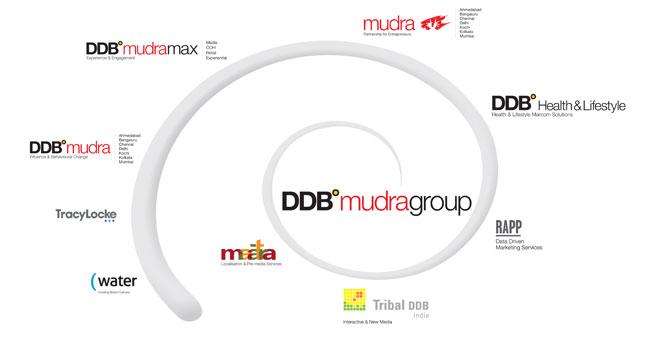
    As for the revitalised DDB Mudra Group, the network in India will be split as DDB Mudra, Mudra and DDB MudraMax. Accordingly the group has adopted a new structure, brand identity, colours and architecture that will drive forward the change. The new structure will comprise eight branded agencies as follows: DDB Mudra – the Influence & behavioural change agency with a pan India presence across Ahmedabad, Bengaluru, Chennai, Delhi, Kochi, Kolkata and Mumbai; DDB MudraMax – the Experience & Engagement agency which offers Media, Out-Of-Home, Retail and Experiential; Mudra – the partnership for entrepreneurs agency with a pan India presence across Ahmedabad, Bengaluru, Chennai, Delhi, Kochi, Kolkata and Mumbai; DDB Health & Lifestyle – Health & Lifestyle Solutions practice; RAPP – data driven marketing services agency; Tribal DDB India – interactive & new media agency; Water – Brand & Design consultancy and Maatra – localisation & pre-media services agency.


    Elaborating on the proposed management structure, Madhukar Kamath, Group CEO and MD, DDB Mudra Group said that while he was proud of Mudra’s past, he is equally excited about the future. According to Kamath, the executive board committee will comprise of Sonal Dabral, Chairman & CCO, DDB Mudra Group, Pratap Bose, COO – DDB Mudra Group, Madhukar Kamath, Group CEO & MD, DDB Mudra Group, Dilipkumar Upadhyaya, CFO and Ajit Menon, EVP – DDB Mudra Group. Excited about the largescale realigning, Kamath said that the new venture would see DDB Mudra emerging amongst the fastest and topmost agency in a few months from now. He was also in praise of his clients of whom he said that about 40 per cent of them access more than one business service of the Group, which speaks volumes of the solutions and services that the group has to offer.


    Earlier, John Zeigler began by highlighting the growth of DDB Worldwide and how it is looking at Asia Pacific, led especially by India, to drive its expansion into the region. “Current figures suggest our growth split as 44 per cent from Europe, 38 per cent from North America, 6 per cent from Latin America and 11 per cent from Asia Pacific. Our core focus would be to increase the pie of Asia Pacific to a large sum going forward and this would be driven by India which is being seen as a leading market in marketing communications by most agencies.” In a one-on-one conversation with MxMIndia, Mr Zeigler was hopeful of deriving a modest growth across APAC as he said, “With the kind of businesses we have in India we should be able to achieve a growth rate of 25 per cent plus. As for our other agencies across Asia Pacific, we had a compounded growth rate in excess of 30 per cent year on year.”


    Mr Zeigler further highlighted how DDB’s model was unique in the sense that it captured both local and global sentiments of its clients and offered services that were unmatched in nature. The idea, according to Zeigler, was to be seen as an agency offering local solutions to international clients who wanted to tap outside markets as well as offering international solutions to local clients who wanted outside exposure to derive local growth.


    On getting TracyLocke to India, Mr Ziegler said, “As one of the leading shopper marketing agencies in US andEurope, TracyLocke brings vital shopper insight and great creativity into our future. The launch in India is its entry intoAsiaand will be providing vast opportunities for the entire DDB Asia Pacific group.” The summit is to be conducted next month and will showcase the experience, skill sets, global practices and learning of the entire DDB Asia Pacific region which has distinguished itself in 2011 with several impressive wins including Spikes Asia’s Network Agency of the Year 2010 and 2011, and AdFest Network Agency of the Year. The summit will be attended by Chuck Brymer, President and CEO of DDB Group Worldwide; John Zeigler, Chairman & CEO, DDB Asia Pacific, India & Japan; and Patrick Rona, Tribal DDB Asia Pacific’s President and Chief Digital Officer for DDB Group Asia Pacific, as well as an overseas contingent of senior agency personnel from across the Asia Pacific region.