Category: NEWS

  • Manza gets a dose of fashion

    By A Correspondent

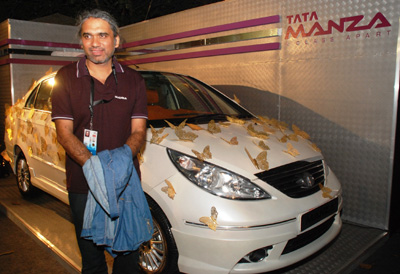
    Luxury sedan Tata Manza has associated with the most glamorous event in the country – the Wills India Fashion Week. In partnership with the world-renowned fashion designer, Rajesh Pratap Singh, Tata Motors showcased two specially accessorized Tata Manzas, at the show.

    The fashion maestro has designed an exclusive theme-based collection which was exhibited at the Wills India Fashion Week. The collection theme is inspired by a road trip which Rajesh undertook in the villages of Orissa. The show attempts to initiate a dialogue and thought process on what is the relevance of handloom in the country.

    Commenting on his collection, Mr Singh said, “Ikat is not a print, yet, worldwide there has been an attempt to replicate Ikat digitally or through a screen print. Through this collection, we would like to raise awareness and strike a healthy discussion on the relevance of an indigenous craft. Ikat is just one of the many rich possibilities every pocket in the country has to offer and we must cherish and encourage this rich heritage.”

    Focusing on ‘Ikat’ and handloom textile weaves, some of the experiments are part of this collection. This magical collection was showcased by famous models. The theme of Rajesh Pratap’s collection have been integrated on two specially accessorized Tata Manzas, which were the show-stoppers.  Interiors of the car have been inspired by Rajesh’s collection colour theme and the exterior of the car adorned butterflies with gears, which represented a true integration of style and engineering.

    In February 2011, Tata Motors introduced the newly refined Tata Manza series. The Tata Manza has been given a fresh new look with refined premium dual tone interiors & fabric seats and exterior make over, delivering class apart driving experience in the sedan market. At Tata Motors, product development and upgradation is a constant endeavour.

    Rajesh Pratap has partnered with Tata Motors’ styling team which operates from its state-of-the-art styling studio, at the car manufacturing plant in Pune. Rajesh Pratap’s rich experience in the fashion industry and thorough knowledge about design aesthetics will further help Tata Motors in enhancing the Tata Manza’s design. He will be helping the team to further enhance the design and stylise the interiors and exteriors of the Tata Manza.

    “It has been a pleasure and an honour for me to be associated with the Tata Group, a proud Indian brand with values that inspire everyone in the industry. Tata Motors have an exceptional and dynamic young team that is going to change the way India drives.  I am truly excited to be involved with this project”, added Rajesh.

    Rajesh Pratap’s attempt in the Tata Manza design project is to achieve an equilibrium between handmade and high-tech, where one enhances the other, providing real solutions, a pure aesthetic. Tata Motors will be developing 1,000 Tata Manzas, incorporating design inputs from Rajesh. The limited edition cars will be launch in 2012.


    About Mr. Rajesh Pratap Singh:

    Currently based in New Delhi, Rajesh Pratap Singh belongs to Rajasthan in India. Subsequent to his graduation from NIFT Delhi he worked in the Fashion Industry for two years in India and Italy before introducing his own line of men’s and women’s clothing in 1997.


    Rajesh has over the years created his unique signature style that subtly draws from his Indian roots to craft artisinal garments that stand apart due to their faultlessly clean lines, careful detailing and international silhouettes. His work epitomizes simplicity, yet on closer look reveals his obsessive attention to detail. Rajesh’s reserve reflects in his styling which combines the modern with the traditional in an understated design aesthetic, with a global appeal. He is also closely associated with Indian fabric mills and has had developmental and research based collaborations with several of them.


    About Tata Motors:

    Tata Motors is India’s largest automobile company, with consolidated revenues of Rs. 1,23,133 crores ($ 27 billion) in 2010-11. Through subsidiaries and associate companies, Tata Motors has operations in the UK, South Korea, Thailand, Spain and South Africa. Among them is Jaguar Land Rover, the business comprising the two iconic British brands. It also distributes Fiat cars in India, and has an industrial joint venture with Fiat in India.  With over 5.9 million Tata vehicles plying in India, Tata Motors is the country’s market leader in commercial vehicles and among the top three in passenger vehicles. It is also the world’s fourth largest truck manufacturer and the third largest bus manufacturer. Tata cars, buses and trucks are being marketed in several countries in Europe, Africa, the Middle East, South Asia, South East Asia and South America. (www.tatamotors.com)


    Issued by:

    Debasis Ray

    Head  (Corporate Communications)

    Tata Motors Limited

    Phone: 00 91 22 66657613; E-Mail: qv@tatamotors.com

    www.tatamotors.com

  • Associated Advertising starts the year with 6 awards at the PRCI Global Conclave

    By A Correspondent


    Building on their success at last year’s PRCI Awards for excellence in corporate communications, Associated Advertising, one of India’s largest independent advertising agencies, walked away with six awards  in 2012.


    This year Associated Advertising received a PRCI Golden Award for their television commercial for Apollo Hospital, a Silver Award for their corporate advertising campaign for Apollo Neurosciences, a Silver Award for the corporate diary designed for Andhra Pradesh Tourism, a Bronze Award for their corporate television commercial for Apollo Hospital, a Bronze award for the table calendar designed for MYK Laticrete, and the 2nd runner up award in the overall category.


    Pleased at his agency’s performance, Hemant Agarwal, Managing Director of Associated Advertising said: “We have started the new year with a bang and will stay committed to our endeavour of providing the most strategic and cutting edge solutions to our clients across the country.”


    The agency’s director Adetya Agarwal added: “At Associated, we have always approached every client communication, no matter how big or small, with complete passion and the range of categories in which we have been awarded is a testament to that commitment.”


    The agency’s National Creative Director, Manish Dodani, and the agency’s Film Head/ Director Vikram Agarwal, represented and, received the awards on behalf of Associated Advertising at the PRCI Global Conclave 2012 held at Mumbai.


  • Michael Wolfe on getting more from your marketing $$$s

    By A Correspondent


    In today’s time there is an added pressure on justifying each and every paisa spent on marketing, thus making the return on investment (ROI) all the more critical. That’s where Rainman Consulting steps in. Their core expertise lies in making ‘profit from marketing effectiveness’.


    Rainman recently hosted Michael Wolfe, CEO, Bottom-Line Analytics LLC who gave insight into marketing effectiveness and talked about Marketing Optimization Modeling, focusing on retail marketing applications.


    Wolfe gave a peek into what they do, which includes measuring the impact of the marketing investments of each program and campaign at a time, besides giving the big picture. They also determine the ROI from the marketing spends and, most importantly, providing a plan that ensures a marketer get the most out of his or her marketing budget.


    Wolfe explained how they do this: “The plan helps in determining what works and what doesn’t and thus showing one how to move budget from less to more productive activities. This exercise usually nets a plan which will get you 4 to 8 per cent more sales revenue, all without spending an additional dime on marketing.”


    “We do this with a mathematical modelling, sometimes called econometrics. We call this Marketing Optimization Modelling,” added Wolfe, who later went on to show how they achieve this.


    As he explained, this is basically the application of advanced econometrics towards measuring marketing effectiveness and ROI and is done through collection of media, marketing plans and POS sales data. “We assemble and validate a predictive model which casually links each of your marketing activities to retail sales. From this exercise we are able to specifically quantify the impact of media and marketing on the retail sales and provide you with direct guidance on what is working well and what is not.”


    The session then explained in detail the models for marketing optimization and a case study where application of this model helped in turning around the business. The simulation exercise actually helps in moving funds from less to more productive activities leading even to achieve 5-10 per cent greater revenue with the existing marketing spends. This also helps in more effective deployments by media, message, promotional event and by market.


    Wolfe emphasized on modelling and marketing measurement that must break out and go beyond the silos. During the discussion, he also touched upon the topic of social media ROI and steps to navigate through it.


    The session concluded with few keys to success that included doing what no others can do, focusing on being strategic, understanding the client’s business, never ceasing to innovate, customizing, having passion and evangelise and most importantly loving what you are doing.


  • Big brands use TV stars to connect with masses

    By Rajiv Singh


    Now, Malhotras can raise a toast. After gulping down countless cups of tea during umpteen meetings over the last few months, this middle class family in North West Delhi has finally found a ‘perfect’ match for their son. Rashmi, their prospective daughter-in-law, is not only beautiful but also has a pet name ‘Toasty’ – something that instantly clicked with the Malhotras.


    Reason: The other Toasty they know is a lovable daughter-in-law, played by Aishwarya Sakhuja in Sony’s TV fiction Saas Bina Sasural, who keeps her family together. “I am sure Rashmi has similar qualities like Toasty,” said an elated Mrs Malhotra.


    Malhotras are not alone in getting influenced by serial characters. There are thousands of such people across the country. And several marketers are now waking up to the potential of small screen stars as brand endorsers.


    Over the last six months, a slew of brands including Cadbury, Emami, Hyundai, Maruti, Dulux, Red Label and Lux has roped in popular TV celebrities such as Sakhuja and Hussain Kuwajerwala who can connect well with people at a fraction of cost of hiring a popular Bollywood actor.


    “It’s a great strategic move by brands. The TV characters have a strong resonance with the viewers, especially the middle class that relates to the values shown in the serials,” said Prathap Suthan, an advertising industry veteran who created the government’s ‘India Shining’ and ‘Incredible India’ campaigns and is now the chief creative officer of iYogi, an online technical support services provider.


    Saurabh Uboweja, director of brand consulting firm Brands of Desire, said that by casting TV stars with successful running soaps, advertisers can have the dual advantage of both role and star endorsement for a sensible signing amount: “They get two candies for the price of one.”


    MONEY MATTERS

    While TV celebrities do have their own large fan following, their relatively lower endorsement fee is a huge plus for several companies in the present tough business environment where subdued consumer sentiments and rising costs have hit sales of several products.


    One such company is Maruti Suzuki, the country’s largest carmaker that has had a tough last year and expects its sales to fall 11 per cent in the year ending March.

    “In the current cost-cutting environment, it makes more sense to hire TV stars,” said Shashank Srivastava, Maruti Suzuki Chief General Manager (Marketing). The carmaker roped in TV celebrity Anita Hassanandini this month to feature in its Swift Dzire commercial. Last December, it signed Kavita Kaushik and Rajesh Kumar from SAB TV to endorse its multi-purpose vehicle, Eeco.


    “Selling a car is not like selling a Bournvita,” said Mr Srivastava. “So, there’s no point in shelling out fortune in having big Bollywood celebrities.” Big celebrities have not really worked for Maruti. Father-son duo of Amitabh and Abhishek Bachchan could not boost its Versa sales in 2000-2001. Maruti has also had actor-director Farhan Akhtar and actor R Madhavan to endorse A-Star and Wagon R, respectively, but with limited success.


    CLOSER TO LIFE

    Marketers also say it’s easier for people to relate to TV celebrities than big screen stars. “While a Bollywood celebrity projects an image which is aspirational and larger than life, TV celebrities relate closer to the real life of the viewers and are hence becoming extremely popular,” said Krishna Mohan, CEO of FMCG firm Emami, which signed Suhana of Star Plus’ serial Sasuraal Genda Phool aka Ragini Khanna in November last to endorse its moisturiser Vasocare.


    Unlike film stars, small screen celebrities are identified with the characters they portray in popular long-run serials. So people relate them to the values their characters hold, like a committed housewife, an ideal husband, a perfect daughter… ¦ It helps brands project a distinct identity by endorsing them.


    Late last year, paints brand Dulux rolled out a media innovation by tying up with three popular television serials to create vignettes that resonate with their thematic campaign, ‘Apne Rang Chalakne Do’. AkzoNobel’s brand showed the lead pairs from Star TV soaps Yeh Rishta Kya Kehlata Hai and Iss Pyar Ko Kya Naam Doon, and Sony’s Saas Bina Sasural in its commercial.


    “Since daily soaps are a big draw in India and the consumer follows their journey closely, the protagonists of the daily shows had the appeal that was needed to propel the idea,” said Pushkar Jain, marketing manager for Dulux at AkzoNobel India.


    However, there’s a flip side of using TV celebrities as well, said Mr Uboweja: “Brands want to capture these stars and their soaps when they are running hot. But the shelf life for both is fairly short”. “This ad strategy is a bit like instant noodles, good enough to fill the stomach but not enough to satiate the appetite,” he added.


    Source:The Economic Times

    Copyright © 2012, Bennett, Coleman & Co. Ltd. All Rights Reserved


  • [PR Channel] The focus will be to add value and get more volumes: Rahat Beri

    In between the extreme attention that a big PR organisation gets or the undue fanfare that follows a small PR firm as it straddles a difficult path down the fierce PR road, it is the mid-sized agencies that often get lost in this gratuitous display of affection and are often left on their own to walk the talk. But one cannot downplay the efficacy and value that mid-sized agencies manage to bring to the table – attributes that even clients will readily agree upon. Like for instance, Percept Profile, an agency that has managed to deliver impressive services and value to its clients and has managed to outperform industry expectations by delivering robust growth numbers year after year.


    As the agency gets ready to battle new frontiers in the PR and communications space, Rahat Beri, COO – Percept Profile & COO-Digital Media, Buzzinga, opens up with Johnson Napier on the measures that the agency has in place to keep delivering exemplary services to its clients, on the need to foray into new verticals with the passage of time and how digital and social media would be an integral element for the agency so as to deliver 360-degree solutions that are ahead of time.


    How would you assess the growth of Percept Profile in FY 2011-12?

    FY 2011-12 has been a good year for us. We have witnessed a lot of growth in terms of new business. Also, there were several new initiatives that we started this year, like the launch of an IR division, a social media division. We have also added new branches to our existing fleet. We have also handled several projects across categories like the IFFI inGoa, which was a total integrated marketing communication approach that we delivered to the client in a short period of time.


    The year also saw us gain businesses within the telecom, retail and other categories. So it was a more marketing communication-led year for us and it definitely grew more than the average industry growth rate. We need to understand that it is not just pure PR that can make you grow – you can’t have those 2-3 lakh retainer accounts that can give you numbers. There is a need to expand horizontally in terms of the services that you provide and how effectively you provide them. That’s what is important and that’s what’s going to help you grow.


    Given the need for PR agencies of today to keep evolving themselves to stay ahead of the curve, how, according to you, has Percept Profile evolved as a full-service PR agency of today?

    I would say that we are still a mid-sized agency but very niche in our focus in terms of the kind of services that we offer. We’ve expanded in recent times and have offices across Mumbai,Delhi, Chennai,Bangalore, Kolkata and Pune. We have added a lot more people in our team; we have a language media team which is independent because we realise that is an important space to be in. That’s because we are dealing with language newspapers, which is different from dealing with English language newspapers. Also, as an agency, our goal is to grow in areas that the others are not present in. Though I am not as large as the other agencies, but I am growing in services which will help me build better businesses. I could get my volumes out of it.


    What are the benefits from synergising services of group companies to foster your offerings towards clients?

    We use a lot of the services from several divisions at Percept like Rural, Outdoor, Media, Creative, and others, while servicing our clients. Our internal companies help us in terms of the information and research, which is essential. While earlier research was crucial only for advertising I believe it is going to play a critical role in PR going forward. That’s because it is important for us to understand the perceptions of people. Ultimately, PR is about changing perceptions and building an image. So I need to know where I am and I need the client to tell me where he wants to be. If I am in the know of that, then I can bridge the gap and help him with the communication strategy.


    Most big agencies brag about the evaluation measures that they have but seriously, it beats me as to how can one evaluate a pure PR strategy. You can probably evaluate in terms of messaging or column centimetres, but can you evaluate on the basis of how the campaign has been successful? One cannot. There has to be a mix of tools to achieve that objective. So there is a complete approach to the way we engage ourselves with our clients.


    The agency’s client roster boasts an impressive line-up. How have the several specialty domains performed for you over the past year?

    We’ve handled a lot of real estate clients last year and also clients from sectors such as auto, telecom and educational sector. One of the sectors that we are looking at going after are the PSUs. That’s because a lot of these PSU companies are looking at opening up and communicating their offering to the masses at large. There are a few other clients as well, but I cannot disclose that information as of now.


    How have the various centres contributed to the agency’s overall growth in India?

    Mumbai has been the best region for us;Delhihas been supportive and managed to get good business growth last year.Bangaloreis growing but is yet to get there. Though a small market, our focus this year would be on Kolkata. We believe that there is business in that market. Also, Pune is another market that has grown well last year. We are also going to a lot of Japanese clients, as we have the Hakuhodo lineage to bank on. We helped a lot of Japanese agencies launch their products last year.


    Talent seems to be the biggest impediment hindering the growth of PR in India. How is Percept Profile coping with this inevitable conundrum?

    The problem is that we do not have institutes that churn out good talent. While there are institutes that provide training in advertising and other domains, there is nothing as such for the PR industry. It, therefore, becomes important for a PR agency to conduct regular training programmes for the employees so that they stay updated on the developments in the industry. Like we encourage people to go and attend forums if they feel it is going to be of help to them or we have internal heads of other Percept agencies, who come and discuss and train our staff on a related field of interest. We co-share a lot of knowledge as a group which helps us to learn.


    The focus for us is that we do not want our employees to grow up with just pure PR; we make them meet other experts too as it is important that they understand communication in its totality. So there is a lot of learning that happens on an open level of communication and not just pure PR.


    There is a general perception in the industry that clients are hesitant to pay a premium for services sought. Your comments.

    I don’t think that the clients underpay, it’s the agencies that undercut. The thing is that every agency has a cost that it has to bear and the bigger the agency the larger the cost it has to incur. But if you are a smaller agency and doing a volume-driven business then you can go ahead and undercut your rates as you have smaller costs to bear and that’s where the problem lies.


    Also, the thing is that one has to analyse every client and understand what he wants. They could be big multinationals or small players but they are very clear as to what they want from their PR agency. What is important for the agency is to say whether can I do it or can I not do it? Also, cost-wise there are a few agencies that have very large networks, otherwise we all use stringers. And the cost of a stringer is very high, how do we make so much money to pay them? Also, it is not a viable option to open offices at 100 different locations. So how does one manage itself given such constraints; it’s really a catch-22 situation.


    Is the client partly to blamed for failing to see the value, and hence the premium, that agencies bring to the table?

    I do not blame the clients and I do not blame the agencies either, but I think that it is a phenomenon that one needs to understand and do a reality check – can I do it or not do it? The agencies have to be honest with their client. We tell our clients honestly that this is what we can deliver and this is where I’ll need help from stringers and therefore this will be the cost that it will come up to. The last thing an agency would want is for the business to be unviable; at the end we are all here to do business.


    What would you attribute the highly disorganised state of the industry towards?

    I feel there are a lot of these small agencies that have cropped up lately. You see people quitting an agency and starting their own venture but I do not know how long they last? I am sure that what these small agencies do is good but they undercharging because of other business wins. I am of the firm belief that pricing should have a standardisation.


    Your digital offering Buzzinga was floated a few months ago. What are your plans for the space in 2012?

    Digital media is important to any company that wants to grow and the quickest way to get their name out there to the masses. Buzzinga aims to provide the best online solution to clients with an objective to creating a strong and highly recalled brand in the real and virtual world. What Buzzinga does is it utilizes several different mediums effectively to highlight a brand and create a direct line of communication with clients and customers. Buzzinga caters to clients’ needs right from creating an online identity, strategizing the online communication, creating content, executing the strategy and finally monitoring the activities in the social media space. Buzzinga also designs Facebook and Smartphone applications for brands. It already has a huge roster of clients that it caters to in the digital space. The start has been good so far, the team is young and growing and I see a brilliant future for Buzzinga.


    How do you view the entry of multinational agencies in India? Have you been approached for a takeover from an interested suitor?

    We work with a lot of multinational agencies across the world. We have tie-ups with agencies in Malaysia, Dubai, Singapore, Europe, and so on. The thing is that we use the skill-sets of different agencies in different markets to do our work. To enter other markets, it would make sense to enter as per the specialty that each market is able to offer which differs from region to region. So right now we are content working with different agencies across markets.


    While there have been multinational agencies who have come here inIndia, we are yet to see the impact that they manage to create in terms of getting in systems and processes in place. Having said that we are open to a partnership as and when we feel we are ready for it.


    What is the road ahead for the agency in 2012?

    Growth, growth and more growth. We want to grow multi-dimensionally and grow in areas of business that will add value and help in getting volumes for the agency. We want to be seen as a full-service agency offering every service within our reach.
     

  • Apollo makes it ‘snow’ in Chennai

    By A Correspondent


    Apollo Munich Health Insurance launched ‘Optima Restore’, an ‘Unbelievable’ health insurance product in a unique way. To bring this offering closer to the people of Chennai, Apollo Munich conceptualized an unbelievable event where the people of Chennai experienced “snowfall in Chennai” at the Express Avenue Mall on February 19.


    Mudramax, the agency partnering Apollo Munich in their ‘Unbelievable’ concepts, came up with an execution whereby it snowed in Chennai, a city which has never seen snowfall! An innovative pre-event hype promotion saw promoters distributing Apollo Munich branded balloons with ‘Snowfall in Chennai’ written on it, as invites. Radio also acted as an invite medium to drive people in hordes to the event!


    On the day of the event, the team created a maze-like structure through which people could explore their way to the main event, to experience snowfall – for most of them, this was the first time in their lives that they experienced something like this. A snow machine threw imitation snow around an igloo throughout the day, attracting crowds who not just experienced it, but took home the experience, through their mobiles and cameras, to share with others.


    To round off the snowfall effect, the team also got them to play a game of skiing on the large screen, using a motion sensing game. Speaking on the event, Mandeep Malhotra, President and Head Mudra Max (OOH, Experiential, Retail) said: “That the event was a huge success can be seen by the number of people who participated. For a mall event to reach out to more than 100,000 people over the weekend is rare. Needless to say, the brand delivered on its promise of offering the ‘Impossible’ to the people of Chennai and I am indeed happy that I was present here personally to experience the same”


    Speaking about Optima Restore and unbelievable ‘Snow in Chennai’, Antony Jacob, CEO, Apollo Munich Health Insurance, said: “For the past four years, Apollo Munich has brought to the marketplace, unique and innovative products. Optima Restore is the latest and most exciting with the presence of two unbelievable benefits.”


  • Y’day’s Big Story: Print wins with ‘hat ke’ ideas


    Bharat Kapadia

    By Akash Raha


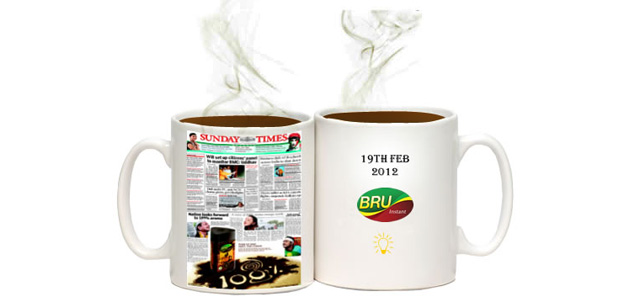
    The readers of The Sunday Times of India of February 19 woke up to a special surprise as they were served coffee with their newspapers. Well, not literally. The Mumbai, New Delhi and Bengaluru editions had a unique dimension – they broke the olfactory barrier. Each copy filled the air with the rich aroma of coffee, spreading the message for Hindustan Unilever’s flagship coffee product, Bru Gold. Veteran mediaperson Bharat Kapadia’s firm, ideas@bharatkapadia.com, unveiled its first big idea for its clients Hindustan Unilever and The Times of India group.


    “The objective was to drive home the richness of fine coffee and I knew that we could conquer this final frontier in a newspaper,” Mr Kapadia said. “The aroma of food products can create a sense of craving and can be very effective way to lead the reader to consume it.”


    In a world where it’s critical to stand out in a crowd, an idea when executed effectively can be a winner and this can be a unique consumer experience with every new fragrance. Mr Kapadia should know. Having spearheaded several ideas with the publications he has led over the years, ideas@bharatkapadia.com is a specialized ideas consulting firm in media and marketing. The fragrant newspaper concept has been tried out earlier editorially by Dainik Bhaskar and possibly some others too, but it’s the first time by a national advertiser across multiple editions.


    What experts feel on innovation

    The Times of India has been in the forefront with innovations. It’s been said and discussed in various forums that the only way the print industry can maintain its vitality is by constantly innovating and thereby evolving. That innovation is a driving factor for success is a no-brainer, yet is our print industry doing enough to innovate and create more value for the advertisers? Earlier, MxM India got in touch with leading advertising practitioners to know more about current trends and innovations that are happening in the industry.


    Pratap Bose

    When asked if the print industry is innovating enough of late, Pratap Bose, COO, Mudra Group said, “When it comes to print, there is very little innovation that you see. Whatever innovation you see, once it is done it is repeated time and time over again. Various forms of jackets – half, straight, up, down … Nothing fresh is coming out in print these days. The one category that continues to be beaten down is print. Barring one or two innovations from The Times of India group, which are of course very good, there is not much in terms of innovations that is happening.”


    When asked to compare print with other media, Mr Bose said, “Well, I consider all media as media, whether it is above the line or below the line. But essentially what you are seeing in the innovation space is largely happening in digital, out of home and promotions. To an extent video as well, if you want to include mainline media. Cinema is again, very few… So really, good innovation is not happening on either print or TV.”


    An issue of deliberation also is that whatever little innovation that we see in the market, is it happening in all print forms, across all linguistic barriers alike? Are print innovations happening in both English and language publications alike, or is the innovation limited to top English publications… only those who get top-end advertising moolah?


    Answering the question, Nandini Dias, COO, Lodestar UM said, “Print innovations often needs the publishing house to be able to carry out the difference. The leading publishing houses like the Bennett Coleman or HT Media manage to pull off innovations easily. For example the Cannes Gold that we won for Garnier this year was aided by The Times of India. The Times of India managed to print the day’s issue on recycled paper; for people who understand printing, they will appreciate the sheer thickness of the paper, the kind of paper needed the production team to alter their normal process , experiment and get it right before the 100% recycled paper issue got printed. So innovation happens with publications with a modern sophisticated printing and production unit. It has nothing to do with the language of the publication.”


    Divya Radhakrishnan

    Divya Radhakrishnan, Manging director – Helios Media Pvt Ltd, said, “There are lots of innovations happening in vernacular press as well. In fact groups like Dainik Jagran, Dainik Bhaskar have pioneered many an innovative concepts. The extent of innovation blends into ground activation and other media owned by the same group. A good example of that is Jagran activations.


    But while we talk about all the advertising riches innovation can drive, we cannot help but talk about the content aspect too. Often, innovations in print are condoned because they hamper its readability. Some innovations distracts an diverts the attention of a reader, thereby hampering with the content. However, Ms Dias said that it is not always so. Such a case only happens when an innovation makes reading content difficult. “For example the half gate fold is often disliked by a lot of readers as it makes holding the paper difficult or sometimes fonts in a colour, which make reading tough. Other than that innovations are done to enhance the product values and to bring it alive to the readers.”


    Yet, innovation remains a key factor for the print players for sustenance in the long run. Moreover, the ability to carry off good and meaningful innovation certainly brings more to the table and helps grab the advertisers’ attention.”


    Ms Radhakrishnan said, “Innovations for the sake of innovation is a no-go. The key objective for the innovation is to stand out of clutter and deliver the message appropriately. Given the time-spent on print media being on the decline, it’s very important that the message is delivered in a single-shot and therefore needs to be placed innovatively to grab reader attention. Another often repeated mistake is repeating the same idea often which by definition kills the concept of innovation. For example, jackets.”


    Nandini Dias

    Speaking on how important it is for print publications to innovate to be successful, Ms Dias said “It’s important to be able to carry out innovative options. As advertisers often come up with solutions which do not conform, publications which can help communicate their ‘hat ke’ thoughts will benefit.”


    As Steve Jobs once said, “Innovation distinguishes between a leader and a follower.” For print players, it is imperative to constantly dream up winning ideas. So, we are likely to see more ‘hat ke’ and out-of-the-box innovations like the one created for Hindustan Unilever.


  • One missed call to vote for DID 3 participants

    By A Correspondent


    We all have hopes. It’s what equips us to deal with life’s trials and tribulations. Each one of us has endless hopes….It’s this ‘Umeed’ that keeps us going.


    Zee TV’s dance reality show, Maruti Suzuki Presents Dance India Dance will be shortly announcing its Behtareen Terah (13) contestants. And the key decision has been thrown open to the janta. Voting is our fundamental right and if we can vote for free to choose our government, then why should we spend money to vote for our favourite reality show contestants?


    Taking this thought forward, Zee TV has made the entire voting process in reality shows free of cost. DID viewers can pick up the phone and give a Missed Call to their favourite contestants.


    The thought of giving audiences an opportunity to choose the winner of a reality show through a public voting system, as a concept, was initiated by Zee TV for the very first time in 2003 for the show, Zee Cine Stars Ki Khoj.


    After that, the concept of ‘one mobile- one vote’ was introduced during the time of Sa Re Ga Ma Pa Singing Superstar in 2010, to avoid duplication while counting of votes made from the same number.


    Now, the channel has devised a method which nullifies the entire debate about voting being a money making mechanism between the channel and the telecom companies! The Missed Call voting system devised by Zee TV in Dance India Dance Season 3 will ensure that there’s no fallacy in choosing a winner and will also erase all doubts about the existence of any benefits to the channel in the voting process. The channel will incorporate the same in its future reality shows as well.


    “With DID Season 3 – Voting Free, we are aiming for never before achieved viewer’s participation in the show. With this voting system, every unique missed call will be counted as one unique vote thus making the janta janardan, the true adjudicator in deciding the fate of our show.  Technology is helping us value the viewer’s point of view even further. The decision of free voting is a welcome change to those who have hitherto refrained from participating owing to extra charges for an SMS to special numbers! There can be nothing more transparent than this mechanism in the decision of choosing the final winner of any reality show on ZEE TV,” said Akash Chawla, Head Marketing, National Channels, ZEEL.


    Here’s how the mechanism works: Every contestant in the Behterein Terah has been designated with an unique number. All a viewer has to do is dial that number and after one ring, the call gets disconnected automatically. The viewer gets an acknowledgement message that his vote for the particular contestant has been registered. In one week, a viewer can vote for a particular contestant only once. However he can vote for multiple contestants in the same week. The best part is the viewers can call to vote their favourite contestant even with zero balance. The mechanism has already assisted in choosing the Wild Card entrants of the show.


    Dance India Dance has always believed in exploring unique initiatives on a large scale to build its brand equity. Be it the grand Carnival that was conducted on the streets of Mumbai during DID Season 2 or the unique ‘Dance Mobs’ that were conducted in malls, multiplexes, railway stations and streets of Mumbai and Delhi during the launch of DID season 3 or the very recent Licensing & Merchandizing deal that the show has done with apparel giant Reebok to further build the brand.


  • Team Mirchi takes off, leaving behind a giant storybook for listeners!

    By A Correspondent


    In a unique concept, Radio Mirchi 98.3 FM’s listeners will get an exclusive chance to enjoy some thrilling stories left behind by the Mirchi team as they go on a chutti. From romance-tinted stories to scary thrillers, virtual relationships to the nuances of multicoloured Mumbai, there’s something for every listener!


    The Mirchi team is off on a holiday to the land of sun and sand…Goa! And in their absence, the station is going to take on a whole new avatar as different ‘kahaanis’ with different flavours will be played out on various shows, complete with songs, recaps and sound effects.


    Celebrities like Vidya Balan, Bipasha and R Madhavan will be on-air as well to add to the thrill! Mirchi’s unique programming initiative promises to hold the listeners spellbound with its innovative content.


    On Dheemi Local, tune in to ‘Samir aur Khushi ki Kahaani’, where the protagonists realize the many differences between them once they fall in love. Will Samir and Khushi be able to overcome the many obstacles to achieve happiness?


    Get a scoop of classic chill and goose bumps on the Mirchi airwaves as Sunset Samosa will play ‘Sushant ki Kahaani’, where Sushant will find out if ghosts exist or not.


    On Mumbai’s popular morning show, Hi Mumbai, Mirchi listeners will witness the extraordinary story of Pankaj and Aarti caught in a loveless arranged marriage. Their story takes an unexpected turn as Pankaj is attracted to an enigmatic girl sitting in a rickshaw and follows it.


    Purani Jeans will take on a romantic yet mysterious trip with its story of Shreya and Ankit. The enigma will be palpable on the Mirchi airwaves as the story unfolds through the eyes of a man who starts weaving stories in his imagination around the couple.


    Love, drama, tension, thrill and many such emotions will unfold on Mirchi, as the various kahaanis from the Mirchi Storybook will be played on air till February 20.


  • 10 years of Max Stardust Awards

    By A Correspondent


    Max, the premium Hindi movies and special events channel, is bringing for the audience an unforgettable night with the 10th Kamla Pasand Max Stardust Awards 2012 on February 26 at 8pm. This award ceremony is a salute to the new talent of the film industry.


    This year the awards are even more special as Kamla Pasand Max Stardust Award celebrates its tenth year and pays a tribute to Hindi cinema.

    The evening will witness many entertaining acts by hosts Vir Das, Kunal Roy Kapoor and Shreyas Talpade and some scintillating dance performances.


    Shahid Kapoor will enthrall the audience with his performance on a medley of hit songs including ‘Munni Badnam Hui’; Bollywood beauties Kareena Kapoor and Bipasha Basu will dance to the songs of their latest movie releases and Anushka Sharma will sway to the tunes of evergreen Hindi songs.


    The ever-ravishing Rekha will bring the evening alive with her harmonious singing to the tunes of ‘Oo La La’ as she receives a special MAX Stardust award: “Role model of the industry”.


    The lavish sets for the awards have been infused with archaic and arty structures ofParis, including the iconicEifelTowerand coupled with lasers, special effects, lighting and acoustics.


    The winners list:


    New Talent Awards

    Superstar of Tomorrow:

    Male: Ali Zafar (Mere Brother Ki Dulhan)

    Female: Parineeti Chopra (Ladies vs Ricky Bahl)


    Breakthrough Supporting Performance

    Male: Vidyut Jamwal (Force)

    Female: Poorna Jagannathan (DelhiBelly)


    Standout Performance by a:

    Music Director: Krsna (Tanu Weds Manu)

    Lyricist: Ashish Pandit (Dhinka Chika/Ready)


    New Musical Sensation

    Male: Ash King (Te Amo/Dum Maaro Dum)

    Female: Neha Bhasin (Dhunki/Mere Brother Ki Dulhan)


    Best Debut Producer: Atul and Alvira Agnihotri (Bodyguard)

    Best Debut Director: Ali Abbas Zafar (Mere Brother Ki Dulhan)


    Achievers of the Year

    Drama

    Best Actor: Hrithik Roshan (Zindagi Na Milegi Dobara)

    Best Actress: Vidya Balan (The Dirty Picture/ No One Killed Jessica)


    Comedy/Romance

    Best Actor: Akshay Kumar (Desi Boyz)

    Best Actress: Anushka Sharma (Ladies Vs Ricky Bahl)


    Thriller/Action

    Best Actor: Ajay Devgn (Singham)

    Best Actress: Bipasha Basu (Dum Maaro Dum)


    STAR OF THE YEAR

    Male: Salman Khan (Ready & Bodyguard)

    Female: Vidya Balan (The Dirty Picture & No One Killed Jessica)


    Dream Director: Rohit Shetty (Singham)


    Film of the Year: The Dirty Picture


    Stardust Searchlight Awards (Small Budget, High Concept Films)

    Best Actor: Gulshan Grover (I Am Kalam)

    Best Actress: Shraddha Kapoor (Luv Ka The End)

    Best Film: Ragini Mms

    Best Director: Tigmanshu Dhulia (Saheb Biwi Aur Gangster)


    Style Icon of the Year: Deepika Padukone


    Pride of the Industry: Tanuja

    Role Model of the Industry: Rekha


    Max,India’s No. 1 Hindi Movie channel, backed by Sony Pictures Television International (SPTI), provides its viewers with the biggest and best of Hindi Movies and Special Events. It is the exclusive broadcaster of the world’s biggest entertainment extravaganza, the DLF Indian Premier League (DLF IPL). Some of the on-air movie properties of Max, such as ‘Ab Tak Bachchan’, ‘Maha Movie’ and ‘Mera Movie’ have become a staple diet of millions of viewers across India. Max has also been widely acclaimed and distinguished in the media marketplace with a host of awards recognising leadership and marketing excellence.


  • Nokia, Reckitt etc outsource @Twitter to woo consumers

    By Shelley Singh


    Abhishek Roy, a 25-year-old commerce graduate from Delhi University and a diehard believer in social media, has more than 100 followers to his Twitter account. But that’s not the only account the heavy-metal addict operates on the social networking and micro-blogging service. Mr Roy also tweets for a living.


    As an employee of Bloggers Mind, a social media-focused start-up that promises to ‘multiply your brand buzz’, Mr Roy spends his working day putting out tweets that typically promote products and services of companies. One of the companies that keeps Mr Roy busy is Nokia, which has outsourced its Twitter handle to Bloggers Mind.


    “A great app to become an amazing cook! bit.ly/zo6bvd. Here’s a review of the app from @mynokiablog,” is just one of Mr Roy’s tweets that go out to some 15,000 followers of Nokia India.


    In Mumbai, 26-year-old Upasana Sanyal’s typical day is no different. Ms Sanyal, who joined technology services provider Mahindra Satyam six months ago, sends out 300-400 tweets a month. A recent one was on the company’s quarterly results.


    Q3, Re dip gains mixed; volatility high,” was the cryptic but crisp message to the twitterati following the company. “Tweets spike around results time or key announcements. It’s a good deviation from the mundane,” said Ms Sanyal, a consultant with Mahindra Satyam.


    At Dell India, Suyesh Shankar, 39, a marketing manager for consumer and small- and mid-sized businesses, spearheads the US firm’s social media agenda, which comprises a Twitter team that sits out of the company’s Bangalore-based Social Media Command Centre.


    Roy, Sanyal and Shankar are the communicators with the mandate to capture consumer attention in 140 characters. While Mr Roy is with a specialist social media services provider, the latter two are key members of in-house Twitter teams.


    Across India Inc, Twitter has fast transformed from an individual tool into a key platform to create and sustain brand buzz. The communications range from customer feedback and new jobs announcements to customer grievances and no-holds barred promotional blitzes.


    While companies such as Nokia India, Kotak Securities, Reliance Digital, Reckitt Benckiser and TripAdvisor outsource their Twitter handles, others such as ICICI Bank, Dell, IBM and Flipkart manage it in-house. Other agencies, such as Bloggers Mind, that provide third-party tweets include Convonix, Interactive Avenues and OgilvyOne.


    Twitter for most corporates is one link in an integrated marketing chain. “Our Twitter team is an extension of our ‘khayaal aapka’ effort and brings to life our commitment to be where our customers are,” said Anita Pai, senior general manager, ICICI Bank. In a typical month, ICICI Bank monitors 200,000 social media mentions, out of which 70,000 are tweets.


    Handset major Nokia India manages between 400 and 700 tweets a month via Bloggers Mind. “We use Twitter to engage with consumers on a real-time basis, share tips, information and address feedback or queries,” said Viral Oza, director (marketing), Nokia India. Bloggers Mind has a nine-member team for Nokia and four for Reckitt Benckiser.


    Aditya Vaidyanathan, account director for Nokia at Bloggers Mind, said: “We have a weekly planner with clients as to what messages to send out and how to address queries.” This includes promotional trivia such as: “Did you know that 360,500 text messages are sent out from Nokia phones every second”; or answering queries like: “How do I add new dictionary words to Nokia Lumia?”


  • FM players expect boom in small-town India


    By Robin Thomas


    Radio has come a long way since the transistor era. Today, listeners have multiple access to FM radio through mobile phones, in-car listenership, particularly during drive time, restaurants, coffee shops and public transport to name a few, an FM radio phenomenon that’s peculiar to urban India.


    In addition to this, FM stations are said to earn huge chunk of their advertising revenues from the metros. But all this could change with the soon-to-be-launched Phase 3 that will witness the addition of 839 FM stations in nearly 300 new cities having a population of one lakh and above. This is expected to further increase the reach of private FM stations across the country, which, in turn, will lead to a spike in the advertising share of the medium.


    While the metros are saturated with radio players and with advertisers looking for options to widen their nets, industry observers are of the view that the next phase of growth in FM radio will come from the tier 2 and tier 3 cities. This phenomenon, they say, will explode in a big way once Phase 3 becomes a reality.


    But before one proceeds to identify how lucrative these markets could turn out to be, it would be ideal to verify the effectiveness that radio stations at these small cities and towns display and whether they carry a certain edge over the other sought-after mediums, television and print, in these markets?


    MxMIndia spoke to various industry players, including media agencies, to find out their views on the effectiveness of FM radio in Tier 2 and Tier 3 cities.


    Most industry players are of the view that time spent on radio in small towns and cities is much more than in metros like Mumbai and Delhi. Besides, most of the non-metros are said to face a lot of power cuts, hence more time is spent on listening to radio, which becomes an alternative source of entertainment and information.


    “Radio is extremely effective in Tier 2 and 3 cities. In the smaller towns, the share of radio is higher than what it is in the bigger towns. In some markets, the share of radio is as high as 20 per cent of the print market. This is a reflection of the effectiveness of radio” said Prashant Panday, CEO, Radio Mirchi.


    With such effectiveness in the smaller towns and cities, most big advertisers these days are shifting their focus beyond metros, particularly towards the rural markets. Radio is believed to play an effective and constructive role in delivering better ROIs (Return on Investment) for brands in these markets, particularly as other mediums are either too expensive or do not provide good reach.


    “Since the level of activity in these markets is lower than in metros, people have more time to spend with themselves. This is where radio fills the gap. An increase in number of FM-enabled handsets has further increased the consumption of radio,” pointed out Harrish M Bhatia, CEO, MY FM.


    “Radio measurement surveys conducted by RAM have proved that the average time spent listening to radio per day is 244 minutes in Nagpur and 206 minutes in Jaipur as compared to 127 minutes in Mumbai and 124 minutes in Delhi (Source: RAM Sweeps 1.0),” he added.


    According to Narendra Kumar Alambara, Vice President, Starcom Mediavest Group, Chennai, both retail and national brands will gain by using radio in the smaller markets. While retail will be able to gauge the efficacy of the medium in the market, national brands will be able to tap into these markets with more focus. “Radio is as good as any medium in smaller towns. Given the smaller geographies and the relative newness of FM in these markets, it has that edge, but ultimately the medium has to transcend from being just an entertainment/information media into being a medium that can deliver results for the brand.”


    While national advertisers are increasingly flocking to the tier 2 and tier 3 markets, local advertisers such as retail outlets, education institutes, real estate, auto outlets and others are also said to be increasingly advertising on radio. While metros may bring a significant chunk of revenues for larger FM stations, it is learnt that the advertising revenues from tier 2 and tier 3 markets are growing significantly year on year.


    The challenges, too, are many for FM radio in these growth markets. The challenges relate to filling up the entire available inventory. Local businesses are not strong enough to fill it up. So radio stations have to rely heavily on business from national clients. Apart from this, for some stations there is the constant battle to keep profitability intact.


    R Venkata Subramanian, Senior Director-Investments, MPG India noted: “The is no strong local media in many of these tier 2 and 3 cities, and this is where radio has the potential to be a highly effective and reach building medium. The challenges, however, include the emotional connect with the RJs and how effective the FM station actually is. There is a need for better radio commercials. One other challenge for the radio industry in these markets is the lack of a good credible measurement system, which will measure the effectiveness of radio commercials and listenership.”


    But a Big FM spokesperson countered: “The radio, as a medium, enjoys much higher visibility and it is the only medium that people can relate to as it is customized to those markets and hence it will have a much better appeal.”


    Nowadays, a lot of advertisers use television and print as a lead reach medium whereas radio is used as an amplifying medium. Industry observers are of the view that after Phase III expansion, radio is likely to be seen by advertisers and marketers as a reach medium, especially for the national advertisers. As a result more advertisers are likely to use radio-led advertisements instead of using it just a complementary advertisement medium.


    But Mr Alambara is of the opinion that most FM station in the markets have not been able to create and sustain a distinct local identity while maintaining their overall brand persona. “Media brands work best when they can relate to, and bond with, the local populace seamlessly,” he said.


    But the real magic of FM radio, its reach, effectiveness in metros, mini metros and rural markets is likely to be seen only after the launch of FM Phase III. As of now, the cities which do not have private FM radio are eagerly waiting to experience the medium.


    Big story image from Clipart, Microsoft Word