Category: NEWS

  • Higher smartphone use rings in FMCG mobile ad growth

    By Samidha Sharma


    Consumer goods companies upped their media spends on the mobile platform in the past one year as smartphone penetration, coupled with a spurt in data usage, grew exponentially in the country. InMobi, a mobile advertising network, said spends by FMCG companies, which are clubbed as traditional advertisers, grew 175 per cent on its network last year. Similarly, Vserv.mobi, another mobile ad network, registered a 300 per cent increase in ad dollars while Vuclip, a mobile-focused aggregator of video content, saw its FMCG clients double their ad spends in 2013.


    In India, FMCG saw a high uptake in the last two quarters of 2013, as five major advertisers including ITC, Reckitt Benckiser, HUL, Mondelez and Nestle ran more than 30 campaigns at a reasonably good scale as opposed to 2012 where only one consumer goods company utilized mobile effectively, said Dippak Khurana, CEO & co-founder of Vserv.mobi.


    Buoyed by a slew of mobile-only content, the Indian mobile advertising market is estimated to reach Rs 2,800 crore by 2016 from a mere Rs 180 crore according to estimates by Avendus Capital, a Mumbai-based financial advisory firm. The Indian advertising industry is pegged at around Rs 28,000 crore with FMCG as the biggest contributor on mediums such as television and print as well.


    “With the growth of mobile solutions companies, apps and other mobile technologies, we have seen FMCG advertisers tap the mobile in a big way over the past year. With over 800 million mobile subscribers, these advertisers targeting rural consumers find the medium extremely effective as mobile reaches even the remotest geographies,” said Basabdutta Chowdhury, CEO of Platinum Media, a division of Madison, which buys media for FMCG majors like P&G, Marico and Godrej.


    What is significant is that India could currently have as much as 50 per cent or more mobile-only internet users, much above the global number, making the medium an attractive one for even traditional advertisers.


    Consumer products companies are increasingly adopting a mobile-first strategy. Our growth has come from engagements with more than half of the top 25 FMCG brands, including a partnership with Unilever, said Atul Satija, VP & MD (Asia-Pacific and Japan) at InMobi.


    Source:The Economic Times

    Copyright © 2014, Bennett, Coleman & Co. Ltd. All Rights Reserved

    Licensed to republish
     

  • Jockey opens new page with Law & Kenneth

    By A Correspondent


    Page Industries Ltd, the brand custodians of Jockey in India, have appointed Law & Kenneth Communications as their brand communications partner after an extensive multi-agency pitch process.


    Confirming the news,   M C Cariappa, Senior General Manager -Sales and Marketing, Jockey India said,  “Law & Kenneth give us the confidence with their understanding, insights, effective go to market strategy and clear vision for the brand. We look forward to an exciting and  fruitful association and are confident that the brand will move to greater heights”.


    Commenting on the win, Anil S Nair, Chief Executive Officer and Managing Partner, Law & Kenneth Communications India, said “Winning Jockey business is the best possible start we could wish for in the new year. We are extremely excited about getting Jockey’s mandate. It’s a dream brand for us to have in our portfolio and we look forward to doing some exciting work for the brand.”


    L&K’s Mumbai office will handle the account.


  • Why our brands do not connect…


    By Graham Jones

    As the design community of India emerges from its restrained incubation into the next hothouse of creativity, the designers of brands are unprepared for the pace of change with a lack of depth, originality and imagination. Designers panic and borrow from traditional Indian elements. Colours. Patterns. Whatever. Paying scant regard to the cultures that created them. Doomed to fail as the culture of the past runs counter to the new aspirations of a dynamic young India. Leaving their audience just as confused. An audience that is mostly young, who speak 50 different languages, who are from the most ethnically diverse cultures and religions on the planet and who inhabit some of the most poorest areas to the most opulent surroundings, living on top of each other.


    In this crazy country, why does everything look the same? We’ve grown up with the same faces. Adorning our TV screens and billboards. The singular image of celebrity endorsement. Only in India can you get away with the same star selling everything from toothpaste to food to furniture. Reinforcing their status of being the world’s biggest stars without denting their reputation. Yet with all this unquestionable talent available to Bollywood maybe their marketing promiscuity is causing them to fail to inform and lead a new culture, instead leaving a creative vacuum. It is Jay Z you hear on the mobiles of slum kids. The simple truth is he has more in common with them.


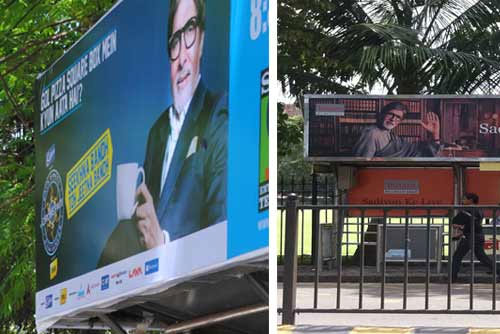
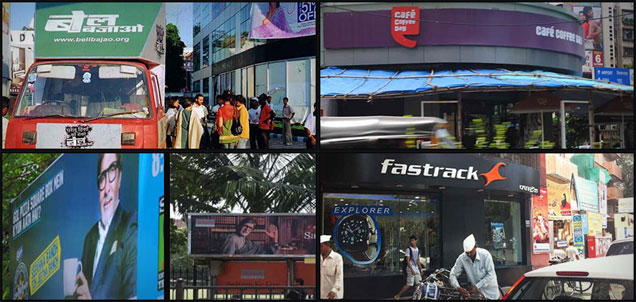
    Is "Big B" promoting his latest TV series or the bag of cement named after him? Every bus stop, same everything, different product. Celebrity dominated advertising has stalled the natural evolution of the design movement in the country. This is lazy advertising


    We ask ourselves how else can we create an image that appeals to everyone, everywhere? A single idea that will appeal to 1.1 billion people. Global brands are created with a single belief or idea at their core. Indian brands and their marketeers, being heavily influenced by their western counterparts, have become obsessed with this singular philosophy. We believe in this because that’s what global brands and branding dictates. It should be expected. The younger generations have grown up with the singular creative direction of brands influenced by western cultures. And these western brands were influenced by the iconic decades of fashion and pop culture. Black and white imagery simply misunderstood by an Indian audience by the lack of knowledge of 60s cool. But these brands sell lifestyles. And although unobtainable to most, young India is very seduced by these ideas of freedom and expression. So we continue to talk with a single voice to everyone, sometimes marrying Hindi and English, worrying that our headlines don’t translate when we should be focusing on the very idea translating. The Indian creative industry continues to pay homage to the west, while a rich and textural culture lies on it’s very doorstep. With an audience that’s crying out for new. All for the fame of being world class.


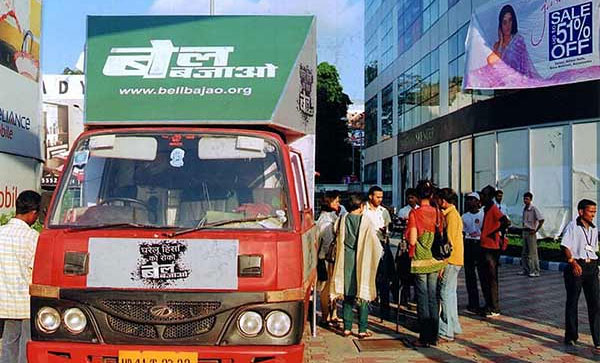
    Successful campaigns such as Breakthrough's Bell Bajao show the power of coupling local creativity with local context


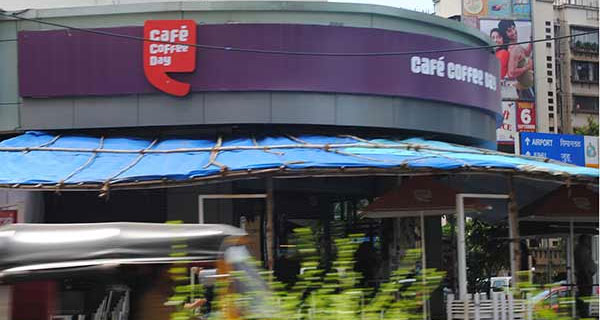
    While Café Coffee Day has brought humour as well as coffee to India, it also stands proud on the world stage. But there is a new world class about to be born. And it will be remixed by the Indian people. McDonald’s has abandoned it’s singular pursuit and has creatively remixed it’s business model to suit it’s audiences’ taste. Flipkart has remixed a successful global business idea to suit the Indian market. While Micromax the idea of branding by crowd sourcing it’s identity.


    The smiling icons at Café Coffee Day break the old rules. Made for young India, it's ready to take on Starbucks


    Recently brands have shown they’re ready to change. But they’re only doing what India has always done. India has developed by remixing it cultures and traditions. India has taken the ideas of the west and remixed them to be relevant to the masses. Successful brands will be the ones that constantly remix to India’s people’s needs.


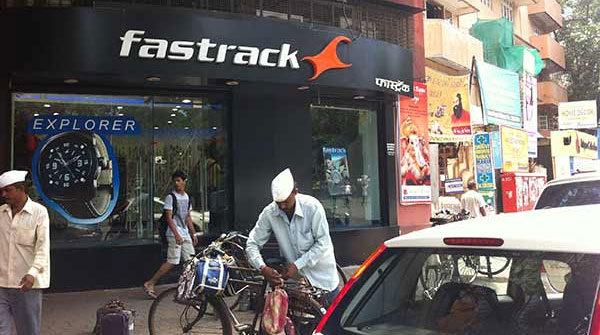
    Homegrown brands such as fastrack are symbols of the process of remixing in action


    With 4G about to role out across the country, we will not only see entrepreneurs of start ups, engineers, bloggers and coders remixing ideas to create new categories of businesses and ultimately brands, but we will also see our audiences turning from consumers to producers. Creating a culture of everything. A culture of chaos. We need to embrace this chaos, be prepared to make mistakes and be relentlessly optimistic. But above all else, we need to abandon the philosophy of a single idea.


    Graham Jones is a creative director at venturethree. He is currently leading the 4G brand project for Reliance. Republished with permission from Kyoorius magazine, where this article was first published.  Kyoorius is a bi-monthly print magazine on visual communications.  For buying a single copy (or any of the previous issues), write to sales@kyoorius.com. You can order the issue from Tadpole, get the digital copy from Magzter and also buy it from bookstores.


  • Arun Sharma returns to IPG Mediabrands after 10yrs at Airtel


    Arun Sharma
    Arun Sharma

    By A Correspondent

    Senior marketer and until recently head of the media vertical at all business units of Bharti Airtel, Arun Sharma has moved to IPG Mediabrands as Vice President.

    Confirming that Mr Sharma had joined the leading media agency conglomerate on Monday in New Delhi. Shashi Sinha, CEO of IPG Mediabrands, said that he will be working on a group role. “Arun has been at senior positions in the industry and we are glad to have him on board,”  Mr Sinha said.

    A member of various industry bodies, Mr Sharma has a career spanning across 17 years, the last decade of which was spent with Airtel and before that with the IPG Mediabrands group for six-and-a-half years. “It’s a homecoming of sorts for me,”  Mr Sharma said while adding that he is looking forward to the new responsibilities at IPG.

  • Zee Media launches ‘Zeegnition’ in multiple media with Adil Darukhanawala

    By A Correspondent

    In a first, Zee Media Corp has unveiled a multiple media auto publication called ‘Zeegnition’. While it has started as a one-pager in the group’s dna newspaper and a website, Zeegnition will also find its way in a television show on Zee News and Zee Business.

    This brand, would be staffed by an exclusive team that has worked extensively within the Indian automotive world over the last two-and-a-half decades other than members of the Zee Media group.

    Says Adil Jal Darukhanawala, editor-in-chief of Zeegnition:  “True, there are media platforms in this country that cater to audiences who are interested in automobiles. But, never before would these audiences have a cohesive 360-degree access across multiple platforms on anything and everything on wheels that constantly feeds their passion for automobiles. Zeegnition is not merely a reservoir of information on cars, bikes, motorsport, technology, vintage classics and more, it is both a source and a reservoir that originates from a medium that the entire world lives on – the World Wide Web with print and television feeding from it and also at times feeding into it.” Mr Darukhanawala is a seasoned auto journalist and was until recently with The Times of India group, editing Zigwheels and earlier with Car & Bike International and Overdrive magazines.

  • Madison PR starts 2014 with 20 new clients

    By A Correspondent

    Paresh Chaudhry
    Sam Balsara

    Madison Public Relations (MPR) signed up a record 20 new clients in January 2014. With a growth of 32% in 2012-13 over the corresponding year, the agency is expected to end this year (2013-14) with close to 30% growth.

    The agency signed up The Lodha Group, Zee Media Corp, Indian Merchant Chambers, Enamor, Celio, VVF and Max Fashions amongst others.

    On the achievement, CEO Paresh Chaudhry commented, “It’s a great start for the last quarter of the year and lays a strong foundation for the next year with over 50% of our big wins as retainer clients.”

    Said Sam Balsara, Chairman, Madison World (of which Madison PR is a part): “I am delighted at Madison PR’s consistent high growth over two years. I am glad more and more advertisers are waking up to the power of Brand PR. PR used intelligently and strategically can greatly enhance the power of advertising.”


  • Padma Shri for Sakal chairman Pratap Pawar

    By A Correspondent

    Pratap Pawar


    There weren’t any names specifically marked ‘media’ or ‘journalism’  in the list of ‘Padma’ awardees released on Saturday. Even Pratap Pawar, Chairman of the Sakal Media Group, has been listed under ‘Trade and Industry’.

    Mr Pawar, a veteran mediaperson, becomes the fourth Padma awardee fromthe Sakal group, as per a report in the group’s Sakaal Times newspaper. Other than Sakal founder-editor Nanasaheb Parulekar being awarded the Padma Bhushan in 1969, Dr Banu Coyaji, a well-known doctor, social worker and director, was a Padma Bhushan recipient in 1989. Scientist Dr Raghunath Mashelkar who has been awarded the Padma Vibhushan this year (and earlier the Padma Bhushan and the Padma Shri), is also a director with Sakal.

    “Thousands of workers are working in organisations which I am associated with. I have been honoured due to their efforts,” Mr Pawar was quoted in the paper. “If the potential of the country is properly utilised, this country will progress. If every citizen does his duty, there is a bright future for the country,” he said.

    Though this year’s list did not have any names directly associated with the media, there were several names from films and a few who have written in publications (like Ruskin Bond who started out as a journalist) or a few others like Prof Ashok Chakradhar who have been regulars on television.

    Padma Awards, the country’s highest civilian awards, are conferred in three categories, namely, Padma Vibhushan, Padma Bhushan and Padma Shri. The awards are given in various disciplines/ fields of activities – art, social work, public affairs, science and engineering, trade and industry, medicine, literature and education, sports, civil service, etc. ‘Padma Vibhushan’ is awarded for exceptional and distinguished service; ‘Padma Bhushan’ for distinguished service of high order and ‘Padma Shri’ for distinguished service in any field. The awards are announced on the occasion of Republic Day every year and conferred by the President of India at a function held at Rashtrapati Bhawan sometime around March/ April.


    Picture: Sakal group corporate website

  • It’s official. Sunil Lulla is now Prez-Corp Devpt, as MK Anand to join as MD & CEO, Times TV

    Sunil Lulla
    M K Anand


    By A Correspondent

    Bennett, Coleman and Co. Ltd. (BCCL) issued an announcement on Friday confirming the news that MxMIndia had carried over a week before. Sunil Lulla, Managing Director and Chief Executive Officer of the Times Television Network, is to be appointed as President – Corporate Development, BCCL Group. Mr Lulla has spent over eight years in various leadership roles at Times TV Television. In his new strategic role at BCCL, he will be working closely with Vineet Jain, Managing Director, BCCL Group and Satyan Gajwani, Chief Executive Officer, Times Internet Ltd. overseeing a number of group initiatives in the areas of Sports, Music, International Events and more.

    Meanwhile, M K Anand, an old BCCL hand, will return to the group after his stint of heading the broadcasting ventures of the Disney UTV group. Mr Anand will be taking over as the Managing Director and Chief Executive Officer of Times Television Network. He has previously worked with The Times of India group for 19 years, first with the print business for 14 years and later with the television business at zoOm from 2004 to 2009.

  • News18.com launched aggregating ETV’s news

    By A Correspondent


    We had received an alert on Friday that Network18 was to make an “important announcement on Monday”. Given that there has been some significant news coming from the premier news media group over the last few months, we pushed aside all our appointments. And issued a ‘Red Alert’ in our newsroom.


    On Sunday (yesterday), we visited ibnlive.com to get our news updates only to find the homepage taken over by news18.com. The website had been launched. Regulars at ibnlive.com are familiar with news18 as it has been beta-ing on ibnlive for a while.


    And then we received this release from Network18 this morning announcing the launch of the online news website from Network18: News18.com. Billed as India’s first web, mobile and tablet service to focus on news at the state and city level.


    Available on the web, on mobile phones and tablets, and as downloadable apps for iOS and Android devices, News18.com currently covers seven states: Bihar, Chhattisgarh, Jharkhand, Madhya Pradesh, Rajasthan, Uttar Pradesh and Uttarakhand. It will expand to the remaining states of the country over the next 18 months, notes a communiqué.


    News18.com draws on the local newsgathering expertise of the ETV network of news channels, whose Hindi services cover these seven states. Highlighting the importance of local news, Lakshmi Narasimhan CEO, Web18 said, “News18 is a completely fresh approach to covering news online. With Internet penetration and smartphones users galloping in Tier2 and 3 towns, it is important to provide a convenient platform to consume news.”


    Arunava Sinha, Head, IBNLive.com and News18.com is confident that readers will enjoy the interactive user-experience of the site. “News18.com will give readers a totally fresh and unique content experience.”


    Meanwhile, the Red Alert in our newsroom has been called off. Enjoy the day, the boss just ordered.

  • Only 13 Indian shortlists at Festival of Media APAC

    By A Correspondent


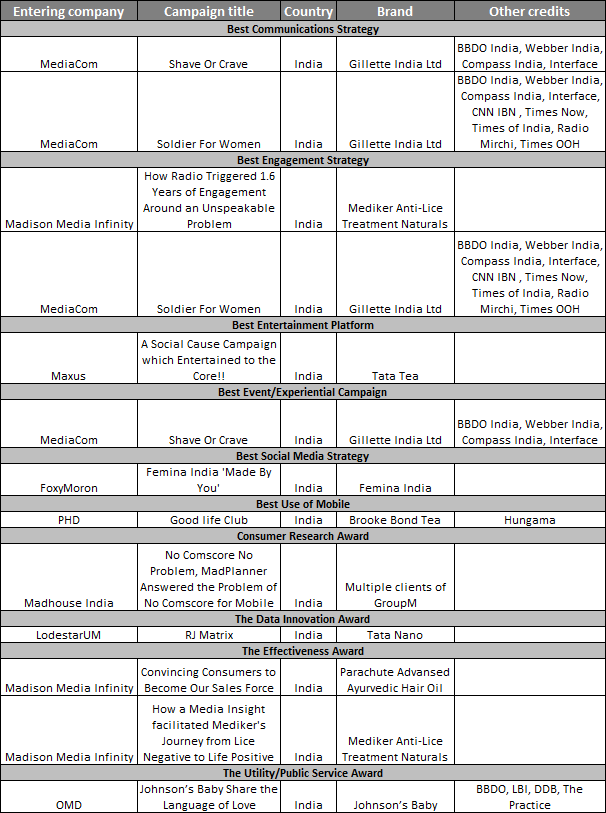
    The Festival of Media Asia-Pacific (FOMAP) 2014 has announced the shortlist for its awards. Last year, there were a 31 shortlists from India, and for the 2014 edition, it’s 13.


    The fest hopes to bring together media owners, agencies and brands for three days of networking, celebration and speaker session. The Festival of Media Asia-Pactific will be in Singapore from March 16 to 18.


  • India Today group launches Discovery Channel Magazine

    By A Correspondent


    The Discovery Channel network has expanded its portfolio in India beyond television with the launch of Discovery Channel Magazine in association with the India Today group, who will be the publishers of the magazine in India.


    A three-time winner at the globally acclaimed Society of Publishers in Asia (SOPA) Awards for Editorial Excellence, Discovery Channel Magazine will cover a wide spectrum of engaging stories from India and around the world. Jamal Shaikh, who also edits a few other magazines from the India Today group, has been appointed Editor. The editorial board for the magazine in India from Discovery includes Rahul Johri and Rajiv Bakshi.


    Rahul Johri

    Said Rahul Johri, SVP and General Manager – South Asia and Head of Revenue, Pan-Regional Ad Sales and Southeast Asia, Discovery Networks Asia-Pacific: “The launch of Discovery Channel Magazine is a natural extension of our strategy to inform and entertain consumers with compelling content across platforms. We are delighted to partner with the India Today Group and are confident that we will be able to combine our strengths to satisfy the aspirational consumers. An insightful read on a wide range of subjects, the magazine will stand out for its energetic and exciting layout, distinct content and mesmerizing photographs.”


    Ashish Bagga, Group CEO, The India Today Group, added, “Discovery Channel Magazine will encompass the DNA of Discovery’s channels into a more in-depth look that only print medium can offer. It will also add a new dimension to the diverse portfolio of magazines already published by The India Today Group.”


    A monthly magazine in English, it will be available for sale on newsstands and leading book stores around the country at a cover price of Rs 150.  The magazine is available in other Asian markets like Singapore, Malaysia, Taiwan, the Philippines, Australia, Hong Kong, Macau and New Zealand.


  • Dainik Jagran is #1 daily in IRS, Hindustan is #2

    By A Correspondent


    The RSCI has released the findings of the readership study for 2013. While Dainik Jagran continues to be #1, Hindustan has climbed up to #2 position as Dainik Bhaskar is #3. Malayala Manorama is #4, Daily Thanthi at #5, Rajasthan Patrika at #6 followed by The Times of India at #7. Amar Ujala, Matrubhumi and Lokmat are at #7, #8 and #9.


    The Indian Readership Survey (IRS) is billed as the world’s largest continuous study tracking print and other media consumption, demographics, product ownership and usage, etc.

    IRS 2013 covered a sample of more than 235,000 households, across India. The sample was  spread across Urban India (~ 160,000 households) and Rural India (~ 75,000 households). The Nielsen Company conducted the extensive study.

    The key information areas covered being:

    -       Readership of print publications for a wide range of local, regional, and national newspapers and magazines.

    -       Reach and consumption of other media – Television, Radio, Digital and Cinema.

    -       Demographic profiling

    -       Consumer Durable Ownership and FMCG Usage.

    (Source: MRUC website – topline findings and release notes)