Category: NEWS

  • Lowe Lintas appoints Vikas Mehta as CMO

    By A Correspondent


    Lowe Lintas and Partners has appointed Vikas Mehta as Chief Marketing Officer. This is a newly created role and is part of the Lowe Lintas and Partners management team. Mr Mehta joined the agency in May 2013 and will report to Joseph George, CEO Lowe Lintas and Partners.


    Mr Mehta’s appointment follows his success as the Regional Growth Officer, Lowe Asia Pacific, where he helped take Lowe among the top 10 agency networks in Asia leading new business and strategic growth initiatives.


    In this key leadership role, he will play a pivotal role on driving group strategy for organic and inorganic growth, strengthening Lowe’s brand equity in the market place among marketers and practitioners and building the company’s innovation funnel of new offerings. Additionally, the role includes working with prospective clients by aggregating group offerings.


    Mr George commented, “Our growth ambition needs to be pursued in conjunction with further enhancing the thought leadership and agency reputation in the market. It is towards delivering on this objective that Vikas joins us.”


    Speaking on his appointment Mr Mehta said, “The business of advertising agencies is going through a transformation and we believe it will be a significantly different ball game soon. The mandate is to help our business capitalize on these changes. The purpose behind creating the marketing function at Lowe is to drive our corporate strategy at a group level.”


    Speaking on the challenges that come with this role Vikas believes, “The hardest bit is to try and explain what a CMO is doing in an ad agency. It’s a phenomenon I call ‘too many services and too few solutions’. Every discipline in the marketing spectrum today is being sold as a specialist vertical. As a result, a typical client has a specialist partner each for advertising, digital, search, social, CRM, PR, activation and so on. The biggest challenge is to create a solution that drives medium-agnostic brand strategy, and goes on to build a brand-narrative that straddles all areas of consumer engagement.”


    An alumnus of Narsee Monjee Institute of Management Studies (NMIMS) Mumbai, Mr Mehta brings with him experience across international markets. Prior to his stint in Singapore, he was Managing Director of Lowe Vietnam, heading the agency’s country operations. Before joining the Lowe network in 2006, he worked with advertising agencies such as Publicis and Leo Burnett.


    Over the years, he has handled brand portfolios for companies such as Unilever, Nestle, Johnson & Johnson, Vinamilk, Total Lubricants, Pernod Ricard, Vietnamobile, Intel, Cathay-Pacific, P&G, Beiersdorf, Raymond, Coca-Cola, Heinz, Diageo and Indian Oil.


  • Measurement impasse to end with stakeholders set for a compromise

    By A Correspondent


    There appears to be a solution emerging to the prevailing imbroglio on television viewership measurement. With many broadcasters choosing to unsubscribe to TAM ratings and some even asking the research body to not report its numbers, the pressure was on to reach a settlement that would satisfy all stakeholders.


    While the key constituents of advertisers and media agencies who require the ratings to base their decisions, have not turned off the tap, the problem is that around 80 percent of TAM’s revenues come from broadcasters, and eventually the measurement process could have suffered if the Nielsen-Kantar Media jv was compelled to cut corners.


    According to information received, four of the five key stakeholders of the Indian Broadcasting Federation, Indian Society of Advertisers, the Advertising Agencies Association of India and TAM have been in dialogue – formally and informally – to work out a consensus. It is not known whether the government – Doordarshan and Prasar Bharati specifically – is participating in the discussions.


    Although there’s no clear formula arrived at the time of writing, the discussions are veering around a changed periodicity of release of numbers, a switch from cost per rating point (CPRP) for media buying and a relook at how niche channel numbers would be published.


    While broadcasters have been adamant and have aired their grievances in the media, it is learnt that the representatives of the advertisers and media agencies too have adopted a tough stand on the issue. And even as there is agreement that broadcasters have been facing tough business conditions, there is unanimity that an independent, credible measurement system is imperative. Also, since BARC is in the process of finding vendors for measurement by early next year, it is prudent to continue with what’s around with tweaks, if necessary.


    Broadcast industry observers also alert that whatever settlement is reached now will have far-reaching implications on the new measurement process that BARC introduces next year.


  • Speaking of Which | Break Time

    By Vidya Heble


    Speaking of Which is taking a break for a while, going on what is known as a hiatus. The dictionary describes it as a noun meaning “A pause or gap in a sequence, series, or process.” And the synonyms for it include the word “chasm”. Which is what one feels like leaping into, overwhelmed by the inexorable advance of bad grammar and the incomprehensible word arrangements that pass for sentences. Kidding; we’ll be back, so keep your eyes on MxMIndia.com.


    This is probably the appropriate time to dwell on the column’s name. Specifically, the use of “which” versus “that”. It is true that the two words are interchanged at times, and there are even occasions when it is not incorrect to do so (usually the occasion involves a gun pointing at one’s head), but the fact is that there is a specific rule governing the use of “which” as opposed to “that”. And the rule involves an instrument of torture known as a restrictive clause. It’s explained in this Writer’s Digest article: http://www.writersdigest.com/online-editor/which-vs-that and, even more entertainingly, by Grammar Girl: http://grammar.quickanddirtytips.com/which-versus-that.aspx


    I couldn’t do better, so I’ll leave you with those links.


    PS: If there is one recommendation I can give, it is this: Look It Up. Even if sounds right, just look it up anyway. I do, often, sometimes more than once. And I’ve been at it for 25 years. So don’t ever feel that looking it up is beneath you. Be it a fact, a word, a phrase, a name… with ever-increasing ways to check, there is no reason not to. If nothing, it’ll serve to avoid howlers like this one from a recent press release: “…welcomes its visitors with appeasing colors.”


    And a point to note is that mistakes happen. Nobody’s perfect, and you shouldn’t let a mistake be the end of the world for you. But don’t make it a habit, either!


  • Eureka Forbes kicks off ‘Sehat Ki Awaaz’ campaign for Aquaguard

    By A Correspondent


    Water purification brand Eureka Forbes Limited has launched a new campaign, ‘Sehat Ki Awaaz’, for its flagship water purifier brand Aquaguard. Being a leader in water purification in the country, Eureka Forbes’ new marketing campaign aims to educate consumers about the nutritional value of drinking water for good health.


    Developed by Triton Communications Pvt. Ltd, ‘Sehat Ki Awaz’ is an integrated ad campaign featuring a new TVC and print ads across India.


    Commenting on the new ad campaign, Marzin R Shroff, CEO Direct Sales & Marketing Head, Eureka Forbes Limited, said, “Water contains important minerals like calcium, sodium, potassium, magnesium and many more which are unequivocally essential for human health. Our ‘Sehat Ki Awaaz ad campaign educates consumers about nutrients in drinking water that are essential for good health, a core offering of our brand Aquaguard, Paani Ka Doctor. Eureka Forbes believes that pure and safe drinking water is birthright of every individual and Aquaguard is our offering to the huge consumer base.”


    Renton D’Sousa, CEO & National Creative Director, Triton Communications, added, “Aquaguard has not only emerged as leader but ultimate solution provider in the area of drinking water, the brand was positioned as the Expert Advisor and hence derived to the positioning of Paani Ka Doctor. To reinforce this change from ‘Purity to Nutrition’, Aquaguard Paani ka Doctor has now positioned itself as the ‘Healthiest Water on Earth’. Aquaguard’s new communication will play catalyst in creating awareness among consumers about the health benefits associated with drinking water.”


  • India TV awards creative duties to Eleven Brandworks

    By A Correspondent


    Hindi news broadcaster India TV has awarded its creative mandate to Eleven Brandworks. The win came after a multi-round & multi-agency pitch process initiated in April. Eleven’s bouquet of clients includes Eristoff (Bacardi), Times Brand Capital, Archies, NDTV Good Times, Onjus and Nokia maps.


    Prateek Bhardwaj, Founder Director, Eleven Brandworks, said, “It is truly exciting to partner one of the most influential media brands in this country. We share the vision the management has for the brand, and our mandate is to enhance India TV’s stature within its viewers as well as non-viewers.”


    Ritu Dhawan

    India TV MD & CEO Ritu Dhawan said, “Political reporting is gaining momentum in run up to the elections. In the coming days India TV will present most engaging and interactive news content. Team India TV led by Rajat Sharma is ready to comment, analyze and decode political mysteries. In line with the intent of refreshing the brand, Eleven has been successful in pitching with a few really reassuring ideas. We welcome Eleven & look forward to working with them.”


  • 92.7 Big FM goes retro in Mumbai too

    By A Correspondent


    After achieving much success in Delhi with the retro re-positioning adopted late last year, 92.7 Big FM’s Mumbai station has also turned retro. With its new tag line ‘Hit the, Hit Rahenge’, the station promises music from the 1960s to the 1980s along with heritage songs from the ’50s.


    The repositioning was effected on Sunday, June 23 and unveiled to the media last Friday (June 28). The announcement comes close on heels of its show ‘Suhaana Safar with Annu Kapoor’ launching with much fanfare.


    Said Ashwin Padmanabhan, Business Head – 92.7 BIG FM, “The decision to turn retro is backed by extensive research and audience mapping. As has always been our endeavour, we innovate with our offerings to ensure highest levels of listener engagement providing a ‘Life Banao’ experience. Our new positioning allows listeners to live in the present, while celebrating the past and we are confident of an excellent response as we look forward to further engaging with listeners and marketers alike.”


    According to a communique, the relaunch also promises a local flavour with Marathi-speaking RJs and play-out of Marathi music in the course of the week. The revamped content strategy will offer updates on stock and gold prices, city and sports news, traffic and weather status, music-related trivia, etc.


  • Prada and Gucci go balle-balle in fame index

    By Vijaya Rathore


    When a state has flamboyance as a sub-culture and makes no bones about it, you know that Prada and Gucci might as well be part of folklore. By the river Chenab, it’s as if you can almost hear the jingle-jangle of the Swarovski-studded bangles of Heer even as time stands still in the Cellini Rolex that adorns the wrist of her eternal lover Ranjha.


    “Punjabi dil se hi branded hote hain (We come branded at heart),” says Mika, Bhangra superstar and Bollywood playback singer, who’d rather show off the orange Hummer that he imported to India about seven years ago than try to impress you with his deftness with higher octaves.


    “A lot of people may own Hummers, but no one in Asia has an orange one,” says Mika, who insists his eyewear would either be Prada or Louis Vuitton. “My favourite watch is the Rs 40-lakh Rolex,” Mika adds for good measure, him, originally from Patiala, born in Durgapur and raised in Patna.


    Mika and his ilk feel eminently proud to be a part of the music mall of Bhangra where ace global brands these days vie with each other for your attention lest you get lost in the melee or meaning of lyrics.


    And so are their avid listeners. Like Navjot Kaur, all of 25, who decided to go for a Gucci handbag after hearing Honey Singh – the controversial but popular Bhangra-rap singer – expound virtues of the 92-year-old Florentine brand thus: Main keha kaali teri Gucci, te Prada tera laal; Kithe challo oh sohneyo, sajh dajh ke. In the video from the album curiously titled International Villager, Singh is seen zipping in a red convertible Bugatti announcing that he’d go for a brown-skinned Indian girl over any ‘white chick’.


    And back home, Indian girls seem to be swallowing the bait – hook, line, singer and brand. “I always knew about Gucci, but got a craving to own the label after watching Honey Singh videos… It’s cool stuff,” says Kaur, who claims she is in love with Honey Singh.


    Kaur bought a Gucci bag along with a pair of Jimmy Choo shoes from Delhi recently in cash, as birthday gifts from her businessman father.


    Be it singer Sharry Maan who weaves in Armani and Enfield Bullet in his songs, or a Bollywood hero wooing a girl to go for a long drive in his Pajero to celebrate her ‘Appy Birthday’, Punjabi songs are talking the brand language like never before.


    In one of India’s richest states with a sizeable population of NRIs, high-street brands have always had a great ride, but the brush with Bhangra is making them fly.


    Brand experts say these songs are only projecting what’s there on the ground. “These songs are short-hand for a certain kind of lifestyle Punjabis have. It is aspirational,” says brand consultant Santosh Desai. Also, brands that are iconic find a place in these songs. “They do not become iconic just because they are mentioned in a song,” he adds.


    Songwriters underwrite what Desai observes by clarifying that they never make a deliberate attempt to promote any brand.


    “It is a way of storytelling by describing a personality. People in Punjab love dressing up and love to wear brands,” says singer Sharry Maan. He says Punjabi is a very ‘practical language’ and integrating English names is easy. “Youngsters want to be seen wearing the best and these are the same people who like our songs,” adds Maan, who is currently busy composing a couple of new songs that will also have many brand names, including a few luxury labels.


    Thanks to the huge NRI population, most Punjabis have a close connect with Canada, the UK and Australia. Even the songwriters, singers and composers have either lived abroad or record the music at international locations, which exposes them to global lifestyles, luxury and the world of brands, which eventually gets reflected back home.


    Though Gucci, Prada or Armani may not have opened shops in Punjab yet, brands that are already in Punjab are having a great time.


    Brooks Brothers, a UK-based menswear brand that sells suits for Rs 70,000 and above, recently opened its largest store in the country in Chandigarh, and is happy being there. “Shortly after we opened, a middle-aged man walked in asking for the most expensive suits in the store for his son’s wedding,” says an executive managing the brand.


    Vijay Singh, a Mumbai-based businessman, who owns a hotel in Ludhiana, says the spending capacity of people in the state matches Delhi and Mumbai. “The per guest expense at weddings in Punjab goes up to Rs 3,000 and many times more than a big wedding in Delhi or Mumbai,” says Singh.


    Karanjeet Singh, who owns a multi-brand outlet selling brands like Rado, Longines, Tag Heuer, Mont Blanc and Omega, says his customers splurge on watches with gold, diamonds and Swarovski crystals. “We sell watches priced between Rs 50,000 and Rs 10 lakh. A lot of people buy expensive ones when they travel to Chandigarh or Delhi and even abroad,” he says.


    Coming back to the bhangra brands, Mitsubishi sells about 250 Pajero cars in the state per year. Sachin Goyal, owner of Ludhiana-based Northern Motors, says the company is adding more dealerships in view of rising demand from high networth individuals. “People here love to take the SUVs to the fields ideally suited for only tractors,” says Goyal. He often makes sales pitch to prospective buyers referring to local celebrities or politicians who own the same car. “Buyers get exciting about the vehicles they see in films, music videos or being are used by celebrities,” he points out.


    Fashion house Satya Paul is seeing its business in Punjab growing at 30-40% annually. “People are open minded and progressive, with an enthusiasm towards opulence making it an accessible eager market,” says Rajiv Grover, vice president of the high-end brand owned by Genesis Colors.


    Source:The Economic Times

    Copyright © 2013, Bennett, Coleman & Co. Ltd. All Rights Reserved

    Licensed to republish

     

  • Is Cricket a big hit in Hindi? Time for Tamil, Telugu, Bangla…?

    By Johnson Napier


    After a brilliant display of form in the just-concluded Champions Trophy, the men in blue have made it clear where they intend to be at the moment. And that’s at the top. Having won the confidence of their fans in a big way, their success is now being consumed in a language with an even wider scope – Hindi.

    After sampling preferences over the past few seasons, broadcasters have now taken the plunge by relaying cricket feed in Hindi, which has matched up to its English counterpart and attracted its set of fans too. MxMIndia speaks to a cross-section of experts to analyze how Hindi cricket commentary has fared in the recent past in India (in alphabetical order of their last names).


    P Balakrishna, COO - Allied Media

    I am sure that there has been a positive impact that has been created by broadcasting commentary in Hindi. Let’s not forget that Hindi is the language which has the biggest and largest penetration as far as the pan-India market is concerned. All it has done is brought the game closer to the viewer. At the end of the day, while English commentary has its own charm but in terms or reach and understanding of the language, Hindi is of course the language that can connect with all HSM markets. While I am not sure on the numbers, I am sure that it has resulted in an incremental viewership numbers. What is critical with a game of cricket which has a huge mass connect is that the language of Hindi definitely has its charm of creating a strong impact with the audiences.


    As for it being relayed in multiple languages, I do not see any scope for commentary to be expanded to other markets as largely between Hindi and English most of the markets are covered in India. If you see the non-Hindi markets, English has a very good penetration including in the South and the East. Doing commentary in other regional languages won’t really result in any rise in viewership or even monetary-wise.


    Mona Jain, CEO, Vivaki Exchange

    India has been performing very well so from that point of view there are audiences right now on that medium. In terms of brands who want to reach out to the audience through medium of Hindi, it could be a little low-key as of now as it is not a peak season and only those with deep pockets could be taking the plunge on the Hindi medium.

    Also, cricket is very popular in the northern region so having a feed in that language makes sense; it also is the primary language at the moment. But it’s too early to discuss whether we need commentary in Tamil or Telugu or Bengali. There have to be enough numbers (audiences) out there for broadcasters to take that decision.


    Hemant Kenkre, PR Professional and cricket columnist
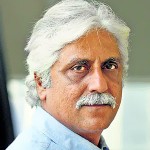
    I think it is great to have commentary in Hindi on major sports channels. In the past, All India Radio always combined English with Hindi with noted Hindi commentators like Jasdev Singh. During the Champions Trophy Indian cricket legends like Kapil Dev and Sunil Gavaskar (for the first time in Hindi) reached out to many viewers who are comfortable in Hindi.

    The reach for Hindi channels is much more than that of any other language – which may have prompted Star to hire former Indian cricketers (including non-Hindi speaking commentators) to attract eyeballs. It is too early say how other languages will work but going by the success of Hindi, it is a matter of time before sports broadcasters look at other languages too.


    Ayaz Memon, editor, veteran cricket writer & commentator

    I think Hindi commentary has managed to create a huge impact in the recent past. You can see it happening in the recent India-West Indies-Sri Lanka Series and also the just-concluded Champions Trophy where it was well-received. In the earlier days, and as research would prove while a lot of people used to watch cricket on television in English they used to mute it and hear the commentary in Hindi on radio. So Hindi enables one to reach out to a far bigger and wider audience base which, I am sure, has seen an incremental hike in the numbers in recent past.

    At the end of the day, when you pay the price for buying rights then your objective is to reach out to as large a number of audiences as possible. And if you can do that by broadcasting content in different languages then why not. It would be a sensible thing to do by broadcasters as India is a very diverse country that boasts multiple languages. Unlike countries like England that can air only in English or Pakistan in Urdu, we have an advantage of airing content in multiple languages and we should take advantage of that.


  • Bimal Julka replaces Uday Varma as I&B Secretary

    By A Correspondent


    Bimal Julka is the new Secretary, Ministry of Information and Broadcasting with the Government of India. Mr Julka takes charge today as Mr Uday Kumar Varma retired yesterday (June 30, 2013).


    On Friday, June 28, the Ministry of Personnel, Public Grievances & Pensions announced that the Appointments Committee of the Cabinet (ACC) had approved the appointment of Mr Julka who was until June 30, Special Secretary and Financial Advisor with the Ministry of External Affairs.


    Fifty-eight year Mr Julka is an IAS Officer of the 1979 batch of the Madhya Pradesh cadre. Incidentally, Mr Varma, who turned 60 on June 20, is from the 1976 batch of the Madhya Pradesh cadre.


    Hence, in case there’s no change announced, Mr Julka’s stint as head of the information and broadcasting ministry secretariat should last for two years. Unlike Mr Varma who had spent a few years with I&B before taking charge as Secretary, Mr Julka has no previous experience in the ministry.


  • Desi travel portals not amused as Google is set with flight search in India

    By Indu Nandakumar


    A fledgling effort by Google portending the launch of its flight travel search service in India is creating jitters among online flight aggregators, who fear their business model is under threat.


    Google, whose services include Gmail and YouTube, is “very close” to introducing Flight Search in India, according to people with direct knowledge of the plan. Flight Search – first launched in the US and then in parts of Europe – lets users compare fares offered by airlines and book tickets directly from airline websites. This could, in effect, make flight aggregators such as Makemytrip, Yatra and Cleartrip redundant, industry observers said. Another website, kayak.co.in lets users compare flight options from hundreds of travel sites at once.


    In response, the aggregators are considering steps to protect their interests, including a possible complaint to the Competition Commission. They claim discrimination by Google when it comes to search results for queries relating to online travel.


    Separately, Google is the subject of investigations by the Competition Commission based on complaints that it is abusing its dominance in the country’s search-engine market. In February last year, matrimonial site Bharatmatrimony.com had filed a complaint against it.


    Company already faces probes in US, Europe

    Last month, Google launched a ‘Start Searching India’ campaign aimed at providing users with instant responses on weather and flight status, among other things. This move was read as precursor to the eventual launch of Flight Search in India. Google India said in May that it does not comment on future plans or speculation when asked about its plans to launch Flight Search in the country.


    Hrush Bhatt, founder and director of travel portal Cleartrip, refused to count Google’s Flight Search as a direct threat but conceded that it could alter the way aggregators allocate their online marketing budget. “We are not sure what value Flight Search would add to consumers, especially if it can only let you compare prices,” he offered.


    Online travel firms such as Yatra.com, Makemytrip and Goibibo declined to comment. Google denied any knowledge of market participants planning to approach the Competition Commission but said that in the event of that happening, the company will extend “full assistance and cooperation on the matter.”


    “We’re always happy to answer questions about our business,” the company said. KPMG’s Tuteja said that Flight Search is likely to be popular among India’s fast-growing internet user base-150 million at the end of 2012-that has been increasingly been booking travel tickets and hotels through online portals.


    In Europe, Google’s Flight Search is under pressure from travel portals such as Expedia and Trip Advisor, which have filed antitrust complaints against Google with the European Commission for promoting rival services and disrupting fair competition in the online travel space. Flight Search makes use of the vast amount of flight-related real-time information from US based travel information company ITA Software.


    Source:The Economic Times

    Copyright © 2013, Bennett, Coleman & Co. Ltd. All Rights Reserved

    Licensed to republish


  • Bimal Julka assumes charge as MIB Secretary

    By A Correspondent


    Bimal Julka, IAS, assumed charge as Secretary, Ministry of Information & Broadcasting in New Delhi yesterday.


    After taking charge, Mr Julka held a meeting with senior officers of the Ministry. The officers briefed him on the key initiatives and policies undertaken by the ministry in the information, films and broadcasting sectors.


  • Worldoo woos kids with comics

    By A Correspondent


    Worldoo.com, the online ecosystem for kids, has launched the first part of an eight-part series titled ‘The Discovery of Worldoo’. Called doo comics, the editions – one will release each month – will be exclusively available on worldoo.com.


    “We see it as a continuation of our on-going commitment to delivering quality, original experiences online to the kids,” Harsh Wardhan Dave, Head – Experience & Brand, Worldoo.com


    Worldoo.com claims a to have attracted 18,000+ children since launch around two months back. The average time spent is close to 9 minutes and 11 pageviews are happening per visit, adds a communique.