Category: NEWS

  • Marico son Rishabh takes the soapy way

    By Kala Vijayraghavan


    His start-up is dubbed Soap Opera N More – an apt name not just for the nature of the business but perhaps also for the succession drama that’s playing out at the Mariwala family-owned consumer company Marico. Mr Rishabh Mariwala, the 29-year-old son of Marico founder Mr Harsh Mariwala, has moved out of the family’s flagship operations to unleash his entrepreneurial skills.


    Rishabh, who spent three years developing business at Marico’s beauty salon services arm, Kaya Skin Clinic, will now sell premium handmade soaps. Two years ago, Rajvi, 30, Mr Mariwala’s elder daughter had also opted out of Marico, where she was a part of the brand-building team, to focus on sociological research.


    So what’s playing on the founder’s mind? Does he want to give the Gen Y members a shot at garnering experience in the world before cementing their positions in Marico; or is he clear that professionals will run the organisation, with family having no role to play in operations? As things stand, Mr Mariwala is the only family member with an executive presence on Marico’s board although the family owns around 63% of the company.


    There are no clear answers to those questions. But even if Mr Mariwala is entertaining the thought of passing on the baton to his son, he isn’t going to present it on a platter. “This is not a ‘lala’ company,” he declares. “Family members are not automatically entitled to succession. They have to prove their mettle by building a business.” Company watchers add that Mariwala is keen that Rishabh step out of his comfort zone and go through the tribulations of starting and then running a business.


    Rishabh’s path is a unique one. Here is a case of a potential successor who got into the business, then got out of it, with the distinct possibility of getting back again. The alumnus of Frank G Zarb School of Business, Hofstra University, New York, will start up Soap Opera N More with family funds, report to his father and sell the handmade soaps that are the brainchild of his mother, Ms Archana Mariwala.


    “There are no compulsions of any kind on us as far as our career paths are concerned. And this (start-up) is a great learning experience for me,” says the lad who comes from a family that has a lineage of trading (“Mariwala” translates into pepper trader). Harsh broke out by founding his own consumer-oriented venture.


    His son may well be keen to emulate him. “I am an entrepreneur and want Rishabh to have a similar experience in setting up an organisation from scratch. There are no pressures on family members to be part of Marico; eventually it will be their decision.


    Marico has always been a professionally-run organisation” says the chairman. A nomination and governance committee in Marico has put in place a drop-dead succession plan as part of a risk-mitigation strategy. As a board member puts it on condition of anonymity: “Blood has nothing to do with the way Marico is run; there is a strong culture of professionalism and it operates independent of who is the largest shareholder.”


    Perhaps the Marico founder wants to be sure of the fire in his son’s belly before he hands him a larger responsibility. Elsewhere in India Inc, second-generation scions have chosen routes to the family business. Rishad, son of Wipro chairman Mr Azim Premji, worked with GE Capital and consulting firm Bain & Co before joining the IT services major in 2006. Shravin, the 23-year-old son of Bharti’s Mr Sunil Mittal, worked as analyst with Wall Street banks in London and New York before joining up at one of Bharti’s subsidiaries.


    Says Ms Padmaja Alaganandan executive director, PricewaterhouseCoopers: “A very high proportion of geNext in family businesses have professional qualifications and experience of working with good organisations outside their own; this gives them a broader canvas of experience and a good anchor to position and drive change within their organisations.”


    In contrast, Mr Adi Godrej’s children Nisaba and Tanya, like Mr Rajiv Bajaj of Bajaj Auto, joined the business at the junior rungs and worked their way up while Mr Sasha Mirchandani, son of Mr Gulu Mirchandani of Onida, is treading a totally different path: he has opted to work with start-ups by founding Mumbai Angels, India’s first angel investment group.


    Source:The Economic Times

    Copyright © 2011, Bennett, Coleman & Co. Ltd. All Rights Reserved


  • Fair and Lovely: HUL ropes in ombudsmen

    By Sagar Malviya & Maulik Vyas


    Hindustan Unilever has roped in four retired high court judges as independent ombudsmen in different regions to resolve cases filed against the company by its suppliers, distributors, stockists and retailers.


    An ombudsman looks into complaints against an organisation and its officials and helps resolve them by mediating fair settlements out of court.


    “The idea is to have an alternate dispute resolution mechanism with the whole philosophy of customer centricity and the main reason is resolution of matters,” Hindustan Unilever Executive Director – Legal Dev Bajpai said. The country’s largest consumer products firm is faced with more than 100 complaints from business partners across the country, which can be referred to the ombudsman.


    Legal experts applauded the initiative, saying it’s unheard of in the country and would benefit the company in the long run.


    “The advantage for HUL is that it can figure out in advance whether its case is good and avoid an expensive and protracted legal process,” said Advaya Legal Partner Ramesh K Vaidyanathan. “The choice of an ombudsman of impeccable integrity and reputation for impartiality is critical for any counterpart to agree to this proposal,” he added.


    The maker of Dove soap and Rin detergent may have achieved it by appointing retired judges of different high courts-V Panshiker in Mumbai, SK Mahajan in Delhi, K Govindrajan in Chennai and Alok Chakraborty in Kolkata-to look into all disputes in the West, North, South and East, respectively.


    They will take up only those commercial disputes that have no legal breaches, company officials said. Typical cases would include distributors who have parted ways with the company and suppliers who made goods that fell short of quality standards.


    There is a rider, however. The decision arrived at dispute resolution meetings will be binding on the company, but not on its business partners who will have the option to continue with litigation. In 2008, Hindustan Unilever had roped in an ombudsman to deal with consumer complaints that could spill over into the courts, in a first of its kind initiative by an Indian company. It was restricted to end consumers of HUL products.


    Source:The Economic Times

    Copyright  2011, Bennett, Coleman & Co. Ltd. All Rights Reserved

     

  • First on MxMIndia: Lowe Lintas wins Videocon D2H and UltraTech creative biz

    By A Correspondent

    It’s high five time at Lowe Lintas. MxMIndia learns that Lowe Lintas has bagged the creative mandate for Videocon D2H, direct-to-home (DTH) service provider arm of Videocon Group and UltraTech Cement. Although there is no official confirmation of the news, reliable sources have affirmed that the deed is done. The incumbent for Videocon D2H is Publicis Ambience whereas for UltraTech it is Interface.


    The creative pitch for UltraTech was called last year and had seen the participation of agencies such as Lowe Lintas, McCann Erickson, JWT and Mudra.


    Videocon d2h is a pay TV provider, providing direct broadcast satellite service—including satellite television, audio programming, and interactive television services—to commercial and residential customers in India.



    Part of the Aditya Birla Group, UltraTech Cement one of the largest exporters of cement clinker in India. The export markets span countries around the Indian Ocean, Africa, Europe and the Middle East.

     

    It may be remembered that last year, Lowe Lintas had undergone a restructuring as Charles Cadell CEO India bid adieu to the agency. It brought in the dual NCD structure with Amer Jaleel and Arun Iyer as the head reporting to R Balki, Chairperson of the agency. And then Joseph George was elevated to the post of CEO. Meanwhile, the agency has been consistently pocketing new businesses. It has won creative mandate for Suzlon, 3M and iProf among others. The agency has also been in the news for its recently created campaign for Suzlon titled p.a.l.s (Pure Air Lovers Society) and Idea Cellular’s population control campaign – 3G pe India busy.


  • Activists upset with new Flying Machine ad

    By Rajiv Singh


    It was meant to transport the brand into the consciousness of India’s youth, but a new advertisement by Flying Machine has flown into a storm of controversy instead. A welcome controversy! One of India’s early home-grown jeans brands, Flying Machine, over the weekend, released a print advertisement that shows the picture of a female model wearing tight fit jeans around her buttocks, with the catchline in big, bold font screaming: ‘What an Ass!’ It was probably meant to highlight the oomph and cool quotient in an old brand, perhaps even mimic the edginess of the ‘All asses were not created equal’ tagline in an advertisement last year by larger rival Levi Strauss & Co. While the jury is out on whether Flying Machine’s latest campaign has found resonance with the cool set, the advertisement is generating heat in some quarters.


    Women rights activists are certainly not amused. “It’s outrageous and vulgar,” says women rights activist and director of Centre for Social Research Ms Ranjana Kumari. “Such sexually suggestive and titillating advertisements are responsible for creating the image of women as sex objects.” Ms Kumari plans to take up the matter with the National Commission for Women and the Ministry of Women and Child Development.


    However, Flying Machine, owned by Ahmedabad-based Arvind Mills, the world’s fourth-largest producer of denim and a supplier to some of the biggest brands in the planet, does not find anything vulgar in the ad. “There is a sensational headline,” says Ms Alok Dubey, chief operating officer of the youth, denim and sportswear division of Arvind Lifestyle Brands. “But if you read the headline and body copy harmoniously, there is humour.”


    Mr Dubey says the Flying Machine advertisement reflects a strong attitude of a mature and aware girl who “doesn’t care about those who mock her existence or physicality”.


    Mr Ankit Fadia, a 26-year-old who acquired fame and fortune after he published a book on ethical hacking at the age of 15, also can’t seem to understand why there is so much fuss around the advertisement. “This is modern India and women dress up the way they want to,” says Mr Fadia, adding that this advertisement is not at all vulgar when compared with the kind of advertisements aired on TV and what appears in movies.


    Mr Fadia is one of Flying Machine’s brand ambassadors along with cricketer Mr Virat Kohli and Bollywood star Mr Abhishek Bachchan. Some branding experts say the advertisement was designed to be controversial, with the ensuing brouhaha aimed at making it a talking point that could improve the product’s visibility.


    “Once a familiar brand, Flying Machine is now trying hard to get back into public consciousness,” says Mr Josy Paul, chairman and chief creative officer of ad agency BBDO India. “Sensationalism makes even a small-size ad look bigger.”


    Branding expert and CEO of brand consultancy firm Brand-comm, Mr Ramanujam Sridhar, says: “Young would love it, activists would hate it, but nobody can ignore it.”


    In Arvind’s case, given what is at stake – India’s denimwear market, according to Technopak Advisors, is expected to double to Rs 14,000 crore by 2015 from around Rs 7,000 crore last year – any controversy can only be good for business.


    In a nation of more than a billion people, over 70% of whom are less than 35 years old and fast westernising, branding experts say Flying Machine, whose tagline is ‘I’m Sexy When I Am Me’, knows too well it needs a new, edgy language if it has to connect effectively with this demographic.


    It’s not the only one using what can be considered provocative language. A host of marketers are pushing the envelope of decency with edgy advertisements these days, hoping to stand apart from other competing products and nursing hopes that some controversy can yield collateral benefits.


    A very fine line separates the sensational from the vulgar, and campaigns that fall in the latter category have found themselves on the wrong side of public decency – and with it, law. Recently, the Ministry of Information and Broadcasting cracked the whip on some men’s deodorant commercials for being overtly sexual and against good taste and decency because they depicted women as sex-starved.


    Flying Machine must wish its latest ad is viewed as firmly in the first category, becoming the news while appearing between it.


    Source:The Economic Times

    Copyright © 2011, Bennett, Coleman & Co. Ltd. All Rights Reserved


  • For Airtel, Docomo, Vodafone & Pepsi, har friendship zaroori hai!

    By Rajiv Singh


    What would you do when things get tough and you struggle to keep pace with your competition? Most people would turn to their friends. So did the country’s largest mobile operator. After reporting lower profits in the first quarter and failing to score with its recent campaigns, Airtel came out with Har ek friend zaroori hota hai ad, and won over several fans if not friends.


    Consider this: the ad has had 1.8 million views on YouTube, shared over 62,000 times on Facebook and mentioned in 10 lakh plus Tweets; more than 1.45 lakh users have set it as their hello tune, and some 1.17 lakh people downloaded the tune in August!


    “Airtel’s manifestation of connection in its latest ad is better than any other brand; it speaks the language of the youth and the entire concept of staying connected with friends has been executed well,” says Mr Abraham Koshy, professor of marketing at IIM Ahmedabad.


    It’s not just Airtel that has rode piggy on friendship to connect with the new-read Facebook-generation of consumers by either using it as a theme in advertising or as a business model. Its rivals Vodafone and DoCoMo, cola majors Coca-Cola and PepsiCo, internet giant Google and liquor maker United Spirits have all used friendship as a model for marketing or building brands.


    While the concept itself is not new, it has emerged a big trend of late, thanks to a modern lifestyle where people spend hours socializing, if not in pubs then on social media network sites such as Facebook and Twitter.  “The big difference today is the idea of ‘friends with benefits’. Friendship now is almost a currency,” says Mr Dheeraj Sinha, regional planning director of marketing communications agency Bates 141.


    FRIENDSHIP IS ‘TOUCHSHIP’


    Two-thirds of young people in India admit that their friends have more influence over their decisions than their families, according to McCann Worldgroup’s latest Truth About Youth global study released in May 2011. A recent survey by research firm Demographix and Know Your Mobile found that 93% participants offered advice and recommendations to their friends and families on mobile phones.


    McCann’s Truth About Youth revealed that connecting to a broader network of friends has replaced the singular need to belong to a tight-knit group of friends. Lyricist and McCann Worldgroup Executive Chairman Mr Prasoon Joshi calls it a friendship of convenience, which is less demanding, less taxing and suited to the mindset of consumers. “We are becoming a more self-indulgent society, and it’s reflected in the friendship and the friends that we have. To stay in touch has become the latest phenomenon; therefore, it’s no longer friendship but touchship,” says Mr Joshi.


    Clearly, friendship is no longer only about emotions; it’s also about the transaction that this relationship enables. And this shift from emotions to benefits has become a big playing ground for brands.


    FRIENDSHIP IS BUSINESS


    United Spirits’ McDowell’s No. 1 has been consistently celebrating the spirit of friendship in its ads and brand positioning over the last few decades. Whether it’s Golden McDowell Moments with friends or Dosti Ka No. 1 Spirit campaign, the brand has grown on the friendship plank to become the fastest growing Indian liquor brand in the world.


    “For McDowell’s No.1, friendship is the language of the consumers,” says United Spirits Senior Vice President (Marketing) Mr Mathew Xavier. “The brand has ensured integrating this language in all its consumer communication across all media.”


    The brand is now launching a Dosti Anthem composed by Vishal and Shekhar-the most successful friendship jodi (combination) in Bollywood music.


    Several brands, particularly internet companies, ride piggy on circle of friends to grow their business. “One of the best examples of using friendship as a business model is the way Google popularised Gmail, which was launched as an invitation-only service,” says Bates 141’s Mr Sinha.


    Firms are exploring friendship culture inhouse too, using employee referrals for hiring. An Infosys spokesperson said 57% of the country’s second largest IT company’s lateral hires in FY 2011 were through referrals. Intelenet Global Services hires over 30% of its staff via internal referrals.


    “While referral hiring has been in vogue for quite some time, it has become a widely accepted means to hire over the last 12-18 months,” says temporary staffing company TeamLease Co-Founder and Senior Vice President Ms Rituparna Chakravarty. This system helps them cut recruitment cost drastically and ensures a certain degree of reliability, she adds.


    Clearly, for India Inc and every brand chasing the new-age consumer, har ek friend zaroori hota hai.


    Source:The Economic Times

    Copyright © 2011, Bennett, Coleman & Co. Ltd. All Rights Reserved

  • Another ASCI in the making? PMO wants regulator for misleading ads

    By A Correspondent


    The government is working on framing rules for the advertisement industry to check misleading advertisements such as those promising strength, looks and sharper memory, following a directive from the Prime Minister’s Office.

    The PMO has directed the consumer affairs department to prepare a draft regulatory framework within a month, a government official said on condition of anonymity.

    A decision to this effect was taken at a meeting Prime Minister Mr Manmohan Singh’s principal secretary Mr T K A Nair held with top ministry officials. “The ministry will put in place this regulatory framework in a year’s time,” the person said.

    This is for the first time that the government has taken up the issue of misleading advertisements ranging from an actor jumping off a cliff unhurt after drinking a particular beverage to a soap or cream making one look younger and fairer to a drink that enhances one’s memory.

    At present, the country does not have a legal framework to protect consumers from such misleading ads.

    The industry, however, has a self-regulatory body, the Advertising Standards Council of India (ASCI), which advertising professionals say is extremely effective.

    “We don’t know about the details of the new proposal, but the ASCI is doing a great job in any case. I’m not sure if two bodies are required to regulate advertising,” said Mr Colvyn Harris, CEO of JWT, India’s largest ad agency that manages the creatives of beverage maker PepsiCo and telecom services provider Bharti Airtel.

    ASCI Secretary General Mr Alan Collaco said, “We have a code for self-regulation for advertising and a robust consumer complaints council in place. This has been working very well for the past 26 years.”

    The council takes actions against advertisements, which are considered false, misleading, indecent, illegal, leading to unsafe practices, or unfair to competition, but it does not have any legal backing.

    The Food Safety and Standards Authority of India too is in the process of rolling out a set of guidelines defining an exhaustive code of self-regulation in all advertising of foods and beverages, to be implemented by the health ministry. It has been talking to the advertising council to work jointly on the guidelines.

    Industry insiders say that these guidelines will wipe out misleading claims in food and drink advertisement including health benefits. “Celebrities and prominent people who promote food should recognize their responsibility towards society and not promote food in such a way so as to undermine a healthy diet,” reads a clause of the proposed guidelines.

    While various jurisdictions around the world have specific guidelines and codes to dictate minimum standards for food ads, most of these codes are self-regulatory. In many world markets, companies such as Unilever, Coca-Cola, PepsiCo, Kellogg’s, Kraft Foods and General Mills have come together under the EU Pledge to self-regulate responsible advertising.


    Source:The Economic Times

    Copyright © 2011, Bennett, Coleman & Co. Ltd. All Rights Reserved


  • Sabyasachi Mishra appointed as JWT Vietnam CEO

    By Amit Bapna

    Indians are making their mark globally, in the advertising and marketing space. Close on the heels of Indians being appointed as CEOs by JWT Sri Lanka and Ogilvy Malaysia offices (Mr Himanshu Saxena and Mr Ananad Badami respectively) comes the news that JWT has announced the appointment of Mr Sabyasachi Mishra as CEO, JWT Vietnam and Indochina.

    The current JWT Vietnam CEO Mr Chris Von Selle, will be moving to Beirut to take on a new assignment with the agency’s Africa operations. Prior to this global role, Mr Mishra was working as the Chief Growth Officer for Lowe India where his mandate included driving the business growth for agency’s India operations.

    He has worked on brands that include Unilever, Nestlé, Coca Cola, Maruti-Suzuki, Gillette, ITC and Mercedes Benz amongst others. Interestingly he is not new to the region, and has had a stint as managing director of Lowe Vietnam in 2005. Vietnam is being seen as one of the fastest growing markets in the Asian region, and the dragon is waiting to unleash its full potential.

    Mr Michael Maedel, President and CEO of JWT Asia Pacific, agreed, adding, “We have big ambitions for our future in Vietnam and Indochina and I am confident Mishra, with his knowledge and expertise in the market, will be able to take the business through the region’s next growth phase.”


    Source:The Economic Times

    Copyright © 2011, Bennett, Coleman & Co. Ltd. All Rights Reserved


  • First on MxM: PTM CEO Rajnish Sahay quits

    By Tuhina Anand

    Rajnish SahayIt is learnt that Mr Rajnish Sahay, Chief Executive Officer of Percept Talent Management (PTM), has quit.

    Mr Sahay had come on board at PTM in July last year. He was responsible for three new business verticals at PTM including creating Intellectual Properties (IP’s) for talents, client servicing that involved creating a customized talent pool based and the traditional model of acquisitioning and managing talents across all genres.

    Mr Sahay has earlier worked with Globosport Digital, The Times of India, Rediff.com, Indiatimes.com, STAR TV and UTV. Although no one from Percept or PTM or Mr Sahay were available for comment, reliable sources have confirmed the development.

    Image: PTM website

  • Ashwin Parthiban, Rajesh Bhargava join Dentsu

    By A Correspondent

    In the series of several senior-level appointments to be announced shortly, the Dentsu India Group has announced two key appointments. Mr Ashwin Parthiban joins Dentsu Communications, Bangalore as Executive Creative Director. Mr Rajesh Bhargava has been appointed as GM, Studio and Production, Dentsu Marcom.

    Based out of Bangalore, Mr Parthiban will be heading the creative team at Dentsu Communications for Bangalore and Chennai. Mr Bhargava will operate from Dentsu India Group’s Headquarters in Gurgaon, overseeing all studio and production related services for Dentsu Marcom offices in India.

    Mr Parthiban joins from JWT, Delhi where he was Vice President and Senior Creative Director – Global Team Ford. Mr Bhargava joins from Wieden + Kennedy, India where was Head – Production Services.

    Commenting on the new appointments, Mr Rohit Ohri, Executive Chairman, Dentsu India Group said, Both Ashwin and Rajesh bring rock-solid competencies on board. Ashwin straddles creative across disciplines and categories. While he aces mainline creative, he also understands both digital and direct; he can think creative across each of these distinct practices and this allows for great integration.

    Rajesh is known to be a proactive contributor to the creative process. His expertise and know-how of production technologies ensure flawless execution on the last critical mile.

    Mr Parthiban said,’Dentsu India is an awakening giant, and the most exciting place to be when one is around an awakening giant is perched on its shoulder. I’m really looking forward to playing a part in Rohit’s vision for the Group. I’m also very excited about the unique mix of automotive, technology and FMCG brands – and the opportunity to do some famous work!

    Mr Bhargava said, Dentsu, like a blue-blooded Japanese organization has a quest for quality which I, as a professional, have never compromised on. The Group now is almost like a new start-up with a strong portfolio of respected brands. In this new Dentsu’s journey, I see a great future. Having worked with Rohit earlier I am sure that Dentsu under his leadership is poised for even greater success and I look forward to be part of it.


  • Banerjee scales creative heights of Everest

    By A Correspondent

    The Delhi office of Everest is set to see a creative shakeup with Mr Arnab Banerjee coming in as Head of Creative  Art. Mr Banerjee has had extensive experience of over 11 years in mainstream advertising with Ogilvy, Euro RSCG, Redifussion DY&R, Grey Worldwide, McCann Erickson and DDB Mudra, and his last stint was as a Creative Consultant with August Communications. He will be reporting to Rahul Jauhari, NCD, Everest Brand Solutions.

    Everest is the 2nd oldest agency in India, born in 1946. The agency is a creatively led, full-service agency with a reputation for delivering fresh, original thinking. Mr Banerjee will add to the agency’s team of seasoned professionals from diverse backgrounds. He has handled multi-national clients like Wrigley Orbit and Boomer, Philips, MasterCard, Hutch (now Vodafone) and national brands like Airtel, ITC, ONGC and others. His experience in handling media and publication clients includes The Statesman in Kolkata and the India Today Group in Delhi.

    A nature worshipper, Mr Banerjee is devotedly interested in photography, trekking, cycling, and also film studies, ancient civilization and graphic design. He was nominated for the BBC Photographer of the Year in 2006, the only Indian among twelve finalists. On his joining, Mr Jauhari, Arnab brings just the mix of talent, experience and enthusiasm that we seek to inject into our creative pool. His passion will be felt equally by our clients and people within the agency.

    Mr Naveen Saraswat COO, Everest Delhi said,Arnab is a great ideas person. He is passionate about doing good work and his excellent sense of design makes his creative output stand out visually. These abilities combined with his strong leadership skills will enhance the quality of the work that we do for our clients and add value to their brands.


  • Indian agencies bag 34 metals at Spikes Asia


    By A Correspondent

    If the Cannes Lions is the Olympics, Spikes Asia is the Asian Games. Competition is stiff, but heck there is no North and South America and no Europe.

    But this is no attempt to undermine the rep of Spikes Asia, the annual congregation of ad, marcom and marketing professionals in Singapore. At the three-day event which concluded last evening with much merrymaking in Singapore, Indian advertising boys and girls came back with 34 metals.


    It may be remembered that the score at Cannes Lions this year was 24 metals, but then not everyone at the Lions goes in for a Spikes.


    So, here’s the agency-wise tally:


    Agency

    GP

    G

    S

    B

    Total

    BBDO India

    1

    1

    6

    8

    Beehive

    1

    1

    Contract

    1

    1

    Creativeland Asia

    1

    1

    2

    JWT

    1

    3

    4

    Leo Burnett

    1

    1

    McCann

    1

    1

    Mediacom

    1

    1

    2

    Mindshare

    1

    1

    Mudra

    2

    6

    8

    Ogilvy

    1

    1

    2

    Taproot

    1

    1

    TBWA

    1

    1

    2


    In the metal types, here’s how it appears:


    Tally
    Grand Prix

    1

    Gold

    3

    Silver

    9

    Bronze

    21

    Total

    41


    Note, Indian entrants came back empty-handed in PR, Mobile and Outdoor.

    In the special awards category, Mudra Communications, Mumbai gets the third place as the Agency of the Year. O&M Malaysia gets first and DDB Group Singapore scores the second place. The big one definitely is for Raj Kurup’s CreativeLand Asia which is the Independent Agency of the Year, an award which celebrates the spirit of entrepreneurship. Samsonite won the Advertiser of the Year. In the category for Network of the Year, which is awarded to the Network which gets highest scores for entries across categories include DDB, BBDO and JWT in that order. India drew a blank in the Media Agency of the Year Category. Last year, Mediacom was runner-up.

    The Spikes Awards has been around for around a quarter of a century and the Spikes Asia Advertising Festival is a collaboration between the International Festival of Creativity, organisers of Cannes Lions, Dubai Lynx and Eurobest, and Haymarket, publishers of CampaignIndia. According to the organisers, Spikes Asia provides “the region’s growing creative and advertising industry with a platform to network and exchange ideas, bringing together some of the finest creative thinkers from across the region and around the world”.

    The Awards, judged by leading international and regional creatives including many from India, recognise top creative work in the categories of Film, Film Craft, Print, Print & Poster Craft, Outdoor, Radio, Digital, Integrated, Direct, Sales Promotion, Media, Design, Mobile and PR.

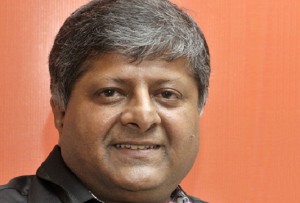
  • My Way: Shashi Sinha on his priorities as President of Ad Club Bombay

    Shashi SinhaBy Tuhina Anand

    The Advertising Club Bombay has appointed its new officebearers for the year 2011-12 with Mr Shashi Sinha as its President. As revealed first by MxMIndia on September 9, Mr Sinha’s appointment was confirmed on Friday after the Club’s annual general meeting. Mr Sunil Lulla, the MD and CEO of Times Television Network, is Vice President. Mr Ajay Kakar, CMO – Financial Services, Aditya Birla Group is the new Secretary, Mr Sujay Ghosh of Bennett Coleman and Co Ltd is the Joint Secretary and Pratap Bose, CEO-Mudra Max the Treasurer.


    Mr Sinha, the newly elected President of the Advertising Club Bombay and CEO of Lodestar Universal India, talks about the priorities that he and his managing committee will take on this year for Ad Club.


    Continuing education:

    The Ad Club has been organizing knowledge series and training programme for the fraternity. We are looking at increasing the frequency of these knowledge sharing session which would help the fraternity.


    Making the ad club relevant to youngsters:

    While we have big tickets events like the Abby awards, Effies and Emvies which sees participation from young in our industry, we have to look at ways by which the Ad Club can be relevant to these youngsters. We want to encourage them to become members and want them to feel proud to be a part of the Ad Club.


    Make it inclusive:

    When the Ad Club Bombay was started, the city being the hub for the industry was a leading body but was also inclusive in its approach as other cities did not have such representative bodies. Now many cities have their own Ad Clubs but we would want to adopt the approach of making Ad Club Bombay a place where fraternity from other places is also welcome. We already have our Abby Awards which sees participation from across the country and the idea is to involve lot more people like in the judging process who belong to our industry but are in different city.


    Restore credibility:

    The Abby Awards has come under much scrutiny and has been criticized in the past. This year we tried to set things right by making the awards more transparent and tried to curb the accusations which were on votes being sold. We hope to restore the credibility of the awards so that fraternity truly holds it in high esteem. But one has to also understand that flak has come only for Abby’s and not for our other awards be it Effies or Emvies. We have tried to plug the hole when it came to creative awards but it becomes difficult beyond a point. Nevertheless, to restore credibility of our awards is our biggest priority.


    Asia-Pacific Effie to India:

    We have got the licence to host the Asia-Pacific Effie in India next year and we see this as a great opportunity. The Effie Awards recognize excellence in effective marketing communications and involves marketers in a big way. In fact, the grouse of the industry on awards is often that the marketers are not interested in these awards but Effie is different in that context. Hosting the Asia-Pacific Effie in India will give us a bigger platform to involve the marketers and the fraternity from the region.