Category: NEWS

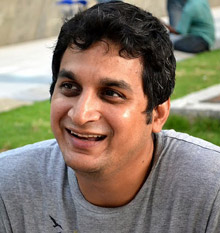
  • Amod Dani is ECD, Leo Burnett

    By Shubhangi Mehta


    Leo Burnett India has promoted Amod Dani to Associate Executive Creative Director, Leo Burnett India. He will be based out of Delhi henceforth and will be directly reporting into K V ‘Pops’ Sridhar.

    Samir Gangahar, Executive Director, Leo Burnett, said, “Amod is one of the best talents of our country as well as a well awarded creative person. We are very excited to have him in the Delhi team and expect him to continue with the great work.”

    Mr Dani said, “The move is challenging, yet very humbling. It’s an absolute honour to be a part of Leo Burnett Delhi. Working with great people such as Nitish, Sam and Sai is truly exciting. Delhi is one of the fastest growing offices in the entire Burnett family. I hope to concentrate my efforts towards the upsurge and do justice to their faith in me”.

    Mr Dani has been in the industry for close to seven years. After completing his post-graduation from MICA, he joined Lowe, Doha as an intern. He then moved to Lowe, Mumbai, where he worked with Priti Nair for a year.

    He joined Leo Burnett in 2006, where he has worked on brands such as McDonald’s, Tata Capital and Reliance Mobile. The brands he handled at Lowe include Surf, Idea, Wheel and Liril.

  • Reliance Retail set to go big with big-box hypermarkets

    By Sagar Malviya & Chaitali Chakravarty


    RIL-owned Reliance Retail is buying real estate in 20 towns and cities to build big-box hypermarkets, moving beyond its earlier model of leased properties and small formats, as the conglomerate turns the spotlight back on retail under the new operations team hired from Walmart China.


    “We want to be a strong Indian retail player. The largest retail company in China is not Walmart or Tesco. It is Sun Art, a strong local company which owns around 200 hypermarkets,” said a senior company executive who added that the company has no plans of inducting an overseas partner even after foreign direct investment is allowed in the multi-brand retail sector.


    The focus on large-format stores of 60,000-80,000 sq ft, nearly the size of two football fields, and building stores on its own land, marks a shift from the company’s earlier strategy. When Reliance Retail had launched in 2006, it had signed up hundreds of properties for small-format stores – supermarkets and convenience stores – on lease. But, due to a combination of factors ranging from high real estate costs to supply chain issues, it had to shut more than 100 stores over the next few years.


    The company under the leadership of two retail veterans from China – Mr Rob Cissell, former chief operating officer of Walmart China, and Shawn Gray, former vice-president in-charge of store operations of the same company – has now for the first time decided to buy real estate and go for big-box formats. Typically, hypermarkets give consumers a choice of buying everything from soap to furniture.


    “We are buying land wherever there is scarcity of ready space, especially for our large-format stores. It will help in the long run as we don’t have to depend on rent inflation and its fluctuations,” Reliance Retail President Mr Bijou Kurein said without commenting on specific land deals.


    Six more hypermarkets by March:

    Reliance Retail has bought land parcels in Mumbai, Aurangabad, Kolhapur, Pune, Mysore and Madurai in the last few months, each measuring 1-1.5 acres, a person involved in the land deals said. The first big-box hypermarket opened at Santa Cruz in Mumbai last month and 10 days later a second one was opened in Pune. The company plans to open six more hypermarkets by March next year.


    The retail company at present runs around half-a-dozen hypermarkets under the Reliance Mart brand. But the company executive said the scale, the range of products, and the consumer experience in the new big-box stores will be totally different from the existing ones.


    “Big-box stores generate volumes and considerably higher realised margins. Reliance’s small-format model was unattractive as it was heavily dependent on fresh fruit and vegetables. It is not possible to manage the entire supply chain from the farm to the stores,” said Mr Harminder Sahni, MD, Wazir Advisors, a retail consultancy


    The Indian retail sector is growing 15-20% annually after a temporary lull of 2008-09 when the global meltdown slowed down growth and demand. Rising incomes, a growing young population and the scope to penetrate deeper into tier 2 and 3 cities are prompting many Indian and foreign players to enter the retail sector. Hypermarkets seem to be the best bet because they offer Western-style shopping experience, a wide variety of products and great deals to the consumer.


    After a slow beginning, Reliance Retail has now emerged as the country’s second-largest retailer after the Future Group with annual revenues of Rs 4,833 crore. Over the past few months, Reliance has accelerated store openings, brought in a management team from Walmart China and launched its first cash and carry store in Ahmedabad in August.


    Source:The Economic Times

    Copyright © 2011, Bennett, Coleman & Co. Ltd. All Rights Reserved

  • Lodestar UM shines @ inaugural FOMA


    By A Correspondent


    The Festival of Media Asia 2011, the first Asian iteration of the acclaimed festival of media creativity and innovation, witnessed the conglomeration of over 600 attendees, over 40 speakers, and more than 50 of the world’s biggest brands. Held at the Marina Bay Sands Expo and Conference Centre, Singapore from November 13-15, 2011, the Festival sparked conversations and provided insights into the media and marketing industry as a whole and the scenario in the Asian region, which is expected to overtake Western Europe as the second-largest advertising market in 2012.

    The Festival culminated in a gala dinner where the inaugural Festival of Media Asia Awards were given out, recognizing the most original and creative campaigns from the region. The awards were given across three top categories and 12 open categories. The Awards drew an overwhelming response – 410 entries from 16 countries, which were cut down to a shortlist of 81 from which the winners of the open categories were selected.

    The top awards at the event were bagged by Ikon Communications, UM and Coca-Cola for Agency of the Year, Network of the Year, and Advertiser of the Year, respectively. From India, it was Lodestar Universal that bagged the only award in the category of Best Entertainment Platform.

    Reacting on the win bagged by his agency, Shashi Sinha, CEO, Lodestar Universal Media said that it was a befitting reply to the spectacular work that the agency had been churning out on a consistent basis. “Being the only agency from India to bag an award is quite an achievement. That is because more often than not, Indian agencies don’t put up a good show where international awards are concerned. So it’s a big recognition for us and I would like to credit the team that worked on producing such an incredible piece of work.”

    The rigorous selection process for the Awards was completed under the guidance of Rahul Welde, Chairman of the Jury, The Festival of Media Asia 2011 and Vice President – Media (Asia, Africa, Middle East, Turkey & Russia), Unilever. On the entries at the awards, Welde said, “There were a number of outstanding cases which just stood out as sure wins, and there were some close calls in a number of categories which stimulated very engaging discussions. The jury was unanimous that the submissions for the inaugural Festival of Media Asia Awards were excellent. It’s great to see this calibre of creativity, execution and effectiveness in our region, and kudos to the brands and agencies who are have turned out some splendid work – quite a few risking and trying something new.”

    Focused on media and marketing in Asia, the session on Day 1 began with a short welcome address from Charlie Crowe, Festival founder and CEO of C Squared. Averred Crowe, “We want to make this an annual event. There is tremendous amount of creativity here, and we’re seeing this explosion of originality all over Asia. There is no better time to tap into it than right now.”

    His speech was followed by a panel discussion which featured representatives from three major Chinese online corporations – Baidu, Youku and Tencent – talking about the digital revolution in China, and their plans to one day challenge giants like Google. Colin Currie, President and Managing Director, adidas Greater China, discussed the challenges involved in connecting with the Chinese consumer, and the way that adidas marketing evolved to take cultural and social sensitivities into consideration.

    The next panel comprising panelists such as D N Prasad of Google – APAC, William Manfredi of Wunderman, Young & Rubicon, Shaun Ruming of McDonald’s Asia-Pacific, Middle East and Africa, and Barry Cupples of Omnicom Media Group, APAC, tackled the shortfall of talent in the media industry in Asia, and explored the reasons for this trend as well as strategies to manage this problem.

    The most appreciated and talked about session was the enthralling keynote by Carolyn Everson, Vice-President, Global Marketing Solutions, Facebook. Everson held the audience captive as she previewed Facebook’s new Timeline feature, talked through the importance of capitalizing on people’s social connection as the basis for marketing, and then presented how Facebook could support brands looking to create connections with their consumers. “Social discovery is the most powerful driver of human behaviour in the world today,” said Everson, “We have always asked our friends for recommendations.”

    Rahul Welde, Vice-President – Media, Unilever Asia, Africa, Middle East, Turkey and Russia, took the conference even further by looking at how marketers would have to change their mindsets and reframe themselves. He offered new and different ways to think, including enhancing interaction and experience, as ways for marketers to address the changing ways that people are relating to media, particularly digital and social media.

    Other notable feature was the Agency CEO tours of media innovation, which took place several times during the event. Leading CEOs took to the stage to showcase and share an innovative or special campaign that had run during the year.


    Awards at a glance:

    The open categories and winners of The Festival of Media Asia 2011 Awards are as follows:

    Best Communications Strategy – Break up for National Australian Bank/ ZenithOptimedia /Australia

    Highly Commended – Mars Play Challenge for Mars / Starcom Melbourne / Australia

    Best Contribution to a Campaign by a Media Owner – 11 Degrees New Media Film Project for Chevrolet Cruz / Youku.com / China

    Highly Commended – Invite Mr Wright for Canon / Discovery Networks Asia Pacific / Singapore

    Best Entertainment Platform – Coke Studio for Coca-Cola / Lodestar UM / India

    Best In-Store Activation – Burst of Freshness for Comfort / Mindshare Vietnam / Vietnam

    Best Targeted Campaign – Whiskas Pledge for Whiskas / Starcom Melbourne / Australia

    Best Use of Content – Johnnie Walker Yulu for Johnnie Walker Black Label / BBH Asia Pacific / Singapore

    Best Use of Digital Landscape – Property Guide iPhone Application for The Commonwealth Bank of Australia / Ikon Communications / Australia

    Highly Commended – Polident Bridges the Generation Gap for Polident / MediaCom China / China

    Best Use of Emerging Technology – Property Guide iPhone Application for The Commonwealth Bank of Australia / Ikon Communications / Australia

    Highly Commended – Woolworths iPhone and Android Application for Woolworths / Tigerspike / Australia

    Creative Use of Media – Interactive TV for Coca-Cola / UM / Hong Kong

    The Effectiveness Award – Australia Kinect for Xbox Kinect / UM / Australia

    The Public Service Award – Harnessing People Power to Let People Know That Speed Kills for The Transport Accident Commission / Naked Communications / Australia

  • Chitralekha celebrates 61st anniversary

    By Akash Raha
    Chitralekha Group is all set to come out with Chitralekha’s 61st anniversary issue later this week. Themed on the topic “India 2020”, the issue has contributions by experts and stalwarts like Shashi Tharoor, Uday Kotak, Kalpana Morparia, Rashmi Bansal, Naveen Jindal, Chetan Bhagat, Farhan Akhtar, Gaurav Mashruwala, Nikhil Gandhi, Dr Tejas Patel, Dr Prakash Kothari amongst others who have shared their perspective on the country in 2020.


    Speaking on the 61st anniversary issue, Mr Mitrajit Bhattacharya, President and Publisher, Chitralekha Group, said, “We are very proud to bring out the 61st anniversary issue of Chitralekha. Last year, we were extremely pleased with the 60th anniversary issue of Chitralekha; even though the issue was priced at Rs 125, it sold out in four days. We realized that content is more important than price. This time too we have tried to give the same to our reader in terms of content. We have priced the issue at Rs 75, and I am sure this time it will be as big a success. Last year we asked eminent stalwarts to trace back India’s history over the past 6 decades. This time, we have asked them to look at the future in 2020. Apart from great content, this issue will also carry a special compilation of 61 gems by 9 musical legends as well as the first day cover on Chitralekha, which was released by the President of India in April 2011. I am sure a combination of all these will certainly appeal to our audiences.”


    The issue also houses the second edition of Chitralekha’s “Gujarati Power List” which comprises superstars from the fields of politics, business, corporate, music, fine arts, cinema, sports, media and social service, who have gone beyond their own areas of comfort and influenced the larger society.

    Moreover, the issue carries a special compilation by Saregama of 61 remarkable songs by nine musical legends namely, Asha Bhosle, Geeta Dutt, Hemant Kumar, Kishore Kumar, Lata Mangeshkar, Manna Dey, Mohammed Rafi, Mukesh and Talat Mehmood. Each copy of the magazine will also carry a First Day Cover (postage stamp) on Chitralekha released by the Department of Post, Ministry of Telecom & IT in April 2011.

    Chitralekha Group had humble beginnings when its flagship Gujarati magazine, Chitralekha, was launched in 1950 by Vaju Kotak, with a print run of 10,101 copies. Today, the much revered news weekly boasts of over 240,000 copies and is almost a fixture in any given Gujarati household.

  • Ten years of Big shopping

    By Johnson Napier


    The common man’s go-to bazaar where all the essential commodities and goods could be purchased at reasonably modest prices has crossed another milestone as it celebrates its tenth year of existence. To mark the occasion, Big Bazaar has undertaken a rebranding exercise that will see the retail chain don a new logo and unveil new promises towards their customers.


    As part of its rebranding plans, the retail chain unveiled a new tag line, ‘Naye India Ka Bazaar,’ replacing the earlier ‘Isse Sasta Aur Accha Kahin Nahin.’ A television, print and social media communication initiative is being launched to mark this event. The new logo design has been developed by Bangalore-based design house, Idiom and the media campaign has been developed by Mudra.


    Asserts Vibha Rishi, Director, Future Group Strategy and Customer, “The logo and tagline will become an integral part of all our communication. With the new change we are moving on to a more emotional level of positioning. The new logo and tagline are contemporary and reflect a changing India and the ethos of shoppers here.”

    As for the new changes to be expected from the retail chain, a senior source from Big Bazaar said, “The retail chain will now be focusing on providing valuable service to the customer – an introspection measure drive. The new campaign will illustrate such an austerity measure being undertaken by the retail chain, inspiration for which comes from an ancient Jain custom of Michchami Dukkadam, meaning ‘Please forgive me if I have offended you knowingly or inadvertently’.”

    This apart, Big Bazaar also plans to provide a platform for people to do good deeds and contribute to the welfare of the society. Says the source, “A tula will be set outside select Big Bazaar stores where we plan to weigh children (below age of 12 years) of all the employees and commodities like rice and flour equivalent to their weight, will be donated to NGOs. Customers too can participate in this ritual and donate any product of their choice.”

    Apart from a commitment to further improve services provided to customers, a key initiative being rolled progressively across all stores are priority counters for senior citizens, pregnant women and mothers with infants. Big Bazaar stores will also have more customer feedback sections. Stores across the country will also be rolling out signature community initiatives like Annasantharpane and Protsahan.

    First launched in 2001, Big Bazaar has grown to over 154 stores today spanning 90 cities. “The plan is to touch 175 stores by the end of this fiscal year,” added the source.

  • Speed up review process, ASCI told

    By A Correspondent


    At the conference organized by The Advertising Standards Council of India (ASCI), Ambika Soni, I&B Minister and Prof K V Thomas, Minister of State, Ministry of Food, Consumer Affairs & Public Distribution recognized the commendable work done by ASCI in creating best practices through its self-regulatory mechanism and various codes of conduct in advertising content. However, the ministers have urged the ASCI to further improve the self-regulatory mechanism by speeding up the processes and compliance of its codes for advertising content.

    Prof K V Thomas, Minister of State, Ministry of Food, Consumer Affairs & Public Distribution, in his speech at the conference said, “We are reviewing consumer complaints on misleading advertisements & debating how to manage this issue. In this process, we are considering a legal requirement as well as an inter-ministerial committee to look into the issue of misleading and false advertisements. We are open to working with ASCI for a collaborative effort to take this entire matter forward.”

    Information and Broadcasting Minister Ms Ambika Soni urged ASCI to speed up its mechanism to review consumer complaints on misleading advertisements, thereby making the self-regulation machinery more effective. She also added, “Self-regulation is an evolving system in response to the growing aspirations of the consumer or the common man. Advertising is the principal motivator of growth in consumer demand, thus making the role of a creative person extremely significant. The current self-regulation mechanism has evolved as a result of the concern shown by the consumer. The key intention here is that all of us should sensitize ourselves to ensure that 1.2 billion people can enjoy the freedom entrusted to us.”

    Mr I Venkat, Chairman, Advertising Standards Council of India updated the assembly on the various initiatives undertaken by ASCI in recent times. He said, “As part of our evolving self-regulatory system, we have increased the frequency of our Consumer Complaints Council’s meetings to twice a month since November. The Fast Track service announced recently has already received positive response. The CCC has already reviewed eight advertisements until now under the Fast Track system. The support we expect from government will ensure that ASCI continue to create global standards and international benchmarks in self-regulation of advertising content.”

    The conference also included three technical sessions to discuss issues and solutions related to (i) Decency in advertising, (ii) Honesty & truthfulness in advertising and (iii) F&B Advertising. Each interactive session had speakers representing Industry, Regulators and Activists and was moderated by TV anchors with expertise in the field of advertising.

  • Elvis Sequeira quits Cheil

    By A Correspondent


    It is learnt that Elvis Sequeira, the National Creative Director at Cheil Worldwide Southwest Asia has quit the agency. Mr Sequeira had joined the agency just few months ago in March this year. The agency is learnt to be currently hunting for a replacement.

    Mr Sequeira is an advertising veteran and had moved to Cheil from Good Morning Films. He has worked with JWT Delhi as well as Lowe Lintas besides working at Clea, Mudra and Interact Vision.

    Though he could not be reached, a call to the Cheil office confirmed that he has moved out of the agency.

  • Zee pumps in $250mn for wellness content

    By A Correspondent


    Subhash Chandra, Chairman of Zee group, today announced the creation of a $250 million content development, production, co-production and acquisition fund in the United States that will benefit Veria Living, a network devoted to showcasing wellness programming and related content across multiple media platforms.


    The New York-headquartered Veria Living television network is available throughout the US to the Dish Network, Verizon FiOS and Frontier Communications subscribers. Veria Living offers the world’s largest line-up of first-run, original programming – connecting viewers in a contemporary and accessible manner to the benefits and joys of living a healthy lifestyle.


    The establishment of the $250 million fund is yet another step in Zee’s five-year plan to further expand Veria Living’s presence in the US and beyond as the go-to-source for all things health and wellness. Said Mr Chandra, “We are firmly committed to growing the Veria brand across the television, internet, mobile and OTT platforms. By focusing on original content development and production we’re not only looking to build a broad US audience for Veria Living, but also setting the table for the expansion of the brand globally over the next couple of years.”

  • Proximity India hires Punit Singh to lead Digital Technology

    By A Correspondent


    BBDO/Proximity has hired Punit Singh as, AVP, Digital Technology.

    Prior to joining BBDO/Proximity, Punit handled digital strategy for Reliance MediaWorks for India and Malaysia . He has also headed Technology and User Experience at Tribal DDB India. He has worked on brands like Volkswagen, Idea, HDFC, Honda Cars, Standard Chartered, Asian Paints to name a few. Punit holds an engineering degree from REC Nagpur and MBA from IIM-Indore.

    On the appointment of Punit Singh, Ajai Jhala, CEO, BBDO/Proximity India said, “Punit lives at the junction of digital technology + creative + strategy. Punit is that rare talent in the digital space who can walk the talk. We hope to see the impact of his hire on both the work and attracting new talent.”

    Ranjeev Vij, VP & Head – Proximity India added, “An absolute digital junkie, Punit is passionate about everything digital and shares our vision to contribute towards strengthening of the platform in the Indian scenario with behavior-changing interactive ideas.”

    Commenting on his move Mr Singh said, “India is placed at an exciting point on the Digital front. With brands warming up to the potential of digital, the coming years would witness a paradigm shift in the way they reach out to their consumers. With thought leaders like Ajai, Josy and Ranjeev to steer and a great creative team to work with, Proximity India is set to become the next big hub of marketing rationale and radical advertising in the digital space.”

    Proximity India is the youngest agency of Proximity Worldwide, and is globally aligned to BBDO Worldwide. Proximity India offers talented communications experts with skills across the full range of relationship, digital and direct marketing services.

    Early next year, Proximity will launch their proprietary Digital Lab Initiative in India, which is a multi-faceted program, designed to drive digital thought leadership and to provide a significant added value service to its clients.

    BBDO/Proximity India, the youngest agency of BBDO Worldwide and the Omnicom Group, began operations over 36 months ago. With offices in Delhi and Mumbai and talent strength of over 90 people, BBDO India is helping shape brands like 7 Up, Nimbooz, Quaker Oats, Aviva life insurance, P&G Gillette, Godrej Protekt, Bayer Healthcare, Wrigley’s Doublemint, J&J Baby, J&J Nicorette and BlackBerry.

  • MxMIndia-partnered ‘Paid News’ seminar today

    By A Correspondent


    MxMIndia has partnered the event ‘Paid News: Fooling People all the Time’ organised by Moneylife Foundation and Citizens Action Network with the support of industrialist Cyrus Guzder.


    To be held in Mumbai’s Madame Cama Hall (Opp Lion Gate, Kala Ghoda) on Friday, November 18, the evening will see the screening of the documentary ‘Brokering News’ followed by a panel discussion with senior journalists and the film-maker Umesh Aggarwal.


    About the film: The Delhi-based non-governmental, not-for-profit Public Service Broadcasting Trust (PSBT) recently released a documentary titled “Brokering News—the inside story of paid news”.


    The film by Umesh Aggarwal addresses a significant challenge facing Indian democracy today—which is the state of its media. The film looks at three aspects of paid news—how politicians are paying for positive coverage during elections, with the result that those who don’t pay are blanked out by the media; how the coverage and reviews of movies are orchestrated and paid for and of course, paid news about business and industry. It depicts in detail how journalists were forced to broker deals to offer editorial coverage to politicians.


    Details of the Event:

    Panelists: Umesh Aggarwal, Ayaz Memon, Paranjoy Guha Thakurta, Bhawana Somaaya, and Sucheta Dalal.

    Timings: 5.30-7.30pm (Registration and Tea starts at 5pm)

    Venue: Madame Cama Hall, KR Cama Hall Institute, Bombay Samachar Marg, Opp. Lion Gate, Kala Ghoda, Mumbai 400 023

    Admission: While admission is free, registration is required. Contact details: Call Judith/Seraphina on 022-24441058-60, or mail at mail@mlfoundation.in,or log on to www.mlfoundation.in

  • Obdurate Katju sparks walkout by INS members in Press Council meet

    By A Correspondent

    The four publisher members representing the Indian Newspaper Society (INS) in the newly constituted Press Council – Dr R Lakshmipathy (Dinamalar), Mr V K Chopra (Filmi Duniya), Mr Sanjay Gupta (Jagran) and Mr Vijay Kumar Chopra (Punjab Kesari) – strongly protested to the Chairman of the Press Council for his remarks that “he has a poor opinion of the media” and “majority media people are of very poor intellectual level with no idea of economic theory or political science, philosophy, literature”. The publisher members were attending the first ever meeting of the newly constituted Council of the Press Council of India.

    However, Justice Markandey Katju, the PCI chairman, was firm on his stand and refused to withdraw the remarks made by him. The publisher members walked out of the meeting in protest.

    Earlier in the day, the Executive Committee of the INS took strong objection to the remarks made by the Chairman of the Press Council of India in a television interview and in subsequent statements issued by him to the press. The Executive Committee of the INS noted with dismay that the Chairman’s remarks demonstrated a deep bias against members of the Fourth Estate and that such bias would adversely affect the functioning of the Council in its quasi-judicial role.

    The Executive Committee strongly felt that the Chairman had undermined his own position as Chairman of the Press Council of India and that of the Council, by categorizing a majority of media people as being of poor intellectual level. In a strongly worded letter addressed to the Chairman of the Press Council of India, the INS President urged him to withdraw his remarks.

  • TV-wallahs eager for digital wave


    By Rishi Vora


    The television distribution scene in India has for many years seen the dominance of cable wallahs. Digitization only started in a big way when DTH players pumped in huge sums (there was no ordinance then) and succeeded in building a critical base of subscribers in the country. As a result cable operators were seen as laggards. Sample this: there are about 40-45 million DTH homes out of the total viewing population of more than 225 million households, so DTH has grown despite competition from cable and is likely to increase the subscriber base substantially with the recently passed ordinance by the government.


    As for the cable operators and MSOs, they are left with no option but to invest in infrastructure. Den Networks is investing Rs 1,000 crore and expects to get 2.5 million subscribers in the phase one. Hathway will invest Rs 500 crore and they are also bullish about increasing the subscriber base. Analysts feel that now is the perfect time for MSOs to increase their share in the business.


    So, while it seems all good for the industry, the fact is that digitization is something that was always talked about, and is now a work in progress as far as complete digitization is concerned. The government has, in a recent development, pushed the sunset day for four metros from March 2012 to June 2012. The date for cities with a population more than 1 million is March 31, 2013.


    For broadcasters, this is a big relief from the carriage fees, which in the past have resulted in loss of revenues. The four metros is a big market with 20 million households; and digital homes eating into cable and analogue… But, digitization, for broadcasters, also means that the consumer will now have a choice of what channel to pay and watch. That in experts’ minds is a challenge many broadcasters will have to face – to keep their viewers’ interest levels high and for the long run.


    Subhash Chandra, Chairman, Zee opines, “Digitization will only help the television industry further grow. The government’s decision on clearing the ordinance is a very positive move. It will give a boost to the cable and satellite industry and help create a more sustainable business model for the television industry.”


    On the growth of DTH players in the county, he said, “DTH is leading the adoption of digital technology. There are about 39 million gross DTH subscribers in the country. Now they have a great opportunity to consolidate their businesses.”


    However Dinyar Contractor, Editor-in-Chief of Satellite and Cable TV Magazine, has a contrary view to the whole scene. He feels that there is still some time for digitization to happen pan-India (2014) as the ordinance states. And that broadcaster are wary of going digital, or are wanting to delay the process of digitization of TV in India, as the profits are not much, plus there is the risk of losing eyeballs, as there will always be viewers who are not open to the idea of paying and viewing, as against the concept of free-to-air channels.


    Tarun Katial, CEO, Reliance Broadcast Network Limited, feels, “Digitization will bring-in fair reporting of subscriber base, which will lead to standard pricing and subsequently eradication of local monopoly. It will help companies increase subscription revenues and reduce down carriage fees for broadcasters in a phased manner.


    Ajay Chacko, President, A + E Networks | TV 18 JV, says that the move will bring in more accountability in the business. And apart from additional subscription revenues, he believes that digitization offers a whole new benchmark for broadcasters, and a platform which is more measurable than cable and analog.


    Neo Sports COO Prasana Krishnan welcomes the ordinance. “This is the much needed change in the industry. What it will do to the industry? I think it will revolutionize the broadcast landscape in India.”


    If the ordinance were not passed, Mr Katial is of the opinion that the current capacity constraints in analog cable would have stifled the growth of new channels and introduction of technologically advanced content. “The carriage costs paid by broadcasters which currently remain high in view of the limited bandwidth of analog cable would decrease post digitization. This would allow broadcasters to make higher investments in programming and marketing, thus improving the customer experience,” he explains.


    Another advantage the industry will see over the years in the fast adoption of HD television and 3D, which will open new revenue streams. As far as television distribution industry is concerned, the ordinance will lead to more transparency and greater accountability. It means opportunity for all stakeholders – broadcasters, distribution platforms including cable companies, MSOs and DTH.

    Photograph: Airtel Digital TV HD Recorder from airtel.in