
Category: TV

  • Chhota Bheem comes to Worldoo

    By A Correspondent


    Chhota Bheem, cartoon and animation series hero, is now on www.worldoo.com. Worldoo is ‘ever-evolving online ecosystem’ for kids, launched this April for kids of the age group between 6-12 years. Worldoo and Chhota Bheem’s web partnership comes at a time, when the latter has launched its second film.


    On Worldoo, kids can watch Chhota Bheem videos, play Chhota Bheem games, read comics, choose Chhota Bheem avatars and design their homes with specially designed Chhota Bheem themes as well. “Worldoo promotes popular content for young minds and Chhota Bheem is one of the most iconic characters, today. Kids can express themselves by bringing Chhota Bheem to their homes on ‘worldoo’ and much more,” said Harsh Wardhan Dave, Head Experience and Brand, Worldoo.


    “We are very happy to associate with Worldoo, their concept is very unique and opens up a wonderful world for children,” said Srinivas Chilakalapudi, Vice-President, Strategy, Green Gold Animation.


  • Big CBS Love announces ‘Friday evenings with Oprah’

    By A Correspondent


    English General Entertainment Channel Big CBS Love has lined up a special treat for viewers this summer, titled ‘Friday evenings with Oprah’. The weekly special will include the best episodes from the Daytime Emmy Award-winning programme, The Oprah Winfrey Show.


    The multiple award-winning television personality will once again be seen on Indian television with the best hand-picked weekly specials around the themes of relationships, weight loss and health, most shocking stories, celebrity specials and the Oprah spectacular finale, starting May 10, at 8 pm exclusively on Big CBS Love.


    The idea behind these specials is to club together theme based shows which are topical in nature each month. Ensuring they resonate with audiences, the shows touch on a wide variety of topics from relationships, intimacy, sex, why men cheat, how foolproof is your marriage and more. Also being shown will be some of The Oprah Winfrey Show’s most shocking stories, including an abusive husband caught on tape, a 6-year-old chained in a closet and tortured by his own family and the story of a 28-year-old woman who has had 26 plastic surgeries.


    The celebrity specials will see Richard Branson, Ricky Martin and others appear on the show, before Oprah’s farewell spectacular, which will mark the close of ‘Friday Evenings with Oprah’.


    Anand Chakravarthy

    Anand Chakravarthy, Business Head, Big CBS Networks said, “It is a delight to bring back a personality like Oprah Winfrey to television screens. With this weekly special, we aim to provide our viewers with wholesome entertainment and touch upon universal themes which are sure to strike a chord with audiences. Oprah is an icon to millions and we are confident our viewers will appreciate our efforts to bring them the best of the most popular talk show. At the same time it is an exciting opportunity for marketers and advertisers to connect with their target audiences.”


  • Carat bags AOR of News Nation TV channel

    By A Correspondent


    The recently launched news channel News Nation has appointed Carat Media Services as its media agency. The account was won in a multi-agency pitch with some of the major agencies participating.


    Shailesh Kumar, CEO of News Nation asserts that his channel is keen to set the gold standard in the field of news delivery and expert views. A high voltage media campaign is also scheduled to go on air soon and the creative mandate is being handled by McCann Erickson. Vidhu Sagar, Executive VP Carat Media confirmed the development and saud: “We believe in the proposition being put forth by News Nation whole-heartedly and our media approach is also similarly aligned to connect the brand message with its chosen prospect most effectively.”


  • V D Wadhwa appointed CEO of Siti Cable

    By A Correspondent


    V D Wadhwa has been appointed as Chief Executive Officer of Siti Cable Network Ltd, an Essel Group company. The Multi-System Operator (MSO) Siti Cable is a major player in India’s cable television industry, and reaches around 10 million viewers.


    Mr Wadhwa will be responsible for taking forward the organizational aspirations of growing the business of Siti Cable multifold through digitization. He will be based out of Noida.


    His last assignment was with Timex Group India Limited where he was Managing Director & CEO for business operations in India and SAARC countries. Mr. Wadhwa brings with him over 28 years of general management experience in the consumer lifestyle and retail industry, and is largely credited with the profitable turnaround of Timex operations in India and establishing its retail operations in India and South Asian countries.


    Mr Wadhwa is an alumni of Harvard Business School and a fellow member of the Institute of Company Secretaries of India. He has served on the various committees of FICCI and Assocham besides serving as President of the Horological Federation of India.


    Commenting on the appointment, Essel Group Chairman Subhash Chandra said, “We are delighted to have Mr Wadhwa at the helm of Siti Cable. With his strong business acumen and strategic inputs, we expect the company to touch new highs with the aggressive growth plan in the digital regime. I am confident that Mr Wadhwa’s association with the group will add immense value to the company and all its stakeholders.”


  • Austere and reporting profits, NDTV to relaunch biz channel in new avatar

    By Ananya Saha


    Happy days are here again for NDTV as it posts profits for the year ended March 31, 2013. NDTV has reported a PAT of Rs 2 crore for FY 2012-13 as compared to a loss of Rs 87 crore for FY 2011-12. It has reported net profit after tax of Rs 28 crore for this quarter as compared to a net loss of Rs 41 crore in the same period last year.


    Vikram Chandra

    Vikram Chandra, Group CEO, NDTV, told MxM India, “There are range of factors that have contributed to the profits. We have been doing series of austerity measures across the businesses. The benefits are now starting to be seen. To a large extent, we are trying to de-risk ourselves from the pure FCT-based model and trying other ways to provide brand solutions to companies. Those revenue streams are looking very robust and doing very well.” He also said the benefits of digitization, though it has been in play for the last few months only, are starting to be felt even as full benefits will be felt only in few months or year from now as subscription money starts to come in and carriage fees drops.


    “Exciting new growth verticals, Convergence for instance, the online business has started to contribute meaningful money in terms of revenue and profitability. So that also adds to the impact,” Mr Chandra reasoned.


    Mr Chandra also spoke about the re-launching NDTV Profit in a new avatar, when asked about the reasons to shift the channel back to Delhi. He said, “One of the big focus for us in the next few months is going to revamp and re-launch NDTV Profit. And as part of that, we thought it was not an optimal thing to do to have two hubs – one in Delhi and one in Mumbai. A lot of programming that the renewed channel is going to be doing now is stuff that can be very well managed out of Delhi.”


    While he did not say anything about how soon will the revamp go on-air, he did talk about how the profits are a reflection of what the industry is facing as a whole. Mr Chandra said, “A lot of what we are seeing is the impact of external factors that the industry as a whole is seeing, whether it is on net ad billing or fixing the ratings system or digitisation, many of these are factors that the industry has been fighting and we are a part of it. And we hope to have some success in those areas.”


    On the recent development on the call for a statutory regulator by the Parliamentary Committee over the issue of paid news, Mr Chandra shared, “Obviously, none of us like paid news. It is an obnoxious concept. In general, we have preferred self-governance and we have always preferred it as a way to govern the industry. We do believe, till the model of television news is set right – by digitization – and reliance of advertising and reliance on TRPs starts to come down, both will improve the business model of the broadcaster, and some of that would help remove some of these tendencies.”


    During the year, NDTV Emerging Markets BV, a step-down subsidiary of the company, ceased to exist with effect from September 12, 2012, having been placed into liquidation earlier. However, Mr Chandra is positive about the future of the group. He concluded, “Once you start posting profits, you have to keep posting profits, is obviously our intention. Now, we cannot make a forward-looking statement as to what we are going to do, but we are going to take a lot of measures that will keep the business on a robust footing.”


  • We thrive on gossip and scandal: Ferzad Palia

    By A Correspondent


    Ferzad Palia

    Viacom18’s English-focused music channel Vh1 has added one more reality show to its kitty - Scandalicious.


    “Consumers love to see celebrities and the lifestyles they lead and there are a lot of shows focusing on this aspect. But what people love more is cossip and scandal – we thrive on it. So watching celebrities go bad gives viewers another insight into celebrity lives making the show very relatable,” says Ferzad Palia, Vice President & General Manager – English Entertainment at Viacom18, on what makes the show different from the rest on the channel.


    The channel prefers to label itself as an English entertainment and music channel and hence, aims to showcase the best/ latest in international music which is not limited to only videos but also documentaries, concerts and festivals.


    The channel does feel that there has been a significant growth of international music not only on TV but also across India. International artists have realized the potential of live events in India and have made India a ‘must tour’ country in their calendars, which wasn’t the case couple of years ago. Consumers are now much more accepting of multiple genres of music and are not restricted to Bollywood only. International music channels are sprouting up which is all due to a higher interest and demand for Music on TV.


    “The growth of music in India is extremely exciting because it demonstrates that international music is gaining popularity very rapidly. Seeing this growth, we have not merely stagnated as a TV channel, but we are now an all rounded brand available on multiple platforms including TV, mobile and online,” explains Mr Palia when asked about music being consumed across media and if it has affected music genre on TV.


  • Reality goes Regional… and how!


    By Ananya Saha


    Kaun Banega Crorepati might have been adapted from the international Who Wants To Be A Millionaire, but that is not where the adaptations stop. Suvarna TV, the Kannada general entertainment channel, has adapted the reality show into Kannadada Kotyadhipati, Vijay TV in Tamil Nadu has a version in Neengalum Vellalam Oru Kodi, and so does Asianet, which has the Malayalam version of KBC – Ningalkkum Aakaam Kodeeswaran. ETV Marathi has launched the Marathi adaptation recently. And it is not only KBC. Bigg Boss was recently launched on ETV Kannada and an announcement has been made for a Bangla variant of the show with Mithun Chakraborty as host. Many reality shows in the past have been adapted into regional languages and channels, and the trend seems set to grow.

    MxMIndia spoke to industry professionals for their view on regional adaptations of reality shows.
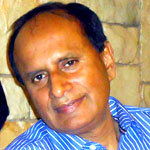
     

    Dhruv Jha, GM- Content & Experiences, Lodestar UM

    The regional adaptations do well, and they open well. It is to do more because of the kind of buzz that is generated on national scale – they are able to replicate it in some manner, and then it’s more like ‘we are not far behind’ and ‘if you can have a Bigg Boss, so can we’. And there is an aspirational level at the state and regional level that the channels also feel ‘our stars also deserve a Bigg Boss’. I believe the initial ratings were good, though I am not sure of the ratings now.


    I am sure that there are brands buying into it. If initial TRPs are generated, if there is a buzz, then regional adaptations are able to monetize. Strong national brands that are strong regionally, they are able to look at this option. I know of brands who are looking at AFP (advertiser funded programming) model and they are looking at programming in region – if it the format that is going to work, then there will be brands investing into it.


    All said and done, most of the reality shows on national GECs are also adaptations. Truly adapted, it can be as good – in any language or market. And the channel or programme would have to consider local culture, sensitivity and sensibilities while adapting.

     

    Anuj Poddar, AVP and Business Head – Regional Channels, Viacom18

    KBC is a proven format that continues to be successful; audiences have not tired of watching six seasons in Hindi. So why should the Marathi audience (even if they have watched it before in Hindi) not watch KHMC when it is tailormade for them? Format shows are adapted all the time, across the world, across regions.


    But let me also give you a specific fiction example: “Uttaran” from Colors has been remade as “Asava Sundar Swapnancha Bangla”. For that I asked the team to answer 2 questions: “How will we make it different enough and more relevant so that viewers who have seen the Colors version will yet watch the remake on ETV Marathi?” and “How will we make it as similar or true to the original Colors version so that the elements that made it work in the first place are not lost in the remake?” We made sure we had the answer to both these questions and a healthy balance on both these seemingly opposite aspects. If you get that right then the viewers will come. And if the viewers come, the advertisers will follow.


    KHMC (Kon Hoeel Marathi Crorepati) is completely tailored for the Marathi audience. The questions, while being based on overall general knowledge, are inclined towards the culture and history of the Maharashtrian heartland. Our objective with this show is to also create awareness of the rich heritage and history of this Maha – Rashtra amongst people. The contestants are naturally Marathi-speaking people. The auditions have been done across Maharashtra. So in every way, the show is adapted to the regional audience. Having said that, the grandeur and the magic of the original format is all there – no compromises on that!


    The KHMC format is hugely back-end intensive. I must admit that before getting into it I did not realise how much logistical work goes into the show. And what we have achieved is probably the fastest ever mounting of this format so far, because we had a specific time-window that we had to catch. So my full compliments to my team and to Big Synergy for having pulled this off. The challenge of course is that such formats come with well-established quality benchmarks that the audience expects – if you compromise on that, they would feel cheated. And yet, the resources available to a regional channel are fewer than to a national channel – so it is a tight balancing act. Having said that, I am confident that the Marathi and other regional markets will scale up further.
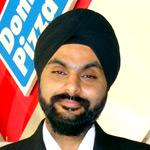
     

    Harneet Singh Rajpal, Vice-President – Marketing, Domino’s Pizza India

    For any brand, particularly a mass brand that is present across the country, it is very important to have a regional connect. While presence on national television gives a wider reach across the country, to engage a consumer at a regional level it makes sense to advertise on regional properties, especially for the brands that have regional presence through regional channels on the shows that have been adapted and already follow on the success of national shows.


    Domino’s spends close to 20 percent of our total media and television ad budget on regional channels. This would mean the 7-8 markets that we are present in.

     

    Anilkumar Sathiraju, AVP & Head South, DDB Mudra Max

    The adaptations of big ticket shows are being accepted by many, be it audience or advertiser for that matter and the response is, in my opinion, a positive one. Not sure about whether the channel is able to make profits, but yes, they are investing heavily and the channel dependence on that particular show is becoming very critical and important


    Challenges as such that the show should be accepted by the audience regionally/locally, else its no point, cos it might just not work. Therefore channels are obviously looking at what kind of content appeals to the local audiences and thereon adapting the same


    KBC in Tamil did ‘average’ in 1st season, later on seasons it’s doing pretty ok. In Malayalam, KBC did quite well, in Karnataka it was a bigger success than Tamil Nadu. May be it’s because the audiences were used to a personality such as Big B that nobody else was accepted. In today’s scenario if you look at what a Big Boss has done in Karnataka, we have something to talk about. The original Big Boss in Hindi was accepted anyways but when it came to adapting it to Kannada, initially am sure people couldn’t accept it, but now the program as such is doing well in the market place.

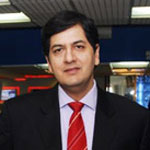
     

  • Sangeetha Aiyer is now VP & Head Marketing, A+E Networks I TV18

    By A Correspondent


    A+E Networks|TV18 has announced the promotion of Sangeetha Aiyer, as Vice President and Head Marketing, A+E Networks|TV18. In her new role, Sangeetha will oversee and supervise all the marketing verticals of the joint venture – both consumer and trade in addition to providing strategic and marketing solutions for the channel History TV18.

     

    Commenting on this development, Ajay Chacko, President, A+E Networks|TV18, said, “Sangeetha has consistently played the role of a key growth driver for History TV18.  Her strong brand marketing acumen has ensured that History TV18 got the required traction and also contributes positively towards the factual entertainment genre growth. Her expertise is core for further strengthening and expansion of the A+E Networks|TV18 portfolio.”


    Adding further, Ritu Kapur, Programming Head A+E Networks | TV18, said, “Sangeetha’s out-of-the-box marketing strategies have helped  position History TV 18 distinctly in the factual genre. From the power packed launch, to the innovations on social media and the online buzz with The Greatest Indian and the inventive campaign for Pawn Stars and Bollywood @100, Sangeetha has ensured that History TV 18 is always on a dynamic high.”


    Speaking on her elevation, Ms Aiyer said, “It’s a privilege to be part of the fabulous team at A+E Networks I TV18. Personally it has been a fascinating journey since the launch of the channel; History TV18. We all have given our best efforts in launching and sustaining the momentum of growth for History TV18. I’m happy about my new role and I believe that the coming times are going to be immensely challenging and exciting.”


  • These 6 folks will help TV ratings get Transparent

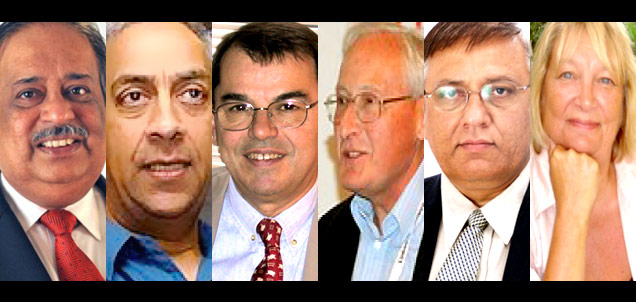
    L to R: Dr. M Damodaran, Chintamani Rao, Giovanni Fabris, Ivor Millman, Praveen Tripathi, Sheila Byfield


    By Pradyuman Maheshwari


    In what is clearly an attempt to build confidence amongst stakeholders (and thereby silence critics), television audience measurement firm TAM Media Research has set up an elite TAM Transparency Panel (TTP), which is essentially a panel of ombudsmen for the much questioned audience measurement process in the country.


    TAM Media Research was mandated by a joint industry body to measure television viewership in 1998. Although it’s the only measurement agency in operations currently, until a few years back, another agency called aMap was engaged in a similar exercise. However, poor patronage forced aMap out of business, and TAM is the only agency in existence.


    Have a problem with ratings?

    Step 1: Write to TAM, explain the problem, raise your doubts and show them evidence if you think there’s a mess-up on the field

    Step 2: If you don’t find TAM responsive or aren’t happy with its response, mail the ombudsmen at the TTP. The email id isttp@tamindia.com… it’s a temporary one, an independent, non-TAM id is being set up


    In the early days of TAM’s operations, there was frequent monitoring of processes by a ‘technical committee’, but since stakeholders have busy schedules, TAM was left on its own. Egged by the government, the trade associations set up Broadcast Audience Research Council (BARC) way back in 2008. The joint industry body, which appointed a CEO last week, is currently working towards appointing vendors. But that process is expected to take around a year.


    In the meantime, TAM has appointed a Transparency Panel (TTP) comprising not one, but six ombudsmen, who will hear complaints, deliberate on issues and take decisions which TAM has pledged to adhere too.


    In addition, as per a report by senior journalist Rohit Bansal for news agency IANS which first mentioned about this development, “two of the ‘big four’ global audit firms are also being roped in to audit the TAM process”. Also, as per Mr Bansal’s report, a police officer has been appointed for “vigilance duties” in order to “clear roadblocks being faced in maintaining the integrity of TAM meters.”


    What appears to be a masterstroke by TAM is the composition of the TTP. All members are industry veterans and while they may be consulting, they are not full-time employees in an organisation. Heading the panel is Dr M Damodaran, a retired IAS office and former Chairman of the Securities and Exchange Board of India (SEBI), IDBI and the UTI.


    Others include:

    • Chintamani Rao (former BARC chairman, veteran adperson – having spent long years at Lintas, Universial McCan, Ogilvy & Mather and RK Swamy as well as with broadcasters Times Televison and earlier India TV)
    • Giovanni Fabris (formerly international media director at McDonald’s)
    • Ivor Millman (veteran TV audience measurement expert and formerly member of the BARB board in the UK)
    • Praveen Tripathi (market research veteran, formerly MD, Starcom India and Strategic Planning Director, P&G China etc)
    • Sheila Byfield (former Global Director, Insights and Research, WPP)


    Needless to say, bringing in former Dr Damodaran who has headed the regulatory body SEBI will also ensure that government and Parliamentarians respect the panel for its credibility.


    L V Krishnan

    Confirming the setting up of the TTP, L V Krishnan told MxMIndia that the six panelists have met twice already – once in December and next in April. “They are next due to meet in July, tentatively in the third week”.


    Mr Krishnan indicated that a secretariat and email ids are being created for the panel to be truly independent. Panellists are remunerated sitting fees, which is currently being paid by TAM, though going forward industry bodies may be requested to pay them so that there is complete independence.


    According to sources, the setting up of the TAM Transparency Panel has been in the works for over two years. The idea was to get professionals with the right experience and stature. Hence the composition of three national and international panellists.


    In the December 20 meeting which last two days followed by an interaction with around 20-odd broadcast and advertising agency captains. Among the CEOs present at the evening do were: Sam Balsara, Shashi Sinha, Arvind Sharma, B Sai Kumar, Markand Adhikari, Sunil Lulla and Sudhanshu Vats of Viacom18 amongst others. The six panelists were also taken to TAM’s facility in Vadodara to familiarize them of the processes followed.


    The second round saw a three-day meeting (April 30 and May 1 and 2), including a meeting with two broadcasters. A set of guidelines on TAM data usage was also issued, given that it is representation of data and claims that is the root cause of all problems.


    The panel, Mr Krishnan told us, will have an arm’s length distance from all stakeholders, TAM included. Welcoming the development, an industryperson who MxMIndia spoke with, said the panel is long overdue. “The joint industry body should’ve done it years back to avoid the breakdown that we saw some months back with NDTV taking TAM and its principals to court. However, at that time the thinking was to have representatives of various members on board and that never happens because industryfolk have enough work of their own!”


    On the guidelines issue, Mr Krishnan clarified it was an advisory. “We have issued the guidelines and now it’s for the industry bodies to have their members follow them.”


    Meanwhile, while the industrypersons MxMIndia spoke with have adopted a wait-and-watch approach to the TTP, there is overall agreement that it’s a step in the right direction. As for how transparent the ratings process gets, that, we guess, time (and TAM) will tell.


  • 1 Minute View: Welcome, the TAM Transparency Panel

    One can’t help but exclaim that the setting up the elite panel of ombudsmen was such a no-brainer that one wonders why no one thought of it before.


     

    TAM, one learns, has been mulling it for around two to three years. But what about the gods of advertising, marketing and broadcasting? And the folks at AAAI, ISA and the IBF+NBA?


    However, this ‘1 Minute View’ is not about putting others down. A lot needed to be done, and it wasn’t. MxMIndia believes that much lopsided planning has happened in Indian broadcasting. Part of the problem is the lack of a vision that things will really leapfrog. One of course couldn’t have imagined a thousand channels in existence some 20 years back. The distribution sector is in a mess, ‘coz there was no order set in the beginning. Ditto with putting systems in place for measurement.


    An independent watchdog should have happened from Day 1. The joint industry stakeholders apparently didn’t have too much time to do that. And now that TAM has taken the lead, it’s got to be supported. Yes, there’s a BARC that’s been set up. The technical committee has been in place with Shashi Sinha at the helm. Partho Dasgupta is on board as CEO.


    Still, the TAM Transparency Panel will have a role. When the BARC-administered measurement process is in operations, it will turn the owner of all measurement data. And, one is sure there will be people asking questions even then. The panel can then just reorient itself to the new regime.


    A word on the six-member panel. Getting Dr M Damodaran to head it is a brilliant idea. Impeccable reputation, and if he could handle the sharks as SEBI chief, this should be smooth sailing. One is certain even the folks at the I&B ministry would be happy with the choice.


    As for the others: Chintamani Rao and Praveen Tripathi are both masters in their domains. We don’t know much about the international panelists, but their credentials are super.


    Do we appear to be gushing much about the TTP? Yes, we are. And with reason.


  • MTV India banks on digital wave

    By Ananya Saha


    Aditya Swamy

    Tata Nano and MTV have announced the second season of ‘Drive With MTV’, which is set to begin from June 1. The pure social streaming show will showcase the journey of four teams travelling in different regions of the country and sharing their experiences. The 21-day road trip would have 84 webisodes, which will also be aired on MTV, in half-hour weekly six episodes. Last year, the show registered 15,000 tweets, a million likes across photos, videos and text updates.


    Ekalavya Bhattacharya

    Ekalavya Bhattacharya, Head – Digital, MTV India explained, “It is the future of content. MTV is tapping screenagers.” The social show will depend highly on digital platform. Aditya Swamy, EVP and Business Head – MTV India said, “We realised that we have a wide social and digital footprint. 800,000 people follow us on Twitter. Our Facebook reach is almost 16 million people. Drive with MTV has got over 2500 tweets athe day they did the crowd-souring contest. All of this content will be out on social media and on our website on real-time basis.” Last year, Drive with MTV registered 141,000 tweets.


    The contestants will be continuously blogging, tagging videos, tweeting live. “It’s a difficult production. Each team has a dedicated production team, and co-ordination from four different locations is challenging. And it has to be done in real-time.” According to Mr Bhattacharya, what will be shot today, will go live tomorrow. Each team will have a dedicated production team to make this possible.


    The travel show is being promoted across MTV, website homepage, Twitter hashtags, and mostly promoting the digital show on digital platform. This year, it has also been extended to Pinterest and Instagram to make the show more audience-inclusive.


    Is it difficult ot monetize digital show? “Yes,” feels Mr Bhattacharya. He said, “The total number of people who consume advertisements online, is something I am not convinced about completely. On YouTube, the most used button is ‘Skip the Ad’ button, primarily because people know it is advertising. The kind of audience, which we are catering through this show is an evolved audience. If I show them an ad on their smartphone, they are not going to be consuming it. Hence, on digital platform, MTV over the last two years has entered the branded content space. Here, Nano will be a part of every web episode and also on six episodes that go on-air on MTV. Yes, it is difficult to monetise it to an extent since not many people are capitalising on it. We will also have a telecom partner, and two more as sponsors. The main reason why it is difficult is that digital is very ROI-oriented, you can track everything that when you tell people to step out of ROI and think about the brand and content, and engaging the consumer of your fanpage. Webshows are reaching there with title and associate sponsors like a television programme.”


    Mr Bhattacharya insisted that since the point of content consumption is not limited to TV anymore, “MTV is launching a web show every month. The videos are 6-7 minutes long since nobody is going to watch 45 minutes of our show on their tablets and smartphones.” To reach the demography, over the last three years, MTV has been capitalising on its digital properties. And not only digital properties, MTV is doing everything to reach to its TG. “We have lot of music shows. But what we are also doing is other kind of content, music, reality, digital. Whatever young people enjoy, we are going to do that. To be able to connect with youth with one single genre of content – those days are gone. They want a multitude of options. We want to surround sound our audience,” concluded Mr Swami.


  • Indians love their mobile phones more than TV: InMobi report

    By A Correspondent


    Bengaluru-based mobile advertising network InMobi has released the findings of its Mobile Media Consumption Report for India. The study, developed with Decision Fuel, finds that mobile web users in India are increasingly influenced by mobile, with nearly a third of their media consumption time being spent on mobile devices.


    According to this InMobi study, dual or second screening, the phenomenon of users spending time on additional electronic devices while watching TV, continues its upsurge.


    * 63% of users now actively spend time on mobile device while watching TV, compared to 26% in 2012.

    * 57% users engaging in social networking while watching TV

    * 79% of Indian mobile web users plan to conduct m-commerce in the next 12 months.

    * 65% of Indian mobile web users are now as comfortable with mobile advertising as they are with TV or online advertising

    * 80% noticed mobile ads on their smartphone, while a majority 48% of users experience these ads on mobile apps specifically.


    Observing these trends, Phalgun Raju, Vice President and General Manager, India, and Southeast Asia at InMobi commented, “The tiny mobile phone has overtaken the mighty TV in India from a media consumption perspective. With over 850 million active mobile connections in India*, the mobile marketing channel presents marketers an unprecedented opportunity to engage with the always-connected consumers. The onus is now on brands and content agencies to create compelling, engaging mobile rich media to capture consumers’ attention.”