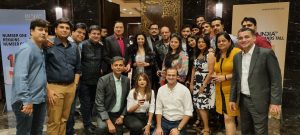
India TV held an internal celebration for its staff, hosted by Chairman and Editor-in-Chief Rajat Sharma and Managing Director Ritu Dhawan. The occasion: “on being No 1 for the sixth week in a row”. India TV has been on the top of nation’s news rating charts (BARC 15+, HSM, 6-24 Hrs) continuously for the last six weeks and it was time for all its staff to celebrate the occasion at a glittering party, notes a communique.
Said Sharma, while addressing the staff: “In work and in life there are going to be times you’ll believe in something that’s unpopular, and you’re going to be called on to defend that choice. Too many times, people look and turn around to see what other think first and make their choice based on that. At India TV, we have never been afraid of speaking out mind and have never sought legitimacy from any vested interest. If there is something which can benefit our viewers and people at large, we go for it. That’s our primary benchmark”
Added Dhawan: “Keep following your instincts with courage and conviction. Obstacles are meant to be conquered and risks are meant to be taken. There are no shortcuts. India TV’s glorious journey is a shining example of this spirit.”
Sony Sports Network has announced plans the live broadcast of the XXII Commonwealth Games starting from today, July 28 at 11 pm IST. The event will mark the return of Sony Sports’s ;ive wraparound studio show Sports Extraaa featuring eminent panelists and guests.
Said Rajesh Kaul, Chief Revenue Officer, Distribution and Head – Sports Business, Sony Pictures Networks India: “After the huge success of the Olympic Games Tokyo 2020, it gives us immense pleasure to broadcast the Birmingham 2022 Commonwealth Games. The broadcast rights for the Birmingham 2022 positions Sony Sports Network as the home for international multi-sporting events in India. Armed with a single goal to put our country on the global sporting map, our athletes have been training incessantly and it is our endeavor to showcase the stories of these national heroes. Keeping this goal in mind and to rally our support for the Indian contingent, we have also launched the ‘Birmingham Mein Jeetega Hindustan Hamara’. In addition to this, to provide a holistic viewing experience, our studio show, Sports Extraaa will feature stellar panelists who will provide real-time insights into various games.”
As per the latest Performance Indicator Report (PIR) released by the Telecom Regulatory Authority of India (TRAI), subscription to the private DTH service continues to decline. A comparison between Q4 2021 and Q1 2022 shows a collective loss of 1.6 million paid active subscribers to DTH. It seems the various marketing initiatives introduced by the private DTH operators in 2021 have failed to arrest the slow and steady decline of the subscribers.
The same TRAI report shows that the cumulative active pay subscriber base of the top 13 cable and HITS platforms rose Marginally from 4.58 crore to 4.59 crore in Q12022, while the subscriptions to some other smaller MSOs declined. On the whole, it can be said that there is a stagnation in the subscriptions to cable TVs.
The dark horse in the arena of DTH operators is the DD Free Dish. According to various reports available, increase in number of channels available through DD Free Dish between 2017 and 2021 as well as addition of better-quality channels has doubled its subscribers from 22 million in 2017 to 43 million in 2022. Different Government sources have been claiming that DD Free Dish is the largest Dish operator in India covering more than 25% of the TV viewing households. The growth of users of DD Free Dish presents a totally different picture from the slow decline seen in the private DTH subscriptions. However, we have no clue regarding who are the users of DD Free Dish or what is their demographic profile. We often assume that the use of DD Free Dish is prevalent in the lower income groups in small towns or rural areas, but the actual penetration of DD Free Dish may be quite different from our assumptions.
We need to take into account three additional factors for a complete understanding of the source of TV viewing in India. First is the rapid growth of the OTT market in India; the second is the growth of smart TV sets and the third is the partnership of the telecom operators with the OTT players which are providing the TV viewers with alternative platforms for viewing TV content.
According to the Ormax OTT Audience Report 2021, the Indian OTT space has 353 million users and 96 million active paid subscribers. Most of the TV content is available today through various OTT platforms promoted by the TV Channels. The growth of internet and introduction of smart TV sets have eliminated the need for separate subscriptions to the TV content through Dish operators or Cable TV operators. So, the decline in direct subscription to TV through DTH or cable TV needs to be reviewed along with the growth in OTT subscription and smart TV sets by households.
Today, all telecom operators offer free access to more than one OTT platforms along with their pre-paid and post-paid services. A typical telco-OTT partnership is an ideal example of a symbiotic relationship which allows both parties to benefit. The strategy enables the telecom operator to ensures customer retention and adoption and the OTT players to enlarge the viewership of their content.
However, when we try to get an overview of TV viewership in India, we find that we do not have a complete understanding of the source of TV viewing. It is high time that research organisations provide the Media & Entertainment Industry with a Household Establishment Survey which indicates the type of TV subscription along with the ownership of TV, so that the users of the data get a clarity on the total picture. We have come a long way from the time when such household establishment surveys used to provide information on B&W and colour TV sets. We now need to know about the platform used for viewing TV contents, the type of TV set owned by the households as well as the type of subscriptions made by the household. Both BARC and MRUC should plan for household establishment surveys accordingly.
By Helen Wood
ITV2 has announced the return of Big Brother to the UK with a promo trailer during this year’s Love Island final. Big Brother’s successful format of putting a group of housemates together in a controlled environment as an “experiment” to observe their behaviour has proved entertainment gold with international iterations, spin-offs and many imitations across the world.
To many, the show’s return, after its 18-year stint on Channel 4 and then Channel 5 will come as something of a surprise, given the way the viewing figures had gradually fallen. For others, however, it remained a cult hit at the centre of contemporary British popular culture.
But reality television is not the same as it was when Big Brother launched in 2000. The show will return to a changed set of circumstances and expectations. For instance, Big Brother’s explosive drama was roundly criticised for sometimes being fuelled by alcohol, a practice which is no longer condoned.
Reality television and social media
Love Island has clearly taken inspiration from Big Brother as it also relies on observing the behaviour of participants in a house (known in Love Island as the villa) over eight weeks. The difference is they’re supposed to “couple up”. The show has developed a successful branding strategy with intricate social media tie-ins – for instance, numerous sponsorship deals with clothing and music brands, as well as gaming apps, merchandising and multiple branded social media accounts. All of this has upped the stakes of the amount of publicity and extra commercial value generated around a show – dwarfing the frenzy the tabloids made of Big Brother.
This year’s Love Island winner, Ekin-Su, came out of the villa with more than a million Instagram followers and poised for numerous lucrative branding deals.)
But also since that initial “psychological experiment”, the nature of reality contestants has changed. They are now media-savvy people who’ve grown up online and in a world saturated with reality TV. They see shows such as Love Island as part of a social media landscape, in which performing and branding their personalities is a normal way of life that might just lead to a lucrative career.
While of course not all reality shows offer such a platform, Big Brother and Love Island have been some of the most successful for offering a springboard into other media careers – sometimes for those who might have had no other way in, given the lack of diversity in the media industry.
There is therefore no shortage of people queuing up to get a spot, despite the escalating risks of trolling and social media bile that seems to be the price paid for quickly-won fame.
How audiences interact with a show has also changed. They can now participate in the experience, not only through voting, but in the sharing of opinions, often in real time and directly with participants, as Twitter, Instagram and Facebook extend the shows’ visibility.
Looking back to older series of Big Brother, I wonder what kind of death-threats “Nasty Nick” would have received for breaking the rules of the show after he was caught writing down housemates names to influence the nominations for eviction. He left the house to a booing crowd and a baying press like a pantomime villain, but that would have been multiplied and magnified across social media and into his DMs (direct messages) today.
Duty of care
For more than 20 years, largely unpaid contestants have provided content for television without much oversight or concern for their wellbeing. Think of Shahbaz Chauhdry who in series seven of Big Brother showed obvious signs of worsening mental health and ended up leaving on day six after threatening to commit suicide.
Now producers need to think more closely about their duty of care to contestants in a landscape that is much more sensitive to the risks of taking part in reality television, particularly those associated with mental health.
Caring for contestants has become a growing issue as several reality stars have committed suicide post filming. A 2019 government public inquiry and a period of consultation by Ofcom, the UK broadcasting regulator, have led to changes in the broadcasting code, which came into effect in April 2021.
Now broadcasters must protect the welfare of participants and ensure that audiences don’t watch harmful or offensive things happening on screen. However, as Ofcom is a post-broadcast regulator it cannot interfere with the direction of creative content. It can only intervene once something has already aired.
There might be a feeling that the changes to the code and the more serious intent of the broadcasters are enough. However, before the end of Love Island 2022 Ofcom received more than 5,000 complaints about issues ranging from misogyny to bullying. It remains to be seen whether any of these complaints can be upheld under the new duty of care regulations.
The code also struggles to take account of the complexity of caring for such contestants. How long after a show should after-care go on and what should it look like? This is a difficult question, especially considering that many reality TV contributors sign over the rights to their performances “in perpetuity”. You may not feel the same about something you did at 19 being replayed as TV gold or re-circulating as a meme when you are 45, for instance.
I presume that ITV has taken this leap because of the success of Love Island and the continued audience appetite for shows that manipulate the experience of contestants in confined conditions. For a TV show that thrived on chaos and emotion, what would a caring revision of Big Brother even look like? I guess we will see when it airs next year.
Helen Wood, is Chair professor in Media and Cultural Studies, Lancaster University. This article is republished from The Conversation under a Creative Commons license. Read the original article.
News18 Network has launched News18 Jammu/ Kashmir/ Ladakh/ Himachal on August 16. With the launch of this channel, News18 Network is now available in 18 languages, with the addition of Dogri, Kashmiri and Ladakh to its bouquet. The channel was launched by J&K Lt Governor Manoj Sinha.
With News18 Jammu/Kashmir/Ladakh/Himachal, News18 group has become the first national news network to have a dedicated news channel from the region, notes a communique.
Commenting on the launch of the channel, Avinash Kaul, CEO, Network18 (Broadcast), said, “The channel with the help of the pan-India resources of News18 Network aims to encapsulate positivity from the region, while celebrating its essence. It also aims to become the voice of the people, bringing it to the mainstream. The programming of News18 Jammu, Kashmir, Ladakh and Himachal has been moulded in a way to showcase the diversity and cater to the entire region with dedicated bulletins in local languages. The state-of-the-art studio, engaging graphics and impactful show packaging will bring a world class news viewing experience – heralding a new era in news television in the region.”
Sony Entertainment Television has acquired the rights for the Indian adaptation of the culinary reality show format, ‘MasterChef’ produced and distributed by Endemol Shine India.
Said Sonal Yadav, Head – Programming (Non-Fiction), Sony Entertainment Television (SET): “MasterChef has revolutionised the global foodscape, changing the way cooking is perceived while transforming lives of amateur chefs globally who have a passion for cooking. The Pandemic has seen a swift rise in home chefs who embarked on culinary adventures experimenting and whipping up food recipes. Hence, now is an apt time to bring forth a platform like MasterChef India that puts the spotlight on such aspirants. We are delighted to be collaborating with Endemol Shine India to cook up a flavourful new season that will celebrate India’s diverse gastronomic excellence.”
Added Rishi Negi, CEO – Endemol Shine India: “India has a wide demographic of talented home chefs who can impress and surprise in the kitchen. We at Endemol Shine India are thrilled to partner with Sony Entertainment Television for one of our flagship formats and hope to cook up a delicious new season of MasterChef together. Through MasterChef we hope to tap into their talent and equip them with the best tools and experiences to fulfil their dreams of achieving something extraordinary. The past few years have seen talented home chefs with a passion for cooking burgeoning across the spectrum and this will be a great platform for them to truly hone and test their talents by wowing our judges with their culinary creations. An inclusive format MasterChef is a warm and wonderful celebration of family and cooking so get set for some fantastic new MasterChef moments!”
The India Today Group has announced ‘India Today Originals’, a content hub producing original series and features in the non-fiction space for streaming ad audio platforms. The vertical will launch with the trailer release of its first production Indian Predator- Diary of a Serial Killer to stream on Netflix on September 7. This year, India Today Originals will see two True Crime-documentary series: Indian Predator- Diary of a serial Killer streaming on Netflix and Dancing on the Grave on Amazon Prime Video, India’s two most prominent streaming platforms.
Kalli Purie
Said Kalli Purie, Vice Chairperson, India Today Group: “When I watch good documentary content on streaming platforms, it is clear to me that this was a very logical step for us. We tell the best stories of India day in day out at breaking news speed, so why not produce the best stories in a more expansive format with more details for streaming as well? The advantages of having India Today Originals as a production partner is you get a unique combination- story tellers from the ground who have seen the story unfold first hand coupled with those who know how to tell a long form story in a grand and dramatic format.”
Said Chandni Ahlawat Dabas, who will lead the vertical as Business Head Originals & Special Projects: “The launch of India Today Originals is a matter of personal & professional pride for me. We have quietly been setting up the SBU for the last two years and look forward to giving viewers the best glocal content in the documentary space this year. This is an exciting start and the next year will be focussed on expansion.”
Zee News has announced a new campaign titled ‘Gyan Bhi, Inaam Bhi’ for a contest which started on August 14.
Speaking about the contest, Joy Chakraborthy, Chief Business Officer, Zee Media Corporation Limited (ZMCL) said: “We, at Zee Media, with a monthly reach of 500 million population spread across the nation, have always believed in the philosophy of engaging with the viewers and interacting with them. The Zee News campaign ‘Gyaan Bhi, Inaam Bhi’, is aimed at the same direction. I am looking forward to witnessing a large number of participants for this upcoming contest.”
Added Anindya Khare, Marketing Head, Zee Media: “Gyan Bhi, Inaam Bhi is an ideal campaign to connect with the audience and gratify them. In adopting such an innovative approach, we are coming out with a campaign which is not only limited to our target audience but also touching base with different age groups through relevant information dissemination.”
Colors Kannada has rolled out a campaign to launch its new show Kendasampige. As a part of the marketing campaign, the channel has launched a print campaign with Kannada newspaper Vijaya Karnataka. The front page of the daily was scented with the fragrance of the Champa flower.
Speaking about the campaign, Shriram B R, Director – Marketing, Colors Kannada said: “A unique approach like this can always help the brand to meet the objective of the launch. Champa (Sampige) flower fragrance has given readers a fresh feel to start their Monday while establishing a strong connect to the show’s theme.”
Gautam Adani is known for many things. But we’ll look at just three relevant here: One being an astute and ambitious businessperson, two, his proximity to various governments but more so the ruling Narendra Modi-led BJP at the Centre and being a diehard foodie.
Insiders will tell you how after key meetings with his leadership, he breaks into discussions on food. Or if he has a dinner planned with some key guests, he will not hesitate to step out and go into very extensive detailing on the menu.
Care goes into the right masala, tadka and the timing when each thing is supposed to happen. Let the food mature well, ensure it’s well cut and plated.
We know about his ambitions. Founded less than 35 years back (in 1988) with commodity trading, his business interests are in diverse infra areas, power, food processing, airport operations. And now the media.
His interests in the media were well-known. His recent acquisition of stake Quint and earlier the hire of seasoned news television editor Sanjay Pugalia were indicators that he is in it for the long-term. There were some rumours of his buying stake in a leading news network, which was denied and didn’t happen.
Although NDTV is now crying foul that it wasn’t consulted before the acquisition of 29.18% equity, it’s clear that it can’t do much about it. It had pledged the sale of 99.9% of equity in RRPL Holdings (RRPL = Radhika Roy Prannoy Roy) way back in 2008-09. At that time RRPR issued convertible warrants to VCPL (Vishwapradhan Commercial Pvt Ltd, the company that has now acquired by Adani).
The challenge lies ahead with VCPL making an open offer to acquire another 26 per cent stake.
Even as awards were being given out at the IndIAA Awards at Mumbai’s Taj Lands End in Mumbai on Tuesday evening, the discussion veered around the Acquisition. The question was: it’s just 29.18% equity for now and assuming that the 26% additional acquisition happens, what will be the future of the news network.
Which brings us to the second point: the clear (and close) proximity of Gautambhai and Narendrabhai. So will NDTV also join the chorus of channels that are aggressively pro-BJP? A meme doing the rounds gave the full-form of NDTV as: Narendra Damodardas TV. It wasn’t surprising that senior Congressman Jairam Ramesh expressed concern.
Clearly the battle for 2024 is going to be fought over news television as well as digital news, where NDTV is very strong and enjoys some leadership.
What will happen to Prannoy and Radhika Roy and their team at NDTV? What happens to Ravish Kumar, one of the sharpest critics of the Modi administration? What will happen to the independent, alternate voice that NDTV has had over the years.
Clearly, there’s a lot that’s set to happen. It also remains to be seen if the Roys are able to mobilise adequate support from key quarters in warding off the threat of a total acquisition and ouster.
The news of the Adani group acquiring a sizeable stake in NDTV has been the significant media highlight this week. And for good reason. When it comes to questioning the ruling establishment at the Centre, NDTV remains the last news network standing. In particular, the Hindi channel NDTV India’s star anchor Ravish Kumar has built a sizeable cult following for himself in the Left & Liberal sections of the population, with his unique style of commentary on the state of the nation. He’s incisive, often scathingly sarcastic, but always backed with solid research. In a community of anchors who are more than happy to toe the establishment line, Kumar comes across as a lone warrior. None of his colleagues at the NDTV channels have managed to match his towering persona either.
But the NDTV channels are not popular favorites. They have consistently rated poorly, which is not too surprising, given that the mood of the nation over the last decade is in sharp contrast to the NDTV approach. In our consumer work, we often find audiences describing NDTV channels as “Pakistani”, which sums up not just NDTV’s mass imagery in India, but also the state of Indian news media today, where anyone who’s not evidently pro-Right can be termed as ‘anti-national’.
But the NDTV network has managed to command a good price in the ad marketplace despite its low ratings. It has a legacy (including its founder Dr. Prannoy Roy) that dates to its Doordarshan days (remember The World This Week?). And that a significant (even if minority) section of brand marketers is left-of-center helps too.
Where does NDTV go from here is a premature question. The Adanis don’t have a majority stake in the network as of now, though they may push towards that in the future from what one understands. If that happens, one can expect the network to change sides, in terms of its ideological disposition. But it is difficult to see how any of the key faces of the channel’s current image, such as Dr. Roy or Kumar, will continue to be a part of the network in that case.
Journalists like Kumar always seem to find a way of making their voices heard, even if they have to move from television to digital, from well-budgeted reports to bootstrapped ones. There’s a certain swashbuckling quality to this brand of journalism, which thrives on adversity.
With the advent of social media and digital news brands, television news has lost its bearings over the last decade or so. While the eyeballs and hence the ad revenues continue to come, respect has been more elusive. Digital platforms, on the other hand, have experimented with more cutting-edge work, despite lower budgets and poor monetization models. While TV has become all about debates (Kumar is a rare anchor whose show is about reports than debates), online news platforms have filled in the space to fact-find, analyse and critique, important attributes that the media must have for a democracy to thrive.
The core NDTV viewer, hence, will not miss their news, even if the network’s management changed hands. He may have to just find another destination for it. But TV news will be poorer, because it will lose whatever little heterogeneity it currently has. And that’s not a happy thought.
Shailesh Kapoor is Founder and CEO, Ormax Media. He writes on MxMIndia on Fridays. His views here are personal
What’s the future for NDTV?
By Ranjona Banerji
“Journalists at NDTV have a unique opportunity to examine their own work and their stances. There is a small world outside TV and outside mainstream media which does still do real journalism. It is not too late for any of them to work on those,” writes Ranjona Banerji
The Adani attempt to buy out the news channel NDTV is being presented as a hostile takeover by NDTV. And NDTV fans as well as media watchers see it as a general attempt by BJP and Modi government sympathisers to control the media and the general narrative.
We know that point 2 has been the background music since the Modi government came to power.
We also know that the Adani Group is very sensitive to criticism and has gone out of its was to use SLAPP tactics to harass journals and journalists who dare to discuss their problems with debt, and the favours it has got and so on.
Once you get past the general background chatter of whether NDTV was liberal enough or critical enough of the Modi government, what are you left with?
For one, the tragedy that of all the television channels in India, NDTV was the only one seen as being critical of the Modi regime and the BJP. This is in spite of the fact that NDTV is nowhere near as critical as some sections of the print media and definitely nowhere near various digital platforms. Several of its anchors present the BJP with more opportunity than other parties to present their “views” and some anchors have not yet understood that a journalist’s role is to question, regardless of your inclinations.
There is also the sentimental background that NDTV was the first of India’s private TV channels and several older viewers have been attached to it since then.
Several who watch NDTV’s Hindi news channel bemoan the potential loss of Ravish Kumar who has been the bravest of all NDTV journalists when it comes to questioning those in power.
While the legal and financial battles continue at their own pace, and the owners and promoters of NDTV negotiate, the journalists at NDTV have a unique opportunity to examine their own work and their stances. There is a small world outside TV and outside the mainstream media which does still do real journalism. It is not too late for any of them to work on those. The internet and the world of streaming offers any number of opportunities. The problem is the money. In the current situation, it’s never going to be as much income as established TV.
The other problem is reach. Where these big names and stars who have become household familiars can leverage their popularity to draw in viewers and therefore possibly money.
Those of us on the outside of big game (fake) journalism know how tough it is. But it is not impossible.
Cowardice and fear of losing influence is a folly (okay, bad pun, I know I know) because greatness beckons on the other side.
Maybe Adani’s attempt to take over and potentially destroy NDTV can be a seminal point, a turning point for Indian journalism. Especially for TV. It tells you that no one is safe. It tells you that our business models are shot to pieces.
It also tells you how little the general public understands. I see a lot of carping that the media is only after money. That is the rank stupidity of sections of our audience who somehow believe that newsgathering does not cost anything and that people who work in the media do not deserve to make a living. But all right, let’s ignore these riled up innocents.
Instead, we wait and watch. Not for what the Adani Group may do to NDTV. Several such buyouts in the past have destroyed media organisations. From the Ambanis (via Raj Salgaoncar) and the Observer to Vijaypat Singhania and Indian Post to Subhas Chandra and DNA. And several media organisations have wilfully destroyed themselves like India Today.
Will NDTV be one more tragic story of a good (by TV standards) media house biting the dust or will its employees wake up and put up a fight?
I’m for the fight.
Yeah, maybe there is an optimist somewhere left inside me.
Ranjona Banerji is a senior journalist and commentator. She writes on MxMIndia on Tuesdays and Fridays. Her views here are personal.
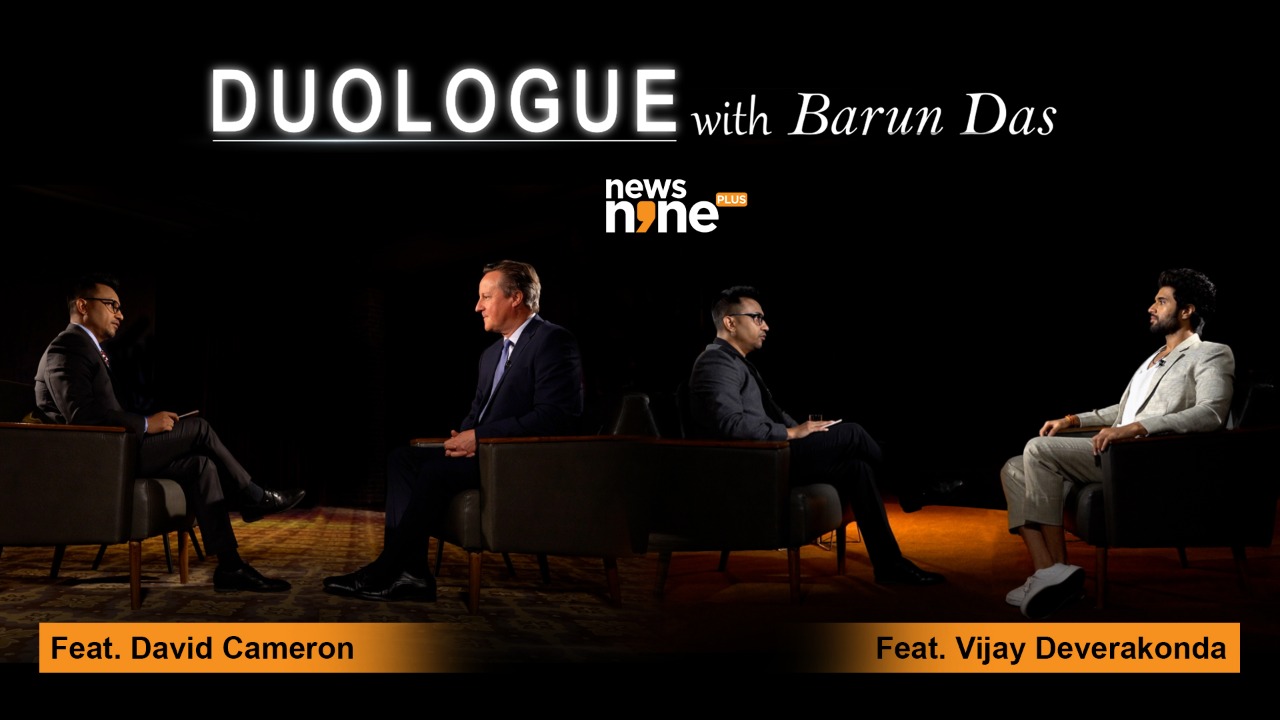
Barun Das, the MD & CEO of TV9 Network, now dons a new hat in tye just-launched OTT series – Duologue with Barun Das. The show which is streaming now on the News9 Plus app available across iOS App Store and Google Play Store as well as on the web is an exchange of ideas not provoked by headline management but to evolve emancipated influencer conversations.
The show made its debut with ‘Liger’ star Vijay Devrakonda. The next guest is UK’s former Prime Minister David Cameron.
Speaking on the philosophy of Duologue, Das said: “Duologue is a cerebral conversation with a legend or a legend in the making. That’s the profile the show will feature. As the title suggests, it is a two-way interaction where we pose questions to each other, as we exchange ideas in a free-flowing manner.”
Added Sandeep Unnithan, Editor of News9 Plus: “Barun Das is neither a conventional business leader, nor a professional anchor. As a CEO, he has always outperformed the industry. Little known in public domain is his unique and uncanny ability to slice through conflicting narratives with great ease while stitching loose threads to build meaningful conversations with intelligent minds.”
 Said Sharma, while addressing the staff: “In work and in life there are going to be times you’ll believe in something that’s unpopular, and you’re going to be called on to defend that choice. Too many times, people look and turn around to see what other think first and make their choice based on that. At India TV, we have never been afraid of speaking out mind and have never sought legitimacy from any vested interest. If there is something which can benefit our viewers and people at large, we go for it. That’s our primary benchmark”
 As per the latest Performance Indicator Report (PIR) released by the Telecom Regulatory Authority of India (TRAI), subscription to the private DTH service continues to decline. A comparison between Q4 2021 and Q1 2022 shows a collective loss of 1.6 million paid active subscribers to DTH. It seems the various marketing initiatives introduced by the private DTH operators in 2021 have failed to arrest the slow and steady decline of the subscribers.

 The India Today Group has announced ‘India Today Originals’, a content hub producing original series and features in the non-fiction space for streaming ad audio platforms. The vertical will launch with the trailer release of its first production Indian Predator- Diary of a Serial Killer to stream on Netflix on September 7. This year, India Today Originals will see two True Crime-documentary series: Indian Predator- Diary of a serial Killer streaming on Netflix and Dancing on the Grave on Amazon Prime Video, India’s two most prominent streaming platforms.
 Said Chandni Ahlawat Dabas, who will lead the vertical as Business Head Originals & Special Projects: “The launch of India Today Originals is a matter of personal & professional pride for me. We have quietly been setting up the SBU for the last two years and look forward to giving viewers the best glocal content in the documentary space this year. This is an exciting start and the next year will be focussed on expansion.”

 The news of the Adani group acquiring a sizeable stake in NDTV has been the significant media highlight this week. And for good reason. When it comes to questioning the ruling establishment at the Centre, NDTV remains the last news network standing. In particular, the Hindi channel NDTV India’s star anchor Ravish Kumar has built a sizeable cult following for himself in the Left & Liberal sections of the population, with his unique style of commentary on the state of the nation. He’s incisive, often scathingly sarcastic, but always backed with solid research. In a community of anchors who are more than happy to toe the establishment line, Kumar comes across as a lone warrior. None of his colleagues at the NDTV channels have managed to match his towering persona either.
 “Journalists at NDTV have a unique opportunity to examine their own work and their stances. There is a small world outside TV and outside mainstream media which does still do real journalism. It is not too late for any of them to work on those,” writes Ranjona Banerji
 Barun Das, the MD & CEO of TV9 Network, now dons a new hat in tye just-launched OTT series – Duologue with Barun Das. The show which is streaming now on the News9 Plus app available across iOS App Store and Google Play Store as well as on the web is an exchange of ideas not provoked by headline management but to evolve emancipated influencer conversations.