Colors TV has announced the new season of reality show Khatron Ke Khiladi.
Pavithra KR
Said Pavithra KR, Revenue Head, Colors: “Khatron Ke Khiladi is our flagship property and has become synonymous with action on Indian television. The previous season was the no.1 non-fiction property in the Hindi GEC category, and we are excited about its return. Given the show’s popularity, it serves as a great opportunity for advertisers to engage with and reach out to their audience. We are excited to once again associate with Maruti Suzuki as the presenting sponsor and welcome onboard ‘Charged’ by Thums Up as the powered by sponsor for the show and look forward to a great partnership. The new season will see a powerful ensemble of contestants experiencing the thrill and adventure with the action maestro Rohit Shetty.”
In major research reports, amid all the crucial, perspective-changing insights, occasionally comes a finding that makes you chuckle at the silliness of it. This column is about one such finding.
In our recently-released report on the Indian OTT audience, there’s a section where we quantify the various reasons because of which medium and light AVOD streamers (i.e., those not watching content on any paid platform) do not spend more time watching online videos. This ranking effectively helps OTT platforms understand why Indian AVOD audience have not engaged with digital videos enough to make them consider paying for subscriptions.
Using qualitative research, we identified 11 reasons, and the report ranks them based a large sample quantitative study. The reason right at the top of the list is “can damage eyes”. A staggering 78% medium and light AVOD audience in India believe watching online videos (largely on their smartphones) damages their eyes, and hence, consumption time must be controlled. This reason is 18 percentage points higher in the list than all other reasons, including some compelling ones related to pricing of paid content, cost of mobile data, reservations about sexual and abusive content, etc.
If you have grown up in an average Indian household like me, I’m sure you have been fed this bogey at some point of time in your early years. “Can damage eyes” has been the go-to explanation for Indian parents, to dissuade their kids from watching more television in the 1990s and the 2000s, and then from using the smartphone excessively, for the last decade or so. “You will have to wear glasses all your life”, for example, is a common scary consequence mentioned.
As a heavy TV watcher, I had to hear this every other day, and it didn’t help that I already had glasses prescribed from a very early age to begin with. I believed in the reason for many years. Only in my 20s, I discovered that the consequence I was repeatedly reminded of was only a grand old myth.
A simple internet search on “Does watching TV damage your eyes” or “Does using smartphone damage your eyes” will give you some easy answers. Excessive usage of devices can cause eye strain, but it does not “damage” eyes, or any other part of our physiology, in any way. I’m not endorsing excessive device usage, as there are indirect health consequences that one needs to keep an eye on, pun intended. But the “can damage eyes” reason is simply untrue.
It’s fascinating, then, that such a myth is the top reason for a section of audience, leading to them controlling their consumption of digital video content. The belief that this is true is so deep-seated that you cannot say that parents lie to their kids when they use this argument. They actually believe in it!
As puerile as this finding is, it tells us a thing or two about the Indian audience. We may have progressed rapidly in the digital space, but there are some uniquely Indian challenges that the Indian market continues to pose. It seems this myth existed in the Western markets too for a while, but has become a marginal one over time. But in India, this is a consumption barrier that has direct business impact, on both unpaid (AVOD) and paid (SVOD) streaming businesses.
I almost wish one of the leading players did a tongue-in-cheek campaign to bust this myth. But busting myths created over decades is not easy.
TV9 Group has appointed Deep Upadhyay as Interim Editor, Convergence and Strategy. As part of this, Upadhyay takes over as the Interim Editor of TV9 Hindi and English websites respectively. He will also coordinate with other group regional digital assets.
The Group is effecting certain strategic changes at the leadership level to ensure TV9 Digital emerges as a champion, notes a communique.
Sony channel has announced its partnership with KidZania to launch a unique Pet Rescue Agency.
Said Sujoy Roy Bardhan, Head of Marketing, On Air Promotions and Licensing, Sony Pictures Networks India, Kids’ Genre: “Pet welfare is extremely close to my heart. At Sony Yay it has been our constant endeavor to empower kids and further serve the purpose of reaching out to our audiences. The launch of the Pet Rescue Agency not just helps us to take another step in the same direction, but also helps us inculcate the right approach into the future citizens of the country.”
Added Prerna Uppal, Chief Partnership Officer, KidZania: “KidZania has always envisioned providing children with an all-rounded multi-dimensional edutainment that contributes to the overall growth of their personality. By partnering with Sony Yay, a brand that believes in business with purpose, we not only aim at enabling children to explore what it is like being a pet rescuer but also instill in them values like care and compassion as well as a sense of responsibility towards pets. We believe that inculcating such crucial values at a young age can go a long way in empowering kids to build a better world for themselves in the future.”
It had to happen someday. The vitriolic nature of prime-time debates on Indian TV channels has been there for everyone to see over the last decade. It was only a matter of time that this daily dose of toxicity snowballed into something serious and threatening. A comment by BJP spokesperson Nupur Sharma on one such debate has resulted in a major diplomatic crisis. In turn, it has resulted in BJP putting down some guidelines regarding the code of conduct for their spokespersons on TV channels. I’m afraid, it’s a case of too little, too late. The damage may have already been done.
Nupur Sharma is not one of a kind. It could have been anyone else instead of her. Spewing venom on prime-time debates has been par for the course. It’s a format and style that was first championed by Arnab Goswami, whose own debates have degenerated with every passing year. Other channels followed suit, and on any given weekday, we now have more than 30 prime-time debates competing on decibel levels as well as on absurdity.
How did we reach this nadir? A part of the answer lies in the mad rush for TV ratings. In a multi-channel scenario, where you are looking for a share of eyeballs in times of low attention spans, outshouting the next channel on the remote is a temptation that’s hard to resist. I don’t have much of an issue with the noise and the outshouting per se. Even if you believe such content is lowbrow, it is still harmless. You can simply switch channels, or watch news online or on social media.
But over the last four years, the discourse has started peddling hate, which, unlike noise, is dangerous. The transition from distasteful but harmless noise to hateful and divisive communal witch-hunts started in the build-up to the 2019 general elections, and continued to get worse in the pandemic years. And here we are, in 2022, in a diplomatic tangle, because a hate-spewing spokesperson went too far one day.
Will anyone learn anything from this at all? Will our politicians, who are generally over-enthusiastic in supporting censorship of entertainment content, self-censor their own people? Will news channel bosses have some tough talks with their offending anchors? Much as we wish the answers to these two questions is ‘yes’, the compulsions of electoral politics, coupled with the subservient nature of Indian media, especially television news, makes that ‘yes’ wishful, almost like a fantastical idea that can no longer exist. Not watching TV news is no longer a solution either. That’s like the ostrich-in-the-sand argument. The social ramifications won’t go away if a handful of people stop watching.
The only community who can action a change are the advertisers. Brand safety has been a growing topic of conversation worldwide, and there cannot be a better time for some of the biggest spenders on television news to introspect if their message is being seen in the right context and environment. If the money dries up, TV channels will have no other option but to fix their domestic problems. While the Central Government does so too, in a crisis of its own making, one could argue.
Popular show Smurfs will now be part of Sonic, part of India’s leading kids’ entertainment franchise Nickelodeon, starting today, June 13.
Created by Belgian comic book writer Pierre Culliford, also known as Peyo, in 1958, The Smurfs reside in a community of small, blue, human-like characters who live in mushroom-shaped houses in a forest. The show will feature popular Smurf characters, including Papa Smurf, Smurfette, Brainy, Hefty, Clumsy, and others, embarking on new adventures full of humour, heart, and high-stake action.
Speaking about bringing Smurfs to India, Anu Sikka – Head Creative, Content & Research, Kids TV Network, Viacom18, said: “Sonic since its inception, has successfully grown to become an entertainment hub with engaging stories, endearing characters and a solid kids’ connect. We have consistently catered to our young viewers’ evolving preferences with innovative entertainment and immersive storytelling. Bringing internationally acclaimed ‘Smurfs’ will further bring variety and scale to Sonic’s growing content library. With this launch, we hope to further add depth to our programming strategy and fulfil our mission of entertaining kids.”
Ormax Media, a specialised Insights consultancy firm, was established in 2008. In its own words: “Over the last 13 years we have pioneered the usage of various testing, tracking and forecasting-based tools, designed to achieve higher profitability in films, television, streaming, print, radio and other categories in the Indian media industry… We are constantly innovating to introduce new tools and build knowledge that can help the Indian media & entertainment industry use consumer insights and data analytics to create businesses, brands, shows, films and campaigns that are both consumer-centric and profitable.”
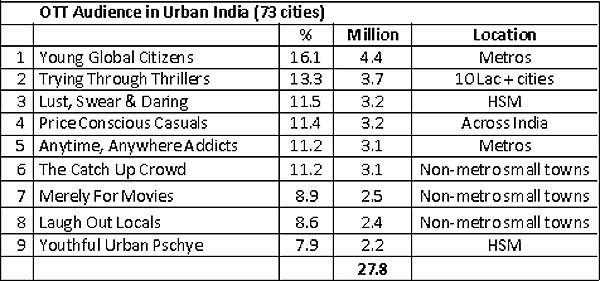
Ormax Media launched the first edition of its Ormax OTT Audience Report 2019 with a promise to conduct similar reports year on year. In its first report, Ormax analysed the viewing behavior by preference of content watched and divided the urban OTT audience into interesting segments of nine different types.
Source: OTT_AudienceSegments_OrmaxMedia__1_.pdf
The onslaught of Covid-19 and the national lockdown forced them to miss the opportunity of conducting field research in 2020. But Ormax was back in 2021 with the 2021 report based on a 12,000 sample size across urban and rural India. As per that report, OTT audience universe in India in 2021 stood at 353.2 million (35.32 Crore) people. In other words, the penetration of OTT viewing was of 25.3% of the population, “which means that one in four Indians watched online videos at least once in the last one month”. The report was aligned to other syndicated media research and presented analysis of the universe by gender, age, NCCS, pop strata, states and cities. This second report elevated OTT from a niche medium to a mass medium with huge prospect for further growth. It was possible to calculate reach of the OTT medium in different target audiences for the first time. The report also revealed that in 2021 there were 353 million OTT users in India of which 40.7 million were paying (SVOD) audiences accounting for 96 million active OTT subscriptions. In other words, each unduplicated paying audience member was subscribing to 2.4 OTT subscriptions on an average. This SOVD audience were dominated by male members who constituted 66% of 40.7 million.
Last month, Ormax Media released TheOrmax OTT Audience Report 2022, which has some interesting insights related to viewing habits of OTT audiences including content watched in different languages. The latest report is based on a sample size of 6,000 SVOD and AVOD audiences in urban India, and is probably India’s largest profiling study of the streaming /OTT audience.
The report has revealed that Indian SVOD viewers use the dubbing and subtitling options on their OTT platforms and watch content in four to five languages on an average, while AVOD viewers watch in at least two languages, primarily due to less content options available to them. AVOD viewers watch a lot of content on YouTube where no dubbed content available.
Content in the four South Indian languages have a large audience outside their home states, 88 per cent Malayalam SOVD content viewers and 82 per cent Tamil SOVD content viewers are respectively from outside Kerala and Tamil Nadu.
This research also has highlighted the difference in preferences for content between SOVD and AOVD audiences. The latter do not prefer to use web series instead they want more of shorter formats, like comedy scenes, songs, knowledge videos, including recipes, education and health, and films.
The research has predicted that the next level of growth of SOVD viewers would come from small towns as 60-70 per cent of the top six metros’ population has already converted to SVOD audience, making the metros a near-saturated market. The male domination of the SOVD audience segment continues which may be due to other socio-cultural reasons and not just financial independence of women.
On the whole, TheOrmax OTT Audience Report 2022 has opened up a new vista of opportunities for content strategy and content creation for the Indian OTT platforms. It is interesting to note that Ormax media so far has not repeated any research on OTT audience in India, but has looked at a new concept for research every year to provide the users in the industry with either better estimates or in-depth insights.
TV9 Network has announced the launch of a two-day ‘thoughtfest’ titled ‘What India Thinks Today Global Summit’ to be held in New Delhi on June 17 and 18.
The summit will bring together over 75 leading international and national speakers from the field of politics, governance, economics, healthcare, culture and sports.
Union home minister Amit Shah will deliver the keynote address on June 17. Defence minister Rajnath Singh will launch the proceedings on June18, Day Two of the summit. In all 15 Union cabinet ministers will share their vision for India. Chief Ministers drawn from across the country will also speak. Former premiers David Cameron of Hamid Karzai of Aghanisation will also speak.
Speaking on the occasion, Barun Das, CEO, TV9 Network said: “With this summit, we intend to catalyse interesting conversations, discussions and deliberations that hope to show a blueprint of India’s journey to become the leader of the new world. The journey isn’t without challenges. But the goal is as sacred as it is ambitious, driven by strong leadership, collective will and commitment of the entire nation. The ultimate aim of this event is to generate ideas and thoughts through free-wheeling discussions to achieve a common objective of India becoming the ‘Vishwa Guru’.”
Leading Hindi news channel India TV wlll now be available in the United States on Sling Television.
Said Ritu Dhawan, Managing Director, India TV: “India TV’s aim is to inform and empower global Indians with accurate, indepth, unfiltered, fact-based journalism without any bias, outrage, or sensationalism. Making India TV available in the USA is one more step towards our goal. We are proud of our experienced team of TV journalists, anchors, producers, camerapersons and other skilled staff, who toil day in and day out to bring news as it happens to your drawing rooms”.
Sling TV is a service that livestreams news, sports, and other TV shows from the internet, but without the set-top box. Viewers in the US can access any internet-connected device, including iOS and Android devices, and Xbox Ones, to watch India TV.
SonyLIV 2.0 is celebrating the second anniversary of its relaunch. To mark the two years in its new avatar, SonyLIV 2.0 is expanding its content offering with 50+ Hindi and 50+ other language premium content.
Notes a communique: “SonyLIV will soon foray into Tamil originals with its first web-series Meme Boys, Tamil Rockerz among others; followed by originals in Telugu and Malayalam.”
Sony Sports Network will live telecast two bilateral series with India tour of Ireland and India tour of England in succession.
Said Rajesh Kaul, Chief Revenue Officer, Distribution and Head – Sports Business, Sony Pictures Networks India: “We are delighted to have India cricket back on Sony Sports Network with two back-to-back bilateral series. Viewers are excited to watch the much-anticipated fifth Test against England which has been a mainstay of all the cricket conversations in the past year, and fans across the nation have been looking forward to this closure. As we get a conclusion for the 2021 series, we are excited to start the next chapter with 3 T20Is and 3 ODIs. And to further provide audiences with a seamless and holistic viewing experience, we present our LIVE studio show, Extraaa Innings that features a star-studded panel and both the series will be live telecast in four languages.”
ABP Network has appointed Sameer Rao as the Chief Executive Officer (CEO) of ABP Creations Pvt. Ltd., a 100% subsidiary of ABP Network Pvt. Ltd. Rao has a wide-ranging experience of two decades in television, film, and digital platforms. He will be operating from ABP Network’s Mumbai office.
Commenting on Sameer’s appointment, Avinash Pandey, CEO of ABP Network, said: “We are pleased to welcome Sameer Rao to the ABP Network family. We are certain that with his expertise and accomplishments, he will take ABP Creations Pvt. Ltd. to greater heights. In this dynamic period of digital growth, his vision will perfectly align with our goals for ABP Creations Pvt. Ltd. I believe that over time, his knowledge, and ingenuity will further contribute to the organization’s success.”

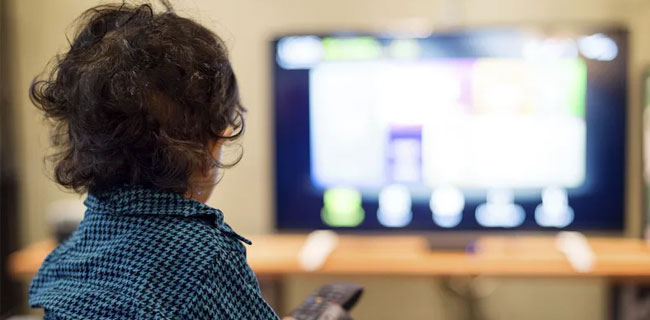
 In major research reports, amid all the crucial, perspective-changing insights, occasionally comes a finding that makes you chuckle at the silliness of it. This column is about one such finding.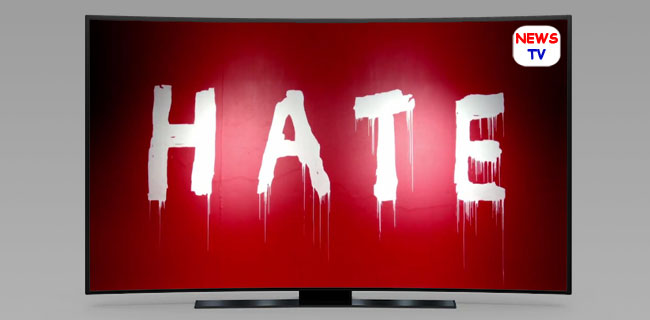

 Ormax Media, a specialised Insights consultancy firm, was established in 2008. In its own words: “Over the last 13 years we have pioneered the usage of various testing, tracking and forecasting-based tools, designed to achieve higher profitability in films, television, streaming, print, radio and other categories in the Indian media industry… We are constantly innovating to introduce new tools and build knowledge that can help the Indian media & entertainment industry use consumer insights and data analytics to create businesses, brands, shows, films and campaigns that are both consumer-centric and profitable.”