After the success of Phase 1 of the MTV Nishedh campaign, Viacom18 and MTV Staying Alive Foundation, supported by an educational grant from Johnson & Johnson Services, Inc., are set to bring back a digital-only miniseries MTV Nishedh Alone Together.
The 5-episode mini-series will stream on YouTube, Instagram and Facebook handles of MTV India and MTV Nishedh, starting every Friday, from November 27, 2020 onwards.
Speaking about the campaign, a Viacom18 spokesperson said: “We believe that meaningful content, when delivered in an entertaining format to mass audiences, can go a long way in driving instrumental impact. Amidst the Covid-19 pandemic, health and wellbeing has taken forefront in our lives; however, we still choose to shy away from conversing about TB – the world’s leading infectious killer. A global modelling study has suggested that, with every month of the lockdown, TB is expected to claim an additional ~70,000 deaths in India during 2020-2025. Thus, the timing couldn’t be more appropriate to engage our audience through entertainment on social media to create awareness of TB in the times of Covid.”
Added Georgia Arnold, Executive Director of the MTV Staying Alive Foundation: “MTV Nishedh saw positive results in sparking conversations around taboo topics including tuberculosis and the stigma around it. Through MTV Nishedh Alone Together, the aim is to continue this conversation and more importantly help those who may be suffering from symptoms of TB to ensure that they know where to go to get tested, and to continue accessing their meds during the pandemic. We want people to know that there is always help available for them and they should never give up on themselves, no matter how dark the times may seem.”
World TV Day happened last week and Zee Entertainment Enterprises Limited unveiled its #TVisFamily campaign on the occasion.
Speaking on the campaign, Prathyusha Agarwal, Chief Consumer Officer, Zee Entertainment Enterprises Limited said: “Our consumer work brought alive that viewers share a special bond with TV much like a family member who is always there and much loved and with this campaign, we wanted to truly appreciate and bring out this deeply human connect that we share with the master storyteller and entertainer, how it plays a myriad role in our lives, whether as an entertainer, a stress reliever, motivator, or even a pacifier.”
In a tough year for businesses in general, the growth of the streaming business in India has stood out as the big story of 2020. Last week, Disney+ reported that out of its 73.7 million paid subscribers worldwide, 18.3 million are from their Indian service Disney+ Hotstar. Even if one assumes that a fraction of this number will unsubscribe now that IPL is over, this is a staggering number, nonetheless. India is a market known for its reluctance to pay for content.
The current SVOD (Subscription Video on Demand) consumer base is India is estimated at about 30-35 million people, and the average number of services subscribed to at about two, leading to an estimate of 60-70 million active paid subscriptions. Considering that every subscription is used by about three people on an average, that’s about 200 million (20 crore) SVOD consumers in India, a healthy number by any yardstick.
An equally big growth story is emerging on the AVOD (Advertising Video on Demand) front. Catch-up television has been at the forefront of AVOD consumption in India for a few years now. But this year has seen original content springing up too, with MX Player, the leading AVOD platform, clocking huge numbers for its shows, especially Aashram, two seasons of which were released within a short period of time.
And then, there’s film content too, which has got a major surge because of an extended period of theatres being closed and no major new releases announced even after they have re-opened. If we just consider national content (Hindi and Made-in-India English shows or films), the number of shows and films launched in 2020 have been upward of 200 already. The year may end at a number close to 250. If production had not been halted because of the lockdown, we may have seen a triple century being hit. And this does not include many low-profile YouTube shows that form a secondary content ecosystem online. In the streaming category, International content gets sizeable traction too. Add to that the activity at the regional front (Bangla platform Hoichoi and Telugu platform Aha have done very well), and it’s a buzzing category indeed.
Now that’s a lot of content! In comparison, the Hindi GEC category launches about 80-100 new shows every year, and about a similar number of Hindi films release theatrically with at least some marketing push behind them.
But how many of these 200 shows and films have actually done well? India does not have organised viewership measurement on the streaming category yet, and it may take some time before that happens. Platforms, understandably, are reluctant to share figures. We, at Ormax, are working on statistical estimate models to estimate viewership of shows (and a Top 5 list is released every week on Film Companion since September). But while we wait for that data to be built over a year, another yardstick for which more data is available is the likeability of the content itself. Of those who watched the show or the film, how many liked it enough to recommend it to someone they know?
This data has been built at Ormax since the start of the streaming originals in 2015. Measured on a percentage (0-100) scale, Advocacy (likeability) of 60% of more suggests a positive response, while that of 70% or more indicates that the content has truly broken out. Only 27% of shows or films launched in 2020 met the 60+ benchmark. And only 12% crossed 70. These numbers are at par with TV and films content in India over the last 2-3 years.
But the difference is when you can calculate the absolute number of shows or films that were “not liked” (below 60). That’s 150! Yes, let that sink in. 150 Indian streaming originals and films launched in 2020, in Hindi or English, received response that ranged to lukewarm acceptance to outright rejection.
Production houses are enjoying this phase, when there is a lot of demand for content from the streaming platforms, and a lot of work is being commissioned. But the question that should be asked sooner than later is: Are the streaming platforms becoming a dumping ground for mediocre content? Content that would not have found its way in any other medium, such as television or theatrical?
For every Scam 1992 or Mirzapur, there are half a dozen other shows that just don’t get any traction. All streaming platforms, without exception, take pride in the data that they own, and guard it jealously too. Why, then, should the success rate be a paltry 27% only?
It is certain that 2021 will see a further surge in content production for the streaming category, especially because more films will be made with the intent of releasing directly on OTT. One hopes the strike rate improves too. Because content quality is as much a measure of success as anything else, especially if one has an eye on the long-term sustainable growth, which is needed to ensure 2020 doesn’t become just a bubble year.
According to the global survey by The Trust Project and Ipsos titled Trust Misplaced?, 71% urban Indians and 64% global citizens believe they have easy access to news from sources they trust. At least 6 in 10 urban Indians (59%) say, they read news they can access for free. 67% global citizens hold this view.
Amit Adarkar
Said Amit Adarkar, CEO, Ipsos India: “Media entities are highly evolved in India. There are trusted sources for news; media houses that come with ethos and values and have built reputations over many decades of news dissemination, beating the odds. Further, Indians look at various sources for news and free news is readily accessible across social platforms and digitally. Now news can be accessed at a mere click and it has become easier to stay updated, going beyond the conventional sources,”
Fake News and Trust
Interestingly, more number of Indians say they can tell Real News from Fake News – at least 6 in 10 (60%) believe this; but they have less confidence in the ability of people in general to be able to spot real news from fake – only 47% urban Indians believed they could.
Indians say they pay for news from sources they trust (57%) and are willing to pay for news from the sources they trust (56%).
The survey also shows that urban Indians are skeptical of news disseminated by influencers, bloggers, leaders, celebrities on social media – they tend to trust news shared by people personally known, friends and relatives more (58%) as opposed to news shared by bloggers, celebrities, leaders (48%), on social media. Global citizens are more circumspect in news consumption – 4 in 10 (42%) will trust people known personally, while only 1 in 4 (24%) will trust news shared by bloggers, celebrities, and leaders.
Global citizens (46%) and urban Indians (54%) believe their citizens are targeted by other countries with disinformation and fake news.
“Disinformation and fake news can lead to discord and incite citizens and are in poor taste; sadly, a number of countries face it. Legal action can act as a deterrent,” adds Adarkar.
Online Adverts – few takers
1 in 3 global citizens (35%) and 2 in 5 (42%) urban Indians say they use software or apps that blocks online adverts.
Global citizens (66%) and urban Indians (69%) say, they try and avoid online adverts, as far as possible.
Where is news read most?
One thing is clear, Indians are globally one of the largest consumers of news. Conventional media vehicles and new ones are all leveraged for staying updated.
Daily news is accessed most via TV (78%), Social Media (77%), News apps (64%), News sites (57%), print – newspapers and magazines (56%), and Radio (23%).
Notably, India has world’s largest number of those accessing daily news via Print.
And TV for daily news is very popular in Japan (76%), Italy (74%) and Turkey (73%).
“News is accessed from multiple sources to stay updated. Some news is accessed on the go, some read for finer nuances and some watched to further get the perspective. It is not about one over the other. Each has its own place in the consumer’s information needs, in times of instant gratification,” said Adarkar.
This study results from a collaboration between Ipsos and the Trust Project to explore four key factors influencing the future of truth and trust in media: technological changes that affect how and where people get news, access and affordability of quality news, ongoing disinformation campaigns, and the extent of nativist and populist sentiment. The Trust Project news partners helped develop scenarios in each area to produce survey topics.
The findings in the report come from two surveys conducted on Ipsos’s Global Advisor platform.
The first and main survey was conducted May 22-June 5, 2020 in 27 countries among 18,998 adults aged 18-74 in the United States, Canada, Malaysia, South Africa, and Turkey, and aged 16-74 in 22 other markets: Argentina, Australia, Belgium, Brazil, Chile, China (mainland), France, Germany, Great Britain, Hungary, India, Italy, Japan, Mexico, the Netherlands, Peru, Poland, Russia, Saudi Arabia, South Korea, Spain, and Sweden. The second survey (question on social and civic engagement) was conducted June 19-July 3, 2020 among 20,047 adults in the same 27 countries plus Colombia (aged 16-74) and Israel (aged 18-74).
The samples in each of Australia, Brazil, Canada, China (mainland), France, Germany, Great Britain, Italy, Japan, Mexico, Spain, Sweden, and the U.S. consist of approximately 1000 individuals and those in each of Argentina, Belgium, Colombia, Chile, Hungary, India, Israel, Malaysia, the Netherlands, Peru, Poland, Russia, Saudi Arabia, South Africa, South Korea, and Turkey of 500 individuals.
The samples in Argentina, Australia, Belgium, Canada, France, Germany, Great Britain, Hungary, Italy, Japan, the Netherlands, Poland, South Korea, Spain, Sweden, and the U.S. can be taken as representative of these countries’ general adult population under the age of 75.
The samples in Brazil, Chile, China (mainland), Colombia, India, Israel, Malaysia, Mexico, Peru, Russia, Saudi Arabia, South Africa, and Turkey are more urban, more educated, and/or more affluent than the general population. The survey results for these markets should be viewed as reflecting the views of the more “connected” segment of their population.
The data is weighted so that each market’s sample composition best reflects the demographic profile of the adult population according to the most recent census data.
Where results do not sum to 100 or the ‘difference’ appears to be +/-1 more/less than the actual, this may be due to rounding, multiple responses or the exclusion of don’t knows or not stated responses.
The precision of Ipsos online polls are calculated using a credibility interval with a poll of 1,000 accurate to +/- 3.5 percentage points and of 500 accurate to +/- 4.8 percentage points. For more information on the Ipsos use of credibility intervals, please visit the Ipsos website.
Kannada news channel, Suvarna News is being rebranded as Asianet Suvarna News.
With this announcement, the Asianet News Network signals its intent to bring Asianet News’ longstanding regional and national equity to Suvarna News. With its tagline, ‘Straight, Bold and Relentless’, the rebranded channel, with a slew of new programmes, aims to forge ahead in the Kannada news broadcasting industry.
Abhinav Khare
Said Abhinav Khare, CEO of Asianet News Media & Entertainment Private Limited: “Suvarna News has rapidly emerged as a strong player in the region and established its leadership in the news broadcasting space. The brand has been pivotal in the state and its people, empowering the citizens through insightful and impactful reporting. With the addition of Asianet News in its identity, Asianet Suvarna News will derive better recall, leverage Asianet News Network’s national advantage and more importantly it will establish stronger credibility that is unmatched in the region”
Ravi Hegde
Added Ravi Hegde, Editor-in-Chief, Asianet Suvarna News: “The new identity has triggered an exciting, revamped look and feel along with introduction of new shows during the prime time which will be a game changer in the Karnataka News genre.This is not a one day rebrand excitement for us. We will pay the same attention to detail serious journalism requires. In a copy-cat news media market we will differentiate ourselves with credible, verified visual presentation true to our tagline Straight-Bold-Relentless.”
Rajesh Kalra
Added Rajesh Kalra, who joined Asianet News Media and Entertainment Private Limited as Executive Chairman recently: “We are witnessing a shift in consumer behaviour over the recent past. It is important for news broadcastersto be sensitive to this shift. With shrinking attention span and ever evolving viewership behaviour, presenting well differentiated verified content will be the key to better engagement. Asianet Suvarna News is doing exactly that and will continue to deliver on the back of its well-researched content strategy”.
Pad Integrated Communications has developed a campaign for Aha, the OTT platform. The promotional film is titled ‘Orange Is The Colour Of Entertainment | aha Everywhere’.
Said Gautam Reddy, CEO, Pad Integrated Communication: “In less than eight months since its inception, Aha has seen a staggering rise of 5 million downloads and 18 million unique viewers and that is what we wanted to celebrate. The phenomenal rise of the platform by showcasing how the states are turning orange – the colour of Aha which depicts 100% Telugu entertainment felt the right way. The film has the essence of Aha’s true story – how quickly they took over the regional market.”
Added Ramu Rao Jupally, Promoter, Aha: “At Aha, we seek to serve audiences of all age-groups across the globe. Through our 100℅ Telugu catalogue, we want to offer entertaining, relatable, and captivating content – and our brand anthem reflects on our aim to be a wholesome family entertainer. And the fact that within a few months, we have recorded 7 million downloads and 20 million unique visitors, further testifies our growth in terms of engagement, time spent, and subscriptions.”
Sharing his thoughts, Ajit Thakur, CEO, Aha said: “We are excited and grateful for the tremendous response that we received from our Telugu-speaking audiences across the country. Our main objective through the brand anthem is to showcase the excitement and celebration amongst our viewers with Orange becoming the new colour of entertainment.”
In an attempt to strengthen its business and core operations, India TV has announced promotions for four of its key persons looking after business revenue, corporate affairs, television operations, and growth and monetisation functions. The company has decided “to rethink, rework and retool” its business strategies in order to make its business more adaptable and resilient. In order to enrich the role of its team members India TV has delegated additional responsibilities to its core team:
Sudipto ChowdhuriPuneet Tandon
Sudipto Chowdhuri has been promoted as Chief Revenue Officer and shall be responsible for maximisation of revenue by identifying and innovating opportunities for enhanced business.
Puneet Tandon has been promoted as Chief Officer, Corporate Affairs, and shall be responsible for managing corporate, government and public relations for the organisation.
Rohit LalGulab Makhija
Rohit Lal has been promoted as Chief Officer – Television Operations and shall be responsible for integration across the organisation and collaboration with all internal partners.
In addition to his role of CFO, Gulab Makhija has been given the portfolio of CEO for Growth & Monetisation and shall be responsible for expansion of existing business within India and in overseas markets, seeking new business opportunities, driving new partnerships and monetisation of existing resources.
All these roles and responsibilities are effective immediately.
Commenting on the elevations, Ritu Dhawan, Managing Director, India TV, said: “It is imperative, given the present state of affairs amidst the pandemic, to rethink and retool our business strategy and strengthen our business to make it adaptable and resilient. Keeping this is mind, we have delegated responsibilities and enhanced role of our core business team to deal with various challenges effectively and ensure a better tomorrow.”
The News18 Network has announced the appointment of Pawan Sharma as Sales Head, Focus, Hindi and Language Cluster. Focus, in Network18, constitutes branded content, advertiser-funded programming and sponsored IPs.
He will report into Mayank Jain, CEO, Hindi News Cluster and Karan Abhishek Singh, CEO, Languages, News18 Network. Prior to joining News18, Sharma has been with Disney, Star and Big FM. In his last stint, he was the National Sales Head, Display and Branded Content for Bindass.
Coming on the back of the India adspends degrowth in 2019 second half, the pandemic dealt a big blow to advertising. Undoubtedly, print bore the brunt of the C-19 impact, followed by Radio. Digital has had a field day, in terms of media consumption and e-commerce.
Digital Spends too have got a good boost, but it will take some time to translate the digital consumption into a commensurate huge spike in paid media. On the other hand, at about 37% of Total Spends, Television is pretty much the mainstay. The massive rise in News Viewership saw a commensurate thrust on the News Genre from Advertisers. In Aug-Oct, IPL led a bounceback to get the advertising on a much better wicket. Live Telecast of IPL, in many ways has helped in the kickstart of advertising during festive. So, decoding TV-led bounceback helps us understand many facets of Indian advertising. While we will look at the spends trend based on prevailing rates during the various pandemic phases, ad volumes help in a detailed understanding of the strategies deployed.
However, care has to be taken to do a like-to-like comparison. So, IPL of 2019 to be compared with IPL 2020 (though it was in festive). And general entertainment/news separately for same period.
Look out for an interview with the author and veteran mediaperson on Thursday, December 10.
I have looked at Average Monthly Commercial Airtime by Key Channel Genres. We looked at the top-rated channels in each genre as a group, which contribute to 75-85% genre revenue. So, Genres detailed are: Top 4 Hin GEC1 channels, next 4 Hin GEC2, 6 Hin Mov, 6 Hin News, 4 E News, 12 Reg News, 5 Eng Mov, and 15 Regional Channels of South, Marathi and Bengali. The Balance are grouped as Long Tail. 10 months of 2020 are compared with the corresponding period of 2018 and 2019.Till October 30, 50 IPL matches were completed, so IPL is compared with 50 matches of 2019
Summary of the findings
1. IPL – a grand marketing success
IPL was a grand success, not just as an event, where BCCI showed exemplary guts and execution, but also of the Disney Star AdSales team. That’s because you have to pre-sell an event like IPL. And, at a 5% additional airtime in live, at a premium over last year is a fantastic performance which kick started the advertising rebound. I estimate IPL to have got a 12% Revenue increase over last year.
2. The rebound was driven by E-com, BFSI and Healthcare
IPL as well as News and General entertainment both were driven by these categories.
It looks like the new economy will have to use offline media for the top of the funnel
So, BFSI and the New economy brands will continue to be the drivers for next couple of years.
3. Jan-Oct TV ad revenue shrunk by just 19%, due to the rebound
As we know, in Apr-Jun 2020, there was a big drop in adspends. Listed companies Zee Entertainment, Sun TV and TV18 reported a whopping 60% average drop in revenue, while TV Today reported a 35% drop (over same period LY). By Jul-Sepm this drop was reduced to about 26% for the GEC Groups while TV Today bounced back to last year’s revenue level. Studying the average rate trends across the Pandemic phases of Apr-May, June-July and Aug-Oct, we estimate that the TV Spends, in fact have dropped by a significant 19% so far – which is a good rebound considering we were staring at a minimum 40% drop in ad revenue!
4. Long tail of Advertisers has to wag for Advertising to grow
Just 27 top advertisers contribute to 50% Commercial airtime and just under 500 Advertisers contribute to 90%. We have a long way to go to realise the potential of India. We need a significant no of advertisers from the long tail to move up and graduate to big advertisers. The process has started. Even in this period, over 1200 insignificant advertisers moved to being significant. This was largely, on the back of news and Hindi/regional channels.
5. Long tail of Channel Genres will shrink
Today the long tail contributes to a whopping 81% of Airtime and 23% revenue.
The Revenue of the Long tail, however has dropped by 32%, with English dropping by over 50%
6. Amul and Dabur have shown the Industry how to make the best of a crisis
Both Amul and Dabur, our homegrown Master Brands went aggressively promoting many more brands than last two years and growing their commercial airtime by a whopping 125%.
Given the high incidence of mental health disorders in India Times Network has launched #ActNow an initiative to spread awareness, normalise conversations around the issue and sensitise people to be responsive to the mental health needs of others. A campaign film #ActNow takes an “outside-in view of the problem and targets the ‘people around’ to act, rather than the one living with mental health issues”.
Times Network commissioned Nielsen India to conduct a nationwide research study titled, ‘How Urban India Perceives Mental Health’.
Key findings as follows:
· 70% of Urban India claim to suffer/know of someone who has suffered from a mental health ailment
· Among people who are suffering/know someone suffering from mental health ailment, depressions come out as the most prominent at 58%
· 76% perceive that ‘People are not open to talk about Mental Health to everyone’ and there is still shame and stigma associated around Mental Health
· 52% of the people face problems in accessing a Mental Health Professional and 63% perceive that there is difficulty in procuring Medication
· 54% people are not completely aware about the diseases covered in a Health insurance policy and 47% of the people are unaware of the government mandate for health insurance policies to cover treatment of mental health ailments
· 57% of Urban India considers Financial Pressures to be the leading cause of negative impact on Mental Health
Said Vivek Srivastava, President – Strategy and Business Head – News and English Entertainment Cluster, Times Network: “With the unprecedented disruption caused by the COVID-19, we can see its enormous impact on our lives. The pandemic induced quarantine and social distancing has forced us to isolation and lack of physical contact, reshaping our relationships with our family, friends and colleagues while working from home. The new normal has triggered anxiety and deepened emotional turmoil, consequently leading to a quieter but concerning rise in the number of people grappling with mental health issues. ActNow is our endeavour to spread awareness and drive dialogues to break barriers around the mental health issue. Through our multi-faceted campaign, we urge the society at large to look beyond the happy faces that conceal the sufferings and encourage healthy and judgement-free conversations on mental health.”
Eros Now, the streaming entertainment service owned by Eros STX, has announced its content slate for 2021, with 46 new titles including 33 film premieres and 13 original series. existing global audience and cater to the growing consumer demand for fresh and entertaining online video content.
The content slate, promoted through the campaign – #KahaaniHarRangKi, is based on insights derived from Eros Now’s proprietary user data, notes a communique. A promo features Ayushmann Khurrana and Kartik Aaryan showcasing Eros Now content. At a presser held last week Eros Now said it has increased its paid subscriber base by 6.9 million in the six-month period ended September 30, 2020, to a total of 36.2 million.
Commenting on the development, Ridhima Lulla, Chief Content Officer, Eros Group, said: “We are committed to investing in quality programming that will appeal to the Indian and global diaspora, and this huge content slate adds to Eros Now’s massive entertainment catalogue. India is witnessing significant demand growth driven by the digital shift and the consumer’s desire to watch programming in different formats and in their preferred language. This amazing slate will deepen our connection with the audience and offers entertainment like never before.”
On Sunday, December 13, 2020, Republic Media Network Group Chief Executive Officer Vikas Khanchandani had stepped out on his morning walk in suburban Mumbai. A little after 8am, when he got back home, there was a police contingent waiting for him. He was arrested on the TRP Scam case that has been raging in the industry for a few months. There was some hope still since the matter was going to come for hearing in the presence of the Additional Chief Metropolitan Magistrate, but rather than secure bail or release, he was remanded to police custody till tomorrow (December 15).
Khanchandani is the fourth Republic TV employee who has been arrested by the Mumbai police including founder, editor-in-chief and managing director Arnab Goswami. Last week, he was summoned several times by the police for questioning.
So what is Khanchandani’s crime?
1. He is Group CEO of Republic Media Network, and is hence responsible for all business functions of the organisation. He reports to Arnab Goswami who is also managing director and the primary promoter.
2. As per the Companies Act of 2013, the law clearly lists the key managerial personnel included – in this order: The MD or CEO or Manager and in their absence: a whole-time director. These are followed by the Company Secretary and then the Chief Financial Officer. In Republic’s case, the MD and promoter is the key official, but guess arresting him again would be too hot to handle
3. The police says that as Group CEO and to whom Chief Operating Officer Priya Mukherjee reported, Khanchandani instructed her and the team on all the allegedly illegal actions.
4. Republic TV, as per the police claims, had allegedly indulged in activities that regulatory body TRAI (short for Telecom Regulatory Authority of India) frowns upon
It may be noted that Khanchandani was arrested a day before his anticipatory bail application was to be heard by the Sessions Court in Mumbai. He was represented by Senior Advocate and Republic TV’s lawyer, Aabad Ponda.
So what you have above is the official stand, but it’s clear that Khanchandani was arrested given the ongoing slugfest on between Goswami and the Maharashtra government and Mumbai Police. Both have been equally critical of each other, but Goswami has gone a step further to damn and provoke the government and the Police Commissioner. On air. In English and in Hindi.
Logically, Khanchandani should have had the industry come out in support. This writer was among the first to do that, only to be ridiculed and questioned on Twitter that Khanchandani was party to all the excesses of Goswami on television. The media trial that happened post the actor Sushant Singh Rajput death and the manner in which Rajput’s friend and actor Rhea Chakraborty was being targeted ensured that even Goswami’s well-wishers (like this writer) turned against him.
And then there is Goswami’s very open praise of the BJP-led NDA government’s policies and actions. While the channel owner may say that it’s his nationalism that governs him, it’s a clear pursuit of ratings (nothing wrong with it) and commerce at all cost that is driving him. Thankfully for him, the BJP is firmly in the saddle till mid-2024, but the result is that all the goodwill that the channel and its founder have had had has been lost. Khanchandani, as Goswami’s second-in-command, bears the brunt of this legacy.
Sample the tweet by Raj Nayak, a senior mediaperson who is known to be a friend and mentor to Khanchandani: “I am really saddened by the arrest of my dear friend #VikasKhanchandani. We’ve been close for over 2 decades. I can vouch for his integrity. His only fault being at the wrong place at the wrong time and getting caught in the crossfire. Praying that he is safe and released soon.”
I am really saddened by the arrest of my dear friend #VikasKhanchandani. We’ve been close for over 2 decades. I can vouch for his integrity. His only fault being at the wrong place at the wrong time and getting caught in the crossfire. Praying that he is safe and released soon.
— Raj Nayak (@rajcheerfull) December 13, 2020
Let’s read this line from Nayak’s tweet again: His only fault being at the wrong place at the wrong time and getting caught in the crossfire.
Clearly, there is nothing that’s left unsaid. Khanchandani is a good guy, but at the wrong place – Republic Media Network.
So what must be done:
1. Khanchandani, his family and friends and the industry must prevail upon Goswami to cease and desist from provoking the government and courts any longer. On Sunday, when the Court order came in, Goswami was on air and was virtually questioning the Court verdict. If it is examined for Contempt of Court and found to disobeying the judiciary, Khanchandani could have problems. In fact, if the government is provoked further, it will only delay the decision to free Khanchandani
2. This is a personal and professional decision, but it’s time that Khanchandani and all right-thinking (right as in correct and not the politically right) people working with Republic Media Network weigh how their continuance in the organisation impacts their moral and legal standing.
My tweet expressing sadness at Khanchandani’s arrest and assertion that he has a squeaky clean reputation had some who endorsed his professional standards but also drew some angry feedback. Sample this: “… the fact remains that he has been part of a hate factory that has been selling ads to promote more hate based on gaming the system because of inefficiencies”.
Sad to see @republic TV CEO Vikas Khanchandani being arrested. I have known him for many years and can say he’s squeaky clean. Yes, he works with Republic. But is that his primary crime? @VickMaverick @rajcheerfull @TheAdClub_India @IAA_India
— Pradyuman Maheshwari (@pmahesh) December 13, 2020
Another comment said: “… would you say that he somewhere profited when the whole SSR debacle was taking place on his network, where the so called ‘guilty’ were charged even before a proper trial. Even if he did what he did while being aware of the right or wrong then I guess Karma’s a bitch.”
The decision on what next is clearly with Goswami and Khanchandani. And whether Khanchandani spends two or more days depends on how Goswami conducts himself. On television.
He was an excellent journalist, is well-educated, has impeccable social skills, but when he’s on camera and in his studio, he’s a different being.
The Shiv Sena-led MVA government has such stalwarts like Sharad Pawar mentoring it. The fact that the combine could outwit a BJP with superpowers like Narendra Modi and Amit Shah speaks volumes for what they can achieve.
Sadly, Khanchandani and his family are paying the price for all of Goswami’s actions.
Pradyuman Maheshwari is a senior journalist and media commentator. He is also Founder and Editor-in-Chief, MxMIndia. His views here are personal
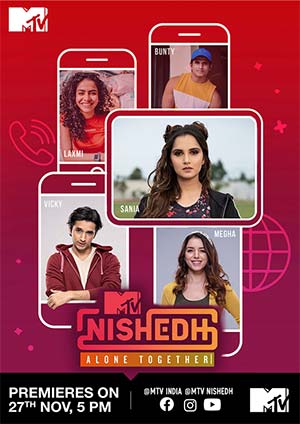 After the success of Phase 1 of the MTV Nishedh campaign, Viacom18 and MTV Staying Alive Foundation, supported by an educational grant from Johnson & Johnson Services, Inc., are set to bring back a digital-only miniseries MTV Nishedh Alone Together.












 On Sunday, December 13, 2020, Republic Media Network Group Chief Executive Officer Vikas Khanchandani had stepped out on his morning walk in suburban Mumbai. A little after 8am, when he got back home, there was a police contingent waiting for him. He was arrested on the TRP Scam case that has been raging in the industry for a few months. There was some hope still since the matter was going to come for hearing in the presence of the Additional Chief Metropolitan Magistrate, but rather than secure bail or release, he was remanded to police custody till tomorrow (December 15).