Category: TV

  • Sony bullish on being numero uno Hindi GEC

    By Rishi Vora


    Sony Entertainment channel, which is sitting pretty at No 2 position in the line-up of Hindi general entertainment channels (currently at 210 GRPs, week 7, Source: TAM Media Research), is quite positive on the chances of becoming the genre leader – something the channel has long awaited in the many years it has been in the business.


    For Sony, however, Colors is seen as a tough contender for now. And the challenge, as viewed by many experts, is to increase the gap from the No 3 player and slowly but surely, reach to a point from where it could become the No 1 player.


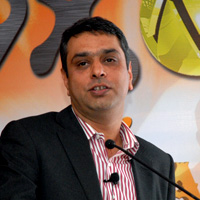
    “Though the idea is to be the No 1 channel, we are not focussing too much on that. “We’re not desperate to get there,” says Sony Business Head Sneha Rajani.


    CID is doing well for the channel. The show, which was launched by Sony in the year 1998 – the longest TV series in India, continues to deliver the goods even today. If previous week’s numbers are to be considered, the show features in the Top 10 shows in the Hindi GEC segment with a rating of 4.12 TVR along with Crime Patrol.


    As far as the programming strategy is concerned, the focus continues to be on fiction. In a bid to enhance its fiction offering and also open its early prime time slot of 7: 30 pm, the channel is all set to launch Shubh Vivaah, produced by UTV Television.


    Ms Rajani said at the launch of the show: “Having consolidated our fiction line-up between 8 pm – 11 pm slot; we wanted to extend our offering further. So with this we’ve extended our prime time offering, from 7: 30 pm to 11 pm.”


    On Feb 19, the channel aired 57th Filmfare awards. As informed by Marketing head Danish Khan, the channel is expecting a TVR of over 5.


  • Is more the merrier for Kannada news TV?


    By Tuhina Anand


    The Kannada news space has been abuzz with action all of last year especially with new launches and the momentum has continued with the launch of another new player, Public TV. With the new entrant, the number of players totals to six, including TV9, Suvarna 24X7, Samaya 24X7, Janasri, Kasthuri Newz 24, Udaya News.


    Besides the new launches the market which one can estimate to be around Rs 100 crore (only Kannada news) has been also on an overdrive on some of the existing players looking at potential buyers. TV9 has been in news as it has shown interest in diluting its stakes only to build its business further while there has been news on Janasri being keen to offload their share and on a lookout for potential buyers besides Samaya too keen on selling.


    With the new players coming in the truth is that there has been growth in this genre but there is also the view that some of the players have come into the business for propaganda, as the entertainment industry and politics go hand in hand in the South. So while Congress MLA Satish Jarkiholi started Samaya 24X7where news came of H D Kumaraswamy showing interest in the channel, Reddy brothers of Bellary own Jansari, Kasthuri Newz 24 is run by Anita Kumaraswamy who runs Kasthuri TV while Samaya 24X7 is Member of Parliament and Asianet boss Rajeev Chandrasekhar’s baby. Public TV is led by H R Ranganath who was earlier with Kannada Prabha and Suvarna News. In fact, the channel has been promoting itself by saying it’s the only channel run by a Kannadiga.


    Mahendra Mishra

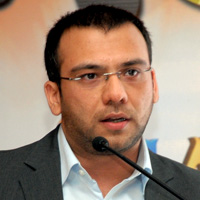
    So the grouse as Mahendra Mishra, Director, TV9 Karnataka and News9 outlines is, “There has been a growth in Kannada news genre but I would put it as negative growth. If new players come into the fray it is obvious that it would lead to increase in the viewership pie but this growth has come at the cost of the news business. What one sees today on many of the Kannada news channels is not a pro-journalism but more on the lines of being pro-party. It is a sad story and we would really like professional players to get in the business and raise the bar.”


    Coming from the leader this statement is thought provoking considering that TV9 has almost 60-70 percent share in this market and its reach is more than Udaya TV which is the leader in GEC. It is also India’s biggest non-Hindi news channel in terms of viewership. The second position is of Suvarna News which stands at 60-70 GRPs while all the other players are fighting for the third spot and here too the gap between the second and the third is too huge. In this race, ironically Udaya News is nowhere close. In fact, another sad state that is expressed by an insider at Kasthuri TV is that many new players have been selling at extremely low rates thus spoiling the market altogether and making it difficult for genuine players to find its footing. He said, “For us, right now the focus is to beat Janasri and Suvarna and get a clear number three position in the market.”


    The state of affairs doesn’t seem too rosy for the players even if new entrants are there in the market. The revenue size has not grown despite new players. There seems to be stagnation in the market mainly because there is more focus on views and propaganda than on news and players entered with vested interest without a long term view. Essentially further growth will come when serious players get into news business. There is a need to build perception and credibility and go beyond TRPs.


    Suresh Selvaraj

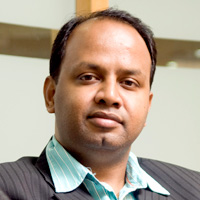
    Suresh Selvaraj, ED and CEO, Asianet News Network however is bullish on this genre. He said, “We have seen jump in Kannada news viewing and have seen growth. Our channel is different from the rest as there is a difference between mass and class and we provide class to the mass.”


    Anil K Sathiraju, Associate VP and Head South, Mudra Max, observed, “Out of the six news channels which exist, viz., TV9, Suvarna News 24×7, Janashri, Samaya 24×7, Kasthuri Newz 24 and Udaya News channel, TV9’s relative share is the dominant with close to 60 percent channel share among 15+ CS (latest six weeks’ average). Between Suvarna, Janashri, Samaya & Kasthuri the balance shares are split. Udaya News comes as the last. TV9 has been in this genre for the maximum time and therefore has the first mover’s advantage. While one has to wait and watch how Public TV does, the feedback is quite positive in the market with lot of marketing efforts by the channel. They also claim to be a ‘balanced opinion’ated channel.”


    Karthik Lakshminarayan, COO, Crest (Madison Media), said, “Whenever there is a growth/spurt in the number of entrants in a category, growth is imminent and is good for all. It helps the consumers as they get options, it helps advertisers as they can segment audience better and target individually and specifically. Definitely a win-win. I don’t think that six players in this genre suggest overcrowding. It’s the natural way to grow and in most developed markets the number of news channels are equal to or more than this. The number of Hindi new channels or Tamil news channels are more than six and they don’t seem to be doing too badly (barring maybe a few) so why should this become a deterrent in this market?”


  • 9XM to start Jalwa for older audiences

    By Rishi Vora


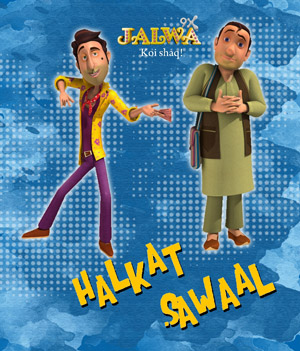
    On February 25, India’s music TV segment will see one more channel launch – 9x Jalwa – 9x Media’s second Bollywood music channel after 9xm.


    The differentiation, however, lies in the fact that the channel will cater to 25 + audiences and offer timeless Bollywood music from an era starting 1965 to 2000. The market which has few other players like Mastii, Channel V, MTV, Zoom, Bindass and Mix – most of these channels cater to relatively younger audiences.  Mastii is the genre leader with a relative market share of 12.4 per cent (Source: HSM, CS 15+, TAM Media Research), while 9xm is at 11.1 per cent share.


    While MTV and Channel V are skewed more towards being Youth Entertainment Channels, Mastii, 9xm and Sony Mix are pure play Bollywood music channels. And in that sense, 9x Jalwa comes as channel with a clear differentiation as far as its TG and content is concerned.


    For starters, the channel will be available across cable operators – analog and digital. As for DTH, the company will look to sign deals in phase 2 – once the channel gains some momentum.


    Punit Pandey

    Content-wise, 9x Jalwa will have a rich library of over 2000 songs that will be played on the channel, besides short format shows, humour and trivia led interstitials. As against half-hour or one hour shows that is seen on other music channels, 9x Jalwa will air back-to-back music, giving viewers a non-stop music experience.


    Sharing the thought process of launching a second Bollywood music channel after 9xm, Sr VP and Head – New Business Mr Punit Pandey said: “9xm caters to audiences in the age group of 15-24. It is primarily a youth channel, but with 9x Jalwa, we’re looking at covering all age groups. Also, we will be the first channel to cater to the 25 + audience.”


    He further added, “The market for 9x Jalwa is fairly big, and we think there is a lot of potential.”  From a group perspective, it is advantage 9x Media; for it is the only group in the domain to have two Bollywood channels catering to two different age-groups. As Pandey states, it will help them add value on two most important fronts: viewers and advertisers.


    Amar Tidke

    On the programming front, Mr Amar Tidke, Head – Programming and Sr VP, 9x Media said; “With 9x Jalwa, viewers will get the best of Bollywood music, maximum nostalgia and humour.” Some of the shows on 9X Jalwa will include HalkatSawal, Kassette Kahaniyan and Bolly Brands. The company has signed on Brand Harvest as its creative agency. The packing aspect of the channel has been done by Point Break Media.


    The on-going marketing campaign comprises of on-air spots on group channels and a digital plan which includes social media initiatives.


    9x Jalwa is the group’s fourth offering after 9xm, Punjabi music channel 9xm Tashan and Marathi music channel 9x Jhakaas. It will be interesting to watch how the channel progresses and how the market responds.


  • Amagi announces operations in 35 cities

    By A Correspondent


    Amagi Media Labs, the pioneer and leader in smart advertising on television, has announced its recent entry into tier-1 and tier-2 cities across the country with more than 400 small and medium businesses using Amagi platform for local TV advertising.


    Since the launch of Amagi platform nationally last year, hundreds of retail and regional advertisers across categories – education, jewellry, apparel, real estate, FMCG, white goods and auto dealerships have flocked to the platform to advertise on premium national TV channels.


    Amagi’s co-founder KA Srinivasan said: “Though every business dreams of being on national television, very few could afford it earlier. Through Amagi’s Smart Advertising TV platform, small and medium businesses have now been able to advertise on premium national TV channels at ultra low rates – targeting specific cities or regions.”


    Amagi offers smart advertising on TV in over 35 cities, including metros, tier-1 and tier-2 cities. Amagi has partnerships with 15 satellite TV channels, including leading news, music, lifestyle, movie and regional entertainment channels as well as more than 50 cable MSOs acrossIndia. Amagi platform is ideally suited for regional brands that want to reach their target audience without paying for wasted coverage.


    Hundreds of advertisers acrossIndiahave reaped strong benefits by using Amagi platform. SS Bhamra, Chairman, JLPL said: “I have used Amagi Smart Advertising platform to build my brand in Punjab on national TV channels at a very low cost – my campaign using Amagi Media has delivered overwhelming response from our customers and has helped position JLPL as the developer of choice in Punjab”


    Saumil Pandya, Vice President, MAS Financial Services Ltd, Ahmedabad said: “Amagi’s Smart TV Advertising platform is a boon for regional brands. I can now get the best of both worlds – national TV and local rates. Coupled with Amagi’s creative services, this platform has helped me get both branding and response at a reasonable budget”


  • Tamil KBC begins on Feb 27

    By A Correspondent


    A game show that has been played across 116 countries in 83 languages in the past 13 years, the ‘Who Wants to be a Millionaire?’ format is being brought to Tamil audiences by Vijay TV and Big Synergy, in the form of ‘Sunfeast presents Neengalam Vellalam Oru Kodi powered by Cadbury Dairy Milk’ which hits the small screen on February 27, airing Monday-Thursday at 8 pm.


    The show “Neengalam Vellalam Oru Kodi” on Vijay TV will be hosted by actor Suriya, and promises a whopping amount of Rs 1 crore to be won; an amount that can change a common man’s life forever.


    Actor Suriya says, “From the moment I walked onto the sets of ‘Who wants to be a millionaire’ I knew that this was more than a mere game show.  In the short span that I have spent on this iconic brand, I can assure you that this show is not only about money but about people, their lives, the relevance of money and different perceptions of it across varied strata of our society.  I thank Vijay TV for having me host this and go through a whole new experience.  We have done our best and now we wait , like any other big movie release, hoping the audience loves the show as much as we joyfully lived every minute of it.”


  • Tamil KBC ropes in both national and local advertisers

    By A Correspondent


    Dubbed as the biggest property of the Tamil television industry, Neengalam Vellalam Oru Kodi, or Kaun Banega Crorepati in its Tamil avatar, has closed deal with both leading national and local players who will be featured on the show. Just like KBC 5 which saw several brands riding on its success, its Tamil counterpart too has been successful in roping in brands on the show. While the show is being presented by Sunfeast, it is powered by Cadbury Dairy Milk and associate sponsors include 7UP, Tata Docomo, Nano 2012, Muthoot Fincorp, UniverCell (retail), Nathella Jewellery (retail), Aachi Masala (retail) and Arun Excello (retail). In total 10 brands are already on the show and the few that are left on the inventory are expected to close by the time the show goes on air on February 27.


    K Sriram, General Manager, Vijay TV said, “There has been brilliant response to the show as advertisers see value in this property and have seen its success from other parts of the world. On KBC Tamil one can see a good mix of national advertisers along with local retail players. We have ensured exclusivity in terms of category for our advertisers, hence giving them maximum visibility without conflict. There is a tremendous buzz around the show which has been aptly created with a 360-degree marketing campaign with some unique use of media.”

    It is learnt that around 200 OOH options have been engaged for the show. R Balachandran, Senior VP, Vijay TV, shared details: “We have used a combination of media including bus shelters, bus backs, hoardings, mobile hoardings, shared auto, cinema posters among others. The innovative bit is our use of shared autos that have become quite popular in Chennai and this is probably the first time this medium is used, especially because these autos are used by the middle and lower middle class who form a huge part of our TG. Also we have used an entire local train with KBC branding.”

    Besides there is an attempt to create a larger than life image for KBC with false jacket, full page advertising and being present on digital platform including Facebook, YouTube and other prominent websites. The Hindu and Dinathanthi have been used in print. Also there are spots running on Vijay TV to engage viewers. Radio spots are used too. Not to forget that host Suriya has pulled all stops to give his full attention to the show and be more than just its host.

    In all the marketing budget for the show would be around Rs 8 crore, and with all the efforts, Vijay TV is confident that this will be a profitable venture right from the word go though Mr Sriram was unwilling to quantify how much this show would contribute in their growth. On the back of this show, three new fictions are planned which will be launched in March, April and May respectively.

    “Most importantly KBC Tamil has been a learning experience in how to create a sustainable campaign which was started in December and will continue till the show is on,” concluded Mr Sriram.

    The show will be aired Monday-Thursday at 8 pm.

    Also read:

    Star’s Vijay TV hopes to win big with Tamil KBC, nets superstar Suriya as host:

    http://www.mxmindia.com/2011/12/vijay-tv-banks-on-kbc-for-growth/

  • Discovery Channel and TLC ranked amongst the top 5 most trusted TV brands in India

    By A Correspondent


    Discovery Network Asia Pacific’s two flagship channels in India – Discovery Channel and TLC have been ranked amongst the top 5 most trusted television brands in India by The Brand Trust Report 2012.


    Discovery channel has been ranked third, ahead of all the Hindi general entertainment and sports channels. TLC has been ranked fifth, ahead of all lifestyle, English entertainment, English news and English movie channels.


    Rahul Johri, Senior Vice President and General Manager, Discovery Networks Asia-Pacific, South Asia said: “This recognition by the Brand Trust Report 2012 is a reflection of our strategy to entertain viewers across India with the highest quality and differentiated non-fiction programming like Curiosity, Man Woman Wild and Swamp Brothers. We would like to take this endorsement as a source of encouragement for our future endeavours in creating new genres, trends and programme formats that resonate with the Indian audience.”


    Discovery Channel, India’s leading non-fiction channel, entertains viewers in multiple languages with a range of programming across genres including natural history, survival, technology, engineering, wildlife and India. TLC, India’s favourite lifestyle channel, since its launch in 2004 presents refreshing entertainment on travel, food, fashion, luxury, wellness and many other exciting lifestyle trends.


    N Chandramouli, CEO, Trust Research Advisory, publishers of The Brand Trust Report, India Study, 2012 said: “It is prestigious that Discovery Channel and TLC have been ranked third and fifth, respectively, among television brands by influencers-consumers in the 15 cities of the study. The study reflects how deeply Discovery Channel and TLC are trusted as measured by a comprehensive Brand Trust study on TRA’s proprietary 61-components.”


    The Brand Trust Report (BTR), compiled and released annually is the result of an exhaustive survey undertaken by the Trust Research Advisory (TRA). The methodology includes BTR questionnaire which is designed to illuminate approximately 425 aspects of brand trust, of which 391 were directly brand-related. The study also questioned respondents about two other important brand trust influencers – brand recall and the trust-experience of brands, the latter of which they were requested to furnish reasons for.


    The Brand Trust Report, India Study, 2012 research was conducted among 2718 ‘influencer’ respondents across 15 cities. The study was the most intensive undertaken on Brand Trust across the globe, generating nearly 2 million data points and 17,000 brands. Indian Statistical Institute helped create a statistically robust Brand Trust Index which has been used to hierarchically rank India’s brands on the basis of trust.


    Discovery Communications is the world’s number 1 non-fiction media company reaching more than 1.5 billion cumulative subscribers in 210 countries and territories. Discovery empowers people to explore their world and satisfy their curiosity through 130-plus worldwide networks, led by Discovery Channel, TLC, Animal Planet, Discovery Science and Discovery HD, as well as leading consumer and educational products and services, and a diversified portfolio of digital media services including HowStuffWorks.com.


    Trust Research Advisory (TRA), a part of the Comniscient Group, is a company dedicated to understanding and simplifying concepts related to Trust. TRA was conceived in 2008 to decipher, analyze and measure Brand Trust, to make it universally understood and easily applied. The organization’s focus areas include Research, Publishing, Trust Training, and Licensing.


  • Salman Khan sets a Rs50cr record by selling satellite rights for Dabangg sequel

    By Nandini Raghavendra


    If you have been wondering whatever happened to Chulbul Pandey, news is that the Dabangg star – Salman Khan – will be back this Christmas in a sequel of the 2010 hit. And even before Khan begins shooting for Dabangg2 next week in Mumbai, the satellite rights for the movie have been snapped up by Star Network for a record Rs 48-50 crore for 11 years, according to a trade source closely associated with the deal. Also the music rights have been acquired by T-Series for over Rs 10 crore, said the same source.


    Though Hemal Jhaveri, senior vice-president at Star Gold confirmed the deal, he refused to share the details of the deal or the price. Jhaveri is responsible for acquiring the satellite rights for Star’s Hindi network, which includes Star Plus, Star Gold and Life OK.


    Just like his box office record, Khan’s satellite ratings have been trailblazing. Bodyguard, another of Khan’s blockbusters, registered a record television rating points (TRP) of 10.3 when it was aired on Star Gold in December 2011. The channel expects nothing less, if not more from Dabangg2, said Jhaveri.


    TRP, given in percentages, is a measure of what percentage of people in a defined time band and a defined profile watched a particular programme, a number which is keenly followed by the advertising industry and ads allocated accordingly to the one garnering the higher numbers.


    A film is considered a success on TV if it can manage to garner an average 2.5 TRP through the year, apart from the high number it garners on premieres. For example, the ICC Cricket World Cup final between India and Sri Lanka last year garnered a TRP of 21 (on three channels – Star Sports, Star Cricket and Doordarshan).


    Over the past few years, satellite prices have been playing a key role in bank-rolling films with at least a third of the movie’s cost of production coming from selling these rights prior to even beginning production.


    A Win-Win Situation for Channel

    It is also a win-win scenario for the channel, which generates both eyeballs and revenues by exclusively broadcasting a successful movie over a number of years. Competition among TV companies wanting to acquire the rights of hit movies has, as a result, led to an increase in the acquisition price of many recent big films.


    Hrithik Roshan’s Krissh3 and the Shah Rukh Khan-starrer Don2 was said to have been sold to Sony for Rs37 crore each, while Aamir Khan’s Talaash and Karan Johar’s Agneepath went for Rs40 crore.


    Channels usually spend an average of Rs 200-300 crore a year to acquire film titles for their library. “Increase in satellite prices for big-ticket films has a direct linkage to maximising gross rating points (GRPs), for the channels,” said Rakesh Jariwala, film segment leader, Ernst & Young.


    Movies contribute as high as 30 per cent to a channel’s GRPs. The channels also generate revenue from syndication and overseas subscriptions for the films they buy.


    Over the past two years, it’s been a close race between Star and Sony, with each raising the stakes with every new film. For Star, with films like Bol Bachchan, Son of Sardar, Ghayal Returns and Housefull 2 all snapped up, the slate for this year looks full while Sony has Aamir Khan’s Talaash and YRF’s Ek Tha Tiger among others.


    “We have built on the content game and we are confident of the returns as well as its ability to garner TRPs beyond the premiere,” added Mr Jhaveri. While Dabangg, produced by Arbaaz Khan Productions, was acquired by Ashtavinayak Cinevision, the sequel has so far not been sold to any corporate house, although almost every film corporate, including Hollywood studios in India, have been very eager to have it on their slate. Prices offered have ranged between Rs100 crore and Rs130 crore, though industry sources say in all likelihood the brothers will release the film themselves, after the success of Johar’s Agneepath.


    Star Network’s recent track record with Bodyguard, Singham and Ra.One, all notching up record TRPs, has also worked hugely in its favour. And with Star also holding a strong portfolio of Salman Khan’s films – Dabangg, Wanted, Ready, Bodyguard, Tere Naam, Pyar Kiya Toh Darna Kya- for 7-8 years, backing a Khan package may help garner more eyeballs.


    Source: The Economic Times

    Copyright © 2012, Bennett, Coleman & Co. Ltd. All Rights Reserved

  • We’re a one-stop shop for broadcasters: Santosh Nair, UTV

    UTV Television, known to be a pioneer in the TV content business in India, was started by Ronnie Screwvala in the early nineties. Though the group has expanded its wings to being a broadcast major, its television business, which has now, in a way, been overshadowed by the international companies’ foray into India, is slowly but surely taking bigger strides in becoming a significant player in the business.


    as put by Chief Operating Officer Santosh Nair, the content house’s biggest USP is the fact that it offers fiction and non-fiction shows, plus the company’s wide experience in the regional space. In a freewheeling interview with MxM India’s Rishi Vora, Nair speaks about the content business in India, UTV’s role in that, company’s plans and much more. Excerpts:


    Q: So how was 2011 for UTV Television?

    The year 2011 was very good for us. Saubhagyavati Bhava, which was launched at the end of the year, is doing well. Dor, which aired on Star Plus, was launched early in 2011 too performed fairly well. The non-fiction shows, especially on UTV Bindass, such as Big Switch and Emotional atyachar too have delivered.


    Q: Is it tough competing with the likes of Endemol, Freemantle, Balaji and a host of other content houses?

    all businesses are tough in that sense. My sense is that there is space for everybody. Yes, there are international format companies, but we’ve been successful in doing home-grown formats. The first season of Dance India Dance was done by us. and that’s the first and the best example of a successful home-grown format. Ek Khiladi Ek Hasina -India’s first cricket format show too is a great example of a great home-grown format. and not to forget Emotional atyachar – that too is a home-grown reality show.


    Q: But not all home-grown formats have been successful.

    Most of them have done fairly well. Dance India Dance is doing well season after season. The show is now in its fourth season. These are tried and tested formulas. and that’s one reason I feel there is space for everyone in the industry.


    Q: While there are home-grown formats done by Zee and various other channels, international formats like KBC, KKK, Bigg Boss and others are more popular. Why is that so?

    International formats are formats which have worked internationally – they have worked well in many countries and hence are successful formats. There is a big market for international formats in India and that’s one of the main reasons why international production houses like Endemol, Freemantle and others have entered India.

    Look at KBC for example. That’s a show that has seen a lot of success. Some have worked, some have not. But broadcasters will always look to do international formats more as these are the shows that have seen some success in overseas markets.


    Q: are you also doing an international format show?

    Yes, there is one in the pipeline.


    Q: For a content house like yours, are non-fiction shows profitable?

    Non-fiction shows are seasonal and each season lasts for about 13 to 26 weeks. So often they turn out to be more profitable because fiction shows usually takes about 200-250 episodes to break even. It takes that much time to understand how your fiction is doing on the ratings front, whether it is a good call to continue or not.


    Q: UTV Bindass is a sister company, so if I may ask: How do reality shows like Emotional atyachar and Big Switch benefit you and the channel from a cost perspective?

    These shows target the youth. So from a cost perspective, it is working out well for the channel and for us, too. That’s the reason why we’re doing them every year. So I’m pretty certain that the channel makes a fair amount of profit on these shows.

    To be very clear about how we deal with Bindass: We treat the channel as any other broadcaster, the way we work with Star or Sony or Imagine, it’s the same way we work with Bindass. We pitch to them – and if in case they don’t like it – we take the project to someone else.


    Q: So Bindass also works with an Endemol for example?

    Yes, Bindass works with Endemol.


    Q: Which means UTV Television is not much inclined with Bindass.

    No-no, it’s not that way. What I’m saying is we are one of the content houses for Bindass.


    Q: There is a buzz that some of the non-scripted shows are not really non-scripted in the true sense.

    No-no. The kind of shows we have done, we have never done any doctoring, purely in terms of making a non-scripted show a scripted one. I can’t comment about other shows, but my fair sense is that nothing is scripted in non-scripted shows, apart from anchor lines.


    Q: What is it that makes UTV Television stand out in the clutter?

    Look at any content house right now in the Hindi space vis-a-vis UTV, which is the only content house that delivers both scripted and non-scripted content. That for us is our USP. We are doing some work in the southern market. We are doing shows languages such as Tamil, Kannada, Malayalam or Telugu. apart from being present in the Southern market, we’re also doing shows in Marathi. We recently did two fiction shows in Marathi, so the kind of programming we do – we are into six or seven languages.


    Q: So where do you focus more: fiction or non-fiction?

    We’re strong on both – fiction and non-fiction so we focus on both the formats. We’re a one-stop-shop for any broadcaster to look at fiction as well as non-fiction.


    Q: a lot of content is being produced in regional languages, so is it a beginning of a trend in the content space?

    apart from UTV, I don’t think many players have made a foray into the regional space. The reason why I’m saying this is because we have a decade old relationship with the network and we have been doing quite a bit of work down south. apart from the local players, I don’t see many of the Hindi players getting into the regional space.


    Q: What is your view on the issue of IPR, where the broadcaster owns it when it is the content house that is producing the show…?

    The broadcaster owns the IPR because he commissions the content house to produce the show. There is a budget which is rolled out, the content house keeps its margins and that price is fixed. That’s the model which is operational in the industry now minus Sun Network. With Sun Network, we spend the money on producing a show, we pay them slot fees and the IPR lies with us. So that’s a slot model.


    We are doing Shubh Vivaah on Sony, a remake of a Tamil show; Saubhagyavati Bhava too is a remake of a Telugu show…


    Q: So for all these shows, the IPRs lie with you?

    Yes. In fact, there are two other shows in the pipeline which are remakes of south shows (we are currently in talks with broadcasters) and we own the IPRs.


    Q: What is your view on broadcasters’ interference in terms of storylines or tweaks?

    It’s team work. Broadcasters respect our expertise in terms of creative formats that we bring to the table. While we respect them in terms of their understanding about the business, so it’s a mutual thing.


    Q: What are we going to see from UTV television this year?

    We’re doing Shubh Vivaah on Sony, an international format show with one of the GECs. Two more fiction shows are lined up with top broadcasters and we will be launching a few fiction shows in the south. So a lot happening this year.


     

  • Two new shows on History Channel

    By A Correspondent


    History TV18 announced the launch of ‘History Har Din’ – a user generated content initiative for online, social media and other platforms and ‘The Greatest Indian’ – the channel’s first big-ticket local production in association with CNN-IBN.


    History Har Din is an innovative UGC (user generated content) concept where viewers are invited to share instances from their life when they too have made history. The pioneering format is a first by any factual entertainment channel in the country and is based on the channel’s brand position of ‘History Made Everyday’ – that history is more about achievement and is made every day by ordinary people doing extraordinary things.


    Through this initiative, viewers are invited to share images or videos that capture their life’s biggest successes, turning points, most inspiring and endearing moments or just plain fun experiences – anything which they believe were points in time when they truly created history. Entries can be submitted by visiting HistoryHarDin.in.com. The best of the ‘history making’ stories will be telecast on the channel in the coming months.


    While History Har Din is about regular people, the channel’s first joint production with CNN-IBN, ‘The Greatest Indian’, features India’s best known faces. The initiative is set to trigger a national debate on: “Who is the greatest Indian afterIndependence?” The show format is based on a path-breaking series featured on BBC called ‘The Greatest Briton’. Launched in 2002 in theUK, the initiative reached out to millions of viewers and broke significant viewership records there. An astounding 21 countries have successfully adopted this format since then.


    History TV18 is now available in English, Hindi, Tamil, Telugu, Bengali, Gujarati, Marathi and now Urdu.


    Speaking on the occasion, Ajay Chacko, President, A+E Networks | TV18, said: “The initiatives truly exemplify what History TV18 stands for – the celebration of human spirit to succeed and achieve against odds – to make History. While History Har Din celebrates the human spirit through achievements of regular people, ‘The Greatest Indian commemorates those who have made invaluable contribution to the nation, through popular vote. Through these initiatives, we believe we will make significant inroads towards our objective of broad basing the genre.”


    Rajdeep Sardesai, Editor-in-Chief, IBN18 Network, said: “At CNN-IBN, we have always believed in celebrating the idea ofIndiawith all its unmatched diversity. What better way than to partner History TV18 in this path-breaking programme to find out who is the greatest Indian after Gandhi. In today’s world of social media, every Indian has a chance to be part of this inclusive debate and we hope that millions will join us in this exciting adventure.”


    “History TV18 has successfully created a special place for itself in the minds of Indian audiences with its edgy, lively, fast-paced and differentiated content. The channel has already begun to whet the audience’s appetite for more of its kind. With the launch of these two initiatives, the channel is all set to engage with viewers in more ways than one,” said Salman Khan.


  • HBO documentary ‘Saving Face’ wins an Academy Award

    By A Correspondent


    Pakistani documentary film ‘Saving Face’, produced by HBO, which uncovers the story of hundreds of people, mostly women who become acid attack victims, was honoured with the Academy Award for best documentary (short) at the 84th Academy Awards ceremony held inHollywoodrecently.


    Every year inPakistan, many people – the majority of them women – are known to be victimized by brutal acid attacks, while numerous other cases go unreported. With little or no access to reconstructive surgery, survivors are physically and emotionally scarred, and many reported assailants, typically a husband or someone close to the victim, are let go with minimal punishment from the state.


    Directed by Daniel Junge and Sharmeen Obaid-Chinoy; Saving Face chronicles the arduous attempts of acid-attack survivors Zakia and Rukhsana to bring their assailants to justice, and follows the charitable work of Dr. Mohammad Jawad, a plastic surgeon who strives to help them go beyond this horrific act and move on with their lives.


    A journey of healing and a battle for justice, Saving Face, the 40 minutes documentary will be premiered soon only on HBO.


    Launched in September 2000, HBO is the English language movie channel available in South Asia (India, Pakistan, Maldives and Bangladesh). HBO brings the best of Hollywood by premiering top blockbuster movies on television first in South Asia through exclusive licensing deals with more than 16 studios and companies.  It is the only English movie channel to feature cutting-edge award-winning original productions year on year. HBO has won 3 Golden Globe Awards this year. HBO Asia is a joint venture of HBO (a Time Warner company) and Paramount.


  • Zee 24 Taas Ananya Sanman 2011 honours Maharashtra heroes

    By A Correspondent


    Maharashtra has had a special place in the history of progressive India. It has produced leaders who have made a great contribution to the development of the country in all walks of life. Be it politics, music, sports, films, literature, theatre, fashion, business, social service, farming, journalism or medicine, Maharashtrians have scripted many ofIndia’s grand success stories.


    In this fame-obsessed time, there are people doing phenomenal work without any expectation of recognition. There are people who have contributed to the society and served their respective fields with the devotion that can inspire many.


    A man who collects money in the local trains to build a school. A coach who helps kids succeed at the international level in the forgotten game of kabaddi. A police constable who lost his arm while defusing a bomb. These are the real heroes of our society showing real courage in everyday life.


    Zee 24 Taas Ananya Sanman is a unique platform which gives due recognition to these real heroes who have considerably contributed in their sphere of work, but are not recognize, and who avoid the limelight. In the fourth edition of the awards, there are seven categories under which unsung heroes are honoured – Entertainment, Sports, Farming, Education, Environment, Social Service and Bravery.


    The recipients of these honours will be felicitated by the hands of veterans of those respective fields. The event will conclude with a lifetime achievement honour to a legendary person. Zee 24 Taas Ananya Sanman 2011 is being hosted in association with Loksatta. Tata Sumo Gold, LIC of India, Axis Bank, Ideal e-live, and Rambandhu Masale are the associate sponsors, whereas TJSB Bank is the official banker.