Category: TV

  • Star Plus touches the skies in Week 6

    By A Correspondent


    It’s a record as big as the Brian Lara 501 not out in twenty years back. Huuuge.


    In Week 6 of the TAM ratings, the flagship general entertainment channel (GEC) of the Star India network generated for itself ratings of 728,231. Last week it was 626,570.


    “The milestone is historic,” Gaurav Banerjee, the recently mandated General Manager of Star Plus told MxMIndia. Mr Banerjee, who is said to be among the top programming thinktanks of the network, praises the work done over the year on the programming front. “We should look beyond the numbers at some of the great work done. We found the right partners to deliver a deep understanding and connect the viewers.”


    When asked about the reasons for this dramatic shift and whether the decision to have a sixth day for fictions did the trick, Mr Banerjee attributed the success to the storylines of the fiction shows. “When we started talking of the new Indian woman, we stayed with it. Yes, there were a few knocks, but we perseveared.”


    On whether he hopes to repeat the act in the coming weeks, he compared the feat to that of winning an Olympic medal. “No one gives an Olympic-winning performance every week. It doesn’t really matter what is the rating next week,” he said.


    Meanwhile, the pecking order of the rest of the Hindi general entertainment channels was unchanged. Zee at 495313 was second, Colors was at 424431. Life OK was 343882, Sab at 291599 and Sony at 251650.


  • Life after UTV for Ronnie Screwvala

    Life after UTV for Ronnie Screwvala


    By Malini Goyal


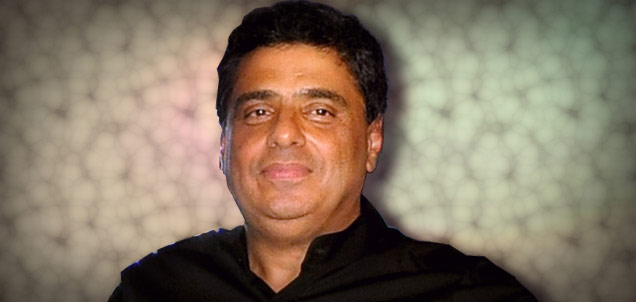
    What would you have done if you started off with a few thousands of rupees and turned them into a couple of thousand crore over roughly three decades? Ronnie Screwvala, 57, reckons it’s the time to do “something entirely new”. A smalltime cable operator in Mumbai in the early 1980s, Mr Screwvala went on to build a $1.4-billion media empire straddling movies, gaming and new media, TV content and broadcasting.


    After selling his entire stake of 70% in UTV Software to Disney by 2011 for a cool Rs 2,000 crore, last month Mr Screwvala exited the company he had founded – and in the process exited the media and entertainment (M&E) sector, too. “I came into this industry with Rs 37,500. Today, I have lots of money but that’s all notional. The struggle [going forward] for me will be of a different kind. I am at a crossroads, looking at incredible opportunities,” says Mr Screwvala.


    The opportunities involve parting with parts of the stash he’s sitting on in two ways – one, with a profit motive, by turning investor-mentor for start-ups; and the other with a philanthropic objective. And they promise to keep him busy – and away from the M&E world for some time to come.


    A non-compete clause signed with Disney bars Mr Screwvala from starting a conflicting business. But his new calling may ensure he never returns to the business he knows best. “If I know Ronnie well, he will never come back to the media industry. The sense that I get from him is that he has totally moved on,” says Star India CEO Uday Shankar. Globally, successful entrepreneurs like Marc Andreessen, founder of Netscape, have followed non-linear paths by exiting successful ventures to turn both investor and serial entrepreneurs. Back home, Ajay Piramal is one prominent investor who is looking for avenues to park the proceeds from the sale of a pharma venture.


    Elsewhere, Infosys’ NR Narayana Murthy and Wipro’s Azim Premji have set up funds to invest their personal wealth. But they both remain deeply entrenched in and committed to the businesses they co-founded or founded. Screwvala, for his part, belongs to a rarer breed that is starting all over again from scratch on a totally fresh canvas.


    Entrepreneurial Dream

    Sitting relaxed in his spacious fifth floor penthouse in the tony Breach Candy area of south Mumbai, Mr Screwvala is applying the finishing touches to the blueprint for his second innings. While his plans are still evolving, there are few ground rules he has set for himself. One of them: politics is a strict no-no as a career alternative. He also broadly wants to spend half his time in business and half pro bono. “I want to evangelize entrepreneurship,” declares Mr Screwvala. He wants to use 10% of his time figuring ways to build a platform to boost entrepreneurship.


    “I want to do this for myself. I have to do one or two very disruptive things so that people can look at entrepreneurship more positively in India.” He is vague, he admits. But his mind is running wild doing some blue-sky thinking. His options: either become a catalyst in building an ecosystem; or help figure out new ways to make crowdfunding possible in India; or even write a book. “That’s a massive passion for me. I want to build communication tools and platform to enable that ecosystem. This could be the touchpoint to my past.”


    Currently at the heart of his strategy for investing – both money and his leadership bandwidth – in start-ups is Unilazer Ventures. And here too he’s doing it his way: He won’t settle for less than 35% in a firm; unlike private equity investors, he will not have a time horizon; and he’s extremely selective about sectors, reluctant to look beyond e-commerce, health, education and agriculture.


    “This [Unilazer Ventures] is for profit. Agri is so unglamourized. Nobody is looking at it. But it offers great margins,” he says. While most of his investments will be in start-ups seeded by others, Mr Screwvala plans to build at least one or two businesses ground up.


    His optimism and passion notwithstanding, sections of the PE industry have their reservations about the start-up fervour in the country. “The track records of investments made by many entrepreneurs have been mixed so far,” warns Rahul Bhasin, managing partner at Baring Private Equity Partners India, adding that in India managing the external environment is a huge challenge for greenhorn entrepreneurs.


    Swades and Philanthropy

    By contrast, Screwvala’s other plan on the drawing board appears infinitely less risky although he will be as demanding in making every penny count. He’s set aside Rs 350 crore of his personal wealth and will raise a similar amount from others for Swades, the philanthropy arm. “India does not have a problem of resources. Government spends massive amounts of money but the impact is low. Execution is the key,” Mr Screwvala explains.


    Most corporate philanthropic outfits focus on a specific issue – Bharti and Premji foundations focus on education, for example. Swades, though, has a geographic approach – for starters it plans to look at all major issues faced by Maharashtra’s villages in a 360-degree manner. “I want to create a model that is scaleable, efficient and has measurable impact – like any company,” says Mr Screwvala.


    Swades is already working in 1,000 villages impacting a lakh villagers. Deval Sanghavi, cofounder, Dasra Foundation, a philanthropic organization, points out that Swades does not want to reinvent the wheel. It prefers to get the right expert partners in a range of areas like education, farming, water, health and sanitation, and turn into a catalyst.


    Take for example its work with the farmers. In villages you realize men between 20 and 45 have migrated to cities and are living in terrible conditions, Screwvala says. He wants to reverse the tide and figure ways to improve incomes and standards for farmers. Swades has collaborated with Jain Irrigation to introduce drip irrigation for small farmers. A year back it began working with agricultural bank Nabard. “The best thing about Swades is that they first do a pilot on their own to demonstrate the benefits and then seek government support for farmers,” says Nanda Survase, district development manager (Raigad), Nabard.


    One such villager to benefit is Jeeteshbhai, 22, who was in Mumbai since 2010 working at a retail shop on a monthly salary of Rs 5,000. Last year he returned to his village in the Raigad district. His farm is small – under three acres. But using drip irrigation, vermin compost and some smart management of crops like water melon and a few vegetables, he has earned Rs 25,000 in the past four months. He is looking at a net income of Rs 1 lakh a year – far more than what he was earning in the city.


    Praveen Jain, COO, Swades says there are a few things they keep in mind before starting work in a village. “We measure everything so that we know the progress. We only look at projects that are self-sustainable in 3-5 years. And our exit is built in.” Also to ensure villagers’ commitment, nothing is offered free. Villagers need to co-contribute, even if a small amount. Take for example, the water supply to each home. Villagers co-contributed 10-15% of the cost of the project. And they also put together a small committee and a mechanism to build a corpus for regular maintenance of the pipes. Today, six gram panchayats – 20 villages and 6,000 people – are getting drinking water right inside their homes.


    Understanding the Disney Exit

    It’s difficult for many – including his peers in the M&E sector – to figure why Mr Screwvala chose to quit the game he was so good at. “When I sold off, they [other entrepreneurs] were shocked. Most couldn’t believe it,” he admits. But he’s convinced it’s the right reason. For a couple of reasons.


    First, UTV may be well diversified within M&E, but lacks size and scale in most of them. In broadcast, for instance, the absence of a general entertainment channel (GEC) is stark. “Their presence was through niche channels where getting advertisements and franchises becomes difficult if you are not No. 1,” says Nikhil Vohra, an M&E analyst who recently founded Sixth Sense, a consumption-centric venture fund.


    The second reason for exiting is the challenging and uncertain nature of the content-driven business. One, while the industry is secular in consumer demand, its heavy dependence on advertising makes its financial performance asecular. Second, the entire industry is undergoing a massive churn as technology, ubiquitous smartphones and an anytime-anywhere audience are disrupting old business models. “Competition, choice and globalization of content mean that it’s game over for a lot of M&E companies. Many will disappear and there will be consolidation. Only those who have the resources to invest in high quality content and strong brands will survive,” says Mr Shankar.


    That Mr Screwvala is remarkably detached from the business he built with his blood, sweat and passion made the exit easier. “I don’t think you can expand and build scale if ownership and control is what you are obsessed with,” he says. Star India’s Mr Shankar explains that Mr Screwvala is “passionate but not emotional about his decisions”.


    Disney began its association with UTV first as a customer, then as an investor, partner and, eventually, owner. After picking up a minority 14.99% stake UTV in 2006, by 2010, both partners were asking the same question: “Now what?” “A buyout seemed the most logical step,” says the founder.


    The Disney Ride

    In 2012 after completing the buyout of UTV, Screwvala was appointed managing director with the mandate to steer the integration of the two companies. It wasn’t a smooth ride. “There were cultural differences although value systems were similar,” says Mr Screwvala.


    Like all integrations, this one too had its own share of issues. Some redundancies were inevitable. With the far bigger (in India) UTV dominating the merged entity and Mr Screwvala at the helm, it meant most key positions were helmed by UTV executives. Siddharth Roy Kapur, from the UTV stable, took over as managing director. Unsurprisingly, many Disney executives put in their papers.


    Disney’s MNC culture with a thrust on structures and processes is a polar opposite of Mr Screwvala’s entrepreneurial style of functioning. His informal style – epitomized by the round-neck T-shirts he often sported at meetings and important events – was in stark contrast to the formal suit-and-tie culture of Disney.


    By the fag end of his stint as Disney India MD, Mr Screwvala’s patience was running out. “He was completely stressed,” says an ex-Disney executive. For an entrepreneur who was used to taking quick decisions, working in an MNC where decisions were being taken far away in Burbank, California wasn’t proving easy. Take, for instance, a simple thing like finalizing office space – the process took an entire year. “I could see the frustration and suffocation building inside him,” adds the former Disney executive. Starting afresh is clearly proving to be liberating.


    Source:The Economic Times

    Copyright © 2014, Bennett, Coleman & Co. Ltd. All Rights Reserved

    Licensed to republish


  • CNN appoints Ravi Agrawal as New Delhi Bureau Chief

    By A Correspondent


    CNN International announced the appointment of Ravi Agrawal as the New Delhi Bureau Chief. Agrawal effective April 1, 2014. Mr Agrawal will manage and oversee CNN’s multi-platform newsgathering operations from India.

     

    An award-winning CNN producer, Mr Agrawal has worked with the network across its London and US offices for eight years. He assumes this new role from being the senior producer of CNN’s flagship Sunday programme on world affairs ‘Fareed Zakaria GPS’.


    “India has the world’s interest and CNN has had a long standing presence and robust operations in the countryfor well over two decades now. Ravi’s appointment is very timely as we prepare to coverthe world’s largest democracy going to the polls in the coming months,” said Ellana Lee, Vice President and Managing Editor, CNN International Asia Pacific.


  • Ronnie Screwvala sets up Unilazer Sports; Supratik Sen to head biz

    By A Correspondent


    Former Disney UTV head Ronnie Screwvala’s Unilazer Ventures has ventured into sports and has hired seasoned sports marketer Supratk Sen as its CEO for the venture. Supratik Sen joins in from Red Bull India wherein he was National Head for Sports and Events Marketing.
     

    Unilazer Sports, a division of Unilazer Ventures, led by Mr Sen will focus on teams, leagues, academies as well as creating IPs and franchises in two or three selected sports.


    This ex-national rugby player, who was also a professionally trained footballer and cricketer spent the last five years at Red Bull India leading all their marquee projects with athletes, sports projects and events in the country. Before joining Red Bull, Mr Sen worked with Australian major Repucom. He has also worked with sports, event marketing and media management companies Procam, Percept D’Mark and E-Sense Entertainment.


    Unilazer Ventures Ltd, promoted by First Generation Entrepreneur Ronnie Screwvala is a diversified entity with focus on creating ground up businesses and being a Strategic Equity Investor in others. Unilazer brings hands on business experience from its Founders backed by an expert team that adds value to strong entrepreneurs/founders in varied aspects of their business growth. While Unilazer is sector agnostic it has a leaning to new greenfield and high growth segments like Agriculture, Healthcare and Pharma, Education, E-commerce and sectors deeply entrenched in the India Consumption Story


  • Shailesh Kapoor: Fact Check: Daily Soaps – Regressive or Progressive?

    By Shailesh Kapoor


    For the last 15 years, a word has been used ad nauseam to describe weekday fiction programming on Hindi GECs: regressive. I’m not sure who started this usage. Perhaps it was the English print media. But over time, it’s become a part of popular lingo, not just in the media but within the industry too.


    A condescending description of GEC programming, with a casual use of the word “regressive”, is a common occurrence in a niche channel or a media agency interaction. Implicit in this description is the assumption that the women who watch daily shows on Hindi GECs are regressive in their thinking and actions.


    Nothing can be more away from the truth. There are some shows (about 30%) that may portray a regressive mindset, but they are the low-performing ones. The majority, and the top success stories, have worked on the opposite premise – that of progress and change. And that also describes the need they fulfill for their target audience – to evolve and progress with the changing times.


    Let’s take the top two shows of the current times, for example. Diya Aur Baati Hum is the story of a fairly conservative family in a Rajasthan village. Watch the show passingly for five minutes (which is how non-GEC industry folks watch GEC fiction) and you may end up ascribing the words “rural”, “regressive” and “old-fashioned” to the show. But you are reacting only to the setting, not the story.


    The story of Sandhya’s journey to fulfill her dream of becoming an IPS officer, and her almost-illiterate husband supporting her in this journey, oozes of progress and change. After two years of struggle, Sandhya is now undergoing IPS training. The out-of-home episodes, playing out currently, are touching new viewership highs.


    Jodha Akbar is a romance set in a period era. But it is essentially a Taming Of The Shrew story, where Jodha, the most popular character on Indian television for the last two months, is playing a fearless heroine who stands for the truth. Her ‘historical’ character is loaded with 21st century aspirations. Confidence and self-respect are strong values her character drives amongst viewers who are seeking both these values in their personal lives too, more than ever before.


    Even in the past, from Tulsi to Anandi, strong and progressive women have been the backbone of blockbuster shows. How is the idea of “regressive” justified, then? Evidently, those who use that word use it because it is fashionable. For me, any usage of “regressive” is a cue that the person on the other side does not have enough knowledge of GEC fiction content in the first place.


    I’m certainly not suggesting that all is hunky dory with GEC fiction. There are several issues. Stories dragging and slowing down in pace is an issue of epidemic proportions. The look-feel has not progressed much over the last six years, barring Mahabharat, which is in another production league altogether. And I agree with what Anurag Kashyap said in a panel discussion about a year ago: “My problem with TV serials is that everything looks so scripted.” Essentially, he points out bad direction and unimaginative execution, in terms of acting and treatment. I have to agree at least 50% serials suffer from this issue.


    There may be enough and more issues, but the “regressive” tag is a big scam our elite media managed to pull off. India is a country of 1.2 billion people. TV has played a proven role in the progress and evolution of Indian women at large, over the last two decades. Undermining this achievement is nothing short of misrepresentation of facts.


    TV Trails is a weekly column written by Shailesh Kapoor, founder and CEO of media insights firm Ormax Media. He spent nine years in the television industry before turning entrepreneur. The views expressed here are his own. He can be reached at his Twitter handle @shaileshkapoor


  • BBC study reveals impact of mobile ads on affluent consumers

    By A Correspondent


    BBC World News and BBC.com/news have released the results of a global study examining the usage of mobile devices by consumers around the world. The study was conducted by Millward Brown.


    The study surveyed 6,000 smartphone owners in Australia, Germany, Sweden, India, Hong Kong and the US and compared the habits of affluent consumers – the highest 20% income earners in each country – to those of the general population.


    The results reveal the increasing importance of smartphones to affluent consumers and demonstrate the extent to which mobile devices are integrated into their personal and, crucially, their business lives, as improved technology enables greater engagement with content. The study also provides clear evidence that affluent consumers are significantly more receptive to mobile advertising than the general population.


    Key findings include:

    • 51% of affluent consumers use their mobile phone for business, compared to 40% of the general population


    • 39% of affluent consumers access the internet via their mobile devices at least once an hour, which is 18% higher than the general population


    • Affluent consumers are 18% more likely to share their location to get relevant services than the general population


    • Affluent consumers are more likely to prefer mobile devices to desktop for news-related content than the general population.  The contrast is particularly notable for current affairs or breaking news, where the figure is 15% higher for affluent consumers than the general population, and business/finance news, where it is 28% higher


    • News apps are the most commonly used mobile phone apps for affluent consumers, whilst social network apps are favoured by the general population


    • A third of affluent consumers agree that, if a brand wants to be modern and dynamic, it needs to be on mobile – 15% higher than the general population


    • Mobile advertising is twice as effective as the already proven advertising medium desktop in driving key brand metrics such as awareness, favourability and purchase intent amongst the total population. This figure rises to four times as effective for affluent consumers


    • High income earners are as positive towards advertising on mobile (19%) as desktop (18%). The percentage who are happy to see ads on mobile websites rises to 41% for sites where the content is free.


    India

    • 55% of affluent Indian consumers access the internet hourly in India on mobile devices vs. 39% of total affluent consumers


    • Affluent Indian consumers are far more likely to use their phone for business (79%) vs. 51% for total affluent consumers


    • Over half of affluent consumers in India agree that their smartphone is the primary tool for organising their personal life


    • 58% of affluent consumers in India agree that an increasing amount of their work is being accomplished on their mobile device (compared to 35% all affluent consumers)


    • 56% of affluent consumers in India prefer to use their mobile device to access news, rather than using a desktop (30% for all affluent consumers)


    • 52% of affluent consumers in India are more likely to share stories on mobile rather than desktop (compared 31% for all affluent consumers).


    • 56% of affluent Indian consumers agreed that to be seen as modern and dynamic a brand needs to be on mobile (compared to 30% all affluent consumers).


    The survey emphasises the growing trend for news consumption on mobile platforms and reflects the results of the BBC’s 2012 study of news consumption -http://www.bbc.co.uk/mediacentre/worldnews/news-consumption.html- in which 59% of affluent consumers expected to consume more news on their phones over the next five years.


    When asked which single device they prefer to use for news, the number of affluent consumers who name the mobile phone has risen by 15% since 2012 and tablet is up by 9%. In contrast, the amount of people who say they prefer desktop has decreased by 17%.


    Additionally, 2012’s survey found that news consumption on mobiles was mainly restricted to scanning news headlines. In comparison, 34% of new handset users (new/latest handsets are defined as those released since September 2012) surveyed in the new study say they now dive deeper when consuming news and are likely to read additional articles connected the original piece. This is 42% higher than for those using older handsets. Owners of the latest handsets are also 10% more likely than the general population to watch news video or stream content on their mobile phones.


    Jim Egan, CEO of BBC Global News Ltd said: “The rapidly growing importance of mobile to our global audiences is one of the big themes for our industry and we are constantly working to create the best mobile browsing experience, be that with the introduction of our international BBC News and Sports apps, or on-going responsive design innovations. This new research reveals significant change in mobile consumption – people are delving deeper into stories on their mobiles, consuming more video and, significantly, growing accustomed to advertising on their mobiles. This large study provides compelling evidence that mobile advertising works with affluent mobile consumers in particular and that has big implications for publishers and advertisers alike.”


  • BARC appoints Dutch firm Civolution for watermarking tech

    By A Correspondent


    Amidst issuing requests for proposals and advanced-level testing, the joint industry body of broadcast stakeholders BARC (short for Broadcast Audience Research Council) has contracted Dutch tech firm Civolution to provide the watermarking technology for its proposed measurement platform. The decision comes weeks after the announcement of Médiamétrie as its key technology vendor.


    Partho Dasgupta

    “India has one of the largest TV audiences in the world so it was critical for us to create an audience measurement system that is gold standard,” said Partho Dasgupta, CEO, BARC. “By leveraging Civolution and Médiamétrie’s expertise in audience tracking, technology and analytics we can now study viewers’ TV habits in precise detail, enabling broadcasters and advertisers to implement efficient strategies to reach their target audience.”


    According to a communiqué, the audience measurement system – which has already successfully been deployed by Médiamétrie in a few TV markets – relies on Civolution’s audio watermarking coding technology for automated content identification and integrates seamlessly into Médiamétrie’s TV meter system for panellists’ equipment and data processing.  It provides broadcasters with a detailed analysis of their exposure to the public, whether by the number of households tuning in to the programme or the amount of time spent watching each piece of content.


    Gwilherm Nicolas, Head of International Business Development at Médiamétrie added: ”We are very enthusiastic to embark on this project with Civolution and its watermarking technology, which is definitely the most powerful and error-free content detection technique available for TV audience measurement.  This means we are future-proofed in the fast-changing world of TV.  Médiamétrie has relied on Civolution’s technology for many years”.


    ”With so many new ways of watching TV content in this multi-screen universe, precise audience measurement has become increasingly complex. Audience measurement services must now report more accurately and reliably, from a larger number of channels, delivered through a fast-changing and diverse mix of broadcast platforms, and consumed either in real time or time-shifted” said Alex Terpstra, CEO, Civolution.


    Civolution’s audio watermark is embedded in the TV’s sound track prior to broadcast. Upon airing, the content is then identified by Médiamétrie’s TV meter, in real-time. In addition to granular measurement of the content being watched, the solution features support for catch-up TV. The technology provides cross-platform audience measurement and will enable mobile device measurement, triggering the creation of new services  and the reduction of operating costs. In parallel, the same watermark infrastructure deployed by Indian broadcasters could be used to synchronize with great accuracy their own interactive second screen applications.


    ”Through our close collaboration with Médiamétrie, we have devised a powerful solution that provides accurate and reliable audience data that will allow BARC to help broadcasters plan, entertain and monetize their TV audiences,” added Jean Michel Masson, SVP Watermarking Solutions, Civolution.


  • Idea, Gionee as key sponsors of ‘Khatron Ke Khiladi’

    By A Correspondent


    Telecom major Idea Cellular and Gionee Smart phone have associated with the fifth season of ‘Khatron Ke Khiladi - Darr Ka Blockbuster’ as ‘presenting sponsor’ and ‘powered by sponsor’ respectively.

    The new season of  of the Indian version of reality show ‘Fear Factor’ on Colors will see contestants engaging in more daredevilry than its previous seasons, so it is being claimed. To up the ante this year, the channel has roped in noted director and entertainer Rohit Shetty to bring out the best among the celebrity contestants.


    Raj Nayak

    Commenting on the association, Raj Nayak, CEO, Colors, said, “Over the past few years, Khatron Ke Khiladi has created a strong brand value in the minds of the audiences who associate the show with unlimited blockbuster action and entertainment. Through innovative integration and branding opportunities, we are looking forward at creating synergies that will mutually benefit us and our sponsors.”

    Speaking about their association, Sashi Shankar, CMO – Idea Cellular said, “This is the third season of Khatron Ke Khiladi where we are associating with Colors as the Presenting Sponsor. The show has garnered high visibility over the seasons and has helped us in creating high recall amongst our target audience. This time around we are looking forward to engage with our consumers through multiple initiatives that will further our brand proposition.”


    Gionee Smartphones India Head, Arvind. R. Vohra said, “Gionee being a global brand sees Khatron Ke Khiladi as great opportunity to connect with our target audience. This genre is a perfect way to reach out and establish connect with the young and adventurous new generation. Gionee believes in creating a benchmark in innovation with every new offering and KKK is the apt choice to connect with those who too believe in taking greater risks to achieve the best. We have created some very exciting integration in the show and hope that the consumers will enjoy the same”

    Additionally Mahindra Scorpio and Amul Macho have come on board as the Associate Sponsors of the Show.

    The show will be on air next month.


  • IRS 2013 will not be accessible on servers after tomorrow, MRUC tells Bombay HC

    By A Correspondent


    The IRS 2013 may have been in abeyance till March 31 but is still accessible to subscribers.  That is what emerges from the statement issued by the Media Research Users Council (MRUC) to the Bombay High Court where it states that all links from its servers will be disabled with effect from the evening of February 28 so that the report is inaccessible.


    This is part of the Court order which MxMIndia accessed from the Bombay High Court website*. The Order issued on Monday, February 24 was post an Arbitration Petition filed by Diligent Media Corporation, publishers of dna against the MRUC and Nielsen India.


    On February 19, at a meeting of the Readership Studies Council of India (RSCI), it was decided to keep the IRS 2013 report in abeyance till March 31 by which time a detailed probe and revalidation will be conducted.


    At the February 19 meeting, it was decided that a process for revalidation would be be finalised by February 24 and the process will be completed by March 31.


    Meanwhile, as per the communiqué, all subscribers and MRUC members were to be contacted the RSCI and its joint stakeholders – the MRUC and ABC  – to hold off usage of the study until the re-validation process is completed. With this statement by the MRUC, any fresh access to the IRS 2013 will not be possible.


    *http://bombayhighcourt.nic.in; Case  No 315 of 2014. Arbitration Petition, , Coram: Justice NM Jamdar


  • Nautanki’s Saurabh Tewari opts for Tequila Shot

    By a correspondent


    Saurabh Tewari, the creative brainchild behind setting up Nautanki Films Pvt. Ltd which produced soaps like Madhubala – Ek Ishq, Ek Junoon among others is set to launch his new production house – Tequila Shot Productions. The newly formed company is set to produce a new TV shows for a leading broadcaster, details of which will be revealed in the next quarter. In addition to this, Tequila Shot Productions will be venturing into feature films and digital content creation in near future.


    Commenting on the new venture, Saurabh Tewari said, “I am delighted to announce Tequila Shot Productions through which I aim to continue my promise of delivering entertaining and engaging content to my audience. Tequila Shot Productions will not only create content for television but will also be foraying into film production very soon.”


    A Bachelor of Arts from Lucknow University, Saurabh began his career directing ad films. Since then he has worked with a variety of television production houses primarily as a writer which have given him a completing understanding of the creative & production business. In 2006, he moved to Zee Telefilms as Assistant Vice-President of Programming for ZEE TV where he was instrumental in growing the market share of the channel. In late 2007, he moved to Viacom 18 as a part of the start-up team for the launch of Colors. In 2011, Saurabh Tewari joined hands with BAG Films to launch his Film & TV Production company Nautanki Films Pvt. Ltd.


  • Shailesh Kapoor:Getting ready for Satyamev Jayate 2.0

    By Shailesh Kapoor


    Aamir Khan’s labour of love (but one that comes with a hefty paycheck too), Satyamev Jayate, makes a comeback this Sunday. In its first season in 2012, the show made a sizeable impact on the socio-political environment. In the process, it managed to become perhaps the only television property in the last twenty years whose success of not measured entirely or primarily through its viewership ratings.


    We are in the election year, and coming with short, monthly seasons of 4-5 episodes each, starting with one in March, seems to be a good move. In the last season of 14 episodes, there was a sense that the show had become a blind spot in its second leg. There’s only so much awakening and inspiration one can take at a time, after all.


    I have to admit I’m a tad disappointed with Sunday 11 AM continuing to be original slot for the show. While there may be a valid ‘feel’ argument, a property of this nature needs a wider available audience. 8 or 9 PM would achieve that better. Even at a feel level, noon will deliver a higher reach without compromising on the feel. I’m sure Aamir and Star Plus had their reasons.


    Satyamev Jayate continues its tradition of not using show footage in the launch campaign. This season’s campaign, built around ‘Jinhein Desh Ki Fikr Hai’, stands out for its exceptional clarity of message and its consistent tone across ads. Rarely do we see TV show launches executed as ‘ad campaigns’. In fact, even in channel parlance, they are called ‘launch promos’ and not ‘launch ads’. Just nomenclature, or a deep-seated issue?


    When I see a good campaign based on atypical viewer segmentation, my eyes light up. The researcher in me has been wondering: What percentage of our TV audiences are the ones who have a sense of ‘fikr’ about the ‘desh’? And how does one measure this accurately, without relying on claims? For example, do most viewers of Arnab’s show (in whose breaks the Satyamev Jayate campaign is running on very high visibility) care for the country? But we digress.


    Despite the good campaign, the show is set to have a modest start from a viewership perspective. There are bound to be format tweaks that create a sense of freshness and build on learnings of the first season. For example, there is a definite hint of higher viewer interaction this season in one of the ads.


    In the pre-satellite television and pre-measurement days, there was certain diversity in television content. TV ratings are needed for transaction. But the biggest collateral damage they have caused in India is homogenization of content.


    Thank you Star and Aamir Khan, then, for challenging that status quo in 2012, and now coming back with a new season well knowing that blockbuster ratings are out of reach here.


    TV Trails is a weekly column written by Shailesh Kapoor, founder and CEO of media insights firm Ormax Media. He spent nine years in the television industry before turning entrepreneur. The views expressed here are his own. He can be reached at his Twitter handle @shaileshkapoor


  • Happy days are here again for Sony!

    By A Correspondent


    Week 8 as per the TAM ratings brought good news for Sony. It’s viewership with 339 million, ahead of Sab and Life OK which were at at 326 and 318 million respectively.


    Star Plus continued to be at #1 (this week: 688, Last week: 702) and Colors at #2 (this week: 502, last week: 504) and Zee (this week: 454, last week: 457). Sony was at 339 this week and was at #6 with 275 last week. Sab is 326 this week with 297 last week and Life OK was 328 last week with 318 this week. All figures in million.


    As always these numbers are not sourced from TAM, but from a subscriber, who we trust.