Category: TV

  • Zee is title sponsor of Jaipur Lit Fest

    By A Correspondent


    The Jaipur Literature Festival has announced Zee Entertainment as the new title sponsor for the 2014 edition of the fest which takes place next week – January 17-21, 2014.


    The festival, which is now in its seventh edition, will host a cross-section of top literary talent including Jonathan Franzen, Jumpha Lahiri, Amartya Sen, Harold Varmus, Tash Aw, Samantha Shannon and Reza Aslan.


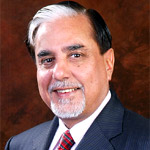
    Subhash Chandra

    Said Subhash Chandra, Chairman, Zee Entertainment Enterprises Limited, in a communiqué: “Literature, as they rightly say, preserves our cultural ideals, customs and morals. ZEE has been the cultural ambassador of our nation to the rest of the world for over two decades. Our traditions and rich culture, weaved into our content, reaches over 700+ million viewers across the globe. Our brand positioning – Vasudhaiva Kutumbakam, resonates this effort of ours, to unify the diverse cultures and traditions across the world into one Family. Celebrating this legacy further, we are extremely proud to associate with Jaipur Literature Festival.”


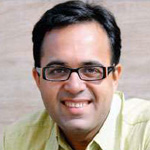
    Punit Goenka

    Punit Goenka, MD & CEO, Zee Entertainment Enterprises Limited, added: “The Zee Jaipur Literature Festival association further strengthens our endeavour in creating compelling and engaging story telling for our viewers.”


    Sanjoy K. Roy, Producer of the ZEE Jaipur Literature Festival, said: “We are thrilled to welcome Zee Entertainment as title sponsor to the Jaipur Literature Festival. Their support will allow us to keep the Festival open to all, whilst bringing a wealth of world class talent to Jaipur each year.”


    The directors of the Jaipur Literature Festivals are William Dalrymple and Namita Gokhale and the festival is produced by Sanjoy K Roy (seen often on television news around the time of the Tarun Tejpal episode) and Sheuli Sethi of Teamwork Productions.


    The title sponsor of the festival last year was infrastructure company DSC and Tata Steel, Airtel and a host of others backed the event. In fact DSC has had a long association with festival as is with other literary initiatives. While the literature festival attracts a galaxy of writers and thinkers, the 2013 edition saw a controversy initially over the participation of Salman Rushdie in the proceedings and later over the remarks of sociologist Ashis Nandy on OBCs and SC/STs.


    Over 20,000 people are expected to attend on each day of the five-day festival. Decidedly, the biggest in the business. While there have been figures quoted of the sponsorship amount being in the region of Rs 5 crore, according to the grapevine, the actual amount could be even less than half that, with Zee putting its weight behind the promotion of the festival across media.


  • Lukup Media & Warner Bros partner for India’s first on-demand TV channel

    By A Correspondent


    Bengaluru-based Lukup Media announced a partnership with Warner Bros Digital Distribution, through which the Studio’s newly released movies such as Gravity and The Hobbit: The Desolation of Smaug and a selection of new releases, catalogue titles and popular TV series will be offered to viewers via an on-demand TV channel. The Lukup Player will deliver a combination of live and on-demand content on Televisions and other devices people use to consume content.


    The deal will see titles made available through the on-demand service from February 2014, as well as future new releases. Users will have access to more than 200 films and TV series from the Warner Bros. library.


    Said Kallol Borah, Chief Executive Officer, Lukup Media: “We are very happy to partner Warner Bros. and bring a wide selection of popular and new movies and TV shows which will be available through India’s first on-demand TV channel. The channel will allow people to choose titles from their TV programme guide, pay for them and view them at a time of their choice.”


    Chris Dyde, Senior Vice President, International Licensee Markets, Warner Bros. Home Entertainment Group said: “Providing consumers with more choices and improving the movie experience at home is at the heart of Warner Bros.’ Digital strategy and we’re delighted to be working with Lukup Media, which will see a fantastic selection of both new and library movies offered to viewers in India”.


  • Ashutosh quits IBN7, Vinay Tewari to take additional charge of news channel

    By A Correspondent


    It’s a move that not’s entirely unexpected in the capital’s news circles. IBN7 Managing Editor Ashutosh has decided to move on. He will be succeeded by Vinay Tewari, Managing Editor, CNN-IBN who will now also lead IBN7 editorial operations in the same capacity. In this expanded role, Tewari will also drive network synergies across CNN-IBN and IBN7.


    Speaking on the development, B.Sai Kumar, Group CEO, Network18 said: “Ashutosh has played a key role in IBN7’s emergence as one of the most credible brands in Hindi news. We thank him for his immense contribution and commitment to the Network. Vinay has led CNN-IBN admirably and in this expanded mandate, we’re confident that he will not only take IBN7 to new heights editorially but also strengthen our general news network further”


    Commenting on this, Rajdeep Sardesai, Editor-In-Chief, IBN News Network added “Ashu has been a driving force behind IBN7 and his passion and leadership has been instrumental in making it into a fearless and independent voice in Hindi journalism. We thank him for his stellar effort and wish him the very best. Vinay has been an integral part of the general news network from the very beginning and I’m confident that he will bring his unique perspective and rich news experience to bear at IBN7 and the network ”


    Said Ashutosh: “Building IBN7 into what it is today has been one of the most satisfying experiences of my professional journey. I would like to thank all my colleagues for their support and look forward to newer challenges”


    And this is what Mr Tewari said: “IBN7 today stands for the best in hard-hitting and inclusive journalism and it’s a privilege for me to lead it further. I look forward to working closely with the talented and passionate team to ensure we honor the trust of our viewers in IBN7 and ensure that both CNN-IBN and IBN7 benefit and capitalize from the general news network in equal measure.”


    Although the communiqué received from the channel doesn’t mention where Ashutosh is moving to, there are rumours that he may join the Aam Aadmi Party. “These are again historic moments, societal churning is on, everybody has to contribute to make the change robust and beautiful,” Ashutosh tweeted earlier today.


  • Star Plus starts year with 647 mn viewers. Colors, Zee at #2 and #3

    The figures in the table below tell the story. These are for Week 1 of 2014 and Week 52 of 2013 as per measurement agency TAM. However, the information we have received is not from TAM, but from a friendly subscriber. So, please do verify these numbers before making all-important decisions.


    Viewership in million  
    Channel Week 1 Week 52
    Star Plus

    647

    606

    Colors

    522

    527

    Zee TV

    449

    431

    Sab

    361

    330

    Life OK

    323

    324

    Sony (SET)

    266

    272


  • Marathi KBC’s double gambit


    By A Correspondent


    In less than a year since the inaugural series of “Kon Hoeel Marathi Crorepati”, Marathi general entertainment channel ETV Marathi has announced the second season of the gameshow.


    Season 2 of KHMC, as the show is called, will double the prize money to Rs 2 crore and have two contestants as again one, participating as a team. The show starts on Monday, January 13 at 9pm and will see well-known actor and theatreperson Sachin Khedekar continue as the host. In a first across all television adaptations globally, there will be two participants instead of one, participating as a ‘jodi’ or a duo in every team.The show is being produced by Siddhartha Basu’s Big Synergy.


    Season 2 is already witnessing 50-70% higher rates from advertisers over Season 1: Anuj Poddar


    Excerpts from an interview with the EVP Viacom18 and Business Head, ETV Marathi, on the show, how it is doing in terms of revenues and the reasons for bringing it back so soon after the end of Season 1.

     

    01. It’s been less than a year since KHMC concluded – in fact the inaugural season last year started around May, so how did you look at starting the second season so early?

    The first season successfully established KHMC and also led to the resurgence of ETV Marathi. Ever since its completion, we’ve been getting a lot of demand from across Maharashtra, from viewers and interested participants asking about the next season. That prompted us to bring it back quickly. And the high response (150% of Season 1) to the call-for-participation has proven to us the eagerness amongst people for this season.


    Does it worry you that the format is not a ‘sureshot’ reason for ratings and popularity as we’ve seen in the case of KBC?

    The ratings of the show are a function of the show itself, its innovations and creative treatment, the platform it is on, the competitive scenario and the audience situation in each language market. Thus the factors for each language-market are unique and not comparable. While in Season 1 we spent a lot of time imbibing learnings from other versions and markets, for Season 2 our focus has been to imbibe learnings from our KHMC Season 1 and our own market. I am confident that Season 2 will be even more popular and talked about!


    02. The promos have been on air for a while. Getting ‘jodis’ to come on the show must’ve been quite a challenging task? Or was it easy to get them?

    ‘Jodis’ will prove to be a winner concept and I am proud that ETV Marathi is the first channel to introduce this concept for a full season of this format anywhere in the world. KHMC is not a game show. It is a show about people’s lives, the aspirations of the participants and their families, and what the winnings mean to them. We want to see them participate jointly, win jointly and transform their lives jointly. Of course, it has been a much greater logistical exercise to make it happen, but having now seen the mix of participants we have been able to get and the viewing experience it translates into for the audiences, it has really been worth it.


    03. You’ve retained Sachin Khedekar as host… any other changes in the format?

    This season brings double the prize money (Rs 2 crore instead of 1 crore), double the participation (2 hot seats), double the opportunity (2 minds working together) and promises to be double the fun! Guaranteed. And we will also be introducing certain other creative innovations. For example, we are introducing “Tension Gul”, a stress buster option for the participants. Again, this is an innovation being brought to the format for the first time by the Marathi version.


    Will the computer be called ‘Raje’ or has that been changed?

    The computer will be called Guruji.


    Was the change effected due to the controversy around Raje?

    As described above, this is one of the many variations we are bringing to Season 2. Viewer feedback, our own creative reviews and ideations, the need for freshness are all factors that drive changes.


    04. How did the first season do in terms of monies? Are you making enough money on it? Also, in terms of ratings, what are your targets for the KHMC 2?

    The first season did decently; it helped establish much higher rates than ETV Marathi had been commanding at that point and also brought on newer advertisers to the channel. And as Season 2 commences, we are already witnessing 50-70% higher rates from advertisers over Season 1. In terms of ratings, I expect Season 2 to start off from the peak at which Season 1 ended, and build even further from there to set new peaks.


    Could you throw some light on your promotional strategy?

    It is an aggressive 360-degree strategy across all media – home channel, cross-channel, radio, OOH, print, digital – just like in KHMC Season 1. However, the objective and messaging is very different this time. The objective in Season 1 was to establish that the biggest format was coming to Marathi television and also to re-awaken and create buzz around ETV Marathi. This time around the focus is on bringing out the innovations in KHMC Season 2 and build anticipation and excitement around it.


    Do we see an online version of KHMC 2 to target the growing Marathi online community?

    We will be rolling out an interesting social media app for KHMC to engage the online Marathi community and ETV Marathi’s fan base.


    05. While you have doubled the jackpot to Rs 2 crore, do you think we could see parity between KBC Hindi and KHMC?

    Both the versions operate in very different contexts and are at different stages of their respective lifecycle. So I don’t think there is any comparison.


    Said Mr Basu: “Team Synergy is delighted to bring back the show within a year of a successful first season, and can assure Marathi viewers that they can look forward to an even more engaging series this time around, with interesting and entertaining family jodis playing for a fortune, and Sachin Khedekar in great form as the host .”


    The veteran actor is looking forward to the show. On being asked what the show means to him, he said: “The Marathi Manoos has always valued the power of knowledge and Kon Hoeel Marathi Crorepati epitomises this thought. Season 1 was an engaging and gratifying experience that saw people from all walks of life across Maharashtra witness their destinies being redefined. With Season 2 now asserting that two hearts and two minds are better than one, the show is all set to showcase the power of togetherness.”


    What should lower the heat for Mr Khedekar and the programmers is that the ‘Computer’ is going to be called ‘Guruji’ in the second season and not ‘Raje’. In the last season, there were protests against the usage of the name as Maratha ruler Shivaji is reverentially referred to as ‘Raje’. The channel though did not change the reference through the season and the protests also died down (see link: http://www.mxmindia.com/2013/07/marathi-kbc-in-spot-over-computer-being-called-raje/). KHMC Season 2 will air every Monday and Tuesday at 9pm starting Monday, January 13.


    Speaking on the show’s promise, Anuj Poddar, EVP Viacom18 & Business Head, ETV Marathi said “Kon Hoeel Marathi Crorepati Season 1 successfully achieved our objective of redefining the television viewing experience on Marathi Television by providing a show that celebrated culture and knowledge. In Season 2 our focus has been to imbibe learnings from our KHMC Season 1 and our own market. I am confident that Season 2 will be even more popular and talked about,” he told MxMIndia in an interview (see accompanying story).


    A senior executive at a Marathi television broadcaster welcomed the Second Season saying the only way regional television will grow is when money is pumped into programming. “International formats are expensive and only those with deep pockets like ETV Marathi can afford such initiatives.” A media buyer, who requested anonymity said that formats like KHMC help in bring attention to a channel and the genre from people who are clueless about genre. Game shows and reality shows are excellent for product placements and smaller brands cannot always afford the Hindi GECs.”


  • Dhoni’s Helicopter Shot in Kiwi series only on Sony Six

    By A Correspondent


    Sony Six has acquired the broadcast rights to the New Zealand (NZ) vs India cricket series. The series will be held in NZ from January 19 to February 18, 2014. The 30-day tour starts with five ODIs followed by two Test Matches. Given the time difference, the coverage start timings are 6.30am for ODIs and 3.30am for Tests.


    Commenting on this acquisition, N P Singh, CEO, MSM said, “We are delighted to partner New Zealand Cricket as the official broadcaster to this series. With this acquisition, we are staying true to our objective of delivering high octane sporting events.”


    Prasana Krishnan, Business Head, Sony Six, said‎, “Both New Zealand and India play exciting brand of cricket and we are thrilled to be the exclusive partner to this promising series.”


    The ODIs are scheduled on Jan 19, 22, 25, 28 and 31 and the Test start dates are Feb 6 and 14. While the coverage for all the ODIs starts at 6.30am, each day of the two Tests starts at 3.30am.


  • Shailesh Kapoor | TV Ratings: Take It Easy, TRAI. Come Soon, BARC

    By Shailesh Kapoor


    The words that best describe the TV ratings scenario in India over the last year are confusion and uncertainty. TAM has been under constant attack, for mostly right and some wrong reasons, for the last two years in particular. BARC has been moving ahead at good pace to bring in a neutral, more robust ratings measurement system in India, which we hope sees the light of the day before 2014 ends.


    With BARC round the corner, TAM is virtually on a time bomb, in the last leg of what has been a rollercoaster ride of almost two decades. Trust TRAI to add to the confusion. The regulatory body has come out with guidelines for ratings agencies in India, to ensure fair and accurate measurement.


    You can’t fault the intent behind most of the TRAI guidelines. They seem designed to address the concerns of broadcasters and advertisers in all earnestness. But wasn’t BARC created towards exactly the same purpose? Surely, TRAI should be aware of what BARC is hoping to achieve and how the progress is going. The guidelines, while well-intended, have a “meddling” feel to them, which I fear may slow down BARC’s progress.


    Take the point on sample size for instance. TRAI guidelines say that the minimum panel size should 20,000, and should be increased by 10,000 every year till it reaches a figure of 50,000. Correct as this may sound, this guideline challenges the idea of a free market, where the panel size would be an outcome of what the stakeholders are willing to pay for the service. Will TRAI subsidize the balance panel if the industry is willing to pay only for 30,000-40,000?


    Then there are some micro-level points that TRAI could have easily stayed away from, such as defining the panel rotation rate at 25% per annum. If they were indeed stepping into the domain of research design, they would much rather have put down the most glaring gap that exists as of now, whereby error margins are not reported or published.


    There is a guideline that suggests that I&B ministry and TRAI can audit the systems of a ratings agency at any point of time. I don’t need to spell out how this can fast turn into a bureaucratic tangle, and encourage corruption.


    Another vaguely-worded guideline says ratings should be “technology neutral”, in that they should be able to address delivery platforms like cable, DTH, terrestrial etc. Never before has an “etc” interested me so much. Does it include Internet, mobiles and DVRs? If yes, we are in for a challenge for another degree altogether.


    The “toll free number for complaint redressal” is the comic relief in the guidelines. Imagine a Thursday morning when your show opens below your expectations and you get a research executive to call the toll free number to “complain”. That’s a phone call I’d love to hear!


    Dear TRAI, take it easy. TV Ratings is a private affair after all, and the market will find its answers.


    Dear BARC, come soon now. And till you come, keep the announcements going. There is a whole industry waiting with bated breath.


    Shailesh Kapoor is founder and CEO of media insights firm Ormax Media. He spent nine years in the television industry before turning entrepreneur. The views expressed here are his own. He can be reached at his Twitter handle @shaileshkapoor


  • What next for TAM?


    By Pradyuman Maheshwari [updated]


    Is it a cul de sac for TAM? Was the cabinet approval for the TRAI guidelines the final nail on TAM’s 15-year-plus existence?


    Created by a decision of the Joint Industry Body way back in 1998 with stakeholders Indian Society of Advertisers (ISA), Indian Broadcasting Foundation (IBF) and the Advertising Agencies Association of India (AAAI) agreeing to back the body. For a while, there was an alternative in the form of aMap, but that fizzled out thanks to a lack of patronage.


    Had aMap existed today, one wouldn’t be sure of its future because it always quoted a consortium of unnamed investors as its primary owner.


    Policy Guidelines for Television Rating Agencies in India


    The Union Cabinet today approved the proposal of the Ministry of Information and Broadcasting for bringing out a comprehensive regulatory framework in the form of guidelines for Television Rating Agencies in India. These guidelines cover detailed procedures for registration of rating agencies, eligibility norms, terms and conditions of registration, cross-holdings, methodology for audience measurement, a complaint redressal mechanism, sale and use of ratings, audit, disclosure, reporting requirements and action on non-compliance of guidelines etc. The proposal is based on recommendations made by the Telecom Regulatory Authority of India (TRAI) on “Guidelines for Television Rating Agencies” dated 11th September, 2013.


    Based on the recommendations of TRAI, comprehensive policy guidelines for television rating agencies have been formulated.


    Salient features of these guidelines are as follows:

    • All rating agencies including the existing rating agencies shall obtain registration from the Ministry of Information and Broadcasting.


    • Detailed registration procedure, eligibility norms, terms and conditions, cross-holding norms, period of registration, security conditions and other obligations have been delineated.


    • No single company / legal entity either directly or through its associates or interconnect undertakings shall have substantial equity holding that is, 10 percent or more of paid up equity in both rating agencies and broadcasters/advertisers/advertising agencies.


    • Ratings ought to be technology neutral and shall capture data across multiple viewing platforms viz. cable TV, Direct-to- Home (DTH), Terrestrial TV etc.


    • Panel homes for audience measurement shall be drawn from the pool of households selected through an establishment survey. A minimum panel size of 20,000 to be implemented within six months of the guidelines coming into force. Thereafter the panel size shall be increased by 10,000 every year until it reaches the figure of 50,000.


    • Secrecy and privacy of the panel homes must be maintained. 25 percent of panel homes shall be rotated every year.


    • The rating agency shall submit the detailed methodology to the Government and also publish it on its website.


    • The rating agency shall set up an effective complaint redressal system with a toll free number.


    • The rating agency shall set up an internal audit mechanism to get its entire methodology/processes audited internally on quarterly basis and through an independent auditor annually. All audit reports to be put on the website of the rating agency. Government and TRAI reserve the right to audit the systems /procedures/mechanisms of the rating agency.


    • Non-compliance of guidelines on cross-holding, methodology, secrecy, privacy, audit, public disclosure and reporting requirements shall lead to forfeiture of two bank guarantees worth Rs. one crore furnished by the company in the first instance, and, in the second instance shall lead to cancellation of registration. For violation of other provisions of the guidelines, the action shall be forfeiture of bank guarantee of Rs. 25 lakh for the first instance of non-compliance, forfeiture of bank guarantee of Rs.75 lakh for the second instance of non compliance and for the third instance, cancellation of registration.


    • 30 days time would be given to the existing rating agency to comply with the guidelines.


    • The guidelines would come into effect immediately from the date of notification.


    The Guidelines for Television Rating Agencies in India are designed to address aberrations in the existing television rating system. These guidelines are aimed at making television ratings transparent, credible and accountable. The agencies operating in this field have to comply with directions relating to public disclosure, third party audit of their mechanisms and transparency in the methodologies adopted. This would help make rating agencies accountable to stakeholders such as the Government, broadcasters, advertisers, advertising agencies and above all the people.


    Background:

    Television Rating Points (TRPs) have been a much debated issue in India since the present system of TRPs is riddled with several maladies such as small sample size which is not representative, lack of transparency, lack of reliability and credibility of data etc. Shortcomings in the present rating system have been highlighted by key stakeholders that include individuals, consumer groups, government, broadcasters, advertisers, and advertising agencies etc. Members of Standing Committee on Information Technology had also expressed concern over the shortcomings.


    In 2008, the Ministry of Information & Broadcasting (MIB) had sought recommendations of TRAI on various issues relating to TRPs and policy guidelines to be adopted for rating agencies. TRAI, in its recommendations in August 2008, had amongst other things recommended the approach of self-regulation through the establishment of an industry-led body, that is the Broadcast Audience Research Council (BARC).


    The Ministry had constituted a Committee under the Chairmanship of Dr. Amit Mitra, the then Secretary General FICCI, in 2010 to review the existing TRP system In India. The committee also recommended that self-regulation of TRPs by the industry was the best way forward.


    Since, the BARC could not operationalise the TRP generating mechanism, the Ministry of Information & Broadcasting sought recommendations of TRAI in September 2013 on comprehensive guidelines/accreditation mechanism for television rating agencies in India to ensure fair competition, better standards and quality of services by television rating agencies. TRAI recommendations on Guideline for Television Rating Agencies were received in September 2013. While supporting self-regulation of television ratings through an industry-led body like BARC, TRAI recommended that television rating agencies shall be regulated through a framework in the form of guidelines to be notified by MIB. It also recommended that all rating agencies, including the existing rating agency, shall require registration with MIB in accordance with the terms and conditions prescribed under the guidelines.


    Source: Press Information Bureau website – pib.nic.in


    The problem with the TRAI guidelines for TAM is its ownership – TAM is a 50-50 jv between Nielsen and Kantar Media Research. The third point on the cabinet approved TRAI guidelines is very clear on the ownership issue. “No single company / legal entity either directly or through its associates or interconnect undertakings shall have substantial equity holding that is, 10 percent or more of paid up equity in both rating agencies and broadcasters/advertisers/advertising agencies,” it says.


    With Kantar being owned by WPP which in turns owns Group M, Ogilvy, JWT and a host of advertising and marketing services firms in India, there’s little that TAM can do.


    Perhaps not. For, as they say in India, for every law, there’s a mother-in-law, brother-in-law, and son-in-law. So Kantar can retain a 9.9 percent stake and the rest of the 40.1% can be bought by one or multiple entities, who can then have some longwinded alliance or consulting arrangement with one of the many WPP group entities.


    For instance, MxMIndia could own the 40.1 percent stake and then MxM can retain Ogilvy, or JWT or whatever for creative services. Or the 40.1 percent stake could be owned by a Trust… TAM could seek inspiration from the ownership of other similar moves made in the past.


    What’s happened though is unfortunate. By giving the government a handle to police it, the broadcast ecosystem has had it. The development also shows that the broadcasters may seem more powerful but can’t keep off the government from interfering in its affairs. It may be remembered that until last year, the print readership study was undertaken by Hansa, which is owned by the RK Swamy BBDO and Hansa group. This group also has interests in advertising and runs a media agency, but no one raised a question on the issue of ownership. Or even if people did, it wasn’t public and certainly didn’t call for a government intervention.


    Logically, the government ought to have no business to police the TV measurement business. An intervention should be necessary only if there’s a fraud and then the law enforcers – the courts and the cops can get into the picture.


    It will be interesting to see if an agency like Group M – which is owned by WPP – decides to say that it will have its own system of measuring TV audiences. It’s unlikely that it will do it as Hindustan Unilever, one of its main clients, is a key member of the ISA and a senior HUL executive is a member of the BARC technical committee for the new audience measurement system. Also, an HUL may not want to take on the government for its own business reasons.


    The clock may be ticking for TAM, but the next step in this drama is the notification of the guidelines. TAM could of course take the government to Court. In the event that the notification happens and TAM doesn’t take the government to court, it will need to do something about its ownership. And increase boxes from 9450 to 20,000 etc etc.


    There’s of course another all-important factor. From the reports we receive at MxMIndia, BARC has kind-of decided on awarding the critical tech contract to Mediametrie, the French industry body and a couple of other vendors. The deal may not have been signed, but it’s just a matter of tam, er, time. Nielsen had also made a fresh pitch at a lower cost, but the informal industry view was to think long-term and give the contract to Mediametrie.


    In that event, it may well be a cul de sac for the way TAM is today. Perhaps, like in the Hindi movies, it will need to be reborn as something else. Or wait for divine intervention.

    In the meantime, we hear of a pressure building within the industry of how the notification could impact broadcasting. The earliest the BARC-approved measurement system will come up is the second quarter of 2014. It will take a quarter or two for it to find stability and earn the confidence of the fraternity. Advertisers and broadcasters (and media agencies) can ill-afford a period of no measurement.

    That perhaps would do more harm to the industry than any other move to shore up the media ecosystem.


  • AXN India to bring top English shows, inks content acquisition deal with CBS

    By A Correspondent


    Leading English general entertainment channel AXN India announced a content acquisition deal with CBS Studios International on Friday. AXN, which has been airing home CBS shows like CSI: Crime Scene Investigation and NCIS: Los Angeles has now acquired five more shows, namely Elementary, Beauty and The Beast, Blue Bloods, Hawaii Five-0 and Reckless.


    The channel will have exclusive rights to air all episodes of the newly acquired shows from CBS Studios International starting this January, notes a communiqué.


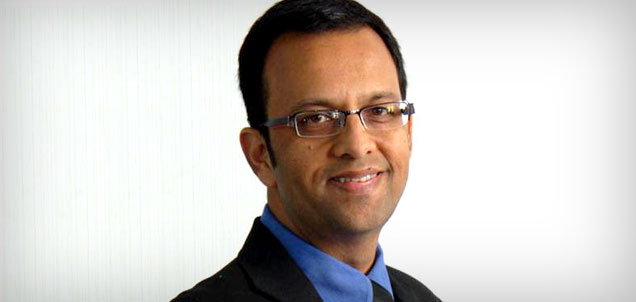
    Sunil Punjabi

    Talking about the deal, Sunil Punjabi, Business Head, AXN India said, “The current deal with CBS Studios International has only strengthened our long-standing relationship with them. AXN has always been the home to CSI: Crime Scene Investigation and NCIS: Los Angeles. The new shows will further add approx 100 hours of content airing close to the US every year. This deal is all set to strengthen the ever-expanding bouquet of AXN programming.”


  • We can’t be without a measurement system: Hemant Bakshi, ISA Chair & ED, HUL


    What appeared to be a quiet start of the year emerged as an action-packed one as the ghost of the TV measurement scare emerged yet again with the Union Cabinet approving guidelines on television audience measurement issued by the TRAI.  Hemant Bakshi, Executive Director – Home & Personal Care of Hindustan Unilever (HUL) and Chairman, Indian Society of Advertisers (ISA) spoke with Shobhana Nair on how no measurement system is no good for the ecosystem, and the television sector in particular. The ISA, it may be remembered, had opposed the stand of several broadcasters who had unsubscribed from TAM last year. Excerpts from an interview with Mr Bakshi


    The danger of no measurement system hangs on the industry again though the reason is different this time around. How have you thought of handling it as the ISA Chairman?

    Firstly, it has just been announced and we need to get clarification on exactly how it is going to be amended. We are trying to figure that out right now. Meanwhile, ISA’s position on this remains the same that we do need a robust measurement system and I think the guidelines will help us get that. In the short term, we can’t be without a measurement system because ratings are the currency with which we buy television and the absence of the currency will affect the industry. We want to avoid that scenario at any cost.


    Have you discussed the situation with other members of ISA and what is a possible solution that has come out?

    I think we will come to conclusions but, as I said, right now we need to understand the details of the guidelines on how things will pan out, etc. And we are working on it.


    What are your thoughts on the guidelines by TRAI for TV Rating Agencies? Do you think it is a good attempt to create a manipulation-free environment?

    I haven’t seen the guidelines fully, so I don’t want to comment on it.


    BARC has many months before it becomes operational, what is on your agenda to speed up things there?

    BARC has already been working quite well and the progress has been outstanding. We need to keep in mind that to create something of this nature takes time and can’t be done overnight. Having said that, the work on BARC is at a good pace.


    After everyone came to an agreement last year on the need for a television audience measurement, we still have many  sections in the industry against TAM…

    I think we should look ahead and not look back. Going forward, the three bodies (IBF, ISA & AAAI) are working together through BARC to create a ratings system which will be acceptable to everyone. I think we should put all our energies in that.


  • Sony Six scores big with FIFA World Cup Brazil & Russia rights

    By A Correspondent


    The last two months has seen Star Sports dominate most sporting rights news, but in the last fortnight-odd, the attention has moved from Star Sports HQ at Mahalakshmi to Malad where Multi Screen Media’s Sony Six office is located.


    ‎The channel has bagged the broadcast rights to the 2014 and 2018 FIFA World Cup. The 2014 edition will be held in Brazil from June 12 to July 13 and the 2018 edition from June 8 to July 8 in Russia. The deal also includes rights to broadcast FIFA Under-17 World Cup 2017 to be hosted by India.


    This latest acquisition by Sony Six comes on the back of broadcasting the UEFA and Conmebol matches from the 2014 FIFA World Cup qualifying rounds, in addition to acquiring the rights for qualifiers for UEFA Euro 2016 and UEFA Euro 2016. The line-up makes Sony SIX the home of International Football for the next 5 years with 17 landmark FIFA events including (2014+2018 W’Cups, the U-17 in India and the Confederation Cup Russia 2017).


    NP Singh

    Said NP Singh, CEO, MSM India: “We are extremely happy to build on our partnership with FIFA. This acquisition is a testament to our commitment of popularising the sport of football in this country.”


    Said Niclas Ericson, FIFA Director of TV: “FIFA believes that Sony Six and its commitment to high quality sport entertainment will deliver first-class coverage of FIFA U-17 World Cups, the 2014 FIFA World Cup, the 2018 FIFA World Cup and other FIFA competitions to this crucial audience. India already has a great passion for football and with the support of Sony Six, FIFA looks forward to inspiring more fans of football and young players in India for the years ahead.”


    Prasana Krishnan

    Added Prasana Krishnan, EVP and Business head, Sony Six: “We are thrilled to have acquired the broadcasting rights of the FIFA World Cup in 2014 and 2018. We have focussed extensively on top international football and we are now proud to bring the best in the world to Indian viewers”


  • M K Anand to head Times Television, Sunil Lulla to head to BCCL in new role: Sources

    By A Correspondent


    M K Anand
    Sunil Lulla

    M K Anand, until last month Managing Director, Media Networks at Disney UTV is set to be joining Times Television as its head, according to our sources. Sunil Lulla, currently Managing Director and CEO, is reportedly moving into parent Bennett, Coleman and Company Ltd (BCCL) in a new role, possibly as part of the Managing Director’s office.


    Although Mr Anand’s moveback to Times has been in the grapevine ever since he announced his departure from Disney UTV last month, neither of the movements have been confirmed by BCCL or Times Television. MxMIndia has learnt of these from reliable sources.


    The appointments are likely to be effective February 3, 2014. Mr Anand has worked with The Times of India group for 19 years, first with print for 14 years and later with the television business as VP for Zoom from 2004-09. He moved to lead UTV Software as CEO and see through the acquisition by Disney as well as the transition to Disney UTV.