Category: MEDIA

  • Peter Mukerjea. Why no Indian papers in the lounge?


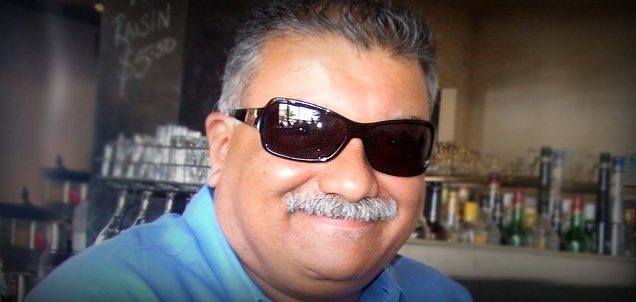
    ‘Read your comment to Anil Thakraney’s blog’, a friend smsed me a few weeks ago. I said I hadn’t, only to discover that the ‘PM’ on the messageboard was none other than Peter Mukerjea. One of the brightest stars in the media, Peter may have had a setback with 9X and INX Media, but there is no denying that the former Star India CEO has been one of the finest minds and much admired captains of Indian broadcasting. He may be in distant England, but he’s still clued in to what’s happening back home.

    I wrote to ‘PM’, thanking him for dropping by and invited him to write for us. He agreed… so here we are.

    MxMIndia is proud to present Media Mullings, a new fortnightly column by Peter Mukerjea.

    As you’ll figure as you read along, he’s also a brilliant writer.

    – Pradyuman Maheshwari


    Media Mullings: No desi papers in this lounge!


    By Peter Mukerjea
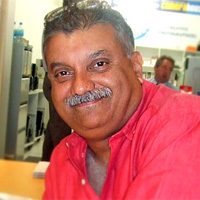
     

    I’m sitting in the Emirates lounge at Heathrow airport about to board a flight to Dubai en route to Mumbai. The flight’s delayed a wee bit as a passenger has suddenly changed his/ her mind about making the journey and so the bags need to be offloaded!


    This delay isn’t unusual in itself but but I’m now weighing up my options of how I would spend the next 30-40 minutes having already arrived early and had a glass of wine with a snack, checked my emails etc.


    Thankfully there are no TVs in the lounge and I suddenly realise that this is such a pleasant change from the airport lounges in India. So, TV is not an option. I could be on my mobile talking to friends and family but I’ve done that too. As it’s nearing the end of the day, I’ve read my favourite newspaper but then i catch the sight of the newspaper rack and wander across to see what other papers there are and which one I might fancy.


    The array of newspapers is fascinating as one would expect in a high quality airport lounge – starting with The Times, The Guardian, Daily Mail, Financial Times, Wall Street Journal, International Herald Tribune amongst others from France – Le Monde, der Speigel from Germany, Italy and even Hong Kong. Of course, being the Emirates Lounge you would expect to see papers from the Middle East in Arabic and also in English such as Gulf News and Khaleej Times.


    As I’m en route to India, I’m quite eager to read an Indian paper, even if it’s may be a day old, but given that the news changes so little on a day-to-day basis , I knew I wouldn’t miss much if I got hold of yesterday’s paper either. But, no such luck. There wasn’t a single Indian paper in sight – not today’s and not even yesterday’s!


    I thought there must be a run on the Indian papers and that they must have all gone. So, I asked the lovely lady at the desk but she claimed ignorance and said that she didn’t think that they carried any Indian newspapers. She politely pointed me to the business centre and suggested that I check on the net.


    Now that surprises me. We’re the world’s largest democracy and we have some fairly decent, vaguely readable newspapers being published but they weren’t part of the offering in an English lounge of the Emirates airline. How astounding I thought.


    But I figured that the newspaper executives in India or their distribution agents couldn’t care less about ensuring the presence of Indian newspapers in such a place. After all, it couldn’t be too much of an effort to get these to all the lounges in at least the primary destinations around the world. After all, Spanish, Mandarin , English and Hindi are being touted as being ‘the’ four most widely spoken languages in the world today and yet we don’t have at least a presence of our national language papers in this lounge.


    Or that they are so far ahead of the game that they believe that it isn’t worth putting newspapers in lounges and those who are interested will find what they need to know on the internet. How true and how clever and so ahead of the curve.


    But the airline ought to reflect their clients’ needs and consider keeping Indian papers for so many of us who travel on their airline.


    And on the subject of Indian TV channels, particularly the news channels, I was pleasantly surprised recently to find that NDTV 24×7 had suddenly appeared on my TV screen at home in England, even though I don’t recall subscribing to it. I’m not complaining. And it’s not like Virgin or Sky give anything for free. When I found out that this news channel was available within my existing service, I was delighted and rushed to watch with much enthusiasm rather like a dog rushing to fetch a ball that he’s just been thrown.


    The excitement, equally rapidly, changed to annoyance when I actually started watching the channel. And I used to love watching NDTV once upon a time. And then after watching for a while I figured what was wrong with it. There were far too many commercial breaks. But what was even more annoying was that there were no commercials.


    In India we sometimes forgive the news channels for the poor quality of the news, thanks to the fact that the commercials occasionally make you chuckle or they provide some light entertainment and relief from the often horrid news that sits in between the commercial breaks. But then the penny dropped – it must be OFCOM – the name of the body that governs broadcasters and has been set up to make sure that they are staying within rules of decency and broadcast regulation in the UK.


    Thankfully they also govern – on commercial time usage, and heavily penalise any broadcaster who overruns the permissible secondage as stipulated by OFCOM. In India no one bothers and it’s a free-for-all, despite there being regulation to that effect.


    Consequently the broadcasters in India stuff the commercial breaks with as many seconds of commercial time as they can sell, put logo after logo on the tickers and call it branding or ‘added value’.


    And given that the same news channel feed is delivered to the UK, they are governed by OFCOM which means that these commercial breaks with super excessive secondage will not be allowed to go on air.


    NDTV, it seems, is having to fill the gaps in their commercial time on the UK service with stacks of inhouse and channel promos. The promos are never as sexy or funny as the TV commercials and filling the channel with boring promos makes the channel’s news service look seriously out of sync with any other home-grown news channel available in the UK. They really ought to do something about this and tighten up the volume of commercial time being stuffed into the breaks in India. Sadly though, this applies to almost all the channels in the country who find it hard to raise the prices of their commercial time and in order to increase revenue, they simply expand the duration of the commercial breaks knowing that no one’s watching. But then, when the channel is transported overseas , it becomes a messy channel indeed and no wonder it does not get too much local advertising in the UK , for the UK , from the UK. Surely there’s a smarter way to do this.


    At least they cannot say ‘I wasn’t aware of it ‘. No prizes for guessing who said this when and in what context.


     

  • Jobs Not OK Please!


    By Johnson Napier


    If you’re among those contemplating switching jobs given growth constraints at your current place of work or just the sheer temptation to move on to a job more thrilling, you better think twice. Going by the reactions drawn from the Indian media and entertainment marketplace and from consultancy firms dealing with manpower issues, companies are in no mood to go on a recruitment drive, unless of course, there is a dire need for the same.


    With 2012 starting off on a sluggish note and with the crisis making a fresh comeback, the growth forecast for the media and entertainment sector is being questioned unabatedly by all and sundry: will media will touch the 12% ballpark growth figure that was estimated for year 2012. This in turn will dictate whether there are enough opportunities for brands and clients to go talent hunting or whether they’ll have to make-do with internal makeshift arrangements to handle extra responsibilities.


    But the prevailing sentiments definitely don’t appear inspiring on the jobs front, be it for clients looking to source great talent at the senior level or for those wanting to explore opportunities beyond their current realm. Explaining the current sentiment in the marketplace, Abha Kapoor, Executive Director, K&J Search Consultants that specialises in placement services for media executives reckons that after 2008-09, the M&E sector has become a lot more conservative in terms of both headcount and pricing. She observed, “The trend being observed currently is that mid-level people are being involved to do high-level jobs. There is also lack of funds coming in from P/E, venture capitalist firms into the sector. For example, our firm K&J is used to working for three start-ups simultaneously including mid- to CEO level. We’ve always had a television start-up, a radio start-up, an internet start-up but that’s because the money was coming into the sector. Right now that is not the case.”


    According to Ms Kapoor, this trend has led to a shift in paradigm. “First there was lot of chasing that was done for talent, and salaries too were high, but right now there is lot of talent that is available but the headcount is not that high,” she reasons. According to her, there are no new jobs being created and there are also not enough replacement requirements.


    Agreeing with Ms Kapoor’s observations is Pankaj Raj, Managing Partner, Search Value, a firm specialising in placement services for senior media execs. “Earlier, people were not willing to accommodate new talent due to financial constraints but right now they are saying, do not go overboard with the hiring; do so only if extremely critical or make-do with internal replacements only,” he said. “So the current trends suggest internal movements as the in-thing and also, salaries are not being hiked to the levels that it was done earlier.”


    Reasoning the recurrence of the slump, Sarabjit Sachar, Founder and CEO of Aspirations said, “My reading is that it is a consolidation phase; it’s not going to go away easily. If you assess the media in the recent past, there were several takeovers that took effect like that of Nai Dunia being taken over by Jagran Group etc. This led to many senior people looking out for options at other places. Many organisations felt that they could either absorb them or give them roles as per the necessity. But what happens in a takeover is that the roles are not that enriching. Secondly, there is a lot of realignment that is taking place where the whole organisation’s business is being realigned into certain other businesses or products. Here the trend is that they want to retain the same resource and not hire anybody from outside. Thirdly, it is also about consolidation where most units are facing shutdown due to larger plans by parent groups. So while the falling value of rupee, hike in petrol prices etc have played some role more than that it is solely about consolidation.”


    According to Mr Sachar, it is due to consolidation that there is a shortage of senior positions in organisations. “Due to this, senior executives will find themselves in two situations, one is where the role is not enriching and therefore they would want to leave, or they would not be left with a choice and therefore would leave the organisation.” According to the response that his firm has been eliciting, there has been a big drop in senior positions within organisations. “There are a lot of candidates at the top level who are not able to shift jobs due to lack of decent availability. I think the figure is somewhat in the range of 30-40 per cent. Even amongst the media companies, what they would’ve hired at the top level is down by 25-30 per cent this year.”


    Industry in caution mode

    On the strains being felt across domains, Mr Raj opined: “Sector-wise if analysed, radio isn’t hiring anyone right now, print is on a business-as-usual kind of hiring while television is almost zero. That said, digital is the best performing of the lot and is seeing hiring taking place in full swing. Overall the mood is of caution and being sensible.”


    Providing an insight on the trend being felt in the broadcast space, Yannick Colaco, COO, Nimbus said, “From what I understand, the MIB has recently issued licences for new channels and more channels means more jobs. Also, with the digitization drive in full swing that should act as a boost for the industry as it will increase monetization abilities of all broadcasters. All these factors will lead the industry to its next phase of explosive growth. Today, everything is a function of demand. If you have more number of channels coming up it will only have a more positive impact on the overall growth of the industry.”


    Throwing light on the trend at his organisation, Colaco said, “There are specific functions in the company for which we are hiring people. For example, World Series Hockey that was taken up by us was a new project and we went ahead and hired a whole bunch of people for the job. So as business grows, we will obviously need more talent. The thing is that when you have explosive double digit growth one year and when you move to single-digit growth in the next, it is considered to be a bad thing. So even if the growth is not what was expected from the medium, it is still a good single digit growth and that is what should be considered by the industry.”


    The status at the Discovery Network is also not gloomy. Said Discovery Network, Rahul Johri, Senior Vice President and General Manager (South Asia): “Discovery continues to expand its business in India. We have a robust portfolio of eight distinct brands satisfying curiosity of millions in India. We recently announced our foray in the kids genre with the launch of Discovery Kids that offers entertainment embedded with learning. Discovery is committed to the Indian market and will continue to invest here.”


    Jaisurya Das, COO, Sakal Media Group expressed concern with the current situation as he said that the print sector was indeed experiencing rough weather. This had to do with the rise in oil prices, fall in value of the rupee and global uncertainty. But that didn’t have to do anything with his organisation which has been recruiting people as and when the need arises. But things are not that rosy for the sector, going by what Alok Sanwal, Project Head & Editor, iNext had to say. He said: “From what I have heard it is not an extremely upbeat mood where recruitment is concerned. As far as new recruitment drives are concerned, they would be faced with a challenge but then again I haven’t come across organisations that’re on retrenchment mode or anything like that. So the jobs scenario too is on a cautious and alert note, so to speak.”


    The tide is not as bad for media agencies, it seems. Lara Balsara, Managing Director, Madison Media said that they were recruiting people for replacements and new positions because they had won some new businesses. Similarly, Sujay Ghosh, Senior Vice President, DDBMudra South said, “We are still recruiting as per our plan, because we don’t see any major dip in our revenues. Also, our involvements with clients have gone up significantly, so we can’t afford not to hire. But I have heard that in some industries, hiring freeze has started.”


    A similar sentiment was felt by radio players like Red FM who prefer to see an upside to the whole issue. B Surender, Senior Vice President and National Sales Head, Red FM seemed confident as he said: “The job scenario is still very good within the radio industry and it is not facing any extreme situation. In fact, radio tends to retain quite a lot of talent and it is handling the current situation quite well compared to other mediums and thus is better prepared to handle the slowdown than any other medium.” Echoing his thoughts, Prashant Panday, CEO, Radio Mirchi said: “At Mirchi, we continue to attract the best in the industry. We recruit our senior management cadre from FMCG, telecom, durables, auto and allied industries. We have no problems in hiring excellent quality talent…”


    So while caution is the name of the game, recruitment will be an exercise that the industry will engage only if essential. Those seeking an exponential growth in salaries and designations in the shortest possible timeframe may have to hold on to their wishes, unless, of course they bring exceptional value to a company. For the others, it is about waiting for the right moment to take the leap.


    With inputs by Robin Thomas


  • English cricket board hits slowdown for a six by selling cricket rights to ESPN Star

    By A Correspondent

    ESPN Star Sports (ESS) has inked a new seven-year contract with the England and Wales Cricket Board (ECB) for exclusive multi-platform rights to broadcast its domestic and home international matches across Asia, the Middle East and North Africa. Although there are no official figures available, British media reports suggest the deal is worth over Rs 850 crore.
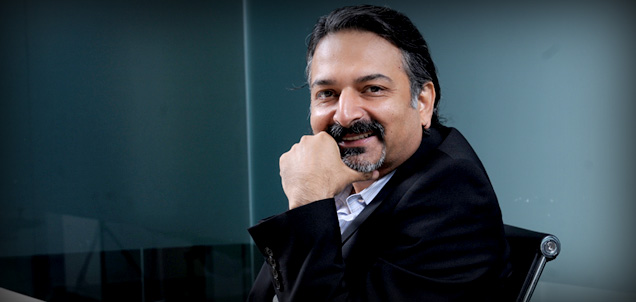
     

    The deal, which runs from 2013 to 2019, incorporates exclusive rights for television, online, mobile and radio, covering major cricket markets of India, Pakistan, Sri Lanka and Bangladesh among others across Asia; the broadcast arrangement also includes territories in North Africa. ESS has been ECB’s current broadcast partner in the region, having held the contract for the past five years.


    David Collier

    ECB Chief Executive David Collier’s statement indicated how the deal would help the game and the Board: “In a challenging economic climate with all sports facing tough competition for funding streams, it will also provide an important source of additional revenue for funding the development of our game at all levels,” he said.


    Said Manu Sawhney, Managing Director, ESPN Star Sports (ESS): “We are delighted to further extend our partnership with ECB with whom we have shared a very strong relationship over the past two decades.”


    Manu Sawhney

    “This new agreement demonstrates the enormous appetite for cricket worldwide and the global pulling power of a successful England team and a vibrant County game,” Colliers added. Note: in January this year, the ECB had renewed a broadcasting agreement with Sky Sports for four-year cycle of 2014-17 and with BBC Sport for radio rights to broadcast live commentary on international cricket from 2014 to 2019. The ECB’s agreement with Sky Sports also includes an option to extend for a further two years, which would encompass tours by India in 2018 and Australia in 2019. In a separate arrangement, Channel 5 has been signed on to show highlights until at least 2017. The ECB-Sky Sports renewal  is reported to have been inked at around Rs 2200 crore.


    With this partnership, ESS continues to be the leading cricket broadcaster with the most comprehensive calendar of premier cricket events covering all formats of the game, including exclusive global telecast rights from the International Cricket Council events, the Champions League Twenty20, as well as major international and domestic events from the Cricket Australia. Adding to this impressive line-up of cricket content is BCCI cricket, which will be showcased in partnership with ESS.


    ESPN Star Sports will feature a packed cricket calendar over the next 13 months, showcasing a wide and varied mix of cricket action of over 400 match days starting with the ongoing West Indies’ tour of England  to all the way to ICC Champions Trophy in England in June 2013. In addition to the exciting line-up of international cricket, cricket broadcast will cover over 200 days of vibrant domestic cricket action from India, Australia and England featuring some of the top domestic leagues.


    As a part of the agreement with ECB, ESS will broadcast more than 300 days of live International cricket action, including 47 Test Matches, 63 One Day Internationals and 15 Twenty20 games. Major test playing nations will be competing in England, including New Zealand, Australia, Sri Lanka, Pakistan, West Indies and South Africa. Key highlights of this new agreement include India’s next two tours to England in 2014 and 2018 as well as three iconic Ashes series in 2013, 2015 and 2019.


    In addition, ESS will broadcast 60 days of ECB’s domestic cricket every year, including the Friends Life t20 competition, the CB40 tournament, the LV County Championship, as well as England Lions, England Under 19s and England Women’s cricket. Specifically for the Indian subcontinent, the exciting cricket action will be available during primetime making it an interesting proposition for fans and advertisers alike, a communiqué added.


    Meanwhile, although there have been media reports on the ESPN and Star India joint venture ending, there is no official confirmation or denial of the development.


  • DDB Mudra wins The Economist’s Battle of Wits quiz

    By A Correspondent


    The DDB Mudra Mumbai comprised Anwesh Bose, Manasa Nayak, Siddharth Srivastava team won The Economist’s Battle of Wits quiz held at Garden of Five Senses in Delhi last Friday.


    The NTPC team comprising Sujit Varkey, KM Prashanth and Chandan Shahi came in second and Zenith Optimedia team, comprising Sudipto B, Ashima Thapliyal and Vikrant Dhawan came in third.


    The quiz was conducted by Firstpost senior editor Anant Rangaswami.


    17 teams from various clients and media organizations participated in the quiz.


    Mahesh Nambiar, ad sales director, The Economist,India, said: “We are delighted at the turnout for the event. We were worried that the searing heat may act as a deterrent but 65 of our friends from media and client organizations turned up.”


  • Hungama Digital to manage Microsoft India’s social media

    By A Correspondent


    Hungama Digital, part of Hungama Digital Media Entertainment Pvt. Ltd., has won the social media mandate for Microsoft India’s corporate brand. Hungama Digital will manage all social media interaction on Facebook, Twitter, YouTube, blogs and other collaborative mediums on digital media.


    Besides the corporate mandate, Hungama Digital will also manage three other businesses for Microsoft India on social media – MSN India, Windows Azure and Microsoft Office.


    Commenting on Hungama Digital’s appointment, Meenu Handa, Director – Corporate Communications, Microsoft Corporation India Pvt. Ltd. said: “Over the last few years, we have invested significantly in social media, and it is today a substantial part of our media mix. To take our social media platforms to the next level of growth, we were looking for a creative and experienced team to support us and have found a passionate and engaged team in Hungama Digital.”


    Speaking on the winning the account, Siddhartha Roy, COO, Hungama Digital Media said: “With the growing number of interactions over digital, especially on social networking sites, this is a great opportunity for the team at Hungama to build Microsoft’s corporate image on the social platform. The team also brings to the table over 13 years of digital marketing experience – over the internet, mobile, and other connected platform, that have resulted in award winning campaigns over the years. We are extremely excited about the business and look forward to a long sustainable relationship with Microsoft India.”


    Currently, Microsoft’s corporate social channels in India include Twitter, Facebook  and YouTube.


  • TV18 & Viacom18 form a strategic jv for content monetization

    From the MxM Infodesk


    TV18 and Viacom18 today announced a strategic joint venture called IndiaCast to create India’s first multi-platform ‘Content Asset Monetization’ entity. IndiaCast, is mandated to drive Domestic and International Channel distribution, Placement services and Content Syndication for TV18, Viacom18, A+E Networks I TV18 and the Eenadu group, post completion of its acquisition by TV18.


    With this landmark move all content assets of the 2 media houses to be consolidated for monetization across all media in India and abroad. The content of Eenadu Group is also proposed to be consolidated for distribution by IndiaCast post completion of its acquisition by TV18. IndiaCast has been created with the aim to consolidate the distribution functions of both media houses to, reach newer markets and increase operational efficiencies.


    IndiaCast will distribute all the channels of the media houses – TV18, Viacom18, A+E Networks I TV18 and of the Eenadu Group across all platforms, including Cable, DTH, IPTV, HITS and MMDS, and will offer a range of channels, from entertainment, kids, news, infotainment and music, to regional genres.


    In addition, IndiaCast will also distribute Sun Network Channels & Disney Channels in the Hindi Speaking Markets (HSMs) . Anuj Gandhi will be the Group Chief Executive Officer of IndiaCast, with Gaurav Gandhi as Chief Operating Officer of the entity.


    Speaking about the venture, Sai Kumar, Group Chief Executive Officer, Network18 & TV18, said, “The Indian distribution market is throwing up ample opportunities and we are uniquely poised to make the most of this proposed alliance in an increasingly digitized environment. We have entrusted this mandate with Anuj, who brings with him impeccable leadership and rich experience across various formats.” He further added, “Distribution is one of the high-growth areas in this industry and we’re excited to have a presence in this part of the business as well.”


    Bob Bakish President and CEO of Viacom International Media Networks said “As the Indian market continues to expand and evolve, the move to bring two media houses and proposed consolidation of Eenadu channels post acquisition into one distribution sales house presents an opportunity to accelerate our growth in the region, while increasing efficiencies of operation. We’re excited about the potential of IndiaCast and are looking forward to deepening our partnership with TV18 and Eenadu Group.”


    Commenting on IndiaCast, Anuj Gandhi, Group CEO IndiaCast said, “This is a momentous step forward and will create a paradigm shift in distribution and syndication. The new venture gives a clear impetus to digitalization. Also, it brings more channels and greater flexibility to consumers.” According to Mr Gandhi, “The Company will be the focal point not only for content and media distribution but also to drive the Content asset monetization business of TV18, Viacom18, A+E Networks I TV18 and Eenadu Group. The growth and way forward for media brands in the journey ahead is through Content Asset Monetization – taking content across geographies, platforms and mediums.”


  • We want to be in the forefront when new media merges with traditional: Anuj Gandhi


    The writing was on the wall the day Anuj Gandhi joined Network 18 in March this year to oversee the group’s distribution and new business development. And the reason for this was the all-new relationship between Network 18-TV 18 and Reliance Industries forged a few months before his joining.


    Other than the providing of the much-needed funds and the consequent stake in one of India’s largest (and more powerful) media conglomerates, Reliance was also looking at making full use of the content produced and owned by the various Network18 and Television18 arms, especially for the Reliance 4G services.


    Also, in the post-digitization era, distribution becomes a key driver in the revenues of a broadcaster, especially for niche channels. And with various mobile devices becoming popular and wireless technology progressing rapidly from 2G to 4G even in India, the monetization potential for multimedia content leapfrogs.


    Enter IndiaCast, a joint venture of TV18 and Viacom18 to create India’s first multi-platform ‘Content Asset Monetization’ entity.


    IndiaCast Group CEO Anuj Gandhi is a veteran in the distribution and the affiliate sales front. An MBA from the SP Jain Insitute of Management, he has worked with Discovery Communications as Director – Affiliate Sales (1997-2002),  as President of SET Discovery (2002-07) and CEO of DEN Networks (2007-2010) and worked as an independent consultant for a little over a year. He has also worked with IndusInd Media in distribution (way back in 1994) and prior to that with Ranbaxy. Clearly, being an early leader in every aspect of the distribution business, Mr Gandhi is well-poised to monetize the wide variety of content that IndiaCast has in its basket.


    Hours after announcing IndiaCast, Anuj Gandhi spoke with MxMIndia, his first and until the time of publishing only detailed interview on the shape of things to come.


    So we see the the birth of a laaarge distribution company…

    IndiaCast is much larger than other traditional distribution companies because it entails monetizing content assets of all the groups – right now TV18 and Viacom18, and post-acquisition of Eenadu, but for all rights. It’s effectively all non ad-sales kind of monetization businesses. It will be online, traditional brick-and-mortar distribution businesses at a global level. So it is pretty huge.


    It’s just the beginning. My sense is that most people will do it because the lines are diffusing between various rights that people use in the market. It has already happened in the international market where a DTH guy blocks Over The Top (OTT) or IPTV rights from you and vice versa. So you will have technologies where OTT rights will sit on a box so the cable guy will come and tell you that I not only want to do cable rights but I also want OTT rights. Thus, with the passage of time, new media will get merged with traditional media and we want to be at the forefront of the revolution which will happen in the next few months/years.


    Any international tie-ups in the offing?
    We already have international updations in the US, UK and Dubai. Colors is being distributed there and going forward, we want to expand our portfolio. We plan to distribute more and more channels internationally. So it’s work-in-progress on that front.


    So what happens to Sun18 now that IndiaCast has been formed?

    Sun18 was an alliance that worked very well and will continue to do well. The deal at Sun18 was that we will distribute Sun and Disney channels in Hindi-Speaking Markets  (HSM) and they will distribute us in the South. So, the only change in the whole alliance is that instead of distributing in the whole of South, they will only do Tamil Nadu now. Otherwise everything stays the same, we still distribute them in the North and also Disney which is part of their network. With this, Sun18 North has kind of folded into IndiaCast.


    Is it a coincidence that IndiaCast happened days before the scheduled digitization in the metros or was it on the cards for a while?

    No it was in the pipeline and we were talking about it for a while now and we knew that we needed to get all our pieces in order.


    Any major challenges you see coming up in the future?

    I think the major challenge would be to get the deal right for digitization. Whether it happens in 25 or 90 days (as digitization in the four metros is likely to get delayed by a few months), this is a chance where the industry needs to correct itself; we all need to work in getting the ARPU situation right in this country. So the challenges are basically at the industry level. Also, on the global front, the challenge is to be able to do more channel launches in international markets and be seen as a serious player. Also, one more challenge will be about how new media unfolds in the country.


    With viewers being able to subscribe to channels a la carte, do you anticipate reach/visibility of channels to take a beating… for instance, what if a person just takes one or two channels a la carte?

    While there will be some percentage of the market that will opt for it because by law you have to offer it. Like when CAS started, everyone talked about a la carte and people taking only one or two channels, but it just doesn’t happen. It doesn’t happen anywhere in the world and it won’t happen inIndiatoo. There may be a few people who would want that but that would be a single-digit percentage for me. So I am not too worried about it. But what will happen is, as they say, the time spent on niche channels will go up with digitization as everybody will be getting the same quality of channels. But if you start picking and chasing packages, some channels will start suffering. Not everybody is going to take all Hindi news channels, for example. So if they are in the same package, then people may pick them but if they are placed differently then it may not be the case. So some impact will happen, but not in the short term.


    We see that IndiaCast will also represent Sun and Disney in HSMs. Any others on the anvil? Since UTV channels are now part of Disney, will they move too?

    Nothing right now, I think we already have too much on our table right now. If something happens tomorrow, we do not know but we are not looking at adding anything new as yet.


    As part of Network 18/Television 18 agreement with the Reliance Industries Ltd’s Independent Media Trust stake, there was also a plan of all Network 18/Television 18 content being syndicated to Reliance 4G? Will it be done via IndiaCast?

    I won’t be able to comment on this but as is known, all content monetization businesses lies with IndiaCast so the same businesses will be done with any 4G networks whether it is from Reliance or any other telco from the business.


    So going back to the earlier discussion, the arrangement with Sun18 stays…

    Yes, we have just changed the definition in terms of the three states in the south. Otherwise it remains where it was. So Sun18 continues to exist and holds up in IndiaCast. It won’t be called Sun18 anymore. There is no shareholding changing – Sun18 North is just folding up into IndiaCast.


    Do you see consolidation gaining prominence as we move ahead?

    I think it will happen for some time. What way and form – will now change as technology is becoming a critical part of our business. The traditional mergers may not happen as much but there has been a lot of M&A happening on the platform side which will also have an impact on broadcasting.


    With digitization happening, do you anticipate the revenue from non-advertising sources will actually be more than what comes from advertising?

    I cannot generalise it and will depend on channel to channel. But will certainly grow; I feel that it could be 50-50 at the network level. So niche channels will benefit more from subscription than ad sales but mass channels will still earn revenues from ad sales.


    So just as it holds true for the sales folk these days, do you see the distribution team also have much say in content in the future?

    I wish my bosses here say that distribution guy must have a say in content (laughs). But it’s not that now. Until now the interaction with the consumer was through various means and the stakeholders were too many in the value chain. Going forward, because it will be a box and be kind of a direct deal – so if I am going to an MSO, he can probably tell me area specific complaints – it will reach back to the content owners much faster and in much clearer terms than what is happening today. That is what is happening in international markets and it will start happening inIndiatoo. But we are a couple of years away from that.


    So we’ll soon have distribution heads becoming CEOs of networks…

    Touche.


  • Make way for the men. Basics Life goes National

    By A Correspondent


    After having enjoyed great success in the men’s fashion segment inSouth Indiawith over 90 stores, Hasbro Clothing has decided to launch its Basics Life brand in a nationwide campaign to promote their newly launched online shopping portal, Basicslife.com.


    Hasbro Clothing was founded by brothers, Hanif and Suhail Sattar in 1992. Their rebranded retail experience store, Basics Life, was launched in 2008 and in 4 years, it has spread across 90 exclusive outlets and has presence in over 600 multi-brand outlets across Indiaand the world, apart from being available on the lifestyle and fashion portals like myntra, Jabong and others. The brand houses clothing, footwear and accessories from their three private labels Basics 029, Genesis and Probase.


    After their e-commerce store, www.basicslife.com opened, they feel the time is right to push for a national presence. “Our dream of being the one of a kind lifestyle retail fashion destination for men is finally showing signs of coming of age, the range in the store, and the store itself, was testimony to that fact, now the communication and the reach with this new creative will put us on the map,” said Hanif Sattar.


    The campaign, ‘Shop like a Man’, speaks to and for the men, and has been conceived and created by Happy, Bangalore. The agency has been handling the account from 2008, right from creation of the Basics Life brand.


    “The central idea was to promote shopping for men like never before. We latched onto the idea ‘Shop like a man’ (working out of the insight that online shopping could only have been invented by man),” said Kartik Iyer, Chief Executive Officer and creative lead on the project.


    The campaign starts off with ‘The ‘Man’tra”, a signature anthem created specifically to celebrate all the basic things that make men, men. Kartik Iyer had himself penned the song in collaboration with Mikey McCleary. In addition to the TVCs, The ‘Man’tra will also be released as a standalone 3minute song supported by a 2 minute video on YouTube.


    “The project has been brewing for a while now. So when we decided to create a song, the order of process was all very different. Not to mention loads of fun. But I must confess being true to mankind was truly a pleasure,” said Mr Iyer.


    In addition, the campaign also comprises of spots, activation, digital/social and viral engagement programmes.


    Campaign Credits

    Brand: Basics Life

    Client: Hanif Sattar, Suhail Sattar

    Agency: Happy,Bangalore

    CEO & ECD: Kartik Iyer

    CCO: Praveen Das

    Lyricis: Kartik Iyer / Mikey Mccleary

    Copywriter – Athul C

    Art Director – Viduthlai Raj M

    Account Management:  Neelima K, Ajaykumar


    Production House: Hello Robot

    Producer: Kitisha Gaglani

    Director: Barney Howells

    Director of Photography: Edward Goldner

    Music Director: Mikey McCleary

    Art Director: Sid


  • Ram Kapoor continues to be favourite Hindi GEC character : Ormax Media

    By A Correspondent


    According to the eleventh edition of Ormax Media’s quarterly study Characters India Loves (CIL), Ram Kapoor (Bade Achhe Lagte Hain) continues to be the favourite character among Hindi GEC viewers.


    Bade Achhe Lagte Hain launched on May 30, 2011 and Ram Kapoor entered the CIL July-Aug 2011 track (Edition Eight) at No. 5. His co-star Priya entered at the No. 10 rank. From CIL 9 onwards, Ram Kapoor continues to hold the first position. He is more popular than Priya who is at rank No. 4 in this track.


    The favourite non-fiction show characters are Kapil Sharma (Comedy Circus), Raghu & Rannvijay (MTV Roadies) at No. 1, 2 & 3 respectively.


    This track of CIL was conducted among 3000+ respondents in six cities – Mumbai, Delhi, Ahmedabad, Lucknow, Indore & Jalandhar, in the 15-44 years age group.


  • Internet influences over 50% car buyers: Google

    By A Correspondent


    If you are planning to buy a car, who will you go to for advice? The Internet…family… a car expert? Various people choose various options, but according to a study done by Google India, with over 120 million Indian Internet users, the Internet plays an important role in influencing the decision-making process of India’s growing number of car buyers.


    The offline study conducted by Nielsen on behalf of Google India at car showrooms in eight metros (NCR, Mumbai, Pune, Chennai, Bangalore, Kolkata, Ahmedabad and Kochi) revealed that one in two car buyers conducted research online before arriving at the dealership. The survey also revealed that of those who had researched about their purchase options online, over 50 per cent changed their choice of car brands after uncovering new information on the web.


    Speaking about the study, Rajan Anandan, vice president & managing director, Google India, said: “This offline study substantiates the growing number of auto-related searches we’ve seen on Google Search inIndia. Auto is among the fastest growing vertical in terms of query volumes on Google. Most OEMs have not yet tapped the full potential of the digital medium and we hope this study will help them to understand and engage the Indian consumer online.”


    Respondents reported that they used the web to research and compare prices, watch online videos, find images, do competitive analysis, find dealer contacts and read both expert and user reviews. Most car buyers also rated OEMs website as the most important and trustworthy source of information. Of the 50 per cent respondents who went online, 42 per cent said they used search engine as the first source of information, just behind the opinions of friends and relatives’ (47 per cent).


    However, the auto-makers aren’t affected by the study. Abhishek Gupta, former brand manager at Maruti Suzuki India Limited and business head – North at RPS consulting said that  people might go online for research but final decision depends on what family and friends recommend. “One goes online to get a basic understanding. He might read blogs, reviews or comments to get others point of view but will buy a car which he aspires to purchase or what people close to him tell him to.”


    Voicing the same opinion, a marketing head at the leading Japanese car manufacturer, said: “Maybe Google is correct or maybe they are not. But it’s a fact that one needs to go to a showroom to get a feel and look of the various cars s/he has shortlisted before zeroing in on one.”


    The research was conducted outside the car showrooms of India’s leading OEMs namely: Maruti, Tata Motors, Ford, Chevrolet, Hyundai, Honda & VW. The total sample size for the research was 2,791 respondents. Out of which 93 per cent were males, with 75 per cent of the respondents in the age group of 25-44.


  • Neo Prime signs Frank Leboeuf for special programming on UEFA EURO 2012

    By A Correspondent


    Neo Prime has signed French legend Frank Leboeuf for exclusive preview shows and wrap around content during UEFA EURO 2012 (starting 8 June). Mr Leboeuf was part of the historic French team that won the FIFA World Cup in 1998 and the UEFA EURO in 2000.


    The wrap around show ‘Extra Time’ will be hosted by Radhakrishnan Sreenivasan (popularly known as RK) and feature Frank Leboeuf along with celebrity football fans across all walks of life – Bollywood, business, music and fashion. Besides, on-air programming on Neo Prime, the former Chelsea defender will also be involved with several on-ground initiatives including football clinics, contests and meet and greet with fans.


    Frank Leboeuf said: “I am delighted to visit India and stay here and interact with the football fans. The UEFA EURO has always been one of the toughest football championships, on par with the FIFA World Cup. All the teams are top-notch competitors and 8 out of the 16 teams can potentially emerge champions in this edition. I am particularly excited about engaging with fans across multiple touch-points.”


    Mautik Tolia, EVP – Programming and Creative Head, Neo Sports Broadcasting Pvt. Ltd said: “UEFA Euro 2012 is the biggest football extravaganza of the year and we wanted to raise the bar and interact with fans beyond the TV screen. Frank is a legend and for a blockbuster event like UEFA EURO, we needed someone with his skill, knowledge and enthusiasm to take our programming vision forward and delight the football fans.”


  • Abhishek Rege & Doris Dey join Endemol India

    By A Correspondent


    Abhishek Rege

    Aligning itself to an aggressive growth strategy, Endemol India announced key leadership appointments across verticals. As part of their new structure, Abhishek Rege has been appointed as Chief Operating Officer – Television, where he will be seen overlooking strategic operations specific to the production of new shows for television across the country. Doris Dey comes on board as the Fiction Head. She will be responsible for driving the fiction properties and concepts that will best engage and entertain the viewers. Based out of Mumbai, these two dynamic professionals will be seen playing pertinent roles in providing seamless operational and strategic inputs across the company.


    Doris Dey

    Commenting on the new appointments, Deepak Dhar, CEO – Endemol India, said: “The last one year has been very exciting for Endemol India, with the new concepts being accepted wholeheartedly and the existing formats progressing to their much awaited seasons. As we move into our next phase of growth, it’s critical to have a structure that supports our ambitions and fuels expansion.”


    He added: “Abhishek and Doris come with a vast experience and I am convinced that both the professionals will drive our most ambitious phase.”


    Deepak Dhar

    Abhishek Rege said: “At the helm of a new growth phase, I look forward to working with a bunch of highly motivated individuals and continue to create newer benchmarks in the industry.” Prior to his appointment at India, Abhishek was associated with Viacom 18 Media Pvt. Ltd.


    Speaking on her association with Endemol India, Doris Dey said: “I am looking forward to working with this incredibly talented group of people who are relentless in providing new and innovative content to the viewers.”