Category: MEDIA

  • 3rd edition of Indigo n Blues Festival promises treat for music-lovers

    By A Correspondent


    Indigo Live on Thursday announced the launch of its third edition of Indigo n Blues Festival, one of the most anticipated international jazz and blues festival in the country. The festival will be held on the May 18 and 19 at theEdenGarden, Palace Grounds Bangalore.


    Spokesperson of Indigo Live announced that the festival will be headlined by Bobby Whitlock, who is perhaps better known for being a member of the band Derek & the Dominos, recording and co-producing one of Rock and Rolls, most important records in history “Layla and Other Assorted Love Songs”.


    He remains the only true writing partner of Eric Clapton, writing memorable songs such as ‘Tell the Truth’, ‘Keep on Growing’, ‘I Looked Away’, ‘Why Does Love Got To Be So Sad’, ‘Any day’ and ‘Roll It Over’.


    Bobby Whitlock will present this show with his band Bobby Whitlock & CoCo Carmel.


    The other headlining artist at the festival will be theTexasblues rock guitar legend Van Wilks who has had the honour of playing duets with greats like Willie Nelson, Eric Johnson and Billy Gibbons of ZZ Top.


    Trigam Mukherjee, A&R Associate of Indigo Live said: “ Both Bobby Whitlock and Van Wilks are legends that Bangalore will experience for the first time ever and will sure create ripples in the growth of the genre in India. Both Bobby and Van are excited at the opportunity to perform in a country which is experiencing a surge, especially in the international live music industry. They will present a genre of blues rock, not many in the country would have experienced live.”


    The festival will also see many Indian blues and jazz superstars performing alongside them. Blackstratblues, The Saturday Night Blues Band, Overdrive Trio, Adil and Vasundhara, Groove#3 from Chennai andBangalore’s very own Chronic Blues Circus.


    The festival promises to be a carnival set at the sereneEdenGardens. The celebration of the finest Jazz n Blues India can experience will be complimented by some sumptuous soul food which will be presented at the venue.


    In the past Indigo Blues have features artists like Café Du Sport, Adrian D’souza and Carl Peters, Konarak Reddy, Bob Bonastre, Kaya Quartet, Junckt, Agog from Amsterdam, Alain Brunet trio, Marilena Paradisi from Italy, Wanayran Angerer from Bahamas, Cyril Barbessol from France, Margie Perez from New Orleans, Barbara Jungfer and Holger Jetter from Germany, Matt Littlewood band from UK, Masala Dosa from France.


    This year, however, the focus shifts completely towardsAustin,Texas, the mecca of southern blues. The past two years have seen tremendous response from audience from not onlyBangalore, but also adjoining states in the southern region.


  • Switzerland Tourism builds extended recall in Mumbai yet again

    By A Correspondent


    Milestone Brandcom, a leading, and fastest growing, integrated OOH brand communications agency inIndia, has executed a surreal campaign for Switzerland Tourism.


    This campaign was an extension of their last campaign – “We do whatever it takes to make your holidays perfect”. The core communication objective of the campaign was to fascinate and intrigue people with vibrant images of some the geographical diversity that can be found withinSwitzerland. The campaign tag line was “ExploreSwitzerland”.


    The main focus of the campaign was to showcase the different destinations inSwitzerlandalong with very special offers from tour operator partners in India Switzerland, the playground of Europe, has been the dream destination for tourists for decades. Extending across the north and south side of theAlps, it encompasses a great diversity of landscapes – shimmering glaciers, snowcapped mountains, lush meadows and beautiful villages. The climate inSwitzerlandis moderate, with no excessive heat, cold or humidity.


    A media plan encompassing 170 media touch points spread well across a selection of formats covering high traffic & footfalls along arterial roads. There was an assorted mix of media touch points such as Billboards, Backlit Bus Shelters, Backlit Pole Kiosks, Large format Mall Facades.


    As part of the campaign, to further deliver the desired impact, an exceptional innovation – of a cable car going skywards to & fro from the famousMt.Titlisthat stands tall at 10,000 Feet – was executed on a 30×20 billboard at a prime location at Worli Naka. The innovation was striking and strategically placed at one of the high traffic count traffic signals in Mumbai. It was visible to almost all vehicular & pedestrian traffic moving fromSouth Mumbaito Central and suburban areas of Mumbai.


    Commenting on the campaign, Imtiyaz Vilatra, Founder Member & Managing Partner, Milestone Brandcom said: “The objective was to bring to light the mesmerizing diversity of landscapesSwitzerlandhas to offer. The campaign aims at targeting the upper middle class who more often than not, invest in a good vacation, the company has come up with various attractive welcoming offers to explore the immaculate beauty thatSwitzerlandhas to offer. The mesmerizing dream-like locations & attractive rates offered by the company, combined with the right media mix along key arterial routes helped in targeting the right audiences.”


    “Top of the mind recall & clutter breaking innovations are what separate an ordinary advertising & marketing campaign from a successful one. The objective was to utilize the OOH space effectively and build presence and reach along key arterial junctions & traffic points in order to reach the right TG. The campaign, executed by team Milestone, left no arterial route or media without our brand presence. I believe the work done on OOH in Mumbai was a critical success factor. Milestone Brandcom has delivered an excellent campaign right from planning to execution,” said Ritu Sharma, Interim Director, Switzerland Tourism.


    Milestone Brandcom is the fastest growing Out-of-Home (OOH) advertising & media company with operations in 42 cities acrossIndiaproviding services in over 1000 towns. The company offers through the line advertising solutions for brands nationally across multiple OOH media touch points. With a turnover of 220 crore in 2 years of operations, Milestone Brandcom is already amongst the top 3 OOH brand communication service providers inIndia.


  • Analysis: Ashish Pherwani on when it’s right for a channel to pull the plug

    By Ashish Pherwani


    Rule of three

    The media business is largely governed by the ‘rule of three’ i.e. companies which are the top three or four players in a genre, or geography, tend to be profitable, while the rest tend to make losses in the long run.


    Accordingly, when a TV channel is unable to make it to the top of its segment for a long period of time, chances are it would have been hemorrhaging money for its owners, and that situation cannot last indefinitely.  Eventually, investors will pull the plug.


    Expensive programs as drivers

    TV channels which garner a majority of their viewership from reality TV shows and expensive films, and not from lower cost fiction programs, are also susceptible to being shut down in the medium to long term.


    Most large channels do not recover their direct variable reality content production and distribution costs through advertisements alone, but use such expensive programs as drivers to build channel loyalty and viewership for lower-cost fiction programs.  If this strategy does not work, and fiction shows continue to under-perform on a TV channel, the chances of broadcasters continuing the channel are remote even in the medium term.


    ‘Overhauls’ and ‘Makeovers’

    Over the last decade or so, most unsuccessful channels which have tried ‘overhauls’ and ‘makeovers’ that have failed to achieve their objectives within six to eight months, have eventually shut down their operations.  There are a few exceptions where channels are politically motivated, treated as marketing tools for large business houses, or those who believe they could build channel valuations for a profitable exit, but such companies are few and far between, and the recession of 2009 and the slowdown in 2011-12 have weeded out most of these.


    Foreign investors prefer less risky ventures

    In the case of foreign broadcasters enteringIndia, those with deep pockets and who believe in theIndiastory, which I certainly believe in, too, tend to stay invested inIndia.  But some foreign broadcasters prefer a less risky approach than creation of high-cost content.


    They prefer to exploit their existing global content library inIndia. Accordingly, more cautious and risk-averse foreign investors wouldn’t continue to fund under-performing TV channels indefinitely, and would rather take the less risky route.


    Viewership, the only asset

    To conclude, the only asset a channel has is viewership.  Channels which operate without a robust management team, a unique market position, and a defined target audience, won’t be able to garner sustained and loyal viewership.


    If channel management is able to make these three aspects fit seamlessly together, chances are the channel will succeed as a business, else, it would make business sense to pull the plug!


    Ashish Pherwani is Associate Director, Advisory Services, Ernst & Young Private Limited


  • This is a carefully considered business decision: Siddharth Jain

    It wasn’t an easy day at office for Siddharth Jain, Managing Director- South Asia at Turner International India Private Limited. Mr Jain, who had assumed his current role in November last year, took time off to respond to MxMIndia’s questions in an emailed interaction.


    What exactly happened… there were promos running for forthcoming shows and then this announcement of pulling down curtains?

    This is a carefully considered business decision based on performance of the channel. We invested substantially and put all possible resources behind Imagine TV throughout. As in any other business, the investments were directly linked to reaching a certain performance benchmark. However, in the two years, Imagine did not grow or perform as per expectations and as a result, Turner made the carefully-considered decision to cease operations of the channel.


    Did you consider selling the channel (a la 9X)?

    We worked incredibly hard to exhaust all options to avoid cessation of business operations.


    This is the second GEC from the Turner stable that has failed. But your other channels are doing well, with Pogo hitting an all-time high recently. Will Turner try its hand at another GEC or is it quits for now?

    Absolutely. Turner remains fully committed to future investments and long-term participation in India. Having been pioneers in the Indian M&E space in international news and kids’ entertainment, Turner currently operates some of the strongest media brands in India. POGO is indeed doing very well, being the Number one channel in the kids’ TV genre for the last six months (as per TAM). Turner will continue to be leaders in the media and entertainment industry and to explore expansion opportunities in this key priority market for Turner.


    What happens to the team and staff of Imagine? Anyone being retained or moved to other businesses?

    Turner will retain some employees for a transition period and some others are being offered permanent roles within other Turner channels to fill current vacancies.


    For the other Imagine employees getting impacted, Turner has set up an HR outplacement service which will provide advice on how to write a better CV, interviewing techniques and other job hunting skills. We will also introduce the employees to recruitment consultants, HR professionals from other media organizations and facilitate their new job search. Our focus is to ensure the closure is executed in a fair and appropriate manner for all of them and in full compliance with all legal requirements, employment terms and company policies. We will use our best endeavours to make this as smooth a transition as possible for them.


    The integration exercise that Turner carried out in May 2011 didn’t seem go down well with a few key personnel exiting the company eventually. In hindsight, was that what triggered the channel’s downfall?

    The two are not related in any way. Integration really helped in getting better operational efficiencies between Imagine and our other networks. While exits happened in the last one year, if you look across the industry it is in the normal course of any GEC. There is not one person or one department that was responsible but a number of factors that led to the channel not delivering consistent ratings that were required to sustain the business and continued investment.


    Why wasn’t there a suitable replacement to Sameer Nair post his exit?

    We are not in a position to comment on Mr Nair.


    Are there any plans for your library of programming? And what happens to the programmes signed up?

    As of today, we cease all business operations of Imagine TV. The closure is a complicated process as we are ensuring fulfillment of all our business commitments to advertisers, distributors, production houses and other partners.


    As you look back, do you think it was an unwise decision to buy Imagine from NDTV? And would it have been better for you to have launched an all-new channel so that it doesn’t come with the baggage of an unsuccessful channel?

    The acquisition of Imagine was a wholly appropriate, strategic and extensively-considered decision.


  • Sad! Turner shuts Imagine TV

    Turner Broadcasting System Asia Pacific, Inc. (Turner) today announced the decision to cease business operations of its Hindi general entertainment channel ‘Imagine TV’, together with its international feed ‘Imagine Dil Se’.


    A communique from Turner Network signed by Siddharth Jain, Managing Director, South Asia, said Imagine TV has “not performed and grown as per expectations”. “While some programmes delivered satisfactory ratings, overall the channel was unable to achieve the ratings consistency needed to sustain the business and support continued investment. As a result, Turner made the carefully considered decision to cease operations of the channel.”


    “We are grateful to the Imagine team, which includes some of the most talented and creative people in the Indian media industry. We will use our best endeavors to make this as smooth a transition as possible for them, ” he continues.


    ” The company remains committed to future investments and long-term participation in India. As one of the largest global media companies operating in India, Turner has enjoyed a successful track record in delivering high-quality, compelling and entertaining content to our local audiences over the course of three decades. We currently operate some of the strongest media brands in India, including HBO, CNN, Cartoon Network, POGO, WB, TCM and Boomerang. We will continue to be leaders in the media and entertainment industry and to explore expansion opportunities in this important market.


    *Please stand by for more *


  • Six Inches Communications develops unique OOH innovation for Kingston

    By A Correspondent


    Six Inches Communications, an integrated brand communications agency, has created an exceptional Out of Home (OOH) innovation for Kingston Technology, the US based, independent memory module company whose products include Solid State Drives, memory modules, Wi-Drive, USB Drives, memory cards and card readers. The installation in the form of an enormous pen drive attempts to highlight and reiterate ‘storage and space’, the USP of the brand.


    The agency has replicated a pen drive on a large format OOH installation which is 31 ft in length, 9.5 ft tall and 12 ft wide at the entrance of Nirmal Lifestyle, Mulund for a period of one month. The concept of the innovation revolves around the idea of giving the users a real life experience of entering a pen drive.


    From the exterior, an illusion of people getting into the pen drive will be created while the inner walls of the gigantic installation will have interesting graphics depicting the benefits of the device.


    Commenting on the latest initiative, Vishal Parekh, Marketing Director,KingstonIndiasaid: “Kingston pen drives have large capacity and is one-of-its-kind in this category. We wanted to highlight the fact that though pen drives look small, they are huge storage devices and convey the idea that one can carry his/her world in a pen drive; be it music, movies, data, photographs or confidential documents”.


    Pravin Shah, CEO and Managing Director of Six Inches Communications said: “In order to communicate the magnitude of space offered byKingstonpen drives we opted for the OOH medium as it gives a brand the flexibility to explore innovation with products in terms of size, shape and experience. The larger-than-life installation will successfully bring to life some of the key benefits ofKingstonpen drive”.


    The customers will also witness a painter painting a portrait along with a guitarist strumming a song inside the installation to highlight the idea of bringing the data stored in the pen drive to life whenever required.


  • So why did Turner stop Imagine(ing)?


    By Team MxMIndia


    Just when the Hindi general entertainment space was getting interesting with the top 3-4 players all coming within sneezing distance of each other in the numbers game, the industry was jolted by news of the closure of Imagine, which given its pedigree, was launched with much fanfare not many moons ago. From shock to sadness and even rage (at least on the social media) admirers and naysayers were seen on an overdrive trying to piece the chain of events that had led to the downfall of the channel that was seeing red for some time now.


    This was in stark contrast to the kind of emotions that were flying thick and fast exactly a year ago, when Turner General Entertainment was merged into its parent company Turner Broadcasting System Asia Pacific, Inc. The emotions then were almost similar to what the channel heads were going through when they flagged off the channel more than four years ago, making it one of the most loud and admirable launches of the time. While anticipation and expectations were riding high on the faces of each and every member of the team at launch, the same was the scenario during the merger exercise last year as the company was probably taking a last shot in reviving the fortunes of the network to see themselves battle against the competent lot at the top. But all that was not to be as tribes from the world of media and outside woke up to the news of the channel shutting down yesterday.


    Siddharth Jain

    Replying to questions put forth by MxM India (read interview),  Siddharth Jain, Managing Director- South Asia, Turner International India Private Limited put it out right and straight as he said: “This is a carefully considered business decision based on performance of the channel. We invested substantially and put all possible resources behind Imagine TV throughout. As in any other business, the investments were directly linked to reaching a certain performance benchmark. However, in the two years Imagine did not grow or perform as per expectations and as a result, Turner made the carefully-considered decision to cease operations of the channel.”


    Mr Jain is probably being modest in quoting that the channel did not perform as per expectations in the past two years, but the writing was on the wall in the first three months of 2011 itself, when the channel failed to get the viewers and advertisers excited with its most expensive property that cost the company in excess of Rs50 crore to produce. ‘Zor ka Jhatka’, hosted by Shah Rukh Khan, failed to get the desired ratings and didn’t do much to push the channel in the top league as was expected. In fact, in an interaction with the media before the show went live, an exuberant Sameer Nair had vouched that the show along with a few others would catapult Imagine among the top 3 in the Hindi GEC space. Wishful as he was, that was not to be. Its failure forced the thinktank at Turner to come up with steps to plug the loopholes, even if it meant changing its course altogether.

     

    Sameer Nair

    Thus in April 2011, Turner announced the merger of Turner General Entertainment into its parent company Turner Broadcasting System Asia Pacific, Inc. This was followed by the formation of a special committee comprising various Turner officials such as Monica Tata and others along with officials from Turner General Entertainment Network including Sameer Nair and Harsh Rohatgi with the intention of charting out a long-term course for the channel. This move was even vindicated by Steve Marcopoto, President, Turner Broadcasting System Asia Pacific (TBSAP), who went on to explain the need for such a proposal, which was to assess its performance and chart a long-term course for Imagine. But just when the merger was announced, Sameer Nair did the unthinkable by announcing his decision to exit the company.


    In an interaction with MxMIndia Editor-at-Large Anil Thakraney, Sameer Nair was quite upfront about the reason for his decision to move on: “I was used to operating independently. After Turner took over, one had to integrate into the Turner system. And this made me just a department head. And so I left.”


    Expressing concern towards the chain of events that led to the closure of the channel he said, “I am quite shocked and disappointed to hear that they’ve decided to shut the channel down. They (Turner) seemed to be quite gung ho about Imagine, and I thought they were going full steam ahead. There is a lot of investment and a number of jobs at stake.”


    Mr Nair’s exit from Imagine was followed by a few other key exits and the network’s failure to find a suitable replacement. Even attempts to vow the audiences by launching a slew of reality and mythological shows didn’t do much for the channel as it still figured in the #6/7 slot amongst its peers in the space.


    In fact, even as recently as 2-3 months ago, the channel was going all out with its promotional activities as it announced the launch of new shows. But that too has been brought to a halt as Mr Jain explained: “We cease all business operations of Imagine TV. The closure is a complicated process as we are ensuring fulfillment of all our business commitments to advertisers, distributors, production houses and other partners.”


    The news came as a rude shock to producers, some of whom were in the midst of production schedule (see story: Rude Shock for Producers & Performers). Rajan Shahi who had launched ‘Jamuna Paar’ on Imagine just a little over a month ago, refused to comment on it saying “it would be too premature”. Other producers like Siddharth Tewary, the Sagars who had ‘Chandragupta Maurya’ and ‘Dwarkadheesh’ aired during primetime were incommunicado as they grappled with the sudden turn of events.

     

    JD Majethia

    JD Majethia who had launched two shows, ‘Jassuben Jayantilal Ki Joint Family’ and ‘Ek Packet Umeed’ four years ago said: “It’s sad and shocking. It was a channel which with the entry of Vikas Behl at the helm of things looked poised for bigger things, a turnaround but that was not to be. It’s a huge setback for producers and for those who work on a per day basis. A daily show means a minimum of 100 people associated with it in various capacities and with Imagine closing down, it spells doom for them. All that talent and labour goes down the drain. It’s a loss of about Rs200 crores worth of yearly business for Imagine and the industry on the whole.”


    Veteran producer Dheeraj Kumar of Creative Eye Productions said: “It was an overnight decision but it could have been done a bit smoothly. I am hopeful that Turner with its huge umbrella of channels would give us a chance of providing content to them. I am optimistic.”


    Programming propaganda

    Ever the one to influence viewers and attract the attention of the advertisers too, content was one of the biggest setbacks for the channel, going by the buzz emanating from experts. While the start for the Imagine was glorious, as it did manage to attract sizeable channel share (see chart below) and even break into the 150+ GRP mark at some point, it was an experience that was shortlived. The maximum channel share that the channel attained was 8.5 in H2 2009.
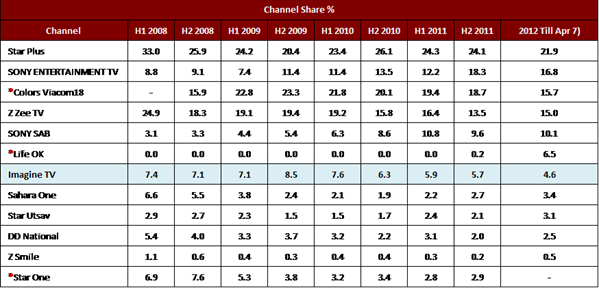
     

    Source: TAM Media Research / TG: CS 4+ yrs / Market: HSM / Period: H1 (Jan-Jun) & H2 (Jul-Dec) 2008, 2009, 2010, 2011 till April 7, 2012

     

    Mohit Joshi
    Divya Radhakrishnan
    Karthik Lakshminarayan
    Pankaj Krishna

    Explaining the implications, Mohit Joshi, Managing Director, MPG said, “The General Entertainment domain is very competitive and each channel is constantly improving content and production. The viewer has many options today and hence has become more ruthless with the channel choice. In spite of a great start, Imagine lost it mid-way. In an attempt to gain viewership and numbers, it resorted to telecasting shows like Rakhi Ka Swayamvar, Rakhi Ka Insaaf and so on. Though these shows could have given a short-term boost in numbers, in the long run, viewers didn’t find the content appealing enough. Also these shows dented the channel image by giving it a ‘sleazy’ tag – which is not acceptable in the GEC domain.”


    Divya Radhakrishnan, Founder, Helios Media, said, “GEC is a highly competitive segment and the cost of running a GEC is very high. Imagine had reached a level of stagnation especially in the last six months, however shutting down was not expected.”


    Karthik Lakshminarayan, COO, Crest, said: “Imagine had the brand heritage of NDTV and Turner. I think it was sheer bad luck that they eluded that one show which could give them success like Kyunki did for Star, Saat Phere did for Zee, Ballika Vadhu for Colors and Bade Acche Lagte Hain is doing now for Sony. For a GEC to break even it takes 4-5 years so one needs to stay invested for a long period to see the returns, hence the move is a surprise.” In fact, he has a surprising statement to make: “Their overnight decision has caught us unawares and our media plan needs a quick revision. We had spots to go on air on the channel as we talk. I think now those spots are up for grabs and may the best player win.”


    Blame customer pull, not distribution!

    There are primarily two ways of impacting Channel Trials – namely Consumer Pull led by content affinity, and Broadcaster Push led by Distribution initiatives, explains Mr Pankaj Krishna, Founder and Managing Director, Chrome Data Analytics & Media (see Analysis: How Imagine lost due to consumer pull, not distribution. “Going by Chrome OTS numbers (Opportunity To See – percentage of households that have access to a channel) – Imagine TV has clearly been in the league of the top GECs with an OTS of 95% across HSM.”


    According to Mr Krishna, “consumer pull clubbed with Strategic Distribution Planning has a huge impact on the overall performance of a channel”. “Over the years, Imagine lost out on factors contributing to the former.”


    Staff shocked

    It was Terrible Thursday for the staff at Imagine. They had no clue of the closure, even as they had faced yet another week of dismal ratings from TAM. Said Jain on the fate of the staff: “Turner will retain some employees for a transition period and some others are being offered permanent roles within other Turner channels to fill current vacancies. For the other Imagine employees getting impacted, Turner has set up an HR outplacement service which will provide advice on how to write a better CV, interviewing techniques and other job hunting skills. We will also introduce the employees to recruitment consultants, HR professionals from other media organizations and facilitate their new job search. Our focus is to ensure the closure is executed in a fair and appropriate manner for all of them and in full compliance with all legal requirements, employment terms and company policies. We will use our best endeavours to make this as smooth a transition as possible for them.”


    There has been much dismay in the brodcast fraternity too. Colors CEO Raj Nayak in fact made a clarion call to the industry via Twitter: “To all my friends in the TV business. Let’s try & accommodate our friends from Imagine wherever we have vacancies in our system.”


    Way ahead

    The move does spell a warning for other broadcast majors to sit up and take notice. Let’s not forget examples of a few channels that had to shut shop midway including Star One, Zee Next, 9x and Real for lack of vision and programming blunder.

     

    Ashish Pherwani

    As Ashish Pherwani of E&Y writes in his analysis for MxMIndia (when is it right for a channel to pull the plug): “Over the last decade or so, most unsuccessful channels which have tried ‘overhauls’ and ‘makeovers’ that have failed to achieve their objectives within six to eight months, have eventually shut down their operations.” According to him, for a channel to succeed, “the only asset it has is viewership. Channels which operate without a robust management team, a unique market position, and a defined target audience, won’t be able to garner sustained and loyal viewership. If channel management is able to make these three aspects fit seamlessly together, chances are the channel will succeed as a business, else, it would make business sense to pull the plug!”


    Turner may probably pay heed to Pherwani’s suggestions if it ever were to take another swipe at launching a Hindi general enterainment cahnnel  channel. Going by its past track record where it teamed up with Alva Brothers to launch Real and proceeded by acquiring Imagine from NDTV, chances are that the network may already be on the prowl hunting for its next prospect. Until then, the network seems content to bask in the laurels of its sister channels that have been showing good growth in the genres they operate in.


    Written by Johnson Napier with inputs from Anil Thakraney, Ashish Pherwani, Pankaj Krishna, Kshama Rao, Tuhina Anand and Robin Thomas
     

  • Analysis: Pankaj Krishna on how Imagine lost due to consumer pull, not distribution

    By Pankaj Krishna


    There are primarily two ways of impacting Channel Trials – namely Consumer Pull led by content affinity, and Broadcaster Push led by Distribution initiatives.


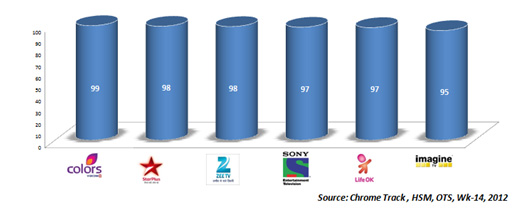
    Going by Chrome OTS numbers (Opportunity To See – percentage of households that have access to a channel) – Imagine TV has clearly been in the league of the top GECs with an OTS of 95% across HSM.


    Further, as per Chrome DPi – The General Entertainment Channel ATC (Availability To Trials Conversion) stands at 60%, while imagine stood far behind at 40% (along with Sahara One…) – clearly indicating Brand Affinity concerns.


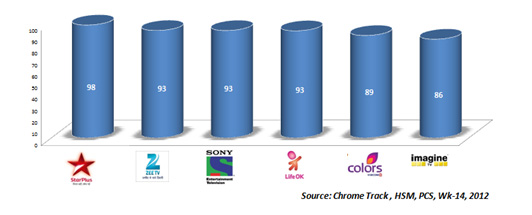
    The quality of distribution indicates similar trends – Despite being a 65 GRP channel – the overall PCS of Imagine (availability across the Top 3 Distribution Slots) stood at 86%, not radically behind Star Plus @ 98% and Zee, Sony, Life OK and Colors @ 90%.. Mostly channels with weekly GRPs scores ranging from 200 – 300!


    Consumer pull clubbed with Strategic Distribution Planning has a huge impact on the overall performance of a Channel – over the years Imagine lost out on factors contributing to the former.


    Pankaj Krishna has 12 years’ experience in the media space and brings with him a rare combination of knowledge and skills that span across brand management, advertising sales, distribution, media buying, research, events and on-air presentation and strategy. He is entrepreneurial spirit, Founder and Business head of Chrome Data Analytics & Media. With an unprecedented industry acceptance, Chrome is the largest and only Distribution Audit specialist in India. www.chromedm.com

  • Rude shock for producers and performers

    By Kshama Rao


    Producers woke up to a rude shock on Thursday  to the news of Imagine shutting shop. If IPL wasn’t enough, then the closing down of a TV channel meant further doom for the producers.


    JD Majethia

    Turner Broadcasting System Asia Pacific Inc. (Turner) dashed off a letter that to the producers and the media about Imagine being wound up with immediate effect, so much so that shootings had to be abruptly cancelled on Thursday as the TV giant didn’t want the channel to spend on even one day of shooting!


    While the industry is still reeling from the news, the worst affected are the producers whose shows were running on the channel. Rajan Shahi, who had launched Jamuna Paar on Imagine just a little over a month ago, refused to comment: “It would be too premature”. Other producers like Siddharth Tewary, the Sagars who had Chandragupta Maurya and Dwarkadheesh running on primetime were incommunicado as they grappled with the sudden turn of events.


    JD Majethia had launched two shows, Jassuben Jayantilal Ki Joint Family and Ek Packet Umeed four years ago (on January 21, 2008) when former Star TV honcho Sameer Nair had spearheaded NDTV Imagine amidst much fanfare. He said: “It’s sad and shocking. It was a channel, which with the entry of Vivek Behl at the helm of things, looked poised for bigger things, a turnaround but that was not to be. It’s a huge setback for producers and for those who work on a per day basis. A daily show means a minimum of 100 people associated with it in various capacities and with Imagine closing down, it spells doom for them. All that talent and labour goes down the drain. It’s a loss of about Rs200 crore worth of yearly business for Imagine and the industry on the whole.”


    Mr Majethia said that it was the channel’s “unclear philosophy” that did it in. When they started out, the mantra they had adopted was positive, light hearted, happy programming but then Colors launched with its emphasis on “high drama” and Imagine started floundering. The channel lost its focus, couldn’t make shows that could connect with the masses and hence lost the plot. “But as I said, things had begun to look up with the entry of Vivek,” he added.


    Another producer, on the condition of anonymity, who had worked for Imagine said it was the haphazard way of doing things and not following a clear brief that cut the Imagine story short.


    Veteran producer Dheeraj Kumar of Creative Eye Productions however played down the whole thing. His show Sawaare Sabke Sapne Preeto which was launched a year back was going strong and he said: “Just like how you get surprises in life, this too was a surprise for us. I wouldn’t call it a shock. I guess these things happen. You think, Turner wouldn’t have thought before taking this decision. Yes, it was overnight and could have done a bit smoothly with advance intimation but it’s alright, I have no complaints as we have had a good creative collaboration with them. Personally, I am not worried about my workers because we are a big production company and they would be absorbed in some or the other project. I am hopeful that Turner with its huge umbrella of channels would give us a chance of providing content to them. I am optimistic.”


    Aasiya Qazi, an actress who made a debut with Ekta Kapoor’s Bandini which ran for over a year and followed it with Deeya and Tony Singh’s Dharam Patni that was pulled off air in January is “shocked”. “It was the channel that gave me a chance to start in this industry. It gave me two shows, so yes, I am definitely shocked. I don’t know what happened and whoever I have spoken to are equally clueless. I didn’t even know why Dharam Patni was pulled off air abruptly a couple of months back. I feel sad for the artistes and the crew of the new shows like Jamuna Paar that had gone on air a couple of months ago. It’s demoralising for them,” she says.


    Vishal Karwal, who plays the title role of Dwarkadheesh in the Sagars’ ambitious mythological on Lord Krishna, is both “happy and sad. I was happy because I wanted to come back to Mumbai. I have been shooting inBarodafor the show from Mondays to Fridays and it had begun to get to me. I was in talks with the producers to let me go to Mumbai. I am sad for the workers whose bread and butter depend on these daily shows. They don’t earn more than Rs10-15,000 a month where as for actors like us, we can still survive.”


    He terms the sudden development as “unprofessional and devoid of professional ethics. The channel hasn’t been doing well for a while now and even the new channel Life OK overtook it in the numbers game.”


    Sources in the industry said the producers whose shows were largely affected won’t comment on this considering their dues are yet to be cleared. Worst hit are the Sagars whose two shows, both mythologicals and lavish productions, Dwarkadheesh and Chandragupta Maurya and others like Shahi who had barely launched a new show with a massive set.


    A source said: “One wrong word in the media and they run the risk of not getting their dues. They have already been hit badly so any press statement could jeopardise their equation with the channel.”


    So it’s wait and watch for now.


    Kshama Rao is a senior journalist tracking the television trade for over 15 years.

  • Now upgrade your skills with Gyaan Niketan

    By A Correspondent


    Recently www.gyaanniketan.com – an online platform for upgrading your skill sets, remain relevant in your jobs, and survive in a highly competitive global environment – was launched.


    The motive behind launching the site was that a challenging business environment demands versatile skills and subject matter experts have to transcend the boundaries of management and communications to stay in the game and keep winning.


    The website helps one optimize their performance and constantly raise the bar. With the help of the website, one learns to hone their skill sets; enhance their performance at work; and track the trends, developments and technological changes defining their specialized fields/markets.


    At Gyaan Niketan, one also get the opportunity to interface with mentors and consolidate domain-specific and managerial credentials that will enhance their performance at work and accelerate their movement up the growth curve.


    The focus of the website is to combine relevant theories with the practice of conducting business in today’s global economy. Their focus is on re-skilling professionals, through Education (Learn), Experience (Do) and Expertise (Act).


    Their aim is to enable the applicants to equip themselves through the online platform and expand their horizon in their chosen areas of specialization.


    One can achieve all these and more with Gyan Niketan – a group of knowledge networked individuals with extensive experience in coaching, mentoring, training and teaching-by logging into our online collaborative platform.


    The site will be online with full blown features of payment gateway, video, chat room and so on.


  • Television Street Maps (TSM) expands coverage

    By A Correspondent


    TV Street Maps (TSM), What’s-On-India’s newly launched television channel distribution & connectivity monitoring vertical has just announced its aggressive plans to expand its National coverage. TSM recently increased its footprint from 750 head-ends to more than 1000 head-ends spread across 450 towns, up from 220 towns.


    “Our goal is to create the widest & largest TV channel distribution monitoring system in the market, and with this latest expansion we have achieved that!” said Joydip Kapadia, Executive Vice President, What’s-On-India.


    The move to go aggressive on ‘TV Street Maps by What’s-On-India is considered strategic, especially in the context of dramatic changes expected in the distribution side of the TV business over the next couple of years due to the digitalization regime being introduced by the government.


    Given this ground reality, TSM has plans to reach a scale of 3000 head-ends by the year end spanning more than 2000 towns including key less-than-class-1 towns (LC1 markets).


    TSM covers day-to-day TV channel monitoring for availability, frequency & changes by head-ends & towns. Its current coverage is 1000+ analogue & digital head-ends across 450+ towns and cities. Mapping includes DTH, Analogue Cable and Digital Cable. Other services include vicinity connectivity, Flash Street News, dispute resolution.


  • Digital is the way to go, but…


    By Robin Thomas


    Consumers in India are evolving rapidly from print and radio to television and now digital. Just when you thought that digital was all about display advertising, bulk SMS, search, email advertising and online classifieds, in came the social media, video advertising, smart phones, tablets, apps, mobile advertising and so on.


    According to industry estimates there are 120 million internet users in India today, of which almost 30 per cent are from small towns. While India’s broadband internet penetration is still low, it is believed that the next phase of growth in internet will come from mobile users which are estimated to be over 800 million.


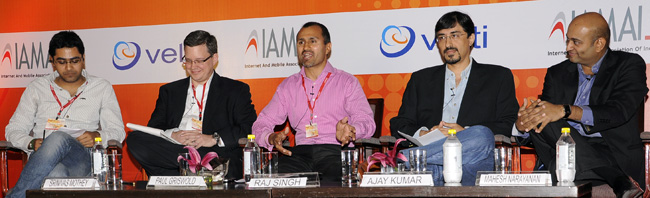
    As more and more youngsters gain access to various digital platforms, there is a greater need for marketers to not only engage the young consumers, but they must also be able to give them a unique experience across the digital platforms. The IAMAI (Internet And Mobile Association of India), which held its 8th Marketing Conclave, 2012 – ‘Digital Marketing 3.0’ on April 13 in Mumbai, extensively discussed the role of social media, video advertising and mobile advertising in the near future.


    Using Social Media:

    Today most companies have multiple social networking sites – Facebook, Twiter, LinkedIn and others. There are separate teams handling social media marketing for the company, but, are brands listening to their consumers? Do they interact and respond to queries and complaints? Do marketers understand the social media and know how to monetize it? Or are brands simply satisfied with the number of ‘Likes’ and views they generate on their social networking sites?


    Karthik Nagarajan, National Director, Social and Insights, Group M was of the view that unless one is not ready and mature enough as an organisation for the medium, the organization must stay away from social media.


    According to Usha Sangwan, Executive Director, LIC India, what brands lack today is the courage to be transparent, they don’t respond to negative feedback and fail to turn the customer as an advocate of their product. “Brands must not see social media as a mere marketing tool and limit to generating numbers alone, but social media must be used mainly for connecting with the TG and co-creating the product. Brands must try and understand their TG and become a part of their customer’s day to day life.”


    Virginia Sharma, Chief Marketing Officer, IBM India hit the nail on the head by stating that brands must have the ability to admit their mistake and apologise to the customer. She admitted that while there is a certain amount of fear among brands to apologise for a mistake committed because it may lead to negative public opinion, but felt it is always better to apologise and rectify the mistake which could lead customers to becoming an advocate of the brand.


    Vinay Bhatia, Customer Care Associate and Vice President Marketing and Loyalty, Shoppers Stop added that it a company’s reputation is harmed only when it fails to act responsibly to a complaint made, and not when it apologises for a mistake and tries to rectify it. “The problem with the companies today is that they make policies as if the consumer is a criminal. Accepting a feedback and acting upon it will not harm the brand but, if one chooses to remain silent about a complaint, that’s the worst one can do to his brand.”


    Leveraging Mobile Advertising:

    Besides the social media, mobile advertising is another challenge faced by marketers who have more or less failed to leverage the small screen. Sadly, mobile advertising is largely limited to only SMSes. Marketers are said to often mistake mobile as an extension of broadband internet and as a result they fail to give their consumers a unique experience on mobile.


    Speaking from a marketer’s point of view, Ajay Kakar, CMO, Financial Services, Aditya Birla Group stated that although the potential for mobile advertising is high, there is still a section of people who have not seen the mobile as an opportunity. He added that mobile industry must follow the ‘Jo dikhta hain, wahi bikhta hain’ policy and evangalise the benefits of mobile advertising. “Content is very important, don’t tells me about your brand, but tell me what’s in it for me? Give me the case study of successful mobile advertising. What I want to know is how much money mobile advertising is making for my brand and for my business? What you must do is to stop saying ‘buy me, buy me’ but, instead tell me ‘why me, why me’?”


    With the introduction of 3G and now 4G services, mobile internet is expected to be faster and with high quality content, better mobile applications, much better video and much more. In addition to these, smart phones and tablets are also said to play important roles in the growth of mobile internet in India.


    Mahesh Narayanan, Country Head-Mobile, GoogleIndiasaid that there is not only lack of understanding about mobile advertising, but also lack of discussion about mobile as a medium in board room meetings. “The consumer shift is already happening from traditional media to mobile; however, great amount of content for mobile is yet to be created. People are looking for your brand on their mobile phones but, ironically brands are absent on mobile.”


    While mobile subscribers will continue to grow and more people will access internet through their mobile phones, the challenge lies in monetizing the medium and to find newer ways to reach out to consumers besides SMS advertising.


    Paul Griswold, Director Product Management, Mobile Marketing, Velti was of the view that mobile is not treated as an integrated part of marketing strategy, but is seen as an extension to online. “There has been a failure to take the advantage of the one on one interactivity mobile offers and just sending SMS is definitely not the way.”


    The participants outlined not only the problems but also possible solutions. According to Srinivas Mothey, Head Mobile Marketing and Advertising, One97, the first step is to educate advertisers and agencies about the benefits of mobile advertising. Although every advertiser may have a different view about the medium, nevertheless they need to be encouraged to invest in mobile. “We are also encouraging advertisers to create mobile assets and not just mobile apps. We are beginning to see the positive results but, in order to see more results, it may take some more, but the first step needs to be taken.”


    Video Marketing:

    Video advertising/ marketing is not a new phenomenon for marketers. Traditionally, marketers are said to be comfortable with video and we have been seeing that on television, and will probably see the same, and in a much bigger way, online and on mobile in the near future.


    According to Debadutta Upadhyaya, Vice President, Vdopia Media, there has been over 50 per cent growth in video consumption in the last one year alone, the fourth largest globally. “Unlike other countries,Indiahas made the leap from web to email to social media and now video. There is still a long way to go on the creative aspect because the primary advertising medium of a creative agency has always been television, so creativity in video advertising is bound to take some time.”


    As India’s broadband penetration and mobile internet accessibility increases, it would be just a matter of time when video marketing would explode inIndia. Besides online, with 3G and 4G services, video consumption on mobile should be an altogether different experience for users and marketers.


    But Shubhranshu Singh, Marketing Director-IndiaandSouth Asia, Visa cautioned: “There is a difference between video on web and video on mobile, and the difference between the two is galloping ahead in terms of content. Perhaps the youngest audience in our country today will watch television online for the first time which could be an opportunity or a threat if we are not ready for it.”


    Digital marketing in itself has become 360 degree for marketers. It has gone beyond display and banner advertising, to becoming more interactive and innovative to reach out to consumers. Digital marketing, as the industry players pointed out, is in a transition phase from web, to email and now brands are trying to reach out to their customers through social media, mobile and video.


    Marketers must stop considering mobile internet as an extension to online and, therefore, give mobile users unique experience of mobile advertising. Social media must not be seen as a mere marketing but, a medium to interact with their consumers, know their behavior and be a part of their day to day life.


    Brands must be receptive to both positive and negative feedback of customers, admit to their mistakes, apologise to the customer and rectify the fault. Digital marketing will undoubtedly grow but, marketers must first be evangalised not only about the benefits of the medium but, also ways and means to leverage it.

    Imaging: Rafiq