Category: MEDIA

  • India ranks 7th in Facebook timespend

    By A Correspondent

    An international study into the use of social networks by global information services company Experian reveals just how much time people living in different countries spend on Facebook. Singaporeans emerge from the study as those who spend the longest on the social network site, with an average of 38 minutes and 46 seconds per session, while people living in Brazil spend just under half that with an average of 18 minutes and 19 seconds per Facebook session.

    According to the analysis by Experian Hitwise, the average session time on Facebook in August 2011 across the eight countries varied significantly. The average time spent on Facebook in August 2011 per session was – Singapore, 38 mins 46 sec; New Zealand, 30 mins 31 sec; Australia, 26 mins 27 sec; UK, 25 mins 33 sec; US, 20 mins 46 sec; France, 21 mins 53 sec; India, 20 mins 21 sec; Brazil, 20 mins 21 sec.

    Understanding average time spent on Facebook, the world’s most widely used social network, illustrates the importance of brands needing to be on social networks, the study said. By knowing that an average social network user in Singapore, will for example, spend an average of 38 minutes on Facebook means that a brand can increase the likelihood of capturing an individual’s attention by running digital marketing campaigns through Facebook. Content and advertising which is compelling will ultimately lead to greater engagement in social networks and consequently greater sales, whether on the brand’s own website or indeed within Facebook.

    Mr Navin Chandani, Managing Director, Experian Marketing Services in India, commented, “The power of social networks like Facebook is that in some respects they don’t have any boundaries and make the world a much smaller place. Knowing the market share social networks have in each country and the level of usage is key to social networking success. However, our research shows that the way individuals use social media can and does change according to cultural and personal backgrounds – therefore ‘one size definitely doesn’t fit all’ when it comes to digital. For any international brands to be successful in their digital campaigns, they must understand the local, digital and personal nuances that exist.”

    Social networking is now one of the biggest online pastimes across the globe. In each country there are thousands of social networks, varying from 3,245 in Brazil to 9,000 in the UK. Despite being one of the most mature social markets, the UK has the lowest market share of visits going to social networks and forums (12.2 percent). Brazil has the highest percentage of Internet visits going to social sites (18.9 percent of Internet usage) with 43 percent of all social networking visits in Brazil going to Orkut, the most visited social network in Brazil.

    Mr Chandani said, “Understanding how long people spend on Facebook in different countries is vital for any brand on the social network. With Facebook still finding its feet in the emerging markets of India and Brazil, lower session times are to be expected – users won’t have as many friends or groups that they have signed up to. However that doesn’t mean brands should ignore Facebook in those countries – with market share for Facebook in India increasing by 88 percent year on year and 16 percent in Brazil year on year, its influence and dominance is only set to grow.”

    Further analysis of the data reveals how different industries attract website traffic as a direct result of social networks. Social network users in Brazil, India and Singapore rarely go on to visit retail websites after being on a social network highlighting that retailers in these markets have a significant opportunity to increase their presence on social networks, ultimately driving website traffic and sales. This contrasts with countries such as New Zealand, where nine per cent of retailers receive web traffic directly from social media.

    Entertainment topped the list of the sites visited after social networks in the nine countries polled by Experian, with well-known sites such as the BBC’s iPlayer and Sky Sports featuring prominently.

    Other key findings from the survey revealed:

    In Brazil the number one social network is Orkut.com with 43 percent market share. This has fallen year on year by 18 percent with Facebook experiencing an increase in market share August 2010 to August 2011 by 16 percent

    The country to experience the fastest growth in Facebook use over the past year is India, with the social network accounting for an increase in market share of 88 percent in August 2011 compared to August 2010.

    The US also experienced a market share increase from Facebook of 5 percent year on year.

    Approximately 1 in 4 Singaporeans (18 percent) jump from one social network directly to another, demonstrating their love of social networks.

  • KBC takes the Vritti bus for max recall

    By A Correspondent

    The results of a recently concluded survey by Vritti i-Media reveal that the ad jingle of Kaun Banega Crorepati has emerged as the most recalled ad at MSRTC-owned bus stands across Maharashtra. Sony Television has roped in Vritti i-Media’s audio advertising network to relay the famous jingle of KBC to serve the audience as a reminder to watch the daily quiz show, now in its fifth season.

    In line with the “Koi insaan chhota nahi hota” ad messaging, this is an effort by the marketing team at Sony to increase the viewership base of people residing in the semi-urban and rural parts of India. In order to reinforce this message, the KBC advertisements have been playing at regular intervals across ST bus stands in Maharashtra along with the bus arrival and departure announcements on Vritti’s audio network. The combined effect of the familiar jingle and the Bachchan baritone coupled with the compulsory listening format that is the advantage of Vritti’s medium, this jingle has emerged as the most popular and highest recalled ad across rural Maharashtra.

    Emphasizing the effectiveness of the medium, Mr Veerendra Jamdade, CEO, Vritti Solutions says, “For most of the people in small towns and villages of Maharashtra, MSRTC buses are the major mode of transport. While they are at the bus stand waiting to board the buses, advertisements played at the stand are the only mode of entertainment for them. Kaun Banega Crorepati has identified this and is reaping its benefits.”

    Insights from the bus stands in Maharashtra:

    ST buses are the chief mode of transport for the rural consumers.

    Each bus stand is frequented by at least 40,000 people each day.

    A frequent traveller visits the bus stand at least 2-3 times in a week

    On an average a traveller spends at least 20-25 minutes at the stand before boarding a bus.

    India resides in small towns and villages. And with Vritti’s networks, it has become lot easier for advertisers to reach this India effectively.

  • Education discussed at Sakal’s Dubai meet

    By A Correspondent

    Some 50 vice-chancellors from top Indian universities, industrialists and business leaders discussed the future of the Indian education system and formulated strategies and policies, at the Sakal Media Group’s three-day education conference, Sakal Educon 2011, in partnership with Dubai International Academic City (DIAC) between September 16 and 19, 2011.

    This is an annual event started in 2004 and this year the venue was Dubai. This year’s Chief Guest was Minister for Human Resource Development of India Mr Kapil Sibal. In his opening speech he reiterated the need for complete transformation of Indian universities. He also emphasized the need for embracing Internet based technologies to develop open courses which can be accessed from anywhere.

    Mr TD Joseph, Network Head – Events of Sakal Media Group said, “We are grateful to Dubai Knowledge Village (DKV) for its support and interest in partnering with us. This will help us to explore opportunities of creating synergies for better business, knowledge sharing and learning through expertise carried by both the nations.”

  • Radio Mantra celebrates birthday of Lata Mangeshkar

    By A Correspondent

    Radio Mantra will AIR an exclusive treat for Lata Mangeshkar fans that includes trivia about their favorite singer along with her all time super hits throughout the day. Action Replay will include her hit numbers from the ’80s and ’90s while Ticket To Bollywood will feature peppy numbers she has sung after the ’90s. RJ Rehan will talk about the “Cuckoo of Indian Cinema” in the late evening show Love Aaj Kal, spiced with her handpicked evergreen songs. Listeners can also call in and request for their favourite songs by her.

    In a career spanning over six and a half decades, Lata Mangeshkar has been featured in Guinness World Records between 1974 to 1991 for having made  most number of recordings in the world.  She has recorded songs for over a thousand Hindi movies and has sung songs in about36 regional Indian languages and foreign languages. She has won many awards and honours including: Padma Bhushan, Padma Vibhushan, Bharat Ratna, Dadasaheb Phalke and National Film Awards to name a few.

    Mr Kanwar Sameer, National Programming Head, Radio Mantra said, “We have planed an all-day special for the occasion, where apart from her classics, listeners will enjoy the best of trivia about Lataji, a living encyclopedia of singing in herself.”

    Radio Mantra 91.9 FM is an initiative by the Dainik Jagran group with a pan-India presence spanning eight cities namely Agra, Bareilly, Gorakhpur, Varanasi, Hisar, Karnal, Jalandhar and Ranchi. With a listenership base of 5.37 million, Radio Mantra is one of the top five radio stations in India.

  • Media as an Ingredient

    By Premjeet Sodhi
    There was a time when the usage of media was optional. Media was an add-on which if a brand so desired or if needed would use to spur sales.
    When, I look at this from the cooking perspective (since, I love cooking a lot) I would say that media was used just as a garnish. Yes, it did make the dish seem more desirable and added some flavours but one could certainly do without it.
    Media was never appreciated. When the sales were healthy – there was no need for media and when the brand was in dire straits and there was strain on profitability – media was the first to be curtailed.
    But, those were the times of the seller; the consumer then was a deprived citizen and had no say or choice in what was being served to him. The seller prepared the product and used media just to ‘inform’ the consumer either of its existence, its merits or its price. Media was never embedded in the value creation that the product or service promised; it was so far only communicating the value. Hence, the use of media was need based.
    The world has changed. Consumer is King.
    It is not about the seller asking the consumer about what they want and then manufacturing the product or service accordingly. The matters have progressed far beyond that. The sellers are no longer in control. They have morphed from brand owners to brand custodians to just being brand moderators. Despite all the theory that existed – the brand in the yester years was still in the mind of the brand owner (with due feedback and research of the consumer). But, now the consumer is in control of the brand.
    Here, when I say consumer  it is again different from the consumer of yester years. Earlier you would imagine the consumer as an individual (or a number of individuals – not connected to one another) but today the the consumer is a group – a group of connected and communicating people. Earlier, the consumer was a multitude of individuals but now is a Collective.
    More and more products and services are being designed so that their consumption also happens or heightens when consumed as a Collective. And, these are not being designed by just the companies. The companies are a participant in this collective along with the consumers. Media runs as blood in the veins of this collective binding the consumers to each other and hence media is intrinsic to the construction of the brand.
    Media is no longer an add-on; no longer a garnish; no longer need-based.
    Media is critical and essential to the construction of the brand and the consumption of the brand.
    Media has become an ingredient for the brand.
    Brands that still treat media as an add-on have a lot of thinking to do. And, the day brands change this perspective – I am sure they will start looking differently at how they select and integrate media into their value promise. This will change the value they attribute to media in their P&L and will also impact the remuneration they pay for those who advise them on media.
    Media is no longer a garnish, but is a critical ingredient in the brand.
  • Newswatch: Covering the queer spectrum

    By Nitin Karani


    There’s little to be happy about the state of journalism today, but this piece will try to remain upbeat and offer constructive comments on coverage of LGBT (or queer issues). The focus is mainly on the English-language media. First, a pat on the back for doing by and large a good job, especially in the editorials department! A lot of the reportage is either by queer and queer-friendly journalists themselves or driven by them.

    These journalists are also the most innovative in their approach to queer issues and in touch with the pulse of queer communities despite not being on an ‘official queer beat’— another sign to management why they need diversity and inclusion in their organisation. Having people in your media house from different communities helps you understand them, reach out to the communities and broaden and strengthen your coverage. One editor deserves a special mention here. Aditya Sinha, currently with DNA, launched a weekly ‘Sexualities’ page (it was mainly about queer issues) back in April 2008 when he was with The New Indian Express. The practice continues at DNA, which has a monthly page. Quality may be ultimately important but for marginalised identities this is great exposure in the short run.

    This is not to say that there is no homophobia in the media. Of course there is sensational and sleazy reporting (TV9’s “sting” op in Hyderabad; “Central Park a Gay Paradise”: Mid-Day); insensitive, even biased writing (“A baby for gay, deaf, mute couple? It’s cruel”: Deccan Chronicle) and totally muddled, pseudo-scientific horrors as well (“Lesbian? Not quite, say psychiatrists” and “Trapped In Bad-Girl Taboo”: The Times of India). Then, there is the let’s-not-talk-about-it attitude, which is probably true of quite a few publications, but probably nowhere as ingrained as at the Reader’s Digest. However, change is inevitable and so is a debate on queer issues.

    What the media needs to do most is to go beyond the superficial, else both reader and writer will be bored! And which reader would like to start their day with a humdrum piece on a Pride parade when there are so many other colourful diversions? There are many interesting queer stories waiting to be told yet. If mainstream newspapers and channels won’t tell these, then the competition will (for instance online news magazines such as FirstPost.com). The White House has a new LGBT liaison but how many people know he is of Indian origin: Gautam Raghavan. Usually, the press goes gaga over desi achievers, even those who want to deny their Indian origins. So isn’t the Gautam Raghavan story worth an interview or at least some column inches? Let’s start with the basic issue though.

    The terminology: Admitted it can get confusing, especially with the never-ending acronyms (LGBTQI… – even The International Lesbian and Gay Association named its 2002 Mumbai regional conference ‘A-Z: The Other Asia’). However, journalists are supposed to know. Or find out! The latest NGO abbreviation is “MTH”, or men-who-have-sex-with-men, transgender and hijra. Label with care! Most people use ‘TG’ and ‘hijra’ interchangeably with eunuch. But hey, it’s all about letting people be themselves and choosing their own labels instead of imposing. Also, note that not only is the word ‘eunuch’ outmoded, but also a lot of queer people object to it as a derogatory term. Dictionaries can’t seem to keep up with these changes, so cultivate your go-to experts for advice on such matters. Ultimately, of course, people are more complex than labels.

    Pride marches: It’s been more than a decade since this annual event became a regular feature on the queer calendar in Kolkata, and every year new Indian cities are added to the list. However, in terms of visuals at least, our photographer colleagues give it the same hackneyed treatment – the usual close-ups of a hijra/transgender or of two transgenders kissing each other. The focus is always on the most garish. If they would only look more closely, and not get blinded by all the colour and pageantry, they will perhaps capture new stories of the gay couple with kid in tow, the gay bankers network, the lesbian elders who have been together longer than you have been a journalist and so on, instead of dismissing the rest of the crowd as ‘boring, normal-looking’ LGBs (lesbians, gays and bisexuals).

    TV debates/‘balance’: Twenty years of sat TV and all we have to show for it is a handful of coming-out stories and the same old discussion on every Oprah copycat show. These shows do face limitations because not many people are willing to out themselves on TV yet (even when given the honourable way out by hosts such as Simi Garewal). It’s a challenge that needs to be taken up, though, and tackled with ingenuity. Only ‘reality’ TV is pushing the boundary here, not the news channels. Although the distinction seems to be blurring!

    Meanwhile, newsroom discussions have the mandatory religious figure (to the point that it has become predictable which talking head will be on air and what they will say) even when the discussion on decriminalisation of homosexuality has nothing to do with any religion, especially Christianity. Politicians and ministers, who fight shy of the issue in public regardless of which side of the debate they are on, are never pinned down, unless they are also small-time politicians with a religious minority connection. Besides Tamil Nadu parties, which have shown some initiative on TG issues, no political organisation has been made to speak up on queer issues, although politicians are difficult to shut up on any other subject. When some of them do open their mouths to speak utter rubbish, like Ghulam Nabi Azad and Farooq Abdullah did, the media allows them to get away with it.

    On the other hand, sometimes journalists defend insensitive writing on specious grounds. In the name of religious celebration, it is common for people to dance on the streets of Mumbai to Sheela, Munni and Shakira numbers, and no one blinks an eye. What then would you say to a journalist specifically seeking out people who could have moral issues with Mumbai Pride week celebrations in suburban Bandra – just so that there is “balanced coverage” of the celebrations! That too in the midst of the Pride week, when some off-balance zealot might get provoked by irrational fears of children “getting into wrong things” expressed in the piece.

    The business of gay icons: Most stories about showbiz are created by PR people and so a new ‘gay icon’ emerges every few weeks. Often the actors too are fooled into believing their ‘iconic’ status by their producers. The rare actor does try to live up to the status with a sensible head on his shoulders and some genuine concern for gay equality. Seriously though, gay men have very diverse tastes, and rarely is an actor put on a pedestal by them. So most of the talk about someone being a gay icon, and asking every other actor what they think about being called one is, well, a con. Sure, let’s ask what actors think about playing gay on screen (though most will give you hypocritical answers as directors such as Onir will testify because they fight shy of doing such roles). But let’s also ask them the tougher questions, such as why they play the stereotypes and caricatures when they apparently root for gay equality.

    Staying with icons, how come we don’t read about lesbian icons in showbiz? Is it because it’s a male-dominated industry in a patriarchal society that still represses women’s sexuality? So the straight men will continue to enjoy the thought of girl-on-girl action but are unlikely to toast an actress as a lesbian icon anytime soon. The serious journalist would find enough genuine queer icons if they only looked.

    Reactive, not proactive: Most of what we read on the subject tends to be event-driven—a film festival, the launch of a business catering to the queer community, and so on—rather than being driven by the journalist’s imagination. With so much happening anyway (and so many press releases being dumped into the mailbox, not to mention the noise on social media), it may seem reasonable to forget about queer issues. However, bear in mind that the queer community works with limited resources (even if a certain set seems to party hard), can rarely afford to employ PR professionals and most community organisations are dealing with one crisis after another (such as suicides, threats from families, HIV-positive people falling seriously ill suddenly, hate crimes, ministers shooting their mouths off, big question marks over police permissions for public events and funders not releasing money on time). In such a scenario, the journalist needs to chase the well-networked individuals from the queer community for stories too.

    Outing, crime: Gossip is cheap but sometimes true. When it comes to a person being allegedly queer, the juice is passed around but rarely gets into print. Affairs of Bollywood stars and celebrities get written about endlessly, and not just in filmy magazines. Now even sports stars and politicians are making headlines for amorous achievements off the field. Only as long as it’s all heterosexual. Contrast this with the very polite treatment of gay rumours. Once in a while, a Shah Rukh or a Karan Johar will be asked about the enduring goss (okay, Karan, it wasn’t polite that one time). A Milind Soman will even admit that the silliest rumour he has ever heard about himself is that he had an affair with a man no less than Ratan Tata. However, even a quotable quote will remain buried, never receiving the same threadbare treatment of a hetero affair. Like Milind Soman telling Stardust years ago that had he not been in love with Madhu Sapre, he would have been in love with a man. No controversy there apparently, but great controversy about the Tuff in the buff ad!

    That is not to say that every silly rumour should be chased and every quote blown up into a headline. However, why the unequal treatment? The privacy argument should apply equally to queer and hetero individuals. Frankly, the privacy argument is bogus and just a convenient excuse to cover up. No one’s interested (okay, some may be) in who does what with whom in bed. How is privacy invaded though by just saying that you are gay, bisexual, transgender, asexual, intersexual, or whatever? In fact, unwillingness to answer that question, especially when you don’t tire speaking about every other mundane aspect of your life, can only mean one thing. If a person claims to be an environmentalist or feminist but runs a polluting industry or is a doormat wife of a bigamist, wouldn’t you point out the double standards at least? So if a closeted gay politician does anything to harm the queer community or a filmmaker produces a film with gay stereotypes or caricatures, shouldn’t such people be outed? Those are the questions that stare journalists in the face today.

    Once, in my journalism class, there was a group discussion where we students were given a hypothetical scenario. A cinema known for its gay porn gets burnt down and several male patrons lose their lives as a result. Among them are well-known, closed members of society. The newspapers have a choice to report the names of the dead, or hide them to spare the families of the dead person the stigma. Predictably, quite a few of my classmates recommended the newspapers should not publish the names. Many queer people would also agree, on the ground of ‘privacy’. However, not publishing the names, especially when that is the publication’s usual practice in case of such accidents, suggests and reinforces the sentiment that being gay is shameful. The dead person is not around to be affected by the ‘outing’, and we don’t even know what their choice would have been had they been alive: whether to come out, or not.

    As a matter of routine these days the police just hands out the names of queer murder victims whenever they think there is a ‘gay angle’ – sometimes one even wonders if they aren’t being overzealous about discovering a  sexual slant. The names get published, which is not problematic per se. What should bother us is whether any journalist even pauses for a minute and questions the police’s version of events in their minds.

    Dead people may be unaffected by the outing but it could be hell for closeted gay men abused, called names and forced to give out their names and contact details to the police simply for being at a party. If this isn’t torturous enough, they are put on display before an unquestioning, servile, insensitive media which has been ‘tipped off’ so that the pictures can be beamed to the world and played in an endless loop.

    How come no one argues for privacy when the cops ‘bust’ a private gay party? Who takes responsibility if one of the guys kills himself or gets beaten black and blue by his family? Even as the US President tells Manmohan Singh and the rest of the UN to protect their queer citizens, the Mumbai police won’t even let gay people party.


    Nitin Karani edits equity research for a living when he is not trawling the web for media reports on queer issues. He also blogs infrequently at queerindia.blogspot.com, and writes for Bombay Dost magazine.

  • MediaVest grabs PIX media mandate

    By A Correspondent

    In what can be described as another note in its symphony of wins, Media Vest’s Mumbai office has bagged the media mandate of PIX, the leading English movie channel. Both the agencies will handle all the media planning activities for the channel. Media Vest will handle television and radio and Zoom Advertising will handle only print.

    MediaVest Worldwide is part of Starcom Media Vest Group. Starcom MediaVest being ranked one of the largest brand communications groups in the world. MediaVest will handle the operations for PIX in Mumbai.

    Commenting on the development, Mr Dinesh Rathore, VP MediaVest, Mumbai said, “Pix is one of the leading channels in India that provides excellent English content to the viewers. It has been broadcasting great content to the viewers consistently over the past few years. We intend to drive the channel to a leadership position in the English genre with our human experience strategy framework and hardnosed analytics, providing simple, real-time and meaningful solutions. We are excited to be working with the brand and believe that this partnership will translate into a success story for it.”

    Zoom Advertising became operational in 2004 and within a span of three years it managed to get INS accreditation. Delighted at their recent success,  Mr Chirag Barasia, Proprietor – Zoom Advertising commented, “Being an evolving agency we have established ourselves as a formidable agency in print action, so we take great pride in the way which PIX has put immense trust in us. We are also excited in bagging their print AOR & media buying duties which is a challenge and an opportunity for us to connect them to wider print options. We are extremely positive on our media buying capabilities and thus we will strive hard to ensure PIX achieves significant progress and success in their print portfolios. Similarly, PIX has given us a big boost to venture out in exploring and implementing other media opportunities for them and our other clients.”

  • McCann wins Agency of the Year at Mirchi Kaan

    By Shubhangi Mehta

    The 8th Mirchi Kaan Awards  were announced yesterday in Mumbai. McCann Worldgroup continued its dominance this year as well, bagging the Agency of the Year award.

    Prasoon Joshi, Executive Chairman, McCann Worldgroup, said, “We are delighted to have won this award. McCann has outshined as a strong agency over the years in this award. This is also special for us as Radio is a difficult medium to write for, unlike television, hence the team is even happier to have won this.”

    Prashant Panday, CEO,Radio Mirchi said, “The Mirchi Kaan awards are a very emotional event for us. This is a night we spend with friends and recognize and reward their brilliance. For us, the benefit is when radio becomes as creative a medium as television or print. We are happy with the way the creative quality has improved over the past eight years. The pride for us is the quality of the jury, and we owe a debt of gratitude to them.”

    The 8th Mirchi Kaan Awards received about 250 entries across 16 categories. In addition there were special awards for the best writer, best voice and the crystal award for most outstanding radio commercial of the year.

    The jury this year consisted of Agnello Dias, chairman and co-founder, TapRoot, Deepa Krishnan, president, creative, Lowe Lintas, Prathap Suthan, chief creative officer, Iyogi, Rekha Nigam, managing director, Vihaan Communications, Sunil Thoppil, vice-president, McCann Erickson, Ashish Khazanchi, national creative director, Publicis ambience, Josy Paul, chairman and chief creative officer, BBDO India, Amit Akali, senior vice-president and national creative director, Grey, Ramanuj Shastry, chief creative officer, Saatchi & Saatchi, Malvika Mehra, national creative director and senior vice-president, Grey, Prasoon Joshi, executive chairman and regional executive creative director, McCann Worldgroup, Meera Sharath Chandra, K S Chakravarthy, national creative director, Draftfcb Ulka and Manoj Shetty, senior creative director, Ogilvy India.

  • Tring, tring! Maruti, Dabur & Co woo internal/external customers via mobiles

    By Nikhil Menon


    Between the Indian Premier League-3 and the FIFA World Cup, 2010 dished out a lot of high-octane excitement that was exceeded only by the marketing blitz surrounding these competitions.


    For Maruti Suzuki, getting a piece of the action was important, since it was launching a massmarket car (Eeco) and its new K-series engine around the same time as the IPL season. Also, the company wanted to be seen a young, tech savvy brand that the new generation of sports enthusiasts could identify with.


    Since competitor Hyundai was spending huge amounts as sponsor of both events, Maruti had to try something different. Instead of thinking megabucks or bigger promotions, India’s largest car-maker thought smaller – in pocket-size terms.


    “With the advent of the Internet on phones, young buyers have become keen users of digital media – so the mobile was an obvious place for us to be in,” says Maruti’s chief general manager, Mr Shashank Srivastava.


    Maruti jumped into the IPL fray with a cricket alerts service accompanied by a daily contest. The contest was the ‘hook’ used to reel subscribers into specially-designed ‘Maruti branded zones’ complete with verbal and visual cues related to the brand.


    During the FIFA Cup, Maruti ensured that its branding was visible across a portal , which gets a lot of traffic from Maruti’s core target of young, urban males. With 20 million impressions from seven million unique users, the mobile campaign generated significantly better returns for Maruti than all media formats. “We have doubled our digital media budget to Rs 15 crore this year,” says mr Srivastava. Last November, this campaign won an award from the Global Mobile Marketing Association.


    Maruti’s successful tryst with the mobile phone is part of a phenomenon that gurus have long been predicting – the rise and rise of the mobile device. Today a phone isn’t just personal; it is fast getting commercial. At last year’s Mobile World Congress in Barcelona, Google CEO Mr Eric Schmidt said in the context of business strategy, “The new rule is mobile first.”


    And it’s not just the Internet giant that thinks so. In India, the mobile revolution and rollout of 3G services have helped create a natural platform for engaging customers in transactional activity . However, the growth in mobile services is predicated on the growth of smartphones and most companies are still playing a balancing act across different generations of mobile technology . Apollo’s medical response service is one such model.


    As part of the group’s strategy to touch a billion lives, Apollo wanted to extend its healthcare services to people hailing from areas where the brand didn’t have a presence. Through group company HealthNet Global, Apollo tied up with operators Aircel and Idea earlier this year to provide SMS and voice services to their subscribers. While the SMS service pushed specific health tips to users’ phones, the voice call service was manned by a team of doctors who would collect the patient’s information and recommend medicines based on the symptoms described.


    Mr Rahul Thapan, global head of marketing and sales, Health-Net Global says close to half a million calls have already poured in so far and HealthNet Global is ready to take this service to the next level. It is now awaiting TRAI permission to roll out a 3G video consultancy initiative that allows people to chat with doctors on video-enabled smartphones and also upload relevant reports that can be viewed by the physician who can issue a printable prescription. “While we plan to charge Rs 60 per video consultancy for urban consumers, we realise that rural consumers may not have access to smartphones. The government needs to enable this programme at the rural level,” says Mr Thapan.


    Companies are using mobiles to target internal stakeholders as well. This has created opportunities for handset makers and operators alike, especially within business mobility. India’s largest mobile services provider Airtel uses its MATE (Mobile Application Tool for Enterprise) platform to offer over 30 enterprise consumer applications that include information sharing, tools for field staff, mobile learning and other tools.


    Mr Najib Khan, chief marketing officer-B 2B, Bharti Airtel says that as workforces go mobile, the cell phone will play a key role in keeping information and processes flowing smoothly. “The mobile workforce in India will grow to 205 million by 2015, and 65% of these individuals will have smartphones. Employers need to have a strategy in place to deal with this upcoming trend,” he says.


    For the last three months, Dabur has been using the mobile platform to efficiently measure sales, inventory and customer response in its rural markets. Mr George Angelo, executive director-sales , says, “We recently expanded its sales force in the rural market in a big way. But data archiving was a big challenge, and too much paper was being generated. The mobile app (application ) has changed all that.”


    The app is being used by approximately 500 sales staff across an initial batch of 200 districts in 8 states. Loaded onto the sales person’s mobile phone, it keeps track of inventory at the level of the village sub-stockist . As the salesperson visits different markets , he punches in sales of products from each village and issues replenishment orders from the district super-stockist . The data is also relayed to Dabur’s head office, and displayed on a giant electronic map. “This way, we know where the sales person has been, orders generated, inventory remaining, values of sales and buying activity from individual villages,” Mr Angelo says. Parallel to the rural app, Dabur also launched another app used by merchandisers to track whether retail stores are meeting their commitments vis-?-vis Dabur products.


    The B2B applications of mobile phones are catching on fast. Three years ago, Mr Siddharth Agarwal, founder and CEO, Mobicule Technologies perceived an opportunity in mobile workforce solutions for distribution-oriented businesses. Ironically, his first client was Mumbai’s largest Nokia distributor. “We installed an application on their phones which enabled them to check the retailer’s credit, punch orders into the system and receive approval for the same instantly,” Mr Agarwal says. It’s taken a while for other clients to see the point, but Agarwal says people are today far more comfortable with such ‘futuristic’ solutions.


    A case in point is Shoppers Stop, which uses Mobicule’s warehouse software product residing on high-end PDA devices, to scan incoming merchandise and verify it with the retailer’s enterprise software – something that was earlier done manually, with a much lower degree of efficiency. Mobicule claims that since post the implementation, there has been a 17% lowering of stock-outs and near-100 % accuracy in store dispatches.


    On the consumer front, companies have seized the opportunity to build services for the urban user whose increasing dependence on cell phones for entertainment and social networking has thrown up many possibilities. For DTH satellite television company Tata Sky, linking its services to users’ mobile phones was a natural move, since research indicates heightened levels of phone usage among youngsters during TV watching hours. “The majority of our users have smartphones and are heavily influenced by their peers on social networking sites,” says Mr Vikram Mehra, chief marketing officer, Tata Sky. The company recently launched a single, integrated iPhone app that subscribers can use to find out more about current and future shows, order new ones and pay online, record shows remotely , see what shows their friends are watching, and share their thoughts on Facebook or Twitter.


    While these services were already being offered individually via SMS, the integrated app brought them together. Mr Mehra says that within days of the launch, the app has been downloaded by over 100,000 users, and now the company plans to introduce something similar on the Android platform as well.


    HDFC, too, decided to take advantage of rising Internet usage on mobile phones, and moved its full-fledged NetBanking functionalities to a mobile GPRS site – claiming to be the first bank to do so. Mr Sanjeev Patel, EVP & Head, Direct Banking Channels , HDFC Bank says, “NetBanking has become popular in recent years, and since 3G-enabled cell phones offer much faster transactions, we thought it made sense to combine the two,” he says. While refusing to share usage details, Mr Patel says the response has been better than imagined. “We’ve already achieved 70% of our annual target for the medium,” he says.


    While most mobile initiatives in India are beginning, elsewhere companies have already latched on to the medium. The Financial Times reported that an iPad app used by Pepsi ‘s vending machine technicians saved it $7 million in 2010.


    Mr Amit Lall, head-mobile marketing, Mobile2Win says one of the factors instrumental in mobile marketing spends growing at a healthy clip, is that it’s possible to target phone users on many fronts -handset , number, operator, circle, usage patterns, etc. He states an example, “We created a tax calculator application for Bajaj Allianz, for people looking to save tax on their income . Their usage details were saved and the company called them back later to get feedback on the app and potentially engage them further.” While this is great for marketers, some worry about privacy being compromised. But Mr Lall says that the choice to interact with a brand is completely in the user’s hands.


    Mr Kevin Conway, global director of consumer brands at Missouri , US-based Savvis Inc says: ” The solutions that will prevail in mobile marketing are the ones that will put the power in the hands of the consumer to opt in or out of the services.”


    Security and simplicity are issues that will become increasingly important going forward. When Cleartrip launched its mobile WAP site in July 2010, the focus was to throw away any feature that would be seen as unnecessary, without compromising on security of transactions. “We went out of our way to ensure that the site was oversimplified and equipped for any user and handset,” says Mr Hrush Bhatt, Cleartrip’s founder and director (product strategy). Today, the mobile site contributes 8%- 10% of Cleartrip’s bookings.


    So what’s next for the not-so-humble mobile phone? According to EMC Corporation and Zinnov Management Consulting, the total cloud market in India, currently at US$ 400 million is expected to grow more than 10 times over the next five years and reach a market value of $4.5 billion by 2015. Mr V Ramnath, Director Sales, Nokia India says, “As enterprises migrate to the cloud – they are not only looking at ROI and scalability but they are also looking at an increasingly mobile workforce – workers who will be able to do business from anywhere in the world. Smartphones , therefore, will emerge as the biggest accessibility tool to access enterprise cloud data for the workforce at large.”


    Source:The Economic Times

    Copyright © 2011, Bennett, Coleman & Co. Ltd. All Rights Reserved
  • MTV Unplugged kicks off with Rabbi Shergill

    By A Correspondent

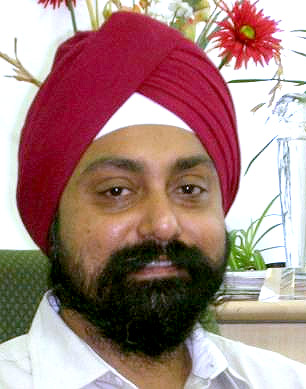
    Experience pure and acoustic music with your favourite singers starting Saturday, 1 October at 8pm and 10.30pm exclusively on MTV, as the Unplugged series begins with Punjabi music’s “true urban balladeer”, Rabbi Shergill.

    The Bullah Ki Jaan hit-maker doles out his popular hit songs in an acoustic format on Micromax MTV Unplugged in the first episode this week.  These include ‘Bullah’, a song based on the poetry of the 18th century Sufi saint Baba Bulleh Shah, ‘Jugni’, a folk special, ‘Bilqis’, a song that pays tribute to the unsung heroes of our nation, ‘Tere Bin’ from the movie Delhi Heights and ‘Heer’ based on a poetic love story and many more.

  • Ashish Bagga all set to be INS president today

    Mr Ashish Bagga, Chief Executive Officer of the India Today group, is all set to take charge as president of the Indian Newspaper Society for the year 2011-12. The 72nd annual general meeting of the apex association of newspapers is scheduled to take place in Bengaluru today.

    Mr Bagga will succeed Mr Kundan Vyas of Mumbai’s Janmabhoomit Group. As is the custom, Mr K N Tilak Kumar of Prajavani who is currently vice-president is likely to be deputy president, a position that Mr Bagga occupied in 2010-11.

    A little about Mr Bagga (information culled from AdAsia 2011 website)

    Mr Bagga has been associated with the Indian media business for over 25 years. Other than the India Today group, he has also worked Hindustan Times as Director (Marketing). Immediately before re-joining India Today in 2001, Mr Bagga did a short stint as President & CEO with Business Standard for the paper’s e-initiative in association with Financial Times, London. Bagga has forged strong partnerships with several leading international media brands for the India Today group. He has been awarded a publishing scholarship by the Publisher’s Association of the United Kingdom through which he also worked with The Daily Telegraph in London in London.

    Mr Bagga is a Physics Honours graduate and an MBA and was also awarded the prestigious British Chevening Scholarship in 2003. He is exceedingly active in various industry bodies.

    Watch this space for more on the elections…