Category: MEDIA

  • ‘Silent Anthem’ is among 2011’s top 10 most-watched YouTube videos in India

    By A Correspondent


    With an Indian viewership of 1,150,509 and around 1,300 people’s comments, “The Silent National Anthem” video has made it to India’s top 10 most-watched YouTube videos of 2011.


    The official Google India Blog recently carried out an analysis to check ‘What were we watching the most in 2011?’ The research spooled back through videos and channels that absorbed collective global attention this year and compiled the list capturing the global view counts of popular videos uploaded throughout 2011.


    The research revealed that in India, the top 10 most-watched YouTube videos of 2011 were:


    1. Don 2 – Official Teaser
    2. RA.One – Teaser Trailer
    3. Agneepath Trailer – Official
    4. Singham – Trailer Full HD
    5. Star Light Star Bright – Mother Goose Club Nursery Rhymes
    6. MissionImpossible 4 – Ghost Protocol – Official Trailer
    7. The 7 Trumpets of Revelation | The Day Trumpet 1 Hits Earth
    8. iPhone 5 Concept Features
    9. Bodyguard – Official Trailer HD
    10. The Silent Indian National Anthem


    While more than 50 per cent of the list comprises trailers of Bollywood movies (the industry is known for high decibel media spends), The Silent National Anthem acquired an audience largely on account of its brilliant emotional connect.


    The premise ‘Patriotism knows no language’ was brought to life through hundreds of special kids with hearing/speech impairments singing the National Anthem in sign language for India’s 61st Republic day.


    BIG Cinemas, in association with the Mudra Group, released the video across its cinemas on 26 January, 2011.

  • No discretionary quotas for journalists please

    By Ranjona Banerji


    The story of the day, on Tuesday, January 3, as far as the media is concerned is the front page expose by The Indian Express, headlined: “Meant for ‘distressed’, Orissa plot quota goes to babus, judges, journalists”. The strap below reads: “Row leads to CM scrapping discretionary land or house allotments last month”.


    The upshot is that a system of patronage was established in 1985 by the JB Patnaik government to allot houses or land for “the dependent of a person who has made a supreme sacrifice for the nation, but has not been properly rehabilitated so far; member of a family who has been a victim of unforeseen circumstances (terrorist attack, earthquake, flood etc); physically handicapped person…” The categories go on to include police, military, paramilitary and government employees permanently disabled on duty, the families of those who lost their lives in abnormal circumstances as well as eminent professionals, sportspeople, artists, literary figures and women of “high achievement in distress’ and individual cases of extreme hardship.


    After this, the beneficiaries appear to have been ministers, bureaucrats, judges and journalists. A scandal where a minister okayed the allotment of two houses to the family of another led Naveen Patnaik to abolish this discretionary quota.


    The story, does not tell us how many distressed, disabled people in extreme hardship actually got any land or houses, but it does list the journalists who benefited.

    http://www.indianexpress.com/news/meant-for-distressed-orissa-plot-quota-goes-to-babus-judges-journalists/895060/


    This raises a very serious question for journalists everywhere, many of whom have profited under similar schemes elsewhere in the country. The Express story, while naming benefiting politicians and so on has broken the covenant of silence on journalistic transgressions by printing the names of the lucky journalists and the minister under whose discretion they got so lucky. The names belong to several media houses and some are familiar.


    One journalist has defended his allotment, pointing out that when he got his plot in 1997, the scheme was legal. He also said that other journalists had lied that they had no other properties – a requirement of this lucky dip system.


    The question here is of something else. To what extent can journalists be objective in their reporting/covering/editing/commenting on government affairs if they benefit from government schemes and awards? Does acceptance of such largesse come under the tag of corruption or just luck? Is objecting to such acceptance an expression of self-righteousness or sour grapes?


    The profession of journalism has been under the scanner recently for a number of not very salubrious reasons. This is one more criticism which ought to stick. Paid news campaigns as orchestrated by media houses is totally reprehensible. But so is the custom of individual journalists accepting what cannot be called gifts but will have to be seen as bribes which compromise not only their integrity but that of all their fellows.


    The Indian Express has done the profession a great service by printing the names of journalists who are beneficiaries. If we are to fight both media corruption and paid news, then the only way is for us to become each other’s watchdogs. We cannot be sanctimonious about everyone else but ignore our own transgressions.


    The way The Hindu exposed the Hindustan Times on its story on infant gender changes in Indore or The Guardian has been relentlessly attacking News of the World and others on phone-hacking, is it time for Indian journalists to stop applying the discretionary quota to each other?

  • Gouri Dange: Head Honcho’s Day Out

    By Gouri Dange


    I don’t tear up (fancy word for cry foolishly) watching anything on TV or in the movies usually. Close friends sit around pulling on their box of tissues even while watching TV ads, for godsake, and I usually smirk and talk loftily and alliteratively about manipulation of the mind by the media and other such airy stuff.


    Weepy Indian soaps, saas-bahu dramas in Hindi and Marathi, I catch only by accident when my finger touches the wrong buttons on the remote; and when I then see a screen-wide shot of large reddened cow-eyes, mascara fake lashes shimmering with tears, I only guffaw and cringe.


    But here I am, sniffling after every episode of Undercover Boss. Why, oh why? People around me ask. But they’re quite touched too, I can see.


    First a little about the format: in each episode (on BBC Entertainment) the CEO or owner of a big corporation goes on to his shopfloor or into the field, incognito as an entry-level employee, spending one week doing the rounds with ‘lower rung’ staff. He changes his appearance, and since the corporations are huge (45,000 employees, etc) and have far-flung operations, none of the staff that he interacts with are likely to recognize him.


    The explanation given for the accompanying camera is that a film is being made on entry-level workers. The boss works in various areas of the company operations, at different locations. This way, he gets to interact closely with the lower and middle order in his corporation.


    Invariably, his 7-day outing is an eye-opener for him, one day at a time. The episode is dotted with poignant as well as really funny interactions, as he gets to see and work the system himself. He himself is often bad at doing what they do, invariably needs help, and is sometimes declared unemployable by the supervisor he may be working with!


    He meets employees who soldier on in spite of serious health or personal issues, he sees some of the absurd outcomes of his own policies, made far away in corporate settings. He is, to use a cliché, humbled by his own people as he goes along with them on their daily rounds.


    At the end of his week undercover, the head honcho returns to his corporate HQ, and calls a handful of the employees who he feels are doing a particularly good job under trying circumstances. He first reveals his true identity to them, much to their shock and amusement, as they recall how frank and ‘themselves’ they have been around him, when they thought he was just a newbie. He also calls in a few link-men in the chain, who need to change something in order for some policies or attitudes or daily circumstances to change for the better.

    The hard-working, cheerful, resourceful employees are then rewarded with promotions, or bonuses, while some employees are given training or better working conditions. Sometimes, the boss will step right out of the groove and help with a personal problem, or even better, turn the person’s coping skills into something of use to the company itself.


    For instance, one employee who undergoes dialysis every week, and yet works hard and happily, is also given time off to volunteer at a hospital which is something he wants to do – here he becomes a shining example of the benefits of positivity and good work.

    A simple ‘go-cart’ may be given to some employee who legs it from one building to the other far too many times a day in a large factory compound. More budget allocations are made, as the Boss learns experientially, that his operations just cannot always be about maximizing profits and minimizing down time. When he communicates this to his Board, you can see some faces thaw, some faces tighten; it is very interesting to see those reactions too.


    Undercover Boss UK episodes are restrained, and I hoped that the US ones would not be simplistic and manipulative; luckily they are not. Now you’re free to call me a Hopeless Romantic, but what slays me each time is the profoundly shaken look on the Boss’s face, many times during his undercover week. The other thing that has me reaching for someone’s tissue box (I don’t own one, perhaps I need to, now) is the changing look on an employee’s face – from guarded, restrained listening, to a shy child-like slow flush or grin. This changed expression comes up when he/she realizes that someone has watched them closely as they do sometimes mind-numbing jobs (either monotonous, or plain icky, including non-flushing toilets), appreciated their work, and is following up with not just a perfunctory pat-on-the-back, but with change and rewards. There are also often frank and forthright apologies from the Boss for being blind to many things in his own company and his people.


    When everyone in an interaction becomes a little more human, I tend to come undone. Of course, the program has QUITE a few ad breaks, and that becomes the Brechtian device that alienates you nicely, so that you never get too caught up and carried away, fortunately or unfortunately.

  • IDBI Federal’s new Childsurance “fail-safe” plan

    By Shubhangi Mehta


    IDBI Federal has launched their latest ad campaign to announce the launch of their child plan – IDBI Federal Childsurance(R) Dreambuilder Insurance Plan. Childsurance is unit-linked insurance plan with innovative features that ensures a perfect combination of optimum returns and safety that can help parents create a child plan that does not fail at maturity.


    The campaign has been conceptualized by Ogilvy & Mather and executed by Curious Films, and aims to differentiate Childsurance from other methods of planning for children’s education which may fall short at the last minute.


    The tagline ‘Plan jo Fail na ho’ emphasises the Childsurance plan’s positioning as “the child plan that does not fail”. The campaign taps into the insight of how most parents would not like to live with the regret that their children were not able to pursue the career of their choice, especially since they are responsible for planning their children’s education.


    The ads showcase people who missed their calling in life as they were unable to get admission for higher education due to lack of funds and the stories are portrayed with IDBI Federal’s trademark humorous storyline.


    Commenting on the ad campaign, Kawal Shoor – Head of Planning, Ogilvy & Mather Advertising said: “In a world of goody-goody child plan advertising, we wanted to ensure that IDBI Federal’s Childsurance stood out. And there’s nothing like some naked truth, well told, to set one apart in a sea of plastic emotions. Many of us have felt, sometimes very often, that had our fathers invested in a particular company stock, or bought that piece of land which was going cheap years ago, we would have been somewhere else. This uncomfortable truth became the cornerstone of our campaign. The challenge was to do it in such a way, that the campaign acts like a gentle pinch and yet land the key message of – a plan that never fails – powerfully.”


    Engineer
    [youtube width=”400″ height=”200″]http://www.youtube.com/watch?v=WpYC26i6ru4 [/youtube]

    Mr. Aneesh Khanna – Sr. Vice President, Head – Marketing and Product Management, IDBI Federal Life Insurance said: “Choosing the right plan is very critical today, given the rising inflation in education costs. Childsurance has the in-built Waiver of Premium benefit which allows the planned accumulation of funds to continue even in the absence of the provider. This will ensure that the child’s education plans are not compromised due to lack of funds. Another key feature is the Systematic Allocator Fund which gradually moves the fund value from equity-based funds into debt-based funds as the plan approaches maturity. This diminishes the effect of a sudden drop in the equity market when your plan is close to maturity, at a time when you had to pay the planned fees for your child’s education.”


    Doctor
    [youtube width=”400″ height=”200″]http://www.youtube.com/watch?v=Ksq2AEdZxuk[/youtube]

    Mr Khanna added: “Childsurance, with five unique features, can be the strong partner that parents seek to ensure that their children’s dreams come true, rather than see these dreams be compromised. This is captured humorously in our latest ad campaign.”


    The effort to choose the right child plan is further supported on ground by the S.T.A.R. Test, a unique test that can be done in 7-10 minutes, and helps customers understand their needs scientifically and create a customized plan to secure their child’s future.


    CREDITS:


    Advertiser: IDBI Federal Life Insurance Co Ltd


    Aneesh Khanna: Senior Vice President, Head-Marketing and Product Management, IDBI Federal Life Insurance Co Ltd


    Abhijeet Powdwal: VP, Marketing, IDBI Federal Life Insurance Co Ltd


    Alok Kalra: AVP, Brand, PR & Digital


    Creative Agency: Ogilvy & Mather India


    National Creative Director: Abhijit Avasthi


    Creative Director (Copy): Amitabh Agnihotri


    Creative Director (Art): Samir Sojwal


    Production:


    Film director: Vivek Kakkad


    Production House: Curious Films


  • Mediaah!: Why Mukesh Ambani’s Network18 foray is good news for the Indian media

    By Pradyuman Maheshwari


    It’s a complex deal and required the financial wizardry of the accounting boys at Reliance Industries, Network 18 and their advisers.


    The bottomline is: Reliance is buying into Network 18 and asking it to manage its interests in ETV. Mind it, Network 18 and Television 18 are still Raghav Bahl companies with a majority and controlling stake. Also, Reliance is not going to have Mukeshbhai playing supereditor. RIL has set up a trust (Independent Media Trust) with eminent people as members.


    The Ambanis love affair with the media started ever since his father Dhirubhai got into the big league and had a soured relationship with The Indian Express founder Ramnath Goenka. The Ambanis bought over the much revered Commerce Weekly and turned it into a business daily called The Observer of Business and Politics. It also bought over The Sunday Observer. Both the papers shut and there have been rumours ever since of brothers Mukesh and Anil infusing funds in media ventures indirectly.


    There were direct ones too like Reliance Entertainment with Amit Khanna at the helm and later Rajesh Sawhney and now Tarun Katial leading the agenda. But it’s the indirect, in-the-closet funding that’s always been of interest. At least one large newspaper and one news channel are said to have benefitted from their largesse.


    Interestingly, Anil Ambani’s Reliance Capital had also picked up some stocks in Bahl’s enterprise a while back and more recently a sizeable chunk in Bloomberg UTV. The Bloomberg-licensed channel is now controlled by Reliance ADAG.


    While there could be issues of how the interests of big business companies will impact the content of the media they own, especially when there are controversies like we had with Niira Radia and the 2G scam, to my mind the entry of the Ambanis into the media is good news.


    The media sector – news media specifically — has been facing awful times. There have been many wrong investments and more importantly the spends are much higher than revenues. The sector is also majorly underleveraged, with airtime most often being sold at a song.


    On the possible clash of interests between the business dealings of the large conglomerates and the editorial independence of newsrooms, I have two points on offer:


    1. It’s not that all of the the current lot of media companies are squeaky clean and honest. The roster of newspapers indulging in paid news reads like a Who’s Who of Indian media. There are biases which do come in and advertisers often exert pressure and threaten to pull out ads if there are negative stories

    2. The Reliance Industries move of setting up a trust to further its interests in the media is a healthy sign and if it works and is truly independent could lead the way of other business groups entering the media.


    I hope the Mukesh Ambani foray sees more big business invest in the media. It will be good for the financial health, lead to more jobs and, Inshallah, better salaries.


    Tomorrow: More about the Media and Big Business and the Prime Minister’s speech on Monday


    Buzz me if you have a story to tell and gossip to share. Confidentiality assured. Andar ki baat will stay under. There are various ways you can reach me: pradyumanm[at]mxmindia.com, BBM @ 23050B5D, Whatsapp/Gtalk pradyumanm[at]gmail.com, @pmahesh, 98338 76278.


    Disclaimer: Although Pradyuman Maheshwari is CEO of MxMIndia other than being editor-in-chief, he chucks those hats while writing Mediaah! So, the views expressed here are entirely his own and not those of the website and the team that runs it (especially the National Sales Head!).


  • Disney XD launches Bengali and Marathi feeds

    By A Correspondent


    After garnering leadership status in the South, Disney XD, the quintessential action, adventure and comedy destination for boys is ready to capture attention of newer markets with the launch of Bengali and Marathi feeds.


    Natasha Malhotra, VP and GM, Walt Disney Television International India, said: “Disney XD, while including girls, mainly speaks to boys in the age group of 6-14 and delivers exciting stories around adventure, action, comedy while reflecting core Disney brand values of accomplishment and heroism. Disney XD has a unique content mix of live-action and animated programming. We are excited about expanding its reach by making it the first channel in the genre to be available in six languages. We will continue to build on it as we deliver great fun-filled, action-packed entertainment that is engaging and locally relevant.”


    Disney XD will launch a brand new show Scaredy Squirrel on January 9, 2012 (Mon to Fri 1 PM). Scaredy Squirrel is fun-filled series inspired by the popular book series by Mélanie Watt about a creative and quirky squirrel, as he tackles life’s daily challenges.


    “Disney XD enjoys loyalty and following from boys driven by Disney original animation shows such as Kick Buttowski: Suburban Daredevil and Marvel, the quintessential boy brand. These are wonderful examples of Disney’s on-going focus on creating great new properties with clearly defined character profiles and story patterns to position the channel as top of mind for boys,” Ms Malhotra added.


    The channel will also create a strong destination for Marvel branded characters and stories which have been a part of every boy’s growing up years with the launch of Spider-man on weekdays (Mon to Fri 2 PM).


  • Network18 and TV18 announce Rights Issues

    By A Correspondent


    Network 18 Media & Investments Limited, at the board meeting held on Tuesday, approved a Rights Issue of Equity Shares to raise an amount up to Rs 2,700 crore at a price to be determined by the Board in compliance with regulatory requirements, but not exceeding Rs 60 per equity share.


    TV18 Broadcast Limited has approved a Rights Issue of Equity Shares to raise an amount up to Rs 2,700 crore at a price to be determined by the Board in compliance with regulatory requirements, but not exceeding Rs 40 per equity share.


    Network18, being the promoter and holder of majority equity in TV18, would be subscribing to about Rs 1,400 crore in the TV18  rights issue – therefore, once this subscription amount is netted out, the Net Aggregate Rights Issue of both Network18 and TV18 will result in a fund raising of about Rs 4,000 crores.


    The contribution of the current Promoter Entities of Network18 in this Net Aggregate Rights Issue of both Network18 and TV18 will be about Rs 1,700 crores.


    TV18 will utilise the Rights Issue proceeds to repay the existing debt, fund the acquisition of ETV channels and fund working capital needs. Network18 will utilise the Rights Issue proceeds to repay the existing debt and subscribe to the Rights Issue of TV18.


    The promoters of Network18 will be subscribing to their entitlement in full. They also reserve the right to subscribe to any unsubscribed public portion of the Rights Issues.


    Raghav Bahl, the founder and promoter of Network18 and TV18, has informed that promoter companies have entered into an arrangement with Independent Media Trust, a trust set up for the benefit of Reliance Industries Limited, to secure the funding required for this purpose. Further, Mr Bahl will continue to retain the management and 51 per cent control over Network18 and 51 per cent control over TV18 through Network18.


    Both the Companies will be filing the Draft Letters of Offer for their respective Rights Issues shortly.


    Mr Bahl said: “This is a truly seminal moment in the 18-year-old history of Network18/TV18. By inducting such a significant amount of equity, our balance sheets will become among the strongest in the industry. Also, by acquiring this strategic control over several ETV channels, TV18 will have a bouquet of leading television channels. Riding on the imminent digital wave, I am convinced that this acquisition is a significant move which will catapult TV18 into the forefront of India’s broadcasting industry. The proposed preferred access arrangement with Infotel Broadband will ensure that our content & services will be available on India’s premier technology distribution platform. On a debt free basis, both Network18 and TV18 hope to strengthen their position in various media segments like news & entertainment broadcasting, consumer internet, digital & print publications, filmed entertainment, home-shopping, e-commerce and other emerging businesses.”


    The Board of Directors of TV18 Broadcast Limited (TV18) during its meeting also approved the acquisition of 100 per cent interest in Hindi news channels, namely ETV Uttar Pradesh, ETV Madhya Pradesh, ETV Rajasthan and ETV Bihar and ETV Urdu channel (ETV News Channels); 50 per cent interest in ETV Marathi, ETV Kannada, ETV Bangla, ETV Gujarati and ETV Oriya (ETV non Telugu GEC Channels); and 24.5 per cent interest in ETV Telugu and ETV Telugu News (ETV Telugu Channels).


    TV18 will have the Board and management control of ETV news channels and ETV non-Telugu GEC Channels. The Board has approved an outlay of up to Rs 2,100 crores for this acquisition. Legally binding agreements will be executed for this purpose. TV18 has an option to buy the balance 50 per cent interest in ETV non-Telugu GEC channels and an additional 24.5 per cent in ETV Telugu channels.

    Ernst & Young Pvt Ltd acted as advisors for financial and tax due diligence and valuation of the assets. The legal due diligence was carried out by Khaitan & Co.


    ETV is among the Top 5 most popularly viewed networks in the country. It was one of the first entrants in the regional markets and the channels have a considerable viewership base. One of the key strengths of ETV channels is their ability to attract and retain loyal viewers.


    On a combined basis, TV18 will be offering a unique mix of national and regional channels, catering to diverse genres like Hindi and regional entertainment, general news in English, Hindi and regional languages; business news in Hindi, English and regional languages; music, kids, devotional and infotainment channels.

    Including the soon-to-be-launched services/variants, this combined bouquet of over 25 channels will be the most powerful and potentially profitable TV operation in the country, especially since India’s television industry is on the verge of a digital revolution.


    As a part of the deal for acquisition of ETV Channels, Network18 and TV18 have also entered into a Memorandum of Understanding with Infotel Broadband Services Limited, a subsidiary of Reliance Industries Limited, under which the companies and their associates will have the right to distribute the content of all the media and web properties of Network18; and programming and digital content of all the broadcasting channels (including the ETV channels being acquired by the company) through 4G Broadband Network of Infotel, which shall have preferential access to this content on a first right basis as a most preferred customer.


    Infotel Broadband Services Limited is setting up a pan-India world class broadband wireless network, using state of the art technology. As per Images Year Book, more than 70 per cent of India’s population is below 35 years, and 50 per cent of the population is below 25 years of age. This young educated population will be keen to access quality content through wireless devices, thereby ensuring a rapid growth in subscribers similar to the growth of tele-density in India during the last ten years.


    The key advantage for millions of viewers will be the ability to enjoy an uninterrupted, high quality, 24-hour viewership, even while they are on the move. This tie-up with Infotel will enable Network18 and TV18 to build on their first-mover advantage for the distribution of their content through the latest broadband technology.


  • The Anchor: Suresh Srinivasan on 5 reasons IRS is an effective measurement tool

    By Suresh Srinivasan


    #1 The only indicator. Currently IRS is the de facto gold standard for measurement of newspapers and magazines. IRS is based on continuous study with fairly large data base. More importantly there is no other indicator and it is the standard used by the industry.


    #2 It’s not about just absolute numbers, but also gives the trend of the industry over the years. The trends are a valuable resource for media planners, publications and advertisers. These are not volatile numbers but have been slow and steady indicators of changes in the industry. This gives a meaningful picture of what’s happening in the industry.


    #3 Considering that we are a large nation, IRS proves to be a cost-effective, valid and timely method of assessment of consumption of media. The sheer magnitude and scale of collecting and collating this data involves lot of work but IRS makes this possible and a valid data is available its users.


    #4 Besides the readership data available on frequency and demographics, IRS has become a vital source of comprehensive information. It has become a repository of data that can provide information on various other parameters like intent to purchase.


    #5 With technology coming in IRS is poised to become much more robust and will take research to higher level. It is a continuous journey to present better data to its users.


    Suresh  Srinivasan is the Vice President (Advt) of The Hindu Group of Publications.

  • New English daily in Pune from Aaj ka Anand group

    By Akash Raha


    Pune is all set to welcome a new English daily. The 40-year-old Aaj ka Anand group is set to bring out the newspaper in a joint venture with  content firm Media Next Private Limited .  Aaj ka Anand publishes a Hindi morning daily, Aaj ka Anand and a Marathi eveninger, Sandhya Anand and has interests in real estate and also runs a budget hotel in the city.


    Media Next is a multimedia content service provider whose Chairman is senior Pune-based journalist Mr Anand Agashe. The managing editor of the newspaper will be Mr Agashe, and Ms Vinita Deshmukh, also a veteran Pune journalist and RTI activist, has been appointed as the editor.


    Speaking on this development Mr Agashe said, “Pune is becoming a cosmopolitan city and its demographics are changing, with the rise of middle class and upper middle class, whose preferred language for communication is English. The Aaj ka Anand group thought it was necessary to have a English daily which would complement its Hindi and Marathi newspapers.”


    While Aaj ka Anand will own the newspaper, the content will belong to Media Next. The application for the newspaper is currently being processed and the name of the English daily is hence still under wraps. According to Mr Agashe, the English newspaper is all set to be launched in the next two to three months.


    While Marathi dailies are the dominant players, Pune is already crowded with several established players like The Times of India, Indian Express, DNA and Sakaal Times in the English space. Mid-Day too has a Pune edition. The entire print revenue generated in Pune is said to be between Rs 500-525 crore.


    Speaking on this development, Jaisurya Das, Managing Director of Xanadu Consulting Group and a veteran on the Pune market said, “I admire their guts to come out with a English daily, because to get a product differentiated is going to be very difficult and they are not known as market leaders. Aaj ka Anand is a fairly low profile group, which has been active only in the Hindi and Marathi market catering to a B1, B2 or C1, C2 kind of an audience.”


    Mr Das feels that there are a couple of issue the group has to work on. “The first thing is, it is not a marketing savvy group, unless they are going to bring a whiz kid. The second is that they have to come up with excellent and differentiated content. I am not saying that there is no room in the Pune market for a newspaper. If you bring in a daily with highly localized local content, it might work. It’s a tough call and unless the group delivers differentiated content and comes up with an aggressive marketing strategy, there is going to be a lot of bloodshed ,” he added.


  • Journo-authors: Telling a story, both ways


    By Archita Wagle


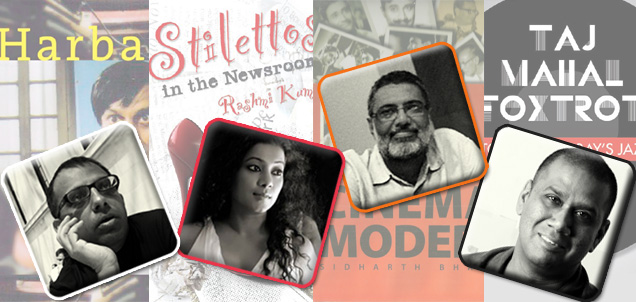
    “Modern journalism, which is about 100 years old, has a tradition of journalists going on to write books,” feels Naresh Fernandes, Editor, Time Out and author of Taj Mahal Foxtrot: The Story of Bombay’s Jazz Age, which was launched recently at the Goa Literary Festival.


    And probably that is the reason that so many take the plunge from writing a story to writing a book. So then in spite of having a day job, why does a journalist, whether a reporter or one of the editing team, take the time and trouble to write a book.


    Sometimes it is just the desire to share the experiences that the person has gone through like Rashmi Kumar, Features Editor, Deccan Herald, whose first book, Stilettos in the Newsroom is an effort to chronicle her experiences in the newsroom. “I felt that I was a misfit in the newsroom, I was not well-connected or aggressive or as street smart as others. I still am not. But I was always sure that I wanted to write,” she said.


    Sometimes it is a personal passion that translates into a book, as with Arunava Sinha, Head, ibnlive.com and cricketnext.com, who translates Bengali classics and contemporary literature. Mr Sinha said that he has been translating for a long time but he started publishing only five years ago.


    There is a story waiting to be told in every subject, so how does a journalist decide on the topic to base his/her book on? Is it something that they are passionate about, or something that they want to explore in depth? Mr Fernandes’ Taj Mahal Foxtrot was an idea that took root when he was doing an article on jazz for Man’s World. “While doing the article I realized that there was a story in there aboutBombay’s cosmopolitanism. I decided to explore the idea in-depth in a book.”


    For Siddharth Bhatia, author of The Navketan Story Cinema Modern and consulting editor, Asian Age, the book was something he had toyed with for years. “I was fascinated by films made in the 50s and 60s, especially those made by Navketan. I would have written this book much earlier but it was only recently that Devsaab agreed to give time for the book.”


    Writing a book while continuing with the day job of being a journalist isn’t an easy task. Sitting up late at night, working on weekends, fitting time around a busy schedule become a part of a journalist-author’s life. There are times when they suffer from the classic writers’ block. They go away, keep the book aside, take sojourns, or sometimes just keep hacking away. But they don’t give up. And if they do, the publishers are always there to remind them. “I pitched the idea to the publishing house and they accepted. After that I just kept it aside, it was they who reminded me that I had a book to write,” said Ms Kumar.


    If one were to look at the books that have been written by journalists over the years, one notices that there is a mix of fiction and non-fiction. Though almost all journalists agree that non-fiction is easier to write as it deals in facts, something that is a “natural progression from being a journalist” as Mr Fernandes says, but he is also quick to point out that writing non-fiction is tougher than fiction as “we have to construct the narrative out of facts, we can’t let our imagination take over when we hit a blank spot”.


    Writing is a book is never easy but what after the book is written or even halfway complete, how easy or difficult it is to get it published. Do the journalists pitch their proposals to the publishing houses or vice versa?


    Priya Kapoor, director, Roli Books explained the process of publishing a non-fiction book. The publishers have a commissioning program. Sometimes there might be an event of interest like the IPL controversy. They then research on what has been written about the topic, who has been covering it, how has the person covered the topic and then approach the person they feel is best suited for writing the book.


    “When we commission non-fiction books, 70 percent of the time, we approach them. Sometimes it is because the person has been covering the subject for a long time or because they have access and contact required to do the book or if writing about the topic excites them,” she added.


    She illustrated her point by citing an example: After 26/11, Roli decided to come out with a compilation of articles and perspectives on the terror attack in a book. Everyone was working around the clock. It was here that the journalistic discipline of sticking to deadlines came useful. The book was on the stands in January the following year.


    That makes it sound as if it is easy for the journalists to get their books published. But that is not the case all the time. “It is not very easy for journalists either to pitch for getting a book published. We might get an extra point for our ability to adhere to deadlines, but that is all that we get as an advantage,” feels Mr Bhatia. He is the first one to point out that he isn’t an authority on films, but when he approached the publisher, Harper Collins, something did click and the rest has been published as Cinema Modern, a look at Navketan, cinema in the 50s and 60s and India’s history along the way.


    But not all journalists stick to writing non-fiction. Some like Sidin Vadukut, Sonia Faleiro and Rashmi Kumar also venture into fiction. “I would not say it is all fiction. My book is part fiction and part autobiography. I have left it to the reader to figure out which is fact and what is fiction,” explained Ms Kumar, whose book Stilettos tracks the journey of Radhika Kanetkar’s slow raise in the world of newspaper and finally her wedding.


    Some even venture into other territories like translating. Arunava Sinha has already translated works like My Kind of Girl by Buddhadeva Bose, considered to be one of Bengal’s foremost writers of the 20th century, Harbart by Nabarun Bhattacharya and Three Women by Rabindranath Tagore. Mr Sinha would love to give up his day job but agrees that he doesn’t get paid enough to pursue his passion full time. “It is not a profession, but a passion. Money is not my primary consideration,” he stated.


    After the book is complete, it goes to the editor to be edited. How easy is it for a journalist to give up something that s/he has toiled for to another person who will very critically edit it? Most reporters say that they are used to the fact that their ‘copies’ would be ruthlessly edited. As Mr Bhatia very succinctly puts it, “The book editors have a particular way of editing. They look at continuity, the flow of the book, contradictions in chapters and so on. I was fortunate to work with one of the best editors of Harper Collins. He pointed out several things that I would have never noticed as I was too close to the subject.”


    Even Ms Kapoor agrees, “It is not as if journalists interfere more with the editing process than any other writer. But sometimes looking at a particular subject we might give them some leeway, with respect to their sources and contacts.”


    But Ms Kumar begs to differ, being from the editing side of the business. “I never had a problem with the way my story was edited. But I also edit copies and that is something that is now internalised. I made sure that the material I submitted was clear and concise,” she said.


    Mr Fernandes took nearly eight years to complete his book, working around his job. Bhatia could only focus full time on the book after he quit his job. Mr Sinha makes it a point to sit at night and focus on his translations. Ms Kumar is now ready with her second “tongue-in-cheek” book on a 30-something girl’s matrimonial adventure search. But they are not ready to quit. “After all one day I will retire from my day job, but I can continue to write as long as I want,” says Mr Bhatia. Indeed aptly summed.


    Coming attractions


    After the release of Mumbai Mirror editor Meenal Baghel’s debut novel Death in Mumbai, which Priya Kapoor, Director, Roli Books describes as a “well written and well researched book which makes the effort to get inside each character, 2012 will see the release of S Husain Zaidi’s book “From Dongri to Dubai” on Mumbai’s underworld and the history of gangsters.


    Mr Zaidi, resident editor of Asian Age/ Deccan Chronicle, already has two books on the underworld connection to his credit, Black Friday (which was made into a film) and Mumbai Queens, which chronicles the tales of Mumbai’s female gangsters.


    He took four years to complete the book according to Priya Kapoor. If there are no further developments or twists, the book is set to be released in the first quarter of 2012.


  • Den, Hathway join hands to sell set-top boxes

    By Meenakshi Verma Ambwani


    Cable TV companies Den Networks and Hathway Cable & Datacom will launch a joint media campaign beginning with Delhi this weekend, informing consumers about the need to install set-top boxes by June 30 as mandated by the government.


    The top two multi-system operators (MSOs) will also launch their set-top boxes at a promotional price of Rs 799, including installation charges and taxes, which is much lower than Rs 1,500-1,600 charged by the direct-to-home or DTH operators.


    As per initial estimates, the two companies are expected to spend Rs 20 crore on the campaign. Households in New Delhi, Mumbai, Chennai and Kolkata will have to buy set-top boxes before June 30 to watch television channels, as per the government’s plan to digitise the country’s cable TV network by 2014. Both houses of Parliament passed the Bill to this effect last month.


    “Consumers need to start buying the set-top boxes to access digital signals and this is a joint effort by two like-minded companies to make the consumers aware about digitisation,” said Mr SN Sharma, CEO of DEN Networks. The company expects to install between 2 and 2.5 million set-top boxes in the four cities. “The initial goal will be to upgrade our existing subscribers in these cities to digital addressable system. Only if we have surplus boxes will we look to add new subscribers,” he said.


    Hathway expects to deploy about 2 million set-top boxes in the four cities by the end of the first phase. The two companies are planning to rope in other MSOs for the campaign partly to share costs and fend off competition from DTH players. “This is an educational campaign and we think it’s best if all players come together to share costs and promote digitisation,” said Mr K Jayaraman, CEO, Hathway Cable & Datacom.


    Source:The Economic Times

    Copyright © 2012, Bennett, Coleman & Co. Ltd. All Rights Reserved

     

  • Recent deals point to consolidation in media, say experts

    By Ravi Teja Sharma & Meenakshi Verma Ambwani


    Purveyors of news are rarely objects of news themselves, but India’s splintered media landscape has made news in the past two weeks. A flurry of deals or talk of more similar transactions have stirred up the sector in recent days, putting the spotlight on the possible motivations and some crystal ball gazing on what lies ahead.


    Last week saw a little-known chemical and fertiliser company Oswal Green Tech buying a 14.17per cent shareholding in New Delhi Television (NDTV) through two block stock market deals. Media reports said Mukesh Ambani-controlled Reliance was looking at buying into Network18, which runs CNBC India. Before him, younger brother Anil’s firm Reliance Capital increased its shareholding in UTV News, which runs Bloomberg TV, by buying out UTV founder Ronnie Screwvala’s 66 per cent stake.


    Industry executives and experts believe the consolidation trend will pick up momentum in 2012, separating the men from the boys in this highly splintered sector that is being increasingly hobbled by cost pressures and revenue challenges in a slowing economy.


    With more than 700 television channels in India and only few making money, experts believe consolidation in the industry is inevitable.


    “Consolidation has to happen. It is required,” said Mr Haresh Chawla, who recently announced his resignation as group chief executive officer of Network18 and Viacom18 after leading the company for more than a decade.


    One major problem for the industry is that it has been too dependent on advertising revenues, while subscription revenues have been elusive.


    Analysts say some signs of consolidation are already visible, as media companies cobble together bouquets of channels.


    “It is already starting to happen and going forward, media companies will look at building a portfolio of broadcast assets across genres, geographies and languages to create a national setup,” said Mr Jehil Thakkar, head of the media and entertainment practice at KPMG.


    The move towards regional channels, spread across geographies and genres, is triggered by the high growth in advertising revenues in the segment. Growth in advertising revenues in big cities has been around 12-13 per cent even in good times because of an inventory overhang, while regional advertising has been growing at more than 20 per cent for the last few years, say analysts.


    Analysts say this could explain why Network18 may be looking at Eenadu TV. “Network18 does not have any regional channels in its portfolio. This move will give them an entry into the fast growing regional market,” said one analyst. Buying Eenadu TV could give Network18 a bouquet of 11 regional channels.


    What may also be attracting new investors such as the Ambanis and foreign media companies such as Walt Disney is the promise of higher revenues and growth as the full benefits of digitalization kicks in. Collateral benefits of media ownership include access to content sources to power non-media business and potentially even some influence.


    In the case of Reliance Industries, which is setting up a national 4G broadband service, ownership of a media company will give it an edge over competition, with access to exclusive content from a bouquet of channels as well as web properties.


    The Cable Television Network (Regulation) Amendment Act, enacted two weeks ago, could help subscriptions finally become a good source of revenues for media companies, reducing their dependence on advertising. Today, a viewer pays as little as 50 paise to watch an hour of TV. Even this revenue does not reach the channels completely because of under-reporting by local cable operators.


    “This (the digitalisation law) will be a game-changer for the television business if well executed,” said Mr Sunil Lulla, managing director and chief executive officer of Times Television Network, which runs Times Now, ET Now and Movies Now channels.


    Meanwhile, some deals have already happened in the non-news segment, in anticipation of large changes in the sector. In July this year, Walt Disney Co said it is buying out rest of the 49.56 per cent stake in UTV Software Communications that it does not own from public shareholders and other promoters of the company for Rs 2,000 crore.


    “There is clearly a need for sellers to look at strategic investors. For the buyers, in the long term there is value in Indian media,” said Mr Nikhil Vora, managing director and head of research at IDFC Securities.


    India’s entertainment and media industry is estimated to grow at a compounded annual rate of 13 per cent to Rs 1,19,890 crore in 2015 from Rs 64,600 crore in 2010, PwC’s India Entertainment and Media Outlook for 2011 revealed earlier this year.


    The sector’s woes, notably because of high costs and low subscription revenues, coupled with the general weakness in the markets have cast a dark shadow over media stocks. The market value of NDTV stood at Rs 171 crore on December 21, 2011, the day Oswal Green Tech, formerly Oswal Chemicals & Fertiliser, acquired its stake for around Rs 24 crore.


    The company was worth Rs 215.66 crore on January 3, 2012, Rs 552.5 crore at the beginning of 2011 and Rs 3,300 crore at its peak in January 2008. Network18’s market value has dropped from Rs 1,540.7 crore on January 1, 2011, to Rs 535 crore as on January 3, 2012, while that of TV18 has dropped from Rs 2,122.4 crore to Rs 1,220.13 crore in the same period.


    The sector trades at price earnings multiple of 18.3 compared with nearly 19 for the telecom sector or 21.43 for the technology sector.


    While digitalisation will help increase subscription revenues and remove capacity constraints, it will also aid the process of consolidation in the sector by forcing smaller regional channels into the embrace of larger, pan-India players. Smaller regional channels are enjoying better advertising growth today, but after digitalisation they could face problems in getting themselves well placed in the line up of channels and may feel the need to be aligned with larger players either by selling out or through a distribution deal.


    “Larger players with a bouquet of channels will have more bargaining power with cable operators. Smaller channels will find it difficult to get into prime tiers,” said Mr Chawla.


    With valuations low, experts feel now may be the time for consolidation. “The overall multiples for media companies have been low for a while. This is a good time to buy. Broadcasting does present a good opportunity,” said Mr Thakkar.


    Source: The Economic Times

    Copyright © 2012, Bennett, Coleman & Co. Ltd. All Rights Reserved