Category: MEDIA

  • Madison’s Platinum wins Lafarge Cement Media AOR

    By A Correspondent


    Platinum Media, a part of Madison Media Group, has started 2014 with a bang by winning the account of Lafarge India in Kolkata in a multi-agency pitch. The other agencies that participated in the pitch are Mindshare, Dentsu and incumbent agency Havas. Lafarge’s mediaspend is estimated to be pretty sizeable and will grow substantially over the next year looking at its expanded market in North India. The account will be handled out of the Kolkata office.


    Commenting on this development, Aniruddha Sinha, Assistant Vice President, Lafarge India, said, “Madison Media has extensive understanding of the Indian media scenario and their approach and innovative media solutions will enable us to drive impactful media presence across our audience segments. ”


    Says Basabdatta Chowdhuri, CEO, Platinum Media, “We are delighted with this new win and are confident that we can add strategic value in making the Lafarge brand, a household name across the country.”


  • AXN India to bring top English shows, inks content acquisition deal with CBS

    By A Correspondent


    Leading English general entertainment channel AXN India announced a content acquisition deal with CBS Studios International on Friday. AXN, which has been airing home CBS shows like CSI: Crime Scene Investigation and NCIS: Los Angeles has now acquired five more shows, namely Elementary, Beauty and The Beast, Blue Bloods, Hawaii Five-0 and Reckless.


    The channel will have exclusive rights to air all episodes of the newly acquired shows from CBS Studios International starting this January, notes a communiqué.


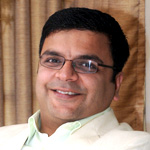
    Sunil Punjabi

    Talking about the deal, Sunil Punjabi, Business Head, AXN India said, “The current deal with CBS Studios International has only strengthened our long-standing relationship with them. AXN has always been the home to CSI: Crime Scene Investigation and NCIS: Los Angeles. The new shows will further add approx 100 hours of content airing close to the US every year. This deal is all set to strengthen the ever-expanding bouquet of AXN programming.”


  • We can’t be without a measurement system: Hemant Bakshi, ISA Chair & ED, HUL


    What appeared to be a quiet start of the year emerged as an action-packed one as the ghost of the TV measurement scare emerged yet again with the Union Cabinet approving guidelines on television audience measurement issued by the TRAI.  Hemant Bakshi, Executive Director – Home & Personal Care of Hindustan Unilever (HUL) and Chairman, Indian Society of Advertisers (ISA) spoke with Shobhana Nair on how no measurement system is no good for the ecosystem, and the television sector in particular. The ISA, it may be remembered, had opposed the stand of several broadcasters who had unsubscribed from TAM last year. Excerpts from an interview with Mr Bakshi


    The danger of no measurement system hangs on the industry again though the reason is different this time around. How have you thought of handling it as the ISA Chairman?

    Firstly, it has just been announced and we need to get clarification on exactly how it is going to be amended. We are trying to figure that out right now. Meanwhile, ISA’s position on this remains the same that we do need a robust measurement system and I think the guidelines will help us get that. In the short term, we can’t be without a measurement system because ratings are the currency with which we buy television and the absence of the currency will affect the industry. We want to avoid that scenario at any cost.


    Have you discussed the situation with other members of ISA and what is a possible solution that has come out?

    I think we will come to conclusions but, as I said, right now we need to understand the details of the guidelines on how things will pan out, etc. And we are working on it.


    What are your thoughts on the guidelines by TRAI for TV Rating Agencies? Do you think it is a good attempt to create a manipulation-free environment?

    I haven’t seen the guidelines fully, so I don’t want to comment on it.


    BARC has many months before it becomes operational, what is on your agenda to speed up things there?

    BARC has already been working quite well and the progress has been outstanding. We need to keep in mind that to create something of this nature takes time and can’t be done overnight. Having said that, the work on BARC is at a good pace.


    After everyone came to an agreement last year on the need for a television audience measurement, we still have many  sections in the industry against TAM…

    I think we should look ahead and not look back. Going forward, the three bodies (IBF, ISA & AAAI) are working together through BARC to create a ratings system which will be acceptable to everyone. I think we should put all our energies in that.


  • Vijay Karnataka asks people to “stop adjusting”

    By A Correspondent


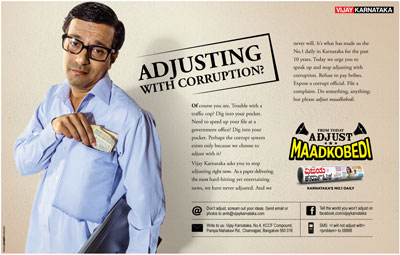
    In keeping with the current wave against corruption, leading Kannada daily Vijay Karnataka has unveiled a multiple media media ‘Stop Adjusting’ campaign.


    Notes a communique: “‘Solpa Adjust Maadi’ has long stood for this state’s ability to persist in spite of questionable governance, rampant corruption, poor infrastructure and lopsided development plans. Unfortunately it represents a spirit of apathy and forced ignorance. An ability to avoid problems by simply skirting them. An attitude that searches for ways to make do instead of solving.”


    Conceptualised by Bengaluru-based agency, People Design and Communications led by Rajeev Ravindranathan and V Balaji, the campaign tries to turn that attitude on its head by exposing it. “‘Solpa Adjust Maadi’ isn’t a motto, it’s an excuse. And by highlighting it as a symptom for the problems that citizens face on a daily basis, Vijay Karnataka hopes to touch upon a raw nerve and connect emotionally with its broader TG’ says Rajeev Ravindranathan who heads creative.


    Said V Balaji who heads strategy: This campaign is about reflecting the attitude of the youth who have a questioning attitude and don’t buy into the platitudes of the old. We can see it happening around us especially with social media. Vijay Karnataka is here to provide a platform for these youth to speak up or do anything but not adjust”


    According to Saraswathi Anand, Head – Brand, Vijay Karanataka has “consciously strengthened its focus primarily on the youth over the past few years in a bid to understand their goals, needs and aspirations better, reflect their views, and appeal to their sensibilities”. The campaign, Anand said, will be an ongoing exercise from Vijay Karnataka.


  • Anand Thakur joins Aidem’s Zirca as sales head

    By A Correspondent


    Anand Thakur

    Aidem’s recently launched digital brand solutions arm Zirca has appointed Anand Thakur as National Sales Head.


    Mr Thakur comes with more than 8 years’ experience in the digital media space. He will be heading the sales function for Zirca Digital Solutions and will also look into data and technology partnerships and sales strategy.


    Before joining Zirca, he was Account Manager for BBC Worldwide and earlier with Star India’s interactive division.


    Speaking on his new responsibility, Mr Thakur said: “On the back of rising internet penetration and content consumption, the online advertising market has emerged as one of the fastest growing segments in the Indian Media. With its distinct product differentiation, Zirca will add value to brands through engagement.”


    Neena Dasgupta

    Said Neena Dasgupta, Senior VP, Zirca: “We are extremely excited to have Anand on board, as a part of our leadership team to spearhead the Sales function. He comes with a rich experience in the digital medium and we are confident that his addition will strengthen our leadership team.”


  • The term ‘media agency’ is a bit outdated: CVL Srinivas


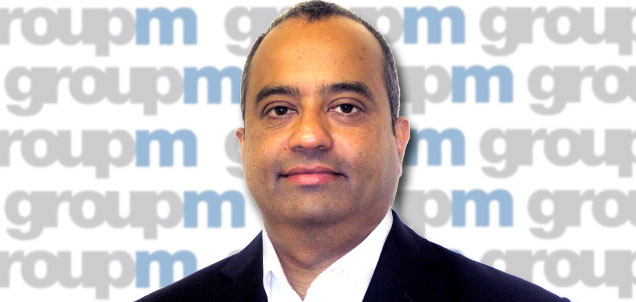
    When CVL Srinivas’s name was announced as successor to Vikram Sakhuja as CEO of GroupM South Asia, not many were surprised. Srini, as he’s known in the industry, had worked in GroupM before and had established himself as a seasoned media agency captain. While his tenure required him to ensure GroupM business was as usual, he took measures to steadily get the media services group to reinvent itself, without disturbing the status quo.

    In a free-wheeling chat with Pradyuman Maheshwari of MxMIndia, Mr Srinivas talks of his year at the helm of GroupM South Asia , how 2013 was for the business, his plans for 2014 and how he misses being a media planner/buyer in the digital age.

    Excerpts from the interview:


    As you look back at 2013 which has just passed us, how would you describe it? Annus Horribilis, as Queen Elizabeth had termed the year 1992 in a speech? Was it a good year, or a year that could’ve been worse?

    It was the year of the perfect storm. On the one hand there were structural and policy-level changes especially in the broadcast sector. On the other hand, we had a bit of a yo-yo year in terms of ad spends, up in the first six months, a slowdown post-July and a minor blip towards the year-end. Having said that, it could have been far worse. Given the fundamental strengths of the economy, advertisers continue to invest in brands and media organizations continue to innovate and diversify.  Things continue to keep happening in India, no matter what the economic or political scenario is. I am just back from a long overseas trip and I can definitely say that the most exciting market to be in today, at least from a media industry perspective is India.


    It’s also been a year for you as head of GroupM. How has it been for you, personally?

    Its been a satisfying year for me personally. All our agency brands and specialist units did extremely well in a challenging year. We won several new businesses, retained all our key clients who came up for a review and continued to innovate in terms of our offerings.  We launched a few interesting tools in 2013 to help our agencies manage the transition from offline to online and for sharper planning in smaller towns. GroupM agencies and specialist units continued to dominate all industry awards. We won the coveted Porter Prize for leveraging unique activities, the first for any media or ad agency. Its also been a year where we launched several initiatives on the Talent front. Including Y-co, our Youth Executive Committee. We’ve had our lowest attrition compared to earlier years. None of this could have happened without great team work – GroupM is a fantastic example of how team work can deliver great value.


    The digital media agency has become a full-service business. Are you also offering that at GroupM?

    GroupM has been an early mover in the digital space and we have scaled up our practice over the years. So while most of our competitors are acquiring digital agencies to build scale, we are taking our digital practice to the next level by integrating it a lot more with our core product and moving to the next level of sophistication in content, analytics and  activation, thereby providing a lot more value to our clients.


    You mentioned that digital is the centre of everything you do and if indeed digital will become the centre of most advertising, does it worry you that you will also have various players also doing media kind of work – including those from agencies within the WPP network?

    The ecosystem is extremely fragmented. Increasingly we get this feeling from our clients that they are looking for  integrated solutions. Clients are looking for ideas that can explode across multiple touch points with scale and  measurability . Ultimately it boils down to a deep consumer understanding and therefore the need to analyse data which is going to sit at the heart of the advertising product. I believe media agencies have an even greater role to play going forward. In fact with so much of expertise built in areas like consumer understanding, data management, analytics, experiential marketing, digital and content, I think the term ‘media agency’ is a bit outdated.


    But, digital continues to be a low-spending sector.

    Relative to TV and print, digital is still small, but it has been growing at 30-40% year after year. We have just crossed 200 million internet consumers in India and by end of next year could be hitting double that number. With improvement in digital infrastructure and growth of video advertising on the internet, we are bound to see digital hitting a double digit contribution of the AdEx very soon. Also, digital as we have known it (internet and mobile) is expanding into many more platforms including TV with convergence technologies.


    As someone who’s seen the business for a long time, do you think the reason for this is that the best creative work is not done in digital? And what fuels creative agencies is TV commercials which are more expensive to make and hence generate more commissions.

    That was a problem some years ago, but I think it’s changing. We have a whole new generation of fresh young creative minds who are born in the digital era. GroupM is attracting talent in this area and we have done good creative work for some of our clients.


    One of the key highlights that everyone’s made a note has been the creation of the Y-Co. How’s it doing? But, first, tell us how it happened?

    While working on our ‘New Me’ vision, one of the things that came out very clearly was in a digital era, if knowledge is equal to power, most of the power rests with the younger lot in the agency. So we felt that the ExCo (Executive Committee), which is the senior leadership team at GroupM, needed to have a closer connect with what’s happening on ground and needed to have better insights and better input when it came to areas like digital. That actually led to the creation of Y-Co: we got 15 of our brightest stars who’re all in their 20s to get together and form this body to actually complement the ExCo.Y-Co worked on several strategic initiatives through the year, in the areas of digital, talent retention, profiling, etc.


    Looking back, any key learnings for you from Year 1?  Any key differences that you’ve managed to bring in to the successful structure you inherited?

    Having worked in smaller outfits, including start ups, I realise the need to be constantly restless about the future, no matter how big or strong you are, in order to stay relevant for our clients. A key learning from last year was the need to bring in a lot of focus starting with a clear articulation of where the organization needs to be three years from now. And then aligning everything to this vision, the organization structure, talent, investment priorities, day-to-day processes, etc


    At the start of the year, GroupM senior leadership along with several of our key team members worked on creating a ‘New Me’ vision and a roadmap for the next three years, given the opportunities and challenges in the market place. We did an organization-wide cascade of ‘New Me’ that has helped bring focus and purpose into everyone’s day job. We simplified our organisation structure, embedded more specialist resources (digital, content, data experts) into agencies and built several partnerships, all tying in with our ‘New Me’ vision.


    On a very personal level, has it been a fulfilling experience?

    Yes, indeed.


    You were of course very familiar with the GroupM structure and the people…

    The best part about my job is that I work with a fantastic team. I have great support from our global and regional leadership. Having been a part of GroupM India during its formative years I am quite aware of the system and that really helps.


    From whatever one has seen of you, you’ve been exceedingly hands-on everything yourself… including receiving the media communiqués directly from you… until you had a full-time person heading that function. Do you prefer a federal structure where you have individual business heads doing their own thing or a more hands-on approach for yourself?

    I obviously got a lot more involved in some of the activities which I thought I had to personally drive last year like digital initiatives, talent, internal and external communications. At the same time, I don’t interfere in the day-to-day running of any of our agencies or specialist units.


    Do you miss getting your hands dirty with client acquisitions, servicing and all of that?

    I really miss being a media planner/buyer (laughs). Especially in the digital age, when there are so many fascinating opportunities you have in front of you and you’re sitting and working on a media plan… In fact, just the other day I was trying to strike a deal with one of my media planner colleagues to see if we can swap seats for a day. And I’m seriously planning to do that soon.


    You’re joking, aren’t you?!

    No, I am not.


    As you look at 2014, other than the routine things, could you tell us of a few key activities you plan to undertake this year?

    At a GroupM level, the focus on digital and the new core is going to continue in 2014. We could see a few more partnerships happening across areas of the new core, be it in digital, content and analytics. We’ll continue to focus on talent. In fact, on the talent front, we’ve started broad basing our profile and today we attract talent from different streams. For example, we are hiring a lot of people who have expertise in content, technology, data management etc


    More partnerships lead to more acquisitions?

    We’re not into acquiring for scale because that’s something we already have. We’re more into acquiring to be able to give our clients a more relevant and solid product.


    If you had to play soothsayer, is there any one new thing you think will happen this year?

    I think it’s going to be the year for digital video. We’ve seen a fair amount of traction last year especially from large FMCG players who are very heavy on television. A lot of them are moving up the learning curve and it’s only a matter of time before it gains a larger share of the media pie.


    And is there one thing that you wish had happened in 2013 which did not happen?

    I wish as an industry we could have better handled the regulatory and structural changes that happened last year.


    Any other pan-industry issues which you think should be tackled this year…

    We need to work a lot more closely across all industry bodies to be able to grow the industry. I think we’ve spent a lot of time trying to manage environmental issues and we hardly have time for constructive discussion in terms of what we should be doing as an industry, how do we ride the digital wave, how do we bring in more accountability and so on.

    I think a lot more of that needs to happen and I wish 2014 is the year when some of that starts happening.
     

  • Sony Six scores big with FIFA World Cup Brazil & Russia rights

    By A Correspondent


    The last two months has seen Star Sports dominate most sporting rights news, but in the last fortnight-odd, the attention has moved from Star Sports HQ at Mahalakshmi to Malad where Multi Screen Media’s Sony Six office is located.


    ‎The channel has bagged the broadcast rights to the 2014 and 2018 FIFA World Cup. The 2014 edition will be held in Brazil from June 12 to July 13 and the 2018 edition from June 8 to July 8 in Russia. The deal also includes rights to broadcast FIFA Under-17 World Cup 2017 to be hosted by India.


    This latest acquisition by Sony Six comes on the back of broadcasting the UEFA and Conmebol matches from the 2014 FIFA World Cup qualifying rounds, in addition to acquiring the rights for qualifiers for UEFA Euro 2016 and UEFA Euro 2016. The line-up makes Sony SIX the home of International Football for the next 5 years with 17 landmark FIFA events including (2014+2018 W’Cups, the U-17 in India and the Confederation Cup Russia 2017).


    NP Singh

    Said NP Singh, CEO, MSM India: “We are extremely happy to build on our partnership with FIFA. This acquisition is a testament to our commitment of popularising the sport of football in this country.”


    Said Niclas Ericson, FIFA Director of TV: “FIFA believes that Sony Six and its commitment to high quality sport entertainment will deliver first-class coverage of FIFA U-17 World Cups, the 2014 FIFA World Cup, the 2018 FIFA World Cup and other FIFA competitions to this crucial audience. India already has a great passion for football and with the support of Sony Six, FIFA looks forward to inspiring more fans of football and young players in India for the years ahead.”


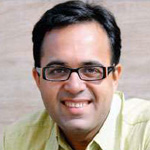
    Prasana Krishnan

    Added Prasana Krishnan, EVP and Business head, Sony Six: “We are thrilled to have acquired the broadcasting rights of the FIFA World Cup in 2014 and 2018. We have focussed extensively on top international football and we are now proud to bring the best in the world to Indian viewers”


  • M K Anand to head Times Television, Sunil Lulla to head to BCCL in new role: Sources

    By A Correspondent


    M K Anand
    Sunil Lulla

    M K Anand, until last month Managing Director, Media Networks at Disney UTV is set to be joining Times Television as its head, according to our sources. Sunil Lulla, currently Managing Director and CEO, is reportedly moving into parent Bennett, Coleman and Company Ltd (BCCL) in a new role, possibly as part of the Managing Director’s office.


    Although Mr Anand’s moveback to Times has been in the grapevine ever since he announced his departure from Disney UTV last month, neither of the movements have been confirmed by BCCL or Times Television. MxMIndia has learnt of these from reliable sources.


    The appointments are likely to be effective February 3, 2014. Mr Anand has worked with The Times of India group for 19 years, first with print for 14 years and later with the television business as VP for Zoom from 2004-09. He moved to lead UTV Software as CEO and see through the acquisition by Disney as well as the transition to Disney UTV.


  • Times gets gung-ho on Gujarat [Updated]


    By Shobhana Nair


    The cries of ‘Kai Po Chhe’ could be heard across the streets and skies of Ahmedabad yesterday. Kites of all hues – literally – dotted the sky as Amdavadis celebrated Uttarayan. Kites are popular across the world, but no where is it a religion like it’s in Gujarat’s premier city.


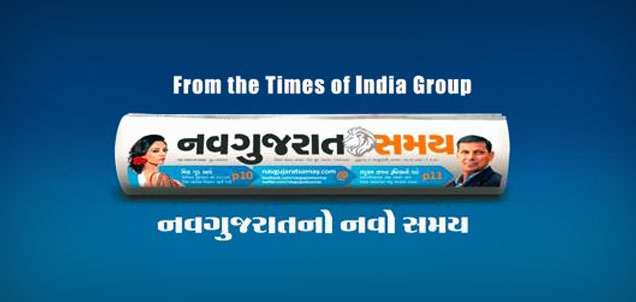
    But this Uttarayan – that’s yesterday (Tuesday, Jan 14) – there was reason for another form of excitement, at least amongst media circles. Two days later, on January 16 to be precise, the six million-odd populace of Ahmedabad will wake up to a new Gujarati newspaper from the Bennett, Coleman stable. Called ‘NavGujarat Samay’, the paper will complete with existing players like Gujarat Samachar, Divya Bhaskar and Sandesh which have a loyal readership. Says Suresh Balakrishnan, CEO of media agency network BPN: “It is going to be a bit challenging since it is a broadsheet though they have chosen the right market – Ahmedabad. I don’t know how successful it will be since there are intense competitors but it’s indeed good news for advertisers.”


    The general belief is that Gujarat is an untapped market and hence the decision of launching a regional newspaper would only mean that the pie will get expanded. In fact, there are some who believe that there’s scope for two more regional newspapers.  Says Bharat Kapadia, Founder of ideas@bharatkapadia.com who spearheaded Divya Bhaskar at the Dainik Bhaskar group and was editor and publisher of Chitralekha: “Henry Ford was once quoted saying that ‘The market never gets saturated for a good product but it can get saturated by a bad product. That means there is a scope when you come up with a good product.”


    NavGujarat Samay launched in Ahmedabad


    As a part of its strategy to aggressively extend footprint in languages, The Times of India Group has launched NavGujarat Samay in Ahmedabad.  This launch comes on the heels of a slew of launches like Ei Samay in Kolkata, seven new editions of Maharashtra Times (Pune, Aurangabad, Nagpur, Nasik, Kolhapur, Jalgaon and Ahmednagar) and one new edition of NavBharat Times (Lucknow) in the last couple of years.


    The paper is positioned as a new voice for a new Gujarat and focuses on the new age media, that are especially popular with the ‘under-40’ readers. For instance, it is the only Gujarati daily that launches alongwith a wide array of digital platforms – apps, a WAP site and a website (www.navgujaratsamay.com). Going forward, NavGujarat Samay will continue to engage readers via its print, digital and social media innovations and offerings.


    The paper will have a strong industry, business and SME focus with a highlight being two front pages, a “first ever innovation in any daily in Gujarat, that delivers double the value for our Gujarati newspaper readers”.


    Said Rahul Kansal, Executive President, The Times Group: “The Times Group is well-acknowledged as a thought leader in the English newspaper space as well as for its language brands – NavBharat Times, Maharashtra Times and Ei Samay. Now we are all geared up to achieve the same milestone in other languages as well.


    Added Ranjeet Kate, Director Response, BCCL “NavGujarat Samay will provide the right platform and context for the advertisers to creatively engage the Amdavadis in their own language. With a ‘print plus’ approach and a whole lot of brand activations planned over the whole of 2014, NavGujarat Samay will usher in a new era of newspapers in Ahmedabad, that will delight the readers and advertisers like.”


    The news of the launch appears to have made media agencies happy who are forever vying for prime positions for their clients at good rates. “The market size of advertising and promotions in Gujarat is Rs 3,500 crore which includes the total 360 degree activities of the clients. And hence everyone wants a prime position. This newspaper will add to our choice,” said Jalpa M Dave, Principal Consultant, View Finder, a Gujarat-based media buying agency.


    Welcoming the buzz in the marketplace, Krunal Amin, CEO, Saini Production, a local media and entertainment agency said: “Publicity may not have started in a big way but people are aware because of the brand.”


    There are some though who believe that the Gujarat urban market is becoming increasingly aspirational and the challenge would be to be look at growing despite a large number of readers going in for English. Mr Kapadia though feels Gujarati continues to be the dominant media, and the real challenge is about the product.”Production & distribution are not rocket science but the ultimate test is that of the brand.”


    This is of course not the first time Bennett, Coleman and Co getting into the Gujarati newspaper marketing. In 1993, it launched Times of India Gujarati but the paper was shut after a couple of years. In 2006, BCCL picked up a 12 percent stake in Gujarati daily Sandesh. BCCL and the publishers of Sandesh – The Sandesh Ltd had also signed a business cooperation and arrangement agreement for cooperation in advertising sales, marketing and printing. However, sometime around December 2012, the stake was sold.


    Gujarat is a value-conscious market, said an industry observer requesting anonymity. While smart subscription offers like the one NavGujarat Samay is offering will work, in the longer run what is desired is overall editorial quality and smart business strategies.  “The Times group is known for its strengths in both areas, and will use every rule in the book to ensure they outwit competition on both fronts.”


    The question then is who will suffer the ‘Kai Po Chhe’ first.


  • Week 2 sees Sab and Life OK tie

    By A Correspondent


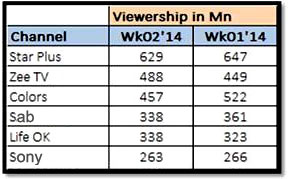
    Week 2 of 2014 saw some changes in the weekly TAM ratings. Zee rose to #2 and Sab and Life OK were joint #4.


    And even as Colors was #3, there’s reason for cheering in the camp as the fifth season of India’s Got Talent opened at 9.4 million.


    The rest is self-explanatory from the table alongside. As always, this info is based on what a little birdie from a TAM subscriber mailed us. Nothing official about it. But it’s reliable.


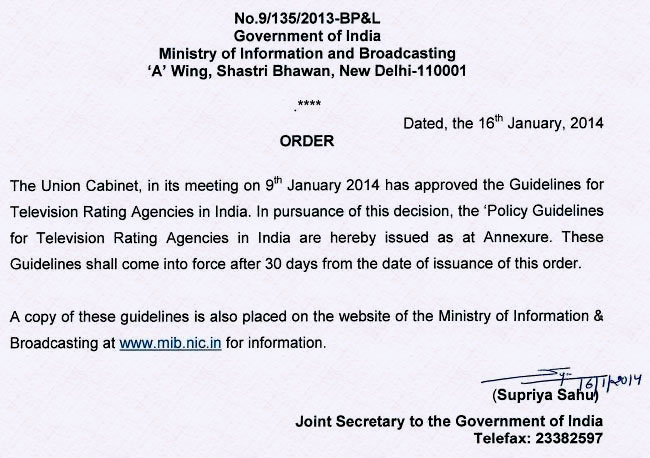
  • The clock is ticking… Guidelines on TV audience measurement issued. 30 days wef Jan 16

    By A Correspondent


    Valentine’s Day this year is when the broadcast system may need to kiss the current audience measurement system goodbye. That is, if the government, the Courts or some divine power do not intervene. Or of course if TAM, the sole operator of the current audience measurement system, is unable to take some urgent measures to comply with the guidelines.


    There was a meeting with the Minister of Information & Broadcasting and officials of the ministry and key BARC functionaries in Delhi on Thursday (Jan 16) and even though Advertising Agencies Association of India President Arvind Sharma underscored the need to extend the deadline for the guidelines by five to six months, the Minister said there was not much he could do since the guidelines were being uploaded on the website and since the Cabinet had approved them, there’s little he could do in the matter.


    The order on the guidelines uploaded on the ministry website is dated January 16 and it clearly states that the guidelines will come into force 30 days from the date of issuance. The 30th day would be either February 14 or 15 given when the 30-day notice comes into force – from Jan 16 or 17.


    Meanwhile, the industry is bracing for a measurement-free era. While some of those who got the government to intervene have reason to wonder if they have scored a self-goal, the real worry is for broadcasters who could now face the heat from advertisers.


    The pressure is also on the stakeholder-led BARC to ensure timely delivery of its measurement system. It may be recalled that BARC spokespersons have promised the commencement of a new television audience measurement regime by the second quarter of 2014.


  • Shailesh Kapoor: 2014-15: Time for Hindi Non-Fiction Overhaul

    By Shailesh Kapoor


    While fiction has driven the core viewer base of Hindi GECs over the last two decades, non-fiction programming has gained increasing importance over time. Being celebrity-centric, non-fiction content in India is expensive. But its ability to get new audiences to a channel, and its ability to create excitement in the advertiser community, are reasons enough for channels to invest in this category of content aggressively.


    But 2013 has not been the best year for non-fiction content. Many heavyweight shows have struggled to perform, despite being successes in their previous seasons, some as recently as 2012. Shows that had seasons averaging 2.5-4 TVR have struggled to cross the 1.5-2 TVR mark in 2013-14.


    Examples can be found in plenty. KBC didn’t deliver in its seventh season. Currently on-air shows NachBaliye and Dance India Dance have been at viewership levels of about half their previous seasons. Sa Re Ga Ma Pa, a pioneering non-fiction format, struggled to make any impact whatsoever in its last season that ended in Jan 2013.


    Some of the relatively younger formats (in terms of their on-air existence) such as India’s Got Talent, have done better. But otherwise, the writing seems clearly on the wall. Traditional non-fiction formats may not be here to stay.


    You can attribute the failure of one season of a successful format to content execution. There have been non-performing seasons of Sa Re Ga Ma Pa in the past too, where the issues were evident at the jury composition level itself. But the show could bounce back in the following season after making corrections.


    But the non-performance of the big daddies over the last year is certainly not attributable only to content. NachBaliye, for example, has the same format, anchors, jury and treatment style as the last season. Yet, it is rating 40% lower this time, on the same platform in the same slot.


    So what’s changed over half a decade? The answer is: A generation. It is well-researched that non-fiction’s core audience are the youth (though KBC has stood out as an exception to that). If we take 20 as a reasonable age of the bull’s eye audience of most non-fiction formats, and juxtapose it with the marriageable age in India, we get this fascinating piece of insight: That many early adopters of non-fiction shows that went on-air in India in 2006-09 would have got married in the last two years. (In case you are unaware of the dramatic impact of marriage on TV content preferences of an Indian viewer, I urge you to explore this fascinating subject).


    The new core audience of non-fiction programming today is someone who was a teenager (13-16) when these formats first went on-air. These teenagers are now into college, and how many college students cling onto what they thought was cool in their school days?


    Why would it suddenly all show up as an issue in 2013? Difficult to say, but the idea of 2013 being a tipping point is plausible.  After all, non-fiction content really gathered steam in India in 2006, and hence, the seven-year generation rule would suggest that 2013 was set to be the critical, watershed year.


    I’m sure the leading channels will find the solutions over the next year or two, with a mix of new formats and refurbished versions of the existing ones. The one who does it the best will have a lot to gain.


    A chapter of non-fiction content in India has closed, and a new one is opening up. Let’s now wait to find out who the authors are.


    Shailesh Kapoor is founder and CEO of media insights firm Ormax Media. He spent nine years in the television industry before turning entrepreneur. The views expressed here are his own. He can be reached at his Twitter handle @shaileshkapoor