Category: MEDIA

  • Exploiting OOH’s true potential: Mukesh Manik

    By Nibha


    If developing strong and reputed brands makes good business sense, and if brands are what the consumers relate to, identify with, and buy, then it is important for marketers to exploit the true potential of billboards and other OOH media.

    More on this in an interview with Mukesh Manik, M-I-C (Man-In-Charge) at Encyclomedia Networks, the only Indian OOH media creative shop that is currently headquartered in Mumbai, India. It is represented in four markets under joint venture agreements – Australia & New Zealand out of Melbourne, Australia (www.mediatag.com.au), Latin America out of Buenos Aires, Argentina (www.encyclomediala.com) with offices in Guatemala and Mexico, Kiev, Ukraine and Jeddah, Kingdom of Saudi Arabia (www.encyclomedia.me). Besides, Encyclomedia is also represented through exclusive distribution contracts in Bangladesh, Kenya, Nigeria, Pakistan, Croatia, Kazakhstan and Hungary.


    Excerpts from the interview:


    Q: How has your journey been in the media Industry till date and what is it that excites you about billboards?

    Media and advertising has always intrigued and amused me. A message is sent out to the masses repeatedly over a period of time, and that this message has a multi-dimensional impact on the choices that are made by an individual and the perception of a product is fascinating. Billboards are my favourite as more and more people are spending time out of home. They also present their own set of challenges as they have to deliver a message while the viewer is moving in most cases at speeds of 60 km/hour. This gives just a few seconds to catch the attention, deliver the message and assist brand recall. The trick lies in the design which should be able to engage the viewer in those critical few seconds while there are other distractions like traffic, environmental landscape, music, etc. A well-designed billboard is easily one of the most powerful, consistent and effective means of communicating to an audience on the move. Marketers still have to exploit the true potential of this medium and this in itself presents an opportunity like no other.


    Q: What role do you think innovation plays in OOH media? And in the recent past can you name any campaign which can be termed as “really innovative”?

    Innovation isn’t just about using cutouts and neon, though I admit that they are effective at times. Innovation lies in understanding how best to use the tools available to enhance the billboard creative, to create an impact that has a lasting recall. Truly innovative billboards are remembered years later, much after the campaign is over. In the recent past, one of the most innovative billboards I have seen was the Barclays Bank Billboard which just carried their logo on a white background. The innovation was in its simplicity and ability to make the announcement that Barclays is now in India.


    Q: How does one justify the cost of innovations in terms of both the recall value and the rise in the market share especially when we don’t have any posting technology at place to justify the effectiveness of the OOH campaign?

    “Innovation” is perceived as being expensive but in actuality it is quite the opposite. In the Barclays billboard mentioned above, there was no additional cost of materials, cutouts, neon, etc. but it still had the desired impact. Innovation drives recall, recall fuels sales. Advertising is meant to provoke a response. If the ad is forgotten, it cannot possibly invoke a call to action. Though there is technology available to measure the effectiveness of Outdoor advertising, the true measurement is in the after effects of the campaign. Product advertising is easier to measure compared to a service as the advertiser can just take a look at their sales graph.


    Q: What difference can be made in terms of ‘Innovation’ for Outdoor (Traditional Media) and for Indoor (Alternative Touch Points)?

    I believe that a media plan consisting of an Outdoor campaign and an effective Point of Sale is sufficient to achieve sales objectives for a brand. Marketers need to appoint specialist agencies for the different media formats they advertise on. This is easier said than done. The creative and innovation has to be across all the formats. An agency specializing in TV commercials and Radio cannot possibly be expected to come up with innovative creative solutions for an Outdoor campaign.


    Q: According to you is accountability the factor that is keeping the clients at bay from the OOH Media, when it comes to the media plan? And do you think that the clients are ready to experiment with the real time innovations and not just cutouts and neons in the near future…?

    Clients are increasingly accepting Outdoor as an independent medium. The double digit growth in the Outdoor advertising industry confirms this trend. With over a 100 TV channels and hundreds of print publications, the chances of an advertisement being missed is higher than ever. Outdoor advertising addresses that issue easily as a good outdoor campaign cannot be missed when people are on the streets. The industry will mature with the growth in Outdoor spends. Cutouts and Neon are considered innovations in the absence of specialist Outdoor design studios.


    Q: How do you rate the change in the Indian OOH industry, especially in the past 3-4 years…? And according to you, what is it that will make OOH media more than just a reminder medium?

    The more clients see pathbreaking billboard designs by specialist agencies, they will demand the same for their brand as well. This will lead to fantastic creative innovation in Outdoor advertising and billboards will not be considered a poor cousin of mainstream advertising. There are many brands even today that successfully use only Outdoor Advertising to communicate their message.


    Q: How do you see the n-sync between the agencies, the media owners and the statutory authorities? And who according to you should take the initiative to improve the OOH industry overall?

    To expect the media owners, agencies and statutory authorities to come and work together is far-fetched. The change has to be from within. I believe that if media owners offer international standard media formats and quality media displays to agencies, it will encourage better designs and print quality. This in turn will change the cityscape for the better. It has already started to happen with the introduction of street furniture, modern bus stops, etc.


    Q: What according to you are the essentials of outdoor advertising?

    There are five essential skill set components in outdoor advertising.

    The first essential skill is creativity, the art of being innovative and imaginative. We must apply creativity to everything we do – tirelessly exploring innovative ways to communicate the brand USP in a meaningful, relevant way. The message has to break through and resonate with the consumer to be successful. Consumers are not waiting for your message. You must deliver it to them in an unexpected manner. An effective creative has an after-shock. It will be felt long after the campaign is over. When that happens, you’ve done your job. That’s creativity; you can’t put a price on.

    The second skill is being media-savvy. With the media fragmentation increasing exponentially, each medium must be understood for what it is really capable of delivering. It must be targeted precisely and assessed with the end user in mind. As with the creative, media planning and placement must build the clients business.

    The third is unyielding commitment. You are more than the agency; you must be an evangelist, preaching the virtues of your client to your staff, your client’s staff and public. We must be committed advocates as well as dedicated business partners. The entrepreneurial approach that we apply to each of our client’s business must be evident in every phase of the advertising development, from planning to creative to execution.

    The fourth essential skill is discipline. At Encyclomedia, we assist clients in focusing on the compelling, differentiating selling points that include consumer consideration. We must never lose sight of that focus as we move from creative development through media planning and execution. We seek to reach the targeted consumers with an effective, focused communication to which they will respond.

    The fifth is accountability. The bar is set with the client’s business objectives. Then we raise it a few notches higher. Our philosophy is the image-building and branding must always be balanced against the need to deliver on the bottom line. Advertising in Outdoor is a mean to an end, not an end in itself.


    Q: What’s your take on breakthrough ideas in the OOH domain, especially in terms of the changing scenario?

    Breakthrough ideas might appear to be instant or impulsive, but they are not. They are based on sound strategy, outstanding visuals, and the correct application of timing and media. The art is in ensuring that all elements of communication work together, so that the end result is more powerful and effective. It’s like conducting a symphony orchestra – all the instruments working together, the timing just right to make beautiful music. In outdoor advertising this is a total business solution.

    We’re a very visual audience. The world is changing in so many ways. Today, television shows and movies are quickly clipped, with constant talking and constant cuts. There are no more long scenes. In outdoor advertising one must understand that this is how people consume information, so one must work to bring them in, but then your campaign must nurture them and be there for a long time. Remember that an outdoor medium is not a “speaker’s point”.


    Q: And about the core component of the brand message?

    It is important to understand the life cycle of a category, a brand, and a product to take a brand to the next level and drive long-term success. New brands must establish a niche. A mature brand must find new life, possibly by re-inventing itself through extension or by creating a new identity that connects with today’s consumers.


    Q: Do you think the budget affects creativity and deliverables to the client?

    Outdoor advertising will always, like any other advertising, be dependent on the brand’s budget to some degree. Having inadequate money to spend puts undue pressure on the advertising. Whether you have the budget or not, the advertising must be truthful, relevant, eyecatching, memorable and downright pleasing; only then will it go through to mind and memory of the consumer. Smart advertisers know that outdoor advertising helps develop brand awareness, and they select a specialist outdoor design and production agency to deliver the job.


    Q: What’s the key to your success as a specialist OOH creative agency?

    To be successful, you must be involved. You must take the time to learn your client’s business and brand attributes well. Let the client know that you care as much about the business as he or she does. Analyze the business, its chief competitor its unique culture, mission, vision and trends of the category it’s in. Most importantly, stay focused on brand attributes upon which the client can build. Be single-minded, literally. Don’t throw many attributes out there in the hope they’ll take away just one. Be certain the one is the one you want them to take away. If you don’t know your client’s business intimately, you are likely to focus on attributes that aren’t really important to the consumer, often at the client’s request. It’s your uncomfortable obligation to be honest and say, “That’s an attribute that has no meaning to the consumer.” Recommend what is right for business, what is supported by logic, research and solid, strategic thinking; that which differentiates your brand from the competition. Only then can you communicate in a compelling manner, cut through the clutter and attract interest and attention.

  • J19 wins rights for Jet buses

    By Nibha

    J19 Max (Jash Media And Communication Pvt Ltd), an OOH agency, recently won the advertising rights for three years for the 96 on-ground Jet Airways air transfer buses that ply within 15 major airports in metro and micro-metro cities across India, from 2011 to 2014.

    In an exclusive chat with Nibha of MxM India, Mr Sunil Gohil, Director J19 Max, said, “We have recently won the advertising rights for a period of three years, and this includes both bus grab handles (which was earlier with Atin Promotions) and contravision running feet of right, left and rear panels inside the buses, which ply across all the 15 major airports, including Mumbai, Delhi, Bangalore, Hyderabad, Chennai and Goa.”

    Mr Gohil added, “The contravision will be executed for the first time inside the Jet Airways a/c Tarmac buses where a 6”-high tape will be offering a branding space at the right, left and rear inner panels inside the coaches. Apart from that each bus will continue to have 25-30 double side grab handles with a display size each of size 5”x3”. And, at most airports, the Jet Airways Terminals have no aerobridge facility, so all departing and arrival passengers pass through these coaches. Thus, we shall be catering to double-digit-lakh eyeballs per month.”

  • First on MxMIndia: Slowdown forces Bright Outdoor to give up BEST bus biz

    Story: By Nibha


    Bright Outdoor Advertising, Mumbai’s premier OOH Media owner has withdrawn itself from advertising on Mumbai’s BEST (Brihanmumbai Electric Supply and Transport Undertaking) buses and thus a fresh tender will soon be up for bidding in the next month.


    Bright Outdoor CEO Mr Yogesh Lakhani confirmed the development to MxMIndia, saying, “Due to huge losses, we’ve given it up.” Industry sources tell MxMIndia that since the amount bid to win the tender in 2010 was very high, Bright found going the tough given the slowdown in adspends in the outdoor domain.


    It may be noted that in November 2010, Bright Outdoor had won a 3 year tender from Pioneer Publicity for an upwards of Rs 120 crore for all the non-airconditioned BEST buses in Mumbai

  • Innovation and OOH are synonymous: John Ellery

    Having studied to become a Chartered Surveyor, working in property management and sales, Mr John Ellery joined the outdoor contractor London and Provincial in 1968 and trained in all aspects of the outdoor medium from billposting to backlight development. L+P was at the forefront of the outdoor advertising industry at that time and led many industry initiatives.
    Specifically Mr Ellery was involved in the birth of the street furniture medium, developing acceptable designs and working with local authorities to integrate outdoor within modern town centre developments, and the street scene.

    From there on it was an upward progression as Mr Ellery went on to become Marketing Director of Smiths and Masons, Board Director of L+P Group and Adshel, Managing Director, Dennis Sullivan at Portland, and formed the International Division of Poster Publicity. He opened their offices worldwide, providing a global network with 18 offices outside the UK, producing over half of the groups annual billings of US$400 million. PP opened their 19th office, in Sydney, early in 2005.

    PP and WPP formed a joint company, with Portland, called Kinetic Worldwide, to continue to develop the outdoor specialist function globally. Since 2006 Mr Ellery ceased his connection with the company and is now an international OOH consultant.

    In an exclusive interview with Nibha, John Ellery shares his views on tackling the economic slowdown, global consolidation, work ethics, global OOH guidelines and much more.


    Q: Do you think that the current economic slowdown will give out-of-home advertising an edge over other media, across the globe?

    This will vary market by market. In the main I believe that OOH has many advantages over other media, but as several advertisers believe that OOH so often only accounts for a small percentage of total media spend, in difficult times, it is sometimes the first part of a media schedule to be cancelled. However with the right marketing and enthusiastic, well connected sales force, many outdoor owners can provide advertisers with some more reasonably priced advertising alternatives to their regular media choice. There is still an education job to be carried out on many advertisers. All sectors of media are suffering at this time, but from what I am seeing, a medium that can offer a specific and well targeted audience is enjoying a better sales ratio, than a medium that is broader in its audience appeal.


    Q: The current economic slowdown is affecting the OOH media owners’ businesses across the world; as a result a number of major advertisers are cutting back on their advertising spends. What according to you is the key to win back advertisers to the OOH arena?

    It must be a continuing effort to provide a well positioned OOH medium with top quality servicing and display performance. Of course this costs money, but we have such a public medium which is only as good as the last site that was seen. In the UK and US the number of outdoor sites displaying paper and glue displays is reducing quite dramatically. In the US it is proposed to have no further paper and glue sites by the end of this year. I know traditional panels in India are now almost all vinyl, but with “dry posting” recyclable materials are being used. Good qualitative research is playing a growing role in outdoor, and is important to be able to demonstrate “eyes on results”’ rather than simple opportunities to see.


    Q: What advice would you give to the Indian Outdoor fraternity, both in terms of marketing and pricing of their media’s so that they don’t face the heat of the global economic slowdown?

    Be realistic about the economic climate. It will help if the OOH business was to work in concert as a proper industry. I know that it is easy to say, and it is a difficult dream to realise, but OOH is one of the more minor media choices, and we should work together to demonstrate its strengths and advantages. Each individual company will want to maximise its share of any budget. That often leads to reducing price. Of course an advertiser wants to achieve good value for money, but OOH must hold its head up! We cannot be turned off, or ignored like TV and press. Both TV and press have seen dramatic reductions in their advertising income over recent years, due to a reducing audience. The Outdoor audience is generally increasing, and that should carry an equivalent increase in value. The growth in the online sector is generally to the detriment of TV and press, not OOH.


    Q: Is the OOH industry doing enough to foster new formats and has the global consolidation of media owners helped this?

    There have been a number of new formats over the recent years, and OOH is all about the position of the site and audience. I have seen several new formats fail because they have not reached the awareness of the client. All very traditional and simple. But we are seeing successful new formats – LED, plasma screens, mobile phones.  The current financial conditions are not really supportive of these sorts of formats, but we need to encourage advertisers to really appreciate the positives that these new formats provide.


    Q: Out of Home is in the spotlight more than ever for its variety and breadth of offering. What new OOH media types have impressed you and why?

    LED enables so many clients to present their advertisement in the key locations where the opportunities exist. However, the success of LED is very dependent upon the programming and creative expertise utilized. Similarly, the same applies to plasma screens. The escalator plasma panels on the London Underground have been well used by several advertisers. The angle of the escalators provide a truly great creative programming opportunity, which a number of advertisers have taken full advantage of, to provide a very memorable advertising campaign.  To see products jump from screen to screen in time with the movement of the escalator is very eye-catching and absorbing.


    Q: What role do you think innovation plays in OOH media? And in the recent past can you name any campaign which you could call really innovative?

    Innovation and OOH are synonymous, whether the innovation applies to the creativity of the artwork/programming, the location in relation to the audience, the timing of the event, or the combination of media used. However it must be said that many and indeed most OOH campaigns simply work because they advertise a product or brand in a simple and clear way on a campaign of well placed outdoor sites. It would be inappropriate, I think, to name one or two “really innovative” campaigns as there are, and have been, so many.


    Q: How does one justify the cost of innovations in terms of both the recall value and the rise in the market share especially when we in India, don’t have any posting technology at place, wherein one can justify the effectiveness of the OOH campaign?

    This is a difficult question to answer. The simple answer is that since its origins, many hundreds of years ago, OOH has been proven to work in many, many markets. Justification of “innovation” can be measured by research, and by sales and ROI. The research work that has been going on in our industry world-wide has been immense. The India market can benefit from it, and I do hope that it is at this moment. In Europe and the US we have been working on global guidelines for OOH research which I have encouraged the market to consider and accept, and I believe this is happening. Where you don’t have a particular technology in place I think you need to look at other markets and share their experiences to your advantage.


    Q: How do you rate the change in the Indian OOH industry, especially in the past 3-4 years? And according to you, what is it that will make OOH media more than just a “reminder” medium?

    One of the obvious changes, probably in more than the past 3-4 years, is the reduction of hand-painted, and the growth in “PVC” or “vinyl” on large scale panels. This has really improved the presentation and appearance of the medium in India. Also the growth in the Street Furniture sector, and the huge improvement in the Airport Advertising offerings, is helping the medium to become a force to be reckoned with. The “negative” that I have heard from a number of people on the buying side of the business is the clutter that appears in a number of locations in most of the cities in India. OOH is seen in conjunction with the environment, and this is a matter for improvement by all the players that are in the business.


    Q: According to you is accountability the factor that is keeping clients at a distance from OOH, when it comes to the Media Plan? And do you think that the clients are ready to experiment with realtime innovations and not just cutouts and neons?

    Accountability is extremely important in the OOH business. Lack of accountability has held the medium back in many markets around the world, over the years. It’s a difficult factor to achieve when there are many players in the business, and all very keen to maximise income. But without it, as you say, it will keep clients at bay. In a market with many landlords controlling site locations, who are only interested in their financial returns it is difficult to establish a trusting, level OOH business which is accountable. But overall it is the contractors that can bring accountability. They need to work together for the benefit of the OOH Industry, by establishing a code of conduct, that all will adhere to. The research programme that is currently ongoing will go a long way towards helping out. I am sure that clients are ready to experiment with real time innovations which will become more apparent as time moves on.


    Q: How important is building up relationships with Agencies, Advertisers and Associations? And what sort of difficulties have you faced in the recent times across the globe?

    Very important! I am not the first person to state that the most important relationship is with the client, and the agency. It’s more straightforward to tell clients and agencies about a TV commercial – time of transmission, and potential audience etc, than it is to explain the locations and potential audience of a group of outdoor sites. We are back to accountability and trust again. Explaining the way in which the message can be delivered directly to the target audience is all important. In some markets there have been questions asked when it appears that not all sites booked appear. Double bookings have also caused questions to be asked. If we do not play our business in a straight and honest way, then the future will not look good.


    Q: Your site mentions the steering board of a new group, responsible for providing global guidelines for OOH research. What is the current progress on this?

    FEPE – the “Federation of European Publicite Exteriure” was formed in 1959 by the legendary Jacques Dauphin. This year we celebrate FEPE’s 50th Birthday at the World congress in Sardinia 3-6 June (www.fepe.com). FEPE represents the European OOH industry, along with many other OOH countries who are members.  Back in November 2007 FEPE met with ESOMAR – the global media research body and agreed that global guidelines for OOH research should be produced. This would help agencies and clients to compare the OOH medium globally, to compare apples with apples. A number of bodies were invited to join, and in addition to FEPE, and ESOMAR. These are:

    EACA – The European Association of Communication Agencies

    Chairman of the Technical Committee – Neil Eddleston JCDecaux

    WFA – The world Federation of Advertisers

    OAAA – The Outdoor Advertising Association of America

    AAAA – The American Association of Advertising Agencies

    MRC – The Media Ratings Council

    CANA – The China Association of National Advertisers


    Q: What sort of challenges and opportunities do you see, when you look at a market like India?

    There is a notable improvement in the way OOH is handled and marketed in India. New developments into the street Furniture domain, the modern treatment of airport advertising concessions show how more aware operators have become.  Improved accountability always helps generate a greater trust in the medium. A closer and more trusting relationship between the site operators can also improve the way OOH is perceived.

    Clients do not wish to be associated with clutter, so a continued drive to improve the environmental landscape will be to the advantage of the OOH Industry.

    Support the research guidelines and generate “eyes-on” figures will create more credibility for the medium. So, continue the move towards standardisation of panel sizes and the investment in backlights, MUPIs etc. Move towards using recyclable print substrates, and improve awareness of green issues.

  • BBC Good Food whets appetites

    By Akash Raha

    Worldwide Media is all set to launch BBC Good Food in India. The magazine will be on the stands on Good Food Day, October 21. The magazine will be priced at Rs 100 at newsstands and UCOs. In a conversation with MxM India, Debolin Sen, Publisher – Good Food, Worldwide Media said the expectations riding on the title were huge. “It’s an exciting brand to launch in India, especially now,” said Mr Sen. “Food is the most exciting story unfolding in the country. Experimentation with global cuisines, presence of international restaurant brands, access to exotic ingredients in the neighbourhood supermarket, 125 food shows on television, three dedicated food channels, gourmet store expansions pan India. There’s so much that’s happening. We are at a point in time in the market, when it made much sense to launch the brand. So yes, the expectations are huge.”


    In a recent conversation, Tarun Rai, CEO, Worldwide Media said, “We are launching BBC Good Food on Good Food Day, October 21, which we are celebrating and we are encouraging people to try something new on the day. We have huge expectations from Good Food. India is changing, food habits are changing. People are experimenting with food, both in their kitchens as well as when it comes to eating out in restaurants. We believe that the time is right for such a magazine. There are no precedents; there are no international food magazines in the country. We are going into uncharted territory and we are beating a new path. There are dangers but as I said, somebody has to do it and we believe that the potential is huge. And the response we’ve got from advertisers for the magazine is excellent and you’ll see it in the number of ad pages we’ve got in the first issue.”


    Speaking about the target audience of the magazine, Mr Sen said, “The magazine will appeal to a diverse mindset. From Everyday Chefs – people  who cook regularly for family, friends and even themselves, to Recreational Chefs – people who are interested in new recipes and experimentation, but don’t cook on a regular basis, to Restaurant Junkies – people who love eating out, and finally Globetrotting Foodies – people who love to experiment, sample local cuisines when they travel.


    “BBC Good Food is an extremely exciting magazine to launch. The brand allows you to explore new territories and create engaging properties unlike others. The launch will involve sufficient amount of marketing dollars being invested to create the required market impact. We intend having a phase-wise launch build up to Oct 21, the day the magazine hits stands, and thereafter post-launch,” said Mr Sen.


    Whereas marketing of the brand is concerned, it will be done through various campaigns and activations such as Good Food Survey, Good Food Day, Good Food Privilege Program, Good Food Nights, Good Food Website and Apps, Good Food Social etcetera.


    BBC Good Food also has an incredible legacy. It’s UK’s best-selling food magazine for the last 22 years. In fact it’s a successful food media brand with its content present across mediums: as a magazine, as a TV channel, a website which is a storehouse of over 7,500 recipes, and hugely successful iPad and iPhone apps which have crossed the 100,000 download mark.

  • First on MxMIndia: NDTV elevates Barkha Dutt and Sonia Singh

    By A Correspondent


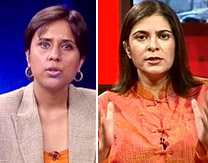
    News television major NDTV has announced the elevation of group editor (English) Ms Barkha Dutt and senior managing editor Ms Sonia Verma Singh.

    Ms Dutt will now will be Group Editor across NDTV and President of the Editorial Board.  Ms Singh will be NDTV’s Editorial Director and President of NDTV’s Ethics Committee.

    Meanwhile, NDTV has also instituted an Editorial Board with Ms Radhika Roy as Chairperson. The Board will be responsible for all standards and matters editorial across NDTV. It will meet once a month to take stock of all editorial issues, including of course ratings. The details of the Board, its remit and its exact constitution, which will include the managing editors of all channels and the head of Convergence will be annouced shortly. On the other hand, the Ethics Commitee: will develop consistent standards and oversee all ethical issues across the organization.

  • One year celebration for Fortune India

    By A Correspondent


    Fortune India, which was launched in October 2010, has created a reputation for being one of the best global business magazines in India.  To celebrate its first anniversary, Fortune India has come out with a double issue.


    Mr Pavan Varshnei, President, Fortune India, said, “The response to Fortune India has been splendid, both in terms of readership and advertising. While we’re a monthly, we still command the highest advertising market share in the premium business magazine segment. Today, Fortune India is the preferred choice among business leaders and advertisers of high end products and services.”


    The anniversary edition promises to be an insightful and enriching read. The cover story ‘How we work’ focuses on the changing Indian work culture. Another interesting story, which is set to spark a new debate among marketers, is Grey Sells, focussing on the 80 million people aged 60 or above, who provide a great new business opportunity. The story on Taiwan’s largest, and the world’s second-largest, chipmaker, MediaTek, shows how it has revolutionized the cellphone market in India and China. Along with the anniversary issue is a Collector’s Edition featuring the best of Fortune India’s coverage of business thought, leadership and practice across India and the neighbouring countries.


    On the occasion, Mr Dibyendra Nath Mukerjea, Editor of Fortune India, said, “When we launched Fortune’s India edition a year ago, we wanted to bring out a publication that delivers depth and breadth in its journalism, giving Indian business leaders actionable intelligence to propel their businesses globally. And, I am happy to share that Fortune India has become the essential read for Industry leaders and influencers.”


    Fortune India has also received global recognition for its design and layout – photo, graphics etc.  It received two merit awards from the Society of Publication Designers, New York, and besides that, a bronze award for infographics at the IFRA Annual Competition, earlier this year. Fortune India 500, Business Person of the Decade, the Green issue and Business of Luxury special are some of the issues that have stood apart in last one year.

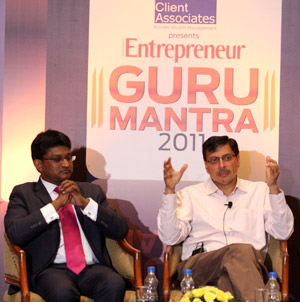
  • Phaneesh Murthy gives second Guru Mantra lecture

    iGate Patni’s CEO, Phaneesh Murthy (right) with Senthil Chengalvarayan of Network 18 group

    By A Correspondent

    Entrepreneur, a monthly magazine from the Infomedia 18 stable, in association with Client Associates, recently organised the second edition of the Guru Mantra lecture series with Phaneesh Murthy, CEO, iGATE Patni.


    Murthy spoke to a select gathering of established entrepreneurs, venture capitalists, and corporate executives about his successful entrepreneurial stint, the challenges he faced in setting up the company, valued today at US$1 billion. He gave insightful tips on how to get the right kind of funding, the recipe for successful scaling, talent management and policymaking, and many other dos and don’ts of entrepreneurship in India.


    The idea behind the series is to celebrate the spirit of entrepreneurship. Planned to be organised at premium venues across different cities, the series provides a knowledge sharing forum for entrepreneurs.


    As part of the format, every session has a successful entrepreneur as the guest mentor who shares their entrepreneurial journey with the attendees, followed by a Q&A session where the attendees get a chance to ask questions specific to their business.

  • The Anchor: 7 ways to keep a viewer glued to your channel

    By Sunder Aaron


    #1 Assortment: A channel needs to offer a variety of content to viewers to keep them coming back.


    #2 Thematic: It is important to be a part of local festivals and important historic days which makes the viewers feel closer to the channel – for example Diwali or Independence Day.


    #3 Original: A viewer today is bombarded with numerous communications all the time – it is more important than ever create a clear differentiation amongst the category to enjoy top-of-mind status with the viewers.


    #4 Young and fresh: Any viewer, young or middle-aged, would like to watch a film which excites him/ her. The best way to this is to keep the appearance of the channel vibrant and fresh.


    #5 Beyond the television screen: Gone are the days when television channels just aired promos and hoped to keep viewers glued – the need of the hour is to create brand extension programs.


    #6 Avoid repetition: Repetition could result into losing a fair amount of eyeballs since there is a sense of disappointment if the viewer has already watched the content.


    #7 Surprise element: Surprise your viewer! Exceed your promise by delivering more than you promise.


    Sunder Aaron is Business Head, PIX.

  • Conde Nast Traveller hits many highs

    By Akash Raha


    Conde Nast Traveller completed its first anniversary in the Indian market. The magazine was launched in India in October 2010. The anniversary issue of the magazine is on stands at a price point of Rs 100. Conde Nast Traveller is the third magazine from the group in India, after Vogue and GQ. Whereas Conde Nast Traveller is concerned, it is the sixth international edition of the brand.  Even though Traveller’s stay in India has been only for one year, it has been there for a long time in UK and US. MxM India got in touch with Divia Thani Daswani, Editor, Conde Nast Traveller to know more about the magazine’s year-long journey.


    Q: Conde Nast Traveller has completed one full year in the Indian market. How has the journey been so far?

    For my part, I can say this has been an incredible first year for Conde Nast Traveller! When we were launching it, we believed this would be a very niche magazine with a print run of about 15,000 copies. Our print run for the anniversary issue is 40,000 copies, just one year in.  It’s a wonderful reflection of the enormous passion for travel that we have in this country—and also the sophistication of the Indian traveller. But numbers aren’t the only thing that matter: the feedback has been tremendous.


    Q: How do you think Conde Nast Traveller has fared vis-à-vis its competitors in India?

    Readers follow us with an acute eye; they read us closely; they love the visuals; they take our recommendations seriously. More so than any other publication I know, Conde Nast Traveller is a magazine people save for years—it doesn’t become irrelevant or less interesting when the month ends. Finally, I’m very proud of the fact that some of the greatest writers and photographers in the world—from Suketu Mehta, Pico Iyer, Amitav Ghosh and William Dalrymple to Julien Capmeil and Prabuddha Dasgupta—have worked with us so enthusiastically. It’s the power of travel, really. It brings out the best.


    Q: What are the content and product innovations you have done for the anniversary issue?

    The anniversary issue is especially close to my heart because it’s our first India Special. This is an idea we’ve been working on for many months; in fact, ever since we started doing our research back in January 2010. We discovered that there’s a collective desire among discerning travellers to discover more of our own homeland. It seems the further away we go, the more we jet-set around the world, the greater the longing to explore India. So this anniversary issue is a tribute to our ‘incredible India’. It’s full of secrets and surprises from each corner of the country, from New Delhi to Tamil Nadu to Bihar to Mumbai. Even the international destinations we’ve covered have been captured by Indian voices. The lineup in this issue is superb; it’s been the collaboration of the great talent and hard work of dozens of people across the world, from Amitav Ghosh in China, Hari Kunzru in Los Angeles and Rashmi Uday Singh in Paris to Michel Figuet in Delhi, Julien Capmeil in Bihar and Ruskin Bond in Mussoorie. And of course, there’s a healthy dash of glamour, with Frieda Pinto, Tina Ambani and Rahul Khanna! Another favourite of mine is the photo essay featuring some of our favourite unseen images from the first year of Conde Nast Traveller—images so glorious we couldn’t help holding on to them. There are other innovations, of course, from a printing and production perspective, but to me, this issue is special because of the dozens of gems inside.


    Q: What are the other campaign initiatives you have undertaken around your product to highlight your brand among others in the space?

    I think the focus has been to create a magazine that appeals and talks to the affluent well travelled  Indian audience which is really been the biggest success story for us. Apart from this we have focussed on a targeted marketing plan via outdoor in key locations, targeted subscriptions program and of course working on the signature event which is the Conde Nast Traveller Reader Travel Awards. We also have a program to reach out to the key influencers in the industry by hosting small events.


    Q: What do you think about the travel magazine space? Do you see it growing in the years to come?

    As far as the travel industry is concerned, the future is India and China. Outbound travel from India is set to grow to 50 million people by 2020. Already we are among the top spenders in the world when it comes to hotels, shopping, food and nightlife—and of course, destination weddings!


    Q: What has been the response to your anniversary issue?

    The anniversary issue is already out and has received an extremely positive response on the newsstand. The cover price continues to be INR 100.

  • First on MxMIndia: Barkha Dutt now heads edit across NDTV, Sonia Singh is Ed Director

    By A Correspondent


    News television major NDTV has announced the elevation of group editor (English) Ms Barkha Dutt and senior managing editor Ms Sonia Verma Singh.


    Ms Dutt will now will be Group Editor across NDTV and President of the Editorial Board. Ms Singh will be NDTV’s Editorial Director and President of NDTV’s Ethics Committee.


    Meanwhile, NDTV has also instituted an Editorial Board with Ms Radhika Roy as Chairperson. The Board will be responsible for all standards and matters editorial across NDTV. It will meet once a month to take stock of all editorial issues, including of course ratings. The details of the Board, its remit and its exact constitution, which will include the managing editors of all channels and the head of Convergence will be annouced shortly. On the other hand, the Ethics Commitee will develop consistent standards and oversee all ethical issues across the organization.


    About the two star news anchors: From her website barkhadutt.tv: Barkha Dutt’s frontline reporting of the Kargil conflict in 1999 raised her to prominence in India. She has reported on many conflicts, ranging from Kashmir to Pakistan, Afghanistan and Iraq. Currently, she is Group Editor-English News, NDTV, a leading Indian television network, and the host of “We the People”, a weekly discussion show on current events. Barkha also writes a weekly column for The Hindustan Times and Khaleej Times.


    Some awards she has won: Global Leader of Tomorrow Award from the World Economic Forum, 2001; Commonwealth Broadcasters Award, 2002; Broadcast Journalist of the Year by the Indian Express, 2005; Padma Shri (Journalism), 2008.


    On the other hand, Senior Managing Editor, Sonia Varma Singh is also an NDTV veteran of nearly two decades. Info courtesy the NDTV website: As an anchor of popular shows ‘India 60 Minutes’ and ‘Your Call’, she has won acclaim from both critics and viewers for her work. Conferred by FICCI with the ‘Young Leader Award’, Sonia Varma Singh has interviewed the country’s top politicians, bureaucrats and stars.


    In July this year, Mr Vikram Chandra was appointed CEO of the NDTV group and a member of the Board with overall operational responsibility of the organisation and the network’s sales and viewership numbers. The announcement is in contintuation with the changes in the leadership structure at NDTV.


    Image courtesy NDTV.com

  • Dainik Jagran calls agency to handle its creative business

    By Shubhangi Mehta

    Dainik Jagran, the Hindi daily has invited agencies to handle its creative mandates, some of the agencies participating in the pitch are Grey, McCann, Percept H.

    Though no official confirmation could be attained at the time of writing this report, industry sources close to the development have confirmed the news to MxM India.

    Dainik Jagran was founded by Puranchandra Gupta in Jhansi in 1942. In 1947 Dainik Jagran shifted its headquarters to Kanpur, where it launched its second edition on 21 September 1947. The Rewa and Bhopal editions were added in 1953 and 1956. In 1975, publication of Gorakhpur edition started, followed by Varanasi, Allahabad and Lucknow in 1979. In 1984, Meerut edition was launched, followed by Agra in 1986, Bareilly in 1989 and Delhi in 1990. Between 1997 and 2006,

    Eighteen new editions were added, and through 2007-08, six new editions were launched.

    More than 55.7 million people read Dainik Jagran making it the largest read daily in India. Currently, Dainik Jagran’s 36 editions are published across eleven states of India.