Category: MEDIA

  • Jaldi 5 with Geetha Shiv: Family content can add to Bigg Boss eyeballs

    Over the weeks, media agency MEC has been forecasting how key television properties would fare with ratings. Last weekend, MEC announced that Season 6 of Bigg Boss, the flagship reality show on Colors, would see a growth over last year. We asked Geetha Shiv, National Director, Analytics & Insight why and whether the forecast stays now that we know who is in the house.


    01. MEC has estimated the opening TVR for this season to be at 3.9 among All Adults, 15 years+, SEC ABC, All India which is 30 percent higher compared to the opening TVR of 3 in the last season. What are the main reasons for this? How do you think Bigg Boss’s opening episode will compare with other reality shows this season?

    Bigg Boss has moved into the peak of primetime with a 9-10 pm slot in this season compared to 1030-1130 pm slot last season. Also the fact is that KBC clashing in this timeslot has not had a negative impact on Colors channel share. Viewer sampling for the initial episodes of any new programme and particularly reality shows will be typically high and over period the viewership will stabilize.


    2. Now that the participants have been revealed, do you think the show will be able to grab enough eyeballs?

    While there are some popular celebrities like Navjot Singh Sidhu in this season, Bigg Boss’ participants have never been mainstream celebrities. It all depends on how the plot develops and what happens in the house. Additionally, the fact that the content this year will be more suitable for family viewing can add to eyeballs.


    3. What are your expectations from the Bigg Boss season 6?

    Overall it should deliver better than last season, it is a better time slot.


    4. With numerous reality shows on TV, what is the reason for them working?

    Reality as a format has seen success in India. It is all around talent or bites of reality as in the case of KBC or Bigg Boss. There is always some winning-losing that happens between real people which brings in viewer interest.


    5. How much of the Salman Khan factor will be a pull on television?

    Salman Khan’s popularity has not declined since the last season. We will have to see how much and how he is being used to trigger viewership.


  • BBC Good Food India launches kitchen-studio

    By A Correspondent


    A good kitchen is integral to culinary creativity and quality assurance, and that is the motivation behind the launch of the brand new BBC Good Food India kitchen. Like the magazine, the Good Food test kitchen is the first of its kind in India and firmly establishes the brand as the pioneering authority in food in India.

     

    BBC Good Food India has at its core the triple testing of every one of the 80 plus recipes featured in the magazine each month. This makes the kitchen crucially important to the magazine. It has been designed to fulfil the brand’s central philosophy of fool-proofing every recipe so our readers get it right the very first time they try it in their kitchen. The kitchen will also serve as a laboratory for the creation and development of new recipes by the Good Food cookery team, thereby underlining our commitment to culinary innovation and growth.


    Located centrally in Mumbai’s Prabhadevi, the 1,800 sq ft property houses a fully equipped kitchen as well as a photography studio. The mod cons in the fully fitted state-of-the-art kitchen include stovetops, wok burners, griddles and ovens and fryers, besides essentials such as a refrigerator, a cooler and a dishwasher. The kitchen is designed in a modular style, with an ergonomic central kitchen island.


    Commenting on the launch, Tarun Rai, CEO Worldwide Media, said, “BBC Good Food is India’s first and only international food magazine. And we are very happy that, in another first for the magazine industry, we now have our own kitchen and studio to test each recipe and create new, original ones. The food scene in India is changing rapidly and people are experimenting with cuisines both in their kitchens as well when eating out.”


  • The Anchor: 5 trends to watch out for in the online travel portal space

    By Arun Athiappan


    #1 Socialisation of travel portals

    Travel portals will start integrating their offerings with social media sites like Facebook and offer users ability to discuss their travel plans, options and choices with their social media buddies. Leveraging social media as a customer engagement and grievance redressal forum will give online portals immense access to next generation customers.


    #2 Ubiquitous travel shopping

    Travel shopping will become ubiquitous, available anywhere and everywhere. Shopping for travel tickets has moved from offline agents to online web based portals. The next move is to mobile devices. Most of the next generation internet users will experience the internet through mobile devices long before they do it through fixed computing devices. Such users will prefer the mobile over other devices for all their shopping needs including travel. For those who are only comfortable booking offline, there will be an explosion of options as any commercial establishment having access to the internet has the ability to become a travel boutique.


    #3 User experience as a differentiator

    Price as a driving factor for sales has reached saturation point and portals today find it hard to survive by competing on price. Most portals today offer a similar user experience, but a few have started to break the mould and differentiate themselves by providing a better user experience. Better organization of information presented, user ratings, speeding up the transaction cycles, more information on travels, destinations, weather etc. are a few options to better the user experience. Sites like Hipmunk are betting on user experience to be their only differentiator.


    #4 Rise of bus ticket booking portals

    The travel portal space has long been dominated by airline ticketing portals and the lone train ticket portal. The last couple of years have seen the raise of bus ticketing portals in the south and west of India. The bus travel industry accounts for most of the travel and only around 5 to 6 percent of it is online today. We can see rapid growth in this segment as more operators come online. The bus industry itself is seeing multi-fold growth and is poised to treble in the next five years.


    #5 Info, info and more info!!!

    Travel sites can be classified into travel inspiration sites and travel shopping sites. Travel inspiration sites are sites that do not do the actual booking, but provide all information required that inspire the traveller to make the right shopping decision. Such decisions may be based on price comparison, consumer ratings, amenities provided, services offered etc.. Customers can look forward to many such sites that will provide them comprehensive info to make their shopping decision.


    Arun Athiappan is Co-Founder and CEO, TicketGoose.com


  • Interest in KBC is greater than IPL: MEC

    By A Correspondent


    MEC, leading media and planning agency and a founding partner of Group M, (www.mecglobal.com), has announced the launch of its global research study – Partnership Intelligence. The study is an innovative research and online analysis tool that enables in-depth analysis of consumer interest, media consumption and attitudes towards partnership platforms including Sport, TV programming, Art, Entertainment and other global properties.


    Some of the key findings from the research include:

    * Among cricketing properties, ODI World Cup and T20 World Cup were considered the most preferred with ‘love’ and ‘like’ score of 80-81%. IPL only came third with a 71% ‘love’ and ‘like’ score

    * FIFA World Cup had the highest interest among non-cricket properties with 66% ‘love’ and ‘like’ score whereas Formula1 is far below in the 7th position with a score of only 51%.

    * Loyalty towards teams was translated with the National cricket team scoring the highest at 75% ‘love’ and ‘like’ score, followed by the National Hockey and Olympics teams at 59% and 54% respectively

    * Within the entertainment segment KBC dominated television reality shows cutting across age groups. Other than KBC, Dance India Dance (62%), Indian Idol & Sa Re Ga Ma (59%) and India’s Got Talent (56%) are among the Top 5 properties.


    Despite India being a cricket-crazy nation, the interest in KBC is greater than IPL as per the study. KBC is the only non-cricket property with a ‘love’ and ‘like’ score of 74%, which made it to top five properties in MEC’s Partnership Intelligenceâ„¢ study.


    Geetha Shiv, National Director, Analytics & Insight, MEC says, “Partnership Intelligence provides insights that help in deciding the most effective partnerships for brands based on how engaged their Target Audience is with different properties. It also helps select properties based on image profiles that fit with brand values.”


    The Partnership Intelligence global research has been conducted via an online survey across 17 markets including India, with a sample size of 1500 in each market. Besides delivering an analysis of property attributes the tool also provides comprehensive assessment of the potential fit of a property with a brand’s own values.


    Speaking about the research, T Gangadhar, Managing Director, MEC India says, “This is unique, never-done-before study that helps advertisers make choices between seemingly disparate opportunities. It offers an intelligent view on how one can go about choosing the right partnership or association for a specific brand. The study offers terrific insights based on people’s motivations and choices.”


  • History TV18 @ 1: Factual, eclectic, successful


    By Meghna Sharma


    A year ago, it may have seen like yet another big bang launch of an all-new channel crowding the Indian satellite space. The niche offering, History TV18, a joint venture between TV18 and A+E Networks, aimed to redefine the factual entertainment genre through an eclectic mix of local and international shows.


    Ajay Chacko

    “As we stand at this first anniversary milestone, I believe we have challenged some of the established rules of the game in this genre. Our consistent leadership in time spent per viewer and our phenomenal contribution to the genre growth is a testament of our success,” CEO Ajay Chacko told MxMIndia. “This is just the beginning. Now that we’ve carved a niche for ourselves in the genre, we look forward to replicating our global leadership in the factual entertainment space in India.”


    As the channel broadens its horizons and carves a niche for itself with its edgy and differentiated programming mix featuring shows with greater emphasis on creating fact-based entertainment, thrill and action formats that appeal to a much wider audience, Sangeetha Aiyer, the Channel’s General Manager (Marketing) says, “The journey has been quite interesting so far. When we launched our intent was to make a distinct change in the factual entertainment genre and after one year of completion, we are honoured to have achieved this. Immediately after the launch, History TV18 accelerated growth for the entire genre from 2 percent and 15 percent in ’10 and ’11 to a whopping 29 percent post-launch.”


    Sangeetha Aiyer

    The channel boasts of delivering content which is vividly different. “Our content is contemporary; full of action and adventure. It has lot to do with achievement. It is about people making history every day. Also our objective has been to grow the factual entertainment genre and not just compete within the genre. We also got overwhelming response for our The Greatest Indian initiative. It was History TV18’s first local production in India and successfully garnered amazing response over the three month period with over 2 crore votes coming through missed calls and online. The campaign also sustained a healthy engagement on social media platforms reaching over 20 lakh Facebook users through viral content,” adds Ms Aiyer.


    The channel differentiates itself from the rest in the genre and claims that History TV18 is a factual entertainment channel, emphasizing that its content is based on ‘facts’ and has a heavy dose of ‘entertainment’, whereas other channels in this genre are more of factual knowledge. The USP of the channel lies in its programming mix and the target audience of the channel is CS 15+ AB market. However, another reason what makes it different from the rest is the fact that it is available in six languages (English, Hindi, Tamil, Telugu, Bengali & Marathi) in full HD across all major markets in India. “This has helped us enormously to broad-base and grows the entire genre,” says Ms Aiyer.


    The marketing budgets in the launch year of the channel was in the range of Rs 8-10 crore, but in the subsequent years the channel plans to consolidated and leverage network synergies.


    Dhruv Jha

    In terms of ratings, the channel accelerated growth for the entire genre from 2 percent and 15 percent in ’10 and ’11 to a generous 29 percent post-launch. But how is the genre doing?


    According to Dhruv Jha, business head, Lodestar UM Content and Experiences, there is definitely a market and audience for the genre, but it will always remain a niche. “Viewers of such channels are a sub-set of a larger audience which are very loyal to it and seek more and more of it. And as time progresses, we’ll see an increase in the number of viewers too but it will never to able to attain the appeal/popularity of a mass-consumed channel.”


    Janardhan Pandey

    Agreeing with Mr Jha, Janardhan Pandey, associate VP, DDB Mudra expands, “I see this genre picking up audience consistently with increased mass appeal. The channels have done quite well in attracting audiences. I see a good amount of viewership addition to this segment in coming years and I am sure these players have been doing exactly what the audiences want to experience, ie the right mix of world-class programming aligned locally.”


    The channel promises to continue to push the envelope in terms of a differentiated, clutter-breaking, world-class programming mix; and thus grow the genre. “In the process we plan to consolidate our leadership in 6 metros, 1 mn+ towns and finally all India. One of our great successes this year was the phenomenal success of our first local production ‘The Greatest Indian’. We plan to replicate this through similar innovative, path-breaking concepts,” concludes Ms Aiyer.


  • Cable operators seek protection

    By A Correspondent


    In letters addressed to Ministry of I&B and Home Ministry, the West Delhi Cable Operators Association has put forth its apprehensions regarding switching off the analogue signals in the move towards digitization. The letter says that since consumers are not aware of the process leading up to digitization, including switching off the analogue signals, the last mile operators might have to face the wrath of consumers, who might also damage the offices of the LCOs.


    The letter says:

    a) No a-la-carte rates have been announced.

    b) STBs forced upon the consumers are basic ones of the cheapest variety without any features of video –on-demand, internet, games etc. that you have been promoting.

    c) No testing/ repair/ maintenance facilities exist for STBs.

    d) In spite of the consumer paying Rs 800 for an STB, ownership of it remains with the MSOs. The charges are termed as ‘Activation Charges’.

    e) MSOs are asking to pay more for the STBs now. Some of them are selling the STBs for Rs 2000. For HD STBs, Rs 6000 is being demanded.

    f) These STBs are not subsidised as reported by the media.

    g) Millions of poor consumers do not have good quality TV sets to support digital feed. They cannot use STB unless they spend more on a new TV set which they are resisting.

    h) Many areas of the metros do not have digital feed from any MSO.

    i) Increase in electricity bills of consumers.

    j) Rs 20 or more entertainment tax and 12.5 percent service tax on the cable TV bills for each STB.

    k) Consumer does not have any choice. He is being forced to buy the bouquets that an MSO gives.


    “We all are willing to co-operate with the government for the good of the consumers but we fear that since the consumers don’t know that they would not get all their choice in a single package of MSO and they would have to pay much more for the cable service, they are likely to react and cause damage to the life and property of cable operators,” said the letter.


  • Digitization in Delhi crosses 66%, 99% in Mumbai: MIB

    By A Correspondent


    As per the data made available to the government by the multi system operators (MSO), the level of cable TV digitization in Delhi has increased to 66 percent. It has been reported by the six private DTH operators that 9.45 lakh households have got DTH connections in Delhi as onOctober 9, 2012. This implies that 19.94 lakh households have cable TV connections. Adding a provision of 20 percent to account for multiple TV homes and TV sets in offices etc., it is implied that about 23.93 lakh subscribers require set top boxes (STBs). As per the data made available by the MSOs, 15.88 lakh STBs have already been installed in Delhi.


    Taking into consideration that the fact that figures given by the ministry have been questioned, a press release from the ministry said, “During the initial stage of planning, the data was collated by the Ministry based on the information supplied by the MSOs. On perusal of the data, it was observed that there were grave discrepancies in data, particularly number of cable TV subscribers in four metro cities furnished by the MSOs.” The ministry has thus undertaken the exercise to base the data on Census of India 2011, released by Office of Registrar General & Census Commissioner, India, which gives authentic figures relating to households and TV penetration in Delhi, Mumbai, Kolkata and Chennai.


    The analysis of data received from four metro cities reveals that overall 77 percent of cable TV digitization has already been achieved. City-wise data shows that the achievement of cable digitization in Mumbai is 99 percent, followed by Kolkata (73 percent), Delhi (66 percent) and Chennai (59 percent). Taking into consideration the progress made by DTH in this sector, the level of digitization goes upto 84 percent in the four metros.


  • Paritosh Joshi: Can we do without TV ratings from time to time?

    By Paritosh Joshi


    By now the trade is probably abuzz with concerns about how the suspension of TAM reporting is going to play havoc with the lives of broadcasters, agencies and advertisers. Must this be so?


    Broadcasters and agencies have got accustomed to trading in television inventory using the ratings as currency. However, here’s the simple truth: what the trading system prices is not what the advertiser buys.


    Peoplemeter markets represent not just a minority of the overall population, they represent a minority of the television household population too. Indeed, thanks to the rapid growth of DTH in rural India, they represent a minority of digital households.


    Here’s the truth hiding in plain sight. There is a study that covers 30 times as many households as TAM does which also picks up who watches what. And this study is possibly far better suited to picking up the ever lengthening ‘long tail’ of television channels better than the ~9000 TAM Peoplemeter homes. It is called Indian Readership Survey.


    The IRS, which everyone sees as a readership measure- and it does this role with commendable certitude- is actually a comprehensive study of all media, new and old. In addition, it picks up the household’s consumption of a very wide range of goods and services that enable strategists to develop a sharper understanding of how media consumption and product /category usage correlate with one another.


    While TAM takes a monadic view of television channel consumption and deals with nothing else, the IRS sees both sides of the picture: input (as represented by media consumed) and output (goods and services). IRS picks up demographic information in much more detail and actually takes a dynamic view of how different segments are changing in size and composition while TAM ratings have a population grid that stays unchanged for long periods of time- running into years. This, in a country that is experiencing change at unprecedented pace. Finally, IRS is based on a simple random sample, each home showing up in the study only once and not on a panel where familiarity may breed contempt.


    Today, instead of worrying about the absence of TAM in the weeks to come, use the opportunity to understand TV in IRS.


    Paritosh Joshi has been a marketer, a mediaperson and a key officebearer on industry bodies. He is developing an independent media advisory practice. He can reached via his Twitter handle @paritoshZero


  • Sanjay Prabhu: How Big B’s brand endorsement yatra began with the BPL ad

    By Sanjay Prabhu


    Those were the early days post-liberalization, and India was witnessing the entry of foreign brands which were jostling with Indian brands for shelf exposure. We at BPL were faced with the challenge of creating the image that we were in the big league, way ahead of the various existing local brands. We also had an edge as we used to export lot of our products to the US and the UK market. So now the question was, how do we communicate this superior edge of BPL to the consumers?


    That’s when the idea came about to rope in a reclusive superstar like Amitabh Bachchan. He had taken a break from movies and was in fact off press and was putting his energies into building his company ABCL. We managed to reach him through Rauf Ahmed, the Former Editor of Filmfare. Filmfare and Rauf shared good relations with AB and we decided to go via the good offices of Rauf to approach Mr Bachchan to be the brand ambassador for BPL. For him brand endorsement was the last thing on his mind. In fact, our negotiations went back and forth and must have taken close to 8-9 months to actually bring him on board. The challenge was not just to convince him to endorse the brand but also to agree on a remuneration that would be affordable and justifiable.


    I think the figure that we paid him finally could easily be termed as the most expensive deal at that point of time to be paid to any artist in Asia.

     

    The ad was conceptualized by Dhar & Hoon and the idea was simple – believe in the best – BPL. When it came to the execution part, Mr Bachchan who is a great entertainer with great comic timing was keen on following the same. While we were of the opinion that comic element gets boring after a few repetition and that is sure to happen in TV commercials. In fact, we do believe that Mr Bachchan’s best movies are those where his acting was intense. So we took the route where he talks to himself. We were sure that we didn’t want him to say that he owns only BPL products at home, that would be so fake. So we got him talking about how BPL approached him to endorse their products and he justifiably asks why. We did a few ads with different takes, like one where he is trying to recall the name BPL which is clearly being displayed on a panel behind him.


    As for the success of those ads, it was phenomenal. We won many awards for innovative marketing. It was a first for AB to a endorse a brand so it did create a lot of buzz. However, the real reason for its success can be attributed to the fact that we recognized the buzz that Mr Bachchan’s presence in an ad would create, but we also sustained this with events and associations with the superstar that proved very successful for both BPL and Mr Bachchan.


    It would not be wrong to say that BPL in many ways opened up the path for the future of brand endorsements, especially celebrity brand endorsement. It also brought to the world a new Amitabh Bachchan who would only emerge later as the biggest celebrity brand ambassador.


    I do believe that what we did with BPL and Amitabh Bachchan was truly ahead of its time. It has played a significant role in redefining the way brands advertised themselves.


    Sanjay Prabhu is Executive Director & Publisher at Asianet News Private Limited & Managing Director Radio Indigo. He was earlier Vice President – Brand Management with BPL Limited from 1990-2005.


  • Deepa Gahlot: Bollywood Badshah’s on-off affair with media… When he said he would like to be a journalist in his next life

    By Deepa Gahlot


    When Amitabh Bachchan was just emerging from the Bofors controversy, he was quoted to have said that in his next life, he would like to be a journalist – such was the power of the media.


    Today, Amitabh Bachchan is the darling of the media. They hang on to his every word; they not just retweet his tweets, they make entire stories out of them; they gather around the Bachchan family trying to get a picture of the grandchild. The entire country seemed to participate in the naming of the child of Abhishek and Aishwarya Rai Bachchan. The family is photographed at work, at play, at airports, at temples and hospitals.


    But there was a time when Amitabh had decided to ban the ‘yellow’ press and the press, in a rare show of unity, decided to ban him right back. There was a ‘katti’ period, when Amitabh would not speak to the film media and they did not carry any news about him.


    What apparently happened was that Stardust had organised a charity show at which several top stars had agreed to participate. But then some of them, reportedly at the behest of Dilip Kumar, decided that they should not endorse the gossip press and decided to boycott the event. They also decided to boycott all gossip magazines.


    This was a time when Bollywood was not covered by the mainstream media. Stars liked to be featured in the magazines because that was the only way of reaching the film-going public. A boycott of the film media was bound to fail. But during the Emergency in 1975, Stardust had a rough time with the censors and this was reportedly on the orders of Amitabh who was close to the Gandhi family. The cold war went on for years till the unfortunate Coolie accident in 1982 when Amitabh was seriously injured during the shooting of the Manmohan Desai film.


    The whole country prayed for his recovery and even the media must have found it churlish to carry on with the ban. There was a thaw on both sides. In any case, the so-called boycott has not affected the star’s career in the least. He could also afford to be generous.


    Then, in 1989, the Bofors scandal hit, and dragged Amitabh’s name into it. His films started flopping. He only had the medium of the press to get his side of the story to the public. This time the media decided to be gracious and fair and helped Amitabh clear his name. That was when the star admitted to the power of the media and made that quip about wanting to be reborn as a journalist.


    Since then, he has been through problems – the failed comeback with a flop Mrityudaata, the Miss World fiasco that hit him financially – but the media has chosen never to hit out at the star when he was down. They even forgave the public relations disaster of the Abhishek-Aishwarya wedding, when the media was ignored and mistreated.


    On his part, Amitabh is not just an interviewer’s delight, he is always charming, gracious and professional. His office promptly returns calls, forwards messages; he writes personal notes of appreciation if an article or review praising him appears, he also sends miffed letters of clarification if something offends him.


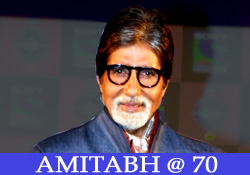
    Times have changed; today the media is full of Bollywood trivia. Stars are worshipped, their homes staked out, their faults papered over, their achievements exaggerated. At a time when stars have more power than politicians and industrialists, the media needs the stars more than the stars need the media. Unlike many of his juniors who snap their fingers when they need the media, but shun the press between releases, Amitabh has maintained a relationship of cordiality with the media, even though he now has social media platforms to have his say (even ranting against a bad review). It could be because of past experience, it could because he is well bred, or maybe because you can’t really push away the guy who has prostrated himself at your gate to try and get an exclusive shot from the gap between the gate and the ground. If asked today, Amitabh would probably say he wants to be a superstar in his next life too… such is the power of Bollywood. He hates this term for Mumbai cinema, but here’s wishing the Badshah of Bollywood a happy 70th birthday.


  • Arise, awake… and care for the girl child!


    By Fatema Rajkotwala


    Jaldi 5 with Dr A L Sharada: More ads must say: Yes, she can
     

    Population First has been at the forefront of the initiative on the way the girl child has been projected in the media. Dr A L Sharada, Director, Population First, spoke to MxMIndia on the girl child and the media and how we can prevent the celebration of the International Day of the Girl Child from being mere tokenism.


    01.  It’s good to see that the first ever International Day of the Girl Child is being celebrated. How do we prevent it from being mere tokenism?

    I welcome the UN, as a global body declaring October11, as the International Day of the Girl Child. This gives us an opportunity to take stock of the work that we have done so far, look further into what needs to be done and how we could take the issue at hand, forward. However the fear that it may turn out to be yet another gesture of tokenism is a valid one. The only way we can stop it from becoming yet another international day celebrated as a formality every year, is through concerted efforts to work on some of the major issues regarding the girl child.


    There are many issues concerning girls such as child marriages, low enrolment in schools and neglect of their health and nutrition needs. We need to advocate and lobby for more focused policies and programmes to improve the status of the girl child. We need to use the opportunity provided by the International Day of the Girl Child, every year to reflect upon achievements, fine tune our policies and redesign our programme, if required.


    Do you see that Population First’s efforts have had an impact on the media?


    I see lot of positivity and openness from the media towards these issues and a willingness to approach them differently. In the current media scenario, many of these issues are being addressed but more need attention. We, at Population First believe that we have to start a dialogue with all stakeholders, media being a primary stakeholder. We, as a nation have internalised, and have deeply ingrained patriarchal values to an extent that unless someone points it out, at times we are unaware of a possible patriarchal tone in our public communications. We need to initiate dialogues with all groups of society, so that together we can build a more gender-sensitive society.


    02, In your experience interacting with marketers and advertising agency professionals, do you think they are sincere in their attempts to appreciate the responsibility towards the girl child in a society like ours?

    Our experience with the advertising professionals has been very positive. We found them to be open-minded, willing to look at our standpoints and revise their current approach. From the time we began interacting with professionals in the advertising industry in 2008 up to today, we find a much greater presence of girls in advertising and many advertisements that are now projecting positive and non-stereotypical images of girls.


    03.  Do you think self-regulation bodies like ASCI, Advertising Club and AAAI should also take it upon themselves to promote the cause?

    Yes, definitely. It is important that activists working on gender issues and the regulatory bodies of media and advertising work together to ensure that the media does not project demeaning and negative images of girls. It is also imperative that  media does not consciously or otherwise, support or promote negative social attitudes and practices such as eve-teasing, commodification, objectification of women and violence.


    04.  What are your views on gender biases in today’s advertising?

    In 2008, during our analysis of advertisements showing girl children, we found that girls had a lesser presence and were often presented in a stereotypical fashion, for example mostly endorsing products that have been promoted by their mothers too. It was also observed that an ideal family is always shown as mother-father with one daughter and one son, or two sons. Rarely did we find ads showing two daughters. While a lot has changed in the last few years, in terms of projection of girls in advertisements, it is still rare to find an advertisement where two daughters are shown in a family setting. This, I believe, promotes the perception that a son is a must in the family. In a context where the country’s sex ratio is declining, this is a very disturbing trend.


    Television serials, television and print media content also further aggravate this image of women. What are your views here?


    Yes, it is true that the portrayal of women in print and electronic media is regressive and voyeuristic in flavour and we have to work on changing this. This is why we have instituted Laadli Media Awards for Gender Sensitivity. We have received 1500 entries this year and the quality of the content is improving. There is a lot of potential for change. The most pertinent example here is that of the popular show, Satyamev Jayate, which has suddenly got numerous issues into our drawing rooms. It shows the effect of one strong programme with a potent combination of Aamir Khan, an industry giant like Reliance and a media tool like Star TV. This shows that there is potential to bring social change. New media and its various options are also democratizing the way news now reaches out and has gained momentum with youth across the country as tools for creating public opinion. It is an exciting time to be, in terms of working with media on social issues


    05.  One view of marketers is that they need to sell to consumers, given the prevailing behavioural patterns, and that they are not in a position to correct these attitudes. How do we bring about a change in this view?

    I would like to highlight two ads here. For instance, an HDFC investment plan ad shows a father investing for his daughter’s education instead of a more common notion, such as saving for her marriage. This is a positive and refreshing approach to the product and in no way undermines the value of the product. The other ad I would like to mention is the Tata Nano ad where a small girl hugs the car, and the father gives her the car keys. This shows that the father is proud of his daughter. Giving visibility to girls in ads, is by itself crucial. We need to see more such instances where girls have to be shown in a capable light and in diverse concepts while selling a product. After all, communication is all about conveying the message effectively, is it not?

    (Interviewed by Fatema Rajkotwala)


    Last December, the United Nations declared that it would annually observe the International Day of the Girl Child, starting from October 11, 2012. Supported by the United Nations Population Fund (UNFPA), in partnership with Whisper, leading non-government social welfare organization Population First will celebrate the first International Day of the Girl Child today (October 11) at Mumbai’s Y B Chavan Centre (*see disclosure below).


    The first ever International Day of the Girl Child is marked to help prioritize girls’ rights as the salient issue in the coming decades. ‘Laadli‘ is Population First’s Girl Child campaign against sex selection and falling sex ratio. It focuses on creating a positive image of the Girl Child in society.


    Veteran adperson Bobby Sista is Executive Trustee, of Population First. Mr Sista spoke to MxMIndia about the positive response from the advertising world towards the issue, “The response from the advertising world has been encouraging. We, at Population First are absolutely delighted that at last a global body has recognised that the girl child is a special category that needs special, global attention. One of our primary focuses is to eradicate the horrible practice of pre-birth sex selection. I have been highlighting and propagating the economic value of the woman as a homemaker in our society and her contribution to the country’s GDP. A woman is at least four times better at being a manager, or doing any job today. Why always talk about the girl child in a suppressed context? What is it that a woman cannot do today, that a man can do?”


    Dr A L Sharada, Director, Population First spoke about the need for activists and media bodies to work together to bring about social change, “It is important that activists working on gender issues and the regulatory bodies of media and advertising work together to ensure that the media does not project demeaning and negative images of girls. There is a lot of potential for change. New media and its various options are also democratizing the way news now reaches out and has gained momentum with youth across the country as tools for creating public opinion. It is an exciting time to be, in terms of working with media on social issues.”


    Part of the multi-stage campaign, ‘Question Everything’ was a two-day workshop on Creative Thinking, Communication and Gender. Organized by ‘Laadli’ Changemakers Club of Population First, the workshop engaged students from Mass Media colleges across Mumbai, with an aim to involve the youth in a dialogue on gender issues, with a focus on enhancing the image of the girl child. Highly experienced advertising and media professionals such as Gautam Rakshit, Gopi Kukde, K V Sridhar (eka Pops), Dolly Thakore and Zoya Akhtar shared their expertise and guidance with students. The event will see the launch of 1MM, one-minute movies made by college students questioning gender inequality and injustice.


    Says Mr Sridhar, National Creative Director, Leo Burnett , “We have realised that at times, lack of knowledge and sensitivity tend to be the reason for negative content. But when you’re creating something, you have a white paper in front of you, you can create anything. We need to influence content creators first, then clients, then people themselves to come out of years of reinforced images of family planning. When you sensitise teens and youngsters, power to impact is higher. The new mantra for communication in the digital era is- Play, Buy and then Share. Young minds involved in making a one minute movie raise issues without fear to express and once you get involved, you think about it, play it with experience, then you buy into the philosophy, then you share it. Youth sharing via mass media tool such as Facebook or Twitter have a far reaching impact. This is a process that has been initiated. That is how social revolutions were made, religions and value were spread.”


    Part of the event’s agenda is to recognise young women achievers such as the female fire-fighters of the Mumbai Fire Brigade. The event will also felicitate celebrity parents and daughters who have made a mark for themselves in media, corporate and political circles.


    Population First has also introduced the Laadli Media Awards for Gender Sensitivity to encourage and recognise media content that has positive social messages for the girl child.


    Disclosure: MxMIndia has published for Population First a special volume on the First International Day of the Girl Child that will be released at an event in Mumbai this evening (October 11). Also, we strongly believe in the cause and feel that media and entertainment can play a key role in changing gender perceptions. – Ed.


  • From BPL to Zen Mobiles: Brand Amitabh Bachchan’s TVCs over the years


    BPL

    [youtube width=”300″ height=”200″]http://www.youtube.com/watch?v=PCMRhXAsdMo[/youtube]

    1996


    Eveready

    [youtube width=”300″ height=”200″]http://www.youtube.com/watch?v=GWD_6317vlg[/youtube]

    May 2005


    Pepsi – Political Twist

    [youtube width=”300″ height=”200″]http://www.youtube.com/watch?v=hTEqOj4fkro[/youtube]

    Sep 2006


    Lead India

    [youtube width=”300″ height=”200″]http://www.youtube.com/watch?v=z9seKn9ovHA[/youtube]

    Dec 2007


    Navratna Oil

    [youtube width=”300″ height=”200″]http://www.youtube.com/watch?v=YHwOQkiTLwY[/youtube]

    June 2007


    Pepsi (with Sachin Tendulkar)

    [youtube width=”300″ height=”200″]http://www.youtube.com/watch?v=CDdYfwbDgK8[/youtube]

    Mar 2007


    Reliance ADAG Group

    [youtube width=”300″ height=”200″]http://www.youtube.com/watch?v=ueWgSbYlLuU[/youtube]

    March 2007


    The New India (TOI)

    [youtube width=”300″ height=”200″]http://www.youtube.com/watch?v=KNomFKB8sgk[/youtube]

    Jan 2007


    The Times of India – India Poised anthem.

    [youtube width=”300″ height=”200″]http://www.youtube.com/watch?v=wP-TwHwLc98[/youtube]

    January 2007


    Parker Pen

    [youtube width=”300″ height=”200″]http://www.youtube.com/watch?v=22gkF903U-s[/youtube]

    Jun 2009


    Dabur Honey

    [youtube width=”300″ height=”200″]http://www.youtube.com/watch?v=kuRnWY2Oo8o[/youtube]

    Aug 2009


    ICICI Car Loan

    [youtube width=”300″ height=”200″]http://www.youtube.com/watch?v=fE9wPLCf-LI[/youtube]

    Aug 2009


    Pepsi (with Arshad Warsi)

    [youtube width=”300″ height=”200″]http://www.youtube.com/watch?v=sRcPKxlpmow[/youtube]

    Sep 2009


    India Hockey Team

    [youtube width=”300″ height=”200″]http://www.youtube.com/watch?v=fy2BJVWaYKs[/youtube]

    Apr 2010


    Dabur Glucose D

    [youtube width=”300″ height=”200″]http://www.youtube.com/watch?v=T2ql8LJ3_3s[/youtube]

    Jun 2010


    National Rural Health Mission

    [youtube width=”300″ height=”200″]http://www.youtube.com/watch?v=mWn63nuxYZQ[/youtube]

    Feb 2011


    Binani Cement

    [youtube width=”300″ height=”200″]http://www.youtube.com/watch?v=3DAFubSuGhU[/youtube]

    Jul 2011


    Binani Cement

    [youtube width=”300″ height=”200″]http://www.youtube.com/watch?v=6TUktKe7Cmo[/youtube]

    Sep 2011


    Cadburys

    [youtube width=”300″ height=”200″]http://www.youtube.com/watch?v=W3cju-2FbiE[/youtube]

    Sep 2011


    JustDial.com

    [youtube width=”300″ height=”200″]http://www.youtube.com/watch?v=suXOFD66pIo[/youtube]

    May 2011


    Tanishq True Diamonds (with Jaya Bachchan)

    [youtube width=”300″ height=”200″]http://www.youtube.com/watch?v=ZWzXSNqGmZU[/youtube]

    Apr 15, 2011


    Cadbury Celebrations

    [youtube width=”300″ height=”200″]http://www.youtube.com/watch?v=AqiONfDvoZY[/youtube]

    April 2011


    Reid & Taylor

    [youtube width=”300″ height=”200″]http://www.youtube.com/watch?v=_vFX33WCbMs[/youtube]

    Oct 2011


    Dabur Chyawanprash

    [youtube width=”300″ height=”200″]http://www.youtube.com/watch?v=9md6V-lKl3Y[/youtube]

    Nov 2011


    Force One

    [youtube width=”300″ height=”200″]http://www.youtube.com/watch?v=D-qEvd0k4UE[/youtube]

    Dec 2011


    Unicef Polio (with Aishwarya)

    [youtube width=”300″ height=”200″]http://www.youtube.com/watch?v=wood7OFg0IE[/youtube]

    Jan 2012


    Gujarat Tourism

    [youtube width=”300″ height=”200″]http://www.youtube.com/watch?v=j_W5ae2e51A[/youtube]

    April 2012


    ICICI PRULIFE

    [youtube width=”300″ height=”200″]http://www.youtube.com/watch?v=QIEW8dYd7TY[/youtube]

    Apr 2012


    Kalyan Jewellery

    [youtube width=”300″ height=”200″]http://www.youtube.com/watch?v=Z6x78li4ddc[/youtube]

    June 2012


    Reliance Mobile

    [youtube width=”300″ height=”200″]http://www.youtube.com/watch?v=QSs0YWj4Y6g[/youtube]

    Jul 2012


    Luxor Nano

    [youtube width=”300″ height=”200″]http://www.youtube.com/watch?v=F-zkSt18dX8[/youtube]

    Jul 2012


    Champions League T20

    [youtube width=”300″ height=”200″]http://www.youtube.com/watch?v=Q_e7fe9MaVY[/youtube]

    Aug 2012


    BIS

    [youtube width=”300″ height=”200″]http://www.youtube.com/watch?v=V0zkuH3zSuI[/youtube]

    Aug 2012


    Maggi

    [youtube width=”300″ height=”200″]http://www.youtube.com/watch?v=_tUZy0veUd8[/youtube]

    Aug 2012


    Zen Mobile

    [youtube width=”300″ height=”200″]http://www.youtube.com/watch?v=lAcy1ERwkyU[/youtube]

    Oct 2012