Category: MEDIA

  • GullakMaster to launch in August

    By Tuhina Anand


    The enforcement of DND (Do Not Disturb) in many ways has spelt doom for SMS marketing in India. However, the same played a key role in the genesis of GullakMaster – a customer engagement platform for merchants. Still being piloted in Mumbai, GullakMaster is due to be launched in the last week of August in Mumbai followed by Bangalore and Pune and then in a span of six months time in Delhi and Ahmedabad.


    The venture is being spearheaded by Abhishek Dadoo who explained it as ‘intelligence on SMS’. Explaining the mobile advertising network, he said: “There is still a big market for SMS advertising which remains untapped because of the restriction. So what we are offering is on demand advertising. We ask permission and then sms promotions tailor made to the person’s requirement. We have TRAI approval and we do not fall into the DND list as we are not sending unsolicited messages.”


    So how does GullakMaster work? To start with when one visits a mall, if GullakMaster has an association there, then one could see information as one enters the mall. If interested, one could sms on the number given and get information on the deals available in the mall. Mr Dadoo explained that the concept can be taken beyond the malls; in fact anywhere that is close to the merchant’s location.


    For starters, the company will be advertising heavily in malls and outdoor locations like auto rickshaws to spread awareness of their offering. The same will be taken to the radio medium if their funding plan comes through.


    Mr Dadoo dubs his offering as providing a dashboard to the merchants to communicate to potential customers in an effective way. The company is a subsidiary of Dadoo Pvt Ltd, which is a Singapore-based company. The company is also eyeing the markets in Indonesia and Philippines.


  • InMobi acquires Metaflow Solutions

    By A Correspondent


    Bangalore-based mobile advertising network InMobi announced the acquisition of Metaflow Solutions, leaders in mobile app management and distribution solutions.


    Metaflow technology simplifies the global deployment and content management process for developers through its intelligent submission tools optimised through six years of operations, servicing the biggest publishers in the market.


    Metaflow’s management and distribution of content to consumer portals has consistently provided the fastest, lowest cost way to publish apps to hundreds of independent, OEM & operator app stores across the globe. “As a global leader in the mobile advertising space, InMobi is committed to growing the mobile ecosystem. Our acquisition of Metaflow Solutions will help us to continue to rapidly expand the distribution and monetisation of content for our developers and publisher partners,” said Naveen Tewari, Founder and CEO at InMobi.


    The Metaflow team will become an integral part of InMobi’s developer oriented efforts, led by Piyush Shah, VP and GM of Developer Platforms and Performance Advertising at InMobi. Mr Shah said: “With the recent acquisition of MMTG Labs, along with today’s acquisition of Metaflow, we will augment our value proposition by offering highly compelling distribution, monetisation, and engagement solutions to app developers globally.”


    “At Metaflow, our mission has been to simplify and unify the complex process surrounding content management and deployment of apps to a distributed and highly fragmented marketplace. The global reach and technology backbone provided by InMobi is hugely exciting for us. InMobi provides app developers with even greater opportunities to acquire millions of users and monetise their exciting apps,” said Charles McLeod, CEO at Metaflow Solutions.


    The Metaflow Solutions team will relocate to the new InMobi London office.


  • Timmy Kandhari quits PwC India, Smita Jha to take over

    By A Correspondent


    After a 15-year long stint with PwCIndia, executive director and leader, Hospitality and Leisure, Timmy S Kandhari has decided to move on. Mr Kandhari confirmed the same to MxMIndia.


    Furthermore, he told MxMIndia: “Ms Smita Jha will be taking over. She is currently a Director at PwC and she would be taking over as Head of Entertainment and Media.”


    Ms Jha currently holds the position of Director, PwCIndia. Like her predecessor, she is also a qualified Chartered Accountant.


    Citing personal evolution as one of the main reasons to move on, Mr Kandhari said: “One continually wants to evolve oneself as a professional and this move is largely to get closer to the next step.”


    Mr Kandhari did not disclose the next position he will be taking up but he said he might be able to announce the same in the next few months.


    Mr Kandhari is a qualified Chartered Accountant with over 20 years of experience. His past experience encompasses a range of industries including Healthcare, Consumer & Retail, Liquor, Auto and Entertainment & Media. He has been a frequent speaker on E&M platforms like FICCI, CII, CASBAA and so on. He’s also a member of the CII Entertainment and Media Committee.


  • Too many people taking undue advantage of TAM, says NDTV’s Vikram Chandra [from our archives]

    While CEO Vikram Chandra wasn’t reachable for comment, this is what a spokesperson told MxMIndia: “We confirm we have filed a lawsuit in the Supreme Court of New York State. Because the matter is sub judice, we have no further comments at this time.”

    While the legal documents present the NDTV case, this interview of Mr Chandra from the MxMIndia archives (interview published on December 7, 2011) gives you a good idea of NDTV’s standpoint. – Ed


    By Akash Raha


    Recently NDTV 24×7 came out with an advertisement announcing the GFK-Mode survey which showed it to be most watched English News Channel. The survey which the group has conducted for the third time since 2009 places it well above its competitors. MxM India spoke to Mr Vikram Chandra, CEO, NDTV Group to know more about why he went in for the survey.


    Q: Could you tell us a little more on the GFK-Mode survey…are there any other insights that you would like to share?

    We have now done three surveys over the last three years since 2009. We did the last one in 2011 the results of which you have quoted. The results of this survey have been very consistent now. All the three surveys have shown the same kind of results for us. A large sample base has been used here showing NDTV 24*7 to be the most watched channel with 56 percent. There is obviously an interesting lesson in here somewhere which someone should try and figure out.


    Q: The findings are very much in variance with those published by TAM. Why do you think this is the case?

    You know, we have our own opinion on the way TAM ratings are conducted and we have frequently discussed this with TAM without gong forward. We are hoping that they will get the complete picture…We do feel that the TAM rating meters aren’t adequate to measure a country like India. I think that there are not adequate boxes to measure viewership. Moreover, I think that TAM has not been able to focus on all parts of the society to derive their ratings from. One of the issue which is of concern for us, and it is causing a lot of concern to TAM too, is that there are people who are using undue advantage of the way TAM functions. There are a large numbers of outliers who are there in the TAM samples. I think TAM needs to be a little robust in their system. Measurement is a serious issue which has been going on for a while now.


    Q: Media planners and marketers still subscribe to TAM as the ‘currency’ for buying ads on channels? Would they take your survey findings seriously?

    There are two things to it…While numbers and TAM ratings remain important in the absence of any other measurement system, media buyers and planners look at other variables and other aspects of channels. So I think the message is being communicated to them. We are also drawing attention to some of the anomalies that are there, and we are hoping that media buyers will also join us to get rid of these anomalies. That there are anomalies, everyone knows… A lot of money is been spent on this data and hence it is important that the data which comes out eventually is robust.


    Q: What do you think should be done to come out with a robust currency?

    First of all the broadcasters should work together with TAM and other measuring organization to try come out with one robust measurement. I think we should all work in partnership as this is in everyone’s interest – It’s in TAM’s interest, broadcaster’s interest and in interest of media buyers too. What does it mean? It means that we need more boxes and a bigger sample sizes. Also, if somebody is trying to tamper with the measurement system, how can that be identified and corrected. These things are in everyone’s interest. It is not only NDTV who face these problems, I am sure the others do too. So we are appealing to the entire industry to come together and fix the measurement system. We are in the process of trying to reform and fix the whole media business. That is the most important challenge before us. Digitization, distribution problems are being sorted out and only in a few years time everything should be stream lined and a systematic model. Similarly, on the other side of the business we have a measurement system which is a cause of concern and we have to find a way to make it more robust.


    Q: You’ve said ‘why scream and shout’ in your advertisement. But isn’t that what most news TV channels do? On air in their shows and in their advertising and sales pitches?

    I am glad you ask this question…We have a very strong viewpoint on what we think we should do. At the end of the day NDTV’s strongest asset is our brand and we stand for something. We try to do a certain type of journalism and a certain type of programme, and this is one of the things that we have tried not to change too much. And if you compare us to other Hindi channels, you will clearly know the difference and how we are different from most of the channels. Now that I am the CEO one of the things I want to do is to make this differentiation even stronger. We are not ready to put up random shows and we don’t believe in going tabloid. We don’t believe in bhoot banglas, tantriks and astrology and alien abduction. We are not going to do any of this and that’s the kind of environment we want to build for our advertisers. And we will appeal to media buyers and people who want to protect their brands to think about that.


    Q: Would you like your advertiser to buy spots on your channel for the number of viewers or because of the environment it offers…quality and experienced anchors and reporters, sobriety in coverage, credible leadership?

    Both! And that is precisely what we say to our advertisers. We have numbers, not like we don’t have numbers, but one should also consider the people who are coming and watching our show. People who come and watch our channel come for a certain kind of program and sobriety. I am not doing a value judgment on others’ programs…everyone is free to do whatever kind of programming that they want. But people who are coming to us are coming for a certain type of program. There is a certain style that NDTV stands for and we believe that that’s the style we are most comfortable with. And we think that offers the advertisers an environment, which if they sit and think is going to be beneficial for them in the long run.

  • Paritosh Joshi: Not another piece about the Ratings Battle

    By Paritosh Joshi


    You’ve already read enough of those so I’m not about to inflict one more upon you.


    However, if this week’s piece sounds like a lesson in elementary Economics, so be it. You were warned.


    Prices are not divinely ordained. As Adam Smith taught us, people enter a market when they wish to sell or buy goods or services. A process of negotiation follows. This depends at least as much on perception as it does on objective reality (whatever that is). An Alphonso orchard owner in Devrukh Taluka of Ratnagiri District believes that the output is plentiful, demand is scanty and he will be fortunate to sell his output at whatever price the Arhati (broker) offers him. You, in Delhi or Mumbai believe that unseasonal rains destroyed the crop, all good produce was immediately exported to grace the plates of Sheikh Al bin Mighty in wealthy Saudi and you must feel grateful for a dozen prized fruit at Rs1,000. So much for objective truth. The story can have a very different outcome if you add just one ingredient: inquiry. The orchard owner (who now owns a cell phone) calls up his office boy cousin in BKC who shares the street price in Mumbai… Yup, you can infer the rest.


    When people sell goods, they have the ability to warehouse their produce. I can sell my mangoes today or I can choose to hold on to them ’til tomorrow in the hope of a better price. When people sell a service, this is not possible. As a daily wage worker, I cannot carry forward my 10 hours of work from today and then do 20 hours for a higher realisation tomorrow. In general, therefore, services are far more perishable than goods. Their instant or near-instant perishability frequently translates to service providers being extremely vulnerable to extortionate price negotiations with buyers. This is where things begin to get really interesting. When the ‘perceived’ nature of a service becomes exceptionally rare, the price it commands becomes truly astronomical. A brilliant lawyer who wins suits for megacorporations and global telcos bills over a Million Dollars a week. We all pitch in, indirectly and sometimes directly, to pay a few exceptional, and exceptionally fortunate, cricketers eye-popping sums to bowl or bat. MJ, Elvis, Frank and Janis continue to weave musical (and commercial) magic from beyond the grave, their services having been warehoused to meet the needs of our hungry ears for years and years. Heck, even weight loss advisors called AM or VL pull down zillions to help you lose what you should never have gained. Most times, these incalculably precious eminences share a common secret sauce. Their raw material, which was admittedly of rare quality, has been honed and polished to a rich lustre by various players in the Media & Communications industry. They have in fact crafted the ‘perception’ of exceptional rarity that translates into astronomical price. They are the impresarios, the image-makers, artisans of myth, masters of smoke and mirrors. In a word, they are someone like you.


    If you were an extraterrestrial, say Ford Prefect, the galactic hitchhiker from Douglas Adams’s eponymously named trilogy in five parts, who happened to stumble upon the Indian M&C industry, what might you see? A bunch of talented creative minds building wonderful brand successes for their clients? Or a bunch of neurotic, insecure sales people unable to defend fair profit margins and constantly prostrating themselves before the extortionate buyer up the value chain from them?


    More likely the latter than the former, I have to say with the deepest regret.


    The very people who create images for their clients, thereby making them immune to the vagaries of elastic demand and endowing them with that ineffable je ne sais quoi, are the same people who have reduced their own business to a commodity-esque fish market.


    How did this come to pass? A friend worked for HTA Bangalore. Ivan Arthur, then NCD and already a legend of the industry, was visiting the office and decided to drop in on a Saturday morning. Said friend was toiling away getting press advert artwork pasted up in studio to hit material deadline for a Sunday Deccan Herald insertion. Ivan asked friend what she was doing in the office on the weekend. Friend meekly acknowledged demands of tyrant client who expected agency to be at his beck and call… around the clock. Ivan offered these three comments:

    Weekends are meant to regain the intellectual and emotional energy expended during the week, so that the professional can come back fresh and rarin’ to go on Monday.

    If you don’t respect yourself, why should anyone else?

    Abject surrender before the client is not only unjust to the agency; ultimately it is unjust to the client too.


    Read this metaphorically rather than literally and then address these questions to yourself. When the first agency offered to drop its commissions from 15 per cent of gross, (17.65 per cent of net billing) to some smaller number, the agency took a huge step back for the industry. When those commissions kept heading south for many years to come, a whole generation’s future in the industry was blighted by the long shadow of the small League of Damned Arbitrary gentlemen. I hasten to add that this kind of extortionate bullying of service providers was not just about agencies; the broadcasters succumbed to it too.


    No wonder then that as an industry, we have brought ourselves to this parlous place.


    We have cheapened ourselves.


    Paritosh Joshi was until recently CEO, Star CJ. He has been a marketer, a mediaperson and a key officebearer on industry bodies. He is Strategic Advisor, Ormax Media. He can reached via his Twitter handle @paritoshZero


  • Broadcasters set to mix ideas & business @ITF

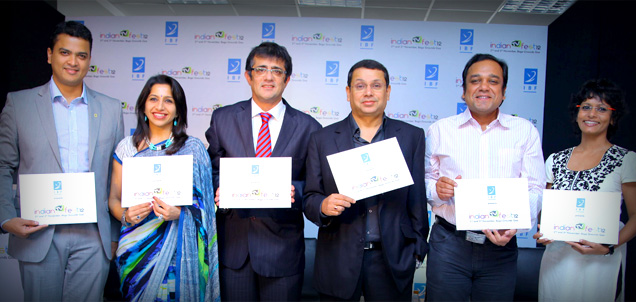
    Announcing the Indian Televsion Fest (from left to right): Keertan Adyanthaya, Monica Tata, Sunil Lulla, Uday Shankar, Punit Goenka and Lydia Buthello


    By Johnson Napier


    The god-like status that the medium of television commands in India today is indicative from the endless attention that gets showered on it from all and sundry. Whether for the advertisers who are willing to bend rules and swing  to their tunes or for the viewers who can take a liking to anything that’s thrown across at them (well, almost), the Indian broadcast industry is calling the shots in a manner that is pivotal to its growth.


    In fact, the popularity that it commands can be gauged from the growth that the medium has been throwing up in the past five years, which has been in the range of 12 per cent. This of course is backed by its ability to occupy a lion’s share of the ad pie and still remain a favourite medium for the advertisers.


    But while there are some obvious highs that ensue from the medium, the medium has been at the receiving end as well. Like the constant criticism it attracts for not being able to display a show of unity to voice common issues rather letting personal goals take precedence. Then there are also those who question the absence of a platform for the industry to come together and air and share views of common interest. But the last peeve may well be a thing of the past with the announcement of the Indian Television Fest 2012.


    The Indian Broadcasting Federation (IBF), led by president Uday Shankar of Star India and core festival committee members comprising Sunil Lulla of Times Television Network, Punit Goenka of ZEEL, Keertan Adyanthaya of NGC Networks, Monica Tata of Turner International India and Lydia Buthello of Star India announced the first-of-its-kind event for the industry. The two-day festival will be held at the Baga Grounds,Goa on November 2 and 3, 2012.


    The two-day fest would be a unique platform for the Indian and global broadcasting industry to network and exchange ideas through engaging panel discussions and master classes. Renowned names from India and across the globe are expected to participate in the mega event. And since it’s Goa, with the inviting beaches for company and some fun.


    Throwing open the idea to the gathering, Mr Shankar began by thanking his core team members, without whom the fest wouldn’t have been a reality. Explaining the thought process behind the exercise, Mr Shankar said: “The idea has been in the pipeline for almost a year now. We felt it was the right time to launch Indian Television Fest as the industry has grown big enough to manage an event of this scale. It basically stemmed from the need to create a platform where the entire broadcast industry could come together under a single roof – irrespective of the organisational and competitive background – so that there could be co-sharing and exchange of ideas and conversations on how the industry can take a big leap into the future.”


    According to him, what would make the event special would be its ability to get together honchos and industry persons from different verticals under television to come and be a part of the give-and-take. He affirmed: “Apart from some familiar and popular names the event will see the best in broadcasting brain trust from India and the world descend at the venue. The ultimate aim of ITF would be to service the larger Indian broadcasting community. It will also be driven with the dual need of being business-minded in its approach while at the same time having a social connect, as we believe the two are interlinked and cannot work in isolation from each other. All in all, we plan to make this event truly iconic in nature.”


    Giving a lowdown on the two-day event, Monica Tata of Turner India began by bringing to light some of the high points of the Indian broadcast industry. Providing a bird’s eye view of the current media scenario, she said: “India is the third largest market for media behind US and China. It has reported a growth of 12 per cent in the last five years which will continue to keep swelling. Further, the country boasts a reach figure of 500 million and is estimated to be worth Rs33,000 crore. This number is expected to triple to almost Rs100,000 crore by 2017. Needless to say there are tremendous opportunities that will enable the industry reach this figure in the coming few years.”


    Highlighting the tremendous opportunities that the Indian market presented for the future, Ms Tata said: “India has a penetration level of just 60 per cent leaving a lot to be achieved going forward. Further the C&S households are expected to grow to 88 per cent from the current 81 per cent. Also, the average time spent on television viewing is still low at 150 minutes compared to other countries that are almost double the number. And finally, with digitisation, DTH, HD taking off in a big way coupled with the unhindered growth of regional channels should see the industry enjoy prime status in the near future.”


    According to Ms Tata, some of the key themes scheduled at ITF include: best practices and masterclass that’ll be weaved around core areas of content, distribution, revenues, technology, etc; presence of visionary speakers like James Murdoch of International News Corporation, Andy Bird of Walt Disney, Hugh Johnson of Channel 4, Michael Lynton of Sony Corporation of America, Subhash Chandra of Zee & Essel Group, etc; debates and conversations; interaction with regulators and policy-makers; and finally encouraging cross-genre ideation.


    Presenting his viewpoint, Sunil Lulla of Times Television Network said: “There was no platform as yet in India where the issues and concerns of the Indian television industry were being raised and addressed. ITF will be a platform where one can learn, interact and demonstrate the road for the future. Three factors that’ll drive this event include the need for conversations, need for confidence to hold an event of this stature and need for commitment from the industry to take this industry from Rs33,000 crore to Rs100,000 crore by 2017.”


    On the key highlights to be expected at the event, Punit Goenka of ZEEL said: “We all know how New Media is going to be the platform of the future and we also know how regionalisation is going to take the industry further…and since regional has a lower base it is growing faster than the other genres. However, there are avenues that we need to discuss. Nobody has an answer as to how we will reach the Rs 100,000-crore mark but one has to start the process of thinking about it.” When asked if it would be a practically possible to reach the Rs100,000 crore mark in a short span of four years he said: “We have to talk about it and see how we get there. Nobody has an answer as to how we would get there. But unless you talk about it and bring it up in discussions how do we even make a beginning to reach there? I think the end goal is not important; it’s the journey which is going to be important.”


    When asked on the initial response that the event has managed to generate, Mr Lulla said: “Members from the broadcast industry have shown tremendous enthusiasm to the initiative, which can be seen from the initial buzz that is being created where registrations are concerned. As you know, we are a little late industry as we like to start things a little later. We hope the television industry supports us in a fashion by sending more members to attend the event. We have fantastic line-up of speakers from India and abroad; and of course, we would like the industry to stretch themselves a bit and sponsor many other themes and elements that we have lined up out there.”


    Mr Lulla added: “As you know, we are always a last-minute booking.com industry, so it’ll be a challenge to get a lot of people to attend the event. Also, there will be the challenge of generating advertising revenues so that we can stage the event successfully. But we are confident of putting up a successful event.”


    On the benefits that will accrue to IBF from the event, he said: “What IBF will particularly benefit from is take the ideas that come out and find out what will be the cornerstones for the industry going forward and what will become items of agenda. What people who come there to attend the event to take off is personal learning – so there will be ideas, new friends will be made…in all, it will be a mind-opening event, so to speak.”
     

  • New series/Relative Values | We are professionals first: Divya and Yogesh Radhakrishnan

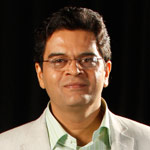
    Starting today, and every Thursday, MxM will take you beyond our regular news and look at the people in the business of media and marketing. So on the first Thursday of every month, we will have a section titled ‘RELATIVE VALUES’ featuring siblings, parents-children, cousins etc who may be working in the same or allied sectors of media, advertising and marketing.


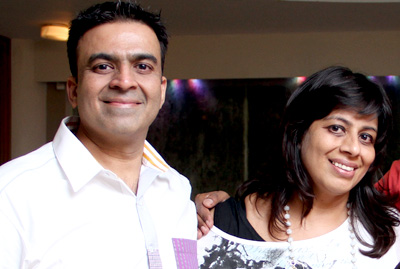
    It’s Raksha Bandhan today, and a good day to to start the series. So, meet brother Yogesh and sister Divya Radhakrishnan, both of who have done remarkably well in their respective careers and without work getting in the way…


    Yogesh Radhakrishnan and Divya

    By Meghna Sharma

    Everyone is talking about Kareena and Ranbir Kapoor finally working together on film as brother and sister. One can talk about the number of brother-sister duo working in the same field.


    According to some it’s no big deal, whereas others feel personal equations do change when they work together. MxMIndia spoke to one such duo on the occasion of Raksha Bandhan to find out their take on it.


    Divya Radhakrishnan and Yogesh Radhakrishan are forces to be reckoned with in their respective fields. Yogesh is CEO of Prime Connect which engages in the business of distributing satellite television and other allied services through traditional and emerging media across homes and commercial establishments in India; while Divya is MD, Helios Media – an integrated ancillary service company for television broadcasters.


    So when asked if it has ever led to rivalry between them, both were quick to refute it.  “I’m a media planner while he’s into broadcasting. So we have always been on the two opposite ends of the table. Hence, there is no question of competition,” said Divya. “Both of us are very professional and for many years people didn’t even know we were related!”


    “We know where to draw the line. Even while interacting for work…,” added Yogesh who is interrupted by Divya: “Actually, I’m a tougher buyer to him than to anyone else,” she laughed.


    Taking work back home is nothing new, so it isn’t surprising if the siblings end up having talking about work, even if they meet after office hours. According to Divya, both of them are in a field where work is bound to go back home with them and they do end-up discussing about the industry, at large and other healthy discussions related to it.


    “Rakhi has always been special day for us; although, we don’t believe in any rituals,” replied Divya, when asked if there were any special plans for the day and Yogesh, who is down with fever, agreed.


    So, be it any field, one can work without relationships getting in the way, by being mature professionals. Maybe blood is always not thicker than water!


  • We are a silent partner in DNA: Girish Agarwal (on Video)

    The Dainik Bhaskar Group has been making rapid strides in publishing and its expansion into hitherto uncharted territories like Maharashtra have led to questions on where the group will head next. Girish Agarwal, director of the group, spoke to MxMIndia’s Shruti Pushkarna in an exclusive interview on the sidelines of Ficci-Frames 2012.
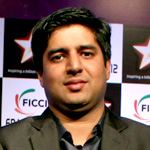
     

    Dainik Bhaskar was among the first to innovate in order to get more readership. What are the new frontiers… where are you headed next?

    We operate already in some 14 states in India. We have recently launched a Marathi newspaper, so we have some time to spend in Maharashtra as well as Jharkhand. At the same time, the states which we are already present in, like Rajasthan, Gujarat and Punjab, we need to work a lot there also to grow, because those states have a huge potential for us to grow. A large part of the growth we’ve been seeing in last 10 years, is coming from our existing states, so we need to work hard there.


    [youtube width=”400″ height=”250″]http://www.youtube.com/watch?v=UN43L63SCoU[/youtube]

    Technology and internet hasn’t really taken off as well as it was expected to have taken off. What are your views on the same?

    Internet penetration in India is roughly around 7 to 8 per cent, so with this kind of penetration, I don’t think we need to fear anything that they would take away from us. But at the same time we need to prepare for the future. For example, our website in Hindi today is the largest website in Hindi news as well as the Gujarati one, so we are preparing ourselves for the future. But at the moment, is the business shifting from the print platform to the internet? No.


    How do the readership wars affect newspapers?

    I think it is pretty good because anything that’s good for the market is good for the organization too. For the readership war, you actually go out and try to take more readers, for that you need to ensure that you are still relevant to the reader, because if you are not relevant, the reader won’t buy you at all.


    There is talk about Dainik Bhaskar opting out of DNA, how true is that?

    Yes, it is true that DNA is currently managed by our partner, Zee Group, which has the majority in DNA. We are a silent partner.


  • @FF12: Digitisation will allow broadcaster to make money off ground: Tarun Katial

    Video and Text by Shruti Pushkarna


    Tarun Katial, the CEO of the Reliance Broadcast Network Ltd, spoke to MxM about how the businesses will have to rework their monetising strategies in the wake of digitisation


    On reworking the business model for digital era

    [youtube width=”400″ height=”250″]http://www.youtube.com/watch?v=r_uR54g7cbI[/youtube]

    For television, it will be a combination of content as well as marketing. The old model which was a combination of carriage and product, as it stands today won’t work. The business plan which currently has a very high rate of carriage will obviously see the content taking precedence.


    On Digitization bringing in transparency

    By transparency, I mean, it will allow the broadcaster to know the number of households it’s getting into, getting paid for and which value tier plan it is present on. It’s not like analog, where you give Rs150 and you have 500 channels available. The broadcaster will be allowed revenue share, he will be allowed to make money off the ground.


  • @FF12: Integrated media best way fwd: Vikram Sakhuja

    Video and Text by Shruti Pushkarna


    On the fundamental powers of digital:

    In digital there are few things that are exciting. One is that digital has the potential to burst from a sampling kind of mindset into a census kind of a mindset. By that I mean that a lot of measurement we do in marketing today is very sample based and digital, whether it is through set-top boxes, or through online behaviour, it is possible now to get the data at a granular level. So that leads to targeting a million, one at a time kind of thing, which is exciting. The other inherent power of digital is interactivity. The third area is the ability to link multiple devices. Last is the real time query, whether it’s query or the consumption of content. Linked to that is the entire thing about being mobile. So these four or five inherent powers of digital are game changers for marketers.


    How to engage in an increasingly digital world?

    [youtube width=”400″ height=”250″]http://www.youtube.com/watch?v=sIj_VeYzlPo[/youtube]

    The engagement part comes from the kind of content you put up and the entire viral or social nature which comes up. The framework we talk about is paid, owned and earned media. An example of paid media is when Mindshare got Dhanush to sing an anthem for Sachin Tendulkar, post Kolaveri Di. Within four days we got ten million views, and the anthem, in turn, got a viral life of its own. So I think the way in which you can use content is how it becomes engaging.


    What is the way forward?

    I think integrated media is the best way forward. Today when people think of multimedia planning, they do a separate TV plan, print plan, radio plan, internet plan and so on. I believe that if you actually look at media agnostically and at common metrics of each cost per thousand impressions, these are the ways in which you can construct a media agnostic plan. What it does is, it suddenly gets more money into digital, and when more money can come into digital, that’s when focus is going to come in.


  • @FF12: No alternative to the cloud: Manish Agarwal

    By Rishi Vora


    Manish Agarwal, COO, Reliance Entertainment (Digital) spoke to MxM India on the sidelines of a session called “Digital Entertainment with Connected Devices and Cloud Based Services”, in which the panel consisted of Umang Bedi of Adobe Systems, Richard Craig McFeely of Tata Communications, Sameer Pitawala of UTV Interactive, Manish Agarwal, and Ravindra Velhal of Intel.


    Takeaway points from the session

    Cloud technology is all about providing an experience to the consumer. That’s one thing. The second thing is, there is no alternative for any service providers to not to go to the cloud. There is no choice to anyone; everybody has to go to the cloud. The question is the benefit of the cloud and the extent of monetization that can happen on the cloud will be limited to the extent of infrastructure investments. So, the key message is that the cloud is a reality – everybody has to work around it, be it the producer or a retailer like Big Flix or a content aggregator…


    The question is when can you really monetize and how can you provide the best consumer experience.


    [youtube width=”400″ height=”250″]http://www.youtube.com/watch?v=sSJUNAh1X8E[/youtube]

    Video By Shruti Pushkarna

    How does Reliance use cloud technology for the services it offers?

    If you look at Big Flix, all the content user information is on the cloud. And we’re already kind of using that piece. That is the only way we can provide a seamless experience across devices – across desktop, laptop, smartphones, in your office, your home. All this is not possible without the cloud. So we’re using it extensively for Big Flix. We also use the same technology when we publish mobile games, so if you want to play a game, you can play on any platform using the cloud service.


    What it means to the consumer

    For the consumer it is very simple. Keeping aside the technical mumbo-jumbo, I can watch a video whenever I want on whichever device I want from the point I left – I can restart. So it gives me a complete seamless video-watching experience across devices and locations.


  • @FF12: Discovery to launch kiddie channel in India

    Video and Text By Shruti Pushkarna


    President & CEO of Discovery Networks International, Mark Hollinger announced the launch of its new network for children in India, ‘Discovery Kids’. The announcement came on the sidelines of FICCI Frames 2012 that is being held in Mumbai from March 14 to 16.


    The channel will be available in three languages. Mr Hollinger said, “We shall be launching a new network in India – Discovery Kids. It will be launched in early April and the network will initially be available in three languages – Hindi, English and Tamil.” The company plans to roll out the channel in Philippines and Indonesia later this year.


    Mr Hollinger said, “Discovery Kids will offer children a fun and entertaining way to satisfy their natural curiosity with stimulating and imaginative programming.” He added, “India is definitely poised for growth in this market. 30% of the population in this country is below the age of 14. In light of the massive digitization drive in India, we believe viewers will express their demand for such distinct television networks. I cannot think of any other country more poised for the launch of such a remarkable network.”


    [youtube width=”400″ height=”250″]http://www.youtube.com/watch?v=gzeqO3KTTww[/youtube]

    The company also expects a significant boost to its subscription revenues from satellite television digitization in India and expects the country to be its biggest satellite television market in the next few years, said Mark Hollinger.


    Speaking about the digitalization drive in India and the country’s subsequent growth potential Mr Hollinger said, “The fact that India is moving towards 100 percent digitalization presents an overwhelming opportunity for all of us. Digitalization of broadcast will make bandwidth usage more efficient, leading to a wider choice for the viewers and newer opportunities for media companies. Digitization means viewers will be more discerning and I predict that the programming with the best storytelling, compelling characters and stunning visuals will win out.”


    Talking about the share of revenue from India, Mr Hollinger said, “International markets account for one-third of our operating profit, of which India contributes a significant part. We don’t break it down on a regional level. India is one of the top five growth markets on a worldwide basis.”


    He also said that going forward the company is looking to enter retail, merchandising and licensing space.